Blog

  • Wait, what? The next Windows is ‘confirmed’ to be 8.1?

    Late yesterday and throughout this morning I have browsed my RSS feeds and continued to be amazed by the stories I see. This is not new — I am often amazed by what some sources will run with. However the latest “news” surrounding Windows “Blue”, which leaked out last week, has me completely perplexed.

    Blue is, of course, very real. I am running it in a virtual machine and Microsoft has even confirmed that this update will be unveiled at the BUILD conference in June. The company has also told us that “Blue” is a code name, meaning it will likely not be the final moniker that the update is released under. All of this we know.

    What we do not know is what that final name will be. However, I have seen one site after another running with a story saying the final name of Windows 8.1 is “confirmed”. Really? Confirmed by who? Microsoft has said nothing of the sort.

    Where does all of this confirmation come from? Well, as it turns out, it all comes from a leaked screenshot that depicts the “computer properties” screen of a Windows build labeled as 9375 and showing a version listed as Windows 8.1 Pro. The source for this? A post from a person going by the handle Kacper K. showing an image he posted to a Polish website known as winforum.eu. Well, heck, what is not to trust here? With sourcing like this is there anything left to doubt? It must be confirmed.

    What makes me shake my head the most is that sources I personally respect have run with this story as if it was a cold hard fact.

    Sure, the new Windows update, rumored to be coming in August and currently called Blue, may very well be called 8.1. It is a logical name, but so is 8.5, R2, Sp1 and probably many more.

  • Add Sprint to list of carriers offering HTC One on April 19th

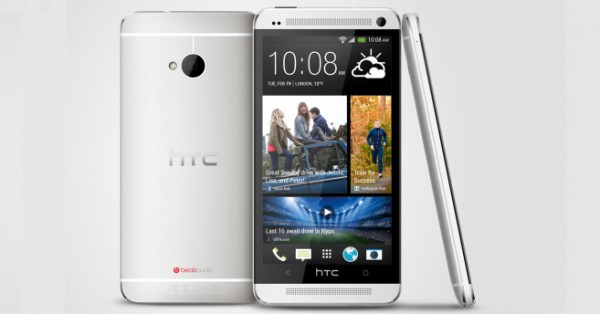
    HTC-One-official

    Just a short while ago we reported on AT&T’s announcement that they will start selling the HTC One on April 19th. Sprint is hot their heels as they too have announced the availability of the HTC One on the 19th for the same $199.99 price for a 32GB version with a two-year contract. Sprint also indicated they will start accepting pre-orders online this Friday, April 5th, at www.sprint.com/htcone. Hit the break to read the full press release.

    Sprint to Launch the New HTC One on April 19; Pre-Order Begins April 5

    New HTC One boasts a slim aluminum unibody design, amplified minimal distortion sound, HTC UltraPixel camera

    OVERLAND PARK, Kan. – April 2, 2013 – Sprint (NYSE: S) today announced Friday, April 19, as the availability date for the highly anticipated new HTC One®, the latest international smartphone with Truly Unlimited™ data while on the Sprint Network. HTC One reinvents the mobile experience by providing users a live stream that feeds personally relevant updates, a breakthrough camera that brings the photo gallery to life and the first dual front-facing stereo speakers on a phone with amplified audio.

    HTC One will be available with 32GB of internal memory in Silver or Black in Sprint sales channels, including Sprint Stores, Sprint Business Sales, Telesales (1-800-SPRINT1) and Web Sales, for $199.99 with a new two-year service agreement (excludes taxes and surcharges). New and existing customers can pre-order HTC One beginning Friday, April 5, at www.sprint.com/htcone.

    HTC One is equipped with eco-friendly attributes, including Underwriters Laboratory Environment (ULE) Platinum Certification, the highest level of environmental performance recognized by sustainable requirements established by ULE and Sprint, and packaging that is 98 percent recyclable.

    HTC One brings users an unprecedented smartphone experience with unique features including:

    • HTC BlinkFeed™ – a bold new experience that transforms the home screen into a single live stream of personally relevant information, such as social updates, entertainment and lifestyle updates, and news and photos with immersive images so the user no longer needs separate applications to find out what’s happening. HTC BlinkFeed aggregates the newest content from relevant and interesting sources, giving it to users at a glance, all in one place, without the need to jump between multiple applications and websites.
    • HTC UltraPixel Camera with HTC Zoe™ mode – a new feature bringing photos to life showing more personality and emotion than a still photo ever could. HTC Zoe mode gives users the ability to shoot high-resolution HTC Zoe highlights that come to life in three-second snippets. HTC Zoe highlights are then displayed in a unique way in the new gallery, transforming the traditional photo gallery of still images into a motion gallery of memories.
    • HTC BoomSound™ – front-facing stereo speakers with a dedicated amplifier and an amazing full high-definition display that brings users closer to their music, videos, games and YouTube™. Beats Audio™ integration is enabled across the entire experience for rich, authentic sound. HDR recording uses advanced dual microphones and audio processing to capture clean, rich sound that is worthy of HD video footage.
    • Additionally, HTC One boasts a 4.7-inch, full-HD 1080p display, 1.7GHz quad-core processor, international roaming capabilities and Near Field Communications (NFC).

    HTC One customers can enjoy an unlimited data experience with Sprint Everything Data plans. Sprint’s Everything Data plan with Any Mobile, AnytimeSM includes unlimited Web, texting and calling to and from any mobile in America while on the Sprint Network, starting at just $79.99 per month for smartphones – a savings of $20 per month versus Verizon’s comparable plan with unlimited talk, text and 2GB Web.

    Come comment on this article: Add Sprint to list of carriers offering HTC One on April 19th

  • Microsoft Talks Machine Learning, Biological Science

    David Heckerman from Microsoft research recently discussed some examples of how machine learning is affecting genomics and changing the pace of scientific breakthroughs.

    “Until recently, the wet lab has been a crucial component of every biologist,” Microsoft Research says. “Today’s advances in the production of massive amounts of data and the creation of machine-learning algorithms for processing that data are changing the face of biological science—making it possible to do real science without a wet lab.”

    Microsoft just released the video Heckerman’s talk. It’s just over a half hour long:

  • Buckwild Star Dies: Carbon Monoxide Poisoning Being Investigated

    Yesterday 21-year-old Shain Gandee, one of the stars of MTV’s new reality show Buckwild, was found dead in Sissonville, West Virginia. His body was reported to have been found in a vehicle with the bodies of two other men, one of which was his uncle, David Gandee.

    Today, new details about Gandee’s death have emerged. The Charleston Daily Mail is reporting that Gandee was found in the driver’s seat of a 1984 Ford Bronco, in a mud pit not far from the reality TV star’s house.

    The Kanawha Sheriff’s Department told the Daily Mail that the vehicle was “partially submerged in deep mud” and that the muffler was completely submerged. This has led to speculation that carbon monoxide poisoning may have been the cause of the mens’ deaths. A spokesperson for the sheriff’s department has stated that carbon monoxide poisoning is “plausible,” though the cause of death has not yet been confirmed.

    Gandee’s Buckwild co-stars have been expressing their condolences, disbelief, and mixed feelings about his death via Twitter:

  • Google may launch an Android-based laptop this year

    Google Android Notebook
    Since Google’s (GOOG) Chromebook initiative has so far failed to turn the PC market on its head, the company may be planning to shake things up even more by releasing a notebook based on its hugely popular Android operating system. The latest rumors from Digitimes indicate that Google is building an Android-powered notebook PC that “may show up at the end of the third quarter or early in the fourth quarter.” Digitimes suggests that the “Androidbook” will be the handiwork of Sundar Pichai, the longtime boss of Google’s Chrome division who recently took over for longtime Android chief Andy Rubin as head of Google’s mobile operating system.

  • Three reasons to watch TEDxChange tomorrow

    Melinda-Gates-at-TEDxChange

    Photo courtesy of TEDxChange

    TEDxChange, happening this Wednesday, April 3, is a global conversation on some of the most pressing and intractable health and equity issues in our world today — like access to clean water, to schools, to medicine, to technology and to information. Overall, the event will deliver inspiration to those who have the courage to believe that change is possible.

    The event, hosted by Melinda Gates, will begin at 9 am (PDT) at the Gates Foundation Campus in Seattle, Washington. The 90 minute program will stream live online at TED.com and TEDxChange.org.

    Why should you be one of the many people watching TEDxChange live?

    The theme: Positive Disruption. We all want our world to be a better place to live in. But most of us know that sometimes that’s easier said than done. Sometimes, it takes a shake-up to our assumptions, our traditions, our schedules, our values and our communities to get us to spring to action and make real change happen. This is where TEDxChange comes in. It’s that (positive) disruption to your regularly-scheduled program. RSVP to watch »

    You won’t be alone. More than 200 TEDxChange events will be bring together folks around the world in their schools, homes and businesses as they watch the TEDxChange livestream and discuss the ideas they hear in it. Find an event near you »

    The speakers.  Melinda Gates has traveled the world seeking out great speakers with bold ideas for change. Here is the speaker lineup:

    • Julie Dixon, director of Georgetown University’s Center for Social Impact Communication
    • Spoken-word poet David Fasanya
    • Halimatu Hima, Niger’s first Youth Parliament president
    • M. Cathleen Kaveny, a professor of law and of theology at the University of Notre Dame
    • Salim Shekh and Sikha Patra, 15-year-olds working to eradicate polio from their communities
    • Roger Thurow, author of the book Enough: Why the World’s Poorest Starve in an Age of Plenty

    Tune in tomorrow at 9:00 am (PDT) to watch TEDxChange »

    Or find a TEDxChange livestream event near you »

  • Nuage Networks SDN aims for easy connections in the rack and beyond

    Nuage Networks, a startup inside French network vendor Alcatel-Lucent, has come out with an overlay product for software-defined networking (SDN) inside and outside the data center and a plan for SDN-enabled wide-area networks for the enterprise. Carrying out that vision would show that the SDN concept can spread far beyond the data center.

    Nuage’s Virtualized Services Platform, which executives hinted at in January, incorporates a controller, virtual routing and switching, and a virtualized services directory. It operates in layers two through four of the network stack, building tunnels between virtual machines running in the same server rack or even in different racks at different data centers as easily and quickly as one cell phone can connect to another one, said Lindsay Newell, head of portfolio marketing for Alcatel-Lucent’s networks group. It works with cloud-management software from OpenStack, CloudStack and VMware.

    Trials of the Nuage software begin this month. Trial customers include telecommunications service providers SFR and Telus, as well as the University of Pittsburgh Medical Center. Nuage (French for “cloud”) will make the product commercially available within three months or so, Newell said.

    As soon as next year, he said, Nuage will follow up with software for establishing software-defined virtual private networks. It should be able to connect multiple enterprise network locations, including private or public data centers, through a virtual, programmable wide-area network, avoiding the need for expensive and time-consuming manual provisioning.

    That’s later. For now, Nuage will have to prove that its overlay product can deliver on its promises and do more than what it calls first-generation SDN offerings from Big Switch, Nicira and others.

    Related research and analysis from GigaOM Pro:
    Subscriber content. Sign up for a free trial.

  • Real State Power Means Getting in the Obamacare Game

    After a hard-fought legislative battle and a Supreme Court challenge, the fight over Obamacare now rages at the state level, as states decide whether to run their own health-care exchanges under the auspices of the Affordable Care Act (ACA).

    Over half of the states have refused to set up their own health exchanges; most of those have also rejected the Act’s Medicaid expansion. Politics are obviously at work here, as Republicans seek to block Obama’s agenda. But there are principles at stake as well. Texas governor Rick Perry calls Obamacare a “brazen intrusion into the sovereignty of our state.” He and other governors believe that boycotting the program is the right way to protect state power.

    That is a mistake. In fact, the governors have it precisely backwards. If they care about state power or have doubts about Obamacare, they shouldn’t be sitting on the sidelines by boycotting — they should be suiting up and getting in the game. The reality is that they would have much more power, and influence over the shape of the program, by administering it under a flexible federal law.

    A few Republican governors have recently figured out why it’s worth playing ball with the federal executive. When Florida’s Rick Scott and New Jersey’s Chris Christie did an about face on the new Medicaid expansion last month, they were granted immense discretion to run their programs as they saw fit. Arkansas Governor Mike Beebe cut an even better deal. He agreed to expand health care to his state’s poor not through more Medicaid but through a bigger private health insurance exchange, with the feds picking up 100% of the tab. As Beebe put it, “basically [HHS] agreed to give us about everything that we’ve asked for.”

    The conservative politicians who care most about state power seem to have overlooked this lesson. They seem to believe power means only one thing: sovereignty, the ability to preside over one’s own empire. That is why they are loath to play a role in administering the federal health care program. The ACA would “make Texas a mere appendage of the federal government,” thunders Perry, because it “treat[s] the states like subcontractors through which the federal government can…pursue federal priorities.”

    Perry’s rhetoric about state “sovereignty” and national “encroachments” sounds familiar themes from decades of the battles over federalism. But Perry and his compatriots have missed a crucial fact — states wield a great deal of power when they serve as the agents to the federal government’s principal. Far from a federal leviathan, political scientists have aptly described the American polity as one of “delegated sovereignty,” with states playing a central role in administering federal law in a variety of areas, including welfare, the environment, and Medicaid. That role, in turn, gives the states a great deal of influence over the shape of federal policy.

    We all know how much power the agent wields in any such relationship — that’s why the term “principal-agent problem” is self-explanatory. Anyone who has run an agency or a corporation knows well how much power administrators wield. But somehow that lesson has been lost in the debates over federalism.

    Many Republican governors, of course, would rather stick with the sovereignty model of state power. They would rather eliminate federal programs than administer them. But in this day and age, the real question is this: Given that there are so many areas where the national government now plays a role, should state officials engage and administer the burgeoning federal empire, or pull back and preside over smaller, less effectual empires of their own?

    There is a rich history of state officials reshaping federal policy from within rather than challenging it from without. The role that states play in so-called “cooperative federalism” regimes gives them a great deal of power to interpret, influence, even resist federal mandates. There are countless examples of such state resistance and rebellion inside federal administration. Michigan and Wisconsin used their power to administer federal welfare law to create competing “welfare-to-work” models, thus helping topple the national system. California has prodded the national government toward stronger environmental regulation. States, in short, reproduce the same type of resistance and dissent and dialogue within the federal administrative system that now exists outside of it. We describe these regimes as cooperative federalism, but the truth is they can be — and often are — “uncooperative federalism.”

    As Christie and his colleagues discovered, there’s lots of room to maneuver in the health care context. The federal government has long subsidized state-by-state variation in order to serve broader and longer-term goals. Bill Clinton and George Bush cut so many deals with the states that they granted three times as many state Medicaid waivers than had all other Presidents in the previous three decades of the program. The Obama administration has been just as willing to give away huge policy discretion to states that play ball on the ACA. And with good reason. Presidents like Obama are seeking to entrench transformative new programs. They care more about the long sweep of history than the immediate details of implementation. Moreover, by buying state cooperation through agency waivers, Presidents avoid teeing up the sort of federal-state conflicts that might tempt Congress or the courts to interfere.

    Conservatives lost the fight to keep the federal government out of health care. But when the policy-making gods close a door, they sometimes open a window. In this case, the ACA guarantees that state officials will play a crucial role in administering an important federal law. They will be able to provide a source of change, policy variation, and occasionally dissent for a national program that’s going to matter a great deal to a great many people. It is bewildering that so many leaders have abandoned the chance to be part of that program in the name of promoting state power and dissent. In fact, they have done just the opposite.

  • Samsung’s reported Galaxy Mega to be a 6.3-inch smartphone

    How large can Samsung phones get? Bigger than 6-inches diagonally if SamMobile’s sources are correct. The site has a fairly good track record of sharing Samsung’s inner workings before the company itself does and on Tuesday it reported that two large new Galaxy phones are in the works.

    Over the air digital TV on Galaxy Note 2Both will reportedly be part of the Samsung Galaxy Mega brand: one with a 5.8-inch display and the other with a 6.3-inch screen. Up to now, Samsung’s largest smartphone is the Galaxy Note 2. I purchased one of these devices because I like the 5.5-inch display; it provides ample room to run two mobile apps on the screen at the same time. The new Samsung Galaxy S 4 can do the same on its 5-inch screen.

    So how likely is it that Samsung is going large with a Galaxy Mega line? I’d put the odds at better than 75 percent for a few reasons.

    First, the company is already taking advantage of larger screen sizes with custom Android software such as the multi-app feature. Second, it now has full HD resolution on its phones: The Galaxy S 4 screen resolution is 1920 x 1080 with a whopping 441 pixels per inch.

    It’s more likely that screens will increase in size to take advantage of the very high pixel density long before we see another jump in mobile screen resolution. And I don’t think its a coincidence that the Galaxy Note 3 was previously rumored to be 6.3-inches in size.

    If SamMobile is correct, we may not have a long wait for these two smartphones that are borderline tablets: Both are expected by mid-2013, which is just three short months away.

    Related research and analysis from GigaOM Pro:
    Subscriber content. Sign up for a free trial.

  • Bill Gates, investors, back sodium battery startup Aquion Energy

    Bill Gates is continuing to fund next-generation battery startups. On Tuesday, battery startup Aquion Energy announced that it is working on raising another round of $35 million, with a first close on that round from Bill Gates, as well Bright Capital, Gentry Venture Partners, and existing investors Kleiner Perkins and Foundation Capital.

    Aquion Energy, based in Pittsburgh and founded in 2007, is using basic materials like sodium and water to build modular batteries that will be able to provide energy storage services for the power grid. The technology was developed out of Carnegie Mellon University by founder and chief technology officer Jay Whitacre.

    The company’s battery pairs a carbon anode with a sodium-based cathode, and a water-based electrolyte shuttles ions between the two electrodes during charging and discharging. Many batteries have solvent-based electrolytes.

    Aquion EnergyThe purpose of using basic materials is to make a battery that is super low cost. That’s one reason why Aquion is focused on stationary applications, like the grid, where lower energy density can be an acceptable trade-off for lower costs and longer life. The battery can also withstand a wide range of temperatures without losing storage capacity, so could be installed alongside a solar installation without sapping a lot of energy for air conditioning to keep the batteries cool.

    Aquion Energy has been planning on building a factory in Pennsylvania that could make its sodium batteries starting this year. About a year ago Aquion said it had leased a facility from the Regional Industrial Development Corporation in Westmoreland County, Pennsylvania, and the company hopes the factory could create 400 jobs by the end of 2015.

    Such a factory could cost between $75 million and $80 million to build, so it’s likely this funding will go towards moving into production. In the summer of 2011 Aquion raised $20 million. The Department of Energy has also supported Aquion’s technology development with a $5 million stimulus grant.

    Kleiner Perkins’ David Wells played a key role in helping incubate this technology. Whitacre and Wells started talking in late 2007 and a year later Kleiner sponsored an incubator at Carnegie Mellon for Whitacre to develop the tech. Following that, Whitacre spun off the venture and began to work on commercializing the battery.

    Bill Gates has also invested in battery startup Ambri (formerly called Liquid Metal Battery), which like Aquion is building a grid battery and looking to begin production in the coming years. Gates has backed at least 5 battery startups, according to a talk he gave back in 2010.

    Related research and analysis from GigaOM Pro:
    Subscriber content. Sign up for a free trial.

  • TuneIn Bringe Live Feature to Android

    What’s one way to draw iPhone users to Android? Offer a similar selection of apps. Android has done that exceedingly well, convincing developers to create Android versions of popular iOS apps — and furthermore, offering them for free (against ad sales) through Google Play. Today we’re seeing something along those lines. TuneIn Radio is already available on Android, but one of its iPad-only features, Live, has made its way to the No. 1 smartphone platform.

    For those unfamiliar, TuneIn radio aggregates tens of thousands of radio stations worldwide, alongside podcasts, concerts, and other audio media. You can choose from among your favorite stations, even if the station is across the country — or across the world. You can set your favorites, so you never lose the stations that bring you the music you want to hear.

    The Live feature provides a different way to discover stations and music you might love. When you set it up, you choose up to seven categories you enjoy, whether news, sports talk, or a variety of music genres. When you click the Live tab on the app, you’re brought to a screen with a series of squares that contain album artwork. What you see is what’s playing on a particular station. Your choices are broken down into genre, so you can scroll sideways to check out different options.

    TuneInLive

    Perhaps the greatest feature is the “just started” one, which lets you know when you can jump in right at the beginning of a song. The tiles for each genre automatically scroll, but newly streaming songs get priority.

    The feature isn’t exactly revolutionary, but it does present users with a new way to discover music they like. It also stands to help users discover stations that play music they enjoy, and perhaps helps them discover music that is new to them. How many times have you browsed in a record shop and found yourself intrigued by an album cover? Chances are you wouldn’t drop $15 on a CD just because you liked the cover, but TuneIn gives you the opportunity to sample it before buying.

    The normal downsides of TuneIn apply to Live as well. You’ll still have to sit through an ad before you get to your music, so even if you catch a song at the beginning you’ll miss at least the intro. You also have to change the settings to 192Kbps streaming to get a decent sound quality; streaming music isn’t too hard on your data plan, so you should be fine even with a 2GB cap as long as you’re not combining TuneIn with extensive video streaming.

    When TuneIn conceived Live, it was a great feature that iPad and web customers could enjoy. Taking it to Android opens up a whole new mode of music discovery to a huge audience. You can get TuneIn Radio with the Live update for free at Google Play.

    Via Phone Scoop.

    The post TuneIn Bringe Live Feature to Android appeared first on MobileMoo.

  • Sponsored post: Beyond screens: What does the “post-smartphone era” mean?

    Earlier this year, Shawn DuBravac, the chief economist and director of research at the Consumer Electronics Association, proclaimed we’re entering a “post-smartphone era,” referring to the fact that smartphones are used for noncommunication activities 65 percent of the time. He said 350 million devices with IP addresses will ship in 2013.

    As the internet of things takes hold, all manner of historically static products will become connected, including things like lamps and football helmets. Consumers will move beyond smartphones and touchscreens to smart environments that put human needs first and design for partial attention.

    This type of connection between products and users will create new challenges for interaction designers, marketers and manufacturers. As digital becomes an embedded, invisible layer, designing for the post-screen era will require new concepts, skills and thinking.

    Contagious is delving deeper into the world beyond screens at Now Next Why 2013, held May 1 in New York City. Research scientists from Disney and IBM will be among many discussing this and other topics at the heart of the future of communications. For more information, visit http://bit.ly/nnwnyc13.

    –Emily Hare, guest contributor

  • HTC One Launches April 19 On AT&T, Sprint For $199

    The HTC One is the Taiwanese company’s latest attempt to dethrone Samsung and its super popular Galaxy S line. It has the specs to succeed in this endeavor, and now we know it will be launching before the Galaxy S 4 hits stores.

    Both AT&T and Sprint announced today that the HTC One will be hitting their respective stores on April 19. The latest smartphone will retail for $199 at both carriers with a two-year contract. Interested buyers will be able to place a pre-order for the device on April 4 at AT&T, and on April 5 at Sprint.

    If you’re in between contracts, you may find yourself stuck between choosing the HTC One on AT&T or Sprint. If you care about 4G LTE coverage, AT&T definitely has the larger network. AT&T will also be the exclusive home of the 64GB HTC One for $299. To sweeten the deal, AT&T will throw in a free HTC Media Link HD wireless HDMI adapter with any HTC One purchase as well.

    If you want more info on the unique features of the HTC One, AT&T threw together this short video detailing the new device:

    The HTC One presents a sizable threat to Samsung in a few key areas, but consumer interest will be the deciding factor in the latest war of the smartphones. HTC will have to pull out all the stops in its advertising if it wants to go head-to-head with the Galaxy S 4. Samsung has the deep pockets to just bombard all communication channels with its advertising so HTC will have to get creative if it hopes to undermine the competition.

  • HTC One comes to AT&T and Sprint

    On Tuesday, U.S. mobile operators AT&T and Sprint revealed important details concerning the availability of the HTC One. Starting Thursday, April 4, the device is offered for pre-order on AT&T, while Sprint subscribers have to wait another day. At both carriers sales start April 19.

    Pricing is conservative, as on a two-year contract the HTC One in 32GB trim runs for $199.99 at both AT&T and Sprint, similar to the BlackBerry Z10 (on AT&T) or the 16GB Apple iPhone 5 — both of which come with half the storage capacity. Available colors for the HTC One include black and silver. On AT&T, customers that pre-order the device also get an HTC Media Link HD wireless HDMI adaptor for free.

    Users looking for even more storage have the option of purchasing the 64GB HTC One, which goes for $299.99 and is an AT&T exclusive model in the United States. For the money, AT&T customers can also purchase a Galaxy Note II or 32GB iPhone 5, neither of which comes with the same storage capacity.

    AT&T’s announcement comes little under a week after the mobile operator revealed that the Samsung Galaxy S4 will be available for pre-order starting April 16, 12 days after the HTC One. Interestingly enough, the Galaxy S4 will be available for $50 more compared to the One, although the carrier did not specify which storage trim will be initially offered (presumably 16GB or 32GB).

    Some of the highlights of the HTC One include a 4.7-inch display with a resolution of 1080 by 1920; 1.7 GHz quad-core Qualcomm Snapdragon 600 processor; 2GB of RAM; 2,300 mAh non-removable battery; Wi-Fi 802.11 a/b/g/n/ac; NFC; Bluetooth 4.0; DLNA and Android 4.1 Jelly Bean as the operating system of choice.

  • Fans Review the BlackBerry Z10 and Love the Latest BlackBerry Features [VIDEO]

    The BlackBerry Z10 has been available in the United States for just over a week now, and we kicked off the U.S. availability with a bang in New York City. Melanie and I travelled there for a special launch event called the BlackBerry Experience. While there were some amazing performances and special guests, the true star of the show was the new BlackBerry Z10. Don’t take my word for it, watch the video below to see what fans were saying about the new BlackBerry smartphone features we showed off in NYC.

    [Link for mobile viewing]

    The performances by Janelle Monae, Young the Giant and DJ Z-Trip with friends Questlove & Ludacris were amazing. And as you can see people were blown away by Time Shift Camera, BlackBerry Messenger (BBM) with BBM Video Chat, and of course the gorgeous hardware design. Does this video have your mouth watering for some hands-on time of your own? You can pick up the new BlackBerry Z10 from one of these fine carriers below. Not in the U.S. swing by our BlackBerry 10 Global Availability Tracker for details in your region.

    Where to purchase your BlackBerry Z10 in the U.S.

    Have you picked up your BlackBerry Z10 already? Now’s your chance to have your voice heard – Share your favorite features with us in our social communities @BlackBerry on Twitter, Facebook, or in the comments below.

  • Manage Images and Zip Files on the BlackBerry with FilesScout, Now Just 99 Cents

    FileScout is a file explorer for BlackBerry OSes 4 through 7. Explore and manage files on your BlackBerry and SD card in much the same way as you would on a desktop computer.

    FileScout gives you full access to files on your BlackBerry especially media files allowing you to play music, set playlists and modify images.

    Open and modify files in plain text mode: especially handy if you need to edit an XML or INI file. Compressing files is also a breeze, you can zip and unzip as well as browse the content of a zip file without having to extract them someplace.

    Right now FileScout is on sale for just 99 cents, click here to get your copy from BlackBerry World.


  • LG confirms Optimus G Pro sales have already topped the 500,000 unit mark

    LG_Optimus_G_Pro_125


    Considering the Optimus G Pro has warranted a ton of praise from both the press as well as customers out there, it should come as no surprise that LG has officially hit a milestone with the device. The Korean manufacturer announced it has sold 10,000 on its initial February 21st launch. Oh and for good measure, LG confirmed that Optimus G Pro sales topped over the coveted 500,000 unit mark during the first month of the release. It looks like customers out in Korea really took a liking to the beefed up specs including the 5.5-inch display, quad-core Snapdragon chip, 2 gigs of RAM and full LTE capabilities.

    Now all we need is an American variant to officially hit the States and we’ll be in business.

    source: LG

    Come comment on this article: LG confirms Optimus G Pro sales have already topped the 500,000 unit mark

  • The Orange County Register’s new owners want to reinvent newspapers from the ground up

    The new owners of the Orange County Register don’t have a background in newspapers or journalism: between them, Aaron Kushner and his partner Eric Spitz have built a number of online businesses, including a greeting-card company and one that sells used computer equipment. Despite that — or possibly because of it — they believe they have the solution to the industry’s financial woes. But it’s about more than just putting up a paywall like the one the Register launched on Tuesday, Spitz said in an interview: it’s about fundamentally rethinking the financial model that newspapers have been based on for much of their modern history.

    A hard paywall is a cornerstone of that model, said Spitz — who along with Kushner acquired the Register and various associated local papers last year. While many publishers have put up walls that are somewhat “leaky,” in the sense that readers can get in via social-media links and also get a certain number of free articles per month, the Register‘s paywall will be about as hard as they get — non-paying readers get nothing (although they can pay $2 for a 24-hour pass if they don’t want to sign up for a full membership). Says Spitz:

    “I fundamentally don’t agree that a newspaper should be in the business of giving away its content to everyone who wants it, regardless of whether they are paying for it — McDonald’s doesn’t give away its burgers, and Boeing doesn’t give away airplanes. When it comes to life and death matters (fires, floods, earthquakes) we have built a mechanism where we can unlock any article and any section, and we will do that as a public service. But do I believe as the owner of a newspaper company that I have a public duty to give my content away for free? I absolutely do not.”

    Content is for paying customers only

    Social media

    As part of its commitment to charging for all of its content, the Register has also cut back dramatically on the number of blogs written by reporters or editors on various topics: according to Spitz, the paper used to have over 100 and it killed all but 10 of the most popular ones, a move that at least some of the paper’s writers don’t seem all that pleased with. But the Register executive said it is part of the fundamental focus the paper’s owners have — which is that the only thing that matters is the subscriber, not the advertiser or the larger social “conversation” around the news.

    But doesn’t blogging and using social media to engage with readers have value apart from just driving traffic to the website? Doesn’t that have value for journalism and the media in general as well? Spitz says he isn’t convinced:

    “If you’re asking me whether I’m a big fan of crowdsourcing and open interaction between the writer and the audience, I wouldn’t say it’s the best thing in the world. Journalists get their information from lots of different places, but do those conversations need to be out in the open through what we call social media? I’m not convinced… I don’t know that I get a whole lot of value from one of our reporters tweeting something so that someone can read our stuff who is not a subscriber.”

    Investing in the product is crucial

    Unlike a number of newspapers that seem to have thrown up paywalls more out of desperation than anything else, without investing much in the content, Spitz says he and Kushner believe that in order to justify charging for their content they have to make it worth paying for — so the pair have invested tens of millions of dollars in hiring new reporters and editors, launching over a dozen new sections for the paper (both online and print) and adding other features. Spitz says the head count at the Register has increased by more than 300 people — or close to 50 percent since the pair acquired the company last summer — and the number kf newsroom staff has increased by close to 60 percent.

    “Our fundamental insight is that the business itself in the newspaper space has been operated for 75-plus years as an advertiser-first, subscriber-second business. We think that’s incorrect, and that they should be run as a subscriber-first, advertiser-second business — and when you make that shift, you see that a lot of other decisions fall from it. The last thing you want to do is cut off more eyeballs if you’re in an ad business. But if you change that foundation and say it is really a subscriber business, then the first thing and the second thing and the third thing you think about every morning is how do I deliver more value to subscribers.”

    Spitz and Kushner have also launched a number of features aimed at making their subscribers — whether in print or online — feel special. So in December, every subscriber got an envelope containing a check for $100, which they could donate to whatever charity or interest group they wanted in exchange for free advertising in the paper. Spitz says that move alone cost the company $12.5 million.

    If there is value, advertisers will see it

    paywall

    But doesn’t relying more and more on subscriber revenue mean that a newspaper like the Register is doomed to shrink, since advertising revenue — both in print and online — continues to decline? Not necessarily, says Spitz. Unlike the vast majority of industry insiders and observers, the Register‘s owners believe that not only can the decline in print advertising revenue be arrested but revenue from print ads can actually increase, provided advertisers see the kind of engagement they want from readers who are paying for the product.

    “Fundamentally, we don’t agree that it is the natural course for print revenue to decline, in fact we think that is at the heart of the problems in the industry… we are modelling for significant increases in print revenue for 2013, and we’re on budget for that for January and February… we believe that as you have more and more engaged subscribers, advertising becomes more valuable.”

    Spitz admits that to some extent the Register is unique, since it is one of the few large-scale regional newspapers that doesn’t have much competition from local TV networks and other sources. And he says the model that the paper is relying on also might not work for national newspapers and other outlets, since there are so many free sources of similar content such as CNN. “While I’m a hard paywall advocate, I think it’s smart for USA Today not to go to a paywall — their content is just not differentiated enough,” Spitz said.

    It’s more than a little ironic that the two men who seem to be the biggest fans of print and the biggest proponents of making people pay for news aren’t even from the industry, and have never worked for nor run a newspaper. But can they fight the forces that have driven many of their newspaper-owning colleagues into despair, and in some cases financial ruin?

    Post and thumbnail images courtesy of Flickr users Arvind Grover and Rosaura Ochoa and Shutterstock / Daniilantiq

    Related research and analysis from GigaOM Pro:
    Subscriber content. Sign up for a free trial.

  • Ten Years of News Corp. Income Data in Less Than a Minute

    We’re posting some of our favorite visualizations as part of this month’s Insight Center on the topic. My colleague Dan McGinn shared his, on Moleskine, last week. Here’s mine:

    At my previous job with the PBS series Frontline, my colleague Sam Bailey and I wanted to answer a couple of questions about Rupert Murdoch’s media empire: How, exactly, does News Corp. make its money? And has this changed over time? The answers, we were hoping, might help our readers better understand how Murdoch’s beloved, hack-riddled broadsheets fit into the rest of his organization.

    So Sam pulled together some pretty dry-looking data from a decade of News Corp. annual reports to create this animated treemap. It tells the story of the company’s financial priorities and evolution better than a few hundred words or pages of tables ever could (click on the rectangles between FY 2002 and 2011 for speedier viewing):

    It’s visual evidence that, indeed, the massive organization had become “a sports and entertainment company with a newspaper problem.” Whether or not this is good business strategy wasn’t necessarily up to us to decide; however, it laid the pure economics of it out in an easy-to-grasp story. What’s more, the simple animated transitions helped bring to life year-over-year fluctuations of the various groups’ performance in a way that static snapshots of the data could not.

    While building this was, for us, a journalistic endeavor, this doesn’t mean you can’t use a treemap to analyze own financial or digital trends over time. Not only can it call attention what you might otherwise have missed; it’s also a powerful narrative device for presenting information to others.

  • Samsung reportedly working on two giant new ‘Galaxy Mega’ smartphones

    Samsung Galaxy Mega Release Date
    Samsung’s (005930) Galaxy Note phablet lineup is about to see some serious new competition… from Samsung. According to a report from SamMobile, which has a good track record when reporting details about unannounced Samsung products, the South Korean vendor is developing two new supersized smartphones that will launch later this year. Unlike its current phablets, however, these new handsets will fall under Samsung’s popular Galaxy brand and therefore may not include some of the Notes’ more appealing features, such as S Pen stylus support. The Galaxy Mega 5.8 is rumored to feature a 5.8-inch display and it will reportedly launch in late May or early June. Then, the Galaxy Mega 6.3 will seemingly follow in mid to late June with a comically large 6.3-inch touchscreen.