
Blog
-
Unlike AT&T, Verizon reportedly putting promotional muscle behind BlackBerry Z10 launch
-
Matt Lauer Intern Apology Given Over Twitter
It has been a tough week for Today Show co-host Matt Lauer. New York Magazine this week published an expose on the Today Show‘s mishandled firing of Ann Curry and the ratings bomb in the aftermath. The story also revealed that Lauer may have been courting ABC as a contract negotiation tactic against NBC.
Now that the new details have surfaced, Lauer’s role in Curry’s firing and his off-screen personality are once again coming into question. Lauer isn’t one to let people go talking behind his back, though.
Earlier this week, former Today Show intern Mark Zinni posted a response to a rather pointed question asked of him on Twitter, saying that Lauer was “not nice”:
@CONCEDE i was an intern there in ’97, his first year on the job… how do i say this….? he was…. not nice.
Lauer has replied directly to Zinni, stating that he “always tried to be nice”:
@markzinni huh? Always tried to be nice Mark. Sorry you didn’tthink so. Hope you’re doing well.Matt
— Matt Lauer (@MLauer) March 27, 2013
Whatever the real story is, Lauer’s reputation has certainly taken a hit in the past year. Going forward, Lauer and the Today Show will continue to war against Good Morning America for morning show supremacy.
-
eBay Expects To Grow Revenue By 50 Percent In 2015
Earlier this year, eBay posted revenue growth of 21 percent year-over-year. Over the next three years, it hopes to increase revenue even more.
In a meeting with investors, eBay announced that it plans to continue growing through 2015 thanks to a “commerce revolution.” This revolution will be spearheaded by the transition to mobile as more and more people take to the Web to buy and sell.
“Led by mobile, a commerce revolution is under way,” said eBay Inc. President and CEO John Donahoe. “Technology is creating a new web-enabled retail interface, a new seamless, multiscreen commerce experience that connects consumers anytime, anywhere. This will expand shopping beyond conventional store environments and e-commerce sites. How we shop is being transformed, and eBay Inc. intends to be a leader in this new commerce world.”
This outlook is not only good for investors, but for the millions of people who sell on eBay. In fact, the company thinks it will enable $300 billion of global commerce in 2015, compared to $175 billion in 2012. It also hopes to grow its revenue from by over 50 percent to $21.5 billion in 2015.
So, how is eBay going to do this? The company has a three pronged approach:
- An expanded addressable market. eBay Inc. is no longer just an e-commerce company, but a global commerce leader, Donahoe said. That means the company now has growth opportunities across the estimated $10 trillion commerce market.
- Mobile commerce leadership and innovation. eBay Inc.’s mobile innovation capabilities across all operating systems and devices are a competitive advantage, Donahoe said. In 2013, the company expects to generate $20 billion of mobile commerce and payments volume.
- A strong portfolio of technology assets and capabilities. The company’s core businesses and assets well position eBay to capitalize and win in the new commerce environment.
As for other eBay properties, the company expects its Marketplaces business to reach revenues of $11.5 billion in 2015, or a 14 percent compound annual growth rate. PayPal is also expected to reach revenue growth of $10.5 billion, or a 22 percent compound annual growth rate.
-
Take me out to the Ballgame – MLB.com At Bat 13 Launches for BlackBerry 10

There is (arguably) no better time of year than spring. For me it comes down to two things – warmer weather and, of course, Major League Baseball. Opening Day is just around the corner, and I know you fans will want to be prepared, so I’m happy to announce that MLB.com At Bat 13 has launched for BlackBerry 10. The timing couldn’t be better because it’s hot on the heels of our U.S. launch.
If you’re like me you’ve just got to stay on top of your favorite team from anywhere. MLB.com At Bat 13 is available for a one-time $19.99 annual fee and will give you access to features that have been optimized for the new BlackBerry Z10.
You’ll enjoy
- Free MLB.TV Game of the Day
- MLB.TV Premium subscriber login to watch every out-of-market game live and on demand
- Home and away radio broadcasts
- In-progress highlights
- Gameday pitch tracking with realistic ballpark renderings
- Condensed games
- Classic games library
- Plus all of your league and team news, stats, standings and schedules.
If you can’t be at the game – this is definitely one of the best ways to stay in the know. So, stash up on peanuts, hotdogs and whatever quenches your thirst and get ready to enjoy the boys of summer from your BlackBerry Z10. Who are you cheering for? Let us know your favorite teams in the comments below and purchase MLB.com At Bat 13 from the BlackBerry World storefront here.

-
Great Advertising Is Both Local and Global
With increasing heterogeneity in every market and global exposure just one tweet away, all brands, even local ones, must begin to think globally or suffer the consequences. In 2008, Fiat used Richard Gere as a spokesman in an Italian ad campaign. Though the ad never aired in China, the use of Gere, a pro-Tibet activist, outraged Chinese consumers and caused Fiat to lose traction in the booming Chinese auto market. There are many examples of global advertising concepts getting lost in translation, but today the stakes are higher than ever; a poorly conceived ad in one market can damage the entire brand.
It’s hard to create relevant and timely global advertising themes, positioning, and stories that reinforce the brand, appeal to consumers around the world, and can be creatively delivered through all touch points. Global brand advertising can rarely reflect the idiosyncratic characteristics of every market, but the alternative — locally designed advertising — often sacrifices a consistent global message and misses out on economies of scale. One solution to this tension is to pursue what we call glocal advertising strategy — locally adapting a universally embraced core idea that will resonate in any market anywhere in the world.
This strategy rests on three pillars: 1) a global concept that addresses a universal human motivation; 2) a unified brand vision with creative delivery that respects local nuances and empowered consumers in each locale; 3) an organizational architecture, including culture, technological platform, and dedicated resources, that emphasizes and facilitates dynamic and effective collaboration between the developers of global strategy and local strategists and implementers. Below we examine two campaigns from companies that have effectively applied these interrelated principles.
By getting the glocal model right, Johnnie Walker reversed a continuing decline and more than doubled its global business in ten years. Successful global advertising concepts, as demonstrated by the EffectiveBrands consultancy’s Leading Global Brands project, start with a simple but powerful idea: they address a universal human motivation that crosses cultures. At the highest level are motivations like a desire to be healthy and safe, attain an education, provide well for one’s children, and achieve one’s aspirations. Next, they find a positioning that goes beyond describing product attributes to address the motivation. Johnnie Walker started with the understanding that men around the world, regardless of culture or country of origin, seek to advance in their lives. This universal human motivation unlocked both a global positioning — specifically, “inspiring men to progress” — and an advertising expression of this, “Keep Walking.”
From the outset this campaign was both global and local. For example, the initial print and poster elements of the campaign featured inspirational quotes from many cultures: “A journey of a thousand miles begins with a single step” from Lao Tsu was particularly powerful in Asian cultures; Hannibal’s “We will either find a way or make one” resonated in Western cultures. There were more than 100 quotations used, many uncovered in the local markets, such as the twelve quotes in Swahili, a language not written down. Over more than 13 years, the “Keep Walking” campaign has transformed the Johnnie Walker and Scotch whisky business globally. It has spawned more than 70 TV ads, hundreds of outdoor and print ads, and numerous other adaptations across the marketing mix.
Coca-Cola has similarly embraced the glocal model. The company’s “freedom within a framework” marketing philosophy epitomizes a successful glocal mindset and organizational culture and architecture. It requires that the designers of global advertising strategy carry a creative concept most of the way to execution while regional marketers tailor the work to make it locally relevant and aligned to the different category and brand situations in different places. Importantly, the framework respects and encourages local decision-making while at the same time supporting a unified brand identity. Moreover, the organizational architecture aims to tap into the best ideas and talent, no matter where in the world they come from; this fluid process lets more innovative ideas get recognized and become the basis for a global strategy. Content management systems then enable the organization to scale ideas quickly by making content available and accessible around the world.
Glocal strategy is not only for global brands — this three-pronged approach has increasing relevance for any advertising directed at diverse consumer segments. While this is particularly true in markets such as the US, with numerous ethnic and cultural segments, consumers worldwide are becoming increasingly identifiable as what The Tanning of America author Steve Stoute calls “Omniculturals”— people who define themselves more by their lifestyles and economic and educational attainment than by their race or ethnicity (read Stoute’s contribution to the Wharton’s Advertising 2020 project here).
Glocal approaches will transform the development and delivery of advertising as more brands discover their global potential. In a contribution to the 2020 project, Garinois-Melenikiotou, CMO of Estée Lauder, suggests that by 2020, “global brands and agencies will reorganize themselves — with speed, agility, and editorial spirit — to create stories that will travel across countries without being lost in translation.” Today more than ever, brands can and must reorganize for the global stage.
-
Biz Stone Working on Mobile Startup Called ‘Jelly’ [REPORT]
Twitter co-founder Biz Stone is working on another startup.
According to Kara Swisher at All Things D, Stone’s new project is called “Jelly,” which her source called a “native mobile” effort.
That’s pretty vague, and the only other tidbit provided was that the product will likely “be aimed and smartphones and tablets.”
Apparently, Stone has already hired four or five employees to work on Jelly.
In 2011, after leaving his day-to-day role at Twitter, Stone put his attention into Obvious, which says that they “do various things.”
Obvious, which Stone launched alongside other Twitterites Evan Williams and Jason Goldman, is involved in blog platform Medium, as well as Lift, Branch, and a handful of other products.
Biz Stone was recently granted inventor status when his name, along with Jack Dorsey’s, appeared on an approved patent for Twitter. Yes, the entire concept of Twitter wasn’t patented until earlier this month.
-
Richard Griffiths Dies After Heart Surgery Complications
Actor Richard Griffiths has passed away at the age of 65 following complications from heart surgery, according to multiple reports, including this one from the BBC.
Griffiths appeared in numerous films, plays and television shows over the years, but for a lot of people will always be known best as Uncle Vernon Dursley from the Harry Potter films. For me personally, I think I’ll always remember him best as Dr. Albert S. Meinheimer in The Naked Gun 2 1/2 (I it watched a bunch of times when I was a kid for some reason).
Here’s Griffiths and Harry Potter co-star Danielle Radcliffe discussing their roles:
The Independent shares a statement form Radcliffe:
“Any room he walked into was made twice as funny and twice as clever just by his presence. I am proud to say I knew him.”
Other film credits include: Superman II, Chariots of Fire, Gandhi, Gorky Park, King Ralph, Guarding Tess, Sleepy Hollow, The HItchhiker’s Guide To The Galaxy, Pirates Of The Caribbean: On Stranger Tides, and Hugo.
Griffiths reportedly died at University Hospital Coventry.
-
This Robot Jellyfish Will One Day Patrol Our Oceans
Scientists have a fascination with taking animals, turning them into robots and making them far more terrifying. DARPA has been doing this for years, and Virginia Tech is joining the movement:
Virginia Tech College of Engineering researchers have unveiled a life-like, autonomous robotic jellyfish the size and weight of a grown man, 5 foot 7 inches in length and weighing 170 pounds, as part of a U.S. Navy-funded project.
The prototype robot, nicknamed Cyro, is a larger model of a robotic jellyfish the same team – headed by Shashank Priya of Blacksburg, Va., and professor of mechanical engineering at Virginia Tech – unveiled in 2012. The earlier robot, dubbed RoboJelly, is roughly the size of a man’s hand, and typical of jellyfish found along beaches.
Virginia Tech: Autonomous Robotic Jellyfish from virginiatech on Vimeo.
I don’t particularly like jellyfish, but this robot looks harmless enough. I doubt it will turn into a nightmare machine like other animal-based robots. Still, the potential is there – the robotic uprising could see these robots being upgraded to man o’ wars.
-
Mariah Carey: No Makeup Pic Posted to Instagram
Mariah Carey is quickly entering the public eye again as a judge on the hit Fox karaoke competition American Idol.
This week, Carey posted what is supposedly a makeup-free picture of herself to her Instagram account. Some critics are pointing out that Carey actually might be wearing makeup in the pic, but it’s certainly a lot less than she is seen wearing on network TV.
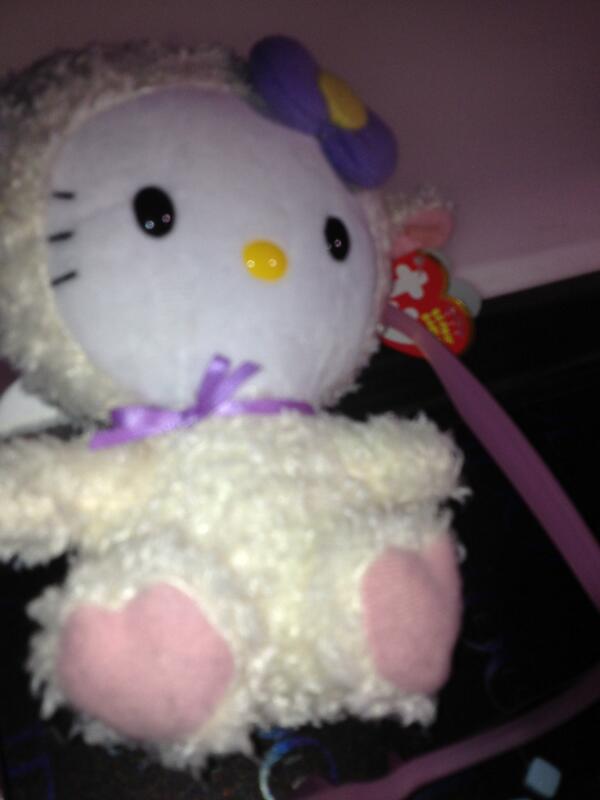
The pic shows Carey hugging a plush lamb, and the caption reads, “Love to all the lambily!!! #WWLD.”

Carey has a thing for lambs. She calls her fans lambs and often posts pictures of herself with plush lambs to her social media accounts.
The lambs are always in my heart #L4Lhttp://t.co/08xz5r53BK

Back in December she posted a picture of her husband, Nick Cannon, wearing her lamb slippers beside the couple’s Christmas tree. Two weeks ago she posted a picture of a lamb-style Hello Kitty that a member of the American Idol studio audience had given her.
Got this from a lamb pon de audience: ) Thank you!!! L4L! http://t.co/8oVKh6UqSe
-
This Is the Most Honest Cable Ad That You’ll Never See [VIDEO]
You’ve seen this ad before. A harmless-looking guy asks you if you want fast, reliable internet and a choice of all the best HD cable channels – all at a reasonable price. Well, sure, golly, gosh – of course I do!
The only difference with this ad is that it’s honest. It’s an ad for “Your Local High Speed Internet & Cable Provider,” and they tell it like it is. They’re going to suck you dry and provide passable service as best, and you’re going to like it.
-
Sprint, Softbank agree to ditch Huawei over spy concerns

-
Mercedes-Benz UniMog: Crushin’ It!

When it comes to heading off-road, vehicles like the Jeep Wrangler, Ford Raptor and Toyota FJ may come to mind. However when it comes to SERIOUS off-roading most people would ditch the aforementioned rides and go straight for the King, or as most know it, the UniMog. Built by Mercedes-Benz, the UniMog has been around since 1947. It’s a true jack-of-all trades and was built primarily to be used by farmers and municipalities. These trucks are not fast, not nimble and certainly not fuel efficient. However, if you are looking for the best off-road vehicle in existence, then there is no beating this thing.
Source: MotorTrend.com
-
Telecommunications Regulations Bills – HF 985/SF 584
A few folks mentioned that the outline of the Office of Broadband Development post was helpful – so I thought I’d try to highlight some other bills in the works, such as HF985 / SF 584, bills that address oversight of telecommunications in the state especially in light of changes in the FCC that are anticipated in 2019.
The expectation is that the role of the state PUC will have diminished considerably by 2019 so this bill sets out to transition to that change. The Minnesota PUC and Department of Commerce will continue to regulate the telecommunications industry and this bill sets out some parameters.
On the one hand, existing consumer protection mandates and programs are maintained but there is some concern about some loss of regulation in AFORs, which in the past have allowed providers to negotiate greater pricing flexibility in trade for some restrictions. Basic telephone service is really pared down to refer to phone-only and while those services will remain well regulated – those services are decreasing as many consumers drop landlines and as providers look at offering advanced services.
The PUC will continue to moderate disputes between wholesale and retail providers. They will also certify Eligible Telecommunications Carriers (ETC’s) in accordance to the FCC’s Order and supervising Carrier of Last Resort (COLR) obligations for providers who accept Federal USF/CAF funds.
In the House (HF985)…
Description: Telecommunications enforcement authority clarified, new requirements for tariffs added, proprietary information protected, criteria for certificates of authority specified, alternative regulation plans terminated, definitions added, technical corrections made, obsolete provisions removed, and conforming changes made.
Introduced Feb 28, 2013 and referred to Labor, Workplace and Regulated Industries. No other significant action since. (Get text of bill online.)
In the Senate (SF584)…
Description: Telecommunications enforcement authority clarification; tariff requirements addition; proprietary information protection; certificates of authority specification; alternative regulation plans termination
Introduced Feb 18, 2013 and referred to Jobs, Agriculture and Rural Development. No other significant action since. (Get text of bill online.)

-
Jim Carrey: eBay Autographs Are Fake (At Least ‘A Lot’ Of Them)
eBay member astrobuzz listed a Jim Carrey autographed 8×10 photo for sale, saying, “So I can afford a gun!” in the listing’s heading. This was in response to the recent Funny or Die viral hit “Cold Dead Hand,” in which Jim Carrey starred as Charlton Heston.
eBay has not commented on the story, but it appears astrobuzz was forced to change the listing to comply with eBay’s terms. As The Hollywood Reporter reports:
As of late Wednesday, the description for the Carrey photo being sold by astrobuzz read: “I’m selling this Jim Carrey autographed B&W photo (mint condition) for purposes I cannot explain because it might be against eBay’s Terms & Conditions.”
The listing appears to have changed again. The description currently says:
I’m trying to sell this 8X10 Autograph reprint photo of Jim Carrey for personal reasons. >;)Happy Bidding!P.S. I have followed all the ebay policy conditions this time and the auction should make it to the end.
It has no mention of guns.
Other sellers have started to imitate the listing. Here’s one from member paradisecarwash:

The listing’s description is as follows:
I am selling this Jim Carrey photo
Jim carrey Is a despicable hypocrite and I will no longer support him
I am also willing to donate some of the proceeds
Meanwhile, Jim Carrey has been quite active on Twitter:
Do you really want this guy to have an assault rifle? ;^• say.ly/Izy5sfC
— Jim Carrey (@JimCarrey) March 26, 2013
Owning a handgun or a shotgun is 1 thing bt if u need more fire power than that, it means you’re shootin’ blanks in … say.ly/dHl5ss1
— Jim Carrey (@JimCarrey) March 27, 2013
This licence plate is from the death car of Bonnie and Clyde. Barrow was known to be impotent. He compensated with v… say.ly/MEK5sFR
— Jim Carrey (@JimCarrey) March 27, 2013
Gun control is not a class war being waged by the so called liberal elite and even if it ws the best weapon isn’t an… say.ly/xnR5sGt
— Jim Carrey (@JimCarrey) March 27, 2013
This shower of bile isn’t abt me.I tapped into your feelings of powerlessness n openned up a reservoir it took yrs t… say.ly/crE5sOR
— Jim Carrey (@JimCarrey) March 28, 2013
Listen up! MY BODY GAURD DOESN’T HAVE A GUN THT SHOOTS A HUNDRED ROUNDS because we’re REASONABLE PEOPLE! HATE HEARS WHT IT WANTS 2 HEAR! 3^|
— Jim Carrey (@JimCarrey) March 28, 2013
A lot of the autographs you’ll buy 4 guns online r fakes.Jokes on both buyer and seller.Not to mention the karma.Your luck will be bad.;^)
— Jim Carrey (@JimCarrey) March 28, 2013
154 BULLETS FIRED AT SANDY HOOK!2 handguns n a bushmaster rifle on Lanza. 1600 rnds of amo at his house. WE MUST STOP THIS!!;^\
— Jim Carrey (@JimCarrey) March 28, 2013
‘COLD DEAD HAND’ A HUGE HIT on Funny Or Die! 1.8 million views in 3days! Forcing intolerent goons everywhere to show… say.ly/Vug5tbt
— Jim Carrey (@JimCarrey) March 28, 2013
-
Zombieland, Amazon’s Just-Greenlit Pilot, Gets a Poster
Earlier this week, Amazon announced that they had ordered up a pilot for Zombieland, a TV series based on the incredibly popular movie of the same name.
When the pilot makes its way to Prime Instant Video, user feedback will determine whether or not it receives orders for a full series run. It will have some competition, going up against six other comedy pilots.
And the series just got its first poster. It’s familiar, while still being different. What do you think?

“Zombieland will strive to break the rules—action, adventure, thrills, chills and laughs and all packed into a half hour format,” said creator Paul Wernick. “This is not your average show but Amazon is not your average network.”
Zombieland the series features the same characters from the film – Columbus, Little Rock, Tallahassee, etc. But it features new actors Tyler Ross, Izabela Vidovic, and Kirk Ward, respectively. Some of the film’s original creative team in on board, however, including writers Rhett Reese and Paul Wernick. It’s being directed by Tucker and Dale vs Evil‘s Eli Craig.
[via Huffington Post]
-
State Trooper, Wife Killed in Pennsylvania Murder-Suicide
A former state trooper murdered his wife before committing suicide near Philipsburg, Pennsylvania on Thursday.
Local news station WTAJ is reporting that 51-year-old Mark Miscavish shot and killed his wife, Traci Miscavish at the Country Market store where she worked. Mark had retired from the Pennsylvania State Police in recent years.
Mark was reported to have entered the front doors of the store, walked upstairs to where Traci worked, and shot her twice with a shotgun. He then shot himself. Both were found dead when first responders arrived.
The two had reportedly been separated since January. According to a Reuters report, Traci had filed for divorce in the past week. Mark had reportedly been arrested in January for attempting to capture his wife with duct tape and threatening to kill her with a handgun. Traci was awarded a protection-from-abuse order following the incident.
Police are still investigating the murder, making sure that Mark acted alone in the murder-suicide.
-
Operational Excellence, Meet Customer Intimacy
Most organizations continuously strive to achieve operational excellence, but they spend less effort understanding customer needs — and few marry these two sources of customer value effectively. While a focus on lowering costs, improving quality, and providing consistent, reliable service will continue to be important, I see a shift in the coming decade to combining operational excellence with customer intimacy: tailored solutions for individual customers based on a deep understanding of their needs.
Consider Tesco, one of the world’s largest retailers with over 500,000 employees, which has spent the last three decades improving its supply chain processes, and the last two decades collecting and analyzing customer data. In the 80s and 90s,Tesco modernized its supply chain, introducing point-of-sale scanners, centralizing and/or automating ordering, distribution and warehouse control, and establishing electronic data exchange with its main suppliers. As a result, lead times to stores came down from as much as two weeks to two days, and lead times from suppliers fell from 2-3 weeks to three days. In 1996 Tesco adopted Toyota Production System approaches to take its supply chain operations to an even higher level. Working with suppliers, it mapped the flow of several product families and uncovered opportunities to streamline logistics. The company redesigned its processes so products flowed quickly from suppliers to store shelves, rather than be processed in batches in production, packaging, transportation, and stores. For example, Tesco introduced wheeled dollies for fast-moving products such as soft drinks, which dramatically streamlined handling between suppliers, warehouses, and the stores, improving cycle times and reducing costs.
But to get the full value of its improved supply chain capabilities, Tesco needed to marry its upgraded operations with a deeper knowledge of its customers than it could get from aggregated scanner data. So in 1993, the company launched its “Clubcard” with which customers could earn points for purchases, redeemable for discounts or gifts. While it was building loyalty with Clubcard points, Tesco quietly built up profiles of its card-holders, including which areas of the store they visited and their product preferences. Working with consultancy dunnhumby, they eventually defined 16 lifestyle “clusters” by combining in-store shopping data (which told them what customers bought and where) and home shopping data (which also told them what customers wanted to buy but which wasn’t available).
You may be saying, OK, so they built a customer database. What’s the big deal? The big deal, and what’s really powerful, is what Tesco did with the insights it gathered. It used the customer profiles to uncover unmet needs, and to design and launch a series of services to meet those needs, including smaller local convenience stores and online shopping. Tesco tracked where customers bought — online, or in convenience, High Street, supermarket or hypermarket formats. Then it customized the product ranges at smaller stores for the local customer base. With only 1,500 items, a convenience store has to get its product mix just right. As told to me by Dan Jones, the chairman of the Lean Academy who worked with Tesco, CEO Terry Leahy was convinced that the company should develop these new formats, and actively supported their development, despite the concerns of store managers that their sales would be cannibalized. (For more on the Tesco story, see Terry Leahy’s book Management in 10 Words and Dan Jones’ book Lean Solutions).
Linking supply chain capabilities and customer insights, Tesco worked out the operational details of how to deliver exactly what customers wanted to each type of store. Their agile supply chain allowed them to replenish small stores at the same cost as big stores — so they could charge the same prices in every format. They continued to use insights from Clubcard to regularly adjust offers, tweaking the supply chain accordingly. Interestingly, as soon as they rolled out home shopping, store managers saw increased sales rather than cannibalization and so were quickly won over.
If you listen to the hype about “Big Data” and “analytics,” it sounds as if it’s getting easier and easier to derive customer insights. But the truth is, translating data into insights is hard, and translating insights into new customer experiences is much harder still. That companies like Amazon and Netflix can help you purchase by recommending products is a step forward. But it is a bigger challenge to change order fulfillment and other concrete steps in the customer lifecycle as Tesco has done.
Few organizations have Tesco’s foundational discipline of continuous operational improvement, which allows them to take full advantage of the insights they can glean from analyzing customer data. Even fewer companies have the cross-functional teamwork that enables them to turn those insights into new customer experiences delivered by operations and customer service. But marrying these two competencies is quickly becoming a competitive necessity to deliver higher levels of value to customers than was previously possible.
-
Ouya Starts Shipping To Kickstarter Backers
It’s been almost nine months since Ouya, the little Android game console that could, smashed Kickstarter records. Now the console is ready to make its way into the hands of those who made it such a success.
Ouya announced that its Android games console will start shipping out to early Kickstarter backers today. It’s unknown in what order the consoles will ship, but rest assured that all early backers will get their hands on the new console in the coming days.
Backers receiving an Ouya in the coming days will want to keep a few things in mind as they start playing around with the new console:
- When you first boot it up, you’ll experience our first update. This will either be super fast (seconds) or allow you to get a drink (minutes) based on your connection speed. Eventually, we want to do these updates in the background…
- You’ll need a credit/debit card to download games. All games are still free to try. Your card will only be charged if you buy content you love. We do want valid payment information for everyone. This is to ensure that game developers can get paid when you love their game.
- OUYA supports up to four controllers. And, because we support Bluetooth, you can pair other devices as well. We are testing now and will start publishing a list of devices soon.
Those who are getting an Ouya now are getting what is essentially an experience that is still in development. The console will not officially hit store shelves until June 4, but the team is hoping to collect data from early backers to improve the experience for everybody come launch. They will collecting ideas for improvement starting in April with a planned AMA on Reddit, and other communication vehicles.
On a final note, the Ouya team says that there are now 104 games published on the console’s storefront. For a launch lineup, it’s not bad. Of course, most of the games are ports of existing titles on Android or iOS, but these titles have been developed with widescreen HD gaming in mind so the experience might just be better than what you can currently get on mobile devices.
-
Is Facebook About to Reveal the Mythical Facebook Phone?
Facebook has just sent out press invites for an event at their Menlo Park HQ on Thursday, April 4th. The invites, in true Facebook fashion, are pretty vague. All they say is “Come See Our New Home on Android.”
Is Facebook working on a new Android-based OS? Is this about that long-rumored Facebook phone?
Well, yes and yes, according to one report.
TechCrunch is reporting that Facebook will unveil a modified Android OS built to heavily incorporate Facebook, and that it may come to a new HTC device.
This is not a totally new OS we’re talking about here. Apparently, it will simply be an Android tweak that has a bunch of Facebook functionality. TechCrunch describes it as “Facebook’s integration with iOS 6, but on steroids.”
The report indicates that it could be called “Facebook Home,” which you may be able to guess would sport a Facebook-themed home screen. Maybe your news feed stories built in, maybe your messages, maybe any other aspect of Facebook that you want to greet you in the morning.
Is this that mythical Facebook Phone that we’ve been hearing about off and on for a couple of years? You may remember that rumors emerged back in April of 2012 that Facebook and HTC were working to develop a Facebook Phone. Similar reports emerged a few months later, stating that Facebook would debut a modified Android OS centered around their service on an HTC handset.
That report suggested such a product would surface mid-2013. Hm.
But the reports of a possible Facebook phone have been shut down at every turn, even by CEO Mark Zuckerberg himself. Speaking just two months ago, here’s what he had to say about it:
“We’re not going to build a phone. It’s not the right strategy for us to build one integrated system…Let’s say we sell 10 million units — that would be 1 percent of users. Who cares for us?”
This newest report sure sounds a lot like that mythical Facebook Phone. Maybe not the Facebook Phone of yore, but at least a device that runs a Facebook-centric OS. We’ll see what goes down next Thursday.
-
Sharing Clinical Research Data: Workshop Summary
Prepublication Now Available
Pharmaceutical companies, academic researchers, and government agencies such as the Food and Drug Administration and the National Institutes of Health all possess large quantities of clinical research data. If these data were shared more widely within and across sectors, the resulting research advances derived from data pooling and analysis could improve public health, enhance patient safety, and spur drug development. Data sharing can also increase public trust in clinical trials and conclusions derived from them by lending transparency to the clinical research process. Much of this information, however, is never shared. Retention of clinical research data by investigators and within organizations may represent lost opportunities in biomedical research. Despite the potential benefits that could be accrued from pooling and analysis of shared data, barriers to data sharing faced by researchers in industry include concerns about data mining, erroneous secondary analyses of data, and unwarranted litigation, as well as a desire to protect confidential commercial information. Academic partners face significant cultural barriers to sharing data and participating in longer term collaborative efforts that stem from a desire to protect intellectual autonomy and a career advancement system built on priority of publication and citation requirements. Some barriers, like the need to protect patient privacy, pre- sent challenges for both sectors. Looking ahead, there are also a number of technical challenges to be faced in analyzing potentially large and heterogeneous datasets.
This public workshop focused on strategies to facilitate sharing of clinical research data in order to advance scientific knowledge and public health. While the workshop focused on sharing of data from preplanned interventional studies of human subjects, models and projects involving sharing of other clinical data types were considered to the extent that they provided lessons learned and best practices. The workshop objectives were to examine the benefits of sharing of clinical research data from all sectors and among these sectors, including, for example: benefits to the research and development enterprise and benefits to the analysis of safety and efficacy. Sharing Clinical Research Data: Workshop Summary identifies barriers and challenges to sharing clinical research data, explores strategies to address these barriers and challenges, including identifying priority actions and “low-hanging fruit” opportunities, and discusses strategies for using these potentially large datasets to facilitate scientific and public health advances.
Topics: Health and Medicine


