Blog

  • New Trojan can hack you in a Flash

    Are you sitting down? I know this will come as a shock, and I want to prepare you. Adobe Flash is the source of a new attack against PCs. Honestly, in this case it really is not Adobe’s fault (unlike some other past cases), but the software is still the vehicle used in this drive-by. Microsoft reports that Trojan:Win32/Preflayer is in the wild and changes the home page for Internet Explorer, Google Chrome, Mozilla Firefox, or Yandex.

    “These sites appear to be a type of search engine, but there are pop-up advertisements displayed on the pages, and there was an instance where I was redirected to a different page not of my choosing”, Jonathan San Jose, Microsoft antivirus researcher, says.

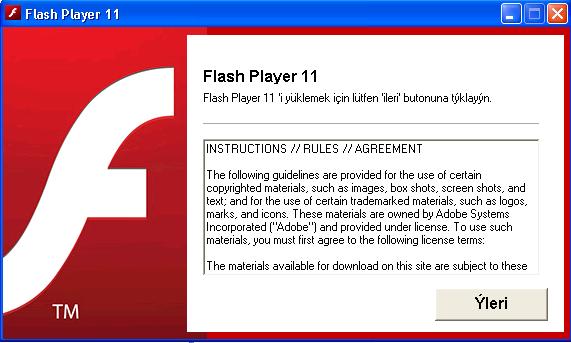
    The Trojan attacks in the guise of a fake Adobe Flash update that pops up on the user’s screen. According to the software giant’s threat report “to trick you into thinking that it’s a legitimate installer, it also downloads and runs the actual Flash Player installer”. That makes this a bit scarier than the average fake Flash updates that we have grown accustomed to encountering over the past few years.

    The browser home page is changed to one of the following addresses:

    • www.anasayfada.net
    • www.heydex.com

    Microsoft details how the Trojan works in its threat report, including the attacks on Chrome, Firefox, Yandex and, of course, Internet Explorer. Microsoft also outlines steps to remove the virus, but users should probably be clued in to not get it, given that the pop-up box for installation is written in Turkish.

    Folks, Flash is dangerous. It also causes non-critical, but still annoying, browser problems. Many web sites have moved on to HTML5, but for those that have not, do yourself a favor — enable click-to-run in your web browser and pick and choose carefully where you make that click. By all means, do not trust pop-up ads. If you need to update, then visit the official Adobe site and do so manually. It really is a jungle out there.

    Photo Credits: maraga/Shutterstock

  • Change Management Is Bigger Than Leadership

    If an organization needs to undergo significant change, that’s a leadership issue, right? Old dogs will learn new tricks when the lead dog — or ape, or penguin, depending on the management fable of the moment — shows them off. Leaders need to craft compelling elevator speeches, relentlessly deliver the message of change, and above all, walk the talk.

    That is all well and good for animal packs, and it helps with humans, too. But by itself, the lead-animal theory is woefully insufficient for changing large organizations or large parts of organizations. Leaders modeling behavior and talking the case for change can indeed help enterprises transform. But how often is that corporate alpha dog actually sitting among the pack? Most people in large organizations catch a glimpse only briefly, via dispatch or WebEx or the rare visit. Soon, the appearance fades and the banners droop. The workers, the managers, and even the executives look around to see if their environment has changed, if the tried-and-true behaviors that made their world work will continue to do so. If the environment has changed, fine; it’s time to adapt. If it hasn’t, then why bother to change?

    How, then, does one lead the changing of an organization, whether it is a company, business unit, service line, department, or work unit? By changing the work systems that comprise the work environment around the people whose behavior is supposed to change. Therein lies the key to successful, embedded, and sustained change: alter the environment, and people will adapt to it. Call it a species strength. We behave based on the reality around us.

    Eight aspects comprise our world at work and, therefore, patterns of behavior at work: organization (organizational chart), workplace (its physical or virtual configuration), task (work flow or processes), people (specifically the skills and orientation), rewards (and punishments), measurement (the metrics employed), information distribution (who gets to know what when), and decision allocation (who is involved in what way in which decisions). A skilled change leader can convert these eight aspects into eight levers for change.

    That is just what Hyundai’s Chung Mong-Koo did and the results speak for themselves. He took a carmaker arguably within sight of going out of business in 1998 and led the creation of what Bill Holstein (writing in Strategy+Business) describes as “a coherent mix of quality improvement, design, and marketing that gives Hyundai a clear advantage over its industry competitors.” A remarkable feat made only more remarkable by the fact that it occurred in a highly competitive, well-established global industry.

    This change took time and far more than an inspired “motivational” leader. It took a concerted, coordinated, and sustained reworking of multiple work systems. For instance, Hyundai established a new and powerful quality division along with a Global Command and Control Center and brought transmission design and manufacturing in-house, implemented many Deming and systems-oriented approaches to task or work flow, flattened organizational hierarchies to drive more collaborative decision-making, made far more production information available throughout the organization in real time, significantly upgraded the level of technological tools available (especially on the production floor), altered measurement to include “qualitivity” (a unique combination of quality, productivity, and customer satisfaction) and rewards (e.g., good pay by local standards in Alabama plant), and hired outside designers leading to a new approach to design termed “fluidic sculpture.”

    At another global organization, the Roman Catholic Church, a change in leadership has many hoping for the revitalization of what some see as a scandal-ridden, unresponsive, and secretive organization. What might a change-minded pontificate learn from Hyundai? Do the aforementioned levers of change apply? They might start by articulating what scenes they want to see occurring regularly and reliably within the church that currently do not, and, conversely, what now-common scenes they wish would stop. That work done, they might step back and look across the scenes and ask questions such as the following:

    1. What changes in the organizational chart or in supporting structures (such as meetings) would support the scenes occurring? For example, does the traditional parish structure facilitate or hinder the scenes occurring?
    2. What design of physical or virtual space would make the desired scenes more likely? For example, would easy access to global digital connections serve to build a larger sense of community?
    3. What protocols might ease realization of desired scenes? For example, how standardized should the handling of financial or educational tasks be?
    4. What skills and orientation should people playing key roles in the desired scenes bring to their roles? For example, what attributes should qualify someone for hire into those roles?
    5. What rewards or punishment should depend upon people acting consistently with the desired scenes? For example, on what basis should disbursement of church funds occur?
    6. What measurements would foster the regular unfolding of the desired scenes? For example, is there a RCC version of Hyundai’s qualitivity?
    7. What distribution of information would facilitate desired scenes occurring and frustrate the occurrence of undesired scenes? For example, would greater transparency be a goal? If it is, with whom would RCC wish to be more transparent and how would this work, from speed of message delivery and method of communication?
    8. What allocation of decision making roles would serve to bring desired scenes to life? For example, what role should clergy and laity play in which decisions to support the occurrence of desired scenes?

    Watch the Roman Catholic Church. The more that it approaches the need for change strictly as a need to “get a different leader,” the less real change will occur, let alone endure. The more that it approaches change as a concerted, coordinated, and sustained reworking of multiple work systems, the more real change will occur…and endure, as it has at Hyundai, and as it would for your organization.

  • Hands on: Audiobus and GarageBand on iOS

    Audiobus ($4.99) is an interesting concept on iOS. It’s a program that acts as a bridge between several compatible audio apps — you can find a complete listing of compatible apps here. Add in the apps you want into the Audiobus interface and you can have a drum track from a drum machine playing along to your heavy metal guitar. Up until now, what’s been missing is support for GarageBand, Apple’s iOS recording software. But now, with a recent update for GarageBand, the app will work with Audiobus-enabled apps. I’ve never been thrilled with GarageBand’s built-in amps, so I love that I can use a different amp modeling package.

    I’m going to walk you through how to integrate GarageBand, Audiobus and Audiobus-supported apps. Since I’m a guitar player, I’ll be focusing on how I use it for guitars, but any instrument you can hook into your iOS device will do.

    Hooking it all together

    The first thing you’ll need to do is launch AudioBus. You’ll see a screen with three boxes labeled Input, Effects and Output. Tap on Input to select the apps you want to feed into Audiobus. I’ve chosen Amplitube and Pocket Beats (you can have up to three inputs). Pocket Beats is a drum machine with a heavy techno feel, and combined with my blues/classic rock playing style certainly yielded an interesting jam track. Then tap on Outputs and choose GarageBand.

    Crump-audiobus-01

    You can probably do the next steps in any order, but I like to go from start to finish. I open up Pocket Beats and start the drum machine. I then launch AmptiTube and find a preset I like. Then I tap on GarageBand from the Audiobus app to launch it.

    GarageBand is going to ask you what input source to use for your instrument. Note: this isn’t the Audiobus feed, but how the instrument is getting jacked in. Since I’m not using GarageBand’s craptastic amps, I choose Audio Recorder. If you don’t find the built-in amps as displeasing as I do, you can choose Guitar Amp as your input.

    crump-audiobus-2

    Now, GarageBand takes an extra step, which I found out the hard way. By default, GarageBand records in eight-measure increments. So, I was jamming along to my unholy union of blues rock and house dance beat when I noticed the whole shebang had stopped recording. So be sure to tap on the Plus icon in the upper right of the measure ruler and extend the measure as far as you need.

    Next I went to AmpliTube to start the actual recording. On the righthand side of the screen you’ll see a floating palette. From here you can either change the apps Audibus is passing or start the recording. It’s important to note that you will want to start the recording here; not in GarageBand. Play along to your heart’s content.

    Once you’re done, open up GarageBand, and you’ll see the Audiobus track.

    crump-audiobus04

    How I plan on using Audiobus

    The Fender Squire USB Guitar is the guitar I take when I’m traveling or practicing outside. The USB 30-pin connector combined with an amp app is all I need to practice or write with when I’m not in my studio. I usually have some backing tracks I play along with and I’m getting in the habit of recording most of my practice sessions to help me get better. Now, I can use some MP3 I’ve uploaded into iOS GarageBand, get an amp sound that I’m happy with in an app like AmpliTube and record, and write when I’m sitting by the lake this summer.

    Apple including Audiobus support in its own apps is an interesting sea change. It’s not often Apple includes support for a third-party service in an iOS app. I hope this is a sign of things to come. Now that Apple has increased awareness of Audiobus, I’m hoping we’ll start to see some great apps become available that will really fuel my creativity.

    Related research and analysis from GigaOM Pro:
    Subscriber content. Sign up for a free trial.

  • Google+ Engineers Tell You How To Get People To Your App

    Google developer programs engineers Silvano Luciani and Joanna Smith put out a video this week, discussing how to use interactive posts to “bring the people who care” to your apps. The two explore how to find the best audience when prefilling recipients, and build a widget to demonstrate how to help users pick the right people for interactive posts.

  • Kim Jong Un Uses an iMac [PHOTOS]

    We’re not international politics experts, so we’ll refrain from commenting on North Korean state media’s suggestions that leader Kim Jong Un and his generals are planning some sort of “U.S. mainland strike,” and whether or not this is credible or simply some sort of chest thumping designed to pump up support, domestically.

    But they did release some interesting photos of Kim Jong Un seemingly making some sort of plans in a military control room.

    And in those photos, we can confirm Kim Jong Un’s predilection for Apple products.

    Look! An iMac!

    “A 21.5 inch aluminium unibody iMac is on Kim Jong Un’s desk, confirming long-held rumors of the Kim family’s passion for Apple Macs,” says NK News.

    Here are the photos that purportedly references some sort of attack plans:

  • WSJ: Facebook plans to clog up Android home screens with status updates

    Facebook Android Home Screen
    Mercifully, it seems that Facebook (FB) has no plans to produce its own smartphone. What it is planning, unnamed sources have told The Wall Street Journal, is “new software for mobile devices powered by Google’s Android operating system that displays content from users’ Facebook accounts on a smartphone’s home screen.” So in contrast to your typical Facebook app that exists as a compact icon that must be clicked to be used, the new Facebook app will act as more of a widget that gives you access to Facebook status updates directly from your home screen. Or as one source tells The Wall Street Journal, the new initiative is about “putting Facebook first” on Android smartphones.

    Continue reading…

  • 2000 Gold Medalist Dies of a Heart Attack at age 35

    Olympic gold medalist Soraya Jimenez has died at the age of 35.

    Reuters is reporting that Jimenez died of a heart attack at her home in Mexico City. She reportedly had multiple health issues, and only one lung.

    Jimenez won gold for Mexico in the women’s 58 kg weightlifting competition at the 2000 summer Olympic Games in Sydney, Australia. She lifted a total of 222.5 kg (490.5 pounds), beating the North Korean silver medalist Ri Song-Hui. The victory made her the first female gold medalist from Mexico.

    Jimenez retired from the sport of weightlifting after the 2004 summer Olympic Games in Athens, Greece, where she did not place.

  • William Shatner’s Age Catches Up To Him In His Latest Fight With The Gorn

    For an 82-year-old, William Shatner still looks incredibly young. That being said, it seems that his age is finally catching up to him. Despite that, he still holds his own against one of his oldest adversaries – the Gorn.

    All of this is for the upcoming Star Trek: The Video Game. The story takes place between 2009′s Star Trek reboot and the latest film – Star Trek: Into Darkness. In the video game, Kirk and Spock must fight off a Gorn invasion.

    Of course, this video only raises our collective hope that William Shatner will make a cameo in the newest game. He could prove an invaluable ally to future Kirk and Spock what with his incredible acting and charm.

  • That ‘New’ Delicious Has Some New Features

    Delicious announced that it has added some new features after remaining quite for a while. For one, you can now log in with Facebook or Twitter.

    “Login with a single click and immediately start adding links,” Delicious says in a blog post. “But that’s not the only benefit of connecting your social accounts. We can also automatically pull in links you’ve shared (or favorited on Twitter), meaning you’ll never have to dig through your feed to find a link again – they will all be waiting for you on your Delicious account, indexed and searchable. We’ve also introduced the Friend Finder to help you find and follow the people you know.”

    They’ve also started putting the user who first saved a link back in the link details pane. This was a big community request, Delicious says. It’s now prominently displayed on every link added to the site.

    Other new stuff includes a bug fix where public tags were showing up in autocomplete when tagging, the addition of the “Add to Delicious” button on the Tools page, faster load times, and an optimized (for speed) bookmarklet.

    Delicious says to expect more improvements soon.

    The new ‘new’ delicious launched in November with another redesign. Shortly thereafter came the iPhone app.

  • Ford Sued Over Unintended Acceleration Vulnerability – Sound Familiar Toyota?

    Ford was sued on Thursday, March 28, 2013 by 20 consumers looking to get compensated by Ford for cars and trucks they say were “vulnerable to unintended acceleration“. Wait, isn’t that just a Toyota problem. Apparently not!

    Ford Sued Over Unintended Acceleration Issues

    Ford has been sued over cars and trucks that are “vulnerable to unintended acceleration.” Not just a Toyota issue it seems.

    According to a Reuters news report the lawsuit was filed in West Virginia federal court and alleges more than 30 Ford vehicles that were “equipped with electronic throttle control system did not have in place reliable safety systems, such as a brake override system.”

    The lawsuit claims models built between 2002-2010 are susceptible including 2004-10 Ford F-Series pickup-up trucks, 2005-09 Lincoln Town Car and 2002-2005 Mercury Cougar. The plaintiffs come from 14 U.S. states.

    A lawyer working on the plaintiffs case said:

    “They’re trying to be compensated for their economic losses by having overpaid for cars that contained defects,” Adam Levitt, a partner at Grant & Eisenhofer and head of the law firm’s consumer practice group, said in a phone interview.

    “Had they and the other class members been aware of these defects, they either wouldn’t have bought the cars or would have paid a lot less for them,” he added.

    As most of our readers know Toyota was saddled with this accusation and recently settled a $1.1 billion lawsuit. While Toyota, NASA and NHTSA tests have long claimed that the issue is really driver error, the accusation cast a dark shadow over the company.

    Now, Ford is touting those same NHTSA tests in its defense.

    “NHTSA’s work is far more scientific and trustworthy than work done by personal injury lawyers and their paid experts,” Ford said in a statement in response to the complaint.

    “In rare situations, vehicle factors, such as floor mats or broken mechanical components, can interfere with proper throttle operation, and manufacturers have addressed these rare events in field service actions,” Ford added.

    Ford has since 2010 installed a brake override system in its vehicles, the same system Toyota pioneered to address the supposed issue.

    With most experts and the NHTSA concluding that the driver error is the “predominate” cause of unintended acceleration, this lawsuit probably doesn’t have the much merit. However, many people thought that about the class action suit that Toyota settled.

    What do you think? Are you intrigued to see this issue spread to other makers? Or are you fed up with class action suits that seemingly are clogging the legal system without any real aim except to make money?

    Related Posts:

    The post Ford Sued Over Unintended Acceleration Vulnerability – Sound Familiar Toyota? appeared first on Tundra Headquarters Blog.

  • Press Fleet Ram Catches Fire – Worker Sabotage To Blame?

    Dallas Morning News contributor Terry Box had a pretty exciting vehicle review recently. He was driving a brand new Longhorn Edition Ram 1500, when other motorists started to waive and gesture at him frantically. The problem? His brand new press fleet Ram was burning.

    By the time he got pulled over and out of the truck, the vehicle was quickly engulfed. See the story here.

    Ram worker sabotage fire

    Brand new Ram burns to the ground – sabotage at play? Image from Dallas Morning News

    The question is, was this “a one-in-a-billion situation” as described by Ram CEO Fred Diaz, or is this problem a result of reported worker sabotage at Ram’s Warren Truck Assembly Plant?

    The Trouble With Sabotage

    Sabotage is inherently risky. You never know who it’s going to effect, nor can you be certain about how it will play out. If a Ram worker decided to wipe a little grease on this particular truck’s exhaust manifold, it’s likely that grease would smolder and stink to high heaven. A harmless bit of sabotage that might annoy a new truck buyer, waste a dealership’s time, etc., but nothing serious.

    However, wipe too much grease on the manifold, and you get a giant fire.

    To be clearI have no Earthly idea what caused this truck to burn down. It could have been one-in-a-billion bad luck, it could have been something the reviewing journalist did (maybe he was cooking burgers on the manifold or something), or it could have been the same mysterious gremlins that caused so many Toyota owners to step on the gas instead of the brakes a couple of years ago.

    Whatever the cause, I know this:

    1. Ram’s record for quality and durability has never been great. JD Power frequently rates Ram below average in their annual initial quality and long-term durability surveys (you can read more details about Ram’s performance on these surveys here).
    2. We have documentation that Ram workers were sabotaging trucks (here’s that sabotage story link again)
    3. As a general rule, trucks don’t spontaneously combust…well, except for F150s with defective cruise control modules or GM trucks with windshield wiper fluid heaters

    I’ve said it before and I’ll say it again: There’s no good reason to buy a Ram. Between sabotage concerns, a track record of poor quality, and a list of quality alternatives (namely the Tundra and F-150), buying a Ram makes little sense.

    Hat tip to PickupTrucks.com

    Related Post

    The post Press Fleet Ram Catches Fire – Worker Sabotage To Blame? appeared first on Tundra Headquarters Blog.

  • Marijuana Tax, Legalization Being Considered in Maine

    A bill in the Maine legislature that would legalize and tax marijuana has gained some considerable support.

    According to a report from the Bangor Daily News, the legislation now has 35 co-sponsors.

    The bill, LD 1229 or “An Act to Regulate and Tax Marijuana,” would regulate marijuana in the state of Maine the way alcohol is regulated. Having up to 2.5 ounces of marijuana and growing up to six plants in a locked area would be legal under the bill. Smoking marijuana in public would still be illegal, and a tax of $50 per ounce would also be imposed. The bill tasks the Maine Department of Administrative and Financial Services with licensing retail stores and licensing the cultivation, manufacturing, and testing of marijuana in the state.

    Lawmakers are touting the bill as a tax boon for the state, as well as a way to limit government prohibitions. The bill has been assigned to the Maine legislature’s Criminal Justice and Public Safetey Committee – the same committee that shot down a similar bill during last year’s legislative session.

    Maine has allowed the medical use of marijuana since 1999.

  • Sony rumored to be working on Cyber-shot and Walkman-based Xperia smartphones behind the scenes

    Sony_Xperia_Z_Talk_Android_


    Yup— it’s looking more and more like 2013 is shaping up to be the year of the Sony devices for Android fans. New rumors have surfaced indicating that the ever-growing manufacturer is all set to bring in some topnotch camera and sound capabilities in its Xperia line of handsets. Let me explain– rampant rumors have surfaced recently regarding speculation of Sony’s Cyber-shot and Walkman technologies into the following upcoming flagships: a 5-inch Cyber-shot-based smartphone with unrivaled camera capabilities, a 5-inch Xperia Walkman-based device featuring an integrated amplifier chip, an “iPhone competitor” with a small form factor and finally, a mysterious phablet-type device. The neat thing is the fact that each rumored device are expected to feature top of the line guts inside which presumably include a hyper-fast processing chip and a current/up-to-date version of Android.

    Naturally Sony is staying mum on the possibility of some attractive devices on the horizon, but considering it has plans on sitting at the big boy table in the near-future, these rumors shouldn’t be too far-fetched.

    source: PhoneArena


    Come comment on this article: Sony rumored to be working on Cyber-shot and Walkman-based Xperia smartphones behind the scenes

  • Windows 8 Might Be Coming to 7-Inch Tablets

    Windows 8 was obviously built with tablets in mind, but the OS only supports tablets with 1366×768 displays. That’s all going to change, and it could mean big things for Windows 8 going forward.

    In a recent Windows Certification Newsletter, Microsoft announced that Windows 8 now supports a minimum resolution of 1024×768. The company says the new rule is for “partners exploring designs for certain markets.”

    So, what does this mean? A lower resolution could point to Microsoft opening up to putting Windows 8 on smaller devices, including 7-inch tablets. The current stable of Windows 8 tablets all size in at either 9 or 10-inches, and the price reflects that. The high price commanded by the current stable of Windows 8 tablets has definitely been an obstacle for consumers, and a lower resolution, lower priced tablet may just be what the company needs.

    The possibilities don’t stop at 7-inch tablets either. ZDNet speculates that Microsoft may be using its partnership with Nook to create a Windows-powered eReader that would have access to Barnes & Noble’s extensive collection of eBooks. The 1024×768 resolution would be a perfect fit as it would finally allow Microsoft to sell cheap hardware.

    Of course, all of this is mere speculation for now. All we know is that Microsoft is relaxing its certification requirements. It’s too early to tell if OEMs will start making 7-inch tablets, but I wouldn’t be surprised if we start to hear something along those lines later this year.

  • Nick Offerman Break Dances, Dons Chicken Suit for a Lumineers Cover

    As you may know, Nick Offerman is a man of many talents. It just so happens that one of those talents is breaking it down.

    On last night’s Late Night with Jimmy Fallon, Offerman discussed his reddit AMAs, walking the beans, and his childhood rap career.

    Oh yeah, and then he busted out some sweet moves.

    Then, he joined Fallon and Blake Shelton for an all-clicking version of the Lumineer’s hit song “Ho Hey.”

  • Open Data Has Little Value If People Can’t Use It

    Open data could be the gamechanger when it comes to eradicating global poverty. In the last two years, central and local governments and multilateral organizations around the world have opened a range of data — information on budgets, infrastructure, health, sanitation, education, and more — online, for free. The data are not perfect, but then perfection is not the goal. Rather, the goal is for this data to become actionable intelligence: a launchpad for investigation, analysis, triangulation, and improved decision making at all levels.

    While the “opening” has generated excitement from development experts, donors, several government champions, and the increasingly mighty geek community, the hard reality is that much of the public has been left behind, or tacked on as an afterthought. So how can we support “data-literacy” across the full spectrum of users, including media, NGOs, labor unions, professional associations, religious groups, universities, and the public at large?

    Here’s one approach. It’s time and resource intensive, but crucial — institutionalizing data literacy across societies. Stay with me on this. I’m not suggesting that everyone on planet Earth should be trained in statistical analysis, visualization and app development. Rather, let’s work more with journalists and civic groups. Knight Fellow Justin Arenstein calls these folks “mass mobilizers” of information. O’Reilly Media’s Alex Howard points to these groups in particular because they can help demystify data, to make it understandable by populations and not just statisticians. Bono calls this factivism.

    After all, shouldn’t everyone have the option to inform their own decision-making if they want to? Isn’t that what democratizing data is really about?

    Here’s the good news: Data interrogation and visualization tools are increasingly user-friendly and freely accessible, such as a suite of tools supported (or competing for support) by the Knight Foundation. And pithy, digestible data literacy training materials are ubiquitous (from School of Data to KDMC tutorials to For Journalism to Data Journalism Bootcamps.) It’s early yet, but the playing field is starting to level, giving journalists and members of the public better access to data that previously only governments or large private companies could sift through.

    Take Irene Choge, a journalist for NTV in Kenya. Irene participated in a Data Journalism Bootcamp in Nairobi convened by the World Bank Institute, the African Media Initiative, and Google in January 2012. This was an intensive, hands-on training program designed to give journalists, civil society members, and coders a crash-course in practical techniques and tools needed to harness open data for storytelling.

    At the time, Choge was searching for answers as to why primary school students’ grades were at a record low in two particular Kenyan counties — a trend that wasn’t reflected in the rest of the country. Using data interrogation skills she acquired during the training, she began to explore Kenya’s Open Data platform, analyzing student grades per primary school. She then examined county-level expenditures on education infrastructure — specifically, on the number of toilets per primary school. Then she scrutinized disease levels among primary school students. Armed with this information, Choge visited the counties, investigated, interviewed, triangulated, and produced a series of stories (starting with this one) that presented her findings.

    Funding allocated for children’s toilet facilities had disappeared, resulting in high levels of open defecation (in the same spaces where they played and ate). This increased their risk of contracting cholera, giardiasis, hepatitis, and rotavirus, and accounted for low attendance, in particular among girls, who also had no facilities during their menstruation cycles. The end result: poor student performance on exams.

    Through Choge’s analysis and story, open data became actionable intelligence. As a result, government is acting: ministry resources are being allocated to correct the toilet deficiency across the most underserved primary schools and to identify the source of the misallocation at the root of the problem. Moreover, NTV, with help from the World Bank and African Media Initiative-supported Code for Kenya program, are building a mobile phone application to enable parents across Kenyan counties to access and compare sanitary conditions in their children’s schools against schools in other counties, and to demand action and improvements from government.

    This is just one illustration of how opened data — particularly hyperlocal data — can elevate issues, which matter to people into the public consciousness for consideration, debate, and action. As governments continue to open data the world over, there needs to be a stronger emphasis on enabling “mass mobilizers” and ultimately the public to use and reuse it. Doing so can unleash the true power of opened data — to become actionable intelligence.

    Please join the conversation and check back for regular updates. Follow the Scaling Social Impact insight center on Twitter @ScalingSocial and give us feedback.

  • Op-Ed: The still-tolerated gender bias in science

    Women-in-Physics

    Particle physicist Sarah M. Demers shares her experience of being a woman in science, and why it’s a problem that she doesn’t see gender equity around her yet. Image: Thinkstock.com

    I just might have the best job in the world. As a particle physicist and professor at Yale, I am a happy cog on the wheel of humanity, trying to understand the universe. I collaborate with brilliant people, young and old, from all over the globe. But while I love my job, the truth is I am part of a system that is rigged.

    We have come a long way since the day in 1900 that suffragist Susan B. Anthony pledged her life insurance policy to the University of Rochester on a fundraising deadline. This desperate move clinched a deal with trustees that allowed women to enroll. I was admitted there as a graduate student in physics almost a century later.

    I remember reading the orientation materials with excitement. I looked over the roster of my classmates and my enthusiasm dimmed a bit as I counted only six women out of thirty. (And when I finally met one of the six, Marion, “she” turned out to be a man from Romania.) How, in 1999, could I be joining a club that was so small?

    First, for the good news. The club may be small, but at least it exists. Pioneers like Anthony, Marie Curie and Bernice Sandler (the “Godmother of Title IX”) have opened institutional doors, modeled scientific brilliance and changed the climate. Women can now build up their credentials and compete for the same careers in science as men. Reports from my younger colleagues of being steered away from the labs because some misogynist says, “Women shouldn’t do science” are still coming in, but less often.

    Even claims about men having more innate scientific ability are becoming rarer. It just doesn’t fit the evidence. Girls outperform boys in science exams sometimes, and sometimes it’s vice versa, depending on the country in question. From Columbia, where boys scored 4% higher on average, to Jordan, where girls scored 9% higher on average, the data do not jibe with a gender explanation, as this New York Times infographic shows. (Intrigued? This country-by-country data comes from Andreas Schleicher’s PISA test; watch his TED Talk to learn more.)

    And yet, despite this progress, this data, women still only account for about one in ten physics professors in the U.S. As much as scientists talk about eradicating bias from our experiments, we sure haven’t done a great job eradicating it from our profession.

    A framework to produce good scientists on an equal playing field requires objectivity. Students take tests, receive grades and apply for the next phase of school. Researchers submit papers and grant proposals that are returned with the feedback of peer review. We apply for jobs, and if we get them, funding. Only the highest rated work is funded and published.

    Susan B. Anthony made an unusual deal to get women admitted to the University of Rochester. About 100 years later, gender bias in university science departments continues.

    Susan B. Anthony made an unusual deal to get women admitted to the University of Rochester. About 100 years later, gender bias in university science departments continues.

    In this environment, even a small bias will have a huge ripple effect on the quality of scientific results that emerge and the make-up of the researchers left employed and standing at the end of the day. Unfortunately, we have a growing body of evidence that subconscious bias is alive and well. A few of my colleagues at Yale conducted a study published in the Proceedings of the National Academy of Science that shows gender bias among science faculty members. They sent an application for a lab manager position to hundreds of science professors at six leading research institutions. Half of the applications were labeled as coming from John. The other half, in all other ways identical, came from Jennifer. The professors were asked to rate the application they received and suggest a starting salary.

    The results? Jennifer was rated as less competent than John, though she was viewed as more likable. Jennifer was less likely to be recommended for hire and less likely to be considered worth mentoring. Her average suggested starting salary was lower ($26,508 compared to $30,238). The bias against Jennifer showed in both male and female faculty members, both younger and older professors, across the fields of physics, biology and chemistry.

    I have been around the block and back on the topic of women in science. I would much rather be writing about the Higgs boson, the physics of music, or what we know about effective science education. But subconscious bias against women in science is real, it is damaging and while the studies we see suggest that it is almost universally practiced, it is far from universally acknowledged.

    In a recent Time Magazine article about a prominent woman in physics, the reporter wrote, “Physics is a male-dominated field, and the assumption is that a woman has to overcome hurdles and face down biases that men don’t.  But that just isn’t so. Women in physics are familiar with this misconception and acknowledge it mostly with jokes.”

    It is difficult to solve a problem that we won’t admit we have, but good science demands that we stamp out subconscious bias. Luckily, raising awareness and continuing the conversation is much less of a sacrifice than signing over a life insurance policy. A century from now I hope that identical work from Jennifer and John will receive, on average, identical marks. I hope that our great-grandchildren will not be scratching their heads asking, “Why so little progress?” And I hope that an article by a physicist will be about her latest discovery, not gender.

    Sarah Demers is an assistant professor of physics at Yale University. She wrote this piece through The OpEd Project’s Public Voices Fellowship Program.

    Want to learn about more women in science and tech? Watch today’s talk from mechanical engineer Katherine Kuchenbecker, who is exploring the “technology of touch.” And check out our list of 70+ TED Talks from female physicists, biologists, engineers, doctors, technologists, oceanographers, roboticists, and astronauts »

  • iPhone 5S announcement rumored for June 20th, launch in July

    iPhone 5S Release Date
    It has been widely reported that Apple’s (AAPL) next-generation iPhone will be announced sometime in June. According to Macotakara, the latest print edition of the Japanese MacFan magazine reports Apple will unveil the device at a press event on June 20th and release the iPhone 5S a few weeks later in July. The report goes on to suggest that a low-cost version of the iPhone for developing countries such as China and India may debut in August. Apple will also reportedly preview or even announce an update for its iOS platform at the rumored event. The iPhone 5S is expected to feature a faster A7 processor, an upgraded camera and possibly a fingerprint chip under the Home button for improved security. The form factor will likely remain unchanged, however.

  • Is HBO Bringing Live Streaming Sports to HBO GO?

    Is live streaming sports (read: boxing) coming to HBO GO?

    According to HBO Sports head Ken Hershman, yes. But HBO leadership aren’t all in the same boat, and another exec isn’t ready to spill the beans on any such project.

    Speaking at Harvard Law School’s Sports Law Symposium, Hershman said that live sports, and specifically boxing, are coming to HBO GO “by the end of the year.

    But HBO SVP of corporate affairs Jeff Cusson told The Verge that there are currently no plans for any such streaming offerings.

    “We’re always exploring ways to enhance HBO Go, but we have no immediate plans to offer live boxing on the platform,” he said.

    HBO’s sports division airs documentaries like the 24/7 series and weekly news programs like Real Sports, but when you think of HBO Sports it’s likely that you think of boxing.

    So when the head of HBO Sports says that the company will bring sports content to their HBO GO subscription streaming service by the end of the year, you would think that he means boxing, right?

    This isn’t the only hint that we’ve heard recently about HBO expanding their HBO GO service. Last week, HBO CEO Richard Plepler mentioned that it’s possible that the service could become available without a cable subscription, as a package deal with ISPs. And by “it’s possible,” we mean he said that maybe, just maybe, HBO GO could “evolve,” but right now they totally have the right model for the service.

  • TED Radio Hour explores what happens when we make mistakes

    Making-MistakesIt happens to the best of us: as hard as we try to be perfect, on occasion, we mess up. Today’s TED Radio Hour explores how we deal with mistakes and the simple fact that, sometimes, we are wrong. It asks: what does it take to face mistakes head-on and use them as a learning experience?

    In this episode — the fourth in season two – Brian Goldman shares what happens when it’s a doctor who makes the mistake, Brené Brown reveals what we can hear when we listen to shame, Stefon Harris looks to jazz where there are no mistakes and Margaret Heffernan illuminates why conflict is simply a part of progress.

    Check out your local NPR schedule to find out when the show airs today, or listen to it via NPR’s website »

    Or head to iTunes, where the podcast is available now »