Blog

  • Are There Any Winners In The War On Ads?

    Advertising is a key component of the Web economy as it keeps many of the Web sites and services you use free. Facebook, Twitter, and even the very words you’re reading right now are all free because of advertising.

    For years, this model of advertising on Web sites in exchange for free content worked well. That very model, however, has been under attack for the past few years. The two factions in this war – the pro-ad and the anti-ad factions – have been going back and forth, but no clear winner has ever emerged. Two recent events have helped reinvigorate the discussion, but both threaten to take us even further into a war that can’t be won.

    Where do you stand in the war on ads? Are you pro-ad or anti-ad? Let us know in the comments.

    Earlier this month, Mozilla, makers of the popular Firefox browser, came under attack by the ad industry. The Interactive Advertising Bureau claims that Mozilla’s plan to automatically block third-party cookies in Firefox will hurt small businesses and Web sites that rely on these cookies track consumer’s Web activity and deliver relevant ads.

    Mozilla claims that its anti-cookie policy is all about protecting the privacy of its users. A noble endeavor if there ever was one, but what about Web sites that rely on these cookies to make money from advertisements? Mozilla says that “collateral impact should be limited,” but encourages Web sites to make the necessary code change to accomodate the new policy.

    In response, IAB President and CEO Randall Rothenberg says that the policy won’t help consumers in the least, especially in the realm of privacy.

    In 2012, the Obama administration endorsed the work of the Digital Advertising Alliance, of which the IAB is a part, for creating a robust self-regulatory program to protect consumer privacy rights and expectations in the advertising-supported internet. This program gives more than 5,000 participating internet publishers, marketers, and other advertising industry companies clear ground rules for activity and exerts penalties if not adhered to. The principles of the program come to life most visibly through a small icon adjacent to advertising that’s delivered to a user based on the educated guess that the ad will be relevant to them. This icon links users to a page with information about how user data is collected and used, and gives them an opportunity to opt-out from the practice. More than 1 trillion of these icons are delivered to U.S. consumers each month.

    If third-party cookies are blocked, this program will no longer be effective. A third-party cookie is the technology that tells companies a user has opted out of interest-based advertising through the program; it’s the sign that says, “I’ve chosen not to be tracked.” Cookies can easily be deleted by users through any browser. They are also transparent—any user can find out which ad-supported companies are present in his or her browsers and cherry-pick which cookies they will allow to track their site usage. Today, third-party cookies empower consumers to control their own privacy on an internet-wide scale.

    The threat of Mozilla’s anti-cookie policy is still a ways off as Firefox 22 won’t be in use by a majority of Firefox users for another 12 to 18 weeks. This gives the advertising industry some time to meet with Mozilla and come to a consensus on advertising so as to satisfy its need to generate revenue while letting Mozilla feel like its protecting the privacy of its users.

    As Mozilla and the ad industry duke it out, the relationship between publishers and consumers are continuously being strained by the use of ad blockers. The debate over the use of the controversial technology came to a head recently as Google removed all ad blockers, including Adblock Plus, from the Google Play store.

    Google’s move to protect a major stream of mobile revenue isn’t the first time this year that ad blockers have caused a stir. Earlier this month, Niero Gonzalez, publisher of Destructoid and other online publications, said that half of his site’s readers use ad blockers.

    The debate over the use of ad blocking software isn’t new. Back in 2010, Ars Technica ran an experiment that would remove content from those using ad blocking software. The results were immediate:

    Starting late Friday afternoon we conducted a 12 hour experiment to see if it would be possible to simply make content disappear for visitors who were using a very popular ad blocking tool. Technologically, it was a success in that it worked. Ad blockers, and only ad blockers, couldn’t see our content. We tested just one way of doing this, but have devised a way to keep it rotating were we to want to permanently implement it. But we don’t. Socially, the experiment was a mixed bag. A bunch of people whitelisted Ars, and even a few subscribed. And while others showed up to support our actions, there was a healthy mob of people criticizing us for daring to take any kind of action against those who would deny us revenue even though they knew they were doing so. Others rightly criticized the lack of a warning or notification as to what was going on.

    Those who want to block all ads regardless of its impact on publishers reflect poorly on the intentions of those creating ad blocking software. In early 2012, a New York Times report said that the popular Adblock Plus software would be introducing an exception in its software for “acceptable ads” to help counter the negative effect its software has had on Web sites. In essence, “acceptable ads” are those that don’t distract the consumer with flashing visuals or noise.

    Unlike Mozilla’s destroy all cookies philosophy, Adblock Plus hopes to promote simple ads that respect consumers. The makers of the software realize the importance that advertising plays in the Web economy, but also want said advertisers to respect those they’re targeting. If successful, it would encourage more users to unblock ads on Web sites.

    Are you an ad blocking maximalist? Or should ad blockers only be used when the situation calls for it? Let us know in the comments.

    As it was said at the start, the “war on ads” has been raging for years with no winner in sight. That begs the question – will there ever be a winner? There won’t be as things currently are. It will require a concentrated effort on the part of consumers, advertisers and publishers to make sure that everybody emerges as winners.

    Some Web sites are already being incredibly proactive in this space. Reddit comes to mind as the popular Web site recently said that it has partnered with a new ad provider to deliver ads that are “as useful and non-intrusive as possible.” Reddit says that it already enjoys a user base that overwhelmingly whitelists it in ad blockers. The new ad system respects user choice as well by giving readers the option of hiding ads:

    For example, if you dislike a particular ad in the sidebar, it is now possible to hide it from showing again. If you hover over a sidebar ad in /r/sports, a new “thumbs up” / “thumbs down” overlay will appear. If you “thumbs down” an ad, we won’t display it to you again, and you can give us feedback to improve the quality of reddit ads in the future.

    There’s a desire on the part of consumers to work with publishers and advertisers to keep the ad economy healthy for years to come while respecting their right to an enjoyable experience on the Web. All those who rely on the Web need to take this into account if they want to survive.

    Should consumers play a larger role in the ad industry? Can everybody become a winner in the ad wars? Let us know in the comments.

  • Administration’s Half-Truths on Carbon Policy

    In the latest Economic Report of the President, the Obama Administration devotes an entire chapter to its policies on climate change. As usual with such matters, the narrative begins with defensible statements about natural science, and then leaps to completely …

  • Apple under antitrust scrutiny for European iPhone carrier contracts

    Apple iPhone Europe
    Apple’s (AAPL) iPhone contracts with European wireless carriers are receiving scrutiny from European officials who are probing whether they violate antitrust laws. The New York Times reports that the antitrust probe began after “a group of European wireless carriers recently submitted information about their contracts with Apple to the European Commission.” Unnamed sources tell the Times that Apple’s iPhone contracts for smaller carriers are allegedly stricter than contracts for large carriers, which if true would put the smaller carriers at a significant competitive disadvantage. The European Commission says that it’s merely giving the iPhone contracts some scrutiny and that it hasn’t decided to open up a formal antitrust investigation yet.

  • HBO GO without the Cable Subscription? HBO CEO Says Maybe, Possibly, Down the Road. Maybe.

    There is a lot of awesome content coming from HBO. The venerable premium cable network has produced some of the best shows to ever grace the small screen (The Wire, The Sopranos), and currently produces some of the most interesting (Game of Thrones, Boardwalk Empire) and popular (True Blood) programs around.

    Because the content is so good, people are willing to do just about anything to get to it. For some, that means paying over $100 a month for a cable subscription + HBO. For others who have cut the cord on cable, that usually means pirating it.

    But that’s not because they’re cheap, or because they think that the content isn’t worth paying for. Quite the contrary, actually. At least one online campaign showed that people are more than willing to pay HBO, directly, for their content.

    And until now, HBO has shut down any and all hopes of their content moving out from under the cable subscription umbrella. Until now.

    HBO CEO Richard Plepler gave cordcutters a glimmer of hope this week. Speaking at the Game of Thrones season 3 premiere, Plepler said that offering HBO content (via HBO GO, the company’s on demand content hub) without requiring a cable subscription could maybe possibly might just may be an option, down the line, maybe.

    “Right now we have the right model,” Plepler told Reuters. “Maybe HBO GO, with our broadband partners, could evolve.”

    He went on to say that they would “have to make the math work.”

    Not exactly a signal that HBO is planning to give up on the lucrative cable subscription-based model that has served them so well for so many years, but it sounds like Plepler is aware that the times may be a’ changing. Although abandoning the traditional distirubtion system system may be a shaky business call, Plepler seems to understand that there is an availability issue with HBO content:

    “Doesn’t mean we are not mindful that the problem exists,” he said.

    If HBO decided to go this route with an internet-packaged HBO deal, they know that they would have plenty of support for the venture. Last summer, a viral campaign saw hundreds of thousands of people take to Twitter and shout, “Take my money, HBO!”

    The campaign was simple. Give us a standalone HBO GO service, free of cable requirements, and take our money. As in we’re ready to pay you for your content if you will just let us. People tweeted the price that they might pay for such a service, and the average was an impressive $12+ per month – a couple bucks more than Netflix. Some people even said that they would pay well over $20 per month for a cordless HBO GO service.

    The effort received over 163,000 supporters in just two days.

    Shortly after, HBO dismissed the whole thing with a single tweet, basically saying that their model was the right model for now. Thanks, but no thanks.

    But these few words from HBO’s CEO gives cordcutters a little bit of hope that HBO could break at least a few of their ties with cable. It’s not like it would be a first for the company. Last year they launched HBO Nordic, a standalone streaming service like HBO GO, in Sweden, Finland, Norway, and Denmark. It’s available for under 10 euros per month.

    Hope. Let me tell you something my friend. Hope is a dangerous thing. Hope can drive a man insane.

  • LG Is Also Said To Be Building A Smartwatch And Google Glass Competitor, As Is Everyone

    medium02

    If you’re looking for a smartwatch in the next few years, you likely won’t want for choice. A new report pegs LG as developing its own take on the new category, according to The Korea Times on Friday. LG is supposedly working on a smartwatch as well as a product “similar to Internet giant’s Google Glass,” according to the paper’s sources, as part of a strategy to remain competitive long-term.

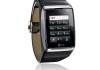
    The LG smartwatch is in development alongside the Glass-like product as a “non-commercialized” R&D project, which essentially means it isn’t ready to ship. LG, like Samsung and a number of other handset makers, is no stranger to combining mobile phone technology with watch-based designs. The LG-GD910, for instance, was demoed at CES 2009 and featured a touchscreen and built-in 3G.

    LG joins Samsung (which confirmed earlier this week that it was working on a smartwatch), Apple (which hasn’t confirmed anything, but which is reported to be working on it from various sources), and now Google (a new FT report claims it’s in on the action just this morning) as companies reportedly developing smartwatches. And of course Sony already actually shipped one, plus there are offerings available from Pebble and MetaWatch, among others.

    In short, everyone has or is working on a smartwatch. And while the list is shorter for Google Glass, at this “non-commercialized” stage described in the Korea Times report today, you can bet your britches everyone else is working on that, too. We’ve already seen rumors about Microsoft, Sony and Apple developing Glass-type devices too, and now LG adds to that list.

    The thing is this: if you’re a major electronics manufacturer, and at this point you haven’t assigned at least one guy with a lab coat or an engineering degree to look into both wrist- and head-mounted wearable tech, you’re already out of touch. For better or for worse, these wearables are happening, and at this point I’m more surprised not to hear that a company is working on those areas. I’m looking at you HTC and BlackBerry: where are your reports of clandestine research projects? This doesn’t count:

  • Storytelling site Storybird adds poetry app, similar to Magnetic Poetry kits of yore

    Storybird, the Toronto-based website that lets users add text to professionally created art to tell a story, launched a poetry HTML5 app this week.

    The idea is somewhat similar to those Magnetic Poetry Kits: Users slide preselected words on top of artwork to create a poem. “The whole process takes less than a minute on your phone or tablet,” Storybird posted on its blog Thursday.

    When I spoke with Storybird CEO Mark Ury in January, he told me that many users had requested a poetry feature. On the blog, he outlined the reasons that the company is excited about launching a poetry option:

    “1. Fits on a phone, so that our members can use it anywhere. We want visual storytelling everywhere, because people and their stories are everywhere.

    2. An even simpler storytelling format. Stories are hard to write and take time! Poetry is short and sweet. We used the same creative constraints for Poetry as we did with books: you can do only one thing, but that one thing is fantastic.

    3. Poems are hyper social and look great on Facebook, Tumblr, and Pinterest. Your friends, family, and fans can easily read, share, and embed them.

    4. They’re stunning. Poetry scales from the phone to the desktop (an AMAZING engineering and aesthetic feat from the team) to ensure the art looks great. It uses the same colour algorithms as our book covers and includes a light transparency on the word vessels, which makes the final compositions elegant and rich.

    5. As with books and artwork comments, Poetry is designed to be family friendly. The word sets are fixed and were developed by a seasoned book editor from one of the Big Six publishing houses to enable creative expression without creative maligning.”

    Storybird, which launched in 2010, has over two million members. The company has raised $850,000 in seed funding and is advised by former Tumblr exec John Maloney. The site operates on a freemium model, selling memberships to teachers and individuals, and also lets users pay to download stories as PDFs or order print versions of their creations.

    Many Storybird customers are schools. The poetry option isn’t rolled out for school accounts yet, but will be available to them soon.

    Related research and analysis from GigaOM Pro:
    Subscriber content. Sign up for a free trial.

    • President Obama’s 2013 NCAA Women’s Basketball Tournament Bracket

      Last year, President Obama predicted Baylor would win the 2012 NCAA Women's basketball tournament. The Bears lived up to the billing, winning the national championship over Notre Dame.

      This year, the President is predicting a rematch.

      Joining Baylor and Notre Dame in his Final Four are California and UConn. Check out his full bracket:

      President Obama's Picks for the 2013 NCAA Women's Basketball Tournament

      For President Obama's predictions in the NCAA men’s tournament, click here.

    • Can Technology End Poverty?

      If you believe the hype, technology is going to help us end global poverty. Advances have indeed made a huge difference in the lives of the poor, but there’s also a healthy amount of skepticism out there. Berkeley researcher Kentaro Toyama has a blog dedicated to calling out naïve or inappropriate uses of information and communication technologies (ICT). Calling himself the ICT4D jester (using the development jargon for “information and communication technologies for development”), he has no shortage of material. We’ve all heard stories of computers that sit unused in African classrooms; on a recent post, the jester takes aim at texting cows.

      The organization I’m part of, BRAC, is known for going to scale with solutions that are often radically low-tech. We’re more likely to scale up birthing kits that cost less than 50 cents apiece than mobile apps that might diagnose disease; more likely to open one-room schools in rented spaces or even boats, where children sit on the floor and learn to think creatively, than insist that every pupil have Internet access.

      But I’m hardly a naysayer when it comes to tech. I agree with Peter Diamandis and Steven Kotler, who write in Abundance: The Future is Better Than You Think that higher productivity associated with the falling cost of technology is leading us to a world of plenty.

      The trick is making sure everyone shares in the coming abundance — or at least has a fair shot at doing so.

      To do that, it’s vital that technology be suitable and relevant to the lives of its users. That’s easier said than done in a world where most product innovations are geared toward the rich.

      We can take some lessons from Bangladesh, where BRAC is heading full steam into mobile banking with bKash (bikash means “growth” in Bengali), which is now the largest mobile banking provider in the country. BRAC Bank (the commercial bank owned by BRAC) launched the service as a pilot in five branches in November 2011, asking small enterprise borrowers to make repayments via local agents — who would send a receipt via text message — rather than in person at branch offices.

      Even though it was designed to save time for hard-working families, asking borrowers to forego their passbooks in favor of SMS confirmations made them extremely uncomfortable. Shameran Abed, who runs BRAC’s microfinance program, explains what happened: “In the first couple months, a lot of our borrowers would send the money through their mobile phones and then physically show up at the branch to check with the accountant that the money had turned up.”

      You may chuckle at that, but consider things from the point of view of a Bangladeshi smallholder farmer. “In a country where most people think that the only thing that is irrefutable is hard copy documentation with someone’s signature affixed to it, we were asking our borrowers to take a major leap of faith,” Abed says. “Some of them said to us: ‘If ever there is a dispute and we end up in court, no magistrate or judge will want to see an SMS confirmation. They’ll want to see proof” — meaning a hard-copy passbook.”

      BKash is now advertised widely, with 30,000 agents and 2.2 million users. We’re confident in the cautious approach we’ve taken, and more importantly, the clients seem so, too.

      But what happens when you ask customers to make a leap of faith and the chasm proves too wide? The consequences can be harmful — often more so for poorer clients than the ones pushing the solution.

      BRAC learned this lesson from its foray into community-owned tube wells and irrigation pumps in the 1990s, documented in Ian Smillie’s Freedom From Want. Since water deep in the ground doesn’t belong to anybody, we thought of giving loans to organizations of the landless poor to drill and manage deep tube wells and sell the water to rice farmers, who would in turn benefit from higher yields.

      The promise was exciting — the details far less so. The project depended on sufficient demand from farmers, which depended on ensuring they had access to high-yield seeds, fertilizer, and pesticides. It also meant gauging demand for irrigation with a certain level of precision, which meant accurately forecasting the sale price of rice.

      In the end, the program had far too many moving parts over which BRAC and the borrowers had insufficient control. At the program’s peak, 700 pumps covered 27,000 acres, with the loans constituting 9% of BRAC’s total microfinance portfolio. By the end of 1993, half of the pumps were operating at a loss and many loans were in arrears. The program was shut down in 1996, and although it refunded 100% of the loan repayments, it went down as one of BRAC’s biggest failures.

      If details about fertilizers and crop yields seem tedious, that’s part of my point. We need to learn to hang onto the positive energy of the tech-innovation movement — in the words of Steve Jobs, stay hungry and foolish — even when the complexities don’t exactly liven up our cocktail party chatter (or, for that matter, galvanize investors).

      In that regard, social entrepreneurs should heed the following:

      Invest in local innovation. The poor and marginalized may not have been to school, but that doesn’t mean they’re uneducated. They’re often experts at jugaad, the Hindi word for “frugal innovation.” Piecemeal, low-tech solutions often go further — and are more easily scaled-up — than anything dreamed up by R&D-centric outsiders.

      Grapple with the human dimensions of the problem. Understand not just the thrill of empowering people in principle, but the challenges in practice. To really know what managing a well means for a group of landless villagers, one needs to understand workaday hassles easily overlooked in the excitement of helping people. One must be sensitive to the stress of uncertainty with new innovations, such as replacing cumbersome microfinance passbooks with digital money.

      Immerse yourself in the details. If you find yourself frustrated, bored, or driven to distraction by the nitty-gritty (the financial yields of improved rice varietals, say), that’s a sign you may be on the right track — and safer from the jester’s taunts.

      The prospect of billions rising up from poverty with nothing more than gadgets is indeed a fanciful notion — and not a helpful one, either. But the evidence says that when we tether enthusiasm to reality, the reality starts to budge.

      Please join the conversation and check back for regular updates. Follow the Scaling Social Impact insight center on Twitter @ScalingSocial and give us feedback.

    • Reagan Daughter’s Lesbian Novel Self-Published on Kindle

      It turns out that not even having a U.S. president for a father can guarantee a publishing contract.

      This week, Patti Davis, born Patricia Reagan, self-published a novel in the Kindle book store. Titled Till Human Voices Wake Us, the book deals with a woman’s lesbian relationship with her sister-in-law. From the book description on Amazon:

      In the empty days after her son’s death, left alone in her grief by her husband, Isabelle Berendon falls in love with the unlikeliest person in the world: her sister-in-law.

      Davis has previously written 8 books, including The Long Goodbye, which chronicled her father’s, Ronald Reagan’s, battle with Alzheimer’s disease. Now that she has penned a fictional novel (and one dealing with lesbianism at that), she states in her author biography that she finds herself in the same boat as other authors who can’t get an offer from a publishing house. However, she is also embracing the self-publishing model that ebooks are making more possible:

      I’ve written a lot about my famous family, the Reagans — maybe this non-autobiographical novel was too much of a departure for publishers to wrap their heads around. But now there is KDP and the room to publish a book yourself. It’s exciting to me — a new era in publishing. Most writers have books they have labored over for years and long to put out into the world. Till Human Voices Wake Us is one of those books.

    • European Supercomputer to Map Human Brain

      While it is six times faster than its predecessor, JuQueen, a new supercomputer recently unveiled at Jülich Supercomputing Centre in Jülich, Germany, uses one-sixth of the energy. The supercomputer is the fastest in Europe and capable of performing quadrillions of calculations per second. A group of doctors, computer scientists and others will be embarking on a 10-year-long project to use the computer’s capabilities to map the entire human brain – from individual cells to large areas of the brain. The video runs 2:20 minutes.

      For additional video, check out our DCK video archive and the Data Center Videos channel on YouTube.

    • Lesson learned? If you’re gonna cheat, don’t tweet about it

      Massachusetts education authorities have their eyes trained on Twitter this week, searching for signs of students who are cheating on the state-wide MCAS exams.

      According to the Boston Globe Friday: staffers “scour” for MCAS hashtags during the tests. The practice kicked off last June during the science tests. Out of 76,000 students, 10 were caught tweeting and their tests were spiked.

      The Massachusetts Comprehensive Assessment System tests are the bane of existence for students from elementary through high school.  All students in public schools — or private schools that take state aid — must take the standardized tests on english, math and science.

      A spokesman for the state department of elementary and secondary education told the Globe: “Twitter … is something we need to be aware of.”

      You might think that if you or your friends are breaking the rules, you might not want to take to social media and blab about it. But you would be wrong. In the Steubenville, Ohio rape case, the perpetrators were caught (and later convicted) in part based on information that was shared by their buddies on Twitter, Facebook and other social outlets.

      For what it’s worth, a quick scan of #MCAS on Twitter mostly turned up students talking about the Globe story or complaining about the tests. So this lesson may have been learned.

      Feature photo courtesy of Flickr user Ivy Dawned

      Related research and analysis from GigaOM Pro:
      Subscriber content. Sign up for a free trial.

    • 9 old drugs that learned new tricks: The head of the National Institutes of Health shares medicines that turned out to have multiple uses

      AZT

      A look at the crystallites of AZT, the first antiviral approved for the treatment of HIV/AIDS. Originally, AZT was created to treat cancer — but it failed in tests.

      When you pop a pill, do you know how it works? Most modern drugs target specific molecules, interacting with disease at the molecular level. But while we know the molecular causes of roughly 4,000 diseases, a very slim 6 percent of those diseases have a safe and effective drug to treat them. Why? Because of the incredible difficulty and cost of finding a compound that is perfectly shaped to interact with a molecular cause, and that also happens to be safe.

      Francis Collins, the Director of the National Institutes of Health, wants to help this process along. Francis Collins: We need better drugs -- nowFrancis Collins: We need better drugs — nowIn yesterday’s talk, given at TEDMED 2012, Collins makes a bold case for translational research to produce better drugs, faster. What does “translational” mean? It means research that takes a particular look at basic scientific discoveries and asks: how can we make an actual medicine from this? To that end he helped launch the NIH’s National Center for Advancing Translational Sciences in 2011. NCATS aims to do away with the costly and time-consuming bottlenecks that prevent new drugs from coming to market.

      Collins hopes to encourage pharmaceutical companies to open up their stashes of drugs that have already passed safety tests, but that failed to successfully treat their targeted disease. He also wants to look at how drugs approved for one disease could successfully treat another. We can teach “old drugs new tricks,” Collins says in his talk, by matching them to the molecular pathways of other diseases.

      Doing so will require academia, the pharmaceutical industry, government agencies and patient advocacy groups to work together, in conjunction with talented researchers and ample funding. After all, a single drug can cost billions to develop. Still, it’s possible.

      In his talk, Dr. Collins mentions two failed cancer drugs that were successfully repurposed: zidovudine (AZT), the first antiviral approved for HIV/AIDS in 1987 and, more recently, farnesyltransferase inhibitor (FTI), which was used to successfully treat children with the rapid-aging disease Progeria in a 2012 clinical trial.

      Fascinated, we asked Collins to share more. Below, read his list of seven drugs that have been repurposed. Of them he writes via email, “None of these drugs could have been developed without collaborations between drug developers and researchers with new ideas about applications, based on molecular insights about disease.”

      1. Raloxifene: The FDA approved Raloxifene to reduce the risk of invasive breast cancer in postmenopausal women in 2007. It was initially developed to treat osteoporosis.
        .
      2. Thalidomide: This drug started out as a sedative in the late fifties, and soon doctors were infamously prescribing it to prevent nausea in pregnant women. It later caused thousands of severe birth defects, most notably phocomelia, which results in malformed arms and legs. In 1998, thalidomide found a new use as a treatment for leprosy and in 2006 it was approved for multiple myeloma, a bone marrow cancer.
        .
      3. Tamoxifen: This hormone therapy treats metastatic breast cancers, or those that have spread to other parts of the body, in both women and men, and it was originally approved in 1977. Thirty years later, researchers discovered that it also helps people with bipolar disorder by blocking the enzyme PKC, which goes into overdrive during the manic phase of the disorder.
        .
      4. Rapamycin: This antibiotic, also called sirolimus, was first discovered in bacteria-laced soil from Easter Island in the seventies, and the FDA approved it in 1999 to prevent organ transplant rejection. Since then, researchers have found it effective in treating not one but two diseases: Autoimmune Lymphoproliferative Syndrome (ALPS), in which the body produces too many immune cells called lymphocytes, and lymphangioleiomyomatosis, a rare lung disease.
        .
      5. Lomitapide: Intended to lower cholesterol and triglycerides, the FDA approved this drug to treat a rare genetic disorder that causes severe cholesterol problems called homozygous familial hypercholesterolemia last December.
        .
      6. Pentostatin: This injectable antibiotic was originally intended as chemotherapy for some types of leukemias. It was later successful against a rare leukemia called hairy cell leukemia.
        .
      7. Sodium nitrite: This salt was first developed as an antidote to cyanide poisoning and, unrelated to medicine, it’s also used to cure meat. The National Heart, Lung, and Blood Institute is currently recruiting participants for a sodium nitrite clinical trial, in which the drug will be tested as a treatment for the chronic leg ulcers associated with sickle cell and other blood disorders.

      Interested in more thoughts on how we can change the long, clunky process of testing pharmaceuticals? Watch these 5 TED Talks with fascinating ideas for medical research »

    • Jon Hamm Rumor Has ‘The News’ Buzzing About His Penis

      Jon Hamm, star of AMC’s Mad Men is currently in the spotlight, not because he’ll be back for two more seasons of Mad Men, but because rumor has it he has a big penis. Clearly, this is top news.

      Apparently the Huffington Post is the authority on the subject. Google News lists its piece “Jon Hamm’s Private Parts Allegedly Cause A Frenzy On ‘Mad Men’ Set” as the “in-depth” go to source.

      Jon Hamm Rumor

      The “in-depth” Huffington Post piece points to the New York Daily News’ Confidential, which appears to be the source of the big Jon Hamm penis rumor (or is that Jon Hamm big penis rumor?), or at least the latest round of discussion about it. The article quotes:

      “Mad Men” star Jon Hamm’s private parts are causing a stir. Again.

      An AMC insider tells Confidenti@l that during filming of the sixth season of the hit show — when the ’60s-style clothing was a tight fit — Hamm was politely instructed by a staffer at the network to please wear underwear while shooting his scenes.

      A source tells Confidential that with the season taking place in the 60s, the pants are “tight and leave very little to the imagination,” and that “Jon’s impressive anatomy is so distracting that they politely insisted on the underwear”.

      Now that anatomy is the talk of the web, and it’s making the search trends.

      Buzzfeed, “where journalism is heading,” has “15 Hilarious Tweets About Jon Hamm’s Penis“.

      Just 15? Surely there are hundreds, if not thousands.

      Oh, and in case you’re wondering about that amazing Jon Hamm picture above, check this out.

    • Debenu PDF Tools Pro drops its $59 price tag, goes free for the next few days

      Debenu PDF Tools Pro is a powerful set of PDF tools which can help you to merge and split PDFs, convert them to text or images, edit properties, add or remove passwords and a whole lot more.

      Normally $59, the package available for free — but Debenu says this is only for “a few more days”, and the offer could expire at any time, so if you’re interested then we’d grab a copy now.

      Need more information? Here’s how it works.

      The program doesn’t have a central interface, instead just adding itself to your Explorer context menus. Right-click a PDF, select “Debenu PDF Tools Pro” and you’ll find a menu listing its various options.

      A “Convert” menu allows you to convert PDF files to text or images. You can also select multiple images and convert them into a single, or multiple PDFs.

      The “Extract” menu can extract text and images from a PDF file. You might use this to grab the embedded images within a PDF, say.

      The “Security” menu allows you to add or remove a PDF “Open” password, or apply a digital signature to the file.

      There’s a simple PDF viewer, a document properties tool, and an option to extract PDF form data.

      And the Edit menu has so many functions that it could be an application all on its own. It can add or remove attachments; extract, remove or edit bookmarks; edit existing document properties, or add custom properties of your own; view, add or remove document JavaScripts; and insert, extract, delete, crop or rotate one or more of the document pages.

      There isn’t always a lot of depth to these functions. If you’re converting a document to images, say, you don’t get to choose the image file format, the base file name, or anything else: just specify a file folder, lots of JPEGs are dumped there, and you’re left to organise them yourself.

      Debenu PDF Tools Pro does still provide a great deal of power, though, while also being very well presented and generally very easy to use. And it’s certainly worth the download, so go grab a copy immediately, while the offer is still available.

      Photo Credit: Mmaxer/Shutterstock

    • Vice President Biden Calls for Immigration Reform at the Irish America Hall of Fame

      Vice President Joe Biden delivers remarks at the Irish American Hall of Fame luncheon

      Vice President Joe Biden delivers remarks at the Irish American Hall of Fame luncheon, in New York City, New York, March 21, 2013.

      (Official White House Photo by David Lienemann)

      As he was inducted into the Irish America Hall of Fame yesterday, Vice President Biden recalled his family’s past coming to America – and he called on Congress to fix our broken immigration system for a new generation of men and women who dream of a better life in this country.

      The Vice President stressed that while we have to find a pathway to earned citizenship for the 11 million undocumented immigrants already here, we also have to fix our legal immigration system.

      It’s a system that is well intended, but today it keeps families separated, and actually has the effect of sending talented people away from our country.

      We have to change that. As the Vice President said, “We have to fix the system to focus on families.” And we can do that by increasing country caps and visas so families can be reunited.

      read more

    • Google Rumored To Be Making A Smartwatch, Too

      Screen Shot 2013-03-22 at 9.20.39 AM

      Amidst Apple iWatch rumors and Google Glass sightings, it would appear that Google is actually working on its own smartwatch to be paired alongside connected Android devices. According to the Financial Times, Google’s Android arm will be the team working on the device, as opposed to the X Lab division, which handled Google Glass development.

      The wearable computer market is heating up quite rapidly. Alongside Google’s Glass project, a number of smaller OEMs have launched Bluetooth-connected smart watches to work as a companion to the smartphone.

      Fossil has a well-crafted MetaWatch, InPulse has the hot-selling Pebble smartwatch, and there are even a handful of quantified self devices that measure your daily activity. There’s the Nike FuelBand, the Jawbone UP, and the Basis to name a few. Add to that an Apple competitor in the iWatch, and a Samsung smartwatch to boot, and it only makes sense that Google has a watch in the works.

      Google Glass takes wearable computing a step beyond the basic wrist watch. However, the rate of adoption will almost certainly be lower than that of a watch or a smartphone since the experience is such a huge change in the way we interact with digital content and our world. A smart watch, on the other hand, would feel a lot more like using a really small smartphone, and that familiarity makes the watch a great bridge between smartphones and computational headsets.

      Google didn’t comment on the speculation.

      However, there’s a patent owned by Google and filed in 2011 for a “smart watch” with a “flip-up display.” It would appear that the patent also provides for a touchscreen experience.

      The question isn’t really if Google will build a smart watch. As small OEMs and big competitors around it flood the market with wearable smartwatches, Google will likely need to join the fight. However, it’s unclear what exactly that will look like? Does a flip-up display look like a flip phone?

      From the patent filing, the “flip-up display” seems to work like a digital pocket watch, showing two displays when open and a single display on top when closed.

      However, just because Google filed this patent, it doesn’t mean that Google’s Android smartwatch will look anything like it.

      On the software side, Google has already proven that it can develop for new forms of computing, such as Google Glass. Even some of its already-released apps like Google Now and Field Trip seem like they would fit in swimmingly with a smart watch. Plus, we can’t forget that the acquisition of Motorola has left Google with a rather sizable hardware team.

    • Google’s upcoming smartwatch is an Android project not X Lab

      smartwatches

      It was last October when we first heard rumors that Google could be working on a smartwatch. At that time, a patent based on a smartwatch with a flip up display was awarded to Google.  Of course many companies are awarded patents for products that never actually come to market. However, with Samsung and Apple now working on watches of their own, it certainly isn’t out of the question that Google will definitely come out with one, hopefully Nexus branded. Don’t forget, Motorola has some experience in this area with the MOTOACTV.

      The Financial Times is reporting that not only is Google working on a watch, but it’s an Android unit project, not an X Lab project like Google Glass. It makes perfect sense for Android to be part of the watch since it’s more of a mobile device than Glass. Unfortunately no timeframe was mentioned, but hopefully we will see something this year.

      source: Financial Times
      via: TheVerge

      Come comment on this article: Google’s upcoming smartwatch is an Android project not X Lab

    • Frustrated for Broadband in Rural Minnesota: No Joy from Local Provider. Can Policy Help?

      I am sharing the following email we received with permission from author Shauna Kreger…

      I would like to say thank you for fighting for use in these small communities in rural Minnesota on Broadband. I am a college student on-line and have trouble doing my school work because I do not have broadband and cannot afford satellite. Satellite is not much better than dial-up ( but you probably already know that). I have tried for past four years to get broadband installed in my area with no luck. I am a quarter of a mile from the cut off of a broadband box. I wrote a letter to Qwest’s board three years ago explaining the benefits of broadband services for the rural communities and the benefits it would have on their company ethics. I also sent them detailed research on when North Western Bell put phone lines in around my area and how it paid for itself. To my disbelief I received an e-mail back from a female on the board stating “putting broadband services in at this time would not benefit Qwest”. I contact the company monthly asking for broadband and I am told I can not get it and there is no future plans for broadband installation in my area. School children need broadband these days to do their homework and their grades are suffering because there is no option. The phone company seems to be monopolizing the rural area of Pine, Kanebec, and other Northern Counties.

      I thought about blocking out name of the provider but I figured there have been enough changes at Qwest to provide some distance. And Comcast’s Duane Ring said something very similar at an MHTA meeting in January

      How can we convince providers to expand their service? What prevents growth?

      DR: All providers want more customers. It’s what we think about. How do you get a ROI? There’s nothing available now that makes a compelling business case in some areas. We’ve looked at various technologies. We will need a hybrid solution to reach unserved areas.

      I heard similar frustration from users while I was touring communities across the state last month. So, while research I posted earlier this week indicates that adoption is where it’s at for closing the broadband gap I’d like to remind folks that access is still an issue too. Adoption is a goal that everyone loves – providers, users, community leaders… It feels good all the way around. The apple pie of broadband! And I wholeheartedly support adoption too.

      Access is another issue because there is a gap between the goals based on perspective: most providers want to make money while customers (and community-oriented leaders) want to see service in areas even where the business case isn’t strong. Broadband proponents see broadband as an investment in the community. Many providers see it as an investment for stakeholders. (Note: there are local independent, coops and community providers that see investment in the community too!)

      Addressing tough issues of access could be where the policymakers can have the greatest impact. It seems like encouragement (via tax incentives, public-private partnership or other options) is worth trying but at some point we may need to see stronger measures that require providers to address universal service and/or support community/municipal efforts to get the job.

    • iPhone 5S, low-end iPhone with no Retina display reportedly launching this summer

      iPhone 5S Release Date
      It looks like Apple (AAPL) will finally break from its historical launch pattern and release two new iPhones in 2013, including the “budget iPhone” that Wall Street has been starting rumors about for at least three years now. Numerous reports from newspapers, blogs and sell-side analysts have insisted that Apple is planning a new entry-level iPhone model that will launch alongside the “iPhone 5S” this coming summer. A recent report from a plugged-in industry watcher suggested the affordable iPhone will be released in the late summer months featuring a plastic case and the same 4-inch Retina display from the iPhone 5, but a new note from RBC Capital claims otherwise.

      Continue reading…

    • Volkswagen Beetle: Kindred Spirits

      1967 VW Beetle

      Some people say that we don’t choose our cars, but that our cars choose us, a philosophy that I agree with wholeheartedly. Steven Ruiz, owner of this one-year-only 1967 Volkswagen Beetle, knows this all too well, as this is the relationship he has with his little bug. Everyday for 10 years Ruiz drove by the home where the Beetle was parked, and everyday he knew that one day, he would have to own it. Thankfully his dream came true when the owner decided to sell, and now, because of this, Ruiz has a car that he hopes to hold on to forever.

      Source: Petrolicous.com