
Blog
-
The Android brand could suffer from Google’s decision to remove ad-blocking apps
-
Google Updates Sports Results, Brings Better Grouping And More Detail

Sports fans who use Google to keep track of their favorite teams can now enjoy a more rich experience. On Google+ today, the official Google page announced an update to its sports results that can be seen via desktop, tablets, and phones. Here are the new features:
- League schedules now grouped by day and week
- Click on a game for more details and links to websites with more details about the game
- Find out complete league standings by doing a quick search such as “NBA” and see latest stats on your favorite players
- Searching “March Madness” displays a full bracket to see where your teams currently stand
Source: Google+
Come comment on this article: Google Updates Sports Results, Brings Better Grouping And More Detail
Visit TalkAndroid for Android news, Android guides, and much more! -
The Raspberry Pi Dynamic Headlight Can Tell You How Fast You’re Cycling
A Brooklynite named Matt Richardson has built a working prototype of a bicycle headlight that uses a Raspberry Pi to project his current traveling speed as he rides around the city. Richardson calls it the Raspberry Pi Dynamic Headlight, and it’s one of those jaw-dropping DIY projects that makes you wonder why this isn’t something you can buy in a store yet.The prototype has a small projector mounted to the handlebars of the bicycle, which is connected to the Raspberry Pi via HDMI cable. The projector and the Raspberry Pi are both powered by a USB battery pack. The Raspberry Pi and the battery pack seem to be crudely glued to a triangular piece of wood that is strapped onto the center of the bike, but Richardson says in his video that he’s hoping that future prototypes will combine all the components into one single piece that will be mounted onto the handlebars.
The Dynamic Headlight for now only projects the speed of the bike, but Richardson is looking to add all sorts of interesting functions to future iterations like GPS and other “animations and visualizations”. He’s also planning on writing about it for MAKE and including instructions for those that are brave enough to build one for themselves.
Someone needs to get him some of that Veronica Mars Kickstarter money, stat.
-
You Won’t Believe These Facts About Mr. Rogers
Today is the first day of spring. It’s still cold here. Stupid spring.
It’s also the birthday of television legend Fred McFeely Rogers.
Mr. Rogers was a wonderful and fascinating human being. And as Mental Floss shows, there are plenty of things that you probably didn’t know about him. Did you know his middle name was McFeely? I sure didn’t.
-
How coding contests can be better at solving problems than Harvard
Harvard Business School and TopCoder recently performed a study where they took a big genomics problem being worked on by Harvard Medical School, broke it into discreet abstract parts, and the threw the problem’s parts to the crowdsourced coding community to solve. What they gleaned was an interesting insight: the smartest guy in the room isn’t always your best problem solver.
Speaking at GigaOM’s Structure:Data conference Wednesday, Harvard Associate Professor Karim Lakhani said crowdsourcing the genomics project did several things. First and foremost it generated dozens of different approaches to tackling the same problem.
Before the TopCoder contest was created, researchers were considering two different paths of investigation. The contest revealed 89 differing approaches to the problem, 20 of which were extreme values — possibilities Harvard and its National Institutes of Health counterparts had never considered.
Second, the contest was able to create motivation to solve problems that you wouldn’t necessarily find in a group of researchers. An institution like Harvard may have brainpower in spades, Lakhani said, but throwing a bunch of geniuses at a problem doesn’t necessarily lead to result if they’re unmotivated to solve it.
“When you go into a self-selection model you don’t have to worry about motivation,” Lakhani said. There are monetary rewards for winning a TopCoder contest, of course, but taking home a prize is not guaranteed. Everyone has their own motivation for participating, whether it’s cash, experience, scoring reputation points or even the free T-shirts given to each participant. “Because there are large numbers of people participating, there’s a greater chance you’ll find the right skills and the right motivation,” Lakhani said.
Ultimately crowdsourcing your science isn’t a replacement for having smart people of your own, Lakhani said, but it certainly helps, something Harvard’s counterparts at NASA have discovered.
CHeck out the rest of our Structure Data 2013 coverage here, and a video embed of the session follows below:

Related research and analysis from GigaOM Pro:
Subscriber content. Sign up for a free trial.- Examining the rise of crowd labor platforms in 2012
- The quantified self: hacking the body for better health
- What’s driving the next phase of the e-commerce evolution


-
Starbeams Free Puzzle Game for BlackBerry 10
Ebscer, developer of Xploding Boxes and Runaway Trains has released a new puzzle game for BlackBerry 10. In Starbeams there are stars connected by lines like constellations and you need to color all the stars without having a similar color on the neighboring star.

The game starts of easy and gets much harder as the levels go up. The first 25 levels are free and players can upgrade to the full version via a one-time in-game purchase. Right now the game has 100 levels available to full version holders, with even more on the way with coming updates.
Starbeams is compatible with the Z10, DevAlpha and the Q10.
Click here to download Starbeams for BlackBerry 10 from BlackBerry World.
-
Pebble Firmware Update 1.9 Delivers A Non-Watchface App – The Classic Game Of Snake
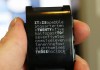
Pebble has just updated its smart watch, complete with a much-improved interface and new watchfaces. But the exciting thing here is the addition of a game you likely remember from the days when your cell phone’s screen wasn’t much different from the Pebble’s itself – Snake.
The interface changes include a menu that now puts your selected watchface at the end of a sequence of pushes of the back button no matter where you are, and the up and down buttons on the right-hand side now switch between watch faces, so you don’t have to dig through a menu to find them. Pebble also revealed in a Kickstarter update last week that it has made improvements behind the scenes to improve the text rendering engine with this firmware, laying the groundwork for its upcoming SDK.
Pebble has also improved ambient light detection on the smart watch, which is good news since the auto-backlighting feature has been one of the device’s major flaws since launch. Hard to tell so far just how much of an improvement firmware 1.9 provides in that area, but it would be hard not to improve at this point.
The Snake game is the highlight of the show, since it’s our first hint of how apps other than watches might work on the Pebble. Controls are fiddly as you might expect, but it is most definitely Snake, running on your wrist, and it’s meant more as a tech demo of what kind of limited capabilities will be available to developers in the first version of the SDK. I’m not likely to sink great hunks of time into playing it, but I’m glad it’s there. The Snake game sits in the Pebble’s main menu, and installs from the Watchfaces section of the iOS/Android app, so it’s clear the company will have to do yet more interface optimization when it’s ready to ship a proper app library.
-
Google Takes The Trekker To The Arctic For Street View Imagery
Google announced today that it is debuting the Trekker for the first time in Canada, as it lends the devices out to some locals.
Earlier this year, Google launched the first Trekker-based imagery for the Grand Canyon. Trekker is a backpack-based camera device, which takes panoramic imagery for Street View. You can see it in the photos below.
“Two Trekkers will be worn by local mapping experts from Nunavut and members of the Google Maps team, and they’ll be used to collect panoramic Street View imagery of Canada’s most northern capital,” a Google spokesperson tells WebProNews. “This is Google’s first visit to an arctic climate in the winter… so don’t be surprised when the Street View team takes a detour to a nearby igloo!”
“As usual, the imagery will take some time to prepare for publication on Google Maps,” she notes.
Chris Kalluk, one of those local mapping experts, wrote about the experience in a post on the Google Maps blog. “I’m wearing the backpack to collect Street View imagery as I walk to the shore of Frobisher Bay, where the wind is the strongest and you can see the tide piling up mountains of sea ice,” he writes. “On the way I’ll pass sled dogs tied up outside houses, yapping in anticipation of their next trip. And I may stop to check out an igloo, built by Inuit craftsmen using methods passed down over a millennia.”
“As part of its commitment to build a comprehensive and accurate map of Canada’s north, Google visited my home, Cambridge Bay, last August and published imagery of the trip that fall,” he adds. “But this visit to Iqaluit marks the first time the Google Maps team has ventured into an Arctic climate during the winter months, where average temperatures can dip below -30°C [-25°F].”
Here are pictures of Kalluk (top) and Google Maps product lead Raleigh Seamster (bottom) in the streets of Iqalit with Trekker:


“At the end of the day, when it’s time to warm up, our community will gather around two dozen computers at the local library to conduct a MapUp workshop,” says Kalluk. “I’ll work with Iqaluit’s elders, local business owners, political leaders and high school students to show them how we can use Google Map Maker to add the streets, shops and points of interest – those places that make Iqaluit home – to Google Maps.”
The Street View imagery from this endeavor will become available on Google Maps in a few months.
Earlier this week, Google launched some new mountain top Street View imagery.
-
If You Don’t Like Carrier Pricing, Switch Carriers
As if you didn’t already know this: your cell phone carrier is trying to earn as large a profit as possible. The top three carriers in the US are public corporations, meaning they serve their shareholders first and foremost. That means beating last quarter’s earnings. As we’ve seen in the last few years, carriers will rearrange the deck chairs if it means squeezing a little more money from its customers.
Yes, the big carriers offer expensive plans. This is partly because a portion of your monthly bill goes to subsidizing the cost of your handset. You might pay $200 for a new smartphone or get a new feature phone for free, but the carrier pays full price. They make up for it by signing you up for a two-year contract. In theory, you’re paying not only for your monthly service, but also for the subsidy.
If you happen to keep your phone past the two-year term, you’re still paying the same price for service. That might seem a bit unfair, but that’s the pricing that the carrier offers. It would be nice of them to lower pricing after two years, but corporations are not in the business of being nice. They are in the business of making profits. That’s why Rich Brome’s complaint strikes me as odd. He not only bashes carriers for this practice, but uses harsh language such as “scam.”
Trust me: while carrier pricing might be unfair, it is not a scam.

Why is it not a scam? Because once your two-year term expires, you are free to leave. You are no longer under obligation to pay the carrier, which means you don’t have to pay the subsidy any longer. You can choose to take your business to a different carrier, one that charges less because it doesn’t offer subsidized pricing.
This option works out better now than ever before. If you are on Verizon, you can take your phone directly to Page Plus Cellular and they will activate it on one of their plans. Those plans are far less expensive than Verizon’s and provide similar services. You’ll lose the roaming network and LTE, which stinks, but you get full 3G service in Verizon’s coverage area.
If you have Sprint, you can take advantage of Sprint’s new policy of allowing its MVNOs to activate Sprint-branded devices. If you’re out of contract you can take your phone to any number of these MVNOs — and there are many of them — and have them use your Sprint phone directly.
There are other carriers still, such as Straight Talk, that will allow you to place their SIM card in an unlocked GSM phone from AT&T or T-Mobile. Unlocking your phone is tougher now than previously, but if you’re out of your contract term you can almost always get your carrier to authorize it. You’re then free to pay Straight Talk’s $45 per month, rather than AT&T’s $90.
Yes, there are disadvantages to using a prepaid carrier. Customer service is often worse. Roaming is typically not allowed. There are few prepaid carriers offering 4G services, whether LTE or WiMax. Those are some sacrifices, sure, but if you’re disgusted with carrier pricing it’s the only real alternative. Is it worth the savings?
To put it another way: why is it a scam for carriers to imply subsidy pricing, even after the subsidy is paid, but it’s not a scam for them to rearrange deck chairs in the name of profits? Before it introduced Share Everything plans, you could get adequate Verizon smartphone service for $90 per month. It included:
- $40 for the 450-minute plan, which included unlimited nights and weekends plus unlimited calls to Verizon’s 110-plus-million customers.
- $30 for 2GB of data — and that used to be unlimited data.
$20 for unlimited text messaging, though there was an option for $10 per month for 500 texts plus unlimited texts to and from Verizon customers.
Now that same $90 gets you smartphone activation ($40 per month) plus 1GB of data ($50 per month). In order to get the same 2GB of data you have to pay $100 per month. Yes, you get unlimited voice with that, but it’s clear that consumers have devalued voice. The 450 minute plan was perfectly adequate for many, if not most, Verizon subscribers.
So where’s the allegation-flinging on that front? Why isn’t killing unlimited data — and requiring a plan change when upgrading to a 4G LTE smartphone — a scam?
If these practices are scams, then hundreds of millions of Americans get scammed every month. But we do it willfully. We understand the cost of service. Perhaps not everyone understands subsidy pricing, and perhaps they’d act differently if they did. But to call it a scam is just heavy-handed and unnecessary language.
The post If You Don’t Like Carrier Pricing, Switch Carriers appeared first on MobileMoo.
-
Let the video SEO madness begin: Google Trends adds YouTube data
Google Trends added data from YouTube Wednesday, making it possible to see how a particular search term did on the video site. Google added YouTube search data going back all the way to 2008 to Trends, which means that you can dig into the historical performance of search terms.
Users can either search for trends across Google and YouTube, or restrict searches just to YouTube. Here’s how “Harlem Shake” compared to “Gangnam” on YouTube over the last 12 months:

Trends has always been a fun tool to get a sense of what people are searching for, but it has also been helpful to optimize your own websites for Google search results. And with YouTube now being part of Trends, one can expect that many video publishers will frequent the tool to figure how to name their videos. In other words: Don’t be too surprised if your YouTube experience looks a bit more zeitgeisty and SEO-optimized from now on.
That being said, it makes a lot of sense for Google to include YouTube data in Trends, even for the purpose of tracking search trends across Google properties: YouTube has long been the second-biggest search engine on the internet, following Google proper, but ahead of Bing and Yahoo.

Related research and analysis from GigaOM Pro:
Subscriber content. Sign up for a free trial.- NewNet Q3: Facebook remakes headlines in social media
- How consumer media will change in 2013
- What the shift to the cloud means for the future EPG

-
Google Reader Disappears from Black Bar Menu Inside Gmail, Google+
As you all know, Google is killing Google Reader on July 1st. I’m sure plenty of you have shed some tears in the past week. For Google Reader power users, this sucks – plain and simple. And despite the loud cries of its supporters, don’t expect Google to cave. Reader is going bye-bye.
But if you thought that it was going to be a clean death, like a guillotine on July 1st – think again. Google Reader is probably going to be slowly poisoned with arsenic.
Gmail users are noticing (and complaining on Twitter) that their link to Reader in Google’s omnipresent black bar has gone missing. If you’re in Gmail, and you click on the “more” tab up top, “Reader” is nowhere to be found.
Google Reader no longer shows up in my “More” tab on Gmail homepage. #bastards
— Jennifer Bostic (@prplst) March 20, 2013
I can’t get to Reader from Gmail anymore, guys. I’m scared. Someone hold me.
— Sarah Kogod (@SarahKogod) March 20, 2013
It’s also gone from the black bar inside Google+.
“Reader” still exists as a link when you’re on the Google homepage, or within maps, play, youtube, news, drive, calendar, and so on. But it’s clear that Google is slowly but surely wiping the web of Google Reader. And if getting to your Reader feed by Gmail was you’re preferred route, you’re going to have to find a detour.
-
Google advisor adds fuel to rumor that ‘X Phone’ will be world’s first customizable smartphone

-
Facebook App Updated Again, This Time Less Annoying And Legitimately

Facebook annoyed many last week when it tried forcing users to upgrade to the latest version within the app itself. This time around, Facebook has updated the Android app, but pushed the update through Google Play. You can now upload a profile photo, better manage group messaging, and report posts for spam. The social network wants a unified experience across all users and since not everyone had the app set to automatically update, many were still using older versions. While last week’s method of pushing out an update makes sense, there are some issues. First of all, Facebook violated Google Play’s Developer Distribution Agreement. Under 4.5 Non-Compete:
“You may not use the Market to distribute or make available any Product whose primary purpose is to facilitate the distribution of software applications and games for use on Android devices outside of the Market.”
However, Google didn’t nor has yet to say or do anything about that. Another issue is a new permission for the Facebook Android app that allows it to “Download files without notification”. This, again, violates the Developer Distribution Agreement and makes way for Facebook to push out updates through the app itself, bypassing Google Play. Were you annoyed with last week’s update?
Source: Phone Arena
Come comment on this article: Facebook App Updated Again, This Time Less Annoying And Legitimately
Visit TalkAndroid for Android news, Android guides, and much more! -
Man From U.N.C.L.E. Movie Could Star Tom Cruise
It seems that the 50-year-old Tom Cruise is still a top contender for the lead roles in high-profile action movies.
Screen Rant is reporting that Cruise is currently in talks for a role in the upcoming The Man From U.N.C.L.E. movie adaptation. Channing Tatum is also rumored to be attached to the film, which will be directed by Guy Ritchie.
The Man From U.N.C.L.E. was a spy thriller TV series that aired in the U.S. during the 60s. The show revolves around a pair of U.N.C.L.E. agents, one American and one Georgian. The agents and the worldwide U.N.C.L.E. organization battled the THRUSH organization and its goal to enslave humanity. The show attempted to emulate the style of the James Bond-style spy thriller, including a rotating cast of beautiful women.
Cruise would, presumably, be negotiating for the role of the American agent, Napoleon Solo. Solo was played by Robert Vaughn in the original series.
-
YouTube Data Integrated Into Google Trends
Google announced today that it has now integrated YouTube search trends into Google Trends.
“Google Trends enables you to take popular search queries and explore traffic patterns over time and geography,” says YouTube’s Kevin Allocca in a blog post. “Now we’ve added YouTube search data going back to 2008, making it another great tool to look at video trends. Visit Google Trends and enter any search you’d like and then, on the left, choose ‘limit to’ for YouTube. You can slice by region or category as well.”
“Search query interest can often provide a more detailed picture into the life of a trend or topic. For example: for those of you wondering whether the ‘Harlem Shake’ is over… it’s not,” he adds. “You can also see interesting seasonal patterns. For example, cooking searches for ‘turkey’ in the US see dramatic spikes every November as people scramble to remember exactly how to prep that big meal before the relatives arrive.”
Google also made a brief announcement about the integration in a Google+ post.
YouTube has offered a look at its trends for years, but it makes sense to have the data integrated right with Google’s own trends. Google has often referred to YouTube as the second largest search engine, after all.
-
Meet the translator: Ido Dekkers, who brings you talks in Hebrew
 TED Talks are available in 97 languages, from Albanian to Vietnamese, thanks to the tireless work of our translators. So far, more than 8,800 volunteers have created the upwards of 34,000 translated talks. To celebrate this huge accomplishment, every week the TED Blog will be bringing you a Q&A with one of our most prolific translators. Today, meet Ido Dekkers.
Where do you live? What do you do?
I live in a small village in Israel, and I’m a front end web developer.
What drew you to TED?
I’ve known TED since it only had a few dozen talks, and I was always drawn to the topics and the quality.
What was the first talk you translated and how did you pick it?
 Beau Lotto: Optical illusions show how we see The first talk I translated was Beau Lotto’s “Optical illusions show how we see,” I picked it since my then 9-year-old daughter didn’t know English well enough and I was acting as an online translator. Then, I saw the translate button. Ever since then, I’ve been hooked.
What have been your favorite talks to translate? Why?
My favorite talk to translate was … actually all of Marco Tempest’s talks. They are so riveting.
 Marco Tempest: A cyber-magic card trick like no otherWhich talk was the most difficult for you to translate and why?
The hardest talk was the TED-Ed lesson “Making sense of spelling” by Gina Cooke. It talks about spelling and grammar in English, and it’s very hard to pass on to other languages.
What’s a phrase in your language that you wish would catch on globally?
I think the most known phrase is “eihiye beseder” which translates to “everything will be OK.” People use it here all the time. We have so many worries, we try at least to take everything easy.

-
Man who received nation’s first ‘breathing lung’ transplant at UCLA thankful for gift of life
Fernando Padilla could barely breathe or walk more than a few steps. An incurable disease, pulmonary fibrosis, was causing his lungs to turn to hardened scar tissue, and he was permanently tethered to an oxygen tank. His only hope was a double lung transplant.In November 2012, he got an early-morning call that a pair of donor lungs was available.Upon arriving at Ronald Reagan UCLA Medical Center, he was told of a new study testing an experimental device — a portable organ-preservation system that keeps donor lungs functioning and “breathing” in a near-physiologic state outside the body during transport to a recipient, instead of the standard method, in which the organs are kept in an icebox in a non-functioning, non-breathing state.Padilla consented to participate in the study and was randomized to become the first patient at UCLA — and in the United States — to undergo the ‘breathing lung’ transplant using the TransMedics Organ Care System (OCS).“If they’ve got new technology to deliver the lungs still breathing, I think that would be better than trying to wake them back up again after being on ice,” said the former construction worker, who had helped build the very same hospital where he was now a patient. “I’m just following technology.”With the OCS, the lungs are removed from a donor’s body and are placed in a mobile high-tech box, where they are immediately revived to a warm, breathing state and perfused with oxygen and a special solution supplemented with packed red-blood cells. The device also features monitors that display how the lungs are functioning during transport.“Lungs are very sensitive and can easily be damaged during the donation process,” said Dr. Abbas Ardehali, a professor of cardiothoracic surgery and director of the heart and lung transplantation program at UCLA. “The cold-storage method does not allow for reconditioning of the lungs, but this promising technology enables us to potentially improve the function of the donor lungs before they are placed in the recipient.”In addition, the technology could help transplant teams better assess donor lungs, since the organs can be tested in the device, over a longer period of time. It could also help address the shortage of available organs by allowing donor lungs to be safely transported across longer distances, expanding the donor pool for the more than more than 1,650 Americans who are currently on the waiting list for a lung transplant.Padilla’s donor lungs were transported, using the OCS, from a neighboring state to UCLA. His seven-hour transplant surgery was a success, and he now relishes every deep breath. The oxygen tanks are long gone. He walks several miles a day with his wife, plays with his grandkids and enjoys life with his family. They are immensely grateful to the organ donor who supplied him with the precious “gift of life.”“For patients with end-stage lung disease, lung transplantation can dramatically improve the patient’s symptoms and offer relief from severe shortness of breath,” added Dr. David Ross, a professor of medicine and medical director of UCLA’s lung and heart-lung transplantation program and UCLA’s pulmonary arterial hypertension and thromboendarterectomy program. “The ‘breathing lung’ technology could potentially make the transplantation process even better and improve the outcomes for patients suffering from lung disease.”UCLA is currently leading the U.S. arm of the international, multicenter pivotal clinical INSPIRE study of the OCS, developed by medical device company TransMedics; Ardehali is the principal investigator for UCLA. The purpose of the trial is to compare donor lungs transported using the OCS technology with the standard icebox method. The INSPIRE trial is also underway at lung transplant centers in Europe, Australia and Canada and will enroll a total of 264 randomized patients.The “breathing lung” device follows on the heels of TransMedics’ “heart in a box” technology, which delivers donor hearts in a similar manner. A national, multicenter study of the heart technology, also led by UCLA, is ongoing.UCLA’s lung and heart-lung transplant program is the largest lung transplantation program on the West Coast and leads the nation in patient outcomes. The program pioneers novel technologies in lung preservation, recipient immune monitoring and immunosuppression and is responsible for significant advances in transplantation for extremely ill and high-risk transplant candidates.For more information about UCLA’s lung transplantation program and the INSPIRE trial, visit www.transplant.ucla.edu/lung.Headquartered outside Boston, Mass., TransMedics Inc. is a privately held medical device company founded in 1998 to address the vital, unmet need for better, more effective organ transplant technologies. For more information, visit www.transmedics.com.To sign up to be an organ donor, please visit www.donatelife.net.For more news, visit the UCLA Newsroom and follow us on Twitter. -
Klout aims for new targets with launch of Klout for business
Klout has long tried to help users understand their influence on social media networks, but on Wednesday the company has announced an addition with a new direction: Klout for business.
The company is launching a set of tools aimed at brands that want to measure social influence, and in many ways, this makes a lot of sense. While an average user might be curious about his or her reach on Twitter or Facebook, understanding this data is much more valuable to a business than a consumer, and likely something Klout will better be able to monetize.
The company explained in a blog post that it’s already begun measuring the social influence of brands through its Klout Perks program, but now it will target those businesses directly:
“Today, we are taking the data-driven intelligence we’ve developed over the years to begin a more measured march towardKlout for Business. Initially, Klout for Business will give businesses a complimentary set of analytics with pointed insights into how and where influencers are engaging with their brands in social media.
Businesses will be able to look at an easy-to-read dashboard that tells you, at-a-glance, whether you are engaging your influencers on the networks where they are most actively exerting their influence and on which Klout Score ranges you could stand to amp up your efforts. Most importantly, Klout can tell you which topics your audience influences others on, helping you maximize your content efforts to drive consideration for your brand.”
The company last tweaked the formula for its Klout scores in August 2012, and will now launch a specific page for businesses on Klout. Customers will gain access to a dashboard where they can monitor social interactions and communicate with customers.
Klout has been in business for almost five years, and it’s unclear that the company has converted average consumers — or even tech-savvy social-media addicts — into caring about their Klout scores or achieved real traction as a measuring stick for social influence. The company wrote in the blog post that it has acquired a vast amount of social data that it’s now ready to use for other purposes, but it’s possible the company has simply reached the limit of its own influence with consumers.


Related research and analysis from GigaOM Pro:
Subscriber content. Sign up for a free trial.- Listening platforms: finding the value in social media data
- Pinterest: signs of staying power
- Facebook’s IPO filing: ideas and implications

-
Bill Ford (yes, that Ford) invests in public transit, backing mobile ticketing firm Masabi
Given Detroit’s worship of the automobile, you wouldn’t think public transit would be high on its priority list, but on Wednesday transit ticketing startup Masabi revealed that one of the automotive industry’s most recognized names, Bill Ford, has taken a strategic and monetary interest in the company.
Bill Ford is, of course, the great-grandson of Henry Ford, and the executive chairman of the company that bears his name. He also co-founded a venture capital firm called Fontinalis Partners that focuses on next-generation mobile technologies. Fontinalis is leading a $2.8 million investment round in Masabi with participation form London’s MMC Ventures and existing backer m8 Capital. The company has already gone through several funding rounds, raising $2 million in 2010 and $4 million in 2011. m8 led both rounds.
London-based Masabi said that the strategic investment is aimed at promoting its mobile ticketing technology to U.S. transit agencies, building off of its success in the U.K. (it has 13 transit contracts across the pond), and its recent deployment with Boston’s Massachusetts Bay Transportation Authority. To date, the company claims it has processed $50 million in ticket sales worldwide and $3 million alone from the MBTA since its system went live in November.
 Masabi’s key product is called JustRide, a cloud-based end-to-end ticketing platform that allows riders to purchase, manage and store transit tickets and passes in their mobile phones. Users can buy tickets from an app in their smartphones rather than wait in ticket lines. For train systems with conductors, the tickets show up as animated watermarks easily identified by ticket takers. For automated ticket systems, the app will display a QR code that will get you through the turnstile. Masabi is also upgrading its software to support near-field communications (NFC) in the future.
Boston, for instance, still utilizes smart card ticketing – which also can be linked to JustRide platform – but the gradual move of its smartphone-toting ridership to the cloud-based ticketing service saves it millions of dollars in ticketing machine and backend infrastructure.
Though smartphone-initiated mobile payments haven’t exactly taken off in the U.S., transit ticketing is starting to become a key component of the digital wallet. The carriers’ mobile wallet Isis may still be limited to two cities, but it’s become popular as a mobile pass for Salt Lake City’s public transit system. Amtrak has started accepting digital tickets on the iPhone, and all of the major airlines now have boarding pass features in their apps.
As for Ford’s interest in public transit technologies, the chairman appears to be throwing his money in the same direction as his rhetoric. Ford has spoken several times about how, at the current rate of growth, the number of cars on the world’s highways would soon lead to massive congestion problems. His proposed answer is coordination between public transit and intelligent traffic management systems to better control of the flow of billions of people as they go about their daily lives.
Fontinalis has invested in many startups designed to make cars smarter such as Streetline, Life360 and Parkmobile, but it’s also invested in companies like Masabi and Wheelz, which go against Ford’s vested interest in individual car ownership.
Bill Ford image courtesy jurvetson via Compfight cc

Related research and analysis from GigaOM Pro:
Subscriber content. Sign up for a free trial.- The future of mobile: a segment analysis by GigaOM Pro
- Forecast: the future of near field communication
- A near-term outlook for the mobile app marketplace


