Blog

  • Podcast: Cathleen Schine on Gail Collins Cathleen Schine speaks…

    Podcast: Cathleen Schine on Gail Collins

    Cathleen Schine speaks with Sasha Weiss about Gail Collins’s book When Everything Changed: The Amazing Journey of American Women from 1960 to the Present, and about the victories and failures of the women’s movement.

  • Economists React: Is Obama Bank Plan ‘Wrong Solution’ or ‘Good Idea’?

    Economists, lawmakers, bloggers and others weigh in on President Barack Obama’s bank-regulation plan.

    • President Obama is right to be very critical of these practices that have unnecessarily exposed the American people and our economy to substantial risks. In the midst of the Great Depression, Congress passed the Glass-Steagall Act to prevent banks from mixing commercial lending with investment activities. As time passed, Congress mistakenly relaxed those restrictions and the greed that subsequently ensued contributed to the financial collapse that began in 2008. Now is the time for Congress to act and put those safeguards back in place so that the American people are protected from greedy Wall Street firms. Rep. Maurice Hinchey (D., N.Y.)
    • If one wishes to find the true source of the economic debacle of 2008, one need only look to the government policies that cajoled, encouraged and then demanded that banks loan money to people to buy houses they couldn’t afford — and then put the American taxpayers on the hook for the loans that will never be paid back. This proposal is not going to put one American back to work, which is where the Administration should be focused Rep. Jeb Hensarling (R., Texas)
    • President Obama’s proposal is a major step forward to limit the greed and reckless behavior of Wall Street that has caused so much damage to the economy. We need to do everything we can to limit the size of too-big-to-fail financial institutions and end the gambling addiction on Wall Street. One of the reasons I am strongly opposed to the re-nomination of Ben Bernanke is that, in truth, he has had the power to do this from day one. Our goal must be to create a new Wall Street that invests in the productive economy creating decent paying jobs for all Americans. Sen. Bernie Sanders (I., Vt.)
    • Push every Republican to take a public stand on this question, and you will be amazed at what you hear (if they stick to what they have been saying behind closed doors on Capitol Hill.) The spin from the White House is that the president and his advisers have been discussing this move for months. The less time spent on such nonsense tomorrow the better. The record speaks for itself, including public statements and private briefings as recently as last week — this is a major policy change and a good idea. The major question now is — will the White House have the courage of its convictions and really fight the big banks on this issue? If the White House goes into this fight half-hearted or without really understanding (or explaining) the underlying problem of unfettered banks that are too big to fail, they will not win.” Simon Johnson, MIT
    • We continue to believe the best way of achieving those goals is to establish a tough, competent and accountable systemic risk regulator. We believe providing for strengthened regulatory oversight, and flexibility like that originally proposed by the Administration, as opposed to arbitrary restrictions on growth and activities, is a more effective way of mitigating systemic risk ending ‘too big to fail’. Tim Ryan, Securities Industry and Financial Markets Association
    • Today, President Obama sent a strong and clear message to Wall Street: The game is over. Taxpayers will no longer be held hostage by Wall Street’s obsession with reckless policies and obscene profits… By limiting the scope of financial institutions and limiting excessive growth of the financial sector, President Obama and Chairman Volcker’s proposals are important steps towards ending the risky practices that helped get us in the financial crisis we are in today and getting America back on the road towards economic recovery. Anna Burger, Service Employees International Union
    • Note we have to move two other pieces of reform in order to make this credible: we need a system where parties are aware of the derivatives holdings of an investment bank pre-crisis, say through a clearinghouse or exchange, so to make resolution credible and prevent panics. We also need a new resolution authority to handle these firms in a manner that won’t destroy the system. Regulating exchanges, and special bankruptcy proceeding for financial firms: we’ve done this before in the New Deal, we just never upgraded it for a new century, and right now a broken financial sector calls again for these changes. Mike Konczal, Roosevelt Institute
    • I am concerned, as a general matter, about arbitrarily limiting the size of the banks, since our modern, complicated, global economy demands that the U.S. have at least a few banks capable of providing a very wide range of services each on a large enough scale to be efficient. However, there certainly may be circumstances in which regulators ought to push a bank or banks to be smaller in general or smaller in certain activities. The question is how to balance the considerations and avoid arbitrary limits or decisions. Douglas J. Elliott, Fellow, The Brookings Institution
    • President Obama completely missed the mark on the causes of and solutions to the financial crisis. In his speech this morning, the President outlined a major initiative to increase regulation of banks. He claims the financial crisis was caused by reckless speculation by greedy bankers in search of quick profits. What he fails to acknowledge is that this behavior was the direct result of the cheap credit supplied by the Federal Reserve and the moral hazard supplied by government regulations and subsidies. Peter Schiff, Euro Pacific Capital
    • As someone who has been campaigning for the break-up of universal banks and the separation of retail banking from investment banking, this is welcome news. Investment banking should not be allowed to co-exist alongside retail within the same bank, because it always achieves a dominant position and invariably ends up exploiting retail clients. Michael Lafferty, Lafferty Group
    • Proposals to preemptively break up large, well-managed, and well-capitalized banking companies, or to reimpose Glass-Steagall restrictions, are based on a misdiagnosis of the causes of the financial crisis. Trading, proprietary or otherwise, did not lead to the financial crisis. Rather than arbitrarily banning certain activities, or setting arbitrary size limits, our policy response should focus on improving risk management, internal controls, corporate governance, and supervisory oversight, and creating the authority to resolve large financial institutions. The problem of’too-big-to-fai’ isn’t that some institutions are large, it’s that there is currently no statutory authority to wind down a financial conglomerate in the way that the FDIC is currently authorized to unwind banks. Rob Nichols, Financial Services Forum
    • In principle, I am against attempts by government to structure industries. But I take the view that the political economy of small banks is better than that of large banks. Large banks find it easy to persuade regulators that they are doing wonderful things and find it easy to persuade politicians that they need to be bailed out. Maybe small banks would find this task somewhat harder. Arnold Kling, Econlog
    • These proposals don’t exhaust the needed changes, and who knows what Congress will actually do — I don’t think we’ll get anywhere near the amount of change we need when all is mostly said and little actually gets done — but this is a move in the right direction. Too bad it didn’t happen months ago. Mark Thoma, University of Oregon
    • The wrong solution for the wrong problem. Lawrence White, New York University’s Stern School of Business
    • Such a proposal represents a massive expansion of unchecked discretionary power on the part of regulators. The same regulators who missed the crisis. How these regulators are supposed to know the right bank size is something the President fails to address. Mark Calabria, Cato Institute
    • It should be absolutely clear that banks which are too big to fail must be shrunk, and that using government-guaranteed consumer deposits to trade securities for profit is a terrible idea. It is a relief to see these holes in the regulatory structure get some attention. Free Exchange blog, The Economist


  • Supreme Court Sides With Corporate Campaign Cash

    Businesses and labor unions, start your checkbooks: The Supreme Court’s rollback of a 100-year-old ban on corporate spending in elections will mean an even larger torrent of TV commercials and direct mail come election time.

    It was a ruling seen as good for Republicans and bad for Democrats, although the AFL-CIO also pushed for the decision.

    Fred Wertheimer, founder campaign finance reform group Democracy 21, wrote in the New York Times:

    Today’s Supreme Court decision in the Citizens United case is a
    disaster for the American people. It will unleash unprecedented amounts
    of corporate “influence-seeking” money on our elections and create
    unprecedented opportunities for corporate “influence-buying”
    corruption.

    Politico noted that Sens. John McCain and Russ Feingold, whose eponymous campaign finance reform bill was partially gutted by the ruling, “had divergent reactions – perhaps reflecting the impact the ruling may have on each of their parties.” McCain said he was “disappointed”; Feingold called it a “terrible mistake” to “roll back laws that have limited the role of corporate money in federal elections since Teddy Roosevelt was president.”

    Now that the Supremes have spoken, look for a mad scramble as corporations, unions, and assorted political players assess the new groundrules and attempt to extract maximum advantage for the midterm elections.


    Email this Article
    Add to digg
    Add to Reddit
    Add to Twitter
    Add to del.icio.us
    Add to StumbleUpon
    Add to Facebook


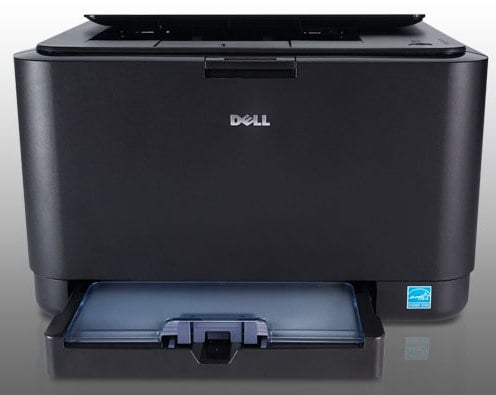
  • Hot Deal: Dell 1230c color laser printer, $99

    Dell 1230c color laser printer

    Just a quick heads up, because we think this is a pretty great deal on a laser printer. is selling their 1230c color laser printer at a steep discount, so you can currently pick one up for just $99, which is a full $130 off of the retail price. If you are wanting to upgrade from inkjet to laser printing, this is likely the cheapest way around to make that happen.


    Tags:
    ,
    ,
    ,
    ,
    ,
    ,
    ,
    ,
    ,
    ,

    Hot Deal: Dell 1230c color laser printer, $99 originally appeared on Gear Live on Thu, January 21, 2010 – 11:14:31


  • Spin Doctors: Power preference, Mark Teixeira vs. Ryan Howard

    We’ve seen plenty of New York vs. Philadelphia throwdowns over the years and there’s another heavyweight bout set to go in 2010: the battle for first-base supremacy. If you find yourself in need of some corner clout in the late-first or early-second round, who you gonna call?

    Yahoo! staffers Brad Evans and Scott Pianowski love a good debate and were happy to take up the case in around 250 words or less. Settle in for opening statements, then register your vote and comments at the bottom of the piece. We’ll figure this out together.

    Big Noise opens: Mark Teixeira(notes) is a true consistency king. He’s tallied more consecutive top-flight seasons than the creepy Burger King has trespassing violations. Despite suiting up for four different clubs over the past three years, he’s compiled at least a .290 BA, 30 homers and 105 RBI each season. Even after a horrific April (.200 BA, 3 HR, 10 RBI) – sans A-Rod – he managed to rack a.292-39-122-103 line in his first year in the Bronx, equal to the 18th-most valuable overall output according to Baseball Monster. With Mr. Vain presumably around full-season, Teixeira, who is a notorious slow starter (.252 career April BA), may rocket out of the gates, possibly leading to a slight increase in homers and RBI.

    In terms of power production, Ryan Howard(notes) is the Godzilla of first basemen. But like the fire-breathing film star, he’s not completely invincible. Over the past three seasons, his success rate against southpaws has fallen off precipitously (6 HR in 222 at-bats in ’09). If that trend continues a decline in homers, though minor, could be ahead. Frankly, the disparity in long-balls between the Philly smasher and Teixeira could be marginal. However, based on Howard’s downturn in walks percentage and grotesque contact yields (67.1 CT% in ’09), the difference in BA will likely be 30-40 points wide.

    Ultimately, what you see is what you get with Teixeira. He’s the epitome of reliability in four categories. Because Howard comes with some risk, it’s reason enough to choose foldable pepperoni slice over cheesesteak. Play it safe.

    Pianow Man counters: Ryan Howard’s batting average risk has become a grossly overrated topic. There’s a piddly 11 points separating Howard’s career batting average from Mark Teixeira’s. Sure, Howard doesn’t hit lefties very well and yes, he strikes out a ton. But he’s still carrying around a .279 career mark, in part because we live in a right-handed world. Let’s not pretend this is a greater issue than it is.

    Howard has outearned Teixeira at the fantasy table four years running, in part because he dominates in the power categories. Add up the numbers: Howard has 198 homers since 2006 while Teixeira has 135. Howard has 572 runs batted in while Teixeira has 458. Howard has even nipped Teixeira in runs scored (by a slight margin) in each of the past four years, and just for kicks Howard threw in eight steals last year (I won’t guarantee you that they’ll repeat, but there they are). Why are we looking for reasons to mock Ryan Howard? We should be praising the big guy for the roto dominance.

    Even if Howard does slip down to the .250-.260 level, the extra power stats should make up the difference. Teixeira has not come close to Howard’s homer and RBI totals since the Philly slugger gave up the paper business and headed into the bashing business. My esteemed colleague wants consistency, and that’s fine – go look at Howard’s counting stats every year, they’re the model of consistency. Grab Howard anywhere around the first turn this spring, then buckle up for six months of souvenirs. You won’t be disappointed.

  • Nokia to launch a new handset on January 26th

    8260

    Whoo! Looks like free turn-by-turn navigation wasn’t the only good news to come out of Nokia’s press announcement earlier today.

    In a once-in-a-blue-moon event, the guys over at Pocket-Lint asked for details about when Nokia might be launching new hardware and actually managed to get an answer. According to Nokia UK managing director Mark Loughran, Nokia will be launching something new on January 26th – just one day before Apple launches their something new.

    Alas, the date is all they could squeeze out of him. When the sentries PR flacks got wind that Mark was spilling the beans on something unannounced, they appeared from a cloud of smoke to shut the conversation down. Oh well!

    Crunch Network: CrunchGear drool over the sexiest new gadgets and hardware.


  • Obama calls for tougher bank rules

    WASHINGTON (AP) — President Barack Obama is calling for tougher regulations on banks that would limit the size and complexity of large financial institutions.

    The proposal would limit banks’ ability to engage in high-risk trades. Restrictions would be placed on proprietary trading by commercial banks to separate those institutions from investment banks.

    Obama said Thursday that without these regulations, the financial system will continue to operate under the same rules that led to its near collapse.

    The announcement comes as Obama renews his calls for financial regulatory reform, which is being negotiated on Capitol Hill.

    THIS IS A BREAKING NEWS UPDATE. Check back soon for further information. AP’s earlier story is below.

    WASHINGTON (AP) — President Barack Obama, eager to harness and redirect U.s. voter anger over bank bailouts, is ramping up his war on Wall Street Thursday by pushing tougher regulation of big banks.

    Building on his own proposals and the work of the House of Representatives, the president wants new federal government powers to limit the size and complexity of large financial institutions and to limit their ability to engage in high-risk trades, an administration official said late Wednesday.

    Obama will make the announcement Thursday in a bipartisan display aimed at capitalizing on the one issue in his agenda still standing after a devastating Democratic electoral loss in the state of Massachusetts.

    The president will be flanked by former Federal Reserve Chairman Paul Volcker and William Donaldson, appointed by Republican President George W. Bush as head of the Securities and Exchange Commission. Both men have advocated tighter banking restrictions. Volcker heads the President’s Economic Recovery Advisory Board.

    Obama’s announcement comes as the White House renews his demand that any overhaul of banking regulations contain an independent consumer financial protection agency. The proposed agency is one of the major sticking points in the Senate and the central focus of negotiations between Democrats and Republicans on the Senate Banking Committee.

    “The president is not going to compromise because lobbyists tell somebody that we shouldn’t have an agency that protects consumers,” White House spokesman Robert Gibbs said. “That’s something the president’s not willing to give up.”

    The tougher measures to be announced Thursday aim to limit speculation by commercial banks and to keep financial institutions from becoming so big that they pose a risk to the overall economic system.

    In focusing attention on Wall Street, however, the administration is also seeking to halt a wave of public anxiety that is benefiting Republicans and undermining Obama’s agenda. Obama has assumed a populist tone lately, calling big bank chief executives :”fat cats” and, last week, proposing a fee on large banks to cover shortfalls in Treasury’s $700 billion financial rescue fund.

    “When you see more and more of the financial sector basically churning transactions and engaging in reckless speculation and obscuring underlying risks in a way that makes a few people obscene amounts of money but doesn’t add value to the economy — and in fact puts the entire economy at enormous risk — then something’s got to change,” Obama said in an interview with Time Magazine published Thursday.

    Meanwhile, Goldman Sachs Group Inc. said Thursday it earned $4.79 billion in the fourth quarter as the bank’s trading business again outdistanced the rest of the financial industry. The company rewarded its employees with $16.2 billion in salaries and bonuses for 2009, up 47 percent from the previous year but still lower than many had expected.

    Obama last year proposed a series of measures to tighten the reins on financial institutions in hopes of preventing a recurrence of the crisis that struck both Wall Street and Washington in the fall of 2008. The House passed a bill last month.

    But Obama’s announcement Thursday will broaden those measures, particularly by endorsing Volcker’s proposal to restrict proprietary trading by commercial banks. Such a limit would separate commercial banks from investment banks, a line that was blurred a decade ago by the repeal of the 1930s Depression-era Glass-Steagall Act. That restriction would affect some of the biggest U.S. banks, including banking giants Bank of America Corp., Goldman Sachs and Citigroup Inc.

    “The better answer is to modernize the regulatory framework and not take the industry and the economy back to the 1930s,” said Scott Talbott, chief lobbyist for the Financial Services Roundtable, an industry group that represents large Wall Street institutions.

    Volcker has been pushing for a return to the two-tiered banking system of Glass-Steagall for nearly a year. Volcker’s views, however, were not included in Obama’s initial regulatory overhaul proposal last year.

    The senior administration official, speaking on the condition of anonymity because the plan had not yet been made public, said Obama has been planning for months to toughen proposed legislation to reduce risk-taking and limit the size and scope of financial institutions.

    “The White House will work closely with the House and Senate to work this into legislation moving on the hill,” the official said.

    News of the announcement came shortly after Treasury Secretary Timothy Geithner had a private dinner Wednesday night with chief executives from some of the top Wall Street banks.

    There was a new urgency in the Senate to move on the legislation — an attempt to respond to voter anger at Wall Street and bank bailouts that helped propel Republican Scott Brown to victory in a contest for the seat formerly held by the late Democratic Sen. Edward M. Kennedy.

    Brown’s victory gave Republicans 41 votes in the Senate, enough to mount successful blocking tactics and prevent Democratic legislation on health care or climate change from getting final votes.

    But financial regulations could survive.

    “I don’t want to see us have to go through what we’ve been through here where we’ve been relying on one party to get something,” Senate Banking Committee Chairman Christopher Dodd, a Democrat, said Wednesday.

    Moreover, Geithner met with Senate Republican leader Mitch McConnell of Kentucky on Tuesday. Administration officials now believe that while Republicans may seek to block other aspects of the president’s agenda, McConnell is considering making financial regulations an exception.

    Read the original article from Tribune News Services.


  • Blumenthal Decries U.S. Supreme Court Decision; No Impact On Connecticut Case In Federal Appeals Court

    In Connecticut, Attorney General Richard Blumenthal decried Thursday’s decision by the U.S. Supreme Court on campaign financing.

    The decision would allow large corporations and powerful unions to make campaign commercials on behalf of candidates in political campaigns. For example, a corporation or union could not directly contribute $3 million to a political campaign, but they could broadcast $3 million of campaign commercials on behalf of that candidate.

    “This split Supreme Court decision is sadly historic — threatening to drown the voices of ordinary citizens during elections with a flood of unlimited corporate spending. Fortunately, it has no effect on the pending challenge to Connecticut’s campaign finance law, now pending before the court of appeals,” Blumenthal said.

    “This decision will further entrench and empower special interests against reform and change in Washington that citizens deserve and demand.”

    Blumenthal continued, “It rips apart restraints against powerful, money-rich corporations that will overpower, overwhelm and undermine the people’s voice. For decades, our country has allowed healthy limitations against unregulated flow of corporate or union support of candidates for public office.

    “While this decision protects prohibitions or limitations against direct campaign contributions, including Connecticut’s campaign finance reforms, it opens a floodgate of funding for political messages in the public forum.

    “Banks and other financial institutions recently empowered by billions in taxpayer bailout money will have newly unleashed and unfettered influence over campaign messages.

    “Massive financial institutions, already wielding immense power over politicians in Washington, will be more emboldened and empowered than ever to influence policy and block effective reform by pouring vast sums of corporate wealth into elections.

    “Congress must work fiercely and fast to respond to this dangerous decision by promptly passing legislation that ensures disclosure — such as vigorous reporting requirements — when powerful corporations and other special interests fund political ads and other messages.”

  • Potato Chip Hand Solves the Chip/Keyboard Problem the Japanese Way [Japan]

    The age old conundrum of how to eat chips at a keyboard without making a giant mess has finally been solved. So how do you keep your hands clean? By using another hand. A robotic hand.

    As this lady demonstrates, you push the button on the shaft to clamp the hand around the chip, which you then shove in the direction of your face. It’s soft enough to not completely crush through the chip—which is bad—but still stable enough to carry it without dropping. You might say that there was too much thought and engineering effort going into a problem that nobody needed solving, but you’d be wrong. Very wrong. [ITmedia via Crunchgear]


  • Photoblogger Tommy Ton for GQ: Milan Fashion Week

    gq-milanfashionweek-main

    Tommy Ton of Jak & Jil blog takes Scott Schuman’s spot as street photographer for GQ during Milan Fashion Week. With the Jak and Jil site quickly becoming another popular source for street fashion inspirations for some, a different perspective on the show was just what we needed. As always, Tommy captures his subjects in the perfect moment with fine timing.

    Continue reading to view some of our favorites or see the rest at GQ.


    Source: GQ


  • Unfashionable Nonsense: How to Predict the Future and Alienate People

    Contrary to popular belief, “spontaneity” is not fun. This belief, I think, mainly comes from romantic comedies; not only is it completely silly to consider parts of the most contrived plot lines known to mankind “spontaneous,” it defies common sense to think you would benefit from something you didn’t plan. Given the choice, we pick what works best and make it a habit. Spontaneous events, like rain in the middle of a sunny day or a stock market crash, suck mostly because they are not what we planned for when setting out one day wearing Rainbows to buy oil futures.

    Prediction, then, is essential. There are time-tested ways to augur, but, like all old things, they only sort of work. For example, sometimes birds fly in patterns because Zeus told them to, but other times they are just maliciously screwing with you. Old women, preferably with crooked noses, once were a dependable source of information about the beyond, but nowadays greener pastures featuring all you can eat dinner at 4 p.m. have persuaded them to give up the trade in favor of bridge. Shamefully, modern fortune telling has been forced underground, exiled and marginalized. Our society simply does not provide an adequate demand for their skills.

    Nonetheless, I am willing to fill this void and put my credibility on the line for the following predictions. In interest of transparency, I must reveal my methods, even if this takes away some of the magic: I am assuming things will be basically the same in the next year, only different. This is, I believe, the method used by the AT&T advertisers in their “You Will” series from 1993, which predicted such innovations as GPS and Kindle, although the amateurs screwed it up by calling them e-maps and e-books.

    First of all, Gitmo will not be closed “one year after,” or one year and three days after. California will remain broke and still will not turn a budget in on time. Cheap beer will remain popular among college students, until a Seventh Heaven reunion episode decries the practice of “beer ponging,” leading to a precipitous decline in amoral student behavior. Cabo will be shuttered, but Vegas will remain popular among divorcees who went to college in what will be known retroactively as the “Dark Ages.”

    MTV will begin playing music during daylight hours and Girls Gone Wild will be a documentary on the Discovery Channel about female zoologists searching for the elusive ice tiger in the Congolese jungle. Companies will continue to go putatively “green” when making cost-cutting measures and/or charging more for inferior products. Cash for Clunkers, however, will not be extended. The economy will recover, and Cabo will be reborn as an industrial city focusing on paper goods and seal lion pelts. You will graduate. Engineers will take us to Mars and, disappointingly, Martians will not be found. Never missing an opportunity, Glenn Beck will run a special on the program and either how it signifies that America is the best or that Barack Obama is a communist. Invited to travel with the astronauts, Glenn Beck will travel to Mars and be left there. Sarah Palin will take over his time slot.

    The New York Times will begin charging for online articles in 2011, and critics will lament they have sold their soul to save their body. College students, in protest, will make a Facebook group in order to express their heartfelt anger. Rupert Murdoch will snicker.

    As with all predictions, these require action to address their implications. I suggest you start saving up free copies of The New York Times on your hard drive and stuff an emergency kit with a keepsake photo of Glenn Beck, a couple cans of Keystone and a list of Facebook contacts. It will be something fun for your kids to find under your bed when you, too, are old and at the home playing bridge after eating dinner at four.

  • Analyst Predicts 2.5 Million webOS Phones in 1st year

    On Wednesday, Peter Kafka of All Things Digital, MediaMemo posted an interesting piece talking about the numbers for Google Nexus One. He referred to guesstimates from Citigroup research analyst, Mark Mahaney on exactly how many new phones the search giant will sell and what that means for its earnings.

    "Mahaney thinks Google might ship one million to three million phones in the first year, which could generate up to $1.6 billion in additional revenue, and perhaps another 55 cents in earnings per share. That’s about half the estimate from Douglas Anmuth of Barclays (BCS) earlier this month. Mahaney cites both Flurry’s modest first-week sales estimates as well as internal Citigroup (C) research, to support his numbers."

    The Citi Investment Research and Analysis chart that accompanied this piece showed first year numbers for other smartphones (the various iPhones, Droid, Palm Pre & Palm Pixi).

    The eye-opener was the 2.492 million number for the Palm Pre & Palm Pixi combined. Our own Dieter Bohn remarked, "Given that we haven’t heard that Palm has sold a million yet, it paints a fairly rosy picture of how it will do on Verizon."

    Indeed. All eyes are on what the move to Verizon and what impact it will have on Palm’s bottom line. We don’t know whether or not we believe these numbers, but we are expecting a pretty hefty bump from Verizon – are you?

    Thanks Sid for the tip!

  • Argentina e Só povo Pequeno! 🙂

    Villa Elisa

    Na Argentina você pode encontrar o comprimento ea largura do país,
    milhares de povos desconhecidos, alguns tem 2000 habitantes, muitas vezes ate 100 habitantes
    E são eles que também fazem parte desta bela Argentina.

    Nesta oportunidade, "Villa Elisa" Entre Rios

    01

    02

    03

    04

    05

    06

    07

    08

    09

    10

    11

    12

    13

    14

    15

    16

    17

    18

    19

    20

    21

    22

    23

    24

    25

    26

    27

  • Poll: Which Is the Most Awesomely Bizarre Science Illustration? | Discoblog

    Discoblog readers: We need your help.

    If you’ve been reading the DISCOVER blogs this week, you might have caught 80beats’ coverage of the study out suggesting the ultra-tough shell of a deep-sea snail could inspire the next generation of body armor. For reasons that could only be described as “dropping the ball,” we didn’t include the illustration provided by the National Science Foundation. It’s not every day that you get to see a samurai attacking a giant snail, though he probably should’ve brought his Hattori Hanzō sword rather than this spear.

    Samurai vs. Snail:

    snail

    Not to be outdone, the Nature study we covered today, arguing Madagascar’s mammals arrived there via flotilla, came with its own illustration. In it, the happy lemur wins the boat race to the island while the sad hippos and lions, too fat to ride, stay on the mainland.

    The Great Animal Boat Race:

    madagascar

    More awesomely bizarre? Please, help us decide:

    Related Content:
    80beats: Could a Deep Sea Snail’s Shell Inspire Next-Gen Body Armor?
    80beats: Study: Madagascar’s Weird Mammals Got There On Rafts

    Images: NSF; Luci Betti Nash


  • Cominar’s chase of BTB may just be on hold

    Desjardins Securities analyst Jeff Roberts isn’t ruling out Cominar Real Estate Investment Trust acquiring BTB REIT, despite the latter’s current rejection of any deal. Cominar said it had approached BTB, a Quebce-based REIT with a market capitalization of $30-million, but was rebuffed by management. Cominar is not interested in a hostile takeover attempt.

    Mr. Roberts said he believed the capitalization rate on the deal would have been about 8.8%, about the same price Cominar paid to buy Overland Realty Ltd. this week — part of move into Atlantic Canada for the Quebec City-based REIT.

    “Because BTB’s management does not wish to negotiate a sale to Cominar, AM Total Investments, a company owned by the Dallaire family who are the founders and largest unitholders of Cominar, announced that it intends to sell its entire 19.7% stake in BTB, which should pressure BTB’s unit price.,” said Mr. Roberts.

    The analyst said most of BTB’s 43 properties, which consist of 2.3 million square feet of diversified properties mostly in Quebec, would have fit in well with Cominar’s portfolio. Mr. Roberts predicts Cominar will still be able to acquire about $150-million to $200-million of accretive properties in 2010, despite missing out on BTB.

    Plus, he added, the chase of BTB may be just on hold.

    “Cominar’s management is patient and conservative, and may eventually acquire BTB. In the meantime, between other acquisitions and sizeable internal development projects, Cominar should continue its brisk expansion while growing its cash flow per unit,” said Mr. Roberts.

    Garry Marr 

  • Stimulus Plan? Taking Transit can save you $10,000

    Take transit and save money! Photo by Flickr user Steve Wampler.

    Take transit and save money! Photo by Flickr user Steve Wampler.

    What would you do if you were suddenly given $10,000?

    I've been ruminating that question since last week's release of APTA’s monthly "The Transit Savings Report." The report figures that a transit rider living in Los Angeles could save $10,052 a year by avoiding the costs of parking, fuel, insurance and general auto operations. In New York, the annual savings amount to $13,765. Average savings are at $9,240. 

    I like round numbers, so I'd settle for just $10,000 in savings. I asked some of my co-workers how they'd spend the money. One responsible respondent said she'd pay off student loans or put the money toward a down payment on a house, and another chimed in about those student loans. One said he'd buy a bicycle (my favorite notion) and put the rest into the stock market. Two said they'd devote at least a portion of the money to travel and the other half to aid Haiti—you can see why I regard my co-workers as among the kindest folks on the planet.

    One of the thriftiest among the group had a list of seven options, including paying those student loans (a common obligation around here), traveling, visiting family, and buying new clothes. One would pay a year's worth of rent, buy a season pass at Squaw Valley, and spend what's left on exotic—and presumably low-budget—travel. Another would fix his roof. Maybe he would have had a different answer if it wasn't raining.

    There's a trend here. Saving money by riding transit can stimulate the economy. A car that spends most of its time parked (and eating fuel when it’s rolling), can really strain a personal budget. It can prevent us from doing what we think is most important.

    Not everyone has access to good transit, and lately, with transit cuts spreading across the country, access to good transit is in danger. But imagine what a difference it would make if the Senate passed a jobs bill that put a lot of new money into keeping buses and light rail running, and bus and rail drivers employed? Jobs would be saved; transit riders could continue to depend on transit; people could think about spending on things other than parking and fuel. They could replenish student loan banks, jumpstart the housing market, and help the people of an island nation that's been devastated by an earthquake.

    They could do all these things and go about their everyday travel in a way that reduces air pollution from transportation. Under perfect conditions, a full conventional bus could displace 30 to 40 carbon-fueled car trips.

    The Senate hasn't released its version of the jobs bill yet, but the House version falls short of ideal in the transportation funding area. It provides about $6 billion to urban transit, and of that, only 10 percent, or about $600 million, is available for operations. I say only because $600 million is less than one year's worth of operations funding cut by the state legislature and governor in California during the last few years of disappointing budget deals. That's just one state.

    If Congress wants to save jobs, it needs to give a bigger share of the transportation pie to transit and allow more of it to be spent keeping transit drivers at work. Then the rest of us can start putting our annual transportation savings to work and get the economy rolling again, even as we reduce pollution.

  • Castle Forbes Lavender After Shave Balm Travel Size TSA Approved

    Part of the Essential Shaving Range from the private perfumery at Castle Forbes in Scotland, this soothing balm is alcohol free.
    It contains natural witch hazel to close the pores after shaving. This combined with the healing properties of pure essential oils, not fragrance, results in a superior quality, moisturizing skin balm. Available here in a handy 30ml / 1oz travel or trial size plastic bottle.

    View Castle Forbes Lavender After Shave Balm Travel Size TSA Approved Details

    Featured: Phoenix Roofing

  • 7 for 7: A Third OS for the Apple Tablet?

    This is the second in a series of 7 posts in the 7 days prior to Apple’s January 27 media event in which I explore various possibilities for an Apple Tablet and other potential announcements.

    If you are returning from some sort of Internet exile, you might just be hearing that Apple is expected to announce a new tablet computer at an event in Cupertino on January 27. All we know for certain is that they are holding an event to showcase their “latest creation.” But there is an incredible amount of rumor and speculation about the company and the device that it is hard to ignore. I, for one, am obsessed, so I’m devoting an entire week to examining the possibilities.

    Among the many questions about an Apple tablet are what software it will run, and what the user experience will be like. Before we dive into the specifics of what a tablet might offer, lets consider some history and the current state of Apple device operating systems.

    History of the Apple OS

    Apple first introduced Mac OS X in 2001 (though a server version was released earlier) after modifying the NeXT Computer operating system it had purchased in early 1999. Later in 2001, Apple introduced the iPod, which ran a different operating system powered in part by software from a company called Pixo, whose team included several former Apple Newton engineers. The Apple TV, running a device-specific variant of Mac OS X, shipped in March 2007, and the iPhone–also running a device-specific variant of Mac OS X–went on sale in June of the same year. Apple has released updates for all operating systems through software update and new devices, and major new versions of Mac OS X via box purchases. Major iPhone software updates are roughly on an annual release cycle, while major Mac OS X updates were once released on a similar schedule, but that has slowed in recent years.

    Apple’s Snow Leopard version of Mac OS X was released in August 2009, and was touted by Apple as a performance update with few new features. My installations of Snow Leopard saved on average about 20GB of hard drive space, and seemed to make my computers run faster. But while these changes were great for my Macs, most desktop and laptop computers had plenty of memory and storage to run Mac OS X before Snow Leopard was introduced. The same improvements, however, would make a huge difference for devices like the iPhone and Apple TV, where memory and storage are more constrained and precious, and fixed for a particular model.

    It is now a misnomer to refer to the operating system as “Mac OS X,” which is really just the version that runs on the Macintosh line of computers. “OS X,” however, runs on Macs as well as iPhones and Apple TVs. So all of Apple’s current devices, except non-touch iPods (and maybe those!), run OS X: Mac OS X, iPhone OS X, and Apple TV OS X (iSlate OS X?). Of course there are differences, most obviously in user interface and input method: keyboard and mouse for the Mac, touch for the iPhone, and remote control for Apple TV. Apple excels at creating user interfaces that are appropriate for these different input methods and other parameters such as viewing distance. One of the great things about OS X is its modularity: variants can rather easily be optimized for their target devices.

    Its hard to imagine a scenario in which the Apple tablet won’t run OS X. But which OS X? The same version used in desktop and laptops, or the one used for iPhones? After all, won’t the tablet simply be a big iPod touch? Or will it be another operating system altogether?

    Tablet OS X

    The iPhone OS has a touch interface, as the tablet most certainly will, and is thus the most likely of the existing operating systems to be used in the new device. But iPhone apps–those built by Apple and third-party developers–are specifically designed to run on the iPhone’s 480×320 pixel resolution. Ideally, app developers won’t have to create 2 versions of their apps: one for the iPhone and one for the tablet. Which means other, more low-level changes to the iPhone OS would be required. Apps will need a form of UI intelligence to recognize which device it is being displayed on, then render a version appropriate for that device.

    The tablet could run iPhone apps inside smaller windows, turning current iPhone apps into something like Dashboard widgets, but this doesn’t strike me as very elegant–or very Apple-like. Indeed, there is some evidence that a small group of select app developers has been asked to create versions of their apps for a larger resolution display, but we don’t know if these are new, single versions that work on both screen sizes, or if they are new, secondary versions of the apps that run only on the larger screen.

    The team working on the Apple tablet likely began creating the user experience for the new device with a blank sheet of paper. Simply trying to scale the iPhone interface would be too limiting, and wouldn’t result in the optimum user experience. Yet there is a clear business need to support the app development community and leverage to tremendous success of the iTunes App Store. There just aren’t any easy answers to this problem.

    Ultimately, I expect Apple to create a third operating system (after Mac and iPhone, not including Apple TV or iPod since they don’t support app development) for the new tablet. It will be based on OS X, but will have an entirely new user interface that is optimized for the screen size and purpose of the device. Apple’s developer tools will also be updated to include support for the new tablet, including a Mac-based emulator, allowing developers to use XCode, Interface Builder and other tools to support all of Apple’s product lines. The iPhone OS will be updated to support new app parameters so that apps can be easily updated to run on both devices. Perhaps on the 27th but likely later, the Apple TV will get a similar update to support the iTunes App Store.

    Related GigaOM Pro Research: Rumored Apple Tablet: Opportunities Too Big to Ignore

  • FBI Investigates Scott Baio Death Threats After Crack About First Lady Michelle Obama

    Happy Days hasbeen Scott Baio called the First Lady ugly — now he’s calling the FBI after he allegedly received a series of online threats and verbal ass-razzings from angry Tweeters.

    Funny how the shoe’s always tighter on the other foot…..


    Baio came under fire after he posted an unflattering picture of First Lady Michelle Obama on his Twitter.com page on Wednesday, along with a caption which read: “Wow. He (U.S. President Barack Obama) wakes up to this every morning.”

    The post attracted a slew of negative comments and accusations of racism from his followers. Baio, for his part, insists his message was taken the wrong way.

    “People need to relax and laugh a bit. Life is too short no matter what party you are with. A joke is just that, a joke,” he wrote.

    “One bad picture of a woman & everyone wants to bash me?” the star of VH1’s Scott Baio….45 & Counting wrote. “If it had been of Palin ppl would have prob cheered. I am NOT making fun of any1.”

    After the negative comments turned threatening, Baio informed his followers that he had contacted authorities over the nasty posts: “PLEASE NOTE: The FBI has been contacted & we have a file number for the threats, along with Twitter support. Thx (thanks).”

    I’m not sure about the racism claims. After all, it is an unflattering photo of the otherwise beautiful Mrs. O. However, if you’re going to dish it out, you have to know how to take it. Does Scott really need to run crying to the Feds because he got roasted on Twitter?


  • Angola approves new constitution ending popular election of president

    [JURIST] The Parliament of the Republic of Angola approved a new constitution on Thursday that would end the popular election of the president, despite the refusal of opposition party UNITA to take part in the vote. The new constitution replaces an interim constitution that had been in place since 1975. It provides for the appointment of the country’s president by parliament’s majority party, ending the direct election of the country’s president. It also replaces the position of prime minister with a vice president, who will be appointed by the president. It limits a president to two five-year terms, but that clause will first take effect after parliamentary elections in 2012. Opponents of the constitution argue that it is merely a way to further expand the power of current President Jose Eduardo dos Santos, but members of the ruling MPLA party say that it will allow him to more effectively rule the country.
    Dos Santos has been in power since 1979. He faced one round of elections in 1992 before a second round was called off due to violence. A presidential election that was scheduled for 2009 was delayed while the new constitution was being considered. Human Rights Watch (HRW) has expressed doubts as to whether past parliamentary elections were fair and free and has identified problems with the electoral system.