Blog

  • Maureen Dowd: S.F. mayor resigns himself to a future as former politician

    Gavin Newsom still looks glossy, like someone who’d play JFK in a Lifetime original movie.

    But the 42-year-old mayor of San Francisco sees his once glowing political future in less glamorous terms.

    “I mean, oh, God,” he said, sipping green tea in his elegant office. “In a couple of years, you’ll see me as the clerk of a wine store.”

    It’s easy to picture the lithe and charming Newsom – with the well-cut suits, the electric Tesla, the beautiful blonde wife and baby – advising a Pacific Heights couple on a cabernet with aromas of eucalyptus and mint. Before he got into politics, after all, he started a boutique wine shop in Napa Valley that blossomed into a multi- million-dollar business.

    So how did this onetime poster boy for the new face of the Democratic Party get to the point where he couldn’t raise the money to compete with the old-school Jerry Brown in the governor’s race, and why is he leaving politics just when he feels as though he’s getting better at it?

    “This is it. God bless. It was fun while it lasted,” he said of his career, with a rueful smile. “Guys like me don’t necessarily progress very far, which is fine.”

    If Newsom feels a little sorry for himself these days, it’s perfectly understandable.

    In a courthouse a few blocks from City Hall, Ted Olson and David Boies are defending same-sex marriage in a landmark case substantially financed so far by David Geffen and Steve Bing. While the mayor contemplates life as a wine clerk, the two lawyers are becoming bipartisan folk heroes to gays and lesbians and were lionized in a Newsweek cover story and a Diana Walker photo spread in Time.

    Boies told the New Yorker that the “powerful images” of gay couples flocking to San Francisco to tie the knot had helped move him to get involved in the case to overturn Proposition 8.

    Like many pioneers who go first – from the “Ellen” sitcom to the Hillary drama – the mayor who staked his career on giving equal rights to gays may have to settle for paving the way. The lawyers get praised, but he got pilloried?

    “Grand understatement,” he said dryly, noting that he still remembers press coverage from before the 2004 same-sex marriage eruption about shooting stars of the Democratic Party.

    “There were five of us,” he said, with a teasing nostalgia.

    “A guy named Obama. I’m like, ‘Why is he in here? This is ridiculous. I mean, he’s a state senator. I’m kind of insulted.’

    “Life was really good, and then it came crashing down. ‘You’re not going to be speaking at the convention. We overbooked.’ And then it becomes the house of cards with the Democrats excusing themselves from visits to this city and being in the same room with me.

    “I went in with the beginner’s mind. I didn’t know what I didn’t know. I never imagined 4,036 couples getting married over a month. And this is by no means an excuse for the governor’s race.

    “But you just couldn’t escape from the perception ‘he’s just a single-issue person.’ I remember standing there at the window, and I swear to you, I resigned myself to not even being re-elected mayor. This is a much more conservative town than people give it credit for.”

    And now Jerry Brown might be governor redux?

    “It’s frustrating,” Newsom admitted. “It’s not a critique, but he wasn’t particularly helpful at the time. I think he came around very recently, and I think there was some pragmatism to that as well, candidly.”

    I asked whether President Barack Obama, who said at a Martin Luther King Jr. commemoration that the civil rights movement was partly about “changing people’s hearts and minds and breaking out of old customs and old habits,” had disappointed him given that the president is a triumph of civil rights himself.

    “Oh, I can’t get in trouble here,” Newsom said with a playful wince. “I want him to succeed. But I am very upset by what he’s not done in terms of rights of gays and lesbians. I understand it tactically in a campaign, but at this point I don’t know. There is some belief that he actually doesn’t believe in same-sex marriage.

    “But it’s fundamentally inexcusable for a member of the Democratic Party to stand on the principle that separate is now equal, but only on the basis of sexual orientation. We’ve always fought for the rights of minorities and against the whims of majorities.”

    He said the promise of Obama sparking an “organic movement” has faded and “there’s a growing discontent and lack of enthusiasm that I worry about. He should just stand on principle, put this behind him and move on.”

    The mayor, who met with Olson and Boies the day after we talked, said he wanted to go to court and see them in action. After all, they’re the local heroes.

  • Editorial: Why would anyone want to be sheriff?

    Former Sacramento Police Chief Albert Nájera, the candidate with the most impressive résumé, has dropped out of the race for Sacramento County sheriff. That ought to alarm county residents, supervisors and deputies.

    In his official withdrawal statement, Nájera said that, after reviewing the department’s budget and talking to deputies and managers, he was forced to face a “harsh reality. … The department is not structured or financed to support the vision I have for public safety.”

    Privately, Nájera was more blunt. “I’m not a demolition kind of guy. I’m a construction guy … I keep getting slapped by reality. This department is going to shrink.”

    The county’s fiscal crisis convinced Nájera that he would not be able to deliver the law enforcement services people in the unincorporated areas of the county want – more patrols, faster response times and more deputies trained to address neighborhood problems.

    Beyond money issues, he saw destructive levels of factionalism, with even high-ranking managers bluntly stating that they were in “Blanas’ (former sheriff Lou Blanas) camp,” suggesting that a Sheriff John McGinness camp existed as well. Nájera feared that his candidacy might potentially create a third faction within an already divided department.

    He also worried about the institutional constraints on his ability to build an effective management team. The sheriff has authority to appoint only one member of his command staff, the undersheriff.

    County civil service rules, union contracts and deeply ingrained past practices make it difficult for the sheriff to assign top management staff where they would be most effective. Nájera says he was surprised by how many high-cost, top-ranking sworn officers occupied positions that are filled by lower-cost civilians in the city Police Department. For example, in the Sheriff’s Department, the head of information technology is a captain.

    Nájera recognized that changing those long-standing practices would have required divisive, internal personnel fights at a time the sheriff’s focus is urgently needed to deal with budget, training and crime-fighting issues. In the end, he decided he did not want to take on a job where he saw too little chance of success.

    County leaders need to take note. Even if they can’t give the next sheriff more funds, they need to give him greater flexibility to do this critical job in the most cost-effective way possible. Sacramento’s next sheriff confronts a world of challenges, and they won’t go away because Nájera dropped out of the race.

  • Blinking Cadavers Lead to New Treatment for Blindness | Discoblog

    eyelid-cadaverIt’s a disconcerting thought, but somewhere out there lies a cadaver… blinking.

    Beyond the fright, however, lies the hope for the suffering–scientists have found a way to make an eyelid blink using electrical charges. It’s a big development that can help people with eyelid paralysis who face the possibility of going blind.

    Currently, eyelid paralysis is treated either by transferring a muscle from the leg into the face–a lengthy process that may not be suitable for elderly or sick patients–or suturing a gold weight inside the eye, which helps close the eye with the aid of gravity. But neither solution has many takers. Searching for an alternative, surgeons at the University of California at Davis experimented with artificial muscles with six donated human cadavers.

    LiveScience reports:

    The artificial muscle they used acts like human muscle by expanding and contracting in response to electrical input. Developed by engineers at SRI International of Palo Alto, Calif., the muscle includes a piece of soft acrylic or silicone sandwiched between carbon particle electrode layers. When a current is applied, the outer layers get pressed together and squash the soft center, expanding the artificial muscle as a whole. When the charge is removed, it contracts.

    Scientists say this is the first wave of artificial muscle being used in biological systems. In the future, the procedure may be used to treat patients with facial paralysis caused by stroke, injury, or combat. The findings were reported in the January-February issue of journal Archives of Facial Plastic Surgery.

    Researchers say the procedure might be available for patients with eyelid paralysis over the next five years. They are now conducting their studies on live gerbils. Phew! That’s so much better than the thought of bagged, tagged, and blinking cadavers.

    Related Content:
    80beats: Step Towards an AIDS Vaccine? Monkey Muscles Produce HIV-Fighting Proteins
    DISCOVER: New Treatment Lets Paralysed Rats Walk Without Using Their Brains
    DISCOVER: FDA Approves Drug That Promises Movie Star Eyelashes
    DISCOVER: Her American Face- Transplant Patient Shows Off Her New Look

    Image: University of California Regents


  • Green goods: A smarter dimming switch

    By Tom Kessler
    Green Right Now

    Anyone who has gone to the trouble of installing dimmer switches because they can help cut your energy costs was probably chagrined to learn that they don’t work with the early generations of CFL bulbs. Even the newer CFLs that are said to be dimmable often don’t play nicely with slider controls — they hum, they buzz or they just don’t work at all.

    So here’s a bit of good news: Leviton Manufacturing is introducing the first slide dimmer specifically designed for use with a wide variety of dimmable CFL bulbs. The company says its Leviton Decora CFL Slide Dimmer optimizes the performance of dimmable CFL bulbs and works with the widest range of dimmable CFL bulbs available.

    Leviton says that in auto mode, the new dimmer detects whether the bulb is an incandescent or a dimmable CFL, determines high- and low-end dimming capabilities and adjusts the dimming range accordingly. This feature allows for the fact that dimming varies by bulb manufacturer, type and rating.

    “After using standard dimmers, consumers often report such problems as flickering when they dim the lights to lower levels, not being able to turn the lights on when the dimmer is in a dimmed position and limited dimming range when using CFL bulbs with these dimmers,” James Sherman, director of residential marketing at Leviton, said in a statement. “With the new Leviton Decora CFL Slide Dimmer, consumers can continue to enjoy the energy-saving benefits of dimmable CFL bulbs, but with improved ambiance and lighting options.”

    Copyright © 2010 Green Right Now | Distributed by GRN Network

    Related video:

    Leviton Manufacturing product accouncement

  • Rex Grossman sacked for a loss on Trump condo

    rexcondo.JPGFormer Bears quarterback Rex Grossman has taken a major loss on the sale of his 36th-floor condominium unit in Trump International Hotel & Tower, unloading it for $2 million.

    Now calling plays for the Houston Texans, Grossman, 29, closed on the sale of the 3,437-square-foot unit Wednesday. The buyer is not yet identified in public records.

    Grossman purchased the two-bedroom Trump unit in September 2008 for $2.681 million. Less than a year later, after the Bears informed him that he was not in their plans for 2009, Grossman signed with the Texans and then placed the unit on the market for $2.349 million.

    Photo: Rex Grossman recently sold his Trump Tower condo at a loss. (Sam Greenwood/AP)

    He later reduced its asking price to 2.295 million. Features in the unit include Snaidero cabinetry, upgraded appliances, his-and-hers baths, hardwood floors and two parking spaces.

    Grossman continues to own a three-bedroom town home in Lake Forest, which he currently has on the market for $849,000.

    –Bob Goldsborough

    Read the original article from Tribune News Services.


  • Nokia Gives Ovi Maps New Direction — Free Navigation Forever

    Some would argue that Google Maps navigation is a “killer app” on their Android handset. That makes me wonder if Nokia’s Ovi Maps would then be deemed a “killer app killer” — the handset maker today announced free map navigation (both walk and drive) forever on Nokia handsets. Google Maps is free, you say? Sure it is, but Nokia is one-upping the freeness with offline usefulness. And not just on one subset of devices either. The free navigation service is initially available on 10 different models with detailed maps in over 180 countries. Nokia also claims that their hybrid-vector mapping system uses 10 times less bandwidth than Google’s, which is a carrier’s dream. And the ability to use the navigation features even while offline keeps the consumer happy, too.

    Nokia didn’t stop there though. Included with the new Ovi Maps are value-add services — traffic data and travel guides from Lonely Planet and Michelin are included too. Integrated into the system there is also a location sharing feature that works directly with Facebook, similar to FourSquare. It’s not a “check-in” per se, but it essentially functions like one — a quick share tells your Facebook friends exactly where you are.

    The new Ovi maps currently supports these handsets: Nokia X6, Nokia N97 mini, E72, E55, E52, Nokia 6730 classic, Nokia 6710 Navigator, Nokia 5800 Xpressmusic, Nokia 5800 Navigation Edition, Nokia 5230. Prior the Consumer Electronics Show, I might have dismissed this news as a non-U.S. centric bit. But after hearing how Nokia is committed to empower consumers in developing nations, the new Ovi Maps fits right in with that strategy.

  • Todos los datos del Mini Countryman

    Mini_countryman

    Después de las filtraciones de las primeras imágenes filtradas del crossover de Mini, BMW ha desvelado todos los detalles del nuevo integrante de la familia Mini. Este nuevo todocamino tendrá disponible como opción la tracción total y cuenta con más espacio que el resto de la familia Mini, contando con cuatro puertas y un buen maletero, además de este aspecto exterior tan original.

    La estética exterior del Mini Countryman puede encajarles muy bien a aquellos que querían un Mini algo más grande y no les convencía mucho el Clubman, puesto que personalmente me gusta más como han resuelto el diseño del Coutryman que del Clubman, además de integrar perfectamente la esencia de Mini con cuatro puertas y algo más grande que sus hermanos de gama, puesto que medirá cuatro metros de largo.

    Mini_countryman

    En cuanto al interior sigue siendo un Mini de esencia con pocos elementos que lo diferencian del resto de la gama y cuenta con cuatro plazas (se puede pedir con banqueta de tres plazas traseras) y un diseño original, sobretodo en el tren central que llega hasta las plazas traseras (personalizable y con varias soluciones prácticas) y como un Mini de pura cepa, se puede personalizar con todos los detalles típicos a los que nos tiene acostumbrada la marca.

    Además este Mini cuenta con algo más de maletero que sus hermanos, situándose en 350 litros e incluso los asientos traseros se pueden desplazar bien individualmente o en conjunto la banqueta y es posible regular la inclinación de los respaldos y si los abatimos obtenemos un volumen de maletero de 1.720 litros.

    Mini_countryman

    En cuanto a la gama de motores, seguirá las pautas de los ya conocidos con la misma denominación y por tanto contamos con tres motores gasolina y dos diesel:

    • One D: equipado con el conocido motor 1.6 de 90 CV, que homologa un consumo de 4,3 litros a los 100 km y acelera de 0 a 100km/h en 13,2 segundos.
    • Cooper D: mismo motor 1.6 turbodiesel que desarrolla una potencia de 112 CV y homologa un consumo de 4,4 litros a los 100 km, así como acelera de 0 a 100 en 10,9 segundos.
    • One: equipado con el motor gasolina 1.6 de 98 CV con un consumo de 5,9 litros a los 100 km y aceleración de 0 a 100 en 12,7 segundos.
    • Cooper: equipado con 1.6 gasolina atmosférico, pero con mayor potencia que llega hasta los 122 CV, con un consumo de 6,1 litros a los 100 km y una aceleración de 0 a 100 km/h en 10,5 segundos.
    • Cooper S: el motor más potente en gasolina, se trata del 1.6 turbo twin scroll con inyección directa de gasolina y que desarrolla una potencia de 184 CV, con un consumo medio de 6,3 litros a los 100 km y una aceleración de 0 a 100 km/h en 7,6 segundos.

    Mini_countryman

    Por último quedan por conocer los precios del nuevo Mini Countryman, que serán algo mayores que sus hermanos. Pero este es un coche que puede resultar práctico para aquellos que demandan más espacio o para viajar con más comodidad y seguir presumiendo de Mini. Además cuenta con el aliciente de la tracción total, que seguro que para una espada por terrenos embarrados será muy útil.

    Fuente | BMW


  • BlackBerry News From The Wire for the Week of 1/18/2009

    In last week’s edition of News From The Wire we saw the first photos of the BlackBerry Curve 8910. After many of us wondered what place it had among the current BlackBerry lineup, a few commentators noted that the device resembles the BlackBerry Atlas, a device discovered around September and reportedly headed for Asian markets. That made sense, and I thought that would be the end of it. But early this week the device passed through the FCC. Since the US government likely isn’t in the business of approving devices set for release in Asian markets, it appears that the 8910 will, indeed, hit North America.

    (more…)

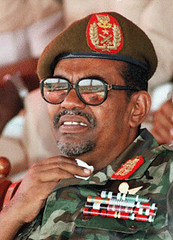
  • Sudan Extends Deadline For Election Nominations

    Sudan extends deadline for election nominations

    Thursday, 21 January 2010

    January 21, 2010 — Sudan has extended the deadline for nominations in the first multi-party vote in 24 years after candidates said they did not have enough time to prepare, election officials said on Wednesday.

    Elections would go ahead as scheduled on April 11 when Africa’s largest country, recovering from decades of war, will hold a poll already marred by accusations of fraud, vote-buying and intimidation during last year’s voter registration.

    “(The deadline for nominations is delayed) until the 27th January because we know that there are some who said the time is too short. But the elections will be on time,” Abu Bakr Waziri from the National Elections Commission told Reuters.

    The 10-day nomination period was announced just days before it began on January 12, and some prospective candidates were not given registration forms until much later, leaving little time to collect the signatures needed to be endorsed.

    “They wanted 15,000 signatures (for a candidate) to be nominated and that from 18 states with a minimum of 200 in each state,” said Abdel Aziz Khaled, a presidential candidate.

    He said he had met the requirements but that after decades of north-south war it would be difficult for many independent, mid-level or new political parties to garner support in both the north and south within the original tight timeframe.

    “They are making it difficult because (President Omar Hassan) al-Bashir doesn’t want many candidates to run because this will divide the vote and affect him in the first round to not get 50 plus percent,” Khaled said.

    If no presidential candidate gets 51 percent, it will force a second round between the two leading candidates.

    Khaled and others say they are determined to challenge Bashir despite widespread reports of fraud by his National Congress Party (NCP).

    On Wednesday the former southern rebel Sudan People’s Liberation Movement (SPLM), which signed a 2005 north-south peace deal and entered an uneasy coalition with the NCP, said vote buying and intimidation by the NCP had escalated.

    The NCP was targeting millions of largely uneducated and poor living in slum camps surrounding the capital, it said.

    “This will not be a way for a free and fair election,” said SPLM spokeswoman Keji Roman. “They are offering money or even threatening them…this is what makes it illegal and immoral.”

    Representatives of slum dwellers, who have little access to information and no electricity or running water, said NCP officials were using threats and bribery and also telling people the SPLM was supporting the NCP so they should vote for Bashir.

    NCP officials were not immediately available to comment but in the past have ridiculed allegations of fraud.

    Sudan’s civil war claimed 2 million lives and drove 4 million from their homes, destabilising much of east Africa. (Reuters)

    Last Updated ( Thursday, 21 January 2010 )

  • Capcom to continue 2.5D for fighting games

    The detail of 3D graphics with the mechanics of a 2D game when Capcom tried the formula out with Street Fighter IV, developers found themselves itching to try it out again. They did so with Tatsunoko

  • Baccalaureate Community Colleges Help Fill Unmet Needs, Community College Times

    By Garry Boulard

    Nearly four years after the Washington state legislature passed a law allowing the state’s community college system to offer baccalaureate programs, Bellevue College has more than 60 students enrolled in two separate bachelor’s degree programs and has already seen its first graduating class.

    “It has all worked out very well,” said Bellevue President Jean Floten regarding an idea that took root after a board member of the college, who was also a high-tech employer, said there was a growing need in his field for four-year graduates.

    “This was the same thing we heard from other employers who were talking about the need for a new kind of degree, where people would come to them job-ready with a four-year background,” Floten said.

    In response, the college applied to Washington’s Board for Community and Technical Colleges to be one of the first community colleges in the state to offer a four-year degree.

    “When the pilots (demonstration programs) were created, there really was not a lot of controversy,” Floten said. “The branch campuses of the universities were desirous of admitting freshmen, and we were desirous of offering an upper division, so there was kind of a trade that was done in the name of providing greater services to students in the state.”

    Today, there are seven community colleges in Washington that offer four-year degrees, while Bellevue has added an interior design program to its initial radiation and imaging sciences baccalaureate program.

    A national trend

    Bellevue’s embrace of four-year degrees represents a larger national trend that is seeing community colleges across the country increasingly getting the authority to award bachelor’s degrees, said Beth Hagan, executive director of the Community College Baccalaureate Association (CCBA).

    “It’s all about meeting unmet needs,” she said, noting that 17 states—including New York, Texas and Florida—currently allow for community colleges to offer a variety of four-year degrees.

    “In every state, universities are first asked if they would like to provide an applied workforce degree, a bachelor’s of arts degree, and most of the time they respond by saying ‘No, that this is not what we do,’” Hagan said. “So this has left it to the community colleges to fill the void.”

    There are many initiatives going on right now that are moving several community colleges in the direction of offering four-year degrees, and the process varies from state to state, said Hagan, adding that CCBA also supports improved articulation agreements between two-year and four-year colleges, greater distance learning services and improved access at the community college to a bachelor’s degree via on-campus university centers.

    Partnering with four-year institutions

    In Illinois, Harper College in November announced its partnership with Northern Illinois University (NIU) to provide a four-year degree in applied management with an emphasis on public education.

    The partnership is an important opportunity for everyone in public safety management—police, public safety and EMS, said Harper President Kenneth Ender.

    “Those folks enter into those careers with associate degrees that we provide, but then in order to move into supervisory positions and management and more leadership roles, they really need a four-year management degree,” he said.

    The announcement of the Harper-NIU partnership came after the community college considered offering a four-year degree program itself.

    “We were willing to do that if we couldn’t find a partner to accommodate the needs of the students, with respect to both the courses and the architecture of the delivery system,” Ender said.

    Oakton Community College (OCC) in Illinois has also signed a partnership agreement with NIU, which Tom Hamel, vice president for academic affairs at the college, called “nothing less than groundbreaking.”

    “For students, our partnership with NIU is good because while most four-year institutions will accept an associate of arts or associate of science degree as a transfer degree, it has been unpredictable as to whether or not a transfer institution will accept an associate of applied science degree,” Hamel said.

    But through the partnership, NIU and OCC are discussing applying the AAS toward a four-year degree, including public safety, Hamel said.

    “That’s a very good thing for our students,” he said.

    A similar partnership was crafted in 2006 between Maryland’s Harford Community College (HCC) and Towson University to develop a seamless community college-to-university transfer of credits, with an emphasis on math, science and education. But Towson, which has subsequently signed similar transfer agreements with all of Maryland’s community colleges, has also agreed to build a campus on land owned by HCC, adjacent to the two-year college’s Bel Air Campus.

    It was during a conversation with Towson President Robert Caret that HCC President James LaCalle suggested that the two institutions further cement their ties by having Towson construct its own building on the community college campus. (HCC has had a regional higher education center since 1995. Currently, six institutions offer bachelor’s and master’s programs, and even a doctorate program, through the center.)

    “We ended up talking to people in the community who very much liked the idea and have since signed a memorandum of understanding between our two colleges,” LaCalle said. “We have already selected an architectural firm to design the building and hope to break ground this coming August.”

    The operating principle behind the university/community building project is to increase higher education access to residents of northeastern Maryland, LaCalle said.

    “We are not going to be offering four-year degrees at our school, and we are not trying to become a four-year college,” LaCalle noted. “Even before Towson announced it was going to construct a building here, I made it very clear that we did not want to become a four-year school. We want to be a really good community college, which is what I think we are.”

    At odds over ‘mission creep’

    That emphasis on keeping the missions of the four-year and two-year institutions separate has dominated the debate in Michigan in response to a legislative proposal to allow the state’s 28 community colleges to offer bachelor’s of arts degrees in four applied areas: maritime technology, concrete technology, the culinary arts and nursing.

    “There was opposition to the idea initially and there continues to be opposition,” said Michael Hanson, president of the Michigan Community College Association. “The four-year schools are fighting the proposal hard, and I would think that by the time it gets to the House floor, there will be a number of no votes.”

    The reason for the opposition, which is spirited in part by the President’s Council of the State Universities of Michigan, is a concern that the state’s community colleges may be slowly inching towards becoming four-year institutions.

     “They talk about mission creep,” Hanson said. “But this has nothing to do with that. It is about limited programs in certain parts of the state where access is currently not available for a four-year degree, particularly in the northern part of the state.”

    “Besides, the University of Michigan is not going to put together a four-year concrete technology program,” Hanson added. “But it would make sense for Alpena Community College, which already has a world-class concrete technology program, to do so.”

    Until the Michigan legislature takes a final vote on the matter, Hanson says two-year colleges supporting the move will continue to educated residents and lawmakers on the purpose of offering four-year degrees in certain areas.

    “Once you talk to people who are initially opposed to the idea about what it is you are trying to do, many of them come around,” he said.

    That same approach worked in Texas, where three community colleges have now been authorized to offer baccalaureates, said Martha Ellis, a former president of the Texas Association of Community Colleges.

    “There was a lot of concern that the community colleges were diluting their mission, and that if they went the baccalaureate route, they would forget their mission altogether and no longer serve the community in the way that was intended,” she said.

    But two-year colleges countered that the four-year degrees they wanted to offer were in applied technology programs, and that was very much a part of the community colleges’ mission,” said Ellis, who currently serves as the associate vice chancellor for community college partnerships with the University of Texas System.

    “The legislature agreed, and since the four-year programs ended up being fairly limited in scope, most people have been satisfied. I have not heard anything negative,” she said.

  • KnowEm: Check if Your Favorite Username is Still Available on Over 300 Social Media Sites

    knowem_logo_jan09.pngKnowEm allows individuals and brands to ensure that they have claimed their favorite username or their brand’s name on over 350 social media services. Just type in your favorite username and KnowEm will check if it is still available on these sites.

    Today, KnowEm announced the launch of a number of premium services aimed at small businesses and enterprises. For a one-time fee, KnowEm will create profiles for a brand or individual on over 150 social media sites. For a slightly higher fee, the company will also populate these profiles with your information.

    Sponsor

    In addition, KnowEm also announced that it has acquired FriendsCall.Me, a service that is quite similar to KnowEm and also aims to help brands to make sure that their names aren’t being used by squatters.

    knowem_homepage.jpg

    Is Your Name Available?

    The basic free version of KnowEm makes it easy to find out if your favorite username is still available on the 350 social media services. Just type in your favorite username and KnowEm will check if your name is still available on these sites. Given how closely our online identities are often tied to one single username, it only makes sense to claim the same username on every site and to ensure that somebody else isn’t impersonating you. Other services that offer similar free features include Namechk (148 sites) and Usernamecheck.com (68 sites).

    Premium Services

    The new premium services extend KnowEm’s portfolio by giving businesses additional services for claiming and monitoring their brands. For users of the Corporate Edition ($349), KnowEm will create profiles on 150 social media sites and populate them with photos, bios and descriptions. A cheaper version of this services ($99) only includes the signup process, and users will have to populate their profiles by hand. For an additional $49 per month, KnowEm will also register your name or brand on new social media services as they launch.

    Discuss


  • NTT DOCOMO to Launch SE Xperia X10 in Japanese Market

    NTT DOCOMO, the Japanese telecommunications giant, announced today their launch of the Docomo Smartphone Xperia™, manufactured by Sony Ericsson Mobile Communications.  This is the handset known as the Xperia™ X10 in markets outside Japan. The astonishing Android handset will be available on the Japanese market starting April and offering two variants “Sensuous Black” and “Luster White”.

    Docomo Xperia

    The spec sheet provided on the press release outlines the same specs as the western version of the Xperia, a 4.0 inches WVGA (854 x 480) screen, 8.1 megapixel shooter, 1 GB of ROM, 384 MB of RAM, a 1GHz Qualcomm Snapdragon processor, HSUPA/HSDPA data communications and 801.11b/g wireless access.

    Unfortunately it also confirms that this Japanese version of the handset will be launching with Android 1.6, which is disappointing given the amazing hardware Sony Ericsson has put together for this device and the fact that by the time it launches half the Android world will be rocking version 2.1.

    You can continue reading the press release or take a peek directly at the spec sheet (PDF ).

    Enjoy!

    Other Great AndroidGuys Posts


  • White House Statement on Obama Bank Regulation Plan

    President Obama Calls for New Restrictions on Size and Scope of Financial Institutions to Rein in Excesses and Protect Taxpayers

    WASHINGTON, DC- President Obama joined Paul Volcker, former chairman of the Federal Reserve; Bill Donaldson, former chairman of the Securities and Exchange Commission; Congressman Barney Frank, House Financial Services Chairman; Senator Chris Dodd, Chairman of the Banking Committee and the President’s economic team to call for new restrictions on the size and scope of banks and other financial institutions to rein in excessive risk taking and to protect taxpayers.

    The President’s proposal would strengthen the comprehensive financial reform package that is already moving through Congress.

    “While the financial system is far stronger today than it was a year one year ago, it is still operating under the exact same rules that led to its near collapse,” said President Barack Obama. “My resolve to reform the system is only strengthened when I see a return to old practices at some of the very firms fighting reform; and when I see record profits at some of the very firms claiming that they cannot lend more to small business, cannot keep credit card rates low, and cannot refund taxpayers for the bailout. It is exactly this kind of irresponsibility that makes clear reform is necessary.”

    The proposal would:

    1. Limit the Scope-The President and his economic team will work with Congress to ensure that no bank or financial institution that contains a bank will own, invest in or sponsor a hedge fund or a private equity fund, or proprietary trading operations unrelated to serving customers for its own profit. .

    2. Limit the Size- The President also announced a new proposal to limit the consolidation of our financial sector. The President’s proposal will place broader limits on the excessive growth of the market share of liabilities at the largest financial firms, to supplement existing caps on the market share of deposits.

    In the coming weeks, the President will continue to work closely with Chairman Dodd and others to craft a strong, comprehensive financial reform bill that puts in place common sense rules of the road and robust safeguards for the benefit of consumers, closes loopholes, and ends the mentality of “Too Big to Fail.” Chairman Barney Frank’s financial reform legislation, which passed the House in December, laid the groundwork for this policy by authorizing regulators to restrict or prohibit large firms from engaging in excessively risky activities.

    As part of the previously announced reform program, the proposals announced today will help put an end to the risky practices that contributed significantly to the financial crisis.


  • Review: 2010 Lincoln MKT EcoBoost AWD has a good personality and great moves

    Filed under: , , ,

    2010 Lincoln MKT EcoBoost AWD – Click above for high-res image gallery

    Approaching the 2010 Lincoln MKT for the first time is like meeting a blind date. You’ve been told by friends she has a good personality, which immediately has you wondering what she looks like. From a distance you see your fears confirmed: She’s a big girl with a toothy grin and a weird hump. If super models are your thing, you’ll be disappointed by this three-row crossover sitting alone in the corner with a red carnation in her hair. But if you meet her with an open mind, you’ll find that a good personality goes a long way.

    It’s our job to go on blind dates with vehicles before you do, and despite the MKT’s controversial design, we’re glad we sat down and got to know her. Now, if you can’t get over seeing a beached whale in your driveway every morning, stop reading; no twin-turbo direct-inject V6 engine, advanced infotainment features or luxurious appointments will change your mind. We’ll agree to disagree and you’ll probably pass judgment on the MKT from afar, not even giving it the courtesy of a test drive before shacking up with that German model. Will you regret not getting to know the MKT like we did? Read on to find out.

    Photos by John Neff / Copyright (C)2010 Weblogs, Inc.

    Continue reading Review: 2010 Lincoln MKT EcoBoost AWD has a good personality and great moves

    Review: 2010 Lincoln MKT EcoBoost AWD has a good personality and great moves originally appeared on Autoblog on Thu, 21 Jan 2010 11:55:00 EST. Please see our terms for use of feeds.

    Permalink | Email this | Comments

  • Supreme Court strikes down *some* campaign spending limits

    By Matt Hawes

    Could this be the beginning of the end for McCain-Feingold?

    From The Los Angeles Times:

    The Supreme Court today overturned a century-old restriction on corporations using their money to sway federal elections and ruled that companies have a free-speech right to spend as much as they wish to persuade voters to elect or defeat candidates for Congress and the White House.

    In a 5-4 decision, the court’s conservative bloc said corporations have the same 1st Amendment rights as individuals and, for that reason, the government may not stop corporations from spending freely to influence the outcome of federal elections….

    Read the rest.

  • Sms económicos para todos con Okeyko

    Tal y como lo describen en su web Okeyko es una plataforma asincrónica de intercambio de datos, para comunicación “persona a persona”, a través de teléfonos celulares e Internet.

    El objetivo es que la gente pueda estar conectada a un precio accesible, utilizando las redes GPRS, 3G y WiFi (conexión inalámbrica de celulares a internet).

    Solamente instalando la aplicación y registrándote en la web ( http://www.okeyko.com ) y que la otra persona “el destinatario” se instale el programa es suficiente para que puedan intercambiar sms a un costo de 0.04 Centavos Argentinos.

    Okyeko quiere lograr la inserción de este método de comunicación como una alternativa más económica que la de los tradicionales SMS que hoy tienen un costo elevado para los usuarios. Poder conocer las opiniones de los usuarios de Okeyko también les servirá para poder mejorar sus experiencias y optimizar esta nueva opción de comunicación.

    Usar Okeyko es muy fácil. Sólo hay que seguir 3 pasos sencillos:
    1 – Registarse en la web para obtener un nombre de usuario propio (nick).
    2 – Descargar la aplicación en el teléfono celular.
    3 – Ejecutar la aplicación e ingresar a Okeyko .

    A probar y ver que onda.. Gracias Ariel por la noticia ;)

  • You Could Not Make It Up: UN Climate Change panel under fire after Himalayan glacier claim by Ben Webster, The Times

    Article Tags: Himalayan Glacier Data, You could not make it up

    “The IPCC reports underpin every country’s decisions about climate change. If the panel cannot be trusted, it becomes much more difficult to justify the global effort to cut greenhouse gases. That is why it is vital to place the allegations against the IPCC in context. While it is alarming that none of the 2,500 scientists who contributed to its 2007 report spotted the error, this is explained partly by it appearing in a single sentence on page 493.

    Climate sceptics around the world have spent two years scrutinising every claim made by the panel. So far they have identified one serious error; it seems unlikely that they will find many more. The IPCC should now re-check all the sources of statements in its report, but this process will not alter its conclusion that man-made emissions are very likely to be the main cause of global warming.”

    Click source to read FULL report by Ben Webster

    Source: timesonline.co.uk

    Read in full with comments »   


  • Bozhou Medicinal Herb Market

    Bozhou, China | Pharmacy Museums

    Located at the juncture of two important railway lines in the northwestern corner of Anhui province, the dusty and rusty city of Bozhou is the capital of the Chinese medicinal herb industry.

    The backwater city of approximately 3 million people (which was also home to Hua Mulan, the Disney heroine) is centered around a massive 85-acre market, where some 6,000 traders come from every corner of southeast Asia to ply the ingredients of traditional Chinese medicine. At the heart of the market is a multi-level structure holding seemingly endless aisles of vendors hawking curious, and aromatic, and sometimes downright stomach-churning remedies.

    Here you can find barrels of dried human placentas (for fainting sickness), dried three-inch stag beetles (for increased metabolism), dried flying lizards (also for metabolism), cockroaches (a topical anesthetic), pearls (for influenza), pencil-sized millipedes bundled up and bound together in clumps (for a host of sicknesses), snakes (for arthritis), and a dozen different kinds of ants (for pretty much whatever ails you). Around every corner, there are hemp sacks overflowing with scorpions, seahorses, turtle shells, antlers, and every kind of root and flower imaginable.

    Though the Bozhou herb market feels timeless—and there has indeed been an herbal market on the site for centuries—the market has recently undergone a boom as westerners have increasingly adopted elements of traditional Chinese medicine. Today, the downtown is ringed with pharmaceutical factories, and hotels for visiting traders.

  • California Guard responds to Pacific storm callouts

    California National Guard members were ready to respond today after winter storms
    crossing the state brought a multitude of weather warnings and advisories predicting
    high surf, floods, landslides and severe winds…