Blog

  • Democracy’s Decline: Crying for Freedom

    Democracy’s decline
    Crying for freedom
    A disturbing decline in global liberty prompts some hard thinking about what is needed for democracy to prevail

    Jan 14th 2010 | BUDAPEST AND KABUL
    From The Economist print edition
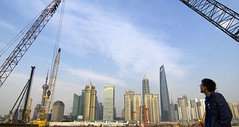
    AFP

    MORE than at any time since the cold war, liberal democracy needs defending. That warning was issued recently by Arch Puddington, a veteran American campaigner for civil and political rights around the world.

    This week the reasons for his concern became clearer. Freedom House, a lobby group based in Washington, DC (where Mr Puddington is research director), found in its latest annual assessment that liberty and human rights had retreated globally for the fourth consecutive year. It said this marked the longest period of decline in freedom since the organisation began its reports nearly 40 years ago.

    Freedom House classifies countries as “free”, “partly free” or “not free” by a range of indicators that reflect its belief that political liberty and human rights are interlinked. As well as the fairness of their electoral systems, countries are assessed for things like the integrity of judges and the independence of trade unions. Among the latest findings are that authoritarian regimes are not just more numerous; they are more confident and influential.

    In its report entitled “Freedom in the World 2010: Global Erosion of Freedom”, the American lobby group found that declines in liberty occurred last year in 40 countries (in Africa, Latin America, the Middle East and the ex-Soviet Union) while gains were recorded in 16. The number of electoral democracies went down by three, to 116, with Honduras, Madagascar, Mozambique and Niger dropping off the list while the Maldives were reinstated. This leaves the total at its lowest since 1995, although it is still comfortably above the 1990 figure of 69.

    Taken as a whole, the findings suggest a huge turn for the worse since the bubbly mood of 20 years ago, when the collapse of Soviet communism, plus the fall of apartheid, convinced people that liberal democracy had prevailed for good. To thinkers like America’s Francis Fukuyama, this was the time when it became evident that political freedom, underpinned by economic freedom, marked the ultimate stage in human society’s development: the “end of history”, at least in a moral sense.

    In the very early days after the Soviet collapse, Russia and some of its neighbours swarmed with Western advisers, disseminating not only the basics of market economics but also the mechanics of multi-party democracy. And for a short time, these pundits found willing listeners.

    Today, the idea that politicians in ex-communist countries would take humble lessons from Western counterparts seems laughable. There is more evidence of authoritarians swapping tips. In October, for example, the pro-Kremlin United Russia party held its latest closed-door meeting with the Chinese Communist party. Despite big contrasts between the two countries—not many people in Russia think there is a Chinese model they could easily apply—the Russians were interested by the Chinese “experience in building a political system dominated by one political party,” according to one report of the meeting.

    For freedom-watchers in the West, the worrying thing is that the cause of liberal democracy is not merely suffering political reverses, it is also in intellectual retreat. Semi-free countries, uncertain which direction to take, seem less convinced that the liberal path is the way of the future. And in the West, opinion-makers are quicker to acknowledge democracy’s drawbacks—and the apparent fact that contested elections do more harm than good when other preconditions for a well-functioning system are absent. It is a sign of the times that a British reporter, Humphrey Hawksley, has written a book with the title: “Democracy Kills: What’s So Good About the Vote?”.

    A more nuanced argument, against the promotion of electoral democracy at the expense of other goals, has been made by other observers. Paul Collier, an Oxford professor, has asserted that democracy in the absence of other desirables, like the rule of law, can hobble a country’s progress. Mark Malloch-Brown, a former head of the UN Development Programme, is still a believer in democracy as a driver of economic advancement, but he thinks that in countries like Afghanistan, the West has focused too much on procedures—like multi-party elections—and is not open enough to the idea that other kinds of consensus might exist. At the University of California, Randall Peerenboom defends the “East Asian model”, according to which economic development naturally precedes democracy.

    Whatever the eggheads may be saying, there are some obvious reasons why Western governments’ zeal to promote democracy, and the willingness of other countries to listen, have ebbed. In many quarters (including Western ones), the assault on Saddam Hussein’s Iraq, and its bloody aftermath, seemed to confirm people’s suspicion that promoting democracy as an American foreign-policy aim was ill-conceived or plain cynical.

    In Afghanistan, the other country where an American-led coalition has been waging war in democracy’s name, the corruption and deviousness of the local political elite, and the flaws of last year’s election, have been an embarrassment. In the Middle East, America’s enthusiasm for promoting democracy took a dip after the Palestinian elections of 2006, which brought Hamas to office. The European Union’s “soft power” on its eastern rim has waned as enlargement fatigue has grown.

    But perhaps the biggest reason why democracy’s magnetic power has waned is the rise of China—and the belief of its would-be imitators that they too can create a dynamic economy without easing their grip on political power. In the political rhetoric of many authoritarian governments, fascination with copying China’s trick can clearly be discerned.

    For example, Syria’s ruling Baath party talks of a “socialist market economy” that will fuel growth while keeping stability. Communist Vietnam has emulated China’s economic reforms, but it was one of the states scolded by Freedom House this year for curbing liberty. Iran has called in Chinese legal experts and economists. There are limits to how much an Islamic republic and a communist state can have in common, but they seem to agree on what to avoid: Western-style freedom.

    Even Cuba, while clinging to Marxist ideas, has shown an interest in China’s economic reforms. And from the viewpoint of many poor countries, especially in Africa, co-operating with China—both economically and politically—has many advantages: not least the fact that China refrains from delivering lectures on political and human freedom. The global economic downturn—and China’s ability to survive it—has clearly added to that country’s appeal. The power of China (and a consequent lessening of official concern over human rights) is palpable in Central Asia. But as dissidents in the region note, it is not just Chinese influence that makes life hard for them; it is also the dithering of Western governments which often temper their moral concerns with commercial ones.

    The argument for open argument

    Given that democracy is unlikely to advance, these days, through the military or economic preponderance of the West, its best hope lies in winning a genuinely open debate. In other words, wavering countries, and sceptical societies, must be convinced that political freedom works best.

    So how does the case in defence of democracy stand up these days? As many a philosopher has noted, the strongest points to be made in favour of a free political contest are negative. Democracy may not yield perfect policies, but it ought to guard against all manner of ills, ranging from outright tyranny (towards which a “mild” authoritarian can always slide) to larceny at the public expense.

    Transparency International, a corruption watchdog, says that all but two of the 30 least corrupt countries in the world are democracies (the exceptions are Singapore and Hong Kong, and they are considered semi-democratic). Autocracies tend to occupy much higher rankings on the corruption scale (China is somewhere in the middle) and it is easy to see why. Entrenched political elites, untroubled by free and fair elections, can get away more easily with stuffing their pockets. And strongmen often try to maintain their hold on power by relying on public funds to reward their supporters and to buy off their enemies, leading to a huge misallocation of resources.

    Yet it is easy to find corrupt democracies—indeed, in a ramshackle place like Afghanistan elections sometimes seem to make things worse. Or take the biggest of the ex-Soviet republics. Russia is authoritarian and has a massive problem with corruption; Ukraine is more democratic—the forthcoming elections are a genuine contest for power, with uncertain results—but it too has quite a big corruption problem. Ukraine has no “Kremlin”, wielding authority over all-comers, but that does not make it clean or well-governed.

    What about the argument that economic development, at least in its early stages, is best pursued under a benign despot? Lee Kuan Yew, an ex-prime minister of Singapore, once asserted that democracy leads to “disorderly conduct”, disrupting material progress. But there is no evidence that autocracies, on average, grow faster than democracies. For every economically successful East Asian (former) autocracy like Taiwan or South Korea, there is an Egypt or a Cameroon (or indeed a North Korea or a Myanmar) which is both harsh and sluggish.

    The link between political systems and growth is hard to establish. Yet there is some evidence that, on average, democracies do better. A study by Morton Halperin, Joseph Siegle and Michael Weinstein for the Council of Foreign Relations (CFR), using World Bank data between 1960 and 2001, found that the average annual economic growth rate was 2.3% for democracies and 1.6% for autocracies. Other studies, though, are less clear.

    Believers in democracy as an engine of progress often make the point that a climate of freedom is most needed in a knowledge-based economy, where independent thinking and innovation are vital. It is surely no accident that every economy in the top 25 of the Global Innovation Index is a democracy, except semi-democratic Singapore and Hong Kong.

    China, which comes 27th in this table, is often cited as a vast exception to this rule. Chinese brainpower has made big strides in fields like computing, green technology and space flight. The determination of China’s authorities to impose their own terms on the information revolution was highlighted this week when Google, the search engine, said it might pull out of China after a cyber-attack that targeted human-rights activists. Since entering the Chinese market in 2006, Google had agreed to the censorship of some search results, at the authorities’ insistence.

    Admirers of China’s iron hand may conclude that it can manage well without the likes of Google, which was being trounced in the local market by Baidu, a Chinese rival. But in the medium term, the mentality that insists on hobbling search engines will surely act as a break on creative endeavour. And no country should imagine that by becoming as autocratic as China, it will automatically become as dynamic as China is.

    What about the argument that autocracy creates a modicum of stability without which growth is impossible? In fact, it is not evident that authoritarian countries are more stable than democracies. Quite the contrary. Although democratic politicians spend a lot of time vacillating, arguing and being loud and disagreeable, this can reinforce stability in the medium term; it allows the interests and viewpoints of more people to be heard before action is taken. On the State Fragility Index, which is produced annually by George Mason University and studies variables such as “political effectiveness” and security, democracies tend to do much better than autocracies. Tito’s Yugoslavia was stable, as was Saddam Hussein’s Iraq—but once the straitjacket that held their systems together came off, the result was a release of pent-up pressure, and a golden opportunity for demagogues bent on mayhem.

    At the very least, a culture of compromise—coupled with greater accountability and limits on state power—means that democracies are better able to avoid catastrophic mistakes, or criminal cruelty. Bloody nightmares that cost tens of millions of lives, like China’s Great Leap Forward or the Soviet Union’s forced collectivisation programme, were made possible by the concentration of power in a small group of people who faced no restraint.
    Panos Worth fighting for?

    Liberal democratic governments can make all manner of blunders, but they are less likely to commit mass murder. Amartya Sen, a Nobel prize-winning economist, has famously argued that no country with a free press and fair elections has ever had a large famine. And research by those three CFR scholars found that poor autocracies were at least twice as likely as democracies to suffer an economic disaster (defined as a decline of 10% or more in GDP in a year). With no noisy legislatures or robust courts to hold things up, autocracies may be faster and bolder. They are also more accident-prone.

    For all its frustrations, open and accountable government tends in the long run to produce better policies. This is because no group of mandarins, no matter how enlightened or well-meaning, can claim to be sure what is best for a complex society. Autocracies tend to be too heavy at the top: although decisions may be more easily taken, the ethos of autocracies—their secrecy and paranoia—makes it harder for alternative views to emerge. Above all, elections make the transfer of power legitimate and smooth. Tyrannies may look stable under one strongman; but they can slide into instability, even bloody chaos, if a transition goes awry. Free elections also mean that policy mistakes, even bad ones, are more quickly corrected. Fresh ideas can be brought in and politicians thrown out before they grow too arrogant.

    But if something has been learnt from the recent backlash against democratic enthusiasm, it is that ballot boxes alone are nothing like enough. Unless solid laws protect individual and minority rights, and government power is limited by clear checks, such as tough courts, an electoral contest can simply lead to a “tyranny of the majority”, as Alexis de Tocqueville, a French philosopher, called it. That point has particular force in countries where some variety of political Islam seems likely to prevail in any open contest. In such places, minorities include dissident Muslims who often prefer to remain under the relative safety offered by a despot.

    Another caveat is that democracy has never endured in countries with mainly non-market economies. The existence of an overweening state machine that meddles in everything can tempt leaders to use it against their political foes. Total control of the economy also sucks the air away from what Istvan Bibo, a Hungarian political thinker, called “the little circles of freedom”—the free associations and independent power centres that a free economy allows. Free-market economies help create a middle class that is less susceptible to state pressure and political patronage.

    Perhaps most important, democracy needs leaders with an inclination and ability to compromise: what Walter Bagehot, a 19th-century editor of The Economist, called a “disposition rather to give up something than to take the uttermost farthing”. Without a propensity for tolerating and managing differences, rival groups can easily reduce democracy to a ruthless struggle for power that ultimately wears down liberal institutions.

    Democracy, this suggests, is more likely to succeed in countries with a shared feeling of belonging together, without strong cultural or ethnic fissures that can easily turn political conflict into the armed sort. Better positioned are “people so fundamentally at one that they can safely afford to bicker,” as Lord Balfour, a 19th-century British politician, said. Such was not the case in Yugoslavia in the 1990s or in Lebanon in the 1970s.

    Even where all the right conditions are in place, democracy will not prevail unless its proponents show success at governing. No constitution can, in itself, guarantee good governance. The success of any political system ultimately depends on whether it can provide basic things like security, wealth and justice. And in countries where experiments in democracy are in full swing, daily reality is more complex than either zealous democracy-promoters or authoritarian sceptics will allow.

    In Kabul a 26-year-old handyman called Jamshed speaks for many compatriots when he lists the pros and cons of the new Western-imposed order. Compared with life under the Taliban, he appreciates the new “freedom to listen to music, to go out with your wife, to study or do whatever you want.” But he cannot help remembering that “under the Taliban, you could leave your shop to pray and nobody would steal anything…now the government is corrupt, they take all your money.”

    Jamshed has never read John Stuart Mill or Ayn Rand. But whether he is ruled by theocrats or Western-backed election winners, he knows what he doesn’t like.
    http://www.economist.com/world/inter…ry_id=15270960

  • Anthony Lane on Darwin | The Loom

    Charles_Darwin_in_1855Anthony Lane reviews the new Darwin biopic Creation in the New Yorker. As is his habit, Lane manages to write some lovely stuff about a movie he doesn’t care much for (”at once slow and overwrought”). I have to agree with him on this, for example:

    [Actor Paul] Bettany, with his jungly sideburns and smooth pate, offers a reasonable likeness of the great man, although he lacks the shaggy overhang of brow, extending far beyond the sunken eye sockets, which lent Darwin not only his solemn frown but, it must be said, his semi-simian air. I sometimes wonder if his tracing of our ancestry began not on his travels, or at his desk, but one morning when he glanced into his shaving mirror.

    [Image: Wikipedia]


  • New Year’s Resolutions iPhone Apps: Save Money

    Finishing up our series about using your iPhone to achieve your New Year’s Resolutions, today we’ll be looking at iPhone apps that will help you save money.

    2009 was no one’s idea of a great year from a business standpoint, except maybe for Apple. I imagine that many of us are looking at our bank accounts after holiday spending sprees and figuring out how we’re going to be a bit wiser with our money. Thankfully there are a ton of good choices to help you manage your money on your iPhone whether it’s saving on the things you buy or keeping an eye on your budgets.

    Note: All links point to iTunes store.

    PocketMoney
    Price: $4.99 (free lite version also available)
    Rating: 3.5 Stars
    If you want to manage all of your finances on your iPhone, PocketMoney is the app for you. It supports multiple accounts and acts as a simple check register, but also includes the ability to create and manage budgets and allows you to get a good overview of your spending with attractive charts. You can also export your data to back it up or import data from a desktop application.

    DebtTracker Pro
    Price: $2.99 (99 cent lite version also available)
    Rating: 3.5 Stars
    The premise is simple, track your debt and set up plans to pay it off. The interface is attractive and easy to use. You can also see what your debt ratio is and track how much you’ve been able to pay off. If you don’t like the default payoff approach, you can create your own custom payoff plans as well. Getting rid of that high interest credit card is a great way to start saving for the new year.

    RedLaser
    Price: $1.99
    Rating: 4 Stars
    The perfect comparison shopping app, simply scan any barcode to get a list of competing prices from a variety of sources. You can email yourself a list of scanned products for comparison shopping later and you can add custom URL’s to search for if there’s a retailer that’s not in their database.

    iBank
    Price: $4.99
    Rating: 3.5 Stars
    The companion to the popular Mac desktop finance manager, iBank doesn’t offer as wide a range of features as some of the other finance applications out there for the iPhone. It more than makes up for these deficiencies, however, with easy to use transaction entry and over the air synchronization. If you want to manage your budgets on your Mac but want to enter and sync transactions from your iPhone without a problem iBank is your best bet. Note that iBank for the Mac will cost you an additional $60.

    Mortgage Calculator Pro
    Price: 99 cents
    Rating: 3.5 Stars
    If you’re thinking about making any major purchases in 2010, it’s a good idea to have a program like Mortgage Calculator on your iPhone. Despite the name, you can calculate car and credit card payments as well as mortgages. A nice feature is that you can save loans so you can look at them later and compare options. You also get a complete amortization table to peruse.

    20 Minute Meals
    Price: $4.99
    Rating: 4 Stars
    One of the biggest money sinks out there is eating out, so having a good recipe application on your iPhone to give you fast and easy meal ideas you can make at home is a great way to save money. 20 Minute Meals only has 55 recipes, which isn’t much considering the $5 price tag, but it also includes a helpful shopping list feature and videos to help you prepare the meal. And really, if this app can help you eat in more you’ll save the cost of the app the first time you don’t go out to a restaurant for dinner.

  • Q4 Wrap-up: Ending 2009 on a Greentech High

    What a year. Coasting on the momentum that propelled cleantech to the forefront of venture capital investment in Q3, the fourth quarter capped off a year that, when all was said and done, saw a total of $4.85 billion invested in the sector. However, as the GigaOM Pro team observes in the latest quarterly Green […]


  • Ikea boxes as art supplies

    I bought a few of those shadowboxes too and am also heartbroken that they are no longer available. Here is what Michelle’s husband did with his collection. She also shares a simple idea for a sensory table for infants.

    Ikea art
    Michelle says, “I thought I would share some art that my husband made using old Ikea shadow boxes. Unfortunately, the shadow box is now discontinued (sigh) but it was able to be used in many an art project between my husband and I when it was available. My husband, Matt Ritchie, used them to make 4 by 6 inch dioramas. Using hand cut wood acrylic paint, and the Ikea boxes. The boxes used to come with a heart or key inside, and were really hard to open since the glass in front was glued in. We had to tap (well, pound) the box on the ground to loosen the glue, and the glass would usually come out pretty easily. Anyway, I hope you like these little art pieces!

    Rast sensory table
    “I turned this little Ikea nightstand (Rast) upside down and excluded a shelf so i could add a small bin to it and make it a sensory table for my infant/toddler class. I put different sorts of sensory objects in the bin, like flour, dirt, sand, oatmeal etc, and the kids love to pour them from one cup to another. the shelf was just the right height for the toddlers in my class, and I made all four for way cheaper than one pre-made table. Then I used acrylic paint to add the flowers on the sides!”


  • Eggs 101

    How do you make soft boiled eggs? The only way that I will eat egg yolks is either in a deviled egg or poached or softboiled eggs. My mom made great soft boiled eggs when I was little and I haven’t ever made them. Unfortunately mom is no longer with us so I have no idea how to make them. I’ve read some website on how to make them and some of the common problems was either undercooking them or overcooking them. Any tips for making them come out perfectly?

    Thanks, all.:)

  • 4,001 posts

    This board is starting to take off. :banana:
  • 40 More Hot Celebrities We Want to See Naked in Movies

    Nudity is seen as art in some cultures — and blasphemy in others. Nudity in movies isn’t anything new, but there is always fresh meat to be had, and a hungry populace to feed. There are many celebrities that have yet to go nude on screen, and back in April 2009 we visited a list of 20 of them. Here are 40 more gorgeous celebrities we’d love to go nude on the silver screen. Keep in mind, some of these beautiful ladies have let some cheek or side-boob show before, some even fell victim to the nip-slip here and there, usually unintentionally, so we’re not counting that. We’re talking full-frontal nudity here. Let’s get started, shall we?

    Michelle Trachtenberg

    Image Source

    Michell Trachtenberg has sure grown up since Harriet the Spy. The Daytime Emmy-nominated actress has since starred in larger roles on the silver screen — and in our fantasies. We have yet to see her in anything less than a bikini, so we’re hoping that will change soon.

    Sofia Vergara

    Image Source

    Colombian beauty Sofia Vergera has been prancing around on TV shows like Dirty Sexy Money, and though we’re not too picky, we’d like to see more. Vergera is the most downloaded Latina in the USA, thanks to Univision, but nothing would be dirtier or sexier than something more risque.

    Kristen Bell

    Image Source

    Actress Kristen Bell has been in the spotlight since her title role in Forgetting Sarah Marshall, as well as the TV series Veronica Mars. She slipped a nip in the suspense film Spartan, but that doesn’t count. We want more.

    Kristin Kreuk

    Image Source

    Sweetheart Kristin Kreuk hails from the Great North and is one exotic mix. Half-Danish and half-Chinese, this Smallville star is making us cross our fingers for a peek at that pristine body.

    Gemma Atkinson

    Image Source

    Busty English model and actress Gemma Atkinson isn’t your average cat walking down the runway, sporting sexy curves. Best known for her role on English soap opera Hollyoaks, Gemma knows how to keep audiences at attention with that rack. Now, if only she’d slip that bra off.

    Amanda Bynes

    Image Source

    Funny girl Amanda Bynes has filled out since her days on Nickelodeon’s All That — and we like it. She’s been spotted quite a few times in a bikini, in roles like What I Like About You, but what we’d like about her more, is some more skin.

    Nadine Velasquez

    Image Source

    Nadine Velasquez has made Maxim’s list of the world’s sexiest women twice — and it’s not surprising with a body like hers. We’ve seen her boobs strain against the fabric of a few bikinis, and it’s thorough proof that what’s underneath is nothing short of amazing.

    Ali Landry

    Image Source

    Capturing an audience from her Doritos Super Bowl commercial, Ali Landry hasn’t left our sights since. She’s starred in a few low-key movies, like Repli-Kate, but has yet to reveal anything more than her bikini allows. And before you disagree, those breasts were not hers in Repli-Kate — they belonged to a body double.

    Ali Larter

    Image Source

    Actress Ali Larter hit the big time when she landed the role of the conflicted twins on Heroes. We’ve seen her in a scrumptious whipped-cream bikini in Varsity Blues and a nice shot of her ass in 3-Way, but we’ve yet to hit the jackpot. Seems like she’s getting warmer though.

    Alicia Silverstone

    Image Source

    Alicia Silverstone posed nude for a PETA ad campaign, but unfortunately we couldn’t see any of the goods. We loved her in Clueless, with that sexpot pout, but we’d like to take a gander at her other …parts. We reviewed her scene in Miss Match where a breast is supposedly visible, but no dice, it aired on NBC. She also used a body double in The Crush.

    Alyson Hannigan

    Image Source

    Ravishing redhead Alyson Hannigan is one hot mom. Her role as the bicurious Willow on Buffy the Vampire Slayer truly whet our appetites, and her recurring role on How I Met Your Mother really wishes she’d let us see if the curtains match the drapes.

    Alexis Bledel

    Image Source

    This blue-eyed, dark haired beauty has had us captivated since Gilmore Girls. She was attending film school when she was nabbed for the role, which we’re thankful for — since she would have forever been behind the camera. She’s recently signed back into a modeling contract, so we have our hopes up that she’ll consider nude work. She’s already played a prostitute in Sin City, so it’s not too ridiculous a thing to hope for, right?

    Elizabeth Banks

    Image Source

    Elizabeth Banks has charmed us with her sweet face and banging body — and we’ll never forget the lesbian scenes she did in Wet Hot American Summer. Something is missing though, and Sexual Life didn’t fill that void. We’re tired of nip-slips, they don’t count!

    Beyonce Knowles

    Image Source

    Singer Beyonce Knowles is bootylicious, and we love it. She’s crossed the divide and now dabbles in acting, with roles in films like  Dreamgirls and The Pink Panther — and it’s only made us want to see more of her.

    Blake Lively

    Image Source

    Though we were hoping for a lesbian scene in Sisterhood of the Traveling Pants, we were disappointed yet again. Drop-dead gorgeous Blake Lively still gets us hot in the pants with her current role in the rich-kid drama Gossip Girl, but has yet to do any nude scenes. Maybe one with co-star Leighton Meester? Well, we can dream.

    Nikki Reed

    Image Source

    Actress Nikki Reed hails from LA, but gets her sultry looks from a mixture of Jewish-Italian-Cherokee roots. She plays Edward Cullen’s bitchy sister, Rosalie Hale, in the Twilight saga — though you may not recognize her right away, due to her blonde locks. She’s yet to show much skin, but we’ll still keep the memories of her thong scene in Mini’s First Time.

    Christine Taylor

    Image Source

    Christine Taylor tightened our pants in A Very Brady Sequel with that bikini of hers, but we have yet to see any less — which makes us sad. We wouldn’t be surprised if husband Ben Stiller kept her from doing any nude scenes, but we sort of understand. Lucky guy.

    Cobie Smulders

    Image Source

    Smoldering hot Cobie Smulders gets us going every episode of How I Met Your Mother as Robin Scherbatsky. This Canuck cupcake was discovered as a teen by a model scout, and we’re thankful for that. What we really want though, is a nice full-on of that sculpted body.

    Eliza Dushku

    Image Source

    Eliza Dushku is brunette perfection. We loved the view of that perfect body on Dollhouse, but we first noticed her in Bring It On — even though she’d been acting since childhood. She has yet to do a true nude scene, and fanboys will bring up her boob flash in the flick The Alphabet Killer, but it was unintentional, and barely a nipple.

    Emily Browning

    Image Source

    Aussie hottie Emily Browning was discovered back when she was performing in school plays, but she has come a long way delighting us in films like Lemony Snicket’s A Series of Unfortunate Events. So far the young star hasn’t shown anything less than her underwear, but there’s still time to bloom.

    Gabrielle Union

    Image Source

    Like Eliza, we noticed Gabrielle Union in Bring It On, and we’ve since grown to love this mocha beauty. In Bad Boys II there was a slight accidental nip slip during a back flip, but again, we’re not counting those. We want full-on.

    Hayden Panettiere

    Image Source

    Another hottie on the cast of Heroes, Hayden Panettiere made a splash with her skimpy cheerleading uniform. She’s still still young, so we expect more than the sexy scenes she’s given us so far — not that we’re complaining!

    Jamie Chung

    Image Source

    Korean-American beauty Jamie Chung was cast into the MTV reality show The Real World: San Diego, and frankly she fit the bill when it came to sleazy antics. With that said, we’re disappointed she hasn’t flashed us anything more than her panties.

    Jennifer Garner

    Image Source

    Golden Globe-award winning actress Jennifer Garner is the whole package: hot, funny, talented. She’s a mom of two little girls and is married to Ben Affleck — but we still want to see her naked. Those dimples just get us going.

    Kaley Cuoco

    Image Source

    Another actress to bloom into a gorgeous young thing, Kaley Cuoco has had a place in our fantasies since The Big Bang Theory premiered. Though we only get to see her in her underwear, it’s a glorious sight.

    Katharine McPhee

    Image Source

    Season five American Idol runner-up Katharine McPhee has shot to stardom since the show’s closing. She’s released several albums, and is dabbling in acting. She played a supporting role in The House Bunny, and although we have yet to look upon that amazing body — she is just getting started.

    Katherine Heigl

    Image Source

    With a rack begging to be set free, stunner Katherine Heigl mesmerizes us. She’s a regular on Grey’s Anatomy and has starred in 27 Dresses, and apparently showed side-boob in Side Effects. We would pay to see everything she’s got. All good things…

    Katy Perry

    Image Source

    Santa Barbara, California native Katy Perry kissed a girl — and she liked it. She rose to fame with her drop-dead looks and her dance hit “I Kissed a Girl.” Although it may not be everyone’s cup of tea, we can all agree that we’d like to see her topless, at least.

    Lindsay Lohan

    Image Source

    Say what you want about Lindsay Lohan, but she has a great rack, gorgeous natural red hair, and adorable freckles. She’s blessed us with her curves in magazine spreads and on the silver screen — albeit with at least underwear on. She’s already taken the first step to peeling it all off on screen, let’s hope she jumps on it.

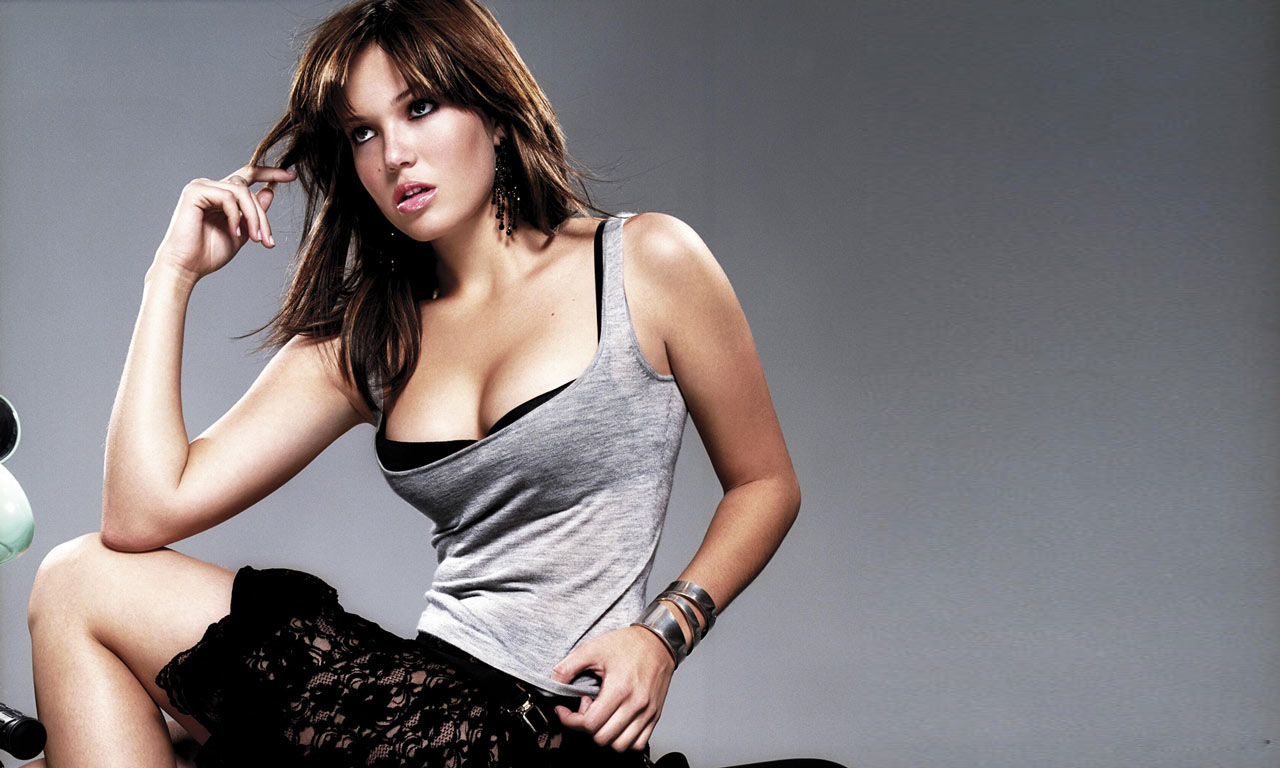
    Mandy Moore

    Image Source

    When we think of Mandy Moore, we think of America’s sweetheart. She’s tried to lose some of her sweet side, in getting away from wholesome flicks, but it sticks with her. At the moment, the most you can catch is a split-second side-boob in How to Deal. We wish we didn’t have to deal with only that.

    Odette Yustman

    Image Source

    Odette Yustman started her acting career out next to Arnold Schwarzenegger in Kindergarten Cop, and has blossomed into a lovely Latina goddess. You can catch her wet and undies-clad in The Unborn, until we get her to take off more of her clothes.

    Christina Hendricks

    Image Source

    Ravishing redhead Christina Hendricks has us all panting at the sight of her assets. Buxom and talented, she’s graced several TV shows, including Tru Calling, Mad Men, and Firefly. She’s just fine with being sexy and prancing around in underwear, but she just needs to let those puppies breathe. We won’t tell anyone.

    Eriko Tamura

    Image Source

    Known stateside from a small role in Heroes as the swordsmith’s daughter, Princess Yaeko, and more recently cast as the leading role of Mai in Dragonball Evolution, Eriko Tamura is a hot commodity in Japan. She has a full-fledged music career in her native country and also speaks English, German and Japanese fluently. We’d like her to be fluent in nudity as well.

    Sarah Chalke

    Image Source

    Blonde beauty Sarah Chalke has graced our televisions for about ten years now, and we’re nowhere near tired of her. Another Canadian actress on the list, it seems that they produce some alarmingly hot women up there. Maybe this Scrubs star would be willing to get together with her Canadian counterparts and help us out by showing more skin.

    Sarah Silverman

    Image Source

    Sarah Silverman is talented, it goes without saying, and she’s one of the funniest women in the business. We take her seriously not only because of her brilliant mind, but because she’s one dark beauty that can’t be ignored. She’s already done a shoot with Maxim, so there’s not much left to take off.

    Sarah Roemer

    Image Source

    American actress and model Sarah Roemer is best known for her flicks Fired Up, Disturbia, and Asylum. Especially the latter, since there was a clip of her butt and breasts. Don’t get excited though, it was more side-boob.

    Summer Glau

    Image Source

    Summer Glau has undeniable classic beauty that we’d like to get our hands on. She caught Joss Whedon’s eye after guest-starring in an episode of Angel and has since been cast in Firefly, The 4400 The Sarah Connor Chronicles and Dollhouse. Another beautiful woman we’ve only seen in a bikini, we can only hope for less.

    Ellen Page

    Image Source

    You may remember the cute Ellen Page from the hit Juno, where she played a knocked-up teen dealing with the consequences. Putting that image out of our mind, we’re left with the petite brunette’s flash of boob and ass crack in The Tracey Fragments. Though it’s not all we’d like to see, we’ll take it as we get it.

    Yvonne Strahovski

    Image Source

    Born in Australia of Polish parents, Yvonne Strahovski has taken the US by storm with her talent and looks. She currently stars in the TV series Chuck, and the most skin we’ve seen from her is when she wears her underwear. Although she’s relatively new to the scene, we’re hoping she fits right in, and takes it all off.

    Zoe Saldana

    Image Source

    Zoe Saldana has been around for a while, but has recently gained superstardom with roles like Uhura in the new Star Trek and Neytiri in Avatar. This Dominican beauty has definitely captured the hearts of many a geek, and although we appreciate the underwear scenes we’ve seen — we can’t get enough.


  • Former Presidential Candidate John Edwards Finally Admits Fathering Child; Long-Running Denials Are Now Over

    In his heyday, former U.S. Senator John Edwards was a leading candidate to become the Democratic presidential nominee.

    He had support all over the country, including when he came to Hartford and stood with Democratic politicians.

    Now, Edwards has finally admitted that he fathered a child with a videographer who worked on his campaign and had wide access on the campaign plane. Edwards had made many denials through the years and harshly dismissed the original articles as irresponsible, shoddy journalism – but they now have been proven to be true.

    http://www.courant.com/news/breaking/sns-ap-us-edwards-daughter,0,5574514.story

  • China Recovers From Global Slump

    Thursday, January 21, 2010
    19:04 Mecca time, 16:04 GMT

    China ‘recovers’ from global slump

    China has declared itself the first major economy to recover from the global economic downturn as data showed economic growth accelerated to 10.7 per cent in the final quarter of 2009.

    GDP for the whole year totalled 8.7 per cent according to government figures released on Thursday, easily beating targets.

    However, the raft of data released by the National Bureau of Statistics also showed inflation picking up, adding to pressure on the government to prevent overheating in the economy.

    “China has become the first, on the whole, to achieve recovery and stabilisation in its economy,” Ma Jiantang, the bureau’s commissioner, told reporters in Beijing.

    But he added that in the face of ongoing “uncertainties” and a weak global outlook, the government would avoid major changes in economic policy.

    The figures put China’s total gross domestic output for 2009 at $4.9 trillion, bringing it closer to overtaking Japan as the world’s number two economy after the US.

    ‘Developing country’

    Nonetheless, Ma stressed that China sees itself as a developing country with a wide income disparity between its urban and rural populations.

    Average income for city dwellers in 2009 was $2,700, he said, while in the populous countryside it was just $752.

    “Despite the increase in our GDP and economic strength, we still have to recognise that China is a developing country,” Ma told a news conference. “We have to be keenly aware of that.”

    China’s leaders have said stimulus spending will continue but are worried about rising prices and have ordered banks to curb lending after a record surge in 2009.

    According to Thursday’s figures, consumer prices picked up in the fourth quarter of 2009 after falling for much of the year.

    Prices rose 0.6 per cent in November from a year earlier and spiked by 1.9 per cent in December.

    “That’s a huge jump,” Ken Peng, an economist with Citigroup, told the Associated Press.

    He said it was the sharpest one-month rise in inflation since February 2008, when China was suffering record consumer price hikes.

    Peng said the data showed it was time for the government to call a halt to stimulus measures.

    Inflation

    The spectre of inflation is especially politically sensitive in China, because rising prices erode the economic gains that the ruling Communist party has made the basis of its claim to power.

    But Tom Orlik, a Beijing-based economist for Stone & McCarthy Research Associates, said the problem for the government will be to “manage the withdrawal of the stimulus without scaring the markets or pulling the rug out from under the recovery.”

    “Turning the taps off might be a bigger challenge than turning them on,” he wrote in a report.

    In the past year China adopted what it called a “moderately loose” monetary policy and embarked on an unprecedented four-trillion-yuan ($586bn) spending spree to keep the economy growing amid the global downturn.

    In recent months however the government reversed course and called for “reasonable” lending as inflation fears rose, following a surge in the amount of new loans.

    On Wednesday the country’s top banking regulator said the government will closely monitor credit.

    Liu Mingkang, the chairman of the China Banking Regulatory Commission, said China will rein in credit after last year’s explosive growth but had no plans to stop banks lending.

    Bubble worries

    China’s biggest rise in inflation in 13 months underlined the broader challenges of breakneck growth, and came as the World Bank warned anew that the country could face an economic bubble.

    In the Global Economic Prospects 2010 report published on Wednesday the World Bank said it sees “signs of bubbles” in the Chinese economy, a problem it said the government has acknowledged.

    The annual report said the Chinese economy is projected to continue to lead global growth this year, expanding at a pace of 9.0 per cent, dwarfing the global rate of 2.7 per cent.

    “We can already see some signs of bubbles and signs of tensions in the Chinese economy, in particular in the housing sector,” Andrew Burns, the lead author, said in Washington ahead of the report’s release.

    Burns, who is the head of the bank’s macroeconomic forecasting, said China’s “low domestic interest rate and the “particular nature” of its fiscal stimulus was “putting strains on the economy and forcing the government to step back”.

    Michael Pettis, a finance professor from Peking University, told Al Jazeera the stimulus to boost investments may lead to China seeing increased debt and rising non-performing loans in its banking system because not all investments were viable or sustainable.

    Referring to reports of bubbles in the stock market or real estate, Pettis said the wealth impact in the case of a collapse in either sector “will be less than what people think because most Chinese save in bank deposits”.

    A much bigger worry is if a collapse in real estate prices leads to non-performing loans in the banking system, he said.

    “The real risk is not a bubble in the stock market or in the real estate market,” he added.

    “The real risk is that we’re continuing to increase capacity in a world in which demand is contracting… there is no need for all this increase in capacity.”

    Source: Al Jazeera and agencies

  • Solution For The Homeless Population

    The government should build regional supertalls specifically to house and help the homeless populations. They could be allowed to live there by cleaning, gardening, providing other needed services throughout the community. These towers would be sustainable and have windmills and solar panels to generate electricity, water catchement systems for gardening, and a huge greenhouse near the top of the tower.

    basic image I came up with

  • Comparing the Cell Phone Plans of Verizon, Sprint, AT&T, and T-Mobile

     For the first time since being released back in June of ’09, people in the States will  soon have more than one carrier to choose from when looking for webOS powered phones. The Plus variant of the the Pre and Pixi are slated for release on the 25th of this month on Verizon, and we know that a launch on AT&T can’t be too far behind. Both Verizon and AT&T have recently made some significant modifications to their phone plans, making it a little confusing for those in the market for a new Palm phone, so big ups to BillShrink for compiling a comprehensive (and we do mean comprehensive) comparison of the major US carriers’ phone plans.

    The basic story is this: Voice + Text + Unlimited Data for the three carriers breaks down thusly:

    Minutes Verizon AT&T Sprint
    450 $89.99 $89.99 $69.99
    900 $109.99 $109.99 $89.99
    Unlimited $119.99 $119.99 $99.99

    Sprint wins on nights and weekends (theirs start at 7pm instead of 9) and mobile-to-mobile too (Verizon and AT&T are in-network only). Sprint also tends to be the cheapest of the three for family plans, as well.

    Even though the Palm Pre Plus is the bees’ knees, the original Palm Pre is still great, so the above chart combined with signal quality in your area is what you should be using to decide between Sprint, Verizon, and (future) AT&T. Anybody out there swayed to switch?

    [via gigaom]

  • DogTread Treadmill for Your Pup

    I’ll admit, my first reaction upon seeing this was to think “For real?” But the more I consider it the more I can see that it would be a useful contraption for those who live in areas where walking your dog (or making sure your dog is getting enough exercise, as opposed to just letting them loose in the backyard) for health reasons might not be terribly convenient, or for people who can’t get outside easily in the first place.

    dogtread

    The DogTread treadmill by PetZen is actually a cute, miniature version of a regular-sized treadmill that you might use at the gym.

    It’s got a bone-shaped monitor that faces outward (Fido doesn’t care what it says!) complete with easy to use controls, and actually runs quietly with a 90-volt dc/-1/2 HP motor. Other features include safety side panels that keep your dog contained, and the unit folds up so it’s not taking up a lot of space when not in use.

    At $489 it’s not cheap, but if your dog has packed on a few extra pounds over the years and your vet has recommended exercise that you have a hard time fitting into a busy schedule, this might be worth looking into.

    [image: amazon]

    Post from: Blisstree

    DogTread Treadmill for Your Pup

  • Lucky Dragon and Atomic Tuna Memorial

    Tokyo, Japan | Disaster Areas

    On March 1st 1954, the 23 crew members of the Japanese fishing boat “Daigo Fukuryu Maru” (“the Lucky Dragon”) were amazed to find a fine snow falling, far out to sea in the tropical North Pacific. For three hours the fine, yet warm, white substance fell. The curious fishermen gathered it up while they worked.

    But that night they began to get sick. One died, and the others were to spend the next year in hospital . The “snow” they had sailed into was nuclear fallout; ashes from an experimental US detonation on Bikini atoll. Misjudging the strength of the explosion – 1,000 times stronger than that which flattened Hiroshima – the US government had failed to warn boats in the area, or locally stationed US personnel and Micronesian islanders.

    When the boat returned to Japan it set off a panic. The WWII nuclear attacks were still fresh in the public imagination, and these new explosions (deep in the ocean that provided Japan with much of its seafood) rocked public confidence.

    The boat was quarantined until it was deemed to be safe, and then returned to active service, and was eventually consigned to a scrapheap in a Tokyo waste dump.

    In the 1980s that rubbish tip was transformed into a park through a land reclamation project called “Dream Island” (“Yumenoshima”). Local residents recognised the identity of the wrecked ship in the soon-to-be-redeveloped dump, and decided to preserve it, raising funds for a museum.

    Today, the museum in Yumenoshima park houses the battered hulk of the “Lucky Dragon” and other exhibits warning of the dangers of nuclear war.

    Next door, a simple marker commemorates the burying of the ship’s cargo – 450 tons of contaminated tuna – which was dumped to prevent it from being sold for human consumption.

    Today this quiet, leafy corner of Tokyo, next to the lapping waters of Tokyo Bay, bears witness to the whole strange, sad story, one that has otherwise been all but forgotten.

  • A Five-Point Plan to Save the New York Times’ Web Site

    The New York Times announced yesterday that it would charge readers to use its Web site starting in 2011 by capping the number of articles we read for free. The idea is that the Times can keep a core group of monthly visitors, lose a bit of traffic and advertising revenue, and make it up with subscriptions to unlimited use of the Web site. This is a good start. But it can be improved. Here are five more ways to make you pay for the New York Times’ Web site.

    1) Keep the Top Homepage Story Free
    The NYT has adopted the Financial Times strategy of running a “meter”
    on readers so that they have to get our their credit cards after
    reading X number of stories. But it could also take a page from the
    Wall Street Journal, which keeps main stories free and charges for
    deeper analysis. The Times could make its top story permanently free by
    excluding it from the “meter” to keep readers coming back to read the most important story right now in the world. In other words, you could do nothing but read the top story on NYT all day, every day, and never run into the paywall.

    2) Keep the Blogs Free
    Felix Salmon is right about this:
    Nobody will pay to read blogs. That’s not to say they shouldn’t. Truly,
    I consider some blogs out there more insightful useful for
    understanding politics and policy than newspaper articles. But somehow,
    paying for access to a running diary of thoughts just seems wrong at
    the moment. It would be like paying extra for
    bread at a nice restaurant. I love bread. Sometimes it’s my favorite
    part of the meal. But if I saw “breadbasket” itemized on the dinner
    check, I think I might try to come at the sommelier with the
    complimentary pen.

    3) “Run the Meter” for All Other Stories, Multimedia, and Op-Eds
    Excluding the story at the top of the homepage and the Times’ blogs,
    they could run the meter for all other clickable items on the Web site.
    So if the ceiling of free content were 30 articles a month, you would
    have to start paying after reading, say, 15 regular articles, 5 Thomas
    Friedman op-eds, 6 multimedia pieces and 4 editorials.

    4) Add a Free “10 Stories of the Moment” Feature to the Homepage
    This is the craziest idea I have. Here’s how it would work. The homepage editor of the site should curate a list of the top ten
    “most important” stories on the site — just like The Daily Beast’s “Cheat Sheet” and Slate’s “Slatest” — except the Times’ Top Ten list would be all NYT content.  It would also be free. Each story entry would — similar to Cheat
    Sheet and Slatest — be one paragraph stitched together from the lede,
    the most important paragraph and most important quote from the original
    NYT story. 

    Why parasite your own work and give it away for free in bite-size? At
    least three reasons: (1) It keeps people coming back to the site as a
    free source of important stories and breaking news so that the Times retains both traffic and ad dollars; (2) Nobody reads entire NYT articles anyway; (3) Aggregators are stealing the
    Times’ content already, so why not beat them at their own game and
    create a free digest of your best stuff right there on an NYT
    ad-supported page?

    5) Show Freeloaders What They’re Missing
    I’ve already asked the Times to keep make it’s main story free, keep
    its blogs in front of a paywall, and give away the beating heart in the
    ten biggest stories of the hour. What am I thinking? First I’m
    thinking that readers won’t pay to read blogs. Second, I’m thinking
    that if the Times doesn’t create some free, easy-to-navigate Top Ten
    list of the biggest stories every hour, millions of news junkies will
    abandon the site in favor of a thousand other breaking news sources
    like CNN and Reuters where they can read nearly identical stories for
    free. News is a commodity. The Times’ advantage is theoretically in its
    analysis and in-depth reporting. So the 2011 Web site needs to be
    aggressive about bundling its most tantalizing stories together to create the impression that the monthly subscription — whatever it is — is a small price to pay for the kind of analysis, and insight and glittering multimedia information they’ll glean from the site.

    In short, the Times has to walk a tightrope. To keep readers, it has to remain a free source of at least some breaking news. To turn readers into subscribers, it has to promote the heck out of its juiciest stories and sell its most colorful content loudly.


    Email this Article
    Add to digg
    Add to Reddit
    Add to Twitter
    Add to del.icio.us
    Add to StumbleUpon
    Add to Facebook


  • France police arrest Rwandan genocide suspect

    [JURIST] French police on Wednesday arrested alleged war criminal Sosthene Munyemana in Bordeaux, acting on a Rwandan extradition warrant. Munyemana, a Rwandan doctor who has worked in a French hospital for eight years, is accused of war crimes related to the 1994 Rwandan genocide. He was later released on bail while awaiting a court date. France denied Munyemana’s request for asylum in 2008, citing concerns about his role in the genocide.
    Earlier this month, French officials announced plans to create a special judicial service to investigate and charge individuals accused of crimes against humanity and genocide in France or in other countries. The new unit would streamline the prosecutions of Rwandans living in France who are accused of war crimes during the 1994 genocide. Diplomatic relations between France and Rwanda were restored in November. The countries had cut ties in 2006 after French judge Jean-Louis Bruguiere issued arrest warrants for several top Rwandan officials believed to have participated in the attack on former president Juvenal Habyarimana’s plane.

  • What Is This? [Image Cache]

    What could this be? A crashed, miniature spaceship? An alien device that burrows in through the back of your skull to control your every thought??

    Nope. It’s a frother. A completely custom, completely badass frother.

    Starting with a $2 IKEA milk frother, designer Laurent Hongisto added some repurposed cutlery and silicone to the mix to create this one-of-a-kind design.

    Well, that, or aliens are invading and they’re assimilating into our coffee culture. [Laurent Hongisto via Core77]


  • Microsoft’s Warped Arc Keyboard Gets a Hands On [Peripherals]

    The guys at DVICE got one of the first fondles of the bizarre Microsoft Arc keyboard that raised some eyebrows at CES. Initial impressions were positive for both design and functionality.

    Interestingly, the bottom of the keyboard is actually flat—so it won’t hug your lap as one might have initially presumed. However, the arched keys were comfortable to type on and, overall, the feel was described simply: “great.”

    On the downside, if you don’t like smudging and quiet keyboards, the Arc is probably not for you. It also lacks the color range of Microsoft’s Arc mice and, inexplicably, the included USB dongle doesn’t accommodate both peripherals. Still, if you want a functional keyboard that actually complements your decor, the Arc might be worth looking into. [Microsoft and DVICE]


  • Ousted President Manuel Zelaya of Honduras Might Leave for the Dominican Republic

    January 21, 2010

    Manuel Zelaya ‘might leave Honduras for Dominican Republic’

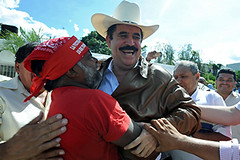
    Manuel Zelaya has been living in the Brazilian Embassy in Tegucigalpa since his deposal as President

    Manuel Zelaya, the ousted Honduran president, said today that he might leave the country after the Dominican Republic offered him a haven as an “honoured guest”.

    Mr Zelaya, who has been living in the Brazilian Embassy in Tegucigalpa since he slipped back to Honduras in September after being deposed three months earlier, said that he welcomed the offer from Dominican Republic President Leonel Fernández, who had signed an agreement with Honduran President-elect Porfirio Lobo to let him in to the country.

    “This agreement allows me to maintain my dignity and the position bestowed on me by the people of Honduras,” Mr Zelaya said in a statement.

    The accord, signed in Santo Domingo today by Mr Lobo, Mr Fernández and representatives of Honduras’s major political parties, stipulates that the former President, his family members and his circle of advisers can enter the Dominican Republic on January 27 when Mr Lobo takes office after winning the November 29 election.

    If he takes up the offer it will bring an end to his state of political limbo after he was escorted out of the country at gunpoint in June. He has always denied his critics’ accusations that he was attempting to stay in office past his legal term but if he stepped foot outside the Brazilian embassy he would be liable for arrest.

    Negotiations over Mr Zelaya’s future have intensified as January 27 draws closer. His demand that he be returned to power was weakened after Mr Lob’s election win was recognised by a number of countries, including the United States.

    Last November Mr Zelaya refused an offer of safe passage by Mexico after Robert Micheletti, the interim President, imposed the condition that he be granted political asylum, which Mr Zelaya said would invalidate his claim to the presidency.

    If he leaves for the Dominican Republic when his term officially ends he will have put an end to his political career in Honduras.

  • ARTICLE: Ovi Maps: Nokia makes navigation free and global, one ups Google

    Nokia today announced the immediate availability of the new version of Ovi Maps, their free mapping and navigation software. Ovi Maps is available now for 10 Nokia devices, including the N97 mini, E72 and 5800, and will come pre-installed on all GPS-equipped Nokia smartphones beginning this March. Left in the cold, dark wilderness to find their way without Ovi Maps (for now) are the N97 and N900 devices, the latter of which is the company’s first device to run the new Maemo OS platform.

    I had a phone briefing with some Nokia brass yesterday and they’re super excited about Ovi Maps, calling it a “game changer” and a “watershed moment” that we’ll look back upon in days to come. Readers in the US might not be nodding their heads up and down in agreement just yet, due to the lack of carrier-subsidized Nokia smartphones in our country, but given Nokia’s install base globally and the key points of the announcement, I’d be hard pressed to argue the importance of Ovi Maps to Nokia’s future. 

    To wit, several of Ovi Maps’ key features out-Google Google when it comes to offering free and open LBS services on a mobile device:

    • Offering voice guided navigation for both pedestrians and drivers in 74 countries, Ovi Maps offers an insanely large coverage map. Google Nav on Android 2.x only works in the United States, unless you hack it. Ovi Maps supports 46 different languages and there are maps for over 180 countries, according to Nokia.
    • Ovi Maps works without any network connections. In other words, you can download Ovi Maps to your compatible device, pop your SIM card out or otherwise kill your cellular connection, and still use the phone as a standalone Nav unit with spoken, turn-by-turn directions. Of course, you’ll get more out of the system if you do have an active data connection (search, traffic updates, etc), but the fact that you can use your phone as a Nav unit sans data plan is pretty cool – at least in theory.
    • No sign-ins are required to use Ovi Maps. So you know how you have to create and sign in with a Google Account to use an Android phone? Not so here. Take that, Google, you Evil-doing personal data monitors! (Sarcasm implied. Or not. You decide.)
    • Nokia also touted their “hybrid vector maps” tech that they say allows for much smaller map data downloads than conventional bitmapped map data, and their pedestrian navigation mode which offers up alternative – and sometimes shorter – routes for times when you’re hoofin’ it instead of being driven around in your Bugatti Veyron (I’m lookin’ at YOU, Conan O’Brien, you crazy guy!).

    All sounds good to me. So I’m downloading Ovi Maps to my E72 right now, over WiFi, without a SIM card installed. And I’ll take the device with me today when I head out to the Oakland Airport to drop a friend off and then over the bridge into San Francisco for a meeting. And I’ll let you know how Ovi Maps does in guiding us all around the rainy Bay Area.

    In the meantime, um, sorry Tom-Tom. And Tom-Tom stock holders. It’s been a rough couple of months for you guys, huh?

    Learn more about – or download – Ovi Maps at nokia.com/maps