
Good luck John 😀
Good luck John 😀
Appellate court justices were skeptical today of arguments put forward by Drew Peterson’s attorneys in the legal case over weapons charges that were brought, and then dropped, against Peterson in 2008.
A lengthy hearing in the Peterson murder case was put on hold Wednesday so two lawyers from his defense team could argue the case before the 3rd District appellate court in Ottawa, Ill. John Connor, a top prosecutor on the Peterson case, observed.
In 2008, Peterson was charged with possessing an illegally-modified assault rifle. When a Will county judge ordered the gun returned, state police revoked Peterson’s FOID card.
Judge Richard Schoenstedt then dismissed the case after prosecutors refused to comply with his order to turn over internal documents that Peterson’s attorneys sought to prove their client was the victim of “vindictive prosecution.”
Prosecutors appealed.
Gary Gnidovec, an attorney with the state appellate prosecutor’s office, told the justices that Schoenstedt was wrong to order discovery because Peterson’s attorneys failed to demonstrate that prosecutors had an “animus” against Peterson and that, without it, no charges would have been filed.
He said it would set a “very dangerous precedent” to allow defendants hoping to find some sign prosecutors have a vendetta against them to fish for such internal documents. Gnidovec also questioned whether the court had legal standing to rule on a separate appeal filed by Peterson’s attorneys.
Peterson attorney Andrew Abood argued that the circumstances of the case were too narrow to open a “Pandora’s box.” He said Peterson’s attorneys should have had the chance to present evidence that prosecutors had “selectively” charged their client.
Joel Brodsky argued that federal law shielded Peterson from even being charged with the weapons offense.
The appellate court typically doesn’t issue its ruling for several months after oral arguments.
Read the original article from Tribune News Services.
Japan has now been through a 20-year bear market. Tokyo’s Nikkei – think of it as Japan’s Dow Jones Industrial Average – put in a new low last year. Even though it’s rallied a bit since then, it’s still down about 75% from its all-time high in 1989. That’s a brutal bear market.
After all that, there is still no shortage of bad news on Japan. There are plenty of problems, including a ballooning pile of government debt. Some think a debt crisis is inevitable.
Yet even the most ferocious of bear markets eventually ends. So naturally, the question is: Is now – finally – the time to buy Japanese stocks? I’ve come across lots of interesting bits on Japan of late that got me thinking that answer is yes.
There is James Montier’s new book, Value Investing, which is really just a compilation of stuff he’s written before. Nonetheless, there is enough entertaining and thoughtful research to make it worthwhile. In rereading some of these pieces, I came across Montier’s piece on Ben Graham’s net-nets.
Graham was an important investment thinker in the history of our craft. He created the idea of a net-net, which is a company that sells for less than its net working capital – current assets minus current liabilities – alone. Meaning, you pay nothing for the company’s fixed assets. It’s a kind of bedrock of value, a figure so low and ridiculous that no one would sell a business for that price. Turns out these are often good investments.
The problem with net-nets, though, is that they are a kind of financial snow leopard – often sought, seldom seen. But in a September 2008 piece, Montier set out to find today’s net-nets. He found more than half of them in Japan. As he writes, “This clearly suggests Japanese small caps are one of the best sources of bottom-up ideas available.”
In March 2009, Montier updated his findings and found more net-nets than ever. Again, more than half were in Japan. He called Japanese small caps among “the cheapest assets on earth.”
Then, too, I remember going to the Grant’s Spring 2009 Investment Conference and listening to Jean-Marie Eveillard give a presentation. Eveillard, if you don’t know, is a revered figure among investors. He is most known as the pilot of the First Eagle funds, for which he began managing money in 1979. The French-born Eveillard, born in 1940, is an old-school value investor. Graham’s legacy inspires Eveillard, as he often mentions him.
When managing money, Eveillard was known for holding onto quite a bit of cash when he couldn’t find compelling investment ideas – unusual in the mutual fund world, where managers are usually fully invested. And he also invested in gold long before it was popular.
In Eveillard’s presentation last Spring, he too talked about how cheap Japan’s stock market was. He pointed out that book value was “very hard” in Japan, since many of the assets were in cash. “To say the Japanese stock market trades below book value is to say quite a bit,” Eveillard said. Right now, the Nikkei trades for a price-to-book ratio of about one-to-one.
Eveillard ran through some examples of companies he liked – Fanuc, SMC, Astellas Pharma and Shimano. These are dominant businesses. Several of these had cash in excess of 50% of their market caps. They traded for only slight premiums to book at a time when the S&P 500 traded for four times book.
In a November interview with Steve Forbes, Eveillard was still talking about Japan. He said investors were “thoroughly disgusted” with Japan’s market, an environment that creates cheap stocks. He also talked about how Japan’s companies have tons of cash. “Americans used to make fun of them,” he said. “Those idiots are sitting on tons of cash that yield nothing.” Now – after the trials of 2007-08 – many American companies wish they had held onto some cash.
But Japan’s companies hold too much cash. In general, Eveillard is forgiving of this excessive conservatism and sees it as a potential strength in today’s environment. “Nothing is perfect,” he says, “and that’s a sin which I have been willing to forgive – excess conservatism, as opposed to excess aggressiveness. Today to have a very sound balance sheet is a tremendous advantage. It is one of the strengths that will allow some companies to gain at the expense of other companies burdened with debt.”
Over the last few years, he has been one of the lonely voices talking about investing in Japan. In fact, I talked to a good friend of mine – of the contrarian bent – who advises pensions and endowments on investing. I asked him if he had any favorites as far as getting exposure to Japan’s stock market. “There really isn’t much out there,” he told me. “It’s not like investors are clamoring to get into Japan.”
Then there is Bill Bonner, my publisher and editor of The Daily Reckoning. His famous Trade of Decade in 2000 was to buy gold and sell the dollar, a trade that worked out brilliantly. In the early days of 2010, Bonner put on a new Trade of the Decade: Sell US Treasuries and buy Japanese stocks.
Finally, there is some historical precedent for surprise. Over the holidays, I read Keyes Beech’s book Not Without the Americans. Beech was the dean of Far East correspondents, having worked the beat for over 50 years. His book came out in 1971 and he’s been dead since 1990, but his book gives valuable perspective on Asia’s development.
If you think things are bad in Japan now, you should take a minute to imagine what it was like in 1945. As Beech writes:
The country was literally in ruins. Its major cities were leveled by American warplanes. Its industrial plant was either destroyed or obsolete. Its once great merchant fleet lay at the bottom of the sea.
One expert at the time described Japan as “10 men in a boat with food for seven.” It could hardly be bleaker. Yet within 20 years of its crushing defeat, Japan was the third largest economy in the world, behind only the US and Soviet Union. It was four times bigger than it was before the war. The Economist called it “the most successful sudden economic growth story of all time.”
Within two decades Japan had the highest growth rate in the world. It made half the world’s ships, produced more steel than Britain and had the second largest auto industry in the world. All of which would have been unimaginable in 1945. And it did all this with nary any natural resources.
I’m not saying Japan will repeat this miracle. I’m passing on more evidence that the consensus is often wrong and one should expect surprises.
Bottom line: I wouldn’t count Japan out. And bear markets do end. Twenty years is a long time. I like the new Trade of the Decade. To participate, you have several choices. You can invest in the Japanese Smaller Capitalization Fund, ticker JOF, which has lost a third of its value over the last decade. The iShares MSCI Japan Index Fund, ticker EWJ, has done even worse, but it is another fund that aims to capture the returns of the Japanese market…for better or worse.
Regards,
Chris Mayer
for The Daily Reckoning Australia
Similar Posts:
 There’s been some great classic gaming on the iPhone already—Monkey Island comes to mind—but now the platform is getting a huge injection of gaming cred with Final Fantasy 1 and 2. Try to control your squealing.
We don’t know the big details of the release, namely date and price, but it has been officially confirmed by Square Enix on their Twitter and Facebook. The iPhone just got a whole lot more respectable on the gaming front. [RedmondPie via Kotaku]
Does the stock market know something we don’t? Yesterday, investors bid up prices on the Dow stocks to a new high. The index rose 115 points.
According to theory, the markets know more than any single investor, analyst or economist. In theory, the markets know everything there is to know. In theory, the markets are always right.
But what the heck? This is the same stock market that signaled clear sailing ahead ten years ago. Soon after, equities hit an iceberg. They sank for the next decade.
Here at The Daily Reckoning, we had our own views. At the beginning of the ’00s, we told readers to sell their stocks. We were right. The stock market was wrong. Heh heh.
So, who ya gonna trust now? The stock market… Or, The Daily Reckoning?
Who knows… Maybe we’re wrong this time, but we see another 10 years of trouble coming. Two years ago, the credit cycle peaked out. After half a century of adding debt, the private sector had had enough. Borrowing turned down. Last November, it registered its 10th month in a row of declines, something that had never happened since they began keeping records after WWII.
Consumer spending has held up surprisingly well. But with credit contracting and unemployment high and rising, it can’t continue.
Small businesses create jobs. But who wants to take the risk of funding a small business now? Not the banks. And the capital markets are closed off to small businesses. You have to have a big business – preferably one that is dying… Then, you can get all the money you want from Wall Street and the feds.
Since the downturn began two years ago, 7.5 million jobs have been lost. There is no sign that they will be found anytime soon. Jobless people do not spend a lot of money. Ergo, you can’t really expect an economic surge until people get jobs.
When will that happen? Possibly years from now…maybe 2…maybe 5…maybe 10…
Yes, dear reader, we are in a depression. It is a period of adjustment…of correction…of de-leveraging…of paying down debt. And there’s not much the feds can do about it – except disguise it…delay it…and make it worse.
The government can spend money. The government can inflate the currency. But it’s neither government spending nor inflation of the currency that makes an economy healthy. If inflating the currency could make an economy prosper, where did Zimbabwe go wrong? And if government spending could boost an economy, what did Cuba do wrong? Or Venezuela? The two-bit, banana republic economies are almost all burdened by too much government stimulus. The feds tax too much, spend too much, borrow too much and inflate too much. Instead of doing their jobs – enforcing property rights, protecting people from crime, and staying out of the way – they meddle and spend. The president gets a fancy house and lots of security guards. And the economy rots.
Of course, we could be wrong about what is happening in the US. But our guess is that the stock market is wrong instead. Stock market investors anticipate a return to ‘normal.’ But the normal they’re looking at is a very unusual credit bubble that blew up and can’t be mended. The real normal is what we’re getting. And the real normal is a world where bad stuff happens. Investors make mistakes. Markets make mistakes. Often, they are misled by their own financial authorities, such as Ben Bernanke. The US Fed chief meddles in the economy and distorts the picture. Investors look, but get the wrong idea.
Our guess is that stock market investors are seeing the distorted picture caused by the feds’ meddling…not the real picture. They look. They see low interest rates. They see stimulus. They see a stock market that seemed so friendly and so rewarding for so long that they can’t imagine anything else. They see a government taking action…and making things better. They read Thomas Friedman and think the ‘political class’ can fix whatever problems it encounters.
But in the real world, the political class is a life-threatening parasite. Allow it to grow large enough and the host – the private economy – will shrivel up and die.
And in the real normal world, markets go up…and then they go down. We are in one of those periods of decline. We are in a depression, with a growing, parasitic political class. This phase won’t end any time soon.
Gary Shilling is probably right. He says to buy Treasury bonds and the dollar. They’re both probably going up this year.
Why? Because we are in a depression. And when investors finally realize it they will seek safety. They will buy US Treasury bonds, raising prices and lowering yields. Those Treasury bonds are in dollars, by the way. Investors will want dollars.
There are two main emotions that drive investors – fear and greed. Lately, greed drives them to buy emerging markets, stocks generally, and commodities. Fear drives them to dump all their risky investments and head for cover. They believe cover is found in the dollar and in US Treasury bonds – traditionally, the world’s safest credits.
“Ireland has changed so much,” said a colleague at last night’s dinner. He was speaking early in the evening. Later, we went to Henry Downs’ place…where the #9 whisky is as smooth as a baby’s derriere. We can’t remember what happened after that.
“The Irish had big families. Everyone had five or six children. We were a big exporter of people. People were our major export. And of course, the world is full of mics and paddies. America, Canada, Australia, New Zealand…but there are also a lot of Irish in Argentina.
“Birth control was illegal. I remember when I was 16…I had a friend who wanted to sleep with his girlfriend. Since I was tall and looked older he asked me to go into a pharmacy and buy condoms. It was so awkward. I waited until there were no other customers in the shop. Then, I went in….trying to make my voice lower than it really was…and asked the middle aged woman behind the counter for condoms. It was so embarrassing. It’s a wonder people had sex at all.”
“People in Ireland are still funny about sex,” said another Irish colleague. “My boyfriend and I ‘lived in sin’ before we got married. Everybody knew it. But ‘living in sin’ was not just a joke. People thought it was a real sin. They didn’t really mind it, but they expected us to pretend we weren’t sinning. So when my parents would visit we had to pretend we had separate bedrooms…even though it was obvious we were sleeping together.
“But nowadays, it’s different. Now couples only have one or two children.”
Regards,
Bill Bonner
for The Daily Reckoning Australia
Similar Posts:
The authors evaluate promising process flowsheets for bioethanol production from different feedstocks along with current and promising technologies for bioethanol production. Case studies illustrate how process synthesis allows for the …
Well the whole world was pretty much down overnight. Blame China, if you must. Today’s Financial Review reports that Chinese regulators are leaning on Chinese banks to quit lending for the rest of the month. It is probably not a request.
“The move to restrict lending is a sign the government is increasingly concerned about asset bubbles and worsening credit quality.” The concern is welcome, but probably a little too late. Chinese stocks and real estate have soared in the last year on the $1.5 trillion lending boom. Check out the chart below.
You can see that Shanghai’s composite index was up nearly 78% from the March low to the August high. Since then, it looks fairly range bound. And below it, the red line shows you the rough correlation between the All Ordinaries and China. The main difference now is that Aussie stocks are just off a new high made early in the New Year.
We freely admit to knowing very little about China, other than what we read and what we think about in our own head. But the numbers – those published by the government – show a huge fixed asset investment book over the last ten years. Whether that boom has become an unsustainable bubble is a good question. But the answer may not actually matter that much.
The point of contention is whether China’s resource-intensive phase of growth – the massive support of Australian resource prices and resource stocks – is fully mature, or has years to go. If it’s fully mature, resource demand is going to be lower and probably stock prices too. We’ll see about that.
The other global downer on the newswires comes from the U.S. housing market. New housing starts fell by 4% in December and index of homebuilder confidence fell too. But by far the more alarming news was that the Federal Housing Administration is increasing mortgage insurance premiums, demanding higher credit scores, and requiring larger down payments from new borrowers.
Don’t worry. It’s not like the FHA is getting too tight with taxpayer money. Mortgage insurance premiums are rising from 1.75% to 2.25% and the down payment required for a new loan is just 3.5%. It’s hard to imagine these moves significantly improving the FHA’s balance sheet.
According to the agency’s own figures, its share of the mortgage market has gone from 3.7% four years ago to 30% in 2009. It was a key agent – along with Fannie and Freddie – in the nationalisation of the American mortgage market. Yes, the U.S. government is keeping the mortgage market afloat…but the FHA’s cash reserves are down to 0.5% of loans outstanding (instead of the robust 2% required by an inept Congress).
All up, it could be another very bad year for American housing. That would be bad for banks, who still own a lot of housing collateral (and have carried it at what can only be described as “hopeful” valuations. And if banks are worried about further collateral destruction, they aren’t going to be in any hurry to lend money into the economy.
Instead, look for them to borrow short-term from Uncle Sam and loan the money right back to him at a higher rate. This is the dynamic that fuelled bank and brokerage trading earnings last year. Falling house prices and a stagnant mortgage market set up 2010 for more of the same.
Some people say they’re contrarian and some people really are contrarian. We just got off an hour long phone call with our friend and Strategic Investment editor Jim Davidson. Our pen literally ran out of ink during the call. We’ll let you know more about Jim’s new project later. But here are some excerpts from today’s chat.
“The earth is not getting warmer. It’s getting colder. The climate Nazis at the UN admitted this week that their claim that the Himalayan glaciers are melting away was false. I may as well have said the Great Salt Lake is going to turn to sugar.”
Jim’s put together a “Little Ice Age Portfolio” as a response to the climate change hysteria. But the investment response is secondary to the seriousness of the issue, he says. “There’s very little evidence that rising carbon dioxide levels lead to rising temperatures. It’s more likely – as temperature records show – that changes in climate are correlated to solar activity and sun cycles. Imagine that.”
“If it were true that reducing carbon dioxide emissions into the earth’s atmosphere reduced the earth’s temperature, it would be a bad idea to do it. In the Dark Ages, another period of lower solar activity, the Nile River froze. On the other hand, Rome prospered because agriculture thrived and you could grow grain in Carthage.”
“In a colder world, Canada would be an iceberg and one of the great grain growing regions of the world would disappear. People believe that because farmers plant a crop, it will be harvested and the modern world can live on a diet of high-fructose corn syrup that malnourishes people and makes them fat. But in another Little Ice age, hundreds of thousands of people would die if the world’s grain growing regions marginally declined. Billions would die if the impact was more severe.”
“The Black Death hit Europe in the Little Ice Age, too. Lower crop yields reduced the quality and quantity of nutrition available. This weakened immune systems and made people more exposed to infectious diseases. Why, if you’re a humanitarian, would you pursue a public policy that pushes a billion people who are already on the edge of starvation into outright famine?
“If winter comes early or stays late, whole crops will be wiped out. Reducing the output of food – something that would result from a colder Earth – is evil. It’s based on non-existent science in which people forecast things that may happen centuries from now based on their ideological resistance to prosperity. They are trying to force down living standards in the Western world based on their own guilt about prosperity and income inequality.”
“Global warming just another phrase for good weather. If it’s true carbon dioxide emissions warm the planet, we should burn more coal. You can tell the science is dubious because you now have a bizarre feedback loop in which warming makes the world cooler. It’s rubbish.”
“The big risk in the discrediting of the global warming crowd is that it could discredit other, more legitimate concerns about the climate, like the huge amount of harmful chemicals in our water supply. The persistence of dangerous chemicals in our recycled water is something to be really worried about. You don’t want the environment to turn into a sink for man-made chemicals.”
There was much more to report. But we’ll have to leave the rest for another day. Jim is hard at work on the January issue of Strategic. He’s analysing the possibility of a fiscal collapse in the United States, and where investors can seek refuge before it happens. Until then…
Dan Denning
for The Daily Reckoning Australia
Similar Posts:

If you are going to design an eco-friendly car for the future, what better place to find inspiration than nature itself! The AERO is a three-wheeled electric vehicle modeled after air and water. Ecofriend explains the AERO’s unique features:
The lightweight vehicle can reach high speed consuming a small amount of energy, which too is generated by the vehicle itself…
The self-sufficient vehicle can be recharged by three different systems. A wind power system harvests wind energy and uses it to recharge the onboard battery pack. Two solar panels located between the front wheels absorb daylight to power the batteries. When the sun isn’t shining and the wind isn’t blowing, the vehicle can be recharged by plugging it into any source of 120V.
Imagine a self-sufficient car!
 Amazon, displaying a sense of urgency that is perhaps driven by the pending launch of Apple’s tablet-style computer, is turning its Kindle device into a platform. The Seattle-based company has announced that it will allow software developers to “build and upload active content” and distribute it through the Kindle Store “later this year.” Amazon will be giving out a Kindle Development Kit that will give “developers access to programming interfaces, tools and documentation to build active content for Kindle.” The company will launch a limited beta effort next month. From the press release:
“We’ve heard from lots of developers over the past two years who are excited to build on top of Kindle,” said Ian Freed, Vice President, Amazon Kindle. “The Kindle Development Kit opens many possibilities–we look forward to being surprised by what developers invent.”
I would also like to see what developers come up with. An Electronics Arts executive in Amazon’s press release says that company is looking to develop games for the Kindle platform. I wonder how much can you do with the limited hardware that is a Kindle. Screen refresh rates are low, the inbuilt processor is puny and of course, no color. Unless Amazon is planning to launch a beefier and color version of the device, game developers are unlikely to be able to create great experiences on the Kindle.
The New York Times, which it seems was exclusively briefed before the news announcement, has some more details on Amazon’s plans:
Ian Freed, Amazon’s vice president for the Kindle, said there would be three different categories of active content: free applications, one-time paid applications, and applications that require a monthly subscription. Kindles that have already been sold will be able to run these programs once Amazon has remotely upgraded their software.
Developers will get to suggest their own prices for their programs, but they will have to shoulder the cost of wireless delivery at a rate of 15 cents a megabyte. After those costs are covered, developers keep 70 percent of the revenue from the sale of the app, while Amazon keeps 30 percent. (Remember that unlike smartphones, the Kindle does not require a monthly wireless fee.)
What I suspect will happen is that a lot of content-focused apps are going to be created for the Kindle platform. Amazon has been enjoying amazing success with the Kindle, though it’s still not clear how many of the devices the company has sold. Forrester Research estimates that nearly 3 million e-readers were sold in 2009, but it doesn’t say how many of them were Kindles. According to some estimates, the Amazon Kindle will bring in $310 million in revenue for 2009 and $2 billion in 2012. In order to attract developers, the company needs a lot of Kindles in the market. Perhaps that’s why Amazon is trying to tempt consumers by allowing them to try its Kindle and return it if they don’t like it.
My initial skepticism aside, Amazon is making the right move by opening up the Kindle. I’m sure even the company, like many others, does have to be worried about Apple’s tablet — which could quickly become a competitor for single-purpose e-readers. Like the Kindle, the new tablet is also aiming to become an all-purpose content consumption device. As I wrote back in March 2009:
“First of all, people are looking for a cheap, connected Internet device that is ‘not a laptop.’ I was recently watching an interview with Amazon’s Jeff Bezos on ‘Charlie Rose’ in which he talked about the Kindle being flexible enough to encourage new kinds of media consumption, including multimedia books and newspapers with immersive content and interactivity. I think he is spot on — and just from that perspective, Apple has to be thinking really hard about this looming opportunity.”
Yesterday, Amazon had announced that it would be giving away 70 percent of its digital content sales to the owners of the content, clearly a sign that it wants to attract and retain the content industry. The New York Times adds:
Apple representatives have been in New York this week talking to the largest trade publishers, according to industry executives. They said Apple had proposed an arrangement under which publishers would get to set the price of their books, with Apple taking a 30 percent commission and the publishers keeping the rest.
“There’s a battle going on for what is the value of a digital book,” said a publishing executive who did not want to be quoted by name because of the delicacy of discussions with Apple. “In that battle, Apple has put an offer together that helps publishers and, by extension, authors.”
There you have it — the reason for Amazon’s sense of urgency.
Related Research from GigaOM Pro (subscription required.):


MàJ le 21/01 à 07.00 Nouveau: pour vous permettre de suivre l’évolution des futurs modèles de Chrysler et Lancia, voici le Fil continu. A chaque news, le Fil est remis à jour et remonté en une. Plus besoin de chercher les infos…
–> Retrouvez d’autres infos concernant le groupe Fiat sur les Fils News Fiat & Alfa Romeo.
–> Retrouvez tous les chiffres de ventes des marques du groupe dans les bilans 2009 déjà parus: Italie, Espagne, Etats-Unis, Allemagne, Grande-Bretagne.
A voir aussi concernant Chrysler & Lancia: – Alfa vs Lancia, Fiat a-t’elle enfin choisi? 1/2 – Alfa vs Lancia, Fiat a-t’elle enfin choisi? 2/2
21/01:
–> Le point sur le programme Ypsilon, qui concerne également Chrysler, à lire ici, et quelques rendus:


20/01:
–> Dans une interview à Autocar, Sergio Marchionne donne des détails sur la fusion Chrysler/Lancia. Selon lui « En Europe, Lancia est une marque sous-dimensionnée, qui n’offre rien de plus grand que la Delta. Chrysler, à l’inverse, ne propose rien dans les segments inférieurs. Rapprochez les deux, et vous obtenez une offre complète ». Rien qu’on ne sache déjà, et d’ailleurs regardez le titre même de ce Fil News; Lancia est devenu le nouveau nom de Chrysler sur certains marchés, et vice-versa. Voir aussi la conclusion de l’analyse Alfa/Lancia.
-La suite est à lire ici.
–> 24 177 Chrysler Sebring, Dodge Avenger, Nitro et Ram, Jeep Cherokee, Grand Cherokee et Commander, voilà ce que le groupe doit rappeler sur instruction de la NHTSA pour défaut de freins. Le système de freinage risque en effet de se détraquer « sans aucun préavis pour le conducteur ». Et en Europe, où 6 de ces modèles sont commercialisés? Rien, comme s’ils ne venaient pas des mêmes chaînes… Rassurant!
19/01:
–> Suite de l’affaire Termini Imerese. Simone Cimino, un entrepreneur italien qui a déjà déclaré vouloir reprendre le site prépare une offre d’achat commune avec l’indien Reva, qui fabrique des petites voitures. L’entreprise conjointe produirait des petites électriques sur le site sicilien, que Fiat a décidé de fermer. Cette offre devrait être déposée avant le 29 janvier, date à laquelle toutes les parties concernées sont gentiment convoquées chez le ministre italien du développement économique, Claudio Scajola, le « meilleur copain » de Sergio Marchionne…
-Et là, vous vous dites sûrement: « Ca ressemble à quoi une Reva ? ». Réponse:

–> Confirmation que la plateforme C-EVO, celle de la Giulietta, servira bien à développer le nouveau SUV compact de Jeep, comme nous l’avions évoqué le 13/01 sur le Fil News Alfa. Cette nouvelle Jeep viendra occuper l’espace entre la future dérivée de la Panda 4×4 et le Grand Cherokee (il y a de la place!…), et remplacer les Compass et Patriot en 2012.
Pour suivre le Fil News Fiat, 2 solutions:
–> Souscrivez au RSS via Feedburner.
–> Recevez un tweet immédiat à la mise à jour en vous abonnant sur notre page Tweeter. Si vous ne connaissez pas Tweeter, sachez que vous pouvez vous y inscrire gratuitement en quelques minutes et que vous pourrez ensuite recevoir tous les tweets qui vous intéressent non seulement sur votre PC, mais également sur votre téléphone portable. Facile, rapide et pratique; pensez-y!
18/01:
–> Chrysler, pourtant chargé en sites industriels sous-utilisés depuis le plongeon de ses ventes, devrait construire une nouvelle usine pour les modèles fabriqués à partir de plateformes du groupe Fiat, voire des rebadgeages (rien à voir avec la Delta à ce stade, qui sera produite en Europe, sauf en cas de réel succès, où la chaîne serait transférée). Le nouveau site sera situé dans un pays du NAFTA (USA, Mexique, Canada), sans qu’on sache encore lequel.
15/01:
–> Y a t’il eu une bourde, ou plutôt un message subliminal passé de Chrysler vers le public via les écrans du stand au salon de Detroit? C’est la question qu’on peut se poser alors que de plus en plus de médias relaient l’info selon laquelle on aperçoit sur un de ces écrans la future Chrysler 300C. On sait que la nouvelle génération de la berline devrait être révélée bientôt, soit à Chicago en février, soit à New York en avril. Mais personne ne l’a encore vue…
Regardez bien la vidéo de la Delta un peu plus bas, à 1′07 (et laissez l’hôtesse quelques secondes pour l’écran au mur  ), vous y verrez les captures ci-dessous. Evidemment la question était naïve, c’est bien entendu volontaire. Et il y a d’un coup bien plus de monde autour de la Delta à Detroit !…


–> Une vidéo tournée à Detroit de la « Delta concept », avec en prime une charmante hôtesse:
14/01:
–> La Sebring actuelle (gallerie ci-dessous) sera remplacée en fin d’année par un modèle entièrement revu. On apprend que Chrysler pourrait (devrait…) ne pas reprendre ce nom sur sa prochaine berline du segment D. La Sebring, objet de moquerie aux Etats-Unis, est en effet vue à tort ou a raison comme un symbole de la longue descente de Chrysler. Nouvelle ambitions, nouvelles dénominations, logique…


12/01:
–> Comme prévu, apparition sur le stand Chrysler de la Fiat 500 électrique dont nous parlions le mois dernier. Petite surprise, c’est sous une robe Abarth que la puce à électrons est apparue. Dénommée 500 BEV, la version à brancher de la 500 est plus un coup de bluff qu’autre chose. On le sait, Chrysler n’a pas grand chose à présenter, Fiat fait donc ce qu’il peut pour occuper le terrain. Ceci dit, cette 500 préparée à la hâte n’a aucun avenir commercial et est juste là pour être vue. Pas de conférence de presse à son sujet, et il ne vaut mieux pas puisque la technologie qu’elle embarque a en fait été développée par Chrysler il y a 3 ans (projet ENVI) et ne vaut plus grand chose. Sergio Marchionne parle dans son allocution de 160km. d’autonomie, et d’un prix en série avoisinant les 28000€. Du bluff là aussi, puisqu’il faudrait déjà pour annoncer des chiffres qu’une vraie 500 électrique soit développée… Nick Cappa, porte-parole de Chrysler parle d’un simple exercice de style. Exercice bienvenu auprès du grand public américain, puisque la 500 s’apprête à y être commercialisée. Reste que l’Abarth 500, électrique ou pas est toujours aussi craquante…


–>Le boss s’est exprimé hier en conférence de presse sur alfa Romeo (à retrouver sur le Fil Alfa) et à propos de Chrysler et Lancia:
Concernant Chrysler: « Donnez-nous du temps. Ce que nous venons de vivre en 2009 est l’une des choses les plus douloureuses qui aient jamais été données de vivre à une industrie. Si nos prévisions sont justes, il est probable qu’il y ait des embauches chez Chrysler cette année pour répondre à une reprise de la demande, d’une façon progressive, par le biais d’intérimaires pour répondre aux pics de la demande ».
Ca semble optimiste, vu les chiffres catastrophiques de Chrysler un peu partout, voir les bilans en haut de page, et surtout compte tenu que les ventes ne se redressent même pas en fin d’année, alors que c’est le cas pour la majorité des autres marques.
Mais à coeur vaillant, rien d’impossible…
Concernant Lancia: “Le developpement de Lancia sera interprété comme un developement commun avec Chrysler. Peu importe le logo qui figurera sur le modèle. Avez-vous vu la Delta? elle est vraiment belle. Nous voulons savoir comment réagira le public américain. Nous devons nous concentrer car les convergences entre Lancia et Chrysler sont énormes: Les deux marques ont le même ADN. Si le marché americain devait accepter le segment des petites, la Lancia Ypsilon serait parfaite. En phase de développement, nous avons prévu des adaptations pour le marché américain”.
Chrysler et Lancia le même ADN?? J’apprécie généralement les propos directs de Marchionne et sa façon de mettre les pieds dans le plat, mais là, ou il débloque, ou c’est de la méthode Coué!… Quoi qu’il en soit, on ne pourra, à nouveau, que préférer cette méthode à celle de GM concernant ses marques « faibles »!…
Et puisque l’actualité n’est pas toute rose, rions un peu avec ce photoshop ridicule et horrible, qui mérite bien une palme! Sans doutes le gamin d’un rédacteur de Carscoop a-t’il eu un PC avec Photoshop Elements pour Noël…

11/01:
-Les voici les premières vues de la Chrysler Delta (Nassau?). Ni Chrysler ni Lancia n’ont encore communiqué sur le modèle, on attend la suite, mais voici déjà une gallerie:


10/01:
-Detroit ouvre ses portes demain, on en saura plus sur la Nassau, version US de la Delta. En attendant, Chrysler a dévoilé 3 « nouveautés ».
-Tout d’abord la 300C 2010 en versions S6 (nouveau V6 Pentastar 3.5, 250cv.) et S8 (V8 Hemi 5.7, 360cv., 527Nm.). Audi, très tatillon sur « ses » appellations, comme on l’a vu avec l’Avantime, pourrait ne pas apprécier ces dénominations… Quoi qu’il en soit, la 300C restylée est reconnaissable à sa nouvelle calandre noircie, avec le nouveau logo, ses nouvelles jantes de 20 pouces, et ses intérieurs revus; nouveaux sièges, nouveaux matériaux.


-Ensuite, une nouvelle série spéciale pour le PT Cruiser, dont la fin de vie n’en finit plus… et dont l’habillage pour cette version « Couture Edition » très Lancia Bicolore ne plaira pas à tout le monde!


-Et on finit l’inventaire avec le Town & Country, notre Voyager, en série spéciale « Walter P. Chrysler signature series », tout de noir ou de blanc vêtu. La table échiquier était-elle indispensable?…


07/01:
–> Retrouvez les chiffres de vente de Chrysler et Lancia sur les bilans 2009 déjà publiés: Allemagne, Espagne, Italie, Grande Bretagne.
06/01:
-Retrouvez tous les chiffres des marques du groupe Chrysler aux Etats-Unis dans le bilan US 2009.
-Retrouvez tous les chiffres du marché italien dans le bilan Italie 2009.
-Lancia en France en 2009: 4840 unités, +1,6% – Rappel Italie: 102 549 unités, +9,88% – Rappel Espagne: 2 118, -50,7%
-On est en attente des chiffres autres grands marchés européens. Quant au détail par modèle, ce sera,comme toujours, pour fin janvier.
Pour être alerté d’une mise à jour du fil Chrysler/Lancia, 2 solutions:
–> Souscrivez au feed via Feedburner.
–> Recevez un tweet immédiat à la mise à jour en vous abonnant sur notre page Tweeter. Si vous ne connaissez pas Tweeter, sachez que vous pouvez vous y inscrire gratuitement en quelques minutes et que vous pourrez ensuite recevoir tous les tweets qui vous intéressent non seulement sur votre PC, mais également sur votre téléphone portable. Facile, rapide et pratique; pensez-y!
04/01:
-Pas de vraies news pour le moment, mais une jolie vidéo proposée par Chrysler pour la nouvelle année, et puisqu’on y est, celle de Fiat plus bas:
03/01:
-Selon la presse américaine, Sergio Marchionne aurait donné des directives claires pour le salon de Detroit. D’un point de vue très pratique… Ferrari et Maserati seront présents cette année au NAIAS, contrairement à l’an dernier pour le premier. On sait aussi que Dodge et Jeep n’ont pas grand chose à présenter et que Chrysler sera tout de même en retrait, malgré les Nassau et 500 électrique. Comment donc attirer le public vers les stands de ces constructeurs, très mal en point aux Etats-Unis? Simple, pour accéder à Ferrari et Maserati, il faudra obligatoirement passer par leur stand, situé devant ces derniers…
-Un moyen tout bête d’être sur que personne n’oubliera de venir, journalistes ou simples visiteurs. Un moyen également de faire passer un message clair, Chrysler fait désormais partie d’un groupe qui intègre des constructeurs parmi les plus prestigieux au monde. En espérant que ce prestige revalorise un peu ces marques, dont l’image est au plus bas.
30/12:
-On en sait un peu plus sur les moteurs qui équiperont la probable Nassau, version US de la Delta. Il s’agit des 1.8 DI Turbojet en versions 160 et 200 cv.
-Le nom Delta a du être changé car il était employé dans la gamme Oldsmobile, marque que GM (…) a fait disparaitre en 2004.
-La Nassau sera présentée à Detroit pour « tester les réactions du public », il n’est pas encore certain qu’elle soit commercialisée, mais c’est très probable.
-Elle sera produite dans un premier temps en Europe chez Lancia, et importée. Ce n’est qu’en cas de réel succès que la production serait mise en place aux US.
Pour être alerté d’une mise à jour du fil Chrysler/Lancia, 2 solutions:
–> Souscrivez au feed via Feedburner.
–> Recevez un tweet immédiat à la mise à jour en vous abonnant sur notre page Tweeter. Si vous ne connaissez pas Tweeter, sachez que vous pouvez vous y inscrire gratuitement en quelques minutes et que vous pourrez ensuite recevoir tous les tweets qui vous intéressent non seulement sur votre PC, mais également sur votre téléphone portable. Facile, rapide et pratique; pensez-y!

28/12:
-La voiture présentée ci-dessous par un site US comme étant une Nassau circulant en Europe est en fait un Photoshop (bien) réalisé à partir de la Delta ci-dessus…
(Merci aux fidèles d’Unica Strada pour l’info…!)

Articles précédents concernant Chrysler & Lancia:
–Chrysler Nassau, la Delta US montre son nez…
–500 électrique, Delta et nouveau Grand Cherokee; programme chargé pour Chrysler à Detroit
–Alfa vs Lancia, Fiat a-t’elle enfin choisi? 1/2
–Alfa vs Lancia, Fiat a-t’elle enfin choisi? 2/2
Pour être alerté d’une mise à jour du fil Chrysler/Lancia, 2 solutions:
–> Souscrivez au feed via Feedburner.
–> Recevez un tweet immédiat à la mise à jour en vous abonnant sur notre page Tweeter. Si vous ne connaissez pas Tweeter, sachez que vous pouvez vous y inscrire gratuitement en quelques minutes et que vous pourrez ensuite recevoir tous les tweets qui vous intéressent non seulement sur votre PC, mais également sur votre téléphone portable. Facile, rapide et pratique; pensez-y!
Retrouvez les vidéos de Lancia et Chrysler sur notre Chaîne Youtube
Harper’s men’s basketball team dropped a 66-58 contest to the visiting Stormers of Milwaukee Area Technical College. The loss drops the Hawks to 8-11 overall and 1-3 in conference play.
First half action was tight as Harper trailed by 27-25 at half time, but the Hawks would be plagued by poor free throw shooting (9 of 28 from the line) and the Stormers eventually pulled away at the 2:45 mark of the second half when they connected on a 3-pointer to extend their lead to 8 points.
For the Hawks, freshman guard Floyd Battle led the way with 19 points and freshman Avery Roche added 14 points.
The Hawks will look to rebound on Saturday, January 23rd, when they host Madison Area Technical College. The game starts at 3:00 PM.
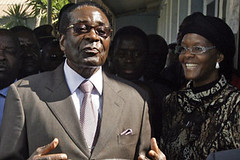
Outreach Suspended
By Lloyd Gumbo
THE constitution-making outreach programme has been suspended indefinitely following disagreements on the composition of the team that should collect views from the grassroots.
The process has also been stymied by a funding crunch and at the time of writing it was not clear when normal business would resume.
Reliable sources in the Constitutional Parliamentary Select Committee on Tuesday said they had failed to agree on the number of rapporteurs to accompany the outreach teams.
It is also understood that there is feuding over who should be a rapporteur with some members of the management committee saying all of them should be bound by oaths of secrecy.
The management committee is made up of negotiators to the Global Political Agreement, Cde Patrick Chinamasa (Zanu-PF), Mr Tendai Biti (MDC-T) and Professor Welshman Ncube (MDC), and members of the Select Committee.
The sources said some members had suggested 210 rapporteurs with each party contributing 70, while others wanted 70 only.
Seventy outreach teams are supposed to go round the country collating people’s views but disagreement over who will actually write these views down has become the latest sticking point.
Select Committee co-chairpersons Cde Munyaradzi Paul Mangwana (Zanu-PF) and Mr Edward Mkhosi (MDC) confirmed the outreach was now on the back burner and were not certain when the programme would start.
They said all constitution-making programmes were suspended by the management committee until next week when it meets to discuss the financial situation and other administrative issues.
The management committee, they said, had indicated that it was better to delay the process than rush to produce a “half-baked” product.
“All constitutional programmes have been suspended by the management committee. They felt there were other issues which needed attention before the outreach programme begins.
“There are still disagreements on the composition of rapporteurs, but there are other more pressing issues, which have to be addressed like financial constraints.
“Recording equipment is yet to be bought, cars haven’t been mobilised and rapporteurs are yet to be trained.
“Therefore, we cannot give a timetable of when the actual outreach will start because some of the issues are beyond our control as the Select Committee,” Cde Mangwana said.
He said the committee was going to engage the United Nations Development Fund and other financiers who pledged to bankroll the programme.
Cde Mangwana said pledges fulfilled so far were enough to train outreach teams and parliamentarians but insufficient to kick-start the actual outreach.
He said there was a possibility of the programme being moved to February depending on the availability of funds.
Mr Mkhosi added that finances were a major stumbling block in getting the process off the ground.
He said the management committee had asked the Select Committee to present an evaluation report on the latest developments.
“The report which has been requested by the management committee will help
determine when the outreach programme will start.
“The evaluation will include financial and administrative issues. The way forward will be determined after the management committee meeting next week,” Mr Mkhosi said.
Finance Minister Biti allocated US$43 million for the process in the 2010 National Budget, with funding coming largely from donors.
The Select Committee has so far received about US$4 million, while a US$18 million pledge from the UNDP will be disbursed in phases.
The constitutional programme appeared to have gathered momentum with the identification and training of thematic committee chairpersons, their deputies and outreach teams early this month.
However, the process remains behind schedule.
The GPA calls for a new constitution ahead of fresh elections with the process scheduled for completion in 18 months.
This means a constitutional referendum should ideally be held around June this year but this is now highly unlikely to happen.


The South Korean Supreme Court has ruled that the virtual “cyber money” used in online games can legally be exchanged for actual cash here in the real world. The ruling means that players of online games can sell their in-game currency to other players for real-world money. It also means that the South Korean government is going to tax the proceeds of those sales…
Tags: Business,
currency,
cyber money,
Gaming,
South Korea
Related Articles:
Avenida Libertad
Esta es la avenida mas bonita de todo el este, tiene 4 carriles, pero hay parte de la avenida donde tiene 6 carriles.


Avenida Padre Abreu


Intersección Av. Caamaño y Av. Padre Abreu

Avenida Caamaño


Puente Seco


Avenida aeropuerto

The Lady Hawks moved their record to 12-7 overall, 3-2 in conference play, with a 50-45 win over the visiting Milwaukee Area Technical College.
Several times in the first half the Lady Hawks led by as many as 9 points, but Milwaukee managed to close the gap to 4 points going into half time with Harper leading 29-25.
In the second half Milwaukee got as close as 2 points, trailing 37-35 at the 11:18 mark, but guard Peggie Parhas would connect on a jumper for two points and guard Anna Kirchoff would hit a 3-point shot to put the Lady Hawks up, 47-35.
A persistent Milwaukee team would battle back, but the Lady Hawks held on for the victory.
Peggie Parhas led Harper with 18 points and 12 rebounds, and Anna Kirchoff added 12 points and 6 rebounds.
“We won’t turn down a win, but we didn’t play our best in this game,” said Head Coach Mark Smith. “We were careless with the ball and not fluid on our offense, but we gutted out the win. We have good basketball players and we’ll keep working to work our way through those moments. I’m confident we’ll do what it takes.”
Next up, the Lady Hawks will host Madison Area Technical College on Saturday, January 23rd with tip off set for 1:00 PM.
 Democratic U.S. Senate candidate David Hoffman accused his rival Alexi Giannoulias of misleading parents on the safety of their investments in the Bright Start college savings program during a campaign forum tonight.
Giannoulias, in turn, said Hoffman is not the best Democrat to face presumed Republican nominee U.S. Rep. Mark Kirk in the general election because Hoffman agrees with Kirk on keeping President George Bush’s tax cuts in place for the wealthiest Americans.
Read more in Clout Street on chicagotribune.com.
Read the original article from Tribune News Services.
A Cook County judge acquitted a mother and a home health care nurse today of felony neglect charges in connection to the death of a severely disabled 13-year-old boy.
In the fifth day of a bench trial, Judge James B. Linn found Kesheia Phillips and nurse Loren Brown not guilty of criminal abuse or neglect of a child causing death in the 2008 death of Jaylen Brown, but did convict Phillips, the boy’s mother, of misdemeanor child neglect.
The women and a second nurse were all charged after Jaylen died two months after he was brought to La Rabida Children’s Hospital in Chicago. Prosecutors alleged the boy was covered in bedsores under his filthy clothes and suffering from severe malnutrition and sepsis. One of the boy’s bedsore, according to prosecutors, went through to the bone.
The boy suffered severe mental retardation, cerebral palsy, scoliosis, eczema, a gastrointestinal disorder and asthma.
Prosecutors claimed Phillips, 31, a single mother of three, neglected to take Jaylen to regular doctors appointments and did nothing to prevent her son’s rapid deterioration, adding that neither nurse alerted authorities to the mother’s neglectful actions.
The second nurse, Morris Lee Brinkley, 75, pleaded guilty last summer to criminal neglect of a disabled person and failing to report neglect or abuse and was sentenced to 2 years of probation and 60 days of community service by Linn.
Read the original article from Tribune News Services.
Luke Timmerman wrote:
News flow was light on the biotech beat this week, partly because of the MLK Day holiday, and everybody needed a little rest after the networking frenzy at the JP Morgan Healthcare Conference.
—One of the more interesting interviews I had last week at the JP Morgan conference was with Hans Bishop, the new chief operating officer for Seattle-based Dendreon (NASDAQ: DNDN). He talked about manufacturing capacity, the need to hire a marketing ace, and even how to correctly pronounce his name.
—Bothell, WA-based Acucela has quietly embarked on an ambitious growth plan this year. CEO Ryo Kubota told me in an exclusive interview that the company is planning to expand its staff from 40 to about 100 this year as it advances its novel drug for age-related macular degeneration further along in clinical trials.
—Instead of doing the usual recap on the JP Morgan Healthcare Conference like every other news outlet which said the mood was upbeat, I ruminated on the value of all the impromptu meetings that happen when so many people gather and pool their energy in one place.
—We are getting close to the end of the amazing series of editorials we’ve been been running daily from Xconomists and other technology leaders who are offering their views on the big innovations of the coming decade. This past week, we ran a piece on innovations in genomics from Eric Schadt, the chief scientific officer of Pacific Biosciences and a co-founder of Sage Bionetworks, as well as a great editorial about the future of molecular medicine from Matt O’Donnell, the dean of the University of Washington College of Engineering.
 It’s neat that the POSTCN01 mailbox counts letters and notifies you how much mail is waiting, but what gets me excited is that it looks like a bomb and detonator from an old movie. It’ll make my mailman pee himself.
This sick and twisted habit of scaring mailmen will set me back about $55, which is a bargain in my book. [Amazon via Oh Gizmo! via Akihabarana via Nerd Approved]


