Blog

  • Mrs. Charles Darwin’s Recipe Book

    At first glance this title may confuse you, but you don’t need to rub your eyes because the title means exactly what it says. It’s the culmination of the recipes Charles Darwin’s wife made for him on a regular basis. Ever wonder what scientists, philosophers, and artists were eating when they came up with their masterpieces? Well this is your chance to find out, at least about Darwin.

    The book itself is beautiful and the recipes are comprised of hearty comfort foods. There is also a great historical introduction not only about the Darwin’s, but about the times. Eating during the Victorian Era was limited and not as luxurious as it is today. This means that recipes are simple and comprised of accessible foods.

    For example, Mrs. Darwin’s French Ragout of Mutton recipe is basic, hearty, and oh so good.

    Duck Stew with Turnips French Food

    Ingredients:

    Ragout

    1/2 tablespoon flour

    Salt and pepper

    1 1/2 pounds (700 g) lamb chump (the hind end of the loin), boned, fat trimmed, and cut into generous pieces

    1 teaspoon sugar

    1 cup (250 ml) water or stock

    Butter for frying

    1 sprig parsley, chopped

    Turnips

    1 pound (450 g) young turnips, peeled and cut into 1/2 inch dice

    Butter for frying

    Preperation:

    Preheat oven to 325 degrees F

    1. Season the flour with salt and pepper and place in a plastic bag with the pieces of lamb. Holding the bag closed, give it a good shake so the meat gets coated with the flour.

    2. Melt the butter in an ovenproof dish with a lid. Add the lamb and fry over medium heat, turning the pieces so they get evenly browned.

    3. Pour in the water or stock and stir, making sure any sticky bits from the bottom of the pan are brought into the sauce. Bring to a boil, add the sugar lump, and simmer for 1-2 minutes.

    4. Put on the lid and bake for about 40-minutes. Test the meat with a knife to see if tender. If not, give it another 10-15 minutes.

    5. Taste and add more salt and pepper, if needed. Sprinkle generously with chopped parsley.

    6. About 20 minutes before serving, melt a good lump of butter in a large frying pan. Add the diced turnips in a single layer and fry them over medium heat, moving and turning them about so they brown but do not burn. Season with a little salt and pepper and serve with the lamb.

    ***

    Maybe if you eat these recipes, you too may come up with something monumental. Maybe, just maybe!

    Cheers!

    Image Credit: iStockPhoto

    Recipe Source: Mrs. Charles Darwin’s Recipe Book – Dusha Bateson and Weslie Janeway

    Post from: Blisstree

    Mrs. Charles Darwin’s Recipe Book

  • Mercedes Clase C 220 CDI 170 CV BlueEfficiency, prueba (Parte II)

    Mercedes_Clase_C_BlueEfficiency

    Llegamos a la segunda parte de la prueba del Mercedes Clase C, una berlina premium equipada con el motor más conocido del Clase C, se trata del propulsor diesel 220 CDI de 170 CV que ahora se ha vuelto algo más ecológico y ahorrador y recibe la denominación BlueEfficiency. De su motor, cambio automático y comportamiento hemos hablado en la primera parte de la prueba y en la segunda parte nos queda hablar del diseño exterior del Clase C, del diseño interior, calidad de los materiales y espacio.

    Uno de los apartados en los que destaca el Mercedes Clase C es en la calidad de los acabados y un interior que nada más sentarte en el Clase C todo lo tienes a mano, de buena calidad y cuentas con una sensación de espacio al sentarte al volante. Además al tratarse de un modelo BlueEfficiency también cuenta con detalles exteriores que ayudan a rebajar el consumo y emisiones, como neumáticos especiales de 16″ para mejorar la aerodinámica y de hecho el Clase C cuenta con uno de los mejores coeficientes aerodinámicos del segmento (Cx de 0,25 de las versiones BE).

    Diseño exterior
    Mercedes_Clase_C_BlueEfficiency

    La línea exterior del Mercedes Clase C es bastante peculiar, sobretodo desde el cambio que sufrió con la última generación en 2007 y el diseño ganó unas líneas más rectas y menos tradicional de lo que nos tenía acostumbrado Mercedes. Exteriormente es un coche musculoso con un diseño con líneas más marcadas y dos acabados exteriores que lo diferencian sobretodo en la parrilla y algún que otro elemento: Elegance y Avantgarde (acabado que equipa nuestra unidad).

    Las unidades BlueEfficiency se reconocen exteriormente por el logotipo situando en los laterales y por unas ruedas específicas para optimizar el consumo, puesto que las unidades BlueEfficiency equipan de serie unas gomas 205/55 de llanta 16″, equipamiento que nuestra unidad de pruebas trae de serie con las llantas de aleación de 7 radios (ver detalle). Es curioso además el tema de las llantas puesto que revisando la documentación que siempre nos envía Mercedes con los coches de pruebas (precio, equipamiento opcional, gama….) vi que todos los Clase C 220 CDI BE con o sin cambio automático pagan sólo el 4,75 % del impuesto de matriculación, excepto si no montan estas ruedas de serie y equipan otras (ya sea los neumáticos 225/50 R16 o de superior pulgadas) que en ese caso pagan el 9,75% del impuesto.

    Del diseño exterior mencionar también que las luces de nuestra unidad de pruebas eran bi-xenón con función de iluminación en curva y también asistencia de las luces antiniebla en los giros. Es un extra pero la iluminación que ofrecen compensa la inversión (1.393 euros) y en los faros traseros hay que destacar las luces LED.

    Diseño interior

    Mercedes_Clase_C_BlueEfficiency

    Nada más pasar a su interior vemos materiales de buena calidad por toda la consola central, los plásticos son agradables al tacto y apenas encontramos algún material que desentone en cuanto a calidad. La postura de conducción es muy cómoda, contamos con una buena visibilidad tanto trasera como delantera, y los grandes retrovisores también contribuyen a tener todo bajo control (sino siempre tenemos la cámara de visión trasera -ver detalle- opcional para ver mejor cuando ponemos marcha atrás).

    La mayoría de los mandos los tenemos al alcance de la mano y además desde el volante podemos controlar la radio y el ordenador de abordo que muestra información sobre consumos, navegador, ajustes, o incluso del equipo de sonido. El sistema de navegación es un extra y lo tenemos disponible en diferentes versiones con pantalla de mayor o menor pulgadas pero todos tienen en común un detalle muy práctico, y es que nada más apagar el coche se esconde bajo una práctica tapa evitando tentaciones ajenas.

    Además desde el panel de instrumentación podemos controlar también el consumo instantáneo, medio o la posición del cambio automático, en un panel de instrumentación bastante sencillo y con la pantalla del ordenador de abordo que aglutina muchas funciones realmente útiles para tener todo bajo control o información del vehículo a un sólo vistazo.

    Mercedes_Clase_C_BlueEfficiency

    Un detalle que no nos gusta mucho es la mezcla de palancas que tenemos en el lado izquierdo(ver detalle) (marca de la casa alemana) y que sobretodo al principio cuesta acostumbrarse a que los limpia parabrisas y los intermitentes van en la misma palanca al lado izquierdo y encima está la del control de velocidad y del limitador.

    Pero como comentaba al principio la postura de conducción es muy buena, cuenta con unos cómodos asientos delanteros que los agradeceremos a la hora de hacer viajes con el Clase C, en nuestro caso con reglaje eléctrico y apoyo lumbar. Además otro detalle que sigue llamándome la atención y es toda una seña de identidad en Mercedes es el freno de mano con accionamiento de pie, que además ahorra espacio en la consola central y se puede dedicar a una práctica guantera.

    En cuanto a las plazas traseras, son cómodas para viajar pero su comodidad se ve algo mermada por el espacio para los pies, pero dentro del segmento premium y si lo comparamos con otros rivales como BMW Serie 3 o Audi A4 los tres se sitúan en las mismas medidas apróximadamente. Además el techo panorámico (opcional también) le aporta bastante luminosidad interior y los pasajeros de las plazas traseras viajaran cómodamente y sobretodo si viajan sólo dos personas en las plazas traseras y además cuentan con climatizador independiente (un extra) con regulador de temperatura y potencia.

    Mercedes_claseC

    Para viajes largos el espacio interior, los asientos cómodos, y el buen tarado de las suspensiones lo hacen un perfecto devorador de kilómetros y se puede viajar con él sin llegar a fatigarse tanto como otros modelos del segmento (nosotros hemos realizado dos trayectos de 600 km). Asientos que me siguen gustando (y ya lo comenté en su momento en la prueba del GLK) puesto que non son totalmente de piel sino que es una mezcla de tela y cuero ártico, lo que los hace cómodos y no tenemos que sufrir los beneficios del cuero con las bajas o altas temperaturas.

    En cuanto a huecos está muy completo también, con una guantera de un tamaño normal y los huecos del tren central donde podemos guardar bastantes cosas, así como las guanteras de las puertas de un tamaño correcto. Y hay detalles que no podemos dejar pasar, por ejemplo que de noche contamos con luces de cortesía en las manillas de las puertas para verlas mejor o las dos luces LED que lleva bajo el retrovisor interior que aportan una luz blanca a modo de leemapas y son muy prácticas.

    Por último nos queda el maletero que cuenta con unas formas bastante regulares, además de llevarnos la sorpresa agradable de una rueda de repuesto bajo el suelo del maletero (ver detalle), y su capacidad de 475 litros es una medida normal en el segmento (A4 480 litros y Serie 3 460 litros). En la siguiente parte de la prueba hablaremos del precio del Clase C, del equipamiento y como siempre nuestra valoración general del modelo.

    Fotos | David Taboada


  • Głogów – Kolegiata pw. Wniebowzięcia NMP

    Wznosi się nad najstarszą dzielnicą Głogowa – Ostrowem Tumskim. W chwili obecnej jest odbudowywana po zniszczeniach II wojny światowej. Jest jedną z najstarszych świątyń Śląska. Jej początki sięgają pierwszych Piastów.

    Odbudowę kolegiaty rozpoczęto w roku 1988 z inicjatywy ks. prałata Ryszarda Dobrołowicza, proboszcza parafii pw. Najświętszej Marii Panny Królowej Polski na osiedlu Kopernika. W początkowym okresie prace prowadzone były głównie ze środków własnych, następnie z wykorzystaniem różnych dotacji i składek, m.in. ze strony Fundacji Współpracy Polsko-Niemieckiej. Pierwsza od czasu II wojny światowej msza odprawiona została w ostatnią niedzielę maja 1999. Proboszczem parafii kolegiackiej jest obecnie ks. Rafał Zendran. Brązowe drzwi do kolegiaty w Głogowie zrealizował Czesław Dźwigaj.

    Odnowa trwa cały czas, do tej pory wykonano szereg prac remontowych, w tym naprawę murów części prezbiterium, aranżację tego wnętrza ze stylizowanymi filarami, wylane zostały podłoża nawiązujące do pierwotnej posadzki, krypta romańska została wystylizowana pod rezerwat archeologiczny, restaurowane są freski w kaplicach bocznych, na odbudowę czeka sklepienie.

    Wstawiono witraże, które zaprojektował Czesław Dźwigaj. W prezbiterium znajdują się trzy witraże:

    * środkowy przedstawiający motyw Zwiastowania i Wniebowzięcia Najświętszej Maryi Panny
    * lewy ukazujący dwa wizerunki św. Hieronima
    * prawy – założycieli dzieła Cichych Pracowników Krzyża

    Na lewo od prezbiterium, w kaplicy Maryjnej witraże przedstawiają wizerunki Matki Bożej z polskich sanktuariów, natomiast na wschodniej ścianie biskupa Wilhelma Plutę. W pozostałych oknach przeważają wizerunki świętych.
    Dzwony w Kolegiacie

    1 lipca 2006 roku można było usłyszeć po raz pierwszy trzy nowe dzwony. Florian, Barbara i Anna odtworzyły specjalnie skomponowany interwał muzyczny Te Deum. Zamontowano je na wysokości pięćdziesięciu metrów, w miejscu gdzie kończy się kwadratowy korpus wieży kolegiackiej. 7 maja zostały poświęcone przez Biskupa Ordynariusza Adama Dyczkowskiego.

    http://www.kolegiata.com.pl/

  • Verizon — Who Promised Not To Do This — Says It’s Kicking Accused File Sharers Off The Internet [Update: Or… Maybe Not]

    This one seems odd. Verizon is among the few ISPs that has vehemently spoken out against RIAA demands that it kick file sharers offline. When the RIAA announced that it was cutting back on lawsuits to work with ISPs, Verizon was the first to loudly proclaim that it would not participate. And this wasn’t a huge surprise, given that Verizon was actually the only major ISP to fight the RIAA, back when the RIAA simply demanded names of file sharers without a court order. And yet… according to a Verizon spokesperson, the company has now started kicking accused file sharers off of its network. It’s no secret that Verizon had started to pass along RIAA letters, but actually cutting off users without any court order or any proof beyond an IP address is a huge and extremely dangerous step. I’m hoping that this Verizon spokesperson misspoke, because otherwise Verizon may be facing a pretty massive backlash. Update: Aaaaaaaaaaaaand, let the backtracking commence. Verizon is apparently now claiming (to Broadband Reports) that it was all an exaggeration and that Verizon only said that it “reserved the right” to kick users off:


    I’m not aware that we’ve ever terminated anyone’s account for excessive consumption, although we reserve the right to do so. Verizon has no bandwidth caps. That part of the CNET story is wrong. I did not say “we’ve cut people off.” I said we reserve the right to do so.

    Update 2: And, again, Broadband Reports comes through. It has a new update with Verizon now claiming that, no, it has never kicked anyone off its network for file sharing accusations. It might want to tell its spokespeople that for future reference.

    Permalink | Comments | Email This Story


  • Biggest Sovereign Risks For 2010? Check Out The Wealthy Nations

    From Project Syndicate:

    Today’s swollen fiscal deficits and public debt are fueling concerns about sovereign risk in many advanced economies.

    Traditionally, sovereign risk has been concentrated in emerging-market economies. After all, in the last decade or so, Russia, Argentina, and Ecuador defaulted on their public debts, while Pakistan, Ukraine, and Uruguay coercively restructured their public debt under the threat of default.

    But, in large part – and with a few exceptions in Central and Eastern Europe – emerging-market economies improved their fiscal performance by reducing overall deficits, running large primary surpluses, lowering their stock of public debt-to-GDP ratios, and reducing the currency and maturity mismatches in their public debt. As a result, sovereign risk today is a greater problem in advanced economies than in most emerging-market economies.

    Read the rest at Project Syndicate –>

    Join the conversation about this story »

    See Also:

  • Gonig to Cuba for the first time!

    Hi everyone! In 2 days I will be going to Santa Clara for the first time in my life! I will be staying a resort, but I am planning on leaving the resort and exploring the city. Is there anything I should know? Can you give me any tips?

    Also, how does one purchase marijuana in Cuba? 🙂

  • Copenhagen Accord is the priority, says U.S. climate envoy. But what about a binding treaty?

    by Amanda Little

    U.S. Climate Envoy Todd Stern.A
    month after he rode herd at Copenhagen’s COP15 climate talks,
    Todd Stern is exhorting participants to make the outcome of the conference
    meaningful. “Life needs to be breathed into the Copenhagen Accord,” the State
    Department’s special envoy for climate change tells Grist. He insists that the three-page
    document
    represents a “very, very important step forward,” and he’s now pushing major
    developed and developing countries to make clear public pledges for reductions
    in emissions or energy intensity by a Jan. 31 deadline, to substantiate the Accord.

    But
    even as he touts the successes of the Copenhagen conference, Stern is tamping
    down expectations that a legally binding global climate treaty will be reached at
    the next big climate meeting, COP16 in Mexico in December 2010: “there’s a fair
    amount of distance between where we are now and then.”

    Stern
    also talks candidly about his qualms with the U.N. conference process. “You
    can’t negotiate in a group of 192 countries. It’s ridiculous to think that you
    could,” he says, while also stressing that “it is certainly premature to write
    off” the U.N. process. His concerns echo those of his colleague Jonathan
    Pershing, who argued last week for a focus on a narrower group of negotiating countries rather than the U.N.‘s
    everybody-in approach: “We expect there will be significant actions
    recorded by major countries,” Pershing said. “We are not really
    worried what Chad does. We are not really worried about what Haiti says it is
    going to do about greenhouse-gas emissions. We just hope they recover from the
    earthquake.”

    I
    spoke to Stern, formerly an advisor to President Bill Clinton and senior
    counsel to Sen. Patrick Leahy, in a stark, fluorescent-lit conference room at
    the State Department to get his take on the ups and downs at Copenhagen and
    what to expect on climate policy in 2010.

    ——

    Q. What
    was the most gratifying moment for you in the morass of Copenhagen?

    A. Getting
    the thing done. And being part of what President Obama and Secretary Clinton
    brought to it, because they were instrumental to that moment of getting [the
    Copenhagen Accord] done.

    Q. Can
    you set the scene of that moment?

    A. It
    was literally the 11th hour, 11:30 p.m. Thursday [before the last scheduled day
    of the conference]. A lot of leaders including Secretary Clinton came together
    in a room—it was a pretty extraordinary tableau. You had Gordon Brown [prime
    minister of the U.K.] and Angela Merkel [chancellor of Germany] and Kevin Rudd
    [prime minister of Australia] and Nicolas Sarkozy [president of France] and
    Lula [president of Brazil] and Jacob Zuma [president of South Africa] and
    Mohamed Nasheed [president of the Maldives] and Meles Zenawi [prime minister of
    Ethiopia] and everybody sitting around this table. It was an up-and-down
    process over the course of 20 hours or so, but eventually the leaders are
    rolling up their sleeves and negotiating language of this thing back and forth,
    completely unscripted. That’s not the way presidents and prime ministers
    generally go into meetings these days.

    It
    was quite an impressive and successful performance by Secretary Clinton and
    then by President Obama, who arrived on Friday morning.

    Q. What
    was your most frustrating moment in Copenhagen?

    A. There
    were so many to choose from. It was a very difficult conference—constant
    procedural wrangling, constant tie-ups, repeated efforts by various parties to
    try to get the main players—including those representing smaller and poorer
    countries—to engage on the main issues. There were any number of times when
    the effort to engage on the issues got procedurally blocked.

    Q. Describe
    the procedural blocks.

    A. You
    can’t negotiate in a group of 192 countries. It’s ridiculous to think that you
    could. And yet when Denmark [the nation chairing the conference] would over and
    over again try to pull together some group based on each country bloc choosing
    their own representatives, not in any way cherry-picking who was going to be
    in, some parts of the developing-country groups would block it.

    Q. How
    would you rate the success of Copenhagen on a scale of one to ten?

    A. I’m
    not going to give you a number. I think it was a very, very important step
    forward, and actually quite a good accord, given what it includes on
    mitigation, transparency, funding for poor countries, and technology.

    Q. What’s
    your response to the widespread criticism of the outcome?

    A. People
    seem to forget that just 36 hours before the conference was set to end, we were
    headed for collapse. Instead, we got this three-page document. It isn’t
    everything that people wanted, but it includes meaningful elements.

    Q. Do
    you agree with the perception that China stalled and blocked at COP15?

    A. I
    don’t want to try to characterize whether they were blocking or not. I think
    they had certain objectives in mind, which were not necessarily the same as
    ours. But at the end of the day I think Chinese Premier Wen Jiabao and President Obama, along with the other
    leaders, found a pretty good common-ground position.

    Q. There’s
    a lot of speculation that the UNFCCC [U.N. Framework Convention on Climate Change, the foundational climate treaty]
    is fundamentally ineffective. Do you think it has a future? Are there more
    effective forums for negotiating climate treaties, like the G20 or the Major Economies Forum?

    A. When
    we first came to the table a year ago, we felt that it would be important to
    have a smaller set of countries that could be not negotiating the text of the
    agreement but discussing views on the big issues and working on some technology
    stuff. You can’t effectively negotiate unless you have the capacity to work in
    a smaller representative group where you can have a discussion that doesn’t
    occur in a much larger group.

    Q. What
    would the smaller set of countries be?

    A. The
    Major Economies Forum last year was 18 countries and served a real purpose. You
    had the same set of people that met virtually every month and there’s a certain
    level of trust and camaraderie that builds up. The group of countries that came
    together at the UNFCCC on that Thursday night into Friday was 28 or so—mostly
    the MEF countries with some others like Ethiopia, Granada, and Bangladesh.

    I’m
    not sure whether we’ll negotiate in the MEF context or what the smaller group
    process is going to be this year, but there certainly needs to be one. The
    UNFCCC is an organization that has some historical credibility, but it had a
    lot of problems in Copenhagen—many days of potentially negotiating and making
    progress that just got locked up.

    Q. Could
    you have definitive success without the UNFCCC? Could the smaller groups alone produce
    a meaningful outcome?

    A. It
    is certainly premature to write off the UNFCCC. There is a credibility that is
    provided by the full group. So on the one hand, I don’t think you can negotiate
    in that grouping, but on the other hand, it’s good for there to be a larger
    grouping that the smaller representative group can come back to.

    Some
    of the rules [of the UNFCCC] can be difficult. If you’ve got 185 countries
    wanting to do something and a handful that don’t want to, that blocks
    everything.

    Q. In
    the ten months leading up to COP16 in Mexico, what needs to happen?

    A. Life
    needs to be breathed into the Copenhagen Accord. The formal adoption of this
    accord by the COP was blocked by Cuba, Nicaragua, five or six countries, and
    the ultimate decision was to take note of the thing as opposed to adopt it. So there’s a process going on now where countries need to associate
    themselves, affirmatively tell the UNFCCC secretariat that they want to be part
    of this.

    Step
    No. 2 is that the major developed and developing countries decide to list or
    inscribe their targets or actions. That’s supposed to happen by the end of the
    month. If a month from now all of that’s happened, the plane will have taken
    off from the runway.

    In
    addition, the Copenhagen Accord includes a number of important elements that
    need to get fleshed out more. There’s a provision to set up a new global
    climate fund [to help vulnerable developing nations]. There’s a provision to
    set up a new technology body. There’s some good language on transparency and verification,
    and a provision for that to be further spelled out in guidelines. I would hope
    that gets worked on this year.

    And
    there will be efforts to press forward toward a legal treaty, presumably by
    COP16 or perhaps thereafter. 

    Q. What
    realistically do you expect to come out of Mexico?

    A. I
    think that you could have decisions made to further implement the Copenhagen
    Accord. And the maximum amount of progress toward a legal agreement—and maybe
    even all the way there. But there’s a fair amount of distance between where we
    are now and then.

    Q. So
    it’s hard to expect anything out of COP16?

    A. No,
    no, I’m not saying that at all. The objective should be this year to flesh out
    and implement the Copenhagen Accord. And we should be working toward a legal
    agreement in addition.

    Q. What
    happens if we don’t see progress toward climate action in the U.S. Senate? And
    if the EPA’s authority to regulate CO2 is blocked?
    What would a double-whammy failure in U.S. domestic policy mean for COP16?

    A. I’m
    not going to speculate on stuff like that. I don’t think that the EPA authority
    is going to be stripped away, and I’m hopeful with respect to domestic
    legislation. I think the partnership between Sen. John Kerry [D-Mass.] and
    Sen. Lindsey Graham [R-S.C]
    is a really good sign.

    Q. Can
    we get a legally binding global treaty in Mexico without success in the Senate?

    A. Is
    it absolutely necessary? I don’t think it’s absolutely necessary, but I think
    it would be pretty important.

    Q. Will
    the outcome of Copenhagen help climate legislation in the Senate?

    A. I
    think so. I think the fact that China, India, Brazil, South Africa, the big
    countries, agreed to things that have never been agreed to before by major
    developing countries was a breakthrough. And the fact that there’s agreement to
    a kind of international review with respect to implementation—never happened
    before. So if you’re a senator and you’re trying to get a bill done, what
    happened was absolutely a net plus.

    Related Links:

    Last decade was the warmest ever, says NASA

    New Sierra Club chief brings confrontational style to the job

    Who will make the first move toward a clean energy future?


  • TV Docs Mix Media With Medicine in Haiti

    GuptaYou’re a TV correspondent on the scene in Haiti, reporting on the devastation following the Jan. 12 earthquake. But you’re also a doctor in the place where there’s an intense need for people to treat the injured. How do you keep the normally distinct roles of doctor and journalist separate?

    The biggest broadcast networks and CNN all have doctor-journalists on the ground in Haiti who have ended up providing emergency care in addition to performing reporting duties, the Los Angeles Times and the Washington Post report. Their medical rounds have included splinting bones, helping deliver babies and performing operations.

    Reporters usually try to avoid becoming part of the story they’re covering and most journo-docs told the papers they didn’t plan to be aid givers. “I don’t think our intention is to ever make the story about myself,” CNN’s Sanjay Gupta, who performed surgery aboard the aircraft carrier USS Carl Vinson to aid a girl with a skull fracture, told the Times. (That operation is shown in the picture at right; Gupta is third from the left.)

    Other medical correspondents echo the sentiment. “Five days after the quake, a nun at a charity said to me, ‘We need you,’” CBS’s Jennifer Ashton told the WaPo. “I came to the decision that I am first and foremost a physician.”

    Bob Steele, journalism values scholar at the Poynter Institute and journalism professor at DePauw University, told the Times that “news organizations at some point appear to be capitalizing for promotional reasons on the intervention by journalists.” See here for more such concerns.

    Richard Besser, a former doc affiliated with the CDC who joined ABC four months ago, says the Hippocratic oath requires docs to help when there is need is there but he wants to avoid participating as much as possible. “My primary role is to report on the public-health consequences of this earthquake,” he told the Post.

    Photo: Getty Images


  • Brooke Mueller Hospitalized With Tooth Infection

    Brooke Mueller, the wife of Charlie Sheen, has been hospitalized in Los Angeles, her lawyers have confirmed. Mueller was admitted to intensive care on Tuesday night after falling ill with a 105-degree fever following surgery on her wisdom teeth earlier this week.

    Brooke’s health woes come as she prepares to face husband Charlie in court in Aspen, Colorado, at a hearing that was previously delayed due to her wisdom tooth surgery. The Two And A Half Men star was arrested for allegedly assaulting Brooke at knifepoint during a Christmas Day dispute in The Rockies.

    “Brooke is in the hospital ICU related to the surgery for her impacted wisdom tooth,” Yale Galanter, Brooke’s attorney, said in a release Wednesday afternoon. “They are trying to get the infection and fever under control. The infection has spread.”

    Despite a protective order, which bars him from communicating with his estranged wife – Sheen reportedly showed up at the hospital to check on Mueller’s condition. The couple, who married in 2008 and have 9 month-old twin boys, are due back in court in Aspen on Friday, when Sheen will ask for the lifting of a restraining order that prohibits him from having contact with his wife.


  • BuyWithMe Raises $5.5M

    Wade Roush wrote:

    BuyWithMe, a Boston-based “group buying” site, said today it has closed a $5.5 million Series A venture financing round led by Matrix Partners, which has offices in Waltham, MA, and Menlo Park, CA. At the BuyWithMe website, merchants promote group discounts on products or services, deliverable only if BuyWithMe can assemble enough customers to meet the merchants’ volume requirements. “The company has developed a strong following among consumers and merchants in multiple cities and has an impressive vision for future growth,” Matrix general partner Nicholas Beim said in a statement.


  • Overseer and Elected Director candidates announced for 2010-11

    This spring, alumni can vote for a new group of Harvard Overseers and Elected Directors for the Harvard Alumni Association (HAA) board.

    Ballots will be mailed no later than April 1 and must be received back in Cambridge by noon on May 21 to be counted. Results of the election will be announced at the HAA’s annual meeting on the afternoon of Commencement day (May 27). All holders of Harvard degrees, except Corporation members and officers of instruction and government, are entitled to vote for Overseer candidates. The election for HAA directors is open to all Harvard degree holders.

    Candidates for Overseer may also be nominated by petition, that is, by obtaining a prescribed number of signatures from eligible degree holders. The deadline for all petitions is Feb. 1.

    The HAA’s nominating committee has proposed the following candidates in 2010:

    For Overseer

    Cheryl Dorsey ’85, M.D. ’91, M.P.P. ’92, president, EchoingGreen, New York City

    Joseph Fuller ’79, M.B.A. ’81, co-founder, vice-chairman, and CEO, Monitor Group, Cambridge, Mass.

    David Heyman ’83, film producer, London

    Walter Isaacson ’74, CEO, The Aspen Institute, Washington, D.C.

    Nicholas Kristof ’82, columnist, The New York Times, New York City

    Karen Nelson Moore ’70, J.D. ’73, United States Circuit Judge, U.S. Court of Appeals for the Sixth Circuit, Cleveland

    Diana Nelson ’84, director, Carlson Companies Inc., San Francisco

    David Tang ’75, managing partner for Asia, K&L Gates, Seattle

    For Elected Director

    Kenneth Bartels ’73, M.B.A. ’76, president and CEO, Paxton Properties Inc., New York City

    Roger Fairfax Jr. ’94, J.D. ’98, law professor, George Washington University Law School, Washington, D.C.

    Mark Fusco’83, M.B.A. ’90, CEO, Aspen Tech, Westwood, Mass.

    Lindsay Hyde ’04, founder and president; Strong Women, Strong Girls; Boston

    M. Margaret Kemeny ’68, professor of surgery, Mt. Sinai School of Medicine; chief of surgical oncology and director of Queens Cancer Center; New York City

    George Newhouse Jr. ’76, Partner Brown, White & Newhouse LLP, Los Angeles

    Reynaldo Valencia J.D. ’90, associate dean for administration and finance; professor of corporate and securities law, St. Mary’s University School of Law, San Antonio

    Victoria Wells Wulsin ’75, M.P.H. ’82, D.P.H. ’85, physician, Mid-City Pediatrics, Cincinnati

    Irene Wu ’91, director of international research, U.S. Federal Communications Commission; adjunct professor, Georgetown University, Washington, D.C.

  • Scott Brown a Profilic Campaign Fund-Raiser, But a Stingy Fund-Giver

    scottbrown2.jpgRepublican Scott Brown, elected Tuesday as Massachusetts’ newest U.S. senator, is notable for his prolific political fund-raising, reportedly generating millions upon millions of dollars from supporters during an abbreviated campaign.

    He accomplished this through online channels — something with which the GOP has struggled. Politico‘s Ben Smith reports that Brown adviser Patrick Ruffini today announced his boss hauled in eight figures, proudly tweeting: “$12 million, is I believe, the biggest online fundraising event for any statewide candidate, R or D, ever.”

    We won’t know what the official, final, end-of-story campaign finance numbers are in this race until mid-February, after post-election Federal Election Commission filings are released.

    But we do know this: Brown himself has made just one donation to a federal political candidate in the past 20 years — $250 in 2001 to Republican congressional candidate Jo Ann Sprague, a Center for Responsive Politics analysis indicates.

    That may be because Brown will enter the U.S. Senate as perhaps one of its poorer members — relatively speaking, at least.

    A Massachusetts personal financial disclosure form Brown filed in 2008 indicates his annual income fell between $60,000 and $100,000, and he reported owning interests in time shares and property valued in the low six figures. He also reported owing up to $100,000 on his home mortgage.

    The average net worth of a U.S. senator, meanwhile, is $13.98 million, based on the Center’s analysis of 2008 personal financial disclosures of Senate members. And more than a fifth of U.S. senators in 2008 reported personal wealth of at least $3.5 million. 

  • Amag Pharma to Sell 3M Shares

    Ryan McBride wrote:

    Amag Pharmaceuticals (NASDAQ:AMAG), a Lexington, MA-based firm with a lead product for patients with chronic kidney disease, announced yesterday that it plans to sell 3 million shares of common stock in a public offering. Additionally, the firm is allocating 450,000 shares for underwriters to cover potential over-allotments. The company’s stock traded at $49.03 per share at 3:23 pm ET today.


  • White House: Financial Overhaul Must Include Consumer Agency

    The White House said President Barack Obama won’t abandon his desire to see a new consumer financial protection agency included in regulatory overhaul legislation, dousing speculation that the proposal may be watered down or eliminated.

    President Barack Obama (Associated Press)

    “Financial reform has to include a consumer protection agency,” White House spokesman Robert Gibbs said Wednesday.

    The Wall Street Journal had reported last week that Senate Banking Committee Chairman Christopher Dodd (D., Conn.) may scrap the idea of creating a separate Consumer Financial Protection Agency as part of a sweeping financial-sector overhaul bill. Dodd has approached Republicans about possibly beefing up consumer protections within an existing agency and ditching the idea of a new agency, which is fiercely opposed by the banking industry.

    Gibbs said Obama won’t back down.

    “People on Capitol Hill need to understand, that the president is not going to compromise because lobbyists tell somebody that we shouldn’t have an agency that protects consumers,” the spokesman said. “That’s something the president’s not willing to give up. ”

    Speculation about the fate of the regulatory revamp intensified after Democrats lost their 60-seat super majority in the Senate on Tuesday, when Republican Scott Brown won a special election to replace the late Edward Kennedy.

    Dodd and Obama met Tuesday at the White House. Gibbs said the president made his stance on the consumer agency clear.

    “Clearly financial reform is going to take and play a bigger role in what happens legislatively in the next several months, ensuring that we have honest rules of the road going forward; that we’re not rewarding excessive risk; that we have an independent agency that protects and looks after consumers,” Gibbs said.


  • Shooting Challenge: The Beauty of Blur [Photography]

    Blur is usually something we try to avoid in photography—in lowlight especially, memories can be destroyed by this muddling of shapes and colors. But for this week’s Shooting Challenge, we want you to harness motion blur‘s artistic power.

    The Challenge
    Capture motion blur, in any way you’d like.

    The Tips
    If you feel a bit in over your head, there’s a great tutorial on capturing motion blur here. (Basically, you’ll want to slow down your shutter speed and lock down your camera—but feel free to use more advanced techniques, obviously.)

    The Rules
    1. Submissions need to be your own.
    2. Photos need to be taken the week of the contest. (No portfolio linking or it spoils the “challenge” part.)
    3. Explain, briefly, the equipment, settings and technique used to snag the shot.
    4. Email submissions to [email protected].
    5. Include 800px wide image AND 2560×1600 sized in email. More details on these below.

    Send your best entries by Sunday, January 24th at 6PM Eastern to [email protected] with “Motion Blur” in the subject line. Save your files as JPGs or GIFs, and use a FirstnameLastname.jpg (800px) and FirstnameLasnameWALLPAPER.jpg (2560px) naming convention. Include your shooting summary (camera, lens, ISO, etc) in the body of the email. [Image by iPhotograph]


  • Navy initiates green development policies

    From Green Right Now Reports

    Photo: Navy.org

    Photo: Navy.org

    With 40 installations in the Chesapeake Bay watershed alone, the United States Navy has an enormous  environmental impact on the region. New construction and regular improvements of existing  facilities pose a major challenge in terms of limiting damage to the local ecosystem.

    Development in the region is increasing the number of impervious surfaces (roofs, driveways, parking lots, etc.) at a rate four times greater than population growth. As a result, stormwater runoff has become a major threat in terms of polluting the Bay.

    The Navy has developed a low-impact policy aimed at maintaining or restoring pre-development hydrology. Using a combination of vegetation and retention devices, stormwater is managed at the source rather than allowing the water to travel downstream.

    The overall goal: No net increase in stormwater volume or sediment and nutrient loading from new projects.

    Those low-impact efforts are part of a broader Sustainable Infrastructure Program currently being implemented. The program serves to integrate environmental stewardship into all energy programs, asset management, capital improvements and public works management.

    Recently, a parking lot at Naval Station Norfolk capped a waste disposal area and now bio-filters stormwater. Implementation of all major contruction projects will require low-impact techniques by 2011.

    Copyright © 2010 Green Right Now | Distributed by GRN Network

  • Updated: Opera Acquires Mobile Ad Net AdMarvel For $8 Million


    Opera Mini 5

    Norwegian browser operator Opera has bought mobile ad network AdMarvel as it looks to expand its products in its contest against Apple’s Safari on the iPhone. This past summer, Opera’s mobile browser took a slim lead over Safari’s iPhone version. Opera claims over 50 million mobile users per month. The company already had an existing partnership with with four-year-old AdMarvel. But as the mobile ad market continues to heat up, it decided that owning the San Mateo, CA-based ad net can help it solidify relationships with publishers and marketers on a global basis. The deal’s terms weren’t disclosed.Release

    Update: An Opera rep tells us that the company is paying $8 million up front and could grant AdMarvel an additional $15 million if certain aggressive financial targets are met in two years.

    Related


  • Your countries heavy rail maps…

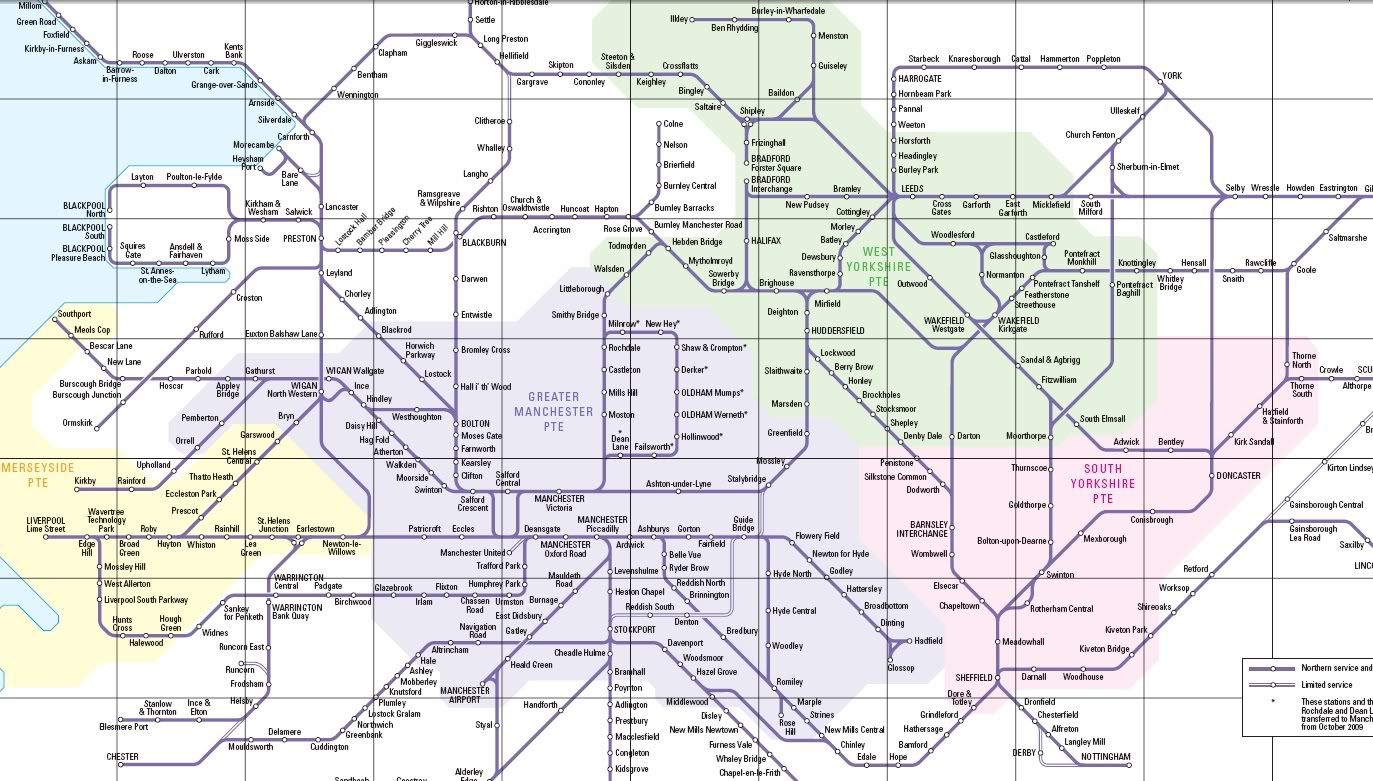
    Your countries heavy rail maps…

    This is for the UK

    Here is a map for the Northern Rail network where I live. This just shows the local commuter lines as Northern Rail doesn’t run any intercity services…

  • Truphone Goes MVNO But Still Faces an Infrastructure Challenge

    They say that those who fail to study history are doomed to repeat it. That’s why one part of me is wondering why Truphone today announced an Mobile Virtual Network Operator (MVNO) effort with Vodafone UK (PDF). The move dovetails with a second Truphone product, also announced today (PDF) — the Truphone Local Anywhere service. Targeted towards the international jet-setter, Local Anywhere offers significant cost savings thanks to local rates for calls made outside of one’s home country. “A single, smart SIM” provides the local numbers and rates, according to the company.

    For example, a U.S. resident could call home from the UK for 12 cents per minute on the Local Anywhere service. That same call for an AT&T customer with international roaming would cost nearly 10 times that amount. I see the benefit if you live in or travel to the initially supported countries — Truphone expects to expand the service this year across Europe, in Australia, Hong Kong and South Africa. So Truphone Local Anywhere makes financial sense — just like having a local Google Voice number geographically close to those who call you the most. But what about that MVNO business? How can Truphone succeed where so many before them have failed?

    Let’s face it: With the notable exception of Virgin Mobile, very few mobile operators can even say “MVNO” without grimacing in pain. Odds are that this arrangement won’t be profitable in the traditional sense. Truphone isn’t looking to buy cellular service at wholesale and directly resell it at retail to eke out a small profit. Instead of that direct sell method, it appears to be one of indirect sales, in that Truphone hopes the arrangement will increase demand for its services and thus put money in the bank.

    At the end of the day, it still looks like a standard yet slightly tweaked MVNO business model — and that’s not a model filled with optimism. In the meantime, it highlights one of the biggest challenges that Truphone and other competing services have to face: lack of control. The company may have an MVNO deal with Vodafone UK, but ultimately, who’s in control of the pipe, the data in it and pricing for it? Not Truphone.

    This same lack of control is evident with the company’s VoIP offerings, too. To Truphone’s credit, the company earlier this week discussed its voice services over Wi-Fi vs. those over 3G and noted this very constraint. Karl Good, Truphone’s director of applications, put it this way:

    “[U]nlike some of our competitors who have made VoIP calling available over 3G, we will not be doing so until we have developed a solution that will give our users a level of call quality that we are proud of.”

    Without direct ownership and a stake in the level of call quality, Truphone simply can’t control the experience. And while I have high hopes for VoIP services — I use them myself on a daily basis — the ultimate issue is that these services are simply here ahead of their time. Voice is indeed a dying business in favor of data, as the numbers clearly show. But voice as data — on your pipe or someone else’s — is currently more advanced than the infrastructure on which it must rely. We’ll have to let history be the judge, of course, but voice isn’t the business I’d want to be in these days.

  • GigaOM Event: Will Networked Automobiles Be the Next Platform for Green Apps?

    Will networked automobiles be the next platform for green apps? That’s just one of the possibilities we’ll be looking at on our panel “The New Networked Car” at the Green:Net 2010 conference, which will be held on April 29th at the Mission Bay Conference Center in San Francisco.

    The next generation of electric cars will fuel up from the power grid and have one of several operating systems, broadband provided by wireless carriers and a charge that’s controlled by software at a utility data center. Startups are building the systems now. Is the car your next major mobile technology platform? Come find out and meet over 500 other motivated entrepreneurs, technologists and investors at Green:Net 2010.

    GigaOM readers can get a $50 discount — just follow this link to register now for Green:Net 2010.