


Blog
-
Class Victory for Aston Martin at Dubai 24Hr
 UAE based AUH Motorsports managed to achieve a class victory and 16th overall in the Dubai 24 Hours with its Aston Martin Vantage GT4, which was driven to victory by Emirati driver Humaid Al Masaood who teamed with Eric Charles, Alex Kapadia and Michael Prophet.
The SP3 class for GT4 cars saw Aston Martins filling three of the top four positions. British team Nicholas Mee Racing finished third, while DXB Racing completed the endurance contest just one lap behind in fourth.
In total 74 cars… (read more)
-
Simple Desktops
Simple Desktops is a collection of desktop wallpapers curated by Tom Watson designed to make your computer beautiful without distraction.

-
Sea Change for Salmon Husbandry
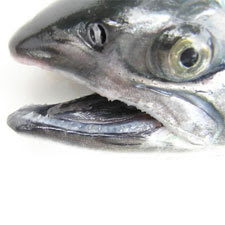
This is extremely promising for the aquaculture industry. Fundamentally, everyone has assumed that salmon need to spend their life in the ocean. Now it turns out that that is not true at all. The consequences are huge.
We still have the issue of feed. I am aware of work on replacing part of the feed with grains and I assume that will continue. They are suggesting here that they can approach 1.1 to 1, except I heard that tale two decades ago.
I think though that we may have a far better option available. It is expensive to raise fish in tanks. So raise them in the lakes of the boreal forest. These lakes have often been fished out and are forced through a serious die off every winter that decimates populations. These salmon can in fact live in these lakes. The lakes themselves are easily closed off to restrain migration if the fish are released only after they are properly sized.
The fish can be initially raised and fed in lakeside pens until they are so sized.
Far more important, small lakes are covered during the summer with mosquito and black fly larvae which should augment the feeding regime and perhaps keep the local environment somewhat more livable. The reason this food supply is so substantial is that the winter die off has wiped out their predators. Thus introducing a huge supply of active predators into the lake means that the natural food supply can be used.
The fish population will still need to be fed over the next winter, but that can be planned for and perhaps may be a mostly grain based diet. After all we are simply carrying them over the winter until spring brings back the insect larvae again.
Winter feeding through the ice should not be difficult since we presently do ice fishing anyway. In fact I suspect that the fishermen will help since it helps their sport.
I am sure these methods can be applied to other fish species, but we are most experienced with Coho at present since it happens to be ready for harvest inside of two years.
Sea Change: Environmental Group Gives First-Time Nod to Sustainable Salmon-Farming Method
An aquaculture company devises a new, sustainable process that raises Pacific Coho salmon in freshwater
SALMON SOLUTION: A new farming technique for Pacific coho salmon has received approval from a consumer education group that advocates for sustainable fisheriesFarm-raised salmon has long been the poster child of unsustainable aquaculture practices. Issues of escape, pollution and inefficiency have plunged it deeply into the “avoid” territory of environmental groups—until now.
In a report released January 14, the Monterey Bay Aquarium’s Seafood Watch program is taking the unprecedented step of approving a particular method for farming Pacific coho salmon that is currently employed exclusively by the Rochester, Wash.–based AquaSeed Corp. The sustainability nod from the consumer education group means that these salmon also will be assigned a green “Best Choice” rating on Seafood Watch’s Web site. The approval follows several months of intensive site visits by Seafood Watch scientists and reviews of the company’s production facility, feed ratios, fish contaminant and pollution discharge levels, and more.
The salmon, to be sold under the SweetSpring label, have also been shown to contain high levels of omega-3 fatty acids, placing the salmon on Seafood Watch’s newly created Super Green List, which denotes that the fish is good for human health without causing harm to the ocean. To appear on the Super Green List, the salmon must provide the daily minimum of omega-3s (at least 250 milligrams per day) based on 28 grams of fish, and have PCB (polychlorinated biphenyl) levels under 11 parts per billion (ppb). AquaSeed came in at 335 milligrams per day of omega-3s and had a PCB level of 10.4 ppb.
“This is the first farmed salmon we’ve ever talked about as a good source [for food, since the program’s inception in 1999],” said Geoffrey Shester, senior science manager for Seafood Watch. “This is extremely exciting. It’s not an experimental science project. It is mature to the point where there is real potential to scale it up.”
The farming method
The AquaSeed Pacific coho salmon are raised in a freshwater, closed containment system, which is not how salmon are conventionally farmed. Salmon in the wild live primarily in saltwater but swim to freshwater every year to spawn. Traditionally raised farm salmon are grown in open-net ocean pens. This has led to problems such as nonnative species escaping into the wild and pollution as well as sea lice infestation and disease, because there is no barrier between captive salmon and the wild version in surrounding waters. Plus, traditionally raised farmed salmon require as much as five pounds (2.3 kilograms) of meal made from smaller fish caught in the wild for every pound (half kilogram) of salmon meat, a level that is considered unsustainable by environmental groups.
AquaSeed’s salmon are grown in land-based, freshwater tanks ranging in size from 60 centimeters to 15 meters wide depending on the salmon’s developmental stage. Containment tanks prevent escapes and problems with sea lice infestation that have plagued open-net ocean pen operations. Also, a high-end salmon feed and selective breeding has helped minimize fishmeal use, reducing the ratio of pounds of wild feed fish to produce pounds of farmed fish to 1.1 to one—a number AquaSeed owner Per Heggelund says he expects to whittle further.
“What’s interesting about this is this is they’ve taken salmon back millions of years evolutionarily, to the point where they’re freshwater again,” Shester says.
Now on their 17th generation of pedigree breeding, the egg-to-plate operation is in the process of providing the salmon with a DNA fingerprint to help thwart any unauthorized breeding. AquaSeed’s core business is selling “eyed” salmon eggs (eggs that have developed to the point that their eyes are visible) under the Domsea label to salmon farms in
“We didn’t set out to be in a food fish program in a land-based facility,” Heggelund says. “That wasn’t our goal. We were more focused on the genetics—the livestock breeding of salmon for the normal traits of survival at certain stages of the life cycle, productive growth and feed conversion, and egg production.”
Producing 90,700 kilograms of salmon a year, Heggelund is preparing to rapidly expand production on his 20-hectare farm, and is already working closely with large purchasers such as Compass Group and Whole Foods as well as Mashiko, a Seattle-based sustainable sushi restaurant. -
China May Re-Open Up .Cn Registrations for Individuals
 China’s web isn’t getting more open any time soon, even with Google’s ultimatum, but the officials are now backing off on a restrictive measure implemented last month, which prevented individuals inside China from registering .cn domains. Regulators are now saying they will open up registrations once again as the alternative, people registe… (read more)
 -
Internet Explorer: Should You Stay or Should You Go? [Voices]
By Nick Wingfield, Reporter, The Wall Street Journal
French and German government agencies have told people they should ditch Microsoft’s (MSFT) Internet Explorer browser, at least temporarily, because of a security hole that hackers are thought to have exploited on recent cyberattacks against Google and other companies. What should you do?
Switching to an alternative Web browser like Firefox or Google (GOOG) Chrome is one possibility. For now, security companies like McAfee have only identified the latest security exploit as an Internet Explorer issue, but there’s no guarantee that they won’t find vulnerabilities in other browsers that were involved in the broad attack on Google and others.
Generally speaking, a browser switch is going to be a lot easier for an individual than it will be for corporate users, where IT policies often dictate which browser people use on their computers. Graham Cluley, a senior technology consultant and security firm Sophos, said in a blog post Monday that companies may cause “more problems than it’s worth by summarily switching browsers” because of the potential for employee confusion and Web site compatibility problems caused by the new software.
Read the rest of this post on the original site
Buy This Item: [Click here to buy this item]
-
Twitter Joke Led to Terror Act Arrest and Airport Life Ban [Voices]
By Mark Hughes and Jason Walsh, Contributors, Independent UK
When heavy snowfall threatened to scupper Paul Chambers’s travel plans, he decided to vent his frustrations on Twitter by tapping out a comment to amuse his friends. “Robin Hood airport is closed,” he wrote. “You’ve got a week and a bit to get your shit together, otherwise I’m blowing the airport sky high!!”
Read the rest of this post on the original site
Buy This Item: [Click here to buy this item]
-
Forget Gum. Walking and Using Phone Is Risky. [Voices]
By Matt Richtel, Reporter, New York Times
On the day of the collision last month, visibility was good. The sidewalk was not under repair. As she walked, Tiffany Briggs, 25, was talking to her grandmother on her cellphone, lost in conversation.
Read the rest of this post on the original site
Buy This Item: [Click here to buy this item]
-
What Would Martin Luther King Make of Twitter? [Voices]
By Baratunde Thurston, Contributor, Vanity Fair
At this time every year, commentators across the United States engage in an exercise I’ll call Hypothetical King, in which we try to imagine what Dr. Martin Luther King Jr. would say about the war in Afghanistan, the bank bailouts, or Mo’Nique winning best supporting actress for Precious at the Golden Globes. We extrapolate from his words and deeds and hope we’re right but can never be sure.
I’d like to engage in an exercise that’s almost the reverse of that.
Read the rest of this post on the original site
Buy This Item: [Click here to buy this item]
-
Is Gawker’s “Apple Tablet Scavenger Hunt” Illegal? [Voices]
By Ben Sheffner, Contributor, Slate.com
Gawker—whose founder, Nick Denton, recently chided his minions for thinking “way too much before publishing,” and which is fighting off a copyright lawsuit after posting extended excerpts of a celebrity trio’s “naked threesome” video—is once again testing the limits of journalistic ethics and the law.
The fun started Tuesday, when Gawker’s Silicon Valley gossip site, Valleywag, announced what it called the “Apple Tablet Scavenger Hunt,” offering cash prizes for information about the much-anticipated new Apple (AAPL) device, reportedly set for public unveiling Jan. 27. Valleywag said it had “had enough of trying to follow all the speculation” about the product and set out a “menu” describing what it would pay for info, ranging from $10,000 for “bona fide pictures” to $100,000 for anyone who could physically deliver the tablet to the editors and “let us play with one for an hour.”
Read the rest of this post on the original site
Buy This Item: [Click here to buy this item]
-
Other People’s Privacy [Voices]
By Nick Carr, Blogger, Rough Type
In the wake of Google’s (GOOG) revelation last week of a concerted, sophisticated cyber attack on many corporate networks, including its own Gmail service, Eric Schmidt’s recent comments about privacy become even more troubling. As you’ll recall, in a December 3 CNBC interview, Schmidt said, “If you have something that you don’t want anyone to know, maybe you shouldn’t be doing it in the first place. But if you really need that kind of privacy, the reality is that search engines – including Google – do retain this information for some time and it’s important, for example, that we are all subject in the United States to the Patriot Act and it is possible that all that information could be made available to the authorities.”
Read the rest of this post on the original site
Buy This Item: [Click here to buy this item]
-
Alligator Breathing

I am somewhat surprised that we only now understand this. Since I have posted extensively on dawn age reptiles I recognize that there is a great deal we do not understand. That alligators and I presume crocodiles developed this innovation during the rise of dawn age reptiles, one has to wonder why?
We have been addressing the fact that lungs were not overly important to some of these creatures. Here we are looking at the plesiosaur and the large sea serpent that evolved to operate beneath the thermo cline in the deep ocean. They collect oxygen through what are plausibly external comb like gills or fleshy surfaces.
That made the croc a transition animal between aquatic and fully land capable. In a way we know little yet about what actually arose in the so called age of amphibians. The sea serpent could easily be a survivor of that age.
It is possible that both air flow strategies arose at the same time for different reason we do not yet understand.
Breathtaking: Alligators breathe like birds, underscoring an ancient link–and possibly a survival strategy
Avian dinosaurs—aka birds—have a streamlined way ofbreathing. Instead of sending air in and out of tiny sacs in the lungs like some other animals do, their breath flows in a single direction through a series of tubes. A new study reveals that birds are not alone in this adaptation: alligators also rely on this one-way inhale/exhale, suggesting that this form of respiration emerged a lot earlier in evolutionary time than had been previously thought.These findings, published online January 14 in Science, indicate that this method of breathing likely emerged more than 246 million years ago, during the Triassic period, before the lineage that gave rise to alligators and birds split—rather than in later bird relatives.
“Our data provide evidence that unidirectional flow predates the origins of pterosaurs, dinosaurs and birds and evolved in the common ancestor of the crocodilian and bird lineages,” Collen Farmer, an assistant professor of biology at the University of Utah in Salt Lake City and principal researcher, said in a prepared statement. (The precise common ancestor of birds and crocodilians, an archosaur, remains unknown, but Farmer speculates that it might have been “a small, relatively agile, insect-eating animal.”)
Today, having this unidirectional airflow helps birds soar to heights that Farmer said would “render mammals comatose.” But could this little breathing trick have helped both the bird’s flightless ancestors and the ancient crocodilians outlast others?
“The real importance of this air-flow discovery in gators is it may explain the turnover in faunabetween the Permian and the Triassic,” said Farmer.
“Many archosaurs, such as pterosaurs, apparently were capable of sustaining vigorous exercise” despite a relatively oxygen-poor atmosphere, Farmer said. At that point in time, the planet was hot and dry, containing about 12 percent oxygen (compared to current levels of 21 percent) in the atmosphere, and a unidirectional flow might have meant better oxygen-intake efficiency in this harsher environment. “Lung design may have played a key role in this capacity because the lung is the first step in the cascade of oxygen from the atmosphere to the animal’s tissues.”
The researchers were tipped off to this deep link by some anatomical similarities among bird and alligator lungs. Living members of the Crocodilia order, which includes today’s crocs and gators, have long been a useful reference for evolutionary study because they have changed little in the millions of years they’ve been around. To confirm the respiration suspicions, Farmer and her colleague Kent Sanders, of the University of Utah Health Sciences Center, examined air flow through the lungs of live (though sedated) and dead (donated) alligators. They also removed some lungs and filled them with saline that contained small fluorescent beads to better understand how the fluid would move inside the lungs. Examining the fluid flow through all of these lungs, Farmer and Sanders concluded that substances were moving “in a strikingly bird-like pattern.”
Previous research has suggested that dinosaurs breathed like birds, but these new findings seem to indicate that even before the dinos came along, the lungs of early archosaurs weren’t waiting to exhale. -
Opel CEO Backs GM: Don’t Attack It!
 Opel and Vauxhall CEO Nick Reilly announced a few days ago the new management team to revive the two companies, with some members coming from the US to represent GM when making critical decisions. In a letter submitted to Opel employees last week, Reilly defended General Motors and emphasized that the US-based manufacturer must not be blamed for corporate problems.
"I am not of the opinion that we can make GM responsible for all of our problems. That is only a poor excuse to avoid assumi… (read more)
-
VW Commercial Unit Still Struggling
 VW Group’s light commercial vehicles (LCV) state that the automotive market’s recovery is not as close as some might think. The company warns that the market has not yet overcome last year’s difficulties.
"We know that 2010 will be another challenging year. The bottom has been reached in but not yet traversed," Volkswagen Commercial Vehicles Chief Executive Stephan Schaller was quoted as saying by Reuters.
In 2009 Volkswagen LCV sales dropped 20.7 percent to 354,770 vehicles, mai… (read more)
-
Raikkonen Gives Rally Car to His Brother for Arctic Lapland Rally
 Kimi Raikkonen already signed a deal with Citroen World Rally Team to run for their Junior outfit, meaning that he’d have no use of his former rally car Fiat Abarth Grande Punto S2000 from now on. Consequently, instead of having 2 rally cars, he decided to hand over the aforementioned machine to his older brother Rami.
Yes, you’ve got it right! Rami Raikkonen was practically gifted the Fiat rally car a few days ago, and the first thing he’ll do with it is to contest in the upcoming Arctic Lap… (read more)
-
11 year old writes iPhone app, donates proceeds to charity
 So we always hear about how hard it is to get an iPhone app approved by Apple, but here’s an interesting case; an 11-year old boy managed to not just write an app, but get it approved, and now he’s donating some of the proceeds from the sale of that app to a children’s hospital.
 This kid didn’t just teach himself how to program, but he also managed to get the app approved, something that many adults can’t seem to manage. The app is called iSketch and it’s a drawing and painting program with your choice of brushes, and colors, along with the ability to send your drawings via email. Now 11 year old Cameron has committed to donating a portion of the proceeds from the sale of his app to the Mattel Children’s Hospital UCLA in Westwood and Santa Monica. That’s something you have to respect no matter how old you are. Normally we find it hard to get excited about iPhone apps (well, except for Button) but this is something worth passing on, if only to help Cameron with his donations. If you want to know more, here’s a link to his blog as well.
Here’s the letter we got today from Cameron’s father:
Hi.
My son Cameron is 11 years old and, last year, he had a medical problem that prevented him from participating in the physical activities he otherwise enjoys. (He is nearly fully recovered.) During that time, Cameron became interested in computers, and he began to read anything he could get his hands on. He watched Stanford University professors on iTunes, scoured the web for articles on programming and taught himself several different programming languages. (Neither my wife nor I have any idea how to program.) Cameron began to focus on the iPhone and iPod Touch devices as the “apps” offered for sale for use on those devices seemed really cool to him. He began to work on a few different apps. After completing some summer camps on programming and continuing to read and learn, Cameron finalized an app, which he calls iSketch, and submit it to Apple. The app, which is a painting/drawing program, was approved by Apple for sale on its App Store in December. (He has since updated it several times..)
Inspired by the care he received at Santa Monica-UCLA Medical Center and Orthopaedic Hospital, Cameron has dedicated a substantial portion of the proceeds from his sales to purchase entertainment and electronic items for Mattel Children’s Hospital UCLA’s Child Life/Child Development programs in Westwood and Santa Monica so that pre-teens and teens will have additional age-appropriate options available to them during their Hospital stays. Cameron’s sales so far have been good, but he hopes to accelerate them so that he can donate even more to the Hospital.
Buy This Item: [Click here to buy this item]
-
App Store accounts for 99.4% of mobile apps in 2009?
Filed under: Apple, iPhone, App Store, iPod touch
 Ars Technica has reported that a recent study from market research firm Gartner shows Apple’s App Store is responsible for a staggering 99.4% of all mobile app sales in 2009. However, as Daring Fireball’s John Gruber points out, Apple didn’t say it sold 2.5 billion apps in 2009; users downloaded 2.5 billion apps in 2009, including free apps.
Even with that distinction between sales and downloads in mind, it’s not difficult to see that Apple has a huge hold on the mobile app market, although it’s probably not as huge as Gartner’s numbers would lead us to believe. According to the Gartner study, all other mobile manufacturers’ platforms combined accounted for a mere 16 million apps downloaded in 2009.
Note, however, that Gartner’s analysis appears to focus on manufacturer-based stores (RIM, Microsoft, Google, etc.) rather than carrier-based stores (Verizon, Vodafone, etc.). It’s likely that mobile phone service providers’ stores account for a higher number of downloaded apps than the 16 million cited in Gartner’s research; the study also doesn’t appear to account for third-party stores for jailbroken iPhones, such as Cydia. This means Gartner’s 99.4% number for Apple’s mobile application marketshare is likely to be fairly wide of the mark.
Regardless of the possible inaccuracy of Gartner’s figure, it’s still clear that when it comes to mobile applications, the App Store has very effectively set the standard for the market.
TUAWApp Store accounts for 99.4% of mobile apps in 2009? originally appeared on The Unofficial Apple Weblog (TUAW) on Tue, 19 Jan 2010 03:00:00 EST. Please see our terms for use of feeds.
Read | Permalink | Email this | Comments
Buy This Item: [Click here to buy this item]
-
Is Twitter’s First Conference Coming April 14th? Twitter’s #1 User Says So
 If you’re hoping to go to Twitter’s first-ever developers conference, Chirp, you might like to know when it’s scheduled for, right? Twitter hasn’t publicly announced the date, but we wanted to know so that we didn’t schedule our next public event on the same date. So I just asked on Quora, the new Q&A service just launched by Facebook’s first CTO, Adam D’Angelo.
Within a few hours I got an answer, from Ashton Kutcher, the most-followed person in the world on Twitter. Ashton says the event is going to happen on April 14th. So our event will not be on April 14th.
Sponsor

It’s possible that the Twitter event is not actually going to be held on April 14th, but I strongly suspect that is in fact the plan. As Twitter’s #1 guy, as the founder of a high-profile social media marketing company hanging out on a reputation-based site, as someone whose answer got a thumbs up from Quora engineer Kevin Der (who has a strong interest in the site being filled with accurate info) – it seems highly likely that Kutcher knows and is telling the truth.
Quora is a very compelling site, disproportionately filled with Silicon Valley engineering and investing elites talking comfortably among themselves for now. That’s unlikely to last (especially if people start blogging about what gets talked about there!) but the site’s user experience and design are more than good enough to hold their own long after the cool kids aren’t alone there anymore.
Quora is subject of another article, still forthcoming. (Here’s screenshots if you don’t have an invite.)
For now, just make a note: Twitter’s first public event is probably going to be held on April 14th. That’s what Ashton Kutcher says, anyway.
Buy This Item: [Click here to buy this item]
-
INFOGRAPHIC: With New Mobile Rates, There Are Now 10 Million Ways to Pay for a Cell Phone
 After AT&T and Verizon announced new mobile rates this past weekend, many users were happy to hear that the cost of voice calls would be reduced for two major American carriers.
Today, the restructured mobile plans and packages went into effect, but the costs, benefits and corporate revenues aren’t as simple as a few saved dollars for cell phone calls. In a word, what all gadget geeks, tech-heads and mobile users know is that data is one of the more costly – and ever more popular – aspects of any user’s mobile plan.
As smartphone adoption increases, how do major carriers’ plans stack up to one another?Sponsor
Our good friend (and startup BillShrink rep) Tony Adam wrote today in a blog post, “The real truth behind the story is that the profits are in the data: Verizon’s revenue is now up 24% (they reported $15.8 billion in Q309), with 17% coming from data services.”
To put it bluntly, we’re all texting, emailing, tweeting and updating constantly – who even has time for a phone call these days? The laws of supply and demand state that as demand for voice services wanes and the public consumption of mobile data services rises, corporations will realize that it’s worth their while to create a false economic incentive for voice packages while maintaining and increasing rates for data packages.
The tricky part, then, becomes stripping away the marketing-ese, the convoluted packaging structures and the hard-pitch sales routines that go along with them to determine how users can get the best, most fitting data and voice plans.
Thanks to BillShrink’s unwavering focus (and they said the process behind this achievement was “painful… the carriers didn’t make it easy”), we have a concise, clear infographic on how mobile plans and rates from Verizon, AT&T, Sprint and T-Mobile all measure up to one another. Or at least we have a start: Based on data they collected, the BillShrink folks estimate there are now 10 million ways to structure a cell phone plan.

To see the full-size, fully detailed infographic, check out BillShrink’s large version.For example, Verizon and Sprint are currently asking $119 for unlimited voice, text and smartphone data plans, while T-Mobile and Sprint’s equivalents ring in at $20 less per month. In fact, just about all the plans frmo these four carriers are identical until you start to factor in text messaging and mobile web browsing, at which point Verizon and AT&T start to charge more than their competitors.
As smartphones and “superphones” take over the market, do you think we’ll see more network-agnostic devices? And with more network-agnostic smartphones sucking up more mobile 3G bandwidth, do you think all carriers will raise their pricing for data and text packages?
Let us know what you think in the comments.
Buy This Item: [Click here to buy this item]
-
JLR Appoints New Financial Services Director
 David Betteley, former Vice President with responsibility for financial services in the UK, Europe and Africa for Japanese carmaker Toyota has moved to Jaguar Land Rover, as the British manufacturer appointed him director of financial services. From his new post, Betteley will handle Jaguar and Land Rover financial service activities worldwide.
"I am delighted to be joining Jaguar Land Rover at this time," Betteley said when appointed. "Offering optimum financial services oppor… (read more)


