Blog

  • ARTICLE: LG GW620 ‘InTouch Max’ hits the UK market with Android in tow

    Sure, it’s running Android 1.5 and has a resistive touchscreen, but after my brief hands-on look at CES 2010, I can say that the LG GW620 is a decent mid-level Android device – particularly given that it’s LG’s first foray into the Android market. 

    The LG GW620, branded as the “InTouch Max,” has landed on Virgin Mobile and T-Mobile in the United Kingdom, where £20 (approximately $32.50) monthly and a two-year T-Mobile agreement will net them the device for free.  Virgin Mobile is offering the device for free with a £22 monthly bill and an 18-month agreement.

    Head over to T-Mobile UK and Virgin Mobile for more information, including pricing and availability.  Whether it will arrive in the States or not is anyone’s guess (I could see this taking off on Virgin Mobile USA), but the low to mid-level device category is one that Android needs in order to be successful.  The fact that devices like this are hitting the market is a positive sign for Android’s long-term viability.

    Via Engadget


  • Recife (PE) | Boa Viagem | Edificio Maria Irene | Queiroz Galvão

    Novo Lançamento da QG na Zona Sul! Na rua da boate Nox


    22 andares
    Sauna
    Salão de Jogos
    Salão de festas
    Piscina c/ deck e raia
    Hall social
    Fitness
    Espelho d’água
    Espaço Relax
    Espaço gourmet
    2 elevadores

    Área total 135 m²

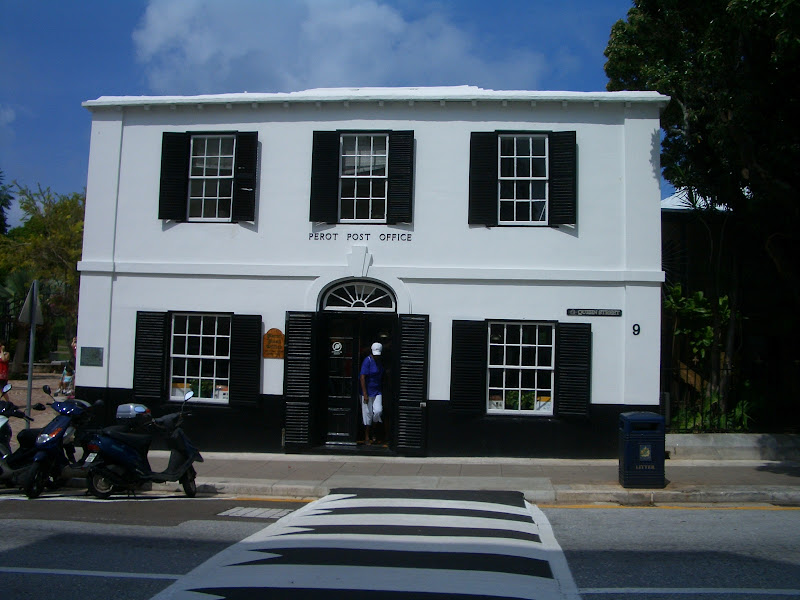
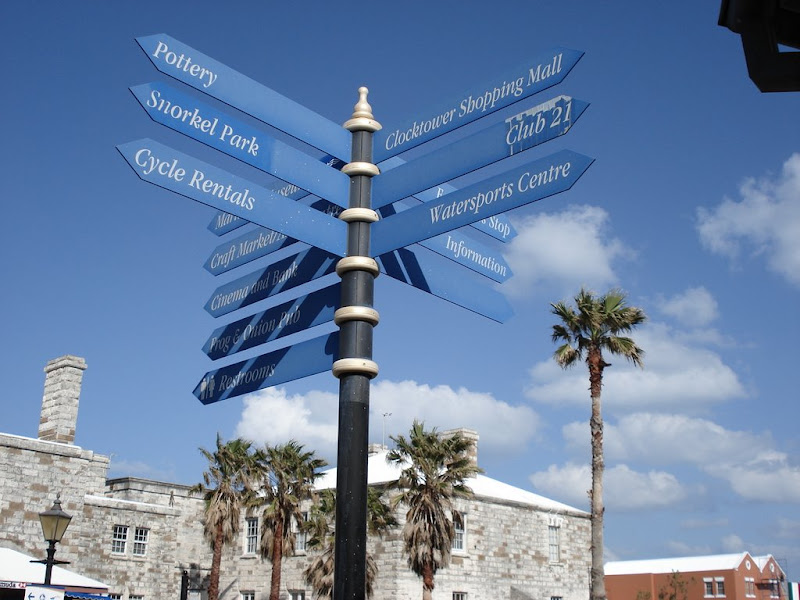
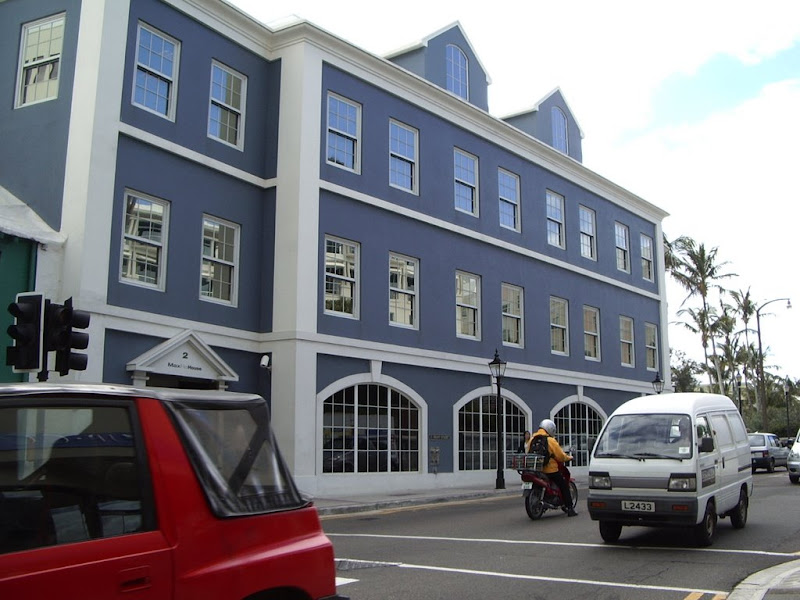
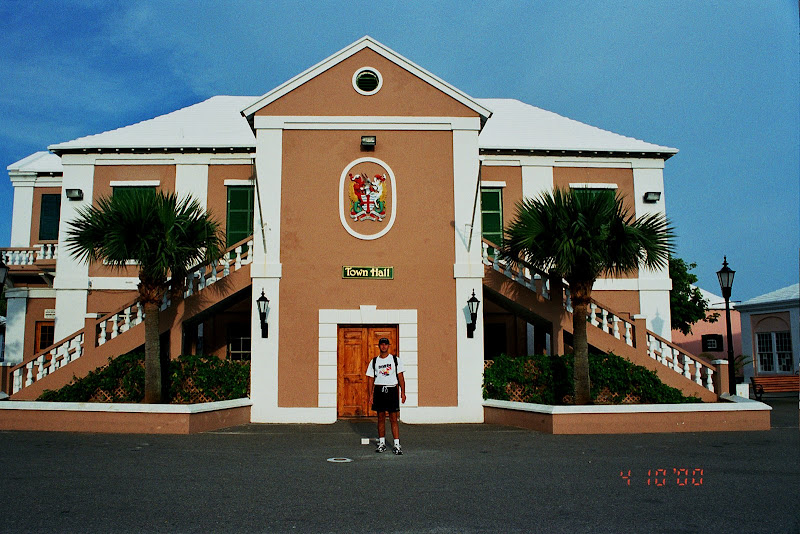
  • Impression of marvellous Bermudas: What a sheer delight!

    One of my favourite places in the "Carribbean": clean, modern, developped and high standard of living…very little poverty.:cheers:

    Hamilton

    :cheers:

    typical bermudas shorts😆

    shopping arcade, very classy and British

  • Alleged Terrorist May See Justice

    The Guantanamo Bay detention facility won’t close this week as originally slated, but the moment that some detainees will have their day in court is nearing. Next on the Justice Department’s list? The alleged mastermind behind the 2002 Bali nightclub bombings that killed 202 people: Riduan Isamuddin, aka Hambali.

    Unnamed DOJ officials said last week that Hambali may be tried in a Washington, D.C. courthouse. No timeframe announced yet, but the AP calls this possibility a rejection of the policies of former President Bush, who portrayed Hambali as a “success story” that resulted from interrogating terror suspects in secret CIA prisons.

    In particular, Bush made the case that Hambali’s interrogation at a CIA black site produced invaluable evidence, leading to several terrorist plots being disrupted. But — rather like Bush’s claims about Iraq’s weapons of mass destruction and yellowcake uranium in Niger — this convenient myth has been roundly debunked, as detailed by the American Prospect‘s Adam Serwer.

    Paired with Khalid Shaikh Mohammed’s prosecution in New York City, Hambali’s trial in DC would transform both sites of 9/11 carnage into reaffirmations of America’s recommitment to rule of law. After years of U.S. leaders trying to draw an easy dichotomy between national security and our country’s best ideals, an administration that trusts the the American judicial system is a heartening change.

    As President Obama said last May, “From Europe to the Pacific, we’ve been the nation that has shut down torture chambers and replaced tyranny with the rule of law. That is who we are.”

    Or at least who we want to be. Both Obama and Attorney General Holder’s commitment to the rule of law sometimes seems spotty. Not only does Guantanamo still house hundreds of detainees, but there’s fear that this role is increasingly being duplicated at the Bagram airbase in Afghanistan. Likewise, the administration’s continued invocation on the so-called “state secrets privilege” is disturbingly reminiscent of the Bush regime. And despite recent promises that a report on the Bush torture program was close to completion, the administration has yet to embrace torture accountability.

    Photo Credit: shmoofins

  • Motorola launches Android phone in South Korea

    SEOUL — Motorola Inc. said Monday it plans to launch a smart phone in the South Korean handset market using Google Inc.’s Android operating platform, a move aimed at taking on Apple Inc. and market incumbents Samsung Electronics Co. and LG Electronics Inc. in the fast-growing market segment.

    The launch of a new smartphone in South Korea’s competitive market comes as Motorola has been trying to break itself into two or three pieces to help combat a companywide sales slump.

    For almost two years it has tried to spin off its high-profile handset business, which has been without a hit device since the blockbuster Razr phone.

    It also comes after Apple Inc. (AAPL) said late last year it will make its popular smart phone, the iPhone, available in the South Korean market through an agreement with KT Corp. (KTC), the country’s biggest fixed-line operator by revenue.

    On Monday, Motorola unveiled MOTOROI, Korea’s first phone powered by Android through a deal with SK Telecom Co., the country’s biggest wireless operator by revenue.

    The phone features a touch screen with a 3.7-inch high-definition display, helping users easily access Web sites, videos, games and photos, it said.

    Motorola’s Korea representative Rick Wolochatiuk said at a press briefing the device would sell for around $800, about the same as the iPhone but slightly more than most offerings from Samsung and LG.

    Wolochatiuk said the company is also open to adopting Window Mobile platform-based phones, but didn’t elaborate further.

    According to market research firm iSuppli, Motorola was the fifth-biggest cellphone maker in the third quarter, down from fourth place in the second quarter.

    As recently as the first quarter of 2007, the company was the world’s second-largest cellphone maker after Nokia Corp.

    The executive didn’t comment on its sales target in the Korean market for this year but said the company isn’t currently considering offering its cellphones through other domestic telecommunication firms apart from SK Telecom.

    Meanwhile rivals Samsung Electronics and LG, the world’s second- and third-largest handset maker by shipments respectively, are expected to launch a series of smart phones running on the android system early this year.

    Read the original article from Tribune News Services.


  • A 2010 Favourite Destination

    1st in my personal list would have to be ‘ALGERIA’

  • Cops bust large fencing operation on West Side

    Police on Chicago’s West Side are questioning three men after officers busted what they said was a large criminal fencing operation that sold stolen goods out of a West Side graystone.

    Austin District police executed a search warrant at a two-flat building in the 4300 block of West Congress Parkway in the West Garfield Park neighborhood about 5:20 p.m. Sunday, police said.

    Police suspected the building of being the site of a fencing operation well known to neighbors.

    When they searched the building, officers found a large number of stolen items, including power tools, bicycles, construction equipment, televisions and other electronics, police said. Officers also found a truck and a trailer on the property.

    The three men were still being questioned this morning.

    Staff report

    Read the original article from Tribune News Services.


  • Costa Rica lidera mercado regional de seguros

    Centroamérica mostró crecimiento del 3% en el primer semestre de 2009
    Costa Rica lidera mercado regional de seguros
    • Región muestra el índice de penetración de pólizas más bajo de Latinoamérica

    Natasha Cambronero
    [email protected]

    El mercado de seguros en Centroamérica presentó un crecimiento del 3% en la captación de primas durante el primer semestre de 2009, alcanzando los $928 millones.
    Entre los cinco países del área, Costa Rica y Nicaragua muestran el mayor incremento, en tanto Honduras registra la mayor baja.
    Sin embargo en algunos países, el alza en los precios de pólizas es el principal factor de crecimiento, según un informe de la consultora internacional Fitch Ratings.
    Por su parte, el mercado nacional lidera la región en captación de primas con $303 millones y es el que presenta el mayor nivel de penetración.
    (Cifras expresan millones de dólares).

  • NY Times Apparently Planning To Commit Suicide Online With Paywall

    There have been rumors for a while that, despite the NY Times massive failure with its last attempt at a paywall — which drove away users in bunches, pissed off NY Times writers and did little to help the bottom line — the NY Times might consider going back down that cursed road. And now reports are leaking out that the braintrust at the NYT has made a decision and it’s to kill off whatever value the NY Times’ online presence may have had by putting up a paywall designed to piss off users and take itself out of the online conversation.

    Apparently, it considered three options for getting users to pay more for online content — and then chose the worst of the three. Among the rejected ideas were the one that we thought sounded quite promising of creating a CwF+RtB-style membership club, that would give people all sorts of benefits for paying, without taking away the free content. The newspaper apparently also rejected a WSJ-style paywall that is pretty porous, with lots of content for free, and easy ways in if necessary, but some stuff gets blocked out. I don’t think that’s a very good solution long-term, but it surely beats the solution that the NY Times appears to have gone with: a Financial Times-style “metered” system, whereby you can visit a few times per month and are then locked out. I try not to link to the Financial Times because of this particular system. It means when I link to them a large number of my readers can’t read the story, and that is no good for anyone. Why am I going to send people to a story they can’t read? Putting up such a system takes the NY Times out of the conversation online and makes sure that people won’t link to them, won’t share the stories and won’t discuss them.

    Will some people sign up and pay? Yes, absolutely. In fact, I’m sure that there will be stories early on about just how many people subscribed. But as we saw with TimesSelect, that initial number plateaued quickly, and getting the next generation of readers to sign up? Yeah… good luck. Putting this system in place is effectively the NY Times saying that it only plans to be the paper of record for an older generation, and plans to give up the next generation.

    Permalink | Comments | Email This Story


  • Petrópolis – Rio de Janeiro – Brasil

    Petrópolis, also known as The Imperial City of Brazil, is a town in the state of Rio de Janeiro, about 65 km from the city of Rio de Janeiro.
    Nestled among the forested hills of the Serra dos Órgãos, in the valley of the Quitandinha and Piabanha rivers, Petrópolis is a popular summer holiday spot. Besides the climate and surroundings, the main attraction is the former Summer Palace of the second Brazilian Emperor, which is now a museum, specializing in Imperial history and memorabilia.
    Petrópolis is home to the National Laboratory for Scientific Computing (LNCC), a research unit of the Ministry of Science and Technology of the Brazilian Federal Government.
    The town’s name ("city of Peter") honors Emperor Pedro II, the nation’s second monarch and son of Pedro I. The city was the summer residence of the Brazilian Emperors and aristocrats in the 19th century, and was the official capital of the state of Rio de Janeiro between 1894 and 1903.
    The town’s origins can be traced to Bernardo Soares de Proença, who in 1720 opened an alternative route between Rio de Janeiro and Minas Gerais, across the Serra da Estrela. While traveling to Minas Gerais along this route, Emperor Pedro I found the region’s climate pleasant. Thus, in 1830 he bought a farm, and had his Summer Palace built there, but he never saw it finished, because he stepped down from the throne. Other Brazilian aristocrats eventually followed suit. Pedro’s Palace is nowadays the Imperial Museum, one of the main attractions of the ‘alpine city’ of Petrópolis, together with the Cathedral of Saint Peter of Alcântara, the Crystal Palace and the House of Santos-Dumont. The ‘Imperial City’ became in due time home for artists, intellectuals and celebrities, and by the twentieth century, one of the main tourist attractions in the country.
    German farmers from the Rhineland were encouraged to immigrate and to settle on the Emperor’s outlying lands, to help give the Palace a charming urban setting. The settlement of Petrópolis was founded on March 16, 1843, being promoted to district in 1844 and finally city in 1857. The road connecting the city to Rio de Janeiro was opened in 1910 and paved in 1928. The urban design was carried out by Major-Engineer Julius Friedrich Koeler.
    On a visit at the Philadelphia Exposition of 1876, Pedro II was impressed by Alexander Graham Bell’s new invention, the telephone, and had a line connecting his Summer Palace to his farm headquarters.
    Even after the establishment of the Republic and the exile of the Imperial family in 1889, the city continued to play a significant role in Brazilian history. Curiously, it was a frequent choice as summer residence for presidents of the republic, who lodged at the Palace of Rio Negro. In 1903 the Palace of Rio Negro saw the signing of a peace treaty with Bolivia, which gave Brazil the Acre territory. On August 15, 1947, the Organization of American States opened there the Conference for the Maintenance of Peace and Security in the Continent, from which derived the Interamerican Treaty for Reciprocal Assistance.

    A Catedral de Petrópolis, em estilo neogótico inspirado nas catedrais francesas, é também chamada de Igreja Matriz São Pedro de Alcântara; começou a ser construída em 1884 durante o reinado de D. Pedro II, com projeto do engenheiro e arquiteto Francisco Caminhoá.

    The Cathedral of Petrópolis, in Gothic style inspired by the French cathedrals, is also called Church of St. Pedro de Alcântara, was begun in 1884 during the reign of D. Pedro II, the project engineer and architect was Francisco Caminhoá.


    Catedral noturna (Cathedral night shot)

    Interior da catedral, parte do jazigo imperial (Imperial mausoleum, inside cathedral)

    Em 1939 Getúlio Vargas inaugurou o O mausoléu imperial, uma capela localizada à direita da entrada, é um dos grandes atrativos históricos da catedral. No centro há um sarcófago duplo com os restos do Imperador D. Pedro II e da Impetartiz D. Tereza Cristina. O túmulo foi esculpido em mármore de Carrara cerca de 1925 pelo francês Jean Magrou, e pelo brasileiro Hildegardo Leão Veloso. Os túmulos da Princesa Isabel e seu marido, o Conde D’Eu, foram esculpidos pelo brasileiro Humberto Cozzo.

    Opened in 1939 by Getúlio Vargas, the imperial mausoleum, a chapel located on the right of entry, is one of the major historical attractions of the cathedral. In the center is a double sarcophagus with the remains of Emperor D. Pedro II and his wife, D. Tereza Cristina. The tomb was carved in Carrara marble about 1925 by Frenchman Jean Skinner, and the Brazilian Hildegardo Leo Veloso. The tombs of Princess Isabel and her husband, the Count D’Eu, were carved by Brazilian Humberto Cozzo.


    Vitrais do jazigo (Mausoleum stained)

    Os coloridos vitrais tem poemas escritos por D. Pedro II quando estava exilado, e que deixa transparecer a saudade que sentia de sua terra natal.

    The stained glass windows has poems written by D. Pedro II when he was exiled, and that show the nostalgia he felt for his homeland.


    Av. Koeller (Koeller avenue)

    Câmara dos vereadores (council chamber)

    Detalhe (council chamber detail)

    Capela em ruínas (chapel ruins)

    Capela em ruínas (chapel ruins)

    Capela em ruínas (chapel ruins)

    Belvedere

    Ruínas da era de ouro do setor têxtil -antiga fábrica Dona Isabel (Ruins of the good times of textile sector – Dona Isabel factory)

    Ruínas da fábrica Cometa (Cometa factory ruins)

    Ruínas da fábrica Cometa (Cometa factory ruins)

    Antigo túnel (Old tunnel)

    Parque Cremerie (Cremerie Park)

    Parque Cremerie (Cremerie Park)

    Entrada para o parque São Vicente (Entrance to the São Vicente park)

    Praça Pasteur (Pasteur square)

    Praça Pasteur (Pasteur square)

    Praça 14 bis (14 bis square)

    Represa do Caxambu (Caxambu dam)

    Represa do Caxambu (Caxambu dam)

    Obelisco

    Antigo Forum (Former justice court)

    Antiga fazenda no Vale do Cuiabá (Old farm in the Vale do Cuiabá)

    Ruínas do silo de grãos (Seed silo ruins)

    Antiga fábrica S.Pedro de Alcântara, fundada em 1888 (Former factory S. Pedro de Alcantara, founded in 1888)


    Detalhe da arquitetura do antigo mercado (Old market architecture detail)

    Museu de armas Ferreira da Cunha (Ferreira da Cunha Museum of weapons)

    Mansão Tavares Guerra (Tavares Guerra Mansion)

    O primeiro relógio de torre da cidade (The first clock tower of the city-Tavares Guerra Mansion)

    Museu imperial (Imperial museum)

    Museu imperial (Imperial museum)

    Palácio Quitandinha, antigo hotel-cassino (Quitandinha palace, former hotel-casino)


    Farol e lago quitandinha (Quitandinha’s lake and lighthouse)

    Vista parcial do centro da cidade (Partial view of the city center)

    Vista parcial da cidade (Partial view of the city)

    Um lugar escondido no centro (A hidden place in the city center)

    A toad (Bufo Ictericus)


  • IMF chief: global recovery stronger than expected

    The head of the IMF said China and other developing Asian economies are leading a global recovery that is faster and stronger than expected, but warned that money rushing into emerging markets could lead to asset bubbles.

    Dominique Strauss-Kahn, the managing director of the International Monetary Fund, strongly suggested Monday that the IMF would raise its 2010 global growth forecast from the 3.1 percent it projected in October.

    China, India and other emerging Asian economies were close to returning to their pre-crisis growth rates, while rebounds in the U.S., Japan and other advanced economies remained “sluggish,” he said.

    “The forecasts we’re going to release in a couple of days will show that this recovery is going faster and stronger than we expected” several months ago, Strauss-Kahn told reporters in Tokyo.

    While the IMF doesn’t forecast a “double-dip,” or second recession, risks remain, he said. “We have to very cautious because this recovery remains very fragile.”

    While hundreds of billions in stimulus spending by governments around the world avoided another Great Depression, he said, the most important risk facing the global economy is deciding how and when to reverse those polices and deal with resulting debt burdens.

    “Now we have to fix the consequences of the policy that has been put in place to fight against the crisis,” he said. “Finding the right time to implement exit policies is really a difficult one.”

    “If you exit too late, you waste resources,” he said. “If you exit too early, you have a risk of going back into recession.”

    The best indicators for timing fresh growth strategies are monitoring private demand and employment, he said. The IMF recommends that governments devise policies that will support the labor market given still-high joblessness, which could lead to social unrest in some countries.

    A key lesson from the global financial crisis is that authorities need to beef up supervision ” more so than regulations” of financial institutions, he said.

    “You may have the best regulations in the world, but if it’s not supervised correctly, it’s no use.”

    Strauss-Kahan also said he was worried that the unified political will to tackle the crisis demonstrated at the Group of 20 summits last year will vanish as the world economy recovers.

    The rush of money into major emerging markets such as China, Brazil and Russia reflects investors’ recognition that these economies are growing rapidly.

    But Strauss-Kahn said this could lead to “many problems,” including asset bubbles and a sudden drop in foreign investment, much like Eastern European countries experienced during the global financial crisis.

    Read the original article from Tribune News Services.


  • Centros de llamadas muestran crecimiento imparable

    Las 47 empresas que operan en el país exportaron $600 millones en 2009, un 8% más que el año anterior
    Centros de llamadas muestran crecimiento imparable
    • Generación de empleo es el mayor beneficio para el país, sector tiene contratadas a 12 mil personas, sobre todo universitarios o recién graduados
    • Principales problemas que encuentra este tipo de inversión en el país son las telecomunicaciones, tramitomanía e infraestructura

    Vanessa Chaves
    [email protected]

    El crecimiento de un 8% de las exportaciones de los servicios ofrecidos por los 47 centros de llamadas que operan actualmente en el país demuestra el ímpetu con que se desarrolla este sector.
    Concretamente las ventas registradas en 2009 alcanzaron los $600 millones, frente a los $551 millones del periodo anterior. La mayoría de estas compañías están establecidas dentro de zonas francas, y a ello se le podría atribuir en parte el crecimiento del 15% que reportó este régimen ese mismo año.
    Actualmente su mayor contribución es la generación de puestos de trabajo. Esta industria emplea unas 12 mil personas sobre todo jóvenes universitarios o recién graduados.
    Factores como el alto nivel educativo de los nacionales, sobre todo en conocimiento de un segundo idioma, preferentemente el inglés, la estabilidad política y la cercanía con Estados Unidos, son reiterados por empresas como los puntos claves que analizan para instalarse en el país.
    “Es mucho más sencillo para las empresas norteamericanas venir aquí y no ir a Asia o Europa, destacó Ricardo Esquivel, gerente administrativo de ACE Global.
    Otro factor que influye en la llegada de estas empresas, según Esquivel, es el acento en la pronunciación del inglés de los costarricenses, por otro lado la estabilidad económica y política del país y el alto nivel de educación.
    A estas condiciones se le suma que por lo general el nacional tiene “destrezas valiosas para el sector como el caso de la comunicación asertiva y cierto liderazgo”, agregó Gabriela Llobet, directora general de la Coalición Costarricense de Iniciativas de Desarrollo (CINDE).
    No obstante no todo es de color de rosa. El país se ha posicionado en el mapa como un destino apropiado para la operación de este tipo de inversión, pero esto no significa que las compañías encuentran las condiciones óptimas para operar.
    El principal problema que ven las empresas instaladas son las telecomunicaciones.
    “No somos muy competitivos comparados con otros países, porque por ejemplo en Estados Unidos se consigue cualquier tipo de comunicación de manera rápida, aquí no, esto por la falta de disponibilidad de ciertas zonas a Internet y también por cuestiones burocráticas”, dijo Esquivel.
    Continuar con la apertura del mercado de las telecomunicaciones, ya que ofrecerá mejores condiciones para el incremento de la inversión de la industria, es la recomendación de Eduardo Lugo, director general de Teleperformance para Costa Rica.
    Otro reto planteado por las empresas es la gran rotación de personal, “lo cual genera desconfianza a los clientes, a los cuales les ofrecemos el servicio, y un costo para la empresa porque hacemos esfuerzos de retención que terminan en nada y esto genera gastos porque cada capacitación de un empleo cuesta dinero”, aseguró Adrián Sibaja, director general de WNS Costa Rica.
    Adicionalmente, la necesidad de mejorar la tramitomanía del país, la infraestructura y empezar a prestarle atención al tema de seguridad ciudadana, es parte de la agenda urgente a criterio de Llobet.
    La llegada de empresas como Motif, Startek, ACE, Teleperformance y WNS tan solo en 2009, ha generado una fuerte demanda de empleos en este sector.
    Solo la Feria Bilingüe del empleo que realizó CINDE a principios de año ofreció 3.500 nuevos puestos de trabajo de los cuales un 60% fue abierto por las compañías de centros de contactos.
    Hasta el momento no se registran casos de empresas de este tipo que hayan emigrado del país, según datos de CINDE.
    El repunte del negocio de los centros de llamadas es un fenómeno consecuente. Los datos de 2008 demuestran que las exportaciones aumentaron un 33%, en relación con un año antes.

  • The Derivatives Of Politics

    In its ongoing “What Went Wrong” series, the Big Think interviewed Nobel Prize-winning economist Vernon Smith last week. His responses provided a slew of interesting perspectives on the financial crisis and reform effort. But I wanted to specifically note what he thought to be the future of derivatives: political futures. Whether Professor Smith realizes it or not, the future is already here.

    Smith was asked what he believed “might be the next application of derivatives and how might this change the way we live.” He responded:

    So far as new applications of derivatives markets I think one possibility is we may see more people making, creating derivatives markets, betting markets on policy, public policy outcomes. We’ve already seen that with regard to the Federal Reserve. There is a market now in which people are able to make, take positions on the likelihood of a change in the Federal Reserve Bank policy at their next meeting of the Federal Open Market Committee, so and these markets are concerned with the question of what the Federal Reserve Bank rate will be set at. So I think we may very well see more of these kinds of markets and this could very well provide some indication of how the participants in these markets evaluate some of the policy proposals that governments are making.

    In fact, the derivatives market has already begun to bet on political outcomes. I am familiar with several companies that already engage in this business, the most well-known of which is probably Intrade. For example, right now I can go to Intrade and buy a futures contract based on the outcome of the Massachusetts Special Election to replace Senator Ted Kennedy. Here’s how it would work:

    If Intrade says that I can buy a derivative predicting that a Democrat will win the seat (presumably Martha Coakley) for 60 (indicating that this derivatives market predicts a 60% chance of a Democrat winning), then I can buy a derivative indicating that outcome for $6. After the election, if Coakley wins, I get $4. If she loses, then I lose my entire investment.
    Of course, like any other liquid derivative, I can also sell the security before the election. Imagine that I had bought the derivative on Friday. But then, a big scandal had struck Coakley this weekend. Her probability of winning subsequently dropped from 60% to 20%. I might not think she has a chance to win at this point, so I sell the derivative to someone today who still thinks she has a chance, but a smaller chance, for $2. I would have lost $4 of my initial investment.

    What’s the difference between this and, say, betting on sports? Very little. But what’s the difference sports betting and a derivative based on a company’s stock’s future price? Again, very little. But with financial derivatives, the claim is that there’s a useful business purpose for most derivatives. For example, let’s say I own company A and do a lot of business with company B. If I buy a derivative that bets against company B, then I could be hedging the profits I expect due to the relationship I have with it. If company B fails, and I lose those potential profits, then at least I’ll get some money from my derivative position to cover my losses. Compare that to sports, where the outcome probably has far less of a practical utility, usually.

    But do political derivatives have real usefulness? As Washington becomes more and more involved in business and finance, I’d say that they certainly could. Let’s consider an example.

    Let’s say that I’m General Electric and it’s 2008 — before the election. I’m trying to decide whether to invest in some new carbon capture technology. Clearly, if the Democrats win, cap and trade has a much better probability of passing, and I would profit handsomely from this investment. What if I could hedge my investment by purchasing a derivative that paid out with a Republican win? Now, if the Republicans win, cap and trade never happens, and the investment turns out to be a loser, but my net loss will be smaller thanks to my hedge. The derivative I purchased will have covered some or all of my investment’s loss.

    You can bemoan the fact that these derivatives could be so useful, due to how entrenched politics has become in business, but that’s the reality we live. So I agree with Smith: political outcome-based derivatives are likely to become much more important as the relationship between business and politics becomes cozier and cozier. In fact, as companies like Intrade show, that future isn’t too far off.


    Email this Article
    Add to digg
    Add to Reddit
    Add to Twitter
    Add to del.icio.us
    Add to StumbleUpon
    Add to Facebook


  • Twenty Business Advisors Earn EPI’s Prestigious Certified Exit Planning Advisor Credential

    Twenty business advisors from across the United States, Canada and Australia earned their Certified Exit Planning Advisor (CEPA) credential from the Exit Planning Institute (EPI).

    These dedicated professionals join an exclusive group of fewer than 120 professionals worldwide who have received this designation.

    The November 2009 class of Certified Exit Planning Advisors successfully completed the CEPA program and proctored exam administered at the University of Chicago’s Gleacher Center on Nov. 2 – 6, 2009.

    The newest class of Certified Exit Planning Advisors received their certificates and award notifications this past week.

    Here is a complete listing of the graduates of the November 2009 CEPA program:

    • Lee Adams – Consolidated Construction Services – Carlsbad, CA
    • Carol Coughlin – Bottomline Growth Strategies – Towson, MD
    • Louis DannaLouis V. DannaHouston, TX
    • Peter Draper – Equity Transitions, Inc. – Milton, ON
    • Tim Fawcett – Eastwind Business Solutions – Moncton, NB
    • Robert Fiance – US Business Services – Westlake Village, CA
    • Thomas GriffithsGriffith, Dreher & Evans PC – Spokane, WA
    • Peter Hickey – MAUS Business Systems – Manly, NSW
    • John Howe – New Hampshire Business Sales – Meredith, NH
    • Barry Kasoff – Realization Services, Inc. – Bedford Hills, NY
    • Jason Kwiatkowski – BDO Dunwoody, LLP – Toronto, ON
    • Phil McAlister – The Christman Group – Lombard, IL
    • Chad Morissette – Mor-Liquidity M&A – Kanata, ON
    • Scott NealD. Scott Neal, Inc. – Lexington, KY
    • Donald Ramirez – Peak Wealth Advisors – San Luis Obispo, CA
    • Gordon Robbie – The Bonadio Group – Albany, NY
    • Kaye Simmons – B2B CFO Partners, LLC – Ellicott City, MD
    • Frank Stabler – Certified Business Brokers – Houston, TX
    • Jeffrey White – Valuation Specialists – Eau Claire, WI
    • Scott Yoder – Production Input Solutions – Mason City, IA

    About the CEPA Program

    This innovative educational program was specifically designed for business advisors who work closely with owners of privately held companies.

    Using an executive MBA-style format, the program is designed around a central case study and uses a combination of lectures, group discussions, case studies and individual exercises to introduce participants to concepts and to reinforce skills.

    Certification Criteria and Process

    Certified Exit Planning Advisors complete a challenging 4-day program that involves approximately 150 hours of pre-course study, 34 hours of classroom instruction, and successful completion of a 3.5 hour proctored examination.

    The next CEPA course and examination will be offered at the University of Chicago’s Booth School of Management on May 3 – 7, 2010. The application deadline for this program is April 15, 2010.

    About The Exit Planning Institute

    The Exit Planning Institute is the premier provider of learning, knowledge, and future-oriented research for exit planning professionals. The Institute delivers innovative learning experiences, performance-enhancing resources, and strategic tools designed to advance the exit planning profession.

    The Institute is made up of business brokers, accountants, attorneys, financial advisors, investment bankers, valuation advisors, commercial lenders, insurance advisors, and management consultants in the United States, Canada, Hong Kong/China, Vietnam and the United Kingdom.

    The common thread that unites these different professionals is their commitment to helping clients exit their companies successfully.

    More information about the Institute can be found at exit-planning-institute.org.


  • Mega Man Zero Collection trailer hints at new features

    In case you haven’t heard (qjnet/nintendo-ds/japan-getting-rockman-zero-collection-for-ds.html), the Mega Man Zero Collection is the re-release of four Mega Man Zero titles from the GBA in one DS cart. But apart from being repackaged into one convenient collection, the

  • The Subscription War: You’re Bleeding to Death [Subscription War]

    You know what’s great? My smartphone puts the world in my pocket. Broadband puts 2,454,399 channels on my HDTV. I can access the internet from a freaking airplane! You know what’s unsustainable? Paying for it all.

    Here’s why: a well-equipped geek will, in our research, have a subscription and service bill total of between 200 and 750 dollars a month.

    Let me break it down. You’ve got your smartphone bill, your cable bill, your home broadband bill. Those are unavoidable expenses—there’s not much you can do about them.

    Then think about the must-have gadgets on the horizon: a smartbook that requires a data plan. A tablet that’ll require Wi-Fi HotSpot access or a 3G dongle. The same for a thin-and-light notebook. And those are just your 1:1 service fees for devices.

    Now throw in all of the wonderful content and service subscriptions you either already have or will soon. You’ve got TiVo, which is better and cheaper than most cable-provided DVRs but still about $11 a month. Netflix, to rent or stream unlimited movies. Hulu’s free for now, but we know they’re going to start charging any week. If you’ve got an Xbox 360, you’ve got an Xbox Live Gold membership. I’m a city slicker with no car, but if I had one I’d need a navigation app that’s good enough for everyday use. A free Flickr membership is fine today, but once HD camcorders gain prominence, you’re going to want a Flickr Pro membership for high-def playback. And so on.

    If that doesn’t sound so bad, see how it looks when you add it all up:

    That’s right: if you want to stay even close to fully connected, you’re expected to cough up nearly $1,000 a month. Not for hardware. For fees. And that doesn’t even include niche services like Vimeo and Zune Pass, or one-off purchases like eBooks or iTunes downloads. Or, god forbid, food and shelter.

    A couple of years ago, we talked about the Infinite Video Format War, and the dozen-plus disc-free video formats that each come with their own subscription models, fees, and offerings. There’s still no resolution there. Think of the Subscription War like that, only extrapolated across all of your devices, content, and services.

    The problem isn’t subscriptions themselves. Content subscriptions reward risk-taking, which is great! How many movies have you discovered because of a Netflix recommendation? How many shows have you watched on Hulu that you never would have found on your TV’s channel guide? And individually, they seem cost effective.

    The problem is fragmentation. The problem is that each service provider thinks within a bubble, without recognizing the larger ecosystem of payments we live in. It’s like those nights in high school when each teacher would assign you two hours of homework. There weren’t enough hours in the day then, and there’s not enough money in a paycheck now. And there shouldn’t have to be.

    There are some ways out: you don’t actually need cable or satellite TV to enjoy your favorite shows. If you’ve got a smartphone, you really don’t need a land line, and you can probably get away with the minimum 450 minutes if you lean on messaging and Skype. There are also free navigation apps that’ll work in a pinch. But at the end of the day, you’re still looking at hundreds of dollars a month for services you don’t need constant access to.

    So what’s the answer? Well, ad-supported content generally comes free or highly discounted. But ad-supported solutions require people to purchase the things being advertised. Hulu’s plans to start charging indicates that that model’s not sustainable in the long run. One blanket subscription that lets you access several different sites or services works for the online porn industry, but those linked sites all operate under the same umbrella parent company. Not feasible when the participants are major competitors.

    The honest answer is that there may not be one. Not yet, anyway. Eventually the monthly bills will stack up so high that people will have to start cutting ties with companies, who will in turn have to either lower prices or fade away. You’ve already started to see it with AT&T and Verizon cutting prices on unlimited plans last week. Until everyone gets on board, though? We’re all just casualties.


  • RIM and IBM Load up the Blackberry with Lotus Collaboration Applications

    Thumbnail image for Thumbnail image for Thumbnail image for blackberry-screen-b2b.jpgIBM and Research in Motion (RIM) announced a partnership today to sell Blackberry devices fully loaded with IBM’s collaboration software. This is the first time IBM has sold Blackberry devices into its business channel.

    Lotus Quickr
    and Lotus Connections will both be available on the Blackberry. Lotus Quickr is an IBM document sharing application. Lotus Connections is social software technology that helps find people with a particular expertise.

    Sponsor

    The two companies are long-time partners. For the past nine years, IBM’s Mobile Enterprise Services organization has worked with clients on integrating the Blackberry Enterprise solution.

    On its surface, this latest alliance looks like a smart one, combining Blackberry’s dominance in the corporate market, with Lotus Connections, IBM Software’s fastest growing product. This will add to an existing integration between Blackberry devices and Lotus Sametime, another collaboration software from IBM. Lotus Sametime gives users the ability to see if others are online. it also includes instant messaging and calendar functions.

    The alliance is strong but a big issue is the viability of applications on Blackberry devices. Blackberry applications have had little pick up in the enterprise. The applications are pricey, too, costing $10, $20 or more.

    But it is interesting to note that IBM will be selling the Blackberry devices already fully loaded with the Lotus software. This means the applications will be immediately available to customers. Corporate IT has to this point been reticent about allowing access to applications on Blackberry devices. This may make for an easier sell by combining the hardware and software into one package.

    A major hindrance is Blackberry’s core functionality as a messaging device. It is not designed to serve applications. The iPhone and the Nexus One both have an optimized touch screen interface that makes the devices better suited for applications. The Blackberry’s keyboard makes it ideal for email and text messaging.

    We expect the Lotus applications will be primarily used for viewing documents. Writing to documents on a Blackberry device seems like it would be quite laborious. Emailing comments to the collaboration environment would be more suitable, playing to the strengths of the Blackberry device.

    It’s unclear how fast the enterprise will adopt mobile applications but all signs show huge interest in smart phones by business users who want access to corporate application whenever or wherever they may be. According to Forrester Research, IT managers are dramatically underestimating the demand for mobile in the enterprise. Forrester expects that perception will undoubtedly change as demand for access to corporate applications soars over the next two years.

    But RIM does look like it is on the right track with the choice in applications. According to Forrester, mobile collaboration technologies are just beginning to grow in usage by smart phone users. Adoption will increase as more collaboration vendors make its applications available on mobile platforms.

    Forrester:

    “So what are employees doing with their smartphones? They mostly do basic things to stay productive: email, contact management, and calendaring. Productivity tools — the ability to open, view, and perhaps mark up documents — comes next, followed by a slew of specialized applications and one important nugget: team collaboration applications. Why isn’t team collaboration adoption level higher? Because few companies are currently making applications like Cisco WebEx, Microsoft SharePoint, or Lotus Connections available to mobile devices.”

    We are seeing partnerships emerge that combine hardware and software technologies. Last week, Microsoft and Hewlett–Packard announced a $250 million partnership that will feature Microsoft software on Hewlett-Packard hardware to sell into data centers and cloud service providers.

    Further, Google is now offering its own smart phone. HTC manufactures the device. An enterprise phone is in development. It will undoubtedly feature Google Apps as the collaborative software built into the smart phone.

    Discuss


  • VERTICAL TURNING CENTRES, DANOBAT VTC

    Danobat has been manufacturing horizontal and vertical lathes since 1954. During all those years, Danobat has supplied many machines in the following industries: car industry, aerospace, subcontracting, power generation, etc.

    Danobat develops all the projects by means of a close cooperation with their customers, in order to propose them the right solutions, always taking in consideration the increase of the productivity and the cost reduction. The modular design enables a wide range of specifications to be configured in a short time and to be produced efficiently and cost effectively.

    A wide range of options are available: automatic chucks, possibility of a second ram, live spindle, part probing system, tool presetting, telediagnosis, full enclosure, etc.

    Danobat VTC’s can machine components up to 6.000 mm in diameter and a height of 4.500 mm.

    Proven performances in combining turning, milling and grinding operations with high precision and high productivity has created an important position for the VTC range in many industries. such as: Aerospace, Railways, Power industry, Large precision bearings, Valves and Subcontracting Industry.

  • How-To: Free Calling With Google Voice, AT&T A-List and Your iPhone

    Have you heard about AT&T’s A-List? (In my circle of acquaintances, surprisingly few have.) Similar to other carriers, AT&T now offers five to 10 (depending on your rate plan) numbers that are free of charge. If you combine this with a Google Voice account, you can breathe easy as you eliminate the potential of overshooting your allowance of plan minutes. This isn’t new information mind you, but if you’re not aware, we’re about to show you how to set it up for yourself.

    First, the disclaimer. I have set this up for myself and it all seems to be working without any issues. I couldn’t find this to be in direct violation of AT&T’s Terms of Service (though I understand it may be for the likes of T-Mobile, and possibly other carriers as well). That said, it is definitely a loophole that is probably not smiled-upon by AT&T — and probably a big reason that there was a huge hullabaloo over Google Voice being booted from the App Store last summer. On the other hand, to have the A-List feature, you have to be paying for a certain rate plan anyway, so AT&T will be getting a guaranteed chunk of cash from you each month anyway. Consider yourself edukated, and proceed at your own discretion.

    Set It Up

    Okay, now let’s begin. You’ll first need to make sure you’ve got the option to use A-List, based on your AT&T rate plan. Here are the qualifying factors, direct from AT&T’s webpage:

    • Individual plans 900+ minutes ($59.99 and over) per month
    • FamilyTalk plans 1400+ minutes ($89.99 and over) per month
      qualify for A-List

    And when you sign up for the A-List feature, here’s what you get:

    • No extra charge with your qualifying plan
    • Add up to 5 numbers on your individual plan
    • Add up to 10 numbers on your FamilyTalk plan
    • Add any domestic number, on any network – including landline numbers
    • Calls to and from your A-List numbers are not charged against your rate

    If you qualify, but aren’t yet using A-List, log into your AT&T Wireless account and go to “Manage Features.” Under the Shared features, you should find the $0.00 option for A-List. Choose that and update your features. After doing so, you’ll have the opportunity to populate your five to 10 numbers (dependent upon your rate plan). This is where you’ll enter your Google Voice number (if you have one, that is).

    Obviously the other key here, is to have the Google Voice service. If you’re lacking in this department, don’t despair (we won’t judge you). The good news is, there are options: You can either let Google know you’d like an invite one day, or ask current users who may have up to three invites to share. Unfortunately I’m all out, or you — my favorite TAB readers — would be in luck.

    Because Google Voice functions as a forwarding service, the numbers that may be calling you can potentially come through to your phone directly, and unless those numbers are on your A-List, they’ll be counting against your minutes. To avoid this, you’ll need to go into your Google Voice Settings page. On the ‘Calls’ tab, look for the ‘Caller ID (in)’ section. Make sure that “Display my Google Voice number” is selected, and then save your changes. Doing this ensures that any call in or out of Google Voice (to your cell phone) is covered by AT&T on your A-List. Otherwise those calls will be from an arbitrary number that was transfered to you.

    The key to success with this setup is using Google Voice for as much of your calling as possible. That means getting the word out to those who call you too. Lifehacker has some good tips for making this transition, if you’re ready to commit. Ideally, you can access either the Google Voice webpage from the browser on your phone, or you have access to the Google Voice app which is only available to Jailbroken iPhones. (Though fear not, our very own Chris Ryan has given some solid tips for getting the most out of Google Voice, regardless of your phone situation.)

    When you initiate a call using Google Voice (whichever flavor of access you opt for), the service first rings your phone, and then connects that call on your phone to the number you wanted to dial, so from an A-List perspective, it’s your Google Voice number that’s performing the call.

    So that’s about it. There’s not a whole lot to it, but rather, more about connecting the dots. I think it’s a fair solution too. AT&T is guaranteed to get $200 out of my family each month, and with the huge pool of roll over minutes we’ve got built up, it’s not likely we’ll ever have an overage anyway, so we’re all happy at the end of the day. Good luck getting yours setup, and enjoy the free calls.

    Related GigaOM Pro Research: How Google Voice Could Change Communication

  • Source: Windows Mobile 7 Handsets Coming Late 2010, Will Support 6.x Apps [Rumor]

    Another week, another treat from our mole: Windows Mobile 7, which we should see for the first time at Mobile World Congress next month, is intended for release before the holiday season of 2010—not 2011. And there’s more.

    For a release to follow a debut by six months or more isn’t unprecedented for Microsoft, where long public beta testing periods have become the norm, if not the rule. And a late 2010 release is in line with older estimates, which have been recently derailed by claims that it would be pushed off until 2011. Even more interesting, though, is that the OS still seems to be in a state of flux. Here’s what we’ve heard:

    • It’ll be shown at MWC, but don’t expect Microsoft to give a firm release date estimate—they’re not ready for that yet. LG slipped up and hinted at a September release for their first Windows Mobile 7 phones, but it sounds doubtful that anyone’s release dates are set in stone—and they’ll likely have to toe Microsoft’s line, since with WinMo 6.5, Microsoft’s been enforcing a hard, unified launch date for Windows Phones; something they never really did before.

    • Contrary to Eldar Murtazin’s report that Windows Mobile 6.x apps won’t work on the OS, we hear that they will. Our info implies a promise of support though—not necessarily out-of-the-box, native compatibility—which could mean anything from an emulator (like webOS’s Classic app) to a set of streamlined porting tools for devs. Regardless, this isn’t really the kind of thing someone could deduce from playing with a device for a few minutes, which is what Eldar appears to have done.

    • Speaking of apps, we should expect an SDK for the new OS to be available as early as June, giving devs a little lead time to have apps ready for the new OS. This implies that the platform will be markedly different than 6.x, which pretty much everyone has been assuming all along anyway.

    • It doesn’t look quite like any of the renders or mockups we’ve seen floating around. There are some aesthetic similarities to some of the early renders, but they’re not pronounced enough to say that it looks like anything that’s already been “leaked.”

    • The new input system, which we initially called “Natal-like,” is more of a complex gesture system than a whole new way of interacting with the phone. There is a motion sensing element, but it’s a close-quarters, proximity-sensing type thing, and only used for certain gestures: pinch zooming, rotation, twisting, etc. This was also described to us as resembling a tech demo, so it may not be a banner feature for the OS, but rather something that Microsoft is toying with behind the scenes.

    • It’s being kept secret in a way that’s somewhat rare for Microsoft. It’s only being shown to people immediately concerned with the project within the company, and evidently to a small group of journalists as well. It’s Zune-HD-level secrecy, which is to say, pretty high.

    That’s all we’ve got for now, and with Mobile World Congress creeping closer by the minute, it’d be safe to assume we’ll learn more before the big unveil. We’ll keep digging, but as always, if you know anything, let us know.