Blog

  • ‘Google Keep’ Spotted In The Wild

    While many are still sore about Google killing off Google Reader, the company is busy pursuing other potential products. An Evernote-like service from Google called Google Keep has been spotted in the wild.

    1E100 appears to be the first to have mentioned the product in a Google+ update. They found Google notes in the code of Google Drive pointing to an notes-like icon, then found a new Google Account Service named “Portal,” which when signed in, added a new service called “Google Keep,” though it has since been removed.

    Android Police points to this hint about the service in an official Google+ post back in July. Notice the “Add to Google Keep” link in the second image.

    Google

    When you're on the go, Instant Preview on mobile can help you find what you're looking for faster. Say that you're at the grocery store, searching for [cheese party ideas] and want to find a website that has photographs, as well as written tips, to give you inspiration. On the search results page, you can tap on the magnifying glass next to any search result to see a webpage preview.  When you see a preview that you'd like to explore more, simply tap on it and you'll be taken directly to the website.  This feature is available for Android (2.2+) and iOS (4.0+) devices across 38 languages. 

    #searchtip  

    Android Police was able to grab a screen cap of the desktop version of Google Keep before it was taken down (reports indicate an Android app is on the table as well).

    Google Keep

    Of course just because Google is working on something does not mean it will come to fruition. The company is constantly experimenting with and testing new ideas, but don’t be surprised if Google makes an announcement about this sometime in the near future.

  • Random House gives Da Vinci Code ebooks away free to promote Dan Brown’s new book

    Random House’s Doubleday is giving away free digital copies of Dan Brown’s bestselling book The Da Vinci Code for a week in order to promote his upcoming book, Inferno.

    Inferno is set to be released on May 14. The New York Times reports that the free Da Vinci Code ebooks will include the prologue and first chapter of Inferno.

    The Da Vinci Code, first published in 2003, sold over 81 million copies. The promotion runs through March 24 in the U.S. and Canada at all digital bookstores.

    Update: Several readers had asked where they can download the books. Links:

    Nook

    Kindle

    Sony

    Kobo

    iTunes [discount not appearing yet, but keep checking]

    Related research and analysis from GigaOM Pro:
    Subscriber content. Sign up for a free trial.

    • Arena League For Tebow? Predators Make An Offer

      Reports are coming out that New York Jets quarterback Tim Tebow has been offered a job by the Arena League’s Orlando Predators.

      Politics and faith aside, Tebow has been a controversial figure in the NFL since his arrival to the league. While he managed to lead the Denver Broncos to the playoffs, his play has been a constant topic of debate in the sports world. Many have been very critical of his quarterback skills at the NFL level.

      As Deadspin’s Greg Howard so elegantly puts it, “Tim Tebow is a bad quarterback. Tim Tebow is so bad that last year, he didn’t start a single game in place of another bad quarterback, Mark Sanchez, even though Sanchez was having an uncannily bad season. He is so bad that he is likely to be released from the New York Jets this offseason, and as of this writing, no one in the entire National Football League wants him on their roster, even though he has millions of fans across the country who consider him a good football quarterback, or at least a good Christian, and would invest hundreds or thousands of dollars to purchase his jersey and tickets to his games to show their support. This is not news.”

      Even if no NFL team wants him, he may be able to find work at the Arena level. The Orlando Sentinel quotes Predators owner Brett Bouchy as saying:

      “Tim would certainly want to first exhaust his opportunities in the NFL, but we’d love to have him. I think he would definitely improve as a quarterback in our league. Kurt Warner told me once that when he got back to the NFL after playing in the Arena League, the NFL game was like slow motion. Everything in the Arena League is just so much faster and quicker and predicated on accuracy. Whenever Tim is willing, we have a contract waiting for him to sign.”

      If nothing else, Tebow’s celebrity status would help draw attention to the league itself, not to mention the Predators.

      The New York Jets currently have five quarterbacks on their roster. According to ProFootballTalk, the team is still “looking at all possibilities” with Tebow.

    • Sorry Google, I’m switching to Microsoft

      A week ago, I had a dream. I was sitting on a beach with a glass of wine and a laptop and I was searching the internet using Bing. My wife came up, saw what I was doing, and said “Why aren’t you using Google?” To which I replied, “I’m boycotting it. The company shutdown Reader.” Yes, that’s right, I dreamt Reader was being shuttered before Google even announced it, and now I’m using Bing. Spooky or what?

      But let’s make one thing very clear here. Although I plan to switch to using Microsoft’s services for a while, it’s not a boycott. I realized, after the dream, that I’ve been so tied into Google that I’ve never really given Microsoft’s alternatives — Bing, Outlook.com, Bing Maps, and even Internet Explorer — a fair chance to see how they compare. I’ve used them, in passing at least, but I’ve never used them full time. And today that’s about to change.

      From now, I’m going to start using Outlook.com as my primary email account (still using my Gmail addresses to send and receive messages of course) and Internet Explorer as my web browser. Having only just really made the full time transition from Firefox to Chrome, that will take a while to get used to.

      I’ll be searching exclusively through Bing, which is easy as it’s the default in IE anyway, and using Bing Maps instead of Google Maps. I already have SkyDrive set up through Windows 8, so I’ll switch to using that entirely, in place of Google Drive. Where there’s a straight replacement for an occasional Google service — Bing Translator, for example — I’ll use that. My aim, really, is just to fully immerse myself in Microsoft’s services, and to get a real idea of how they compare.

      Change Can Be Good

      A few years ago I was a die-hard iPhone user, but then I switched to a Galaxy S II, and then to an S III, and while I still own (and love) my iPad, I can’t see myself ever going back to the iPhone — well not without a huge incentive. Because I use my Samsung phone all the time, I’ve become so used to how it works, what features and apps are where, that switching back to an iPhone will seem like a retrograde step. The same is true with Windows 8. Although the OS could stand a lot of improving, I’m used to it now, and prefer the way a lot of things are done in it. When I switch back to Windows 7, it seems odd and (admitting this feels weird) not as good.

      I’m thinking by committing myself to Microsoft’s services, forsaking Google’s, I might — just might — end up preferring at least one if not more of them. I might discover features and ways of doing things that are better and that I will miss if I switch back to Google.

      Or I might end up realizing just how much better Google is at everything. We’ll see.

      I’m not the first BetaNews writer to try giving up Google. My colleague Joe Wilcox did something similar two years ago. Worried that he’d sold his soul to the Mountain View, Calif.-based company he tried to swap as many Google products for alternatives, including Microsoft services. Ultimately he failed.

      Because my plan isn’t a boycott, or — like Joe’s idea — an attempt to entirely remove Google from my life, I will still use some of the big G’s products. I have an Android phone and won’t be swapping it for a Nokia Lumia. Microsoft doesn’t have anything that competes with YouTube (aside from Bing Videos), so I’ll have to stay with that. I use Google Reader religiously, but I may take the opportunity to switch to Feedly, because I’ll have to at some point anyway, so it might as well be now.

      These are the Google products I intend to try and replace with Microsoft ones.

      • Google Search — Bing
      • Google Images — Bing Images
      • Google News — Bing News
      • Google Maps — Bing Maps
      • Gmail — Outlook.com
      • Chrome — Internet Explorer
      • Google Talk/Chat — Skype
      • Google Drive — SkyDrive
      • Google Translate — Bing Translator
      • Google Shopping — Bing Shopping

      In a month, give or take, I’ll report back on how I got on, and what — if anything — I learnt from the experience and which Microsoft services I loved and preferred, and which I couldn’t wait to give up. In between then and now I’ll also report on any discoveries I’ve made. Like, for example, the fun that’s involved in switching from Gmail to Outlook.com full time.

      I’m curious though, have you switched from one of Google’s products or services to a Microsoft alternative, and if so which one(s). And what made you change? Comments below please.

      Photo Credit: Pixotico /Shutterstock

    • Dell, Cisco looking at vendor-led SDN consortiums, but is it too late?

      Dell is joining a growing list of vendors that want to develop their own standard for software-defined networking (SDN), and perhaps dilute the influence of customer-led standards in the data center.

      Last week, the nonprofit Object Management Group (OMG) said Dell intends to create an OMG committee on SDN. The Dell news follows rumored moves by Cisco, Citrix, HP and other vendors to sponsor or contribute to a new consortium code-named Project Daylight. Reports of the project surfaced last month, and others have followed.

      Vendors’ efforts to set standards boil down to a matter of securing as big a place in the data center as possible. In recent years, webscale companies such as Amazon, Facebook and Google have effectively prompted the efforts by moving away from legacy IT vendors and toward custom gear to better fit their needs at the their huge scale.

      In 2011, Facebook announced the Open Compute Project, an effort for customers such as Facebook to name their own needs and wants for servers and other data center components. Dell has joined the Open Compute Project. But now not one server going in to Facebook’s newest data center, in the Swedish city of Luleå, comes from a traditional server maker like Dell.

      Open Compute isn’t the only new customer-led standards organization. Facebook and several service providers, including Verizon and Comcast, created the Open Networking Foundation in 2011 to build a standard around the OpenFlow networking protocol. Dell’s SDN committee looks like an attempt to ensure a place higher up the stack.

      But it could be too late for network-appliance makers to get out in front of enterprises with standards of their own, as SDN startups capture more and more customers and their products become more easily adaptable.

      “The networking industry needs clearly defined leadership in the SDN technology space, and Dell is taking an important step to coalesce a standard under OMG through an open, international transparent standards process,” OMG said in the announcement that OMG it released Wednesday. That sort of language probably grates on the ears of Embrane, Pertino and other SDN startups, as they have already made inroads and could have trouble gaining a foothold in a standard with Dell and other hardware-focused players, let alone taking the lead.

      As companies throw around new definitions for SDN, it becomes harder to understand what it is, and what it’s not, just like what has happened with the term cloud computing and the variations on it. SDN already has OpenFlow, thanks to the Open Networking Foundation. Do vendors really need to try to challenge those standards? Shareholders might want to see that sort of maneuvering, although it could be too little, too late.

      Related research and analysis from GigaOM Pro:
      Subscriber content. Sign up for a free trial.

    • Marathon Runner Dies After Barcelona Race

      A runner died of a heart attack at the age of 47 in Barcelona on Sunday after competing in the big marathon.

      The Associated Press (via ESPN) is reporting that the man died shortly after arriving at the hospital, after running in the race, but actually suffered the heart attack during the race.

      Heatstroke was not mentioned in reports, but the incident comes just two days after a soldier died of heatstroke after competing in a marathon in Tel Aviv.

      According to the Mayo Clinic, you are considered to have heatstroke when your body reaches 104 F (40 C) or higher. If not treated quickly enough, it can cause damage to the brain, heart, kidneys and muscles.

      As far as Sunday’s actual race goes, it was a good day for Ethiopian runners. Results (via Ethiosports) were as follows:

      Men’s Results:

      1. Gezahgne Abera Hunde (Eth) 2:10: 17
      2. Abraham Keter (Ken) 2:10 48
      3. Linus Maiyo (Ken) 2:11 34
      4. Aredom Tiumay Degefa (Eth) 2:12: 17
      5. Jaume Leiva (Spa) 2:13 41

      Women’s Results:

      1. Lemenen Berha Yachem (Eth) 2:34: 39
      2. Bosho Amelework Fikadu (Eth) 2:35: 53
      3. Mogaka Irene (Ken) 2:38 46
      4. Joasia Zakrzewsky (GBr) 2:43 50
      5. Lou Collins (VST) 2:57: 34

      This was the 33rd Barcelona Marathon. The deceased runner reportedly crossed the finish line.

    • Why Do People Buy Trucks – 2013 Edition

      In 2009, I wrote a post titled “Why Do People Buy Trucks” that explained the most common reasons consumers gave for buying a pickup. This data came from Ford market research:

      As you can see, towing and work dominate the results, with about 1 in 6 buyers buying because of “image.”

      While I believe these numbers understate the “image” market (a lot of the “towing” people talk about is infrequent and well within the capabilities of smaller vehicles), it’s the best data we have about the purpose people have in mind when they buy a truck.

      However, this data doesn’t shed much light on how people decide to buy a specific make and model. Fortunately, recent data published by JD Power paints a very interesting picture.

      Quality and Reliability Top Factors in Purchase Decision

      In data that shouldn’t be surprising, quality and reliability are two of the main concerns customers have when they’re deciding on whether or not to buy a specific make and model. Here’s the list of the top 10 factors consumers evaluate:

      1. Reliability/Durability
      2. Interior Comfort
      3. Exterior Styling
      4. Gas Mileage
      5. Quality (this is really 4th, as mileage and quality are tied)
      6. Conveniently Located Dealership
      7. Vehicle Performance
      8. Advanced Technology
      9. Vehicle Image (tied for 8th with technology)
      10. Safety

      This list is for ALL vehicle buyers, not just truck buyers. If we reconcile this list with the graph above, it seems likely that truck buyers value image and performance more heavily than car buyers, and perhaps gas mileage a little less…but that’s not the interesting part.

      The interesting part is that this data shows:

      Advanced Technology and Great Fuel Economy Doesn’t Sell Pickups!

      If we believe the data from Ford and JD Power, than we must conclude that truck buyers probably don’t care nearly as much about fancy fuel saving technology as we think they do. EcoBoost engines and Ram’s fuel-sipping V6 are all fine and good, but they likely don’t motivate buyers as much as reliability, quality, styling, and comfort.

      Amazingly, truck buyers care more about comfort than advanced technology

      Amazingly, truck buyers care more about comfort than advanced technology

      What’s more, let me emphasize that conveniently located dealerships might be just as important to truck sales as technology. That’s amazing when you think about it, because it means that someone might buy a truck just because there’s a Ford or GM dealer in their neighborhood.

      Personally, it’s hard to imagine basing my choice between Ford and Toyota (or Nissan and Ram or whatever) on my proximity to a dealer…but that’s a different discussion.

      Note: Don’t get me wrong. Every buyer is unique, and there are lots of people who buy trucks purely because they have the best fuel economy, people that don’t care about styling, etc. I’m speaking in terms of the general marketplace when I say that advanced technology and fuel economy are less important.

      What Does it All Mean?

      To sum up:

      • Truck buyers care about performance in terms of towing and hauling, not in terms of “twin turbos” or “hp per liter”
      • Quality and reliability are more important to truck buyers than technology, fuel economy, or the aforementioned performance
      • Styling and comfort are critical to truck sales

      When you compare this list of 3 bullet points to the 2014 Tundra redesign, you see that Toyota knows exactly what they’re doing. They redesigned the Tundra to be better looking, more comfortable, and they ignored fancy new technology so that they could focus on improving what is already the industry’s best truck in terms of quality and durability (as determined by JD Power).

      I’d also like to point out at this time that the Tundra pulled the Space Shuttle, which speaks to it’s performance as a towing and hauling truck.

      2014 Tundra

      The 2014 Tundra wasn’t revolutionary, but the data shows it’s going to be a sales success

      Bottom Line: Toyota knows the truck market better than I think they do, as they focused only on the factors that really matter to truck consumers and ignored the rest. Toyota’s new Tundra might not have impressed fan boys like me, but it seems to hit all the notes that matter.

      Search terms people used to find this page:

      • why do females buy trucks

      The post Why Do People Buy Trucks – 2013 Edition appeared first on Tundra Headquarters Blog.

    • What Losing My Job Taught Me About Leading

      It was the spring of 1984. I remember the day as if it were yesterday. It was a beautiful morning on Boston’s North Shore and I could smell the sea air as I drove to my job as the Director of Marketing for The Parker Brothers Toy and Game Company. When I arrived, I was greeted by the Acting Vice President of Marketing and asked to step into his office. Our company had recently changed ownership and things had been a little chaotic, but I still felt good about my ability to contribute. But once I was in the Vice President’s office, I learned that my position had been eliminated — and that I needed to pack up my belongings and leave the building immediately. In other words, I was fired. Ten years of my career was over in a snap. I was devastated and I was bitter. I went home to my wife, my two very small children, and my one very large mortgage… feeling every bit the victim.

      Fortunately, the new owners had set me up with a fabulous outplacement person, Neil MacKenna. Neil was a wonderful, crusty New Englander who didn’t tolerate a “victim” mentality for a minute. With Neil’s guidance, losing my job became a valuable learning experience about what leadership should be. For some, these thoughts may constitute a “blinding glimpse of the obvious.” But I have found them extraordinarily powerful in their simplicity.

      First, I learned the power of connecting with people by being fully present — in every moment. Neil’s first words to me were “How can I help?” During every one of our meetings, he listened so intently and earnestly. He wasn’t trying to guide the conversation and he was not at all judgmental. His interest clearly came from a genuine desire to understand and to help. Neil was fully present in every moment, in a sincere and earnest way.

      Too many leaders are so caught up in the momentum of work that they lose sight of the opportunity to connect with people. I discovered that the more fully present I was with other people, the more fully present they were with me, and the more productive our relationship became over time.

      This is easier said than done (it takes a lot of mindfulness to keep your mind from wandering, or your gaze from flicking to your watch or your phone) but it’s essential to honoring people — another lesson I learned from Neil.

      He “honored” me with his time, his attention, his insight and his energy. He also proposed that I honor all the people who crossed my path. More specifically, he had me think about the people who had honored me along my life journey and challenged me to become more like them with the people with whom I lived and worked.

      I have found that the more I honored others, the more they honored me and the more fulfilling my career became. In the business arena, I have been surrounded by people with awesome skills. The difference between good and great is determined by the mindset you choose to bring to the work. The concept of honor should be part of that mindset.

      And when someone does help you, acknowledge it. Get the name of every single person with whom you interact, from the head of the company to the receptionist. Find a way to connect with them, use their first name and look for something unique about them. When I would leave the building after a job interview, I’d walk next door to the coffee shop and hand-write notes to each person I met and mail them within 24 hours. You can write something as simple as, “Thank you for your help today. I was a little bit confused and really appreciate your help.” Personally acknowledging their work sets you apart as a candidate — and later on, as a leader. If you cultivate a relationship in a genuine, thoughtful way, people will be more inclined to want to help you even though they don’t have to help you.

      When you’re connecting with people, honoring them, and thanking them for their contributions, you’ll naturally find yourself with a larger network — something you need not only to find a job, but to lead effectively once you have a new job.

      Before I was fired, I had kept my head down and on my work. As a result, I was sadly disconnected to the business world beyond the company. I felt remarkably alone.

      Neil told me to build a network of people to solicit ideas and advice for my job search. Then I was to cultivate that network with the hope of identifying some job opportunities and using some of these people as my references. The time to build a network is always before you need one. It took me an extra six months to find a job because I had to build a network from scratch before I could really ramp up my search for a job.

      Even after you secure your next job, keep in touch with these people. Maintain thoughtful relationships with people who can help you think through big issues throughout your career. Vigilantly try to be helpful to many of the people who had been so helpful to you. Over the years, I’ve had the opportunity to more than repay their kindness.

      Finally, I would challenge you to be alert to the Neil MacKennas in your life. Learn from them and grow with them. They will help transform your executive life as you endeavor to help and honor the people with whom you work. Yes, losing my job was one of the most difficult things to go through but, in hindsight, it was one of the best experiences of my life.

    • Apple reportedly begins move away from Samsung as A7 production nears

      Apple A7 Processor TSMC
      Apple (AAPL) is reportedly hard at work finding ways to finally dump Samsung once and for all as the companies’ rivalry continues to escalate. According to a new report from the Far East, it looks like the first in a series of moves away from Samsung (005930) components is now being made. Digitimes on Thursday reported that TSMC is expected to “tape out” Apple’s upcoming A7 chipset this month using a 20nm process. Risk production will reportedly follow in May or June, and the chipset is expected to appear in commercial products starting next year.

    • Divshot raises $1.1M

      Los Angeles-based Divshot, developer of a drag-and-drop visual builder for web applications, has raised $1.1 million in seed financing. Rincon Venture Partners led the round, with participation from investors including 500 Startups, Daher Capital, Floodlight Ventures, Cooley LLP, Drummond Road Capital, and Eric Hammond.

      PRESS RELEASE

      Divshot, the drag-and-drop visual builder for responsive web applications, today announced $1.1 million in seed funding. Led by Rincon Venture Partners, investors include 500 Startups, Daher Capital, Floodlight Ventures, Cooley LLP, Drummond Road Capital, and Eric Hammond.

      “Divshot’s team has accomplished an incredible amount in a short time. With a compelling vision for the future of web development, I’m very excited to be involved,” said Jim Andelman of Rincon Venture Partners. “Super-smart team with kick-ass open source cred building tools for developers? We can’t wait to see what they do next,” added Dave McClure of 500 Startups.

      Divshot has already amassed more than 40,000 users through organic growth and word of mouth. Divshot is billed as a tool for professional web development, fusing an intuitive visual interface with rigorous, professional code quality standards. Michal Hicks, an early user, said of the product “When we stumbled upon Divshot, the team breathed a collective sigh of relief. At last, we’re able to produce quick, actionable views and code to kickstart projects for our clients. A great tool for building trust early on.”

      Initially based on Bootstrap, the popular open source front-end framework developed by Twitter, Divshot also announced support for the ZURB Foundation and Ratchet mobile CSS frameworks. “We aren’t building a niche tool that caters to a single framework. Divshot has the potential to be as ubiquitous for web development as Adobe’s Creative Suite is for visual design,” said Michael Bleigh, cofounder and CEO of Divshot.
      Divshot is a recent graduate of Launchpad LA, the top-ranked Santa Monica, California accelerator program founded by Mark Suster. Currently in open public beta, Divshot plans to launch as a paid service later this year.

      — About Divshot —

      Based in Los Angeles, California, Divshot is a browser-based front-end development platform for responsive web applications that combines a simple drag-and-drop interface with polished, professional code output. Founded at Startup Weekend Kansas City in April 2012, Divshot is also a graduate of the Launchpad LA accelerator. Divshot has raised $1.1 million in financing to date.

      The post Divshot raises $1.1M appeared first on peHUB.

    • Morning Advantage: The Taco that Created 15,000 Jobs

      Admittedly, I haven’t actually experienced one of these culinary wonders. But the Doritos Locos Taco, a faux cheese-caked calorie coffin, is seemingly an innovative job creator. “It has been the biggest launch in Taco Bell history,” said Greg Creed, chief executive officer of Taco Bell, which saw same-store sales rise 8 percent in 2012. “Last year, we added 15,000 people to handle the growth.” You read that right: 15,000 people. The Daily Beast’s Daniel Gross talks with Creed, an Australian who once worked at Unilever, to unwrap the company’s successful strategy. It includes relying on its relationship with Frito Lay (the maker of Doritos) for a competitive advantage; focusing on the treatment of its employees; and marketing a healthier “Cantina Bell” line to adult consumers. And I’m sure the addictive power of junk food doesn’t exactly hurt matters, either.

      LET’S HAVE A ROUND

      A Brief History of Applause, the ‘Big Data’ of the Ancient World (The Atlantic)

      Can you remember the last time you stood and clapped in appreciation or deference (bonus points if you attended the last State of the Union address)? Now, think about the last time you “Liked” something on Facebook, favored something on Twitter, or participated in a Reddit AMA. Finally, read Megan Garber’s fun and incredibly fascinating piece on applause, which brings all of the above together while tracing the history of putting two hands together. She discusses claps as power, claps as freedom, and claps as nuance (and also highlights some of my favorite claps as GIFs). Definitely worth reading in full.

      INNOVATION, I AM YOUR FATHER

      The Myth of the Lone Inventor (Mental Floss)

      There’s something dangerous about romanticizing “the idea of a nerdy, bespectacled guy in seclusion, hammering out a problem that others have yet to crack,” says Matt Novak. Novak, a Smithsonian blogger and BBC columnist, laid out his views on innovation at a SXSW panel last week, arguing that the legendary Tesla v. Edison battle over the light bulb disregards the fact that collaboration and “everyone taking from everyone else” is often the real parent of invention. So why do we love the isolated genius storyline so much? In part because it’s so easy to tell: “[It’s] really good at selling t-shirts, [and] a really good five-minute story squeezed in between TV ads,” says Novak. “But it’s a poor understanding of history.”

      BONUS BITS:

      Past, Present, Future

      The 1962 CIA Paper that Predicts the Big Deal With Big Data (Bloomberg Businessweek)
      Modern Parenthood (Pew Research Center)
      Younger Generations Lag Parents in Wealth-Building (New York Times)

    • Reuters – UK’s Countrywide Prices IPO

      British estate agent Countrywide Holdings has narrowed the price range for its London listing to 330-350 pence per share, Reuters reported on Monday. Countrywide, which plans to raise 200 million pounds ($302.6 million) from the sale of new shares to repay debt and grow the business, had initially offered the shares at 260-350 pence each.

      (Reuters) – British estate agent Countrywide Holdings has narrowed the price range for its London listing to 330-350 pence per share, two sources close to the deal said on Monday.

      Countrywide, which plans to raise 200 million pounds ($302.6 million) from the sale of new shares to repay debt and grow the business, had initially offered the shares at 260-350 pence each.

      Order books on the sale are due to close later on Monday.

      The post Reuters – UK’s Countrywide Prices IPO appeared first on peHUB.

    • Verizon details new update for Motorola Droid Razr HD and Maxx

      US mobile operator Verizon has announced a new software update for the Motorola Droid Razr HD and Droid Razr Maxx HD. Bearing the “9.16.6.XT926.Verizon.en.US” moniker, it introduces a number of bug fixes and enhancements for the two Verizon-branded handsets.

      According to the big red, the “9.16.6.XT926.Verizon.en.US” update comes in at 96MB and sports Google Security Patches for increased security, a data roaming fix, improved Wi-Fi connectivity as well as the detection for connection/disconnection with USB. When users select home screen icons, wallpaper options are also displayed.

      The software update additionally brings enhancements for the camera, which touts improved low-light performance, notifications and touch-to-focus operation. There are also improvements for media sync, which should be more stable, and video streaming pixilation.

      Users should also notice improvements for in-call audio, with the software update claiming enhancements when routing to earpiece with the headset connected.

    • Clean Master frees up space and resources on your Android device

      Piriform’s CCleaner is on its way to Android smartphones, but there are powerful all-in-one cleaning apps already available on Google Play, such as Clean Master.

      The app, which has just received an update, can clean the cache, removing unused files, residual files, and clear search history. The app can also kill running tasks to free up more RAM, and let you uninstall any apps you rarely (if ever) use.

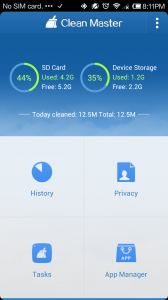
      The main screen shows how much space — used and free — you have on your SD card and in your device’s on board storage. From here you can also access the History cleaner, Privacy cleaner, Tasks, and App Manager options.

      Tap on History and you can view and clear the cache contents (which includes content stored by the likes of Gmail, Facebook, and your web browser). Some items can be selected and cleaned individually, but most can’t. You can also select and remove individual residual files, such as temporary files and very large items, like video clips (make sure you back these up before deleting of course).

      The Privacy section lets you clear individual SMS/MMS conversations and messages, as well as call logs, search history, and content from Gmail, Facebook, YouTube, Google+ and your browser.

      The Task option lets you add a list of tasks and stop and clean any of them, while the App Manager lets you uninstall or backup your apps.
      The new version adds two extra features which can be accessed through Settings on the front screen. There’s a Scheduled Cache Cleaner which lets you set a reminder and specify a frequency (clean every day, every three days, every week, or every 15 days), and cache size target (50MB, 100MB, 300MB, 500MB). The Auto Kill option will clean background tasks automatically and go to work when your device is idle (when the screen is off).

      If a tidy Android device, with the maximum free space and minimum  clutter is important to you, Clean Master is definitely worth an install, especially as it’s free and doesn’t come with any annoying adverts.

      Photo Credit:  ARNICA/Shutterstock

    • AT&T slashes the price of HTC Windows Phone 8X

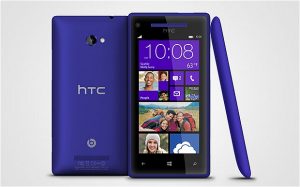
      The price difference on AT&T, between the HTC Windows Phone 8X and the Nokia Lumia 920 has always been somewhat contradictory. The US mobile operator has offered the former in 16GB and 8GB trim for $199.99 and $99.99, respectively, while for the latter AT&T requires users to pay $99.99 in 32GB storage trim.

      Considering that both smartphones share the same operating system, Microsoft’s Windows Phone 8, but the Lumia 920 adds more to the equation through an extensive list of exclusive apps and hardware features, like wireless charging, it begs the question: Why is the Windows Phone 8X more expensive? As it turns out, it is not. Well not anymore.

      AT&T has slashed the price of the Windows Phone 8X to $99.99 for the 16GB model and $49.99 for the 8GB model (both available with a two-year contract), bringing the smartphone in line with Nokia’s Lumia 920 and Lumia 820, respectively, in the price department.

      On a one-year contract, the Windows Phone 8X now runs for $349.99 and $299.99 for the 16GB and 8GB model, respectively, $250 more on top of the two-year contract price. Off-contract the smartphone goes for $449.99 and $399.99 for the 16GB and 8GB model, respectively.

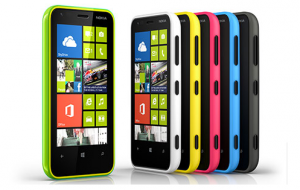
      Prospective Windows Phone 8 users now have a tougher choice in the days ahead, with four smartphone models — the two Windows Phone 8X versions, the Lumia 920 and the Lumia 820 — priced competitively against one another, relying solely on their distinguishable attributes to make a difference in the buyer’s eyes.

    • JPEGView is a surprisingly powerful image viewer

      At first glance, JPEGview doesn’t appear as though it’s going to be a particularly interesting image viewer. A 798KB download suggests there can’t be too much power here. And on launch the program asks you to choose an image, and then just displays it, with no menus, toolbars or other obvious signs of any interface.

      First impressions aren’t always reliable, though — and you’ll quickly realize that as you begin to explore.

      Touch the left and right cursor keys, for instance, and you’ll find you can browse through all the images in your chosen folder. There’s support for a reasonable range of file types, including some RAW formats: JPEG, BMP, PNG, TIFF, GIF, WEBP, WDP, HDP, JXR, PEF, DNG, CRW, NEF, CR2, MRW, RW2, ORF, X3F, KDC, NRW, DCR, SR2 and RAF. And JPEGView loads and processes them quickly, too, thanks to its support for SSE2 and multiple cores.

      Move your mouse cursor over the image and a small control overlay appears, with some useful options. You can step backwards and forwards through images in the same folder, for instance; switch to a full screen or “actual size” view; rotate images by fixed increments or just by dragging the mouse; and there’s perspective correction, auto image enhancement, and a simple EXIF viewer.

      JPEGView would be useful if it only did this — but the program is just getting started. Move your mouse cursor below the control overlay and more options should fade into view (if they don’t, maximize the window and try again).

      A collection of sliders allow you to tweak contrast, brightness, contrast, colors (CMY/ RGB); there are options to tweak your shadows and highlights, correct colors and contrast; there’s an Unsharp Mask option, and you can rename the image, too.

      Still not impressed? Then right-click the image for even more. Like the option to display your images as a slideshow or movie (that is, at speeds of anything up to 100 per second); a complete batch file renamer/ copier; and a settings file which gives you more options, including the ability to extend JPEGView with other programs and custom commands.

      And even this isn’t the end. Pressing F1 reveals a list of more than 50 keyboard shortcuts covering every aspect of the program’s operation. And so if you’re unhappy with the way it cycles only through images in the current folder, for instance, you can press F8 to have the program browse through subfolders as well, or F9 to work through the current folder and its siblings (folders at the same level).
      Despite all this power, JPEGView isn’t going to appeal to everyone. The fact that most of the program’s interface is entirely hidden is one issue, for instance. We quite like that — it’s clean, stays out of your way, yet remains very easy to access — but beginners may be confused.

      And at the same time, you don’t get the same level of functionality here as, say, with IrfanView, so more experienced user might also have some complaints.

      On balance, though, we think JPEGView is an excellent image viewer. After all, it’s well designed, crammed with features, highly configurable, tiny, portable and free — and that works for us. So go check out a copy for yourself, see how it performs for you.

      Photo Credit: Iaroslav Neliubov/Shutterstock

    • Support for Microsoft’s Windows Phone 8 and 7.5 ends in 2014

      After screwing early adopters from upgrading their devices to Windows Phone 8 and offering the lesser-featured Windows Phone 7.8 instead, Microsoft has revealed that it will provide updates over an 18-month period for WP7.8 users, with support to officially end on September 9, 2014.

      As Windows Phone 7.8 started to rolled-out earlier this year, with Nokia announcing the upgrade spree in late-January, its lifecycle will be cut out later than Windows Phone 8’s mainstream support. Support for that OS started on December 14, 2012 and ends on July 8, 2014, two months after its lesser sibling.

      Microsoft is the one taking care of issuing updates and security fixes, but the company warns that when (and if) users receive them depends on the mobile operator, smartphone maker, country, region and hardware specifications.

      There is no word at the moment concerning a possible mainstream support end date extension period for either of the two smartphone operating systems alongside a prospective future update.

    • Ericsson and STMicro agree ST-Ericsson divorce terms, with 1,600 jobs on the line

      This story was updated at 4:30am PT with confirmation from Ericsson that ST-Ericsson’s recently-announced NovaThor chipsets have been cancelled.

      With STMicroelectronics having indicated back in December that it wanted out of its chipmaking joint venture with Ericsson, and with Ericsson having politely declined to buy the half it didn’t already own, it was only a matter of time for ST-Ericsson. The question was how it would go, and now we know the answer: perhaps predictably, Ericsson will take on the modem side of the business and STMicro will take on other existing products as well as some of the manufacturing facilities. The rest will be shut down.

      As for jobs, around 1,800 employees and contractors will transfer to Ericsson (mostly in Sweden, Germany, India and China) and around 950 to STMicro (mostly in France and Italy). Approximately 1,600 employees are likely to find themselves without a job – 50-80 of them in Germany and 400-600 in Sweden.

      Former ST-Ericsson CEO Didier Lamouche announced his resignation a week back and, according to Monday’s announcement, his replacement from 1 April will be current COO Carlo Ferro. Ferro won’t be in place for long, though, as STMicro and Ericsson said they expected the breakup to be completed during the third quarter of the year.

      Ericsson chief Hans Vestberg said his company saw a great future for the “thin modem” side of ST-Ericsson (the term refers to multimodal, low-power modems that draw their intelligence from the associated mobile application processor), which Ericsson will now run as a standalone business:

      “Ericsson continues to believe that the thin modems hold a strategic value to the wireless industry. With this move Ericsson will create a highly focused ‘thin modem only’ operation — an area in which both parents have invested significant amounts to establish industry leading technology and intellectual property. Initial customer contacts give support to the belief that our modems will meet the requirements of the manufacturers in the rapidly growing smartphone and tablet market.”

      ST-Ericsson had been hemorrhaging money for many quarters. Indeed, it had never been profitable since being established in 2008, but it was particularly damaged by the negative fortunes of its big two customers, Sony-Ericsson (now entirely a Sony affair) and Nokia, which used ST-Ericsson chips in its low-end phones but never adopted the NovaThor system-on-a-chip (SoC) platform for its Windows Phones, as ST-Ericsson claimed it would back in 2011. Nokia’s Lumia handsets continue to use Qualcomm chipsets, as do most other high-end smartphones these days.

      ST-Ericsson had only just unveiled its latest NovaThor chipsets last month at Mobile World Congress. However, a spokewoman for Ericsson told me that these new chipsets — namely the the L8540 and L8580 lines — are being immediately discontinued. The ageing U-series, such as the U8500 that was announced in 2011 and that still powers midrange devices such as the Samsung Galaxy SIII Mini, will continue under STMicro’s auspices, she added.

      Related research and analysis from GigaOM Pro:
      Subscriber content. Sign up for a free trial.

    • EIB Supports EADS Innovation Programmes

      The European Investment Bank and EADS have announced the signature of a 300 million euro ($388 million) finance contract in support of EADS Group’s innovation and R&D programmes. This loan reflects the long-standing partnership that has formed between the EIB and EADS over the past ten years.

      PRESS RELEASE

      The European Investment Bank (EIB) and EADS have announced the signature of a EUR 300 million finance contract in support of EADS Group’s innovation and R&D programmes. This loan reflects the long-standing quality partnership that has formed between the EIB and EADS over the past ten years. It represents the second tranche of a first agreement signed in August 2011, whereby the EIB already made available EUR 500 million to EADS. This new finance contract brings the total volume of the EIB support under this agreement to EUR 800 million.

      This is a flagship financing operation for the EIB, one of the first major loans to finance innovation in Europe since the Member States unanimously decided to give the bank of the European Union the means to stimulate the economy by increasing its capital by EUR 10 billion. This commitment so early in 2013 enables the Bank to step up its support for innovation and projects fostering growth and employment in Europe.

      This project is focused on developing innovative products aimed at reducing the impact of aviation on the environment in terms of energy efficiency, pollutant emissions (CO2, nitrogen) and noise. It will serve to develop effective solutions that will have a direct impact on aeronautics design and production, e.g. by improving aircraft aerodynamics and optimising safety and flight control systems.

      EIB Vice-President Philippe de Fontaine Vive welcomed the signature: “This first major loan following the EIB’s capital increase demonstrates our priority commitment to innovation and R&D in Europe. The Bank aims to help develop a successful and competitive economy by focusing on leading-edge technologies, which hold the key to the future in terms of sustainable economic development. This sector is also a source of employment for young people.”

      “Innovation and research are at the heart of EADS’ mission and essential to guarantee the long-term success of the group. The EIB is one of our privileged finance partners, which has been supporting EADS for several years in developing ever innovative technologies. We very much appreciate this new agreement which demonstrates the solidity of our relationship and our joint will to accompany the sustainable development of air transport”, said Harald Wilhelm, Chief Financial Officer of EADS & Airbus.

      The post EIB Supports EADS Innovation Programmes appeared first on peHUB.

    • Ziggo to Acquire Esprit Telecom

      Ziggo is to acquire Esprit Telecom, a provider of voice and data services for the SME market in the Netherlands. The acquisition includes Zoranet, an ICT service provider that focuses on the retail sector. The acquisition is valued at 18 million euros ($23.3 million).

      PRESS RELEASE

      Ziggo is further expanding its services for the business market through the acquisition of Esprit Telecom, a leading provider of voice and data services for the SME market in the Netherlands. The company has an active sales channel of dealers across the country. The acquisition includes Zoranet, an ICT service provider that focuses on the retail sector.
      Esprit Telecom is part of the Detron ICT & Telecom Group and will continue to operate independently, under its own name, for the foreseeable future. The acquisition is subject to approval by the Dutch Competition Authority (NMa). In 2012, Esprit Telecom generated revenues of €37 million. The acquisition is valued at €18 million.

      Hendrik de Groot, Ziggo’s Business-to-Business Managing Director, said: “Our focus is on the small business market, where we provide all-in-one business solutions based on broadband Internet, telephony, TV and increasingly cloud services. Over the past two years we have successfully grown our small business customer base by more than 30,000 customers. We experience increasing demand from the SME market for our products and services. The acquisition of Esprit Telecom, which has a loyal customer base and operates nationwide, will enable us to accelerate our services provision to the SME market. Together with Esprit Telecom, we will invest in new cloud based business services, including a new portfolio telephony services, designed for both small businesses and the SME market. We also see interesting synergy opportunities, including upgrade to our next generation broadband network, enabling SMEs to be securely connected to the cloud.”

      About Ziggo
      Ziggo is a Dutch provider of entertainment, information and communication through television, Internet and telephony
      services. The company serves around 2.9 million households, with almost 1.8 million Internet customers, more than 2.2 million
      customers for digital television and 1.5 million telephony subscribers. Business-to-business customers use services such as
      data communication, telephony, television and Internet. The company owns a next-generation network capable of providing the
      bandwidth required for all future services currently foreseen.

      About Esprit Telecom
      Esprit Telecom was founded in 1993, and provides voice and data services to the SME market in the Netherlands. The company has 5,000 clients and an extensive sales channel of 150 resellers and account managers. It is located in Almere, and has 75 employees. Zoranet became a part of Esprit Telecom in 2011. It is a business IT service provider that focuses on the retail sector, with sales driven through resellers and account managers. Located in Zwolle, the company has 23 employees.

      The post Ziggo to Acquire Esprit Telecom appeared first on peHUB.