Blog

  • Smartwatch Developers Rejoice! Pebble Will Release Proof-Of-Concept Watchface SDK In Early April

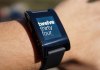
    pebble-outdoors

    After much fanfare the Pebble smartwatch made the leap from fanciful concept to full-fledged product earlier this year, but now that units have started to ship and people have started to wear them, what’s Pebble’s next step?

    Why, enticing developers, of course. Pebble founder Eric Migicovsky noted in a backer update video released earlier this morning that an early version of the smartwatch’s watchface SDK would be made available to would-be Pebble developers during the second week of April.

    And when I say “early version,” I mean early version. At this stage it’s being looked at as more a proof-of-concept release than anything else, and Migicovsky points out that there’s a “99% chance” that the team will revamp some of the underlying APIs involved. What’s more, anyone expecting the ability to use the SDK preview to tap into the Pebble’s sensors and radios (like the accelerometer for tracking movement) will come away disappointed — the release is geared strictly toward new watchfaces, though Migicovsky says that games are also fair game as they rely mostly on button inputs.

    The early SDK has been in testing with “hacker” backers — a group of about 100 people who pledged $235 or more for the privilege of early tinkering rights — for the past few months, and some of the apps they’ve created will be released alongside the SDK. The most notable new app? A low-res (and therefore faithful) reproduction of Snake that hearkens back to Nokia’s feature phone glory days.

    Granted, new watchfaces may not seem like the most crucial addition even to Pebble buffs, but the impending release marks a pretty dramatic shift in scope for the Pebble team. What once started as a company whose daily operations were completely dictated by the need to manufacture and ship over $10 million worth of gadgets is now a company gearing up to focus on the next stage of the Pebble’s life cycle: building up the app ecosystem so the value of owning a Pebble extends beyond the wow factor of wearing a tiny e-paper display on your wrist. Migicovsky concedes that Pebble hasn’t “done the best job so far of communicating with developers,” but the team looks very willing to change that — hopefully a full-blown version of the SDK shows up sooner rather than later.

    Update 34 – Pebble Watchface SDK in April from Pebble Technology on Vimeo.

  • March Madness Live app will let you stream any game as long as you have a paid TV subscription

    march-madness-app-2013

    If you love March Madness then we have some good news for you. This year’s March Madness Live app will be available for your Android devices and is completely free to download. The catch here is that any games broadcasted on cable networks will require you to login using the credentials for your cable or satellite provider’s subscription service. Any other games aired on CBS will be streamed for free using the app or on the web. According to the press release, the app has been “redesigned for optimization across platforms” which means we can expect a good looking app for our tablets as well as our smartphones. March Madness kicks off on Selection Sunday, March 17th, and the first games begin on March 19th, so be sure to look for the app in the Google Play store soon.

    NCAA March Madness Live® to Offer Fans an Unprecedented Multi-Screen Viewing Experience for the 2013 NCAA® Division I Men’s Basketball Championship

    NCAA March Madness Live® App Available in App Store and Google Play in March

    NCAA March Madness Live® will provide college basketball fans with unparalleled multi-screen digital access to the 2013 NCAA® Division I Men’s Basketball Championship. Produced by Turner Sports, NCAA March Madness Live® will offer free streaming across all devices to pay TV subscribers throughout the tournament and is designed to be either a primary or companion viewing experience available to fans across a collection of screens including online, mobile and tablet. NCAA March Madness Live® will feature social and interactive components to provide portable access to the tournament and – in partnership between the NCAA, Turner Sports and CBS Sports – will launch from www.ncaa.com/marchmadness, www.CBSSports.com and www.bleacherreport.com, along with Google Play and the App Store beginning in March.

    NCAA March Madness Live® will provide an unlimited viewing experience throughout Turner Sports and CBS Sports’ coverage of the entire tournament. Fans will have access to all games on TNT, TBS and truTV on the digital device of their choice, by logging in with their TV service provider information, and all games broadcast on CBS with no registration required. As an added feature, NCAA March Madness Live® will offer a preview option that allows up to four hours of live game streaming that does not require viewer registration.

    For the third consecutive year, all 67 games of the tournament will again be available live on TV in their entirety across CBS, TBS, TNT and truTV.

    “Whether viewing on a big-screen TV or a computer, tablet, or smart phone, fans can enjoy the incomparable excitement of March Madness anywhere they are and however they choose,” said Matthew Hong, senior vice president and general manager of operations, for Turner Sports. “With Turner’s commitment to TV Everywhere, passionate fans can use NCAA March Madness Live® as either a first- or second-screen interactive experience to enjoy all 67 tournament games.”

    “NCAA March Madness Live® provides our membership and fan bases with the most up to date coverage of the Division I Men’s Basketball Championship so everyone can catch all of the action at any time and from any place,” said Keith Martin, managing director of championships and alliances. “We’re in an age now where fans want access to games simultaneously and they want to chat about what they’ve seen. NCAA March Madness Live® is a great resource for fans who want to keep up with the games while they are at an arena, at home or from any location.”

    This year’s NCAA March Madness Live® product offers several enhancements including:

    Redesigned for optimization across platforms – With improved navigation, NCAA March Madness Live® will have a completely new look and feel while also providing users with the same levels of access and a consistent user experience across all devices
    Available on new devices – NCAA March Madness Live® will be available on more devices than ever before including smart phones and tablets with the Android 4.0+ operating system, the iPhone 5 and iPad mini
    Capital One NCAA March Madness Bracket Challenge – The official bracket game of March Madness includes new designs and feature enhancements on smart phones and tablets, along with expanded social functionality across all devices allowing fans to join groups, share brackets and chat with friends and other passionate fans via Facebook
    Coke Zero NCAA March Madness Social Arena – A forum to extend the conversation surrounding all of the games within NCAA March Madness Live® products, fans can follow game and tournament tweets, participate in fan chats, watch the games and keep a pulse on all the key moments of every game via the Coke Zero NCAA March Madness Social Arena. Fans can participate in the social commentary by using the hashtag #marchmadness
    Additionally, NCAA March Madness Live® will once again provide video highlights, full game replays and real-time game alerts, as well as fan-favorite features, including live game scoring, real-time tournament brackets, personal channel lineup features, live stats, live social companion views and the return of the “Boss Button.” Fans will have direct access to live radio broadcasts, courtesy of Westwood One/Dial Global Radio Network, for all 67 games across the collection of digital products.
    Co-presenting sponsors for NCAA March Madness Live® are NCAA Corporate Champions AT&T, Capital One and Coke Zero. Additionally, Buick, Capital One and Coke Zero will sponsor the NCAA March Madness Live® iOS app, while AT&T, Infiniti and LG Electronics USA will sponsor the Android app.

    About the NCAA
    The NCAA is a membership-led nonprofit association of colleges and universities committed to supporting academic and athletic opportunities for more than 400,000 student-athletes at more than 1,000 member colleges and universities. Each year, more than 54,000 student-athletes compete in NCAA championships in Divisions I, II and III sports. Visit www.ncaa.org and www.ncaa.com for more details about the Association, its goals and members and corporate partnerships that help support programs for student-athletes. The NCAA is proud to have the following elite companies as official Corporate Champions-AT&T, Capital One and Coca-Cola-and the following elite companies as official Corporate Partners-Allstate, Buffalo Wild Wings, Buick, Enterprise, Infiniti, LG Electronics USA, Lowe’s, Nabisco, Northwestern Mutual, Reese’s (Hershey’s), Unilever and UPS.

    NCAA, March Madness, Final Four and Final Four Friday are trademarks of the National Collegiate Athletic Association.

    Come comment on this article: March Madness Live app will let you stream any game as long as you have a paid TV subscription

  • Minnesota star telecommuting state

    The Minneapolis Star Tribune reports…

    The Twin Cities has experienced the fifth-biggest rise among metro areas nationwide in the number of workers based at least partly at home, according to U.S. Census Bureau commuting surveys. Between 2000 and 2010, the number rose by almost 22,000 people, to about 82,500, according to estimates.

    And Minnesota is the only state with two big job centers, Mankato and St. Cloud, among the top 10 metro areas nationally in the share of people working from home.

    They don’t mention other areas such as Fergus Falls, Olmsted County or other areas featured in an MPR article on telecommuting in rural Minnesota – but I will add them.

    The article highlights some of the benefits of telecommuting. From the point of view of the workers – it’s nice to work and be around when your kids get home from school. As someone who normally lives that life, I have to second that benefit. Also businesses are seeing increased levels of productivity…

    About three-quarters of the 48 eWorkPlace employers [employers who allow telecommuting] reported that productivity increased, while only a smattering sensed a decrease, according to a Humphrey School report.

    And they are reducing costs…

    “Organizations are trying to cut costs,” Kacher said, “and one way is through real estate. It’s not hard to have people like travel agents work from home: It saves lots of money on real estate, reduces turnover and people have more time. ”

    The article recognizes that this news comes in the shadow of businesses such as Yahoo and Best Buy stepping back from telecommuting. Last month, Yahoo CEO Marissa Mayer pulled the plug on telecommuting in a memo…

    “To become the absolute best place to work, communication and collaboration will be important, so we need to be working side-by-side. That is why it is critical that we are all present in our offices. Some of the best decisions and insights come from hallway and cafeteria discussions, meeting new people, and impromptu team meetings. Speed and quality are often sacrificed when we work from home.”

    The Huffington Post countered the Yahoo move with more research supporting telecommuting as a practice but also indicating management’s hesitation with it…

    – A Stanford study, conveniently released on the same day as Yahoo’s memo, reported that call center employees increased their performance by 13 percent when working from home. They also reported “improved work satisfaction and experienced less turnover,” according to the study.

    – A University of Texas at Austin study from late last year found that those people who work from home “add five to seven hours to their workweek compared with those who work exclusively at the office.” Such workhorses, we homeworkers are!

    – A Bureau of Labor Statistics study, also from last year, reported that working remotely “seems to boost productivity, decrease absenteeism” — that means missing work — “and increase retention.” It also gives employers more incentive to ask you to work on weekends, the authors say. Boo!!

    – According to some recent research published in the MIT Sloan Management Review, bosses are roughly 9 percent more likely to consider you “dependable” and “responsible” if you “put in expected face time” Translation: Being at the office can help you get that raise you so desire.

  • Real or fake? Image of possible LG Nexus 5 surfaces

    lg_nexus_5_prototype_leak

    It is always fun to play the real or fake game when it comes to leaked images of Android devices, especially when the image may be the first one to surface. So muster up your skepticism and consider the image above that purports to be a prototype of an LG Nexus 5. The anonymous source of the image claims this particular LG device is one of several that Google is considering for their next Nexus smartphone. The source also provided a list of specs and hardware for the device, codenamed “Megalodon”:

    • 5.2″ OLED Display with 1920×1080 resolution
    • Qualcomm Snapdragon 800 @ 2.3 GHz
    • 3GB LPDDR3 Ram
    • 16/32/64GB of internal storage
    • 16MP rear camera by OmniVision (4k video recording @30FPS, 1080p video recording @60FPS, Real Time HDR & HDR video recording, optical image stabilization, BSI 2.0)
    • 2.1MP front camera (1080p video recording @30FPS)
    • 3300 mAh Lithium Polymer battery
    • Front positioned stereo speakers
    • Qualcomm RF360 (LTE 150 Mbps & HSPA+)
    • Integrated DVB-T / ATSC-antenna
    • Gesture like controls (navigation, zoom, etc)

    Readers may note that a few of the items are not even on the market yet, like the Qualcomm Snapdragon 800 processor or their RF360 chip. According to the source, the new device will be released in October 2013, so it is conceivable some of this hardware could be part of the new device.

    What do you think? Is this legit or a case of someone trying to hoax the Internet?

    source: Android and Me

    Come comment on this article: Real or fake? Image of possible LG Nexus 5 surfaces

  • Why I stopped wearing my iPod nano as a watch

    Back in 2010 when cases started showing up for the iPod nano allowing you to wear your iPod on your wrist as a watch, I could not help but think that the idea was coolest thing I had ever seen. I read the reviews, shopped around, and tried a few of them out before settling on the Lunatik Classic. Soon thereafter, when Apple updated the iPod nano firmware that incorporated clock faces I thought this would be the future of wearable computing. Then when Apple changed the design of the iPod nano to a form factor that prevented it from being worn as a watch, I was wondering what Apple could be thinking.

    I have been tempted by alternatives like Motorola’s MotoActv or the Pebble, I continued to wear my iPod nano as a watch for a little over a year in all before the novelty of wearing an iPod as a watch stopped outweighing its shortcomings as an actual watch.  The experience has made me a much more astute when it comes to evaluating the next smart watch I will buy. In fact, I now believe that it is not a smart watch that I am looking for at all, and a dumb watch may be more appropriate. Below is a list of the limitations of Apple’s past iPod-powered “smart watch” solution and suggestions for what would make it better.

    Battery LifeBattery required regular charging

    Having a 30-pin charging cable just about everywhere I go, one would think I would be accustomed to charging my gear on a regular basis. In fact, I routinely have been charging my iPhone almost twice a day given how much use I get out of it. Watches on the other hand are not something I have been accustomed to charging. On more than one occasion, I would end up forgetting my Nano watch and leave it behind charging somewhere.  It would be left charging at my desk, on an end table, in the car or next to my bed.  I never did quite get the optimum charging cycle down, and eventually ended up charging it every night.

    Solution: Use less battery power, embed a longer life battery and possibly charge the device without cables.

    Media SyncContent required daily syncing

    When my iPod moved to my wrist, I started syncing my iPod to my iTunes library less and less since it was now my watch.  One of the features I initially enjoyed with the iPod Photo when it first came out in 2004 was the ability to store and show other people photos. I continued to carry around my photos on an iPod for quite some time thereafter, but stopped with the Nano watch in part because it was awkward to twist my arm around in order to show someone my photos.  But that was not the biggest challenge I faced.  In addition to photos, the same was true for all sorts of content that I would access each and every day on my iPod. Music, podcasts, audiobooks, contacts, calendars and even notes.  Being able to sync all of my content wirelessly to my iPhone rendered content syncing content to my iPod obsolete.  Eventually I stopped syncing to my Nano watch all together, and only used it as a watch.

    Solution: Wirelessly deliver information to the device like the Apple TV (which is basically just a conduit of information, sitting on your network between your Apple devices and your HDTV)

    Earbud CordEarphone cord kept tugging my ears

    It seemed like my arms were just a bit too long for most of the headphones I liked wearing. The cord would be whipping itself all over the place, hitting me in the face or getting caught on something as I walked by.  Carrying your music library around on your wrist ends up not being such a good idea.  Because of the the case I was using, detaching the iPod from the watch band required tools to unscrew the casing.  I liked the way the Nano looked as a watch, it was one of the more attractive solutions available, so switching cases was not an option for me.  I just ended up putting the watch in my pocket when I wanted to listen to music.

    Solution: Use wireless headphones, or design a stylish and easily detachable band.

    Missed StepsPedometer would skip a step

    Some pedometers are designed to be in the soles of your shoes, others are meant to be attached to your hip, and only recently have a few pedometers like the Jawbone Up or the Fitbit Flex have the sophistication of being worn on your wrist.  Having a classic hip pedometer like the one in the iPod nano on your wrist produces inaccurate results that rendered the fitness functionality of the device unusable.  No matter how many times I tried to calibrate the pedometer, it just would not keep up with my steps accurately.  Even placing the watch in my pocket would not completely resolve the issue, so I ended up using a separate pedometer.

    Solution: Implement smarter accelerometer technology that can adapt to where the device is being worn.

    Telling TimeIt just could not tell the time

    Don’t get me wrong, the iPod nano knew what time it was. It even had a lot of pretty faces that would display the time. It just did not do a very good job of telling time when I needed to know.  If it happened to have been left unattended for a while, I would see the Apple logo instead of the clock face as it went through its boot up sequence.  Having a design that would leave the screen on all the time would just run the battery down even faster. And entering a darkened room with a flashlight on your writs would not be acceptable. Having to turn on your watch to tell the time sort of defeats the purpose of placing it on your wrist in the first place.  I, like most people, am used to having a watch where you can quickly tell the time by just glancing at it.

    Solution: Display the time, all of the time, without emitting a bright light.

    So why do I occasionally still wear my iPod nano as a wristwatch? It never ceases to attract attention and pique others’ curiosity. I have had more comments and questions about this watch than any other watch I have ever worn.  And in doing that, what I’ve come to understand is that almost everyone I talk to about it thinks it’s a great idea to have a smart watch. But when you think about how to overcome all of its shortcomings, you start to realize that it does not need to be that smart at all.  Rather than being the place where decisions are made and information is processed — like a smartphone — it needs to focus on fewer tasks and do those things well: like display simple information that can be read with a glance, or capture some basic data points like health statistics

    Apple is said to be working on a smart watch, but there are few details about what such a device would entail. And as an ex-Apple designer has speculated, based on patents it already holds, the company could tackle many of the aforementioned issues I found with the Nano watch by changing charging technology, using curved glass, and possibly using Siri as an interface.

    While I might not be ready to talk to my watch just yet, what I have learned is that there are some things one should definitely avoid:  like streaming media and content on to the device over the air only to stream back off of the device to your wireless headphones does not seem very practical.  Having a high-resolution screen that is often too bright and will just run the battery down even faster is likely the wrong way to go no matter how flexible the glass is.  Just like Apple discovered that all of their customers have ears when they re-engineered their earpods, it will be interesting do see what Apple comes up with they discover that we all have wrists as well.  In my opinion the more like a smartphone your watch gets, the less functional it ultimately becomes.

    Related research and analysis from GigaOM Pro:
    Subscriber content. Sign up for a free trial.

  • Want to solve the phone-locking problem? Then let’s get rid of device subsidies

    The issue of phone unlocking has become the cause célèbre of Washington lately. The White House has gotten behind a consumer petition to overturn the recent ban on  the practice. Not one, but three bills are wending their way through Congress that would make it legal for us to remove the network locks on our handsets once our contracts expire.

    All of that legislation and bluster, however, isn’t going to solve the fundamental problem that produced the practice of locking devices in the first place: handset subsidies.

    There’s a reason why carriers lock phones. They’re heavily discounting the cost of most devices, which is why you can get a $500 smartphone for $100 and many mid-range and low-end handsets for free. Carriers make their money back through monthly subscription fees that factor in those subsidy costs. For carriers to get the full value of the phone back, subscribers need to finish out their contracts, and locking devices to their networks functions as their insurance policy. It’s a hell of lot easier than repossessing phones.

    Mortgage loan approved stampThe bottom line is most consumers don’t really own their phones. They’re mortgaging them. Just like you can’t sell your home without paying off your bank loan, carriers don’t want you selling your phone or taking it to another carrier without finishing your contract and paying off your handset loan.

    Thus, we’re left with the locking mess, which leads to all of the problems pointed out by locking’s critics: Having to jump through hoops to get your carrier to unlock a phone when your contract is up, the inability to use a another carrier’s SIM card when traveling overseas, and the difficulty of building a resale market for phones when the majority of devices are locked.

    Why unlocking phones doesn’t solve the problem

    Making it legal and easy to unlock phones might seem like an easy solution to this problem, but I guarantee you carriers will find some other way to protect their investments. Carriers could require deposits, implement some kind of collateral fee, institute more onerous contract restrictions, or they could simply raise prices. If carriers start losing money when customers skip out on the contracts, you can bet the customers that remain will have to make up the difference.

    I’m not saying it’s right. I’m just saying that in this messed-up subsidy system, everyone is trying to protect their own interests. Consumers will try to unlock their phones, and carriers will try to stop them.

    Many smartphonesIf we get rid of subsidies completely, though, all of those conflicting interests go away. Once you separate the service from the device, carriers have no interest — and no right — to lock devices. You may still be under contract, but since there is no subsidy recovery fee bound up in your monthly bill, carriers could care less what you do with your device.

    Of course, paying full price for your phone is an expensive proposition. An unsubsidized iPhone 5 costs between $649 and $849, as opposed to the $200 to $400 most carriers charge with contract. But in the long run buying your phone up front will probably save you money. T-Mobile has been a trailblazer in this area, charging cheaper monthly rates for voice and data if you don’t opt for a phone subsidy. What’s more, once subsidies are gone, handset makers will be able to sell their wares directly to consumers, which could lead to a greater variety of devices and more price competition in the device market.

    Ultimately, mobile voice and date rates are so high because our phones are so cheap — artificially cheap. If we reverse that equation, we wind up with cheaper subscriptions, more choice and phones we can do with as we please.

    What can you do with an unlocked phone?

    Unfortunately, having an unlocked device doesn’t leave you with too many options in the U.S. If you travel internationally with a GSM-capable phone you can plug in a local carrier’s SIM card and pay local rates. But in the U.S. itself there isn’t much mobility between carriers.

    SIM cards galoreU.S. operators are split between GSM and CDMA camps, and while it is possible to activate a Verizon phone on Sprint’s network or bring an AT&T device to T-Mobile, there’s no guarantee that you’ll have to access every network or service they offer. U.S. carriers don’t just use different radio technologies, they use different spectrum bands. The band fragmentation problem got even worse with the introduction of LTE.

    But there are signs that things will get better. T-Mobile is in the process of overhauling its network, aligning its 3G bands with those of AT&T. In 4G, we’re starting to see some LTE network convergence around the Advanced Wireless Services (AWS) band. We’re even seeing more dual-mode GSM-CDMA devices making their way into the market.

    With emerging smart antenna and radio module technologies, handset makers will soon be able to pack a dozen bands into a single device. Eventually we might even see a universal phone in the U.S. that can work on any carrier’s networks, no matter what combination of technologies and frequencies they use. And if that point we’re no longer weighed down by subsidies, contracts or locked devices, consumers will be able to switch to any operator at their whim. That’s not a bad choice to have.

    Mortgage image courtesy of Shutterstock user Stuart Miles; Smartphones image courtesy of Shutterstock user Reno Martin; SIM cards image courtesy of Flickr user mroach

    Related research and analysis from GigaOM Pro:
    Subscriber content. Sign up for a free trial.

  • TEDWeekends asks: Can trauma be a gift?


    At TED2010, Stacey Kramer told the moving story of the most treasured gift she ever received: a brain tumor the size of a golf ball. Stacey Kramer: The best gift I ever survivedStacey Kramer: The best gift I ever survived Despite the pain, she wouldn’t have traded her experience for anything – because, in the end, it changed her life for the better.

    Kramer’s poignant talk is featured on today’s edition of TEDWeekends on the Huffington Post, as she and other bloggers share stories of turning hardship into gratitude. Here are three powerful stories:

    Harshada Rajani: The Cost of My Catastrophe

    Finding opportunities out of tragedies, making dreams out of nightmares, and discovering gifts out of punishments. Those seem like the great accomplishments of an insightful survivor, but near impossible for a naive fighter. My wonderful life was stolen like a secret, thrown away like garbage, silenced like a sin, for no reason any doctor or priest could come up with. This sounds like nothing more than a harsh tragedy, seems like nothing more than an inescapable nightmare, and feels like nothing more than an unfair punishment, for being a little too happy. I can’t readily see any opportunities, dreams, or gifts in this mess I have to now call my life. But what if I could dig a bit deeper, find in me new levels of maturity, and see this as a gift?

    It’s so much easier to lazily lie in my comfortable bed of bitterness. It’s so much easier to get lost in the jargon of negativity and regret. It’s so much easier to hate the world for doing this to me. But if I consciously choose to look past the simplicity of this as a punishment, I know I can realize the complexity of this as a gift. Read the full essay here »

    Lawrence G. Calhoun: Can Trauma Really Be a Gift?

    Stacey Kramer describes her experience with a brain tumor as a gift. She wouldn’t want to wish serious illness on anyone, but her own illness was a gift nonetheless. Elements of this gift included deeper and more meaningful friendships, a strong sense of love and support, new vitality, and deeper spirituality.

    Stacey’s experience mirrors a body of research of which I’ve been a part for many years. It’s the study of what my colleague Richard Tedeschi and I have called post-traumatic growth. The idea that the struggle with very challenging life circumstances can lead to positive transformation is ancient. It seems to be part of the human condition. Our work suggests that the transformations Stacey experienced are shared, at least in some ways, by many other people facing a wide range of crises. People report changing priorities, having greater appreciation for what life still has to offer, a deepened connection with others and perhaps greater compassion for others who suffer, positive changes in their understanding of spiritual and existential questions, and sometimes a radical change in the direction they choose to take their lives. Read the full essay here »

    Stacey Kramer: How My Brain Tumor Was The Most Unexpected Gift I Received

    Recently, I spoke to a class of at-risk high school kids. These kids, mostly non-white, have faced many different types of challenges. Some come from abusive parents. Some don’t have parents. Some don’t have a bed. Nearly all rely on the donated food they get at school as their daily sustenance. Every one faces economic challenges of varying proportions. For a few, it takes several buses and nearly two hours to get to school.

    These kids are barely making it through high school — at a time when many of my peers’ kids are celebrating acceptances to upper echelon colleges. This school is their last chance. Simply getting to school on a daily basis is a hardship when you don’t have any money or any food. Or anyone to motivate you to do so. Read the full essay here »

  • Sprint 4G LTE test detected in Durham, North Carolina

    sprint-4g-lte_logo

    Much like an incident that occurred last fall in San Jose for another TalkAndroid writer, Ed Caggiani, I happened to be travelling in a part of Durham I don’t normally visit when I came across some Sprint 4G LTE coverage. After grabbing some grub in a convenience store, I went to check my email while in the parking lot when I noticed the 4G indicator was lit up on my Galaxy Note II. Hit the break to read more about what it was like to have 4G LTE for a few minutes.

    sprint_4g_speedtest

    Life always seems to be about compromises and Sprint customers are well aware of that. They get nice unlimited data plans, but the Sprint 4G LTE network is definitely not on par with the other major carriers. At one time Sprint may have been ahead of the curve with their 4G WiMAX network only to find themselves on the wrong side of the fence as 4G technologies shook out and LTE emerged as the preferred platform. I can understand why having owned an HTC EVO 4G. When connected, the service was nice but tended to be hard to find and prone to dropping in and out if the signal was the least bit weak.

    While Sprint plays catch-up in deploying a nationwide 4G LTE network, users eager for the service may find themselves searching for any little hint or sign that it is coming to their area soon. When I visited the Sprint store at the end of December to grab my new Note II, the sales guy mentioned to me that he thought 4G was coming to the area in February or March. I’m not one to think the sales associate in a local Sprint store has access to Sprint’s project timelines for 4G coverage, but I still couldn’t help thinking silently to myself, “Yes!” Through my other job, I also know Sprint is overhauling the infrastructure in the area, including getting rid of the Nextel assets, as we have been dealing with problems from that project.

    This latest incident is another example that keeps me hopeful that it will not be too long before I have 4G LTE service available and can really take advantage of my smartphone hardware. According to Sprint’s web site, the central area of North Carolina isn’t even an available option in their dropdown list to check for when coverage may be coming, which I always thought odd given all the tech companies in the Raleigh-Durham area. Sprint has also posted on their community pages this disclaimer:

    We’re working on expanding the LTE coverage, but during the build out stages customers may pick up LTE signals, but it may not be reliable at times because it is still under the beta testing stages. However; customers are welcome to use it during this time.”

    sprint_4g_speedtest_results

    Clearly Sprint is working on upgrades in the area and I happened to find a spot with some access. After noting the 4G icon, I quickly launched the SpeedTest.net app to check out the speed. As you can see in the results, about 8.5 Mb/s down and 1.5 Mb/s up is not going to win any speed competitions from what I have seen. Nevertheless, it is still way superior to the 3G coverage I normally deal with in the area. I then fired up some apps like Google+, Facebook and Tweetings to see what the experience was like. My impression was one of being on a WiFi network. Everything loaded so fast. Part of that is likely due to the much decreased latency. When I’ve tested my 3G connection, I find latency to be in the 800+ ms range. On 4G, latency was sub-100 ms. I also felt like it was faster than the old WiMAX 4G service, though part of that difference could be the capabilities of the devices as well.

    Having drunk a sip from the well, my thirst for 4G LTE is even more intense. For those readers waiting for 4G LTE coverage, whether on Sprint or some other carrier, I think you will be pleased when you finally get it.

    If you have spotted some 4G LTE coverage where it is not officially available yet, let us know and share your story.

    Come comment on this article: Sprint 4G LTE test detected in Durham, North Carolina

  • Top 5 Data Center Stories, Week of March 16

    equinix-SE3cages-470

    Colocation cages line a long hallway in the new Equinix SE3 data center in Seattle (Photo: Equinix)

    For your weekend reading, here’s a recap of five noteworthy stories that appeared on Data Center Knowledge this past week. Enjoy!

    Heat Spike in Data Center Caused Hotmail Outage – The Hotmail servers got entirely too hot Tuesday, causing a major outage for Microsoft’s web-based email services. Both Hotmail and Outlook.com were offline for up to 16 hours after a failed software update caused the heat to spike in one part of a data center supporting those services. The outage also affected the Skydrive cloud storage service.

    How Sandy Has Altered Data Center Disaster Planning – The scope of Superstorm Sandy has altered disaster planning for many data centers, which now must consider how to manage regional events in which travel may be limited across large areas due to fallen trees and gasoline shortages, restricting the movement of staff and supplies. A panel at DCD also raised tough questions about New York’s ability to improve its power infrastructure, as well as the role of city policies governing the placement of diesel fuel storage tanks and electrical switchgear.

    Report: IBM, EMC Among Suitors for SoftLayer – Are we on the brink of another intense flurry of cloud hosting acquisitions? Reuters is reporting that tech titans IBM and EMC are bidding to acquire SoftLayer Technologies, one of the world’s largest hosting and cloud service providers. The news service doesn’t name its sources, but projects that a sale could fetch more than $2 billion.

    Virtualization – The next frontier… – We’re way beyond simple server virtualization and are exploring new avenues to make virtualization an even more powerful platform. Let’s take a look at some of these technologies.

    Former Parking Deck Now Equinix’s Newest Seattle Facility – A former parking garage in Seattle next to the Westin Building is now the newest Equinix data center. The new facility demonstrates Seattle’s growth as a data center market, and as an important gateway to the Asia-Pacific market.

    Stay current on Data Center Knowledge’s data center news by subscribing to our RSS feed and daily e-mail updates, or by following us on Twitter or Facebook or join our LinkedIn Group – Data Center Knowledge.

  • Weekly Address: Time to Create the Energy Security Trust

    President Obama discusses the need to harness American energy in order to reduce our dependence on oil and make the United States a magnet for new jobs. He highlights his all-of-the-above approach to American energy — including a proposal to establish an Energy Security Trust, which invests in research that will help shift our cars and trucks off of oil.

    Transcript | Download mp4 | Download mp3

  • Adapter – Versatile Multimedia Converter

    Listening to music or watching multimedia content on various video sharing websites has become a daily activity for most of us. Adapter offers you the possibility to watch them offline, on different devices, by allowing you to convert numerous types of multimedia files to a plethora of video, audio and image file formats.

    Usually, when you want to add videos, songs o… (read more)

  • 100,000 Google Reader Fans Sign Petition to Save it from Extinction

    google-reader-logo

    Google has really hit a sore spot for fans of its extremely popular Google Reader app. Google Reader has been around for years, and for some, meant the beginning of user-friendly and simple RSS reading/social networking.

    One fan, Dan Lewis from New York, NY, has decided not to let the reader go down without a fight, and 100,000 followers have his back!

    The petition, pleads with Google to end the madness and keep its Reader alive. It reads:

    Dear Google:

    A few years ago — years, wow — Google Reader was one of my go-to social networks. It was an accidental one. I was using it for its intended purpose — aggregating and reading a lot of web content in one place — but it turns out, a lot of other people were doing the same thing. A lot. Many of which shared interests and when you added the amazing (amazing!) share and comment features, Google Reader blossomed into a wonderful experience for many of us, core to our day-to-day consumption of content online.

    Unfortunately, you decided to kill those “extra” functions. I’m not here to ask you to reverse that (you should, though). In doing so, Google Reader’s day-to-day value declined, and I, like many, ended up using it less often. Instead of hitting the bookmarklet I have on my Chrome install three, four times a day, it’s now a once a day (okay, once every other day more often, recently) experience.

    But it’s still a core part of my Internet use. And of the many, many others who are signed below.

    Our confidence in Google’s other products — Gmail, YouTube, and yes, even Plus — requires that we trust you in respecting how and why we use your other products. This isn’t just about our data in Reader. This is about us using your product because we love it, because it makes our lives better, and because we trust you not to nuke it.

    Oh.

    So, please don’t destroy that trust. You’re a huge corporation, with a market cap which rivals the GDP of nations. You’re able to dedicate 20% of your time to products which may never seen the light of day. You experiment in self-driving cars and really cool eyewear which we trust (trust!) you’ll use in a manner respectful to our needs, interests, etc.

    Show us you care.

    Don’t kill Google Reader.

    “Out with the old and in with the new” is the best motto for any company that wishes to be known for its innovation, and Google is just that.  Humans will always inherently fight change. Change brings with it unfamiliarity and unknowns, and people fear these implicitly. Google knows that their Reader is dated and they are taking steps to refresh this popular but antiquated app. I wish Dan and his supporters the best of luck in their quest, and I hope Google makes the right choice for their loyal fans.

    Source: Change.org

    Come comment on this article: 100,000 Google Reader Fans Sign Petition to Save it from Extinction

  • Xbox 360 racks up 26th consecutive month as top console

    Xbox 360 Sales February 2013
    Does Microsoft (MSFT) even need to launch a new Xbox? Despite Nintendo’s (NTDOY) recent release of its next-generation home video game console, the Xbox 360 racked up its twenty-sixth consecutive month as the top-selling console in the world in February. U.S. sales totalled 302,000 units according to The NPD Group’s February data, placing the Xbox ahead of Sony’s (SNE) PlayStation 4 and both the Wii and Wii U. The Xbox 360 holds an estimated 41% share of the current-generation console market in the U.S.

  • Samsung Galaxy S 4 Infographic Reveals Detailed Specs

    Samsung-GALAXY-S-4_Samsung_Tomorrow

    Samsung just released a detailed infographic showing off the specs for their new Galaxy S 4 handset. The infographic shows that the new handset will release with:

    • A 5-inch full HD, Super AMOLED, 1920 x 1080, 441ppi display
    • 1.6GHz Octa Core, or 1.9GHz Quad-core CPU
    • 136.6mm (length) x 69.8mm (width) x 7.9mm (thick)
    • Weighs a mere 130g
    • 2,600mAh high capacity battery
    • Android 4.2.2 Jelly Bean OS
    • 13MP Rear-facing Camera and 2MP Front-facing Camera
    • HSPA+ 42 Mbps 3G, 4G LTE wireless connectivity
    • Available in “Black Mist” and “White Frost”

    Impressive specs to say the least…I can’t wait to get my hands on one!  Check out the infographic below and the source for more information.

    Samsung_Galaxy_S_4_Infographic_01

    Source: Samsung

    Come comment on this article: Samsung Galaxy S 4 Infographic Reveals Detailed Specs

  • Google Play News coming soon to compete with Apple Newstand

    newsstandappios

    That’s right news fans, Google is rumored to be launching an Apple Newsstand competitor in the Play Store sometime in the near future.  The news reader will be affectionately called “Google Play News”, and it will allow users to purchase single issues of newspapers, or fully subscribe to them.

    A piece of JavaScript was discovered from the desktop web version of the Google Play Store by Android Police.  Here is what they found that referenced the news reader:

    To read Google Play News, you must have a supported Android phone or tablet

    Please sign in to get this News edition.

    Please sign in to purchase this News Issue.

    Please sign in to purchase this News Edition Subscription.

    Subscribing you to this news edition…

    You have subscribed to this news edition. It is now available on your device.

    This is a welcomed addition to Android’s already wide variety of RSS and magazine readers. The ability to read newspapers through a customized application on Android devices is appealing to say the least. I know I am looking forward to trying it out.

    Source: Android Police

    Come comment on this article: Google Play News coming soon to compete with Apple Newstand

  • Facebook’s Zuckerberg now most-liked CEO as Tim Cook plummets in rankings

    CEO Approval Ratings
    Tim Cook is still well-loved by Apple (AAPL) employees — he’s just not as well-loved as he was a year ago. Glassdoor’s most recent CEO approval ratings show that 93% of Apple workers approve of the job Cook is doing, down from the 97% approval rating he had last year when he was ranked as the most popular CEO in the world. Cook now sits in the 18th slot. Taking his place atop Glassdoor’s list this year is Facebook (FB) CEO Mark Zuckerberg, who scored a 99% approval rating from employees to stand alone as the world’s most favored boss. Other popular tech CEOs on this year’s list include Qualcomm (QCOM) CEO Paul Jacobs, who ranked 8th among all CEOs with a 95% approval rating; Google (GOOG) CEO Larry Page, who ranked 11th with a 95% approval rating; and Amazon (AMZN) CEO Jeff Bezos, who ranked 16th with a 93% approval rating.

  • Google acquires an infrastructure startup Talaria. Will it help Google crush AWS?

    Google has acquired a company that will help it run more software on fewer machines — a big deal for a company that has something in the neighborhood of one million servers. Talaria confirmed on its web site Friday that it was purchased by Google and that its software will become part of its Google Cloud team.

    Talaria is mum about what it does on its current website, but on a cached version from March 9 it says the company is offering developers the use of “easy” programming languages such as Python or Ruby, while making them more efficient, like a compiled language is. The end result is today’s developers can code in the languages they love and use Talaria’s application server to somehow make that language more efficient.

    talriacache

    From the cached version of the website:

    At Talaria, we’re building a new, dynamic web application server with a JIT-based runtime at its heart. Today, it supports PHP and runs real-world applications like WordPress and Drupal. Talaria’s application server lets you handle more users with fewer boxes, without changing a line of code. Instead of worrying about your server bill, you can get back to building your app.

    Facebook has done something that looks similar when it introduced Hip Hop as a way to make its existing PHP code more efficient. HipHop for PHP is a source code transformer that programmatically transforms PHP into highly optimized C++ and then uses g++ to compile it. The social network developed Hip Hop to boost the performance of Facebook applications while also lowering hardware costs.

    If Talaria is doing something along these lines, this would help Google in two ways. It would enable Google to deliver a platform for developers that lets developers use their preferred languages, while giving the apps hosted on the Google cloud apps a performance advantage. But it would also help Google by letting it run those apps on fewer machines.

    That would help Google lower the costs of operating and running machines, which could give it a leg up in its brutal price war with Amazon Web Services.

    Related research and analysis from GigaOM Pro:
    Subscriber content. Sign up for a free trial.

  • Reef Shot Review (PC)

    With all sorts of AAA titles out there and so many options to choose from, it might seem almost impossible for a new developer to step into this overcrowded game scene.

    The gaming world is not only about AAA titles and some of you might sometimes feel the need to play a game only to relax your mind and relief some of the daily stress.

    To accomplish th… (read more)

  • Samsung appoints two new co-CEOs after GS 4 announcement

    Samsung_AMOLED_5-Inch_HD

    After the theatrics of last night’s Galaxy S 4 announcement, it’s back to business for Samsung. First “business” move? Appoint two more CEOs. Samsung presidents Yoon Boo-keun and J.K. Shin are the newest co-CEOs, joining CEO Kwon Oh-hyun. It sounds a bit odd, but it puts a CEO at the top of each of Samsung’s major divisions; Yoon was in charge of consumer electronics, such as Samsung’s television line, and Shin was the head of the mobile division, concerning Samsung’s Galaxy devices. Kwon is currently the head of the component division, which includes Samsung’s popular memory products (RAM, SSDs, etc.) and the Exynos processors.

    Samsung stated the move ”recognizes the strong performance of President Yoon and President Shin,” and ”the new leadership structure will serve to clarify and enhance independent management” over each division. While this news definitely isn’t as exciting as a new device announcement, it’s a sure sign that Samsung is doing everything in their power to stay competitive in every market they enter.

    source: The Verge

    Come comment on this article: Samsung appoints two new co-CEOs after GS 4 announcement

  • Verizon’s Redbox Instant video streaming now available to general public

    Verizon Redbox Instant Launch
    Netflix (NFLX) just got an intriguing competitor this week now that Verizon (VZ) has brought its Redbox Instant video streaming service out of beta and has made it available to the general public. Redbox Instant, which is available to everyone regardless of whether they’re a Verizon customer, is initially offering a range of 7,500 “streaming and transactional movie titles” for $8 a month. The service works on Macs, PCs and the Xbox 360, which entered into a deal with Verizon earlier this year to become “the exclusive gaming and entertainment console launch partner for Redbox Instant.” Verizon is currently offering a free one-month trial for the new streaming service.