Blog

  • BREAKING: Toyota said to install brake override systems in all cars by end of 2010

    Filed under: , , ,

    From the “things that should probably already be there” file comes the announcement that Toyota will be installing brake override systems in response to recent incidents of runaway cars. Toyota North America president Yoshi Inaba told Automotive News that the system will force the engine into idle if it senses the driver is trying to apply the brakes unsuccessfully.

    The Toyota Camry and Lexus ES350 will be the first models to get the new system, with installation beginning this month. Toyota’s effort follows on the heels of a massive 3.8 million vehicle recall to reshape and replace accelerator pedals. The automaker is attributing reports of runaway cars on floor mat interference with the pedals, though the National Highway Traffic Safety Administration reportedly remains suspicious of other contributing factors.

    [Source: Automotive News – sub. req.]

    BREAKING: Toyota said to install brake override systems in all cars by end of 2010 originally appeared on Autoblog on Tue, 12 Jan 2010 07:28:00 EST. Please see our terms for use of feeds.

    Read | Permalink | Email this | Comments

  • This is what i think led many countries to failures.

    This what i think led many nations to failures.

    First there were kingdoms around the continent made up of different Ethnicities. Some were arch rivals, some were advanced( comparing to their neighboring kingdoms) than others.

    Then came Imperial Euros. they slit up all these kingdoms and put pieces from many different Ethnics together ( well, divide , conquer, rule.)No wonder we saw Biafra issue, in Zimbabwe ( Shona vs the rest) South africa Zulu vs the rest. Rwanda, Burundi ( Hutu and Tutsis) , Uganda( Nilotes vs the Rest) Ethiopia vs Somalis( Ogaden issue) Sudan we know whats up. Cote d’Ivoire we know whats up. and some places today are still ethnic time bombs, waiting to explode.

    Then they left these make up nations confused, they lost their monarchy rule systems, they adopted Repablican styles that they never understood in the first place. lol.( No wonder we have had presidents that never want to leave power, Monarchy mentalities are still in their blood, brain, minds and spirits).lol.

    It been proven over and over,. Some nations still have Ethnic based parties, some don’t and some are still blood baths. some have gotten over .

    Many were just united against their Common enemy( Colonists) after that , each supposed to go their own way. but didn’t and many places ended up as bloody worlds.

    My Question is. Do you think if these ethnic,kingdoms were left as they were found it would have been positive and not as much failures today?

    I think so yes, many nations would have been way better of if they were never separated. I think this led to blood baths and some are still doing bloody because of this failed Ethnic, kingdoms Chemistry.

    What do you think?

    Butembo21,

  • Yvan Muller Tests Chevrolet Cruze for the First Time, in Valencia

    Yvan Muller finally got to test his brand new car for the 2010 FIA World Touring Car campaign, none other than the Chevrolet Cruze he signed to compete on a few months ago. With Italian Nicola Larini announcing his departure from the championship following the 2009 season finale, the team found him a perfect replacement in the person of 2008 FIA WTCC champion and 2009 runner-up Yvan Muller.

    The Frenchman competed the last 4 years in the FIA WTCC on Seat Leons (either petrol or die… (read more)

  • Kitchen Tour: Teresa’s Utilitarian PowerhouseNew York

    Teresa01lg1.jpgTeresa runs a tight ship. Having grown up in the Phillipines, Teresa was dutifully trained in domestic skills. As much as she might begrudge her traditional upbringing, she certainly knows her flour sifting from her egg white stiffening.

    teresasmall1.jpg

    Read Full Post


  • AOL to Shed As Much As 1,400 People This Week

    AOL is moving forward with the massive layoff plans it has been preparing for months now. Project Everest, as it is being referred to internally, has been in the making since shortly after Tim Armstrong took over the company. The first major wave came late last year when AOL asked employees, which were offered buyouts, to volunteer to leave the com… (read more)

  • Fed Paper Details the Global Borrowing Boom

    The household borrowing binge that preceded the housing bust wasn’t just a U.S. phenomenon, a new paper by the Federal Reserve Bank of San Francisco shows.

    Reuven Glick and Kevin Lansing show household debt as a percentage of disposable income grew to especially high levels in places like Ireland, Denmark and Norway between 1997 and 2007. Not surprisingly, those countries have been going through their own consumption busts as households try to bring their debt levels back down to manageable levels.

    This picture shows household debt as a percentage of disposable income:

    This shows countries with the biggest decline in consumer spending:

    The authors conclude: “The efforts of households in many countries to reduce their elevated debt loads via increased saving could result in sluggish recoveries of consumer spending. Higher saving rates and correspondingly lower rates of domestic consumption growth would mean that a larger share of GDP growth would need to come from business investment, net exports, or government spending. Debt reduction might also be accomplished via various forms of default, such as real estate short sales, foreclosures, and bankruptcies.”


  • TV Land “Hot In Cleveland: Starring Valerie Bertinelli, Jane Leeves, Wendie Malick, Betty White

    Nostalgic TV Land has hired sitcom vets Valerie Bertinelli (One Day at a Time), Jane Leeves (Frasier), Wendie Malick (Just Shoot Me), and Betty White (The Golden Girls) to star in a new comedy pilot for the network.

    The project, titled Hot in Cleveland, revolves around three eccentric fortysomething best friends from Los Angeles (Bertinelli, Leeves, Malick) who wind up stuck in Cleveland and decide to stay put when there after they realize the locals consider them glamorous, The Hollywood Reporter said Tuesday.

    Betty plays a local busybody who has lived in the cottage of the trio’s Cleveland house for 50 years.


  • Jack Weiss vs. Ron Kaye on Channel 4

    “The Filter with Fred Roggin” is being broadcast for the first time on Channel 4 today at 11:30 a.m. (after a six-month test on digital cable) and as luck would have it Jack Weiss and I wound up as facing off as competing commentators in the opening segment.

    The fast-paced, innovative news show is broadcast live at 7:30 p.m. on NBC’s digital Channel 225 Monday-Thursday and for now is being re-broadcast the following morning on Channel 4.

    I thought you might be amused to how the man I called “Public Enemy No. 1” during the City Attorney’s race (imagine what he’s called me) and I performed.

  • Tutorial: jailbreak your iphone

    Jailbreak?

    First of all, what exactly is this jealbreak thing? Well, jailbreaking your iphone is actually hacking your iphone so it gets rid of the limitations set on it by Apple. The reason to do this is because the iPhone as apple created it has quite some flaws and restrictions, such as the inabillity to change the looks of the iPhone (icons, springboard background) or to multitask. jailbreak iphone cydia
    Jailbreaking your phone can solve these things, as you are then able to install apps and fixes via Cydia and Installer (the unofficial, jailbreak versions of Apple’s App Store). As you know, normally you are not able to install any software on your iPhone that doesn’t come from Apple’s App Store, and thus got Apple’s approvement. Jailbreaking your iPhone changes this, so your iPhone has no restrictions anymore. Do note that you always jailbreak your iPhone on your own responsability. iCan’t Internet is only giving you a way how you can do it, not telling you you should do it!


    Pro’s of jailbreaking

    – There are no limits anymore on your iPhone, the sky is almost the limit on your iphone.
    – Unlock your iPhone from your current carrier. In many countries, the iPhone is locked to one specific carrier. If you want to switch, you need to jailbreak it first.
    – Make a statement. If you want to make a statement against Apple’s way of controlling the iPhone thing, jailbreak your phone, and be part of a large underground movement.

    Cons of jailbreaking

    – An iPhone OS update via iTunes will disable your jailbreak. And most of the times Apple will have implemented a new way of stopping jailbreaks. This means you will have to wait untill hackers have found a new way of jailbreaking the iPhone.
    – Virusses. There are only two virusses reported for the iPhone. And both of them only work on jailbroken iPhones. This is of course due to the approval process to get apps in the App Store.
    – Warranty. The one thing you will lose for sure if you jailbreak is your warranty. Even if you need your warranty for something totally NOT related to the jailbreak, your warranty is gone byebye.
    – Jailbreaking could break your iPhone. And I don’t mean the screen, but the software. However, this should normally be easily undone via a legit reinstall, and the chances to totally ruining your iPhone are very very slim.

    The actual Jailbreaking

    This tutorial is for jailbreaking an iPhone OS 3.1.2 Iphone 3G and iPhone 3GS. For other iPhone OS or iPhone/iPod version, check below!
    First of all, download and install the BlacksnOw iPhone OS 3 Toolbar
    Connect your iPhone to your computer and start the blackra1n application, then click the “make it ra1n” button.
    Your iPhone will now go into recovery mode, and display the Geohot image (the developers of the jailbreak software). During the time your iPhone is in recovery mode, blackra1n is jailbreaking your phone.
    Once blackra1n is finished, your iPhone will reboot. After that, the blackra1n icon will be on your springboard.
    If you open blackra1n on your iPhone, you can select the packages you wish to install. Select Cydia (and if you want also the others), and click install.
    When the installation is finished, reboot your iPhone.
    Should you have WiFi problems after the reboot, go to Settings, select general, reset, and tap “Reset Network Settings”. That should do it.
    Congratulations, you now have a fully jailbroken iPhone, and are ready for the fun!

    Related posts:

    1. Changing your iPhone’s springboard background with Winterboard As seen before, personalizing the looks of your iPhone can…
    2. iPhone OS 3.0 available NOW! As of now, you can download the latest version of…
    3. 7 Great Applications for Your iPhone 3GS Apple has done it again with the new iPhone 3GS….


  • Open letter to Archbishop Vincent Nichols by Rupert Wyndham

    Article Tags: Open Letter/Fax, Rupert Wyndham

    Dear Archbishop Nichols

    As the New Year breaks, from a vantage point South of the Equator, I look upon temperature maps North of the Tropic of Cancer, and behold a seemingly unbroken ocean of blue. From the Rockies to the Pamirs and on to Fuji-san, the hemisphere is in the grip of ice and snow. Indeed, as I write, in China so abundant is the precipitation that it is seen perhaps as the solution to prevailing widespread drought. Moreover, since your archbishopric is likewise in the thick of it, you will be dismayed to learn that any likelihood of significant respite throughout January and February is slender. And do not be tempted to draw comfort from anything predicted by the Met Office; certainly, my own sources are far more reliable and can be demonstrated to be so. Besides, its luminaries attribute freezing to global warming! Just crooks or stark barking mad?

    Of course, contrasts between reality and expectations informed by pronouncements from the Hadley Centre are no longer startling, simply risibly predictable. To those who come to “Climate Change” with open eyes (not to mention open minds), it merely constitutes a trend – as unmistakeable as tracks in the snow, the cupidity and mendacity of politicians, the poltroonery of establishment scientists and their journalistic lapdogs or the catastrophist phantasmagoria of anthropogenic global warming pseudo-environmentalists. Furthermore, the perception is strengthened to the point of absolute confirmation by the predictions of dissenting mavericks. These renegades, unashamed in the face of understandable vexation and vilification from practitioners of orthodox purity, obdurately persist in pursuing rigorous, replicable science. This, naturally, is an outrage, which one would not hesitate to condemn save for one small but inconvenient circumstance. They make a furtive and disreputable virtue of repeatedly being right!

    Download PDF file to read Open letter to Archbishop Vincent Nichols by Rupert Wyndham

    Read in full with comments »

    File attachment: ArchbishopofWestminsterletter10Jan10.pdf


  • What Is The Oldest Civilization On Earth?

    The earliest known civilizations arose in Mesopotamia between the Tigris and Euphrates rivers in modern-day Iraq, Persia in modern day Iran, the Nile valley of Egypt, the Indus Valley region of modern-day Pakistan and North India, and the parallel development of Chinese civilizations in the Huang He and Yangtze River valleys of China.

    Smaller civilizations arose in Elam in modern-day Iran, and on the island of Crete in the Aegean Sea, as well as the Olmec civilization and the Caral civilization in modern-day Mexico and Peru.

    The Mesopotamian civilization of Sumer is officially is believed to have begun around 4000-3500 BC. It ended at 2334 BC with the rise of Akkad, and is the world’s first civilization.

    The Egyptian civilization of the Nile Valley started at around 3200 BC. It ended at around 343 BC, at the start of the Achaemenid dynasty’s control of Egypt. This is one of the three oldest civilizations in the world.

  • Santa Fe WiFi foe strikes again: sues neighbor for using wireless devices, lives in a car

    No, this isn’t him, because the real Arthur Firstenberg (with or without a cat) would probably need more than an aluminum helmet to cure his “electromagnetic sensitivity.” In fact, this man — an active member of the anti-wireless group in Sante Fe — has taken one step further by suing his bewildered neighbor 25 feet away for refusing to switch off her wireless devices, which he claims has forced him to stay at friends’ or live in a car. We’d say just chill out, find some place in the middle of an African desert, and then fly out. Oh, wait.

    Santa Fe WiFi foe strikes again: sues neighbor for using wireless devices, lives in a car originally appeared on Engadget on Tue, 12 Jan 2010 06:12:00 EST. Please see our terms for use of feeds.

    Permalink Reddit  |  sourceDSLreports  | Email this | Comments

    Buy This Item: [Click here to buy this item]

    Article

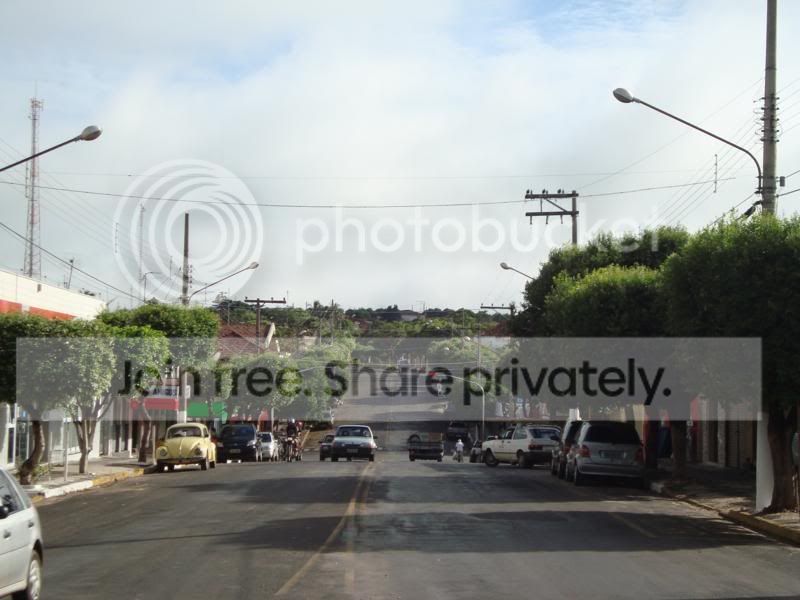
  • Irapuru/SP- Outra pérola desconhecida do interior de São Paulo

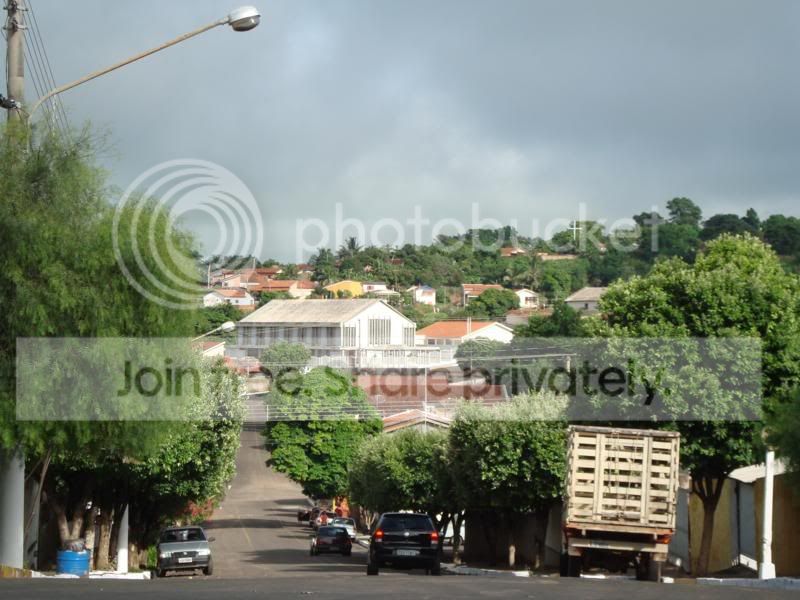
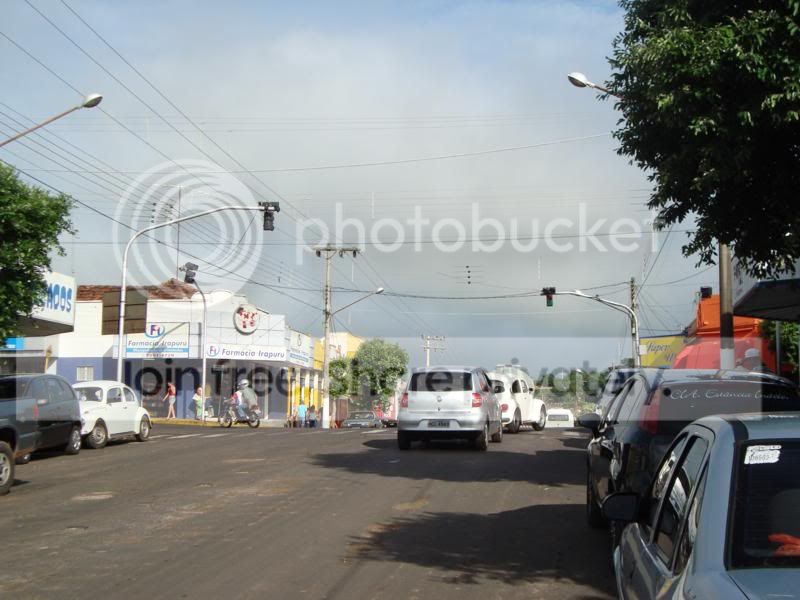
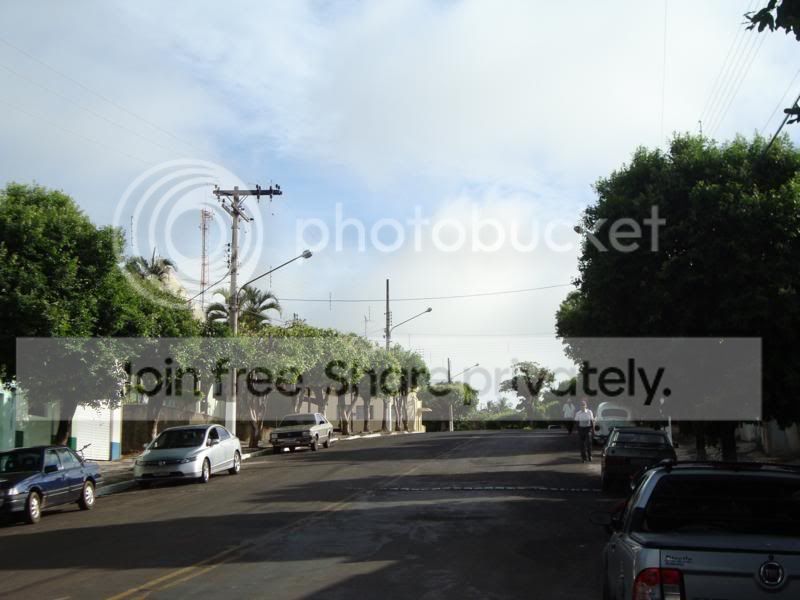
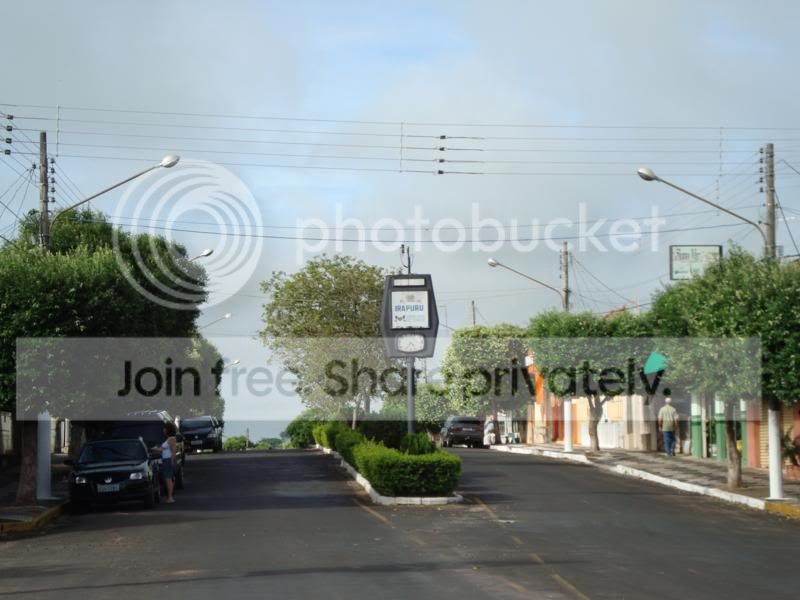
    A cidade de Irapuru está localizada no oeste paulista, na região administrativa de Presidente Prudente. Possui 7.874 habitantes (IBGE/2009) e uma boa localização, próxima a cidades de Presidente Prudente, Dracena e Adamantina.

    Todas as imagens são de minha autoria

    Localização

    Vistas da cidade

    Igreja Matriz

    Ruas de Irapuru

    Rodoviária, em forma de canteiro central

    Uma construção abandonada de um prédio, herança de quando a região era próspera


  • China’s High-Speed-Rail Revolution

    Technology Review has an article on China’s growing high speed rail network – China’s High-Speed-Rail Revolution.

    China has begun operating what is, by several measures, the world’s fastest rail line: a dedicated 968-kilometer line linking Wuhan, in the heart of central China, to Guangzhou, on the southeastern coast. In trials, the “WuGuang” line trains (locally built variants of Japan’s Shinkansen and Germany’s InterCity Express high-speed trains) clocked peak speeds of up to 394 kilometers per hour (or 245 miles per hour). They have also recorded an average speed of 312 kph in nonstop runs four times daily since the WuGuang’s December 26 launch, slashing travel time from Wuhan to Guangzhou from 10.5 hours to less than three.

    WuGuang’s speed blows away the reigning champion: France’s TGV, which runs from Lorraine to Champagne and averages 272 kph. It also bests China’s first high-speed train, the Beijing-to-Tianjin trains that average 230 kph, as well as Shanghai’s magnetically levitated airport shuttle trains that can hit 430 kph but average less than 251 kph.

    Rail experts say the builders of the new WuGuang line deserve more bragging rights than the trains’ European and Japanese designers.

    “The high-speed rail technology implemented in China is not that much different from the TGV, Germany’s ICE, and the Shinkansen,” says Rongfang Liu, a rail expert at the New Jersey Institute of Technology in Newark. What is notable, she and others say, is that unlike many high-speed lines that repurpose older tracks, this one was designed from the ground up for very high-speed operation over hundreds of kilometers. Bridges and tunnels, as well as the concrete bed beneath the track, have been designed to safely rocket passengers around, through, or over the natural and man-made obstacles that would otherwise force the trains to slow down.

    Plenty more speedy lines are coming in China under an ambitious build-out initiated in 2006 by China’s Ministry of Railways, and accelerated with government stimulus funds. A two-trillion-yuan ($293 billion) plan envisions 16,000 kilometers of dedicated high-speed rail lines connecting all of China’s major cities by 2020. The first East-West segment–a link from Xi’an to Zhengzhou–could begin operating as early as this month, and work is underway to extend the Beijing-Tianjin line southward to Shanghai by 2012. WuGuang, meanwhile, is expected to expand northward to Beijing and South to Hong Kong by 2013. “Over the next five years there’ll be more high-speed rail added in China than the rest of the world combined,” says Keith Dierkx, director of IBM’s Beijing-based Global Rail Innovation Center.

    High-speed rail is seen as a clean way to boost the expansion of China’s transportation system, according to Dierkx. Dedicated lines will help meet rail demand, which is expected to more than triple to five billion passengers per year by 2020. And building these lines is seen as preferable to further expanding reliance on imported oil for automobiles and airplanes. Dierkx says dedicated high-speed rail should also improve freight transportation by easing congestion on conventional rail lines.

    Building fast lines requires civil engineering works on a massive scale. WuGuang has 625 bridges with a combined length of 362 kilometers, and 221 tunnels with a combined length of 177 kilometers, contributing to a total construction cost of 116 billion yuan ($17 billion). The 1,300-kilometer Beijing-to-Shanghai line will cost an estimated 221 billion yuan–more than the Three Gorges Dam hydroelectric project.

    China has also commissioned the first segment of a large-scale HVDC link from Yannan to Guangdong, connecting inland hydro-power to coastal consumers – Siemens puts world’s first 800-kV high-voltage direct-current link into operation in China.

    In late December 2009, Siemens Energy and the utility China Southern Power Grid put into operation the first pole of a HVDC system of enormous scale and magnitude: With a transmission capacity of 5000 megawatts (MW) und covering a distance of more than 1400 kilometers the Yunnan-Guangdong high-voltage direct-current transmission system (HVDC) recently is the world’s most powerful of its kind implemented. At the same time it is the first HVDC link operating at a transmission voltage of 800 kilovolts (kV). Siemens is thus setting new benchmarks in energy-efficient transmission of ecofriendly electricity. Commissioning of the second pole and thus startup of the entire system is scheduled for mid-2010.


  • European webOS 1.3.5.2 Adds Bluetooth Tethering

    BluetoothWe may have discovered what that extra “.1” was in the recently-released webOS 1.3.5.2 for Europe: the GSM Palm Pre now fully supports Bluetooth sharing of your 3G connection. Although Palm have yet to post the full changelog (at least so far as your correspondent can find) (update: full changelogs have been posted, and its looks like tethering is a German-only affair. No other changes to report from the previous 1.3.5 update), setting up tethering is simplicity itself – at least on Windows.

    All you need to do is go to your Bluetooth settings card on the Pre and turn on Bluetooth, making it discoverable. Then pair your PC with the Pre, and join the newly-created Personal Area Network. Voila! You’re now wirelessly connected to the cloud via your phone. Of course, it’s not quite as cool as turning your Pre into a Wi-Fi hotspot – but it’s certainly better than a slap in the face with a wet fish.

    An unexciting screenshot is posted after the break.


  • The New Necessities: Food, Clothing, And A Giant TV

    samsung flat screen tv

    LAS VEGAS (AdAge.com) — The recession has squeezed consumers into giving up a lot of things — but gadgets, TVs and smartphones have managed to remain essential, maybe more so than pants.

    While the consumer electronics industry took a bruising in 2009, with sales down 7.8% from the prior year, it weathered this once-in-a-lifetime recession well compared to automotive, retail, apparel and other industries. And while it’s facing another down year in 2010, according to the Consumer Electronics Association’s new forecast, it’s benefiting from a recent change in consumer behavior that has elevated the electronic device from something discretionary to must-have.

    Consumers are showing that there are a lot of corners to cut — such as packing a lunch for a few months, perhaps, or not buying a new suit — before they’ll decide not to upgrade to the next smartphone. Indeed, smart phones will take the lead as the industry’s top category in 2010 with $17 billion in sales, its penetration having grown from 11% of the U.S. population to 17% in the past year, per Forrester Research.

    This year CE sales will actually be up, slightly, from 2009 to $165 billion in sales, but still below 2008’s high-water mark of nearly $179 billion. But if there’s one thing the consumer-electronics industry has learned, it is to not underestimate consumer desire to adopt the next new thing — even in a tough economy — so manufacturers are once again betting they can fire up the dream factory and build devices consumers don’t yet know they want, but will soon consider must-haves.

    That’s why Sony Style stores are getting 3-D demonstration TVs in the coming weeks, even though it will be June before Sony says any mass-market 3-D TVs will be available for sale. Apple is titillating the market with its upcoming tablet computer, another device that solves the terrible problem of people who want (or need, really) something smaller and thinner than a netbook on which to watch or read their media.

    Life’s necessities
    What’s happening? Much has been made of the “cocooning effect,” or people rationalizing that they can spend a little more on a flat screen since they’ll be going to the movies less. But some think it’s gone a little deeper: Electronics have become more intrinsic, more of an extension of people’s everyday activities. And it’s all happened within the last few years.

    “Technology is becoming more engrained in our daily lives,” said Steve Koenig, director of industry analysis for the CEA. “There are other more discretionary items in the household budget, things that need financing, like a car or a new home.”

    “We are seeing something really big and I don’t think people realize it yet,” said Nancy Bhagat, VP-consumer marketing at Intel. “I think we would have seen a larger slowdown in purchases if this had happened before 2009, but because the user of these devices has become part of people’s lifestyles, it’s becoming a must-have.

    When it comes to TVs, the CE industry actually shipped more units in 2009 than the year before, though at lower prices.

    “There are products across a diverse range of prices and even in tough times people buy things to make themselves feel better,” said Forrester analyst Charles Golvin.

    ‘Aggressive’ marketing
    Holding down prices means manufacturers are selling more units even if the dollars are flat. “In sales we will be slightly up in dollars and significantly up in units,” said Sony Electronics CMO Mike Fasulo. But with new products in the pipeline such as 3-D Blu-ray players, PlayStation games, TVs and new categories such as Sony’s “Dash,” a table-top web browser, marketing spending is going up to 2007 levels, which, he said, “is aggressive.”

    Consumers have already been through a grueling — and expensive — series of TV upgrades from analog to HD TVs, from DVDs to Blu-ray, etc. But the industry is banking that it can start a new cycle this year in the form of 3-D TVs. The CEA is anticipating 4 million 3-D sets will be sold in 2010, even though most sets won’t hit stores until at least mid-year.

    Manufacturers are loathe to test their good fortune, and prices for the next upgrade of TVs will be only incrementally above the 2-D sets they replace, not at $5,000 or $10,000 like the first generation of HD flatscreens.

    But 3-D has some hurdles and plenty of skeptics. “I think it is much more confusion than the HD TV upgrade with even less obvious payoff for consumers,” said Josh Lovison of IPG’s Emerging Media Lab, who believes that 3-D could be more easily achieved with a new generation of glasses, not a TV upgrade

    Join the conversation about this story »

    See Also:

  • Nissan’s Gift for the US: 2 Under-$10,000 Cars

    Just like the rest of the companies selling cars in the US, Nissan is planning to rely more on small vehicles and, as a result, the Japanese manufacturer is developing two small cars to be priced below $10,000. There are only a few details available at this point but Autonews writes that both models will be based on Nissan’s new global V platform that will replace the Mica subcompact.

    Yet to be nicknamed, the two models will be smaller than the Versa, the aforementioned source wro… (read more)

  • Secondary Sources: Regulation, Regional Fed, Paying for Rescues

    A roundup of economic news from around the Web.

    • Financial Reform: Writing for the Journal, Alan Blinder says that greed isn’t always good, and that financial regulation reform is lagging. “I’m worried. The financial services industry, once so frightened that it scurried under the government’s protective skirts, is now rediscovering the virtues of laissez faire and the joys of mammoth pay checks. Wall Street has mounted ferocious lobbying campaigns against virtually every meaningful aspect of reform, and their efforts seem to be paying off. Yes, the House passed a good bill. Yet it would have been even better but for several changes Financial Services Committee Chairman Barney Frank (D., Mass.) had to make to get it through the House. Though the populist political pot was boiling, lobbyists earned their keep.”
    • Regional Fed: On the Atlanta Fed’s macroblog, David Altig explains the importance of the regional bank model for the Fed. ” In 2009, the Atlanta Fed president, first vice president, and Research staff members made more than 400 speeches to an aggregate audience approaching 30,000 citizens in the six states that we cover. We made this effort in the service of two objectives: First, to give the Federal Reserve System a personal face and to explain, as best we could, the hows and whys of Fed actions to a justifiably concerned public. Second, to collect intelligence and feedback, in real time, from the people making real Main Street–level decisions—to give, in President Lockhart’s words, “voice to people” in the monetary policy process. The district bank configuration of the Federal Reserve is the democratic footprint of the U.S. central bank. If ill-conceived legislation concentrates more power in Washington, that footprint will surely fade. And central bank accountability will not be strengthened. It will be diminished.”
    • Financial Rescues: International Monetay Fund First Deputy Managing Director John Lipsky explains how the IMF will prepare a report on how the financial sector could make a fair and substantial contribution toward paying for any burdens associated with government interventions. ” At its heart, our analysis will address how to fund the direct financial sector support that could be required in a potential financial crisis. Assessing this need will require analysis of the spillover effects—that is, externalities—that financial sector activities pose for the rest of the economy. At an analytical level, the burdens resulting from financial crises can be addressed through taxation, or regulation, or a mix of the two. Thus, a key question that our analysis will have to confront is the appropriate balance between these two basic policy options.”

    Compiled by Phil Izzo


  • 10 Reasons Why That Girl Hates Your Guts

    angry_woman

    This is a guest post by Adam Garratt, author of the male interest blog blokebuddy.com which gives you posts on hot women, cars, football news, male grooming tips and more. I invite all Just A Guy Thing’s fans to pop by and visit me sometime.

    So you have met a girl you like, maybe someone at work, someone you met online, or your friend’s sister, whatever. You fancy her and have taken her on a date. You thought the date went well and you’re pretty darn pleased with yourself, so why is she rejecting your calls? Why hasn’t she taken you up for a second date?

    Sorry to break it to you Romeo, but the simple answer is she hates you. Yes, you did something on that date that made her reel against you and made her wish she never met you. The only reason you didn’t pick up on it is because she was too polite to let on, which is probably one of the reasons you liked her in the first place.

    Here are 10 possible reasons why she hates you so you can avoid doing them in the future:

    1. Me Me Me Me Me

    While you are probably an amazing person that saved a whole village from a fire-breathing dragon, and you’re a pilot, talking all night about yourself is a big “no no”. While most of us realise this is not good dating practice, many of us do it without realizing.

    If you feel like you might be waffling on a bit, break up the conversation by going to the toilet, and think about some questions you might want to ask her, like her job, family and aspirations. Relax, go back in there and refrain from talking about your amazing mother and how she does your washing.

    2. Eating Like A Pig On A Truffle Farm

    If you have gone to the effort of taking this lady to a nice restaurant, don’t spoil it by shoveling food down your throat like it’s your last meal. Bad eating habits are a massive turn off for women – she certainly doesn’t want to see lamb fat dribbling down your chin. No one does.

    3. Talking About Your Previous Girlfriends

    The woman you are on a date with wants to feel special and that you are exclusively hers. While in the past you may have been a regular Hugh Hefner, she doesn’t want to hear about your past lovers, even if you put them in a good light. Get involved with her and leave ‘bendy Wendy’ out of the conversation.

    4. Talking About How Many Children You Want

    Not all women are maternal – in fact, many women hate even talking about children in a new relationship as it adds pressure. This mistake can be easily made if there is a big age gap between you, if she is 18 and you’re 30, you are probably ready for kids, but she won’t be. If she asks you if you want kids, just say ‘yes one day with the right person’.

    5. Comparing Yourself To Brad Pitt

    You may think you look like a bronzed Adonis, but if you start blagging about how your mum thinks you look like Brad Pitt you’re going to sound like an egotistical tosser. Be humble and if she compliments on how handsome you are, play it down and accept it with humility.

    6. Getting Wasted

    Having a few drinks is a great way to help you relax and ease into a date, but going over the top until your legs forget how work is not going to impress her. Have a few drinks but stay off the sambuca shots!

    7. Sleep With Her

    The girl you’re on a date with might be the sexiest thing you have ever laid eyes on, and after a few drinks she may be very flirty with you. While it would be amazing to jump into bed with her, she will respect you a hell of a lot more if you politely take her home and ask to see her again. Have sex on a first date and that is all you will get.

    8. She’s Seen You Act Immature

    If the girl is someone you know – maybe you work with her or she’s your friend’s sister – then she has probably seen you act like a douchebag around her by acting up with her brother and getting wasted, playing pranks on other work colleagues etc. This first impression of you is going to be hard to shift so make sure you make every effort to be mature and responsible on the date, and help her realise you’re a smart, sophisticated individual.

    9. Talking Politics

    Politics is one of the biggest conversation pieces to stay well clear of on a first date. You could find yourself in hot water if your date has completely opposite views on politics to you, a very awkward situation to get out of. If she starts talking politics just play dumb and say you don’t know too much, and hopefully she will change the topic.

    10. Trying To Be Richard Pryor

    You’re not funny – if you were you would be making a living out of it. Tasteless jokes and rubbish impressions are going to achieve nothing. If you have a funny story to tell about when you fell down the stairs and broke your pelvis, fine, it can lighten the mood a little – but stay well away from ‘Chuck Norris quotes’ and ‘Dead Baby’ jokes.

    photo credit: zieak

    Related posts:

    1. How to Really Get the Girl
    2. Top 5 Dates to Move Your Online Romance Offline
    3. 10 Things Never To Tell A Girl With Big Boobs

  • Spongy glass that absorbs pollutants can be used to clean up water

    Spongy_glass.jpg
    Cleaning up water has never looked easier before the development of the newest technological breakthrough, the glass sponge. Glass as we know it is not spongy, but this new material developed by the College Of Wooster is a type of glass that swells and can soak up liquids. This spongy innovation binds with pollutants and gasoline. However, it does not bind with water. This enables it to be used to clean up water and make it pollution free. The glass material is being tested currently in the United States. The brainchild of Dr. Paul Edmiston of the College Of Wooster, and also the founder of Absorbent Materials, the company that will market this product, the spongy glass can be used efficiently to pick out pollutants from underground water and aid low budget clean ups. An awesome substitute to current water recycling systems that in some way burn energy, this absorbent glass is sure to find its uses and applications everywhere, when available in the market.

    [CleanTechnica]