Blog

  • Thank you, Apple — iPad made me fall in love with Windows 8

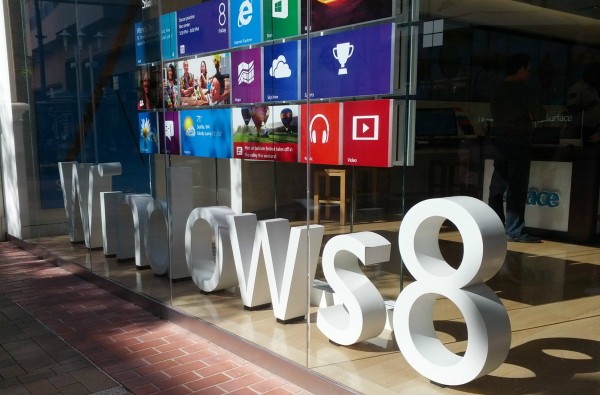
    Every once in a while I find myself having to reinstall the operating system from scratch on my laptop. Unlike previous occasions when I would contemplate choosing between Windows 7 and Windows 8 as the default OS, this time around something rather strange has happened. Instead of having to deal with conflicting thoughts, and even remorse, I installed Windows 8 and never looked back. I now wear my “Windows 8 user” tag proudly and not with regret.

    If you asked me whether I really want Windows 8 not much longer than two months ago I would have said that “I love and miss Windows 7” — and for good reasons at the time. My complaints mostly focused around the Modern UI, which was designed with tablet use in mind and not for users like me (and likely you as well) that are accustomed to Microsoft’s operating systems on more traditional devices like full-fledged PCs and laptops. So what changed?

    Blame It on the iPad

    A couple of weeks ago I went on a short trip and instead of carrying around my laptop with me, like I always do, I took iPad 2 instead (because it’s lighter and easier to carry around). The iPad forced me to deal with an app-centric tablet environment for a couple of days and, even though I couldn’t do much real work on it, I managed to successfully carry out most lighter tasks — watching some YouTube videos, chatting with friends, browsing the web, doing some social networking stuff and so on.

    The experience using apps on a tablet compared to a traditional computer is totally different for me, mostly due to the hardware. But the iPad eased that transition. When I got back home and to my beloved laptop, Windows 8 started to look like a familiar face, someone that I never liked before, but after a brief separation we’ve suddenly become best pals.

    Embracing Apps

    By and large, apps on Windows 8 are just like apps on the iPad in the sense that they share a similar philosophy implementing essential functionality except, in my case, on the former there’s no touchscreen for that more intimate connection. I started to organize apps on the Windows 8’s Start screen just like I would on the iPad and to download more useful ones to complement the already available offering.

    Nextgen Reader is one of my favorite apps available on the Windows 8 ecosystem, as it allows me to keep track of all the news that interests me and because the app features a live tile that regularly updates with new entries. I often glance at the start screen at which point I catch up on worldwide events and even weather (something that I’ve grown to like having there before heading out). I can also see the latest interactions from Twitter or Facebook on the People tile and chat with Facebook friends straight from Messaging. Before using the iPad to get my kicks while I was away, none of these things seemed natural to use on a laptop running Windows 8.

    Embrace Functionality

    So I got in bed with apps, but to my surprise I also started to enjoy the search functionality that became second nature after months of awkward use. Press the Windows key, start typing and I’ve got my apps, files and settings right there without having to look for them (which I now find to be an outdated method even on Windows). What’s more, the transition between the Desktop — where I do spend most of my time for multitasking — and the new Start menu doesn’t bother me anymore. To my surprise I even like having notifications for emails (which I don’t know why it’s not on by default).

    After having used Windows 8 for a while even my corner of the screen hunting has much improved. I can’t remember a Microsoft operating system that forced users to keep hitting the corners of the screen so much as Windows 8 does, and this requires some training to turn into a habit. Months later and I’m on board with it up to a point where I’ve mastered the skill of switching between apps or triggering the Charms menu with little to no mishaps in the process. I find myself using the mouse gestures as the sole means of navigation.

    Uniform Design

    Having an HTC Windows Phone 8X, which comes with Windows Phone 8, has helped the falling in love process. The smartphone operating system does come with its limitations, which I still haven’t gotten used to so far, but paves the way towards a smoother transition between two different devices — smartphone and laptop — in a way that I feel like I’m moving from one room to another inside my house rather than from my place to a subpar hotel. The live tiles really work on Windows Phone 8 and I’ve embraced that they do provide a similar, and genuine, benefit on Windows 8 as well.

    I have always liked the design of Windows 8, which is fresh and provides useful functionality, but with more extensive use starts to provide an analogue experience, a natural connection between me and the machine. I now consider getting a Microsoft Surface RT to replace my Apple iPad 2 and even my laptop for writing and documenting articles, something that I couldn’t even grasp a couple of months ago. I suspect that most people that have used a Windows Phone 8 or Windows 8 device will have no trouble in adopting the other after a while.

    I was Wrong

    Admitting defeat, or in this case conceding that Windows 8 is better than anything I have ever used before, does not come lightly. But, as any respected early adopter and most especially traditional computer user I must admit to being wrong about Windows 8.

    So today I join my colleagues Alan Buckingham and Joe Wilcox in saying that “I love Windows 8”.

    Photo Credit: Joe Wilcox

  • T-Mobile-MetroPCS sails through FCC without even a vote

    The T-Mobile-MetroPCS merger is apparently so uncontroversial that the Federal Communications Commission didn’t even find a reason to vote on it. Instead of having the FCC’s five commissioners review the merger, the agency’s staff approved the deal in what is known a bureau-level decision, usually reserved for routine transactions.

    So far the T-Metro deal has sailed past regulatory obstacles. The U.S. Department of Justice declined to initiate any antitrust review last week. The deal’s biggest remaining hurdle is a vote by MetroPCS shareholders on April 12. The MetroPCS board has already unanimously approved the deal, but institutional shareholders are opposing it, trying to hold out for a better terms.

    The lack of a full commission review and vote is sure to earn the ire of the Communications Workers of America, which anticipated the FCC’s move earlier this week and tried to stop it. The “full Commission has voted on much smaller transactions, including the $72 million Guam Cellular/DoCoMo Guam transaction and the $2.8 billion AT&T/Dobson deal,” CWA said in a statement Monday. “There is no reason that the full Commission should not fully evaluate and assess all the elements of this $30 billion deal.”

    Considering the deal would merge the country’s fourth and fifth largest carriers, you’d think the deal with merit the commission’s full attention. But in its declaratory ruling, the FCC’s Wireless Telecommunications Bureau staff said that the benefits of the deal for competition and the public interest were numerous:

    … we find that the transaction is not likely to result generally in competitive or other public interest harms. In addition, to the extent there may be some possible competitive harms in selected geographic areas, we find that these possible competitive harms are outweighed by certain public interest benefits likely to result from the proposed transaction. Such benefits include the facilitation of Long Term Evolution (“LTE”) deployment, the expansion of the MetroPCS brand into new geographical markets, the development of a more robust, national network, improved quality of service, and the strengthening of the fourth largest nationwide service provider’s ability to compete in the mobile broadband services market.

    Related research and analysis from GigaOM Pro:
    Subscriber content. Sign up for a free trial.

  • Vevo’s new live TV channel: it’s all about devices

    Vevo took another step towards becoming a full-on music TV network Tuesday with the launch of Vevo TV, a 24-hour live stream of curated programming. The channel is using MTV-like VJs, and is at launch available on the web as well as on mobile devices, Roku boxes and Xbox 360 gaming consoles.

    The company wants to eventually take Vevo TV to cable distributors to compete heads-on with MTV, according to an Adweek report, and it is also thinking about launching genre-specific live streams. Think Vevo Hip Hop, for example. But ultimately, going live is all about devices and the way they’re changing how we watch TV.

    Vevo has put a lot of work into apps for mobile and connected devices, which it built in-house with the help of a small team of San Francisco-based developers. Mobile was a big success for the company early on, and the launch of the Xbox app a year ago “turned out to be wildly successful,” as Vevo’s product and tech SVP Michael Cerda put it when we talked about the subject a few months ago.

    Vevo followed up with a Roku app in December, and Cerda told me that he wants to tackle additional connected TV platforms as soon as possible. “There is a huge opportunity for us there,” Cerda said.

    Continuous playback combined with curation makes a whole lot of sense for something like music videos on connected TVs. Users don’t want to pick up their remote control to pick and choose every single video, but instead want something up and running in the background without interruption. And if a viewer is ever bored by what’s playing on Vevo TV’s live stream, then there’s always tons of on-demand content available right within the same app. It’s the best of both worlds.

    So how do Vevo’s cable plans fit into this? Cable obviously has a much wider reach than a device like Roku, but the real lure are cable-sized ad-budgets. One could argue that Vevo might compete with itself if the same programming is available on cable set-top boxes and connected devices. But ultimately, those set-top-boxes are changing, and the distinctions between streaming and cable distribution are going to become less and less visible to consumers (to hear more about the future of TV, check out our paidContent conference in New York next month).

    In that world, a live TV channel – distributed on as many platforms as possible – will guarantee that consumers will always access to Vevo, no matter whether they’re streaming or viewing plain old TV. And that’s a smart move.

    Related research and analysis from GigaOM Pro:
    Subscriber content. Sign up for a free trial.

    • Facebook Announces Mobile DevCon 2013 Cities and Dates

      Today, Facebook has unveiled the cities and dates for their 2013 Mobile DevCon.

      This year, you’ll have three chances to catch the mobile developer conference: april 18th in New York, May 2nd in London, and May 7th in Seoul, South Korea.

      “We’ll have sessions for iOS, Android and Mobile Web developers. There’ll also be sessions dedicated for Product Managers. We’ll be covering Open Graph, social games, Mobile App Install Ads, and our mobile SDKs – but the focus is helping you grow your apps. In addition, there will be sessions on how we at Facebook build our own mobile apps,” says Facebook.

      You can also look forward to session with companies who have worked with Facebook and built for mobile like GetGlue, Fab.com, and Zeebox. The DevCon concludes with one-on-ones with Facebook engineers and product managers.

      Facebook warns that “this is a highly technical event – we’ll be deep in product and code,” but the event is open to any mobile developers, engineers, or product managers that are “at the sharp end of mobile app development.”

      Facebook says that they have over 680 million active users on mobile, so you know when you’re developing with Facebook you’re developing for a giant audience.

    • Google to pay $7 million to settle Street View data collection privacy case

      Google Street View
      Google’s (GOOG) Street View data collection practices have gotten it into legal hot water throughout the world and on Tuesday the company agreed to pay $7 million to settle charges leveled  by 38 state attorneys general that it improperly collected personal data from unsecured wireless networks from around the United States. Google maintains that it was unaware that some of its Street View employees were collecting the data, which it admits included “URLs of requested Web pages, partial or complete email communications, and any confidential or private information being transmitted to or from the network user while the Street View cars were driving down streets.” As part of the settlement, Google will also have to run a training program for at least the next decade instructing employees on how to respect users’ privacy while collecting data from Street View and other services. A press release on the settlement issued by the Massachusetts State Attorney General’s office is posted below.

      Continue reading…

    • Samsung Galaxy Note III May Drop AMOLED For LCD To Enhance S Pen

      Samsung Galaxy Note III

      AMOLED displays have been a favorite of Samsung’s for several years and according to industry insiders, could be replaced by an LCD screen in the upcoming Galaxy Note III. Company officials have been hearing through the grapevine that Sharp’s latest LCDs are the best to date. This news comes less than one week after Samsung purchased a 3 percent stake in Sharp. Switching to a Sharp LCD will supposedly improve the experience of using S Pen which is one of the Galaxy Note’s biggest features. Whether that claim is true or not has yet to be made official by either company.

      Source: SamMobile

      Come comment on this article: Samsung Galaxy Note III May Drop AMOLED For LCD To Enhance S Pen

    • Prescription Lenses No Obstacle For Google Glass

      Glass_prescription_frames

      Google put everyone with less than perfect vision at ease today by announcing Glass will work with prescription lenses. Google posted a picture of Glass team member Greg Priest-Dorman sporting such a pair. This news is not exactly a surprise as a prescription lens equipped set was spotted in NYC earlier this year but it’s nice to hear something official.

      Google said Glass will support both prescription lenses and frames. For the mega-stylish among you this likely means designer frames will also be a go. Unfortunately the initial “Explorer Edition” release version will not accept the alternate lenses and frames. If you wear glasses you’ll have to go with contacts or just wait. Google said the prescription version will be available later this year.

      Source: Glass on Google+

      Come comment on this article: Prescription Lenses No Obstacle For Google Glass

    • When Chrome hogs memory, try OneTab

      Once upon a time Google Chrome was considered the go-to browser for those looking for a fast, speedy browser, even on low-powered computers. These days, however, those running older 32-bit OSes with 4GB or less than RAM might struggle to reconcile the sluggish performance they witness on a day-to-day basis with the supposedly nimble Chrome.

      The problem with Chrome — and Firefox too — is that the more tabs you have open, the more memory Chrome gobbles up. It doesn’t take much to assign gigabytes of RAM to Chrome, which may leave your computer creaking at the seams. Short of closing down those tabs, what can you do? The solution lies in a tiny, elegant add-on called OneTab for Chrome 1.3, which has just been launched.

      OneTab is a tiny 85KB download that adds a small, unobtrusive button to the Chrome toolbar. When your browser’s demands become too much, clicking this button sees all of your tabs magically disappear, reduced to a list in a single browser tab. And as the tabs close, so too does Chrome return RAM to your system, with an instant improvement in performance.

      OneTab claims to be able to reduce memory consumption by up to 95 per cent – from gigabytes to one or two hundred megabytes – and in some cases it may even free up CPU cycles too, as script-based sites are quietly folded into the background.

      This is all well and good, but what about the tabs you just closed? You still want access to them, right? No problem – just click a tab entry in the list to restore it, or click Restore All should you want to bring them all back to life. As tabs are closed, restored and closed again, so OneTab’s history list builds up and your tabs get grouped by the last time they were shut down. The history survives different Chrome sessions too, so nothing is lost when you close down your browser.

      This list can also be managed, so you can delete unwanted tabs completely — either individually or by group. One drawback is that a tab’s history isn’t restored with the tab (you can still access previous websites via Chrome’s own History though). OneTab also allows you to share groups of tabs as public webpages, plus export and import previous groups for backup and syncing to different computers.

      It all adds up to one clever, simple-to-use extension for any Chrome user, although those struggling to maintain multi-tab setups on older, lower spec’d machines will of course see the most benefit. And for any jealous Firefox users out there, the developers behind OneTab promise that a Mozilla-friendly version is in development.

      OneTab for Chrome 1.3 is a freeware download for Windows, Mac and Linux computers runningGoogle Chrome.

      Photo Credit: janecat/Shutterstock

    • Measuring Creativity: We Have the Technology

      At the start of an exam, a student openly wondered, “But Professor Einstein, this is the same exam question as last year!” To which the great man supposedly replied, “Correct, young man, but we need to find new answers.”

      When it comes to marketing, this is precisely the challenge. Managers are looking for answers to their problems that are both novel and relevant. Where do these answers come from?

      According to the seminal work of psychologists Joy Paul Guildford and E. Paul Torrance in the latter half of the last century, people generally use two different approaches to problem solving: convergent thinking and divergent thinking. Convergent thinking refers to intelligence rated by IQ tests, or tests that measure rational, problem-solving abilities. Convergent thought is analytical, logical and controlled. It means one “right answer” for a given problem.

      In contrast, divergent thinking refers to the ability to come up with many solutions or ideas for problems that don’t have one solution. It refers to associative and intuitive thought, and thinking that requires flexibility. It’s the ability to develop many possible solutions to a problem, some of them unique and novel, which may, though, differ in their quality.

      Clearly, if you’re going to be creative, you need to apply divergent thinking. It would seem, to be a no-brainer. But the numbers show that remarkably few people engage in divergent thinking. We did a quick search of academic publications to get a handle on the scale of the problem. About 850 books and articles popped up on the Thomson Reuters © WEB of KNOWLEDGE database when we searched for articles that correlated to ‘creativity’ AND ‘marketing’. By contrast, when we searched for ‘analysis’ AND ‘marketing’ we got approximately 89,500 published papers.

      At least part of the explanation for this is that people feel powerless when it comes to creativity. It’s not something they can really control or measure. And because of that, they feel that they can’t really manage it.

      This belief is almost certainly wrong. In fact, creativity can be measured and managed.
      We know this in large part thanks to the work of Jonathan Plucker, a psychologist from Indiana University. He reanalyzed data from a study that E. Paul Torrance had conducted in 1972 with 400 children from a Minneapolis elementary school. Torrance had applied his now famous Torrance Test of Creative Thinking (TTCT) to this sample to measure the creativity of the participants.

      What Plucker did was match the 1972 TTCT findings to the children’s creative accomplishments as adults, measured as publicly recognized creative achievements (e.g. inventions, published articles, patents earned, buildings designed, ad campaigns developed, awards for creativity, etc.). The results showed that the correlation between the TTCT measures and for lifetime creative accomplishment was more than three times stronger than the correlation between creative accomplishment and childhood IQ.

      Clearly, we do have the working tools available to assess levels of creativity in people. But it gets better: the TTCT methodology can be adapted to assess the level of perceived creativity in a product or a process. Our forthcoming article in HBR for example, shows how we can both measure the perceived creativity of a TV advertisement, breaking it down into various different types of creativity, and link that creativity to subsequent purchase behavior.

      Bottom line, the choice is really ours. We have the technology to find the linkages between creativity in persons, processes, or products and ‘hard’ business-related outcomes. Once we start using it we’ll discover a lot of interesting relationships.

    • FCC approves T-Mobile/MetroPCS merger

      T-Mobile MetroPCS Merger
      Sorry, AT&T (T) — it seems that the Federal Communications Commission is willing to let T-Mobile merge with another company after all, as long as it doesn’t involve you. Bloomberg reports on its Twitter account that the FCC has approved the proposed merger between T-Mobile and MetroPCS (PCS), which still has to be approved by MetroPCS shareholders to become official. This last step could be particularly tricky, however, since some shareholders last year filed a lawsuit to block the merger while accusing the companies of “cheating shareholders” by “drastically” undervaluing MetroPCS’ worth.

    • Ford Fiesta ST gets flogged in Belgium

      2014 Fiesta ST

      So here it is. Ford’s littlest big gun, the new 2014 Ford Fiesta ST. It’s powered by a 1.6-liter EcoBoost four cylinder that generates 197 hp and 214 lb-ft of torque. Not stump-pulling power mind you, but enough grunt to bring a smile to your face, especially if you’re rowing through the six-speed manual transmission. Ford of Europe recently released this video of the new Fiesta ST being flogged by David Put, a dynamics specialist for Ford at the legendary Lommel course in Belgium. Check it out after the jump.

      Source: FordofEurope.com

    • Guess what? Flash is vulnerable again…still

      On the day Microsoft promises an Internet Explorer 10 update that enables Adobe Flash without white-list restrictions, guess what happens? Adobe releases another Flash security bulletin. This is the wrong contest, competing with Oracle’s Java to see which can be the most vulnerable platform on your computer.

      An official statement from Adobe’s Wendy Poland informs that this latest update is “to address security updates in Adobe Flash Player 11.6.602.171 and earlier versions for Windows and Macintosh, Adobe Flash Player 11.2.202.273 and earlier versions for Linux, Adobe Flash Player 11.1.115.47 and earlier versions for Android 4.x, and Adobe Flash Player 11.1.111.43 and earlier versions for Android 3.x and 2.x. These updates address vulnerabilities that could cause a crash and potentially allow an attacker to take control of the affected system”.

      Once again, users will need to update Flash immediately to avoid potential danger. A better suggestion is, of course, simply not to install the software to begin with, but that remains a tall order for most web surfers as the platform continues to power parts of many websites we visit on a daily basis.

      As always, remember to never install the update when prompted by a website, but to instead, head to the official Adobe site to grab any potential updates. Even then, you may want to hold your breath as you surf.

      Photo Credits: maraga/Shutterstock

    • doubleTwist updated to v2.0, adds streaming Magic Radio

      doubleTwist_google_play_banner

      doubleTwist released a new version of their Android app today that adds a streaming music service named Magic Radio. The new v2.0.0 adds a personalized, streaming music service with access to over 13 million songs. According to doubleTwist, the doubleTwist Player app will examine your music library to create new, infinite playlists from the streaming service. Users can also create their own streaming playlist based on songs in their library or from scratch. Magic Radio is a $3.99 per month service that does not use ads so you can enjoy your music uninterrupted. However, in adding the new Magic Radio service to the app, it appears doubleTwist has removed the Internet Radio feature judging by reviews left in the Google Play Store. If that was an option you enjoyed and used, you may want to hold off on updating until we see whether doubleTwist has a change of heart and adds it back in.

      Check out the video below introducing the new Magic Radio service. To give the doubleTwist Player a try, use one of the download links below.

      Click here to view the embedded video.

      QR Code generator

      Google Play Download Link

      Come comment on this article: doubleTwist updated to v2.0, adds streaming Magic Radio

    • One secret about Ray Ozzie’s secretive startup is out: It will tap Amazon’s cloud

      Ray Ozzie, as is his practice, has been nearly silent on the topic of his new startup, Talko. But now we know that it, like thousands of other startups, will use Amazon Web Services. How do we know this? Ray’s Talko colleague Ransom Richardson spoke at a local AWS meetup in Cambridge, Mass. Monday night, according to several attendees.

      Ray Ozzie

      Ray Ozzie

      Richardson spoke about remote management but did not offer many (or any) details about Talko’s product or its timing, according two attendees. “We did learn that they run on AWS and he said it would be a communications service for mobile — something that takes into account the pervasiveness of mobile devices and tries to provide a more engaging experience,” one attendee said. That’s pretty much all that Ozzie has said publicly about Talko, which was once called Cocomo.

      Last March, Ozzie signaled that he was open to using a wide array of services including but not limited to those from Microsoft, where he was chief software architect then chief strategist and which he left in 2011. Talko has netted $4 million in funding that we know about.

      The Talko team also includes Neil Ozzie, (Ozzie’s son), Eric Patey, and Matt Pope. Patey, Pope and Richardson were with Ray at Groove Networks, his last startup, which Microsoft acquired in 2005. A check of LinkedIn also shows other employees including Richard Speyer, another Microsoft veteran who also spent time at Endeca and Howard Nager, from Digitas and Microsoft. Some have been with him since his days at Iris Associates, the Lotus Development Corp.-affiliated company that built Lotus Notes, now a part of IBM.

      There has been speculation that Talko/Cocomo is working on a Mobile backend as a Service (MBaaS). But for now we’ll be stuck in guesswork mode because Ozzie’s not talking. Reached by email, Ray Ozzie had no comment.

      Related research and analysis from GigaOM Pro:
      Subscriber content. Sign up for a free trial.

    • 7 talks about fruit flies

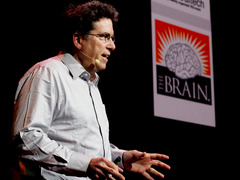
      Fruit-Fly“Raise your hand if you think that basic research on fruit flies has anything to do with understanding mental illness in humans,” David Anderson begins today’s talk, given at TEDxCaltech.

      David Anderson: Your brain is more than a bag of chemicalsDavid Anderson: Your brain is more than a bag of chemicalsWhile few hands shoot in the air, Anderson goes on to explain the connection — that research conducted by manipulating brain chemicals in fruit flies is giving us valuable insight into the brain circuitry of emotions and mental illness. And these neural underpinnings are more complex than many think.

      “We tend to believe — and the popular press aids and abets this view — that [psychiatric disorders] are a chemical imbalance in the brain,” says Anderson. “As if the brain were some kind of bag of chemical soup full of dopamine, serotonin and norepinephrine.”

      The brain circuitry of mental disorders are complex, and yet the medications we’ve used to treat them for the past two decades work from a simple model — they treat every part of the brain as if it were the same. This is one of the big reasons that current psychiatric medications don’t work well, says Anderson, and why they have many unpleasant side effects that lead many to avoid them.

      Explains Anderson, ”Using them to treat a complex psychiatric disorder is like trying to use engine oil by opening up the can and pouring it all over the engine block—some of it will dribble into the right place, but a lot of it will do more harm than good … What we need to do is use our ingenuity and our scientific knowledge to try to design a new generation of treatments that are targeted to specific neurons and specific regions of the brain that are affected in particular psychiatric disorders.”

      Anderson’s lab approaches this challenge in an interesting way — by asking questions like, “How long will a fruit fly stay angry if we inhibit its dopamine system?” To hear how this all works, watch this fascinating talk — a must-see for anyone who has or knows someone with a mental disorder.

      Fruit flies, otherwise known as Drosophila, are the workhorse of brain research. Here, a playlist of TED Talks about research with these amazing insects.

      Gero Miesenboeck reengineers a brainGero Miesenboeck reengineers a brain
      Gero Miesenboeck reengineers a brain
      Instead of mapping the brain by recording the activity of every neuron — a daunting task — Gero Miesenboeck works the other way around. At TEDGlobal 2010, he shares his reverse engineering approach, revealing how manipulating neurons leads to a clear understanding of what they do.
      Michael Dickinson: How a fly fliesMichael Dickinson: How a fly flies
      Michael Dickinson: How a fly flies
      From an engineering standpoint, it is incredible that fruit flies are able to lift off, given the size of their bodies and the delicate structure of their wings. In this talk from TEDxCaltech, Michael Dickinson shares the marvel — and how it is made possible by the fly’s nimble brain.
      Eva Vertes looks to the future of medicineEva Vertes looks to the future of medicine
      Eva Vertes looks to the future of medicine
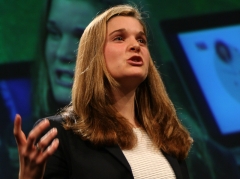
      At age 17, Eva Vertes discovered a compound that stopped the damage in a fruit fly’s nervous system, caused by heavy metals. Many think this could be a first step toward a treatment for Alzheimer’s. In this talk from TED2005, Vertes walks us through that research, and shares an exciting possibility — that cancer could potentially be used as a treatment.
      Read Montague: What we're learning from 5,000 brainsRead Montague: What we're learning from 5,000 brains
      Read Montague: What we’re learning from 5,000 brains
      Fruit flies and mice have long been the organisms we use to study the brain. At TEDGlobal 2012, Read Montague shares the tool — fMRI — which is allowing his lab to study thousands of human brains as they interact with each other.

      And some TEDx Talks to watch:

    • Android Tablets To Overtake The iPad This Year

      Android devices may be locked in a heated battle for supremacy with the iPhone, but the iPad has never really had much competition. Cheaper devices, like the Nexus 7, has ensured that some players find some form of success, but Apple is still the company to beat in the tablet market. That all may change this year.

      IDC released a revised tablet market forecast for the year today with the major takeaway being that Android tablets may finally become the dominant player in the market. The availability of cheap tablets, most noticeably Android tablets, will lead to tablet shipments to see a sizable increase this year.

      The firm predicts that the worldwide tablet market will ship 190.9 million devices over the course of this year with Android making up 48.8 percent of the shipments. Apple isn’t too far behind, however, with 46 percent of total shipments. Android may become the dominant player this year thanks to the wide breadth of options available, but it’s incredibly impressive to see Apple stand toe-to-toe in shipments with only three models.

      Both iOS and Android will see some losses in their marketshare over the next five years as Windows 8 and Windows RT tablets start to take hold. IDC predicts, however, that these Windows tablets will be much like their Windows Phone 8 counterparts – a distant third place with Windows 8 tablets expected to only command 7.4 percent of the market by 2017.

      “Microsoft’s decision to push two different tablet operating systems, Windows 8 and Windows RT, has yielded poor results in the market so far,” said Tom Mainelli, Research Director, Tablets. “Consumers aren’t buying Windows RT’s value proposition, and long term we think Microsoft and its partners would be better served by focusing their attention on improving Windows 8. Such a focus could drive better share growth in the tablet category down the road.”

      Android Tablets Will Overtake The iPad This Year

      Those who prefer eReaders over tablets may not like what’s coming next as IDC’s final prediction for the next five years sees the tablet precursors only having a few more years of growth ahead of it before the market starts an irreversible downward trend in 2015. By then, however, most consumers will have probably switched to multimedia tablets as the market will drive down prices to super affordable levels by then.

    • Apple warned to spice up the iPhone 5S or risk becoming ‘boring’

      Apple iPhone 5S Analysis
      How do we know that Apple (AAPL) is facing its most intense pressure ever in the smartphone space? Because longtime Apple watchers like iMore’s Rene Ritchie are starting to get antsy and are encouraging Apple to make a bigger splash with its next-generation iPhone. In a lengthy and thoughtful opinion piece, Ritchie frets that Apple has become too comfortable with its pattern of releasing a major iPhone revamp one year and then releasing a minor refresh the next year, as was the case with the iPhone 3G and 3GS, and then the iPhone 4 and 4S. He says that if the company follows the same pattern and releases a refreshed iPhone 5 as the iPhone 5S, then it risks being seen as “boring” by some consumers and tech bloggers.

      Continue reading…

    • Google Confirms Glass Will Eventually Work With Prescription Lenses

      Greg_Glass_frames

      Geeks rejoice! Hot off exciting news from SXSW, Google just confirmed via the Google Glass G+ page that Glass will, of course, work with prescription lenses — that is, in future models. The design is still in the works. Apparently the Explorer Edition is not compatible with custom lenses, but Google says to expect the new design this year.

      As noted in the posting, the Google Glass design is modular, allowing for a wide range of options, including prescription lenses. Shown here is Greg Priest-Dorman, a member of the Glass team and an early pioneer in wearable computing, wearing one of the prototypes currently in testing.

      This shouldn’t come as much of a surprise. The team acknowledges that they understand it’s an important design consideration. Because, well, a lot of people have to wear glasses.

    • Google Now for Chrome changes EVERYTHING

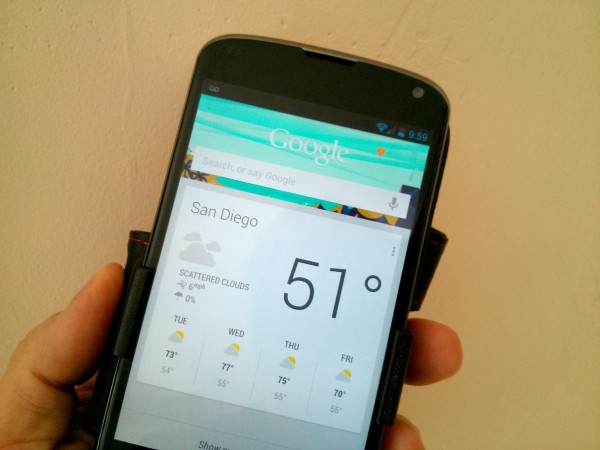
      François Beaufort, the developer who recently made headlines by outing Chromebook Pixel, is stirring up things again. He uncovered code that all but assures Google Now will soon come to Chrome and Chrome OS. I can’t overstate how enormously game-changing the service will be. Google Now is the purest evolution of sync and the killer app for the contextual cloud computing era.

      We are on the cusp of Star Trek computing, where information is available at the command of your voice and the machine is a personal assistant that anticipates you. Google Now delivers a hint of this future on Android devices. Bringing it to PCs puts the search and information giant ahead of everyone because, with the exception of a possible future Microsoft-Facebook partnership, no other company has the resources to provide so much personalized information to so many people in so many places in so many ways.

      Context is King

      If you’re looking for a reason why Apple stock falls, while Google’s rises, context is the reason — not innovation. The “i” word is overused anyway. Apple operates under the misconception that we have entered the post-pc-era. There is no such thing. I contend (again) that this is the contextual cloud computing era where how, when and where devices and services are used matters more. How people use iDevices change depending on context, but the underlying cloud services deliver it. Google gets context. Few other companies do.

      The cloud is all about context. Content follows users everywhere, independent of device. Your music is available anytime, anywhere on anything. You watch a movie in one context, sitting in man chair at the mall on a smartphone and resume on the big-screen TV at home. Content is the same, but context and device change. They say content is king. No, context is.

      The surest way to platform success, particularly around ones where third parties build other stuff and profit from it, is the killer application. More than one is even better. But I use application differently than most people do. I don’t refer to the software program, but how the thing is used. The context. The PC offered greater contextual usage than the mainframe. Suddenly a computer could be used inside a small business, home or school rather than fixed terminals connected to a mainframe. Smartphones and tablets provide even greater context, as do panels delivering ads on the street or recipes to your refrigerator. There are more applications — meaning ways the thing is used.

      But in this computing era, devices don’t stand alone. They are connected. In June 2007, I started calling out sync as the “killer application” for the connected-device era, warning: “If Google gets synchronization right before Microsoft, it’s game over”. No company does sync better than Google. But the term isn’t just about synchronizing information but getting your life in sync — that’s the practical benefit the search and information delivers, particularly with Google Now.

      Here and Now

      One dozen products — Android; Apps; Chrome; Gmail; Google+; Maps; Search; Search, plus your World; Shopping; Talk; and YouTube — form the current contextual platform that culminates in one service. Google Now, alongside Notifications and voice search, sits atop it all, proactively providing information relevant to you. The service taps into search, location and behavior — what you do when and where — providing presence and assistance. That’s scary to some people, but the information also saves time, like being warned about a traffic accident before starting your commute home or your flight is cancelled before heading out to the airport.

      Location services are critical to context as Google gives it. As a platform, everything changes the day some service seriously starts sending proactive advertising based on location. If you search for pizza on smartphone or tablet, there should be discount coupons with the results — scan and redeem on site. Or, using a service like Google Now, consumers should see coupons or discounts as notifications — if they opt-in to accept them. That’s how the search and information giant could eventually profit from the service and make it appealing to third parties.

      Google Now isn’t just about context, but context that directly matters to you in the moment. Hence “Now” in the name. Using the overused “i” word again, “life-changing” is often the term most people apply to real innovations. The World Wide Web, digital video recorder, Wikipedia, search and smartphone are all examples of products or services that viscerally changed behavior. Quickly. In less than a generation. My 18 year-old daughter can’t remember a time when she couldn’t pause live TV or easily record shows. Mosaic was just a research project and Netscape a beta browser the year she was born.

      Google Now certainly changes my life. But the application, the context, is confined to Android. The service doesn’t go everywhere I need it. By bringing Google Now and Notifications to Chrome, the process of keeping life in sync raises to a whole other level — and will give people who use the service on the PC all the more reason to want it on smartphone or tablet. That’s good for Android, even if Google chooses to support iOS.

      Last week, Facebook introduced a new News Feed that is uniform across devices. That’s the right approach. But Google does better by providing a contextual service which user experience promises to be uniform, also across devices, but more relevant. “Good Morning, Dave. Today is your assistant’s birthday. There’s a traffic jam on the I-5. ‘Skyfall’ is available to purchase from Google Play. Amazon Prime shipped your Gillette electric razor. Movie ‘2001: A Space Odyssey’ recorded over night”.

      Photo Credit: Joe Wilcox

    • Foundation Medical Partners Adds Calcano

      Lawrence Calcano has joined Foundation Medical Partners as a venture partner, where he will focus on the connected health and healthcare IT sectors. Calcano was at Goldman Sachs for nearly 17 years, and worked as a partner in the Investment Banking Division, as co-head or COO of the Technology Banking Group, and head of the firm’s East Coast Technology Group.

      PRESS RELEASE
      Foundation Medical Partners, a national healthcare venture capital investment firm, today announced that Lawrence Calcano has joined the team as a Venture Partner. Mr. Calcano joins Foundation’s healthcare investment team in assessing and managing investments in the connected health and healthcare IT sectors.

      Calcano has spent a significant portion of his career working with growth technology oriented companies from multiple vantage points, including as CEO, director, investor, and outside financial advisor.

      Calcano was at Goldman Sachs for almost seventeen years, where he became a Partner in the Investment Banking Division and served as Co-Head or COO of the firm’s Technology Banking Group (“the Tech Group”) from 1997 to 2006, and Head of the firm’s East Coast Technology Group beginning in 1993. Calcano has deep domain knowledge and deal experience working with startup and growth companies in technology, the internet, and e-commerce.

      He has served as an adviser to the CEOs of many of the most exciting growth companies over the years and has worked on over $40 billion transactions of all types, including public and private financings as well as mergers and acquisitions. In addition, Calcano was named to the Forbes Midas List of the most influential people in venture capital in 2001 (the inaugural year), 2002, 2004, 2005 and 2006. Calcano has served on the Boards of Directors for several companies over the years including 800Flowers, Freemarkets, Capital Acquisition Corp, ECI, Pivot Point Software, and Bite Tech.

      Mr. Calcano is currently CEO of i1 Biometrics, a connected health company that is developing sensors, wireless connectivity, and data analytics for sports and military applications (a Foundation portfolio company). i1 Biometrics is a spinout of Bite Tech, Inc., a maker of athletic protective and performance oriented devices, where Calcano served as Chairman and CEO for two and a half years.

      “Lawrence brings experience in IT and deal structuring to Foundation,” said Andrew Firlik, Managing Partner of Foundation Medical Partners. “He has worked with some of the fastest growing companies in the past two decades and he knows how to help them succeed.”

      Mr. Calcano joins the investment team at Foundation Medical Partners that includes partners Andrew Firlik, Lee Wrubel, Kevin Sharer, and Ted Laufik. The firm actively manages over $200 million in venture capital targeted toward start-up and early-stage companies. Foundation has remained exclusively focused on the healthcare technology market since the firm was founded in 2001, with a current market capitalization of its healthcare investments totaling approximately $2.0 billion.

      About Foundation Medical Partners Foundation Medical Partners is a national venture capital investment firm formed in 2001 with the vision of bringing together cutting edge healthcare expertise with deep company building experience. Foundation specializes in early stage venture capital for healthcare technology companies. Foundation Medical Partners was an early, active venture investor in many companies that subsequently went public or were acquired in strategic transactions, such as AtriCure (NASDAQ: ATRC), CardioNet (NASDAQ: BEAT), Combinatorx (NASDAQ: ZLCS), Immunicon (NASDAQ: IMMC, later acquired by Johnson & Johnson), Northstar Neuroscience (NASDAQ: NSTR, later acquired by St. Jude Medical), and Visiogen (acquired by Abbott), as well as a portfolio of other market-leading privately held firms

      The post Foundation Medical Partners Adds Calcano appeared first on peHUB.