
Blog

  • Paris Jackson: NFL “Offers” Her a Cheerleading Job

    Last week, Paris Jackson, the daughter of pop icon Michael Jackson, was spotted on the cheerleading squad for her L.A. school, The Buckley School. She showed off her short-cropped hair while cheering for her school’s basketball team.

    Now, TMZ is reporting that Paris might have a shot at becoming an NFL cheerleader. The publication spoke to Barbara Zaun, director of cheerleading for the Philadelphia Eagles cheerleaders. Zaun was effusive with her praise for Jackson and even suggested that she try out for the Eagles cheerleading squad. From the TMZ report:

    “We thought that she had a lot of poise, confidence, and enthusiasm in her cheer performance,” Zaun says … adding, “Paris has that ‘wow factor’ that makes a great cheerleader.”

    Zaun also told TMZ, “We hope that she will try out for the team and be an Eagles cheerleader.”

    Jackson will have to wait until she is 18 to try out for the Eagles, and even then it isn’t clear from the leaked video that she has the skills to be an NFL cheerleader. Still, no NFL team would pass up the publicity of having Michael Jackson’s daughter on their cheerleading squad, so this “offer” is probably at least half-serious.

  • Latest gloomy Apple analysis projects 25% chance of guidance miss

    Apple Earnings Analysis Q2 2013
    It used to be that Apple (AAPL) would intentionally low-ball its quarterly guidance so it could crush expectations with better-than-expected earnings. But now that Apple has started issuing more realistic guidance, it’s running the risk of missing expectations by a considerable margin. And according to a new estimate from Jefferies & Company analyst Peter Misek, there’s a significant chance that Apple’s earnings might be even worse than its own projections this quarter. Per StreetInsider, Misek released a new research note on Tuesday that not only slashed the company’s price target from $500 to $420, but also projected a 25% chance that Apple would miss its own guidance for the fiscal second quarter.

    Continue reading…

  • Pressly Inks $1.5M

    iNovia Capital and OMERS Ventures have backed mobile publishing platform Pressly to the tune of $1.5 million. The money will go towards marketing efforts. The company’s platform is designed to combine content from websites, blogs and social channels into “an interactive mobile experience.”

    PRESS RELEASE
    Pressly, a mobile publishing platform that helps media companies and marketers instantly increase their audience engagement, has secured $1.5 million in financing from iNovia Capital and OMERS Ventures.

    The funds will go toward marketing Pressly’s platform, which automatically converges numerous online content sources, such as websites, blogs and social channels, into an interactive mobile experience for tablets and smartphones.

    “Our product gives businesses a fast and easy way to take their huge investments in content to mobile users everywhere, in a beautiful, highly engaging way,” says Jeff Brenner, CEO of Pressly.

    Publishers and marketers are struggling to capture the attention of a growing mobile audience. Pressly allows its customers to curate their own content from around the web, including social and RSS feeds, into a branded HTML5 web app, that their readers will experience from a tablet or smartphone browser, rather than downloading an app.

    “In the time it takes to load a web page, you can hook your readers with an amazing mobile experience,” says Brenner.

    This innovative way to capture mobile attention is what drew iNovia Capital and OMERS Ventures to Pressly in the first place.

    “We know brands and publishers are looking for a platform to amplify their message on mobile devices – which is a far cry from the keyboard and mouse world. Pressly absolutely nails it with this product,” said Karamdeep Nijjar, a Principal at iNovia Capital.

    “At OMERS Ventures we invest in companies we believe can become global leaders. We think Pressly has huge potential due to its innovative products, strong management team and continuing market traction,” said Derek Smyth, Managing Director of OMERS Ventures.

    In stealth mode since 2011, Pressly has signed partnerships with leading media firms including Ziff Davis, The Economist and The Toronto Star as well as produced branded content marketing pieces for Global 2000 companies, such as IBM and Toyota. Last month Pressly started rolling out its platform to thousands of early beta users, and the response has been overwhelming from clients, said Brenner.

    According to a study analyzing millions of mobile visits in 2013, clients using Pressly to power their mobile content can enjoy up to 10 times more page views, and 4.5 times longer visits on their mobile property compared to standard industry benchmarks.

    Brenner says those numbers suggest Pressly is the perfect platform for organizations with a content marketing strategy, such as B2B marketers, as well as traditional publishers.

    The cloud-hosted service is now out of beta and open to the public with a free 30-day trial. After that, businesses will pay a monthly fee between $199 and $499.

    “We love that Pressly gives content publishers a low-risk, low-friction way to take their business to the mobile world, and experiment – the times are changing and that’s what’s needed to succeed,” Brenner said.

    About Pressly
    Pressly is a mobile publishing platform that gives publishers and marketers an easy way to engage a growing mobile audience. With just a few clicks, you can automatically converge your content from around the web into a beautiful, immersive mobile experience for tablets and smartphones. Trusted by major brands, B2B marketers and publishers around the world, Pressly is a powerful solution to take your mobile strategy into the future.

    About iNovia

    iNovia partners with exceptional entrepreneurs to build successful companies in high-growth sectors. The team is comprised of entrepreneurs and sector experts focused on Mobile, Internet and Digital Media. iNovia has $275M under management across three seed and early-stage funds. For more information, visit www.iNovia.vc or follow iNovia on Twitter at www.twitter.com/iNovia.

    About OMERS Ventures

    OMERS Ventures is the venture capital investment arm of OMERS, one of Canada’s largest pension funds with nearly $61 billion in net assets. It is an initiative of OMERS Strategic Investments (OSI), an investment entity with a mandate to build long-term strategic relationships with like-minded partners. As both an institutional angel investor and a later-stage investor, OMERS Ventures is looking for successful companies with significant growth potential and market opportunities. We are seeking like-minded partners with a shared vision of building a vibrant and successful knowledge economy.

    The post Pressly Inks $1.5M appeared first on peHUB.

  • NG Advantage Inks Equity Investment

    NG Advantage, operator of a Milton, Vermont natural gas compressor station, has raised an undisclosed amount of new funding. Investors include Boston-based Essex Flagship Investors Group, the Clean Energy Venture Group, and Boston-based developer David Donohue.

    PRESS RELEASE
    NG Advantage LLC today announced the initial closing of its first round of outside equity investment. With its Milton, VT natural gas compressor station online and customer deliveries beginning soon, this investment enables NG Advantage to grow quickly to provide the economic and environmental benefits of natural gas to more companies across New England and New York. Support came from an accomplished group of investors with broad experience in the natural gas industry, clean energy development, and disruptive technology across many sectors of the economy.

    Investors include Essex Flagship Investors Group, a private investment firm based in Boston comprised of senior professionals with extensive experience investing in, developing, and managing operating businesses in the energy sector. The firm is affiliated with Essex Hydro Associates and Flagship Energy Partners whose principals have a deep knowledge of the North American natural gas infrastructure and end user markets.

    Another key investor is Dr. David Donohue, a Boston-based developer of U.S. underground gas storage facilities and founder of IHRDC, the worldwide leader in knowledge, training, and competency development for the oil and gas industry. Dr. Donohue noted that NG Advantage is “facing a great opportunity” to advance innovation in the natural gas sector.

    Members of the Clean Energy Venture Group, an investment group that provides seed capital and management expertise to early stage clean energy companies, provided additional investments. “Clean Energy Venture Group is pleased to have participated in the recent capital raise by NG Advantage,” said Steve Kaufman, a partner in Clean Energy Venture Group. “As one of the most active early stage clean energy investment groups with a New England focus, we strongly believe that NG Advantage’s environmental and regional economic benefits will have a material impact by reducing emissions from fuel oil usage and helping industries geographically removed from gas pipelines take advantage of lower energy costs.”

    Experienced bankers and high tech venture capitalists, using their own funds, also invested in this round.

    “These resources will allow us to bring cheaper, cleaner natural gas to businesses, improving both their bottom line and their environmental footprint,” said Neale Lunderville, NG Advantage Chief Executive Officer. “These funds position NG Advantage to grow quickly to deliver the benefits of natural gas beyond the pipeline to large energy users around New England and New York. Work is underway for continued expansion later this year.”

    Seasoned entrepreneurs Tom and Mary Evslin founded the company in 2011 and Tom Evslin remains Chairman of NG Advantage. “We are deeply gratified with the strong support from these outside investors,” said Evslin. “Their experience across a range of industries will be critical to NG Advantage’s success.”

    About NG Advantage LLC: NG Advantage is the leading compressed natural gas (CNG) delivery service in the U.S., bringing the economic and environmental benefits of North American natural gas to enterprise customers without access to a pipeline. With customer contracts signed, its Milton, VT compressor station online, and TITAN trailers from Lincoln Composites ready to go, the Company will begin deliveries in March 2013. The Company’s customers are located across New England. Beginning in mid-2013, the Company will add other compressor stations throughout the region.

    NG Advantage compresses natural gas from an existing pipeline into specialized containers and delivers it via public highways – a virtual pipeline – directly to large industrial, commercial, and institutional users, providing them with cheaper, cleaner, and safer fuel. NG Advantage saves customers 30-40% on energy bills annually, reduces their CO2 emissions by 26%, and virtually eliminates harmful pollutants like sulfur dioxide and nitrous oxides.

    The post NG Advantage Inks Equity Investment appeared first on peHUB.

  • BitTorrent opens up its P2P live streaming service to anyone with a webcam

    BitTorrent officially opened up the beta test of its BitTorrent Live streaming service at SXSW Tuesday morning, allowing anyone with a camera to stream live video to an unlimited number of viewers.

    BitTorrent Live can stream straight from your webcam.

    BitTorrent Live can stream straight from your webcam.

    Broadcasters can either start streaming with their webcam, or use an app like Flash Media Encoder to stream their program. Users will have to download the BitTorrent Live plugin to tune into any of the streams on the platform. The BitTorrent Live website can be used to find channels to watch, and broadcasters can interact with viewers through chat rooms on their channels.

    BitTorrent hasn’t said yet how it wants to monetize Live, but there may be less pressure to do so than for other live streaming services: Live uses P2P for video broadcasting, so there is little to no overhead to facilitate streaming.

    BitTorrent Live is the brainchild of BitTorrent inventor Bram Cohen, who has been working on the underlying P2P protocol for a number of years. BitTorrent started to test the service with a limited number of live events back in 2011, and gradually invited more broadcasters to join. Check out this interview I did interview with Cohen about live streaming all the way back in 2010 below:

    Related research and analysis from GigaOM Pro:
    Subscriber content. Sign up for a free trial.

  • The Companies and Countries Losing Their Data

    With China hacking the US, the US hacking China, and LinkedIn and Facebook and credit card companies and Google and who knows who else all vomiting our data all over the web, I was intrigued when a new report on data loss ran across my desk from auditing firm KPMG.

    I spoke with Greg Bell, the firm’s information protection lead, to parse the data on who loses their information, and how.

    datalossindustry.gif

    How are you getting this data?

    Bell: First, we’re only able to use information that’s made public. We looked at U.S. and non-U.S.-based sources that registered data-loss. Whether it is a state with a notification requirement, an SEC filing or an FTC filing, some of these are self-reported. So while this provides a tremendous amount of directional information, there may be inaccuracies, or there may be an active breach going that’s on still under investigation [and not reported yet]. Second, it might be that in a certain country or certain location, there’s not an imperative or pressure to release that information.

    And third, we believe that some organizations have had a data breach and may not be aware of it yet. So this is not 100% accurate, but we believe this provides directional information. That’s why we’ve gone with percentages and not with total numbers.

    How is the threat evolving?

    There are organizations or groups causing these external factors — groups of organized criminal elements looking to rapidly monetize information; there are groups that have a social or other agendas — the term du jour is hactivist — and then we’re seeing an increase in foreign national threats.

    These groups are all targeting specific organizations. Organizations have gone from being a target of opportunity to a target of choice. What used to happen was the equivalent of walking through parking lot trying every car door. [A bad guy] would scan every company’s Internet presence. But what we’re seeing today is a target of choice — specific industries, specific companies, specific purposes. And they will use multifaceted types of attacks to gain the information they want. It changes the game.

    What industries are most at risk?

    What we see increasingly are three key industries. Obviously, governments are huge targets of choice. Financial services — that’s where the money is. And the technology industry, for a couple of key reasons: one, there’s intellectual property there, and two, these companies may provide pathways to other [targets]. Those are the three places we’re seeing the focused targets of choice, but we have seen targeted attacks across all industries, from the Fortune 500 to very small businesses.

    Selfishly, I have to ask: why are so many hackers interested in the media industry?

    It’s the nature of the information, the desire for monetization. The information has value. Whether that be, I want to download and distribute the latest version of a movie, or —

    Wait, you mean that level of hacking is so high because of all the people illegally downloading movies and music?

    Yes, piracy. That’s most of those targets.

    Eek, so we’re all hackers…not that I’ve ever illegally downloaded a song. [Nervous laughter. Awkward pause.] So what’s the lesson here for business leaders?

    The key is not to take an “Oh no, the sky is falling” approach, but to factor it into their consideration of risk. It means understanding how valuable your information is: the IP that makes them unique, the operational data they rely on every day, the information that may be entrusted to them by their employees or business partners. That value is being sought after by many other organizations. Think about, “What would happen to my business if my unique manufacturing technique was stolen by a foreign government? What would happen if the operational data I use every day to make decisions got compromised, and someone was changing that data to make it look worse or better than it actually is?” Organizations just need to realize that’s a risk.

    For most organizations, that discussion has been very IT-centric. But increasingly, it’s an executive management discussion and a board discussion.

    datalosscountries.gif

    Let’s talk about the global trends. One of your surprising findings is just how much the US is decreasing as a percentage of total hacking incidents. Do you think that gives credence to other governments’ assertions that they’ve been subjected to hacking attacks?

    Well, the US has always tended to be a little more transparent. So while the chart might show that five years ago the U.S. was 75% of the global total, it might just be easier to gather that information. What we’re seeing now is that all major foreign entities are very focused on the situation. More governments are getting involved, for the purposes of intelligence, economic development, and cyber offense and cyber defense as part of the next generation of warfare. Every major country is developing that kind of capability.

    So incidents [of data loss] everywhere are increasing, and people are more comfortable reporting incidents. Awareness is increasing. We’re also solving the easier problems; the low-hanging fruit, the easy security holes have been shored up. All the easy information has already been dealt with. Now they’re looking for very complicated information. Not just breaking into your website, but going after your business partners, your employees, your email account, even targeting former employees. It’s much more insidious.

    So is this something you see as requiring national policies, government intervention? Or is this something individual firms will have to grapple with on their own?

    I think you’re going to see an increase in national policy [in the United States] and elsewhere. That alone is not going to solve the issue. For companies that operate globally, across many borders, one country’s policy will not protect them. It’s still going to be up to the corporation to take prudent care.

    So it’s sort of like how the government may provide a police force, but banks and stores still have a security guard.

    Exactly. I like that metaphor.

  • Soluto: Our vision has always been to let people do more with their technology [Q&A]

    I’ve been a user, and a fan, of Soluto since the Tel Aviv-based PC management service launched back in 2010. It helped me reduce my boot time by a few seconds, but more importantly it halved the boot time of my in-laws’ PC. A move to the cloud means the service now lets me remotely solve issues on several PCs belonging to less tech-savvy friends and family, and I’d definitely recommend it.

    Soluto offers various useful features — it can cut boot times and de-clutter browsers; it will let you remotely manage system security, and even add a Start menu to Windows 8. By collecting anonymous user data, Soluto also offers a fascinating insight into PC use around the globe. Did you know, for example, that in Vietnam the average PC takes a minute less to boot up than PCs in the US and UK? I chatted to Tomer Dvir, Co-founder and CEO of Soluto, about the service, and he told me how it’s evolved and how the Soluto community is actively working to find solutions to the system and software crashes that plague PC users everywhere.

    BN: For the benefit of any readers not familiar with Soluto, can you tell me about the service and what it does?

    TD: Soluto is a service for managing multiple PCs, designed for the small business IT person or just anyone who’s helping friends and family with their PCs.

    Soluto makes it simple to support PCs — it gives visibility into the managed PCs from any browser, wherever you are.

    It helps you solve PC issues and undertake standard maintenance work (such as installing and updating apps, shortening boot time, monitoring PC hardware) without the need for using remote access. In addition, it allows you to keep the PCs you manage in top shape from anywhere even when they’re off without disrupting people’s ongoing work.

    Most importantly — Soluto notifies you by email when there is an important task on an individual PC that requires your immediate attention, thereby avoiding the need to constantly check the PCs.

    BN: Soluto used to be a desktop program for speeding up Windows boot then it switched to the cloud, and added the ability to remotely manage/fix other people’s PC. Why the change?

    TD: Our vision has always been to let people do more with their technology.

    When we started building our first product, we focused on bringing the best out of a single PC. As we progressed, we wanted to let people manage more than one PC and let them do that from anywhere, which naturally led us to build a web-based service with remote access capabilities.

    BN: You launched at TechCrunch Disrupt and won the competition. How did that affect the business?

    TD: Launching Soluto at TechCrunch Disrupt and winning the competition was an awesome experience and a huge surprise for us (we launched a PC management service in a room full of 2,000+ Macs).

    The immediate effect was a boost in downloads, and seven weeks following the competition Soluto had more than 500,000 downloads in over 150 countries. We didn’t expect something that crazy and weren’t ready to scale up so fast. We had to improve our solution so we could expand quickly; therefore, we decided to move to the cloud.

    In addition to the technical aspect, the user scale we reached generated huge amounts of feedback that was really eye-opening with respect to the direction people wanted Soluto to take. We quickly moved to the next phase and started working on a service which helps people manage multiple PCs.

    Beyond that, there were the obvious memorable media moments, like being featured in the NY Times or being picked as Top Windows Software at Lifehacker in 2010.

    If you’re an Internet entrepreneur, especially if you’re building a consumer service, we strongly recommend checking out TechCrunch Disrupt as a launch platform.

    BN: Soluto has an option to allow Windows 8 users to switch to classic desktop mode and bypass the Start screen. What made you decide to add that as a feature?

    TD: We were lucky to be one of the companies that had an opportunity to review Windows 8 before it was launched and quickly realized that some people might prefer to keep using the old Start menu and desktop (as many people just don’t feel comfortable with changes). We’ve decided to let those people work the way they like.

    Even among Soluto’s employees, some love the new Start screen, while others prefer to keep using the old Start menu.

    BN: You’ve recorded PC boot times across the world, what countries are the fastest and what are the slowest?

    TD: We’ve recently released some interesting stats regarding boot time. One of the analyses we did was average boot time per different countries. The fastest countries are Vietnam (2:28 min), Brazil (3:06 min) and Germany (3:00 min), while the slowest countries are the UK (03:27 min), the USA (03:26 min) and Japan (03:20 min). In addition to the country stats, you can find some really cool facts there, for example — the average person spends no less than 1.6 hours a month watching his PCs start up.

    BN: What type of PC data do you collect and how do you use it?

    TD: The PC data collected from our users is technical information required to help them perform standard maintenance for the PCs they support and solve PC issues. We never keep any personal Information — only technical info such as hardware and software installed, PC crashes and non-responsive apps events, usage of browsers and installed toolbars.

    Based on this data, we provide our users with better visibility into their network and the PCs they manage. In addition, reports are being produced so that users can better measure and monitor their PCs — how much storage PCs are consuming, how much time is being wasted on boots and crashes, average power cost and power consumption, to name but a few examples.

    In addition, we aggregate all of this data anonymously and provide our users with recommendations about what other people do to help them make decisions on boot items, toolbars, apps they’re using etc.
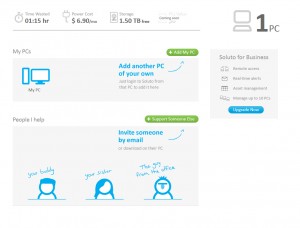
    BN: When programs crash Soluto tries to find a solution, but in my case never does. Does Soluto find solutions for a lot of problems?

    TD: Helping users solve crashes was always part of our vision. In a typical week, more than 300,000 crashes are detected by Soluto and in respect of every crash we collect a lot of technical information about the crashing application and other processes running during the crash. This information can help our users learn more about the crash they’ve experienced. For our community users, this information is very helpful when trying to solve a crash. Our community already helped in solving part of the crashes detected and today every time there is a crash on one of the PCs you manage, which we have a solution for, you get an email with the full solution and details on what to do next.

    Unfortunately, not all crashes have solutions yet, and there is still a lot of work to be done in that area. We encourage our users to join the community and contribute from their experience and knowledge.

    BN: How does Soluto make money?

    TD: Soluto has different pricing plans for both home users and IT businesses to accommodate the needs of our diverse user base.

    Home users can upgrade their account and enjoy features like remote access. They can also use Soluto for free up to a limited number of PCs.

    IT businesses can choose the package that works for them depending on the nature and size of their business by going here http://www.soluto.com/business.

    BN: What makes Soluto worth paying for as an IT solution?

    TD: Soluto gives IT professionals a different experience from any other tool out there today. It’s an offline service which works even if the PCs you’re supporting are off or in a different location. You don’t have to constantly check in and see what’s going on with your PCs as the service is proactive — it will notify you when there’s something important to do in clear actionable emails. In addition, Soluto helps you measure yourself and your network by providing visibility to stuff like asset management, power consumption and PCs performance. For business users it also includes a remote access feature.

    And most importantly, Soluto is designed for people. We believe IT is all about people who happen to also use PCs. That’s why the service communicates with both sides of the relationship — the IT person and the supported person. We have also added features like QuickQuestion, which lets the people you support communicate with you and ask you questions when they need your help.

    IT people using Soluto can really stand out as IT professionals — the people they support will understand what they’ve done to help them with their PC, and they’ll appreciate them for it.

    Photo Credit: fotoscool/Shutterstock

  • LinkedIn Reportedly Buys Pulse For More Than $50 Million

    The popular newsreader Pulse brings in 20 million users a day so it stands to reason that somebody would want to acquire such an audience. The only question that remained is who would come out on top in acquisition negotiations. We now may have our answer.

    All Things D reports that LinkedIn will purchase Alphonso Labs, the team behind the Pulse newsreader, for anywhere between $50 to $100 million. The business-minded social network reportedly beat out Microsoft and Yahoo, both of which were also interested in buying it.

    None of this is confirmed as LinkedIn and Alphonso Labs are both remaining silent. We should be hearing something later this week, however, if the deal went ahead smoothly.

    Unlike some acquisitions, I can’t see LinkedIn killing the Pulse newsreader. Instead, it’s more likely that LinkedIn will use the Pulse team’s design skills to redesign its own personalized news feed.

    We’ll continue to watch this story and bring you the official details of the deal when more is known. Until then, just imagine a LinkedIn newsfeed that looks less like this:

    Pulse LinkedIn buy

    and more like this:

    Pulse LinkedIn Buy

  • Bypass annoying Windows UAC prompts with ElevatedShortcut

    Launch some applications and they’ll display the Windows User Account Control prompt, asking “Do you want to allow the following program to make changes to this computer?”. And while this is great for security, if you’re running the same trusted program on a regular basis then you might begin to find it just a little annoying.
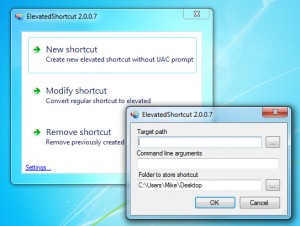
    You could avoid this by turning off UAC entirely, but that’s not ideal (it does have some security value). And so a better idea might be to use ElevatedShortcut. It’s a tiny portable tool which helps you to creates shortcuts that won’t generate a UAC prompt, no matter what you’re trying to launch.

    The program has a straightforward and very Windows-like interface. Simply launch it, click “New shortcut”, specify the program to launch (which you must trust 100 percent, because you are giving it the right to do virtually whatever it likes) and where you’d like your shortcut to be launched: the desktop, say. Then click OK, the shortcut will be created and you can use it right away.

    If you have an existing shortcut to a program then the “Modify shortcut” option will tweak this to again avoid the UAC prompt.

    And if you’re worried about the security implications of doing this, then you might appreciate the “Remove shortcut” option, which lists all the shortcuts the program has created previously and allows you to delete them (all, or individually).

    In our tests this all worked very well, but we wanted to understand more about how ElevatedShortcut worked. What was it doing, and could this have any other effect on our system?

    There was no reason to worry, though: a quick look at the properties of our new shortcuts revealed that they’re just using Windows Task Scheduler to bypass UAC. It’s been public knowledge for a long time that this is possible; all the program does it make the process simpler and more accessible.

    If you’re a little tired of UAC, then, ElevatedShortcut offers a useful and very convenient way to bypass it for programs you trust. Go grab a copy immediately.

    Photo credit: Ronald Sumners/Shutterstock

  • Egnyte opens up cloud options for its storage service

    Choice is becoming a big deal in cloud storage. Even customers with hybrid cloud implementations want to be able to pick the “back end” cloud that’s best for them.
    That’s why Egnyte, which already lets customers store their stuff on premises or in Egnyte’s cloud, will now let customers tap Amazon S3, Google Cloud Storage, Microsoft Azure and NetApp Storage GRID as well.

    egnyte external storage setup

    The Mountain View, Calif. company has always maintained that companies want to be able to keep some their files and other digital paraphernalia within their own data centers and some in external clouds. But till now external clouds consisted of its own considerable infrastructure — the company has 9 petabytes worth of cloud running out of data centers in northern California, Asheville, N.C. and Amsterdam.

    But, as we all know, latency is an issue in cloud world, so the addition of these massive third-party clouds, which run out of data centers around the world,  might appeal to companies with far flung offices.

    Egnyte is focusing more on enteprrise accounts and claims some big ones, including Young & Rubicam, the advertising giant owned by WPP, and for which Egnyte manages 125 TB worth of storage, according to CEO Vineet Jain.

    The company, with about 159 emplioyees worldwide, brought in $16 million in Series B funding last summer from Google Ventures and others, bringing total venture backing to about $32 million.

    Jain said he sees the pace of cloud storage adoption picking up and fast.”Last year we got one or two requests for proposals a month and now we get three to four per week. People have budgeted for this, they’re now comfortable with it. In 2007 or 2008 we’d bring on 10 TB every 15 days and now we add as much every 48 hours.  There is just a deluge of data and people need to deal with it.”

    The new EgyntePlus is available now. The market may be booming but so is the number of competitors. Box is very aggressive in targeting enterprise cloud storage market as are Panzura, Nasuni, OwnCloud and other companies including legacy storage giants EMC. And, don’t forget that the big cloud guys — Google, Microsoft and Amazon — have their own enterprise storage plays.

    Related research and analysis from GigaOM Pro:
    Subscriber content. Sign up for a free trial.

  • Crushpath Adds $6M

    Crushpath, a developer of sales software, has closed on $6 million in fresh capital. The Series A round is led by Chamath Palihapitiya, founder and managing partner of The Social+Capital Partnership, with participation from George Zachary of Charles River Ventures.

    PRESS RELEASE
    Crushpath, the company that brings out the salesperson in everyone, announced the launch of Pitch SitesTM, the new way to pitch anything, alongside a $6 million Series A round of funding. The financing is led by Chamath Palihapitiya, founder and managing partner of The Social+Capital Partnership with participation from George Zachary of Charles River Ventures who lead the company’s seed round in 2012. Crushpath changes the sales software game with a platform that gives anyone, salesperson or not, a way to pitch, get responses, and keep track of relationships.

    “Today, 90 percent of people are pitching something”

    “Today, 90 percent of people are pitching something,” said Sam Lawrence, Crushpath co-founder and chief executive officer. “These ‘sometimes salespeople’ are recruiters, journalists, realtors, business unit managers, agents, entrepreneurs. They spend their days convincing others but have nothing to actually help them do it. They’re stuck in emails, cold calls, and CRMs are just too complicated. 1988 called, they want their sales software back.”

    Pitch Sites Launch

    Crushpath Pitch Sites give people a way to create and deliver an online elevator pitch for their product, service, idea, or event. They are simple one page websites that grab attention and capture responses in a rich, more visual way than email or cold calling.

    Easy to create, publish and promote. Choose an industry-specific template to see examples of a pitch and begin populating with photos, videos, text, links, customer references, and other assets. No need for a designer, web hosting, or software installation.
    Target your market. Customize public or private Pitch Sites that each zero in on a specific customer, product, or offering.
    Promote and get responses. Pitch Sites are searchable, shareable, and social. Prospects get the complete sales pitch at a glance and can tell you they’re interested with a click.
    Track your success. Manage responses and track the success of each pitch with detailed analytics.

    The Social+Capital Partnership Leads A Round

    Crushpath’s $6 million Series A round of funding follows $2 million in seed funding announced eight months ago.

    “We love businesses that can deliver discrete tangible value to people in the near term but have the potential to change industries in the long term,” said Chamath Palihapitiya, founder and managing partner of The Social+Capital Partnership. “Crushpath has identified the fundamental issue with sales that comes before any CRM product can really add value: the pitch itself. We all know how ineffective cold calling and emailing is, so Crushpath starts by allowing people to build compelling sites to communicate the value of what they are selling and then have a more social way of organizing and moving these communications and interactions forward. If their early growth is any signal, Crushpath may have hit a vein of frustration with today’s alternatives in sales automation.”

    Rapid Customer Adoption

    In just a few months Crushpath has users at more than 6,000 companies across 18 industries from SMBs to Fortune 500s including McAfee, Cox Communications, TriNet, StateFarm, and BeachBody. Users range from people in sales functions, to marketing, human resources, and business development. With the decision making power shifting away from IT departments, Crushpath first focuses on adding value at the individual level while also providing integrations with key company systems to allow for team and department sales.

    Pricing & Availability

    Crushpath is available on the web at www.crushpath.com. Crushpath is $9 per month per user (limited time). Company licenses are available by contacting Sales at http://crushpath.com/pricing.

    About Crushpath

    Crushpath is the new way to pitch anything. It changes the sales software game by allowing anyone, salesperson or not, a simple way to pitch, get responses, and keep track of their relationships. Headquartered in San Francisco, Calif., Crushpath is privately held and funded by top Silicon Valley investors including Charles River Ventures, The Social+Capital Partnership, Aaron Levie (CEO Box), Phil Fernandez (CEO Marketo), Dave Hersh (former CEO Jive) and Phil Libin (CEO Evernote; Advisory Board). To learn more about Crushpath visit www.crushpath.com, follow on Twitter @Crushpath.

    The post Crushpath Adds $6M appeared first on peHUB.

  • San Francisco-based SwiftStack Inks $6.1M

    SwiftStack, a San Francisco-based startup, has raised $6.1 million in a Series A round. Mayfield Fund led the round, with additional participation from Storm Ventures and UMC Capital. The company, a developer of software-defined storage, has raised a total of $7.6 million to date.

    PRESS RELEASE
    SwiftStack today announced that it has raised $6.1 million in a Series A round of funding. The round, led by Mayfield Fund with additional participation from Storm Ventures and UMC Capital, brings the company’s total financing to date to $7.6 million (including $1.5 million in seed funding). The company will use the investment to support growth of the sales team, expand operations and advance development of its next generation, software-defined storage (SDS) solution.

    “These reputable firms bring a wealth of storage experience to our team, and their investment allows us to fully concentrate on company growth and technology development”

    “SwiftStack is a great addition to our portfolio, which has included highly successful storage companies such as 3PAR and StorSimple. The company is uniquely positioned to be a frontrunner in the emerging software-defined storage market,” said Navin Chaddha, managing director, Mayfield Fund. “With SwiftStack, application developers and operations teams can leverage the power of the public cloud storage inside their own datacenter, kind of like Amazon S3-in-a-box.”

    “SwiftStack has been tested with impressive results in large-scale deployments with early customers,” said Ryan Floyd, founder and general partner, Storm Ventures. “For these customers, the SwiftStack solution has transformed how storage is provisioned, managed and accessed on industry-standard hardware. We look forward to the company’s continued growth and are excited to see the change they will bring to the enterprise storage market.”

    SwiftStack is building a software-defined storage solution specifically for object storage. The platform decouples the management from the underlying storage infrastructure, enabling customers to build pools of storage on commodity hardware. As a result, they are able to achieve greater scale, more flexibility and higher durability. SwiftStack’s storage system helps organizations with considerable amounts of data simplify operations to reduce overall operational costs.

    “Hardware is rapidly accelerating to become commoditized, and SwiftStack uncovers the potential of this raw capacity through its innovative storage system,” said Frank Lee, vice president, UMC Capital. “The company is poised to leverage the changing landscape, where customers are looking to make use of standards-based hardware for their storage needs.”

    “These reputable firms bring a wealth of storage experience to our team, and their investment allows us to fully concentrate on company growth and technology development,” said Joe Arnold, CEO, SwiftStack. “Current storage methods are too general and do not effectively provide our customers with the flexibility, scale and cost efficiency required to support their ever-growing data sets and workloads. Our software-defined storage platform addresses this by fundamentally changing how storage is provisioned, managed and scaled in datacenters.”

    About SwiftStack

    SwiftStack is a technology innovator that provides a software-defined, object storage solution. The SwiftStack storage platform combines a unique, decoupled storage controller with the OpenStack Object Storage system to provide customers with cost-effective, scale-out storage that can run on commodity hardware. The company was founded in 2011 to help operations teams implement and manage an easy-to-use, multi-tenant and highly scalable cloud storage platform. With SwiftStack, application developers and operations teams can leverage the power of the public cloud inside their own datacenter. SwiftStack is backed by top tier venture capital firms including Mayfield Fund, Storm Ventures and UMC Capital.

    The post San Francisco-based SwiftStack Inks $6.1M appeared first on peHUB.

  • Reuters – Hilding Anders Bids Due

    First-round bids for Swedish bedmaker Hilding Anders and binding bids for cinema chain SF are due this week, deal advisers said, a sign buyout activity in the Nordic region is picking up pace after a sluggish end to last year, Reuters reported. Hilding Anders, controlled by private equity firm Arle Capital Partners, is seen fetching at least 1 billion euros ($1.3 billion), several advisers said, while the SF cinemas, owned by Swedish publisher Bonnier, could command a price of roughly 200 million to 250 million euros.

    (Reuters) – First-round bids for Swedish bedmaker Hilding Anders and binding bids for cinema chain SF are due this week, deal advisers said, a sign buyout activity in the Nordic region is picking up pace after a sluggish end to last year.

    A stronger economic outlook is seen underpinning higher valuations for sellers, as well as dispelling some of the uncertainty that sidelined buyers during the second half of last year, leaving a large number of potential deals in the pipeline.

    Hilding Anders, controlled by private equity firm Arle Capital Partners, is seen fetching at least 1 billion euros ($1.3 billion), several advisers said, while the SF cinemas, owned by Swedish publisher Bonnier, could command a price of roughly 200 million to 250 million euros.

    First-round bids were also received last week for Danish food services company Eurocater, owned by Altor, in a deal that could be worth more than 500 million euros and where JP Morgan is running the sales process, the advisers said.

    “There’s a whole lot that has gone live all of a sudden and it is looking promising,” one senior mergers and acquisitions (M&A) adviser said, referring to planned sales of Nordic companies.

    Deutsche Bank is handling the sale of Hilding Anders, which has about 6,900 employees, the sources said. Nordea is advising on the sale of SF cinemas.

    The sources interviewed for the story declined to be identified, either because they were close to deals and not authorised to speak publicly, or because they might aim to advise potential buyers at later stages.

    Bonnier declined to comment, as did the buyout firms and the banks linked to the deals.

    The pick-up in buyout activity in the Nordic region, where Sweden is a hub for the private equity industry, comes after 2012 ended with a dearth of major deals and the abandoned sale of Synsam, a Swedish optician chain.

    “In particular after the Synsam debacle I think it would be healthy to have a successful larger deal. Let’s say Hilding Anders ends in a successful way – that is something which could help get things moving,” a second senior M&A adviser said.

    Nordic and global stock markets rose in the second half of 2012, defying macro-economic uncertainty and helping to push up sellers’ price expectations. Buyers, meanwhile, were reluctant to take on big bets at high valuations, lacking hard data to support an economic upturn.

    “I believe those expectations of the sellers would be more appropriate now, when there is an optimism around the economic outlook, than six or nine months ago,” a third M&A adviser said.

    In a further sign of thawing in the M&A industry, Sweden’s Nordic Capital was preparing a sale of electric wheelchair maker Permobil, worth 300 to 400 million euros, one adviser said.

    Nordic has also had hired Goldman Sachs to sell Sweden’s Aditro, worth around 200 million euros, with the IT firm’s management set to hold presentations for potential buyers this week, the source added.

    ($1 = 0.7684 euros) (Editing by Mark Potter)

    The post Reuters – Hilding Anders Bids Due appeared first on peHUB.

  • Willy Switkes Dies; Character Actor Was 83

    Willy Switkes, a character actor who had minor roles on-screen in the 80s, has died at the age of 83.

    According to an Associated Press report, Switkes died of colon cancer on March 7, 2013 at a hospice in Rockville, Maryland.

    Switkes most memorable roles, according to the report, are his unidentified characters in movies such as Tootsie and Taxi Driver. He has two IMDB credits for acting, one for his role as “Man at Cab” in Tootsie, and one for playing the “Mint Buyer” in Playing For Keeps. The AP states that he also had uncredited roles in The French Connection and Woody Allen’s Bananas.

    In addition to his film work, the AP states Switkes had a stage career that included roles in Broadway productions such as The Cherry Orchard and A Thousand Clowns. During a 1960 tour of Once Upon a Mattress he was also reportedly the understudy to Buster Keaton.

  • Samsung Galaxy S IV revealed on video ahead of debut [video]

    Samsung Galaxy S IV Video
    A smartphone said to be Samsung’s (005930) next-generation Galaxy S IV has been revealed in a hands-on video published by the same source who previously leaked still images of the phone. The new Samsung handset pictured in the video lines up with earlier rumors and appears to match a teaser image published late Monday by Samsung. The Galaxy S IV is expected to feature a 5-inch Super AMOLED display with 1080p resolution, an eight-core Exynos chipset, up to 64GB of storage, 2GB of RAM, a 13-megapixel camera, Android 4.2 Jelly Bean and new touch-free control features that work by tracking the user’s eyes. The full video of the purported Galaxy S IV follows below.

    Continue reading…

  • F-150 SVT Raptor at the Nurburgring

    Ford SVT Raptor

    Driving and oddball car in an arena where it has no business being is one of the greatest feelings in the known universe. For instance, when I used to take my 1968 Dodge Charger to the race track and school C5 Corvettes, the owners would simply come away dumbfounded. I would imagine that’s just how pro-racer, Top Gear host and all around hoon Tanner Foust felt when he decided to sling a Ford SVT Raptor around Germany’s famed Nurburgring. Is it totally absurd? Yep… it sure is, but honestly who cares, as this must have been one epic experience.

    Source: Youtube.com

  • Sen. Patrick Leahy’s Cellphone Unlocking Bill Is A Temporary Fix For A Broken DMCA

    Cellphone unlocking has become a top priority in Washington since the White House threw its support behind the movement. Now it’s up to senators to pass the legislation required to permanently add an exemption to the DMCA. The latest bill from Sen. Patrick Leahy unfortunately doesn’t do that.

    On Monday, Leahy introduced the Unlocking Consumer Choice and Wireless Competition Act to restore the exemption in the DMCA that allows consumers to unlock their cellphone after a contract is up. The Hill predicts that Leahy’s bill will be the one to move forward as his committee – the Senate Judiciary Committee – has authority over copyright issues.

    “This straightforward restoring bill is about promoting consumer rights,” Leahy said. “When consumers finish the terms of their contract, they should be able to keep their phones and make their own decision about which wireless provider to use.”

    The big difference between Leahy’s bill and the previous bill introduced last week by Sen. Amy Klobuchar is that Leahy doesn’t give any authority to the FCC on the issue of cellphone unlocking. In that sense, Leahy’s bill is better as it targets the real issue behind the cellphone unlocking – DMCA hardware circumvention exemptions.

    Unfortunately, Leahy’s bill would not reform the DMCA to permanently add cellphone unlocking as an exemption. Instead, his bill would add cellphone unlocking back to the exemption list, and order the Librarian of Congress to consider adding tablets to the exemption list as well. In essence, Leahy’s bill is a temporary fix for a larger problem, and we would be stuck discussing this same issue three years from now when the Librarian of Congress decides DMCA exemptions.

    Fortunately, there’s still time to amend Leahy’s legislation to make sure cellphone unlocking is afforded a permanent exemption. Even if he isn’t calling on the FCC in his legislation, he should at least listen to its recommendation:

    “The Digital Millennium Copyright Act (DMCA), as it pertains to this issue, unnecessarily restricts consumer choice and is a case of the government going too far,” FCC commissioner Ajit Pai said. “Fortunately, there’s a simple solution: a permanent exemption from the DMCA for consumers who unlock their mobile devices.”

  • Pinterest Launches New Analytics Tool for Site Owners

    After hinting at it for some time, Pinterest has finally launched its first web analytics product for website owners.

    With the (currently) free product, site owners can track how pins that come from their site perform on Pinterest. Site owners can see how many people have pinned from their site, the reach of those pins across Pinterest, and the traffic referred to their sites from Pinterest.

    The web analytics also show site owners info on the most repinned, most clicked, and most recent pins so that they can accurately judge what kind of content is most popular in the present. “For example, if you have a travel blog, you’ll be able to see whether people are pinning your ski vacation posts or beach vacation posts more,” says Pinterest.

    The new Pinterest Web Analytics is only available for verified websites. If you’re looking to verify your site’s Pinterest presence, check your settings page. Once you verify your site, click on “Analytics” in the menu on the top right-hand side (with Pinterest’s new look). And that’s it. The service is currently free to any and all verified profiles.

    “Today’s announcement builds on the set of tools we offer for website owners including business accounts, Pin It buttons and board widgets. We think that these tools will help website owners understand what’s working for them and what’s not so that they can create even better pins in the future. We even updated our business site with new tips and case studies to make things easier. Over the coming months, we hope to add new tools and more detailed insights, so let us know what else you would like to see,” says Pinterest.

    It’s no secret that Pinterest is looking for ways to monetize, and slowly implementing more tools for businesses on the site is a first step. Laying down the groundwork for personalized analytics could help Pinterest show businesses the value of the service, if and when the site choose to get into the advertising game. Plus, the analytics service by itself could possibly generate revenue for Pinterest, considering the company keeps expanding its features so that it could offer additional services for a premium fee.

  • Longest Female Legs Help Woman Coach Basketball

    The woman with the world’s longest pair of female legs lives in Virginia and now coaches a girl’s high school basketball team.

    According to the Guinness Book of Worlds, Russian-born Svetlana Pankratova has the longest female legs in the world, measuring 51.9 inches long. Now, Pankratova has landed a job perfectly suited to her genetics.

    According to a report in the Falls Church News-Press, Pankratova, who lives in Northern Virginia, is now the coach for the George Mason High School girls basketball team in Falls Church, Virginia.

    Pankratova has basketball experience herself. She recounted to the News-Press that she was a swimmer when she was younger, but was recruited into basketball by coaches who saw her legs. After high school, she was recruited by Virginia Commonwealth University, where she holds record for most blocked shots in a single season.

    Pankratova’s record-setting legs were verified as the world’s longest in 2008, and she was featured for the first time in the Guinness Book of World Record’s 2009 edition. The video below shows a stop on her 2009 media tour to promote the book, where she appeared with the world’s shortest man at the time, He Pingping.

  • Two days before launch, reported Samsung Galaxy S 4 video leaks

    A Chinese forum that shared pictures of an alleged Samsung Galaxy S 4 on Monday now has video of the phone in use. Samsung hasn’t yet officially announced its new flagship phone but is expected to do so on Thursday this week. The phone in the video, found by Sammy Hub, has two SIM card slots, so if this is the Galaxy S 4, it’s likely a variant for certain overseas markets. Unfortunately, the video doesn’t show off any new software features expected in the Galaxy S 4.

    Assuming this is what Samsung’s new phone will look like, some may be disappointed because it uses the same form and design cues found in the Galaxy Note 2 and last year’s S 3 handset. I still believe that won’t hurt sales — if there aren’t any major physical changes in the new phone, that is — because Samsung is adding useful features on top of Android that competing handsets simply don’t have: eye-tracking to keep the display on when in use and two apps running on the display simultaneously, for example.

    If this is the Galaxy S 4 hardware, and has the expected internals and Samsung software features, are you interested or is the same ol’ design just that: old?

    Related research and analysis from GigaOM Pro:
    Subscriber content. Sign up for a free trial.