Blog

  • NoteTab Light gives you what Windows doesn’t

    Notepad is such a horribly basic editor that there’s now a host of more powerful alternatives, all competing for your attention. But if you’ve sampled these then you’ll know that they’re often complex, aimed at programmers, and not so useful to people who don’t need Perl syntax highlighting, 18 clipboards, or whatever other high-end options they’re offering.

    NoteTab Light, fortunately, takes a more mid-range approach. It has plenty of advanced features, it’s very configurable (the Options dialog splits its many settings across 17 tabs), but is also easy to learn, and you’ll quickly feel at home.

    Launch the program, for instance, and it displays Readme.txt, WhatsNew.txt and templates files in separate tabs. And so browsing through these not only provides useful information on the program, but also gives you a basic feel for how the interface works.

    Check out the menus and you’ll find a nicely judged editing engine. It has plenty of functionality: you can drag and drop text selections; sort, split and join lines; indent and align text; create bulleted and numbered lists; run Find and Replace operations with regular expression support, and more. But it’s also not as overwhelming as some of the more developer-oriented tools can be, and you may actually feel like you’ll use most of the features (one day, anyway).

    It’s a similar story with the HTML functions. An HTML-CSS library displays all the important tags; double-click these, a dialog appears (when necessary) to help you configure them properly, and the code is automatically wrapped around the selected text.

    There’s also a neat Document to HTML feature, where you can create or open a text document, then have NoteTab Light add an HTML header, line breaks, paragraph tags and everything you need to transform it into a web page.

    Extras like HTML Tidy integration help to clean up your code. But again, while these aren’t aimed at beginners, they’re not overly complex, either. You’ll quickly get a feel for how everything works.

    And there are plenty of interesting and more general editing options available. Like built-in expression evaluation (enter 2.481^3= , press Ctrl+E and the solution will be inserted for you). Tools to automatically capture text as it’s pasted to the clipboard, and insert it into documents. And a series of Clipbook Libraries to automatically correct text, download and edit files from remote FTP servers, create websites with Twitter’s Bootstrap framework, and more.

    NoteTab Light does also have one or two restrictions (it’s the free version of a commercial tool, and the developers are hoping you’ll upgrade). The most notable issue is probably that you only have a single level of Undo. But it also has no spell checker, URL highlighting (in plain text files), or syntax highlighting.

    On the plus side, though, NoteTab Light has no adware, no nag screens or other marketing annoyances. It’s free for personal or commercial use, and has no major dependencies on .NET or anything else, so runs happily on anything from Windows 98 through to Windows 8. And it’s both powerful and usable, an awkward balancing act to pull off, but in our view the program gets it just right.

    Photo Credit: SueC/Shutterstock

  • Software-defined storage stays hot as SwiftStack gets $6.1M

    Software-defined storage vendor SwiftStack has taken on $6.1 million in Series A venture funding, giving more momentum to the movement to make object storage in the data center more flexible.

    Mayfield Fund led the round, bringing the total raised to $7.6 million and enabling San Francisco-based SwiftStack to add employees and further build out its software.

    Software like SwiftStack’s, which can run on hardware inside a company’s data centers and in private clouds, offers the public cloud’s advantage of easy and quick scalability inside private clouds, similar to what Amazon Web Services uses to power its S3 public-cloud storage product. It works with OpenStack Swift.

    A handful of other software-defined storage startups with varying specialties have taken on venture capital in recent months including ScaleIO, Convergent.io and Nutanix. Last month Jeda Networks, a company that wants to move storage around the data center using virtualized networks, said it had raised venture capital, too.

    SwiftStack thinks it can stand out in the software-defined storage space by catering its product to the needs of companies developing web, mobile and as-a-service applications, CEO Joe Arnold said. Those types of companies can benefit from being able to easily distribute storage on commodity hardware during usage and enrollment peaks.

    Don’t expect the area to fade into the background. Navin Chaddha, managing director of the Mayfield Fund told me he thinks “it is the beginning of an era” for software-defined storage as a whole.

    Related research and analysis from GigaOM Pro:
    Subscriber content. Sign up for a free trial.

  • Zero-Sustainment Aircraft for the U.S. Air Force: A Workshop Summary

    Final Book Now Available

    Overall Air Force weapon system sustainment (WSS) costs are growing at more than 4 percent per year, while budgets have remained essentially flat. The cost growth is due partly to aging of the aircraft fleet, and partly to the cost of supporting higher-performance aircraft and new capabilities provided by more complex and sophisticated systems, such as the latest intelligence, surveillance, and reconnaissance (ISR) platforms. Furthermore, the expectation for the foreseeable future is that sustainment budgets are likely to decrease, so that the gap between budgets and sustainment needs will likely continue to grow wider. Most observers accept that the Air Force will have to adopt new approaches to WSS if it is going to address this problem and remain capable of carrying out its missions.

    In this context, the original intent of this 3-day workshop was to focus on ways that science and technology (S&T) could help the Air Force reduce sustainment costs. However, as the workshop evolved, the discussions focused more and more on Air Force leadership, management authority, and culture as the more critical factors that need to change in order to solve sustainment problems. Many participants felt that while S&T investments could certainly help–particularly if applied in the early stages (“to the left”) of the product life cycle–adopting a transformational management approach that defines the user-driven goals of the enterprise, empowers people to achieve them, and holds them accountable, down to the shop level. Several workshop participants urged Air Force leaders to start the process now, even though it will take years to percolate down through the entire organization. These sustainment concerns are not new and have been studied extensively, including recent reports from the National Research Council’s Air Force Studies Board and the Air Force Scientific Advisory Board.

    [Read the full report]

    Topics: Conflict and Security Issues | Engineering and Technology

  • Apple reportedly threatened by Samsung’s Sharp investment

    Samsung Sharp Investment Analysis
    News of Samsung’s (005930) strategic investment in Sharp emerged last week, and it looks like there maybe be some added benefits for Samsung beyond strengthening its relationship with the struggling panel maker. According to market analysis firm Trefis, Samsung’s $110 million investment in Sharp is also a dirt cheap way for the South Korean company to apply pressure to Apple (AAPL), which it says is threatened by Samsung’s move.

    Continue reading…

  • EA apologizes for botched SimCity launch

    EA SimCity Launch
    Electronic Arts (EA) has just delivered a textbook case on how to horrendously botch a product launch. The company’s decision to employ always-on digital rights management (DRM) technology that forces gamers to play online proved to be a complete disaster after the company’s servers were quickly overwhelmed during the game’s launch last week, thus rendering it unplayable for everyone who purchased it. EA has now issued a formal apology for the game launch and is offering everyone who purchased it a free game as compensation. In a company blog post, Maxis label general manager Lucy Bradshaw said that the company was not expecting demand for the game to be so high and admitted that it was “dumb” to not prepare better. Bradshaw made no mention of whether the company would remove the always-on DRM requirement as a condition for playing the game in the future.

  • Finally, you can stream Netflix on ARM Chromebooks

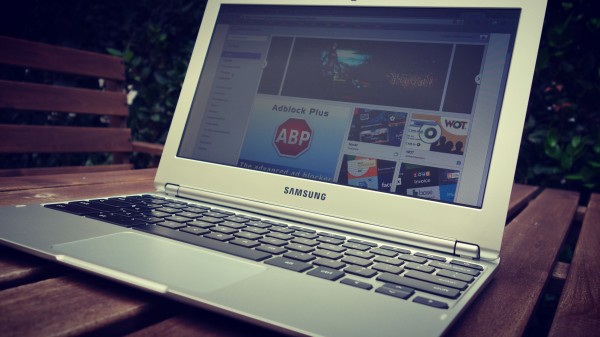
    I wasn’t going to write this as a separate story, resorting to Google+ and Twitter posts instead. But, hey, I’m Mr. Chromebook over here and would be remiss not informing the two people who somehow missed the news (You know who you are). Drum roll. Finally, four months after Samsung released the Arm Chromebook, you have Netflix. Stream it, baby, because you finally can.

    “Today we launched HTML5 video playback for streaming content from Netflix for the ARM-based Samsung Chromebook, so you can now enjoy your favorite Netflix shows & movies”, according to Google. There’s not lots of fanfare in the statement, but I expect some from those of you who can finally couch-potato before your Chrome OS toy.

    Netflix has been available for Intel-based Chromebooks since August 2011. For the newest Samsung, delay was more than anything about Microsoft’s DRM, which protects Netflix content from pirates (well, it’s supposed to). Google had a native-client plugin for x86 but not for ARM. I expected something similar supporting ARM but HTML5 is even better, as there is potential for broader device or browser support.

    Google claims Chromebook is “For Everyone”. Perhaps now the $249 Samsung model is.

    Photo Credit: Joe Wilcox

  • Mozilla won’t bring Firefox to iOS until Apple changes default browser policies

    Firefox iOS Conflict

    iPhone users who miss having Firefox on their devices shouldn’t get their hopes up that it will arrive anytime soon. CNET reports that Mozilla vice president of product Jay Sullivan told a panel at South by Southwest this weekend that the organization would not design any new versions of Firefox for iOS until Apple (AAPL) allows users to set it as their default browser and allows Mozilla “to carry over its sophisticated rendering and javascript engines to iOS.” The issue for Mozilla, as CNET reports, is that it “doesn’t feel like it can build the browser it wants to for Apple’s platform.” The tricky thing for Mozilla, however, is that there doesn’t seem to be all that much demand at the moment for Firefox on mobile platforms, especially since the latest numbers from NetMarketShare show that its share of the mobile browsing market is less than 1%.

  • The Gigabot 3D Lets You Print Things That Are Bigger Than A Few Breadboxes

    re:3d

    Austin-based re:3D just started a Kickstarter campaign for the Gigabot, a large-format 3D printer designed to build things on a 24x24x24 inch built envelope, allowing you to make much larger objects than you can with similar printers like the Makerbot. You can get the bot kit for $2,500 or a pre-assembled unit for $4,000.

    The company was looking for a $40,000 pledge and has already surpassed $60,000, so there’s a good chance this thing will ship in time for when you need to build a 13,824 cubic-inch Christmas present.

    The team launched the project at SXSW, and the company is founded by Samantha Lynne Snabes and Matthew Fiedler and a number of others with experience in manufacturing and design. They write:

    At re:3D, we believe that the biggest problems in our world are solved by taking a bigger view. That’s why our project is aimed at designing the first large-format 3D printer… that you can take home with you. It’s not only about taking the amazing technology of 3D printing and amplifying it. If we’re successful, we can envision entire markets opening up to use this technology. Markets which have struggled to maintain the status quo, let alone use some of the cutting-edge technology that for the rest of the world is an overnight delivery away. We believe that by making a production-quality model of our 3D printer, and putting it in the hands of small businesses anywhere on the planet, will give them the flexibility to sustain their community, their business, and ultimately, the world we live in.

    It prints primarily in PLA right now because it does not have a heated build plate, but there are plans to offer that option in the future. While PLA isn’t ideal for some industrial situations, the plant-based plastic is still very usable and workable.

    You can check out the project here or just imagine what it would be like to print out your own head, to scale, in corn-based resin.


  • Take control of desktop windows with Gridy

    Launch an application on the Windows desktop and you have complete freedom to position and size its window however you like (as long as it’s resizeable, anyway). But while this is all very flexible, it also brings management problems when you need to position windows precisely, set and restore a particular window size, and so on.

    There are some keyboard shortcuts which might help, just a little (press Win+Shift+the up or right arrow to maximise the current window vertically or horizontally, for instance). If you need more control, though, you might like to try Gridy, which provides plenty of useful windows management features in a very compact and convenient package.

    The program is portable, so it’s easy to try: just download, unzip and go. Then try dragging and dropping a desktop window with the mouse, and you’ll notice the first Gridy feature — your windows now snap to a grid. It’s quite fine (32 pixels by default), but if you’re trying to align windows then it should be enough to make your life much easier.

    Or maybe you’d prefer to move your window from the keyboard? Just hold down the Win key, press one of the arrow keys, and the current window will snap from one grid position to the next. (You can do something similar anyway by pressing Alt+Space, then M, but Gridy’s approach is a little more straightforward.)

    And if you have a situation where you need to position a window outside of the grid, that’s possible too. Simply hold down the Shift key and drag with the mouse.

    This would be useful in itself, but Gridy is just getting started. The program can also store the size of the current window (Win+Shift+Home) and restore it later (Win+Home). Or you can store the size and position of up to 9 windows (Win+Ctrl+Numpad 1-9), then recall them as required (Win+Numpad 1-9).

    Elsewhere, pressing Win+F10 toggles transparency for the current window.

    Win+F12 toggles “always on top”.

    And there are plenty of configuration options on offer. You can change the grid resolution, the transparency level, the hotkeys, how the program treats the screen edge (whether it lets windows moves past the edge, or not), and more.

    This isn’t bad at all for a free tool which normally requires less than 3MB RAM. And so if you’re looking to bring a little order to your desktop, give Gridy a try – it’s capable, configurable and extremely easy to use.

    Photo Credit: Lilya/Shutterstock

  • Rdio expands global footprint, Spotify reportedly extends free mobile offering

    Rdio, the music subscription service backed by the founders of Skype and KaZaA, is expanding to Ireland, Iceland, Italy, Latvia, Lithuania, and Austria as well as Mexico. That brings the total number of countries with a Rdio presence to 24. The announcement of the expansion comes on the same day as a Bloomberg report stating that Spotify is negotiating to bring its free, ad-supported mobile service tier to all of the countries it is operating in.

    Rdio, just as a refresher, is a subscription service that tries to set itself apart from market leader Spotify with a different take on social music curation. The company offers limited free music for up to six months, but doesn’t do ads.

    That’s different from Spotify, which launched a free, ad-supported mobile radio service in the U.S. last summer. The company is now looking to expand its free mobile tier to all of its 17 territories, Bloomberg reported Monday. Deals for such an offering are still under negotiation, but Spotify could start with its free streaming as early as April.

    ifpi subscription dataSpotify’s free mobile service is more like Pandora, offering users limited interactivity, with the hopes that some are going to subscribe to a full-service offering. And the interest in music subscriptions is definitely growing: Industry association IFPI’s latest Digital Music report (PDF) claims that worldwide, 20 million consumers paid for music subscriptions in 2012. And in Europe, subscription services made up for 20 percent of all digital music revenues during that time period.

    That number was largely driven by a strong showing in Northern Europe, which is Spotify’s home turf – but services like Rdio seem to bet that this success story can be repeated in countries like Austria as well.

    Related research and analysis from GigaOM Pro:
    Subscriber content. Sign up for a free trial.

  • Microsoft’s backing of anti-Google Apps school privacy bill is just plain dirty

    We all know software vendors have vested interests that sway some of the decisions they make. When I heard that Microsoft was the real driving force behind a sly K-12 school privacy bill making the rounds in Massachusetts, I immediately smelled something rotten. While the public purpose behind the bill aims squarely at protecting student privacy, it’s not hard to connect the dots back to Redmond, Wash.

    Even though it’s easy to see why Microsoft would prop up such a bill (to ease Google Apps’ rise in the K-12 educational market), I question the long-term business sense of such dirty grandstanding. Microsoft’s Office 365 for Education is already free for students and staff of any qualifying school district (just like Google Apps), and the suite is pretty darn good competition for Google on technical and functional merit alone. So what’s the sense in playing dirty just to sign on a few more seats here or there based on misinformation?

    Shady maneuvers like this almost always backfire in one way or another. Apple may have scored a legal victory against Samsung recently, but its behind the scenes efforts to get retailers to ditch Samsung devices on shelves only angers those who enjoy free competition and choice. And how well have Apple’s attempts to keep popular Google apps, like Voice, out of users’ hands turned out? They soured Apple’s image, and in the end likely turned more users against the company than anything else.

    School Privacy Bill with Microsoft Roots

    At face value, the bill up for consideration in Massachusetts has some pretty agreeable stated goals. It aims to prohibit any company providing cloud services to schools in the state from using mined information for any commercial (read: advertising) purposes. Both Microsoft and Google compete toe-to-toe for K-12 district mindshare in the cloud email space, and Google Apps steadily chalks up conversions — over the last few years. My own former high school district and employer, Maine 207, was one of the first large high school districts in Illinois to make the move to Google’s ecosystem starting back in 2008.

    Microsoft is oddly standing behind its efforts in backing the bill. Microsoft spokesman Mike Houlihan says, “We believe that student data should not be used for commercial purposes; that cloud-service providers should be transparent in how they use student data; and that service providers should obtain clear consent for the way they use data. We expect that students, parents and educators will judge any proposed legislation on its merits”. Not to spill egg on Microsoft’s face, but does this legislation even apply to Google Apps in the first place?

    As a consultant to many school districts considering switches to cloud email, this discussion comes up quite often. And it’s an area that I fully believe Microsoft and Google are on level playing fields for, and never recommend one service over the other on privacy issues alone. Lifting one provider over the other on this line item alone is like winning the game because the other team didn’t show up to play — satisfying, but it doesn’t really prove anything, as both Google and Microsoft are very good in regards to privacy concerns alike.

    A quick check on Google’s public Terms of Service for the Google Apps for Education suite speak numbers to the way that commercial interested (primarily ads) are handled for school needs. Simply put, they aren’t displayed or used. By default, Google has all ads disabled for student and staff accounts; the only time ads are allowed are on alumni accounts, which don’t technically qualify as students or staff in the first place.

    Microsoft, Google squirm around Different Facets of Email Scanning

    The larger discussion at hand here, especially in light of the recent “Don’t Get Scroogled” campaign by Microsoft, surrounds the very fact both companies have and still do scan all of your email whether you like it or not. Microsoft’s attempt to paint the debate around strict advertisement targeting is indeed intellectually dishonest to the nth degree. Since we now know that neither Google or Microsoft are targeting ads for students or staff at schools for advertising, what exactly are they scanning for, then?

    A lot of things, actually. Spam detection and control, for example, wouldn’t be possible without contextual and precise data filtration from incoming and outgoing messages. Does this constitute a breach of privacy? I don’t believe so, and have stood behind this belief for quite some time. Technical, computer algorithms deciphering the spam levels of email messages is a far stretch for painting respective vendors in a bad light for helping merely keep our inboxes clean.

    Funny that Microsoft should take the stance it does, since the company has some uses for targeted email scanning. Straight out of the conscripts of its own Services Agreement reads:

    For example, we may occasionally use automated means to isolate information from email, chats, or photos in order to help detect and protect against spam and malware, or to improve the services with new features that makes them easier to use.

    Even though it is not serving up ads, isn’t it fairly easy to foresee that Microsoft may be commercially gaining from your information? Wouldn’t an overall better user experience ideally lead to more new customers of Office 365 for Education? I’m not a legal scholar, but you can come to your own logical conclusions.

    Similarly, another snippet from the same policy reads:

    When you upload your content to the services, you agree that it may be used, modified, adapted, saved, reproduced, distributed, and displayed to the extent necessary to protect you and to provide, protect and improve Microsoft products and services.

    So again, if your definition of “commercial benefit” is strictly aligned in the realm of advertising, then Microsoft using your data to influence its direction of given services could be a moot point. I happen to differ, and this is why I label the Scroogled campaign and subsequent school privacy bill battle as intellectually empty in all respects.

    Keep the Fight focused on Cost and Technical Merit — Not Legal Battles

    Consumers always win when competition is high and barriers to entry are low. It’s a fact of our wonderful capitalist system, and the reason why we’re free to use Gmail or Outlook.com, Google Apps or Office 365 in our school districts, and all the other services these two great companies have to offer. I’m not penning this article to talk down Office 365 on technical merit — in that area, it’s a solid competitor and often times better option than Google Apps.

    But let’s not divest this cloud services battle to one full of patent law pickpocketing, dishonest privacy rights campaigns and backhanded attempts at keeping competition out of the K-12 market. If Microsoft spent as much time, energy, and money on showcasing the great benefits schools could enjoy through Office 365 (like they have quite wonderfully done in their great Surface commercial campaign) then perhaps we wouldn’t be discussing the legal filler in its respective terms of service.

    Email scanning is here to stay for as long as we need spam protection. Unless, of course, you prefer wading through hundreds of junk emails each night. No, thank you. I’ll give the cloud providers the benefit of the doubt here.

    Photo Credit: Igor Zakowski/Shutterstock

    Derrick Wlodarz is an IT professional who owns Park Ridge, IL (USA) based computer repair company FireLogic. He has over 7+ years of experience in the private and public technology sectors, holds numerous credentials from CompTIA and Microsoft, and is one of a handful of Google Apps Certified Trainers & Deployment Specialists in the States. He is an active member of CompTIA’s Subject Matter Expert Technical Advisory Council that shapes the future of CompTIA examinations across the globe. You can reach out to him at [email protected].

  • Data suggests cheaper iPhone could help Apple clean up in emerging markets

    Apple Cheaper iPhone
    Yes, a cheaper version of the iPhone could hurt Apple’s (AAPL) margins, but it could also open up several very important markets to Apple products. Asymco’s Horace Dediu looks at data showing how the iPhone’s market share in the United States has continued growing even as Android’s growth has stalled for the moment. He hypothesizes that having older iPhones available at lower prices is helping the device expand its reach to budget-conscious American consumers who don’t need to have the latest device.

    Continue reading…

  • Some of the weirdest marketing gimmicks we saw at SXSW

    When it comes to SXSW, it appears that the accepted mentality is go big or go home. And that doesn’t just apply to raging parties, open bars, or the number of times you say the word “innovate.”

    As The Onion so perfectly noted, SXSW is a haven for marketers and advertisers looking to make more people aware of their companies and products. But a tent and a sign doesn’t exactly cut it here (sorry, Samsung Galaxy tent.) This is a time for the big guns. And people went all out.

    Below are photos of some of the most absurd or bizarre marketing stunts we saw this weekend. Know of one we shouldn’t miss? You can leave a comment or tweet at us if we should check something else out:

    TaskRabbit SXSW 2013

    TaskRabbit rolled out a rabbit van, and you could see the fur blowing in the pre-thunderstorm breeze.

    Checked out the Flickr app? Flickr representatives let you take your photo in the Flickr filter, upload them to the app and then print out.

    Checked out the Flickr app? Flickr representatives let you take your photo in the Flickr filter, upload them to the app and then print out.

    Glow in the dark drinks at MIT Media Lab's party.

    Glow in the dark drinks at MIT Media Lab’s party.

    Hootsuite put together an owl bus and had it rolling through town.

    Hootsuite put together an owl bus and had it rolling through town.

    AT&T provided colorful charging lockers for you to hook up your devices.

    AT&T provided colorful charging lockers for you to hook up your devices.

    Highlight also rolled out popsicles, with the co-founders handing out treats for people to photograph and then tag on the app.

    Highlight also rolled out popsicles, with the co-founders handing out treats for people to photograph and then tag on the app.

    Google debuted talking basketball sneakers at SXSW, and set up a small basketball court and playground for participants.

    Google debuted talking basketball sneakers at SXSW, and set up a small basketball court and playground for participants.

    This dude told me he wasn't marketing anything but apparently does infomercials all the time in his question mark suits. My skepticism really shines through here.

    This dude told me he wasn’t marketing anything but apparently does infomercials all the time in his question mark suits. My skepticism really shines through here.

    The ride-sharing company Lyft broke out a different kind of transportation in Austin this weekend: piggyback rides. The company's representatives donned the well-known mustaches to give people rides around town.

    The ride-sharing company Lyft broke out a different kind of transportation in Austin this weekend: piggyback rides. The company’s representatives donned the well-known mustaches to give people rides around town.

    The location-centric app Highlight put Highlight t-shirts on some adorable dogs in Austin this weekend to promote the company. (And gather up dog fans.)

    The location-centric app Highlight put Highlight t-shirts on some adorable dogs in Austin this weekend to promote the company. (And gather up dog fans.)

    Livefyre rented out a firetruck, really amping up the crazy car genre.

    Livefyre rented out a firetruck, really amping up the crazy car genre.


    A pedi-cab driver dons a panda suit to give rides around Austin. Companies like Uber were giving rides all through the weekend as a promotion.

    A pedi-cab driver dons a panda suit to give rides around Austin. Companies like Uber were giving rides all through the weekend as a promotion.

    Related research and analysis from GigaOM Pro:
    Subscriber content. Sign up for a free trial.

  • 13-inch Retina-equipped MacBook Pro bests rivals in battery life test

    Apple Retina MacBook Pro
    If having a long-lasting battery is your most important consideration when buying a laptop, then you really don’t have much of an option besides the MacBook Pro. Which?, a renowned consumer product testing publication based in the United Kingdom, last week published the results of its most recent laptop battery life tests and found that the 13-inch Retina-equipped MacBook Pro bested rival offerings that ran on both Windows 8 and Google’s (GOOG) Chrome OS. Overall, Which? found that Apple’s (AAPL) newest 13-inch laptop delivered 388 minutes of web browsing time, or 30 minutes longer than the second-best laptop, the Windows 8-based Acer (2353) Aspire M5-581T. Other laptops studied fared significantly worse, such as the Samsung (005930) Series 3 Chromebook, which delivered 224 minutes of web browsing, and the Windows 8-based Advent Monza T 200, which delivered just 125 minutes of web browsing time.

  • #AskFLOTUS: The First Lady Discusses Let’s Move! on Twitter

    Ed. note: This post was originally published on the Let's Move! website.

    Earlier today, First Lady Michelle Obama hopped on Twitter to discuss Let's Move!, her initiative to ensure our nation’s kids grow up healthy. During the chat with people from around the country, Mrs. Obama shared her favorite cardio workout (it’s kickboxing), winter recipes she loves (and a great resource for Pinspiration), plus a new program that will bring physical activity back to schools (and how you can get involved).

    Check out the full Q&A below, or over on Storify. And be sure to follow @FLOTUS and @LetsMove on Twitter for updates and news about the Let’s Move! initiative and how you can get involved.

    read more

  • Tomorrow Microsoft makes your Windows 8 PC less secure than it is today

    On the heels of Apple disabling Flash on OS X after the Adobe platform was used to compromise company computers, Microsoft goes the other way. The company today announced that beginning March 12 an Internet Explorer 10 update on Windows 8 and Windows RT will enable Flash content to run by default.

    Rob Mauceri, Internet Explorer group product manager, explains: “As we have seen through testing over the past several months, the vast majority of sites with Flash content are now compatible with the Windows experience for touch, performance, and battery life. With this update, the curated Compatibility View (CV) list blocks Flash content in the small number of sites that are still incompatible with the Windows experience for touch or that depend on other plug-ins”. What about the large number that are compromised?

    Mauceri explains that the company believes that having more sites compatible with IE leads to a better user experience. To that end, “the update will be made available to customers with Windows Update. The curated CV list applies to IE on the desktop for Windows RT since the most common reason to block Flash is that the site relies on other plug-ins that are not available on Windows RT”.

    Absolutely no mention of security is made in the announcement, despite the rather constant bulletins released by Adobe. At this point I recommend paying a visit to your Internet Explorer settings and enabling the “Click to Run” option so that Flash cannot launch without your explicit permission.

    Photo Credit:  Korn/Shutterstock

  • Serge Mouangue’s sculptural commemoration of the Japanese tsunami

    Japan-meets-Cameroon

    Two years ago today, a massive earthquake rocked Japan and sent a tsunami raging over its shores. Nearly 19,000 people were killed; more than 300,000 were displaced. TED Fellow Serge Mouangue was living in Tokyo at the time. A native of Cameroon, he had been exploring the similarities between West African and Japanese cultures in art, making mash-up pieces such as a kimono made from African cloth.

    “As in my native culture, the Japanese people have a religious connection with their environment. Never had the environment or the elements sent a stronger message,” says Mouangue, who found the reaction to the disaster around him deeply affecting. “I related to their bitter silence, their stoic, tearless focus and their feeling of betrayal by the environment.”

    To commemorate the rebuilding process, Mouangue has created a new series of sculptures, called “The Blood Brothers.” The colorful characters look somewhat like aliens — they are large-eyed, flat-headed, round-bellied beings based on the folklore of Mouangue’s Bamileke tribe. But while the sculptures have their roots in Cameroon culture, they are also distinctly Japanese, thanks to their material, traditional red lacquer. They’re unbelievably cute, but they also have a serious message. “After March 11, 2011, the Japanese people promised each other in solidarity to rebuild a better country,” says Mouangue. His aliens are designed to represent that effort.

  • Sales reports suggest Sony’s Xperia Z is a hit

    Sony Xperia Z Sales Rumors
    Remember the last time Sony (SNE) had a hit smartphone? That’s a trick question because Sony has never had a hit smartphone. But there’s a first time for everything and unnamed sources have told Digitimes that Sony’s new Xperia Z smartphone has sold out of its initial stock in Japan, France, Germany, Hong Kong and Taiwan. The Digitimes report backs up previous reports we’ve read about showing the Xperia Z selling well not only in Japan and France but in Italy and Spain as well. The Xperia Z’s strong sales are somewhat surprising given Sony’s previous lack of success in the smartphone realm and the fact that Sony launched the device in the same quarter that both HTC (2498) and Samsung (005930) launched flagship Android smartphones of their own.

  • LinkedIn reportedly buying news reading app Pulse for over $50M

    LinkedIn is buying the news reading app Pulse, AllThingsD reported Monday afternoon. The reported purchase price is between $50 million and $100 million. GigaOM’s Om Malik previously spoke with sources who said that Pulse and other buysers were talking about a purchase price at the high end of this range.

    “We don’t comment on rumors or speculation,” LinkedIn spokesman Hani Durzy told me. Pulse has not yet responded to a request for comment.

    The San Francisco-based Pulse, founded in 2010, has over 20 million users across its web, iOS and Android apps. The apps pull in news from different verticals and arrange it in a graphical interface. Users can also subscribe to RSS feeds, save content to read later, and share stories. Last summer, Pulse partnered with the Wall Street Journal to make the newspaper’s paid premium content available through its app.

    The reported acquisition comes at a time when LinkedIn is trying to beef up its content offerings. The career networking site already aggregates personalized news feeds for its users, and it rolled out a blogging platform last fall.

    Related research and analysis from GigaOM Pro:
    Subscriber content. Sign up for a free trial.

  • Sprint To Get A ‘Version 2.0′ Of The All-Touch Z10 Later In 2013, Reports Claim

    z10-6

    It was something of a black eye for BlackBerry when it came out that Sprint wouldn’t be carrying the all-touch Z10 BB10 smartphone. A huge relaunch, integral to the company’s future success, and one of the four major U.S. carriers was taking a pass on the first hardware. But the carrier is going to sell the keyboard-toting Q10, and will also sell what could be a Z10 successor, complete with touch-only interface, later in 2013.

    AllThingsD reported earlier today that Sprint would have an all-touch device, which it described as not just a slightly modified Z10. This new phone is being launched in the second half of the year, according to AllThingsD’s sources, likely well after the launch of the upcoming Q10 with its hardware keyboard. The Verge followed up this earlier report with a supporting claim that describes the Sprint handset as a “version 2.0″ of the Z1o, according to its sources.

    Sprint’s decision to pass on the Z10 while all its competitors look poised to offer both that handset and the Q10 makes a little more sense in light of this rumor. The device may be a carrier-exclusive variant, which is something BlackBerry has been known to do in the past in its former guise as RIM. But both sources of these new reports seem to indicate that what we’ll see won’t be simply a refreshed Z10 with some different specs, but a different all-touch device. No word on where it might fit in term of appealing to upscale or more budget-minded consumers.

    A Z10 follow-up might actually be worth waiting for those interested in BB10, since the Z10 itself was impressive, but nonetheless a little rough around the edges. Some more time to bake might be just what the doctor ordered for an all-touch BlackBerry 10 device, and Sprint might be banking on that to help it become the carrier of choice for RIM’s next-gen mobile OS. We’ve contacted BlackBerry to see if there’s any official comment about device release plans for Sprint, and will update if any is forthcoming.