
Blog
-
Report claims iPhone 5, the best-selling smartphone in the world, will ultimately disappoint
-
Bing Desktop Updated With More Customization Options
If you are a regular Bing user, chances are you use the Bing Desktop. At first, the application only brought a simplified version of the Bing search bar to desktops. After an update late last year that added a number of new features, Microsoft is at it again with another update that adds more options, including Facebook integration.
Microsoft says that Bing Desktop users now have three new customization options for Bing Desktop:
- The first option allows you to minimize to Windows Taskbar as a toolbar.
- The second option allows you to set a keyboard shortcut so you can launch the search box with a few simple keystrokes.
- The third option lets you minimize the search bar to your systems tray.
Bing Desktop is also finally getting Facebook integration after its Web-based brother integrated with the social network last year. The application now serves as a notification hub of sorts:
Now you can connect Bing Desktop to Facebook and enjoy updates without having to open your browser. In a few simple clicks, you can get friends’ latest updates including posts, comments and posts directly to your desktop.
Finally, Bing Desktop is getting a number of new personalization features:
We are also introducing new settings that allow you to choose which recent homepage image you would like displayed as your desktop wallpaper, control of your search history, the choice of whether Bing Desktop loads when Windows starts and more.
This latest update to Bing Desktop is available across all versions in the U.S., U.K., Canada, Australia, France, Germany, India, China and Japan.
If you find yourself wanting to experience Bing Desktop, you can grab it here. You can also find it sitting at the bottom of the optional updates in Windows Update.
-
Sarah Silverman, Michael Cera Launch a New YouTube Channel
At the South by Southwest festival in Austin, Texas this weekend, Sarah Silverman, Michael Cera, and a host of other comedians officially launched a new YouTube channel named “Jash.” The channel will feature comedy videos.
In addition to Silverman and Cera, comedians Tim Heidecker and Eric Wareheim of Tim and Eric Awesome Show Great Job! fame will be contributing to Jash’s programming. Comedian/musician Reggie Watts is also part of the Jash creative team.
Though Google has fronted the money for Jash, the comedians were quick to point out that they have been given complete creative control over the channel’s content.
So far the Jash YouTube channel only has one video (seen below), which introduces all of the content creators behind Jash. Each of the Jash participants also has their own YouTube channel with introductory videos. The next Jash channel video is scheduled to appear on April 8.
If the video first is anything to go by, the brand of comedy seen on the channel will be a bit bizarre. That shouldn’t be a surprise to anyone who has seen Tim and Eric or The Sarah Silverman Program, though.
-
Press Play: Netflix arrives on the $249 Samsung Chromebook
Owners of the $249 Samsung Chromebook have lived without Netflix since the device launched in October. That changes today as Google has announced support for Netflix on the device, with content delivered via HTML5. There’s no need to update the Chromebook; users can simply navigate to the Netflix website, login and start watching movies or television shows.
When I had first reviewed this Chromebook model, the lack of Netflix was a disappointment because all prior Chromebook models had Netflix support. One key difference in this particular netbook from Samsung was the chip architecture: It uses a Samsung Exynos chip, which is based on ARM. The other Chromebooks all use x86-based Intel chips.
It’s interesting that Netflix now just works. A Google spokesperson says the solution is the result of collaboration with Netflix and Microsoft. That’s surprising as the initial reason Google provided for the lack of Netflix on the Samsung dealt with a Chrome plug-in and Google’s Native Client efforts; neither of which Microsoft would likely have anything to do with.
Regardless of the solution’s implementation, it’s simply good news that there is a solution. So if you have a Samsung Chromebook, fire up Netflix and enjoy!

Related research and analysis from GigaOM Pro:
Subscriber content. Sign up for a free trial.- Who and what to watch in the new era of the living room
- The connected planet: Smartphones aren’t the only player
- How consumer media will change in 2013


-
Three Reasons Men Should Read Lean In
You might have noticed that Facebook COO Sheryl Sandberg has a new book out. Lean In builds on her TED talk, “Why We Have Too Few Women Leaders,” which has been seen over 2,000,000 times and launched a national conversation among women.
No doubt, her book will be devoured and discussed by women. But if that’s all that happens, it will be a disservice to our organizations.
The truth is, men still hold the lion’s share of power. Sandberg shares stats that many women know almost by heart — but men may not. Women hold just 20% of seats in parliaments globally, 18% in the US Congress. Women have been at least 50% of college graduates in the US since the early 1980’s, yet the percentage of women at the top of corporate America has barely budged over the past decade. Just 21 of the Fortune 500 CEOs are women, a measly 4%. Women hold just 16% of board seats, and women of color hold a tiny 3% of board seats.
Sandberg could have also mentioned that women represent less than 20% of speaker and panel spots that help confer recognition as experts in their field, or that women receive less than 3% of venture capital funding. Or that even in movie crowd scenes meant to depict “the general population”, the film industry shows only 17% of crowds as female, compared with the 51% that they actually are. Women are seemingly invisible. Without visibility, consideration is absent, opportunity is lost, and access is denied.
When I ask men how to solve this gender imbalance, they often say that the problem will take care of itself when there are more qualified candidates. But this view often hides a circular argument. How will we know when more women are qualified? When more women hold those roles! Or when those men know of more women who can hold the role. This logic might work if one could magically ensure that gender selection bias does not exist. But there is ample evidence for precisely the opposite. Gender bias exists, and both men and women are affected by it (yes, you read that right, even women can be sexist!). We are not talking about equality of outcomes here; the results show bias thwarts equality of opportunity.
I see three major reasons every manager, whether male or female, should read Lean In, and this is the first: increasing your awareness of the paradoxes facing women. One of the most illuminating sections of Sandberg’s book is her discussion of the famous Heidi / Howard study done at Harvard Business School. Professors asked students to read a case based on Heidi Roizen, a well-known venture capitalist in Silicon Valley (disclosure: she’s a friend). They assigned half of the students to read the story of Heidi, half to read a version of the case where the name had been changed to Howard. Students rated Heidi and Howard as equally competent, which made sense since their accomplishments were identical. But they regarded Howard as a more appealing colleague while seeing Heidi as selfish and “not the type of person you’d want to hire or work for.” This points to one of six common binds women face, which is that women are either perceived as either competent or liked, but not both. Similarly, a few years ago, Clay Shirky wrote a piece called “A Rant Against Women” in which he claimed that women were not being pushy enough to get his attention. Yet research shows that women who sing their own praises get penalized in society by both men and women and that women are culturally discouraged from self-promotion. When we know the research, we start to eliminate these kinds of Catch-22s from our thinking.
Knowing the research can help us acknowledge that all people have subconscious biases. Once you acknowledge that, you enable yourself to begin consciously filtering in more women, rather than unconsciously filtering them out — the second reason all leaders should read this book. You reduce the impact of your own biases by consciously changing what you expose yourself to. Whether you are a man or a woman, the odds are that you give credence to men more than women. That’s not because smart expert women don’t exist as leaders, business experts, or board members. But we tend to follow the people we already know, the ones we’re already comfortable with, and especially those already proven “worthy” — which as the data above suggests, is incredibly slanted towards men. But by being intentional about including women, (beyond the few you know by first name — Caterina, Sheryl, Marissa, Ann-Marie, Hillary, etc.) you will naturally start seeing a fuller set of ideas, and considering more women as leaders, speakers, board members, and so on.
The truth is this: There are tons of qualified women for whatever position you’re trying to fill. They’re just invisible to you right now. For example, recently an HBR blogger posted “11 Books Every Young Leader Must Read” — a list that did not include a single work by a woman. I’m sure he did not intentionally exclude women like Linda Hill, Rosabeth Moss Kanter, Ellen Langer, or Carol Dweck. But he did. So as a follow-up, Whitney Johnson countered with a more diverse list. It’s not a question of lowering standards — the books on Whitney’s list were all equally well-regarded — just having the consciousness to notice that you’ve inadvertently ignored half the talent.
So here’s one immediate action item: Go on Twitter, and ask others, “Point me to 5 thinkers (who happen to be women) who I should be paying attention to. I want to #changetheratio”. Don’t assume talented women for any role don’t exist; assume they do — and get help finding them.
This brings me to the third reason I think all managers need to hear the message in Lean In. While I certainly see the value in helping women understand how to raise their own visibility by “leaning in,” we won’t unlock the economic potential of female talent and ideas until we change our systems. If your system of finding people to hire, speakers for your stage, or members for your board depends on having them step forward and ask, you’ve effectively institutionalized a bias. Knowing key facts, such as those Sandberg lays out, may help. For example: Research shows that men apply for jobs for which they have 60% of the stated qualifications while women demur unless they have 100%. Sure, we can ask women to have more chutzpah. But we can also redesign our hiring approach. The most famous example of this is probably the shift to blind auditions for new symphony musicians. In the 1970s and 1980s, most orchestras began to place a screen in front of candidates during the audition, so that judges would not know the gender of the musician. (Some savvy women also removed their high heels to avoid the telling “clickety clack” of female footwear.) As a result, while some bias still exists, women went from being 5% of all players in 1970 to being 25% of the orchestra by 1997. This result wasn’t because female musicians “leaned in,” but because hiring managers — many of them male — changed the system to prevent qualified candidates from being filtered out.
I’d like to leave you with this call to action: make this your problem. Don’t leave it to women to create change all by themselves. We needed white people to help pass civil rights laws that helped blacks; we need straights to help fight for rights for gays. And we need men to help fight for equal opportunities for women. Find a way to act. For example, pledge to phase out all-male panels at conferences. Or, if you see boards made up of only men, speak up — because companies with more than one woman on their board have performed 26% better than those with no female directors.
Women will not be able to undo debilitating, ingrained cultural biases on their own. And there’s no reason why they should have to. This isn’t just their problem. This is an economic problem. We need the talent of all our people — to bring that which only they can bring — to solve old problems with new ideas or, to come up with entirely new solutions. This will not happen if we leave a huge swath of talent out of the boardroom — and out of our benefit.
-
iPhone 5S will reportedly include NFC and a fingerprint sensor for enhanced security

-
Sponsored post: U.K. digital games — highlighting the U.K.’s flair for innovation
With such a rich heritage and strengths across all aspects of the entertainment and technology industries, the U.K. is in a unique position to grow a global games business. Not only do we have the early-adopter consumer market to trial new games — there are over 34 million active gamers in the U.K. — but we are also home to all the major companies that are driving the market worldwide.
In fact, the U.K. has the largest games development community in Europe, with over 250 development studios and hundreds more small development teams and freelancers. Together they helped to generate total U.K. games revenue of $6.4 billion in 2012, with the mobile, app and MMO segments of the market enjoying particularly rapid growth.
The U.K. government is planning additional tax credits for the games sector, providing a significant boost to games companies developing core software and content in the U.K. Incentives such as these will help ensure the U.K. continues to blaze a trail in one of the world’s most dynamic industries.
Microsoft has officially opened a new games studio in London. Lift London wall will act as an incubator for other studios and focus largely on games for the European market. “We very much believe that Europe is a great opportunity for us” said Phil Harrison, the corporate VP at Microsoft EMEA.
–Simon Sprince, business sector specialist, U.K. Trade & Investment
Find out how U.K. Trade & Investment can help you grow your business in the U.K. by visiting the UKTI website.


-
Freemake Video Converter 4.0 adds free, ad-supported Gold Pack
 Ellora Assets Corporation has released Freemake Video Converter 4.0, the latest version of its freeware video conversion tool for Windows. Despite the major version number change, version 4.0 contains no new functionality of its own — instead, it’s being used to promote a free ad-supported Gold Pack add-on.
All four new features touted in version 4.0 — namely new DVD menus, auto-crop, auto-backup and the option for setting a customized background — aren’t actually new, as the Gold Pack was available for installation with earlier versions of the software too.
Users are given the option of installing the Gold Pack after install Freemake itself — the option is prominently displayed on the program’s main screen when no videos have been selected for conversion. Installing the Gold Pack adds an auto-crop tool that automatically detects and removes black bars from video. There’s also automatic backup of project edits and changes.
The Gold Pack also provides additional options for burning DVDs using the program, with additional DVD menu styles and an option to set any picture the user likes as the background image for the DVD itself.
The add-on comes with several strings attached, however: first, users must agree to set the Freemake customized search as their default provider, plus change their homepage to the customized search tool. Clicking Install appears to have no effect, but simply enables features already installed, but disabled by default.
From here users have a wider choice of DVD menus and can change the DVD background when selecting DVD as an output format, while the auto-crop option requires enabling via the Black bars tab on the program’s Options screen.
Homepage and search settings are changed across all major web browsers, but users can easily change these settings via their browser’s settings: Firefox users should click the Freemake icon in the search bar and choose Manage Search Engines to remove the Freemake entry, for example. Doing so has no effect on the Gold Pack functionality.
The update is rounded off with a specific fix for problems with temporary DVD folders, and the promise of better all-round stability, while there are also minor, unspecified interface changes.Freemake Video Converter 4.0 is a freeware download for PCs running Windows XP or later.
Photo Credit: moneymaker11/Shutterstock
-
Watch SpaceX’s Reusable Grasshopper Rocket Blast Off And Safely Land On Its Feet

Spoiler: The video above shows SpaceX’s 100-foot-tall Grasshopper rocket blasting off, hovering in the air for about 30 seconds and then descending back to terra firma. And it’s set to Johnny Cash’s Ring of Fire. That’s it. There’s no drama, fireworks or anything shocking, but it’s still absurdly important and totally worth watching.
This launch marks the reusable rocket’s most significant flight yet. It reached a record 262.8 feet before lowering itself back down on its own launch pad. Elon Musk called it the Johnny Cash hover slam.
Designed to launch and land vertically on its metal legs, the Grasshopper is part of SpaceX’s long-term roadmap. The company has yet to reveal when it intends to use the model — or its successors — for space flight. The rocket has been in testing since September 2012, with each test launch reaching a bit closer to the stars above.
“The US is a country of explorers,” stated Musk at his SXSWi keynote adding “People need to believe that [space travel] is not going to bankrupt them.”
For several years Musk has championed the idea that humans must be a multi-planet species and a reusable rocket, like the Grasshopper here, is a big part of his grand vision.
-
You don’t hate Windows 8
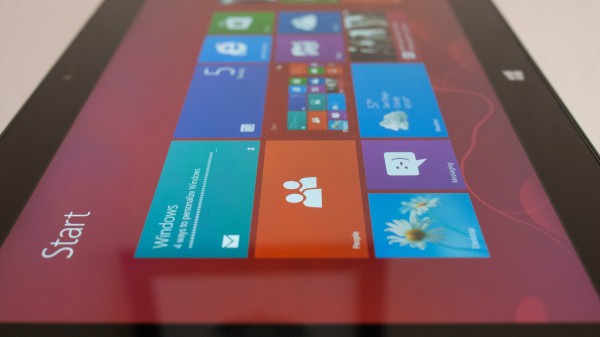
I nearly hurled coffee onto Nexus 10 this morning — seriously had to choke back — when seeing this ridiculous ZDNet headline: “Will 90 percent of users always hate Windows 8?” I immediately thought that someone must have done a shocking and provocative survey. But, no-o-o-o-o, writer Matt Baxter-Reynolds pulls the figure from his bee hind. He surmises this sensational figure based on absolutely nothing.
Coincidentally, I conducted two polls over the weekend designed to gauge Windows 8 sentiments — what you really think about Microsoft’s flagship operating system. I asked: “If Microsoft sold Window Vista, 7, and 8 side by side and you could buy the one you wanted most, which would you choose?” and “Is Windows 8 a failure?” We have a split decision on the latter, from good sample sizes — more than 1,500 for the longer question and exceeding 1,300 for the other.
By the Numbers
Polls like this one are unqualified. We don’t filter who answers but do presume that responses largely reflect the attitudes of BetaNews readership, which tends to be more developer- and IT-oriented — the kind of customers most likely to use Windows already. The results gauge sentiment and surely refute any ridiculous claim that 90 percent of users hate Windows 8.
The distinction is important, because, based on actual adoption, the figure could apply to Windows Vista. I conducted the polls because a Samsung executive clams that “Windows 8 system is no better than the previous Windows Vista platform”. That 90 percent figure, if accurate, would put Windows 8 in the same category of failure as Vista. Funny, I had already planned to share poll numbers today. The ZDNet story offers unexpected backdrop against which to cast the results.
To the longer question, the majority — 56.55 percent — would choose Windows 7, compared to 36.9 percent Windows 8. Vista falls below any reasonable margin of error to near zero (10 responses). The second question is perhaps more important, and the numbers are close: 44.8 percent say Windows 8 is a failure, while 41.53 percent don’t agree. Given the sample size and unqualified responses, the numbers are statistically the same.
I can safely conclude based on not one but two polls that any assertion “90 percent of users hate Windows 8” is inaccurate. More than one-third of respondents would chose the operating system, which actually is a strong endorsement in context. That being: Most businesses only recently upgraded to Windows 7, and many IT shops put compatibility above all other considerations when deploying software. Meanwhile, IDC attributes sluggish fourth-quarter PC shipments in part to “limited supply of touch-enabled Windows 8 models”, which is “out of step with the touch focus of Windows 8”. As I asserted last week, the operating system really shines on a touchscreen computer.
Based on the other poll, feelings are clearly mixed about whether Windows 8 is a failure or success. Either can be measured many different ways. To reiterate, my poll seeks to gauge sentiment, as perceptions greatly influences purchase decisions. Do you buy a car with reports of bad brakes or choose another? Windows 8’s reputation is crucial to its future acceptance — or not.
What You Say
Comments are another great way to gauge sentiments, and you had much to say. “All this chatter about Windows 8 being another Vista exists and that will put people off buying a new machine; this is happening, look at the sales numbers of new PCs”, derekaw comments. “Windows 8 offered no sales bump and PC sales are still in decline. MS made a mistake with Windows 8”.
BetaNews reader nvic:
To answer the article title question: Windows 8 is worse than Vista on a PC, better than 7 on a tablet. It was made for touch, and does very well in that field, although I’ve yet to see a decent commercially available Win8 tablet beyond Surface (Pro).
In my opinion, part of the reason it’s flopping is the bad rep from being sold to the wrong market (non-touch PCs) and being hated by its users as a result. They also removed or hid a lot of the stuff power users want in an OS, leaving those users out. Why should I pay to upgrade to a product that lets me have less control? Such limitations are expected on a tablet, but intrusive and unwanted on a PC…
For those who are curious how much it’s disliked on non-touch PCs, I’ve helped downgrade 107 to date, and mind you I only do this on the side, I’m in college (IT student)…On the other hand, we’ve both had zero trouble recommending 8 as an upgrade for the few people we’ve come across who had x86 tablets running 7.
“Disaster is much too strong a word. It’s not a disaster”, johnrc2 comments. “There are simply some touch features that are not particularly useful on a non-touch machine, but other than than, it’s a nice upgrade to Windows 7. I use Windows 7 on 3 desktops, Windows 8 on 3 laptops, and Windows 8 on one Surface Pro. Where’s the disaster? I’m just not seeing it”.
Steephill:
I use a computer 8-11 hours a day and upgraded to Win8 after the first couple weeks it came out. If anything it has increased functionality, rather than limitations. All the new functionality underneath the UI is great. All the Metro/Modern UI is is a full screen Start menu. You use it the same way as a start menu too, click the win key and start typing the program you want. I think the hate comes from, not it being bad but, it being different. Just like if you gave someone who was used to Windows a Ubuntu Unity laptop they’d hate the UI, doesn’t make Ubuntu Unity bad. It’s just different.
HornyToad (don’t you just love these monikers): “Windows 8 is more stable, more responsive and generally easier and more pleasant to use than Windows 7 has ever been, in my experience”.
“Windows 8 is great –when it’s set up as windows 7”, Benni Bennetsen opines. “So if only Metro had been an add-on that you could choose it would have success. Now it depends on knowing people who can change its look n feel or live with it, and I don’t know anyone who likes Metro”.
I do. On a touchscreen.
Noremacam expresses my sentiments:
Windows 8 is like vista, but I don’t mean it is a failure. Windows Vista paved the way for Windows 7 with new technologies, and new frameworks. Windows Vista made windows 7 a success. Windows 8 introduced a bunch of new technologies and frameworks and it’s suffering again. I’m convinced windows “blue” or whatever the next windows will be, will be massively better because of the work in Windows 8.
Since before the Consumer Preview, I have expressed in various stories that Windows 8 wouldn’t be big. It’s a transitional operating system coming when most businesses just upgraded to Windows 7 or are in process of doing so and when tablets capture consumer interests more. If Microsoft wants to make big changes in architecture, strategy and user experience, the best time is when the core market — business — isn’t going to upgrade anyway. Windows 8 has always been about what comes next. But that doesn’t make what’s here bad.
What’s the quote from Jessica Rabbit: “I’m not bad. I’m just drawn that way”.
Photo Credit: Joe Wilcox
-
Netflix Launches New ISP Speed Index Site
Today, Netflix unveiled their new ISP Speed Index website, which lets users browse the average performance of multiple ISPs across many of the countries in which Netflix in available.
You can compare the ISP performance lists at ispspeedindex.netflix.com.
As of now, Google Fiber is the clear winner with an average speed of 3.35Mbps. Second to Google Fiber is Sweden’s Ownit, which streams at 2.99Mbps on average.
Finnish Netflix users enjoy to fastest speeds overall, and Mexican users the lowest. In the U.S., Cablevison, SuddenLink, Cox and Verizon – FiOS round out the top 5.

Of course, these are averages and Netflix notes that the peak performances for the ISPs are much higher:
The Netflix ISP Speed Index is based on data from the more than 33 million Netflix members who view over 1 billion hours of TV shows and movies streaming from Netflix per month. The listed speeds reflect the average performance of all Netflix streams on each ISP’s network and are an indicator of the performance typically experienced across all users on an ISP network.
Note: the average performance is below the peak performance due to many factors including the variety of encodes Netflix uses to deliver the TV shows and movies as well as the variety of devices members use and home network conditions. These factors cancel out when comparing across ISPs.
Netflix first started releasing monthly ISP rankings back in December of last year, but this is the first time that they’ve aggregated all of their data into a slick little site. Google Fiber has taken the top spot on each month’s list since last November’s rankings.
-
SimCity Debacle Gets The NMA Treatment
In case you haven’t heard, EA launched the latest entry in the venerated SimCity franchise last week. The story would end there if it was a success. Instead, the game’s always-online DRM ensured the launch was plagued by anything and everything that could go wrong.
While EA works on getting the game running at full capacity, enjoy NMA’s take on everything that went wrong with SimCity:
-
Visine Poisoning Lands California Man in Jail
ABC News is reporting that a California man is now in jail after attempting to poison his girlfriend with Visine eye drops. The man allegedly put eye drops into the woman’s drink in order to make her sick.
According to the report, the 27-year-old man, Shayne Carpenter, was arrested last week on charges of poisoning and domestic violence. Carpenter’s girlfriend reportedly found texts on the man’s phone that referenced the poisoning and called police. The police had Carpenter’s girlfriend speak to him over the phone and were able to obtain an admission from Carpenter.
Eye drops, such as Visine, and some nasal sprays contain Tetrahydrozoline, which can be poisonous when swallowed. Symptoms of Tetrahydrozoline poisoning can include difficulty breathing, blurred vision, rapid heartbeat, nausea, headaches, and vomiting.
-
Trademark filing suggests Galaxy S IV may have a 3D camera

-
Did eBay Just Prove That Paid Search Ads Don’t Work?
Before you read the rest of this post, go to Google and try searching for “Amazon.” You’ll probably notice that the top two listings are both for Amazon’s website, with the first appearing on a light beige background. If you click on the first — a paid search ad — Amazon will pay Google for attracting your business. If you click on the second, Amazon gets your business but Google gets nothing. Try “Macys,” “Walgreens,” and “Sports Authority” — you’ll see the same thing.
If you search for eBay, though, you’ll find only a single listing — an unpaid one. Odds are, after marketers at Amazon, Walgreens and elsewhere catch wind of a preliminary study released on Friday, their search listings will start to look a lot more like eBay’s. The study — by eBay Research Labs economists Thomas Blake, Chris Noskos, and Steve Tadelis — analyzed eBay sales after shutting down purchases of search ads on Google and elsewhere, while maintaining a control set of regions where search ads continued unchanged. Their findings suggest that many paid ads generate virtually no increase in sales, and even for ones that do, the sales benefits are far eclipsed by the cost of the ads themselves.
Companies spend enormous sums on marketing their products. Yet it’s notoriously difficult to measure the impact of ad expenditures. Companies advertise heavily at times when they hope to sell a lot — like Christmas Eve and Boxing Day — and in areas where they expect to see their sales grow. So a naïve examination of the relationship between ad expenditures and revenues will of course find they move in sync, even if customers don’t pay the ads any mind.
Advertising has also traditionally produced a lot of waste — I see ads for Brioni suits when I open up the morning paper, even though the last time I wore a suit was on my wedding day. The study’s authors quote 19th century retailer John Wannamaker: “I know half the money I spend on advertising is wasted, but I can never find out which half.”
The internet promised to change all that. Google, Yahoo, Bing, and others gave sellers the opportunity to target their pitches to customers who were plausibly interested in their products. That’s why paid ads for Amazon come up in response to a search for books, but not life insurance. Further aligning the interests of companies and consumers, advertisers only get charged for paid search listings that actually get clicked on, ensuring that they pay for attracting genuinely interested customers.
But what do companies actually get for the billions they now spend on search marketing? The eBay team began by examining whether there’s any benefit to buying search ads that contain the word “ebay.” In these cases, it’s possible that in the absence of paid listings, customers would simply click on the unpaid — or “natural” — listing, which would appear at the top of the search anyway. So in March 2012, eBay conducted a controlled trial to see what would happen if they shut off this “branded keyword advertising” by halting their purchases of search ads containing the word “ebay” on Microsoft and Yahoo search engines, while continuing to purchase search ads on Google as a control. There was no change in eBay sales via Yahoo and Bing, relative to those that came through Google — consumers simply substituted clicks on the unpaid search listing for the now-absent paid ones.
Encouraged by these findings, eBay management agreed to run a controlled experiment where they shut off all Google search ads in a third of the country, while continuing to buy ads everywhere else. In contrast to branded keywords — where it’s inevitable that the company will end up as one of the top unpaid listings — there’s a good chance that if you try searching for “used les paul guitar,” a guitar reseller will appear ahead of eBay’s search listing. So in order to drive a customer to eBay for his guitar purchase rather than, say, Guitar Center, it might be worth the cost of placing a carefully targeted ad.
But in aggregate, that’s not what the eBay team found — overall, there was no appreciable decline in sales of eBay listings in the part of the country where Google ad purchases were shut off. People who thought to buy guitars via eBay were finding their way to the site anyway, either by clicking on natural listings, or by going directly to eBay’s site without using a search engine at all. Search ads did generate a modest increase in the likelihood that internet surfers with little recent history of eBay transactions would end up making purchases on eBay. So paid search ads serve an informational function, letting a sliver of potential eBay customers know that they’re in the guitar business. But by the time you get to customers who have had three prior eBay transactions in the last year, the effect of paid search on sales drops almost to zero. Overall, paid search turns out to be a very expensive way of attracting new business: The study’s authors estimate that, at least in the short-run, paid ads generate only about 25 cents in extra revenues for each dollar of ad expenditures. (For branded keyword searches, the additional revenues are close to zero.)
People buying search ads aren’t idiots — they’ve looked at the correlation between keyword purchases and subsequent sales and no doubt found it to be strong. But this study suggests that marketing departments should be more careful in confusing causation and correlation in assessing the returns to their ad expenditures, to avoid the equivalent of concluding that marketing works because you advertise and sell a lot in December.
The study’s authors note that paid search may be more profitable for other companies than it’s been for eBay. For example, as Stop and Shop tries to get a foothold in the crowded New York online grocery marketplace, they might sensibly buy some ads to compete with Fresh Direct. Paid search may also be worth it for smaller companies that lack the name recognition and high Google page rank that make paid searches less valuable for the eBays and Amazons of the world — some of Google’s own research indicates that this is likely the case. Caveats aside, eBay’s experiences suggest that all companies should look carefully at how much bang they’re getting for their search marketing dollars.
The larger lesson from eBay’s experiment is about the importance of questioning conventional marketing wisdom. As much as the internet has given companies opportunities to target their ads, it’s also given them a ready testing ground to experiment with different business practices to see what really works.
-
The future of online etiquette is already here — it’s just unevenly distributed
As anyone who has missed an important email knows by now, modern communications etiquette is a minefield of unspoken expectations and potential anxiety-inducing behavior. If you need further proof, all you have to do is look at some of the responses to a recent blog post by New York Times writer Nick Bilton about his approach to email, voice mail and texting: some reacted with distaste bordering on horror, while others cheered his take on the topic. Part of the problem is that different users look at these tools differently — and in some cases have wildly different views of what is appropriate and what isn’t.
For example, Bilton says his father insists on leaving him voice-mail messages but the NYT writer never listens to them, so his frustrated parent eventually called his sister to complain, and she told their father to text him instead — and Bilton adds that his mother has progressed to the point where they communicate mostly through Twitter. Is this a son helping his parents adapt, or a rude refusal to meet them on their own turf? Many saw it as the latter:

We have too many ways to communicate
Author Ian Leslie noted in a response on his own blog that Bilton’s description of what’s wrong with modern communication — whether it’s voice mail or texting or Twitter — and his relationship with his parents misunderstands what communication is for. If you look at them as pure information delivery, Leslie says, then they are riddled with problems. But if you see them as a way of socializing with others who are close to us then they look completely different:
“The problem here isn’t just that Bilton unintentionally comes off as rather rude… his argument betrays a fundamental misunderstanding of communication. Writing about computers a lot, he assumes communication is all about the transfer of information from one hard drive to another. That being so, the more efficient the transfer is, the better.”
I think a larger problem Bilton touches on, but doesn’t address directly, is that we have more competing forms of communication available to us than ever before — and not only are different people at different stages in their evolution from one to the other, but people also use them for very different purposes. So for Bilton’s dad, voice mail is a great way of passing on important information, but Nick prefers the real-time nature of texting or Twitter messaging.
The NYT blogger mentions how a whole new kind of etiquette had to be developed around the telephone, and how debate raged over the appropriate way to answer (Alexander Graham Bell preferred the term “Ahoy!,” which just reinforces why we shouldn’t let the inventors of things decide how we use them). But at least people in the 1920s only had one new form of communication to figure out — we have email, voice mail, texting, Facebook messaging, Twitter and more.
Increasingly feel like I don’t want to live in @nickbilton’s future.
—
Jim Maiella (@jimmaiella) March 10, 2013It gets worse when the person you are trying to correspond with uses all of these tools: I’ve tried to contact someone I know fairly well by email, voice mail, text message, Twitter direct messaging and everything short of smoke signals, and I never know from one day to the next which of those methods (if any) are going to work. We have more ways than ever to communicate, but sometimes that just means more ways to miss each other.
Not every tool works for every purpose
In a lot of cases, I think the problem boils down to one of asynchronous vs. synchronous behavior and expectations. Part of the reason why many people (particularly geeks) dislike talking on the phone is that it forces both sides to be present at the same time, instead of allowing a user to consume or respond to the information at their own pace — or multi-task while they are doing so. Phone calls also have no natural time-span.
The other conflict is over what the purpose of the communication is. Someone who sends a long email or leaves a voice mail asking you to call them back may wish to have a long, rambling conversation purely to socialize, and get offended when you send a curt response (or no response at all). Similarly, if you only ever text or use Twitter direct messages with someone, you may be communicating really efficiently but you miss a lot of the personal nuances that still make up much of human communication.
And then there are the obvious age-related issues: I have tried valiantly to get my mother to use Facebook, arguing that this is a great way to keep in touch — however transiently — with her grandchildren, none of whom has any interest whatsoever in using email or talking on the telephone. But for my mother, email and the phone are her primary means of connecting with the world, and the former was something that took ages for her to get comfortable with. And now that she has grown comfortable with it, no one is using it any more.
All I think we can really say for sure is that this state of affairs is likely to continue, if not get worse. As William Gibson said in a different context: “The future is already here, it’s just not very evenly distributed.” And so we are all at different stages of adapting to this new communications future. Perhaps the one thing we need most is to be patient with those who aren’t where we are.
Images courtesy of Shutterstock / Steve Woods and Arvind Grover

Related research and analysis from GigaOM Pro:
Subscriber content. Sign up for a free trial.- Examining the rise of crowd labor platforms in 2012
- Social third-quarter 2012: analysis and outlook
- How social discovery is transforming entertainment

-
A Roadmap for Data Center Transformation
Data centers are more important than ever. As more organizations move towards IT consumerization, cloud computing and distributed technologies, the data center continues to play an integral role in the entire process.
What’s the Path to the Future?
You’re invited to learn more about data center transformation when IO Senior Vice President Aaron Peterson has an in-depth conversation with the Editor-in-Chief of Data Center Knowledge, Rich Miller, during the next DCK Webinar. The discussion will revolve around the increasing pace that the global demands being placed on data center providers.
Register now for the DCK Data Center Transformation Webinar on March 28 at 2 p.m EST.
There is no doubt that the cloud and data center environment will continue to evolve. Now, we have progressed from what was known as “Data Center 1.0″ to a new type of platform. With more emphasis on affordability, sustainability, integrated operations and many more new functions that revolve around the data center, we are entering the era of “Data Center 2.0.”

[Image source: IO Data Center 2.0 Manifesto]
Join the Discussion
Register for this event on March 28 to gain a greater understand of the current and future roadmap around data center transformation. Business and executive leaders have been striving to leverage data center technologies more and more as their organizations continue to grow. In this interview and conversation, Peterson will discuss various vital topics around the existing and future data center transformation areas. This includes:
- The predominantly static data center and its limitations.
- The approaching crisis, a “perfect storm” on the data center horizon, made up of supply and demand constraints, which must be prioritized and transformed.
- The technology-based, sustainable solution that is Data Center 2.0 which represents a fundamental transformation of data center DNA.
Growing technology demands will place new types of requirements around data center 2.0 environments. Join the discussion and increase your understanding of how business agility and new types of business drivers are evolving the data center.
-
How to Give a Meaningful Apology
“I’m sorry, I just can’t stop crying,” Rick*, a manager in sales at a Fortune 100 company said to me — and then to Jim, a Senior VP at that company and also Rick’s boss.
Jim looked at me, not knowing what to do next.
I had been called in to see about mending a rift between the two. While it had been building for some time, it had reached a climax when Jim had yelled at Rick in a team meeting, “I don’t even know why I bother with you! You are an utterly useless human being!”
Rick was shaken and abruptly got up to leave the room — whereupon Jim yelled out to him, “Useless and a coward to boot!”
The rest of the team was speechless. Many of them looked down or away, while others stared like deer in the headlights.
I first sat down with each of them separately to hear their side of the story. Jim revealed that he was being pressured by his boss to substantially increase his numbers and that he felt he needed to wake up his team. His stress levels already high, Rick had unwittingly triggered him in that meeting by not responding and appearing confused at a question Jim had asked him.
Rick told me that Jim was a bully who seemed to have it in for him, and that whenever Jim spoke to him with an abusive tone, it triggered such stress that his mind would go blank.
After meeting with each of them alone, I met with both of them and applied a strategy I had developed decades ago to help divorced couples. The crux is this: you can’t be sincerely empathic towards and angry at someone at the same moment. In other words, you can’t walk in someone else’s shoes and step on their toes at the same time.
I asked Jim, “If I were to ask Rick, what caused him to get up and leave the room when you berated him in front of your team, what would he say?”
Jim was a little confused about the question. I tried again. “Put yourself in Rick’s shoes at the moment he left that meeting — tell me what you think he was feeling.”
With some contrition and embarrassment, he replied, “I think he felt beaten up by the schoolyard bully” — he gulped — “And that bully was me.” Rick was obviously moved and even became a little emotional at Jim’s admission.
I then asked Rick, “If I were to ask Jim what was going on with him at the moment he yelled at you, what would he say?”
Rick replied, “I think he would say he’s under huge pressure to get our numbers up and it’s stressing him out.” Jim actually became calmer and more conciliatory in his posture towards Rick. We continued like this for some minutes until the two actually seemed to be syncing up with each other.
I finally applied something I call the Fishbowl Technique, where I had Rick and Jim look into each other’s eyes and focus only on each other’s eyes. I asked Jim to say to Rick, “I’m sorry about bullying and humiliating you in that meeting, and all the other times I have done it to you. I was wrong.”
It was at that point that Rick became overwhelmed with emotion and started to cry and couldn’t regain his composure. This time it was Jim who was like a deer in the headlights and finally had to look away.
When the raw emotion had run its course, I asked Rick, “What was that all about?”
He looked at me with bloodshot eyes, but appearing ten pounds emotionally lighter. “I have never been apologized to in my entire life, much less had someone tell me that they were wrong for doing something hurtful to me.”
That knocked both Jim and me over.
Is there someone you need to apologize to? If there is, don’t just say you’re sorry; give them a Power Apology (which I explain in detail in my book, Just Listen). It has three parts:
1. Admit that you were wrong and that you’re sorry. Really own up to what you did — or failed to do. For example, “I jumped down your throat and berated you mercilessly when you didn’t get that report done on time. I was wrong to treat you that way and I am sorry.” Sadly, most labor attorneys will advise you not to say you’re wrong to anyone, because that might lead them to have something they can use to sue you. If that is the case, you may just need to stop at saying you’re sorry. (And while in matters of the business and legal world, perhaps you shouldn’t admit you were wrong, in matters of the heart with the people you love, always say it. It’s that one thing they need to begin to forgive you.)
2. Show them you understand the effect it had on them. For instance, “And when I did that, and wouldn’t let it go, I think I made you feel cornered and probably anxious — and maybe even panicky.” You don’t need to jump to conclusions or make assumptions about what they must be feeling or thinking; just try to really put yourself in their shoes.
3. Tell them what you are going to do differently in the future so that it doesn’t happen again. For example, “Going forward, when I’m upset about something you have done or failed to do, I’m going to pause and ask myself, ‘What is the outcome I want from speaking to you? In all likelihood it will be for you to just fix what needs to be fixed so you can get the results that both of us want. I will calmly speak to and maybe even with you instead of at or over you.” This reassures them that you will truly try to change your behavior in the future — not just keep apologizing after every blow-up — and hopefully ends the conversation on a more positive note.
Finally, never assume that part of the apology can be left unsaid. To really repair a rift, even then unsaid needs to be spoken out loud.
*Names and some details have been changed.
-
Startup Strongloop brings supported Node.js to Red Hat
Strongloop, founded by heavy-hitting Node.js committers Bert Belder, Ben Noordhuis and Al Tsang. has come out with a version of the popular server-side language for Red Hat Linux. Since Red Hat Enterprise Linux (RHEL) is the Linux of choice for many enterprises, this is a significant development for the growing community of Node.js programmers and for enteprise developers who want a supported version of the language for their own work.
While there has been a Node.js download available for RHEL nd its cousins Fedora and CentOS via the Red Hat Package Manager (RPM), there was no formal support from Red Hat or Joyent (the company behind Node.js) and Node.js itself is not included in the Red Hat distribution. Besides Red Hat/CentOS release 6.3, Strongloop Node also supports:
- Debian/Ubuntu 12.10 (DEB)
- Mac OS X Mountain Lion 10.8 (PKG)
- Microsoft Windows 7 (MSI)
offers Node.js support on Ubuntu Linux, Mac OSX and Windows.
The official support and service that Strongloop provides could be critical for RHEL developers who want to make use of Node.js’ event-driven talents. Now if a RHEL developer has an issue or problem with Node.js he or she has to go to the mailing list for help. “Now they can get support from us and we write Node.js,” Tsang told me.
As Joyent CTO Jason Hoffman once told GigaOM, Node.js is a very good way to write high-performance servers that need to handle APIs and facilitate very fast data ingress and egress. Those are attributes that might come in handy for enterprise developers.
Strongloop’s news comes the same day Node.js v. 10.0 debuted.

Related research and analysis from GigaOM Pro:
Subscriber content. Sign up for a free trial.- Cloud computing infrastructure: 2012 and beyond
- A near-term outlook for big data
- There is more to Node.js than buzz

-
The Top End Of The ‘Steam Box’ Line Goes On Sale For Just Under $1000

Valve’s Steam Box initiative will probably not end up being a single device, but a platform approach which includes a variety of hardware from different OEMs. The first such device is available now for pre-order from Xi3, for the hefty price of $999.99 (or $899.99 right now with a $100 pre-order discount). At that price, it’s not likely to sway anyone considering an Xbox, but it shows that Valve and its partners might be pulling a Google by showing the world the top end of the market before they launch more practically priced gadgets.
The Xi3 Piston is a gaming-optimized personal computer, with a small, portable enclosure that contains a 128GB SSD and 8GB of RAM within, with upgrade options to either 256 or 512GB of flash storage (for a price). The Piston is set for a late 2013 delivery date, and boasts a 3.2GHz quad core processor. Little else is know about the gadget, but it will be designed specifically to play nice with Steam and that software’s Big Picture mode, thanks in part to an investment from Newell’s company. Other details of what’s inside the hand-holdable case (and how exactly it’ll integrate Steam) will come as the official launch date nears, so this isn’t only a pre-order for big spenders, but for gamblers, too.
The Piston will most likely be among the top-tier of upcoming devices that can wear the “Steam Box” moniker according to the Verge, so don’t get too freaked out if you don’t have $1,000 to spend on a gaming rig. Newell’s approach to the Steam Box seems to involve creating a platform that’s all about extending the reach of Steam to as many as possible, not shutting it down behind a high cost of entry. It’s also worth noting that despite the Piston’s small size, it’s also going to be upgradeable, which is a big selling point when you’re talking about a home console, which often has a shelf life of 10 years or more.
Just last week, Newell told the BBC that Valve is currently working on Steam Box prototypes to release to testers in the next three or four months, and this could be part of that project, though it’s also possible that Steam will contribute own-branded hardware to the ecosystem as well.
