Blog

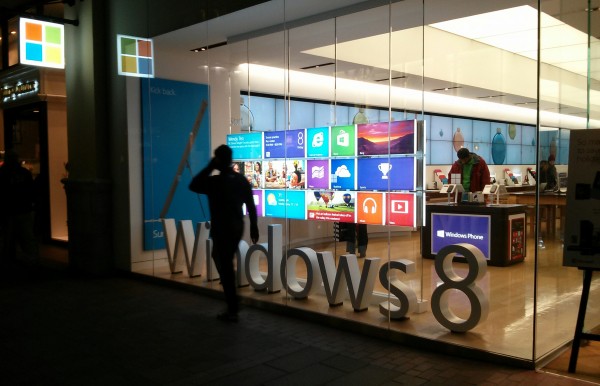
  • Is Windows 8 as bad as Vista, or even worse?

    That’s the question on my mind today, as an executive from yet another PC manufacturer disses the operating system. Yesterday, Jun Dong-soo, who heads Samsung’s memory chip operation, told Korea Times: “Windows 8 system is no better than the previous Windows Vista platform”. Remember, Microsoft gave developers Samsung slates in autumn 2008 to test Windows 8. Samsung shipped touchscreen models for the previous operating system, when few other OEMs did. So the slap is no small one, and worse: “MS’s rollout of its Windows Surface tablet is seeing lackluster demand”, Dong-soo asserts.

    I don’t agree with him, by the way. On Monday I explained: “How I came to love Windows again“. Two words: Surface Pro. I find Windows 8 to be remarkably efficient and fun to use on the touchscreen tablet convertible. Modern UI really is modern, trendsetting. But I’ll be first to concede that users won’t get the same kind of experience using just mouse and keyboard. Touch changes everything.

    Unquestionably, Windows 8 did nothing to lift fourth-quarter PC shipments. IDC research analyst Rajani Singh says a “lack of momentum for Windows 8” contributed to U.S. units falling 6.5 percent during fourth quarter and 7.6 percent for all 2012. IDC also identifies another problem, which is more about PC manufacturers than Microsoft or the new operating system: “limited supply of touch-enabled Windows 8 models — being out of step with the touch focus of Windows 8”.

    Microsoft designed Windows 8 with emphasis on touch for a reason. Most major analysts now acknowledge that tablets pull away sales from PCs. Consumers aren’t so much replacing personal computers with slates as displacing activity and using their Windows machines longer. Because of size, portability and other obvious attributes, tablets compete more closely with laptops than desktops. Notebook shipments fell 8.1 percent during fourth quarter in mature markets, which lead for slate sales. Can you really blame Windows 8 if OEMs don’t ship compelling touchscreen models, and then diss one of the more compelling choices — Microsoft Surface?

    That’s really my question for you today. I’ve got two polls and solicit your feedback in comments about Windows 8. But there already is good feedback to my post from five days ago. Let’s start with some specific to Surface, because they highlight the benefits of touch, which I again assert makes Windows 8 useful and dramatically raises the experience from Vista or Windows 7.

    Readers React

    Matt Marx: “I thought win8 was going to be a disaster after I installed it for two friends on non-touchscreen laptops. It was incredibly confusing for them to navigate the Metro/modern/tile UI with a mouse, and one of them is backing off to win7. But I picked up a Surface Pro and am enamored with the UX”.

    “We’ve started adopting it as both PC and tablet here at my company”, anon82059 comments. “We’ve deployed Pro tablets to three users and have given them the accessories to just plug it in at their desktop — one DisplayPort cable, one USB cable (to a hub/video adapter), and one power cable. Voila! The thing transforms from a fully portable tablet to a fully useful triple monitor workstation. Great for our users to grab and go to a meeting or take home or take on a business trip. Then just plug it back in for the productivity”.


    Ryne Smith calls Surface Pro “capable of being a tablet and a very nice ultrabook PC. As a college student, I am able to play games and take notes in class (and yes, I use OneNote with the stylus along with the stylus). As a software developer and intelligence analyst, I am able to code and do research as well all on the same device. This hugely simplifies my life instead of having the info fragmented across devices. I constantly hear my coworkers complain about toting around their laptops and iPad and making it all work. With the touch UI, it is so much easier to share and present data than before”.

    Barry S. disagrees: I was replacing an iPad 1 and thought the MacBook Air 13 or Surface Pro would let me go mobile with my insurance business and have near iPad functionality to boot. The SP won out because I like a touchscreen and iOS is getting boring. One can’t deny the SP is a nice machine but, unlike the author, I feel the problem is Windows…If I do not set networking to be powered full time when I sleep my SP at home and go to the WiFi at the office, I have to reboot to get on. If I open a PDF bank statement beside Quicken it’s impossible to see enough to do a reconcile, Quicken doesn’t scale to its window size. Our company’s Outlook Web Access email is not touch enabled so I can’t check my work email without a mouse/touchpad”.

    “I am currently using a Samsung ATIV Smart PC hybrid and I couldn’t agree more with the above review”, Myclevername comments. “I have been there all along with Windows 8 thru all of the release candidates and have always used it on a touch screen/hybrid. If you can’t engage touch on your current PC then there is no reason to ascend to Windows 8”.

    “To each his own”, Dave Nullstein writes. “I have a Lenovo Twist with a touch screen and similar specs as a Surface Pro. I absolutely hate it and I fail to see how different hardware could significantly improve the Windows 8 experience. Every attempt to do something productive on this thing has resulted in frustration”.

    So what do you think about Windows 8. Is it from a sales potential or feature perspective another Vista? If you have used Windows 8, please also share on what hardware when you comment — and remember the two polls above.

    Photo Credit: Joe Wilcox

  • Plagiarism and the link: How the web makes attribution easier — and more complicated

    Nate Thayer, the writer who touched off a debate this week about how freelancers are compensated, found himself embroiled in another controversy on Friday when he was accused of plagiarizing large parts of the piece that The Atlantic wanted him to re-work for free. In his defence, Thayer and his editor said links weren’t included in the original version due to an editing error, a mistake they later corrected. This failed to satisfy some of the writer’s critics, however, including the author of the piece that Thayer based some of his reporting on.

    If nothing else, the incident helps reinforce just how blurry the line is between plagiarism and sloppy attribution — and also how the the web makes it easier to provide attribution via hyperlinks, but at the same time makes it harder to define what is plagiarism or content theft and what isn’t.

    To Jeremy Duns, who first blew the whistle on what he said was Thayer’s plagiarism, the case seemed open and shut: chunks of the article about North Korea and basketball, including a number of quotes, appeared to have been lifted straight from a piece by San Diego Union-Tribune writer Mark Zeigler on the same topic in 2006. And there was virtually no attribution of any kind in the original version of Thayer’s story, which appeared at the NKNews.com site, apart from one oblique reference to the Union-Tribune — and no links.

    internallinks

    Even as Duns was writing his blog post about this incident of plagiarism, however, links began to appear in the Thayer piece, including a link to Zeigler’s original story. To Duns, this was evidence that the author was trying to cover his tracks, but in a comment to Columbia Journalism Review, NKNews editor Tad Farrell said that the lack of links was due to an editing error and that the site added them as soon as it could. Thayer vehemently denied that he was a plagiarist or that he intended to leave out the attribution.

    So all’s well that ends well, right? In a follow-up post, the CJR’s Sara Morrison said that Duns clearly jumped to the wrong conclusions (since at least one of those who provided a quote that Duns questioned confirmed that they had in fact talked to Thayer for his piece). Duns wasn’t buying it, however, saying the attribution and links were only added later under protest. As he put it:

    “Even hyperlinking to such a huge lift without mentioning the publication or author at all would have been something of a stretch – it’s a hell of a lot of material taken directly to cite with just one bolded word.”

    Interestingly enough, Zeigler wasn’t all that satisfied either: although he said he wasn’t prepared to call Thayer a plagiarist, he didn’t think a couple of small links were enough to give him the appropriate attribution for his work. As he put it: “I don’t think just highlighting a few words of type in a different color necessarily qualifies as a proper attribution,” adding that his story “took a lot of work and a lot of man hours” to report and write.

    The problem is that while adding hyperlinks is a great way of avoiding a charge of plagiarism — something that might have helped Fox News opinion writer Juan Williams and other alleged plagiarists — there is no accepted protocol for how or where to add those links, or how much content someone can cut and paste into their story or blog post without crossing the line from borrowing into plagiarism or copyright infringement.

    How much content is too much to take?

    payment

    This is also the root of the controversy over what some call the “over-aggregation” by sites like The Huffington Post and Business Insider, where large chunks of stories from other sites — and in some cases, the entire story or post — is published, along with a “via” link somewhere at the bottom of the post. Other blogs, including The Verge and Engadget, have been criticized in the past for burying links to the original source of the content they reproduce, to try and disguise what they have borrowed.

    And if you broaden the lens even further, a similar problem is at the root of the fight that Google has been up against in country after country over its use of excerpts from news stories in Google News — stories that come from newspapers and other traditional sources. Germany has passed a law to control the use of such excerpts, even those as short as a single word, and in other countries like France and Belgium, those traditional outlets have sued Google to try and force payment for that content.

    Google’s defence is that it links prominently to the original source, and this drives traffic to the publisher’s site, which is fundamentally the same argument that Business Insider and Huffington Post and others use to defend their aggregation of content. But those whose content is used argue, as Brian Morrissey of Digiday did in a back-and-forth with Business Insider founder Henry Blodget, that taking their content produces far more value for the aggregator than it provides in return.

    So it seems that when it comes to making use of someone else’s content, linking as a way of providing attribution and credit is enough — except when it isn’t.

    Images courtesy of Shutterstock / Zurijeta and Arvind Grover

    Related research and analysis from GigaOM Pro:
    Subscriber content. Sign up for a free trial.

    • 6 months with the iPhone 5: expectations vs reality

      It seems like it was just six months ago I was waiting in line to buy an iPhone 5. I thought I’d share what my expectations were in September when I bought it, and how the device, and iOS 6, fared against them. Overall, I remain happy with the iPhone 5 and iOS. Naturally, there are some things that bug me as well as impress me. I’ve owned every iPhone model to date, but in this case I’m talking about my experiences going from the iPhone 4S to the iPhone 5.

      Siri

      Expectation: This is an iOS 6 issue, but I expected to use Siri on a near-daily basis.

      Reality: I use Siri on a near-daily basis. With iOS 6 she got better, and I frequently have a desire to send and receive texts while operating a motor vehicle. Looking at the phone and typing while doing this, I’ve heard, is frowned upon. So I use Siri instead. For the most part, she does a decent job. I’ve learned the hard way to keep my messages short. I don’t really use Siri to create Reminders, move calendar events, and the like. I do, however, use her to check on when the Red Sox are playing and what the score is.

      What I’d like to see improved: I don’t like her all-or-nothing option to change a text message. I’d love to be able to tell her to replace a word. Often, in a multi-sentence text she’ll get it correct, except for that one word that’s crucial to understanding the meaning of the message.

      crump-iphone5-6mo-siri

      The camera

      Expectation: I expected that the iPhone 5 would continue to replace my point-and-shoot camera.

      Reality: Even with the purple haze problem, the iPhone 5 has indeed solved my needs for a point-and-shoot camera.

      What I’d like to see improved: Maybe a little better image focus and stabilization. If I’m shooting a picture of a handheld object and my hands are slightly shaking, I’ve noticed the iPhone auto-focus is tad sensitive. I imagine the camera on the iPhone 5S (or whatever the next-generation iPhone is called) will be better in ways I won’t be able to detect, but I think the iPhone 5 camera is good as is.

      crump-iphone5-6mo-camera

      The screen

      Expectation: It would be really different than the iPhone 4S screen.

      Reality: Well, it’s certainly taller.  The extra row of icons is helpful. With the previous screen size, I always had apps I use frequently sitting on the second screen. Now, all the apps I use often are one screen. Apps like Twitter, Facebook, Notes, and Evernote feel more comfortable with the taller screen. The Kindle and iBooks apps feel like I’m reading from a weird legal size paper. Other apps seem to think the extra real estate is perfect for showing me more ads — I’m looking at you, The Weather Channel.

      I was hoping I would use Pages more, but it still doesn’t seem to adapt well to the large screen. In fairness, this complaint may be me moving the goal posts since even on my Nexus 7 I’m not doing any writing. Nor do I feel my life is really missing an iPad mini, either.

      What I’d like to see improved: I agree with Andy Ihnatko’s take on the Samsung Galaxy S3 screen. I frequently keep my iPhone in a car mount where it sits right in that hard-to-see range for my old guy eyes. I want to see Apple release a larger screen. There are few things that tempt me towards Android phones, and the screen size is always the demon on my shoulder.

      crump-iphone5-6mo-screen

      My workflow

      Expectation: The iPhone would continue to be command central for my life.

      Reality: It still remained command central, but my iPad usage for non-leisure activities increased. This isn’t an indictment against the iPhone per se, and it likely has more to do with buying an iPad with cellular connectivity this time around, along with a keyboard case. However, the majority of my communications, note-taking and task management functions have been on the iPhone 5. What was previously an 80-20 split is now about a 70-30 split. For long-form writing away from my Mac, the iPad will likely always win that battle.

      What I’d like to see improved: A system-side sharing feature like there is in Android. I absolutely love that I can send links to Instapaper and Evernote in Android with one easy click, as long as the app is installed. No messy bookmarks to install.

      Final thoughts

      My only regret with the iPhone 5 is self-created: Instead of opting for a 64 GB phone, I bought the 32 GB and AppleCare+. I should have bought the 64 GB as I’m now struggling to find room for my music. I’m swapping out albums more than I’d like. I bought AppleCare+ because I expected for financial reasons that I’d skip the 2013 iPhone update and wanted the extra coverage — I was too far off my upgrade cycle for any discounts last year, so I’m going to wait until I don’t need to pay the off-contract price.

      I’m impressed with the overall sturdiness of the iPhone 5. I don’t keep it in a case, and with the metal back I don’t feel like it’s going to shatter with a bad fall. I don’t seem to have as many weird cell reception issues as I had before. I work in a section of a building with notoriously bad cell coverage (about 1 bar), but outside of that, I don’t seem to have many “you’re holding it wrong” issues. The LTE speeds are nice, I just wish AT&T’s coverage net was wider. I get LTE at work, but not near home.

      Overall, I’d say the iPhone 5 met my expectations. While I’d likely buy an iPhone with a larger screen, I do like that the iPhone 5 is the same width as previous iPhones; it’s not too bulky in my pockets.

      Next time, though, I’m getting the largest storage option available. I guess size does matter after all.

      Related research and analysis from GigaOM Pro:
      Subscriber content. Sign up for a free trial.

    • A wish list for education technology

      Given that I’ve been writing about technology in education for some time, I’ve come to think an awful lot about how kids these days can have it so good. Graphing calculators that actually make math beautiful? Digital notecards that can figure out my biggest knowledge gaps? Easy access to information, people and tools that cater to my interests — whether that’s music, programming or stop motion animation? Count me in.

      This week in particular, at the SXSWedu ed tech conference in Austin, I happily geeked out in panels and conversations about data science, makerspaces, online learning and other movements angling to remake education. But, impressed as I was, I still found myself looking for more conversation and answers to questions about a few themes.

      Much like the SXSW Interactive conference that’s just getting underway, SXSWedu is a choose-your-own adventure experience — there’s another option around every corner and you’re always wondering what you missed. It’s possible other participants got their fill on the following topics, but here’s a wish list of what I hope to hear more about in ed tech — in the year to come and in Austin in 2014.

      Digital equity

      Technology (especially mobile) is marching its way into communities across the country. But, obviously, that doesn’t mean penetration, quality and connectivity are evenly distributed. When I spoke with Edmodo’s VP of engineering Dimon Sicore a few weeks ago, he emphasized the need (and challenge) to develop for the lowest common denominator in schools because while some school districts might have the latest iPads and Macs, others are using outdated technology. In his keynote speech, Assistant Deputy Secretary for Innovation and Improvement Jim Shelton cautioned the crowd to be mindful of the potential for technology to exacerbate the gap between kids in richer and poorer communities. And Microsoft Chairman Bill Gates, in his speech, made the important point that uneven access to the Internet needs to be addressed. But, amid presentations from Silicon Valley startups and discussions about pilot programs with the Palo Alto Unified School District, I didn’t hear digital equity issues echoed widely throughout the conference. I wish I did.

      Digital report cards for students

      Data, data, data. Between presentations from the Bill & Melinda Gates Foundation-backed inBloom and panels on personalized learning and analytics, it was a common refrain. But one of the most compelling ideas I heard all week was about a digital student report card that, like an electronic medical record, would give parents and students a digital record of academic progress. Stephen Coller, a senior program officer at the Gates Foundation, first raised it during a panel on the future of student data, making the point that education could follow health care’s lead when it comes to opening up access to data. But later in the week, I heard Dale Dougherty, founder of MAKE magazine and advocate for more hands-on learning in schools, draw a similar parallel between education and health data. If presented in a meaningful way, data could give parents an unprecedented window into their child’s learning and, while a digital report card seems like little more than idea now, I hope the concept takes off.

      The Four C’s

      STEM (science, technology, engineering and math) subjects get a lot of attention in education — and they should. We’ve all heard the reports about how U.S. students lag the world in those areas and how desperate businesses are for skilled workers. But real-world success doesn’t just come down to the mastery of those subjects, and technology is starting to play an interesting role in encouraging and tracking progress in “softer skills,” like the “four C’s”: creativity, collaboration, community and critical thinking. Scoot & Doodle, a social creativity site that blends the video conferencing capabilities of Skype with the playfulness of Draw Something, and school Makerspaces are starting to give students and teachers opportunities to exercise these skills. Class Dojo is another in-class tool that helps teachers promote and measure non-cognitive skills.  Startups and educators seem to be paying more attention to this area but it seems ripe for so much more.

      More teacher involvement

      According to the Chronicle of Higher Education, 30 percent of this year’s 5,000 attendees came from higher ed, 30 percent were from K-12 education and 30 percent were business folks and policy wonks. But it didn’t feel that way to me (or to others at the event). Most of the people I ran into in lines or who stood up to ask questions during panels seemed to be more technologist than educator.

      This could certainly be because I chose panels that attracted a non-educator audience. But even if the group was 60 percent educator, I’m sure many of those people were not the teachers who will be using this technology in the classroom. As I wrote earlier this week, it became increasingly clear to me during the week that the composition of the conference attendees, like the composition of the ed tech world in general, is varied. The technologists and the educators have different perspectives, different information contexts and different interests. I spoke with a few teachers at the conference (mostly local) but would love to see more at conferences like this and involved in online and offline communities in general.

      Related research and analysis from GigaOM Pro:
      Subscriber content. Sign up for a free trial.

    • TED Weekends: Understanding evil

      Phil-ZimbardoPhilip Zimbardo knows evil inside and out. Philip Zimbardo: The psychology of evilPhilip Zimbardo: The psychology of evilHe led the infamous Stanford Prison Experiment of 1971 and was an expert witness at Abu Ghraib, privy to graphic unseen images. At TED2008, Zimbardo explains how easy it is for the good to turn evil, and on the flip side, for inspiration to lead people to heroism.

      Today’s TED Weekends on the Huffington Post features a selection of essays surrounding the ideas brought up in Zimbardo’s talk. Here, three essays to pique your interest.

      Philip Zimbardo: Journeying From Evil to Heroism

      EVIL: How and why do good people turn evil?

      VERSUS

      GOOD: How can ordinary people be inspired to act heroically?

      These two questions have been challenging me since I was a kid, and finally after many decades, I have discovered answers that I need to share with everyone who might care about these fundamental issues of human nature.

      Growing up in poverty in the inner city of the South Bronx, New York City, means that I — like all such kids similarly situated everywhere in the world — was surrounded by evil. There were and are always hustlers, guys who make a living by getting good kids to do bad things for a little money — like steal, run drugs, sell their bodies, and worse. Why did some kids give in and start down that slippery slope of evil, while others resisted and stayed on the right side of that line separating good from evil? Read the full essay »

      Marina Nemat: The Many Faces of Evil

      In 1977, a 21-year-old political prisoner, Ali Moosavi, was tortured in Evin Prison in Tehran, Iran, by SAVAK, the Shah’s secret police. Ali was a devout follower of Ayatollah Khomeini, whom the vast majority of Iranians — including Marxists, Islamists, liberals, seculars, etc. — came to support during the revolution as the only leader who could unite everyone against the monarchy. Ali was hung from a ceiling in a torture room in Evin. He was beaten for hours and then repeatedly electrocuted. He believed in his cause, which, according to him, had to do with bringing justice and democracy to Iran. To many people, he was a hero.

      In 1982, it had been about three years since Iran had become an Islamic republic, but the country was neither free nor democratic. On a daily basis, thousands of young people protested on the streets against the antidemocratic policies of the new regime. Hundreds of protestors were arrested and then tortured in Evin. It was supposed to be shut down with the success of the revolution in 1979, but it wasn’t. In 1980, Ali Moosavi became an interrogator in Evin and tortured teenagers. Read the full essay »

      Sam Sommers: Life, Oversimplified

      Personality is overrated.

      One of our biggest misconceptions about human nature is that the people around us are of consistent, predictable character. When thinking about one another we tend to oversimplify, categorizing each individual as either a good or an evil person, a hero or a coward, and so forth.

      But the reality of our social universe is far more nuanced. People are complicated and compellingly contradictory. Human nature is surprisingly context-dependent.

      Zimbardo makes this case using graphic visual evidence to show us the darkest capabilities of otherwise ordinary individuals. But our tendency to explain away bad behavior as the result of “a few bad apples” isn’t limited to egregious atrocities. In fact, I rely on the very same principles when speaking to corporations and other organizations about, say, the psychology of fraud and unethical behavior. Read the full essay »

    • Apple’s Siri Patent Lawsuit Vs Samsung Not Suspended Rules Judge

      Apple vs Samsung

      Apple continues to fight Samsung even after being awarded $599 million, and U.S District Judge Lucy Koh has refused to suspend a lawsuit against Samsung involving several patents relating to Siri. The case is scheduled for March 2014 and both companies have declined to comment. To make matters worse, Apple has also appealed Judge Lucy Koh’s decision to not implement a permanent sales ban on infringing Samsung devices. A ruling for that is not expected to be reached until September at the earliest.

      Source: Reuters

      Come comment on this article: Apple’s Siri Patent Lawsuit Vs Samsung Not Suspended Rules Judge

    • Android this week: Nexus 7 dock stock; Galaxy S 4 ‘spec-tations; how to speed up Chrome

      This week finally saw a long-awaited dock launch for Google’s Nexus 7 tablet. The $29.99 accessory holds the Nexus 7 in landscape mode, propping it an angle that’s good for watching video or other online content. A micro-USB port and 3.5 millimeter headphone jack are the only interfaces, keeping the dock simple, but limited, to use. Also limited is actual stock of the dock.

      Nexus7+dockIn under 24 hours in the U.S., the product page went from “in stock” to “temporarily out of stock” to “ships soon”. Google is also selling the dock in the U.K., Australia, Canada, Germany and Japan, and readers in those countries have told me there is still available stock outside of the U.S. While its good that as of this writing, Google’s Play Store says it should have stock in less than one week, the company needs to get a better handle on its product supply to become a viable hardware retailer.

      On the software side of Android, Google has no such problems. This week it added data compression support to its Chrome Beta for Android. By typing chrome://flags in the address bar in Chrome’s beta, you can find and enable the experimental compression. Doing so sends all non-secure HTTP requests through Google’s servers. Where possible, Google will further compress images to its WebP format and remove any unneeded data during the web session; this speeds up the browser experience while reducing the amount of wireless data needed.

      Chrome net-internalsAfter you enable this function the Chrome Beta for Android app, you can even see how much of a data reduction is taking place. Type chrome://net-internals in your Chrome address bar and tap the Bandwidth tag. A real-time table of the data compression savings will appear, both for your current session and for all time, starting when you turned on the experimental feature.

      This coming week is a big one for Android users as Samsung is holding a big press event on Thursday. There’s not much of a surprise factor involved as the company is widely expected to introduce the Galaxy S 4 smartphone. I’ll be on hand at the launch event for the news but I don’t anticipate a big departure for the company’s flagship phone. Based on rumors, leaked screenshots, and my own thoughts, here’s what I expect:

      • A 5-inch 1920 x 1080 display but no active digitizer or S-Pen
      • Android 4.2 will ship with the device which will still be largely created with plastic
      • 2 GB of memory and a minimum of 32 GB of internal capacity, along with micro-SD expansion
      • A U.S. model that uses Qualcomm’s newest silicon — due to LTE integration — and an international edition with Samsung’s newest Exynos chip
      • Various new Samsung-specific software features such as scrolling based on eye-tracking and hover touch tech
      • A battery with at least 2300 mAh capacity, which should last a full day
      • An outside chance the Galaxy S 4 will support the new 802.11 a/c Wi-Fi standard

      Related research and analysis from GigaOM Pro:
      Subscriber content. Sign up for a free trial.

    • The world’s most advanced hot-rod?

      Multimatic 1932 Ford

      The 1932 Ford is said to be the quintessential hot-rod and a favorite amongst customizers. They’ve been transformed into everything from light-to-light drag and open road cars, to streamlined speed machines that have run flat-out at places like the Bonneville Salt Flats. The one you are about to see however has been transformed into something that I don’t even think Henry Ford could’ve imagined. Multimatic-designed, a company that specializes in advanced suspension systems, has recently developed an in-wheel suspension system that is one of the trickest things we’ve ever seen. Everything hides inside the wheel hub with the goal of making everything compact and lightweight. Click through and check it out after the jump.

      Source: chromjuwelen.com

    • Mozilla Firefox 19 – Review

      Back in the day, Mozilla Firefox was the only contender to Internet Explorer, by bringing to the table, among others, features such as tabbed browsing and a cool download manager that kept all tasks organized in a single window.
      Its release spurred the interest of computer techies and enthusiasts but, despite this success, it never managed to surpass IE in popularity… (read more)

    • Top 5 Data Center Stories, Week of March 9th

      DSE-dashboard

      For your weekend reading, here’s a recap of five noteworthy stories that appeared on Data Center Knowledge this past week. Enjoy!

      eBay’s DSE: One Dashboard to Rule Them All? – Has eBay developed one dashboard to rule them all? The company took a big step closer to the holy grail of a unified data center productivity metric, unveiling a methodology called Digital Service Efficiency (DSE) at The Green Grid Forum 2013 in Santa Clara, Calif. In the conference keynote, eBay’s Dean Nelson outlined a system of metrics to tie data center performance to business and transactional metrics. DSE provides a “miles per gallon” measurement for technical infrastructure. In drawing direct connections between data center performance and cost, the dashboard provides eBay with insights that go directly to its bottom line.

      Interxion Uses Sea Water to Cool Stockholm Data Centers – European data center provider Interxion is no stranger to innovation. Over the years, the company has been a pioneer in modular design and cold aisle containment, and is now using seawater to cool a Stockholm data center, generating some serious efficiency benefits. Energy costs have been reduced by 80 percent, the company said, slashing enough IT load to allow additional customers to colocate in the facility.

      SeaMicro Powers Massive LAN Party on Wheels – Call it the world’s most advanced LAN party on wheels. The Firefall Mobile Gaming Unit (MGU) is a 48-foot bus packed with 20 high-end AMD gaming stations, which can support LANs of up to 3,000 people and connect gamers from any location to millions of others around the world. It’s an achievement that requires packing a lot of server power into a small space. The solutions was the AMD SeaMicro M10000-XE Server, which packs 256 CPU cores into a 10U chassis.

      Houston is Hottest Hosting Hub, Pingdom Says – Houston, Texas is the favorite hosting location for the world’s most popular web sites, according to Pingdom, which has mapped the hosting universe using the top 1 million sites. The Pingdom survey found Houston was the clear winner, hosting 50,598 of those top million sites, followed by Mountain View, Calif. (29,594 sites), Dallas (24,822) and Scottsdale, Arizona (23,210).

      The Iceotope Liquid Cooling System in Action – UK cooling company Iceotope has developed a liquid cooling system that encapsulates servers in heat pipe modules containing 3M’s Novec fluid as its heat removal medium. The company now has a system running in the lab at the University of Leeds.

      Stay current on Data Center Knowledge’s data center news by subscribing to our RSS feed and daily e-mail updates, or by following us on Twitter or Facebook or join our LinkedIn Group – Data Center Knowledge.

    • Weekly Address: End the Sequester to Keep Growing the Economy

      In his weekly address, President Obama says that businesses have created jobs every month for three years straight – nearly 6.4 million altogether, and have added 246,000 new jobs in February. We must keep this momentum going, and that’s why the President recently met with Republican leaders to discuss how we can replace the harmful, arbitrary budget cuts, called the “sequester,” with balanced deficit reduction. 

      Transcript | Download mp4 | Download mp3

    • CCleaner is coming to Android ‘soon’

      Although there are many free system cleaners available for Windows and Mac OS X, CCleaner is one of the most popular, and for good reason. It’s thorough, trustworthy and very easy to use. It’s among the first programs I always install on a new system.

      The good news for Android owners is developer Piriform is working on a new version of its cleanup tool specifically for the mobile platform that will offer one-click cleaning to “help keep your Android devices running like new”.

      Unfortunately there’s no word on when it will be available. Piriform says only that the app is currently a “work in progress” and there’s no firm release date yet. However, the Android cleaner is undergoing internal testing at the moment and the developer says “we’re very happy with how it’s looking” so that sounds promising.

      Will you be installing it on your Android when it becomes available, or are you of the mindset that it’s not really something that’s needed on mobile devices?

    • Organic Consumer’s Association Political Director arrested outside White House over GMO labeling

      Alexis Badden Mayer of the Organic Consumers Association was arrested March 2 outside the White House, when she attempted to deliver a DVD petition including over 200,000 names. The petition asked Michelle Obama to ask her husband to fulfill a campaign promise to label…
    • School now offering counseling to kids upset by strawberry-tart gun

      (NaturalNews)It’s called doubling down. First, a teacher at the Park Elementary School in Baltimore flips out, because 7-year-old Josh Welch bites his strawberry tart, trying to make it look like a mountain—but it ends up looking (sort of) like a gun. The teacher reports Josh…

    • Rand Paul victory for human rights as President Obama backs away from his desire to kill Americans with drones

      Americans concerned about President Obama’s sustained assault on the Constitution have Sen. Rand Paul, Kentucky Republican, to thank for beating back administration tyranny – at least for the time being. As most Natural News readers already know, Paul took to the…
    • Whole Foods announces mandatory GMO labeling by 2018; here’s how it happened

      In a huge victory for the alternative media and grassroots activism, Whole Foods announced on Friday that it would require GMO labels on all products by 2018. (Click here for the press release.) This announcement deals a significant blow to Monsanto, DuPont and all the…
    • AT&T (vaguely) elaborates on their device unlocking policy

      att_logo

      Unless you’ve been avoiding the internet lately, you’ve no doubt heard a few details about that new law that makes unlocking your cell phone illegal. AT&T, in what was probably an attempt to avoid any negative PR, has attempted to clear up their device unlocking policy. In theory, it’s a good move, as it lets consumers know where their cell provider stands on device unlocking. Unfortunately, AT&T left a few details more than a little hazy.

      AT&T’s VP of Federal Regulatory Joan Marsh released a statement about the company’s unlocking policy, stating “if we have the unlock code or can reasonably get it from the manufacturer, AT&T currently will unlock a device for any customer whose account has been active for at least sixty days; whose account is in good standing and has no unpaid balance; and who has fulfilled his or her service agreement commitment. If the conditions are met we will unlock up to five devices per account per year.”

      So, cool, right? As long as I pay my bill, AT&T will unlock my device! Theoretically, yes, but there are a few ifs in that statement. If AT&T has the unlock code for your specific device, you’ll be fine. Otherwise… good luck. “Being in good standing” is also decided at AT&T’s discretion. You’ll at least have to have no unpaid balance on your bill and will have to have completed your two year service agreement, but there’s no clear definition if there’s anything else to that. Hopefully we’ll see AT&T clear some of this up in the future.

      source: AT&T

      via: Engadget

      Come comment on this article: AT&T (vaguely) elaborates on their device unlocking policy

    • Google files patent for back-panel smartphone touch controls

      Google Back Panel Touch
      Touch displays are obviously terrific, but there are times when it would be great to have an alternative way to navigate on our smartphones, especially if we don’t want to muck up our screens with greasy fingerprints. Patent Bolt has found that Google (GOOG) is apparently following Apple’s (AAPL) lead by working on a technology that provides smartphone touch controls on the back panel of the device instead of on the front display. Patent Bolt notes that the back-panel controls would obviously perform simple tasks since it would be difficult to type words if you can see a keypad. However, Patent Bolt says that the controls could allow you to “turn a page of an ebook, article on the web or flip to ‘next’ or ‘previous’ views of photos,” among other things. The technology outlined in Google’s patent is similar to technology outlined in a patent filed by Apple in 2006, although so far Apple hasn’t developed any sort of back-panel controls for either the iPhone or the iPad.

    • Google Play Brings More Deals as the Birthday Celebration Continues

      Google Play Store Birthday

      Google continues to celebrate the 1st birthday of the Play Store in a week long bonanza of savings and deals. From $0.99 movie rentals to various in-game deals, Google is showering us in savings. So without further hesitation, hit the break to check out the various deals in each department. Keep it locked here as we continue to bring the highlights of this birthday bash to you. Enjoy!


      Come comment on this article: Google Play Brings More Deals as the Birthday Celebration Continues

    • BlackBerry Z10 getting WhatsApp starting next week

      BlackBerry Z10 WhatsApp
      BlackBerry’s (BBRY) app problem is about to get a little less severe. BlackBerry social media manager Alex Kinsella on Thursday posted an update to his Twitter account “predicting” that BlackBerry Z10 users will “be downloading WhatsApp” within the next week. Having WhatsApp on BlackBerry 10 is an important win for the new BlackBerry platform both because of its popularity in emerging markets and because it may help offset the impending loss of unlimited BlackBerry Messenger services in certain key markets. All that said, BlackBerry still has a long way to go when it comes to attracting top apps to its platform, especially in light of Netflix’s (NFLX) confirmation this week that it has no plans to make an app for BlackBerry 10.