Blog

  • Geeks rejoice! Windows Phone 8 welcomes Newegg app

    For many of you this may not sound like a very big deal — an app that allows you to buy computer parts from your phone may sound ho-hum. But, when that app comes from Newegg then it may get your attention. The retailer is perhaps one of the favorites on the web for those looking for everything from hard drives to RAM to all sorts of Radio Shack-style accessories.

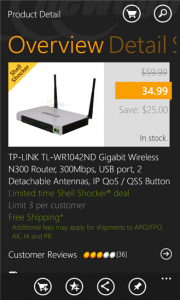
    Today, the company rolled out its official, fully-supported Windows Phone 8 app. Version 1.4 is the first to offer full support for the new Microsoft mobile operating system — “This is the Newegg.com mobile application. The app allows Windows Phone users to search, shop, read reviews and make purchases”, right from the retail giant. This is not the first Newegg app for Windows Phone and there are still a few missing pieces in the puzzle. Sadly, it still lacks some features. For instance, Lockscreen notifications and even a double-wide tile are both lacking. Then again, the new app does bring fast-app resume and it is super quick on loading, per early tests.

    Needless to say the app is free — Newegg expects to make up development costs with no problem, thanks to the ease of making tech purchases. And I am sure they will — without the app I have spent more than $100 there in the past couple of weeks. Who knows what will happen now.

  • What I really think about Google Chromebook Pixel

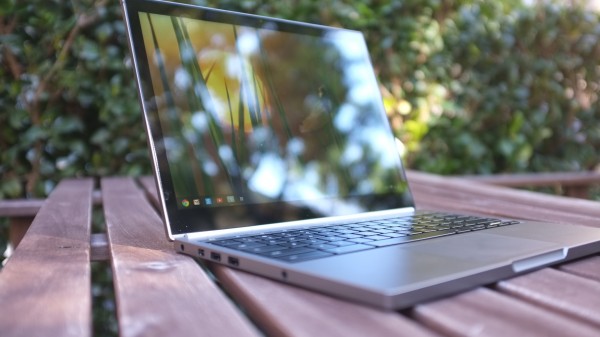
    Second in a series. Fourteen days using Google’s first computer, my decision is made: I would buy one and will someday (taxes are brutal, so my options are limited short-term). I firmly believe that most buyers willing to spend $1,299 (32GB WiFi) or $1,449 (64GB 4G LTE) will be satisfied with Chromebook Pixel. That’s because I presume they wouldn’t dole out that much without really examining how the computer would fit their lifestyle; also, Google seeks the same people coming from Windows who might buy MacBook Pro 13-inch.

    Seven days ago, in my first-impressions review, I looked at the overall experience and price benefits from the perspective of hardware. Here, I start to answer larger question: Can Pixel be your main and only machine? For most people, the answer is an unequivocal “No”. But “most people” isn’t Google’s target market.

    Pay to Play

    I’m amused by the mixed reactions to Chromebook Pixel. Price is a barrier for many reviewers, but clearly not for the brave geeks who buy one.

    People perplexed by Pixel pricing (say that three times fast) need to understand something. The $1,200-plus draws a line that leaves behind the majority of computer buyers. By pricing high but packing in hardware that justifies the cost, Google assures that a smaller, more-enthusiast crowd will buy Chromebook Pixel — and a group more likely to be passionate and vocal about their experiences. These are people willing to be different — to live another computing lifestyle — and don’t mind paying to field test a new platform.

    Chrome OS at $249 on Samsung’s ARM Chromebook is one platform. Chrome OS for $1,050 more, with high-resolution touchscreen, is an altogether different platform. Touch and 2560 x 1700 resolution change everything. A $199 Acer Chromebook could replace a primary PC but most people won’t use it that way. Pixel is meant to replace, rather than displace, the computer you’ve already got. The usage scenarios are different.

    But there’s more: High-resolution and touch change the overall usage experience and how people interact with Chrome OS. But that’s all a work in progress. Not all the touch-enabled apps are there — actually very few that take full advantage of the screen’s capabilities. Chromebook Pixel is really only ready for people willing to take the challenge — living in the cloud and adapting to change. Google makes them pay for the privilege.

    That’s one reason I call them field testers rather than beta testers. There’s nothing beta about Chromebook Pixel and Chrome OS 25. Hardware and software experience is rock-solid. Simply, the usage scenarios will expand as more apps support the resolution and touch capabilities. Google should want a vocal, enthusiast crowd buying the machine before the apps ecosystem is mature.
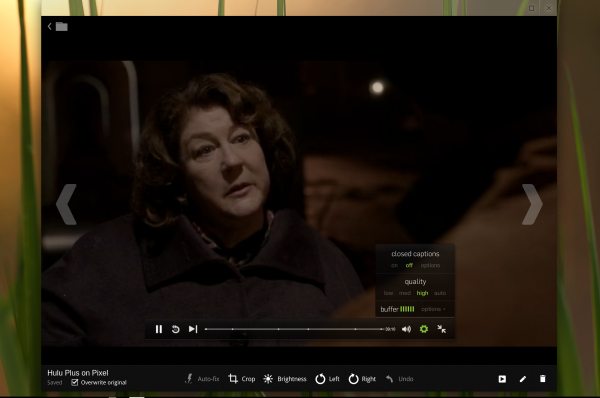
    Chromebook Pixel owners pay to play. Some people will balk and accuse Google of exploiting customers, but I assume most who do wouldn’t spend $1,200-plus for a laptop anyway. So don’t gripe, if you wouldn’t buy one. But the approach makes sense. Think about it. Who is more likely to show off a new car and boast about it? The guy or gal buying a $3,000 used clunker or someone plunking down six figures for a finicky euro sports car? Chromebook Pixel is that pretty machine with somewhat eccentric character, like the euro car.

    Juxtaposed Opinions

    From reading reviews over the past week, clearly many professional reviewers don’t get the Pixel concept, so they don’t recommend the computer. The tone from one to the next is similar: The hardware is great kit, but there’s no software. By stark contrast, I see nothing short of praise from the people who buy the laptop. Satisfaction runs high and from some unexpected adopters.

    Users. Uglydoll creator David Horvath gives one of the best responses to naysayers: “I run our company on Pixel now”. So much for creatives-and-Mac stereotypes. He is living proof of what I’ve expressed repeatedly for the past two weeks — here and on Google+, about the target market. Google sees would-be MacBook Pro 13-inch buyers as potential pixel purchasers (that’s easier to say three times). Best candidates are moving from Windows.

    Another Pixel user makes similar observation. Don MacAskill, SmugMug CEO:

    Wow. Blown away by how much I’m liking my Chromebook Pixel. I even had momentary frustration when I went back to my MacBook Pro Retina. That’s a first. Summary: Screen gorgeous. Touch awesome (finally!). Great trackpad (a first on a Chromebook!). Very fast. Solid & well-machined.

    There are things I won’t be able to do on it (my IDE comes to mind, as does git) but this is a major leap in the right direction. This is the single Apple competitive laptop on the market. I wonder what the gang over in Cupertino thinks about it?

    You need to understand the context. SmugMug is a huge shop of Mac users, and its apps support Apple platforms before any other. Google doesn’t want to sell Chromebook Pixel to the masses, but people like Horvath and MacAskill, creatives who either use or are predisposed to Macs.
    Linux creator Linus Torvalds also extols the computer’s benefits:

    I’ve joined all the cool kids in having one of the new Google ‘Pixel’ laptops (aka Chromebooks) — and it is a beautiful screen, to the point where I suspect I’ll make this my primary laptop. I tend to like my laptops slightly smaller, but I think I can lug around this 1.5 kg monster despite feeling fairly strongly that a laptop should weigh 1 kg or less. Because the screen really is that nice.

    Not surprisingly, Torvalds sees Linux in his Pixel’s future.

    Software developer Jerry Daniels received his Chromebook Pixel yesterday: “OK, been using my Pixel out of the box for over three hours on a 50 percent charge. I just now plugged in the power supply. Two things happened: 1) The power plug went into that socket on the side of the unit in a very sexual way (not kidding)…2) The screen just went to a whole other level of operation (brighter, clearer, wow). This whole thing’s getting like 2001 a Space Odyssey. Did Kubrick design this thing?”

    Reviewers. Professional reviewers don’t share these buyers’ enthusiasm. Writing for ArsTechnica, Andrew Cunningham quips: “Hardware is worth $1,299, but Chrome OS isn’t”. I disagree but do agree that the “Pixel seems better positioned as a means to an end rather than as a product that is itself intended to reach a mass-market audience”. Which is my main point in this post and its predecessor.

    For Mashable, writing about the “agony and the ecstasy of the Chromebook Pixel“, Chris Taylor concludes: “As lovely as the device is, I’m not quite ready to recommend it”. Bloomberg columnist Rich Jaroslovsky calls Pixel “upscale overkill“.

    I could go on, but most of the reviews are similar ilk and strongly contrast to people paying for Chromebook Pixel rather than using a Google loaner. There’s a big difference between someone choosing to spend money on something versus someone who doesn’t.

    The Big Question

    Who is Chromebook Pixel for? Probably not you, if you’re most people.

    Scenarios. Originally, I planned to make this second part about usage scenarios, but I changed my plan. That’s now more for part three, and primarily intended for people strongly considering Chromebook Pixel and wondering what apps they can use. I’ve given many usage scenarios related to Chrome OS in previous posts and want to spend more time working with the best apps. Usage scenarios for Pixel aren’t yet that different from lower-cost Chromebooks, but that will change as more apps are fine-tuned to take full advantage of the gorgeous touchscreen.
    Some posts for reference:

    Touch. Before continuing, little has changed in my second week with Chromebook Pixel, other than I like the computer all the more and use it as my primary PC without reservation or hesitation. I love this computer. Because I started using a Chrome OS computer as my main machine starting in May, the transition is easy for me. I already live in the cloud, which experience is remarkably better because of the high-res touchscreen. But that lifestyle isn’t typical, which is one reason part three will look at Pixel as daily machine and what limitations or opportunities cloud apps present on the gorgeous touchscreen.

    Then there is sense the touchscreen is too far ahead of the operating system and apps, which is one reason I regard Pixel for field testers who love change and the bleeding edge or creative-types who see potential that others don’t readily.

    I recently reviewed Surface Pro, which also features a high-resolution touchscreen, although lower than Pixel. The usability experience between the two user interfaces is shockingly different. Google presents Chrome as the major motif. Windows 8’s Modern UI is a full-screen motif that licks the display’s edges and presents big, bold elements that are easy to touch.

    For example, I find the experience using Internet Explorer 10 to be visually and tactfully more satisfying on Surface Pro than Chrome on Google’s laptop. Microsoft smartly places the navigation controls at the bottom of the screen, which diminishes Gorilla arm and puts them closer to the fingers for when people use keyboard and touch — which is the idea for Surface Pro. Additionally, going back or forward to webpages is easier. Just swipe your finger left or right. Somebody really thought-out this user interface.

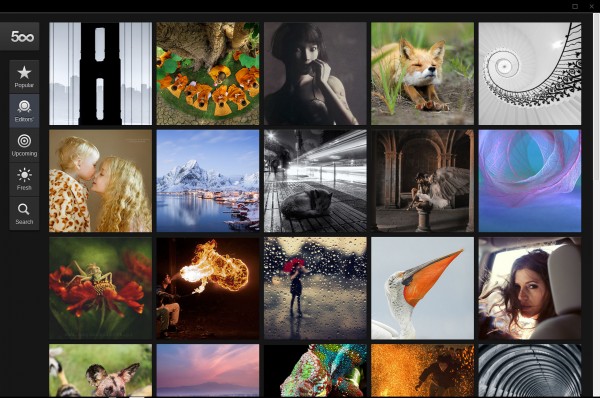
    Chrome OS responds to touch but doesn’t love the finger. That matters less if the apps are. The 500px photo-sharing app is fully-tuned to Pixel and foreshadows just how transforming and exciting the user experience could be.

    Legacy. Related, I must agree with Cunningham, who writes:

    The problem with Chrome OS isn’t that you can’t do most of your day-to-day tasks in a web browser, but if you’ve spent any time getting used to a certain set of tools, you’ll probably need to trade them in for web-based ones. And the real sticking points are those applications that have no easy web-based replacements. If you rely on even one piece of desktop software to get your work done, the absence of that client in Chrome OS will make the Pixel that much less plausible as a primary computing device.

    I’ve found nearly all needed web apps and had no major software dependency before using Chromebook Pixel. Actually, because of the Core i5 processor and high resolution, I have better choices on Pixel than other Chromebooks, and my general productivity is hugely improved. More importantly, I enjoy working on this computer. It’s the joy factor missing among the reviewers compared to the users above.
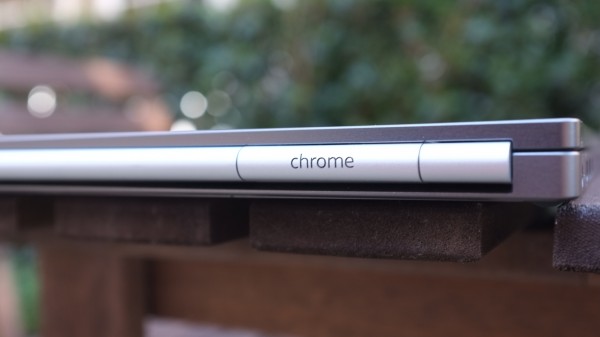
    Specs. This is a good place to recap specs: 12.85-inch touchscreen, 2560 x 1700 resolution, 239 pixels per inch; 1.8GHz Core i5 processor; Intel HD graphics 4000; 4GB DDR3 RAM; 32GB or 64GB of storage; HD WebCam; backlit keyboard; dual-band WiFi 802.11 a/b/g/n 2×2; 4G LTE (on one model); Bluetooth 3.0; mini-display port; two USB ports; Chrome OS. Measures: 297.7 x 224.6 x 16.2 mm. Weighs: 1.52 kg (3.35 pounds). Cost: $1,299 (32GB WiFi); $1,449 (64GB WiFi/4G LTE). 1TB Google Drive storage is included free, for three years.

    Storage. “The three-year terabyte was a major factor in my going for the Pixel”, Daniels says. “The Pixel might be the perfect laptop for CIOs or CTOs who may well find themselves under circumstances not unlike my own. I’m speaking purely from the storage point of view. The great OS and device are candy”.

    Security. I feel safe using Chromebook, and I’m not alone. “The thing I think I’m most excited about Chrome OS as a platform is security”, MacAskill says. “No real OS or storage to worry about, cloud-managed auto-updates, cloud monitoring for exploits, etc”. Remember, a Mac user says this, and Apple’s OS is considered to be much freer from malware than Windows.

    The Answer

    Chromebook Pixel isn’t for most people, with price being major reason and inertia another. For example, if:

    • You never under any circumstances would spend more than $1,200 on a personal computer.
    • You are attached to using some desktop application, or recently purchased expensive software.
    • You depend on macros, templates or other customizations that are directly tied to an application.

    Chromebook Pixel is for anyone willing to spend $1,200 or more on a computer and who:

    • Primarily writes
    • Is truly creative
    • Lives the Google lifestyle
    • Wants a touchscreen laptop
    • Primarily uses Chrome for everything
    • Wants to run Linux alongside Chrome OS
    • Loves being on the cutting edge of computing
    • Considers buying MacBook Pro 13-inch with Retina Display

    To emphasize:

    1. I am absolutely convinced that creative types will love Chromebook Pixel, and those, who like Horvath or MacAskill, give it a chance will discover in the Chrome Web Store apps they can use to make magic.

    2. Google enthusiasts will find that Pixel is the Chromebook they waited for. The computer is superbly handsome and feels fast in all the right ways. Everything syncs with their existing lifestyle.

    3. Geeks like Torvalds will delight in the high-resolution touchscreen and possibilities, which include dual-booting some other operating systems (can you say Linux). They can have the cloud and legacy apps, too, with touch and beautiful bod.

    That’s a wrap, until part three.

    Photo Credits: Joe Wilcox

  • AT&T reaffirms commitment to unlocking cell phones

    AT&T Cell Phone Unlocking Policy
    The issue of unlocking cell phones has been receiving a lot of press lately. Despite some recent objections from the White House, under the Digital Millennium Copyright Act it is still illegal to unlock a cell phone without prior consent from a wireless carrier. And on Friday, AT&T (T) went on record and reaffirmed its commitment to unlocking smartphones if certain requirements are met.

    Continue reading…

  • YouTube’s Justin Bieber channel gets hacked, then goes back to normal

    Sorry, Justin Bieber, your YouTube got hacked. Again.

    The page was working fine at around 5:30 PT, but a couple of hours earlier, reports surfaced on Twitter about Justin Bieber’s YouTube channel, Kidrauhl, appeared to be hacked, sending fans running to Twitter:

    Other YouTube channels might have been hacked, too, according to some tweets:

    We’ve sent an inquiry to Google and will update this post as soon as we hear back.

    Related research and analysis from GigaOM Pro:
    Subscriber content. Sign up for a free trial.

  • Riptide GP 2 splashes down on NVIDIA’s Project Shield device

    project-shield-overview

    Ever since NVIDIA announced the Project Shield device at CES 2013, they have continued to produce videos for a variety of games coming to the Tegra 4 powered mobile game console. The latest title to be highlighted on NVIDIA’s site is Riptide GP 2, a jet-ski racing game. It should be no surprise that a game involving so much water would show up to help demonstrate some of the capabilities of NVIDIA’s latest chip. 

    NVIDIA says the new version of Riptide GP will include “enhanced water and particle effects, HDR lighting, boosted reflection shaders and the all-new spectator mode.” Riptide GP 2 joins other titles like Need for Speed Most Wanted, Burn Zombie Burn and Real Boxing that have received the highlight treatment from NVIDIA.

    Check out the video below to see how the Project Shield device works and what Riptide GP 2 will be like on the device.

    Click here to view the embedded video.

    source: NVIDIA

    Come comment on this article: Riptide GP 2 splashes down on NVIDIA’s Project Shield device

  • New gameplay video for Shadowrun Returns released

    shadowrun_alpha_gameplay_screenshot

    Fans of the Shadowrun roleplaying game may find themselves spending some considerable time over the next few days watching and watching again a new video of gameplay for the upcoming Shadowrun Returns game. The game combines free form roleplaying with a turn-based combat system to bring the pen and paper game to the digital world. The developers, Harebrained Schemes, raised over $1.8 million via a Kickstarter project to fund development of the title. The video is labeled as Alpha Gameplay Footage and will give potential players an idea of what to expect. An Android tablet version is expected to be released later this year.

    Shadowrun takes place in the late 21st century at a time when megacorporations rule the world. Technology is much advanced compared to today, with bioware and cyberware available for individuals looking for an enhancement of their normal capabilities. The setting is sometimes described as cyberpunk in the flavor of William Gibson’s imaginings. The creators of Shadowrun did not stop there though. They brought in elements of fantasy genres as well with the re-emergence of magic in the world. Along with magic, races of beings like orcs, goblins, elves and dwarves also reappeared. This results in a world that is a mashup of science fiction and fantasy.

    Harebrained Schemes is currently taking pre-orders for OSX, PC or Linux versions for $15 for the basic version. Upgraded versions, including a Deluxe edition and a Collector’s Edition are available as well. Check out the 20 minute clip below for a good taste of what to expect from Shadowrun Returns.

    Click here to view the embedded video.

    source: Phandroid

    Come comment on this article: New gameplay video for Shadowrun Returns released

  • Nokia frets over possibility of a ‘Surface smartphone’

    Surface Smartphone Nokia
    Microsoft’s (MSFT) manufacturing partners felt betrayed after the company announced its Surface tablet, a milestone that marked the first time the software giant produced its own hardware. Since then, analysts and other Windows Phone vendors have speculated that Microsoft may release a Surface smartphone at some point in the future. And now we’ve learned that even one of the company’s most loyal partners fears for the worst: In a recent filing with the Securities and Exchange Commission, Nokia (NOK) voiced its concerns about the possibility of a Surface smartphone.

    Continue reading…

  • Designing for health tech? Remember the 7 deadly sins

    Plenty of entrepreneurs are trying to capitalize on the growing consumer and investor interest in digital health, but if you want to snare some money from at least one venture capitalist you might want to keep human vices — like lust, gluttony and greed — in mind.

    At a SXSW Interactive panel Friday on how health tech companies can design products that encourage users to change their behavior, Mayfield Fund managing director Tim Chang said:

    “The way I evaluate a lot of companies now is I look at the design framework. I look at the design framework of the seven deadly sins,” he said. “If an app or service does not tap into one or more of the seven deadly sins, either directly or indirectly, it will not be addicting…I always look along those dimensions.. and see what do those trigger.”

    (If you’re particularly virtuous, or just haven’t though about those sins in a while, they’re lust, gluttony, greed, sloth, wrath, envy and pride.)

    The conversation, which also included Stanford behavioral health expert Stephanie Habif, Basis Science CEO Jeff Holove, and Wired writer Michael Copeland, is clearly relevant these days. Health tracking devices — whether worn on the wrist, clipped to your belt or attached to the body in another way — are flooding the market. But many of these devices, while purchased with the best intentions, end up getting left behind on the dresser (or lost in the wash) after just a couple of weeks because while they generate a lot of data about how far you walked or how well you slept, they don’t necessarily lead to healthier actions.

    Public health has historically followed the logic that if you increase someone’s knowledge and persuade their attitude, you’ll get the behavior change you’re looking for, Habif said, but added “but that very rarely works.”

    “Knowledge is not enough. Health does not happen in a silo. In terms of what I’ve learned over the years, in terms of health behavior theories we’re trying to operationalize for health behavior change, social is very important. Emotion is very important,” she said. “It’s not just enough to infect the brain and implant the knowledge, you have to stir up the desire engine. You have to tap into emotion.”

    Devices and device-compatible health programs hold a lot of promise but, at this point, we don’t know if data tracking actually changes behavior, just that it leads to adherence to the devices, Habif said. But several companies are reporting positive results with programs that use both technology and human interaction (either from expert coaches or peers).

    Chang mentioned Chicago-based Retrofit, which provides a subscription-based weight-loss plan that relies on tracking devices and remote communication with behavior coaches and nutritionists. Diabetes-busting Omada Health is also beginning to find success with a model that pairs digital tools with a social support program in which users communicate with a cohort of people who share health indicators and other factors.

    Related research and analysis from GigaOM Pro:
    Subscriber content. Sign up for a free trial.

  • A car that knows where your kids are: BMW invests in Life360

    The first wave of connected car apps centered on music and audio streaming. It looks like the second wave of in-dash services may revolve around location sharing.

    We’ve already seen location-sharing app Glympse make it into its first connected platform, Ford’s Sync AppLink. Now BMW’s strategic investment arm i Ventures is partnering with family locator service Life360 to develop in-car technologies that would allow family members to locate one another and coordinate their activities. i Ventures is also making an undisclosed investment in the San Francisco startup.

    While an app like Glympse allows you to selectively share your location with anyone for a set period of time, Life360 creates a permanent share between a close-knit group such as a nuclear family. That allows Life360 to build services on top of that presence data.

    “Imagine you want to meet your wife at your kids’ soccer game,” said Chris Hulls, co-founder and CEO of Life360. “Right now you have to call her, get an address and then program it into your navigation system to get directions. That’s a lot of unnecessary friction.”

    connected car logoWhat Life360 proposes is an in-dash app that automatically keeps tabs on your family members’ activities. To find your wife, as in Hulls’ example, you merely have to tap on her portrait in the app, and her location is automatically fed into the car’s vehicle nav system.

    BMW isn’t the only automaker that thinks Life360 shows promise in the connected car. One of the startup’s lead investors is Fontinalis Partners, a transportation technology fund founded by Bill Ford, the executive chairman of his namesake company. The company recently closed a Series A round of $3.5 million from Bessemer Venture Partners, 500 Startups, Kapor Capital, Venture51, Bullpen Capital, Social Leverage and EchoVC Partners.

    As you might expect, Life360 as apps in the works for both Ford and BMW’s connected car platforms, but Hulls said its working with other automakers as well, including Mercedes, General Motors and Hyundai. While Hulls wouldn’t reveal which automaker’s platform would be the first to launch Life360’s app, he said the app would go live in a least one connected car system this year.

    We’re already starting to location finding its way into more connected car apps and not just in the form of navigation software. Roximity and BeCouply are using presence data to push location-based deals and recommend nearby activities for the amorously inclined.

    And while location-sharing isn’t a feature in most in-vehicle nav systems it’s starting to make it into many mobile mapping and navigation apps. Telenav recently announced an update to its iOS software that can share not only a user’s current location but also your intended destination, allowing friends to coordinate their activities on a map.

    Related research and analysis from GigaOM Pro:
    Subscriber content. Sign up for a free trial.

  • First Lady Michelle Obama and Secretary of State John Kerry Present International Women of Courage Awards


    First Lady Michelle Obama and Secretary of State John Kerry honor the recipients of the International Women of Courage Award

    First Lady Michelle Obama and Secretary of State John Kerry honor the recipients of the International Women of Courage Award in the Dean Acheson Auditorium at the U.S. Department of State in Washington, D.C., March 8, 2013. Seated, from left, are: awardee Malalai Bahaduri, First Sergeant, Afghan National Interdiction Unit, Afghanistan; awardee Julieta Castellanos, Rector, National Autonomous University of Honduras, Honduras; awardee Dr. Josephine Obiajulu Odumakin, President, Campaign for Democracy, Nigeria; Secretary of State John Kerry; Teresa Heinz Kerry, Under Secretary for Political Affairs Wendy Sherman; awardee Elena Milashina, journalist and human rights activist, Russia; and awardee Fartuun Adan, Executive Director, Elman Peace and Human Rights Centre, Somalia. Awarded in absentia were Tsering Woeser (Wei Se), Tibetan author, poet, blogger, China; Razan Zeitunah, human rights lawyer and Founder, Local Coordination Committees,Syria; Ta Phong Tan, blogger,Vietnam; and Nirbhaya “Fearless,” champion for justice, India.

    (Official White House Photo by Chuck Kennedy)

    First Lady Michelle Obama and Secretary of State John Kerry marked International Women's Day at the State Department where they presented the International Women of Courage Awards to nine remarkable women who, as Mrs. Obama said in her remarks, show us what our most basic values look like when they are put to the test.

    When these women witnessed horrific crimes or the disregard for basic human rights they spoke up, risking everything they had to see that justice was done.  When they saw their communities or their countries were ignoring issues like sexual violence or women’s rights, they gave those issues a face and a voice.  And with every act of strength and defiance, with every blog post, with every community meeting, these women have inspired millions to stand with them, and find their own voices, and work together to achieve real and lasting change. 

    read more

  • Hackers fail to crack Chrome OS

    Google Chrome OS Security
    Google (GOOG) offered hackers a chance at a big pay day if they could crack its Chrome OS platform. The company held its annual Pwnium competition at the ConSecWest security conference in Vancouver this week where it put $3.14159 million up for grabs. While a number of hackers attempted to get a piece of the Pi, a Google spokesperson confirmed in a statement to TechCrunch that none of them succeeded in fully cracking the operating system. The company did reveal, however, that it is “evaluating some work that may qualify as partial credit.” Google is making a big push to boost consumer interest in Chrome OS. The company recently released the high-end Chromebook Pixel to compete directly with the Retina display Macbook Pro.

  • Does eating lunch at your desk make you sad? Big data might fix that

    Unlike countries where people stop to have a nice meal in the workday, Americans have a little noon ritual of their own — sitting alone to chomp over the very same keyboard where they spent the rest of the day. According to Sad Desk Lunch, a site to share your lonely workplace sandwiches or microwave meal, 62 percent of Americans eat where they work.

    If you find this depressing, take heart: Help may be on the way, thanks to big data study that showed that workers are happier and more Lunch and Deskproductive when they eat with others and socialize during the work day.

    According to a Wall Street Journal report, Bank of America used data to discover its employees were 10 percent more productive when the company replaced solo breaks with group ones. Meanwhile, data experiments at other firms led them to make a cheerier, more social work place:

    The company decided to make its once-dingy cafeteria more inviting, improving the lighting and offering better food, to encourage workers to lunch together, instead of at their desks.

    Sound good? Don’t leap up from your sad little desk and pin the Journal article to your boss’s door just yet. There’s a catch. The employers in the article came to the conclusions they did only by sticking sensors on their workers:

    Sensors, worn on lanyards or placed on office furniture, record how often staffers get up from their desks, consult other teams and hold meetings [..]  company employees wore iPhone-size badges.. that collected data on their motions, whereabouts, voice levels and conversational patterns.

    The Journal report also notes that “bathroom breaks are optional” for those who are monitored and that employees who felt squeamish about the whole thing could wear dummy badges instead.

    (Image by Monkey Business Images via Shutterstock)

    Related research and analysis from GigaOM Pro:
    Subscriber content. Sign up for a free trial.

  • Empowering All Women to Reach Their Full Potential

    Today is International Women’s Day, and I can think of no better way to mark it than with all the different events this week around women’s empowerment.

    President Obama has made promoting gender equality and advancing the status of women and girls central to our foreign policy and national security strategy, including by leading by example at home.

    A few events this week highlighted the theme of women’s empowerment:

    Today, the First Lady attended the International Women of Courage Awards at the Department of State with Secretary Kerry, an annual event that recognizes the incredible strength and courage of women from around the world – women who have stood up for our most basic rights, even when it meant risking their own safety.  The First Lady emphasized that we must not only stand with these women and their efforts, but also use their example as a guide as we work to lift up the women and girls in our own communities. You can learn more about the women here.

    read more

  • Source Refrigeration Buys TP Electrical

    Source Refrigeration & HVAC, which is backed by Arsenal Capital Partners, has acquired TP Electrical. Financial terms weren’t announced. White, Ga.-based TP provides electrical and EMS contracting services to grocery, commercial, industrial, and retail clients across the Southeastern United States.

    PRESS RELEASE

    Source Refrigeration & HVAC (Source), a portfolio company of Arsenal Capital Partners (Arsenal), today announced the acquisition of TP Electrical (TP).

    Based in White, Georgia, TP is a leading southeast provider of electrical and EMS contracting services to grocery, commercial, industrial, and retail clients across the Southeastern United States. The acquisition builds on the strength of Source’s platform as the leading independent provider of commercial refrigeration and HVAC services in North America, serving the nation’s top supermarket chains, many of the largest convenience store chains, and leading telecom and industrial companies.

    “We are excited to add TP’s capabilities and strong customer relationships to our growing southeast team, and we welcome TP’s employees and customers to the Source family,” said Bruce Buchholz, Chief Executive Officer of Source. “Expansion in the southeastern United States continues to be an important strategic focus for us,” added Buchholz. “The TP acquisition allows us to offer our existing southeast customers expanded service and construction-related electrical and EMS capabilities. It also allows us to provide a broader offering for installation jobs with existing and new customers throughout the entire southeast. TP’s expertise coupled with Source’s existing service and installation operations in Florida and Georgia, position us extremely well for continued growth in the broader southeastern market.”

    Sal Gagliardo, an Operating Partner at Arsenal Capital said, “TP is well established in the southeastern U.S. market for refrigeration and HVAC electrical and EMS services and has provided a long history of quality solutions and service to grocery, commercial, industrial, and retail clients. The acquisition of TP strengthens the capabilities of our existing service and installation operations in the southeast and supports our overall strategy of continuing to expand our national footprint while we build an industry-leading independent refrigeration and HVAC company”.

    About TP Electrical
    TP Electrical is a leading provider of refrigeration and HVAC electrical and EMS solutions to the grocery, commercial, industrial, and retail clients across the Southeastern United States.TP holds electrical licenses in Alabama, Georgia, Florida and North Carolina and is certified in all major brands of grocery-related EMS controllers. They have long-standing relationships with leading grocery retailers and general contractors throughout the southeast.

    About Source Refrigeration & HVAC
    Source Refrigeration & HVAC is the leading independent provider of commercial refrigeration and HVAC services in North America, serving the nation’s top supermarket chains, many of the largest convenience store chains and leading telecom and industrial companies. With over 1000 employees and service locations nationally, Source designs, installs, services, maintains and optimizes mission-critical refrigeration & HVAC systems. For additional information about Source Refrigeration & HVAC, please visit www.sourcerefrigeration.com.

    About Arsenal Capital Partners
    Arsenal Capital Partners is a leading New York-based private equity firm that invests in middle-market specialty industrial, healthcare and financial services companies. Arsenal makes investments in sectors where the firm has prior knowledge and experience, and targets businesses that have the potential for further value creation by working closely with management to accelerate growth and leverage the firm’s operational improvement capabilities. Arsenal currently has $800 million of committed equity capital. For additional information on Arsenal Capital Partners, please visit www.arsenalcapital.com.

    The post Source Refrigeration Buys TP Electrical appeared first on peHUB.

  • The King of 3D printing kicks off a SXSW focused on the physical world

    Austin, Texas — Wearing a textured black jacket from cyberpunk-designer Sruli Recht, and repeating the word “awesome” throughout his hour-long talk, the CEO of 3D printing company MakerBot, Bre Pettis, told an audience of thousands of geeks at the annual SXSW Interactive Festival on Friday afternoon that “It is the best time to get into hardware.”

    For the past few years, SXSW — which is like the tech industry’s Spring Break fueled by BBQ, beer and the latest startups — has acted as a platform for a variety of social media and mobile apps to launch and gain mind share. Twitter famously broke out in SXSW in 2007. But at SXSW this year, as the New York Times noted this week, it looks like it’s hardware’s turn in the spot light.

    Hot hardware

    The Replicator 2, 3D printer, by MakerBot

    The Replicator 2, 3D printer, by MakerBot

    As rain drizzled down outside the Austin convention center and marketers handed out logo-laden bright ponchos to conference-goers, Pettis used the opportunity of his opening remarks at the show to unveil his company’s new 3D scanner called the MakerBot Digitizer. He referred to the Digitizer as the “washer and dryer” partner to MakerBot’s 3D printer the Replicator 2, and described the Digitizer’s 3D scanning process as “like what happens in Tron when Flynn gets digitized.”

    The device, which is supposed to be out in the Fall, will give creators and makers another tool to move designs from the physical world, to the digital world, and back again. While professional designers and artists have high-end machines that do this, the Digitizer is meant to bring this capability to the DIY movement. The Digitizer uses a camera to scan the device as it rotates, the digital design of the 3D object is captured, and the Replicator 2 can replicate the object, or a tweaked version of the object.

    A monster created by the MakerBot

    A monster created by the MakerBot

    Pettis also used his talk to announce that design giant Autodesk is now selling MakerBot’s 3D printers, giving the startup access to Autodesk’s large customer network, and adding some heft to the 3D printer movement. Pettis, who was introduced before his talk as the “King of the 3D printing revolution,” launched MakerBot as a company at SXSW in 2009. (To read more about 3D printing check out our research report on GigaOM Pro, subscription required).

    Makers, creators and devices

    As Stacey Higgenbotham predicted earlier this week, SXSW Interactive 2013 is all about the DIY maker movement and 3D printing. Across the street from the convention center, Autodesk is hosting a large “Create” space that’s highlighting inventors, and tinkerers and the devices that they’ve developed.

    Of course under the Create tent, Autodesk and MakerBot are showing off the Replicator 2, and Autodesk’s 3D printer software and applications, and they’ve even got a vending machine that’s selling 3D-printed monsters. Autodesk has an app called 123D Creatures that lets you make, and print out, monsters on your iPad; Autodesk can use these types of consumer-focused apps as both marketing, as well as to boost sales for its 3D printer software ecosystem.

    Vending machine dispensing 3D printed monsters, by MakerBot, Autodesk.

    Vending machine dispensing 3D printed monsters, by MakerBot, Autodesk.

    Other devices under the Create tent include social good gadgets like the BioLite Stove, invented by Alexander Drummond and Jonathan Cedar, the “See Better to Learn Better” low cost eye glasses from Fuseproject’s Yves Behar, and the Embrace Nest baby warmer. Lytro was showing off a camera that was launched at SXSW 2012, and which captures the light field of photos, enabling users to focus on and interact with different parts of the picture.

    The Lytro camera

    The Lytro camera

    In fact, in the few hours that the show has been open on Friday, I have yet to see a demo of or hear about a super hot social media or mobile app that’s blowing up at the show. But I have heard about 3D printable rocketships, new wearables from unusual players, and I got a brief demo this morning of the Misfit Shine from Misfit CEO Sonny Vu. I’m sure the digital-only apps and services are here at the show, but hardware and the physical world seem to be overshadowing them.

    In a way, that makes sense. The Internet of Things is officially here, and super cheap sensors are enabling gadgets to use data to help us in our daily lives. At the same time, wearable technology like Google Glass is making the computing industry think in an entirely new way. A physical component is almost necessary to move the computing paradigm forward beyond tablets, smart phones, and laptops. And for the early-adopters at the SXSW show this year, that means they get the first change to play with these devices.

    Related research and analysis from GigaOM Pro:
    Subscriber content. Sign up for a free trial.

  • Weekly Wrap Up: “This is Your Victory”

    Watch the West Wing Week here.

    Violence Against Women Act: On Thursday, President Obama signed the Violence Against Women Act of 2013, which provides resources for thousands of victims of domestic violence, sexual assault, dating violence, and stalking. The renewed version of the law extends to protect LGBT victims, immigrants, Native Americans and victims of sex-trafficking. The act will ensure victims and survivors will have the resources they need. With survivors and advocates standing behind him President Obama recognized the significance of the day:

    But everybody on this stage worked extraordinarily hard. Most of all, though, this is your day. This is the day of the advocates; the day of the survivors. This is your victory.

    • Watch President Obama and Vice President Biden deliver remarks at the signing.
    • Read the remarks by President Obama and Vice President Biden here.

    First Cabinet Meeting: On Monday, President Obama opened the 17th Cabinet meeting of his presidency and the first of the new term. The President welcomed to the table his newest cabinet members, Treasury Secretary Jack Lew and Secretary of Defense Chuck Hagel. In his remarks, President Obama shared his deep concerns of the harmful and automatic budget cuts known as the sequester and advocated for bipartisan solutions so Americans can be poised for progress:

    So one of the things that I’ve instructed not just my White House but every agency is to make sure that, regardless of some of the challenges that they may face because of sequestration, we’re not going to stop working on behalf of the American people to make sure that we’re doing everything we can to continue to grow this economy and improve people’s prospects.

    read more

  • Overhauling a home network, part 3 — Micca and the best-laid plans

    Third in a series. Two weeks have passed since we last visited this topic, but I wanted to be fair with this next part before writing it. As you will recall from part one, I decided to replace my Windows Media Center HTPC and the NetGear NeoTV 550, because both are so old and slow. While I wanted to do so with one box, there was a major stumbling block — most of our movies are ripped to ISO images. I would prefer a Google TV to replace both, but in the end got a Micca box to take the place of the HTPC and then still ordered a Vizio Co-Star because I simply could not resist.

    Things have not gone entirely as I planned. In fact, as you may recall from part two of this series, nothing has really gone the way I had hoped.

    Beauty is Skin Deep

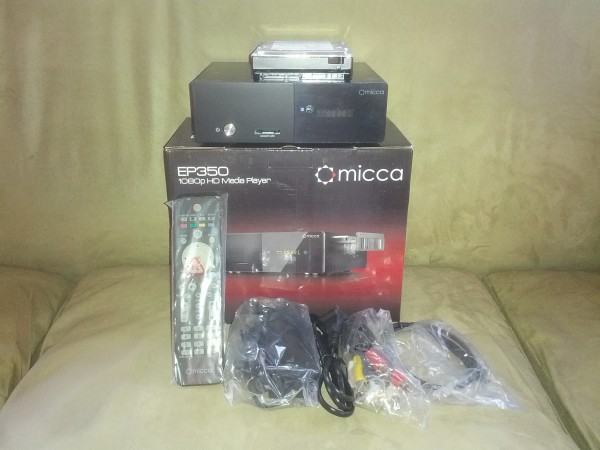
    The Micca is slim and very handsome. A SATA hard drive can easily be added from an optical drawer on the side of the box to provide built-in storage.

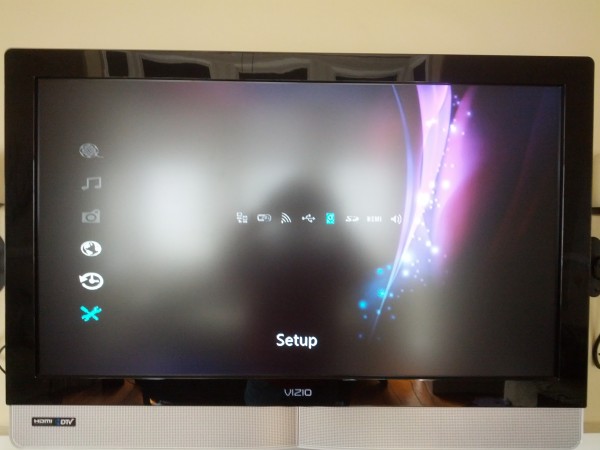
    I knew the user interface is scant — I saw the images on the website. That is not my concern. While Windows Media Center has a beautiful motif, I can live without it. I am looking for functionality and Micca promises to play virtually every codec, including my ISO files.

    The UI is stark, but not a problem. Functionality is. First, I cannot access the HDD I added to the box from any computer on my network, meaning I cannot move video files to local storage for easier streaming. The box does allow me to access files on other computers and DLNA devices, but that is problematic — sometimes they show up, sometimes not.

    Combine these network problems with the UI and it is a recipe for failure. When my family sits down to watch something they expect everything to work. This setup does not always fill that most basic need.

    Moving On

    So where do I go now? I will remove the HTPC. I have not done this yet because I want to test longer before disconnecting everything. I am very glad I took that approach.

    I will move to the Vizio Co-Star full-time, though doing so entails some significant hassle on my part. Those ISO movie files will not play there — I have looked for workarounds, without success. If you know of one, please chime in in the comments below — yes, I am crowd-sourcing my problems.

    Where to Now?

    For lack of an ISO solution on Google TV, I face the rather daunting task of converting ISO files to AVI format. It is not difficult just very time-consuming. Thankfully I work mainly on my laptop, so to open a file on the desktop and hit a covert button periodically is not labor-intensive. Plus I will save hard drive space.

    In the meantime, I will keep the Netgear NeoTV active (it plays ISO — hint to Google) to handle those ISO movies that have not yet been converted — just in case Indiana Jones starts calling my kids’ names.

    In part four, I’ll look at how well Google TV can replace a dedicated HTPC — it certainly has to be better than Micca.

    Photo Credits: Alan Buckingham

  • Windows 8 laptops are getting cheaper — will consumers bite?

    Windows 8 Discounts
    Earlier this week, The Wall Street Journal reported that Microsoft (MSFT) was offering its manufacturing partners a discount on Windows 8 licensing fees. The reduced cost will likely help manufacturers offer lower priced Windows 8 laptops. According to Digitimes, prices of Windows 8-powered touchscreen notebooks are expected to drop at least 10%, while some entry-level models could drop as much as 20%. Touchscreen laptops currently account for about 10% of all notebook sales, however the reduced prices are expected to increase sales to account for more than 20% in the second quarter. The new “sweet spot” for touchscreen notebooks is said to be around $500, although it will still likely take some time before consumers fully embrace the new operating system.

  • Facebook Acquires Social Blogging Site Storylane

    Blogging site Storylane has just announced that they’ve been acquired by Facebook for an undisclosed amount. The acquisition is talent-based, as Storylane’s Jonathan Gheller says that Facebook will not be acquiring any of their data.

    Storylane, a social-blogging site, billed itself a “story telling” network. It was founded two years ago and prompted people to share longer-form personal stories.

    “The team from Storylane will be an incredible addition to Facebook,” said Facebook in a statement. “Their previous work showcasing real identity through sincere and meaningful content will make them a perfect fit at Facebook.”

    Here’s Gheller’s full post on the move:

    Two years ago the team behind Storylane began working to help people connect in more fruitful and meaningful ways. We took on a mission – trying to help people better communicate who they are and what they care about, improve the way we do business with each other, find love and make new friendships. And at the heart of this work has always been our drive to build a more genuine online identity.

    After a lot of discussions with Facebook about how our teams might work together to have even greater impact, we are announcing today that the Storylane team will be joining Facebook.

    This is an exciting opportunity. Facebook’s mission of connecting the world has always been at the center of our work, and like our friends at Facebook, meaningful connections are what our team is most passionate about.

    The beautiful stories you have decided to share with us are yours to keep and share in however way you want. We are building tools that will help you migrate the content to other services if you so desire. I will be in touch with you about those specific tools later, but I can confirm that Facebook is not acquiring any of your data; and we’re working to make sure you can migrate your content in a manageable way.

    We want to give special thanks to our investors who supported us and encouraged us to dream big. It has been an absolute honor to work alongside such an outstanding group of people. Our journey as a young company was made possible by their commitment and patience. Without their guidance we would not be in a position to further our mission through Facebook.

    Most of all, I want to thank our users. Your passion, sincerity and willingness to share, has made Storylane the incredible experience that exists today. We have learned so much from you. Your ideas and creativity will stay with us and inspire us on the next stage of our journey.

    As I’m sure you’re aware, Facebook just unveiled a dramatic news feed redesign that focuses on more visually-oriented stories.

    [via GigoOm]

  • Nathan Safferstein Dies; Manhattan Project Worker was 92

    The Associated Press is reporting that Nathan Safferstein, a counterintelligence agent for the Manhattan Project, has died.

    Safferstein’s family told the AP that he died Tuesday, March 5 at his home in the Bronx. He had been suffering from an unnamed illness for some time.

    As part of the program centered around creating the atomic bomb, Safferstein was trusted with some of the Manhattan Projects’ most precious secrets. The AP report states that Safferstein eavesdropped on Los Alamos laboratory scientists to ensure they weren’t leaking secrets about the program. He was also tasked with transporting sensitive material, such as uranium and top-secret messages.

    Safferstein was reportedly a grocery store manager before being recruited into the Manhattan Project and stationed at Los Alamos. He followed the project all the way to the Pacific theater, where he was able to sign his initials to the atomic bomb dropped in Hiroshima. After the war, Safferstein returned to grocery store work. He went on to become president of a marketing company and later founded two companies.

    (Image courtesy Michael Safferstein/AP)