The Democratic caucus is losing two veterans, a move that steps up the pressure for cap-and-trade legislation to be passed within the next six months, if it is to be passed at all.
The Democratic caucus is losing two veterans, a move that steps up the pressure for cap-and-trade legislation to be passed within the next six months, if it is to be passed at all.
So with my FBGL going down quite well I am curious how long does it take a reading today to factor in my A1c’s.
This is basically what Google was really going for with the Nexus One, isn’t it? They were just way more subtle about it. [LandlineTV]
Wilco’s April tour also brings the band to Lupo’s in Providence (April 4), the Orpheum Theatre in Boston (April 6) and the Capitol Center in Concord, N.H. (April 7). This will be Wilco’s first visit to Hartford in its 15+ year history. A web pre-sale will be held on Wednesday, with tickets going on sale to the general public on Friday. Tickets appear to be $35, and Wilco lists the show as an “Evening With” format.
In other Wilco news, the band is currently featured in the third installment of Beck’s “Record Club” project, covering Skip Spence’s “Oar” in its entirety with Jamie Lidell and Feist. Here’s the latest selection, featuring Jeff Tweedy and Feist playing “Broken Heart.”
Tickets for Belly Up Tavern can be purchased at http://bellyupsolanabeach.frontgatesolutions.com. Upcoming shows there include Average White Band (12/13), The Greyboy Allstars (12/23), and Cracker and Camper Van Beethoven (12/29). Tickets for Viejas Entertainment are available at http://viejas.frontgatetickets.com. Upcoming shows at Viejas include Tower of Power (12/12), Zapp (1/16), and David Sanborn (2/19).
About Front Gate Tickets
Front Gate Tickets provides web-based ticketing solutions and event-management services to entertainment organizations in the United States. The company, based in Austin, TX, is one of the largest independently owned ticketing agencies with clients including C3 Presents (Austin, TX), San Diego Street Scene (San Diego, CA), Belly Up Aspen (Aspen, CO), The Long Center for the Performing Arts (Austin, TX), Warehouse Live (Houston, TX), and Boulder Theatre (Boulder, CO). Front Gate Tickets is owned by Front Gate Solutions), a software development company, whose mission is to make entertainment organizations more efficient.
Contact:
[email protected]
512.674.9342

Related posts:
Related posts brought to you by Yet Another Related Posts Plugin.
A few weeks ago the American Museum of Natural History posted a video showing a voyage from the surface of the Earth to the last-scattering surface (at the “edge” of the Universe). What makes the video unique is that it is based on real data, not an artist’s conception. The thin ellipses represent actual satellites orbiting the Earth; the dots represent the location of actual quasars billions of lightyears away. (No, the Universe is not composed of pie slices of galaxies, as in the movie. They used data from the Sloan Digital Sky Survey, which is one of our most comprehensive views of the Universe, but which has only surveyed certain areas of the sky.) Perhaps most amazingly, the video has gone viral–with over 1.9 million views and thousands of comments to date.
I was lucky enough to see an (interactive) preview of this video while I was in New York attending the Amaldi meeting. It is a modern retelling of the Powers of Ten video by Charles and Ray Eames (who, as it happens, also designed fabulous furniture; I’ve been lusting after an Eames recliner for years [how many pieces of furniture have their own wikipedia entry?]). The videos help us develop a healthy perspective, which is a good way to start off the New Year. It is humbling, after all, to realize how insignificant we really are. Yes, we have the gall to change our planet, and threaten all living beings on its fragile surface. But, still, in the grand scheme of things, we’re a grain of sand in a vast and beautiful ocean. We’re totally irrelevant. I find this to be oddly reassuring and calming.

The so-called “Lost Supper” cast photo promoting the sixth and final season of ABC’s Lost is heating up the blogosphere as fans anticipate what nail-biting storylines await them when new episodes premiere next month.
Lost returns to ABC Feb. 2.

If there are two things that really don’t mix, it’s electronics and moisture. The problem is that water is electrically conductive and getting gadgetry wet can lead to water creating circuits where there ought not be circuits, thus frying the phone. Saving a phone that’s fallen into a puddle, pool, aquarium, or other aquatic malady is a matter of fast action and a bit of luck.
First and foremost, get it out of the water and remove the battery. Do not even think about turning it on to see if its okay, just yank the battery and dry off what you can. After that, take your phone and battery and stick them in a sealed bag filled with rice or, if you can find some, silica gel. Leave the bag someplace warm (not hot), like a sunny windowsill, for several hours. As the bag is heated, any moisture on/in the phone will evaporate and be absorbed by the rice. Once dried, clean whatever contacts you can reach on the phone and battery with a q-tip and distilled water and put it back together. With any luck, your phone will be ready to go.
Pre owner and Lifehacker reader Dietrich (not our own Dieter Bohn) recently had to run through this exercise with his own Pre after dropping it in a puddle:
“For the last 2 days it has been a monsoon in my city. Today, during a rushed last minute shopping spree, I dropped my phone in a puddle. I didn’t realize I had dropped it until I got back to my car 30 minutes later.
“I remembered articles on Lifehacker about what to do so I immediately popped the battery out and dried the phone. When I got home I put my Palm Pre in a bag of rice for 10 hours. Adding insult to injury, I forgot to take the phone battery out of my pocket and put it through the washing machine. 10 hours later I’m typing this on my Pre. Good job Palm on making an excellent phone.”
So there you have it: dry it out quickly and thoroughly, and hopefully all will be well. Of course, we offer no guarantees that this will work, but we’ve seen it happen enough (even to ourselves) to know that it’s worth a shot.
 Total hip and total knee replacement surgeries are highly successful and very common procedures for people experiencing pain associated with degenerative joints.
With a new hip or knee, and postoperative care prescribed by their doctors, most patients are able to regain a more active lifestyle with considerably less pain.
According to a new study published in the January 2010 issue of The Journal of Bone and Joint Surgery (JBJS), the risk of early postoperative mortality — or death following surgery — was slightly increased for the first 26 days after the elective surgery.
The risk of mortality was estimated to be 0.1 percent.
The size of the study and the precise statistical tools used show the increase in early postoperative mortality was highest immediately after the operation.
Then, 26 days after the surgery, the increased risk of death was negligible.
“Previous studies suggesting that increased mortality exists for as long as 60 or 90 days post hip or knee replacement surgery may be wrong,” said lead author of the study, Stein Atle Lie, PhD, MSc and professor in the Department of Surgical Sciences at the University of Bergen, Norway who led the study with colleagues from the Department of Orthopaedic Surgery, and the Norwegian Arthroplasty Register at the Haukeland University Hospital in Bergen, Norway.
“We believe the risk is tied to a much shorter duration.”
The study included data on 81,856 patients with a total knee replacement and 106,254 patients with a total hip replacement from the Australian Orthopaedic Joint Replacement Registry and the Norwegian Arthroplasty Register.
Only patients between 50 and 80 years of age with osteoarthritis were included.
The study found the most important risk factors for increased early postoperative mortality were:
“This very low postoperative mortality after hip and knee replacements should be reassuring for patients considering these surgeries,” explains study co-author Lars B. Engesaeter, MD, PhD and Head of Norwegian Arthroplasty Register, Haukeland University Hospital in Bergen, Norway.
People considering hip or knee replacement should talk to their orthopaedic surgeon about any added risk in relation to their age and follow recovery guidelines closely. Other questions to consider prior to surgery can be found at orthoinfo.org.
“We conducted this study to help people contemplating hip or knee replacement,” continues Dr. Lie.
“As with all surgeries, there is some increased risk of postoperative mortality. However, we were pleased to find the mortality rate is so minimal — less than one percent — following hip and knee replacements.”
Disclosure: In support of their research for or preparation of this work, one or more of the authors received, in any one year, outside funding or grants in excess of $10,000 from the Norwegian and Australian governments and the Australian Orthopaedic Association.
Neither they nor a member of their immediate families received payments or other benefits or a commitment or agreement to provide such benefits from a commercial entity.
Filed under: Coupe, Performance, BMW, Rumormill

A BMW 1 Series Coupe, tweaked by the company’s M-Technik division, is reportedly under development for UK release in mid-2011. Destined to slot beneath the M3 Coupe, the smaller 1 Series Coupe is said to feature a modified twin-turbocharged six-cylinder packing 350 horsepower. The aluminum engine will be mated to a standard six-speed dual-clutch gearbox with an electronically-controlled rear M differential. With a curb weight of just over 3,300 pounds and easily making more than 310 lb-ft of torque, the newest M-car will breeze past 60 mph in well under five seconds without breaking a sweat (for comparison’s sake, BMW claims the 135i takes 5.2 seconds but publications like Car and Driver have hit 60 mph in the 4.7-second range)
The 1 Series Motorsport variant will reportedly retain the current car’s standard MacPherson struts up front and the multi-link rear configuration, but the division’s engineers have fitted firmer springs and dampers (and new bushings) to improve handling. Lightweight 18-inch alloy wheels complete the hardware package. Cosmetically, the so-called “M1” will wear an M division body kit with a new front spoiler, flared wheel arches, larger side sills, a rear spoiler and an aggressive rear valance with four M-signature chrome exhaust tips.
The name is still not finalized. Understandably, BMW is hesitant to quickly slap the “M1” label on the rear decklid as that name originally adorned the company’s legendary road supercar in the late 1970s. Destined to become the M division’s most affordable model, we really don’t care what BMW calls it… just send it to our shores.
[Sources: Autocar; Car and Driver]
Report: Details on 2011 BMW “M1” trickle out originally appeared on Autoblog on Wed, 06 Jan 2010 11:00:00 EST. Please see our terms for use of feeds.
The Andrew W. Mellon Foundation is eliminating a grant program that financed a series of high-profile university software projects and is merging it into another program.
Mellon’s decade-old Research in Information Technology program, or RIT, helped bankroll a catalog of freely available software that includes Sakai, a course-management system used by Stanford University and the University of Michigan; Kuali, a financial-management program recently rolled out at Colorado State University; and Zotero, a program for managing research sources used by millions.
Now the foundation plans to eliminate the RIT program as a stand-alone entity. Mellon described the change as part of an effort to “consolidate resources” and concentrate on core program areas like the liberal arts, scholarly communications, and museums. RIT will merge into the Scholarly Communications program, which will manage its existing grants. Ira H. Fuchs, RIT’s founder, says his position has been eliminated, as has that of Christopher J. Mackie, RIT’s associate program officer.

[Source: Chronicle of Higher Education – Wired Campus]


Trelew – Argentina








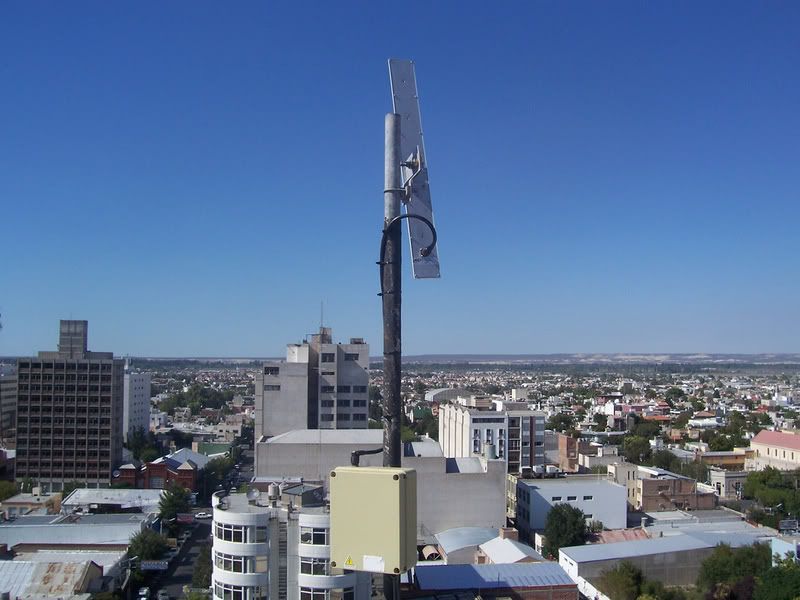

2005

—-

The official REWORK book site is now up at 37signals.com/rework. There you’ll find the full list of essays included in the book, a look at the front and back covers, six of Mike Rohde’s illustrations from the book, pre-order links at major retailers, and early reviews from folks like Tony Hsieh, Tom Peters, Chris Anderson, and Kathy Sierra. The book comes out on March 9, 2010.
 Marvell Technology said today that it’s figured out a way to deliver the first-ever quad-core ARM-based application processor for cell phones and other mobile devices. More cores equals more performance, of course, and Marvell says its quad-core ARM chips will deliver “gigahertz-plus” performance.
Currently Qualcomm’s Snapdragon chipset is the leader in ARM-based processors for phones, with 1 Ghz of performance. In terms of having identical processors working on the same computing problem, sometimes called symmetric multicore processing, there aren’t any chips doing symmetric multicore processing running in today’s phones. Rather most cell-phone applications processors have multiple cores, with one handling computing, another doing graphics and another taking on multimedia. Marvell’s quad-core would deliver four CPUs — or four times that of today’s applications processors.
That’s more than today’s cell phones need to run properly, but if gimmicky features like animated wallpaper, as well as useful ones like running multiple apps, take off, they’ll become essential. Plus, if today’s tablet hype actually results in user adoption, quad-core performance makes a lot of sense for those machines. I’m waiting to hear back as to how long it may be before we see quad-core ARM chips in real-world devices, or even if Marvell is starting to manufacture them. One way or another, I like where the company is headed.


At noon today, Senator Christopher Dodd (D-CT) is expected to announce that he won’t seek re-election. He’s the chairman of the Senate Banking Committee. As you probably know, these days, that’s a particularly important post. This year, it matters even more than usual, as the financial regulation push will make up a major part of Washington’s efforts in 2010. Indeed, Dodd authored the Senate’s financial regulation bill. Will his announcement have any effect on getting this legislation passed?
I think it could. Dodd will be a sort-of lame duck. As a result, his bargaining power will be diminished.
First, you might recall that his proposal is far more ambitious than what the House passed. I think you’ll quickly see those lofty goals fade. It would have been an uphill battle in the Senate to pass something stronger than the House’s version anyway. After all, he was already having trouble. Since he won’t be around next year to follow through with deals made, logrolling will be even more difficult.
In fact, I think his imminent exit could even make it more challenging for the House bill to get through the Senate. As Banking Committee chairman, Dodd had a lot of clout in being able to grant favors and have other Senators wanting him on their good side. Even if his more ambitious regulatory proposals slipped through the cracks, he would certainly have planned to at least fight for what the House wanted. Today’s announcement should knock his influence down a few pegs. That might make it even harder to get meaningful financial regulation through the Senate. And given the Senate’s more moderate stance compared to the House, it wouldn’t have been easy to begin with.
As I’ve said before, Congress will get some financial regulation passed eventually. But Dodd’s decision to announce his retirement today should make the Senate a bloodier battleground in the legislative fight that’s sure to ensue. It could even be more difficult than health care, particularly since there’s now no clear and powerful leader in the Senate to push for financial regulation.


 Panasonic has announced new full motion video network cameras that will let folks monitor their homes remotely when using certain Panasonic’s Internet-enabled plasma HDTVs, as well as PCs and cell phones. The new BL-C210 and the BL-C230 have an integrated Internet connection allows users to view camera output in real time full motion video from anywhere in the world, using a personalized secure web address. Users can even have the camera pan, tilt and zoom remotely.
The cameras use H.264 video compression for high quality video while using less bandwidth. The system also has built-in sensors that detect body hear, sound, and motion. When a sensor is triggered, an image is captured and can be sent via email or to a VIERA CAST enabled TV. There is built-in memory to store images and the included recording software connects up to 16 cameras.
The Panasonic BL-C210 IP network camera will cost $199.95 and the BL-C230 for $299.95.
 Oh D-Link Pebble, media streamer from the Boxee Box people. I think I love you, but you look a bit like one of those ergonomically-designed “back massagers” so popular with coy ladies. $119, so cheaper than this.
Luke Timmerman wrote:
Acton Pharmaceuticals, the Marlborough, MA-based developer of an inhalable drug for asthma, said today it has secured $15 million in a Series A financing round led by Sequoia Capital.
The company doesn’t have to navigate most of the usual technology and regulatory risks that are inherent in biotech. Acton is getting started with a license from New York-based Forest Laboratories to an inhalable corticosteroid drug called flunisolide HFA (Aerospan) that was cleared for sale by the FDA back in January 2006. Acton, in a statement, said it plans to complete “certain manufacturing requirements” and then start marketing the product in early 2011.
The market for inhalable corticosteroid drugs, which tamp down an excessive inflammatory response in the lungs of asthmatic patients, is worth an estimated $7 billion a year, Acton said. The company plans to build up its own specialized sales force that will pitch its product to allergists and pulmonologists, with the hopes of eventually adding more products to the portfolio. Its aerosol is made with a propellant that doesn’t use ozone-damaging CFC compounds, which are being phased out of asthma inhalers, Acton said.
“Our shared vision with Sequoia Capital along with our strong capital structure will enable us to complete development of Aerospan and build a substantial sales, marketing, scientific, and business development infrastructure that we believe will attract new opportunities for clinical stage and marketed products,” said CEO John Simon, in a statement.
Acton was founded by Simon and David Kriesler, the company’s president and chief operating officer. Both of them are veterans of Forest Laboratories, although Simon was most recently a vice president at Sepracor, and Kriesler’s last position was at JDS Pharmaceuticals. Scott Carter, who leads healthcare investing for Sequoia, is joining Acton’s board.
There’s pretty widespread acceptance now that many of the features of Mars are best explained by the presence of liquid water, but that water seems to have frozen in the distant past. We can spot what appear to be glacial features on the planet now, but the local conditions are such that, instead of melting to liquid, this water will go directly into the vapor phase. The main question that has been up for debate is how long water lasted on the red planet; a paper in the latest issue of Geology suggests that the answer is much longer than we’d generally thought.
The paper focuses on features in an area of the planet called Ares Vallis, a drainage channel cut in the early history of Mars when an area called Iani Chaos (can I just say I love that name?) melted. Some flat, rimless features in the Ares Vallis formed long after this channel was cut, and have been the topic of much debate. Some have argued that they formed as subsurface ice underwent sublimation into vapor, causing the surface to collapse; others argue the basins were dry basins that had been occupied by ancient lakes.
The new paper takes advantage of images obtained by the Mars Reconnaissance Orbiter, which carries some of the most sensitive cameras ever sent away from Earth. The new images reveal details down to six meters/pixel, and clearly show channels that travel among the depressions, generally linking one basin with another one that’s lower in elevation. The authors are confident that these once carried water between what they now feel must represent ancient lakes.
Based on a model that incorporates the rates at which Martian features are obliterated by impact craters, the authors estimate that these features date from about 3.3 billion years ago—well into Mars’ Hesperian period, and long after the Martian atmosphere should have been able to support liquid water. The authors argue that a climate fluctuation, possibly linked to the period’s intense volcanism, may have produced a temporary warming. They highlight the similarity of nearby features with those found in areas where permafrost has melted.
Why is this of interest? The results push the era in which Mars supported (at least sporadically) liquid water to over a billion years. “The extension of warm and wet surface conditions on Mars from the early Noachian (4.5 Ga) into the late Hesperian (3.0 Ga) may have facilitated long-term evolution of microbial life in isolated pockets of stable near-surface and subsurface water,” the authors conclude.
Geology, 2010. DOI: 10.1130/G30579.1
Buy This Item: [Click here to buy this item]
 Back in December 1995, the Hubble Space Telescope created the now-famous “deep field” image, which took more than 300 exposures over the course of 10 days to peer deep into the history of the universe and spot more than 1,500 galaxies. A decade and a half later—after failures, upgrades, and the “ultra deep field“—Hubble marches on. Yesterday at the American Astronomical Society meeting, astronomers announced they’d used the telescope to look deeper into the past than ever before.
The new image captures 7,500 galaxies of all kinds and shapes. The oldest galaxies in the image glow an intense blue, indicating high concentrations of the lighter elements hydrogen and helium. Hydrogen fusion inside active stars creates heavier elements such as iron and nickel, which get spread across the universe when massive stars explode. These elements cause modern galaxies to glow in a rainbow of colors, so the extreme blueness of the newfound galaxies suggests that they formed before very many massive stars had lived and died [National Geographic News].
The ancient galaxies are also tiny by galactic standards, containing just one percent of the mass of our own Milky Way galaxy. But they could play an important role in showing astronomers how galaxies formed as the universe aged. These galaxies started forming just 500 million years after the big bang, which is thought to have occurred around 13.7 billion years ago. That pushes back the known start of galaxy formation by about 1.5 billion years [National Geographic News].
Hubble captured this newest image with its Wide Field Camera 3, a new piece of equipment that the last space shuttle flight to upgrade the telescope installed last year. But unanswered questions remain. The big mystery is the era when ultraviolet light from the youngest stars electrically charged early clouds of interstellar gas, triggering magnetic effects that played a role in later galaxy formation, says astrophysicist Mario Livio…. This “re-ionization” era probably played out just before or during the time when the lives of the early galaxies turned up in the new Hubble images [USA Today]. Hubble’s would-be successor, the James Webb Space Telescope, could help sort out this era’s history when it launches in 2014.
Related Content:
80beats: Prepare to Be Amazed: First Pics from the Repaired Hubble Are Stunning
80beats: Space Shuttle Grabs Hubble, and Astronauts Begin Repairs
80beats: A Hot Piece of Hardware: NASA’s New Orbiter Will Map the Entire Sky in Infrared
Cosmic Variance: Well, That Was Fast, on the upgraded Hubble’s initial data
Bad Astronomy: Hubble’s Back, and Spying on Wailing Baby Stars
Image: NASA
 At the first edition of the Indian Auto Bild Golden Steering Wheel Awards, namely the Automotive Company of the Year 2010 award went to Volkswagen India. The award was accepted by Prof. Dr. Jochem Heizmann, Member of Board of Volkswagen AG.
During the ceremony, Prof. Dr. Jochem Heizmann said: The Auto Bild Golden Steering Wheel Awards are held in high esteem across the globe. We are honored to be the first recipient of the Automotive Company of the Year in the Indian edition of th… (read more)


