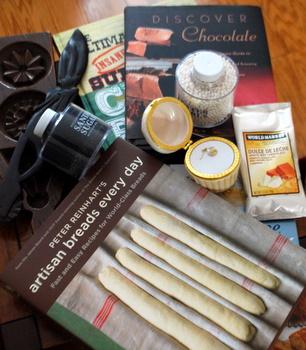
I hope that everyone had a lovely holiday weekend with friends and family. I know that I did! And I certainly got lucky in the gift department this year. I received several outstanding cookbooks, fancy stackable sanding sugars from Williams Sonoma and a couple of antique pieces of pastry-making equipment – a pastry cutter and a moon cake/pastry mold – that a relatively thoughtfully picked up for me on a trip to Southeast Asia earlier this year. There were a fair number of chocolate bars in my stocking, and of course it was also wonderful to spend some quality time with my family.
If I absolutely had to choose, my favorite thing would have to be my new Shun Chef’s knife. I can’t say no to a good knife and, in addition to being a fantastic instrument, it looks gorgeous. Now, I just need to put a knife block on my wish list for next year!
Since we’re sharing, what did everyone else get for Christmas? Books, baking equipment, homemade goodies? I certainly hope that a copy of The Baking Bites Cookbook made it under a few trees, too!
This week ReadWriteWeb is running a series of posts analyzing the five biggest, most cutting-edge Web trends to come out of 2009. We’re posting one trend analysis per day. Then at the end of the week we’ll publish a major update to our standard presentation about web technology trends.
Our opening post was about Structured Data. In this article we look at probably the most hyped trend of 2009: the Real-Time Web. It has become a core part of many Internet products this year: Twitter, FriendFeed, Facebook, Google, Delicious, WordPress, and many others.
Sponsor
Editor’s note: This story is part of a series we call Redux, where we’ll re-publish some of our best posts of 2009. As we look back at the year – and ahead to what next year holds – we think these are the stories that deserve a second glance. It’s not just a best-of list, it’s also a collection of posts that examine the fundamental issues that continue to shape the Web. We hope you enjoy reading them again and we look forward to bringing you more Web products and trends analysis in 2010. Happy holidays from Team ReadWriteWeb!
What is the Real-Time Web?
Ken Fromm wrote an insightful primer to the Real-Time Web for ReadWriteWeb. In it he explained that the Real-Time Web is a new form of communication, it creates a new body of content, it’s immediate, it’s public and has an explicit social graph associated with it, and it carries an implicit model of federation.
One of the early leaders in the Real-Time Web was FriendFeed, a lifestreaming service that became popular with early adopters. Co-founder Paul Buchheit (who also built the first version of Gmail, during his time at Google) told ReadWriteWeb in May that "the open, real-time discussions that occur on FriendFeed are going to become a major new communication medium on the same level as email, IM and blogging."
Everything is Real-Time Now
We must of course begin our product overview with Twitter. In March this year the super-trendy microblogging service marked its 3rd birthday. As Marshall Kirkpatrick explained at the time, it’s really the story of Twitter as a platform that is most exciting.
However the Real-Time Web is much more than Twitter. It has changed the products and strategies of almost every major Internet company in 2009.
But while you’re waiting for Google search to become truly real-time, you can at least add Twitter results to it with this plug-in.
In March, Facebook launched a site redesign emphasizing a real-time stream of updates on users’ homepages. Although this was unpopular with users, Facebook continued to dabble in Real-Time. In June, Facebook announced a new search interface allowing users to search for content from people, organizations, and other public figures as soon as they share it on Facebook. This was described as “up-to-the-minute” search results – in other words a real-time search engine.
Meanwhile in April, FriendFeed introduced a revamped user interface that focused much more on real-time updates than previously. The most impressive change was the new advanced filters, which made it a lot easier for users to create streams based on keywords, groups, sets of friends and more. FriendFeed’s filters added something powerful to the Real-Time Web.
In August Yahoo’s influential social bookmarking service Delicious was re-born as a real-time news tracker. It launched a new home page, combining recent tagging activity and cross-referenced links on Twitter.
The real-time updates continue… earlier today, all blogs on the WordPress.com platform and any WordPress.org blogs that opt-in will now make instant updates available to any RSS readers subscribed to a new feature called RSSCloud.
The Real-Time Web is all of those things and more. 2009 has in many ways been the Year of the Real-Time Web. But it’s early days yet, because we – collectively – are still looking for ways to use all of that extra real-time data. We’ve made a lot of data real-time and surfaced it in search and our filters. But what new applications and intelligence can we build off this data? That question will be answered over the coming few years.
Screenie é uma ferramenta gratuita para Windows que lhe permite facilmente tirar printscreens/screenshots do seu ambiente de trabalho Windows.
Para além da funcionalidade básica, é possível também com o Screenie, enviar automaticamente screenshots para um servidor FTP, para o disco ou então para o clipboard e ainda editar a imagem como cortar, redimensionar e destacar conteúdo.
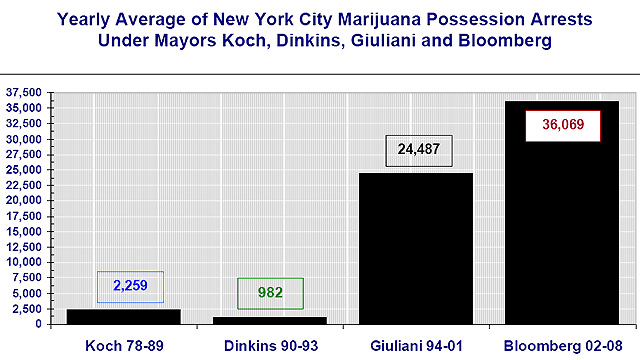
Marijuana arrests have spiked in New York City under Mayor Michael Bloomberg, according to new research from a Queens College professor, and the people arrested for pot are almost exclusively minorities.
Bloomberg, who once told New York magazine that he smoked pot “and enjoyed it,” has quietly continued the ‘broken-windows’ practices of former Mayor Rudy Giuliani, and has seriously stepped up marijuana arrests. In 2008 alone, more than 40,000 people were arrested in New York for low-level marijuana offenses — and 87 percent of them were black of Latino. When you consider that white people are more likely to use pot than African Americans, the problem here becomes even clearer.
New York Times columnist Jim Dwyer wrote about these numbers this week, drawing from the research of Queens College sociology professor Harry Levine. Dwyer finds that the city explains the discrepancy away through a reliance on the broken windows theory, which is alive and well in NYC.
“Marijuana arrests — which rarely lead to jail — are concentrated in neighborhoods with the highest concentrations of violent crime because that’s where the police focus their attention in order to reduce victimization,” Bloomberg’s criminal justice aide John Feinblatt told Dwyer.
I have read parts of David Dodd and Benjamin Graham’s 1934 bible on investing, Security Analysis and have found it quite a challenge but nevertheless very informative.
This 725 page giant of a book was written at a time where the global economy was in a depression brought on by the over exuberant roaring 20s and the subsequent 1929 stockmarket crash.
It has had several updates since its original edition and is often hard to come by in your local bookstore. A sixth edition will be out soon. I wanted to read the original book to get a feeling for the markets and general investment outlook of the time. Its relation to today’s market conditions is important to me.
From the Amazon preview of the first edition of SecurityAnalysis:
The original words of Benjamin Graham and David Dodd–put to paper not long after the disastrous Stock Market Crash of 1929–still have the mesmerizing qualities of rigorous honesty and diligent scrutiny, the same riveting power of disciplined thought and determined logic that gave the work its first distinction and began its illustrious career.
In their preface to this book, Graham and Dodd write that they hope their work “will stand the test of the ever enigmatic future.” There is no doubt that it has.
I have seen it at my local Borders in Albany though. They have one copy at a price of NZ$120.
Now I have other books on my reading list but I want to tackle this one first, principally because it was the text that Warren Buffett based much of his investing style on and as my regular readers know I am a Warren Buffett nut.
I have already read Benjamin Graham’s The Intelligent Investor but I felt I needed a more detailed analysis of his investment style and his and Dodd’s Security Analysis tome fits that bill to a tee.
Many stockbrokers in the past have used Security Analysis to go back to in times of doubt, and given current market turmoil investors might be wise to start reading.
It is clear the majority of stockbrokers in the United States and in other global markets haven’t even turned a page of this essential investment tool and I know that is more than the case in New Zealand stockbroker circles.
My local ASB Securities broker said what? when I asked him during a related conversation if he had even heard of the book! Even The Intelligent Investor was another language to him.
You can get a physical copy of the book from the Share Investor Bookstore or download it free here. You have to Register to a member of Share Investor Forum to download the book but it is fast and free.
Around 1:00 PM Pacific time on Sunday, Apple’s MobileMe suite of cloud applications went offline. Apple hasn’t responded yet to a request for details, but the volume of Twitter updates in different languages suggests this isn’t a small outage. MobileMe, for which Apple charges $99 per year, grew from the company’s .Mac (pronounced “dot-mac”) services. Usually it works — I use it daily — but MobileMe got off to a bad start last year with frequent outages. So much so that even Apple fan Walt Mossberg declared it “too flawed to be reliable.” MobileMe beats Google Apps in some ways, most notably its browser-based replications of the mail, calendar and contact apps built into Apple computers. But for a hundred bucks a year in 2010, shouldn’t it be bulletproof?
According to startup nowPlaying.fm, Twitter users post 650,000 tweets per day that contain the hashtag #nowplaying, followed by the name of a song to which the user is currently listening. There’s only one problem: These tags rarely contain a link to the song, so other Twiiter users can go listen to it themselves.
NowPlaying.fm is a music search-and-play service in the style of GrooveShark or the late imeem, which was absorbed into MySpace Music earlier this month. But it connects to Twitter to share the music you’re listening to with the entire Twittersphere — not just as a title, but as a playable song link.
It works like this: You sign up for a nowPlaying membership. You login to nowPlaying’s website and search the site’s database of music. NowPlaying displays ten search matches, and lets you ding any which arent the right song match for your search, in order to improve the system’s accuracy over time. You can play these songs, or add them to playlists.
Whenever you play a song on nowPlaying, it sends a tweet through your Twitter account that includes not only the song title, but a #NowPlaying hashtag (Twitter hashtags don’t care if letters are capitalized or not), followed by a link to the song on nowPlaying.fm. If another Twitter user clicks the link, their song plays.
NowPlaying is currently in an invite-only beta period. The company emailed me a press release about its service this morning, but left a lot of info I’ve asked them for. How do they make money? Can’t Pandora, Grooveshark, MySpace, iTunes, etc., add this feature themselves? I’ll update this post with their answers.
Le sort s’acharne sur Toyota ces dernières semaines. Après les problèmes de pédales d’accélérateur et ceux de corrosion du Tundra, que j’évoquais hier ici, voici qu’on apprend que la nouvelle Prius aurait des soucis de freinage.
On ne pourra pas dire que l’année 2009 aura été bonne pour le géant japonais; commencée dans les pertes colossales dues à la crise, elle se termine dans la tourmente médiatique. Vivement le salon de Détroit et la présentation, par exemple, de la « baby-Prius » pour passer à autre chose. Mais les 3 semaines qui restent à tenir risquent d’être longues.
La NHTSA (l’agence de sécurité routière US) a effet placé sous surveillance le symbole de la marque, la nouvelle Prius,pour un défaut de freinage. Il s’agit plus exactement d’une perte marquée d’efficacité du freinage, intervenant soudainement et sans raison apparente. La NHTSA a reçu « des douzaines » de plaintes ces dernières semaines mais n’a pas encore ouvert d’enquête.
Malheureusement, compte tenu du contexte médiatique autour de Toyota ces jours-ci, il est probable que ça ne traine pas. Il n’est d’ailleurs pas impossible non plus que des déclarations malveillantes viennent s’ajouter à celles justifiées, au regard de ce même contexte.
Hors, la survenue de ce problème est tout sauf une surprise pour les ingénieurs ayant travaillé sur ces systèmes. Il est même étonnant qu’on en ait encore jamais entendu parler. Quoi qu’il en soit, ce dossier concerne bien plus d’automobilistes que les propriétaires de Prius III. Celle-ci est dotée d’un système de récupération d’énergie au freinage, comme toutes les hybrides, mais aussi comme d’autres voitures de plus en plus nombreuses à moteur classique.
La Prius III,symbole de l'avance technologique et surtout industrielle de Toyota dans l'hybridation.
–Qu’est-ce que ce système? Les véhicules sont en fait équipés d’un double freinage. Le premier est hydraulique, c’est celui qu’on retrouve classiquement sur toutes les voitures. Il disperse sous forme de chaleur l’énergie cinétique accumulée par le véhicule. Le second, électronique, est né de la volonté de récupérer cette énergie sous forme de courant pour rechager des batteries ou alimenter des accessoires, clim, radio ou autres. Il permet, surtout en cycle urbain, un gain de consommation assez conséquent, d’où son apparition de plus en plus fréquente même sur les véhicules uniquement mus par un moteur thermique.
Voyez par exemple la vidéo présentée par BMW il y a quelques jours pour illustrer ce principe sur sa nouvelle 5:
–Quel est le problème? Il est assez simple à comprendre, mais très compliqué à résoudre. Il vient de la cohabitation de 2 systèmes distincts de nature différente, mais actionnés par une seule commande. Le système électronique doit être programmé pour intervenir en collaboration avec l’hydraulique afin que le conducteur obtienne un freinage homogène en toutes situations et de manière transparente avec un seul dispositif pour actionner les 2 systèmes: la pédale de freins.
Hors, le casse-tête pour les ingénieurs vient du fait que si l’électronique propose une intervention programmable en toutes circonstances, l’hydraulique est lui par nature soumis à des variations en fonction de paramètres externes, tels que la température, l’humidité, la qualité du liquide ou bien d’autres facteurs encore. Et il est très complexe, on s’en doute, de modéliser tous ces paramètres pour les programmer.
Le problème mis en lumière sur la Prius III est en fait assez typique de ces systèmes. Il s’agit d’un manque de décélération quand le système électronique fait face à un freinage hydraulique moins fort que prévu et programmé.
On le voit, ces sytèmes sont encore un peu instables et terriblement complexes à mettre au point. C’est cette complexité qui explique en partie qu’on parle d’hybrides tous les jours, mais qu’on ne les voit arriver qu’au compte-gouttes sur le marché.
-Pourquoi Toyota et pourquoi la Pirus III? Toyota a eu le grand mérite de jouer le rôle de pionnier dans le développement de l’hybridation. Malgré les gains en termes d’image et de parts de marché, c’est aussi pour la firme un gros risque. Elle est en effet connue pour sa frilosité au niveau innovation, surtout dans le domaine électronique. Chez Toyota, on attend en général que les concurrents aient fiabilisé les nouveaux systèmes pour les adopter. On l’a vu au début des années 2000 par exemple quand Renault, Mercedes ou autres se débattaient dans des soucis à n’en plus finir avec de nouveaux dispositifs électroniques. Toyota a attendu, à la plus grande satisfaction des clients d’ailleurs!…
Un problème dont on n'a pas entendu parler sur la Prius II…
Mais sur l’hybride, Toyota s’est exposée,et elle est logiquement cette fois en première ligne pour essuyer les plâtres. Il faut ajouter à celà le contexte évoqué plus haut et dans l’article précédent, qui est LA grande affaire en matière d’automobile en cette fin d’année aux Etats-Unis, et qui favorise certainement aussi les constatations concernant les véhicules de la marque.
Il y a une autre piste sur laquelle on aura certainement des éclairages dans les semaines à venir, c’est celle du cas particulier de la Prius III. Car même si le système peut générer ces problèmes par nature, la nouvelle hybride du japonais a un petit défaut dont il se pourrait qu’il les amplifie. De nombreux essayeurs et conducteurs ont noté que la « 3″ était plus confortable et passait mieux les grosses irrégularités sur la route que la « 2″. Mais, parallèlement, elle est plus sautillante sur les petites irrégularités. Ca n’est en rien un défaut, mais plutôt un choix de comportement fait par les ingénieurs. Néanmoins, il se pourrait que ce trait de comportement serve de révélateur au défaut du système. En effet, lorsque celà se produit,la roue perd le contact avec la route, brièvement, mais suffisamment pour que le système électronique perçoive la décélération, la roue tournant forcément moins vite en perdant l’adhérence. Il est probable que le système électronique perçoive cette baisse de rotation comme une action du système hydraulique et intervienne alors en réduisant sa propre puissance en cas de freinage,pour éviter une entrée en action inopportune de l’ABS.
Ca expliquerait pourquoi on entend parler de ce problème sur la nouvelle Prius et aussi pourquoi de nombreux signalements à la NHTSA font état d’une perte de freinage après un passage sur une bosse ou un petit obstacle. Si ça n’était que ça, les ingénieurs pourraient rapidement régler le problème.
Toyota attend le salon de Detroit avec impatience pour tenter d'inverser la vapeur au niveau médiatique,notamment avec la présentation de cette urbaine hybride,prévue pour 2012.
Mais quoi qu’il en soit, le mal est déjà fait pour Toyota, en tous cas outre-Atlantique pour l’instant, et la marque n’avait vraiment pas besoin de ça. Ce d’autant plus qu’elle s’apprête à présenter au salon de Détroit un urbaine hybride à laquelle elle compte faire profiter de la notoriété du nom « Prius ». On ne connait pas encore l’appellation du modèle ,que d’aucuns nomment provisoirement »baby Prius ». Il serait dommage que ce nom, dont l’image était jusqu’ici entièrement positive, soit entâché d’une connotation négative juste avant que le « bébé » n’arrive.
Qu’il doit faire mauvais de travailler au service médias et communication de Toyota en ce moment!
Nouveau: pour profiter facilement et rapidement des notifications de nouveautés sur le site, pensez à vous abonner via Twitter. Chaque modification,nouvel article ou nouvelle vidéo sur notre chaîne Youtube, fait l’objet d’un Tweet immédiat!
In a lengthy interview with Xinhua, Chinese Premier Wen Jiabao made it pretty clear to the Chinese press that he wouldn’t yield to international pressure for a yuan revaluation.
China’s doing fine as is, and is actually helping pull the world economy out of its slump. Thus China will simply adjust the yuan when its ready.
FT: ”We will not yield to any pressure of any form forcing us to appreciate. As I have told my foreign friends, on one hand, you are asking for the renminbi to appreciate, and on the other hand, you are taking all kinds of protectionist measures,” he said.
…
By keeping the Chinese renminbi stable against the US dollar, China was contributing to the recovery in the global economy, he said. ”The purpose [of these calls for appreciation] is to hold back China’s development,” he added.
Xinhua: “A stable Chinese currency is good for the international community,” Wen told Xinhua News Agency in an exclusive interview.
Keep in mind that Mr. Jiabao will probably be talking a little tougher against the international community when directly addressing the local press, just like any U.S. president would do. Read more about the Xinhua interview here.
AT&T’s LG eXpo has made a quick jump from launch announcement to price reduction. Originally debuting for $199 after a $100 mail in rebate and a two year contract, the eXpo is now available for the rock bottom price of $99 from Amazon with free activation. Throw in a $50 Amazon gift card and the LG eXpo will cost you a mere $49 with a two year contract. Better get while the getting is good, though, as both the $50 gift card and the free activation are limited time offers which end December 28th.
It’s definitely shaping up to be the year of e-book readers: the Amazon Kindle is flying off (virtual) shelves, and we’d expect the Barnes & Noble Nook to start moving at a decent clip once the kinks get worked out. But any device with an always-on 3G connection to a central server raises some privacy questions, especially when it can broadcast granular, specific data about what you’re reading — data that’s subject to a wide spectrum of privacy laws and regulations when it comes to real books and libraries, but much less so in the digital realm. We’d say it’s going to take a while for all the privacy implications of e-books to be dealt with by formal policy, but in the meantime the best solution is to be informed — which is where this handy chart from our friends at the Electronic Frontier Foundation comes in. As you’d expect, the more reading you do online, the more you can be tracked — and Google Books, the Kindle, and the Nook all log a ton of data that can be shared with law enforcement and various other third parties if required. Of course, we doubt the cops are too interested in your Twilight reading habits, but honestly, we’d rather users weren’t tracked at all. Check the full chart and more at the read link.
Explosive penises and the anatomical prevention of duck rape: You may not have known this (most of the Ars staff didn’t), but most birds copulate without the benefit of a penis. One of the primary exceptions to this are, of all creatures, ducks. As it turns out, male and female ducks have elaborate and rapidly evolving genitalia. There appears to be a behavioral habit driving this evolution: duck rape or, more properly, forced copulation. It seems that males tend to force themselves on females, and females have been evolving convoluted reproductive passages in order to thwart them.
The paper in question here actually capture video of the male erection process, which normally takes place inside the female: “Eversion of the 20 cm muscovy duck penis is explosive, taking an average of 0.36 s, and achieving a maximum velocity of 1.6 m s−1.” But the female reproductive tract contains awkward bends and blind alleys that can apparently stop the process cold, allowing the female a degree of control over the father of her offspring, regardless of how aggressive he may be.
Duke Nukem Forever may not have made a record-setting 12th appearance on Wired’s vaporware list this year due to the rather ugly legal disputes that surrounded it, 3D Realms is still saying it isn’t dead. As far as
HDblog.it have published the above video guide to flashing a custom ROM to the HTC HD2 using the new Soft SPL.
While the process seem simple enough to be used by any novice readers should be warned that the process has the potential for bricking their device, and if they do not have an official ROM to flash it with again they will not be able to recover.
Many Christmas accessories are covered in snowflakes, snowmen and Santas. They definitely look out of place in the middle of summer. Other items, like a solid green or red tablecloth, have year round appeal and can be as much as 90% off at after Christmas sales. Shopping at these sales for items you can use year round is a smart way to stretch your budget. Here are a few things I picked up for my house this year at a Target 50% off sale:
Pretty teal cereal bowls – They do have snowmen in the bottom, but no one will even notice til after their oatmeal is gone. The outside of the bowl is solid blue.
Napkins and tablecloths in solid colors.
Paper towels – I could care less if I’m mopping up something gross with a snowman print in the middle of July. (We do try to use rags as much as possible to cut costs and be more eco-friendly, but there are still things I’d like paper towels for.)
Grocery items like cake mixes and cookie mixes – Holiday cake mixes taste and look an awful lot like the funfetti mixes we use to make birthday cupcakes. Sugar cookies can be cut with Easter cookie cutters and won’t like a bit Christmasy.
Reynold’s wrap – Foil is foil.
What things do you like to pick up at after Christmas sales?
THEY were one of the world’s most famous couples, who lived lives of power and glory but who spent their last hours in despair and confusion. Now, more than 2000 years since Antony and Cleopatra walked the earth, historians believe they may finally have solved the riddle of their last hours together.
A team of Greek marine archaeologists, who have spent years conducting underwater excavations off the coast of Alexandria, Egypt, have unearthed a giant granite threshold of a door they believe was once the entrance to a magnificent mausoleum that Cleopatra VII, queen of the Egyptians, had built for herself shortly before her death.
They believe the 15-tonne antiquity would have held a seven-metre-high door so heavy that it would have prevented the queen from consoling her Roman lover before he died, reputedly in 30BC.
”As soon as I saw it, I thought we are in the presence of a very special piece of a very special door,” said Harry Tzalas, the historian who leads the Greek team. ”There was no way that such a heavy piece, with fittings for double hinges and double doors, could have moved with the waves, so there was no doubt in my mind that it belonged to the mausoleum. Like Macedonian tomb doors, when it closed, it closed for good.”
Mr Tzalas believes the discovery of the threshold sheds new light on an element of the couple’s dying hours which has long eluded historians.
Hoy en día tenemos al Panamera y al Rapide, por nombrar solamente a dos coches, originalmente coupé, que fueron convertidos a cuatro puertas, creando un nicho de mercado muy exclusivo de estos modelos. Sin embargo, hace 46 años la gente de GM diseñó y fabricó un único modelo de pruebas del Corvette con 4 plazas.
Habiendo salido al mercado poco antes el Ford Thunderbird de cuatro puertas, la gente de GM decidió crear un competidor que pudiera acomodar a cuatro pasajeros. Para ello, los diseñadores decidieron tomar un típico Corvette y alargar el chasis para hacer sitio a las plazas traseras. El resultado fue una extensión del chasis no muy perceptible, pero que se nota más en las puertas un poco más largas y en el cristal trasero también más grande.
El proyecto casi llegó a producción. Incluso, la línea de montaje del Corvette tradicional comenzó a recibir los planos y los datos del chasis “largo” para el cuatro puertas. A último momento, GM suspendió el proyecto, aunque los chasis originales se usaron en algunos de los modelos de dos puertas. Es por ello, que algunos modelos de 1964 del Corvette pesaban un poco más, debido a los pocos centímetros agregados.
¿Qué fué del modelo de la foto? Desgraciadamente fue destruído unos años después por GM. Del recuerdo de un proyecto tan insólito, quedan sólo estas fotos.



 This week

 We must of course begin our product overview with
  Google may have
  In March,
 Meanwhile in April,
  In August Yahoo’s influential social bookmarking service
  The real-time updates continue… earlier today, all blogs on the WordPress.com platform and any WordPress.org blogs that opt-in will now
 Screenie é uma ferramenta gratuita para Windows que lhe permite facilmente tirar printscreens/screenshots do seu ambiente de trabalho Windows.