Blog

  • Chrome Super Sync Sports is a BIG (and small) Hit

    Google_Chrome_Sports_Sync

    Who says innovation isn’t any fun?  Certainly not the geeks working over at the all inspiring Googleplex!  Once again Google finds a new way to amaze and excite us in the worlds of both mobile gaming using wireless sync.  How does it work?  Google has developed a way to use a combination of HTML5, CSS3, WebSockets and the Google App Engine to allow players to enjoy a game utilizing the Chrome Browser without additional plugins.  Amazing, right?  You bet it is!

    The technology behind the gameplay is only the beginning, because it’s both smooth and responsive over a high speed internet connection.  I found the game to be reliable and entertaining, and at the same time physically and mentally challenging.

    Super Sync Sports supports Chrome for Android 4.0 or later, Chrome for iOS 4.3+, Firefox version 15+ and Safari version 5+ on mobile devices.  For desktop, it is compatible with Chrome version 15+, Safari version 5.06+ and Firefox version 10+.

    To get started, users must login to both their mobile and desktop device browsers, hit sync on the mobile device, and “super sync” their way to super fun!  Players can invite up to three more friends to join in the game play, making this game even more challenging, fun, and engaging.  Choose from one of several quirky cartoon characters and go!

    Basic gameplay includes a series of three styles of races: running, cycling, and swimming.  Players interact with the PC game using finger gestures (at times vigorously) on their mobile device.  If you enjoy physical interaction coupled with intense game play, this game is for you!

    Super_Sync_Sports_04
    bundle_450x290
    Super_Sync_Sports_02
    Super_Sync_Sports_01


    Click here to view the embedded video.

    Source:  Google Chrome Blogspot

    Come comment on this article: Chrome Super Sync Sports is a BIG (and small) Hit

  • Equinix to Sell $1.5 Billion in Notes to Fund Construction, Acquisitions

    Equinix is selling up to $1.5 billion in senior notes, and plans to use some of the funds for data center construction and potential acquisitions. Last year the colocation provider acquired Ancotel and its Kleyer90 connectivity hub in Frankfurt, pictured above. (Photo: Equinix)

    Colocation provider Equinix plans to sell up to $1.5 billion in senior notes, and will use some of the money to build new data centers and fund acquisitions, the company said Thursday. The offering shows that the data center industry’s strongest players continue to use their financial strength to enter new markets and boost their competitive position.

    Equinix (EQIX) will also use some of the money in its plan to convert to a real estate investment trust (REIT), a move that has boosted interest from investors but would involve a substantial cash payment to shareholders of at least $700 million.

    The company plans two offerings:  a sale of $1 billion in senior notes that mature in 2023 and pay 5.375 percent interest, and $500 million in notes due in 2020 pay 4.875 percent. Part of the proceeds will be used to reduce Equinix’s interest costs by paying off existing notes that pay 8.125 percent. Equinix said the remainder will be used for capital expenditures – which in the colocation business, means data center construction and maintenance – and to fund potential acquisitions.

    The company said it does not currently have any deals pending deals. But in 2012 Equinix was an aggressive acquirer, boosting its global expansion with three deals, including the acquisition of Frankfurt data hub AncoTel, Shanghai provider AsiaTone and a data center in Dubai.

    In the company’s recent earnings call, CEO Steve Smith said Equinix intends to “expand the global reach and scale of Platform Equinix both organically and through acquisitions.”

    J.P. Morgan, Barclays, Citigroup, BofA Merrill Lynch and Deutsche Bank Securities are acting as joint book-running managers for the offering, and Evercore Partners, Goldman, Sachs & Co., HSBC, RBC Capital Markets and UBS Investment Bank.

  • Kim Dotcom Loses Appeal In Extradition Battle

    With all the excitement over the launch of Mega, it’s easy to forget that Kim Dotcom is still facing extradition to the U.S. To fight this, Dotcom and his legal team argues that they need access to the evidence the U.S. will bring against them. Lower courts agreed with Dotcom, but the Court of Appeals didn’t buy the argument.

    TorrentFreak reports that the Court of Appeals overturned the previous ruling that said the U.S. had to present all the evidence it had on Dotcom and his associates. In its ruling, the court says that evidence is not required in an extradition case because it’s not a trial over whether the party is innocent or guilty. Instead, the court said that the U.S. only has to prove that they have a case against Dotcom to move things forward.

    It’s a pretty big setback for Dotcom, as he was hoping to get access to all the evidence the U.S. has against him. Dotcom isn’t giving up, however, and plans to bring his case before the Supreme Court.

    For the next installment in the long running Dotcom legal battle, we’re going to have to wait for word from the Supreme Court. If it picks up the case, we can expect to see Dotcom’s already delayed extradition trial delayed even further. If the court doesn’t agree to hear the case, Dotcom’s extradition trial will go on as planned in August. Either way, it’s going to be interesting.

  • Groupon Stock Rises On Andrew Mason Departure

    As you may know, Groupon fired its CEO on Thursday, a day after another disappointing earnings release, which sent stock tumbling. Since the news broke, the stock has taken a turn for the better.

    In after hours trading on Thursday, the shares rose as high as 12% from the $4.53 closing price. Things have calmed down a bit in pre-market trading on Friday, with shares up to $4.65, up 2.65%.

    Meanwhile, seemingly everyone on the Internet is throwing around their opinion of Mason and speculating on his and Groupon’s next move. Mason has been relatively quiet since just after the news broke, when he shared a letter he sent to Groupon employees, which included some of his characteristic sense of humor, and a comparison of Groupon to a game of Battletoads:

    For those who are concerned about me, please don’t be – I love Groupon, and I’m terribly proud of what we’ve created. I’m OK with having failed at this part of the journey. If Groupon was Battletoads, it would be like I made it all the way to the Terra Tubes without dying on my first ever play through. I am so lucky to have had the opportunity to take the company this far with all of you. I’ll now take some time to decompress (FYI I’m looking for a good fat camp to lose my Groupon 40, if anyone has a suggestion), and then maybe I’ll figure out how to channel this experience into something productive.

    He followed that up with this:

    He also retweeted this:

    That was 15 hours ago, and he’s been quiet (at least on Twitter) since.

    According to CNN, Mason is getting a severance package of $378.36 due to his $756.72 per year salary (as some tech CEOs famously take low salaries because of their fortunes in stock). The report says Mason’s Groupon’s shares are worth $213 million at Thursday’s closing price.

  • Ultimate Taylor Swift ‘I Knew You Were Trouble’ Edition Is (Hopefully) the End of a Meme

    It’s a strange a wonderful thing watching a meme work its way across the internet. It twists and turns and morphs in unpredictable ways. Sometimes, it even loops back around on itself, only to shoot off in another direction.

    From what I can tell, here’s how we got to what you’re about to see:

    First, a two-minute compilations of goats screaming like humans went viral a couple of weeks ago. At some time after that, someone stuck a screaming goat into the Taylor Swift song “I Knew You Were Trouble.” That revitalized an older meme – the “goat edition.” After that, people began putting screaming goats into other songs. As of right now, thousands upon thousands of “goat editions” are searchable on YouTube.

    But in the last few days, the attention has turned back on Taylor Swift. People began to replace the screaming goat with other things – like a motion-activated paper towel dispenser or Nicolas Cage’s “not the bees” bit from The Wicker Man.

    Other popular inserts included a screaming bunny and the best cry ever, an old meme from the TV show Intervention.

    All of that leads us to what is hopefully the end of all of this. Watch it and you’ll see why.

    Who am I kidding? It’s the internet – this sh*t is probably just getting started.

    [via reddit]

  • Alt12 is tackling digital health, pregnancy and parenthood one comment at a time

    What can a smartphone owner expect when she’s expecting? We’re starting to see more and more apps that could change how we consider digital health and social interaction on mobile.

    When Jennifer Wong was five months pregnant in 2009, she went searching for a mobile app that would give her more information on her pregnancy. Wong didn’t find what she was looking for — instead, she found a business idea. Along with her husband Casey Sackett, Wong founded Alt12, a company that aims to provide women with information and a social community built around the iPhone for three topics: fertility, pregnancy, and motherhood.

    “I realized that mobile was a platform for where things were going, and there was a lot of focus on mobile,” Wong said in an interview recently in San Francisco. “But there were a lot of male developers out there, and we thought women’s health and women’s lifestyle was a really great place to go.”

    With initial seed funding, Wong started out with the company’s first mobile app called Baby Bump, hiring writers to research and produce educational information about the different stages of pregnancy, developers to build the network to support a strong social community, and eventually adding e-commerce features to sell some of the kid-related products the editors were recommending. With this three-pronged approach to content, social and commerce, Baby Bump just hit 8 million downloads recently, with 1.5 million of those users spending at least an hour a day on the app. The company just released an iPad edition of Baby Bump, which is among the top pregnancy apps for the iPhone in Apple’s App Store this week.

    “We look at this as sort of a new approach for women on mobile,” Wong said.

    The trio of apps highlight some of the recent trends in digital health, where people are looking for mobile-friendly specific information and support around conditions like pregnancy, and online communities have cropped up as a result.

    After the release of Baby Bump, the company expanded to produce Pink Pad (they found a good number of users on Baby Bump weren’t even pregnant yet, just searching for information on fertility), and Kidfolio, which provides parenting advice for the users who graduate from Baby Bump. The company raised a $1.26 million seed round in 2012 led by Felicis Ventures with participation from InterWest Partners, Social+Capital Partnership and a few angel investors.

    While Wong initially set out to answer questions about pregnancy and give mothers a way to connect via mobile, she was somewhat unprepared for the strong response from users within the social groups section. She thinks that because the apps started on mobile, they encouraged constant commenting, and comment moderation became a huge part of the business.

    “In a sense, I was very open-minded about it,” she said. “I had used online groups before, so I had some idea of what we were getting into. But what we had done was something slightly diferent because it was mobile, which people just use differently. We were treading in new territory.”

    Wong said that comment moderators will check particular threads where there are concerns of threats like domestic violence or self-harm, and will make sure that moderators in following shifts continue to monitor those discussions, sometimes suggesting a user seek medical advice if necessary. They have worked to carefully dissuade comments that promote self-harm, such as teenagers on the Pink Pad app talking about “pro-ana,” the controversial pro-anorexia trend that’s cropped up online recently.

    Related research and analysis from GigaOM Pro:
    Subscriber content. Sign up for a free trial.

  • Advertising and the Internet of Things

    The co-founder and executive director of MIT’s Auto-ID lab, Kevin Ashton, coined a term in the mid-1990s — the Internet of Things — that has increasingly attracted the attention of marketers. He proposed to apply the logic of the web to objects in the physical world: to connect everything that exists physically to the Internet through the application of ubiquitous tags and sensors. Like individual web pages, everything down to a single product on a grocery store shelf would have a unique digital identity — and, in effect, its own URL. Addressable as a web page, every object would naturally become an element of the media landscape, capable of interacting directly with end-users to deliver commercial messaging — including advertising.

    Fifteen years later, we are seeing Ashton’s vision play out. In some industries, machines such as aircraft engines and cars already share diagnostic and other information with humans and other machines. In the not too distant future we can expect to see refrigerators that place grocery orders when you’re running low on staples like milk and eggs; ovens that recommend a trusted repair service before they break down; dresses that are “aware” of current fashion trends and recommend alternative looks; and glucose monitors that give you recipes that best suit your type of diabetes. Arguably, outside of commercial environments like the Consumer Electronics Show or academic ones like Ashton’s lab, we are still in the early days of turning today’s “dumb” objects into “smart” ones. But for marketers, the potential value of building stronger brands through interactions between products and users is clear.

    Consider what a company called EVRYTHNG, based in the United Kingdom, did for Diageo’s spirits marketing business last year. It ran a pilot program in Brazil for Father’s Day. The company enabled consumers to use smart phones to scan product codes on individual bottles of spirits, turning each physical product into a uniquely identifiable object of digital media. In this case, the giver could use his or her smart device to create a video for Dad and upload it to the cloud; the receiver, Dad, could then download the video to receive the gifter’s message. The result: increased loyalty to the brand; increased personalization of the brand experience; and increased insight for Diageo about how its products were bought, sold, and used.

    Without resorting to high-tech augmentations of its products, such as RFID tags and Near-Field Communications (NFC), Diageo’s marketers could create new advertising experiences in which the products themselves became its media vehicles. From the moment a unique code was entered into the Cloud from a smart phone, each bottle became one of a kind; such connectivity birthed a digital avatar of that bottle, to which the company could then link customer profiles, loyalty and rewards programs, and a host of other consumer-pleasing innovations. Knowing that a product was “gifted” — between two identifiable parties — also generated a social graph of users, which may not be an asset today, but surely could become one of real value at scale, over time.

    Clearly, this is just the beginning. It’s a persuasive example, because it asks that companies like Diageo do very little differently from what they’re doing today. Marketers already print QR or bar-codes on labels, and consumers already carry smart phones. Most companies access Cloud-based infrastructures.

    What’s new is how this example reframes the definition of advertising. It does this in at least five ways: First, it places advertising messaging — where the product is the media platform — into the social flow of everyday life. Second, it calls upon the giver to create what is, in effect, the advertising message to augment the product, making this an example of participative (and, at scale, crowdsourced) creative (to which Diageo has unlimited access). Third, it enables users to personalize products, by definition, in unique ways. Fourth, it converts existing, even generic, products into functionally intelligent ones, which (with the addition of smart phones) can deliver dynamic ad messaging linked to specific physical objects. Fifth, it creates a rationale for the consumer to have an on-going relationship with the brand — by linking continuing online interactions to real world product-based experiences.

    This is a far cry from advertising as a one-way, interruptive, broadcast-style form of messaging and delivery. Indeed, it bears so little resemblance to conventional advertising as to be almost unrecognizable as such. It’s so elegantly integrated into the life of the customer. If that’s where advertising is going — my bet is that it is — then there’s plenty here from which to learn, even before we enter the brave new world of grocery store products talking to us from their shelves.

    This is the sixth in a series of posts from our March issue on the future of advertising. Stay tuned for more “Creative That Cracks the Code” over the coming weeks; topics include Variations on a Meme; Collaborating With the Crowd; The Ad as a Game; Just Enough Humor; A New Social Movement; Ads that “Go Native”; Apps as the New Ads; and Ads in the Public Sphere.

    We also want to know which ad campaigns strike you as innovative; tell us below and we could analyze your pick as part of this series.

  • Nokia CEO says Windows Phone can beat Android, iOS

    Steven Elop Interview
    Windows Phone and BlackBerry 10 are currently battling for the No.3 spot in the smartphone arena, but Nokia (NOK) CEO Steven Elop believes Windows Phone will some day amount to much more. “We selected Windows Phone as our platform so that it would be a key point of differentiation,” Elop told Bloomberg during a recent interview. And while Windows Phone has a minute share of the global market right now, the executive sees that changing dramatically in the coming years.

    Continue reading…

  • Mariah Carey: Wardrobe Malfunction Or Wishful Thinking?

    Mariah Carey showed up at a party to celebrate So So Def’s 20th anniversary last weekend, and now the web is buzzing about a possible nip-slip she suffered while presenting a cake to music mogul Jermaine Dupri.

    There’s a photo making rounds that censors her left breast as she stands before the assembled party-goers in a cream-colored dress, but there’s an un-pixelated version out there as well, and it’s hard to tell if Mariah actually had a wardrobe malfunction or if she’s just the victim of some people who really wish she had been. At any rate, it’s not as bad as everyone is making it out to be. It’s just a nipple! We’ve all got ‘em.

    mariah carey wardrobe malfunction
    Image: Prince Williams, FilmMagic

    Either way, everyone’s talking about it today:

  • Foursquare for iOS Crams More Recommendations into Explore Tab

    Foursquare has just updated to version 5.5 of their iOS app and it brings an improved Explore tab that puts more recommendations on the screen for easier decisions on the go.

    “Whether your go-to brunch spot is too crowded, or you’re walking around looking for dinner options after a movie, it’s great to be able to find places quickly. With today’s iPhone release, we’ve updated Explore to show you more recommendations on a single screen, so you can compare results and make decisions faster,” says Foursquare.

    Nothing else about the Explore tab has changed – you’ll still see ratings, friends who have been to the locations, specials, tips, and more.

    You’ll also get info on places that are new and trending – a pretty useful feature for discovering places that you haven’t been to yet.

    Grab the update right now from the App Store.

  • Sony Xperia C670X Specs Leak, Suggesting A New Android Flagship To Take On The HTC One

    xperia-z

    We didn’t see a new phone from Sony at MWC this year, though it did take the opportunity to show off the Xperia Z (pictured) it demoed early this year at CES, but a new rumor suggests we’ll see a mid-year upgrade in a few months time that packs Android 4.2, a Qualcomm Snapdragon 600 chipset with 1.8GHz processor, 2GB of RAM and 32GB of onboard storage.

    The leaked specs come from a tipster providing info to Xperia Blog, and also suggest the C670X will be smaller than the Xperia 7, with a 4.8-inch screen compared to the announced device’s 5-inch display. In most regards, the C670X sounds like a beefed up Xperia 7, however, with a more powerful processor, Adreno 320 graphics and double the on-board storage, while retaining a 13 megapixel rear camera and the same 1920 x 1080 resolution. The device’s pixel density will be higher, however, since those same pixels are fitting in a smaller screen, making for more crisp text and graphics rendering.

    If true, this new handset would be pretty much on par with HTC’s flagship One smartphone, which has a 1.7GHz Snapdragon 600 chipset, and an Adreno 320 GPU. No word on whether the C670X would also inherit the Xperia Z’s impressive water resistance, which could be a tipping point factor for buyers looking to make a decision between the two.

    These leaked specs should be treated with a healthy dollop of skepticism (it was accompanied with a render from the setup guide from the Xperia Z, which admittedly doesn’t depict the Xperia Z itself), but they’re far from extreme, and Sony fielding a phone in 2013 that takes advantage of the latest in mobile processor technology does make sense.

  • To battle Kindle, German booksellers partner with Deutsche Telekom on new e-reader

    German bookstore chains Thalia, Weltbild and Hugendubel have partnered with Bertelsmann and Deutsche Telekom to release a touchscreen, front-lit e-reader, the Tolino Shine. It costs €99 (USD $128), is available for sale on March 7 and is intended to compete against Amazon’s Kindle and the Kobo in Germany. The Tolino will be sold at the partners’ 1,500 physical stores as well as online.

    An ebookstore with about 300,000 German-language titles is accessible from the device. Users can also shop for ebooks from the individual booksellers’ websites. (By contrast, the German Kindle store contains about 150,000 German-language ebooks.) The Shine supports EPUB, PDF and TXT files. The Telekom cloud provides users with unlimited storage of ebooks they purchase from the partners, and 25 GB of storage for ebooks bought from other retailers.  The telecommunications provider also has over 11,000 free Wi-Fi hotspots in Germany.

    The German tech industry body BITKOM estimated last fall that 800,000 e-readers were sold in Germany in 2012, and it expects that to rise to 1.4 million units in 2013. Today’s press release announcing the new device also says that about 11 percent of Germans read ebooks on mobile devices.

    The companies involved in the deal suggest that, while Amazon is too large a competitor for any one of them to go up against, by banding together they have a better chance. In the press release, Thalia CEO Michael Busch describes such a partnership as “unseen before” and says: “Every company has to consider its strategic approach and interests and choose the partners that will serve these interests best in order to compete with the mighty U.S. online retailer giants.”*

    “The aim of the partnership is to create a competitive, single internet platform for digital products, especially for digital reading,” Weltbild’s Carol Haff told German book trade publication Buchreport.

    *I relied primarily on Google Translate and also received assistance from a couple of German speakers.

    This story was updated several times Friday morning as more information became available.

    Related research and analysis from GigaOM Pro:
    Subscriber content. Sign up for a free trial.

  • Grey Poupon “The Lost Footage”

    Grey Poupon Lost Footage

    Back in the early 1980′s Grey Poupon Dijon mustard launched an ad campaign that went down as one of histories best. It showed two Rolls-Royce sedans pull up alongside each other, and with the simple flick of a window switch, the world was introduced to the phrase, “Pardon me, would you have any Grey Poupon?” The ad was brilliant, but apparently, 30 years later some controversy arose around a portion of lost footage that hasn’t been seen until now. Click through and check it out.

    Source: Youtube.com

  • Genstar Capital Has Acrisure Deal

    San Francisco-based private equity firm Genstar Capital will acquire Michigan-based Acrisure, a retail insurance brokerage. Specifics on the deal were not publicized. AcquiGrowth Capital advised Genstar and Dowling Hales advised Acrisure.

    PRESS RELEASE:
    ____________________________________________________________________

    SAN FRANCISCO, March 1, 2013 – Genstar Capital, LLC, a middle market private equity firm that focuses on investments in selected segments of the insurance and financial services, software, life sciences, healthcare, and industrial technology industries, today announced the acquisition of Acrisure, a leading retail insurance brokerage organization.

    Based in Grand Rapids, Michigan, Acrisure is the 50th largest privately owned insurance agency in the United States whose product lines include property & casualty, employee benefits and related third party administrator services, human resource outsourcing, loss & claims management, surety bonding and personal lines coverage. The company was co-founded in 2005 by CEO Greg Williams to acquire independent insurance agencies across the Midwest and since then has completed 26 acquisitions.

    Mr. Williams, said, “I am pleased to be partnering with the team at Genstar who bring a proven track record of growing and building a company like ours in the insurance industry. We have a shared vision to continue Acrisure’s growth both organically and through strategic acquisitions and Genstar is the ideal partner who brings additional resources and valuable expertise as we acquire strategic add-on opportunities and accelerate the growth of the Acrisure portfolio.”

    J. Ryan Clark, a Managing Director at Genstar, as well as Tony Salewski and David Golde of Genstar will join the Acrisure Board of Directors. In addition, John Addeo, retired CEO of Genstar’s former portfolio company, Confie Seguros, will also join the Acrisure Board.
    Mr. Clark, said, “Greg is a highly successful and capable leader who has built Acrisure into one of the leading insurance agencies in the Midwest. We were attracted by the company’s historically strong performance, both organically and through acquisitions, its broad set of capabilities, and the high quality of the management team and local agency partners. By working with Greg and his team we believe we have an opportunity to leverage Genstar’s extensive insurance executive network to accelerate growth and expand the company’s footprint nationally.”

    Genstar pursued a similar growth strategy with its former portfolio company Confie Seguros, which Genstar helped build into the pre-eminent national insurance distribution company primarily focused on the needs of Hispanic consumers. Genstar partnered with John Addeo and other leading insurance industry executives in 2008 to establish Confie Seguros and grew the company to over 300 retail locations with annual revenues approaching $200 million by 2012. Significant value was created through a robust acquisition program (38 add-on acquisitions under Genstar ownership), organic EBITDA growth and cash flow generation. Genstar completed a successful sale of Confie Seguros in November 2012.

    Jean-Pierre L. Conte, Managing Director and Chairman of Genstar, said, “Genstar continues to expand and deepen its commitment to the financial services vertical. We have a reputation for executing innovative transactions across a wide spectrum of the financial services sector by partnering with high-quality management teams in businesses that exhibit attractive growth opportunities. Combined with our strong relationships with industry experts, which can be invaluable for management teams as they look to expand their businesses and execute on strategic objectives, we make long-term capital investments and provide our expertise to support the strategic and financial objectives of the companies in which we invest.”

    The firm’s current investments in the insurance and financial services sector include Innovative Aftermarket Systems, a premier marketer, administrator and underwriter of vehicle protection products and related services sold through automobile dealers; Insurity, a provider of core insurance processing software and services; Granite Global Solutions, a leading Canadian provider of risk mitigation services to insurance and corporate clients; MidCap Financial, a commercial finance firm focused on providing debt solutions to middle-market healthcare companies; and 21st Services, a provider of life expectancy estimates and portfolio servicing for the life settlement market.

    AcquiGrowth Capital advised Genstar and Dowling Hales advised Acrisure on the transaction.

    About Genstar Capital, LLC
    Genstar Capital (www.gencap.com) is a leading private equity firm that has been actively investing in high quality companies for more than 20 years. Based in San Francisco, Genstar works in partnership with its management teams and its network of operating executives and strategic advisors to transform its portfolio companies into industry-leading businesses. Genstar has more than $4 billion of committed capital under management and targets investments focused on selected sectors within the life science, healthcare services, software and software services, insurance and financial services, and industrial technology industries.

    The post Genstar Capital Has Acrisure Deal appeared first on peHUB.

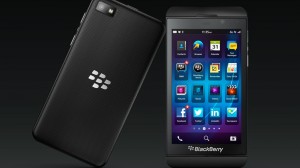
  • BlackBerry rolls out a software update for BB10

    On Friday, Canadian mobile device manufacturer BlackBerry (the company formerly known as RIM) rolled out an update for the BlackBerry 10 operating system. The latest software iteration touts significant improvements across the board while also delivering a number of bug fixes.

    The software update is a bit of a heavyweight, coming in at 150MB in size which is why BlackBerry recommends using a Wi-Fi connection for the download. The OTA (Over-The-Air) update is currently rolling out across the globe, but depending on the carrier it may take up to a couple of weeks to receive it on your Z10 smartphone. But let’s see what’s in store first.

    BlackBerry claims the update offers better performance for third-party apps. The Canadian manufacturer also teases that WhatsApp will be one of the “fresh new app launches” coming this month.

    The latest software update introduces fixes for Gmail calendars and improvements in the BlackBerry Hub for call logging and conversation handling. BB10 now features better importing of contacts from online sources.

    The camera has also undergone improvements, with BlackBerry claiming better photo quality under low-light conditions. Users running the Time Shift Camera functionality should notice the difference when the flash isn’t used.

    The browser was not left untouched either as it now delivers better video playback. However, one of the most important changes for heavy users comes in the form of battery optimization. BlackBerry claims the update contains “60 battery saving improvements”.

  • Tech’s Best Feature: The Off Switch

    It’s Friday evening. The smells of rosemary chicken and freshly-baked challah fill the house. My daughters, 3 and 9, sigh as I gently detach the iPads from their laps. One by one, our screens are powered down. My husband, Ken, is usually the last holdout, in his office, madly scrambling to send out just one last email before the sun sets. Then he unplugs too. We light the candles, and sit down to a sumptuous meal.

    I’m prepared. I’ve printed out the next day’s schedule, along with maps and phone numbers that live on my cell phone. Most people in our lives know they will not be able to text, tweet, email, Facebook, chat, or Skype with us for 24 hours. If they want to reach us, they call our landline. Or they come over.

    And so it has gone, every week for three years. Our “tech Shabbat” lasts from sunset on Friday until sunset on Saturday.

    I first became aware of the importance of disconnecting in 2008, when my father, Leonard Shlain, was diagnosed with brain cancer. Some days he would have only one good hour, and I didn’t want to be distracted when I was with him, so I’d turn off my cell phone.

    Soon after, inspired by a National Day of Unplugging (which commences this year at sundown on March 1st), Ken and I decided to institute something we had tried in fits and starts since we met: unplugging for one full day every week. What we call our “technology shabbats.”

    Albert Einstein said that “time is relative to your state of motion.” With all this texting, tweeting, posting, and emailing, we’re making our minds move faster, which accelerates our perception of time. It seems there isn’t a day that goes by when I don’t end up thinking, “How did it get to be 5 p.m.?”

    And what is the one day I want to feel extra long? Saturday. During our Tech Shabbats, time slows to a beautiful, preindustrial pace. We are able to engage in all those activities that seem to get pushed aside by the lure of the network. We’re Jewish but not orthodox. We drive our car, turn the lights on and answer our landline in emergencies, so ours is a modern interpretation of a very old idea of the Sabbath. Our Saturdays now feel like mini-vacations — slow living that we savor like fine wine. We garden with our kids, play board games, ride our bikes and cook and I write in my journal. I can have a thought without being able to immediately start implementing it. I feel more grounded and balanced. We try to be as unavailable as possible, except to each other and our children. I feel like a better mother, wife and person.

    Every week, it’s like a valve of pressure releases from the daily bombardment of interesting facts, articles, and tidbits I consume daily as I travel on this info-rocket of discovery, procrastination, productivity and then, eventually overload.

    Wrestling with the good, the bad, and the potential of technology is my constant state of existence. The technology we’ve created — that now dominates our work and home lives — gives us a plethora of new possibilities: the ability to experience more emotions, share knowledge, and take in diverse ideas from across global borders. Neuroeconomist Paul Zak has found that social networking produces a burst of oxytocin, the hormone responsible for bonding, empathy, trust, and generosity. I sometimes imagine that every post, tweet, and text is flooding the planet with oxytocin, making us more empathetic and more inclined to share and collaborate. Maybe this is why collaboration is on the rise.

    But the technology we’ve created also takes something away from us: being present, focused, and in the moment. Have you ever faked a need to use the restroom to check email? I have. More than once. Researchers at the National Institute on Drug Abuse have compared the sense of technological dependency — the feeling that we must be accessible and responsive at any time and in any place — to that of drugs and alcohol.

    Another hormone, dopamine, provides insight on the lure of digital stimulation.
    Neuroscientists have studied dopamine since 1958, when Arvid Carlsson and Nils-Ake Hillarp, at the National Heart Institute of Sweden, first examined how the chemical functions in the brain. Dopamine plays an influential role in mood, attention, memory, understanding, learning, and reward-seeking behavior. Dopamine is what makes us seek pleasure and knowledge. It’s what makes us search, whether it’s for food, sex, or information.

    When we’re rewarded with a response or with more information, dopamine is what makes us want more. When we’re up late at night linking from website to website, or compulsively texting or emailing, those are dopamine-induced loops. For each new piece of information or for each new response, our brain rewards us with a dopamine surge so we click again, and again, and again until we’re overloaded and over stimulated.

    Just as we discover — the hard way — what constitutes too much sugar or too much alcohol, I believe we are only beginning to truly understand the effects of too much technological stimulation on the brain. As we rush into this era of hyperconnected human evolution, we need to evolve and adapt to be mindful of what we are doing online and when we should go off.

    There is one other benefit to unplugging each week: By sundown on Saturday, we can’t wait to get back online. We’re hungry for connection. We appreciate technology all over again. We marvel anew at our ability to put every thought and emotion into action by clicking, calling, and linking.

    Still, every week we remember the most important thing about technology: It has an off switch.

  • Happy Birthday, Raspberry Pi! A Chat With Creators Eben And Liz Upton, Pi-Friend Limor Fried

    Screen Shot 2013-03-01 at 7.51.11 AM

    The Raspberry Pi project is one year old today, having launched on February 29, 2012 (they’re going to have a rager of a party in 2016.) I sat down with the Pi-parents themselves, Eben and Liz Upton, as well as Pi-supporter Limor Fried AKA Lady Ada of Adafruit Industries to talk about the special occasion.

    The current incarnation of the Pi, the Model B, just sold its millionth unit and the Uptons are hard at work at new versions of the beloved mini-computer. The popularity has stunned supporters in the UK and the US alike and we talked about education, the future of the Pi, the mystery of the ultra-rare Model A owned by Lady Ada, the only unit of its kind in America.

    “I remember when Raspberry Pis were rare enough that I had a spreadsheet that told me where they were in the world,” said Eben. “Now we’re a million Pis in.”

    The Pi is computing of the best sort – it’s a little intimidating at first and then an amazing amount of fun. If the Upton’s vision comes to fruition, expect to see an entire generation of computer-educated kids rolling through the school systems around the world, ready to take on the future.

  • Smaller tablets predicted to take over in 2013

    iPad Mini Shipments
    Since the launch of Apple’s (AAPL) iPad mini in the fall of 2012, LCD panel shipments have shifted dramatically to smaller screen sizes. Display Search found that shipments of 9.7-inch screen panels have fallen a whopping 6.1 million units from December, while 7-inch and 7.9-inch panels grew from 12 million units to 14 million. It’s interesting to note that while the iPad mini seems to be cannibalizing sales from the full-sized iPad, shipments of 10.1-inch displays have actually increased since December.

    Continue reading…

  • Top 10 Data Center Stories for February 2013

    fb-nc-hall-470

    Facebook adopted Opscode’s Private Chef to help manage its fast-growing infrastructure, like this data hall in the company’s North Carolina data center.The new version of Chef has been rewritten to enhance its scalability. (Photo:Rich Miller)

    February was a month for “big” news, such as Dell gaining a contract for 3 petabyte storage, a mysterious $1.5 billion project in Iowa, and Microsoft reaching the $15 billion benchmark in data center spending. But there was also levity with viral dance videos released by EMC and Rackspace. So here’s the line up of the most popular stories for February 2013, ranked by page views.

    Dell To Build 3 Petabyte Storage Infrastructure For JAIST – February 8

    Dell announced that Japan Advanced Institute of Science and Technology (JAIST) has selected Dell Compellent arrays to provide high-performance and large capacity storage for its growing, private cloud environment that supports its students and researchers.

    Facebook Scales Servers with Retooled Chef – February 4

    Facebook was looking for improved tools to help it manage its growing armada of servers. The team at Opscode was looking for new ways to improve the scalability of its Chef tool for automating infrastructure.

    $1.5 Billion Iowa Project is Still Alive. Is it Apple? – February 1

    The mysterious $1.5 billion project known as Project Catapult is apparently back in play. Local officials in Altoona, Iowa this week revived a site plan for the project, which has been shrouded in secrecy as a large company has scouted sites in both Iowa and Nebraska.

    Gangnam Style in the Data Center – February 8

    It had to happen eventually: A “Gangnam Style” parody with IT professionals doing the Psy “horse dance” in the aisles of a data center. This “Oopa EMC Style” performance is brought to you via a YouTube video from “Chad Sakac and the EMC Giddyups.”

    Superdome Infrastructure Eyed in Super Bowl Power Loss – February 4

    It’s probably the most high-profile outage imaginable: A power loss at the stadium hosting the Super Bowl, in the middle of the game. How could this happen?

    The Evolution of Microsoft’s Data Center Design – February 4

    The dramatic changes in web-scale data center design in recent years can be seen in the evolution of the Internet infrastructure at Microsoft, which has been among the leading proponents of deploying servers on pre-fabricated modules rather than traditional data halls. The company says this shift has allowed it to deploy servers at a faster pace with lower cost.

    Windows Azure Cloud Crashed by Expired SSL Certificate – February 25

    Microsoft has spent more than $15 billion building one of the largest global cloud computing infrastructures. An SSL certificate can be had for as little as $70 a year from a commercial certificate authority, or can be effectively free if you issue your own, as Microsoft does.

    Eucalyptus: We’ll Be More Open Than Other Open Clouds – February 12

    In a landscape with dueling open clouds, which is the most open? Cloud software specialist Eucalyptus sees pushing boundaries of open clouds as an opportunity. This philosophy is driving changes at the company, with a sharper focus on its “open” roots from its origins in academia. Eucalyptus has open sourced its courseware and training, making all those materials available for free.

    Rackspace Does The “Harlem Shake” – February 15

    Rackspace, a cloud hosting provider, is known for its corporate culture. This week, it’s email and apps team demonstrated their energy and levity through their own version of the viral video hit, the “Harlem Shake.”

    Video: LeaseWeb Migrates 3,000 Servers – February 12

    What’s it like to move 3,000 servers into a new data center? As part of its expansion in the U.S. market, LeaseWeb recently migrated 100 server-filled racks into a new data center hall at the COPT6 facility in Manassas, Virginia.

    Stay updated on the latest news by subscribing to our RSS feed and daily e-mail updates, or by following us on Twitter or Facebook. DCK is now on Google+.

  • Podcast: Yahoo’s WFH boo-boo, Internet things too!

    If you’re reading this from a home office and you work at Yahoo, stop and hurry into the office before you get busted! In this week’s podcast we break down Yahoo CEO Marissa Mayer’s decision to ban working from home. Then we shift gears to talk about what we learned at our recent internet of things meetup in San Francisco. Finally we wonder if the absence of news from Mobile World Congress is news.

    (download)

    Subscribe to RSS

    iTunes

    Stitcher Radio

    SHOW NOTES:
    Hosts: Chris Albrecht and Tom Krazit
    Guests: Mathew Ingram, Nicole Solis, Stacey Higginbotham, Kevin Tofel

    00:00 – 17:17 – Is Yahoo’s work-from-home ban a good thing?

    17:18 – 32:19 – Here’s the Internet of things

    32:20 – 44:30 – No news is no news from Mobile World Congress

    SELECT PREVIOUS EPISODES:
    Call-in show: Chromebook Pixel’s pinch secrets

    Internet of things: Almond’s nutty idea

    PlayStation snore? Google Pixel and Tesla earnings

    Podcast: Why the internet of things is cool and how Mobiplug is helping make it happen

    Podcast: Ballmer’s in the Dell, do tweets ruin TV? And how ISPs are not like gas pumps

    Podcast Q&A: MotoACTV smartwatch now or wait? Lumia 822 in India? Best running apps?

    Podcast: Kabam founder on scaling globally and designing for different platforms

    Podcast: RoadMap Re-Run: Kickstarter’s Perry Chen on creativity and crowdsourcing

    Podcast: The Sporkful’s Dan Pashman on web and food culture (and how bacon is over)

    Related research and analysis from GigaOM Pro:
    Subscriber content. Sign up for a free trial.