Blog

  • Rugged and reliable, the GasAlertQuattro

    BW Technologies by Honeywell introduces the newest member of the GasAlert family – the GasAlertQuattro. Rugged and reliable, the GasAlertQuattro four-gas detector combines a comprehensive range of features with simple one-button operation.

    Simultaneously monitor and display H2S, CO, O2 and combustibles. With flexible power options, AA batteries or a rechargeable battery pack, the GasAlertQuattro is always ready for your shift. The large LCD with intuitive icons and backlight simplifies on-site auditing and compliance. Bump test and calibration icons are clearly identifiable, and extra-large digits are easy to read in varying light conditions. The green LED confidence flash provides continuous visual confirmation of detector operation and compliance.

    The versatile GasAlertQuattro was designed for harsh environments. A durable exterior with reinforced bumpers and integral concussion-proof boot protect the detector. Suited to a wide range of industrial applications including general confined space entry, the GasAlertQuattro offers a simple, automatic calibration procedure and is compatible with BW’s MicroDock II automatic test and calibration system.

    With the GasAlertQuattro, seeing is believing.

  • Analog Signals Transmitter by Radio 868 Mhz or 915 Mhz RDT-4000

    Analog Signal Transmitters via Radio RDT-4000

    ¿Would you like to transmit field signals with no wired cost?

    Many times is needing to have several measuring points distributed in plant or in field, in these applications the wired cost is often higher than the original instruments fare. The solution is feasible at present thanks to free band radio transmitters. The RDT-4000/… is the state-of-art all in one devices, capable to read up to two analog mA, mV, Pt100, Pulses, etc., variables and to transmit them via Radio from 250 devices max., in peer-to-peer or multipoint modes, to a radio-modem RMT-1000 linked by RS-485 or USB to a PLC or PC.

  • Advantech Launches a New Generation of PACs

    The Industrial Automation Group of Advantech is proud to introduce their new PAC product line, the APAX-5000 series. This new generation of PACs integrates control, information processing, and networking in a single control system with a unique dual controller architecture that makes it superior to other PAC’s in the market. Advantech’s APAX-5000 series fulfill versatility, flexibility, and scalability needs to fully satisfy industrial automation industry applications. The APAX-5000 series consist of controllers, I/O modules, backplanes, and power modules, all with excellent functionality and user-friendly I/O design.

    A Unique Architecture – Dual Controllers Separate HMI and SoftLogic Tasks
    Critical applications need reliable and non-stop systems; it is not acceptable that the I/O processing is terminated for any reason. To reduce these operational risks, Advantech’s APAX-5000 features a unique architecture, two standalone CPU modules working together responsible for different tasks. One provides high computing power for HMI/SCADA, recipe, database and communication tasks (APAX-5570XPE or APAX-5571XPE) while the other is dedicated for SoftLogic I/O tasks (APAX-5520KW).
    This means if the HMI/SCADA controller crashes, the I/O processing won’t be affected and will work as normal. Engineers can simply check the HMI/SCADA controller and maintain it without having to worry about the I/O processing tasks. Separating HMI/SCADA and I/O processing tasks can prevent unexpected stoppage, decreases operational risks, and ensures higher reliability for critical control tasks.

    Backup System Enhances System Reliability
    Aside from the dual controller architecture, the APAX-5000 controllers also support backup functions. The same I/O processing program can be stored on two controllers, one will execute the I/O processing and if that controller fails, the second controller will automatically take responsibility for I/O processing within 1.5 seconds. Users don’t need to write programs for this mechanism and the backup system enables reliability for critical applications.

  • Fixture: Drum peel test on aluminum composite panel ASTM D1781

    This test method covers the determination of the peel resistance of adhesive bonds between: a sandwich of two layers of aluminum and polyethylene. The goal is to measure the average torque required to peel the two material.

    How it works:
    The fixture consists of a drum assembly, flexible loading straps mounted at the bottom of the stand, an upper self closing clamp to grip the specimen and a drum clamp to hold the outer skin against the face of the drum.
    During a test the loading straps pull on the drum assembly, forcing it to rotate and climb along the length of the aluminum panel. This motion peels the outer skin away from the core structure. The peel force is monitored by the load measurement system providing a measure of bond strength.

  • LOOS U-MB boiler provides private clinic with steam

    The new U-MB steam boiler model series from LOOS INTERNATIONAL, a company of the Bosch Group, was presented to the public at the international ISH trade fair in Frankfurt, packaged in a multimedia artistic show. Interest in the new product was enormous, and projects and orders were soon pouring in.

    One of the first U-MB boiler systems provides an efficient supply of steam for the kitchens and sterilisers of the Rudolfiner House. The Rudolfiner House in Vienna is one of the most modern, attractive private clinics in Europe.

  • Cable recycling

    Cogelme – Magnetic&Eddy Current separators manufacture today announce an expansion of it’s separators line and presents a complete separation system also for cables, wires and computer boards recycling.

    The cables separation system recover pure copper, aluminium or other valuable metals granules from plastics, rubber and paper. Compact and comfortable design combines granulation, aspiration and separation system. The system helps to improve productivity while minimizing scrap and downtime.

    Cogelme is one of the best Italian producers of metal separators. For more than 20 years provides separation knowledge and solutions for broad spectrum of materials recycling applications: Plastic, Rubber, Glass, Urban Waste, Electronic Waste, Wood, Stones, Sand, Demolition Waste, Car Scrap, Incinerator ash and wherever metals are found.

  • Safety Cage used in an emergency test at Barcelona Port.

    Port-Nou Terminal was the setting of an emergency drill that served to evaluate the efficiency of the Personnel Cage model BA-185 of the company TEC CONTAINER, S.A.

    The emergency drill took place in the Port of Barcelona, in cooperation with the Emergency Services of Estibarna-Fremap, the Port Police, Estibarna y Prevestiba and proved the functionality of the new Personnel Cage, and the coordination of the emergency teams.

    The performed drill involved the rescuing of a port stevedore in a practice accident on board of a vessel, and was carried out according to the programme of activities prepared by Prevestiba, joint prevention service of the stowage sector of the Port of Barcelona, together with stowage companies, Estibarna and the prevention delegates.

    The Personnel Cage was initially designed for use in emergency cases, medical-care personnel entrance, and for evacuation of casualties out of the vessels in case of accidents. However, these are only some of the applications of the Personnel Cage designed and commercialized by TEC CONTAINER, S.A. Originally conceived for stowage operations, its high versatility has amplified the range of applications with such as repair works in areas of difficult access in vessels.

    www.teccontainer.com

  • Dental CAD/CAM process takes a bite sized chunk out of framework prices

    Renishaw’s new incise™ dental milling machine was a significant talking point at the Dental Showcase exhibition held recently in Birmingham, UK, where dental laboratories were shown a system that will allow them to produce high quality zirconia frameworks at prices well below current market norms.

    Said Gareth Tomkinson, UK Dental Sales Development Manager, “Renishaw is the world’s largest supplier of in-lab dental CAD/CAM scanning machines, and because we also manufacture our new compact milling machine we can offer incredibly competitive pricing to laboratories who are either looking to produce zirconia restorations in-house, or have frameworks supplied through our central manufacturing facility.”

    Affordable dental CAD/CAM ……without compromise
    The new dental milling system can produce single copings, custom abutments and bridge frameworks of up to 8 units in size, with further developments available early in 2010. Data obtained from Renishaw’s incise dental scanner is analysed using sophisticated dental CAD software, which then automatically determines a best-fit margin line and other parameters. The 3D computer model can then be fine-tuned by the technician if required before sending the data directly to the new dental milling system, which machines the pre-sintered zirconia billets supplied by Renishaw.

    Before the final sintering in a furnace, a colour stain can be added to the copings or bridge frameworks to match a patient’s teeth, or left as the original white colour. Zirconia is an extremely bio friendly material, that also provides exceptional strength and optimum aesthetics for even the most demanding restoration.

    Added Mr Tomkinson, “Our focus is on providing patients with affordable metal-free restorations as a viable alternative to non-precious PFM. However, there are no compromises; we manufacture high quality dental CAD/CAM systems, which together with premium grade zirconia, allow labs to promote the benefits of metal-free dentistry to many more clinicians and their patients.”

  • New measuring heads for linear and rotary applications

    With the LIMES LI20 and LI50 Kübler is presenting a new generation of measuring heads in a particularly solid die-cast housing. Used in conjunction with its magnetic bands with their stainless-steel covering, the resulting linear measurement system stays sealed even in harsh industrial environments and offers security against failures in the field. The magnetic rings offer the user a remarkably compact measurement system for rotary applications where installation space is very tight. Installation depths of only 16mm are possible with a large hollow shaft of 30mm. The combination of rings and bands plus Kübler’s flexible manufacturing facilities open up a wide spectrum of different geometries that can be scanned, such as for example pitch circles or curves.

    The non-contact technology ensures high vibration and shock resistance. The products can also be used outdoors, thanks to the high IP67 protection rating, the permitted 100% humidity with condensation, the wide temperature range and the weatherproof die-cast housing. The metal housing also offers improved shielding against electromagnetic interference.

    Installation can be carried out very easily due to the large permitted tolerances of up to 1mm, which apply not only to the distance from band to sensor head but also for lateral misalignment, as well as to the built-in LED, which gives a red warning signal if the distance from the band to the reading head is too great or if the speed is too high. A green light shows the index pulse. The wide supply voltage range from 4.8 to 30 VDC likewise facilitates installation. The connections are made via a high-grade shielded PUR cable that is also suitable for trailing cable applications.

    The sensing head is available either with a push-pull output or an RS422 interface and supplies two channels plus a periodic index with the corresponding inverted channels. The resolution is up to 5 mm with quadruple evaluation and the repeat accuracy is +/- one increment. The maximum traversing speed is 25m/s

  • Climate Coup – Lord Monckton vs Al Gore

    The Juice Media has an interesting debate between Al Gore and Lord Monckton about global warming – Climate Coup – Lord Monckton rap battles Al Gore – Rap News.


  • Climate Change: Scientific Fact, Not Political Issue

    Fabricio Vanden Broeck

    Fabricio Vanden Broeck

    Mario Osava

    RIO DE JANEIRO (IPS/TerraViva) – “In a year’s time, the Japanese archipelago will be completely under water.” This official announcement was made following a violent eruption of Mt. Fuji, as a series of devastating earthquakes shook the country, forcing the world to face the challenge of taking in 110 million refuges within a very short time.

    After a brutal diplomatic battle, the Japanese government managed to secure frail support from its fellow nations and evacuate 65 million people. Twenty million sank with the islands, many of them voluntarily, out of love for their country or to give younger people a better chance of fleeing. The rest are believed to have died before the islands sank, victims of the quakes, tsunamis and other natural disasters.

    This account is part of a futuristic book published in Japan in 1973, and translated into English as “Japan Sinks”. The author, Japanese novelist Komatsu Sakyo, imagines this catastrophe based on potential natural phenomena, such as the intensification and alteration of tectonic plate shifts under the Pacific Ocean.

    But outside the world of fiction, the planet today is being hit by increasingly frequent floods, and many small island states and coastal cities face the real possibility of sinking in the near future. And all of this is a result of human actions.

    The threat in real life is coming from above rather than below, but the consequences are equally tragic, even if they appear less catastrophic because they are more spread out in time and space.

    A huge cataclysm like the one depicted by Sakyo may be what the world needs to reach an effective agreement that will steer it away from the suicidal path of global warming.

    Certain changes, especially those wrought against the economic tide, are only possible after exceptional tragedies or social turmoil. Last year’s global financial crisis, for example, was not dramatic enough to bring about structural changes.

    The magnitude of Sakyo’s fictional disaster does not lie merely in the number of victims, but in the fact that it completely wipes out a rich nation like Japan, a country that many in the 1970s saw as challenging the economic power of the United States. The novel is also critical of the arrogance displayed by Japan in the post-war reconstruction period.

    The fact that tropical countries, especially small, impoverished nations, will suffer the worst effects of global warming fails to prompt cooperation that should be natural in our present circumstances, as it is a threat that affects the entire world.

    The current climate crisis highlights the multiple dimensions of the inequalities among nations, which hinder negotiations. The leading issues – such as legally-binding targets for emissions and funding for programs to address climate change – divide the world, with wealthy countries on one side and the rest of the world on the other, and a middle group of emerging nations whose intention to continue to be counted within the ranks of the poor nations (in terms of emissions cuts, etc) is rejected by the rich.

    This inequality is a spoke in the wheel of any multilateral talks, in both market, financial, patent or health matters.

    These are all opportunities for developing countries to close the gap that separates them from the rich and obtain more aid for their own development, now with the irrefutable argument that the industrialised world is responsible for the historic accumulation of greenhouse gases in the atmosphere.

    But when it comes to climate change, the blocs formed in other forums fall apart. Brazil, for example, is persistently under pressure from environmentalists to break away from the G77 group of 130 developing nations so that it can contribute to reaching an agreement and regaining the leadership role it had in the negotiations for the United Nations Framework Convention on Climate Change in 1992, and the Kyoto Protocol in 1997.

    Because it has specific and feasible means to reduce greenhouse gas emissions – by curbing deforestation and increasing its already vastly developed clean energy production -, environmental activists argue that it would be to Brazil’s own advantage to commit to ambitious targets.

    China, which is associated with the G77, alienated itself from the coalition by moving closer to the United States in volume of greenhouse gases emitted, building one coal-fired electric power plant a week, and holding more than two trillion dollars in reserves.

    It’s frightening to think of 1.3 billion Chinese speeding forward towards what is now recognised as an unsustainable process of industrialisation and consumption.

    The position of countries that are rich in fossil fuels differs radically from that of those dependent on imported oil. Latitudes and altitudes, the abundance or lack of forests, the threat of desertification, or the dependence on glaciers are some of the many aspects that mark the differences in how climate change impacts each country.

    Numerous small island states are already fighting for survival, so they have joined forces with those African nations that are severely affected by desertification and major crop losses to demand that 1.5 degrees C be set as the limit for the rise in temperature in this century. Exceeding that threshold will condemn entire nations to almost certain death or displacement.

    But, what power do these countries have to counter the two-degree limit adopted?

    This is not about rich countries imposing their will on poor countries, or of a class struggle between states. The goals that must be met are being dictated by scientific studies and assessments. Climate change has crowned a new absolute power: the power of science, whose findings are now determining the very existence of the world’s entire population.

    Thousands of scientists who participated in the reports of the Intergovernmental Panel on Climate Change (IPCC) agreed that a temperature rise of two degrees C by 2100 is a feasible and tolerable limit. Above that, chaos will ensue.

    Climate sceptics don’t count. They’re a tiny minority and, in many cases, have lost credibility because they are thought to defend the interests of the fossil fuel industry, or to act out because they feel attacked by attempts to prevent the great climate disaster.

    Voices have already been raised against the verdict issued by climate experts, voices that demand that society be included in decision-making, with suggestions of holding referendums. But this is a field where the premises lay outside the dynamics of “democracy.” Climate change is a fact, not an issue.

    Politics can only decide on how to handle the phenomenon. Questioning it or determining any variations in the facts is the exclusive domain of science.

    This new dimension of what many refer to as the “age of knowledge” will dictate the rules that govern many activities, demanding energy efficiency, and forcing people to change their patterns of consumption and their habits, as has already been achieved, for example, with tobacco in the field of health.
    (END/2009)

    Share/Save

  • This Just In From Copenhagen: Accord Reached By Key Parties!

    Attached is the draft Copenhagen Accord, which was hammered out by the United States, China, India and South Africa, and made available less than two hours ago.  The Conference of the Parties is still in session; reportedly 26 other nations are reviewing the draft and may join the Accord.  Details regarding wider acceptance of this draft are sketchy at this point.

    The major issues that have caused controversy among the delegates have been addressed, such as: a commitment by the developed world countries to provide financing to the developing world countries to assist with mitigation and adaptation, amounting to $30 billion between 2010 and 2012, rising to $100 billion by 2020; prevention of deforestation and market mechanisms to enhance forest programs; a recognition of the importance of keeping the rise in temperature to less than 2 degrees; and a commitment to reducing global greenhouse gas emissions to below 50 percent of 1990 level, with Annex I parties committing to reduce their emissions individually or jointly by 80 percent.  Finally, implementation of the Accord shall be reviewed in 2016 to determine if the long-term goal of a less than 2 degree rise in temperature should be reduced to 1.5 degrees.

  • UK Digital Economy Bill Section 124H Would Give Ability To Silently Censor Websites

    There have been lots of complaints about Peter Mandelson’s “Digital Economy Bill” in the UK, which, beyond pushing a three strikes policy on the UK, would also grant Mandelson (or whomever he or future Business Secretaries deputize) the power to automatically change copyright law at will with no oversight. Scary enough, but it gets worse. As everyone’s been focused on these clauses, they may have missed another scary one. Brian points out that another section, Section 124H, would also grant the Secretary of State the power to silently block access to any websites he dislikes. Yes, it would allow the Secretary of State to create a no-visit list that ISPs would have to block. And there would be no oversight (again). Oh, and it’s not just websites. The order could be used for something like “block all BitTorrent” traffic. Seems like a bit much, doesn’t it?

    Permalink | Comments | Email This Story


  • Best Butter Cookies

    Best Butter Cookies

    It’s hard to beat a good butter cookie. It’s also hard to find one that is just the right combination of crispness, tenderness and a good buttery flavor. Bakeries – even otherwise good ones – are filled with bland “butter cookies” topped with a variety of colorful sprinkles to lure you into giving them a chance. I stick to making my own butter cookies these days, especially since I found a recipe that makes the best butter cookies I’ve ever had.

    The recipe is from Pam Anderson, a food writer who is a former editor of Cook’s Illustrated, whose work is regularly published in USA Weekend, and the author of several cookbooks. Her all purpose butter cookies are simple, delicious and very versatile, so hers has been my go-to recipe since I first clipped it out of the paper years ago. The dough is very easy to put together and makes a great batch of slice-and-bake cookies that you can decorate with sprinkles or nuts. There is no leavening in this dough and the cookies will spread slightly, but hold their shape well, during baking. This means that the dough also works well as dough for spritz cookies, which are made by putting cookie dough through a cookie press (common around Christmas) and pressing it into different designs.

    The dough can be made a few days in advance and stored in the refrigerator or freezer. The dough is sticky when it is warm, so you need a well-floured surface to work on. That said, this is a good feature because it means that you can work with the dough quite a bit (if you want to try making cutout cookies, for instance) without the dough toughening up. I usually stick with the slice-n-bake cookies, rolling the edges of the cookie logs in sprinkles or nuts before slicing them into individual cookies on the cookie sheet. The cookies above have been rolled in sprinkles and in shredded coconut.

    (more…)

  • The Advantages of Launching Outside of the Valley

    siliconvalley_lead_dec09a.jpgIn 2006, Y Combinator founder Paul Graham wrote an essay entitled, “How to Be Silicon Valley.” He argues that a tech hub must have nerds and people with money. At the time, he proposed that Boulder and Portland would be the next tech hubs and indeed both have thrived. Nevertheless, as seed funds and incubators become more common, new tech centers are springing up in some of the most unlikely places. ReadWriteWeb caught up with two mentorship groups to find out the advantages of launching outside of the tech epicenter of Silicon Valley.

    Sponsor

    Bootup Labs

    bootuplabs_dec09a.jpgAfter moving from the Valley, Vancouver-based entrepreneurs Boris Mann and Danny Robinson looked for a way to continue working with startups. The duo launched Bootup Labs to fix the Northern tech ecosystem and pass some of their lessons on to budding entrepreneurs. The group accepts 6 companies per program cycle for two annual cycles. Companies receive 8 months of mentorship, free office space, administrative/legal services and a $100,000 dollar covertible line of credit. In exchange for mentorship and funding, Bootup takes 5% equity from your company. If you choose to use the entire line of credit, they will receive an additional 10%. By attracting a star-studded cast of program mentors including Guy Kawasaki, NowPublic CEO Len Brody, and investor and writer Paul Kedrosky, Mann and Robinson ensure that their program’s 12 annual spots are highly coveted.

    Says Mann, “I asked Flickr founder Stewart Butterfield why he decided to stay in Vancouver and build his new startup Tiny Speck. He answered that he loves living here. Being a place where people love to live is hard to replicate. We have the nerds, we think it’s easier for us to bring more nerds here because of immigration rules (vs. the US) AND because people love it. [We’ve got] mountains, ocean and it’s one of the most livable cities in the world.

    Bootup Labs’ choices for its January cycle include event-based community Zedmo, lifestream aggregator Statusly, location-based gaming development service Compass Engine, relevancy-based web surfing aid ReadFu, online farmer’s market Foodtree and enterprise storefront platform Blast Ramp.

    Difference Engine

    differenceengine_logo_dec09.jpgLaunched this year by Jon Bradford, Difference Engine is based in the North East of England. The group offers applicants £20,000 pounds of investment capital and a 16 week program in business development in exchange for an 8% equity stake. As of January, Difference Engine will welcome 10 teams per cycle, with 2 program cycles per year.

    When asked why Bradford believes his program can create the basis for a good tech community he replied, “The North East of England is home to The Sage Group – one of the largest software company in the UK.  As with many other parts of Europe it is not the lack of technical expertise but the lack of pre seed capital and support which reduces the opportunities for young entrepreneurs.  Whilst there is increasing activity with angel investors, it is still less mature that the US market…The Difference Engine provides mentors the opportunity to “get up close and personal” with teams over an extended period of time [and] mentors may ultimately invest in these businesses.”

    According to Bradford, one of the advantages of starting a company is Europe is the fact that developers learn to build platforms and businesses with multi-language capabilities. This attention to global markets places European and Asian companies at a potential advantage to their US-based competitors. Difference Engine’s group’s first intake will be in February 2010, to apply for the inaugural program entrepreneurs can submit ideas via the Difference Engine application form.

    Discuss


  • GM begins repayment to U.S. and Canadian governments

    Filed under: ,

    Good news, the check is in the mail! General Motors issued a (very) brief press release this afternoon stating that the automaker had delivered on its promise to issue its first reimbursement checks to the U.S. and Canadian governments by the end of the year. GM sent $1 billion to the feds and $192 million to the Canadian government, and GM reiterated in the statement that it would complete payments totaling $6.7 billion (to the U.S. government) by June 2010.

    Beyond the $6.7 billion GM owes the federal government is a 60 percent ownership stake Uncle Sam has on the 101-year-old automaker. When the General releases an initial public offering the resulting stock sale will (supposedly) buy the government out. Experts feel the IPO could happen as early as the second half of 2010. Hit the jump to read over the General’s succinct press release.

    [Source: GM | Image: Bill Pugliano/Getty]

    Continue reading GM begins repayment to U.S. and Canadian governments

    GM begins repayment to U.S. and Canadian governments originally appeared on Autoblog on Fri, 18 Dec 2009 17:30:00 EST. Please see our terms for use of feeds.

    Permalink | Email this | Comments

  • Using Google Apps? 5 Ways to Avoid Getting Hacked

    Security is one of the biggest concerns for business owners when deciding whether to use an online service like Google Apps.

    So what are the best ways to protect yourself when using it?

    Amit Agarwal is a professional blogger and technology columnist. He writes digital inspiration, a world-class technology blog. But Amit got hacked this week. He wrote about it on his blog, providing some excellent advice on how to protect yourself from a similar kind of attack.

    Sponsor

    Amit wrote that he often receives false requests to change his password. He received a similar message this week, but ignored it. A few minutes later he started getting error messages. He could not get to his accounts.

    Amit had been hacked. He thinks that a hacker accessed a backup email that he had set up for his accounts.

    Amit had his service restored in about three hours, after some calls to Google. He felt obviously relieved, but also had that feeling of emptiness when you suddenly realize you have no control over your accounts.

    To help others avoid this kind of calamity, Amit summarized in five points how to make sure something like this does not happen to you:

    1. Log-in to your Gmail / Google Account and associate it with a phone number: It’s a simple set up. You will get confirmation via SMS. If you do get attacked, a notification will go to you that someone is trying to get to your password.

    2. Create a new email address: Set up the email to act as a backup and as a secondary email for your Google Apps account. Good advice by Amit: do not auto-forward your email as the whole purpose of setting it up will be defeated.

    3. Write it Down: Get out that old-fashioned pen and paper. Write down the following information so you can verify your identity just in case you do get hacked and your secondary email gets compromised, too.

    From Amit:

    • The month and year when your created your Gmail / Google Account.
    • If you created a Gmail account by invitation, write the email address of the person who first sent you that invite for Gmail.
    • The email addresses of your most frequently emailed contacts (the top 5).
    • The names of any custom labels that you may have created in your Gmail account.
    • The day/month/year when you started using various other Google services (like AdSense, Orkut, Blogger, etc.) that are associated with the Google account that you are trying to recover. If you’re not certain about some of the dates, provide your closest estimate.

    4. Run a Test! Log-out of all your Gmail / Google Accounts. Start the password recovery process. This guarantees that what you set up actually works. You want to be absolutely certain your SMS settings and secondary email addresses are configured correctly.

    5. Check your IP Address: From time to time check out the IP address in the footer of your Gmail Inbox. If you see an odd one, change your Google password immediately. Knowing IP addresses may seem too technical to some but it’s good information to know.

    You should not have to be overly concerned about Google Apps security. If people take these kinds of basic steps, the chances of getting hacked decrease considerably.

    Discuss


  • Stat Model Predicts Flat Temperatures Through 2050 by Doug L. Hoffman

    Article Tags: Doug L. Hoffman, Headline Story

    Image Attachment
    While climate skeptics have gleefully pointed to the past decade’s lack of temperature rise as proof that global warming is not happening as predicted, climate change activists have claimed that this is just “cherry picking” the data. They point to their complex and error prone general circulation models that, after significant re-factoring, are now predicting a stretch of stable temperatures followed by a resurgent global warming onslaught. In a recent paper, a new type of model, based on a test for structural breaks in surface temperature time series, is used to investigate two common claims about global warming. This statistical model predicts no temperature rise until 2050 but the more interesting prediction is what happens between 2050 and 2100.

    David R.B. Stockwell and Anthony Cox, in a paper submitted to the International Journal of Forecasting entitled “Structural break models of climatic regime-shifts: claims and forecasts,” have applied advanced statistical analysis to both Australian temperature and rainfall trends and global temperature records from the Hadley Center’s HadCRU3GL dataset. The technique they used is called the Chow test, invented by economist Gregory Chow in the early 1960s. The Chow test is a statistical test of whether the coefficients in two linear regressions on different data sets are equal. In econometrics, the Chow test is commonly used in time series analysis to test for the presence of a structural break.

    Source: theresilientearth.com

    Read in full with comments »   


  • Telling the Whole Story

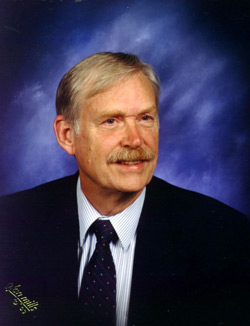
    The following is another interesting article by Tom Fiske:

    Thomas Fiske Who knows the reason? I can’t remember what it was, but I joined a group of people at my church that were working on their autobiographical histories. That is, members were learning from each other how to put together their own personal life stories. They wanted to pass on to their children and grandchildren not only the bare facts their progeny would learn from their genealogies, but also the reasons for those facts.

    You know—something like, “Uncle Harold got sick and died, leaving us his house in Des Moines, so we moved there during the 1940’s.” In addition members made a deliberate effort to recall mom and dad’s favorite expressions and their own as well. My father was a bit pretentious at times and might utter, “Lord love a duck!” Since he had the ability to swear prodigiously, that was more of a blessing than we realized at the time. Occasionally we made use of questionnaires that asked very probing questions. Answers to these questions led us to recall facts and stories that we hadn’t thought of in forty years.

    Each time we met (for us it was twice a month) we would read what we had prepared usually since the last meeting (although some of my published works contained stories of my childhood or of my children’s life experiences). Occasionally there were suggestions for improvement, but since all of us at heart are comma movers, we seldom talked about grammar. One of my often-used comments was, “I want to know more. Please tell me more. Why did you compare your first husband to a mule?” – or some such thing. People tend to overlook interesting stories as they forge ahead to some point that is interesting only to them (perhaps a justification).

    Sometimes people use the passive case too often. They might say, “Dinner was served,” rather than, “Mother cooked a fantastic meal of turkey and sweet potatoes that included a dash of Bourbon for flavor.”

    I recall a man in our group who had been a general in the Eighth Air Force in Europe during WWII. There was a time when about half the American bombers in the Eighth were being shot down and lives of its young men were often quite short. He talked about staying in England and meeting English civilians, recalling quite a bit about two things—their shoes and what he ate almost every meal. Oh yes—he met several famous people also: royalty, movie stars, and General Patton among them. He seldom mentioned the danger they faced with each mission.

    Another person in the autobiographical writer’s group was a German lady who had been a pretty teen-ager during the war. She was the niece of a famous rocket scientist, and as the war drew to a close in Europe, she and her sisters were captured and taken into Russia as slaves to work in the fields. She eventually escaped into Western Germany, then emigrated to Canada where she married a fellow German. Later, she moved to Southern California. When I left the group to move to another city, she was locating her elderly family and arranging visits with her sisters back into Germany. She had not seen them since 1943.

    And there was another lady whose personal life was very interesting. Furthermore her husband, a doctor, led a professional life that was and still is a national secret. She was not allowed to know anything about that part of his career, either. But when he died he told her a little of it.

    As a fellow member of the autobiographical writer’s group, I learned about myself as well as the other members. We had no idea that our hum-drum “every day” lives were so very interesting, if told in the right way. I am not talking about prurient details, either. I am talking about great patriotic heroism mostly for the United States, but in one case, for Germany.

    These were very rich and enriching meetings.

    Generally, the meetings are still available to most of us. Churches and community groups sponsor them all over the country, even today. They allot space because they know everybody has a story to tell. You don’t have to be a member of a church to belong to a group that meets in a church room, and members seldom if ever try to “convert” you, except to interesting writing.

    The autobiographical narrative can be about a segment of your life or cradle to the grave. General Electric Company moved me across the country, so my life story, at least during much of my working life, was divided evenly into sets of years spent in industrial cities across the country. Determining chapters for my autobiography was easy because I had large stops and starts in it. But for someone in America who seldom moved, chapters require some thought. And the hardest problem to solve is how you combine your three main stories: your career, your family life and your faith. I have never seen a completely satisfactory method.

    If it is hard to do, you might ask, “Why bother?” The dividend of a series of meetings is, of course, a notebook full of information for the generations ahead. All in all, you are passing along a message to the next generation. You want it to be concise and helpful. You learned something in all your years that could save the next generation and the one after that a great deal of trouble. Your autobiographical narrative is part of their heritage, and is a natural extension of your genealogy. Perhaps it belongs at the end of a bound genealogical record.

    Your story is intensely personal by itself, but when combined with others, it becomes the history of the United States of America.

    Check the Internet under the heading, “Autobiographical Narrative” for more information.

    Thomas S. Fiske
    Fullerton, CA
    Dec. 10,2009