Blog

  • 360 Greener Cookware

    360 Cookware is a newer green cookware on the market and while I haven’t used it yet, so I can’t personally comment, it sounds interesting. According to the company, 360 saves time, water and energy, keeps your food and family away from harmful chemicals, and since there’s no added fat needed (to keep food from sticking) this cookware may even be healthier.

    Coveredskillets

    360 works by cooking like an oven using Vapor Technology – i.e. it creates a low but intense heat and then distributes said heat from all sides instead of bottom-up only. The result creates a surround cooking effect that works on a low heat setting, prepares foods more efficiently and reduces the cooking times and preserves nutrients in the process.

    Green aspects:

    • 360 cookware has “Five layers of the highest quality American metals, ensuring no harmful chemicals or materials ever touch your food.” Pots and pans are specifically made with T-304 stainless steel and alloy construction.
    • Cookware is heat and energy-efficient plus uses less water – not so much that it’d make a huge difference, but still.
    • The 360 plant has some green aspects such as energy-efficient windows, passive lighting, use of renewable wind power for machines, closed-loop dust collection system to filter the air internally to prevent volatile organic compounds (VOCs) from entering the environment. Additionally the company notes that no harmful chemicals are used in the manufacturing process and that wastewater is tested routinely to ensure complete compliance with strict local and state standards.

    stockpots

    Possible problems:

    The cookware is long lasting, which is good and can possibly be recycled, although there may be issues due to the alloy. All stainless steel products are 100% recyclable but recycling companies usually need to separate the various grade types. Alloy on the other hand is a mixed metal and is harder to recycle. I also didn’t see a recycling program at the company website.

    All in all the cookware looks good, is greener than many, and actually has a very inexpensive price point (you’ll be surprised because these pots look like they’d cost more).You can also buy what you need only or purchase a set. 360 makes saucepans, skillets, stock pots, and a nice sauté collection.

    Visit 360 Cookware to learn more.

    Post from: Blisstree

    360 Greener Cookware

  • Final text of the Copenhagen Accord

    by Grist

    This is the text of the climate accord worked out by President Obama and the leaders of several key nations in Copenhagen on Dec. 18.

    In pursuit of the ultimate objective of the Convention as stated in its Article 2,
    Being guided by the principles and provisions of the Convention,
    Noting the results of work done by the two Ad hoc Working Groups,
    Endorsing decision x/CP.15 on the Ad hoc Working Group on Long-term Cooperative Action and decision x/CMP.5 that requests the Ad hoc Working Group on Further Commitments of Annex I Parties under the Kyoto Protocol to continue its work,
    Have agreed on this Copenhagen Accord which is operational immediately.

    1. We underline that climate change is one of the greatest challenges of our time. We emphasise our strong political will to urgently combat climate change in accordance with the principle of common but differentiated responsibilities and respective capabilities. To achieve the ultimate objective of the Convention to stabilize greenhouse gas concentration in the atmosphere at a level that would prevent dangerous anthropogenic interference with the climate system, we shall, recognizing the scientific view that the increase in global temperature should be below 2 degrees Celsius, on the basis ofequity and in the context of sustainable development, enhance our long-term cooperative action to combat climate change. We recognize the critical impacts of climate change and the potential impacts of response measures on countries particularly vulnerable to its adverse effects and stress the need to establish a comprehensive adaptation programme including international support.

    2. We agree that deep cuts in global emissions are required according to science, and as documented by the IPCC Fourth Assessment Report with a view to reduce global emissions so as to hold the increase in global temperature below 2 degrees Celsius, and take action to meet this objective consistent with science and on the basis of equity. We should cooperate in achieving the peaking of global and national emissions as soon as possible, recognizing that the time frame for peaking will be longer in developing countries and bearing in mind that social and economic development and poverty eradication are the first and overriding priorities of developing countries and that a low-emission development strategy is indispensable to sustainable development.

    3. Adaptation to the adverse effects of climate change and the potential impacts of response measures is a challenge faced by all countries. Enhanced action and international cooperation on adaptation is urgently required to ensure the implementation of the Convention by enabling and supporting the implementation of adaptation actions aimed at reducing vulnerability and building resilience in developing countries, especially in those that are particularly vulnerable, especially least developed countries, small island developing States and Africa. We agree that developed countries shall provide adequate, predictable and sustainable financial resources, technology and capacity-building to support the implementation of adaptation action in developing countries.

    4. Annex I Parties commit to implement individually or jointly the quantified economy-wide emissions targets for 2020, to be submitted in the format given in Appendix I by Annex I Parties to the secretariat by 31 January 2010 for compilation in an INF document. Annex I Parties that are Party to the Kyoto Protocol will thereby further strengthen the emissions reductions initiated by the Kyoto Protocol. Delivery of reductions and financing by
    developed countries will be measured, reported and verified in accordance with existing and any further guidelines adopted by the Conference of the Parties, and will ensure that accounting of such targets and finance is rigorous, robust and transparent.

    5. Non-Annex I Parties to the Convention will implement mitigation actions, including those to be submitted to the secretariat by non-Annex I Parties in the format given in Appendix II by 31 January 2010, for compilation in an INF document, consistent with Article 4.1 and Article 4.7 and in the context of sustainable development. Least developed countries and small island developing States may undertake actions voluntarily and on the basis of support. Mitigation actions subsequently taken and envisaged by Non-Annex I Parties, including national inventory reports, shall be communicated through national communications consistent with Article 12.1(b) every two years on the basis of guidelines to be adopted by the Conference of the Parties. Those mitigation actions in national communications or otherwise communicated to the Secretariat will be added to the list in appendix II. Mitigation actions taken by Non-Annex I Parties will be subject to their domestic measurement, reporting and verification the result of which will be reported through their national communications every two years. Non-Annex I Parties will communicate information on the implementation of their actions through National Communications, with provisions for international consultations and analysis under clearly defined guidelines that will ensure that national sovereignty is respected. Nationally appropriate mitigation actions seeking international support will be recorded in a registry along with relevant technology, finance and capacity building support. Those actions supported will be added to the list in appendix II. These supported nationally appropriate mitigation actions will be subject to international measurement, reporting and verification in accordance with guidelines adopted by the Conference of the Parties.

    6. We recognize the crucial role of reducing emission from deforestation and forest degradation and the need to enhance removals of greenhouse gas emission by forests and agree on the need to provide positive incentives to such actions through the immediate establishment of a mechanism including REDD-plus, to enable the mobilization of financial resources from developed countries.

    7. We decide to pursue various approaches, including opportunities to use markets, to enhance the cost-effectiveness of, and to promote mitigation actions. Developing countries, especially those with low emitting economies should be provided incentives to continue to develop on a low emission pathway.

    8. Scaled up, new and additional, predictable and adequate funding as well as improved access shall be provided to developing countries, in accordance with the relevant provisions of the Convention, to enable and support enhanced action on mitigation, including substantial finance to reduce emissions from deforestation and forest degradation (REDD-plus), adaptation, technology development and transfer and capacity-building, for enhanced implementation of the Convention. The collective commitment by developed countries is to provide new and additional resources, including forestry and investments through international institutions, approaching USD 30 billion for the period 2010 . 2012 with balanced allocation between adaptation and mitigation. Funding for adaptation will be prioritized for the most vulnerable developing countries, such as the least developed countries, small island developing States and Africa. In the context of meaningful mitigation actions and transparency on implementation, developed countries commit to a goal of mobilizing jointly USD 100 billion dollars a year by 2020 to address the needs of developing countries. This funding will come from a wide variety of sources, public and private, bilateral and multilateral, including alternative sources of finance. New multilateral funding for adaptation will be delivered through effective and efficient fund arrangements, with a governance structure providing for equal representation of developed and developing countries. A significant portion of such funding should flow through the Copenhagen Green Climate Fund.

    9. To this end, a High Level Panel will be established under the guidance of and accountable to the Conference of the Parties to study the contribution of the potential sources of revenue, including alternative sources of finance, towards meeting this goal.

    10. We decide that the Copenhagen Green Climate Fund shall be established as an operating entity of the financial mechanism of the Convention to support projects, programme, policies and other activities in developing countries related to mitigation including REDD-plus, adaptation, capacity-building, technology development and transfer.

    11. In order to enhance action on development and transfer of technology we decide to establish a Technology Mechanism to accelerate technology development and transfer in support of action on adaptation and mitigation that will be guided by a country-driven approach and be based on national circumstances and priorities.

    12. We call for an assessment of the implementation of this Accord to be completed by 2015, including in light of the Convention’s ultimate objective. This would include consideration of strengthening the long-term goal referencing various matters presented by the science, including in relation to temperature rises of 1.5 degrees Celsius.

    Source: UNFCCC

    Related Links:

    A conversation with Indian youth activist Ruchi Jain

    Sarkozy scrambles to salvage carbon tax

    Brazil’s Lula signs law cutting CO2 emissions


  • Party’s Over: No Chrysler press conference at Detroit Auto Show

    Filed under: ,

    The photo above, from Chrysler‘s press conference at the 2009 Detroit Auto Show, is nothing but things that are no more. The gorgeous 200C EV has evaporated. The gentlemen on the podium, Jim Press and Tom LaSorda, have gone their various ways. And the background is arrayed with ENVI electric cars that are all (most likely) gone, as well as the division that created them. Everything swallowed by waves in Chrysler’s Year of the Storm.

    This year Chrysler is practically avoiding the hubbub entirely, in that it will have no press conference at next month’s Detroit Auto Show. It won’t be for lack of cars: they’ll have items from all four brands, including some limited-edition models. Chrysler’s head of marketing, Olivier Francois, said that after the big event last month to reveal the long-term plan, “We presented our plans and the next step is to present the cars.”

    Understandably, industry observers seem to think that it’s a bad idea for Chrysler to go mum in Detroit. Chrysler’s a private company and no outsider knows what the real situation is inside the castle walls. If Chrysler does go for the splash of a press conference, with no new models to show or even talk about they’ll be ripe for charges of “All that’s great talk now show us the cars!” That makes it sound like a case of being damned either way. But at least they’ll be there, unlike Saab

    [Source: The Detroit News]

    Party’s Over: No Chrysler press conference at Detroit Auto Show originally appeared on Autoblog on Fri, 18 Dec 2009 19:01:00 EST. Please see our terms for use of feeds.

    Read | Permalink | Email this | Comments

  • MobileMe: Is it worth it?

    If you believe the marketing hype, you aren’t really a true Mac user unless you have MobileMe. MobileMe is pushed heavily in the Mac and iPhone UI as well as the Apple retail environment. Fancy terms like “beyond the box sales” are a clever way of saying “high profit” for Apple.

    Let’s break down the features of MobileMe see if it’s worth it. The retail price of MobileMe is $99, though discounts abound, but for this article, let’s stick with the $99 price. My calculator app says this comes to $8.25 a month, or a little more than a quarter a day. Pretty cheap, but can you cut it out and save some money? What if Apple sold the features a la carte, like we wish our cable companies would do with channels? With a bit of research, here are what I think are the market rates for each of these features (or at least what I would pay for them).

    Ring my iPhone/Display a message (Free)

    The ability to force your phone to ring, even when it’s in vibrate mode is nice. However, we all got along OK before that feature was implemented. It’s nice, but I wouldn’t pay for it.

    Remote Lock and Remote Wipe ($4.99 per month)

    We all know Liz Lemon’s ordeal with her iPhone. While I don’t have adult photos on my iPhone, I do have information I’d rather not fall into the wrong hands. Being able to remotely lock and then possibly wipe my iPhone is really of great value to me. It’s peace of mind insurance and I’ll price it like AT&T’s insurance for other phones. Those who are not as concerned with having their phone fall into others’ hands may not value this as much as I do.

    Find my Phone on the Map ($5.00 or combine with Remote Lock/Wipe for $7.50)

    AT&T has a GPS service for other phones called “AT&T Family Map” and charges $9.99 to track up to two people. Since this is for just one phone, I divided the cost in half. Being able to find your phone when you lose it is awesome. I value this feature the same as the Remote Lock and Wipe: peace of mind if the phone gets lost. One without the other would be helpful and have pretty much the same value. Combine the two and I expect a bit of a discount.

    iDisk (Free for 2 GB, .25 for each additional GB)

    Yawn. 20 GB of storage in the cloud. Who doesn’t store data in the cloud these days? Standard pricing seems to be to give two GB away for free and charge about 25 cents for each additional GB (See DropBox or SugarSync). Given the fact that the iDisk tends to be rather slow, I’m not sure I’d want to pay much at all. The “seamless” desktop synchronization of the iDisk can’t match the true automatic synchronization of DropBox and SugarSync

    Back To My Mac (Free)

    Being able to remotely get files off your Mac? There’s an app for that and it was first developed in late 1980s and was named Timbuktu. In addition to Timbuktu (which still exists), these days there are free products such as LogMeIn Free and VNC (See my review of iPhone remote apps). Additionally, Back To My Mac isn’t 100% reliable, and if you can better rely on other free products, then how much is it really worth?

    MobileMe Gallery (Free)

    Online photo gallery? Who doesn’t have one these days? Flickr and Facebook fit the bill nicely and if you don’t like those social networking sites pretty much anyone who develops film today will give you a free online gallery, with occasional minor restrictions.

    Me.com Email (Free)

    Would anyone actually pay for web-based email? Really? With offerings from Google, Yahoo, and Microsoft, someone has to be really out of the loop to be paying for web based email. Granted, Me.com makes it pretty and easy, but it’s more a matter of personal preference than any true value. Sending large files and sharing them are easy, but countless services exist to help with just that. The average user rarely needs to send a large file that one of these services doesn’t support.

    iWeb Publishing (Free)

    For those of us who use iWeb, MobileMe makes publishing delightfully simple. You can publish to other sites with a bit of a workaround, and those workarounds are easy to find on the web, so paying for this feature is for people who don’t know how to Google.

    Over the Air Syncing ($2.00)

    The value of this is based on Verizon’s Backup Assistant program that will back up your contacts for almost any Verizon phone. When we look at the T-Mobile Sidekick it’s included with the service. For syncing files between computers, see Dropbox and SugarSync. Contacts and calendars can be synced using Google as a conduit (See BusySync). Having your keychains and widgets synced is nice, but workarounds with other syncing software allow you to do that as well.

    Personally, this is the killer feature of MobileMe for me. I work with a large number of clients and all my contacts and appointments are on my iPhone. Before I can get to a desktop to sync, I’ll often have made a few appointments and might accidentally double book myself if I didn’t have this feature. Sure, I could use Google to do it exclusively but that’s a few extra steps and time is often of the essence for me.

    All of it working together as one package (Free or Priceless)

    Seamless integration is nice, don’t get me wrong. Would I be willing to pay for it? Not really. I’d rather save money buying the features I need and make them work together myself, manually. For some people, the very reason they bought an iPhone instead of another mobile device is due to the ease of use factor, so for these folks, the more everything works together without thinking about it, the better.

    So what’s my personal decision? When I add the Remote wipe/lock/find/ring feature ($7.50) with the Over the Air Syncing ($2.00), MobileMe justifies itself. Other features really aren’t worth paying for. So again, how much would you pay and what features are most valuable for you? Operators are standing by.


  • What’s going on???

    Hi,

    I’m kind of new to this @ 2+ months since DX w/T2 and I have a question. I had to get up a little earlier for work this AM and when I tested I was 62. I didn’t eat right away but tested to see how it would go. 20 min after the 62 I tested at 88. 25min later I was up to 104 and I had breakfast. 40 min after the start of breakfast I came down a bit to 101. My FBG is typically 85-103.

    What I want to know is about the drop to 62 during sleep. Is there something I can do to keep that from happening? I may have been even lower than that but I just don’t know. I had a similar low 60’s BG one other time that I woke up a little earlier than usual. I am currently on Metformin ER 500mg x 2 daily. Any other concerns or advice would be welcome.

    Thanks,

    Tom

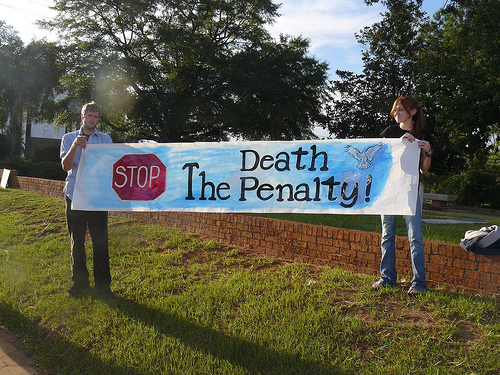
  • The Fewest Death Sentences in the Modern Era

    The Death Penalty Information Center released its annual report on the state of capital punishment  in the United States today, and while it finds that the number of executions was slightly higher in 2009 than 2008, new death sentences were at their lowest level since the death penalty was reinstated in 1976.

    This is big news. The uptick in executions is less important, partly because there was a de facto moratorium on executions nationwide for four months in 2008.

    Even Texas and Virginia are cooling to the cruel practice of capital punishment. According to the report, Texas averaged 34 death sentences per year during the 1990s and Virginia averaged six. This year, Texas had nine and Virginia just one. It’s a new day.

    View the full report at DPIC’s website.

    (more…)

  • Lest we forget the past, passion is often the problem, not skepticism

    Letter to The Economist magazine December 2009

    Against the prevailing wind

    SIR – Passion is the root problem in what you term “the modern argument over climate change” (“A heated debate”, November 28th). You state, for instance,that the “majority of the world’s climate scientists have convinced themselves”that human activity is the cause of climate change. I know of no poll that confirms this, but your choice of words is telling. In science, our interpretations of nature are based on observation, experiment and evidence, not self-conviction.

    Those of us who are dismissed, often derided, as sceptics have waited a long time for the chicanery behind the global-warming movement to come to light. But we should not blame scientists—however unprincipled—nor UN organisations, nor national governments. The true culprits are the latter-day Nostradamuses who, under their icons of cuddly pandas and polar bears, have misused science to stoke fear, guilt and a craving for atonement in the minds of the public. Governments have been browbeaten to respond to these catastrophists, and some scientists, dependent on public money, have fashioned their behaviour accordingly.

    Nikolay Semyonov, a Soviet scientist and Nobel prize winner in chemistry, wrote that:
    “There is nothing more dangerous than blind passion in science.This is a direct path to unjustified self-confidence, to loss of self-criticalness, to scientific fanaticism, to false science. Given support from someone in power, it can lead to suppression of true science and, since science is now a matter of state importance, to inflicting great injury on the country.”

    Semyonov was referring to the ruthless manipulation of Soviet science by Trofim Lysenko and other opportunists. In a similar vein, it is time we recognise that we are becoming prey to a new fanaticism, a religious fervour that runs contrary to rational society.

    Paul Reiter
    Paris

  • Now France Fines Google For Scanning French Books

    With France gearing up to dump another billion dollars at its own anti-Google book scanning project, it shouldn’t come as much of a surprise that a French court has ruled that Google’s book scanning project violates copyright law. It’s also fining Google 10,000 euros per day until it removes the books in question. Better solution: just block people from French IPs from accessing Google Books.

    Permalink | Comments | Email This Story


  • The Midnight Accord

    I’ve updated my Google spreadsheet summary of Copenhagen draft texts, with the latest iteration from just before midnight on Friday the 18th at far right. I think this table of commitments sums up the enforceable portion of the accord:

    Table of Commitments

    In short, not much for us to analyze.

  • REPORT: GM to speed up development of vehicles delayed by bankruptcy

    Filed under: , ,

    Prior to declaring bankruptcy, General Motors began delaying new products in an effort to conserve cash. The news was disappointing to enthusiasts and brand loyalists, but with its cash piles dwindling, the General didn’t have many alternatives. Post-bankruptcy, GM finds itself with $40 billion in cash and a lot less overhead, so where is the money being spent? Automotive News reports that Vice Chairman Bob Lutz confirms that many of the products that were delayed are now being accelerated, adding “Once we got out of the bankruptcy and started having money available, we were able to pull a lot of our programs forward.”

    One example of the pull-forward is the next-generation Chevrolet Malibu. Early this Fall, GM told us that the next Malibu would arrive in 2012, but Lutz says that time frame has been pulled up to 2011. The next Malibu will reportedly be all-new with a platform based off of the Buick LaCrosse and 2011 Buick Regal. The new ‘Bu will apparently have a shorter wheelbase than the current model while still managing more interior room.

    Lutz told AN that the uplevel Malibu will have chrome appliques lining the side windows, a trait he says is associated with German and Japanese luxury vehicles. Lutz apparently added that $50 worth of chrome translates into an additional $500 to $600 in perceived value to customers. Beyond the Malibu, Lutz noted that there are “a bunch” of other vehicles being pulled forward to pre-bankruptcy production cadences, though he didn’t offer any specific examples.

    [Source: Automotive News – Sub. Req.]

    REPORT: GM to speed up development of vehicles delayed by bankruptcy originally appeared on Autoblog on Fri, 18 Dec 2009 18:31:00 EST. Please see our terms for use of feeds.

    Read | Permalink | Email this | Comments

  • Copenhagen: What Ever Happened to OPEC’s Roar?

    The world’s biggest oil producers in OPEC turned out to be among the quietest of the several hundreds of groups attending Copenhagen.

    What happened to public demands for many billions of dollars in financial compensation from consumer nations for using less oil down the road, a possibility prior to the conference? Not a whimper here.

    Like many interest groups trying to protect and advance their own turf, ministers and officials from OPEC states made a lot of noise ahead of the UN meeting, fearful of what a comprehensive deal to reduce greenhouse gas emissions might do to future demand for their oil.

    But the prospect of a bold pact during the two-week confab never quite got off the ground. What finally emerged, in the last minutes Friday, was far short of what most were expecting when Copenhagen began. That made it a lot easier for OPEC officials to stay mum and even to apparently muzzle some who’d been the loudest prior to the conference.

    Saudi Arabia basically pushed its chief climate change negotiator, Mohammed Al-Sabban, into the shade during the two-week conference after he’d made various public pre-conference comments toughly criticizing how a new carbon-reduction pact might impact oil producers and about climate-change science, according to one Saudi official. Sabban was virtually silent, a contrast to many other negotiating bigwigs here.

    Ali Al-Naimi, Saudi Arabia’s long-time oil minister known for his measured thinking and carefully worded ways, was basically the public face for the kingdom and very little was heard from him.

    That said, there will be other Copenhagens down the road–Friday’s compromise agreement ensured that–and OPEC will face the music at some point of a new, comprehensive and legally binding pact for capping carbon-emissions. Then we’ll hear what tune the OPEC band really plays.


  • Ah! Chocolate Chip Cookies again!

    Got my blanched almond flour and the cookbook "The Gluten-Free Almond Flour Cookbook" by Elana Amsterdam and I made my first set of cookies today. Ate 3 cookies and my BG went up just 6 points. I am sooooo happy! Before diagnosis, I regularly ate my chocolate chip cookies and milk every night. Now, I can still have them with a glass of almond milk and not have to worry about spiking.

    I really can’t wait to make my first loaf of bread made from almond flour. Will be nice to have a sandwich again and also to be able to make pancakes with DaVinci syrup on them.

    I really have missed not being able to eat bread, cookies and deserts and now I can have those things again. I was worried about the use of nectar agave in the recipes but like I said, I ate 3 large cookies with barely a movement in my BG so I’m not going to worry about replacing the agave nectar with stevia or something else.

    If you are interested in checking out adding these goodies made from almond flour to your diet, I got the almond flour from Powdered Dried Whole Eggs – Freeze Dried Fruit – Blanched Almond Flour – Steel C – Home and I bought the book through Amazon.

    Anyone else enjoying these incredible eats?

    Dan

  • The Political Ecology of Collapse, Part Two: Weishaupt’s Fallacy

    John Michael Greer has an interesting post on the failure of the Illuminati dream (or conspiracy, depending on your viewpoint) and its modern era echo in the failure of the 1970’s systems thinkers (and their “Limits To Growth” manifesto) – The Political Ecology of Collapse, Part Two: Weishaupt’s Fallacy (via Energy Bulletin).

    Nostalgia aside, there’s a lot to be learned from the rise and fall of appropriate tech in the 1970s, and one of its lessons bears directly on the theme of this series of posts. For many of the people involved in it back then, appropriate tech was the inevitable wave of the future; nearly everyone assumed that energy costs would continue to rise as the limits to growth clamped down with increasing force, making anything but Ecotopia tantamount to suicide. A formidable body of thought backed those conclusions, and the core of that body of thought was systems theory.

    Nowadays, the only people who pay attention to systems theory are specialists in a handful of obscure fields, and it can be hard to remember that forty years ago systems theory had the same cachet that more recently gathered around fractals and chaos theory. Born of a fusion between ecology, cybernetics, and a current in contemporary philosophy best displayed in Jan Smuts’ Holism and Evolution, systems theory argued that complex systems — all complex systems – shared certain distinctive traits and behaviors, so that insights gained in one field of study could be applied to phenomena in completely different fields that shared a common degree of complexity.

    It had its weaknesses, to be sure, but on the whole, systems theory did exactly what theories are supposed to do – it provided a useful toolkit for making sense of part of the universe of human experience, posed plenty of fruitful questions for research, and proved useful in a sizable range of practical applications. As popular theories sometimes do, though, it became associated with a position in the cultural struggles of the time, and as some particularly unfortunate theories do, it got turned into a vehicle for a group of intellectuals who craved power. Once that happened, systems theory became another casualty of Weishaupt’s Fallacy.

    Those of my readers who don’t pay attention to conspiracy theory may not recognize the name of Adam Weishaupt; those who do pay attention to conspiracy theory probably “know” a great deal about him that doesn’t happen to be true. He was a professor of law at the University of Ingolstadt in Bavaria in the second half of the eighteenth century, and he found himself in an awkward position between the exciting new intellectual adventures coming out of Paris and the less than exciting intellectual climate in conservative, Catholic Bavaria. In 1776, he and four of his grad students founded a private society for enthusiasts of the new Enlightenment thought; they went through several different names for their club before finally settling on one that stuck: the Bavarian Illuminati.

    Yes, those Bavarian Illuminati.

    There were a fair number of people interested in avant-garde ideas in and around Bavaria just then, and. before too long, the Illuminati had several hundred members. This gave Weishaupt and his inner circle some grandiose notions about where all this might lead. Pretty soon, they hoped,all the movers and shakers in Bavaria – not to mention the other microkingdoms into which Germany was divided at that time – would join the Illuminati and stuff their heads full of Voltaire and Rousseau, and then the whole country would become, well, illuminated.

    They were still telling themselves that when the Bavarian government launched a series of police raids that broke the back of the organization. Weishaupt got out of Bavaria in time, but many of his fellow Illuminati were not so lucky, and a great deal of secret paperwork got scooped up by the police and published in lavish tell-all books that quickly became bestsellers all over Europe. That was the end of the Illuminati, but not of their reputation; reactionaries found that blaming the Illuminati for everything made great copy, not least because they weren’t around any more and so could be redefined with impunity – liberal, conservative, Marxist, capitalist, evil space lizards, you name it.

    The problem with Professor Weishaupt’s fantasy of an illuminated Bavaria was a bit of bad logic that has been faithfully repeated by intellectuals seeking power ever since: the belief, as sincere as it is silly, that if you have the right ideas, you are by definition smarter than the system you are trying to control. That’s Weishaupt’s Fallacy. Because Weishaupt and his fellow Illuminati were convinced that the conservative forces in Bavaria were a bunch of clueless boors, they were totally unprepared for the counterblow that followed once the Bavarian government figured out who the Illuminati were and what they were after.

    For a more recent example, consider the rise and fall of the neoconservative movement, which stormed into power in the United States in 2000 boldly proclaiming the arrival of a “new American century,” and proceeded to squander what remained of America’s wealth and global reputation in a series of foreign and domestic policy blunders that have set impressive new standards for political fecklessness. The neoconservatives were convinced that they understood the world better than anybody else. That conviction was the single most potent factor behind their failure; when mainstream conservatives (not to mention everybody else!) tried to warn them where their fantasies of remaking the Middle East in America’s image would inevitably end, the neoconservatives snorted in derision and marched straight on into the disaster they were making for themselves, and of course for the rest of us as well.

    Systems theory was a victim of the same fallacy. The systems movement, to coin a label for the heterogeneous group of thinkers and policy wonks that made systems theory its banner, had ambitions no less audacious than the neoconservatives, though aimed in a completely different direction. Their dream was world systems management. Such leading figures in the movement as Jay Forrester of MIT and Aurelio Peccei of the Club of Rome agreed that humanity’s impact on the planet had become so great that methods devised for engineering and corporate management – in which, not coincidentally, they were expert – had to be put to work to manage the entire world.

    The study that led to the 1973 publication of The Limits to Growth was one product of this movement. Sponsored by Peccei’s Club of Rome and carried out by a team led by one of Forrester’s former Ph.D. students, it applied systems theory to the task of making sense of the future, and succeeded remarkably well. As Graham Turner’s study “A Comparison Of The Limits to Growth With Thirty Years of Reality” (CSIRO, 2008) points out, the original study’s baseline “Standard Run” scenario matches the observed reality of the last three and a half decades far more exactly than rival scenarios.

    It’s not often remembered, though, that the Club of Rome followed up The Limits to Growth with a series of further studies, all basically arguing that the problems outlined in the original study could be solved by planetary management on the part of a systems-savvy elite. The same notions can be found in dozens of similar books from the same era – indeed, it’s hard to think of a systems thinker with any public presence in the 1970s who didn’t publish at least one book proposing some kind of worldwide systems management as the only alternative to a very messy future.

    It’s only fair to stress the role that idealism and the best intentions played in all this. Still, the political dimensions shouldn’t be ignored. Forrester, Peccei, and their many allies were, among other things, suggesting that a great deal of effective power be given to them, or to people who shared their values and goals. Since the systems movement was by no means politically neutral – quite the contrary, it aligned itself forcefully with specific ideological positions in the fractured politics of the decade – that suggestion was bound to evoke a forceful response from the entire range of opposing interests.

    The Reagan revolution of 1980 saw the opposition seize the upper hand, and the systems movement was among the big losers. Hardball politics have always played a significant role in public funding of research in America, so it should have come as no surprise when Reagan’s appointees all but shut off the flow of government grants into the entire range of initiatives that had gathered around the systems theory approach. From appropriate tech to alternative medicine to systems theory itself, entire disciplines found themselves squeezed out of the government feed trough, while scholars who pursued research that could be used against the systems agenda reaped the benefits of that stance. Clobbered in its most vulnerable spot – the pocketbook – the systems movement collapsed in short order.

    What made this implosion all the more ironic is that a systems analysis of the systems movement itself, and its relationship to the wider society, might have provided a useful warning. Very few of the newborn institutions in the systems movement were self-funding; from prestigious think tanks to neighborhood energy-conservation schemes, most of them subsisted on government grants, and thus were in the awkward position of depending on the social structures they hoped to overturn. That those structures could respond homeostatically to oppose their efforts might, one would think, be obvious to people who were used to the strange loops and unintended consequences that pervade complex systems.

    Still, Weishaupt’s Fallacy placed a massive barrier in the way of such a realization. Read books by many of the would-be global managers of the 1970s and you can very nearly count on being bowled over by the scent of intellectual arrogance. The possibility that the system they hoped to manage might, in effect, have been more clever than they were probably crossed very few minds. Yet that’s how things turned out; at the end of the day, the complex system that was American society had reacted, exactly as systems theory would predict, to neutralize a force that threatened to push it out of its preferred state.


  • Amanda Knox

    Compounding tragedy upon tragedy

    Those who have been so quick to condemn Amanda Knox [“Knox ‘scared,’ still hopeful,” NWMonday, Dec. 14], it is crucial to note, have been completely unable to counter the enormous evidentiary gaps that make this conviction a fraud.

    They are, however, able to pile on conclusory and judgmental observations about lifestyle and impairment. They are loathe to mention that any miscommunication on the part of Knox, who at that time did not speak fluent Italian, could have been avoided if the Italian police and prosecutor had provided her with access to legal assistance from the outset.

    A lawyer should have headed off the Guantánamo-style interrogation that rendered a faulty confession and created the smoky haze of tabloid-fueled bias, which tainted the verdict.

    Prosecutor Giuliano Mignini can add me to the growing list of those he has tried to bully because he is entirely responsible for orchestrating a theatrical farce, which has done nothing but compound tragedy upon tragedy.

    — P. Scott Cummins, Seattle

    Response to Italian letter writer

    As Rita Dunn does in “A letter from Italy” [Opinion, Northwest Voices, Dec. 13], I too assumed Amanda Knox was guilty mostly because of her statement to the police implicating Diya “Patrick” Lumumba in the murder of Meredith Kercher.

    But when there wasn’t one bit of credible evidence to tie Knox to the murder, I looked deeper.

    Knox gave this statement about four days after the murder, and after 14 hours of interrogation without an interpreter or counsel. She did not come up with Lumumba’s name out of the blue.

    Based on nothing more than a text message on the night of the murder in which Knox tells Lumumba that she’ll see him later, police devised a theory that Lumumba, Knox and her boyfriend had killed Kercher.

    She was questioned with this theory in mind. It was the police themselves who first suggested Lumumba.

    Apparently asked to imagine what might have happened and having been told that they had hard evidence against her, Knox told the police what they wanted to hear.

    I think she was a frightened young woman trying to find an honest, but desperate, way to give the police what they wanted.

    — Bonny Becker, Seattle

  • Happy holidays: education woes, stolen trees and lost ferryboats

    All I want for Christmas is a smaller classroom

    Editor, The Times:

    After stonewalling through the summer and most of the 18-day teacher’s strike, Kent School District administrators have what they fought so hard to maintain: classes that remain larger than neighboring districts.

    The School Board might think that’s an acceptable solution, but here’s the on-the-ground perspective: step into a Kent kindergarten class, and there are 30 students enrolled, even though the district told the community the cap would be 29.

    For some, English is their second language. One of every six in the room is a special-needs student, draining additional time the teacher can spend with his or her other students.

    A few miles down the road in Tahoma, a typical kindergarten class is 22. With typical absences, there could be only 18 students in the room. Discipline issues are fewer because misbehaving students can’t feed off each others’ antics. The teacher has time to redirect students immediately and can spend time teaching.

    Tahoma is not alone in understanding teachers teach better when classrooms aren’t packed: Auburn and Shoreline limit their primary grades to 23, Edmonds and Northshore to 24.

    These are districts that face similar financial constraints and which also suffered from state budget cuts this year. Instead of making excuses they found solutions and put more money into teachers’ salaries.

    The teachers’ song in Kent is still the same as during the strike: District spending choices are about priorities. Kent has kept more administrators on the payroll with salaries higher than neighboring districts. The superintendent’s $240,000 salary is more than the vice president of the United States.

    We suffered through the strike and came to a solution, but it is not working. Parents and community members need to continue putting pressure on the district to follow through on their promises.

    Change takes time, so if not for Christmas, maybe the gift of smaller classes could come in the New Year.

    — Jody Lee Collins, Renton

    The Grinch who stole a Christmas tree

    I note that someone stole a rare conifer from the arboretum, rather than pay for a Christmas tree [“Tree-steeling Scrooge,” Opinion, editorial, Dec. 14].

    What’s next for this person?

    Slaughter a Palawan peacock pheasant from the Woodland Park Zoo rather than pay for a chicken at QFC?

    — Ivan Wright, Seattle

    Chocolate ferryboats gone afloat?

    Since moving here 20 years ago, I have sent Seattle Chocolate Company chocolates in their iconic ferryboat boxes to far-flung family members and friends, along with the promise of a ferryboat ride across Puget Sound if they come this way.

    I went to get some this year for young relatives in Arizona. Unable to find them, I went online to e-mail the company to find the nearest outlet that carries them.

    I recently got their reply: The ferryboat boxes were discontinued almost a year ago.

    Another Seattle icon gone quietly into the night. Sigh.

    — Adelaide W. Loges, Bothell

  • LG eXpo software tour

    MobilityMinded has published part 2 of their review of the LG eXpo, this time showing the user interface.

    See after the break for a short 2 minute addendum to their review.

    Read more at MobilityMinded here.

    Share/Bookmark

  • Back in 1986 Westech introduced the “Killer Bucket” – in 2009, it’s back!

    Westech Engineering can custom design a Loader Bucket to your specific application. We will build the bucket size to match your loader capacity and digging environment.

    1. Low Wide Profile – for better digging, dumping and visibility. Sweeps clean to save tires.

    2. Field Proven Lip Systems – Projecting lip and wing shrouds penetrate material, maximizing breakout force. Quick change replaceable points, adapters and wear parts reduce downtime costs. Other lip options are available upon request.

    3. Flush Wear Shrouds – Protect lip, eliminate lip welding and ensures flush and clean passes to protect tires.

    4. Cast Alloy Corners – Reduce Bucket Flexing, contoured for strength and better material flow, eliminate cracking and weld repair.

    5. Replacement Bottom Runners – Optional runners of hard alloy, protect bucket bottom from wear. These runners can be Quickly Replaced.

    6. See-Through Rock Spill Guard – Full protection with excellent visibility.

    Replaceable Bottom Runners can be quickly replaced.

  • TR200 promotion

    TR200 Promotion
    As long as purchased the roughness tester TR200 from our company, the software of TR200 for PC provided free!
    For more detailed information, please do not hesitate to contact with agents of each region!
    With the softeare, it is convinient for users to managing, analyzing, printing and serching measured data and graphs.

  • World’s First 4-port Gigabit Networking PoE Computer for High Bandwidth Networks

    Korenix unveils JetBox 9533G exclusive 4-port Gigabit Embedded networking VPN Router Computer for providing extended high-bandwidth data transmission in industrial networks. In addition to its already rich interface of LAN, WAN, DIO, Serial Console and USB ports, the RISC-based computer is designed with 4 PoE ports for delivering power along with data to high resolution cameras and other high performance PoE enabled devices. The almighty computer has a complete Layer3 routing and VPN functionality to expend networking capabilities and reduce system costs by effectively managing dynamic long-distance and secure overlay gigabit network groups. Combined with IP-31 rugged fan-less, anti vibration/shock design, and -25~70oC operating temperature, JetBox 9533G ensures the reliability and high-performance of large network infrastructures in severe industrial environments.

    Huge Network Capacity with 4 Gigabit Ports
    JetBox 9533G outstands from other VPN router computers with its exclusive design of 4 integrated Gigabit RJ45 ports. With the Giga ports the VPN computer works as a backbone networking device to connect to up to 4 gigabit switches in extended networks for delivering maximum throughput for high performance, high-density and reliable connection.

    Maximum Flexibility through All-in-One Interface
    JetBox 9533G is compliant with the IEEE802.3af PoE standard and operates as a power sourcing equipment to provide 15.4W power per port to higher resolution IP cameras, VoIP phones, Wireless Access Points, etc. IPC providers can benefit from the 4 Giga PoE ports of the computer to deliver hundreds of megapixel video streams with reduced construction, maintenance time and costs. In addition to the PoE interface, the JetBox 9533G provides 8DIO, Serial RS-232 Console, USB port for easily connecting and reading the status of RFID readers, IO devices and other data enriched products.

    Effective Group Management and Secure VPN Networking
    JetBox 9533G supports VPN functionality and therefore can expand high-bandwidth networking capabilities and reduce system costs by establishing long-distance and secured network connections over WAN.

    With its rich interface, outstanding management and L3 routing capabilities, the almighty 4-port Gigabit VPN Router Computer extends the network groups and provides huge network bandwidth connection with minimum installation costs in large scale industrial environments.

    Korenix Technology
    www.korenix.com
    +886-2-8911-1000
    [email protected]