Blog

  • Reptiles That Don’t Make Good Pets

    I’m a fan and supporter of pretty much all pets. Though there are some I don’t understand ever wanting to have (tarantulas and hissing cockroaches come to mind), I respect that other people are into them and have a passion for taking care of and loving these creatures.

    Now, I’ve always liked the idea of having a lizard or snake as a pet, but I know they wouldn’t be a good fit for our family. I know that the bigger a snake gets, the bigger their meals need to get, and though I’m not squeamish about feeding them what they need (my first job at a pet store involved culling baby mice to feed to the snake population) and I don’t take offense to the circle of life and all that, I do know that it’s just not feasible for us to have to be running down to the pet store every so often for a fresh supply, and I don’t like the thought of keeping any in the freezer, either!

    Feeding issues aside, there are some animals that just don’t make great pets, period, especially beginner pets for kids (experienced adults are on their own ;) ). The video above from CBS talks about some of these pets, and how people buy them thinking they’re so cute and small, but get a big surprise within a short time!

    Post from: Blisstree

    Reptiles That Don’t Make Good Pets

  • Feds punt on E15 waiver decision, want to test ethanol’s effect on more cars

    Filed under: ,

    There is some ethanol in almost all of the gasoline sold in the U.S. Usually, this amount is no more than 10 percent of the total and, if it’s more than that, it jumps all the way to 85 percent and is sold as E85. The U.S. Environmental Protection Agency was supposed to come down on one side or the other today of a possible increase across the board to 15 percent that Growth Energy and 54 ethanol manufacturers asked for, but instead announced that it needs more time.

    The EPA has been looking at the E15 issue all year and investigating all sorts of issues, but there are a lot of moving parts in this sort of decision. Everyone from farmers and their subsidies to grow the corn used to make most of the ethanol sold today to car makers who have tuned their engines to run on E10 but not E15 want to have their say. The EPA has heard the comments, and now says that it needs more time to test E15 in vehicles. Right now, it thinks that any vehicle built after 2001 will burn E15 just fine, but there are a lot of older vehicles still on the road. Cash For Clunkers didn’t get all of them off the road, after all. A decision is now expected in mid-June 2010.

    The postponement was met with approval by the Alliance of Automobile Manufactures, which said they want more government testing “to prove that increasing the allowable ethanol blend limit will not harm vehicle emissions, performance, and durability.” Read their full statement after the jump.

    [Source: Reuters, Auto Allliance | Photo: Scott Olson/Getty Images]

    Continue reading Feds punt on E15 waiver decision, want to test ethanol’s effect on more cars

    Feds punt on E15 waiver decision, want to test ethanol’s effect on more cars originally appeared on Autoblog on Tue, 01 Dec 2009 14:29:00 EST. Please see our terms for use of feeds.

    Read | Permalink | Email this | Comments

  • Weak Diamond Market Pushes De Beers To The Brink

    De Beers, ranked No 1 miner of rough diamonds, has confirmed ongoing speculation that it is actively seeking additional funding of around US$1bn from its three shareholders. If that amount is provided, by way of loans or fresh equity, the proportional contribution would be US$450m from Anglo American, US$400m from the Oppenheimer family, and US$150m from the Botswana government.

    In line with most commodity prices, rough diamonds plunged into a trough around mid-2008. Most prices have recovered well by now, but it seems that diamonds remain somewhat behind the curve. At De Beers, however, a culmination of disparate factors have left what was one of the world’s most influential miners on its proverbial cash flow knees.

    De Beers, a private company, publishes limited financial data, but enough to show that in the past three-and-a-half years, it has generated negative free cash flow (operating cash flow less capital expenditure) aggregating at minus US$864m. Part of the explanation lies in significant capital expenditure, at US$1.2bn in 2006 and US$1.5bn in 2007, mainly dedicated to building new mines in Canada.

    Read the whole thing at MineWeb >>

    Join the conversation about this story »

    See Also:

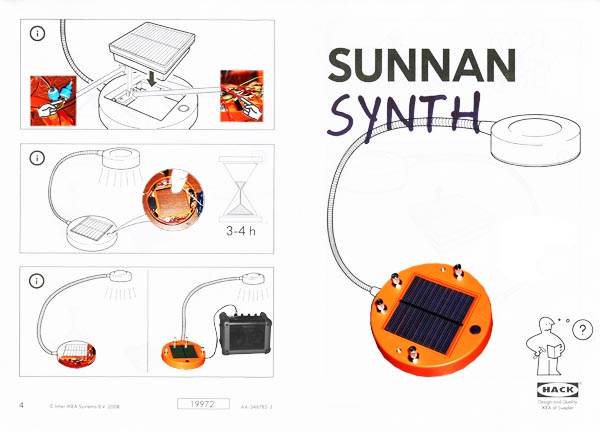
  • A solar powered strobe-opto-theremin-synth-thing

    Another hacking vid. Jan hacks the Sunnan lamp into a solar powered strobe-opto-theremin-synth-thing.


    I love the updated assembly instructions too.

    See more here.


  • Innovative Employee Commuter Program

    Mountain Rose Herbs has a commuter program that all companies should mimic – it’s great for the planet and employees. Mountain Rose Herbs sells amazing organic herbal products that are processed, handled, analyzed and supervised by a full time quality control department. Their products are fresh, fragrant, colorful, and guaranteed to be organic and safe. Now, about their commuter program…

    mountain rose herbs

    Mountain Rose Herbs aims to be a zero-waste, green company, and to that end they’ve got a killer Carpool and Bicycle Program. Not only do they encourage employees to carpool and bike to work but they actually pay their employees to do so. Currently all staff members who carpool to work earn 12 cents per mile for each passenger, and for those who bicycle to work, the company pays them 20 cents per mile! AND at the end of each year, Mountain Rose offers a cool $500.00 bonus to the individual who has logged the most passenger miles. With the growing problem of Co2 emissions and global climate change this is an amazing program – one that actually offers incentives to be green. Way more companies should do this.

    Beyond the carpool & bike program, Mountain Rose Herbs has many other green policies in place such as…

    • Allocating an average of $55,000.00 dollars each year for charitable giving, sponsorships, community functions, conservation work, and plant related projects.
    • They’re the first U.S. supplier of Fair Trade Certified medicinal herbs and beyond that have a Good Trade Program as well.
    • They only mail out catalogs twice a year and only to those that request them or customers within a 9 month period. The current catalog is 76 pages and the non-glossy interior pages were manufactured on 100% recycled stock and the glossy pages were manufactured on 50% recycled stock. The printing is done with soybean-based inks, and no petroleum or solvent-based solutions are used in the production of the catalog.
    • All invoices, flyers, brochures and other paper materials are printed on 100% post consumer waste material.
    • Shipping material is made up of recycled post-consumer newsprint, 100% post-consumer corrugation material, and the plastic bubble wrap used is made from 25% recycled post-consumer plastic.
    • Mountain Rose Herbs is also a chemical free facility. They don’t use, nor allow within its facility, chemical cleaning agents, bleaches, synthetic and chemical based soaps, ammonia, chlorine, dioxide, commercial pest repellents, fumigants, or other synthetic agents which are harmful to people and the environment.
    • Mountain Rose Herbs is a successful “Zero Waste” company where any perceived materials which might be regarded as waste are either recycled, re-used, composted, reclaimed, or brought back into the production cycle.
    • Their commercial fleet vehicles run on bio-diesel!

    Above is just the tip of the iceberg. Read more about their green initiatives at their website.

    WHY would you buy herbal products elsewhere? Really? Visit Mountain Rose Herbs to get your holiday herbs, some cool holiday gifts, and more. Plus check out their monthly specials.

    [images via Mountain Rose Herbs]

    Post from: Blisstree

    Innovative Employee Commuter Program

  • CBC’s Rodriguez wins East soccer MVP

    Published Dec. 1, 2009
    By the Tri-City Herald staff

    BELLEVUE — Columbia Basin College striker Julissa Rodriguez, who helped lead the Hawks to the NWAACC championship game for two straight seasons, was named the NWAACC East Region MVP on Monday.

    Rodriguez, a Kennewick graduate, led the NWAACC this season with 28 goals, a year after scoring 23 to lead CBC.

    Rodriguez is one of five CBC players to be named to the All-East team, including midfielders Jenn Johnston and Casey Demory, and defenders Sarah Milne and Nicki Grigg.

    Walla Walla women’s coach Chad Bodnar was named the East Region co-coach of the year.

    East-West Region all-stars

    Women
    East MVP–Julissa Rodriguez (Columbia Basin College)

    East Coach(es) of the Year–Chad Bodnar (Walla Walla), Jim Martinson (Spokane)

    West MVP–Ali Brown (Olympic)

    West Coach of Year–Dick Lowry (Olympic)

    Forwards–Rodriguez (CBC), Tabitha Grow (Spokane), Chelsey Thayn (Treasure Valley), Kati Lucas (WW).

    Midfielders–Jannely Quintana (Bellevue), Jenn Johnston (CBC), Casey Demory (CBC), Sholena Blackwell (Olympic), Cori Jo Young (Spokane), Nikita Johnson (Tacoma), Tahlia O’Loughlin (WW), Becky Reyerse (WW).

    Defenders–Sarah Milne (CBC), Nicki Grigg (CBC), Stephanie Hopkins (Spokane), Maile Cobb (Spokane), Sarah Weitz (Treasure Valley), Jennie Rasmussen (Treasure Valley), Dashia Huff (WW), Lena Miraglio (WW).

    Goalkeepers–Claire Pflueger (Spokane), Jordan Simkins (WW).

    Men
    East MVP–Alan Bosio (Treasure Valley). East Coach of the Year–Kenny Krestian (Spokane)

    West MVP–Steve Provost (Peninsula). West Coach of Year–Adam Fenster (Bellevue)

    Forwards–Josh Strasser (Bellevue), Andrew Mastronardi (Spokane), Bosio (TV), Marco Acevedo (WW).

    Midfielders–Radcliff McDougald (Bellevue), Matt Eronemo (Bellevue), Daniel Nam (Highline), Alex Bresnan (Highline), Steve Williams (Peninsula), Matt Miller (Spokane), Mikey Ramos (WW), Victor Navarro (WV).

    Defenders–Jesse Sorteberg (Bellevue), Mayron Trejo (CBC), Steve Prevost (Peninsula), Graham Lundgren (Spokane), Tyler Florez (Spokane), Jacob Bacon (TV), Brady Espinoza (WW), Jonathan Rodriguez (Wenatchee Valley).

    Goalkeepers–Ryan Skay (Spokane), Joey Pagan (WW).

    Volleyball
    NWAACC East All-Stars

    MVP–Brianna Claassen (Blue Mtn)

    Coach of the Year–Dave Baty (Blue Mtn)

    First Team–Nicole Graybeal (Spokane), Daria Winckler (WV), Rebecca Haight (Blue Mtn), Amber Durand (CBC), Kristen Garlie (Blue Mtn), Talia Venera (WV). Second Team–Megan Tompkins (WW), Kasey Jurich (Spokane), KC Schmit (Blue Mtn), Stephanie O’Connor (TV), Ashley Magee (WW), Beth Altena (Spokane).

    Additional news stories can be accessed online at the Tri-City Herald.

  • Spy Shots: Smart ForTwo+2 in the works?

    Filed under: , , , , , ,

    Smart, the German-born automaker that revived the stagnant microcar market in the first place, has seen itself fall behind in the city car wars with Toyota’s oh-so-clever iQ taking the top spot with its extra space for passengers and packages via its brilliant layout. What’s more, new machines are on the way from BMW (the long-rumored Isetta revival) and the Audi (the A1, which will be debuted at the next Geneva Motor Show).

    As such, we’re not surprised to see Smart engineers out and about testing what appears to be the next generation of the diminutive Fortwo. Judging from the fender flares, we might make and educated guess that the new model will be slightly wider than the current car, which makes sense as the same platform is rumored to gain an extended-wheelbase variant called the Fortwo+2.

    Unlike the previous Forfour, the Fortwo+2 would share the expected rear-engine, rear-wheel drive architecture with the base car and would come equipped with what would surely be a mini set of rear doors. According to Auto Express, we should see the next Fortwo in dealerships late next year with the +2 showing up in 2012. Electric and hybrid versions are reportedly in the works – and here’s hoping they finally fix that horribly awkward transmission.

    [Source: Auto Express]

    Spy Shots: Smart ForTwo+2 in the works? originally appeared on Autoblog on Tue, 01 Dec 2009 13:59:00 EST. Please see our terms for use of feeds.

    Read | Permalink | Email this | Comments

  • Howard Chui reviews the Bell Samsung Omnia 2

    For a bit more professional look at the Samsung Omnia 2, we have this 10 minute review of this Windows Mobile smartphone.  This is the GSM version on Bell Canada, but should share much software and features with the Verizon version, which is set for imminent release.

    See his earlier unboxing video here.

    Share/Bookmark

  • Rupert Murdoch: Feds Should Stay Out Of News Business, Except, Of Course To Smack Down Google For Sending Me Traffic

    Rupert Murdoch stopped by at an FTC workshop on the future of journalism to say that the federal government should “stay out” of regulating the journalism business. Except, in the same speech he said exactly the opposite. What he meant was that he didn’t want the government to get in the business of funding journalism. Yet, in the very same speech he did say that the government shouldn’t allow Google to link to his news stories, calling it “theft” yet again. Again, he didn’t explain why he hasn’t blocked Google if it’s actually “theft.” Not surprisingly, compounding these contradictions, he failed to mention (or perhaps recognize?) that the sites he owns do plenty of aggregating themselves. I’ve been told, however, that Arianna Huffington is making that point, though I wonder if Rupert stuck around to hear it. Update: Huffington has published her speech, which does a very nice job making the point.

    Other points made by Murdoch include the bizarre claim that “advertising is dead” as a model to support journalism. You would think that someone who has lived through a bunch of ad market cycles wouldn’t extrapolate from just a short period, but that appears to be what Murdoch is doing. About the only other explanation for all of this is that he’s simply trying to confuse and throw off both the competition and the federal government — but at some point someone should directly call him on his various contradictions and confusion.

    Permalink | Comments | Email This Story


  • Microsoft announces Windows Phones for Latin America

    windows-phone-america-latina

    Microsoft is having a Windows Phone event for Latin America in Buenos Aires. Yes, Windows Mobile 6.5 has come to Latin America.

    11 Latin American countries will be receiving over the next few days the first phones with the new Microsoft operating system. The exact dates or countries have not been specified.

    Douglas Smith, director of mobile division in the Americas at Microsoft, announced that the first three phones with Windows Phone we will have available are: Samsung Omnia II, HTC Touch 2 and LG GW550.

    Source: emovilPRO

    This post was submitted by teo.

    Share/Bookmark

  • Manhattan Inventory Problem Continues To Improve

    (This guest post originally appeared at the author’s blog)

    Absorption defined for the purposes of this chart as: Number of months to sell all listing inventory at the annualized pace of sales activity.

    The absorption rate continues to improve from a bottom up, approaching the 10-year 10.0 month average for all three market areas (the data set is too thin for a reliable trend for Uptown).

    Observations

    The East Side absorption rate slows considerably above $1.5M. Co-ops are considerably slower than condos above that threshold. Condos generally absorb faster than co-ops.

    The West Side absorption rate has reduced in higher price segments, up to $3M. Co-ops generally absorb faster than condos below $3M but take much longer than condos above the threshold.

    The Downtown market absorption rate has reduced in higher price segments, up to $3M. Co-ops and condos are consistent below the threshold but co-ops absorb considerably slower above the threshold.

    Note: This chart series does not include shadow inventory (properties ready for market but not yet listed for sale) so it understates condo absorption.

    Absorb Charts

    Join the conversation about this story »

    See Also:

  • Autoblog Podcast #155 – ‘Twas the night before the LA Auto Show…

    Filed under: , , , , , , , ,


    Click above for the Autoblog Podcast in iTunes, RSS or listen now!

    With the LA Auto Show near at hand, Chris, Dan, and Editor Extraordinaire Paukert sat down and talked over some of the latest for Episode #155 of the Autoblog Podcast. First up is the surprisingly thorough re-rework of the Mustang, before we move on to talk about the early release of U.S.-spec Ford Fiesta pictures. Gazing at photos brings us to the Chevrolet Cruze, which has also been lensed in North American garb. The Chinese-market Buick Excelle is rumored as a possibility for our market, and we scratch our heads about that for a while. Toyota’s handling of its gas pedal recall and Nissan’s low-priced and well-integrated navigation unit wraps it up before we move on to some of your questions. Right before signing off, we jump back to talk briefly about the newly unveiled Audi A8 and Saab’s sad fortunes. At one hour, 50 minutes, it’s an epic. We blame Paukert.

    If you get bored once the new Autoblog Podcast bliss has worn off, check out our colleagues at Joystiq and Engadget. Let us know what you think by dropping us an email at Podcast at Autoblog dot com, reviewing the show in iTunes, filling out our survey, or even leaving us a voicemail on our Google Voice line 734-288-8POD (734-288-8763). Thanks for listening, we’ll see you next week!

    Continue reading Autoblog Podcast #155 – ‘Twas the night before the LA Auto Show…

    Autoblog Podcast #155 – ‘Twas the night before the LA Auto Show… originally appeared on Autoblog on Tue, 01 Dec 2009 13:31:00 EST. Please see our terms for use of feeds.

    Read | Permalink | Email this | Comments

  • Was Caijing Magazine Killed By The Chinese Censors?

    Caijing

    China’s remarkably outspoken and investigative Caijing magazine recently suffered massive set backs with the departure of top writers and the majority of its staff.

    Apparently there were some serious disputes between Caijing’s top talent and Caijing’s owner, the ‘Stock Exchange Executive Council’.

    Meanwhile Caijing recently managed to put out a November 23rd issue using what remains of their staff, we’ve noticed that their English website is dead.

    The headline story is dated November 13th.

    While the Chinese version appears to be struggling on. Is it really that hard to find English translators?

    One of this magazine’s past strengths was its ability to let intelligent Chinese writers explain what’s going on to the non-Chinese world. Even if the magazine is still published, the website was a far more useful tool given the frequency of its updates in the past.

    In the latest issue, the new Caijing affirmed its past values, but the dead English website makes us wonder: is the old Caijing already dead?

    WSJ: The latest issue of Caijing also features a statement of support from a former high-ranking establishment media official. “Caijing magazine faces a heavy task and a long road ahead,” wrote Zhong Peizhong, onetime head of the news division of the Communist Party’s Central Propaganda Department. “I wholeheartedly wish Caijing magazine even greater success in the future.”

    International Business Times: It said that the mass resignation is followed escalating pressure in recent months by the Stock Exchange Executive Council (SEEC), to rid the outspoken magazine of its widely reputable editorial independence. “The key is, the SEEC wants to intervene and censor all of our financial stories, particularly cover stories and investigative reports. That’s unbearable (for us),” one source said.

    “None of the real stories we used to run would have been OK (with the SEEC) if they stepped in,” the source said. SEEC is Caijing’s owner, the unique shareholder, which always to intervene and censor the most important articles since July .

    We hope nothing changes. But if it does change, then luckily Caijing’s old departed team is reportedly organizing a new venture called Caixin. Love it.

    Chinais.com: Caijing insiders gave the information that the resignation was planned even earlier this year around August. The China Times found an interesting domain name “CAIXINNEWS.COM” (财新新闻) which is registered by Weiping Kang (康伟平), an editor of Caijing Magazine on the 6th of August. this domain registration unveils the possible date when either party started to set up their tactic – a strategic move from Hu Shuli or just one defensive registration of Caijing Magazine.

    Join the conversation about this story »

    See Also:

  • Paul Krugman’s Emergency Jobs Program Will Never Work

    This guest post originally appeared at TheAtlantic.com

    Paul Krugman and I seem to agree that the worst part of a recession is unemployment.  Losing value in your 401(k) is terrible, but not, for most people, catastrophic.  Losing your business or your job, on the other hand, is wretched, particularly when there are six job hunters for every job opening.

    Where we differ is that Krugman doesn’t understand why the administration has not made creating jobs a top priority.  He wants transfers to state and local governments, a tax credit for increasing payrolls, and a WPA-style jobs program.  Other bloggers have attacked the first two; I’ll just say that I’m skeptical that a temporary tax credit will induce strained businesses to take on significant new operating costs.  But I want to talk about the jobs program, because it’s a superficially compelling idea that just won’t work.

    I don’t say this because I necessarily think it’s a bad idea.  During an employment slump as deep as ours, there are some compelling reasons to support the creation of temporary, low paid public jobs as an alternative to collecting unemployment.  There are risks, since someone doing a low-paid temporary job has less time to seek more fitting permanent employment.  But the risks are not so large that I would be unwilling to try such a program in the face of 10% unemployment.  Unfortunately, all this is entirely academic, because the federal government cannot create something akin to the CCC or the WPA on the time frame that would help the people who are suffering now.

    For one thing, there are powerful public sector unions, who are going to fiercely resist any attempt to create low paid temporary jobs that could be done by well paid government workers who have excellent benefits and job security.  I doubt the Republicans would be willing to take this one on (or well disposed to a New WPA).  But with Democrats in control, this is pretty much a fatal objection.

    Even if you could surmount union opposition, the federal government has an ever-increasing thicket of red tape that makes such a thing impractical.  It takes months to get hired for a job with the federal government.  It takes months to ramp up a new program.  By the time you’d gotten your NWPA through Congress over strenuous union objections, appointed someone to head it, set up the funding and hiring procedures, and actually hired people, it would be 2011.  Maybe 2012.  Perhaps you could waive all the civil service and associated procedure surrounding federal hiring, but I don’t see how.

    My father was the head of a trade association for the heavy construction industry, and most of my closest relatives either work for the government, or have done so in the past.  As you can imagine, over my lifetime I’ve had a lot of conversations about government procedure and government projects.  Every so often I’ll read some description of a project out of the olden days–the battle against malaria in Panama, the handling of the Great Mississippi Flood, or the creation of the WPA–and just marvel at how fast everything used to be.  The WPA was authorized in April of 1935.  By December, it was employing 3.5 million people.   The Hoover Dam took 16 years from the time it was first proposed, to completion; eight years, if you start counting from the time it passed Congress. 

    Contrast this with a current, comparatively trivial project: it has been seventeen years since the Southeast High Speed Rail Corridor was established by USDOT, and we should have a Record of Decision on the Tier II environmental impact statement no later than 2010.  This for something that runs along existing rail rights of way, and in fact, uses currently operating track in many places.

    I imagine this all sounds like a nattering nabob of negativity.  If there are procedural hurdles to jobs programs and high speed rail, we should challenge them, not resign ourselves to subpar policy!  

    Look, I may be skeptical that health care reform will be a net positive, but I do concede there’s some chance I’m wrong (and I will be glad if it is so).  But this is not merely unlikely; is is the next nearest thing to impossible, short of armed revolution.  Many of the procedural hurdles involve court rulings, concerning law which Congress cannot overturn in some cases (due process), or isn’t going to (civil rights legislation, civil service protections).  The obstacles arise out of things that individually, people, specifically Democrats, like: transparency, due process, environmental care, civil rights, unionism.  Cumulatively, they are devastating to federal productivity.  But it’s hard to get much support for repealing or altering them individually–which is what you would have to do.  Philip Howard has built a second career out of railing against the steady trend towards hyperproceduralism, of which this is a small part.

    So in this case, I think we’re better off looking for second best: things that the government can enact and implement relatively quickly.  More generous unemployment benefits, and further temporary extensions of the period for which you can collect them.  Other forms of cash and quasi-cash assistance to struggling families, like food stamps.  Payroll tax holidays.  These may not be optimal, but they are things that Congress can actually get going almost immediately, putting cash in the hands of people who are suffering.

    Join the conversation about this story »

    See Also:

  • Mac OS X, iPhone OS, Safari Down or Flat in November

    November was not a great month for Apple, at least according to web metrics firm Net Applications. While one could argue the launch of Windows 7 in October may have negatively impacted market share for OS X, Safari also lost ground to Chrome, and even the iPhone OS saw a slight decline against competitors.

    For OS X, the decline could actually be good news. In the first full month since the release of Windows 7, OS X declined to 5.12 percent of the overall market, down from 5.27 percent last month. That’s not so bad. However, if Windows 7 is to blame for that modest decline, it’s a little difficult to understand how Linux saw an increase of 0.04 percent, to an even one-hundredth of overall market share. More positively, Snow Leopard continues to account for an increasing share of the OS X user base.

    From September through November, OS X 10.6 represented 18 percent, 22 percent and 27 percent, respectively, of the OS X user base. Those are impressive gains after launching on Aug. 28. In contrast, Windows 7 launched on Oct. 22, and nearly six weeks later is just reaching 5 percent of Windows market share. Faster uptake of OS X means new technologies see more widespread support sooner; slower for Windows 7 means more support headaches for Microsoft.

    Similarly, Safari 4 has become the standard among Mac versions of the web browser, accounting for more than 80 percent of Safari users since launching in June. In terms of overall market share, Safari, including the Windows version, represents 4.36 percent, down slightly from 4.4 percent in October. Still, that percentage is moving slowly upward over time, though not nearly as fast as Google’s Chrome. Chrome is now at 3.93 percent, up from 3.57 percent for the previous month, and will almost assuredly pass Safari on the desktop within three months. Of course, some solace can be had in that Chrome and Safari both use WebKit. More WebKit users, and Gecko users with Firefox, ultimately mean a greater adherence to neutral standards for web browsers.

    As for the iPhone, November was one of those rare months that saw the iPhone OS lose ground. In terms of overall market share among operating systems, iPhone OS may be insignificant, but the actual number of users probably exceeds 60 million. Nonetheless, market share for iPhone OS was 0.43 percent in November, down from 0.44 in October. Competing mobile operating systems like JavaME, Symbian, Andriod and RIM, all saw increases of 0.01 or 0.02 percent, minuscule changes, but still increasing.

    It should be noted, though, that Net Applications data this month comes with a “preliminary” warning label. That could mean there are still slight variations to be found. For a month that showed a little decline for Apple, it might turn out to be more of a plateau.


  • More Leo questions answered

    Biggest question I have is how is the speed of the processor. Especially when browsing the web with IE and Opera. How does it compare to the current 528mhz chips.

    Web browsing is brilliant, processor is blazing fast. It does everything I’ve thrown at it so far, and I’ve stopped caring that there isn’t a task manager in the top of the home screen. Opera now loads faster enough that there really is no need for IE, though IE does do flash (albeit badly) – I’ve yet to try flash in Opera.

    as much details as possible about the USB host please.

    So far, I’ve got nothing on that.

    I’m hesitating between a Touch Pro 2 and a HD2. I want to go for the HD2 but before I want to be sure about 2 topics not really developed on other reviews: The screen keyboard, is it good? practical? Can it replace a hardware keyboard? Is it fast?
    And I’d like to know the quality of the Mic / Speaker. Touch Pro 2 had great review about this and his hand free capabilities. Is the HD2 as good?
    Thank you,
    Gaz

    How it feels without stylus, on gui element that not yet skinned by touchflo.

    Some of them can be a litte awkward, but in reality there not too bad. Using the pinch zoom feature does make things better though.

    I’d like to know how the capacitive screen is to use on those ugly-old standard WM applications (Pressing the ‘X’ button, using scroll-bars, etc.

    The scroll bars expand when you touch them which makes scrolling through long lists really easy.

    Ditto on battery life – how long does it last with continuous web-browsing, video/audio playback, etc. 

    Playing a WVGA film full screen on headphones at 50% brightness lasted a lot longer than the 2h30 film I was watching, at which point I fell asleep. That was with push email in the background over HSDPA… Probably not the best battery test, and I’ll try and do a proper one at a later date.

    How much free RAM is there after bootup with no programs running?

    The simple answer is “enough”. With Sense, you do lose around 50MB, but even so there’s more than 200MB free (and that’s with no optimisations at all).

    And finally, is it possible to zoom using one hand only?

    Some applications like Opera do zoom on a double tap. The pinch zooming is pretty hard with one hand as it’s a massive screen.

    Hello, would like to know how Sense is compatible with "old" applications such as agenda fusion, applications which really close the program instead of putting them backwards (i use wktask, but can be others) or pocketbreeze (who show on today page next appointements tasks etc). Those old apps may be too old, but are must have for me to use WinMo efficiently, and could prevent me from buying this beautiful HD2. And, btw, is it possible to put shortcuts on the today page of Sense to most common apps or functions (all the above, shortcut for silent & vibrate, etc…) Thanks for the answer, and excuse my bad english.

    Sense itself is pretty much just a today plugin. Its not incompatible as such, but for other today screen plugins, its Sense or something else, not both. You can disable Sense though, and the whole thing somehow seems even faster! You can put shortcuts to whatever you want, though silent and vibrate may need applets to work on the sense main page.

    Thanks a lot for your answer. Sounds logical. But still wondering how it works in "real life". how about switching between 2 or 3 opened apps, view calls list during a call, how pocketbreeze could show all appointement on the start page/home screen if there is no more start page (but the sense page), if it is possible to put more than 9 shortcuts (9 blocks only are available, 3 of them always displayed), …. the whole impression i have is that the sense skin is not very upgradable, despite it’s beautiful. And i love to tweak and put shortcut everywhere on my WinMo 5. But maybe this is not the right place here for such questions, and once again, thanks a lot for the answer.

    Switching between 2/3 open apps is as simple as either reopening them, or finding them in task manager. If you didn’t shut them, you can just minimise the front app and the one behind it will pop up again. Viewing call history in a call is Menu->Call history, and then you can filter it if you want. PocketBreeze wouldn’t be able to work with Sense for that. There are only 9 items by default, but I guess XDA-Devs will figure out a way to add more. With Sense, you can put shortcuts on the first page, and the WM6.5 start menu lets you move shortcuts around. You can also just disable Sense, and you’re back to stock WM6.5 which has the same today screen setup as WM5 for things like PocketBreeze.

    How well you can see whats on screen when outside ? I have TyTN and I can’t see anything on screen outside.

    Depends on what the weather is like. In too bright sunlight, there’s no chance, and not even the Omnias with the AMOLED screens are visible. Generally though, it’s perfectly usable. A good deal brighter than my Diamond or Prophet.

    I’d be interested to know the quality of the external speaker in comparison to the diaomond. My diamond’s is shockingly poor and i rarely here my phone ringing anywhere even slightly noisy.

    To my mind, it’s rather good. Plays music loudly, and I’ve yet to miss a call. And it’s got “Pocket Mode” that makes it ring louder if the proximity sensor is covered i.e. in a bag or pocket.

    Share/Bookmark

  • Svalbard Seed Bank

    Norway, Europe | Subterranean Sites

    Your grandma is right. The bananas that you can buy today in your local supermarket are not as sweet as the ones that she ate in her childhood.

    There are many types or “cultivars” of any given fruit, a cultivar is a cultivated plant which is chosen and given a special name because of its desired characteristics, and various types of cultivars (for example in apples, the Red Delicious in the 1870s) come in and out of favor over the years. In the middle of 20th century the dominant banana cultivar exported to North America and Europe was the Gros Michel. Sometime around 1950, it become virtually extinct due to the rapid spread of the so called “Panama Disease,” a fungal infection that attacks the roots of the banana plant. The Gros Michel was replaced with more resiliant but less tasty Cavendish cultivar.

    Modern agriculture is generally focused on maximizing profit by extracting maximal possible yield of crop. A small number of specially selected cultivars of any given crop are planted throughout the world, displacing in the process numerous other local varieties. This approach guarantees consistently high yields under the normal conditions but harbors a hidden danger.

    Essentially, every single comertialy grown plant is a clone of one of only a few specially selected strains of genetic material. Diversity of genetic material is thus reduced to a bare minimum, leaving crop species exposed to any disease which can exploit that single strain. With corn, wheat and rice, being grown world wide in such a fashion, this is concern that one newly mutated strain of fungus could whip out an entire world crop in matter of months, causing massive food shortages.

    In order to preserve the gene diversity of major food crops, international institutions have established a series of green gene banks, which store samples of genetic material of various strains of each plant species.

    Svalbard Seed Bank is meant as a sort of safety net, a reserve of last resort and the vault functions like a safety deposit box in a bank. It stores duplicate specimens from genebanks worldwide and while the Svalbard seed bank owns the building, the individual depositor owns the contents of his or her box and the access to individual specimens is regulated by their respective depositors. The facility has a capacity to conserve 4.5 million seed samples. With approximately 1.5 million distinct seed samples of agricultural crops thought to exist, the Svalbard Seed Bank can store roughly three of each sample. Under the current temperature conditions in the vault (temperatures similar to those in a kitchen freezer) the seed samples can remain usable to begin new crops for anywhere from 2000 to 20,000 years.

    The seed bank is located in an old copper mine on remote northern island of Spitsbergen, Norway. The main storage is 120m inside a sandstone mountain, on a tectonically dead island. The bank employs a number of robust security systems. Seeds are packaged in special four-ply packets and heat sealed to exclude moisture. A local coal mine and powerplant supplies the electricity for refrigeration control. The remote northern location also serves as a natural fridge. In the case of complete power failure at least several weeks will elapse before the temperature rises to the −3 °C of the surrounding sandstone bedrock.

    The Svalbard Global Seed Vault opened for deposits officially on February 26, 2008 with the construction of the vault financed entirely by Norwegian Government. The operational cost is currently shared by Norway and the Global Crop Diversity Trust.

  • SocGen’s Albert Edwards: Even The Bulls Should Know They’re Screwed

    The market is rallying, but so what. SocGen’s uber-bearish analyst Albert Edwards says you should be terrified if you’re a bull, and that if you’re not terrified, you’re probably deluding yourself.

    FT: Alphaville has his latest report:

    We have just had the worst decade’s performance for equity investors on record. Relative to government bonds, equities have been an even bigger disaster. Surely after such a terrible decade for equity investors things can only get better?

    On a ten year view, equities may indeed prove to be a good investment. On a 1-2 year view, however, we still see much pain to come. After what we have been though so far, where the bulls’ optimism has been crushed in 2001/2 and in 2007/8 surely there must be a heavy weight of self-doubt yoked onto the shoulders of the bulls – but apparently not!

    The lesson from Japan is that while de-leveraging plays itself out, the global economy will remain extremely vulnerable. The Great Moderation is dead. It was built on a super-cycle of private sector debt. We know from Japan, we now return to what was before, i.e. highly volatile and unpredictable cycles. Recession will quickly follow recovery.

    And he concludes with this terrifying slide:

    inflation


    Read the whole thing at FT Alphaville >>

    Join the conversation about this story »

    See Also:

  • Howard Davidowitz: “We Are On A Death March!” “We Are Japan!”

    Many economists draw comparisons between the United States now and Japan in 1990.

    For those who aren’t familiar with Japan’s recent economic history, this is not a good thing. 

    Japan’s stock market peaked in 1989 at about 40,000.  It now trades around a quarter of that level, or 10,000.  GDP, meanwhile, has barely grown at all.

    Economists used to refer to Japan’s malaise as “a lost decade.”  Now they’re saying “lost decades.”

    Our guest Howard Davidowitz sees a similarly horrific future in store for the U.S. He calls America’s current path, rich in deficit spending and weak in currency a “road to nowhere.”

    He also doesn’t buy the arguments of those who reassure us that Japan’s problems are “cultural” and “demographic”–and, therefore, that it’s different here.  Japan’s problems are the same as our problems (artificially low interest rates and a bailout culture), Davidowitz says.  The only difference is that we’re about 20 years earlier into the collapse.

    If we are Japan, what is the outlook for the stock market (and your retirement savings)?  Not good.

    If the DOW behaves the way Japan’s NIKKEI has, the DOW will trade at about 4,000 in 2025.

    See Also: The United States Of Wusses

    Join the conversation about this story »

    See Also:

  • What Hangover? November Auto Sales Actually Solid

    fordsnow.jpg

    The numbers are trickling in. Here’s how U.S. automakers did or are expected to do this November:

    • Ford: Flat. 123,167 units versus 123,222 a year ago
    • Porsche: Sales up 18% to 1626 units
    • BMW: Sales down 7.5% at 18,727 units
    • Toyota: Sales up 2.6% on 133,700 units
    • Hyundai: Sales up 46% over last year on 28,045 units
    • Mercedes-Benz: Sales up 19.1%. 16,797 units versus 14,102 a year ago
    • General Motors: Sales down 2% to 151,427 units
    • Chrysler: Sales fell 25% to 63,560 units
    • Honda: Sales down 3%
    • Nissan: Sales up 31.3% for 56,288 units
    • Kia: Up 18.3% over last year on 17,955 units
    • Lexus: Sales up 14%

    It’s almost as if… consumers are buying cars again.

    Join the conversation about this story »

    See Also: