Nanjing, December 16th, 2008 – The IGE+XAO Group announces that CSR PuZhen has selected IGE+XAO’s SEE Electrical Harness software package for designing and maintaining electrical wire harnesses. CSR PuZhen (CSRPZ), a subsidiairy of China South Locomotive & Rolling Stock Corporation Limited, is a large-scale state-owned company, designing, manufacturing and maintaining passenger car used in railways, vehicles for city traffic, as well as main parts for multiple unit cars and fittings such as car axletree.
SEE Electrical Harness is a Computer-Aided Design (CAD) package dedicated to the electrical harnesses design. It includes a complete management of signal, wires, cables and shielding. It also generates automatically various lists such as equipment list, wires list, cable list and list.
SEE Electrical Harness allows CSRPZ to draw easily electrical schematics and wiring diagrams. With this software package, CSRPZ has been able to reduce the time spent on designing electrical wire harnesses.
A key feature for CSR PuZhen was SEE Electrical Harness’s capacity to exchange data with the design software CATIA V5 – 3D through XML. This data exchange allows to determine harnesses section sizes and cable lengths. This ensures time saving and reduces the number of errors.
“SEE Electrical Harness makes electrical design much more convenient and easier. It saves designers’ time from a lot of repetitive work. We believe that we have made a big step in working with modern electrical design methods. We are also now much more compliant with the electrical design field best practices and standards” declared Mr. Liang Shisong, Engineering Manager at CSR Puzhen.
Blog
-
CSR PuZhen, chooses “SEE Electrical Harness” for its electrical wire harnesses.
-
Valeriana, a planta que acalma os nervos
A Valeriana produz efeitos bastante diferentes, conforme atua sobre os seres humanos ou sobre os animais. Aos primeiros proporciona um notável efeito sedativo, enquanto aos segundos estimula vigorosamente. Assim, por exemplo, os gatos ficam eufóricos quando cheiram a planta e esfregam-se contra ela com grande deleite. A valeriana é muito util em casos psicossomáticas, nervosismo ou stress.
Ela cresce espontaneamente nas orlas dos bosques, prados úmidos e margens dos rios da Europa. Naturalizada na América do Norte e na região mais meridional do continente americano. A Valeriana – valeriana officinalis L – é uma planta herbácea da família das Valerianaceas, de caule eretos e flores pequenas e rosadas. A parte utilizadas na fitoterapia são a raizes e o rizoma. Em Portugal é conhecida também como valeriana-menor, valeriana-silvestre; na Espanha como hierba de los gatos; na França valériane e English valerian ou valerian na Inglaterra.
Esta planta é usada teurapêuticamente desde o Renascimento, quando se descobriu a sua propriedade de evitar os ataques epilépticos. Tem efeitos tranquilizantes, sedativos, soníferos, analgésicos, antiespasmódicos e anticonvulsivantes. Produz uma sedação de todo o sistema nervoso central e vegetativo, diminuindo a ansiedade. Também diminui a pressão arterial. A sua ação é semelhante à dos fármacos tranquilizantes maiores ou (fenotiazinas e derivados), mas sem nenhum dos efeitos tóxicos destes. É , através de infusão ou maceração das raízes, indicada:
– no combate à ansiedade, neurose de angústia, neurastenia ou irritabilidade, dores de cabeça, palpitações, arritmias, hipertensão arterial essencial (a que não tem causa orgânica), tremores, estômago afetado por nervosismo, cólon irritável e outras doenças psicossomáticas. Por sua ação sonífera, combinando-se a infusão com um banho da planta antes de deitar, obtém-se ótimos resultados. A valeriana combate também a asma por conta de sua ação espasmódica e sedativa, evitando o espasmo dos brônquios
que, juntamente com o edema da mucosa, é um dos fatores causadores da asma.Fonte: Enc. plantas medicinais; http://www.clarocet.com/referencelibrary/valerian/safety.htm
-
Clamping system for wire EDM machine
The F-Tool WEDM tooling line features through the simple concept for the professional at the everyday life.
– The F-Tool WEDM tooling assortment is developed by well-known engineers and made of corrosion-resistant, high-quality steel. The system fulfils highest quality claims.
– The basic ruler provide a stable stopper and a clamping beam for large parts and many practical F-Tool clamping elements.
– The system is stable, can be cleaned well and is assembled directly on the basis zero tables of the machines.
– The F-Tool clamping elements can be pushed free in position under the clamping groove after the insertion, before they are clamped on the stopper with the clamping screws.
– The F-Tool clamping elements can be charged with the work piece outside the machine and later be assembled in the machine, system oriented in reference position.Our many years of experience in spark erosion, and notably in clamping systems also, have prompted us to develop new products and to pursue new paths. Our aim has been to provide the user with the best possible benefits. And our strategy for this can be summarised as: shorten the distribution channels, rationalise the products, and at the same time adapt to the new requirements, all to save costs and to adapt to the global changes. Whether you enjoy the benefits of our products and services as a user, or whether you are a sales partner who is linked to this strategy at the customer’s site, we are always pleased to work through new objectives with you. F-Tool is a member of the EROWA-Group.
Our extensive stock facilities guarantee rapid delivery.
Our personnel are highly trained. This means that we are very well equipped to do our best for you. -
Wikipedia Isn't Dying, the Foundation Says
 More and more people are quick to seal the fate of Wikipedia and a couple of studies in the past year are being used as clear evidence that the site is headed for disaster if not in the short term future. Recently, a study by Spanish researcher Felipe Ortega, which found that 49,000 volunteer editors left the site in just three months, has spread after a story in the WSJ. Now Wikimedia, the organization behind the popular website, has responded to set the record straight and put some perspective on the numbers.
 Erik Moeller, deputy director and Erik Zachte, data analyst at the Wikimedia Foundation, start off by pointing out that the organization’s definition of an editor differs from that of the researcher. In the study, anyone who has made an edit is considered an editor, leading to a total number of over three million editors across all language versions of the site. Wikimedia, however, counts only those who have made at least five edits leading to a smaller number of just one million editors. This way, the number of volunteers who are leaving or the overall trend is unlikely to be the same. There are some other issues with the numbers and the blog post details several of them.
The two go on and share their own data regarding monthly active users, in line with data from a previous study, which they admit ha… (read more)
-
Great Plugins That Will Enhance Your WordPress Blog
WordPress is one of the easiest to use and most powerful blogging platforms around. The versatility of WordPress is its greatest feature, it has the ability to act as a blog and also as a static web site. The ease of use when it comes to both updating your site as well as maintaining it is phenomenal.One of the WordPress features that holds the bulk of the power of the software package is the utilization of plugins. Plugins allow your blog to perform or display specific functions and are highly customizable in almost every way. They are also easy to use as generally all it takes to put them into use is activating them in the admin screen of the WordPress platform. Here is a look at some of the most valuable plugins you can use to enhance your blog.Akismet – Probably the first plugin you should activate, it helps keep spam comments from needing to be moderated.All In One SEO Pack – A great SEO plugin that gives each post its own Title, Keywords, and description.Subscribe To Comments – This plugin is a nice way to get an RSS feed for the comments to each post.WordPress Database Backup – This is essential as it helps lessen the chance that all of your blog info will be lost. This plugin automatically backs up all of your database information and emails them to you at the exact time each day or week you specify.AdRotator – This is a simple to use plugin that allows you to enter a list of banner or box ads, even text ads, that will be displayed on your site. Then, each time a new page is opened or the same page is refreshed, a new ad appears in that one spot that you have specified. This can also be used for cycling random photos or quotes too.Sociable – A very cool plugin that puts links to all the popular social networking sites like StumbleUpon and Digg at the end of each post. This is very handy as it allows your readers to bookmark them right there at the site of the post they are already reading.Related Posts – This is a powerful plugin that allows readers to view other posts that you have written and they might be interested in.Google Sitemaps – A nice plugin that helps to insure that Google knows about each and every post and page that makes up your site.NextGen Gallery – A very easy to use photo gallery plugin that allows you to place single images, slideshows, and full blown galleries into posts and pages.Using all of these WordPress plugins, and others as well, you have the ability to convert your standard blog into a web based masterpiece. The plugins provided for use with the WordPress blogging platform are the single best reason to choose WordPress as the package that runs your blog. With the wide variety of options available through the thousands of available plugins made for WordPress, it will be no time before you have one of the best blogs on the internet working for you.
WordPress is one of the easiest to use and most powerful blogging platforms around. The versatility of WordPress is its greatest feature, it has the ability to act as a blog and also as a static web site. The ease of use when it comes to both updating your site as well as maintaining it is phenomenal.
One of the WordPress features that holds the bulk of the power of the software package is the utilization of plugins. Plugins allow your blog to perform or display specific functions and are highly customizable in almost every way. They are also easy to use as generally all it takes to put them into use is activating them in the admin screen of the WordPress platform.
Here is a look at some of the most valuable plugins you can use to enhance your blog.
Akismet – Probably the first plugin you should activate, it helps keep spam comments from needing to be moderated, and will save you hours and hours of time, over and over again.
All In One SEO Pack – A great SEO plugin that gives each post its own Title, Keywords, and description. If you want get your blog ranked by the search engines, get this pluging!
Subscribe To Comments – This plugin is a nice way to get an RSS feed for the comments to each post.
WordPress Database Backup – This is essential as it helps lessen the chance that all of your blog info will be lost. This plugin automatically backs up all of your database information and emails them to you at the exact time each day or week you specify.
AdRotator – This is a simple to use plugin that allows you to enter a list of banner or box ads, even text ads, that will be displayed on your site. Then, each time a new page is opened or the same page is refreshed, a new ad appears in that one spot that you have specified. This can also be used for cycling random photos or quotes too.
Sociable – A very cool plugin that puts links to all the popular social networking sites like StumbleUpon and Digg at the end of each post. This is very handy as it allows your readers to bookmark them right there at the site of the post they are already reading. You can see the plugin in action below this post.
Related Posts (YARPP – Yet Another Related Posts Plugin) – This is a powerful plugin that allows readers to view other posts that you have written and they might be interested in. Massively increases your pageviews, and decreases your bouncerate (read more about bouncerate). And again, you can see the plugin in action below this post (check out the suggestions I would say!
 )
)Google Sitemaps – A nice plugin that helps to insure that Google knows about each and every post and page that makes up your site. Call it a necessitiy. It is one.
NextGen Gallery – A very easy to use photo gallery plugin that allows you to place single images, slideshows, and full blown galleries into posts and pages.
Using all of these WordPress plugins, and others as well, you have the ability to convert your standard blog into a web based masterpiece. The plugins provided for use with the WordPress blogging platform are the single best reason to choose WordPress as the package that runs your blog. With the wide variety of options available through the thousands of available plugins made for WordPress, it will be no time before you have one of the best blogs on the internet working for you.
Related posts:
- Pimp Yer WordPress WordPress Blog Themes: WordPress Themes That Don’t Suck http://www.wpthemespot.com/ BlogPerfume…
- We DoFollow! What does DoFollow mean? On most blogs, when someone comments…
- Rankings Rankings are a very important thing to webmasters who want…
Related posts brought to you by Yet Another Related Posts Plugin.
-
Another great Samsung Omnia 2 ad

Here is another great Samsung Omnia 2 ad. I love how it is reminiscent of the iPhone ads while unashamedly claims to be a smarter, more manly phone.
The T-Omnia 2 is very similar to the international version, but in addition also features integrated mobile TV.

-
Deleted A Public Folder in Exchange 2007… Now What?
You ever have a moment when you feel like your world is crashing down all around you, and there may be no possible way of coming back or surviving? Well I felt like that the other night. You see I was decommissioning an Exchange 2007 server, and I messed up on a step where you are supposed to transfer all Public Folder replicas to another Exchange 2007 server. I thought I did it correctly, but I obviously didn’t because when I uninstalled Exchange from that server ALL PUBLIC FOLDERS WERE GONE! WTF!!
I frantically tried to recover using Backup Exec 12.5, but I kept having different problems with that. The restore would say successful, yet still no public folders. I was obviously not doing that right either, but that is for another article.
I did however have a backup copy of the Public Folders EDB file, so I started scouring the net looking for a good EDB to PST program. All I could find were really expensive ones like Ontrack PowerControls and Kernel for Exchange Server. Frankly those were last resort options because of the cost.
I did find a tool from Microsoft called PFDAVADMIN. This tool saved my bacon. It works for Exchange 2000, 2003, and 2007. IT DOES NOT RUN ON WINDOWS 7 WORTH A DAMN! It also requires .NET Framework 1.1 so DO NOT RUN IT FROM EXCHANGE!
What I did was create a VM in Virtual box running Windows XP Pro. I installed .NET Framework 1.1, then ran PFDAVADMIN using my domain admin credentials.
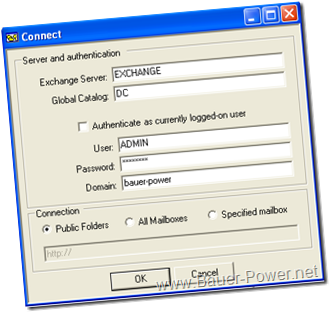
Once connected I right clicked on Public Folders and selected “Show Deleted Subfolders”
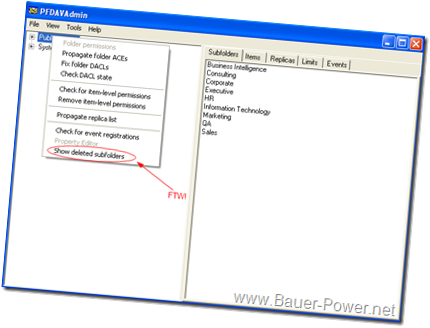
When I did that, all of the subfolders that I accidentally deleted showed up in red. I right clicked on each one and selected RECOVER. After I did that, all public folders were restored!
Have you gone through the same thing? What tool(s) did you use to recover? Are you going through this now? Hit me up in the comments.
-
Global Rout Accelerates
Global markets are dropping further post-lunchtime in Hong Kong. The Nikkei is now down over 3.2%, the Hang Seng has lost nearly 3.5%, and London’s FTSE has shed almost 3.2%.
Commodities are falling, with oil and gold down 3.9% and 1.5% respectively. And yes, the dollar is currently surging after losing ground earlier this week.
Tokyo:
Hong Kong:
London:
Dollar surging.
Oil, gold, and silver down.
Join the conversation about this story »
See Also:
-
Natural Beauty Products from Native Australian Plants

LillyPilly makes natural beauty products from Australian native plants.For thousands of years the indigenous people of Australia have known about the skin revitalising properties of native Australian plants extracts – purifying lilly pilly, invigorating eucalyptus, soothing tea tree and rejuvenating Kakadu plum…LillyPilly is Australian owned and made and has been uniquely formulated in the harsh Australian climate to counter the effects of environmental pollutants and a busy lifestyle which can leave skin dull, tired and damaged.
We’ve tried out three LillyPilly products:
Eucalyptus with Nerolina Body Wash: At $17.99, this is a big tube that will last a long time.
Wake up your senses with Eucalyptus with Nerolina Body Wash. With its subtle menthol scent blended with the lavender and lilac undertones of Nerolina oil Eucalyptus Body Wash is the perfect tonic to decongest sluggish skin leaving it silky smooth and never dry.
Kakadu Plum Hand & Body Creme: At $9.99 a tube, you will love the scent of this lotion.Rejuvenate your skin with Kakadu Plum Hand & Body Crème. Fruit from the Kakadu Plum tree is the richest natural source of vitamin C in the world – an important antioxidant which helps prevent the breakdown of collagen in the skin. Blended with the naturally potent antioxidants and exfoliating fruit acids found in Lilly Pilly extract. Enriched with vitamins A & E, omega oils and Aloe Vera.
Tea Tree with Rosewood Hand & Body Creme: At $9.99 a tube, you will love the way this lotion hydrates your skin.
Soothe, calm and replenish sensitive and stressed skin with the healing properties of Tea Tree oil renowned for its antiseptic qualities. Enriched with vitamins A & E, omega oils and Aloe Vera.
Disclosure: I was sent the above described products in order to write this review. This is an authentic review and no prior assurances were given as to whether the review would be positive or negative.
-
Nicolas Cage bought nine (nine!) Rolls-Royce Phantoms… and an island

Nicolas Cage is suing his former manager Samuel Levin for $20 million for gross negligence of his finances and for lining his own pockets at the actor’s expense. Cage is moving to sue the former manager due to the actor’s sudden cash crunch, which includes a boat load of debt and over $7 million in back taxes. But Levin has a story of his own to tell, and it involves excess on a scale that we can hardly imagine. According to Levin, the actor purchased a scad of really expensive stuff. Like a $7.5 million island in the Bahamas, 15 mansions, four yachts, a Gulfstream, 47 pieces of art and even nine Rolls-Royce Phantoms.
Now we can understand owning nine exotics, or even collecting hundreds of rare cars and storing them at the Burbank airport, but nine Phantoms? At least Reilly purchased a Ferrari with his National Treasure money. We’re guessing Cage likes to have a Phantom just about everywhere he is, and since he owns an island and a bunch of mansions he probably has one parked in nine different garages. Regardless, we’re having a hard time feeling too sorry for Cage, even if Levin is exaggerating. The actor makes about $20 million a film, so while all that excess sounds like a ton of money, we’re guessing the actor can pay his tab with a couple more movie deals. Gone in 60 seconds part two, anyone?
[Source: The Sun]
Nicolas Cage bought nine (nine!) Rolls-Royce Phantoms… and an island originally appeared on Autoblog on Fri, 27 Nov 2009 01:02:00 EST. Please see our terms for use of feeds.
Read | Permalink | Email this | Comments
-
Environmental Certifications Bring Commercial Advantages
Environmental Certifications Bring Commercial Advantages
Current economic difficulties have led to a slowdown of new commercial development, and the focus for many owners and developers now is on retrofitting existing buildings to meet modern standards of sustainability. The twin grails are the Leadership in Energy and Environmental Design (LEED) certification from the U.S. Green Building Council, and Energy Star certification from the U.S. government &mdash and achieving them is usually feasible and often profitable. In fact, many observers say &ldquo it’s LEED or bleed,&rdquo when it comes to attracting tenants and investors.Fortunately, it’s getting easier to meet LEED and Energy Star standards, and the result is usually a boost to a building’s bottom line.
&ldquo Look for the small changes you can make, then go deeper,&rdquo says Dave Pogue, San Jose, Calif.-based national director of sustainability for CB Richard Ellis, the world’s largest real estate services company. &ldquo We’re trying to implement a wide range of programs across a portfolio of more than one billion square feet of property we manage in the Americas. Our first job was to understand where our buildings were in terms of sustainability. To do that we worked with the Environmental Protection Agency and embraced their Energy Star program. Second, we’ve trained more than 2,000 CBRE employees on energy efficiency and sustainability.&rdquo
Perhaps most important to a green initiative is to get tenants on board, Mr. Pogue says, since they’ll often be obliged to change their behavior, and, for example, pay more attention to the conservation of energy.
&ldquo Our first phase was aspirational the next was operational and now it’s informational,&rdquo he adds. &ldquo We’re developing an environmental dashboard that will tell you how your building is performing on various standards of sustainability, including aspects of LEED certification. We plan on introducing this tool by the end of this year.&rdquo
Tenants may be willing to pay a higher rent for a more sustainable building, Mr. Pogue says, and in any event, according to California law, many buildings in that state will soon have to publicly reveal their levels of energy use &mdash a regulation that other states are likely to adopt.
&ldquo This is a growing movement,&rdquo he concludes. &ldquo If you don’t improve your buildings to a good standard, there will be a market penalty. We’re already at a point where sustainability gives you an edge.&rdquo
Jack Rizzo, chief sustainability officer and head of global construction at ProLogis, an industrial REIT that owns logistics centers world-wide, has devised a global standard that incorporates LEED and various European and Asian equivalents, such as the U.K.’s BRE Environmental Assessment Method. It’s relatively easy to gain certification from any individual agency, and combining them to achieve a common standard isn’t much extra work, he says.
&ldquo Our tenants lease our buildings on a triple-net basis [where the tenant or lessee agrees to pay all real estate taxes, building insurance and maintenance], so they pay the utilities,&rdquo says Mr. Rizzo, &ldquo so our energy-saving design elements keep their costs down. Our construction costs have risen maybe 1% or 1.5%, since we’ve started using more recycled product, and costs of development can be slightly higher if you use the greener standards, but our buildings’ cost of operations range from 25% to 40% lower as a result.&rdquo
&ldquo If you don’t improve your buildings to a good standard, there will be a market penalty.
We’re already at a point where sustainability gives you an edge.&rdquo
Some critics claim that buildings that conform to LEED and other standards don’t actually perform any better than less-green buildings. But Jack Buettell, global sustainability manager for Hines, a Houston-based property management, investment and development company, says that the practical effectiveness of those standards depends largely on the expertise of the building’s operators &mdash and to a lesser extent, tenants.&ldquo Operating performance is as important as design and construction performance,&rdquo he says. &ldquo It comes down to level of knowledge and experience. We maintain an ongoing list of best practices, tools and tips that we get from our managers all over the world.&rdquo
Several companies have been set up to provide sustainability assistance to real estate developers and investors. One of these is Falls Church, Va.-based JDM Associates, where John Klein, the company’s principal, advises owners to &ldquo look for the low-hanging fruit.&rdquo
&ldquo Most important is to benchmark your past and current energy consumption, water use, and your contribution to the waste stream,&rdquo he says. &ldquo Once we understand your consumption, we’ll benchmark your operational procedures to find out how efficiently you’re operating your facilities. Then we’ll work together to find the low and no-cost opportunities to increase efficiency.&rdquo
&ldquo We train and educate property management teams and end-users we also drill down into technologies to ensure that you have the most cost effective and energy efficient lighting and HVAC and are operating them in the most efficient way. It’s not expensive to green your building. In fact, it adds green to your bottom line, through greater net operating income and enhanced value.&rdquo
Mr. Klein claims that an older building with older technology that’s well run can outperform a new building with the latest technology, if it’s poorly run. Well-trained employees who are committed to efficient operations and management are crucial.
Having utility companies on your side is a must, too, says Ken Floyd, vice president of customer solutions at Xcel Energy, a Minneapolis-based supplier of electrical power and natural gas.&ldquo Every watt we generate should be the most cost-effective, when factoring in the cost of carbon or environmental impact,&rdquo he says. &ldquo But we need to find ways to reduce consumption so as not to generate a watt. If developers approach us early in the process, in the predesign, we’ll embed our experts in the process and help them with the building’s design, the day-lighting, the location and design of mechanicals. In many cases we can help with the LEED certification process.
&ldquo One big problem is education and awareness. Getting building tenants and owners to take responsibility for managing their environmental footprint is the biggest challenge.&rdquo
-
Historic Building Goes For Gold
Historic Building Goes For Gold
The Empire State Building &mdash certainly the most iconic building in New York City, and arguably in the whole U.S. &mdash is undergoing a sustainability makeover that its owners hope will qualify it for Gold LEED-EB (LEED for Existing Buildings) certification by 2013. Dan Probst, chairman of energy and sustainability services at Chicago-based Jones Lang LaSalle, the large global real estate services firm, which is managing the project, says the nearly 80-year-old building has been fairly easy to work on, and greening it has not involved many complicated or high-tech initiatives.
&ldquo It came down to a handful of tasks,&rdquo he says. &ldquo One was upgrading the building’s 6,500 windows: adding a suspended coated film and a gas fill between the double panes for better installation. We’re adding thermal barriers behind existing radiators, since so much heat had been leaking out of the building. We’re doing lighting retrofits that will allow more use of sunlight, with controls that will allow dimming when lights aren’t in use.
&ldquo You’d be surprised how much better an old building can be made to perform. This is important because there’s demand [from investors, government agencies, lenders, stockholders] for more transparency &mdash more reporting and comparison &mdash in energy use and environmental impact.&rdquo
-
Standards Ease Transition to Sustainable Living
Standards Ease Transition to Sustainable Living
Does a home have to be expensive or unusual-looking to live up to current sustainability standards? Not at all, according to two top authorities on green building: the U.S. Green Building Council (USGBC) and the National Association of Home Builders (NAHB), both based in Washington. A green home is surprisingly easy to achieve, both organizations insist, as long as you approach the project systematically and make the most of its environmentally friendly features. Also, they stress, going green shouldn’t be regarded as a contest.&ldquo The fact that I have a darker green [it reaches a higher standard of greenness] home than my neighbor doesn’t mean we shouldn’t both get what we want,&rdquo says Nate Kredich, senior vice president of residential market development in USGBC’s residential group, speaking from his San Diego office. &ldquo To most people, the priority is energy efficiency. For others, it might be indoor air quality, or not having to drive. Here in San Diego, water efficiency is important. Our set of [green building] standards, LEED [Leadership in Energy and Environmental Design], is flexible, and you can reach certification in countless ways. Greenhomeguide.com is our consumer interface site, and it tells you all about how to make your home greener.&rdquo
The LEED Green Building Rating System was developed in the late 1990s by the USGBC and is a set of standards for sustainable construction. There’s also LEED-EB for existing buildings, and LEED for Homes. There are four LEED certifications: in rising order of prestige, Certified, Silver, Gold and Platinum. These are based on a points system by which a builder or owner meets certain prerequisites and gains additional credits through various sustainability efforts.
LEED for Homes is the most rigorous and comprehensive certification currently available, Mr. Kredich says, and it will soon become invaluable when it comes to selling or re-selling a home.
&ldquo LEED for Homes tells you a home is green because someone not attached to the project says it’s green,&rdquo he explains. &ldquo The multiple listings system is increasingly reporting the green nature of the homes advertised, and green homes will gain in value, especially if they cost thousands less per year to operate than non-green homes.&rdquo
The USGBC also offers Regreen (regreenprogram.org), a resource that provides guidelines and case studies to help remodel a kitchen or bathroom, or a complete energy retrofit.
The principles of building green residential product are much the same, whether you’re remodeling, retrofitting, building a single-family house, or developing an apartment building, Mr. Kredich adds.
&ldquo Just pay attention to energy and water efficiency, the indoor air quality, and the materials you use,&rdquo he advises.
The key to building green homes, says Kevin Morrow, Washington-based senior program manager for green buildings projects at the NAHB, is staying abreast of existing technologies, but not so far ahead of code compliance that you’re using practices or materials that are not yet proven. Moreover, how a building performs will depend largely on whether the occupant knows how to make the most of its green features.&ldquo What’s green in one place might not be green in another because of differences in climate, geography and population,&rdquo he says. &ldquo We’ve developed a set of standards approved by the American National Standards Institute (ANSI): the National Green Building Standard, published last January. It uses a point accrual process that requires users to achieve baseline scores in six areas [lot and site development, resource efficiency, water, energy efficiency, indoor environmental quality and operation/maintenance], plus additional points in areas of the user’s choosing. The intrinsic flexibility allows for the design and construction of homes that are appropriately green for where they sit, whether in Hawaii or Maine. The standard is applicable to single homes or multifamily constructions, renovations, remodels and land development.
&ldquo To maintain ANSI status the standard has to be reviewed and reopened to public comment every five years.&rdquo
New York-based New World Home, a design-build company, provides a house type called New Old Green Modular (NOGM) that consists of modular homes in traditional architectural designs, incorporating state-of-the-art green practices. Co-founders Tyler Schmetterer and Mark Jupiter say their objective is to create a home that saves between 50% and 70% on energy consumption without renewable energy sources. Creating these homes in a factory, they add, allows faster and more economical production.&ldquo You can get a Platinum LEED-level home that doesn’t look like a rocket ship or cost $500 per square foot,&rdquo Mr. Schmetterer says. &ldquo Modular homes of the past have been uninspired cookie-cutter boxes. We take historically inspired designs and add rigorous green specifications throughout. When a prospective partner or homeowner sets foot in one of our houses, the misconceptions about modular are shattered.&rdquo
&ldquo Our turnaround time is so quick that we don’t have to build ahead of the market,&rdquo adds Mr. Jupiter. &ldquo Our only speculative project is the first model home in a development, and that’s our sales center. We build subsequent houses on demand, and deliver them in 60 to 90 days at a price of $150 to $200 per square foot.&rdquo
But having a green home is only part of the equation, says Mr. Jupiter. Knowing how to live in it is key to a green operation.
&ldquo That involves an educational process: knowing how to control room sensors, changing filters on the HVAC, optimizing all the appliances and energy settings,&rdquo he says. &ldquo None of this is rocket science it’s just a matter of education. People come out of our model centers knowing the difference between not green, green and Platinum LEED.&rdquoHaving a green home is only part of the equation. Knowing how to live in it is key to a green operation.
S. Douglas &ldquo Doug&rdquo Walker, senior vice president of UDR, an apartment REIT, a publicly traded company that develops, buys and owns real estate, based in Highlands Ranch, Colo., says his company decided to focus on green development in the expectation that shareholders and lenders will soon require LEED certification and/or other bona fides, such as the Energy Star rating bestowed by a U.S. government agency.&ldquo We’re invested in 164 communities, comprising 45,249 residential units, in 10 states plus Washington D.C,&rdquo he says. &ldquo In regards to our business model, we develop properties from the ground up, redevelop existing properties, and acquire and sell apartment communities. We’ve taken a proactive approach when it comes to incorporating green technology into our portfolio. Today, all our new development projects have applied for some level of LEED designation.
&ldquo If we choose to renovate an existing community to make it more energy efficient, we may empty the entire building, retrofit it from top to bottom and re-tenant it, or we might start by working on the common areas that directly reduce our operating expenses. It could be something as simple as adding motion sensors to control the lights, and programmable thermostats. We’re also testing LED lights, which have longer life and more efficient output. One drawback to green products is that prices are high due to short supply. Once manufacturing can match the demand prices are likely to go down and more people can benefit from the products.
-
The Flu Fighters in Your Food
The Flu Fighters in Your Food
The Wall Street Journal – Tuesday, November 24, 2009
While many people are still waiting for swine-flu vaccine to become available in their area, there is a lot they can do in their own kitchens to help fight off disease and build a strong immune system.
Scientists in the growing field of nutritional immunology are unveiling new evidence of the complex role that nutrition plays in fighting off infectious diseases like influenza. A diet rich in nutrients such as vitamin A, found in colorful fruits and vegetables, and zinc, found in seafood, nuts and whole grains, can provide the critical fuel the body needs to fight off disease, heal injuries, and survive illness when it does strike, experts say.
Scientists are still studying all the complex ways in which nutrients interact with the immune system. There is still much that they don’t know about minerals such as zinc, for instance, including how they are absorbed and all the roles they play in the body. But scientists do know that certain vitamins and minerals can improve the body’s ability to fight off infection: Studies in healthy elderly adults, for example, have shown an improved immune response to vaccination and fewer infections after receiving extra doses of vitamin E.
To create immune cells to fight off a specific infection, the body has to rapidly draw nutrients from the bloodstream, says Anuraj Shankar, a researcher at the Harvard School of Public Health. " If you don’t have an adequate intake of vitamins and minerals, you won’t be able to produce the number of immune cells you need, and the immune cells you do produce may be compromised," Dr. Shankar says. That makes it impossible to mount an effective response to infection, he says.
The benefits of good nutrition may have been recognized first by Hippocrates, the ancient Greek physician who declared " let food be thy medicine, and medicine be thy food." An 18th century naval surgeon’s discovery that citrus fruits could cure scurvy in sailors was later recognized as a vitamin C deficiency, and after the 1930s, when dairies began to fortify milk with vitamin D, the disease known as rickets was virtually eliminated in the U.S.
Researchers warn that malnourished people may be a breeding ground for more dangerous infectious diseases. Animal studies at the University of North Carolina show that in a host with poor nutrition, viruses mutate in the face of a weak immune response to become more powerful. And once those mutations occur, even well-nourished hosts are susceptible to the newly virulent virus. " A lot of people may think malnutrition on the other side of the world isn’t their problem," says Melinda A. Beck, a researcher at the University of North Carolina, Chapel Hill. But malnutrition " is a driving force in emerging infectious diseases that are spreading around the world," she says.
The human body doesn’t have to be starving to suffer from malnutrition. Studies show that obesity, in addition to its other health risks, may also make people more susceptible to infections like the flu. A diet heavy on processed and fast foods may be low in the vitamins and minerals important for health. And diets that are high in saturated fat appear to actually depress the body’s immune response, increasing the risk of infections.
Dr. Beck says studies of mice show that only 4% of lean animals infected with the flu virus die. That compares with a death rate of between 40% and 60% in obese mice infected with the virus. And after a small study showed that obese people vaccinated for the flu didn’t mount a strong immune response, the University of North Carolina is expanding its trials to compare vaccination response rates in lean and obese people.
When obese people fall ill, " their immune function may not be strong enough to mount an effective response," says Donald Hensrud, a Mayo Clinic specialist in preventive and internal medicine and editor-in-chief of " The Mayo Clinic Diet," a new book promoting weight loss through a healthy diet that allows unlimited quantities of fruits and vegetables.
Warning on Supplements
Dr. Hensrud and other experts caution against loading up on supplements to add vitamins and minerals to the diet. While a multivitamin is a good addition to any balanced diet, individual supplements and vitamin pills may not be as well absorbed by the body as nutrients in foods. Some supplements also can have toxic effects in too-high quantities. An excess of zinc, for example, can interfere with absorption of other nutrients, including iron and copper. And too much of the mineral selenium can cause nerve damage and has been linked recently to an increased risk of diabetes.
There is no single test to measure if your body has enough vitamins and minerals, and assays for individual nutrients are generally expensive and unreliable. Blood tests used to screen for blood-cell abnormalities can pick up changes that are linked to possible vitamin or mineral deficiencies, but they can’t necessarily identify the cause.
Scientists have long known that some vitamins, minerals and other nutrients can play a key role in the immune system by acting as antioxidants. These protect and repair cells from oxidative stress, the damage caused by molecules known as free radicals.But nutrients work in ways beyond acting as antioxidants, says Dr. Beck. For example, vitamin A can enhance the immune system " by stimulating specific proteins necessary for immune function by activating specific genes," she says. So, if vitamin A is deficient, then the immune cells that require vitamin A to function properly won’t work as efficiently. Animal studies show that a deficiency of vitamin B-6, which helps maintain the health of organs that make white blood cells, can decrease antibody production and suppress the immune response. And selenium in small amounts can help stimulate immune cells and may prevent the growth of some tumors.
Nutritional experts generally agree that the best way to get the right balance of nutrients is a balanced diet that includes plenty of fresh fruits and vegetables, lean proteins and dietary fiber. The federal Centers for Disease Control and Prevention’s www.fruitsandveggiesmatter.gov Web site offers a calculator to determine how many servings are ideal based on calorie needs for age, sex and activity level. Harvard’s Nutrition Source Web site includes a healthy eating pyramid based on the most up-to-date knowledge of nutrition requirements. And the National Institutes of Health’s Office of Dietary Supplements Web site (dietary-supplements.info.nih.gov) offers detailed information on the risks and benefits of supplements, along with tables that list food sources for each vitamin and mineral.
A survey by the CDC in 2007 showed that the majority of adults consume less than the government’s recommended five servings of fruits and vegetables daily. But quantity matters: A 2004 Harvard study of 110,000 men and women showed that people who averaged eight or more servings of fruit and vegetables daily were 30% less likely to have had a heart attack or stroke than those who had only 1.5 servings daily.
Nutrition experts say to boost immunity it is also important to avoid processed foods, and to minimize trans fats and unhealthy saturated fats from animal products and vegetable oils like palm and coconut. Instead, they say, people should eat foods rich in unsaturated fats such as olive oil.
Contradictory Advice
Some advice for a healthy diet can seem contradictory. For example, heart-healthy diets typically include unsaturated fats such as omega-3 fatty acids, which are found in fish such as salmon and trout and in flaxseed and walnuts. For people who don’t want those foods, nutritionists may recommend fish-oil supplements, which can be beneficial in suppressing chronic inflammation in the body, a condition that can lead to coronary artery disease and arthritis.
But those same anti-inflammatory properties of fish oil can also suppress the immune responses necessary to combat an acute viral infection. Studies at the University of North Carolina have shown that mice fed with fish oil have an impaired resistance to infections, including the flu. " If I suppress the immune response and get a viral infection, I’m worse off," says Dr. Beck, who is studying the links between fish oil and resistance to influenza.One nutrient hard to get in food is vitamin D. Even with the fortification of milk, orange juice and other food products, some experts have been sounding the alarm in recent years about wide deficiencies, especially in children. Tests are available for about $100 to determine vitamin D levels, but their accuracy is in question. And just how much vitamin D different people need is the subject of considerable debate. The federal government’s current recommendations range from 200 international units daily for children to 600 IUs for adults, with a safe upper limit of 2,000 IUs daily. The American Academy of Pediatrics recommends 400 IUs for children, and vitamin D experts at Oregon State University and elsewhere recommend 2,000 IUs daily for all adults. The Institute of Medicine, a government advisory group, is expected next year to update the recommendations.
Adrian Gombart, a researcher at Oregon State University’s Linus Pauling Institute, says vitamin D, in addition to building strong bones and fighting off a variety of diseases, appears to activate proteins that help the body fight off infection. " Vitamin D won’t prevent you from getting the flu, but it might allow you to mount an optimal immune response, suffer less of the effects, and resolve the infection more quickly," says Dr. Gombart, who is researching the nutrient’s role in stimulating immune cells.

-
FDA Plavix Warning
FDA Plavix Warning
The Wall Street Journal – November 18, 2009
The Food and Drug Administration said Tuesday doctors should avoid using popular heartburn drugs such as Prilosec in combination with the anticlotting medicine Plavix, after studies showed the combination may blunt the effect of Plavix and increase patients’ risk of heart attacks.
The makers of Plavix, Bristol-Myers Squibb Co. and Sanofi-Aventis SA, updated Plavix’s label to warn against the combination use.
Some heartburn drugs may blunt Plavix’s effectiveness and lift the risk of heart attack.
Plavix, which has annual world-wide sales of more than $8 billion, is commonly used to prevent clots in patients with artery-opening stents or those who have had a heart attack or stroke.About half of patients taking Plavix also take Nexium, Prilosec or a similar medicine to prevent stomach bleeding and ulcers, frequent side effects of Plavix. Nexium is made by AstraZeneca PLC, while Procter and Gamble Co. sells an over-the-counter version of Prilosec called Prilosec OTC.
A spokesman for AstraZeneca said the company is examining the FDA warning and " believes that research needs to continue into the concomitant use of these types of medicines."
A Procter and Gamble spokeswoman said the company is evaluating whether a label change on Prilosec OTC is necessary. Sanofi said it updated its label after conducting two studies with Bristol-Myers that underscored the potential interactions among the drugs.
The FDA’s Mary Ross Southworth said the data submitted by Sanofi at the FDA’s request show drugs like Prilosec inhibit a specific enzyme that activates Plavix. The FDA said it doesn’t appear to help patients to take the drugs 12 hours apart.
The Plavix label lists a total of 11 drugs that can inhibit the enzyme, including the heartburn drug Tagamet and the antidepressant Prozac.
The FDA said there is no evidence that certain other heartburn drugs such as Zantac and Pepcid, which work differently from Nexium, interfere with Plavix.
The FDA and Sanofi said both Prilosec and Plavix can provide significant benefits to patients, and advised people taking the drugs to consult their doctor.
The official warning follows a similar action in May by a cardiology group, the Society for Cardiovascular Angiography and Interventions. The society acted in response to a study by the pharmacy-benefits company Medco Health Solutions Inc. showing four common heartburn drugs boosted the risk of heart attack and stroke by 50% in cardiac patients taking Plavix.
Elliott Antman, professor at Harvard Medical School, co-authored a study published in the Lancet in September that didn’t find increased risk from the drug combination. He said the FDA has " taken a very conservative position in issuing this alert, and that may be appropriate."
The American Heart Association was set to announce new recommendations on the use of certain heartburn drugs Wednesday.
-
Global Warming With the Lid Off
Global Warming With the Lid Off
The Wall Street Journal – Tuesday, November 24, 2009
‘The two MMs have been after the CRU station data for years. If they ever hear there is a Freedom of Information Act now in the U.K., I think I’ll delete the file rather than send to anyone. . . . We also have a data protection act, which I will hide behind."
So apparently wrote Phil Jones, director of the University of East Anglia’s Climate Research Unit (CRU) and one of the world’s leading climate scientists, in a 2005 email to " Mike." Judging by the email thread, this refers to Michael Mann, director of the Pennsylvania State University’s Earth System Science Center. We found this nugget among the more than 3,000 emails and documents released last week after CRU’s servers were hacked and messages among some of the world’s most influential climatologists were published on the Internet.
The " two MMs" are almost certainly Stephen McIntyre and Ross McKitrick, two Canadians who have devoted years to seeking the raw data and codes used in climate graphs and models, then fact-checking the published conclusions&mdash a painstaking task that strikes us as a public and scientific service. Mr. Jones did not return requests for comment and the university said it could not confirm that all the emails were authentic, though it acknowledged its servers were hacked.
Yet even a partial review of the emails is highly illuminating. In them, scientists appear to urge each other to present a " unified" view on the theory of man-made climate change while discussing the importance of the " common cause" to advise each other on how to smooth over data so as not to compromise the favored hypothesis to discuss ways to keep opposing views out of leading journals and to give tips on how to " hide the decline" of temperature in certain inconvenient data.
A satellite image of Tropical Storm Ida. Some climate researchers claim that an increase in tropical storms is proof of anthropogenic climate change.
Some of those mentioned in the emails have responded to our requests for comment by saying they must first chat with their lawyers. Others have offered legal threats and personal invective. Still others have said nothing at all. Those who have responded have insisted that the emails reveal nothing more than trivial data discrepancies and procedural debates.Yet all of these nonresponses manage to underscore what may be the most revealing truth: That these scientists feel the public doesn’t have a right to know the basis for their climate-change predictions, even as their governments prepare staggeringly expensive legislation in response to them.
Consider the following note that appears to have been sent by Mr. Jones to Mr. Mann in May 2008: " Mike, Can you delete any emails you may have had with Keith re AR4? Keith will do likewise. . . . Can you also email Gene and get him to do the same?" AR4 is shorthand for the U.N.’s Intergovernmental Panel of Climate Change’s (IPCC) Fourth Assessment Report, presented in 2007 as the consensus view on how bad man-made climate change has supposedly become.
Read a Selection of the Emails
Climate Science and Candor
In another email that seems to have been sent in September 2007 to Eugene Wahl of the National Oceanic and Atmospheric Administration’s Paleoclimatology Program and to Caspar Ammann of the National Center for Atmospheric Research’s Climate and Global Dynamics Division, Mr. Jones writes: " [T]ry and change the Received date! Don’t give those skeptics something to amuse themselves with."When deleting, doctoring or withholding information didn’t work, Mr. Jones suggested an alternative in an August 2008 email to Gavin Schmidt of NASA’s Goddard Institute for Space Studies, copied to Mr. Mann. " The FOI [Freedom of Information] line we’re all using is this," he wrote. " IPCC is exempt from any countries FOI&mdash the skeptics have been told this. Even though we . . . possibly hold relevant info the IPCC is not part of our remit (mission statement, aims etc) therefore we don’t have an obligation to pass it on."
It also seems Mr. Mann and his friends weren’t averse to blacklisting scientists who disputed some of their contentions, or journals that published their work. " I think we have to stop considering ‘Climate Research’ as a legitimate peer-reviewed journal," goes one email, apparently written by Mr. Mann to several recipients in March 2003. " Perhaps we should encourage our colleagues in the climate research community to no longer submit to, or cite papers in, this journal."
Mr. Mann’s main beef was that the journal had published several articles challenging aspects of the anthropogenic theory of global warming.
For the record, when we’ve asked Mr. Mann in the past about the charge that he and his colleagues suppress opposing views, he has said he " won’t dignify that question with a response." Regarding our most recent queries about the hacked emails, he says he " did not manipulate any data in any conceivable way," but he otherwise refuses to answer specific questions. For the record, too, our purpose isn’t to gainsay the probity of Mr. Mann’s work, much less his right to remain silent.
However, we do now have hundreds of emails that give every appearance of testifying to concerted and coordinated efforts by leading climatologists to fit the data to their conclusions while attempting to silence and discredit their critics. In the department of inconvenient truths, this one surely deserves a closer look by the media, the U.S. Congress and other investigative bodies.
-
E-Mails of Climate Researchers Buttress Case of Warming Fraud
E-Mails of Climate Researchers Buttress Case of Warming Fraud
Investor’s Business Daily – November 23, 2009
Junk Science: Hacked e-mails from Britain’s Climate Research Unit are only the latest evidence of climate fraud. Just ask NASA’s James Hansen about the faking of climate data or EPA employees about the suppression of climate fact.
For years, noted scientists and other global warming skeptics have been accused of being on the take, their research tainted and funded by grants from Big Oil and other fossil-fuel interests.
Now, it turns out, it’s the warm-mongers who are fudging the numbers and concealing the inconvenient truth.
We don’t know who " Deep Throat" is. But according to an interview in Investigate Magazine’s TGIF edition with Philip Jones, director of the Hadley Climate Research Unit at Britain’s East Anglia University, the incriminating e-mails documenting collusion and fraud among top global warming scientists, including a few from Jones himself, are genuine.
In one e-mail sent to Michael Mann, director of Penn State University’s Earth System Science Center, Raymond Bradley, a climatologist at the University of Massachusetts, and Malcolm Hughes, a professor of dendrochronology at the University of Arizona’s Laboratory for Tree-Ring Research, Jones speaks of the " trick" of filling in gaps of data in order to hide evidence of temperature decline:
" I’ve just completed Mike’s Nature trick of adding in the real temps to each series for the last 20 years (i.e., from 1981 onwards) and from 1961 for Keith’s to hide the decline." Hide the decline? " Keith" is Keith Briffa of the Climate Research Unit, also involved in the bogus manipulation of data.
An e-mail from scientist Mick Kelly to Jones also speaks of manipulating data to hide the fact that Earth is actually cooling: " I’ll maybe cut the last few points off the filtered curve before I give the talk again, as that’s trending down as a result of the end effects and the recent coldish years."
In another e-mail to Mann from Kevin Trenberth of the National Center for Atmospheric Research, copied to Dr. James Hansen of NASA, Trenberth says: " Well, I have my own article on where the heck is global warming. We are asking that here in Boulder where we have broken records the past two days for the coldest days on record. We had 4 inches of snow."
Trenberth also says: " The fact is that we can’t account for the lack of warming at the moment, and it is a travesty that we can’t." He goes on to say that " the data is surely wrong. Our observing system is inadequate."
Well, that much is true. We have reported on information obtained by Anthony Watts of WattsUpWithThat on the inaccuracy of temperature-monitoring stations around the country and the screwy places these scientific stations are located. Daily temperature data are gathered by NOAA’s National Climatic Data Center and the 1,221 or so weather observation stations it monitors around the country.
Watts and a few volunteers decided to check a few of them out. They found one station in Forest Grove, Ore., that stands just 10 feet from an air-conditioning exhaust vent. Another station in Roseburg, Ore., is on a rooftop near an AC unit. In Tahoe, Calif., one is near a drum where trash is burned.
When bad numbers aren’t enough to show global warming, it’s okay to just make them up. Hansen, the NASA scientist who began the climate scare, was himself caught fudging the numbers when he declared October 2008 the warmest October on record.
This despite the National Oceanic and Atmospheric Administration’s registering of 63 local snowfall records and 115 lowest-ever temperatures for the month, and ranking it the 70th-warmest October in 114 years.
So how did Hansen claim it was the warmest October ever? As Christopher Booker wrote in the U.K.’s Telegraph: " The reason for the freak figures was that scores of temperature records from Russia and elsewhere were not based on October readings at all. Figures from the previous month had simply been carried over and repeated two months running."
As it turns out, Mann is the creator of the discredited " hockey stick" graph used in reports from the U.N.’s Intergovernmental Panel on Climate Change.
Bradley and Hughes were also involved in the famous graph, which purports to show a sudden and sharp spike in global temperatures the day man first dreamed of taking an SUV to the mall.
Canadian researchers and others have thoroughly debunked the hockey stick, finding serious problems with the study, including calculation errors, data used twice and a faulty computer program that produced a hockey stick out of whatever data were fed into it.
Their study also totally ignored major events such as the widely recognized Medieval Warm Period (about A.D. 800 to 1400) and the Little Ice Age (A.D. 1600 to 1850).
The warming debate was never over, only censored. We have noted how the Environmental Protection Agency has engaged in an ongoing cover-up of its own analyses of climate change and discouraged public dissent.
EPA lawyers Laurie Williams and Alan Zabel produced a video in which they said cap-and-trade is a " Big Lie" and carbon offsets are a " Big Rip-off." At the EPA’s insistence, Zabel and Williams took down the video from their Web site, but not before it was copied and widely circulated.
Alan Carlin, senior research analyst at the EPA’s National Center for Environmental Economics, dared to say, in essence, that Emperor Al Gore and his toadies at EPA were wearing no clothes.
After examining numerous global warming studies, Carlin, who holds a doctorate in economics with an undergraduate degree in physics, said his research showed that " available observable data … invalidate the hypothesis" that humans cause dangerous global warming.
Timothy Ball, a former climatology professor at the University of Winnipeg who has received death threats for citing how Earth’s history doesn’t quite jibe with current prophecies of doom, says: " CO2 never was a problem, and all the machinations and deceptions exposed by these files prove that it was the greatest deception in history, but nobody is laughing."
Ball says he has " watched climate science hijacked and corrupted by this small group of scientists." " Surely," he says, " this is the death knell for the CRU, the IPCC, Kyoto and Copenhagen and the carbon credits shell game."
These inconvenient truths may be just the tip of the iceberg.
-
Custom Compact Zoom Lenses
Drawing upon the knowledge gained from its unique Model 207 motorised miniature zoom lens – Resolve Optics Ltd. is able to offer instrument manufacturers and systems integrators development and supply of custom zoom lenses that uniquely combine compactness with no compromise performance.
To fulfill the potential of technological advances in many industries the need for compact, high performance zoom lenses which meet the exact needs of customers has risen dramatically.
Measuring only 50 x 34 x 31 mm the Model 207 motorised miniature zoom lens was designed for use with single chip 1/2- and 1/3-inch CCTV cameras. The Model 207 can focus on an object at infinity right down to an object positioned just 35 mm in front of the lens. At the same time, and at any object distance, the image stays in focus throughout the zoom range. The use of the lens at such close object distances opens the door to a range of macro applications because it allows an object to be shown at a very enlarged size on a TV monitor. High resolution focus tracking of images, macro performance and excellent bore sight accuracy has enabled the Resolve Optics type 207 miniature zoom lens range to offer significantly improved performance over most zoom lenses on the market irrespective of their size.
Over the last 20 years – Resolve Optics Ltd. has established a strong international reputation for its ability to reliably design and supply OEM quantities of innovative custom lens and lens systems that generate high quality images from even the most demanding applications. Drawing upon an experienced team of optical designers, Resolve Optics Ltd. has developed the rare capability to produce small quantities of high performance, mounted lenses with the look, feel and quality equivalent to the best professional photographic lenses.
For further information or to discuss how a custom compact zoom lens can get help you get the best results from your application please contact Resolve Optics Ltd. on telephone +44-1494-777100 or email [email protected]
-
Pipe chamfering machine
Chamfering machine PB 80
The PB 80 is the ideal partner for automatic and manual bar loaders. The PB 80 offers an economical solution for bar end preparation. The PB 80 can be used as a chamfering machine, a centering machine and a turning machine.
The mission of the LNS Group is to imagine, design and provide solutions, accessories and services automating manufacturing worldwide. In order to achieve this the Group strives to be the global leading provider of 1 stop solutions for the machine tool industry. To succeed the Group is commited to providing the highest innovation of quality products and services with a customer focused culture that demands continuous improvement in all that is done.
This know-how is illustrated, in particular in bar feeding systems, cutting fluid management systems and the chip evacuation systems. From the start to the finish of the production cycle, the LNS Group optimizes the material flow.
The LNS Group with over 700 employees distributes its products throughout the world. -
Sony Black Friday 2009 Master Deal List

Black Friday is the Friday after Thanksgiving in the United States, which is the beginning of the traditional Christmas shopping season. Black Friday is not an official holiday, but many employees have the day off (with the exceptions of those employed in retailing, health care, and banking), which increases the number of potential shoppers. Retailers often decorate for the Christmas and holiday season weeks beforehand. Many retailers open extremely early, with most of the retailers typically opening at 5AM or even earlier. However, the whole experience has become rather intimidating lately, with an enormous amount of deals out there that often leave the consumer bewildered. So, that’s why we condensed all Sony Electronics products (including PSP, PS2, and PS3 games) that have special Black Friday prices in one master list for your convenience. Unfortunately there aren’t any links for the deals, but a simple Google search of the store/product in question should help you on your way (if applicable). Enjoy.
The Sony Black Friday 2009 Master Deal List is also available to view at Google Docs.