Blog

  • Woeful state revenue forecast worries local colleges

    Aired Nov. 19, 2009 6:34 PM
    By KNDU TV
    Play Video

    PASCO, Wash.– Class is in session at the auto body program at Columbia Basin College. But come next spring, the program is no more– cut because the college is coping with smaller budgets, leaving teachers without their students.

    “It’s gonna be hard for me personally, this is my 28th year being here,” says assistant professor Rhody Hayes. “It’s nice to be able to walk into any shop in the Tri City area and see these faces that were young at one time and now are a little older now.”

    The program was cut even before today’s low state revenue forecast. Now the college says they need to trim an extra million dollars next year, meaning more cuts, more layoffs and more headaches.

    “It is frustrating to us because the demand for community college education skyrockets in times of economic crisis,” says CBC spokesperson, Frank Murray. “So we like to say don’t starve the solution.”

    And it’s also a problem for WSU Tri Cities, already operating with a budget around three quarters of what they say they need. More belt tightening is possible, which could mean they have to turn students away.

    “It may mean larger classes it may mean cancellation of some classes,” says vice Chancellor of Academic Affairs at WSU Tri-Cities, Dick Pratt. “It may mean some students can’t be accepted because we just don’t have the budget to actually teach them.”

    But for now the cuts are leaving CBC without valuable programs, and Rhody Hayes might be out of a job.

    “Hopefully I’ll be able to keep here but with another budget cut of a million dollars it may not be,” Hayes says.

    Hayes has been trying to get donations to keep the auto body program alive, but he needs to raise 75 thousand dollars. Both CBC and WSU Tri Cities will finalize the cuts they may need to make sometime in the new year.

  • Tax hikes likely to patch state budget deficit

    Published Nov. 20, 2009
    By The Associated Press and the Tri-City Herald Staff

    OLYMPIA — Tax increases probably can’t be avoided as the state tries to patch a budget deficit that’s ballooned another $760 million to about $2.6 billion, top Democratic lawmakers said Thursday.

    Leading options include closing tax loopholes and raising “sin” taxes, typically levied on indulgences like tobacco and alcohol. Broad-based tax increases, such as larger levies on sales and business revenue, probably are a last resort because of the fragile economic recovery, Democrats said.

    Further spending cuts also are on the table, even though the Legislature already whacked billions from state programs earlier this year to help match recession-hammered revenue collections.

    “There’s no way you get to $2.6 billion without looking at absolutely everything that’s left,” said Senate Ways and Means Committee Vice Chairman Rodney Tom, D-Medina.

    Rep. Larry Haler, R-Richland, said because of limitations on what can be cut, he fears that higher education and K-12 programs not protected by the state constitution — such as levy equalization — will be on the chopping block.

    “I think attacking education is not the right manner,” Haler said. “I think there is overspending in the Department of Ecology. There are far too many employees there. We need to look at (the Department of Social and Human Services) and figure out what are the priorities of DSHS and what could be removed for at least a few years.”

    Because higher education lacks constitutional protections, Columbia Basin College President Rich Cummins said he’s reconvening a budget cutting committee and asking it to prepare scenarios for how the college could slash up to 6 percent of its costs.

    He won’t know just how much to cut until the Legislature adopts a supplemental budget. But what Cummins does know is that CBC will have to bear the brunt of cuts in the first six months of 2011 because of an edict from the state’s Office of Financial Management to hold the line on cuts in 2010 or the state would risk losing some of its federal stimulus funding.

    Some stimulus money came with the requirement that it had to be used to “supplement, not supplant” state budgets. That was to prevent states from using the federal money to balance their budgets rather than creating jobs, according to the federal Department of Education website.

    The effect on institutions like CBC is to create a bow wave in which deep cuts must be made in 2011 rather than spreading them out over the biennium, Cummins said.

    Thursday’s comments by majority Demo-crats — the clearest signal yet that tax increases are in Washington’s future — came after the state’s economic forecasters predicted further drop-offs in state tax collections.

    Through mid-2011, when the current state budget expires, the treasury will collect about $760 million less than previously expected. One major factor is a lack of consumer confidence, which depresses spending in Washington’s sales-driven revenue structure, chief economist Arun Raha said.

    “To me, it seems like the consumer’s mindset is stuck within a band of pessimism at recessionary levels,” he said.

    Consumers are likely to come off the sidelines and resume spending only when they feel more secure about the employment picture, which continues to look dark, Raha said.

    Hiring typically lags behind an economic recovery, and Washington’s 9.3 percent unemployment rate is expected to peak at about 9.8 percent next spring.

    Republican lawmakers said the fragile recovery and sour job market are precisely the reasons Democrats should avoid tax increases when the Legislature reconvenes in January.

    Instead, lawmakers should start work immediately on a package of reforms that fundamentally alter the way government services are delivered, seeking out every cent of savings before considering new revenue, said Rep. Ed Orcutt, R-Kalama.

    “We cannot afford to raise taxes on working families or on businesses that are already struggling,” Orcutt said. “We have to be careful that we don’t worry so much about our budget problem that we forget about the problems of everyday people out there.”

    One Republican broke from the pack by showing a bit of optimism in the face of the budget shortfall. Rep. Bruce Chandler, R-Granger, said the additional $760 million revenue drop represents only 0.004 percent of the state’s total revenues, and he remains confident Washington can emerge from the recession stronger.

    “We are in a better position than other states,” Chandler said. “Because of our diverse economy, our global trade and our talented work force, we have the opportunity to be a leading economy among Western states and into the next decade. Central Washington is an important part of the solution, with our large agriculture industry as well as our high-value manufacturing.”

    Gov. Chris Gregoire, a Democrat, will get the first crack at balancing the state’s budget when she releases a supplemental spending plan next month.

    By law, the governor must propose a budget that balances the books within existing revenues. But that probably won’t be the last word from Gregoire, who has said repeatedly that she’s considering tax increases to help bridge the gap.

    Raising taxes would require suspension of Initiative 960, which voters approved in 2007. It requires any tax increases to get either a public vote, or a nearly impossible two-thirds approval from the Legislature.

    The Legislature, however, may amend initiatives after two years, and majority Democrats have enough votes to do so.

    Additional news stories can be accessed online at the Tri-City Herald.

  • CBC Club Fundraiser

    PRESS RELEASE
    November 23, 2009                                                     Contact:  Dawn Alford, 542-5524

    Gift-wrapping & Bake Sale
    Nov. 27 & 28, Dec. 5 & 12
    Walmart (Pasco)

    Columbia Basin College Splitting Image Club will provide gift-wrapping services and host a bake sale during the holiday season.  The aspiring CBC Radiologic Technologists’ fundraising event will be held outside the Pasco Walmart on Nov. 27, 28, Dec. 5, and 12 from 8:30 a.m. to 5:30 p.m.

    Cost is $5 for three gifts or $5 minimum donation.  Hot chocolate and baked goods will also be available for purchase.

  • Wash. 2-year colleges report record enrollment

    Published Nov. 24, 2009
    The Associated Press- TCH Herald

    SEATTLE Washington’s community and technical colleges are reporting a second straight year of record enrollment.

    Fall enrollment is expected to top 146,000, with nearly 10 percent more students enrolling.

    Historically, community college enrollments go up during an economic downturn.

    The director of the State Board of Community and Technical Colleges says record enrollments are continuing for a second year because the effects of the recession are lingering.

    Enrollment in worker retraining programs is up dramatically this fall, but other categories including college transfer and adult literacy are also seeing more students.

    Additional news stories can be accessed online at the Tri-City Herald.

  • Longtime Tri-City actor Fred Dixon dies of cancer at 77

    Published Nov. 24, 2009
    By Dori O’Neal, Herald staff writer

    The Tri-City theater community is a little sadder, a little less flamboyant this week after losing one of its most beloved actors.

     
    Fred Dixon applauded for his role in CBC’s production of The Man Who Came to Dinner. Photo: Dawn Alford, CBC

    Fred Dixon, a retired Columbia Basin College drama teacher and iconic actor in local theater, died last week of cancer. He was 77.

    To say the Tri-City theater community is heartbroken would be an understatement.

    “Fortunately, I was able to visit with Fred a few days before his death,” said Dixon’s longtime friend and fellow actor Tom Powers. “I told him he helped me to grow as an actor and he told me we helped each other, which is so like him to say. We might have sparred in auditions for decades but we were always friends. I will miss him so much.”

    Powers and Dixon’s friendship goes back almost 50 years.

    “I first met Fred in 1962 when we were both auditioning for the lead in Richland Light Opera’s The Music Man,” Powers said. “Fred and I had a long and wonderful competitive friendship. He and I were many times trying out for the same role in the same production. Sometimes I’d get the lead, but I think he won out more than I did.”

    Julie Schroeder, a drama teacher for the Academy of Children’s Theatre, also was heartsick after learning of Dixon’s death.

    “Fred’s passing is so very sad,” Schroeder said. “He was like theater royalty in this community.”

    One of her favorite memories of Dixon was finding out he used to be on the soap opera Love of Life.

    “I thought that was so cool,” she said.

    But her fondest memory was Dixon teaching her the acting ropes at CBC years ago.

    “He was always the kindest, most encouraging teacher in that class, which is sometimes hard to find in a theater teacher,” Schroeder said. “He definitely influenced the way I work with others in any theater capacity. This community has suffered the loss of a true gentleman.”

    Dixon accomplished much during his 71 years as an actor.

    He first appeared onstage at age 6 when his mother, who ran a children’s theater troupe in Utah, cast him in one of her productions.

    But it wasn’t until his late teens when he saw Julie Harris in I Am A Camera that Dixon was hooked on acting.

    Dixon moved to New York City in 1958 and for the next few years performed in summer stock theaters on the East Coast. He and fellow budding actor Robert Redford struck up a friendship in those early years. He met Redford through his then wife, who Dixon had grown up with.

    Then in 1962, the Tri-Cities first lured him away from New York when he accepted a temporary job at CBC teaching drama and speech. He soon met his wife Pat and started a family, which led him to accept a full-time job at CBC.

    He was often described as a brilliant actor who had a quiet, winning way about him.

    He was simply “a joy to work with and an excellent performer,” said Ginny Quinley, CBC drama instructor.

    In 2007 he returned to New York City for a Broadway’s Biggest Fan competition. He was one of thousands of contestants who made the final cut and he took second place.

    The competition was judged by 20,000 screaming Broadway fans who showed up at the finals held at Times Square.

    “The audience voted by applause for the finalists,” Dixon told the Herald after the contest. “I came in second to a charming handicapped teenager from Cleveland who really got around well using a specially designed walker.”

    His gracious comment about losing the contest to a younger Broadway lover is typical of the man he was, say his peers.

    “Fred (was) the consummate professional, and the most gracious and loveliest person I’ve ever known,” Quinley said.

    Dixon is survived by his wife of 46 years, Pat, four grown daughters and numerous grandchildren.

    A celebration of his life starts at 11 a.m. Saturday at The Church of Jesus Christ of Latter-day Saints, 515 S. Union St., Kennewick.

    Additional news stories can be accessed online at the Tri-City Herald.

  • CBC observes Native American Heritage Month

    Published Nov. 24, 2009
    By the Tri-City Herald staff

    PASCO — As part of Native American Heritage month, the episode After the Mayflower from the PBS series We Shall Remain was screened Monday at Columbia Basin College in Pasco.

    The episode recounts the story of pilgrims settling in present-day Massachusetts and establishing a partnership with the Wampanoag Indians for trade and mutual protection and the subsequent deterioration of the partnership more than 50 years later.

    “It’s taking a look at the first Thanksgiving from different perspectives,” said David Arnold, a history professor at CBC.

    Arnold led a discussion about the events, saying the documentary series is not meant to demonize early settlers or romanticize American Indians, but to look at the moments when both cultures realized the need for each other’s help.

    As they forged a mutual understanding and tried to reach common ground, Arnold said those practices can apply to modern day conflicts.

    Additional news stories can be accessed online at the Tri-City Herald.
  • Black Friday: Asian Markets Walloped After Dubai World

    mount-fuji-japan.jpg

    Asian stock markets followed yesterday’s European stock markets and US futures markets straight down.

    Yesterday, European markets saw their biggest one-day losses since March. Dow Jones Industrial Average futures were off 187 points.Everyone is talking about the effects of Dubai World asking creditors for an extension on its debt.

    So here’s a quick whip around what happened when Asia woke up to its first day of trading following the Dubai World news.

    • Japan’s Nikkei 225: down 2.0%.
    • Australia’s S&P/ASX 200: down 2.5%.
    • New Zealand’s NZX-50: down 1.3%.
    • South Korea’s Kospi Composite: down 2.1%.

    More on the impact on financials, commodities and currencies here from the Wall Street Journal.

    Join the conversation about this story »

    See Also:

  • Leaked Red Dead Redemption trailer looks effing awesome

    Can’t wait for the Red Dead Redemption (PS3 and Xbox 360) trailer that Rockstar promised for next week? Well, here you go. Thanks to the world wide …

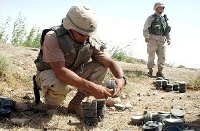
  • Landmines

    Throughout the 1990s, a coalition of numerous non-governmental organizations, the International Campaign to Ban Landmines (ICBL), campaigned successfully to prohibit the use of landmines.

    This helped to create the 1997 Convention on the Prohibition of the Use, Stockpiling, Production and Transfer of Anti-Personnel Mines and on their Destruction, also known as the Ottawa Treaty. (It also won the ICBL the 1997 Nobel Peace Prize for their efforts.) This treaty came into force in 1999.

    Although landmine use in the past decade has been significantly reduced, problems such as clearance and rehabilitation remain. Furthermore, some key countries continue to use landmines, or support the need for them, despite the problems they often cause for civilians long after conflicts have ended.

    The landmine page has been significantly updated to describe the above further.

    Read full article: Landmines

  • Company promotional press release an interesting foretaste of a second season of Canola data for Australia

    MEDIA RELEASE
    Friday 27 November 2009

    Roundup Ready® canola Delivers Higher Yields – Again
    Melbourne, Australia Friday 27 November 2009

    Monsanto has released replicated demonstration trial results from a trial site based at Wallendbeen, NSW. The trial ran during the 2009 canola season and was focused on comparing the leading Roundup Ready, triazine tolerant and Clearfield ® canola varieties.

    In the first of many replicated trial sites this year, the results again show Roundup Ready canola having a significant yield increase over triazine tolerant canola as initially demonstrated in 2008 – its first year of commercial release canola,
    “Our trials with Roundup Ready canola have shown an 11 percent yield increase above the triazine to which is consistent with our previous findings and with growers’ experience. This proves you don’t need to sacrifice yield for weed control,” Dr James Neilsen, Monsanto canola technical specialist said.

    The trial also demonstrated that yields from Clearfield varieties were impacted by heavy weed pressure from Group B herbicide resistant weeds.
    This trial highlights the importance to growers of the benefits of the Roundup Ready system as it provides an system, alternative to other herbicide control systems.
    “This is another tool in the grower’s toolbox and offers real choice to growers. Roundup Ready is a more flexible and environmentally friendly herbicide control system and, as it is a non esidual herbicide, you could say it’s a cleaner non-residual and greener canola,” said Dr Neilsen.

    More data will be released in the coming months as other trial sites are harvested.

  • VIDEO: Audi tracks down the last Horch… in Texas?

    Filed under: , , ,

    The search for the last Horch — Click above to watch video

    You have August Horch to thank for Audi. A former engineer for Karl Benz, Horch started the second oldest company of the original four companies that merged to form Auto Union (the first was Wanderer). But it was Horch whose name, translated into Latin, became “Audi.”

    The last Horch was built in Ingolstadt in 1953, and Audi wanted to find it. They put their vintage car locator, Ralph Hornung, on the case and he ended up in a field in West Texas. Follow the jump to view a video explaining the search and how the once mighty V8 found its way to a lonely Lone Star pasture. And on a side note, Hornung has a most awesome job… Thanks for the tip, Alex!

    [Source: Audi TV via YouTube]

    Continue reading VIDEO: Audi tracks down the last Horch… in Texas?

    VIDEO: Audi tracks down the last Horch… in Texas? originally appeared on Autoblog on Thu, 26 Nov 2009 20:19:00 EST. Please see our terms for use of feeds.

    Read | Permalink | Email this | Comments

  • European PlayStation Store Update (26th November 2009)

      Heads up to all European PlayStation gamers! The latest PSN update is now available. Included in this week’s lineup are two new PS3 game dem…

  • PlayStation Store Update (26th November 2009)

      Heads up to all European PlayStation gamers! The latest PSN update is now available. Included in this week’s lineup are two new PS3 game dem…

  • Pics Aplenty: 9ff Speed9 takes Porsche 911 Turbo Cabrio to the next level

    Filed under: , , , ,


    9ff Speed9 – Click above for high-res image gallery

    As we discovered earlier this month, the 2010 Porsche 911 Turbo is one heck of a fast car. The quickest Porsche has ever produced, in fact. So it would take considerable moxie to try and improve on it. Fortunately, 9ff has such moxie, as demonstrated with the company’s new Speed9.

    We brought you initial info on the Speedster-inspired tuner car a few days ago, but 9ff has been kind enough to grace us with a few more details on its latest endeavor. Set to be unveiled this coming weekend at the Essen Motor Show – Germany’s equivalent of SEMA – the 9ff Speed9 starts with the new 911 Turbo cabrio and updates with a series of performance and body mods to take it to the next level.

    Improving on the 997.5’s 3.8-liter direct injection twin-turbo boxer six, the 9ff pumps output up from 500 horsepower up to 650 ponies with a simple upgrade to the ECU and new air filter, exhaust and catalytic converter. The result? Try 0-100 km/h (62mph) in 3.3 seconds en route to a top speed of 330 km/h (205 mph) – limited only by the speedster’s slick open body-style. But those sleek looks and extra oomph will cost you: 239,000 euros – the equivalent of $360,000 in American greenbacks. That’s two-and-a-half times the price of a stock 911 turbo cab, but if cost is no object, the Speed9 could be just your ticket.

    Follow the jump for the press release and check out the fresh gallery of full high-resolution images below.

    Gallery: 9ff Speed9

    [Source: 9ff]

    Continue reading Pics Aplenty: 9ff Speed9 takes Porsche 911 Turbo Cabrio to the next level

    Pics Aplenty: 9ff Speed9 takes Porsche 911 Turbo Cabrio to the next level originally appeared on Autoblog on Thu, 26 Nov 2009 19:17:00 EST. Please see our terms for use of feeds.

    Permalink | Email this | Comments

  • Traffic Light Tree

    United Kingdom, Europe | Electrical Oddities

    Drive through the Heron Quays Roundabout in Canary Wharf and you’ll be able to catch a view of this traffic light mutation. This stoplight “tree” changes its many lights in a random order, no doubt much to the confusion of unprepared drivers.

    Designed by artist Pierre Vivant in 1998, the changing patterns of the “Traffic Light Tree” were meant to reflect the “never ending rhythm of the surrounding domestic, financial and commercial activities.”

  • Review: Ubiquitous Healthcare Service Using Mobile Phone Technology

    The article reviewed here is a South Korean paper on ‘Ubiquitous Healthcare Service Using Zigbee and Mobile Phone for Elderly Patients’ by Hak Jong Lee and colleagues. In the introduction the authors discuss the ever more pervasive nature of technology. While noting the focus on hospital information systems, they note the possibility of using technologies to allow communication between the hospital and patients outside of the hospital. They note that a new wireless internet protocol Zigbee has been developed which offers a number of advantages including low power consumption. Such technology is being increasingly used in consumer electronics and the researchers were interested to see how this might be applied in healthcare. They therefore looked at a specific population – older adults – and wanted to see if they could monitor glucose levels and ECG’s in the community.

    The study was a small prospective study (n=29) carried out in 2005. I found it slightly amusing that the 6-page article had been initially received in June 2006 and that the revised version was received in July 2008 when it was accepted. However delays between submission and publication in journals can be due to the logistics involved. I wasn’t clear on how sample selection was achieved and this will have a bearing on the results as successful use of the technology requires that the subject is able to use several technologies effectively. 9 subjects in the study received an ECG vest which they wore and which took readings every hour. If they were symptomatic (e.g. with palpitations) they would press a button to initiate a data capture. 20 of the subjects used a glucometer – to measure blood glucose levels. The subjects were trained in the necessary skills to ensure that the data was transmitted from the equipment to the web using a web-based program. A nurse contacted patients once weekly to administer a questionnaire regarding ‘convenience and satisfaction’. The details of the questionnaire were not included in the paper, nor were details regarding the validity and reliability of this instrument. Technical data regarding the equipment such as error rates were also identified.

    With regards to the glucometer readings, the researchers found that information loss between the glucometer and the web-based service occurred in 22% of recordings and that this occurred at several points along the pathway including the mobile phone and a defect of the glucometer. A problem noticed by the participants was a large difference between the new wireless enabled glucometer and readings on the previous glucometer causing several subjects to withdrawal. However overall satisfaction was rated as 8.5/10 by the subjects (which most probably represents the intuitive meaning of scoring out of 10 which is commonly used outside of the research field). In terms of the ECG monitoring, some of the subjects withdrew from this part of the study due to a

    fear of transmission of electromagnetic waves, skin eruption at the place where the ECG line and electrode were attached to the body and troublesome problems of attaching ECG

    Interestingly only 57.9% of the transmitted data from the ECG was considered useful. The mean satisfaction score for the ECG sensor was 5.79. Discomfort occurred as a result of the ECG being attached to the body for 24-hour periods. As there was frequent transmission of data, the battery life of the mobile phones was also an issue.

    In conclusion, this was a proof of principle. The technology itself proved effective here but it must be remembered that the technology does not occur in isolation but instead must operate within the wider healthcare environment. This in turn is dependent upon cultural factors, budgets, infrastructure and an appropriate evidence-base for the relevant healthcare service. Many technologies that achieve the chosen objectives and fulfill a useful function do not pass on into the mainstream as these barriers must be overcome. The researchers note that the emphasis in this study was on the technical aspects of the technology rather than the clinical utility. The rate at which data loss occurred as well as the need for participants to use several pieces of technology and the relatively small sample size means that further studies should examine the clinical utility in more detail. Glucose and ECG monitoring are potentially useful in various services and if a successful technology is achievable then it offers an opportunity for leveraging healthcare resources. Other types of monitoring device have the potential to be utilised using the same wireless protocols although this is already occurring using a variety of other technologies also. This study illustrates some of the difficulties that a technological solution to a healthcare problem needs to overcome in order to be of clinical utility. If such barriers are consistently overcome then this would enable new services to be developed and may impact on outcome measures in services.

    References

    Lee H J, Lee S H, Ha K-S, Jang H C, Chung W-Y, Kim J Y, Change Y-S and Yoo D H. Ubiquitous healthcare service using Zigbee and mobile phone for elderly patients. International Journal of Medical Informatics. 78. 2009. 193-198.

    Twitter

    You can follow ‘The Amazing World of Psychiatry’ Twitter by clicking on this link

    Podcast

    You can listen to this post on Odiogo by clicking on this link (there may be a small delay between publishing of the blog article and the availability of the podcast).

    TAWOP Channel

    You can follow the TAWOP Channel on YouTube by clicking on this link

    Responses

    If you have any comments, you can leave them below or alternatively e-mail [email protected]

    Disclaimer

    The comments made here represent the opinions of the author and do not represent the profession or any body/organisation. The comments made here are not meant as a source of medical advice and those seeking medical advice are advised to consult with their own doctor. The author is not responsible for the contents of any external sites that are linked to in this blog.

  • Portable Oxygen Concentrators – Mobility And A Simple Guide

    Portable oxygen machines and specially portable oxygen concentrators have changed the way many people, who must have continuous or semi continuous oxygen therapy, are now living.

    It used to be that mobility for COPD patients was severely restricted. This meant being house bound or overly dependent on a hospital or clinic.

    With the advent of much more practical and better quality portable machines, patients mobility has increased dramatically and you can now find people on supplemental oxygen doing many things they wouldn’t have imagined just a few years ago.

    This has happened because of the new portable tanks, because of more advanced conserving devices (that regulate the delivery rates) and, perhaps the most important reason of all – the introduction of portable oxygen concentrators.

    An oxygen concentrator is a machine that extracts oxygen from the surrounding air, it concentrates it and then delivers it – directly to the patient (in a home concentrator machine it can also be used to refill an oxygen cylinder). At sea level and if air pollution is not an issue, ambient air is composed of approximately 21% oxygen, 88% nitrogen and a smaller amount of various gases. The oxygen concentrator extracts oxygen, concentrates it and delivers it to the patient.

    Things You Need To Know:

    • You need a power source to operate, which can be both with rechargeable batteries and a plug in option (including for vehicle).
    • There is a continuous rumble from the concentrators motor.
    • You can adjust the flow level according to your prescription.
    • There are different models with different weights the give allow for your mobility.
    • Always check your battery durability and as a safety precaution you should have a spare and charged battery.

    Portable oxygen concentrators arrived on the scene around 2002 and since then have had a great impact in the portable oxygen delivery area.

    The major difference between an oxygen concentrator and an oxygen cylinder or tank, is that the concentrator is not a storage device but a supplier of oxygen. This means that so long as the power source is uninterrupted, oxygen will continue to be delivered for as long as needed. In a tank there will always be the limitation based on the amount of oxygen that is stored, whether liquid or gas.

    The new designs have both a direct plug in option (so you can plug them in cars, for example) as well as being battery operated. They are smaller, lighter and therefore easier to carry and have a direct and positive effect on peoples mobility.

    It seems as if each new model is smaller and has longer lasting rechargeable batteries.

    An important benefit is that they have increased the possibility of travel for patients on extra oxygen, and in fact one of the more important aspects of this is that as of May, 2009, the FAA authorized the use of some portable oxygen concentrators on board airlines that cross US airspace (this means all arriving and departing flights). This change is of great consequence as air travel was a major problem. It is still, however, a good idea to check with your airline before a flight.

    Although living and having to depend on supplemental oxygen is not something anyone would willingly choose to do, POC’s (portable oxygen concentrators) have really changed people’s lives. The much greater range of activities that can now be practiced, together with increased mobility in general, have had a very positive impact on long term oxygen therapy patients.

    Portable Oxygen Concentrators are making a huge difference in patients day to day life. (http://www.portableoxygenmachines.net)


  • Rare Butterfly Rediscovered in Maine

    spicebush swallowtail

    The Spicebush Swallowtail butterfly species was identified in September by Inland Fisheries and Wildlife Department biologists. 1934 was the last Maine sighting of the butterfly.  The recent finding was in the hardwood swamps of Berwick and Wells.

    Read more of this story »

  • MobileTechReview calls the HTC HD2 “one of the best smartphones”

    MobileTechReview have published their video review of the HTC HD2.  Calling it “one of the best smartphones I’ve used”, Lisa put together this 13 minute video review above.

    Keep an eye on their site for their full text review later.

    Share/Bookmark

  • Acer launches Windows Mobile 6.5 range in India

    www.techgadgets.in_Acer neoTouch Smartphone_acer-neotouch-smartphone

    Acer has recently presented their Windows Mobile 6.5 range, which includes the neoTouch S200, beTouch E101 and beTouch E200 in an event held in Mumbai.

    The devices span the range from the super high-end Acer neoTouch S200 Snapdragon smartphone to the cheap and cheerful Acer beTouch E200 with its sliding numeric keyboard.

    The devices will cost Rs. 33,900 for the neoTouch S200,  Rs. 11,999 for the beTouch E101 and  Rs. 17,899 for E200 and are significantly more affordable than their HTC and Samsung Windows Mobile competition.

    Read more at Techgadget.in.

    Share/Bookmark