Blog

  • Kingdom Hearts HD 1.5 ReMIX Coming to PlayStation 3

    Square Enix today announced that Kingdom Hearts HD 1.5 ReMix will be coming to the PlayStation 3 in North America and Europe. The game will be released sometime “this fall,” but no specific date was given.

    The original Kingdom Hearts is an action RPG that became a hit for the PlayStation 2 due to its mix of Square Enix’s Final Fantasy-style characters and cartoon settings inspired by classic Disney movies such as Aladdin, Alice in Wonderland, and Peter Pan. The main character, Sora, travels through these Disney-inspired worlds with Donald Duck, Goofy, and other classic Disney characters.

    The HD 1.5 ReMix of the game will include improved HD graphics, new audio, and content from the Japanese-only release Kingdom Hearts Final Mix. The new contend includes new abilities, missions, cutscenes, and a “secret movie.” The game will also include the sequel Kingdom Hearts Re:Chain of Memories and the cut scenes from Kingdom Hearts 358/2 Days.

    The Japanese trailer for the game seen below gives a good idea of how the game’s new HD graphics look:

  • Google’s Panda Update Has Turned Two

    Google Panda Update It’s been two years since Google unleashed the Panda update. How the time flies.

    As you probably know, the update was designed to promote higher quality content from sites in Google’s search results. Google laid out some unofficial guidelines for what it means by “quality,” and victims of the update strived to recover from the huge drop in search visibility suffered as a result from the update, by following these guidelines as best as possible. Few have been successful.

    Some have had to rethink their entire business models. Smart content providers found ways to diversify their web traffic better as to not have to rely as much on Google. Demand Media’s site eHow has been the prime example of this. While it did go through a massive quality clean-up initiative to get back in Google’s good graces, it has also largely expanded its social media strategies, and increased partnerships, and the site is in as good of shape as ever, based on recent earnings calls from the company (which is now separating its content business from its registrar business).

    Demand Media ranked as a top 20 U.S. web property throughout last year, and was ranked at number 13 in January, according to comScore. The company reached over 125 million unique visitors worldwide in January, and eHow itself was ranked number 12 in the U.S. with 62 million unique visitors in January.

    Not everyone has been as successful as Demand Media. Matt McGee at Search Engine Land has put together a couple of articles (apparently the first two in an ongoing series) looking at Panda victims two years later. He finds, citing Searchmetrics data (which has been questionable at times in the past, for the record), that none of 22 victims from the original Panda update, as listed by Searchmetrics, has returned to pre-Panda visibility, and that only two have improved compared to their post-Panda visibility.

    MotorTrend.com, which was hit by the original update for some reason, has managed to bounce back, and McGee calls it the “true Panda recovery” in terms of search visibility. Today, he says (again, citing Searchmetrics data), it appears to have better visibility than it had pre-Panda.

    For sites like EzineArticles, HubPages, and the like, no such luck. He says that even eHow’s visibility is down 63% from pre-Panda levels.

    But again, the Demand Media strategy is not as reliant on Google as it was pre-Panda. And that’s probably the best thing to take away from the whole thing. ChaCha, another Panda victim, has adopted a similar approach, as CEO Scott Jones recently described to us.

    Last year was all about Penguin, though Google continued to push Panda refreshes on a regular basis. Panda was kind of in the background as the Internet was already accustomed to it. Still, it’s Panda that tends to rear its head more often than Penguin.

    Google has been pushing out a major update early in each of the past couple years. We’re still wondering if they have a 2013 counterpart to Panda and Penguin in store. We’re also still waiting for Google to release months worth of its “search quality highlights”.

    Google announced the launch of its latest known Panda refresh a little over a month ago. The company said it affected 1.2% of English queries.

    Have Google’s results gotten better since it first launched Panda? Has quality gone up? Let us know what you think.

    Photo: Ken Bohn, San Diego Zoo (via National Geographic)

  • Asus brings voice calls to its 7-inch FonePad tablet, but not likely for the US

    It was just a few months ago that I suggested voice-enabled tablets would eventually replace smartphones. To some degree, they already are if you consider the 5 to 5.5-inch smartphones such as Samsung’s Galaxy Note 2 to be small tablets. What I had in mind, however, is exactly what Asus debuted at the Mobile World Congress event Monday: The Asus FonePad is a 7-inch Android tablet with cellular voice capabilities.

    ASUS FonePad rearAt first glance, the FonePad looks extremely similar to the Google Nexus 7 tablet. It has the same 1280 x 800 resolution 7-inch touchscreen, an optional rear camera — only 3 megapixels, however — and the Google Android Jelly Bean software. Two key differences stand out though: The speaker atop the display and the Intel Inside message on the tablet’s back panel. Yes, this is an Intel Atom tablet, running at 1.2 GHz and paired with 1 GB of memory. Battery life is expected to be nine hours.

    The choice of Intel Atom over an ARM-based chip likely won’t matter much to consumers as most Android apps now work with chips based on the x86 architecture. The bigger difference then is that speaker on the front of the device and the integrated support for cellular voice calls.

    Asus isn’t the first to try this approach of merging a cell phone and 7-inch tablet though. The original Samsung Galaxy Tab I bought in Dec. 2010 had the same functionality. There was only one problem with it: Voice calling software was stripped out of the Galaxy Tab for the U.S. market on all four major carriers. I suspect the same will happen with the new FonePad as well.

    So while my overseas friends were chatting away on their Tabs — either handsfree or with a Bluetooth / wired headset — I had to root and install custom modem software on mine as a voice hack. Unfortunately, when voice calling was active, the 3G data connection wasn’t and vice versa. The “solution” was never fully baked and I ended up using the tablet with a data-only SIM card for VoIP calls, giving me the best of both worlds. U.S. carriers never embraced this though and why would they when they can sell you two devices with fees for both?

    Indeed, there’s no indication of the Asus FonePad even coming to the U.S. market. CNET notes the price and availability as limited:

    The FonePad will be landing in the U.K. between April and June, likely toward the end of June and costing £179, or 219 euros in the rest of the continent. That’s a tad more expensive than the Nexus 7, so it’ll need to impress in terms of performance and battery life.

    It’ll reach Asia-Pacific around the same time for $249. Unfortunately there’s no word on a release in the U.S., but Asus does have a habit of bringing its devices stateside. Fingers crossed, folks.

    Yup, we can cross our fingers but I doubt it will do any good. Not until we move to Voice over LTE do I expect a traditional small tablet to include carrier support for voice calling in this country. And that’s a huge disappointment when there’s really no good technical reason for carriers to not support this functionality.

    Related research and analysis from GigaOM Pro:
    Subscriber content. Sign up for a free trial.

  • Tesla’s Model S: Technology Outruns the Business Model

    The Tesla Model S, arguably the most promising all-electric contender for a slice of the luxury sedan market, was panned recently by New York Times reporter John Broder, who finished his test-drive on the back of a flatbed truck. Elon Musk, co-founder of Tesla Motors, was quick to respond with accusations that the test was not performed under fair conditions. Whatever the rights and wrongs of the dispute, though, one thing is clear: Tesla has some way to go before it can get motorists to buy into its vision of an all-electric no-compromises luxury sedan.

    There’s little doubt that the Model S is an excellent car. It has received numerous automobile awards, and it integrates many of the latest technological advances in electric powertrains and charging technologies. To support the new car, Tesla also plans to install a network of quick charging stations (which charge the battery to 50% capacity in about 30 minutes). The costs of the investments explain the vehicle’s high price tag, well above that comparable gasoline powered cars.

    But look closely and you’ll see an interesting disconnect. The innovativeness of Tesla’s technology is not matched by the innovativeness of its business model. In fact, there is no change to the business model at all. Tesla is simply proposing to replace the standard gasoline car and gas station business model with the model S and a supercharge station network.

    The electric car market will never take off unless this disconnect is fixed. What the model S needs is not a network of charging stations but a different business model.

    Better Place offers a candidate. This start-up’s founders have focused as much on innovating the business model as on bringing new technology. Instead of a network of charging stations, Better Place proposes a network of battery swap stations at which electric vehicle owners can swap their depleted batteries with fully charged ones in just a few minutes. The vision is to have enough of these stations so that getting a new battery would be no different from filling up a tank of gas. Further, the company owns all batteries (including those in vehicles), taking full responsibility to supply charged batteries at these stations — the customers only pay for the miles driven.

    This effective “leasing” of the battery brings the initial purchase price of the vehicle down to that of a gasoline vehicle and even though per-mile costs are a bit higher than those of an electric vehicle with battery ownership, they are still much lower than for a gasoline vehicle. To be sure, Better Place has had its troubles recently but it is running successfully in Israel and is refining its model as it goes along.

    The best organizations innovate their technology and business models at the same time. Think of Apple. Apple designed products with widely praised user experiences long before the breakthrough success of the iPod. What Apple created with the iPod was not just another well designed product but a product accompanied with a new business model for content provision, the iPod/iTunes ecosystem, a perfect marriage of product, technology and business model — something the Electric Vehicle industry is still waiting for…

    Will Better Place or Tesla be the iPod/iTunes of electric vehicles? The jury is still out on that, and perhaps it will be neither. In any event, though, the bigger question is: will electric cars help reduce emissions? In our recent (rather academic) paper we show that the answer is far from straightforward: electricity in most countries is produced using fossil fuels, which means that electric vehicles are not necessarily that much greener.

  • 4 ways mobile health could save $400B in health costs

    The latest and greatest in mobile technology is on display this week at the Mobile World Congress (and you can see my colleagues’ coverage of that here). But so are the applications of that technology. Health care, education, urban planning and other social sectors stand to benefit from mobile technology and a report out Monday from the GSMA and PricewaterhouseCoopers gives a snapshot of how mobile technology could save money, increase opportunities and enhance health and safety in the coming years.

    In Sub-Saharan Africa, one million lives could be saved over the next five years with mobile health initiatives that help patients stick to their treatment plans and access information, as well as aid workers in monitoring the available of medication and follow treatment guidelines, according to the report. For example the Mobile Alliance for Maternal Action (MAMA) enables health care workers and pregnant women to share health information via SMS; TxtAlert in South Africa helps HIV patients and healthcare workers comply with Anti Retroviral Therapy programs, cutting missed appointment rates from 27 percent to 4 percent, the report says.

    In developed countries, as we’ve reported, mobile health can also lead to positive outcomes. In 2017, the report says, mobile health could cut health care costs in developed countries by more than $400 billion.

    Considering that the GSMA represents the interests of the mobile technology industry, it’s no surprise that the report touts its potential social benefits of mobile. And there are obviously challenges to mobile health’s progress, from regulatory concerns to the expense and time commitment needed to implement new systems to culture clashes between the medical and technology communities to confidentiality questions. But as doctor shortages mount and hospitals face new mandates related to accountability and electronic records, many in the industry are looking to mobile devices, applications and other programs to improve patient care, lower costs and drive efficiency. (At GigaOM’s Structure:Data conference in March, we’ll uncover more about how big data can improve patient care and lower costs in a panel discussion with  Aetna’s head of innovation.)

    Here are four ways mobile health could help cut costs:

    Mobile care for sudden health incidents

    As telehealth grows – a recent report estimated it could grow by 55 percent this year alone – mobile-based services could become more common in helping with immediate care. The GSMA and PwC report estimates that mobile-based care for patients with sudden health incidents could reduce primary and emergency care visits by 10 percent. Already, companies like Sherpaa and Ringadoc let patients reach physicians 24/7 by phone, text or email.

    Remote patient home monitoring

    In non-emergency situations, mobile technology could also play a role in helping doctors keep tabs on elderly or recently discharged patients remotely. With Sotera Wireless, for example, doctors can monitor patients’ blood pressure, heart rate, respiration rate and other indicators through a flip-phone-sized device worn on a patient’s wrist. GSMA and PwC estimate that remote monitoring technology could lead to elderly care savings of up to 25 percent and improve patients’ quality of life.

    Mobile access to electronic health records

    As more hospitals migrate to electronic medical records (EMR), patient information will increasingly be captured and accessed from mobile devices. PatientSafe, for example, plugs into several EMR systems and lets doctors and nurses log patient information (like temperature, blood pressure, etc.) and manage other workflow tasks from a souped-up iPod Touch.  According to PwC and GSMA, mobile access to electronic health records could lower the administrative burden on hospitals by 20 to 30 percent.

    SMS reminders for scheduling appointments (and taking medication)

    The old SMS could also play a bigger role in reducing health costs and improving patient care. Appointment reminder services, like that offered by Kaiser Permanente, have been shown to reduce costs and boost patient attendance. Companies like Blueprint Health’s AllazoHealth and AdhereTech use SMS (and other kinds of communication) to remind patients to take their medication after sensors or algorithms note when a patient hasn’t taken medication or is likely to skip it.

    Image by  iadams via Shutterstock.

    Related research and analysis from GigaOM Pro:
    Subscriber content. Sign up for a free trial.

  • INTERIOR: Top Ten Questions for Obama Nominee Sally Jewell

    President Obama recently nominated Sally Jewell to replace Ken Salazar as Secretary of the Interior. As the head of Recreational Equipment Inc. (REI), Jewell showed that she can grow a company, and now she is faced with an opportunity to grow the American economy through responsible stewardship of our nation’s vast energy resources. In the past, Jewell has argued for more regulations and against resource development on federal lands. Her record necessitates rigorous scrutiny by the United States Senate.  IER offers the following ten questions as a sampling of the sorts of questions that Sally Jewell should answer before the American people before she is allowed a vote for confirmation.

    10.  Sally Jewell has served on the board of the National Parks Conservation Association (NPCA) since 2004.  During her tenure on the board, the NPCA has been a litigious nuisance to the federal government, suing for hundreds of thousands of taxpayer dollars while spending more than $300,000 on lobbying in 2012 alone.  Does Jewell believe that this so-called “sue and settle” practice, which gives taxpayer money to groups like the NPCA in order to limitthe general public’s access to federal lands, is an appropriate way for the NPCA to influence public policy?

    9.  During Jewell’s tenure, the NPCA sued the Army Corps of Engineers regarding hydraulic fracturing (fracking).  An NPCA press release about the 2011 lawsuit quoted an environmental advocate who said that hydraulic fracturing was a “risky industrial activity that has already caused documented environmental and human health impacts,” adding, “No one’s drinking water should be sacrificed in the rush to pursue exploitation of methane gas deposits that have existed for millions of years.”

    In the last 60 years, hydraulic fracturing has been employed safely in more than 1.2 million wells without a single confirmed case of groundwater contamination, despite recent efforts by some federal regulators whose power and budgets would benefit from creating a straw man that would be used to justify stricter rules. Does Jewell believe that hydraulic fracturing threatens America’s vital water resources, warranting the restriction of this technology that has created thousands of jobs, billions of dollars in economic growth, and put America on the road to becoming the world’s top oil producer by 2020?

    8.  In its 2010 annual report, the NPCA noted that it filed lawsuits stopping the construction of eight new coal plants.  The report boasted that the effort was aimed at stopping “airborne chemicals.”  Given that every criteria pollutant in the Clean Air Act has seen dramatic reduction since the 1970’s, does Jewell still think economic growth in the form of new power plants should be discouraged?  What role do North America’s vast coal resources —  sufficient to provide enough electricity for the next 500 years – play in the administration’s “all of the above” energy strategy?

    7.  At a 2007 talk at the University of Montana, Jewell noted that she wanted to see legislation and regulation from government to “help companies make the right decisions” regarding the environment, which sounds like a threat.  Under Jewell’s leadership, REI has a goal of becoming “climate neutral” by 2020.  Does Jewell think that carbon neutrality within the  next seven years is the “right” decision for all U.S. companies and, if so, how does she plan to lead the Department of Interior to “help” companies make that decision?

    6.  After working for three years at Mobil Oil, Jewell became a petroleum engineer for Rainer Bank in the early 1980s.  Jewell stayed in the banking sector until leaving for REI in 2000.  In 2009, Jewell said of climate change, “You can’t be a company that is relying on a clean environment and be part of the problem, polluting the environment.”  If companies that produce carbon-based energy are part of the problem, does that mean Jewell was part of the problem for a significant portion of her career?

    What efforts has REI made to curtail its sales of refined petroleum products – from mountain bikes to yoga mats, sleeping bags, hiking boots, and virtually every other item on its sales floor?  What about its travel programs, which tout exotic faraway places such as the Annapurna Adventure Trek, and necessitate enormous fossil energy consumption just to travel there?  If so, how does she reconcile her demand that others not profit from carbon-based energy when both her own professional career and her company’s profits have done just that?

    5.  When asked in 2009 if REI lobbies the government for environmental causes, Jewell said, “I would not use the term lobbying because we are not really lobbyists, but we do educate.”  According to the Center for Responsive Politics, which collates public records data, REI spent $610,000 on lobbying between 2009 and 2012, with $250,000 spent on lobbying in 2012.  Does Jewell care to reconsider her statement “we are not really lobbyists”?

    In 2010, President Obama noted in his State of the Union address that America faces a “deficit of trust” that required “action on both ends of Pennsylvania Avenue to end the outsized influence of lobbyists.” Earlier, he had pledged that lobbyists wouldn’t “find a job” in his administration. How does Sally Jewell negotiate her administration of REI’s lobbying efforts with her appointment to a top cabinet office, given the president’s views?

    4.  Jewell has said that one of the five focus areas of REI’s leadership is “[g]lobal climate change.”  Advocating a carbon tax, she said, “I know tax is a dirty word, but if we were paying a carbon tax that accounted for our impact on greenhouse gases, that would in fact change our consumption.”

    Does Jewell think that a carbon tax in the United States would significantly affect climate change? After all, unilateral carbon dioxide emission reductions in the United States would only lead to negligible reduction in global temperatures (using assumptions based on IPCC’s Assessment Reports, if the U.S. as a whole stopped emitting all carbon dioxide emissions today, and the impact on projected global temperature rise would be a reduction, of approximately 0.08°C by the year 2050 and 0.17°C by the year 2100).  Does Jewell think that the government should intervene to stop leisure and recreational activities that involve carbon emissions or consumption?

    3.  Jewell has argued strongly against resource development on federal lands, noting in one interview, “Many of the lands that are forests would have been developed with houses today if not for the Greenway Initiative [a local environmentalist effort] . . . .  Every intersection could have had gas stations and fast food establishments.”

    Setting aside that the local zoning effort referred to by Ms. Jewell has no correlation with national forests, which are supposed to be used for natural resources for the benefit of citizens but which cannot be sold for gas stations or fast food establishments, should the personal aesthetics of a corporate leader affect government decision making any more than those of any other citizen?  Now that Ms. Jewell is being asked to administer those lands belonging to all other citizens, how does she intend to balance her own well-documented views with the energy and other resource needs of the American people? With economic growth weak and the poorest Americans struggling with wage stagnation, would it be such a bad thing to open more federal lands for resource development to balance conservation with an increase in small business growth?

    2.  At the federal level, oil and gas production on federal lands is declining even while it surges on private lands.  Meanwhile, under Ken Salazar, the Department of the Interior denied 1.6 million acres of federal land for shale development, but approved using federal land for 35 renewable projects.

    An IER study recently found that opening more federal lands for resource exploration could lead to a $14.4 trillion increase in economic activity over the next thirty seven years.  Given the persistently high unemployment rate the U.S. currently faces, will Jewell support expanding resource exploration on federal lands?  If not, why not?

    1.  REI has a stake in hindering multiple-uses of federal lands, or at least it appears to, in that the company appears to take the position that lands should be used only for those activities they profit from, including recreation and leisure. This many help explain REI’s $610,000 in lobbying.   If confirmed to become the Secretary of the Interior, what assurances can Jewell give us that she will fairly weigh the competing “multiple uses” as is required by many of the laws governing federal lands and not favor the outdoor recreation industry? For example, does Jewell think there is too much energy development on federal lands? Is leasing less than 6 percent of onshore lands and less than 2 percent of offshore lands for energy production too much?

    President Obama says that he is “proud of the fact” that oil and natural gas production is increasing. Since 96 percent of the increase, according to CRS is from non-federal lands, what will Jewell do to make the President even prouder by actually increasing energy production on federal lands?

    ###

  • This Robot Cube Can Walk, Jump And Balance Itself

    Cubes are relatively stationary objects. You can throw them around, sure, but it’s hard to see them as being autonomous. One robotics lab did just that, however, with its newest invention.

    Robohub reports that the Institute for Dynamic Systems and Control at ETH Zurich have created Cubli, a robotic cube that can walk, jump and balance on its corners. The most amazing part is that the cube is built out of nothing but off-the-shelf motors, batteries and electronic components.

    You can see Cubli below balancing on its corner through the use of spinning flywheels that maintain its balance, even when slightly nudged:

    So, what’s next for the Cubli? The researchers are already working on a version of Cubli that can walk on flat surfaces, or jump. It can already do these things, but it was found that some internal components were damaged when it jumps. These flaws have been mostly fixed, and now the team is working on “controlled maneuvers of jumping up, balancing, and falling over to make the Cubli walk across a surface.”

    [h/t: Gizmodo]

  • Sony Shows Off Xperia Z Tablet, Smartphone at MWC

    Mini-tablets may be the most popular announcement at this year’s Mobile World Congress (MWC), but Sony still believes it has a chance at challenging the full-sized iPad.

    Sony today announced that the Xperia Tablet Z will soon be available throughout the world. The 10.1-inch tablet will be available worldwide “from spring 2013.”

    The Tablet Z is only 6.9mm thick, which Sony claims makes it the thinnest LTE tablet ever made. The tablet’s screen has resolution of 1920 x 1200 and 224 pixels per inch. It also features a 1.5GHz quad-core processor, 2GB of ram and either 32GB or 64GB of storage. The front camera is 2MP, while the back one is 8MP. It includes all the connectivity options one would expect from a full-sized tablet, including LTE capabilities, NFC, and Bluetooth.

    Meanwhile, Sony also announced that its Xperia Z smartphone, which was announced at this year’s CES, is now available worldwide. The smartphone has a 5-inch 1080p display, a 1.5GHz quad-core processor, and 2GB of RAM. In many ways it is similar to the Tablet Z, only smaller. The “neat” feature of the device, though, is that it is dust and water resistant. It’s a feature that is touted in the new ad campaign that Sony unveiled during its conference at MWC.

  • Robin The Boy Wonder Killed: Last Of The Sidekick?

    Spoilers ahead! Don’t say I didn’t warn you.

    Robin the Boy Wonder is set to be killed off in an upcoming issue of “Batman Incorporated”, and some fans are wondering if this spells out the end of Batman’s sidekick for good.

    This incarnation of Robin was created after the first one–Dick Grayson–moved on and after the death of teenage Robin Jason Todd. In the latest comics, Robin is Damien, the 10-year old son of Bruce Wayne and the daughter of his longtime enemy, Ra’s Al Ghul. After starting his storyline as an ill-tempered, violent brat, Damien eventually rose up to become a respectable member of the Batman universe. It took over six years to achieve, and writer Grant Morrison is proud of the character arc.

    “What we did was turn this little monster into a superhero,” he said. “He’s a little brat, but he’s a super-brat.”

    Though he does admit that Damien is about to meet his end, he doesn’t want to give too much away, saying only, “He saves the world. He does his job as Robin. He dies an absolute hero.”

    There’s no word yet on whether Morrison believes Damien could be resurrected in future issues, like Jason Todd was. However, Morrison did say that Batman will always have a friend at his side.

    “You can never say never in a comic book . . . Batman will ultimately always have a partner,” he said.

    Image: Batman Incorporated, Issue 8

  • The Walking Dead: AMC Posts Behind-The-Scenes Videos Of Latest Episode

    The Oscars ceremony wasn’t the only highly anticipated television on Sunday night. AMC, of course, resumed the third season of The Walking Dead. If you haven’t seen the latest episode yet, you might want to skip these for now. If you have had a chance to watch it, AMC has posted these new behind-the-scenes videos for episode 311.

    More The Walking Dead fun here.

  • Apple in India: a lost opportunity?

    J.J. Valaya is one of India’s preeminent couturiers and is a self-confessed arbitrator and curator of good taste. I know that for a fact because I have known him from the time when he was a student at India’s National Institute of Fashion Technology. If you enter his store, you can see that tasteful elegance on full display. And he also likes gadgets — a lot of them. He walks around with a Samsung Note and a Blackberry Bold.

    His Bold is on its last breath so he asked me: what should I buy? Well, since he and I have a similar taste palette, I recommended iPhone 5. But that didn’t impress him — he said, well, it didn’t feel that different than iPhone 4S. When I asked him if he had spent time on it, he answered in the negative.

    And that’s when it hit me — the reason he can’t be convinced was because he had not been able to experience what is quintessentially Apple and what converts a regular person into an Apple customer: the immersive Apple Store experience.

    Many phones for many folks

    To understand the Indian mobile phone market  – about 900 million total connections — one has to understand that it is literally different strokes for different folks. The low end, budget and medium end of the Android-based smartphone market is being swept by local brands such as MicroMax, whose Canvas devices are red hot. And there are the no-brand Chinese handsets gunning for that low end. Add two Chinese biggies, ZTE and Huawei, to the mix and you have a lively smartphone marketplace. Sure there is Nokia and Blackberry and Sony, but it is hard to tell if they are doing well or not.

    Apple Store in Shanghai

    Apple Store in Shanghai

    However, when it comes to the top end of the market, it is Samsung all the way. Sure, there is Apple, but frankly it is a distant second. In November 2012, Apple launched the iPhone 5 in India and in the three months ending Dec. 31, 2012, the Cupertino, Calif.-company sold a mere 252,000 iPhones in that country. The data prompted everyone from the Wall Street Journal to Reuters to claim that Apple was doing well in India, but is it really doing well?

    Canalys press release 160113 - tableIf you ask me, the answer is no and frankly they could be doing better. Yes, compared to China, India’s smartphone market is puny: According to Canalys data, there will be about 26.5 million subscribers in 2013 (though I get a feeling they are underestimating the potential and demand). But it will grow bigger, and it will grow fast. IDC says the market will be 108 million units in 2016 versus total smartphone sales of 19 million in 2012. In other words, it is a big enough opportunity for Cupertino to wake up and smell the curry.

    Samsung side up

    I walked around stores in and around Delhi about a week ago, which is where my parents live. And even as a casual observer, it was clear that in India, Apple’s place in the market had been reduced to just another handset. The Samsung Galaxy branding was in your face — from television to in-store displays to the newspapers. The Korean giant was basically everywhere. I had walked into many stores where iPhones and iPads were on display, except they were lost in a confusing array of other phones. (In September 2012 the company partnered with local distributors like Ingram Micro and Redington to get to retailers in smaller towns.)

    People want a lot of features on stuff they buy — more buttons, bigger screens, more memory — more is just better, in some parts of the world. And that is why larger phones and hideous phablets are so much in demand. That plus incessant advertising by Samsung has turned the (attention and thus the) conversation away from everyone else, Apple included. Samsung sold 40 percent of the 5.2 million smartphones sold in India in the three months ending December 2012.

    Ignorance is not bliss

    I am just baffled that a company that would insist that Best Buy and Target create an in-store experience that has some resemblance to the Apple Store outsource its sales to carriers and third parties, who sell phones like a street cart vendor sells vegetables and fast food. My eyes bleed every time I have to enter one of those carrier stores in India. They are the antithesis of the Apple brand.

    I am frankly amazed that Apple has left the second-largest mobile market — India, that is — to its own devices. I don’t understand why. It is not that there is a lack of people with money. There are probably more potential customers of iPhones and iPads in India than in say Germany, the U.K. or in the Netherlands. They all have multiple Apple stores, so why not India? When someone asked him last year about company’s strategy in BRIC countries, Apple CEO Tim Cook said that of all the countries, it is likely to go after Brazil after China instead of India and Russia.

    And maybe it is time for Apple to go back to the drawing board and come up with a new plan. One that involves opening a handful of Apple’s own stores in India — say in Delhi, Bombay and Bangalore. There are relatively few stumbling blocks. Last year India allowed 100 percent foreign ownership in the single-brand retail segment, which is great for a company that sells its own brand of goods. Apple does just that.

    Rachel Lashford, managing director for mobile at Canalys, told the Wall Street Journal, “Until Apple is able to reach lower price points, it will continue to be overtaken by competitors in India.” I couldn’t disagree with her more.

    Go ahead be elitist

    I admit, that I normally spend most of my time in India in big cities — Delhi and Bombay — but I can tell from the wall-to-wall advertising and all the talk, Indians love their mobile phones as much as their cars. For a certain class of people — the upwardly mobile and the real estate rich — their phones are often a badge of success, much like the cars they drive. For these folks it is either the very best or nothing.

    Apple simply has to stop thinking that it can sell cheaper iPhone 4 and iPhone 4S models to Indian consumers. Just like Chinese buyers, Indian buyers are very “badge” conscious and want to get the latest and the greatest. It is time for Tim Cook & Co. to embrace their internal elitist and go for the premium positioning of the brand.

    And it all starts with an Apple Store. As far as I am concerned, an Apple Store is the gateway drug to the all-Apple experience. It is where you touch, feel and fall in love with Apple products. The interaction with iPhone and iPad and just the complete retail experience makes you either one of the “fruits” or not. It is also perfect place for up-selling different products.

    timcook2

    Fear of an Android (only) nation

    I even found the perfect location for the first Apple Store: the DLF Emporio mall, which is arguably is one of the plushest shopping malls in Delhi. This is where wealthy (and I mean crazy rich even by American standards) go shopping for luxury items from Chopard, Gucci, Roberto Cavalli, Chanel and Louis Vutton. The prices there would induce rapid gulps in any sane person, but on my last visit (which was about 10 days ago) I saw people walking with more shopping bags than one sees in say Rodeo Drive. The whole mall was based on the notion of up-selling.

    The same buying dynamics — brands as a badge of one’s success — that work in China, work in India too. Imagine if there was an Apple Store right in middle of this opulent (and over the top) building — the iPhones will fly, and so will iPads and Macs. Apple’s brand has a level of luxe associated with it and I think Apple would become the ultimate badge phone.

    Otherwise, Apple will continue to lose mind share to the likes of Samsung, which has done a good job of branding itself for the “status symbol” end of the market.  Cook is a pragmatist and I am sure he realizes that it is important to play to win in India. If he doesn’t, then India becomes an Android Nation — it already is, to some extent. For folks like Valaya who should be ideal Apple customers, there is no reason to think about them.

    Related research and analysis from GigaOM Pro:
    Subscriber content. Sign up for a free trial.

  • What LG’s webOS buy means for Google TV

    LG is buying HP’s troubled mobile operating system webOS, according to reports from CNET and the Verge. However, the company doesn’t want to put the system to use in any of its phones: Instead, LG plans to use webOS to power its smart TVs. That could be bad news for Google, which has been cooperating with LG on getting Google TV into the hands of consumers.

    The deal between LG and HP includes the webOS source code, documentation, websites and what’s remaining of the webOS team. Cloud components such as the webOS app store technology as well as all of the patents will remain with HP, but are going to be licensed to LG. There’s no word on the purchase price.

    Most of LG’s smart TVs have been powered by the company’s own app platform, which was originally called NetCast and has been ripe for a refresh for some time. The company also has an ongoing partnership with Google to sell Google TV devices, and in fact has been expanding this partnership in recent months.

    LG started to sell two high-end Google TV sets in 2012. In 2013, it will come out with a total of seven models. But consider how LG CTO Skott Ahn announced these models at the company’s 2013 press conference:

    “We will continue to serve our Android fans with an extended lineup of Google TV.”

    In other words: LG’s Google TVs are, at least for now, niche products for enthusiasts, and LG apparently doesn’t think that will change anytime soon. That’s why the company is looking to replace its own smart TV operating system with webOS, instead of relying 100 percent on Google TV.

    That’s bad news for Google TV, but it also shows how Google’s living room play has been changing over recent months. Google originally courted a number of big TV manufacturers for Google TV, with the idea of having the system embedded in a wide variety of TV sets. Sony was one of the first to make Google TVs, LG came on board for the second generation, and Samsung seemed to be ready to go Google as well by early 2012.

    A year later, things look very different: Samsung’s Google TV never materialized. Sony stopped selling Google TV sets and instead opted for a companion box. And now, LG is buying its own smart TV operating system.

    Does that mean Google TV is doomed? Hardly. The platform has seen some significant adoption in recent months: Asus, Netgear, Hisense and TCL all showed off new Google TV devices at CES, and WD is apparently working on its own Google TV box as well. Earlier this month, a total of 20 hardware partners came together in Seoul to collaborate on the future of Google TV.

    But it looks like Google TV settling into a role as a companion box solution, as opposed to a default smart TV choice for the big manufacturers.

    Related research and analysis from GigaOM Pro:
    Subscriber content. Sign up for a free trial.

  • Jennifer Lawrence Gets Starstruck And It’s Adorable

    Jennifer Lawrence has been the darling of critics, moviegoers, and Hollywood veterans for a while now; it’s a heady combination of talent, looks, wit, and self-deprecation that has attracted everyone like bees to pollen, and now that the awards season has come to a close, she’s proven her funny personality wasn’t just a fluke put on for a talk show.

    Though she landed herself in a bit of hot water after her Golden Globes acceptance speech, the whole incident was quickly cleared up and the “Silver Linings Playbook” star went back to charming the pants off everyone who came into contact with her. And though some think her cavalier attitude towards the celebrity life is put on, she seems to have proven that she can be funny and humble at the same time–take a look at her Oscars spill if you need more proof.

    While it seems easy for Lawrence to shrug off the sudden fame she found after starring in the widely acclaimed “Winter’s Bone”, she does still get starstruck, and Jack Nicholson was the culprit. The legendary actor came up to her during a backstage interview last night and succeeded in making her blush, turning an epic night into an even bigger epic night.

  • Marco Arment’s digital magazine and the paywall vs. sharing problem

    When it comes to new-media players worth watching, Marco Arment’s iPad-only publication — known simply as “The Magazine” — is at or near the top of the list, if only because it is a totally new, digital-native media venture that appears to already be profitable according to its founder. So it’s interesting to note that Arment recently announced a significant change by making full articles available for sharing on the web via a metered paywall approach. Like so many publishers, The Magazine’s founder is trying to find a happy medium between charging and sharing. But is there one, and if so where is it?

    As Arment explains in his blog post about the change, the need to open up his magazine’s content more for sharing was brought home by the response to a recent piece he published by Jamelle Bouie on the topic of race and technology writing. As with most of the essays in The Magazine, the writer was free to publish on his own blog as well, which he did — and while The Magazine’s version got plenty of readers, the response to Bouie’s piece after it appeared on his own site was substantially larger:

    “We allow authors to republish their articles on their own sites (or anywhere else) just 30 days after we publish them. Bouie did exactly that, as many of our authors have. Only then did his article explode into the huge discussion I suspected may result from it — and The Magazine wasn’t a part of it.”

    The magazine was cut off from the social web

    The Magazine wasn’t part of this broader web and social-media discussion because Arment initially showed only a short excerpt at the website — as well as a download link for the iOS app — when readers shared a story. As the publisher points out, since his magazine doesn’t rely on advertising at all but gets its revenue entirely from subscriptions, a web presence with full content seemed like a fairly low priority, if not an outright negative. Arment calls this “the biggest mistake I’ve made with The Magazine to date.”

    “You’d share a link, and everyone would just see the truncated teaser. Some of them would subscribe and see the rest, but most would get turned off by the truncation and just abandon the effort, as we web readers tend to do. Most people with big followings would quickly realize this and, understandably, avoid linking to our articles.”

    paywall

    This is similar to the problem (one of many) that News Corp.’s iPad-only magazine The Daily ran into when it launched: it didn’t even have a website, per se, so initially users who followed a shared link from a subscriber would get a static page. In the early days of the app, in fact, readers were actually sent to an image of the page from the app — something that was impossible to click on or otherwise interact with. The sharing experience was so broken that many likely never bothered.

    Where should the freemium line be drawn?

    Arment’s problem is a microcosm of the tension that publishers everywhere are experiencing, from the New York Times to the smallest local paper. While some media companies — including News Corp. with some its British papers — have chosen to go with what are called “hard” paywalls, where virtually no content is provided to readers for free, almost everyone else is trying to find a happy medium between that and no subscription barrier or paywall at all.

    The NYT started by providing 20 free articles, and giving anyone who came in via a link on social media a free view, a so-called “porous” paywall approach many other newspapers have adopted. But the paper recently cut the number of free articles in half. Andrew Sullivan, meanwhile — who recently launched a standalone blog funded solely by subscriptions — has made virtually of his content free via RSS, but imposed a click-through wall for readers on the site.

    The issue for everyone from Sullivan (who will be appearing at our paidContent Live conference in New York in April) and Arment to the New York Times is how much they need to be part of the social web vs. how much they plan to rely on reader subscriptions. A hard paywall essentially means a publication will be supported solely by existing readers, plus a few new sign-ups here and there — but newer or smaller publishers need the word-of-mouth that sharing brings in order to build awareness (and older brands might as well).

    As traditional advertising continues to decline in value — something that has taken both the New York Times and the Financial Times to the point where subscription revenue now exceeds advertising revenue for the first time — more and more publishers are going to have to confront this tension between paying and sharing. And in all likelihood, there is no single right answer.

    Post and thumbnail images courtesy of Flickr user Giuseppe Bognanni and Shutterstock / Daniilantiq

    Related research and analysis from GigaOM Pro:
    Subscriber content. Sign up for a free trial.

    • CircleCI gets $1.5M to build out continuous integration service

      When Paul Biggar was an engineer working on Mozilla’s Javascript engine, he hated the slow-as-molasses code testing process. “Sometimes it took 15 hours and I spent a year thinking about how I would do it better.”

      CircleCI co-founder Paul Biggar

      CircleCI co-founder Paul Biggar

      So Biggar co-founded CircleCI with Allen Rohner in 2011 to offer continuous integration (the CI in CircleCI) and code testing as a service. The founders like to call it the “Heroku for testing.”

      As of now, the San Francisco startup has $1.5 million in seed money from investors including Heroku founder James Lindenbaum, SV Angel, 500 Startups,  Kissmetrics’  co-founder Hiten Shah, and Slicehost founder Jason Seats. The news was disclosed in the company blog on Monday.

      CircleCI offers a commercial (e.g. paid) software-as-a-service platform that competes with Jenkins, a popular open source tool — which requires a separate Jenkins server — and newcomers like Wercker, another SaaS CI tool, which won GigaOM Structure Europe’s Launchpad competition last fall, and which picked up $1 million in seed funding last month.

      Biggar says CircleCI focuses on boosting developer productivity. When developers face a particularly knotty problem they can directly tap into CircleCI’s resources to see what’s going on with their code. “They can command-line right into our VM and see what’s happening,” he said in a recent interview.

      The company has 6 employees now and the new funding will enable it to staff up, add more features, and to scale out its platform for more and bigger workloads.

      “We offer parallelism to run your tests across multiple machines. Now we can do 8 machines and we’ll add the ability to slide it across 64 machines,” Biggar said.

      It’s a hot market and one that CircleCI will not have to itself. Besides Jenkins and Wercker, other contenders include Austrian startup Codeship (once known as Railsonfire), Travis CI.

      Related research and analysis from GigaOM Pro:
      Subscriber content. Sign up for a free trial.

    • Putting the public back in public interest design: The making of an exhibit at TED2013

      Jane-Chen-in-Autodesk-exhibit

      The exhibit Public Interest Design gets set up at TED2013. Here, a look at Embrace Nest, an affordable alternative to an incubator, aimed to provide the 20 million low birth-weight and premature babies born each year with critical warmth. It was created by students at Stanford. Photo: Michael Brands

      By Courtney E. Martin and John Cary

      Editor’s note: designer John Cary and journalist Courtney E. Martin are the curatorial brains behind the show, “Public Interest Design: Places, Products, & Processes,” which opened at the Autodesk Gallery in San Francisco last October. The entire exhibit has been reinstalled at TED in Long Beach, and we invited the duo to give us a sense of the thinking behind the installation.

      Momentum is building at the intersection of design and social justice, or what is called “public interest design”—akin to public interest law and public health. In recent years, there has been a real proliferation of high-profile exhibitions, books, and events. Back in 2007, for instance, museum goers began flocking to the Cooper-Hewitt National Design Museum’s “Design for the Other 90%” exhibition series; in 2010, “Small Scale, Big Change” was installed at the MoMA, also in New York. Meanwhile, books like Design Like You Give a Damn and its recent sequel, by 2006 TED Prize winners Cameron Sinclair and Kate Stohr of Architecture for Humanity, as well as events such as the 2012 Clinton Global Initiative (CGI) Annual Meeting on “Designing for Impact,” led by 2007 TED Prize winner Bill Clinton, underline the growing interest in this important topic. Next month even sees the first-ever Public Interest Design Week.

      We joined the curating fray last October, working with the Autodesk Gallery team to assemble an exhibition focused on covering the most provocative and interesting areas in the space. In doing so, we aimed to be very intentional about filling in some of the gaps in earlier attempts at displaying and explaining this burgeoning field. We tried to break new ground in a few key ways.

      Jane Chen: A warm embrace that saves livesJane Chen: A warm embrace that saves livesFirst and foremost, we wanted to put people at the center of the show, focusing on stories of those who were impacted by design as opposed to the stories of the designers themselves. The design itself, after all, is ultimately a means to an end. We wanted to be clear and transparent about the effect and influence of this work.

      For example, among the products on display, is the Embrace Nest infant warmer, pioneered by TED Senior Fellow Jane Chen. Many families in India wait to name their babies until nine months after they are born. The reason? High infant mortality rates, caused in part by the inability of low-birth-weight babies to regulate their own body temperature. One mother, Shivamadamma, from a farming family in rural India, gave birth to a premature baby boy weighing only 3.5 pounds. Keeping her baby in the Neonatal Intensive Care Unit was impossibly expensive. Fortunately, doctors were able to provide thermal support to Shivamadamma’s baby with the Embrace Nest infant warmer. Now nine months old and feeding well, the baby is ready for his naming ceremony.

      Public Interest_MASS Butaro Hospital

      The Butaro Hospital is a 150-bed, 60,000 hospital built in the Burera District of Rwanda by MASS Design Group in association with and operated by Partners in Health. Photo: Iwan Baan.

      Also included is the Butaro Hospital by MASS Design Group and Partners in Health in rural Rwanda, which sets a new standard for healthcare design, not just in the global south, but beyond. Opened in January 2011, it is a 150-bed, 60,000-square-foot world-class hospital, bringing health care to a district of 400,000 people who previously had to travel long distances to access even the most basic of health services. The building, created from local materials with local laborers—employing 4,000 people over the course of its construction—became something of a symbol of the renaissance of health care in Rwanda. As Neal Emery, writing last week at Atlantic.com, explained it, “Amidst the barrage of stories about failing states and civil wars that characterize the dour American media coverage of the developing world, the reinvention of Rwanda offers hope. Since the genocide with which its name is still synonymous in the United States, Rwanda has doubled its life expectancy and now offers a replicable model for delivery of high quality health care with limited resources.”

      The exhibit also deliberately includes products, places, and processes. To be honest, this last category was the hardest to curate. It’s challenging to explain the critical nature of systems in our lives and the lives of the most vulnerable citizens—both domestically and abroad. In some ways, this is the invisible category of design. We hold and touch products. We work, live, and learn in buildings. Both are physical and tangible. Systems, on the other hand, affect our quality of lives in profound ways, but are often difficult to conceptualize, and most certainly, to display.

      Key_A

      Home for Good, a multi-organization initiative to end chronic homelessness among veterans in the Los Angeles area, redesigned and streamlined the process of the number of days and steps it takes to get people off the streets and into housing. Graphic by Megan Jett, courtesy of Autodesk.

      We drew inspiration from projects like Annie Leonard’s Stories of Stuff and Purpose’s unPAC, which increase systemic literacy with crystal clear, highly visual communication. That’s not always easy to come by, we understood, after trying to figure out a way to demonstrate the efficacy of Community Solutions and Home for Good for the exhibition. These organizations have collaborated to develop a process to get homeless Los Angelenos off the street. Before, it took an average of 47 steps and 168 days for a homeless veteran to get into permanent housing. Since their intervention, the average has dropped to 21 steps and 93 days, with an ultimate goal of 10 steps in 10 days. Our Santiago-based designer Megan Jett worked through at least a dozen iterations before we were convinced that our graphic installation really showed the innovation at the heart of the process.

      Ultimately, our aim was to communicate something not about design, per se, but about dignity. Environmental psychology tells us that the moment we are born, the world around us—the rooms we sleep in, the classrooms we study in, the outdoor spaces we have access to, the bureaucracies we see our parents wrestle with—signals something about our own identity, our own worth, what we can expect from life. In this way, we are a reflection of the design we experience in our lives. Which leads us to the critical question: how do we make a world that is more hospitable and healthy for all of us, that signals back to us that we belong, that we deserve beauty and functionality and dignity? And in instances where design, be that of products, places, or processes, is less than ideal, what changes can be made quickly, simply, easily, or painlessly?

      Courtney E. Martin is the author multiple books, including Do It AnywayJohn Cary is an architect, author, and the founding editor of PublicInterestDesign.org. They are also members of the TED Prize team and co-leads ofThe City 2.0, the 2012 TED Prize focused on the future of cities.

    • Google Provides Millions To Orgs For Internet Access In Emerging Markets

      Google announced today that its philanthropic arm, Google.org, is making new investments to improve Internet access in emerging markets.

      For one, it is providing $3.1 million to the Network Startup Resource Center (NSRC) to help get local network engineering expertise to universities and national research & education networks in Sub-Saharan Africa.

      “Through labs and a train-the-trainers program, NSRC will provide hands-on training on campus network planning, deployment, and management for over 600 university and NREN staff,” explains Google.org principal Jennifer Haroon. “Their work will bring the Internet to students and staff at over 50 institutions and increase network engineering know-how in Sub-Saharan Africa.”

      Additionally, Google.org is providing $1.3 million to the Internet Society (ISOC) to improve and create Internet Exchange Points (IXPs) in emerging markets.

      “IXPs play a big role in core Internet infrastructure, allowing Internet Service Providers to peer locally (and cheaply), which can lower end user costs, promote competition, and improve user experience,” says Haroon. “ISOC will create a toolkit for those who want to create and improve IXPs and build an industry portal to share IXP information and data.”

      According to Google, five billion people are currently without access to the Internet.

      Image: NSRC

    • Box rolls out ‘enterprise-level’ security features

      IT departments are picky — I know from spending time in one during a previous life. However, Box, which still seems to be less-well known than rivals like Dropbox, is surprisingly more popular among large corporations. In fact, the cloud service boasts customers like computer giant HP. The company has also innovated a lot lately, with such offers as 50 GB of storage free to Android customers. Now Box beefs up its enterprise offering with new security measures.

      Today Whitney Bouck, the general manager of Box Enterprise announces that the cloud service is “rolling out a set of new enterprise-grade security features and product integrations to help our customers protect their vital content”.

      These contain a number of IT-friendly services, starting with control. Admins will now be able to place restrictions on individual users to prevent them from creating and externally sharing files and folders. Conversely, permission to share outside can also be granted.

      Another update involves mobile Box apps, which are available for iOS, Android, Windows Phone and Windows 8 (a modern UI app). This one comes in a couple of parts — device pinning, Samsung Knox security and new login security.

      “Pinning” is simply the ability to allow a user to only use Box on certain devices, Samsung Knox is the company’s new mobile security offering, which Bouck claims “will provide enhanced security at all levels of the Android platform with simple and flexible device management that helps users easily separate their work and personal lives on their mobile device”. And, the login security automatically detects and prevents unexpected user logins.

      Finally, Box announced integration with GoodData. This will provide admins with analytics and dashboards for content management. The company also promises that this will provide information about security risks.

      Some features announced today will be made available immediately, while others will roll out in the near future.

      Photo Credit: Jirsak/Shutterstock

    • President Obama: I Look Forward to Working with Governors to Reignite America’s Economic Engine

      President Barack Obama has a meeting with the National Governors Association in the White House, Feb. 25, 2013

      President Barack Obama delivers remarks and participates in a Q&A during a meeting with the National Governors Association (NGA) in the State Dining Room of the White House, Feb. 25, 2013

      (Official White House Photo by Pete Souza)

      In a meeting with the National Governors Association today at the White House, President Obama stressed the need for bipartisan cooperation, and pressed the leaders in attendance to work together with their partners in Washington to put the focus back on the next generation, rather than the next election.

      All of us are elected officials. All of us are concerned about our politics, both in our own party’s as well as the other party’s. But at some point, we've got to do some governing. And certainly what we can't do is keep careening from manufactured crisis to manufactured crisis. As I said in the State of the Union, the American people have worked hard and long to dig themselves out of one crisis; they don't need us creating another one. And unfortunately, that's what we've been seeing too much out there.

      The American people are out there every single day, meeting their responsibilities, giving it their all to provide for their families and their communities.  A lot of you are doing the same things in your respective states. Well, we need that same kind of attitude here in Washington. At the very least, the American people have a right to expect that from their representatives.  

      read more

    • Whoa, you really don’t want Google Chromebook Pixel

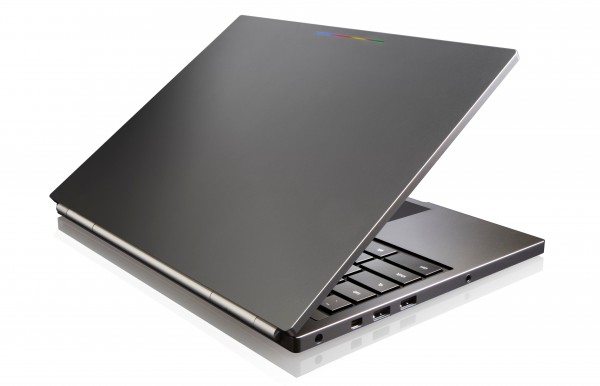
      On February 21, Google started selling its first computer, Chromebook Pixel, which I called a “status symbol” over the weekend. In typical fashion I asked “Will you buy Google Chromebook Pixel?” There surely is a market for the laptop somewhere, but not among the respondents to our poll.

      Seventy-seven percent of you answer “No”. That’s among the highest percentage ever to one of my polls. If there’s Chromebook Pixel enthusiasm, it surely isn’t from BetaNews readers. Just 8 percent of respondents will buy the Chrome OS laptop “as soon as available in my country”. Only 16.5 percent plan to buy Chromebook Pixel ever. So has Google got a flop? No way, Jose.

      Measured Success

      The computer isn’t meant for the mass-market. Rather, like Nexus devices, Google establishes a reference design for OEM partners and provides developers base system to create apps for. Touch is the differentiator from other Chromebook. Additionally, the “For what’s next” marketing tips off that Chromebook Pixel is foundational — a work in progress — as the operating system improves every other month (or less) and more web apps become available. Pixel isn’t meant for most of you.

      I’m in process of reviewing the computer and plan to post after all the Mobile World Congress news quiets down. I will say at this juncture that Chromebook Pixel isn’t for everyone. That’s a statement made about earlier models, but it applies more so to Google’s laptop because the usage scenario is different.

      Earlier Chromebooks, particularly those released for holiday 2012, appealed for their value. The $199 Acer and $249 Samsung models are easy purchases, and, based on Google+ and other social network posts, many people use these Chromebooks as companion PCs — not their primary one. I’m among a smaller set of users making a Chrome OS device my full-time computer.

      Chromebook Pixel is meant to be used as a primary computer. Design, processor, touchscreen and price ($1,299 or $1,449) say Pixel is the machine used everyday, all day long. To that end, the laptop must be able to replace something else. Apps must be there.

      Google provides the basics for documents, email, chat and such. But what about apps for professionals, who clearly are a major target market, or power users? These people will need tools for editing and managing photos and videos or using programs like CAD. Are the apps there? That’s a question the second part of my review will seek to answer.

      No Thanks!

      But for many of you, there is no question. “They’ve got to be kidding, right?” commenter Tenoq asks. “Fifteen-hundred dollars for a laptop with a crippled, web-based OS and no software? Come on, this doesn’t even compete with the Macbook, let alone the Surface. Google has no support, they have no retail or service stores and have a woeful track record in after-sales. Why on Earth would someone pay so much more for this instead of buying Surface Pro, which has a proper OS capable of running any x86 software and includes MS Office?”

      “I always wished someone would come out with a decently-built Chromebook, although Google seems to have gone over the top here — $1200 is way too much for Chrome OS”, scophi comments. “Had they priced it around $500-700 (and I needed a laptop) I would probably buy it”.

      Pko: “This machine is an idiotic concept. No storage to speak of, unless you ruin the machine with a USB stick…The Google Drive is worthless, 1TB for three years, yes, but what then? Will you pay monthly almost what it cost to have that same amount of storage forever locally, ready whenever and wherever you want?”


      “Can it run real programs, such as Photoshop?” Jamie Maclean asks. “Why not buy a cheaper laptop and just install the Chromebook web browser (for that is all it is) on it?”

      To my one of my Google+ posts about Chromebook Pixel, Lyndon Bredenkamp comments: “If you need to use Photoshop then it’s clearly not the right computer for you. These are all the same as the original criticisms that was used against the first Chromebooks. Yet they are selling like hot cakes. Number one position on the Amazon laptop sales leader-board for over 125 days. There are many advantages to a Chromebook, but, hey, if it’s can’t run Photoshop it must be crap”.

      Scott Ball, responding to Bredenkamp: “My eyes went all Googly when I saw that leaked Pixel video from a few weeks back, but this price point is completely off-putting — $1,300 for a machine that runs a browser is too rich for my blood. I don’t need 1TB of cloud storage, so I’m out”.

      Bredenkamp answers: Yes, I agree on the idea of waiting for a less expensive version. I’m an existing Chromebook user and just find it amusing when people call it crap with their main argument being ‘it can’t run Photoshop’. Someone should do a satisfaction survey on those who purchased Chromebook”.

      That’s a good idea. Maybe I will do one. For now, I repost the poll because I’d like a larger sample than 566. Not that it matters much. Based on the huge number of “No” responses and reading comments on Google+, even from avid Chromebook users, I’m confident that few people will buy Pixel. If you do, hey, we can wave to one another at Starbucks and snicker at all the MacBooks.