Blog

  • Livecam Wallpaper decorates desktops with webcam images

    If you’re bored with the regular Windows wallpaper then there’s no shortage of software which can help. But much of it will just download fairly random images from a variety of online sources. And even if you can select a theme which appeals to you – “landscapes”, “animals” or whatever – there’s no guarantee that you’ll like everything the program selects.

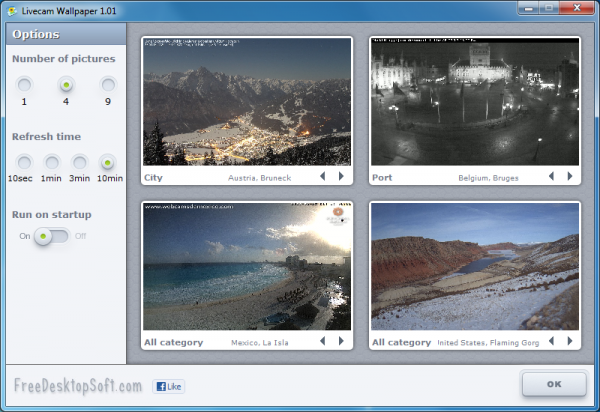
    Livecam Wallpaper, though, is different. As you might guess from the name, the program allows you to set images from your choice of internet webcams as wallpaper, so you can be sure the picture will be something you like. But it can then update the images as often as every 10 seconds, a very interesting way to bring your desktop to life.

    We were initially a little wary of the program, as it sounds like just the kind of tool which comes bundled with ten toolbars. But no. The download is a compact 834KB, and it only includes the core program files. Even the Livecam Wallpaper licence is only 168 words long, a refreshing change these days.

    The core interface is very simple, too. There are no menus, no hidden settings – everything you need is accessible from one dialog. And so you’ll start by setting the number of webcams you’d like to use (1, 4 or 9). There’s the refresh time to decide (10 seconds, then 1, 3 or 10 minutes). And after you’ve chosen whether Livecam Wallpaper should load from the desktop, that’s your basic settings completed.

    All you have to do now is choose your webcams, and that’s just as easy. Choose a category, first: “HD”, “City”, “Mountains”, “Tech” and so on. Then click the default image, select your preferred camera and the desktop will be updated right away.

    There are some limitations here. The webcam categories don’t all offer a lot of choice, for example — “City” has 45, but “Forest” has only 3. And while the program includes webcams from all over the world, there’s a considerable bias towards Europe.

    This kind of idea may not be too practical in some cases, either. If you display icons on your desktop, the regularly changing images may make them hard to view sometimes. And there’s the resource usage to consider. Memory requirements are impressively low at under 9MB when minimised, but if you’re updating 9 pictures regularly then that’s going to generate plenty of network and hard drive activity.

    Overall, though, Livecam Wallpaper remains a very likeable program. It’s easy to use, looks great, has some spectacular webcams, and does its best not to be too demanding (you can always turn off the “Run on startup” option and run it just occasionally). So if you’re bored with normal wallpaper then this makes a great alternative.

  • Is Outlook.com for businesses, consumers or both?

    A week ago, Microsoft formally launched Outlook.com — its free, web-based email service — to the public. The service had been in preview since last July.

    Microsoft has for too long had a quartet of email offerings, including Hotmail, MSN and the now retired Entourage. Not surprisingly, this portfolio has been a source of confusion and complication for businesses, consumers and Microsoft brand management. By formally launching Outlook.com, Microsoft is now in the final throes of migrating to a single offering that streamlines its marketing spend and brings clarity to customers.

    Simplifying its email offerings is long overdue for Microsoft. But from a brand portfolio management standpoint, this is a head-scratcher. Outlook is a brand that has existed largely for professional use. We’ve all used Outlook at work, and from that perspective, it is known quite well. But is it the brand I’d prefer for my personal email use?

    Microsoft’s decision to champion Outlook going forward begs the question: Is Outlook.com for businesses, consumers or both? By using an existing brand name so closely associated with business use, Microsoft confuses prospective users of its intent. Personal email is just that — personal. From the start, Gmail and Yahoo have had a built-in sense of humanity and fun. Unlike Outlook, it’s clear they’re for personal use.

    Given how Microsoft has struggled to embrace the mobile platform and the cloud, it’s hard to understand how management decided on Outlook, its long-time client-based email product. If Microsoft is trying to take a bite out of Gmail, using this brand is a missed opportunity. The decision also reinforces the company’s inability to divorce from legacy brands, which are more associated with the past than Microsoft’s future. Don’t get me wrong — Outlook isn’t a bad product. But the product — the brand — is tied to a world in which we all used PCs and Windows. And that’s not where the world is heading.

    One alternative could have been to instead champion Hotmail, which, from a cloud-based perspective, is the best of the Microsoft email brands. There’s little association with the workplace, and a lot of people are still very proud of their Hotmail email addresses. Or Microsoft could have kept both Outlook and Hotmail — one for businesses and the other for personal use. Microsoft also could have created a new brand, built from the ground up and designed to appeal to the market from the ground up. And the company deserves kudos for its experience doing this with Xbox and Bing.

    I’ve talked enough about the brand, but let me address one other area that’s impacting people’s perspective — the multimillion dollar advertising campaign supporting the launch of Outlook.com. Calling this an advertising campaign is a misnomer. It’s a political attack.

    Microsoft runs ads attacking Google over Gmail privacy. Just watch one of the “Scroogled” television spots that slam Gmail. Scroogled.com says, “Outlook.com is different — we don’t go through your email to sell ads”. But most people I’ve asked all say the same thing: “Is this news? This is how Google makes money. Don’t all email providers do this?”

    Microsoft is not giving consumers a compelling enough reason to switch to Outlook. To me, this does the new product an injustice. Outlook has some nice improvements. Are they game-changers? Likely not, but service still has good, useful features. But you’d never know it from the advertisements.

    The irony here is that while Microsoft may not go through your email, it does monitor your search behavior on Bing. So for the company to claim moral high ground through advertising is hypocritical at best.

    Outlook.com — the product, the strategy, the campaign — is Microsoft’s attempt to get back in the email game. Ultimately it’s just confusing and an injustice to the product the company is trying to promote. Unfortunately for Microsoft, it’s not likely to be the Hail Mary pass that’s going to propel the company back to consumer relevance — at least not in the email space.

    Photo Credit: Vlue/Shutterstock

    Jason Cieslak is a managing director at Siegel+Gale, a global brand strategy and customer experience firm. He lives in Los Angeles.

  • Compare documents with DiffPDF

    If you regularly work with PDF files then you might occasionally need to compare two documents, just to see how (or if) they differ. You could try to do that manually, but it’ll be a tedious process, and probably not very accurate. Downloading a copy of DiffPDF is a much better idea.

    The program is open source and portable, so it’s straightforward to get started. Just unzip the download, launch DiffPDF.exe and you’re ready to go.

    And the core interface isn’t exactly tricky, either. Click “File #1″ and point the program at your first document; click “File #2″ for the second; then click Actions > Compare, and within a moment or two you’ll see both documents with any differences highlighted.

    If you need to know exactly how your documents vary then clicking the Next button will take you to each page where there’s a difference, so you can manually review it. If you just want to find out whether the documents vary at all, though, click the Log tab for a brief report. Or you can alternatively use the “Save As” option to save a PDF with only the pages which vary, again with the differences highlighted.

    These default settings generally work well, but there are more options available if you need them. Normally the program compares documents by word, for instance, but you can change this and compare by character, or even appearance, which will capture reformatted paragraphs, edited images and other issues.

    If you know that the two files vary in some places, and only want to compare a particular page range, then you can do that, too. Just specify the pages to check — 1-3, 5-13, say — in the box to the right of each file name.

    This could lead to another issue, of course — what about the page numbers? Click the Margins tab and you can define page margins which DiffPDF then ignores.

    Command line support helps you automate the comparison process, very handy if you’ve a lot of files to check.

    And there are several other useful options, including various settings which provide a great deal of control over how any file differences are highlighted.

    Put it all together and DiffPDF is an excellent tool: fast, configurable, and generally very easy to use. Try it!

  • Social Studios turns your Facebook feed into a TV show

    Lots of startups have tried to take the videos your friends share on Facebook and turn them into some kind of social video programming, but no one has quite done it like Social Studios. The Los Angeles and Israel-based startup has teamed up with actress Noa Tishby  to actually produce an Entertainment Tonight-like show that features videos, status updates and photos from your Facebook timeline.

    Your Show, which launched Monday night, may not have the most compelling title, but the idea behind it is interesting: Social Studios CEO Anat Amibar told me Monday that she got the inspiration for the show when a colleague of hers bought a smart TV a little more than a year ago. They tried out the TV’s Facebook app and immediately thought that this concept can be done better. “Facebook on a smart TV is like an old mobile version of Facebook stretched to 55 inches,” Amibar said.

    Check out the company’s video demo:

    At the core of the company’s offering is a Facebook app that takes data from your news feed, mixes it with pre-produced segments featuring Tishby, and spits it out as a video lasting around seven minutes. Videos shared by your friends are teased, and Amibar told me that viewers always have an option to watch the entire clip, or jump to a post to dive in deeper.

    She also said that the company has already recorded dozens of clips with Tishby to give the show a different look and feel every day, and added: “Of course, the content itself is different every day.”

    So how does watching Your Show feel like? I got to play with the latest episode, personalized to my news feed, on Monday, and have to say that I couldn’t quite make up my mind about it. The novelty factor was fun, sure, but I can also see this getting annoying pretty soon. And do I really need a human host if all she does is segue in vague terms to some photo my cousin posted online?

    However, I could see this kind of programming become part of something bigger. What if the show actually presented you with real entertainment news, only to mix in some personal news every now and then? Or what if you got a news program that’s interrupted by curated hyperlocal videos?

    As for Social Studios, Amibar told me that the company is already thinking about additional show formats, but she wouldn’t tell me what those will be about. She did reveal that her team is currently working on an iPad app, and that there are plans to bring the Your Show experience to smart TVs, possibly with help from outside partners.

    This story was corrected 9:45pm to clarify that Noa Tishby is not an employee of Social Studios, but rather an advisor to the company and contributor to the show.

    Related research and analysis from GigaOM Pro:
    Subscriber content. Sign up for a free trial.

  • Spark Capital closes $450 million fourth fund to continue consumer-oriented investing

    Spark Capital plans to announce Monday evening that it’s closed an oversubscribed $450 million fourth fund, countering earlier reports that put the number slightly lower, and bringing the firm’s total management close to $1.4 billion.

    Spark Capital was founded in 2005 in Boston by Todd Dagres, Santo Politi and Paul Conway, and has invested in some well-known tech companies like Twitter, Tumblr, OMGPOP, and Warby Parker. An oversubscribed fund is one where the size of the fund is smaller than interest from potential investors.

    General partner Bijan Sabet said the firm plans to continue its current investment strategy for the new fund, looking at mostly early stage deals but some larger growth stage deals as well. A recent report looking at venture capital trends overall for 2012 found that a good number of firms were moving more toward early stage investing.

    “We like early-stage investing in companies that we can then be supportive of over time,” Sabet said. “And we’re going to stay with this strategy.”

    Related research and analysis from GigaOM Pro:
    Subscriber content. Sign up for a free trial.

  • Mobile phones and tablets now make up 8 percent of video viewing

    Mobile and tablet video viewing has seen huge growth in 2012, but it’s still a small piece of the overall cake: That’s one of the key takeaways from Ooyala’s 2012 Global Video Index report, which the video platform provider published late Monday.

    Based on hours viewed, tablets saw their usage grow 110 percent in 2012. Mobile phone video viewing grew 87 percent in that same time period. However, both device classes together still only accounted for 8.25 percent of all video viewing hours in December of 2012, compared to 4.15 percent at the beginning of the year. In comparison: Desktop viewing was still just shy of 90 percent in December.

    2012_Q4_EN_6

    There are a few things worth pointing out: The data for the report comes from Ooyala’s 150 biggest clients. Ooyala’s client roster includes names like Rolling Stone, ESPN and Vice (and yes, also GigaOM, check the bottom of this post for a disclaimer), and it claims to reach 200 million monthly unique viewers.

    However, the company doesn’t have any relations with Netflix or YouTube, which are two of the biggest video traffic sources on the internet. That means that Ooyala’s data may be more reflective of the way we use video from big web publishers, as opposed to video services like Netflix.

    Still, even with that caveat, it’s interesting to see how mobile is growing, and when: Ooyala reported a temporary spike of 73 percent for tablets on Christmas day alone.

    2012_Q4_EN_4

    Disclosure: GigaOM has a commercial relationship with Ooyala for the delivery of its video content.

    Related research and analysis from GigaOM Pro:
    Subscriber content. Sign up for a free trial.

  • When Firefox OS phones arrive, Twitter will be ready

    Smartphones running Firefox OS are slated to start shipping by mid-year. Twitter will be there with them. In a brief announcement, Manuel Deschamps of Twitter stated that “When those devices begin to ship, Twitter for Firefox OS will be available in the Firefox Marketplace”.

    He also assures us that the app will rival that produced for other mobile operating systems. It will contain Home, Connect, Discover and Me tabs, as well as be able to search and compose tweets — that last one is rather important to the whole concept of Twitter.

    In addition, Twitter for Firefox OS will contain a new feature. Deschamps explains that “we’ve also implemented support for a feature unique to Firefox OS: Web Activities. This lets you tweet photos directly out of any app that also supports web activities such as the built-in photos app”.

    He goes on to describe how excited the company is for the new platform and I appreciate his enthusiasm, but remain skeptical about an entry into the mobile OS game this late. We will have to wait and see, and for those of us in the U.S., that will be a long wait —2014 is the target right now.

  • Asha de Vos meets a puppet of herself

    Asha-de-Vos-mainBlue whale researcher and TED Senior Fellow Asha de Vos unveiled her TED-Ed lesson today on the TED Fellows stage. The video — “Why are blue whales so enormous?” — stars a puppet version of de Vos, which she had been coveting for weeks. So Fellows & Community Director Tom Rielly presented her with it, hand-carried from London by TED Senior Fellow Taghi Amirani. We asked her how she felt to be gifted with her own plush doppelgänger.

    “It was such an amazing surprise! When I saw the first cut of the video, I was roaring with laughter. I hadn’t known they were going to make a puppet of me. So I had actually been pestering Tom and all the TED staff for the last few days about how I could get my hands on it. Tom was very convincing when he said it was in the middle of nowhere and it would be impossible to get it,” says de Vos. “I realize now in hindsight that they’ve been avoiding me a little bit for the last two days. It was a well-kept secret. I’m looking forward to using it when I talk to kids about the ocean, which I usually do wearing a mask and fins! Now she [the puppet] can do it.”

    Photo: Karen Eng

  • The $169 Android HP Slate 7 Is Just HP’s Latest Beige Box, Only Flat

    slate7-1

    HP is late to the tablet game, but definitely not out. At $169, the HP Slate 7 is a sure thing. It’s a guaranteed win for HP even if it doesn’t outsell the competition.

    HP just announced the Slate 7. There is nothing particularly special about it. It costs $169, has a dual-core 1.6GHz SoC, and a 16×9 display with a rather thick plastic bezel. In short, it’s a cheap tablet. Remove the HP logo on the backside and it’s just a random, generic tablet. And that’s fine.

    At this point, HP as an established and trusted brand, doesn’t have to innovate; they just have to show up.

    Despite its recent troubles, HP is still the largest personal computer maker on the planet. The company has held this title since 2006 after trailing Dell for four years. Lenovo might soon steal the title from HP, but that doesn’t diminish HP’s still-valuable brand. For most consumers, HP has, and will continue to be, a safe buy.

    It’s not really hyperbole to say everyone has had problems with an HP computer. As the top-selling computer maker collectively over the last 15 years, it has had a long time to disenchant consumers. Everyone has an HP horror story. But despite this, the brand still sells more PCs than any other. A lot of people are still buying HP computers.

    Who is Asus to the average Walmart shopper?

    As a known brand, consumers are aware what they’re going to get with an HP product. They know they’re going to get adware, sub-par hardware, but a fair price. What will they get with an Asus tablet? Who is Asus to the average Walmart shopper? An unknown.

    We all know the story. After years of little executive leadership, HP is floundering in the consumer market. PC sales are down. HP doesn’t have a mobile product. People are buying fewer printers. And, like Aol with dial-up subscriptions, a laughable chunk of HP’s revenue comes from printer ink.

    Worse yet, HP’s enterprise hardware and services business is down, too. Still, even with these declines, HP managed to beat Wall Street’s expectations last quarter.

    In short, the HP machine is slowing down, but even a slowed HP is a serious contender.

    HP is ubiquitous. HP computers are sold everywhere from Walmart to Best Buy to every office supply store known to man. HP became the largest computer maker not because they made the best computers, but because of logistics.

    Thanks to this vast distribution network, HP can get a $169 Android tablet in front of a lot of eyes with little effort. Then, once this tablet makes inroads, HP will likely follow its proven laptop strategy and release an upgraded model with a better screen, better specs and a slightly higher price tag. This model, or perhaps family of models, would provide an easy up-sell from the Slate 7. Want a better screen? Spend an extra $30 and get a faster processor, too.

    The HP Slate 7 is HP playing to its strengths. This is HP moving units, not creating the next big thing.

    Tablets are quickly becoming a commodity and selling beige boxes is what HP does best. At this point a budget tablet is a budget tablet. Our own Chris Velazco played with HP’s model for a few minutes and found it underwhelming. Well, yeah. It’s a $169 tablet. It’s not going to impress, but it doesn’t have to.

    HP sat on the sidelines and watched Amazon and Google’s expensive race to the bottom, which created this market of cheap tablets. HP has never been a premium product; it knows how to sell boatloads of boring machines loaded with sponsored software to keep the cost down. HP’s first attempt at a consumer tablet failed simply because it attempted to be something special. It wasn’t a beige box. The HP Slate 7 shouldn’t fail.

  • Amanda Palmer’s TED Talk is 8 feet long

    Amanda-Palmer-roll

    Amanda Palmer — performer, writer, former Dresden Dolls frontwoman — speaks at TED2013 on Wednesday morning. And to prep, she rendered her talk on paper in Sharpie. She writes on Tumblr, “It is about eight feet long. I am taking this as a good omen.”

    Back in Boston, the “Queen of Kickstarter” also held a prep party with friends — which was covered by The Boston Globe. Look for her talk in Session 4 on Wednesday.

  • Kickstarter campaign for new-age HyperCard development app wraps up

    Remember HyperCard, the Mac development program Apple released in the eighties to let people make screens and buttons for new programs? RunRev, a company based in the United Kingdom, developed LiveCode, HyperCard’s spiritual successor. The company took the unusual route of putting the idea on Kickstarter, hoping to get enough backers for a free, open-source version of the platform.

    Enterprises must pay to make Android and iOS apps with LiveCode. But that could change if the Kickstarter campaign succeeds in raised at least 350,000 British pounds, roughly equivalent to around $530,000. So far, with a little more than two days to go, backers, including Steve Wozniak, have offered to put up about 83 percent of the cash RunRev seeks for the open-source LiveCode. The open-source iteration in the works will support natural language, so as to be useful for people with little if any coding skills.

    There are a few ways to help people learn how to code. Universities could put computer-science courses on an open-source site such as Coursera. (Other sites have made introductory materials available for free, too.) Developers can teach computer science to high school students. Apple could open-source HyperCard (it discontinued the software in 2004). Or RunRev or another company could make a free version of a HyperCard-inspired program such as LiveCode. These efforts have their upsides and downsides, but their shared objective certainly makes more sense now than it did in the eighties.


    Related research and analysis from GigaOM Pro:
    Subscriber content. Sign up for a free trial.

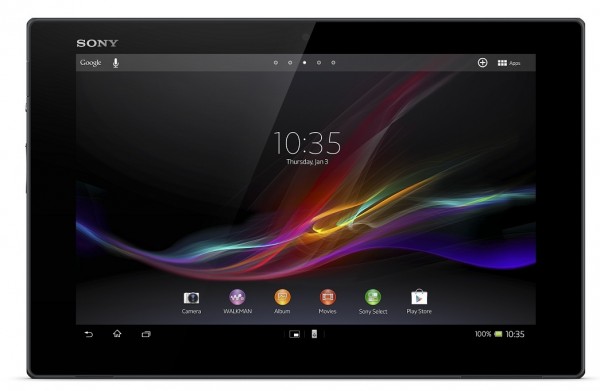
  • Sony ships waterproof Xperia Tablet Z

    Well, somebody finally announces something that’s actually shipping. One of Mobile World Congress’ worst traditions is the unveiling of new products not available for months. Today, Sony stepped out from the ranks with the ultrathin, waterproof, Xperia Tablet Z, which goes on sale March 1. That’s right, this week! Damn, if only my local Sony store wasn’t closed for renovations (until April).

    The 10.1-inch tablet stands apart from many of this week’s MWC 2013 announcements. Many of the new devices are down-market, offering lower-performance for less money, targeting economy shoppers in mature or emerging locales. By contrast, Xperia Tablet Z packs premium features at premium price.

    For starters, the display is high resolution — 1920 x 1200 — putting Sony’s slate in a small minority that includes Apple iPad, ASUS Pads and Google Nexus for being true HD or better.

    But the big sell is waterproofing, which I had hoped would be a big trend at this year’s Mobile World Congress. Xperia Tablet Z is dust and water resistant with Ingress Protection Rating of IP55 and IP57. The one number means seal against water sprays and the other submersion up to 1 meter. Whoa, for 30 minutes.

    So the next time you’re reading on the John and drop your tablet in the can — or perhaps the backyard Jacuzzi — you’ve got water protection. But don’t break the screen in the process!

    Sony claims that at 6.9 mm, Xperia Tablet Z is thinnest on the market. For comparison, Apple iPad mini is 7.2 mm, Google Galaxy Nexus 10 is 8.9 mm and iPad 4 is 9.4 mm. Sony’s slate is light too, just 495 grams, compared to 652 grams for iPad 4 and 603 grams for Nexus 10.

    Other features include 1.5GHz quad-core Qualcomm Snapdragon S4 Pro processor; 2GB RAM; 16GB or 32GB of storage; 8-megapixel rear-facing camera and 2MP front shooter; and twin, front-facing speakers. While the device ships with Android 4.1, Sony says buyers will be prompted to upgrade to 4.2.

    The electronics giant also pushes connectivity with this model, an attribute appealing to people living the Sony lifestyle by perhaps owning PS3, Bravia TV, wireless speakers or other devices. Consumers connect using “one-touch NFC” for moving content around various devices.

    “Xperia Tablet Z sets new standards in entertainment by matching premium specifications and Sony technology with cross-device connectivity and a consistent user-experience”, Kaz Tajima, Sony Mobile Communications corporate vice president, says. “Xperia Tablet Z reinforces our intention to be a leading player in the premium Android device market”.

    As previously mentioned, Sony’s slate goes on sale March 1 for $499 (16GB) or $599 (32GB) in black. However, Sony stores — brick and mortar and online — will exclusively carry the 32GB Tablet Z in white, too. Pricing matches iPad but is more than Nexus 10, which is $399 and $499 in same capacities with higher-screen resolution but doesn’t offer seamless integration with Sony products or cloud services.

  • Why Marissa Mayer’s ban on remote working at Yahoo could backfire badly

    Not long after her arrival at Yahoo, new CEO Marissa Mayer started handing out carrots to her new employees, including new smartphones, free food and other Google-style amenities. Now she has brought out the stick: namely, a directive that employees are no longer allowed to work from home, something that is expected to affect as many as 500 Yahoos. Mayer’s move has its supporters, who argue that she is trying to repair Yahoo’s culture — but in doing so, she could be sending exactly the wrong message for a company that is trying to spur innovation after a decade of spinning its wheels.

    In the internal memo published by All Things Digital, Yahoo’s head of human resources said that the company wanted to improve the working environment at the company, and in order to do so, it needed people to work in the same physical location. According to the memo, “speed and quality are often sacrificed when we work from home,” and therefore working at home was no longer going to be supported — in other words, find a way to work at the office or quit:

    “To become the absolute best place to work, communication and collaboration will be important, so we need to be working side-by-side. That is why it is critical that we are all present in our offices. Some of the best decisions and insights come from hallway and cafeteria discussions, meeting new people, and impromptu team meetings… We need to be one Yahoo!, and that starts with physically being together.”

    Yahoo says it needs to re-build its culture

    Although most of the responses from tech-industry insiders have been resoundingly negative, the Yahoo plan does have its supporters: some say the company has fallen so far behind its competitors after years of inaction and bad strategy that Mayer needs to bring the scattered remnants of its corporate culture together, and one of the best ways to do that is through physical proximity. In other words, the company’s “insights from hallway discussions” argument has some truth to it.

    According to some ex-Yahoo staffers, many of those who currently have work-at-home arrangements are disgruntled employees who provide little value, and so forcing them to work in an office is either a) a way of getting them to drop this attitude, or b) an easy way to get them to quit and save the company some money. Either way, the argument goes, Yahoo as a whole winds up benefiting financially. But at what cost to the company’s reputation?

    Yahoo has also taken fire from critics who see the move as an attack on employees who can’t afford to work in an office, including single mothers and others who require more flexible work arrangements. This is an argument that the company should theoretically be more open to, they say, because Mayer herself is a new mother — although she also happens to be one with a built-in nursery in her office according to some reports.

    Many argue that remote workers are more efficient

    The debate over whether employees are more productive in the office or at home has been going on for at least a decade, if not longer, and there is still plenty of disagreement on both sides. In addition to the impromptu hallway conversations and other social benefits of working alongside other people — which are clearly very real, as I and many other remote workers will admit — some managers believe employees who work at home invariably goof off and get less done (although as our GigaOM Pro analyst Stowe Boyd argues, this often says more about those managers than their staff).

    Companies like Automattic, however — the for-profit arm of the WordPress community (see disclosure below) — say they are more efficient and friendlier as a workplace without any real corporate office to speak of, and distributed teams like those behind Wikipedia and Linux have been able to accomplish incredible things without a traditional office environment. Surveys repeatedly show that companies with more flexible working arrangements are more efficient than those without.

    Most technology companies (including GigaOM) support remote working because it provides a lot more freedom for employees, and because giving staff the opportunity to live virtually anywhere and work wherever they wish broadens the available talent pool enormously. And isn’t that what Yahoo theoretically wants to do, or should want to do? Maybe people are already pushing down the doors demanding to be hired at the company, but if so then it’s a well-kept secret.

    What message does this send about Yahoo?

    Marissa Mayer

    I think David Heinemeier-Hansson of 37signals puts his finger on the problem in a recent post about Mayer’s decision, in which he says that Yahoo’s move is “an admission that Yahoo management doesn’t have a clue as to who’s actually productive and who’s not.” He goes on to argue that, for a company that is so desperately in need of talented employees who are willing to go the extra mile to rescue the former web giant, the decree abolishing remote working isn’t going to help, but will rather do the opposite:

    “Are you going to be filled with go-getter spirit and leap to the opportunity to make Yahoo more than just “your day-to-day job”? Of course not. Yahoo already isn’t at the top of any “most desirable places to work” list. A decade of neglect and mounting bureaucracy has ensured that. Further limiting the talent pool Yahoo has to draw from… is the last thing the company needs.”

    The danger for Yahoo here is that a decision driven by what are theoretically positive motives — to get employees to feel more like a team, to encourage innovation through serendipitous encounters, and to drive low-performing staff away — could wind up sending exactly the wrong message: namely, that it is a bureaucratic and centrally-controlled organization with no interest in being flexible when it comes to the living arrangements of its employees.

    Disclosure: Automattic, the maker of WordPress.com, is backed by True Ventures, a venture capital firm that is an investor in the parent company of this blog, Giga Omni Media. Om Malik, founder of Giga Omni Media, is also a venture partner at True.

    Post and thumbnail images courtesy of Getty Images / Chris Jackson Shutterstock / ER 09 and Flickr user Pew Center

    Related research and analysis from GigaOM Pro:
    Subscriber content. Sign up for a free trial.

  • Gallery: Scenes from the start of TED2013

    Day-One-1

    The day has finally arrived. TED2013, “The Young. The Wise. The Undiscovered,” kicked off today with attendees pouring into the Long Beach Performing Arts Center in California. At 1:15pm, the conference officially started with two sessions of talks from the TED Fellows, young innovators from across the globe with exciting work to share. And tonight, there’s a special session called “Inside TED,” where we reveal the inner workings of our office and the exciting directions TED plans to go from here.

    In this gallery, find images from the first day of TED2013, taken by James Duncan Davidson, Michael Brands and Ryan Lash.

    Day-One-2

    A social space at the Long Beach Performing Arts Center, just waiting to be filled with attendees.

    Day-One-7

    Over the weekend, speaker Yu “Jordy” Fu set up her sculpture of cut paper—called “Cloud”—in the entrance to TED2013.

    Day-One-3

    Now, the sculpture is beautifully lit.

    Day-One-4

    Self-assembling toys from TED Fellow Skylar Tibbitts, who’ll be debuting a new technology in the TED Fellows session 2.

    Day-One-5

    Over the weekend, staff sets up Target’s social space called “A Mind for Design” — an ode to brainwaves.


  • Senate Confirms Robert Bacharach to the United States Court of Appeals

    This evening the Senate confirmed Robert Bacharach to the United States Court of Appeals for the 10th Circuit in Oklahoma. Judge Bacharach waited 263 days for a Senate floor vote, only to be approved overwhelmingly, by a vote of 93-0. Not only was Judge Bacharach supported by the two Republican Senators from Oklahoma, he was recommended to the White House for this judgeship by Senator Coburn in October 2011. Yet, early last summer, Senate Republicans blocked Judge Bacharach from even getting an up or down vote – the first successful filibuster of a judicial nominee who had bipartisan support in the Senate Judiciary Committee.

    In short, Republicans recommended Robert Bacharach for this important position, endorsed him publicly, supported him nearly unanimously out of the Judiciary Committee, then blocked him from getting a vote – and now, after almost a year of pointless delay, joined in unanimously confirming him. Even Senator Coburn, himself a participant in this partisan chicanery, called this “stupid.”  

    Unfortunately this is not a unique case. On February 13, the Senate confirmed William Kayatta for the First Circuit from Maine. His nomination languished for 300 days, yet he was easily confirmed with 88 Senators supporting him. And next up is Richard Taranto for the Federal Circuit, whose nomination has been pending for 333 days.

    To put this obstruction in some perspective, the average wait time for President George W. Bush’s federal appellate judicial nominees, from Committee vote to confirmation, at this point in his presidency was 35 days. By contrast, the average wait time for President Obama’s federal appellate judicial nominees has been 147 days.

    Today, there are 14 judicial nominees pending before the Senate, most of whom were approved by the Judiciary Committee unanimously and several of whom would fill judicial emergency seats.  An additional 21 nominees are pending in the Senate Judiciary Committee. These 35, highly-qualified nominees signify the President’s unprecedented commitment to a judiciary that reflects the nation it serves: 17 are women; 6 are African American; 6 are Hispanic; 4 are Asian American; and 5 are openly gay. 

    The Senate should move to confirm all of the judicial nominees pending before it. These nominees deserve immediate consideration by the full Senate, and the interest of justice demands it.

  • Apple settles lawsuit over apps aimed at kids — will pay $5 iTunes credit or cash

    Did your kid rack up  charges on Apple’s app store without your permission? You may be in luck: the company says it will pay to settle a lawsuit over so-called “bait apps,” which are games that can be downloaded for free but then charge for “game currency” like virtual goods or play money.

    Under the terms of the settlement, Apple will offer a $5 iTunes credit to those who claims that a minor bought in-game items without their knowledge or permission. If the amount in question is more than $5, Apple will offer a credit for that amount. If the amount in question is over $30, an Apple user can claim a cash refund.

    The proposed settlement comes after parents sued Apple in 2011 upon discovering that their minor children had racked up credit card charges in supposedly free games. The issue was the subject of a Daily Show feature about a father whose kids racked up hundreds of dollars to keep virtual fish alive in a game called “Tap Fish.” The same problem also befell GigaOM’s Kevin Tofel whose kids spent $375 – also on virtual fish.

    In order to collect under the settlement, Apple users will have to attest that a minor bought “game currency” and that the user did not provide the minor with the Apple password.

    The proposed settlement, first reported by Law360 (subscription required), does not state how much Apple will pay in total or how many users are affected. It does state that Apple will send an email notice to “over 23 million iTunes account holders who made a Game Currency purchase in one or more Qualified Apps.”

    The settlement still must receive preliminary approval from a federal judge. If that occurs, which it typically does in class action cases, the notification period will begin and Apple will begin accepting claims. After the claims are in, a judge will approve the final settlement and Apple will begin making payments — this would likely occur late this year or in early 2014.

    Apple did not immediately reply to an email request for comment.

    You can read the proposed settlement yourself below (I’ve underlined some of the key parts) :

    Apple’s Bait App Settlement by


    Related research and analysis from GigaOM Pro:
    Subscriber content. Sign up for a free trial.

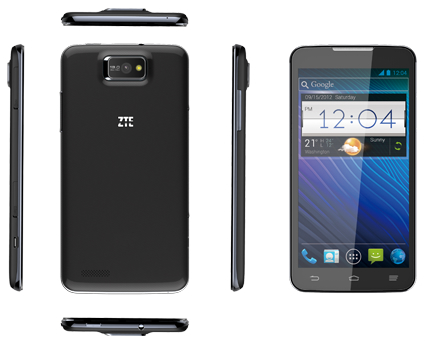
  • ZTE debuts monster 5.7-inch Grand Memo

    How big is too big for a phone? I would have said that my 4.65-inch Galaxy Nexus is large enough, but the 5.5-inch Galaxy Note II proves me wrong and must admit after picking one up I think it is usable as my everyday phone. Now ZTE trumps Samsung today at Mobile World Congress by unveiling the Grand Memo — a “phablet” with 5.7-inch screen. Smartphones continue to meld with tablets.

    The new ZTE model debuts with a nice set of specs: Qualcomm Snapdragon 800 processor with quad-core Krait CPU, extremely generous 3200 mAh battery, 5.7-inch 720 x 1280 display, 2GB of RAM, 16GB of storage, WiFi, 4G LTE, Bluetooth 4, a 13-megapixel rear-facing camera, and rather standard 1MP front-facing camera. All of this is packaged in a very thin 8.5 mm case.

    He Shiyou, ZTE EVP and head of the Mobile Devices Division, says that “high-definition screen makes it perfect for media and entertainment, but its uses reach far beyond that”. He adds that ZTE has “really tried to make this device fun for use at home, and practical for use in the office. By combining both of these factors, we have created a well-rounded large-screen handset that is suitable for any situation”.

    If there is one knock on this device — aside from some users potentially balking at the size — it would be Android 4.1, despite the fact version 4.2 of Jelly Bean has been on the market since October of 2012.

    So what do you think of these new “phablets”? Is the screen too big, or is it just what you have been waiting for?

  • Could Mobile World Congress 2013 be any more boring?

    I’m not loving this year’s big phone trade show. The news coming out of Barcelona is about as doldrums as the Spanish economy. Generally, the big stuff drops Day 0 and Day 1 at Mobile World Congress. They’re done, and so far the product announcements are generally less than last year. The phone launch seemingly everyone waits for, Samsung Galaxy IV, comes in March. That’s big commentary on what’s missing from MWC 2013.

    So far, I would call most new gear as the race to the bottom — same concepts as the last couple of years, only offering less, selling for less and marketed to less-developed smartphone or tablet markets.

    That surely describes Mozilla and Nokia, with new Firefox OS handsets and Lumias; low-brow smartphones reach down-market and doing so cede the greater world to leaders Apple and Samsung. There’s HP’s first Android tablet, Slate 7, which is light on price ($169) and features, or ASUS Fonepad and PadFone Infinity Android tablets, which similarly seek buyers looking to spend less. Are the smartphone and tablet markets already so mature, or so commoditized, that less for less is this year’s innovation?

    Frankly, I expected more, and perhaps there’s still hope with the event running through Thursday. But I’m not exactly hopeful given how much typically drops by end of the first day. Or maybe I missed the “next big thing”.

    Speaking of that phrase, which Samsung uses in mobile marketing, the company’s series of Galaxy S III and Note II commercials televised during last night’s Oscars — featuring a fictitious company developing a unicorn game — were way more interesting than anything coming out of MWC. (You simply must watch the 90-second spot featuring filmmaker Tim Burton looking to make zombie unicorn movie “Horn of Darkness” based on the game.)

    Samsung’s Galaxy Note 8.0 is one of the few really interesting new products unveiled at MWC 2013 — and even that is more about the same stylus concept used on Note smartphone and larger, 10.1-inch tablet. ZTE surprised somewhat, with Grand Memo — a Galaxy Note II competitor running the Snapdragon 800 processor.

    Where’s the dramatic new innovation? The next-generation OMG thing? LG outed the Optimus F5 and F7 smartphones last week. Even some of the more modest new mobiles came early — powerhouses, too. HTC unveiled flagship phone One, just six days ago.

    Honestly, some of the best mobile future-tech comes outside Mobile World Congress. Look at last week’s buzz about Google Glass and the company’s contest that could snag you one. On February 19, Canonical unveiled Ubuntu tablet, and released phone and slate software to developers two days later. Perhaps tomorrow’s Mozilla CEO MWC 2013 keynote will wow as much as Ubuntu’s efforts. Fingers crossed.

    My heart just isn’t thumping looking over Day 0 and Day 1 announcements. That’s good for Sony, which today launched one of the few remotely interesting products — one that stands out on the sea of sameness. The Xperia Tablet Z is uptown, with super-slim design, high-resolution 1920 x 1200 display and waterproofing. Now that is innovation, and I expected to see more waterproof mobiles at the event than actually have appeared. But at a show with so much less, why should anyone expect more?

    Photo Credit: Mozilla

  • Injustice: Gods Among Us Adds Sinestro And Hawkgirl To The Playable Roster

    The next two match ups in the Injustice: Gods Among Us Battle Arena will go live on Friday. Before that, DC Comics announced two new characters for the game that will make their debut on Friday in the latest fights.

    DC Comics announced today that Hawkgirl and Sinestro will be joining the ranks of playable characters in Injustice: Gods Among Us. Neither character hardly needs an introduction, but here’s a nice rundown courtesy of the Injustice channel:

    Sinestro will be taking on Sinestro in the first round, while Hawkgirl will be taking on Green Arrow. Both fights should be incredibly interesting. We’ll find out who wins and moves on to the next round on Friday.

    Injustice: Gods Among Us will be out on April 16 for Xbox 360, PS3 and Wii U.

    As an added bonus, here’s Kevin Smith and Jason Mewes talking about this week’s match up:

  • Etsy Launches New Kinds Of Coupon Codes

    Etsy announced today that it is launching some new kinds of coupon codes.

    Merchants will now be able to offer fixed discounts on items and set price minimums for coupons. You could offer, for example, $10 off when the customer spends $50.

    Etsy is also testing Thank You emails as a way to introduce shoppers to the deals.

    “Buyers can opt in to receive an email with a promotion when shops they’ve purchased from have an active Thank You coupon,” the company explains in a blog post. “Bought a necklace as a birthday gift and got rave reviews? Maybe that shop is offering a discount and you can pick up the matching earrings for under the tree!”

    Etsy has offered Coupon codes since 2010, and about 3,000 of them are used every day, according to the company.

    Etsy has instructions for offering and promoting coupon codes here.