Blog

  • Dell Wisely Chooses Emerging Markets for Smartphone Play

    ViewMedia

    Dell Mini 3

    Dell has finally made its smartphone play official, saying it will target users in Brazil and China with a new Android-based handset dubbed the Mini 3 by the end of the year. It’s a smart strategy — the company’s existing presence in both countries could make for a smooth entry into the cutthroat smartphone space.

    The Round Rock, Texas-based computer vendor said it will release the Mini 3 through China Mobile later this month; the phone will be available through the Brazilian operator Claro by the end of the year. The announcement ends two years of rumors of a Dell smartphone. The company offered few details about the handset other than the fact that it rocks a three-and-a-half-inch high-definition screen and forgoes a physical keyboard in favor of a touchscreen.

    While a move into mobile is overdue, Dell faces a daunting task in differentiating itself from the increasingly crowded Android bandwagon. But the company is wise to enter the difficult Chinese market with China Mobile, which claims 500 million subscribers and — more importantly — with which it already has an established relationship. Dell earlier this year became the first mobile PC manufacturer to embed China Mobile’s 3G technology and services into its netbooks and, according to the company, has become the leading seller of netbooks through retail outlets in China. Dell also has a longstanding presence in Brazil, where it opened a $100 million-plus plant two years ago.

    The relationship with China Mobile will be particularly crucial as Dell enters the smartphone space. China’s position as the world’s largest mobile market is well documented, but the region is teaming with potential pitfalls, including an active gray market and heavy government regulation. Apple is quickly — and painfully — becoming familiar with such hurdles via the Chinese launch of the iPhone. If Dell can leverage its existing relationships in China, the company could quickly establish a foothold in a massive market. And that foothold could be the first step in building a global presence in the increasingly competitive smartphone segment.

  • Best Buy Black Friday ad

    bestbuy 

    It’s here. Best Buy’s Black Friday ad is here. Stores open at 5AM and Best Buy will “pass out tickets for our Doorbuster Specials up to two hours before 5 a.m. store opening,” according to the circular. That means no running, probably. You can still do that thing where you walk really fast and sort of skip a little bit, but no running.

    Doorbusters are marked with an asterisk.

    Automotive

    Alpine 50-Watt x 4-Channel Car Stereo – $99.99

    Pioneer 50 Watt x 4-Channel Car Stereo & Speaker Pair – $89.99

    Cell Phones

    AT&T Sony Ericsson W518a – Free w/2 Year Contract *

    BoostMobile Motorola Clutch i465 – $59.99

    DLO Jam Jacket For iPhone – $9.99

    Jabra BT-2080 Bluetooth Headset – $19.99

    LG Chocolate Touch From Verizon w/Two Year Activation – $0.00 *

    MiFi 2200 By Novatel Wireless w/Two Year Activation – $0.00

    Mobile Broadband Card 598U By Sierra Wireless w/Two Year Activation – $0.00

    Motorola H710 Noise-Canceling Bluetooth Headset – $39.99

    Motorola S9 HD Stereo Bluetooth Headset – $49.99

    Net10 Samsung T401G – $39.99

    Sprint BlackBerry Curve 8330 Smart Phone – Free w/2 Year Contract

    Sprint Samsung Instinct S30 – Free w/2 Year Contract

    T-Mobile Motorola Renew Phone – $7.99

    Verizon Wireless DROID – $199.99 w/2 Year Contract

    Verizon Wireless Motorola Rival – Free w/2 Year Contract *

    Virgin Mobile Kyocera X-tc – $49.99

    Computer Accessories

    Logitech C250 Webcam – $19.99

    Logitech V450 Nano Cordless Laser Mouse – $24.99

    Rocketfish AC Power Adapter – $39.99

    Computers

    Compaq Netbook w/Intel Atom Processor, 1GB Memory, 160GB Hard Drive – $179.99

    Compaq Netbook w/Intel Atom Processor, 1GB Memory, 250GB Hard Drive – $229.99

    Dell 10.1″ Netbook w/Intel Atom Processor, 1GB Memory, 160GB Hard Drive – $379.99

    eMachines Desktop w/AMD Athlon Processor, 3GB RAM, 320GB HD, Windows 7, w/18.5″ LCD Monitor and HP Deskjet Printer – $299.97

    HP 15.6″ Notebook w/AMD Turion II Dual Core Processor M500, 6GB Memory, 320GB Hard Drive, Windows 7 – $599.99

    HP 15.6″ Notebook w/AMD Turion II Dual Core Processor M500, 8GB Memory, 500GB Hard Drive, Windows 7 – $699.99

    Macbook 13.3″ Notebook w/2.26GHz Intel Core 2 Duo, 2GB DDR3 Memory, 250GB Hard Drive, w/$150 Gift Card – $999.99

    Sony 15″ Laptop w/Intel Dual Core Processor, 4GB Memory, 320GB Hard Drive, Windows 7 – $399.99

    Sony 15″ Laptop w/Intel Dual Core Processor, 4GB RAM, 320GB HD, Windows 7, Sony Headphones, Built-In Blu-ray Player, Blu-ray Movie – $479.97

    Toshiba 16″ Laptop w/Intel Core 2 Duo Processor, 3GB DDR3 Memory, 250GB Hard Drive (Model # L505-S5984) – $399.99

    Toshiba 16″ Laptop w/Intel Core 2 Duo Processor, 4GB DDR3 Memory, 320GB Hard Drive (Model # L505-S5984) w/Printer and Case – $499.97

    Digital Cameras

    Canon EOS Rebel Tli D-SLR Camera w/18-55mm IS Lens – $699.99

    Canon PowerShot SD1200 IS 10.0 Megapixel Digital Camera (Grey) – $149.99

    Canon PowerShot SD1200 IS 10.0 Megapixel Digital Camera (Teal) – $149.99

    Canon PowerShot SD1200 IS 10.0 Megapixel Digital Camera w/Extra Battery and Case (Grey) – $179.99

    Canon PowerShot SD1200 IS 10.0 Megapixel Digital Camera w/Extra Battery and Case (Teal) – $179.99

    Canon Rebel Tli Camera w/55-250mm IS Telephoto Lens and Lowepro D-SLR Bag – $849.97

    Fujifilm Finepix Z37 10.0 Megapixel Digital Camera w/Extra Battery and Case – $149.97

    Fujifilm Finepix Z37 Polka Dot 10.0 Megapixel Digital Camera – $119.99

    Insignia 720p HD Camcorder – $69.99

    Insignia NS-DSC10A 10.0 Megapixel Digital Camera (Pink) – $49.99 *

    Insignia NS-DSC10B 10.0 Megapixel Digital Camera (Blue) – $49.99 *

    Kodak EasyShare C140 Digital Camera With 7″ Kodak Digital Photo Frame – $109.99

    Nikon Coolpix P90 12.1 Megapixel Digital Camera – $299.99

    Nikon Coolpix P90 12.1 Megapixel Digital Camera w/Extra Battery and Case – $329.97

    Nikon Coolpix S60 10.0 Megapixel Digital Camera (Red) – $179.99

    Nikon Coolpix S60 10.0 Megapixel Digital Camera w/Extra Battery and Case – $209.97

    Nikon D3000DX 10.2 Megapixel D-SLR Digital Camera w/10-55mm and 55-200mm Lens and Bag – $599.97

    Nikon D3000DX 10.2 Megapixel D-SLR Digital Camera w/10-55mm VR Lens – $499.99

    Sony Cybershot W180 10.1 Megapixel Digital Camera (Black) – $99.99

    Sony Cybershot W180 10.1 Megapixel Digital Camera w/Flexpod and Camera Case – $119.97

    Digital Media Cards

    PNY 4GB Flash Drive – $9.99

    PNY 4GB MicroSD HD Memory Card – $9.99

    PNY 4GB SDHC Memory Card – $9.99

    Sandisk 4GB Memory Stick PRO Duo – $14.99

    Sandisk 8GB MicroSDHC Memory Card – $19.99

    Sandisk 8GB SD Card – $19.99

    DVD Players

    Insignia Blu-ray Disc Player (Model # NS-BRDVD3) – $99.99

    Samsung BD-P4600 Blu-ray Disc Player – $279.99

    Samsung Blu-Ray Disc Player – $149.99

    Sony BDP-S360 Blu-ray Disc Player – $149.99

    Electronics

    2GB Pulse Smartpen w/$30 Gift Card – $169.99

    Bose In-Ear Headphones – $89.99

    Canon Vixia HD HF20 Camcorder – $499.99

    Canon Vixia HD HF20 Camcorder w/Extra Li-Ion Battery & 8″ HDMI Cable – $599.97

    Dynex 7″ Digital Photo Frame – $29.99

    iHome Portable Alarm Clock Speaker iPod Dock – $39.99

    Insignia 7″ Digital Photo Frame – $44.99

    Logitech Harmony 510 Advanced Universal Remote – $39.99

    Panasonic DECT 6.0 Expandable Cordless Phone System w/3 Handsets – $59.99

    Pandigital 9″ Digital Photo Frame – $59.99

    Sony DCR-SR47 Handycam Camcorder – $249.99

    Sony DCR-SR47 Handycam Camcorder w/Extra Li-Ion Battery & Bag – $299.97

    Sony DCR-SX40 Handycam Camcorder – $199.99

    Sony DCR-SX40 Handycam Camcorder w/Extra Li-Ion Battery & 8GB Memory Stick – $259.97

    Sony Reader Pocket Edition w/$30 Gift Card – $199.99

    Sony Studio Monitor Headphones – $9.99

    VTech DECT 6.0 Expandable Cordless Phone System w/2 Handsets – $44.99

    GPS Systems

    Garmin GPS Friction Mount – $14.99

    Garmin Nuvi 205W GPS Navigation System – $99.99 *

    Garmin Nuvi 255WT GPS Navigation System – $129.99

    Lowepro Black Neoprene Sleeve – $7.99

    Magellan SE4 GPS – $89.99

    Tom Tom 540S Portable GPS Navigation System – $149.99

    Tom Tom GO 730 Portable GPS Navigation System – $174.99

    Hard Drives

    LG External Slim Portable USB 2.0 DVD Drive – $49.99

    Western Digital 1.5TB My Book Home Edition External Hard Drive – $119.99

    Western Digital 500GB My Passport Elite Portable Hard Drive Titanium – $79.99

    Western Digital WDTV Media Player – $74.99

    Home Theater

    4″ Monster Cable 700 Series HDMI Cable – $49.99

    Init Cherry Wood Stand With Mount For TVs Up To 46″ – $99.99

    Init Cherry Wood w/Black Glass Shelves TV Stand – $149.99

    Klipsch Icon 2-Way Triple 5.25″ Floorstanding Speaker – $186.99

    Klipsch Icon 2-Way Triple 6.5″ Floorstanding Speaker – $236.99

    Samsung 5.1 Channel 1000W Home Theater System With Blu-ray Disc Player – $399.99

    Sony 5.1 Channel 1000W Home Theater System – $279.99

    Sony 7.1 Channel 770-Watt A/V Receiver – $279.99

    Tilting Wall Mount For 30″-56″ Flat-Panel TVs – $99.99

    Monitors

    Acer 20″ HD LCD Monitor (Model # X203H) – $79.99

    Dell 20″ HD LCD Monitor (Model # S2009W) – $99.99

    MP3 Players

    3 $10 iTunes Gift Cards – $25.00

    8GB iPod 5th Generation Nano (Black) + Wall Charger & Case – $159.97

    8GB iPod 5th Generation Nano (Blue) + Wall Charger & Case – $159.97

    8GB iPod 5th Generation Nano (Pink) + Wall Charger & Case – $159.97

    8GB iPod 5th Generation Nano (Purple) + Wall Charger & Case – $159.97

    8GB iPod 5th Generation Nano (Silver) + Wall Charger & Case – $159.97

    Apple 8GB iPod Touch 3rd Generation w/$30 Gift Card – $199.99

    Bose Sound-dock Series II Digital Music System – $269.99

    Power Pack for iPod/iPhone – $19.99

    Sandisk 4GB Fuze MP3 Player (Black) – $44.99

    Sandisk 4GB Fuze MP3 Player (Blue) – $44.99

    Sandisk 4GB Fuze MP3 Player (Red) – $44.99

    Networking

    Linksys Ultra RangePlus Wireless-N Broadband Router w/4-Port Switch (Model # WRT160N) – $59.99

    NetGear Wireless N Router (Model # WNR2000-100NAS) – $49.99

    Portable USB Storage

    Sandisk Cruzer 8GB USB Flash Drive – $19.99

    Printers

    $10 Gift Card With Any $40 Ink Purchase – $0.00

    Epson Stylus NX110 Multifunction Printer – $24.99

    HP Photosmart C4795 Wireless Multifunction Printer – $64.99

    Software

    Instant Immersion Spanish Software – $19.99

    Microsoft Office Home And Student 2007 – $69.99

    Photoshop Elements and Premiere Elements – $74.99

    Televisions

    Dynex 19″ 720p LCD HDTV (Model # DX-L19-10A) – $149.99

    Dynex 32″ 720p LCD HDTV (Model # DX-L321-10A) – $299.99 *

    Dynex 40″ 1080p 60Hz LCD HDTV (Model # DX-L40-10A) – $499.99

    Insignia 42″ 1080p 120Hz LCD HDTV (Model # NS-L42Q120-10A) – $699.99 *

    LG 32″ 1080p LCD HDTV (Model # 32LH30-UA) – $439.99

    Panasonic Viera 50″ 1080p Plasma HDTV (Model # TC-P50U1) w/Blu-ray Disc Player (Model # DMP-BD60K) – $999.98

    Samsung 32″ 1080p LCD HDTV (Model # LN32B530P7F) – $497.99

    Samsung 32″ 720p LCD HDTV (Model # LN32B360C5D) – $397.99

    Samsung 40″ 1080p 60Hz LCD HDTV (Model # LN40B500P3FXZA) – $597.99

    Samsung 42″ 720p Plasma HDTV (Model # PN42B400P3DXZA) – $547.99

    Samsung 46″ 1080p 120Hz LED HDTV (Model # UN4686000VF) – $1599.99 *

    Samsung 46″ 1080p LCD HDTV (LN46B500P3FXZA) – $847.99

    Samsung 50″ 1080p Plasma HDTV (Model # PN50B530S2F) – $897.99

    Samsung 50″ 720p Plasma HDTV (Model # PN50B430P2D) – $697.99

    Sony 32″ 720p 60Hz LCD HDTV (Model # KDL32L504) – $377.99

    Sony 40″ 1080p 60Hz LCD HDTV (Model # KDL40S504) – $662.99

    Sony 46″ 1080p 60Hz LCD HDTV (Model # KDL465504) – $852.99

    Video Games

    $20 Gift Card w/Any DSi Game System Purchase – $0.00

    Assassins Creed (PC Game) – $19.99

    Bash Party (Wii) – $14.99

    Bioshock (PC Game) – $19.99

    Bolt (DS Game) – $9.99

    Brutal Legend (PS3) – $34.99 *

    Brutal Legend (Xbox 360) – $34.99 *

    Call of Juarex (PS3) – $19.99

    Call of Juarez (Xbox 360) – $19.99

    Civilization IV (PC Game) – $19.99

    Cooking Mama (DS Game) – $9.99

    Cooking Mama (Wii) – $14.99

    Crash (DS Game) – $9.99

    Dragon Age (PS3) – $34.99 *

    Dragon Age (Xbox 360) – $34.99 *

    Excite Bots Trick Racing (Wii) – $14.99

    Fallout 3 (PS3) – $19.99

    Fallout 3 (Xbox 360) – $19.99

    Family Game Night (Xbox 360) – $19.99

    Far Cry 2 (PC Game) – $4.99

    FIFA Soccer 10 (PS3) – $34.99 *

    FIFA Soccer 10 (Xbox 360) – $34.99 *

    Guinness World Records (DS Game) – $9.99

    Hawx (PS3) – $19.99 *

    Hawx (Xbox 360) – $19.99

    Left 4 Dead 2 (PS3) – $34.99 *

    Left 4 Dead 2 (Xbox 360) – $34.99 *

    Madagascar 2 Escape From Africa (Wii) – $14.99

    Madden 10 (PS3) – $34.99 *

    Madden 10 (XBox 360) – $34.99 *

    Marker Man (DS Game) – $9.99

    Marvel Ultimate Alliance (Wii) – $14.99

    My Sims Kingdom (Wii) – $9.99

    My Word Coach (DS Game) – $9.99

    NBA Live 09 (Wii) – $9.99

    NBA Live 10 (PS3) – $34.99 *

    NBA Live 10 (Xbox 360) – $34.99 *

    Need For Speed: Shift (PS3) – $34.99 *

    Need For Speed: Shift (XBox 360) – $34.99 *

    NHL 10 (PS3) – $34.99 *

    NHL 10 (Xbox 360) – $34.99 *

    Nintendo DSi Brain Age Bundle (White) w/$20 Gift Card – $169.99

    Nintendo DSi Mario Bundle (Metallic Blue) w/$20 Gift Card – $169.99

    Pikmin Classic (Wii) – $14.99

    Rayman Raving Rabbids (Wii) – $9.99

    Resident Evil 5 (PS3) – $19.99

    Resident Evil 5 (Xbox 360) – $19.99

    Riddick (PS3) – $19.99

    Riddick (Xbox 360) – $19.99

    Slots (PC Game) – $19.99

    Sonic Chronicles The Dark Brotherhood (DS Game) – $9.99

    Sony PlayStation 3 Package w/120GB Console, Little Big Planet, and Ratchet And Clank – $299.99 *

    Spyro (DS Game) – $9.99

    Stalker (PC Game) – $4.99

    Sudoku Ball (DS Game) – $9.99

    The Bigs 2 (PS3) – $19.99

    The Bigs 2 (Xbox 360) – $19.99

    Wii Sports Snowboard (Wii) – $14.99

    Wii Sports (Wii) – $9.99

    World Of Warcraft (PC Game) – $4.99

    Xbox 360 Elite 120GB Bundle w/Four Pack Game Set – $299.99

    BestBuy Black Friday Ad [BlackFriday.info]

    More Black Friday deals…


  • AMA Takes On Social Issues, Backs Reform, Rebuts 100-Year Trend

    After a century of health-reform opposition – with highlights such as coining the term “socialized medicine,” – the American Medical Association is now supporting Democrats’ overhaul efforts, as well as taking on a few one taboo social issues, NPR‘s Health Blog reports. At a recent meeting, the group called for the government “to revisit the classification of marijuana as a Schedule I drug,” and for the military to sack the “don’t ask, don’t tell policy on gays and lesbians in its ranks.

    In an interview with Dr. James Rohack, the association’s president, NPR asks “What’s going on?” Rohack says, “In the past some have painted the AMA as an organization of ‘no.’ We oppose, we oppose, we oppose. In the 21st century, I think the AMA reflects an organization that looks to improve care and meet our mission of helping doctors help patients” (Hensley 11/12).

  • Chrome OS due out in one week?

    chrome_logo

    Well, what do we have here? The Washington Post is reporting it has reliable intel indicating that Google’s much hyped Chrome OS will be released for download within the next 7 days. Ba-zing. The piece is a little light on fact and high on speculation about the unveiling, and we encourage you guys continue with the speculation in the comments. Would a Chrome OS powered netbook motivate any of you to jump in the market? Or is the thought of a cloud-centric OS a little to much to swallow right now?Read

  • Japan to operate solar energy station in outer space

    Space Solar Power System

    The Japan Aerospace Exploration Agency (JAXA) has big plans: It wants to conquer outer space to generate solar energy by 2030. The idea is to collect solar power in space and beam it down to earth, in the form of lasers or microwaves. The so-called Space Solar Power System project is led by big corporations such as Mitsubishi, NEC, Fujitsu und Sharp.

    As a first step, JAXA wants to deploy photovoltaic elements in outer space where they will be assembled in the form of dishes several square kilometers in size. Solar energy in space is about five times stronger than on earth, and the solar enery will be transformed into power in space.

    Space Solar Power System_2

    The dishes are supposed to zap the lasers and microwaves to gigantic parabolic antennae located on earth, probably in remote areas such as dam reservoirs, for example. JAXA wants to begin conducting feasibility tests with a 100-kW demo system before eventually boosting that number to 1 Gigawatt.


  • Apple Has Sold 30,000 iPhones So Far in China

    4058121307_3514e5b517_oApple is expected to ship 11 million million iPhones this quarter, and is banking on China for continued growth, according to an analyst note issued today. Daniel Amir, director and senior research analyst of semiconductors at Lazard Capital Markets, cited China Unicom as sayings it’s sold some 30,000 iPhones in the country since the iconic handset’s launch there on Oct. 30. However, in light of the phone’s high price tag, he isn’t so sanguine about Apple’s prospects in China going forward. From the note:

    In October, iPhone shipment to China reached 700K units even though sell-through has been much lower largely due to the high price point. Apple is likely to continue diverting 10% of the iPhone build to the Chinese market, as the opportunity for China could be significant to future growth of the iPhone. … Overall, in our opinion, the high price point remains a barrier for further iPhone adoption and the current run rate is below expectations.

    Even if Apple can’t keep growing sales significantly through China, it need only wait until its exclusivity agreements are over to keep its sales on the up and up.

  • Insurer Recruits Employees To Oppose Health Bills, Angers Consumer Group

    “In an aggressive new effort to influence the congressional health care debate, UnitedHealth Group this week e-mailed its 75,000 U.S. employees, urging them to contact their senators and providing two form letters attacking specific legislative proposals,” the Minneapolis Star Tribune reports. The company also asked workers to write to local newspapers and send copies of letters to their lobbying wing. The workers were urged to attack two reform proposals that insurers strongly oppose: A “public insurance option” and cuts to the Medicare Advantage program (Yee, 11/13).

    “Consumer Watchdog, the California-based advocacy group that obtained the documents, says the letters are full of misleading GOP talking points, such as the claim that millions will lose coverage,” The Washington Post reports. “The group also says the campaign amounts to intimidation of employees of UnitedHealth Group and its main operating division, UnitedHealthcare.” The Post adds that “at another major insurer, Indianapolis-based Cigna, two executives sent a staff e-mail Wednesday criticizing the health reform package approved in the House last weekend and urging Cigna employees ‘to act as emissaries for our company and reach out to your elected officials to educate them’” (Eggen, 11/13).

  • Microsoft Bing Goes Live In The UK

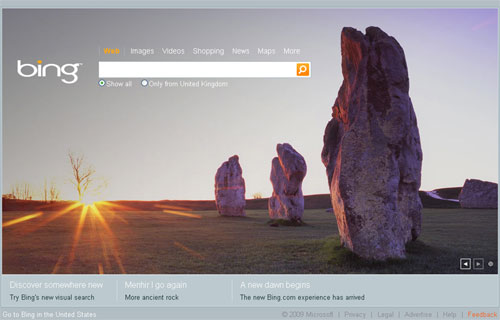
    Microsoft has officially launched the UK version of its search engine Bing, taking it out of beta where it has been since late May.

    During the past several months of beta testing, the Bing team has been working on making its search features more relevant for UK users.

    "Bing is ready for the UK consumer, with our revolutionary way of searching the Internet proving very popular," said Ashley Highfield, vice president of Microsoft UK’s Consumer and Online Business.

    "Features such as Categorized Search, Twitter and Visual Search are providing a different and intuitive experience, and are enabling us all to make informed decisions and discover more of the web – faster."

    Bing-UK

    Key features of Bing UK include:


    •  A localized UK homepage, with unique imagery and ‘hotspots’ – click through information boxes provide users with a wealth of information. A tool for discovery and inspiration.
    •  Visual Search, helps users search (maybe for a new purchase) using visual images and meta data without having to type in keywords.
    •  More Instant Answers, created to give users a quick response options to a search question, such as how is Liverpool doing in the premiership or which tourist attraction should I take my in-laws to at the weekend
    •  See who or what is being chatted about with global live Twitter feed searching, pulling up Tweets in Bing searches in real-time.
    •  Looking for the best deals? – an integrated shopping experience with Ciao UK searches the Internet to find the best prices, reviews and local availability. Bing supports making the best shopping decisions based on community feedback – not just advertising.
    •  Not sure how to get there? Bing Maps is based on insights from our Multimap users. Bing Maps now offers new map styles, imagery and transit integration as well as draggable routes.
    •  Bing has been built for the UK to help consumers get to key local sites and services in fewer links by including popular links, search boxes and suggestions within best match.

    "We will continue to innovate and introduce new features on an ongoing basis by listening and responding to what UK search users find relevant," said Highfield.

    "Removing our beta tag is merely the first step to signal Bing is here and already has features that are superior to those provided by other search engines."

    Related Articles:

    >Bing Gets A Bunch Of New Search Features

    >Bing Maps Gets An Upgrade

    >Bing Managed Big Gain In October


  • The Death of Taxonomies, revisited

    Earlier this year I caused quite a stir when I predicted the death of taxonomies. Taxonomists worldwide told me I was an idiot, nuts, completely delusional. Some were deeply concerned that their jobs were threatened, as if employers would change org charts based on my prediction. Others secretly told me they agreed.

    Of course, as so often happens in these dark days of 140-character tweets, my prediction was often taken out of context. I had predicted the death of traditional, monolithic, and single-hierarchy taxonomies, as well as the death of what I’d call the typical turn-of-the-21st-century taxonomy project (which I did dozens of times, as a former taxonomist), where librarians and/or linguists spend a few months in an organization determining how enterprise content should be categorized, so content technology could use it optimally. This project would usually be followed by an even longer period when people would admire the taxonomy, nod knowingly, saying “that’s exactly what we need!” – but not tag anything, despite the roadmap and project plan saying they should. 

    As 2010 fast approaches, I’ve never been more sure of my prediction. Metadata continues to be vital, but technology is constantly getting better at mining and organizing it. As an example, this week I visited three organizations in Paris using Sinequa (one of the vendors we evaluate in our Search & Information Access research) on their intranets. In an approach similar to Endeca’s, entity extraction and semantic analysis create multi-faceted categorizations by people, country, city, language, companies, and other topics. Most of the content was unstructured; no taxonomy or tagging projects were undertaken.

    “In over a hundred categorizations, we only have found two small errors in the past year,” said one implementer, from one of France’s largest wireless service providers. “We refine categorizations, but it takes very little time,” said another implementer at a systems integrator. “We wouldn’t have undertaken an enterprise taxonomy project because we never could have spent the time and money to write scripts or manually tag everything afterwards.”

    Taxonomists might decry this as foolhardy; the fact is these companies achieved the results they wanted and increased the productivity and efficiency of their knowledge workers. These examples are not to say the technology is perfect — far from it. My point is to reiterate that taxonomists need to adapt and work with technology to improve the results of what they can achieve for enterprises.

    Also, the title “taxonomist” should die – as it pushes people into the mindset of fixed hierarchies and navigations, despite over a decade of efforts to change that. Evolve the title, I say, into a metadata architect, or an information cartographer. Those are far more descriptive of what this role must be — and for the more savvy, already is — as we move into the next decade.

    Metadata architects can no longer get away with being topic generalists, they must be specialists in the industry content they’re refining and understand the end-user: what are the specialized topics that perhaps aren’t contained in content, that can’t be extracted, that would make knowledge workers more efficient? Another customer I met with this week, a large French government agency, pointed out the main thing their search tool couldn’t extract meaning from was acronyms. “We had to make a list of all the acronyms we use,” said the IT director. “Once we spelled out the acronyms, what they stood for and their synonyms, the software worked beautifully.”

    Taking taxonomies beyond what technology can achieve on its own is the metadata architect’s challenge for the next decade, because technology is at the point where it achieves what taxonomists were doing a decade ago.

    For buyers of technology, remember that different entity extraction and search tools are often geared towards different kinds of content; we detail this in our Search & Information Access product evaluation research. There’s also higher and lower-risk scenarios for allowing technology to do more vs. less work. Legal firms should have more categorization checks from a metadata architect or a content specialist, less so than a news agency where topics are more wide-reaching and less fraught with risk if an end-user doesn’t find something.

    As I’m based in Europe this quarter, I’ll be missing Taxonomy Boot Camp in San Jose, CA for the first time in several years. Last year, the opening session devolved into a debate as to how to define a taxonomy and a taxonomist. This year, I propose embracing a new era of metadata architects, ones that work with technology rather than be willfully ignorant of its inner workings. It’s only by studying the “how” of technology just as much as the “what” of the content that we’ll get to the next stage of content management, search, and information access.
     

  • Commodore 64 for the iPhone is back

    As you’ll recall, the C64 emulator for the iPhone was shut down by the App store for being too awesome. Apple has approved the app but took off the BASIC support. Not great but not bad, either.

    You can download the app here and this time there is no secret back door for enabling the BASIC emulator right in the app, which caused the emulator to run afoul of Apple’s draconian “no fun” policy.

    Here is a cheerful Australian man running you through the app. It allows you to play classic games including that Kung Fu game that you remember but don’t quite know the name of but had a picture of the Sydney opera house in the background (it was called International Karate). It comes with eight games.


  • Supplements – What I Take and Why

    Many people would like to take a single tablet each day that ensures optimal health. Thus was born the multi-vitamin. But you can’t. It’s not that simple.

    Until recently, my Father required an entire cupboard in the kitchen to house the collection of tablets and potions from which his daily supplementation was administered. My relentless re-education campaign is paying off: we are now down to a single shelf.

    Over the years I went from no supplementation to lots of supplementation then finally to judicious supplementation. I’d like to spare you the effort of making the same journey.

    First of all, a couple of assumptions to make clear.

    1. I eat a Paleo diet (most of the time.) Thus, the nutrient density of my food is high and well proportioned. My meat is mostly wild or organic / grass fed / free range. My fruit and veg is mostly organic. Yes, the nutrient density of modern fruit and vegetables, organic or otherwise, is lower than those our ancestors gathered; and yes, modern life throws at us additional toxins such as pollution. However, I doubt our ancestors had consistent access to the volume of fruits and vegetables we do. I believe this offsets the reduced nutrient content and additional toxin load.
    2. I have no special requirements. I am not pregnant (and barring some kind of unwelcome miracle, never will be) and I am not aware of any congenital deficiencies. My research has been based on my requirements as a normal healthy male.
    What Supplements do I Take?
    Vitamin D

    I have read a lot about this (see the articles in my bookmarks under the vitamin D tag.) There is a growing consensus that it’s a crucial ingredient to our wellbeing, and one whose healthy levels have been underestimated. People mistook average levels for healthy levels. Modern man spends much less time in the sun, so our bodies are not able to make what they need; and since it’s almost impossible to compensate for this via diet, we have a problem only supplementation or regular holidays can solve (unless you are lucky enough to live somewhere sunny.)

    I have written about how I got tested, revealing a significant deficiency, then supplemented to achieve improved levels.

    I buy this product.
    Summer: 3000 iu per day when I do not sunbathe. Zero iu when I do.
    Winter: 4000 iu each day.
    I get tested every 6 months, and adjust supplementation accordingly. I am still learning.

    Priobiotics

    I don’t agree with everything Mark Sisson says about supplementation, but there’s no doubt he knows his stuff, and it’s his views on probiotics in this post which have driven my policy. The key points I have learned are:

    • We need healthy bacteria in our guts.
    • Some things we do in our life kills the friendly bacteria (e.g. antibiotics, illness, stress.)
    • Unlike our forefathers, we are very hygienic. So the friendly bacteria does not tend to get replaced naturally.
    • Once re-introduced, friendly bacteria can grow and flourish by itself.

    Based on this information I take a day’s worth of acidophilus once a month, just to be sure. If I get an upset stomach now and again, or have a couple of days of stress, this will ‘re-seed’ my friendly bacteria culture.

    I buy this product (but not from this shop)
    Once day per month: 36 mg Lactobacilli culture x 4.

    Serrapeptase

    I have my Mother to thank for this one. Several years ago she noted I was taking ibuprofen tablets like smarties. I was playing a lot of sport and constantly had sprains or muscular issues to combat.

    Since then I have learned how bad Non-Steroidal Anti-Inflammatory Drugs (NSAIDs) – of which ibuprofen is one – can be. They mess with your stomach in a way which (to a layman like me) sounds a lot like the impact grains have.

    What are the alternatives? Well, many of the healthy foods I am already consuming have anti-inflammatory effects. Omega 3 fatty acids, for a start; and apparently cherries have excellent anti-inflammatory effects – but how many jugs of cherry juice would I need to combat a sprained ankle?

    Bottom line: serrapeptase is a naturally occurring substance with a long track record of largely side-effect-free use as a powerful anti-inflammatory. So when I am injured, I take that.

    I buy this product (but not from this shop)
    When injured, I take 60,000 or 120,000 iu 3 times per day. I have no real basis for this dosing other than the knowledge that side effects are rare even at high doses, and I have never experienced any.

    What Supplements would I Consider Taking?
    Omega 3 Oil

    I have read a fair bit about this too, but don’t seem to have bookmarked anything. The key point is that the ratio of omega 3 to omega 6 fatty acids in our diet is very important to health. As hunter gatherers this was not an issue. Wild food is high in omega 3. However, processed food and industrially farmed animals are high in omega 6. Supplementation with omega 3 can therefore be a good idea to combat the modern diet.

    Nevertheless, I do not supplement with omega 3 because:

    • You can get omega 3 from foods. Oily fish is an excellent source. I eat sardines, mackerel and herring by the bucket load. These are small, wild-caught, oily fish. Size is important because small fish have not lived long enough for significant quantities of cancer-causing toxins to build up in their fatty tissue. I also eat tinned salmon.
    • As I mentioned, most of the time I don’t eat modern or industrialised food anyway, so my omega 6 intake is generally low.
    • I don’t like spending money I don’t have to.
    Why Won’t I Take Anything Else?

    I will preface my final point with the following statement: I am always learning and certainly do not know it all. A year ago I would have written this blog post and not even mentioned vitamin D. Next week I may read an article that convinces me I should supplement with something else. For now, my views on further supplementation are as follows:

    Mankind barely even ‘gets’ the human body at the moment. We are about as good at knowing the full effects of a supplement as we are at predicting the weather beyond next week. This is a good analogy because like the body, the weather is an immensely complex system in which everything interacts with everything else.

    We run crude tests where we change one variable out of billions, then draw our conclusions from a few measurements over a few months.

    We evolved to receive our nutrients from food, which is also a complex combination of many substances. Yet we identify single molecules in that food and think that by supplementing just that molecule we can compensate for eating material that barely qualifies as food.

    So I will continue to ‘supplement’ with real food, except in cases (like vitamin D) where I am convinced this is not possible and where I am willing to take the gamble of consuming an isolated substance that crudely approximates what nature intended.

  • Review: Alesis DM6 Drum Kit

    scaled.Music Room With Alesis Drums
    Short Version: The Alesis DM6 drum kit is a full set of electronic drums that is extremely accessible, yet just as difficult to master as the real thing. In un-packing the box it came in, one thing was immediately clear; this is no kid’s toy. This is a nine-piece set (10, if you include the drum module that makes the magic happen), weighing in at around 40 pounds.

    The setup is easy enough, thanks to a simple, yet functional parts guide. I had it done within 30 minutes or so. I was struck by how much space this thing takes up. You might expect an electronic set to be smaller than its “real” counterpart, but you’ll still need to clear out some space for this one.

    One of the first things that impressed me was the modularity of the kit. I had set it up according to the recommended instructions (a high-hat, crash cymbal, dual-zone snare, and tom on the left, two toms and a ride cymbal on the right), but it’s clear that you can put each piece wherever you like. Each piece comes with its own clamp that you can attach to anywhere to the aluminum rack. There is also a second clamp that allows you to adjust the angle of the piece.

    There are two pedals, one for the bass kick, the other for hi-hat control. Both of these are extremely sturdy and well-built. The only small complaint I had about the kick pedal was that, for as heavy as it is, it still moved ever-so-slightly after just a few minutes of drumming, even on carpet.

    Once your kit is set up, it’s time to plug it into something and turn it on. You’ll see your standard jacks, like headphones, 1/8″ stereo, 1/8″ mix in, and USB. There is also a very tiny switch to change the kick type from the pedal to a pad. I used a 1/8″-to-1/4″ cable to connect the drum kit to my 8-track for immediate recording, and had my 8-track connected to stereo speakers so I could play without headphones.

    So, how does it sound? In a word, authentic. I was expecting to hear something good, but not great…..something more along the lines of a synthesizer. Instead, I was very pleased to hear sounds that could have come from a regular set of drums. When you hit each piece, a light blinon the module, indicating the hit. The pads themselves are rubber, and are generally very quiet. The only exception would be the cymbals and hi-hat, as the sound of you hitting them with your stick is pretty noticeable. So, I played and recorded a bit. Then I tried out some of the other kits. There are 10 preset kits and five user kits available. Each are fairly distinct, and give you a nice variety.

    The pads respond dynamically to the force you exert on them. Hit them lightly, you’ll get a softer sound. Or, you can bang on them as hard as you like to make it louder (and they are no worse for it). This is a nice feature, but I often found myself missing beats if I didn’t hit it exactly right, or with just the right amount of force. The snare was the biggest culprit, and even if I focused solely on it by hitting it with a solid rhythm, there seemed to be some loss of sound every so often. You can set the volume on each individual piece, so I experimented there, but wasn’t able to completely alleviate the issue.

    If you don’t like any of the preset kits, or wish you could change part of it, you can. By selecting the VOICE button, and then hitting the piece of your choice, you can then change the sound of it to pretty much whatever you want. When you’re done, you can save your custom kit to any of the five user kits. There are 108 sounds to choose from, so you’ll really only be limited by your imagination. You’ll also find a metronome with a variety of sounds and can select any time signature you wish. The kit also comes with 40 patterns that you can play along with. You can change the tempo, and this feature can be a helpful practicing tool.

    If you don’t have an external recording device, not to worry. You can actually record directly to the module and then export that out if you like. There is a 5,000-note limit for recording, so depending on what you’re playing, the length of recording time could vary greatly.

    Bottom Line
    With a street price of $499, it’s a hefty investment for the casual musician. But if you’re serious about playing and possibly recording, this is a great value. The amount of customizations from the hardware to the software, is impressive. All of the pieces are very sturdy, so the only chance at breaking something would be to tip the whole thing over…..but even then, you’ll probably be okay.


  • DC HIV Study: Can Intense Treatment Prevent Spread?

    The Washington Post: “The National Institutes of Health and the D.C. Health Department are preparing to launch a study in the District with an ambitious goal: to determine whether aggressive treatment of every adult with HIV could eliminate AIDS.” In conjunction with the study, NIH will provide experts to the city health department to help modernize clinic record-keeping efforts and to improve the tracking of HIV-infected people. “Experts will also show social workers how to monitor patients to ensure they take their medication, even when they feel well.” But the study, which is slated to begin “on or around World AIDS Day” will face many hurdles. “Researchers must first determine whether testing every adult for HIV is feasible. Then they must determine whether people who test positive will opt for treatment” (Fears, 11/13).

  • Veterans’ Health: Measuring The Scope Of Mental Health Challenges

    NPR profiles retired General Eric Shinseki, the head of the Department of Veterans Affairs, and his efforts to measure the scope of veterans’ mental health issues. In his first nine months in this position, he “has spent hours just listening to veterans talk. Shinseki tells NPR’s Steve Inskeep that he feels a strong obligation to ‘give back’ to the men and women he once served with.” NPR reports on the task Shinseki faces: “Since 2001, more than 1 million new veterans have come into a system that is being stretched thin.” One of Shinseki’s missions to improve the care and resources available to these vets is to work with the Department of Defense to “create a computer-driven system that will track service personnel through their careers — including when they become veterans. The idea, he said, is to use automatic enrollment to create VA health records for service members when they join the military. ‘So when the uniform comes off, we have all the evidence we need to make faster, better, smarter adjudications,’ Shinseki said” (Inskeep, 11/13).

    Meanwhile, in other VA news, The Philadelphia Inquirer reports on legislation being advanced by Rep. John Adler, D-N.J., that would increase oversight at VA clinics. Adler “announced yesterday that he hopes to require the Department of Veterans Affairs to report to Congress the quality of all the small programs in its hospitals and other medical facilities. The goal is to prevent a repeat of problems that plagued prostate cancer care at the Philadelphia VA Medical Center as well as programs at other VA hospitals.” Adler’s measure focuses on three specific concerns: “small programs, where medical errors and poor care are most likely to avoid detection; radiation safety; and contracts with private doctors and hospitals” Goldstein, 11/12).

  • Broadband editorial in Lake County

    An editorial in yesterday’s Lake County News-Chronicle champions Minnesota as a possible national leader in rural broadband. Here’s an excerpt from the editorial, but it’s definitely worth reading the whole thing!

    Minnesota is no stranger to demanding that rural areas have the technological advantages of metropolitan areas. In the 1920s, the state led the way in proving that bringing electricity to farms was viable. Electric companies then feared they would never recoup the costs to build a rural grid. There were soon electric co-operatives across the state.

    The example set in the state proved a model for President Roosevelt’s Rural Electric Administration in 1935 that brought the technology across the nation.
    While it’s nice to see that state gumption again from the broadband task force, too many times we’ve seen businesses leave out our rural areas when it comes to today’s technology. Dead zones remain when it comes to cell phone coverage. Only now are there plans for towers in Finland and Isabella in Lake County.

    The slow pace of providing what is now a basic service can’t happen when it comes to internet service. With Lake County’s work on broadband, we can stay ahead of the curve and perhaps prove to internet companies that rural areas are a market.

  • Google Voice Gets New Free VoIP Service

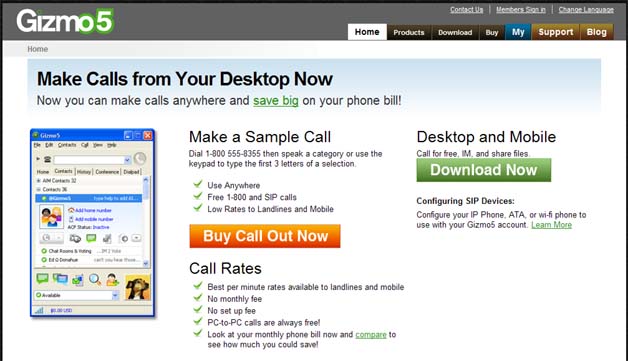
    Earlier this week, reports surfaced indicating that Google had bought Gizmo5, a VoIP firm. The news came just on the heels of Google’s AdMob acquisition. Google has now officially announced that it has indeed acquired Gizmo5.

    "While we don’t have any specific features to announce right now, Gizmo5’s engineers will be joining the Google Voice team to continue improving the Google Voice and Gizmo5 experience," Google says. "Current Gizmo5 users will still be able to use the service, though we will be suspending new signups for the time being, and existing users will no longer be able to sign up for a call-in number."

    "We’ve acquired a number of small companies over the past five years, and the people and technology that have come to Google from other places have contributed in many ways, large and small, to all kinds of Google products," the company adds. "Since the GrandCentral team joined Google in 2007, they’ve done incredible things with Google’s technology and resources to launch and improve Google Voice."

    In a previous report, Doug Caverly of WebProNews noted that Gizmo5 is a good fit for Google. For one, Gizmo5 is free, and Google offers a great deal of free services as it is. It is also available in nine languages, and Google is frequently expanding its reach in this regard with most of its products.

    A couple weeks ago Google announced that Google Voice users can now use their own existing mobile numbers. They no longer have to have a separate Google number. This should be a great way to attract new users. However, at this point, Google Voice is still only available on an invitation basis.
     

    Related Articles:

    > Report Indicates Google Bought Gizmo5

    > You Don’t Need a Google Number to Use Google Voice

    > AT&T Goes On The Offensive Against Google Voice

  • Health is wealth, wealth is health

    Last Thursday, at around 8.30am, I sat in the queue at the Sir Sanusi Hospital waiting to see the doctor. There were 15 of us in the women’s queue and about the same number in the men’s.

    Two men came in suddenly carrying an old man. They sat him on the floor as there was no space on the bench. A man in the queue asked if others would let the old man see the doctor when the next person is called in. The old man said that it wasn’t an emergency and he would wait his turn. He said he just had difficulty walking and his companions would not go at his pace, so they carried him.

    Waiting at the hospital

    Waiting at the hospital

    One woman grumbled that some people exaggerate their illnesses so they get ahead of the usually long hospital queues. Another woman pointed out that she had seen a woman actually passing away in the queue at the very spot where we sat. The women then went on to discuss how, if they had a choice would go to a private hospital, where they won’t have to spend the day on the queue, or see people die while waiting.

    They went on to discuss how hospital staff ill-treat people, how the doctors are in a hurry to write a prescription even when the patient has not finished listing the symptoms. They concluded that if you could afford private hospitals, very good health care is available.

    DFID Nigeria has 3 Health Programmes currently running in Northern Nigeria. As the Social Development Adviser, I work with the Health Adviser who manages from the ‘demand side’ – getting the right approach for helping people, and supporting communities to actually demand for better public services. A lot has been done in this area through earlier DFID and other donor programmes.

    However, there is still a lot to be done to get people to start expecting some positive response from the state. As a local person, I know that the challenges are not as overwhelming as they seem and with the constructive input of service users, we can make the changes they see as current problems. There is also a need to get the state to start improving its service delivery so people have the indication that the state is trying at its own end. The demand side and supply side need to be pursued from their different ends to have an aggregated push towards reform.

  • Suggestions Abound For Cutting National Health Care Costs

    Two publications looked at the problem of rising health costs and ways to try to “bend the curve.”

    In a cover story, BusinessWeek reports: “None of the health-care reform bills on the table in Washington do anything meaningful to address that wasted $700 billion.” The magazine lists 10 ways to cut costs, including: “develop a healthy workforce,” “coordinate care through family doctors,” “get patients to take their medicine,” “discuss options near the end of life” and “use insurance to manage chronic disease” (Arnst, 11/12).

    Meanwhile, The New York Times writes: “Which should we trust to rein in health care costs: the federal government or the private sector?  Seeking to make the case for less government involvement in health care, a brief analysis (PDF) by the Joint Economic Committee’s ranking Republican, Senator Sam Brownback of Kansas … concluded that countries with primarily government-run systems often do a worse job controlling cost growth than does the United States. The conclusion is that giving government more control over health care here would be a big mistake.”

    It is an idea with wide appeal, but these data, at least, do not support it. ‘They extrapolate from one statistic to make conclusions about how comparative systems work that are at odds with what the broader evidence shows,’ said Richard Saltman, a professor of health policy at Emory University, who has published an online critique of Mr. Brownback’s memorandum”  (Andrews, 11/12).

  • In Rural Kentucky, An Unexpected Take On The Health Debate

    Frank Browning reports for Kaiser Health News on how the health reform debate is playing out in rural Kentucky. “From a strip-mined bluff at the edge of this famous mountain town you can see one of the most concentrated and diverse sets of medical facilities in rural America: a general hospital, a psychiatric hospital, a university-based rural health care center and clinics for primary care, cancer, urology, cardiology, addiction and ear-nose-and throat problems. Yet Hazard, which for 40 years was a coal boomtown, rests at the center of the worst health care region in America” (11/13). Read the entire story. This story has four related videos featuring local health care experiences and perspectives: Cathy Nance, Gerry Roll, Annie Fox and Beverly May.

  • Overhaul Could Leave Kids’ Hospitals Strapped For Cash

    Industry advocates say health reform could place a disproportionate burden on children’s hospitals, because they will face cuts along with other hospitals, but do not stand to benefit from expansions in insurance coverage, USA Today reports. Children’s hospitals “serve a high share of patients on Medicaid, which pays hospitals less than private insurance. And, because of past government efforts to insure children, most of them already have coverage — meaning children’s hospitals have less to gain from an increase in the number of people with insurance.” The planned cuts, which hospitals agreed to in meetings at the White House, would include so-called disproportionate share hospital payments that help facilities that treat the uninsured and Medicaid patients make ends meet. Children’s hospitals are now lobbying Congress to block such changes they say could cost them $876 million (Fritze, 11/12).

    Meanwhile, due to budget crises, some states are already cutting payments to hospitals. The Gary, Ind., Post-Tribune reports “Indiana Families and Social Services Administration announced Tuesday it would cut the state Medicaid match by 5 percent — an estimated $10.6 million — to Indiana hospitals. Indiana Medicaid paid the state’s hospitals $524.6 million for inpatient and outpatient care, with the state contributing approximately 25 percent of that total and the federal government the remaining 75 percent. The 5 percent cut would come from the state. Local health systems said the Medicaid cuts will hurt their ability to deliver care to poor and uninsured patients and those Medicaid recipients” (Taylor, 11/13).