Blog

  • France wants to invest $27B in high speed broadband

    France has unveiled a financing plan that would result in the government and private companies spending €20 billion ($27 billion) over the next 10 years bringing high speed broadband and fiber connectivity to the country. The news comes after the EU’s budget cut almost all of the $7 billion it planned to spend bringing broadband in Europe.

    Yet Europe still hopes to have 50 percent of the population at 100 Mbps speeds by 2020 with the rest of the population at 30 Mbps.

    France’s president Francois Hollande outline the plan in a speech earlier this week, according to a Reuters story. From the story:

    Three tranches of more than 6 billion euros each will fund the planned network rollout, Hollande said. One will come from network operators, one from a mix of operators and local government and the last from state and local-government money.

    The goal is for 50 percent of the country to have faster broadband — although those speeds weren’t specified — by 2017. France attempted this before, but it failed because operators didn’t want to invest in rural areas where the costs of deployments are higher. Under the new plan, operators will be able to pool their capital to fund those areas, which may or may not actually inspire them to invest. The details aren’t clear, but if operators could share rural networks and all provide service on them, it might be a model worth watching for future rural deployments.

    Related research and analysis from GigaOM Pro:
    Subscriber content. Sign up for a free trial.

  • And the Award Goes to…

    movie

    Image by fauxto_digit via flickr creative commons

    Movie fans, rejoice – this is a big weekend for you. With all eyes on the Hollywood film industry, where will you be tuning in on Sunday night to see who walks home with an award? (Topical: in case you missed it earlier this week, we talked about which BlackBerry apps we would turn into feature films!)

    If I could assign a trophy for “best gadget,” it would undoubtedly go to my new BlackBerry Z10. I’m having so much fun with it, and like a lot of you, I enjoy using my BlackBerry device to BBM, tweet and download apps while I’m watching TV. This Sunday will be no exception. With movies on the brain, I wanted to share great apps, wallpapers and music that play into the glamour of this annual event.

    I kicked off the award show weekend early by listening to the Academy Studio Orchestra soundtrack. It includes lots of songs from this year’s Best Picture contenders. Next, I downloaded the Popup for IMDb app for quick access to info on actors, directors and movies. Even a film buff like me gets rusty on her trivia! On Sunday afternoon, I’ll start checking out the trending topics on my Twitter app so I can start taking part in the conversation – from the red carpet to the after-parties.

    What will you be doing Sunday night? If you’re looking for new media, check out BlackBerry World before the big event. And don’t forget to leave us a comment to tell us what you found!

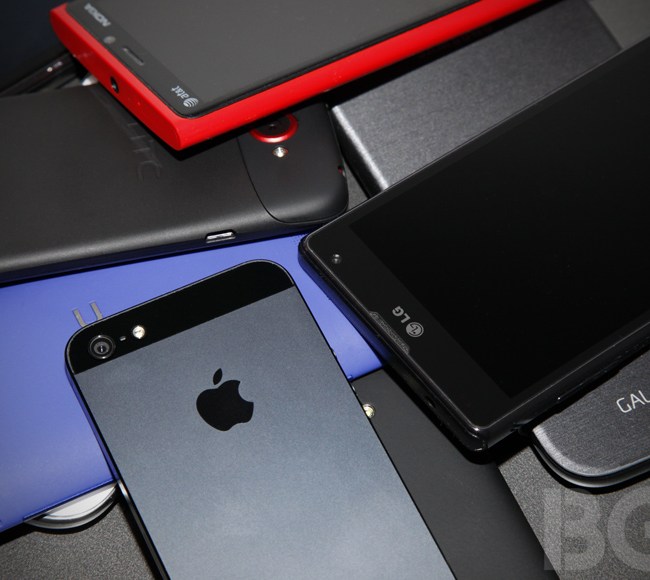
  • Leaked cases may reveal Galaxy S IV design

    Galaxy S IV Photos
    Samsung (005930) is expected to take the wraps off its next-generation flagship smartphone in less than three weeks, but details surrounding the upcoming Galaxy S IV continue to trickle out in the meantime. The latest leak came on Friday from MobileFun, which published photos of what it claims to be third-party protective cases built for the Galaxy S IV.

    Continue reading…

  • March of the Eagles Review (PC)

    Prussia against France is one of those classic 19th century military face-offs that I’ve been wanting to play since I was in the seventh grade and still learning about the complexities of European politics during the previous century.

    Many video games have simulated the conflict, using various levels of detail, but I was never skilled enough to pla… (read more)

  • NBC Falls to Fifth Place After Poor Sweeps Showing

    Deadline this week is reporting that NBC is projected to fall to fifth place among adults ages 18 to 49 after a dismal sweeps showing.

    While CBS raked in ratings for established shows such as The Big Bang Theory and Two and a Half Men, as well as the its coverage of this year’s Super Bowl. Fox continued to ride the success of American Idol, but NBC averaged only a 1.2 rating in the key adult demographic from January 31 to February 19. As Deadline points out, that’s lower than the ratings Spanish-lauguage station Univision has seen over the same period.

    New NBC shows such as Do No Harm and 1600 Penn have been ratings failures. The only shows NBC seems to have that garner even moderate ratings are The Biggest Loser and The Office.

    Networks have the money and exposure to provide free TV entertainment to millions of Americans, but as the country becomes more connected those same networks are becoming less relevant. The NBC Facebook page, for example, has only around 400,000 “Likes,” while Netflix has over 3.7 million. Now that Netflix has demonstrated through House of Cards that it can provide popular premium TV programming without getting it from other content producers, networks should be scrambling to make themselves more relevant – and available – online.

  • “El Chapo” Killed? Chicago “Public Enemy” Reportedly Taken Down

    “El Chapo”, a.k.a. Joaquin Guzman, has reportedly been killed in a bloody shootout on the Guatemala border.

    Guzman was head of the infamous Sinaloa drug cartel in Mexico and was largely considered to be Chicago’s “Public Enemy Number 1″, as he used the city as his American hub. After years of heading a huge web of cocaine and heroin producers, Guzman was thought to have amassed a fortune of around $1 billion. After escaping from a Mexican prison in 2001, Guzman has been on the run and has been considered by law enforcement officials in Chicago as more dangerous and infamous than even Pablo Escobar, the famed drug lord of the 1980′s.

    Witnesses to the gun battle this week–which allegedly occurred between rival drug gangs in the jungle surrounding Peten, Guatemala–say Guzman was among several killed, but officials haven’t confirmed that yet. They say they will conduct a thorough investigation of the area and have a copy of Guzman’s fingerprints to go on, but as of now, they haven’t even been able to confirm that a shootout even took place.

    “We have to wait for all the technical information in order to determine if, in fact, one of the dead is of Joaquin `El Chapo’ Guzman,” government official Francisco Cuevas said.

    Image: Damian Dovarganes

  • Why Every Analyst Is In Love With The Siren Song Of The Low-Cost iPhone

    iphone-family

    For almost as long as Apple’s iPhone has been in existence, analysts have claimed to see visions of a low-cost version of the device aimed at developing and prepaid markets. It’s easy to see why these visions have grown in magnitude and gained a more vocal following over the years: entering that market would, in theory, broaden Apple’s potential appeal by hundreds of millions of new customers. But I refer to the low-cost iPhone as a “siren song” for a reason – there’s a significant potential downside if Apple tries such a device and fails to impress.

    The latest buzz around a budget iPhone device is being generated by a new investor note from Morgan Stanley analyst Katy Huberty (via Business Insider), who provided three reasons for why she and her firm see a low-cost iPhone on the horizon. The iPad mini’s success in China and Brazil, Chinese consumers gravitating to the latest iPhone over older models, and surprise iPhone 4 demand were all seen as indicators that Apple will go budget in the near future.

    Huberty met with Apple CFO Peter Oppenheimer before penning the report, but she doesn’t directly attribute any of her reasoning for a cheaper iPhone to him directly. Other encounters between analysts and Apple execs have also left similar impressions, and Tim Cook even went so far as to tell Bernstein’s Toni Sacconaghi that the company had specific “clever things” planned to target the prepaid market, and that the company wasn’t “ceding any market” despite its continued efforts to target higher-end smartphone buyers.

    Recently, there have been more indications that Apple might be going low-cost with a new iPhone design, including reports from the supply chain that a new model will come out with a plastic body and design cues from the current iPod touch. More reliable sources, including the Wall Street Journal and Bloomberg, have also chimed in (though they’ve thrown out the same idea in the past, actually right around when Tim Cook made his original statements to Sacconaghi).

    A cheap iPhone is a tantalizing story because it’s a tantalizing product for investors, for consumers and for Apple itself. But Apple’s concern isn’t beating competitors on price, as it has said time and time again; it’s about delivering a no-compromise experience. So long as it can do that at a price point that makes more sense for the prepaid market, it would be happy to field such a device. The iPad mini is another example of Apple waiting to build a product people clamored for until it could get the experience up to its standards, and waiting has proven the right strategy there.

    With a cheap iPhone, striking that balance is even more important. Apple has to deliver a product that allows it to maintain its reputation as a mobile platform with the best consumer experience. Doing anything else would invite comparison to other “good enough” budget products from rivals, which would undermine all of Apple’s efforts to brand itself as a premium maker of hardware and software. It’s a slippery slope, which is why, despite allusions made by Cook two years ago to a strategy that embraces the pre-paid market, we’ve seen little, if any deviation from its standard course since then.

    Analysts love the idea of a low-cost iPhone because it looks like ripe, juicy, low-hanging fruit. But Apple is rightfully cautious because it has built a brand on produce from higher up in the tree. Huawei and ZTE have shown how it can be difficult to start as a budget brand and claw your way up in consumer eyes, and their marketing struggles are probably a good indication of why Apple, if it is going to go after the prepaid crowd, will have to do so very, very carefully to avoid being lost in the deep.

  • What stays in Vegas: how Nevada’s online gambling law will — and won’t — change social gaming

    Nevada became the first state in the country this week to allow online gambling with a new law that gives the green light to poker and other games. The law is intended to keep Nevada out in front of rival New Jersey but will not do much for social game makers like Zynga that are counting on gambling to change their fortunes.

    Nevada’s governor signed the law on Thursday with bipartisan support and described it as a “new frontier” for the gambling industry. The law came about after the federal government in late 2011 decided to change its policy and permit online gambling to take place in states that explicitly permit it.

    The new policy is significant in light of research that predicts online gambling will be worth $100 billion worldwide on mobile devices alone by 2017. This potential market has attracted the established casino industry as well as tech companies that are vying to make gambling games or process back-end betting operations.

    The new U.S. gambling rules are also a potential lifeline to social game maker Zynga which has seen its titles like Farmville and Mafia Wars stutter. And since being cast adrift by Facebook last year, Zynga has seen its shares fall around 80 percent.

    The Nevada law, however, is unlikely to change Zynga’s fortunes anytime soon as it only applies to internet users in the state. The law is also primarily intended not to help social gaming sites but to ensure that Vegas casinos have a first-mover advantage in providing operational support when — and if — other states follow suit. As the Las Vegas Review-Journal reports, the Nevada law is written to keep out companies that already have existing player data.

    The upshot is that the U.S. will, at best, have a patchwork of states in the foreseeable future where online gambling is permitted. If big states sit it out, it will not be easy for companies to guarantee that online poker tables are full. It also means operational headaches and potential criminal penalties for the game makers which must ensure, for example, that a player in Colorado doesn’t slip into a Nevada-based poker game.

    The bottom line is that full-scale online gambling is still far on the horizon as the U.S. regulatory process shakes out. In the meantime, the winners and losers among Zynga and other tech companies like Big Fish are likely to be determined in the U.K. and elsewhere.

    (Image by Beto Chagas via Shutterstock)

    Related research and analysis from GigaOM Pro:
    Subscriber content. Sign up for a free trial.

  • 3D Printers Are Changing The Classroom

    Last week, we took a look at how 3D printing will revolutionize manufacturing in the United States. Before it can do that, however, it needs people who know how to use the technology. That’s where education comes in.

    The folks at Online Degrees recently created an infographic that shows how 3D printing will have a profound impact on the future of education. Of course, the most obvious benefit will be for design students using 3D printers to bring their creations to life. That being said, pretty much every discipline will be able to benefit from 3D printing in the future.

    Of course, 3D printers and expensive, and schools are having to slash budgets. That’s where the innovative entrepreneurs comes in. A recent Kickstarter was offering two 3D printers for only $700. The goal was to get as many of these things into schools as possible. Unfortunately, the project wasn’t able to meet it’s funding goal. An equally exciting cheap 3D printing project, the 3Doodler, has recently smashed its funding goal, however, and could prove extremely useful in certain disciplines.

    3D Printers Are Changing The Classroom

  • The Latest In Google’s Plot Against Groupon

    Google has released a new Offers format for AdWords ads. Larry Kim, CTO of Wordstream, who was an early Google partner on Enhanced Campaigns shared this screen cap with us:

    Google Offer ads

    Kim calls it “Google’s plan to kill Groupon,” and says these ads matter because:

    1) Way better deal than Groupon who requires 50-90% discounted pricing, then takes 50% of that for themselves.

    2) Advertisers can track this. Local businesses can connect the dots between online marketing and in-store purchases. Not possible before!

    3) I think they’ll be rolling this out on Google Maps. Local Deals + Google Maps = perfect match!

    Kim Discusses the ads more in his own blog post.

  • Hearing is believing: People don’t realize how important great sound is until they experience it

    Mobile Audio Study
    Sound quality is a hugely important part of the multimedia experience on mobile devices that often gets overlooked. It’s not easy to convey how big the impact of good sound quality is on the overall experience, but a new Parks Associates study commissioned by Dolby set out to do just that. The study’s findings, set to be published later today by Dolby, show that the majority of smartphone owners consider sound quality to some degree when choosing a smartphone or tablet. After hearing an audio demonstration from a device that features enhanced sound, however, the overwhelming majority of users acknowledge that audio quality is an important feature on mobile devices.

    Continue reading…

  • The Decline and Fall of Product Placement

    For more than a century, the motion picture has reigned supreme as the world’s ultimate storytelling tool. The sheer size of the “big screen,” Hollywood’s confidence that their product can hold audience attention for upwards of three hours, and budgets that run into the hundreds of millions, all proclaim the dominance of their art form. And the artists who tell stories? Filmmakers are gods, TV producers are wannabes, and ad execs are scum (a recent Ad Age survey put the advertising profession below politicians on the respectability scale).

    So it’s no wonder that over the decades, advertisers have so eagerly turned to the tool of product placement when looking to associate their brands with a great story. Embedding a product or service into a story masterpiece has seemed like a natural win — especially when the assumption is that brand stories will never be able to compete with the real storytellers in Hollywood.

    Of course, these assumptions are becoming obsolete faster than most audiences or advertisers realize. And the future of storytelling will turn this power dynamic on its head. Technology is constantly opening up opportunities for stories surrounding brand experiences to be every bit as compelling — and far more interactive and authentic — than the next Hollywood blockbuster. Instead of product placement — where the advertiser pays to attach a product to someone else’s superior story — I believe we are entering the era of story placement — in which intense creativity will be applied to every step of the customer experience to turn the brand itself into a compelling and ever unfolding story.

    How will this work? As I imagine the creative agency of 2020, based on conversations with numerous executives and futurists, I see three distinct changes that might drive the emerging practice of story placement.

    Brands will build “story-worlds,” not canned, thirty-second spots designed for broadcast. Brands that hope to create engagement, exploration, and sharing will need to create cross-platform content that begins as a video story, continues in interactive experiences, and perhaps reaches climax in an actual real-world experience. This requires characters that live and breathe (rather than pop up for thirty seconds and die), plots to unfold over time, and a place in the world for audiences to insert themselves. Jeff Gomez, of Starlight Runner Entertainment, is a trailblazer in creating worlds for companies like Coca Cola and Mattel. His seven-figure engagements have paid big dividends for clients because they have led to campaigns in which audiences intuit the magic behind the product’s story and clamor to get involved. His campaigns give brands the tools they need to expand their story into whichever direction it takes off.

    Storytelling will be turned to the crowd (very carefully). There’s been so much talk of crowdsourced storytelling these days — and so little actual success. That’s because just asking your audience to tell your story for you doesn’t work. Brand managers need to set up their brand’s story world (see above) and then turn the storytelling itself (or part of it at least) to the crowd. They need to define the stories the crowds will tell. Doritos has been notably successful at this with its Superbowl advertising. They’ve been able to effectively set the rules for the Doritos world and consistently made good on their promise to honor their community’s creative output on the world’s largest stage. The results — many of the most beloved Superbowl spots of the last few years and massive community engagement and evangelism. Brand managers need to learn how to manage the process rather than the output.

    Audiences will demand authenticity. Storytelling of the future will put two competing pressures on advertisers. On the one hand, advertisers will need to become far better at dealing in fiction. The kinds of experiences that will rise to rival Hollywood blockbusters will necessarily be infused with magic, symbolism, and drama. Nothing else will delight increasingly jaded audiences. Our worlds must look as colorful to audiences as Oz looked to Dorothy when compared to Kansas. But…nobody wants to live in Oz because Oz was ruled by a charlatan. It was a magical place, but a highly inauthentic one. It took Dorothy exposing this to become the hero of her own story. And that brings in the contradictory second pressure: to be deeply authentic even as we create fictional worlds.

    So while there will be a premium placed on creativity and symbolism, audiences will demand that the lines between reality and fantasy not be blurred. Associating a car, for instance, with a world of adventure, joy, and mystery will offer an exciting immersion. Promising that it will deliver you happiness despite poor safety ratings or environmental performance will send audiences running to the story-worlds of competitors. Living up to the wonderful worlds brands create — and to higher audience expectations — may be a powerful force for higher levels of corporate and non-profit social responsibility.

    These trends are fast approaching. In many ways, they’re already here. But will these story-placement tools raise brand storytelling to the level of the Hollywood masters? I predict within five years the first brands will definitively answer yes. The question is: Who will get there first?

  • PNNL rolls out its clean energy tech at ARPA-E

    Researchers from the Department of Energy’s Pacific Northwest National Laboratory will exhibit their work at the 2013 Energy Innovation Summit of high-impact energy research funded by DOE’s Advanced Research Projects Agency-Energy, or ARPA-E. The summit runs Feb. 25-27 at the Gaylord Convention Center in National Harbor, Md. Below is an overview of PNNL research that will be highlighted there.

    Nighttime solar power with cheaper thermal energy storage

    Booth 1211

    Solar power is a clean source of energy, but its use is limited to when the sun shines. One option that extends solar energy into the night involves capturing the sun’s heat during the day and releasing it when it’s dark. Called thermal energy storage, the practice has been limited because the molten salts typically used to store solar heat for power production require large, expensive equipment. PNNL materials scientist Ewa Rönnebro and her team have shown that a powder made of a proprietary metal hydride can store up to 10 times more heat per mass than molten salts and operate at higher temperatures. PNNL and project partners University of Utah and Heavystone Lab are developing a 3 kilowatt-hour thermal demonstration system that will collect heat for six hours and discharge it over another six hours. If successful, the project could make thermal energy storage systems smaller and more cost-competitive.

    New fuel storage tanks lighten the load for compressed natural gas vehicles

    Booth 1237

    With the nation’s supply of natural gas increasingly abundant and inexpensive, the fuel is being considered as a cleaner way to power light-duty cars and trucks. But while more than 15 million natural gas vehicles operate throughout the world, only about 150,000 are running on America’s roads. One challenge is that natural gas exists as a vapor, meaning it contains less energy per volume than the denser, liquid gasoline most of us pump into our cars. Natural gas must be compressed into a pressurized fuel tank to increase its energy density. PNNL engineer Kevin Simmons and his team are developing special, lightweight fuel tanks that make better use of the limited space available in vehicles. PNNL’s fuel tank design uses a unique manufacturing method called superplastic forming. The method involves welding together metal sheets at specific points and blowing air in between the sheets to expand them, forming internal chambers like an air mattress. The expanded metal tank will conform to more of a vehicle’s space than traditional cylinder tanks. It also helps the cars weigh less, which makes them more fuel-efficient. The PNNL tank is expected to cost $1,500 to make and pack 12 megajoules of energy per kilogram, about twice the energy density of today’s metal compressed natural gas tanks. Lincoln Composites is a partner in the project.

    Rare earth-free magnet makes electric motors cheaper with more abundant materials

    Booth 1114

    From wind turbines to electric vehicle motors, magnets play an essential role in a variety of today’s electronic devices. But there’s a limited supply of the rare earth minerals that are traditionally used in these magnets. In particular, dysprosium is added to increase a magnet’s operating temperature, which is high in motors. But dysprosium has been named a critical material with unstable availability. PNNL materials scientist Jun Cui and his team are developing a manganese-based nano-composite magnet that doesn’t contain dysprosium or any other rare earth mineral. The new magnet can operate at 200 degrees Celsius. The team’s immediate goal is to make a permanent magnet with 10 MGOe, or megagauss-oersteds, a measurement of magnetic energy. With additional funding, the team will work to develop a 20-MGOe magnet, which would be more useful for a broader set of commercial applications. Project partners include PNNL, the universities of Maryland and Texas at Arlington, Ames Laboratory, Electron Energy Corp. and United Technologies.

    Membrane dehumidifier makes air conditioners up to 50 percent more efficient

    Booth 635

    Americans unnecessarily spend billions of dollars on power bills when humid air causes their air-conditioning systems to be inefficient. To cut electricity use for cooling in hot, humid climates by 50 percent, a team led by ADMA Products and including PNNL and Texas A&M University is developing a novel dehumidifier. The system uses a thin membrane developed by PNNL chemical engineer Wei Liu and his PNNL colleagues that acts as a molecular sieve and soaks up water from the air. The membrane consists of a thin, foil-like metal sheet that’s coated with a layer of a water-attracting material called zeolite. Just one-fifth the width of human hair and made from common, inexpensive materials, the membrane removes moisture from air many times faster than dehydration membrane products currently on the market. PNNL is developing a small, lab-scale prototype of its system, and the project team has created a manufacturing method that can be used at larger scales. Visit Liu at the ADMA Products booth, or hear him pitch the technology to a panel of investors at ARPA-E’s Future Energy Pitching Session, which runs 6:30-8:30 p.m. Monday, Feb. 25. Click here for more info on the pitching session

    New way to heat, cool electric vehicles reduces drain on driving range

    Booth 1112

    The combustion engines in gasoline-powered cars generate a lot of heat, which is great for heating the passenger cabin in winter. But energy-efficient electric vehicles produce very little waste heat. Providing electricity for the same amount of heat used in gasoline cars would reduce electric vehicles’ driving range by up to 40 percent. PNNL engineer Pete McGrail is leading a team that includes the University of South Florida to develop a material called an electrical metal organic framework, also called an EMOF, for electric vehicle heating and cooling systems. The material would work as a molecular heat pump that efficiently circulates heat or cold. By directly controlling the material’s properties with electricity, their design is expected to use much less energy than traditional heat and cooling systems. A 5-pound, EMOF-based heat pump that is the size of a 2-liter bottle could theoretically handle the heating and cooling needs of an electric vehicle with far less impact on driving distance. While using a unique testing system that applies voltage to the material, the team observed for the first time an EMOF transitioning from an off, or insulating, state to an on, or semiconducting, state. The transition demonstrated the project’s premise, coincided with a change in the material’s crystal structure and was completely reversible. The team is now making other EMOFs with similar switching abilities and higher adsorption capacities that improve performance in an electric heat pump.


    Reporters interested in scheduling interviews with the PNNL scientists about the above projects should contact Franny White at (509) 375-6904 (office) or (360) 333-4793 (cell). More information about these projects and other PNNL research, including transactive control of a smart power grid, is also available at the PNNL display, located at booth 1108.

    The summit’s Technology Showcase, where PNNL’s project booths are located, is open 11 a.m.-1:30 p.m. and 4:45-8 p.m. on Feb. 26, as well as 7:30-8:45 a.m. and 11:30 a.m.-1:45 p.m. on Feb. 27. Click here for a map of the Technology Showcase layout, including PNNL booth locations.

    Press passes for the 2013 Energy Innovation Summit can be obtained by visiting the summit’s press website here.

  • Jimmy Kimmel Has Some ‘Very Important Kardashian News’

    In case you haven’t heard the latest “Kardashian news,” Jimmy Kimmel has you covered. He has an idea for a new Kardashian show that they’re “testing” in case Kim goes away.

  • Slayer Drummer Out Of Soundwave, Posts On Facebook

    Slayer fans were ecstatic to learn that 3 of the original band members would be performing together at the Soundwave Festival in Australia this year, but drummer Dave Lombardo had some bad news for them on Thursday: he’s been asked not to come.

    Lombardo says he was asked by the band’s lawyers to disengage himself from the tour due to a dispute over money and posted a lengthy explanation on Facebook yesterday, apologizing to fans.

    I want to personally apologize to all of our fans in Australia who have bought tickets for the tour expecting to see me in my usual place on the drums.

    So that you all know the truth, as of the end of the business day on February 14th, I was notified that I would not be drumming for the tour in Australia. I’m saddened, and to be honest I am shocked by the situation.

    Last year, I discovered 90% of Slayer’s tour income was being deducted as expenses including the professional fees paid to management, costing the band millions of dollars and leaving 10% or less to split amongst the four of us. In my opinion, this is not the way a band’s business should operate. I tried rectifying it by letting my band mates know, and Tom and I hired auditors to figure out what happened, but I was denied access to detailed information and the necessary back up documents.

    I spent the Christmas and New Year holidays realizing I had toured all over the world in 2012, but yet, had not been paid (except a small advance) or provided a proper accounting for a full year’s sweat and blood. On top of this, I was told that I would not be paid until I signed a long form contract which gave me no written assurance of how much or on what basis management would deduct commissions, nor did it provide me access to the financial budgets or records for review. It also forbade me to do interviews or make statements having to do with the band, in effect a gagging order.

    Last Monday, I sat down with Kerry and Tom to rehearse for Australia and to propose a new business model that I felt was the best way forward for Slayer to confidently protect itself so we could do what we do best . . . play for the fans. Kerry made it clear he wasn’t interested in making changes and said if I wanted to argue the point, he would find another drummer. On Thursday, I arrived at rehearsals at 1 pm as scheduled, but Kerry did not show. Rather, at 6:24 pm I received an email from the lawyers saying I was being replaced for the Australian dates.

    I remain hopeful that we can resolve our issues. But once again, I sincerely apologize to all of our fans in Australia who spent their money expecting to see the 3 of us original Slayer members.
    I look forward to seeing you in the future.

    Sincerely,
    Dave Lombardo

    Lombardo, who has also played with Fantomas with Faith No More’s Mike Patton, isn’t the first drummer to have issues with this year’s Soundwave tour; Blink 182′s Travis Barker just recently announced he won’t be able to make it due to a reluctance to get on a plane, after a tragic crash five years ago took the lives of two of his close friends and left him severely injured.

    If you have a few minutes, check out this haunting cover by Tori Amos.

  • SimCity Creators Preview New Game, Talk Sims

    When Will Wright designed the first SimCity all the way back in 1989, he founded an entire genre of games. Now that he’s out of the game design business (sort of), it would be interesting to see what the gaming legend might have to say about EA‘s and Maxis‘ newest SimCity. Would he appreciate the detailed building designs and intricate patterns of Sims interacting with cities, or would the game’s always-on DRM scheme and push toward a Sims 3-like micro-transaction system offend his creative sensibilities?

    Luckily, we don’t have to wonder. EA today released a discussion between Will Wright and Ocean Quigley, creative director of the new SimCity. In the video the pair talk a lot about how the individual Sims depicted in the game can help players see the results of their decisions – and even cause them to feel guilt.

  • Watch These Quadcopters Flip A Reverse Pendulum Into The Air And Catch It (No, Seriously, Watch)

    scientific

    While I hate using Buzzfeed-style headlines, this video warrants the hyperbole. We’re all familiar with the magic of quadcopters – they can fly in formation, roll around obstacles, and even interact with each other. This video demo, however, takes the cake. These little fellows are flying in formation while balancing a reverse pendulum. They’re essentially doing baton tricks in mid-air.

    Created by the folks at ETH Zurich’s Flying Machine Arena this video shows the robotic cooperation not seen since Voltron. The project, by Dario Brescianini, involved a great deal of mathematic modeling.

    To achieve this feat, Dario and his supervisors Markus Hehn and Raffaello D’Andrea started with a 2D mathematical model. The goal of the model was to understand what motion a quadrocopter would need to perform to throw the pendulum. In other words, what is required for the pendulum to lift off from the quadrocopter and become airborne?

    The project involved assessing the necessary forces and angles required to launch the pendulum off of the little, flying platform and then the attendant moves necessary to grab the pendulum from mid-air. In short, we’re talking about robots that could pass an object over an obstacle without much difficulty.

    You can read more about these robots here or you can just marvel at their wild shenanigans.

  • 7 talks on mapping the human brain

    Brain-featureIn his State of the Union address, US President Barack Obama teased the importance of mapping the human brain, hinting that it could be a good investment in the future. According to The New York Times, the president will soon announce a decade-long plan to support the comprehensive rendering of the brain as part of his budget proposal. The project, which is being called the Brain Activity Map, will reportedly involve federal agencies, private foundations and scores of neuroscientists. The plan could cost in the upwards of billions of dollars.

    Mapping the human brain is an endeavor several TED speakers have already begun embarking on. Here, a look at talks about how this mapping can take place — and why it’s a scientific priority.

    Sebastian Seung: I am my connectome
    Sebastian Seung has proposed an incredibly ambitious goal: mapping all the connections between neurons in the brain, a map he calls the “connectome.” There are questions about whether we have the technology to accomplish his goal, but it is clearly a dream that would have enormous repercussions if it becomes real.

    Allan Jones: A map of the brain
    Allan Jones is approaching the mapping from a different perspective: which genes are turned on in which part of the brain. They mapped which of 25,000 genes are active in each of a multitude of tiny regions of the brain, producing an extraordinary data set that scientists are only beginning to delve into.

    Henry Markram: A brain in a supercomputer
    Henry Markram talked in 2009 about an idea to simulate a brain in a supercomputer. He previously ran the “Blue Brain” project to simulate about a million neurons. His new initiative, the Human Brain Project is far more ambitious — it will attempt to simulate a brain capable of learning, and just received a commitment of half a billion Euros to complete.

    Erin Schuman: How neurons reach out to each other
    If we’re going to understand how our brains create us, we will need to know how our brains build themselves at the smallest levels. It’s no easy feat: each neuron can have 100,000 synapses. But using some of the same methods you could use to count the number of fish in a pond, Erin Schuman shows how neurons distribute the assembly work in a decentralized way — and how understanding those decentralized systems could further our understanding of all kinds of successful networks.

    Gero Miesenbach reengineers a brain
    In the quest to map the brain, many scientists have attempted the incredibly daunting task of recording the activity of each neuron. Gero Miesenboeck works backward — manipulating specific neurons to figure out exactly what they do, through a series of stunning experiments that reengineer the way fruit flies percieve light.

    Ralph Adolphs: The social brain
    We humans can’t help but attribute our social qualities our non-human companions. Anyone who’s yelled at their computer can attest to that. Ralph Adolphs studies that kind of social behavior, both when it’s normal and when it’s not. In this fascinating talk, he shares how we know which regions of our brains are essential to social interactions and sheds light on the behavioral loop in which our actions and feelings affect our perceptions of social situations as much as the realities of those situations.

    Andres Lozano: Turning dials in the brain
    Sometimes, when you want to learn how something works, you need poke it with an electrode. Andres Lozano does that to living brains, albeit with far more precision and control than you may think is possible — and he’s alleviated symptoms of crippling neurological disorders, like dystonia and Parkinson’s, along the way. Telling uplifting success stories, he shows you how he does it and previews his promising next steps — attempting to “turn the lights back on” in Alzheimer’s patients.

  • Here’s Elon Musk’s Appearance On Jimmy Kimmel

    SpaceX/Tesla/Paypal founder Elon Musk appeared on Jimmy Kimmel Live to talk to Jimmy for about ten minutes, and the show has uploaded the interview to its YouTube account for those intrigued by Musk’s story to enjoy.

    As an added bonus, the topic of sex robots does come up.

    Here you go:

  • New From NAP 2013-02-22 10:45:01

    Prepublication Now Available

    Overall Air Force weapon system sustainment (WSS) costs are growing at more than 4 percent per year, while budgets have remained essentially flat. The cost growth is due partly to aging of the aircraft fleet, and partly to the cost of supporting higher performance aircraft and new capabilities provided by more complex and sophisticated systems, such as the latest intelligence, surveillance, and reconnaissance (ISR) platforms. Furthermore, the expectation for the foreseeable future is that sustainment budgets are likely to decrease, so that the gap between budgets and sustainment needs will likely continue to grow wider. Most observers accept that the Air Force will have to adopt new approaches to WSS if it is going to address this problem and remain capable of carrying out its missions.

    In this context, the original intent of this 3 day workshop was to focus on ways that science and technology (S&T) could help the Air Force reduce sustainment costs. However, as the workshop evolved, the discussions focused more and more on Air Force leadership, management authority, and culture as the more critical factors that need to change in order to solve sustainment problems. Many participants felt that while S&T investments could certainly help—particularly if applied in the early stages (“to the left”) of the product life cycle—adopting a transformational management approach that defines the user driven goals of the enterprise, empowers people to achieve them, and holds them accountable, down to the shop level. Several workshop participants urged Air Force leaders to start the process now, even though it will take years to percolate down through the entire organization. These sustainment concerns are not new and have been studied extensively, including recent reports from the National Research Council’s Air Force Studies Board and the Air Force Scientific Advisory Board.

    [Read the full report]

    Topics: Conflict and Security Issues | Engineering and Technology