Blog

  • Friday Funny: Shaking in the Data Center

    Happy Friday! You’ve made it to the end of the work week. Time for some data center levity.

    Each Friday, Data Center Knowledge features a cartoon drawn by Diane Alber, our fav data center cartoonist, and our readers suggest funny captions. Please visit Diane’s website Kip and Gary for more of her data center humor.

    The caption contest works like this: We provide the cartoon and you, our readers, submit the captions. We then choose finalists and the readers vote for their favorite funniest suggestion.

    Congratulations to Jim Leach of Raging Wire for “I like her, but I’m just not ready for a 2N relationship.” for the Valentine’s Day cartoon.

    This week Diane writes, “So the newest craze on youtube is called the “Harlem Shake” and I just love it! If you haven’t seen it yet, you soon will, it’s becoming as popular as the “plank”. Anyway, the Harlem shake is basically when a single person starts dancing all by themselves with a mask or helmet over there head and then as soon as the base drops the entire room starts going crazy. Well, I had to have Kip and Gary par take in the fun and what better place than the tape storage room! The only problem is I don’t think Gary has any idea of what is going on. . .”

    Click to enlarge cartoon.

    Click to enlarge cartoon.

    For the previous cartoons on DCK, see our Humor Channel.

  • Blizzard Details eSports Support For StarCraft II: Heart Of The Swarm

    One of the fastest growing subsets of gaming culture is eSports. Millions of people tune in every month to watch matches between the best players in games like StarCraft II, League of Legends and DOTA 2. With the next StarCraft II game, Blizzard is stepping up its support for eSports in some big ways.

    Alongside additions coming to eSports support, the latest StarCraft II: Heart of the Swarm preview tackles the changes Blizzard will be making to basic multiplayer and spectating as well. Speaking of spectating, Blizzard announced that players will be able to spectate matches as a group so friends can watch games together. Going even further, StarCraft II will implement a feature called Take Command that allows players to jump into a replay and start playing themselves.

    With all the additions coming to multiplayer, StarCraft II: Heart of the Swarm will surely be the definitive version of the RTS for tournament players. Well, that is until Legacy of the Void launches a few years from now.

  • The High Cost of Suspicion

    Managers like to have control. They also like to be able to predict what’s going to happen and, like most of us, they want to feel safe. There is nothing particularly wrong with wanting these things. As a matter of fact, you need to have control. But when you try to have all of them at once, the results can be messy and expensive.

    This is particularly problematic when you are operating in an unfamiliar environment. Our fear of being taken for a ride often causes us to take extremely foolish decisions — to such an extent that we might conclude that it would have been better to have gotten ripped off.

    Here’s a case in point. I once advised a European multinational with extensive operations in a number of post-communist countries. My assignment was to sort out a communication breakdown between the Western manager of their subsidiary in Poland, whom I’ll call Frank, and his Russian counterpart.

    The Russian manager, I’ll call him Ivan, explained what had been going on. The company had decided to move a number of delivery vans that were no longer needed in Russia to the Polish subsidiary. The vans were unavailable in Poland and the Russian subsidiary could invoice the Polish subsidiary for a higher price than it could have obtained from selling the vans in Russia. Frank was put in charge of making this happen.

    In common with many Westerners, due to his lack of knowledge of the market, Frank had unfounded concerns and fears about getting taken for a ride by the Russian mafia and losing the vans in transit. So he insisted that the Russian subsidiary employ a Western freight forwarder to move the vans. This forwarder had a great reputation but was at least three times more expensive than the Russian companies that the subsidiary had been using before without any problems.

    Frank, “for safety reasons,” as he put it, also insisted on renting special wagons, normally used to transport luxury cars. The wagons were expensive and not readily available, which delayed the shipment by a month, during which time the vans had to sit in the Russian Customs’ parking lot, racking up a steep daily charge.

    That wasn’t all. Frank decided that the company had to insure the vans with an insurer recommended by his forwarder, whom he trusted, that charged roughly four times the amount quoted by the Russian subsidiary’s usual insurer.

    Ivan, of course, protested that these decisions were piling unnecessary costs onto what should have been a fairly simple and economical transaction. He told me later that it was like talking to a brick wall. Frank said that he didn’t know any of the local companies Ivan was recommending and preferred that the company pay more to get peace of mind: “No cost is worth safety”, he primly informed Ivan. He even insinuated that Ivan might have had a “special reason” to engage local suppliers. When appealed to, the folks at HQ in the USA sided with Frank and his tales of Russian nefariousness.

    Eventually the vans made it to Poland. But the Russian subsidiary footed a heavy bill, losing much more on the deal than they would have incurred by simply selling the vans cheaply in Russia. Ivan was even grilled about the transaction by the internal auditor, who couldn’t believe that management had made such a mess of it.

    Frank’s behaviour reflects a common dynamic among managers operating outside their comfort zone. In an effort to reduce their perceived risk they make decisions that they are not really competent to make, though they may believe that they are (Frank might have been well placed to choose suppliers in Poland but he was not qualified to do so in Russia). But excessive control is expensive and can actually increase exposure to risk, as this company’s experience illustrates. And when the risk materializes managers often don’t learn from their mistake but instead take it as evidence that their fears were justified.

    The moral of the story is that you lose less by trusting more. Managing a business is not about asserting control to minimize costs and risks, but about working collaboratively to achieve an agreed goal. To do that you have to be willing to listen to the people you work with, accept that there are decisions that they are more qualified than you to make, and then respect the decisions they make. There will be times when that trust is misplaced, but I have found that more often than not, withholding trust is far more likely to result in failure and, therefore, much more expensive.

  • Wireless Glue Networks Adds $4.5M in Financing

    Wireless Glue Networks Inc. raised $4.5 million in a Series B financing. Investors include Japanese firms, Innovation Network Corporation of Japan, Toko Electric Corporation, Hosiden Corporation, and Clean Pacific Ventures. Wireless Glue Networks makes software to capture and deliver energy data in real-time for the Commercial and Industrial market.

    PRESS RELEASE
    Wireless Glue Networks, Inc. announced today it closed a Series B round of $ 4.5 million. Investors include Japanese firms, Innovation Network Corporation of Japan, Toko Electric Corporation, Hosiden Corporation, and US venture capital firm, Clean Pacific Ventures.

    Increased limitations in electricity supply along with pressures to manage capital and operational spending have resulted in accelerated efforts to optimize existing energy resources by applying information and communications technology to the existing electrical distribution system, through demand response (DR) and energy management systems. The acceleration of these efforts has been particularly acute in Japan following the Great East Japan Earthquake of March 2011 and the resulting decrease in nuclear generation capacity.

    However, there is a wide range of different standards and communications systems used around the world to control ventilation and lighting in factories, commercial buildings, and homes.

    Wireless Glue’s SmartEdge M2M software platform allows diverse communication systems and standards to communicate and cross-connect with each other on a single platform.

    “Out of necessity, Japan is poised to be a leader in the world energy market,” said Peter McCabe, President and CEO, Wireless Glue Networks. “Our SmartEdge M2M platform provides real-time control and energy data between buildings and the cloud for aggregated energy management and DR applications that is scalable and cost-effective because it utilizes existing infrastructure.”

    “Wireless Glue’s platform differs from anything else we have seen and its position in Japan provides a significant advantage to deployment in a rapidly advancing market,” said Sean Schickedanz, General Partner and Chief Investment Officer of Clean Pacific Ventures.

    About Innovation Network Corporation of Japan (INCJ)

    The INCJ was established in July 2009 as a public-private partnership that provides financial, technological and management support for next-generation businesses. The INCJ specifically supports those projects that combine technologies and varied expertise across industries and materialize open innovation. For more information, visit http://www.incj.co.jp/english/

    About Toko Electric
    TOKO ELECTRIC CORPORATION (Public, TYO: 6921) is a Japan-based Tokyo Electric company (TEPCO) mainly engaged in the manufacture and sale of electric meters and related infrastructure products. For more information, visit www.tokodenki.co.jp

    About Hosiden Corporation

    Manufacturing and selling of electronic and information & communications equipment. For more information, visit www.hosiden.co.jp

    About Clean Pacific Ventures Management LLC

    Based in San Francisco, Clean Pacific Ventures Management is an independent venture capital company, which primarily invests in early-stage clean technology companies. For more information, visit www.cleanpacific.com

    About Wireless Glue Networks, Inc.

    Wireless Glue is a United States-based company with offices in Japan that delivers software and hardware solutions that capture and deliver energy data in real-time for the Commercial and Industrial market.

    The post Wireless Glue Networks Adds $4.5M in Financing appeared first on peHUB.

  • INVENT Ventures, Heliant Ventures Backs Sanguine Biosciences

    Sanguine Biosciences Inc., a biotech startup, has raised an undisclosed amount of seed financing from INVENT Ventures and Heliant Ventures. The company is focused on engaging research subjects through social media and non-profit advocacy, and helping schedule blood draws, which are then processed into DNA, RNA, cells, plasma, and serum.

    PRESS RELEASE
    SANGUINE BIOSCIENCES, INC. (“Sanguine”), a biotechnology company empowering patients in biomedical research, has announced the closing of its seed financing round, led by INVENT Ventures and Heliant Ventures.

    Sanguine engages research subjects through social media and non-profit advocacy, and schedules blood draws, which are then processed into DNA, RNA, cells, plasma, and serum, to be used as biomedical research materials at pharmaceutical companies and research institutions. The company has developed the infrastructure to provide research subjects with information on how their samples were used, in order to ultimately increase trust and information flow back to researchers.

    “Sanguine has experienced significant growth since Q4 2012, both in terms of revenues and number of research subjects. The successful completion of the laboratory and regulatory infrastructure allowed us the opportunity to open our doors to research participants, both healthy, and diagnosed with an ailment(s), and to researchers at numerous pharmaceutical companies and academic institutions.

    We plan to use the funds raised in the seed round to further develop our internal infrastructure in order to safely and efficiently collect, process, document, and store up to 1,000 blood samples each month across the west coast. We are looking forward to scaling up and providing researchers with the samples they need to perform their investigations, while also providing patients with the knowledge of how their samples have impacted Personalized Medicine research.” – Brian Neman, CEO

    “Sanguine is building products and processes that will revolutionize personalized medicine research,” said INVENT CEO Bryce Knight. “We are thrilled to support Sanguine and its exceptional team through their growth at the forefront of multiple rapidly-growing markets.”

    “We are very happy to jointly lead this round of investment and to be connected to a company at the forefront of its industry. Sanguine’s business model achieves that unique harmony between placing the patient interests first while still generating returns for all its stakeholders,” said Heliant Ventures Director Ben Weiss. “Full credit to the hard-working Sanguine team for reaching this important milestone and we look forward to supporting the company to realize its exciting growth potential.”

    About Sanguine BioSciences Inc.Sanguine BioSciences is a biotechnology company bridging the gap between patients and researchers by providing transparency throughout the personalized medicine R&D process. Sanguine collects and de-identifies patient-derived data in the form of biospecimen and physician and self-reported information. These data are generated and then made available to researchers involved in drug and biomarker research and discovery. (http://sanguinebio.com)

    About INVENT VenturesINVENT Ventures Inc. IDEA -33.75% is a publicly traded venture fund that builds and invests in transformative technology businesses. INVENT primarily operates in markets of digital media, consumer Internet, and social networking, and has built six companies at various stages of development. (www.invent.vc.)

    About Heliant VenturesEstablished in 2012, Heliant Ventures is a venture capital fund backed by leading investors across Asia and Australia. (www.heliantventures.com)

    The post INVENT Ventures, Heliant Ventures Backs Sanguine Biosciences appeared first on peHUB.

  • Going to the Cloud? Time to Make Security and Policy Decisions

    cloud-monitors

    With cloud computing taking off at a very fast pace — some administrators are scrambling to jump into the technology. Unfortunately, many organizations are purchasing the right gear, deploying the right technologies, but still forgetting the policy creation process.

    The truth is that cloud computing is relatively new for many organizations. This means that companies looking to enter the cloud must be careful and avoid jumping in with both feet. Although every environment is unique, administrators must take the time to create a plan which will help them retain control over their cloud initiative.

    One big push for cloud computing has been the concept of “anytime, anywhere and any device.” This heavily revolves around allowing users to access their own devices, while pulling data from a corporate location(s). Although this can be a powerful solution, there are some key points to remember when working with cloud computing policy creation:

    • Train the user. A positive cloud experience, many times, begins with the end-user. This is why when creating a Bring Your Own Device (BYOD) or mobile cloud computing initiative, it’s important to train the user. Simple workshops, booklets and training documentation can really help solidify a cloud deployment.
    • Create a new cloud-ready usage policy. Although the end-point may belong to the user, the data being delivered is still corporate-owned. This is where the separation of responsibilities and actions must take place. Users must still be aware of their actions when they are accessing internal company information. It’s important to create a policy which will separate personal and corporate data.
    • Start a stipend program. One of the greatest strengths of cloud computing is that it can eliminate the need to manage the end-point. Some estimates mark the management of a corporate desktop between $3,000 and $5,000 over the life of the computer. Many organizations are creating a stipend program allowing users to purchase their own devices where they are responsible for the hardware. After that, the company is able to deliver the entire workload via the cloud. This type of data separation has helped many organizations reduce cost and maintain agility.
    • Provide a listing of approved devices. When creating a cloud policy, it’s important to work around approved and tested devices. If BYOD is the plan, test out a specific set of devices which are known to work with the corporate workload.
    • Update the general computer usage policy. Almost every organization has a computer usage policy. With cloud integration, it’s time for an update. Devices are no longer sitting on the LAN, rather, they are now distributed anywhere in the world. This policy should have a subsection outlining usage requirements, considerations and responsibilities aimed at both the user and the organization. Having a structured usage policy can help avoid confusion as to who may be managing what.

    When working with cloud computing there are a few best practices to keep in mind:

    • Avoid a free-for-all! As mentioned earlier, it’s very important to have an approved device list. Many cloud environments hit serious snags when administrators take the concept of “any device” a little too seriously. Some phones or types of computers may just not work well with a given initiative. Have a solid plan as to which devices will be used and develop a plan around those end-points.
    • Create a management platform. Just like a localized data center, cloud platforms must be managed. Administrators should set up alerts, alarms, and monitor their infrastructure just as they would anything else. Within the cloud, resources are very finite and must be managed accordingly.
    • Monitor end-user experience. The success of the cloud will greatly depend on how good the end-user experience will be. Administrators will need to keep an eye on content redirection, latency and throughput bottlenecks. Staying proactive will keep the environment running smoother.
    • Leverage replication. A major benefit of cloud computing is data agility. The advice is simple – don’t place all of your data in one basket. Cloud replication has been made easier with better bandwidth and more WAN tools. Higher uptime and DR can be maintained with little disruption to the user by having a replicated cloud environment. So, if your organization plans on heavily relying on the cloud, have a backup plan.
    • Always innovate. Cloud computing allows administrators to go beyond their physical walls. The ability to create new application platforms, more efficient delivery methodologies and a more powerful end-user experience are all benefits of cloud computing. Organizations should use the cloud to innovate and develop!

    Security considerations

    Cloud computing brings with it some new challenges for IT security professionals as they try to control the data that is being delivered down to the end-user. Although security policies will vary, administrators should consider the following when working with a new cloud initiative:

    • Develop a joint security plan and keep all teams involved. Cloud computing is not an independent technology. Quite the opposite – it relies on multiple infrastructure components to operate. When developing a cloud solution, all IT teams must participate in the process. Locking down storage, keeping an eye on the WAN, and ensuring the right policies are in place are jobs for the entire IT organization.
    • Control the cloud. Even after deployment, it’s important to continuously monitor and manage the cloud environment. This means having monitors and agents in place to keep an eye on all functions within the infrastructure. Staying proactive with your cloud initiative means that administrators will catch issues before they become major problems.
    • Evolve current security settings. Existing security policies don’t need to be thrown out. They do, however, need to be changed. Cloud computing takes data to the WAN and allows it to live and thrive over the Internet. This is where security settings (Active Directory, GPO, firewall rules, etc.) all need to be evaluated and tweaked to match the goals of the cloud initiative. Furthermore start to evaluate next-generation security technologies to help your cloud infrastructure be even more robust.

    Having control over your cloud environment will heavily revolve around the amount of time spent planning the deployment. There are many different verticals in the industry and lots of different ways to approach cloud policy creation. Remember, cloud computing isn’t just one singular platform. Rather, it’s a combination of technologies all working together for the delivery of data and resources. When these technologies are properly planned out and aligned with the goals of the business – an organization can create the recipe for a powerful cloud computing environment.

  • Samsung looks past Apple, takes aim at BlackBerry

    Samsung Enterprise Business
    While BlackBerry (BBRY) lets its enterprise guard down to focus more on wooing the consumer market, Samsung (005930) appears poised to attack the enterprise market and pick up where BlackBerry left off. The Wall Street Journal on Friday followed up a Reuters report from last month, stating that Samsung is readying a full-scale attack on businesses using momentum from its massive success in the consumer market.

    Continue reading…

  • New York’s Medikly Inks $1.2M

    Medikly Inc., a New York-based software startup, has raised $1.2 million in Series A financing led by Easton Capital Investment Group. The company is a products of startup accelerator Blueprint Health, and has developed an enterprise-grade marketing platform aimed at pharmaceutical marketers.

    PRESS RELEASE

    Medikly, Inc. (Medikly), the leading New York-based software-as-a-service (SaaS) technology provider for pharmaceutical brands and agencies, today announced the close of a $1.2M Series A round of funding led by Easton Capital Investment Group.

    This announcement comes four months after the company graduated from Blueprint Health, a New York City-based startup accelerator, and just a few weeks after the company reported several marquee customers and strategic partners. Medikly’s unique enterprise-grade platform provides pharmaceutical marketers a multi-channel marketing solution that combines social, content, and big-data analytics to deliver insights and optimize campaign spend.

    Launched in 2011, Medikly is a rapidly growing company that combines multi-channel marketing with predictive analytics to help marketers better understand physician behaviors and preferences. The company’s success centers around its platform’s three unique modules that include:

    – Preference Discovery Engine (PDE) that allows marketers to identify and understand patterns of behavior, relationships and inherent qualities among physicians across multiple touchpoints.

    – Personalization Engine that leverages insights from the PDE to present targeted and relevant information to physicians, through their preferred channel of choice, any time, anywhere.

    – Analytics Engine that empowers marketers to make better business decisions, identify gaps and opportunities, predict campaign attrition, and optimize resources in real-time.

    “There are thousands of healthcare IT startups that are consumer- or hospital-focused, and none that address the niche-specific, $30 billion dollar problem that pharmaceutical marketers face — how to target and engage healthcare providers on an individual level, while being able to measure performance and drive business value,” said Venkat Gullapalli, MD, Founder and CEO of Medikly.

    Kresimir Letinic of Easton Capital has joined Medikly’s board of directors, and James Golden, Ph.D., Managing Director, Life Science Analytics at Accenture, has become a board observer.

    “Pharmaceutical companies have been slow to adopt technologies that demonstrate how their digital campaigns engage and influence physicians, and relate to the overall return on investment of their marketing dollar. By offering a best-in-class solution, Medikly’s platform fulfills this unmet need,” said Kresimir Letinic, Vice President at Easton Capital. “In a very short time, Medikly has accumulated an impressive list of customers and a pipeline of pharmaceutical clients — clear market validation of the company’s platform. We are excited to partner with the Medikly team to help create a new, innovative, and scalable alternative to multi-channel marketing in the pharmaceutical space.”

    According to Gullapalli, Medikly will use the financing to fuel the company’s continued rapid growth and enhance the development of its next-generation marketing platform.

    “I started this company with a long-term vision to make it easier for healthcare marketers to engage providers with relevant, targeted content, no matter what digital channel they participate in,” adds Gullapalli. “As a physician and healthcare marketer, I saw first-hand how difficult it is to get a doctors attention. It shouldn’t be that way and Medikly is changing this.”

    ABOUT MEDIKLY

    Medikly is pharma’s first and only unified, cloud-based platform that helps brands better reach, engage, and understand physicians across multiple touchpoints. Medikly’s platform goes beyond current technology solutions by delivering deeper content, interactive experiences, and a robust set of measurable and actionable big data analytics. For more information, visit www.medikly.com or email [email protected].

    ABOUT EASTON CAPITAL INVESTMENT GROUP

    Easton Capital is a leading venture capital fund with a sector focus in the life sciences. The company’s professionals have decades of experience in all aspects of the life sciences, providing unique financial, strategic, operational perspectives, and resources to entrepreneurs who want to grow their business. Easton’s mission is to invest in opportunities that offer services or products that can materially improve or reduce the costs of the health care that people receive. Easton’s approach directly aligns the firm’s interests and goals with entrepreneurs and managers of the enterprises it supports. Members of the Easton team have participated in running more than $1 billion in investment funds during their careers, have helped launch more than 100 companies, and made a number of investments that generated returns in excess of 100x.

    The post New York’s Medikly Inks $1.2M appeared first on peHUB.

  • Gameplay Trailer – GRID 2

    GRID 2

    They just keep getting better and better don’t they. This is the new trailer for Codemaster’s “GRID 2″, a game that is the perfect blend of Forza Motorsport and Gran Turismo. Part arcade game and part simulator, GRID 2 is said to engage the player with a beefed up physics engine, improved graphics and of course, more damage. So, is it any good? Well honestly we don’t know yet. However if this new trailer is any indication of what’s to come, then we can’t wait to get our hands on a copy.

    Source: Youtube.com

  • Data Center Jobs: RagingWire

    At the Data Center Jobs Board, we have a new job listing from RagingWire, which is seeking a Director of Critical Facilities Operations in Sacramento, California.

    The Director of Critical Facilities Operations is responsible for the strategic facility planning, daily operational oversight, and planned maintenance and repairs of RagingWire’s CA-based critical facilities. The position includes oversight of electrical and mechanical systems as well as fire/life safety, and the director is expected to have expertise in all areas of data center facility design, operations and maintenance. To view full details and apply, see job listing details.

    Are you hiring for your data center? You can list your company’s job openings on the Data Center Jobs Board, and also track new openings via our jobs RSS feed.

  • Nokia To Go Downmarket At MWC To Better Compete With Huawei And ZTE, Report Says

    Nokia 206

    Windows Phone 8 is Nokia’s big play for the future, but as a result of focusing on those devices and their higher-end target market, the company is giving up ground to firms like Huawei and ZTE with lower end devices. But the Finnish company may be looking to get its budget-friendly groove back with the introduction of new, basic handsets not based on Microsoft’s mobile OS, to be unveiled at MWC next week according to Reuters.

    The tails of new models come from “company sources,” according to Reuters, and suggest Nokia will introduce “cut-price” hardware in multiple handsets, as well as a single new Lumia device on Windows Phone 8, but one designed with affordability in mind. Nokia already offers the budget Lumia 620, a $249 smartphone with Microsoft’s latest OS onboard, but that’s still over $200, whereas the average selling price of Nokia mobile phones in general was € 31 in 2012, Reuters notes, with net sales of mobile phones accounting for € 9.44 billion in sales in 2012 for the company.

    Nokia has had tremendous success with its Series 40 line of devices, as Natasha noted in an article late last year, but even that market where it has traditionally been strong is under attack from rival manufacturers. Nokia is failing to attract audiences in its traditionally strong markets with even low-cost Lumia handsets. And it’s losing share fast to Huawei and ZTE, which are quickly charging up the ranks of global handset manufacturers thanks to an emphatic focus on lower end devices.

    Nokia’s candle is burning at both ends, with the company facing threats in both smartphones and with low-end devices. The company said to “expect a lot of things” in 2013 based on the Series 40 platform at the end of 2012, and it looks likely we’ll see some of those things unveiled at MWC. A revamped Series 4 line could definitely help shore up its shrinking share of the under $100 market, and if a new Lumia can break the $200 barrier, we might see Nokia win back some precious smartphone share as well.

  • Migrating to the Cloud: Top 3 Best Practices

    Jake Robinson is a Solutions Architect at Bluelock. He is a VCP and former CISSP and a VMware vExpert. Jake’s specialties are in infrastructure automation, virtualization, cloud computing, and security.

    jake-robinsonJAKE ROBINSON
    Bluelock

    Working at an Infrastructure-as-a-Service provider, I see a lot of IaaS application migration. Migration occurs in both directions–from physical servers to cloud, from private cloud to public cloud (and back), and to private cloud from public cloud.

    Though it occurs often, migration shouldn’t be rushed. A poor migration strategy can be responsible for costly time delays, data loss and other roadblocks on your way to successfully modernizing your infrastructure.

    Each scenario is different based on your application, where you’re starting from, and where you’re going.

    Best Practice: Pick Your Migration Strategy.

    • Option 1: Just data migration. This is typically the correct choice for Tier 1 and 2 applications. If you choose to migrate your VM or vApp, it’s still going to be constantly changing. If it’s a Tier 1 application you won’t be able to afford a lot of downtime, so typically, we’ll recommend invoking some sort of replication. Replication is a complex, detailed subject in itself, but the key to understanding it is to identify the size of the data, the rate of change and the bandwidth between the source and target. As a general rule, if your rate of change is greater than or equal to your bandwidth, your migration will likely fail. That’s because the rate of change refers to everything coming in to the app, it’s gaining gravity as the rate comes in. The bandwidth is like the escape velocity it requires to get off the ground, or migrate. You need a high enough bandwidth to “overtake” that rate of change.
    • Option 2: Machine replication.  This is best for Tier 1 and 2 applications that can afford some downtime and it involves stack migration.  There is less configuring in this scenario, but there is more data migrating. Option two is best if you’re moving to an internal private cloud. You will be able to replicate the entire stack, because you have plenty of bandwidth to move stuff around. It’s important to note the portability of VMware-based technology, because VMware allows you to package the entire VM/vApp, the entire stack, into an OVF. The OVF can then be transported anywhere if you’re already on a virtualized physical server.
    • Option 3: P2V migration. You typically see this for Tier 2 and 3 apps that are not already virtualized. The concept involves taking a physical app and virtualizing it. VMware has a VMware converter that does P2V, and it’s very easy to go from a physical to a private cloud using P2V.  It is, however, an entirely different set of best practices, and you should do some extended research to make sure you have the latest updates, best practices and suggestions. In option three, there is no replication; however, those apps can be shipped off to a public cloud provider to run in the public cloud after being virtualized.
    • Option 4: Disaster Recovery. A final path some companies take is to treat it as a Disaster Recovery (DR) scenario.  Setting up something to do basically replication from the physical to one machine to another. They choose to replicate the entire stack from point a to point b, and then click the failover button.

    Now, let’s say you have identified the best vehicle and path to migrate your application. Before you actually get to work there is still quite a bit of information to evaluate and incorporate.

    Best Practice: Understand the Gravity of Your Data.

    When moving Tier 1 applications from a physical data center to a private or public cloud, we have to take data gravity into account, and the data itself will be the weightiest part.

    There’s no easy way to shrink down the data, so you need to evaluate the weight of the data in the app you’re considering migrating. Especially if you’re a high transaction company, or if it’s a high transaction application, there would be a lot of data to replicate. The data of the app constitutes 99 percent of the data gravity of the application.

    Another aspect that you should evaluate as part of your pre-migration plan is to determine how connected your VM or vApp is to other apps. If you have a lot of applications tightly coupled to the application you want to migrate, the cloud might not be an option for that application, or at least only that application.

    Best Practice: Identify How Your Apps Are Connected.

    Does your application have data that other applications need to access quickly? If so, an “all or nothing” philosophy of migration is your best option. If you have an application that is tightly coupled to two or three others, you may be able to move them all to the cloud together. Because they are still tightly coupled, you won’t experience the latency that would occur if your cloud-hosted application needed to access a physical server to get the data it needs to run.

    A step beyond identifying how many apps are tied to the application you wish to migrate, work next to identify which of those applications will be sensitive to latency problems. How sensitive it can be should be a consideration of whether you migrate the app or not.

    To be able to check this best practice off your list, be very sure you understand everything your application touches so you won’t be surprised later, post-migration.

    Each application, and migration strategy, is unique, so there is no detailed instruction manual that works for everyone.

    Industry Perspectives is a content channel at Data Center Knowledge highlighting thought leadership in the data center arena. See our guidelines and submission process for information on participating. View previously published Industry Perspectives in our Knowledge Library.

  • Reuters – Nordic Capital Holds $2.25B First Close For Latest Fund

    Nordic Capital has raised 1.7 billion euros ($2.25 billion)($2.25 billion) in the first close of its latest fund, Reuters reported. ‘First close’ means a private equity firm has asked clients to release money they promised so that it can start investing, while still looking to increase the size of the fund. Nordic Capital, which specializes in investing in companies in the Nordic region and German-speaking countries, began marketing its eighth fund last April and expects to hit its 3 billion euro target by the summer, Reuters wrote Friday.

    (Reuters) – Nordic Capital has raised 1.7 billion euros ($2.25 billion)($2.25 billion) in the first call of its latest fund, according to a person at the private equity firm’s annual investor meeting this week.

    ‘First close’ means a private equity firm has asked clients to release money they promised so that it can start investing, while still looking to increase the size of the fund.

    Nordic Capital, which specialises in investing in companies in the Nordic region and German-speaking countries, began marketing its eighth fund last April and expects to hit its 3 billion euro target by the summer, the person said on Friday.

    Fundraising within the private equity industry, where firms raise money to buy businesses and sell them at a profit later, remains challenging as the economic slowdown and pressure on returns has seen investors become more selective.

    Many large private equity firms, including Apollo Global Management LLC, CVC Capital Partners, and Permira Advisers LP, have been raising new funds, with varying success.

    In November, Advent International Corp amassed 8.5 billion euros, exceeding its 7 billion euro target, while Apax Partners said in December it may not reach its initial 9 billion euro target.

    Nordic Capital’s own target was cut late last year to 3 billion euros from an initial 4 billion.

    Private equity funds in Europe raised nearly $52 billion in 2012, according to Thomson Reuters data, compared with an annual average above $100 billion during the 2006-08 boom.

    Germany and Scandinavia were seen as the leading areas for growth of private equity-driven merger and acquisition activity in 2013, in a survey of more than 1,200 industry insiders published by consultants Roland Berger on Friday.

    Nordic Capital, whose investments include healthcare provider Capio and confectionery maker Cloetta, was expected to be among buyers interested in ferry group Scandlines, soon to be offloaded by fellow private equity groups 3i and Allianz Capital Partners.

    Nordic Capital would not comment. ($1 = 0.7563 euro) (By Kylie MacLellan
    Additional reporting by Sven Nordenstam in Stockholm and Anjuli Davies in London)

    The post Reuters – Nordic Capital Holds $2.25B First Close For Latest Fund appeared first on peHUB.

  • Actinobac Biomed Seals $100K Seed Investment

    Foundation Venture Capital Group provided $100,000 in seed financing for Actinobac Biomed Inc. The company will use the money to test its lead product in the treatment of veterinary white blood cell diseases. FVCG had originally invested $500,000 when Actinobac was first established in 2009. Foundation Venture Capital Group is an affiliate of New Jersey Health Foundation.

    PRESS RELEASE
    Actinobac Biomed, Inc., has received a commitment for a second investment of $100,000 from Foundation Venture Capital Group (FVCG) to study the efficacy of the company’s lead product, Leukothera�, in the treatment of veterinary white blood cell diseases , announced Dr. George F. Heinrich, vice chair and CEO of FVCG.

    FVCG had originally invested $500,000 when Actinobac was first established in 2009 to develop pharmaceutical agents for the treatment of hematologic malignancies (leukemias & lymphomas), latent infections (HIV/AIDS & tuberculosis) and autoimmune diseases (rheumatoid arthritis, multiple sclerosis, Crohn’s disease, type 1 diabetes, Lupus & psoriasis).

    Leukothera� is a bacterial toxin that specifically targets and depletes disease related white blood cells (WBC). In laboratory studies to date, malignant and proinflammatory white blood cells have been determined to be more sensitive to Leukothera� than normal white blood cells. Animal studies carried out by Actinobac have shown Leukothera(TM) to possess significant therapeutic activity.

    “We are contracting with Texas A&M Veterinary School to examine the use of Leukothera� for dogs suffering with white blood cell diseases,” explained company founder Dr. Scott Kachlany. “Because of biological similarities, the data we obtain from these new studies will be applicable to dogs and support drug development for human applications also.”

    The latest $100,000 investment will fund proof of concept studies. According to Dr. Kachlany, early results indicate that Actinobac’s drug candidate works very well in healthy dogs, using lower doses than previously expected.

    “We are excited about Dr. Kachlany’s results to date,” explained James M. Golubieski, president of Foundation Venture Capital Group, “and are hopeful that Actinobac’s work will provide a viable treatment in the not too distant future to increase survival rates for these white blood cell diseases.”

    Dr. Kachlany, also an associate professor of oral biology, microbiology and molecular genetics at UMDNJ-New Jersey Dental School, discovered the potential therapeutic uses of Leukothera� during the course of his research at the dental school.

    “Our goal is to demonstrate that Leukothera� prolongs life and treats disease, in dogs and in humans,” he explained.

    For more information contact James M. Golubieski, president of Foundation Venture Capital Group, at [email protected] or visit www.actinobac.com and www.foundationventure.com.

    About Foundation Venture Capital Group

    Foundation Venture Capital Group, an affiliate of New Jersey Health Foundation, invests in commercially viable new start-up companies developing technology by faculty at or affiliated with the University of Medicine and Dentistry of New Jersey. In addition to Actinobac, FVCG portfolio companies currently include:

    – Affineti Biologics, Inc., advancing research in the development of therapeutic and diagnostic products based on new discoveries in oral biology and dental medicine;

    – CellXplore, Inc., engaged in the development of biomarker-based in vitro diagnostic assays for cancer;

    – Celvive, Inc., working to develop technology to treat patients with chronic spinal cord injuries with their own adult stem cells;

    – Durin Technologies, working to develop a blood test to diagnose Alzheimer’s, Parkinson’s and other neurodegenerative diseases;

    – GeneAssess, Inc., a company developing a diagnostic tool for more accurate breast cancer staging;

    – Longevica Pharmaceuticals, Inc., developing a chemoprotective agent that may keep normal cells healthy during cancer treatments (FVCG’s equity interest in Longevica was sold to Rostock International, LTD, a subsidiary of a Moscow (Russia) based global investment firm);

    The post Actinobac Biomed Seals $100K Seed Investment appeared first on peHUB.

  • Blaze Bioscience Scores $8.5M

    Blaze Bioscience Inc., a developer of products to improve the lives of cancer patients, has raised an $8.5 million Series A round. The round was raised from individual investors, the company said. Blaze is based in Seattle.

    PRESS RELEASE

    Blaze Bioscience, Inc., a biotechnology company dedicated to developing innovative products to improve the lives of cancer patients, today announced the completion of a Series A financing totaling $8.5 million and bringing the total funds raised since inception to $9.8 million. The round was raised from individual investors, including physicians and prominent biotech executives. A majority of the investors involved in Blaze’s seed funding round increased their level of participation. The funding will support the advancement of Blaze’s Tumor PaintTM product candidate, BLZ-100, into clinical development for use in surgery in multiple solid tumor types. The resources have also supported the expansion of Blaze’s leadership team and establishment of corporate headquarters, including laboratory space, in the South Lake Union area of Seattle.

    “We have a dedicated group of investors who share our vision of bringing light into tumor cells so that surgeons can see them in real time,” said Dr. Jim Olson, Blaze Bioscience Co-Founder and Board Member.

    Blaze Bioscience’s Tumor Paint technology is designed to provide real-time, high-resolution visualization of a broad array of solid tumors by binding to and illuminating cancer cells to aid in surgical removal. BLZ-100, the lead product candidate incorporating Tumor Paint technology, combines a targeting peptide and a fluorescent beacon. BLZ-100 is entering toxicology studies, and a Phase 1 clinical trial exploring safety and effective imaging dose is planned in cancer patients with multiple tumor types.

    New appointments to the Blaze leadership team include Dennis Miller, Ph.D., as Senior Vice President of Development, and Claudia Jochheim, Ph.D., as Senior Director of Process Development and Manufacturing.

    “With this additional funding and the added expertise of Dr. Miller and Dr. Jochheim, we plan to move our first Tumor Paint product candidate, BLZ-100, into the clinic,” said Heather Franklin, Co-Founder, President and Chief Executive Officer of Blaze Bioscience. “Both Dennis and Claudia have extensive experience with moving products into clinical trials and beyond.”

    Dr. Miller brings 20 years of experience in the pharmaceutical and biotechnology research and development space. Most recently, Dr. Miller served as Senior Vice President of Research and Preclinical Development at ZymoGenetics, having responsibility spanning the company’s discovery, preclinical development, bioprocess development and clinical trial laboratory support activities. Prior to ZymoGenetics, he held research and development positions at Seattle Genetics, Amgen, Nycomed and Sterling Winthrop. Dr. Miller has contributed to the preclinical and clinical development of over 20 therapeutics, including Adcetris® and IL-21 for oncology, and Interferon lambda, Nplate® and Kineret® for virology and chronic autoimmune disorders.

    Dr. Jochheim is a biochemist with more than 20 years of experience in the biotechnology industry. Prior to joining Blaze Bioscience, Dr. Jochheim was an independent consultant. She formerly held strategic leadership positions as Senior Director/Director of Analytical Biochemistry and Formulations in Process Development at Seattle Genetics, where she built and led groups of up to 30 scientists. At Seattle Genetics, Dr. Jochheim played a key role in moving the antibody-drug-conjugate Adcetris® from development to the market. Prior to Seattle Genetics, she was Director of Analytical Biochemistry at Corixa and a Senior Scientist/Scientist at Immunex and Amgen, where she was project leader for several development projects, including Enbrel® and Vectibix®. Her experience includes all aspects of technology transfer to contract manufacturing organizations and preparation of product-related CMC regulatory filings with FDA.

    Blaze Bioscience opened its headquarters, including laboratory and office space, at the Fairview Research Center in the South Lake Union area of Seattle.

    About Blaze Bioscience

    Blaze Bioscience, Inc. is a Seattle-based, privately-held biotechnology company dedicated to developing products that assist physicians in their quest to improve the lives of cancer patients. The company was founded in 2010 to develop and commercialize the Tumor Paint technology, which has potential applications in a broad array of solid tumor cancers. Tumor Paint technology is designed to provide real-time, high-resolution intraoperative visualization of cancer cells, enabling better detection and more complete and precise surgical removal of cancer. The first Tumor Paint product candidate, BLZ-100, is under development for cancer surgery in multiple solid tumor types.

    The post Blaze Bioscience Scores $8.5M appeared first on peHUB.

  • Be Funny (But Not Too Funny) In Your Ad Campaign

    In March 2009, Kia Motors America aired a fun little ad for its Soul model car. To evoke the drab mindlessness of the typical daily commute, it showed roads filled with hamster wheels. When a Soul drove up alongside one and its window slid down, the hamsters in the car, chilling to their hip tunes, showed everyone “a new way to roll.”

    Kia has stuck with the hamsters since, and in every outing they’re funny but not uproariously so. New research suggests that might be key to their product-selling success. (The campaign is credited with spurring multiple years of double-digit growth in Kia’s U.S. sales.) According to the marketing scholars Thales Teixeira, Rosalind Picard, and Rana el Kaliouby, who used web-based facial tracking to gauge consumer responses to various humorous ads, “excessive amounts of entertainment” tend to backfire and actually reduce an ad’s persuasiveness.

    Timing counts, too. “Entertainment evoked before the consumer is aware of the brand being advertised … reduces purchase intent,” the authors report. “But entertainment evoked after the consumer sees the brand … increases purchase intent. In this case, entertainment has a cooperating effect with persuasion.”

    Humor has always been part of the advertiser’s tool kit, but its use has always been controversial. “You can entertain a million people and not sell one of them,” observed the ad guru John Caples. Advising copywriters to avoid it, he pointed out, “There is not a single humorous line in two of the most influential books in the world, namely, the Bible and the Sears, Roebuck catalog.”

    Still, it’s hard to imagine following that advice in an era when consumers are inundated with communications and gravitate instantly to those they find most fun. As research techniques become ever more sophisticated, we’re bound to see humor used more than ever — but also with more precision.

    This is the second in a series of posts from our March issue on the future of advertising. Stay tuned for more “Creative That Cracks the Code” over the coming weeks; topics include Variations on a Meme; The Ad as a Game; Collaborating With the Crowd; A New Social Movement; Ads That “Go Native”; Apps as the New Ads; Personalized Products; and Ads in the Public Sphere.

    We also want to know which ad campaigns strike you as innovative; tell us below and we could analyze your pick as part of this series.

  • HFS simplifies the process of sharing files across your network or the web

    When you need to share files with others, setting up a web server probably won’t be the first idea that comes to mind. It just seems like too bulky a solution, too complex, and so you’d probably opt for something more conventional: setting up a network, using a file sharing service, whatever it might be.
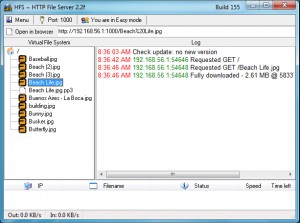
    With the right software, though, setting up a web server can be much more straightforward than you think. And the open source HFS (Http File Server) is a particularly good example of this, because even if you’re a networking novice, it could have you sharing your files locally within minutes.

    This all starts with an ultra-compact download (559KB), all the more surprising because it’s not even zipped. The entire program is contained in a single executable which you just download and run.

    The interface is relatively straightforward, too. If you’ve set up a server before then you’ll probably guess that the “Virtual File System” pane is where you’ll share your files. But even if you’re a beginner, hovering your mouse cursor over the pane will explain all with a tooltip asking you to “drag your files here”.

    And all you then have to do is drag and drop the files you’d like to share onto the Virtual File System pane, click the “Server is currently OFF” button to turn it on, and give the IP address HFS displays to someone else on your local network. When they put that into a browser they’ll find a simple page with your files displayed, ready for immediate downloading.

    If you want to share your files across the internet then there is more work to do, but HFS can at least help you get started. Click Menu > Self Test and the program analyses your system and network setup, before explaining what else (if anything) you need to do to make this happen. If you’re new to this kind of networking complexity then there may still be some research to do (on our system we were told simply to ensure out router was “configured to forward port 7000 to your computer”, for instance), but it’s still much more straightforward then many similar tools.

    And when you’re ready to consider what else you might need from a file sharing tool, there are plenty of options on offer. So you can password-protect particular files and folders, for instance. You might allow users to upload, as well as download files. There are various speed limits and controls to help ensure the program doesn’t tie up all your bandwidth. And there’s dynamic DNS support, a configurable HTML template, a custom scripting language, and lots of configuration settings to help get everything working properly.

    HFS still has some limitations. While in theory you could use it as a web server to host your own website, for example, that probably wouldn’t be a great idea. It’s short on features (there’s no PHP support, for instance), doesn’t run as a service, and tends to do most things in its own, very non-standard way: even if you did get something to work here, it may not be easily transferrable to another host.

    If you’re just interested in an alternative way to make files available on your network, though, it’s a very different story. HFS is lightweight, quick and easy to configure, and ideal as a simple way to share some files or folders with others.

    Photo credit: mojito.mak[dog]gmail[dot]com/Shutterstock

  • LG, wake up! The Optimus G arrives too late in Europe

    There’s a great saying that applies to new products — get it while it’s hot. Or shall I say, give it while it’s hot. LG, sadly, is not familiar with either expression as the South Korean manufacturer has only now finally released the Optimus G on European soil. That’s a whopping six months (well, nearly) after the smartphone’s unveiling in late August, last year.

    LG is its own worst enemy right now. The main problem with the late Optimus G release, apart from the obvious waning of initial interest, is the smartphone’s bigger brother — the Optimus G Pro — and the plethora of new devices that were released after the Optimus G, with better specs and time advantage on their side. And we haven’t yet reached MWC (Mobile World Congress) frenzy yet, where manufacturers are known to release or announce even more products.

    The Limited European Endeavor

    I got a kick from reading LG’s announcement. The South Korean manufacturer releases the Optimus G in Europe, starting this month, but only mentions four major markets — Sweden, France, Germany and Italy. Heck, that’s not even a small part of the European Union let alone the whole continent. Will it be available in Spain, or Switzerland, or Belgium? LG doesn’t say, which is not reassuring.

    Trying to make up for the late release, LG says that the Optimus G launches with “enhanced” features, and I quote: “The European Optimus G will feature Google’s latest Android Operating System, Jelly Bean 4.1.2”, alongside QSlide, Safety Care and Privacy Keeper among others. Say what? Android 4.1.2 is the latest version available?

    LG must be joking as quite a lot of people have been using Android 4.2 for months now on their Nexus devices, one of which — the Nexus 4 — is even manufactured by LG itself. Talk about not knowing its own products.

    Great, but Last Year

    To be honest, the Optimus G sounded great at the time — a super fast quad-core processor, 2GB of RAM, a large IPS display, 32GB of internal storage and 4G LTE really grabbed my attention, six months ago. But all that, and more, can be had nowadays in a newer device that will not be surpassed by a bigger brother in a few months and still has that novelty ring to it.

    Imagine going to a retailer or carrier to choose a new phone sometime this month. Which one would you choose, honestly? A six month-old smartphone or a brand new one like, let’s say, the Sony Xperia Z? Or, if you wait a little longer, you can get a great looking HTC One.

    Android 4.1 Jelly Bean is last year’s news and so are most of the specs. Qualcomm released two high-end processors, the Snapdragon 600 and the Snapdragon 800, that outshine the older Snapdragon S4 Pro. We’re starting to see even more 1080p displays, with HTC packing a 1920 by 1080 resolution in a 4.7-inch panel — same screen size as the Optimus G — and promises of Android 4.2 Jelly Bean upgrades from Sony for the Xperia Z and Xperia ZL. Generally speaking we’re seeing the future of smartphones, not the past.

    I’m a European and I wouldn’t touch the Optimus G, not even with a ten foot pole right now. LG, you can keep it.

  • Smart TV sales soared in 2012, set to dominate TV market by 2015

    Smart TV Sales 2012
    Global adoption of smart TVs grew in 2012 as the prices of connected TV sets from the likes of Samsung (005930), LG (066570), Sony (SNE) and discount vendors continued to fall. According to a report released this week by market research firm IHS iSuppli and picked up by Twice, smart TV shipments climbed 27% in 2012 to reach 66 million units. By 2015, the smart TVs will make up 55% of the market as global shipments climb to 141 million units. “Despite a decline in global television shipments in 2012, consumer demand for Internet-connected televisions soared during the year — and the surge in sales shows no signs of abating,” IHS analyst Veronica Thayer said. “Smart TVs are rapidly joining the mainstream as manufacturers refine their products to add new features and to make them easier to use.”

  • Podcast: PlayStation Snore? Google’s Pixel, and were Tesla’s earnings electric?

    It’s a week of new things on the GigaOM Podcast. Tom Krazit has stepped in as the new co-host as Erica Ogg went off and launched her own app review video series. Sony talked (and talked and talked and talked) about it’s new PlayStation 4 console. Google unveiled a heavy duty Chromebook Pixel. And finally, we look at how Tesla is doing with its new Model S.

    (download)

    Subscribe to RSS

    iTunes

    Stitcher Radio

    SHOW NOTES:
    Co-hosts: Chris Albrecht and Tom Krazit
    Guests:
    Ryan Davis, Sr. Editor, GiantBomb.com
    Katie Fehrenbacher, Sr. Writer, GigaOM

    00:00 – 12:14 – Sony reveals some stuff about the PS4
    12:15 – 20:51 – Chromebook Pixel, the laptop with a touch
    20:52 – 29:04 – Tesla’s earnings will shock you! (not really)(well, maybe)

    SELECT PREVIOUS EPISODES:
    Why the Internet of Things is cool

    iWatch, Dr. Big Data and the surprising social media etiquette for House of Cards

    Call-in show: BB 10 Data, digital ink on Surface, and consoles v. phone games

    Podcast: Ballmer’s in the Dell, do tweets ruin TV? And how ISPs are not like gas pumps

    Podcast Q&A: MotoACTV smartwatch now or wait? Lumia 822 in India? Best running apps?

    Podcast: Kabam founder on scaling globally and designing for different platforms

    Podcast: RoadMap Re-Run: Kickstarter’s Perry Chen on creativity and crowdsourcing

    Related research and analysis from GigaOM Pro:
    Subscriber content. Sign up for a free trial.