Blog

  • Analyst Estimates Peg Total Nexus 7 Sales In 2012 At Around 4.6M, Compared To Roughly 10M iPad Minis

    nexus 7

    Mobile industry analyst Benedict Evans has crunched the numbers on newly-released tablet sales figures from Asus and arrived at an approximate estimate of total Nexus 7 tablet sales for 2012, which clock in at between 4.5 and 4.8 million units per his math. Google doesn’t release sales figures for its Nexus devices, so this is likely the closest we’ll get to a solid number on the 2012 totals, and how they might compare to the continued success of Apple’s iPad.

    Evans estimates that based on Asus’s reported sales of 6.3 million tablets in 2012, and verbal statements from the CEO which gave a rough estimate of sales to date of the Nexus 7 as of October, the Nexus 7 likely sold around 2.2 million units between the end of Q2 2012 and during Q3, as well as around 2.4 million during Q4. He compares that to around 10 million in iPad mini sales during its first and only availability through Q4 of 2012, despite a launch halfway through the quarter. That estimate is based on the average selling price of the iPad mini, combined with Apple’s revenue figures and tablet sales numbers, since Apple doesn’t break out iPad sales by model.

    The upshot is that what we’re seeing from engagement numbers and browser share is likely still a good representation of how the actual tablet market is shaking out: Apple is dominating, and its decision to enter the smaller-screened market is either helping it stall the progress of others, or doing nothing to jeopardize its position at the top.

    Consider that Apple sold 22.9 million iPads during just its first fiscal quarter of 2013, which is the last calendar quarter of 2012. That’s five times the amount of Nexus 7 tablets Evans estimates were sold during the entire year in 2012, which indicates we’re still very far away from a situation where the tablet market begins to look anything like the smartphone space in terms of Android share.

    Google looks to be set to try to kickstart its tablet sales efforts with physical retail locations, a rumor that started this past weekend and was backed up by the Wall Street Journal today. I’ve already noted that I think this is a play to help the company try to replicate some of Apple’s success with selling and evangelizing the iPad through its physical retail locations, but these sales estimates underline exactly why the company needs to do that.

  • Misha Will Reawaken Your Crappy Tattoo [VIDEO]

    Yeah, it’s an ad for Converse. I don’t really know what Converse was going for, however. But who cares? Misha, I’ll let you reawaken my crappy tattoo any day.

  • Samsung’s recent string of hits ‘begs for an answer from Apple’

    Apple Analysis Samsung
    Another day, another panicky analyst note fretting about Apple’s (AAPL) future. Per ZDNet, the latest gloomy rumination on the world’s most valuable tech company comes from Barclay’s analyst Ben Reitzes, who says quite plainly that Samsung’s (005930) “momentum begs for an answer from Apple” in the near future. In particular Reitzes worries that Apple is letting Samsung clean up the mid-tier handset market with the Galaxy S III mini and the Galaxy Grand, and says the company needs to step up its efforts to diversify its iPhone portfolio by releasing a cheaper version of the device by the end of the year.

    Continue reading…

  • Google Talks About Keeping Your Account From Being Hijacked

    As Microsoft has announced a broad launch of its new Outlook.com webmail product, Google has taken the opportunity to discuss how prevalent fraudulent spam that appears to be coming from people you know has become, and the efforts it is taking to keep Gmail (and really Google Accounts) safe.

    According to Google, only one percent of spam emails even make it into an inbox, but in 2010, they started seeing a large increase in fraudulent email sent from Google accounts, prompting the team to take more aggressive measures. Google security engineer Mike Hearn writes:

    Every time you sign in to Google, whether via your web browser once a month or an email program that checks for new mail every five minutes, our system performs a complex risk analysis to determine how likely it is that the sign-in really comes from you. In fact, there are more than 120 variables that can factor into how a decision is made.

    If a sign-in is deemed suspicious or risky for some reason—maybe it’s coming from a country oceans away from your last sign-in—we ask some simple questions about your account. For example, we may ask for the phone number associated with your account, or for the answer to your security question. These questions are normally hard for a hijacker to solve, but are easy for the real owner. Using security measures like these, we’ve dramatically reduced the number of compromised accounts by 99.7 percent since the peak of these hijacking attempts in 2011.

    As it often does, Google advises users to take advantage of its 2-step verification system, and to use strong passwords and update account recovery options.

  • Hands On With HTC’s Would-Be Savior, The HTC One

    htc-hand1

    So, after months of leaks and speculation, HTC has finally revealed the HTC One. To say it’s an important device for HTC is an understatement given the rough seas the company spent nearly all of last year navigating, but the people here seem confident that they’ve worked up a winner. Just after the event wrapped I managed to get some extended hands-on time with the One, and the thing left some strong first impressions (not all of them good).

    I’ve already alluded to just how nice the One feels in my hand, but I feel that it’s worth repeating — HTC has done a bang-up job in terms of industrial design. It feels remarkably solid without being unwieldy thanks to its tapered unibody aluminum frame and its relatively modest 4.7-inch display. What’s more, the near-total absence of gaps in the body helps solidify the One’s position as a premium smartphone. Giving HTC points for design prowess is nothing new though. The company has proven time and again that it knows how to make handsome hardware. Anything less at this point would be a step backward, and one that HTC can ill afford.

    Sadly, for a device that puts a lot of emphasis on the camera, there’s no physical shutter button. A minor omission sure, and one that HTC has justified by saying that it had done away with excess design flourishes, but one I strongly disagree with. Speaking of omissions, the One only sports two softkeys — a home button and a back button. HTC’s Jeff Gordon told TechCrunch that people just didn’t use the other recent apps button very often (for the record, you can now bring up a grid of running apps by double-tapping the home key).

    The 4.7-inch 1080p Super LCD3 panel was impressive in terms of clarity and color reproduction, and as you’d expect it’s damned near impossible to pick out any individual pixels. Brightness seemed more than adequate in this dark warehouse on the west side, but the Droid DNA’s display couldn’t crank up as high as those seen on other devices — I’m waiting to spend some time with the One in daylight before I pass judgment.


    As far as the camera goes, it’s difficult to discern just how good the images captured by HTC’s Ultrapixel sensor without dumping them onto a computer for further inspection, but early results seemed promising. The lighting around here (as you could probably tell by some of the stills I took) is downright atrocious, but the One was able to capture some pretty sharp images without much grain getting in the way. I’m looking forward to getting my hands on a review unit and really putting this camera through its paces.

    Perhaps one of the weirdest things seen on the One is the camera’s Zoe feature — the idea is that users will take three-second video clips and share them with friends and family. Sound familiar? HTC’s Gordon told TechCrunch that Zoe was in development long before Twitter’s Vine hit the scene, but it’s hard not to draw parallels between the two. Switching into Zoe mode took a single tap, and recording was a snap (neat touch:it actually starts recording 0.6 seconds before you press the button) but I’m just not sure why HTC needed this to exist. Couple that with the fact that HTC will only store Zoes online for 180 days and you’ve got all the makings for a non-starter of a feature.

    And then there’s the software. Sense 5 is a drastic departure from HTC’s older UIs, and in some ways it’s awfully spartan in comparison. There’s lots of space to be found here (the app launcher only had three columns on these demo units), and the components under the hood help ensure that swiping through apps, scrolling down webpages, and bouncing in and out of BlinkFeed is seamless.

    Ah, BlinkFeed — its inclusion is one of those curious decisions that seems like it could go either way. HTC’s rationale was that people use their smartphones primarily to devour content, and BlinkFeed was designed to keep as few hurdles between the two as possible. After swiping though the activity stream, I could see the value in having this customizable firehose (especially after taking the time to customize those content sources), but I wonder how many people walking through a big-box store mulling over another two-year contract will see what I did. Hiding the more standard Android homescreens is a gutsy move, but we’ll soon see how it all plays out.

    What remains to be seen is simply whether or not the One can effectively put up a fight against devices like the iPhone 5 and Samsung’s fast-approaching Galaxy S IV. Goodness knows that HTC could really use a big win, and the HTC One certainly pushes plenty of the right buttons. It’s too early to say if it manages to push enough of those buttons, but from what I’ve seen, One seems like a device that’s poised to make a real splash come March.

  • President Obama: Automatic Budget Cuts Will Hurt Economy, Slow Recovery, and Put People Out of Work

    Watch this video on YouTube

    Just 10 days from now, Congress might allow a series of severe and automatic budget cuts to take place that will hurt our economic growth, add hundreds of thousands of Americans to the unemployment rolls, and threaten military readiness.

    But, as President Obama said this morning, these cuts don’t have to happen — Congress has the power to stop them.

    In 2011, President Obama explained today, Congress passed a law saying that if they couldn’t agree on a plan to reduce our deficit by $4 trillion – including the $2.5 trillion in deficit reduction lawmakers in both parties have already accomplished over the last few years – about $1 trillion in automatic, arbitrary cuts would start to take effect this year.

    “The whole design of these arbitrary cuts was to make them so unattractive and unappealing that Democrats and Republicans would actually get together and find a good compromise of sensible cuts as well as closing tax loopholes and so forth,” President Obama said. “And so this was all designed to say we can't do these bad cuts; let’s do something smarter.  That was the whole point of this so-called sequestration.”

    Unfortunately, Congress hasn’t compromised, these cuts are now poised to take effect next Friday, President Obama said:

    Now, if Congress allows this meat-cleaver approach to take place, it will jeopardize our military readiness; it will eviscerate job-creating investments in education and energy and medical research. It won’t consider whether we’re cutting some bloated program that has outlived its usefulness, or a vital service that Americans depend on every single day. It doesn’t make those distinctions. 

    Emergency responders like the ones who are here today — their ability to help communities respond to and recover from disasters will be degraded. Border Patrol agents will see their hours reduced. FBI agents will be furloughed. Federal prosecutors will have to close cases and let criminals go. Air traffic controllers and airport security will see cutbacks, which means more delays at airports across the country. Thousands of teachers and educators will be laid off. Tens of thousands of parents will have to scramble to find childcare for their kids. Hundreds of thousands of Americans will lose access to primary care and preventive care like flu vaccinations and cancer screenings.

    And already, the threat of these cuts has forced the Navy to delay an aircraft carrier that was supposed to deploy to the Persian Gulf. And as our military leaders have made clear, changes like this — not well thought through, not phased in properly — changes like this affect our ability to respond to threats in unstable parts of the world. 

    read more

  • ESET Smart Security 6 Review

    Smart Security 6 extends protection beyond the digital boundaries by integrating the Anti-Theft feature, which is designed to help you retrieve the stolen device running ESET’s suite.

    The suite is available for $59.99/43.99€. Getting it on the system is not a difficult process, but it may take a while if you choose to deploy the live installer… (read more)

  • Want Tempo’s new calendar assistant? You’ll have to wait for its AI to catch up

    SRI International’s new virtual assistant venture Tempo AI was hoping for a lot of interest in its new smart calendar app. But it never expected the huge demand it received when it launched last Wednesday. Tempo told GigaOM that on its first day it experienced a load on its servers 24 times higher than it expected. That led the startup on Thursday to start restricting new registrants to a few thousand each hour. This week it is halting new activations completely so Tempo can catch its breath.

    Tempo’s new app uses many of the same artificial intelligence technologies that went into Siri to generate a smart calendar that infers appointment details and context from your other social media and messaging services. Tempo parses all of the data in a customer’s email accounts, address books and LinkedIn and Foursquare profiles in the cloud using Amazon Web Services. That’s where it ran into problems.

    The Tempo AI team

    The Tempo AI team

    According to CEO Raj Singh, it takes a huge amount of computing resources to bring new customer online. Its platform must initially cull through all of the data in the customer’s various email and social media accounts. Once the customer is on-boarded the burden on the AI lessens, though it does reprocess all of that data on a regular basis – any time new email or contact data is added to system, Tempo can generate new semantic links between new data and old.

    “There is just generally a ton of CPU to make all of this work; processing data takes time and we don’t get a network effect, since we have to process each individual’s data,” Singh said in an email. “We re-process data constantly; to be semantically relevant and contextual, we’re constantly re-processing, this is very expensive (it’s like Google constantly re-crawling)”

    Tempo was not only surprised by the sheer volume of new registrants – last week Tempo estimated it had a backlog of more than 100,000, but it now believes that number is conservative – it was also caught off guard by the amount of data each customer had. Singh said the average customer is linking 2.5 email accounts to their calendar. Tempo’s servers are getting slammed in both directions: they’re processing more new customers than expected and each new customer has much more information than anticipated.

    That led to Tempo’s decision to put a halt to new activations for the next few days. It will finish parsing all of the current email accounts for those who have successfully registered, and it has submitted to Apple an update to its iPhone app that contains a built-in reservation system (right now the app simply won’t let you sign up). Once the reservation system is in place, it will begin allowing new customers in gradually as CPU resources allow. (Update: the new version of the iPhone app is now live on iTunes.)

    Tempo AI screen shotOf course, since Tempo’s platform is hosted in AWS, it could simply buy more CPU time to get over the hump. Singh said he wouldn’t go into the details for competitive reasons of how Tempo is managing its backend, except to say that the amount of computing resources it needs to overcome the backlog would be very expensive. Plus, once Tempo brings all of these new customers on board, the demands on its servers will drop considerably.

    Tempo certainly isn’t the only smart calendar app in the market. On Tuesday, Sunrise debuted a new smart calendar app, which my colleague Erica Ogg just wrote about in detail. Meanwhile, personal data search startup Cue (formerly Greplin) has been offering an intelligent calendar since June.

    Because of Tempo AI’s pedigree from SRI and its associations with Siri, though, its app was always going to get a lot of attention (some rave reviews about the app also helped). Customers haven’t responded kindly to Tempo’s delays though. Of the 597 reviews on iTunes today, 435 were one-star skewerings. Tempo said that once the reservation system in place, it’s hoping it can do a better job explaining the reasons for the delay.

    Feature art courtesy of Shutterstock  user Gena96

    Related research and analysis from GigaOM Pro:
    Subscriber content. Sign up for a free trial.

  • More growing pains for Coursera: in another slip-up, professor departs mid-course

    For the second time in less than a month, an online course on Coursera has hit a stumbling block.

    This weekend, the professor of a ten-week course on “Microeconomics for Managers,” offered through the University of California at Irvine Extension program, told students that he would be leaving the class after only its fifth week.

    “Because of disagreements over how to best to conduct this course, I’ve agreed to disengage from it, with regret,” Richard McKenzie, a professor at the University of California at Irvine’s business school, said in an open note to students. Even though McKenzie will no longer teach it, he said that the class will go on, led by course managers, including the assistant dean for distance education at UC Irvine.

    The news comes just two weeks after another slip-up for the startup, in which Coursera suspended an online class (on how to run an online class, no less) after student complaints about technical glitches and problems with the design of the class.

    Coursera and McKenzie were not immediately available for  comment. But, according to the Chronicle of Higher Education, Coursera said that McKenzie was not “removed” from his position and the startup suggested that the “disagreements” referenced in his note did not involve Coursera directly.

    Professor wasn’t accustomed to large, diverse audience

    Gary Matkin, the dean of distance education for UC Irvine, indicated that the issue was related to how McKenzie regarded the class’s more casual students, who no doubt comprised a large contingent in a class of 37,000 people.

    “Professor McKenzie is not accustomed (as few are) in teaching university-level material to an open, large, and quite diverse audience including those who were not seriously committed to achieving the learning objectives of the course or who decided not to or could to gain access to supplemental learning materials,” he told GigaOM in a statement.

    In the past year, MOOCs (massive open online courses) have been riding high, attracting millions of dollars in venture investment and thousands of online students. But the two recent Coursera incidents highlight that while the model has the potential to bring educational opportunities to millions of people, it’s still new and limited.

    As we wrote at the time, the suspended class earlier this month suggested the need for more quality control and oversight, as well as more flexibility on the part of online professors. This latest setback points to a mismatch between what traditional professors may want to create in an online class and what is currently possible.

    In several of his open notes to students (which are quite lengthy, indicating the time and consideration he appears to have given the class), McKenzie writes about commitment to the course and standards. He seemed dismayed that more students wouldn’t purchase a recommended textbook and was disappointed in the quality of the Coursera videos.

    In class of 37,000, just 2 percent engage in discussion

    More tellingly, he wrote that while he was initially impressed to learn that 37,000 students enrolled in the class, he’s learned that “enrollment count is meaningless.” In the first two weeks, less than 40 percent of students logged in to the class and only a fourth of the students had watched a single video lecture. Less than two percent of the students were actively engaged in the discussions, he said.

    “I have truly been impressed with many comments that have been posted. However, I have to worry that the value of the course to serious and active students is being undercut by students who are not a part of the course in any meaningful sense,” he wrote in a note to students in January. “I want to encourage the inactive and uninvolved students to get with the program and take the assignments seriously. If not, I suggest the course would be much improved for the serious and active students and for me if the inactive students would go ahead and dropped the course right now.”

    Given Matkin’s comments and the school’s decision to continue the course with other leadership, it seems that this was the biggest point of conflict between McKenzie and UC Irvine Extension. And it makes sense that teachers accustomed to smaller courses and an environment in which students have more uniform levels of motivation and commitment may be uncomfortable with a MOOC. While large open online classes can provide access to many more students, in their current form, they can’t demand equal accountability. For teachers like McKenzie (and his supporters in the class, as well as outside of it), accepting the “casually curious”  can be a challenge but others appreciate the MOOC’s precisely for their ability to accommodate students of varying levels of engagement.

    What’s surprising to me is that McKenzie didn’t come to the experience more prepared for the high-enrollment-low-engagement reality. In his first time teaching a MOOC, it’s understandable that he’d encounter a few surprises and have to figure things out along the way. But it makes you wonder about how Coursera brings new instructors on board and whether more preparation might be helpful.

    Related research and analysis from GigaOM Pro:
    Subscriber content. Sign up for a free trial.

  • Google Stock Hits All-Time High, Surpassing $800

    Google shares reached an all-time high today, surpassing $800 for the first time in the company’s history.

    It was only in September, when we reported that Google hit a record high at $748.90, and obviously, they’ve come a long way since even then. According to the Wall Street Journal, shares are up over 13% this year.

    Yahoo Finance says the market has grown “increasingly optimistic that Google’s core business and mobile applications have many good years ahead of them.” Reports over the last few days have also indicated that Google will open up retail stores before the end of the year, which will enable it to get its products into even more consumers’ hands.

    As of the time of this writing, Google shares are at 803.29 (+10.40‎, 1.31%‎). It’s been five years since Google shares first reached the $700 milestone. Last June, they hit a 12-month low of $559.05.

    Shares of rival Apple are down to $457.34 (-2.82‎, -0.61%‎) as of the time of this writing, about a 35% decrease from a high mark in September.

  • House of Cards Made 86% of Netflix Users More Likely to Stick Around

    Netflix has refused to release any specific data on how many of its subscribers are watching their first foray into big-budget original content, House of Cards. Content Chief Ted Sarandos has said that the show is currently the most-watched thing on Netflix, but won’t go any further than that. Netflix CEO Reed Hastings says (jokingly, perhaps) that even he can’t get Sarandos to give him any hard data.

    But according to research from financial firm Cowen and Company, Netflix is hiding generally encouraging feedback.

    According to the survey*, 10% of people had already watched at least one episode of House of Cards in its first couple of weeks of availability. Netflix has around 30 million global subscribers, so if we extrapolate the data we can unscientifically suggest that close to 3 million people have streamed the show. Of those people, the average number of episodes watched was 6 (there are a total of 13).

    Streamers overwhelmingly approved of the show itself and Netflix’s all-at-once release strategy. 80% said the show was “good” or “exceptional” and 90% liked that Netflix dropped all 13 episodes at the same time.

    For Netflix, jumping head-first into the original content game is all about grabbing new subscribers, and also keeping them. Good news on that front as 86% of those surveyed said that they were less likely to cancel their subscription after watching House of Cards.

    This is more good news for Netflix on the House of Cards front. Last week we told you that the show is currently the most popular show in the world right now, at least according to IMDb.

    Are you watching House of Cards?

    *Cowen and Company’s survey sample size was 1,200 people – 28% of which pay for a Netflix subscription and 18% of which have some sort of access to a streaming account. So we’re looking at about 550 Netflix users as our true sample size.

    [Cowen and Company via TechCrunch]

  • The HTC One looks great, but it will likely get swept away by the Galaxy S IV in three weeks

    HTC One Analysis
    The early days of Android were exciting simply because just about every electronics manufacturer around tried their hand at building an Android smartphone. This led to a lot of truly bad devices (e.g., anything that came with early versions Motorola’s MOTOBLUR skin), but it also led to a lot of unexpected success stories such as HTC (2498) and its relatively successful DROID Incredible and EVO 4G models. But as the Android market evolved, it soon came to resemble how George Carlin described an average classroom full of children: “A few winners and a whole lot of losers.”

    Continue reading…

  • Travis Barker Skipping Blink-182 Tour

    Travis Barker has announced that he won’t be able to join his bandmates on their Australian tour this year due to a crippling fear of flying.

    The 37-year old says he can’t bring himself to get back on a plane since surviving a horrific crash five years ago which took the lives of his assistant and security guard as well as both pilots. Travis was seriously injured in the crash and endured terrible burns in the aftermath. His friend, the late DJ Adam Goldstein, was the only other survivor. Goldstein was found dead in 2009 of an apparent drug overdose.

    Barker gave apologies to his fans on his Facebook page, saying he has given the band his permission to hire a stand-in drummer for their tour.

    I’m sorry to announce i won’t be joining Blink-182 on this Australian tour. I still haven’t gotten over the horrific events that took place the last time i flew when my plane crashed and 4 people were killed, two being my best friends. I gave the band my blessing to take another drummer if they still wanted to do the tour without me. I hope to come to Australia again some day perhaps by ship if need be. Unfortunately, there wasn’t a boat that worked with the schedule this time around. Once again I’m sorry to all the fans.

    Image: Facebook

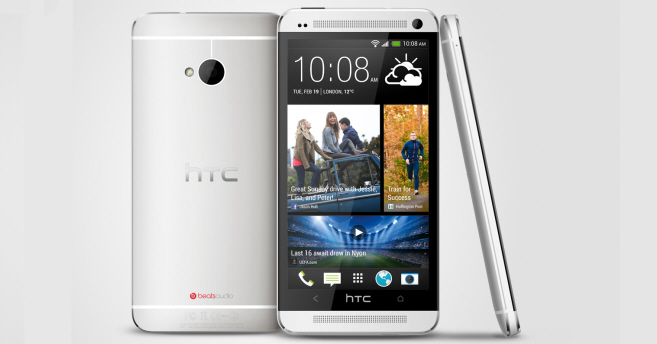
  • Meet the HTC One

    On Tuesday, after numerous leaks and rumors, Taiwanese mobile device manufacturer HTC unveiled a new flagship Android smartphone tastefully named One. With One the company has jumped off the ever increasing display size bandwagon and decided to stick to a more tried and true 4.7-inch panel, while packing a high-end quad-core processor.

    The international One comes in silver and black and, depending on the market, other colors such as red might be available as well. The front of the handset is dominated by rounded corners and symmetrical speakers while the back features the now traditional tapered edges that HTC previously introduced with smartphones such as the Windows Phone 8X or DROID DNA. It’s simply striking to look at.

    The One’s 4.7-inch display offers a resolution of 1920 by 1080 and a whopping 468ppi (pixels per inch) density. HTC does not specify which type of panel is used, however judging by past releases it’s fair to assume that we’re looking at an LCD3 IPS display.

    Power comes from a 1.7GHz quad-core Qualcomm Snapdragon 600 processor, similar to the LG Optimus G Pro, 2GB of DDR2 RAM and a 2,300mAh non-removable battery. The One comes with two storage options, in 32GB and 64GB trim and features the typical connectivity options including Wi-Fi 802.11 a/ac/b/g/n; NFC (Near Field Communication); Bluetooth 4.0; DLNA; microUSB 2.0 and the usual array of sensors (gyro; accelerometer; proximity and ambient light sensors).

    The handset is among the first to feature support for the Wi-Fi 802.11 ac standard. Depending on the market the One also comes with HSPA+ or 4G LTE cellular connectivity.

    Interestingly enough HTC steers clear from revealing the megapixel count on the back-facing camera, which bears the UltraPixel moniker, only revealing that it features a BSI sensor with F2.0 aperture and 28mm lens, optical imagine stabilization, five levels of flash as well as the in-house ImageChip 2 technology. The front-facing camera is a 2.1MP unit with support for HDR mode in both pictures and videos. Both shooters are capable of 1080p video recording.

    HTC also bundles a number of branded features such as Zoe, which can shoot up to 20 photos and a 3-second video when pressing the shutter button, BoomSound, which is designed to improve the music and video experience and BlinkFeed, which provides social networking and media updates, among others. The operating system of choice is “the latest Android Jelly Bean” (meaning Android 4.2), backed by the Sense user interface.

    The One comes in at 137.4 x 68.2 x 9.3 mm and 143 grams. The dimensions are on par with currently available smartphones, although both the thickness and weight are a bit on the larger side.

    The One will be globally available at more than 185 carriers in more than 80 regions and countries starting in March. HTC says that in the US AT&T, Sprint, T-Mobile, Cincinnati Bell and Best Buy will offer the handset, while north of the border in Canada, Bell, Rogers Communications, Telus and Virgin Mobile Canada will carry the One.

    In Europe, Middle East and Africa, One will be available at various carriers and retailers including Orange, Vodafone, T-Mobile, EE (Everything Everywhere), Carphone Warehouse UK, Cosmote, O2 and others.

    The handset will also hit the Chinese market through China Mobile, China Unicom and China Telecom, Latin America as well as the Asia-Pacific area.

  • Chinese companies slowly collecting discounted U.S. electric car assets

    Electric car startup Fisker Automotive is reportedly weighing investment and acquisition offers from Chinese auto tech companies. Bloomberg reports that there’s a $350 million offer for 85 percent of the company from Chinese state-owned car maker Dongfeng Motor Corp, and Reuters reports that China’s Zhejiang Geely Holding Group (which owns Volvo) has another offer for a majority stake with a deal between $200 million and $300 million.

    If Fisker is able to close on either of these deals, it could move its business to China and gain the funds to start manufacturing its second car the Atlantic, as well as start paying back its loan to the Department of Energy. Fisker has been looking for suitors — partners and acquirers — for months, as it wrapped up a year with an incredible amount of problems.

    Ray Lane's Fisker Karma

    But $350 million for 85 percent stake is a major discount on the original valuation of Fisker. The company has raised a billion dollars in funding, and at one point back in 2011 had raised money at a reported valuation of $2.2 billion. But in 2012, the company struggled heavily and I had heard that it was looking to raise money last year at a significantly lower valuation. Clearly, when discussions are for majority stake deals for between $200 million and $300 million, there’s been massive discounting.

    Fisker isn’t the only energy tech company that’s looking to sell for a discount to Chinese conglomerates. Lithium ion battery maker — which sold batteries for Fisker’s electric car — went bankrupt and its assets are being sold off to Chinese auto tech giant Wanxiang for $256.6 million. A123 Systems held the largest IPO in 2009, raising some $371 million, and went public at $20 per share. A123 also raised more than $350 million from private investors when it was still a startup.

    Ray Lane's Fisker Karma

    Wanxiang has also invested in struggling electric car company Smith Electric Vehicles. Battery maker Boston Power also turned to Chinese investors to take its electric car battery business to the next level, as did Protean Electric. Electric car company Coda Automotive — which is also struggling — has a joint venture with China battery maker Lishen and a deal with auto maker Great Wall Motors Company.

    Chinese companies and the Chinese government are very interested in amassing next-gen technology for electric cars. China is projected to be the largest electric car maker and market in the world, and is already the world’s largest auto market.

    It’s not just electric car assets that Chinese companies want. Wanxiang invested $420 million into GreatPoint Energy, a company based in Cambridge, Mass. that converts coal into cleaner-burning natural gas. And Chinese power company Hanergy acquired the assets of Miasole for $30 million (Miasole had raised hundreds of millions of dollars from private investors).

    Related research and analysis from GigaOM Pro:
    Subscriber content. Sign up for a free trial.

  • Make a Stranger Believe in You

    I recently received an e-mail sent to my business address that began with the salutation “Dear Ms. Anne,” — the kind of greeting that suggested that the rest of the note would offer me riches from some recently deceased Estonian cousin I didn’t know I had. It continued, “I know you have no idea who I am, however, I will try to keep this as short and to the point as possible” — words destined to cause a further sinking feeling about what was to come. But in the seconds I skimmed the note, a few words jumped out at me and I was intrigued. In three short paragraphs, Zanele Mutepfa, a junior at Portland State University in Oregon, told me that she was an immigrant Zimbabwean-born orphan and youth advocate who aspired to be a television talk show host. With a bravado that might have been off-putting, she said, “I assure you, my dynamic life story will one day hit headlines…but most importantly change lives, it just needs to be shared with the perfect person.” She was coming to New York City — might I have time to meet with her?

    I had moved from the hinterlands to New York myself, 35 years ago, with virtually no professional contacts, so when she closed her note by saying, “Some may think one of the strangest things to do is believe in a stranger, but if not one stranger believed in us, once upon a time, where would we all be today?… someone did it for you.”

    Yes. Yes they did. So I Googled Zanele, found a link indicating she was who she said she was, and agreed to meet. And as I discovered, so did several other media professionals whom Zanele had e-mailed cold. In this challenging job market, I think it’s worthwhile to explore why these busy professionals took the time to respond and help Zanele. I contacted a few of them to find out, and have come away with some ideas that might help other people looking for work — and not just those entering the workforce for the first time.

    Have clear professional goals

    Before she e-mailed anyone, Zanele sat down and wrote an outline for herself, articulating her several goals: to become a talk show host, establish a women’s empowerment organization, become an author — and maybe become a plus-size fashion model as well. While these are crazily ambitious and at first glance unrealistically expansive goals for a college student, two unifying themes — to work in the media and be a catalyst for helping other women — helped her target her search.

    Cast a wide but focused net

    Zanele’s focus on media professions (she wasn’t exploring legal or financial positions, for instance) allowed her to channel her search towards those operations (Oprah Winfrey Network, Oxygen Network, Essence, Ebony, YWCA) whose missions seemed to align with her dreams. “It was important for me to truly believe in what they do,” she told me, “in order for my letter to have truth.” Like any modern day sleuth, she used every tool to find the right contacts, web-searching terms such as “corporate women authors,” “women in magazines,” scouring sites like LinkedIn, company websites, Twitter, and executive profiles. Since most companies have standard e-mail formats, she sent multiple emails in every conceivable format until she didn’t get a “mail delivery error.” Within her relatively narrowcast objective, she contacted as many people as possible — eventually writing to 2,000 people. Thirty responded to those e-mails and six agreed to meet with her in person. With that kind of a response rate, the benefits of going wide are obvious.

    Be authentic — tell a personal story

    Dina Gusovsky, a broadcast journalist and columnist, was one of the media professionals who responded. While most people would think that being as brief and to the point in their cover note as possible would be the most professional and likely to succeed approach, Dina’s response indicates that the opposite may true. She told me that she agreed to meet with Zanele “because I think at one point we were all Zaneles. Sometimes I feel like I still am. For creative people…the journey never ends. Whatever success I have had so far is directly correlated to all the people who gave me a chance. Not just those who decided to put me on television, but those who listened, those who gave me advice, and those who mentored me.” But as an emigre from the Soviet Union, for Dina it was Zanele’s immigrant background that resonated most. Her meeting with Zanele was “probably less pay-it-forward and more pay-it-backward. I think all those people who had helped me and continue to help would be proud that I was in some way continuing this wonderful trend.”

    Offer a variety of connection points

    Janice Huff, the chief meteorologist for WNBC TV in New York, responds to lots of inquiries from young people interested in becoming meteorologists, but rarely takes the extra step to meet with them. However, Zanele had susssed out that Janice was a fellow Alpha Kappa Alpha sorority sister, and personalized her note referencing that shared connection. For Janice, “that’s what made me decide I’d love to meet her and help her.” Zanele took the time to find shared interests for about 20% of her targets and mentioned them in her notes. So before you reach out it pays to research, and determine where your connection points might lie.

    Don’t be afraid to show vulnerability

    Ellianna Placas, a fashion consultant and another immigrant (from Australia), and the former Fashion Director for Essence Magazine, was impressed by Zanele’s ability to “show honesty and vulnerability and risk, putting her faith in human nature first — a brave and open beginning. ‘Believe in a stranger’ was so romantic, yet realistically appealing to me. Maybe I am imbuing it with more than Zanele intended, but it held universal appeal. We should all be helping each other. Zanele came to me for advice, she left as a new friend.”

    Be open about where the path takes you

    After several people in New York City had responded to her letter, Zanele decided she had reason enough to make the trip from Portland. And while she did not leave New York with a firm job offer, she will be returning to follow up on the leads developed in her first round of conversations. “I learned so much about myself and exactly what makes me tick,” Zanele told me after her trip. “I believe it is so important to know or hold a conversation with people who have career positions you aspire to have someday. The value of relationships and conversation is incredibly important to me. Those conversations will not magically appear on my phone and g-mail, I have to go and get them. No, not everyone will respond and not everyone ‘needs’ to — only the people who are meant to.”

    Ellianna Placas put it best: “No one knows how we arrive in the places or jobs we do. We did not do it by ourselves, we were surrounded by people along the way who gave tiny bits of advice, who we watched, who helped us make and not make choices.”

    That’s something we should all keep in mind, especially as we make the upward and sideways journeys in our own careers. To paraphrase Sir Isaac Newton, at some point in our lives we have all stood on the shoulders of (seemingly gigantic) strangers, and there comes a time when we need to give others the chance to stand on ours.


  • Last.fm Open Sources Moost, A C++ Library

    Last.fm may be well known for its Internet radio services, but the company is also breaking into the open source scene. It’s latest release is sure to pleas all the C++ coders out there.

    Last.fm’s Marcus Holland-Moritz announced today that moost, it’s C++ library is now available to all under an open source license. He says that moost has been in development by Last.fm’s MIR team over the past five years, and contains all the tools and utilities they use on the site. It’s based on the boost C++ libraries.

    Moost contains a number of features that programmers will find handy. Here’s some of the features you can expect when using it:

    There are a lot of different things in moost. Some are really simple, yet very helpful in day-to-day work, like the which template that allows you to use pairs (and containers storing pairs) more easily with standard algorithms; or stringify, a function template that turns complex objects into strings. Other parts are slightly more sophisticated: for example, moost contains the framework that is shared by all our backend services, and that allows you to write a daemonisable service with logging, a set of standard options and even a service shell that multiple users can connect to when the service is running, all in a few lines of code.

    As our backend services are inherently multi-threaded, there’s also a bit of threading support in moost. For example, the safe_shared_ptr template is immensely useful for resources that are shared between threads and need to be updated atomically.

    Moritz says that moost also features memory wrapped dataset classes and an abstraction for loading shared objects. Both of which will make it easier to manage resources while building out large datasets.

    You can check out moost for yourself now over at GitHub. Moritz encourages any interested developers to contribute to the project if they have the time.

  • MacDock Wants To Expand Your MacBook Pro’s Connection Capabilities Without Added Bulk

    macdock


    Thunderbolt expansion docks for MacBook Pro have been slow to come to get started with offerings from Matrox and Belkin only now coming to market after lengthy delays. And they’re pricey, too, at $299 and $249 respectively. A new Kickstarter project called the MacDock argues you can do almost as much for considerably less, and without adding Thunderbolt into the mix.

    Instead, the MacDock (and MacDock Mini, which is smallest but with fewer connectors) opt to take advantage of the addition of USB 3.0 to later-generation MacBooks to provide an expansion solution that likely fits the needs of most, in a portable package that retails for less than half what the Thunderbolt expansion options mentioned above are currently going for. A combined USB 3.0 and DisplayPort connector mean you can also hook external displays up to the MacDock, and it’s backwards compatible with USB 2.0 connectors, too.

    The dock has a unique design compared to most, with a thin ribbon connecting the part that jacks into your Mac to the extension block with the added ports. The MacDock Mini merely replicates the ports it plugs into, giving you a single USB 3.0 (or USB 2.0, depending on which generation MacBook you have) and a single DisplayPort, but kept away from the body of your MacBook with a lead that will be either 25 or 50cm in length (depending on the results of a backer survey to follow). The MacDock borrows the same design, but puts three USB 3.0 ports, a DisplayPort and an audio jack on the hub end, greatly expanding your connection options. Both come in both black and sliver finishes. Versions designed to work with the MacBook Pro Retina and MacBook Air models will come later depending on funding achieved.

    I asked U.K. designer Jan Sapper, the project creator, why he felt the need to bring this expansion dock to market when there are no shortage of USB hubs out there already. He argued that nothing that currently exists can both do everything the MacDock can (combining audio, USB and video into a single solution) and none match Apple’s unique design sensibilities. Sapper has been working on the MacDock for over a year now, and is partnering with Austrian data transmission firm Pidso (which counts Boeing and BMW among its clients) to get the product production-ready.

    Pledges start at £37 ($57 U.S.) for a MacDock Mini, and £57 ($88) for a full-sized MacDock. Sapper is targeting an October 2013 delivery date for the gadget, so here’s hoping he built some allowances for changes in MacBook Pro design into that £30,000 funding target.

  • Evolving SDN: tackling strategic, technology and operational challenges

    Software-defined networking has finally evolved to address key gaps plaguing businesses trying to capitalize on emerging cloud-enabled architectures. It offers a level of operational efficiency, interoperability and scale thus far impossible in traditional network infrastructure. Innovations in pervasively networked software are enabling key innovations in virtualization, automation and context-aware service delivery.

    Our panel of experts will address these questions:

    • What are the major market drivers for SDN?
    • How are carriers and enterprises implementing SDN to enable distributed applications and cloud infrastructures?
    • How can customers prepare for SDN, given the technology and marketplace is rapidly evolving?
    • What are the key industry standards efforts and how do they differ? (IETF, ONF, NFV)

    Speakers include:

    For a detailed discussion that answers these questions, join GigaOM Research and our sponsor Juniper Networks for “Evolving SDN: tackling strategic, technology and operational challenges for web-scale deployments,” a free analyst webinar on Tuesday, March 5, 2013, at 10:00 a.m. PT.

    Claim your spot here.

  • Want to see in the dark? One day they’ll have an app for that.

    The combination of man and machine has been so entrenched in our popular culture that for many, the idea that you could attach a sensor to a mouse brain which enables it to see infrared spectrum may not shocking. Nor would wiring someone’s tongue to determine magnetic north elicit much surprise.

    One might wonder why someone wants to find magnetic north using their tongue, but the fact that Gershon Dublon of the Massachusetts Institute of Technology is making this happen using a device called Tongueduino isn’t a big deal. As for the why, apparently the human tongue is both highly sensitive and highly trainable. From an article in the New Scientist (hat tip Steven Crowley):

    Dublon says the brain quickly adapts to new stimuli on the tongue and integrates them into our senses. For example, if Tongueduino is attached to a sensor that detects Earth’s magnetic field, users can learn to use their tongue as a compass. “You might not have to train much,” he says. “You could just put this on and start to perceive.”

    These sorts of experiments might represent the cutting edge of Ray Kurzweil’s Singularity where humanity and machines meld– but the jury is out on whether the machines will ever develop intelligence as Kurzweil also predicts. Unlike the creation of an artificial brain or true artificial intelligence where machines can somehow gain consciousness, these researchers are talking computers and sensors and wiring them into our existing wetware to give humans new abilities. So we may not get Skynet, but the Terminator is within reach.

    If Miguel Nicolelis of Duke University and his team can wire a mouse brain today with infrared vision (you could see in the dark!), how long until we can wire up a human with similar abilities? Of course, we’d have to not only develop the communication protocol for the sensor to brain interface (ie, teach the brain how to interpret the digital signals) but also develop ways to install hardware into the human body.

    Right now, getting electronics into people is fraught with risks, not only of infection and rejection, but also for the electronics which can degrade, wander the body or short out. Plus, we might have to revamp our airport security procedures when the masses contain microchips.

    Still, the ideas put forth by these researchers are enticing — not because they predict a future that’s in the realm of science fiction — but because both seem eminently plausible. After all, some people are already controlling their prosthetic arms or legs with their minds, so how far is the leap from replacing a missing limb to adding some extra senses? And if we can add these capabilities without having to wear a highly-visible pair of Google Glasses then, how nice would that be?

    Related research and analysis from GigaOM Pro:
    Subscriber content. Sign up for a free trial.