Blog

  • Want a Nexus 4? Google tells you where to go

    Google, in conjunction with LG, released the Nexus 4 on November 13 2012 and it has largely been difficult to get ever since. At the time of writing the Google Play store claims the device will ship in “1-2 weeks”. However, Google would like to help out potential customers who are looking to get the handset a bit sooner and, to that end, the company has created a way to get a Nexus 4 today.

    The search giant has launched a finder web site to aid you in locating a Nexus 4 close to home. Of course, this means the locations of T-Mobile stores around you, but at least you learn where the device is actually in stock. Customers can choose from distances ranging from five to fifty miles, depending on how far you wish to drive to grab your new phone.

    Purchasers will also get a bonus now as Android 4.2.2 rolled out to the device this week, meaning you will already be several steps ahead of Galaxy Nexus customers who languish on the Verizon network.

    The site uses Google Maps to pinpoint the locations of stores that have the Nexus 4 in stock. Of course, you will have to do the leg work — or driving work in this case. But, the result will be a shiny new phone that runs that latest and greatest Android mobile operating system.

  • Microsoft Surface RT now available in 13 more European countries

    After Microsoft cancelled the Surface Pro launch event in New York City due to bad weather, the software giant announced that starting Valentine’s Day it would be expanding the Surface RT availability in 13 more European countries. And, as promised, the Windows RT-powered tablet has made its way onto the old continent, likely disrupting a few romantic plans in the process.

    Surface RT fans in Austria, Belgium, Denmark, Finland, Ireland, Italy, Luxembourg, the Netherlands, Norway, Portugal, Spain, Sweden and Switzerland can now purchase the tablet from various local retailers or directly from Microsoft Store, depending on the market. Pricing is consistent among countries where Euro is used, ranging between EUR479 and EUR487 for the entry-level Surface RT in 32GB trim (without the Touch Cover keyboard).

    The 32GB Surface RT with Touch Cover runs for EUR100 more, depending on the market or currency. The 64GB Surface RT without Touch Cover runs, yet again, for EUR100 more on top of the base price while the version with a Touch Cover keyboard is available for EUR200 over the base price.

    It is worth noting that Surface RT in 64GB trim is not available for purchase in all 13 new countries. For instance in Austria, Finland or Spain only Surface RT in 32GB trim can be acquired from Microsoft Store.

    The Surface RT tablet ships with a 10.6-inch, 5-point multitouch, ClearType HD Display with a resolution of 1366 by 768 and a 16:9 aspect ratio. Power comes from an nVidia T30 chipset and 2GB of RAM. Other specs include: Wi-Fi 802.11 a/b/g/n; Bluetooth 4.0; full-size USB 2.0 port, microSDXC card reader; HD video out port; front and back 720p cameras as well as the usual array of sensors.

    Microsoft quotes 8 hours of battery life and between 7 and 15 days of idle time. The tablet weighs less than 680 grams, and comes in at 27.46 x 17.20 x 0.94 cm, without a keyboard. Depending on the country, Surface RT is supplied with a two-year hardware warranty, as well as the usual 90-days of free technical support.

  • Overhauling a home network, Part 1 — Making decisions

    Over the years the little network within my humble abode has grown. It started as a way to connect a laptop and a desktop, but has since become a conglomeration of multiple devices — a desktop, three laptops, an HTPC, a home server and even three smartphones. Not to mention that the Blu-ray player, DirecTV DVR and Netgear NeoTV are networked. It all comes together in a combination of ethernet and WiFi connections that are controlled through a router in the home office on the third floor of our old restored Victorian, an extender which resides in the entertainment cabinet in the living room — sorry, “parlor” since it is a Victorian — on the first floor and a network switch in the basement.

    Parts are getting old however — in the past year I had to buy a new router and replace my daughter’s laptop. Recently, more things have become unreliable. My home server, which ran FreeNAS died recently. It was housed in an old tower PC that had once been our desktop. Our HTPC has grown old, despite having been upgraded with new video and audio cards and additional RAM. The Netgear NeoTV is not as reliable as it once was.

    Decisions had to be made and money had to be spent. This week both of those things were done. It was not cheap, but I took the lowest budget approach I could.

    The HTPC

    I have been agonizing over this decision for some time. I was sorely tempted to build my own again. There are some absolutely beautiful cases on the market and each one would look great in our cabinet.

    I also like Windows Media Center, though I have threatened to move on many times. I originally used Media Portal and then, briefly tried XBMC, before landing on WMC. I have even taken a long, hard look at Linux solutions and found that Linux MCE is a very intriguing option.

    However, my days of building my own PC from scratch are likely over. It just isn’t cost-effective in this market of dirt-cheap hardware that solid OEM’s like Dell must sell on razor-thin margins. Dell, in fact, was the first place I looked. I came close to purchasing a bottom-of-the-line tower that would be more than enough for my family’s purposes.

    Then I looked at other options — I had requirements, most notably playing DVD rips in ISO and having a web browser. No set top box fulfilled all of them — Roku, Google TV, Boxee…nothing.

    In the end I settled on a Micca EP350 G2 networked digital media player. Haven’t heard of it? Join the club because I had not either. The jury is out for now, but the reviews were good and the device contained the functions I required. One caveat — you will need to supply your own HDD, but internal drives are cheap and I didn’t require much space since our media is on the home server anyway.

    The Home Server

    Again I was budget-conscious here. I purchased a Dell Optiplex server from a local business that was upgrading. Rather than reinstalling FreeNAS I will be moving to Windows Server 2012 Essentials. Yes, the operating system is not cheap, but at least I got a deal on the server and I had the hard drives from the old box.

    The installation will take place this weekend and hopefully go smoothly. I sorely wish Microsoft would continue Windows Home Server, but the company is not doing so and if it is moving on then so will I. There is virtually no point in installing a dead operating system.

    Set Top Box

    Okay, here is where it gets a bit weird — well that is not quite the right word, but I don’t know how else to explain it. I wanted to replace two devices with one. I only began using the NeoTV because the HTPC was getting old and slow and I wanted to go back to those good old one-device-to-rule-them-all days.

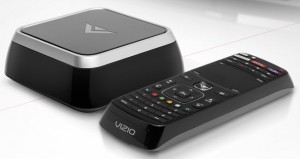
    I honestly think the Micca box may have allowed that, but this is where I went off-budget and risked the ire of my wife. That Google TV was too much temptation to ignore. If only it could play ISO then it would have been my one device — hint to Google. In short, I ordered a Vizio Co-Star.

    Now We Wait

    Every part has now been ordered. Both boxes will be here within a few days, as will the hard drive. The Home Server will be up and running this weekend — unless something goes horribly wrong. So for now, I am clueless, but hopeful, how all of this will work. That is where we will pick this up next time around.

    Photo Credits: Norebbo/Shutterstock

  • Giving Feedback Across Cultures

    Although many of us don’t like to do it, we know that critiquing others’ work — ideally in a constructive, polite, empowering manner — is an essential part of our jobs. But does critical feedback work similarly across cultures? Do people in Shanghai provide critical feedback in the same way as people in Stuttgart, Strasbourg, and Stockholm?

    Nicht, non, and nej.

    Instead, they confront situations where they do have to adjust their feedback style, and sometimes that’s easier said than done. Take the case of Jens, a German executive who was sent by the German corporate headquarters of his company to improve efficiency at the company’s manufacturing plant in Shanghai. Despite being sent to improve efficiency at the plant, all his efforts seemed to be producing the exact opposite result. Jens’s Chinese employees seemed to be losing efficiency and effectiveness, and he could not figure out what was going wrong. He was using everything he knew that worked in Germany — especially in terms of performance feedback. In fact, he made doubly sure to be just as demanding and exacting with his Chinese employees as he would have been in Germany. If his Chinese employees failed to produce what he was looking for, Jens would be “on it,” providing immediate critique to get the process moving back in the right direction. But the problem was, this didn’t work. In fact, it failed miserably. Rather than improving productivity, Jens seemed to be reducing it, and his own bosses from corporate started to make calls. The entire situation was becoming a disaster.

    It turns out that what worked in Germany in terms of tough, critical, to-the-point negative feedback was actually demotivating to Jens’s new Chinese employees, who were used to a far gentler feedback style. In Germany, you don’t single out specific accomplishments or offer praise unless the accomplishment is truly extraordinary. From a German point of view, these positive work behaviors are normal, rather than extraordinary. Employees are expected to do a particular job, and when they do that job, they do not need to be recognized. In China — at least at this particular plant — the culture was quite different. Employees expected more positive reinforcement than pure critique. These positive comments motivated them to increase productivity and put forth that extra, discretionary effort.

    It took quite some time and effort on Jens’s part to recognize this difference and to be willing to adapt his behavior to accommodate the difference, because to Jens such a motivational style felt awkward and unnatural. He didn’t feel himself being so “soft” with his employees, and he had serious doubts about its effectiveness. However, over time and through quite a bit of trial and error, Jens was able to develop a new feedback style that worked in the Chinese setting and also felt acceptable (or acceptable enough) to his German mentality. It took time and effort, but in the end was quite effective.

    Clearly, performance feedback can be very different across cultures, whether you’re in Germany, China, the UK, or the U.S. Given that fact and our interest in becoming effective global managers, what can you do to ensure your style fits the new setting?

    Tip #1: Learn the new cultural rules. This is an obvious one, but many managers I speak with tell me how they had just assumed their style was universal, and that lack of awareness is what initially got them into trouble. How direct and to-the-point are you expected to be? How important is it to protect the face or social standing of others when delivering feedback in group settings? Learning the “cultural code” by reading up on the culture and observing it in action is the very first step toward developing cultural fluency.

    Tip #2: Find a cultural mentor. In Jens’s case, he actually had a Chinese-born cultural mentor to help guide him out of this quagmire. Although this particular consultant was not German-born, he was globally savvy, having worked in high-level positions in multinational companies for many years. A mentor who appreciates your position as well as the expectations of the new culture can help you craft a new style that fits where you are and that feels authentic to you.

    Tip #3: Customize your behavior. Don’t assume you have to “go native” to be successful. In Jens’s case, he was able to adjust his feedback style to be somewhat less frank than his German approach, and it worked. You often can create a blend or a hybrid that feels comfortable (enough) for you that is effective in the new setting.

    In our increasingly global world, most of us will be face-to-face with colleagues of different cultural backgrounds, whether it’s abroad or in your own office. As a manager, learning how to navigate difficult conversations and to provide critique across cultures is certainly challenge, and there are many important differences to consider. But with these tips in mind, you can face this challenge head-on, no matter what part of the world you’re in.

  • Clearview Capital Promotes Three

    Clearview Capital has promoted Matthew Blevins and James Tucker to principal, and John Cerra to chief financial officer. Blevins joined Clearview in 2007 as an Associate. Tucker joined the firm in 2007 as vice president-business development. Cerra joined Clearview in 2010 as a controller.

    PRESS RELEASE
    Clearview Capital, LLC of Old Greenwich, CT is pleased to announce promotions of Matthew W. Blevins and James C. Tucker to Principal, and John Cerra to Chief Financial Officer.
    Matthew W. Blevins, Principal
    Matt joined Clearview in 2007 as an Associate. Matt’s primary responsibilities are portfolio management, new transaction execution and diligence. He currently serves on the Boards of Pyramid Healthcare, Child Health Holdings and Battenfeld Technologies.
    Prior to joining Clearview, Matt worked as a Senior Consultant in the corporate strategy group of Deloitte & Touche USA, LLP. In that role, Matt assisted Fortune 500 clients in identifying and implementing strategic initiatives to maximize cash flow and enhance shareholder value.
    Matt holds a B.S.B.A. in Accounting and Finance from Central Michigan University.
    James C. Tucker, Principal
    Jim joined Clearview in 2007 as Vice President-Business Development. Jim is responsible for deal sourcing in the Midwest region.
    Prior to joining Clearview, Jim was with LaSalle Bank NA for 13 years as a Senior Vice President. At LaSalle Jim was a Division Head and a member of the Leveraged Finance Group. Prior to joining LaSalle he was with American National Bank & Trust Company of Chicago (now part of JP Morgan Chase) for 18 years. While at American he started their Corporate Finance Group and SBIC.
    Jim holds a B.S. in Industrial Management from Purdue University and a MBA from the University of Chicago.
    John Cerra, Chief Financial Officer & Chief Compliance Officer
    Cerra joined Clearview in 2010 as a Controller. John is responsible for accounting and SEC compliance.
    Prior to joining Clearview, he worked as a Controller at BTS, a global consulting firm, where he managed the firm’s accounting, reporting and compliance functions. In addition to his experience in the private sector, John spent seven years in the public sector as a tax and audit accountant managing business, individual and fiduciary client engage- ments.
    John is a Certified Public Accountant and holds a B.A. in Accounting from the University of New Haven.
    Clearview’s holdings include Battenfeld Technologies, Inc, a leading designer, developer and supplier of branded shooting and hunting accessories to the outdoor sporting goods industry; GCR, Inc., a professional services firm delivering consulting services and technology solutions to governmental and commercial clients; Child Health Holdings, Inc., d.b.a. Pediatric Healthchoice, the country’s largest operator of prescribed pediatric extended care centers; Pyramid Healthcare, Inc., a provider of inpatient and out-patient behavioral health services; The Results Companies, LLC, a provider of outsourced customer management solutions; QualSpec Group (f.k.a. All Tech IESCO), a provider of inspection and non-destructive testing services to the refining, petrochemical market and other industrial process industries; Rowmark, LLC, a manufacturer and marketer of specialty plastic sheet and related products for the awards/recognition, engraving and signage markets; Senior Care Centers of America, Inc., the country’s largest operator of adult day care centers; and a minority interest in CPG International, the leading extruder of thick gauge polyolefin and PVC sheet, including AZEK® brand trim boards.

    The post Clearview Capital Promotes Three appeared first on peHUB.

  • Monroe Capital Adds Jeffrey Kolke

    Jeffrey Kolke has joined Monroe Capital as a managing director in its Chicago office. Kolke was previously a senior vice president at GE Capital, where he spent 15 years.

    PRESS RELEASE
    Monroe Capital LLC today announced Jeffrey Kolke has joined the firm as Managing Director in its Chicago office.

    “We are very excited to add Jeff to the Monroe Capital team,” said Ted Koenig, President & CEO of Monroe Capital. “Jeff has an accomplished career providing debt solutions to middle-market companies and brings with him wide-ranging risk and portfolio management experience across multiple industries. He will be responsible for non-sponsored lending efforts in addition to originating cash flow and enterprise value based loans regionally in private equity sponsored transactions.”

    Prior to Monroe, Kolke was a Senior Vice President at GE Capital, where he spent 15 years. He was responsible for intermediary channel origination to support the strategic initiatives of public and private corporations, family funds, and hedge funds. He has experience in recapitalizations, mergers, acquisitions, restructuring, leveraged buyouts and many other corporate strategies. Prior to GE Capital, Kolke worked at GE Plastics as a National Accounts Manager, Nalco Chemical as an Area Manager and National Starch & Chemical as a Technical Service Representative.

    Kolke earned his B.S. in Chemical Engineering from University of Illinois and an M.B.A. from Wayne State University. He is currently a member of the Association for Corporate Growth, Commercial Finance Association, and Turnaround Management Association.

    About Monroe Capital

    Monroe Capital LLC is a leading provider of senior and junior debt and equity co-investments to middle-market companies in the U.S. and Canada. Investment types include unitranche financings, cash flow and enterprise value based loans, acquisition facilities, mezzanine debt, second lien or last-out loans and equity co-investments. Monroe Capital prides itself on its flexible investment approach and its ability to close and fund transactions quickly. Monroe is committed to being a value-added and user-friendly partner to owners, senior management and private equity sponsors.

    The post Monroe Capital Adds Jeffrey Kolke appeared first on peHUB.

  • Ride-Sharing Startup SideCar Buys Heyride

    SideCar, a San Francisco-based ride-sharing startup, has acquired the assets of Heyride Inc., an Austin-based ride-share company. The deal extends SideCar’s reach, and the company will immediately begin rides in Philadelphia, Austin and Los Angeles. SideCar is backed by Lightspeed Venture Partners, Google Ventures, Spring Ventures, Huron River Ventures, SV Angel, and Lerer Ventures.

    PRESS RELEASE

    SideCar (www.side.cr), the leading on-demand rideshare community, announced today it has acquired the assets of Heyride, Inc, an Austin-based rideshare community. SideCar uses smartphones to connect everyday drivers with a car with people nearby who need a ride. The acquisition immediately builds out SideCar’s operational presence in Austin in time for SXSW 2013. Already popular in San Francisco and Seattle with more than 100,000 connected rides, SideCar will begin rides in Philadelphia, Austin and Los Angeles this weekend and is actively recruiting drivers in New York, Chicago, Washington, DC and Boston.

    “We’ve heard from people across the country and around the world that they want the SideCar community to take root in their cities and towns,” said Sunil Paul, CEO of SideCar. “Heyride’s talented team has developed a unique design and experience that will help take the rideshare movement we started here in San Francisco nationwide. We are thrilled to welcome Heyride to the SideCar family.”

    SideCar and Heyride have a shared vision for empowering communities to solve transportation problems. Heyride’s world-class user experience and design team will join SideCar’s product team to focus on creating an outstanding experience for SideCar drivers and riders. Heyride’s assets include its critically acclaimed iPhone application for ridesharing available at Heyride.com. Founded in 2012, Heyride was born out of the team’s frustration with the limited transportation options during the city’s SXSW festival.

    During its initial launch phase SideCar will be available for drivers and riders Friday and Saturday nights from 5pm – 3am in West LA, Venice, Santa Monica and Culver City in Los Angeles; and downtown Austin and Philadelphia. Expanded hours and days will follow as the community grows. SideCar is actively recruiting drivers in New York, Chicago, Boston and Washington, DC. Drivers can sign up to be part of the community at www.side.cr/drive. SideCar’s free mobile application is available for download for riders via the App Store for iPhone and GooglePlay for Android users.

    How SideCar works
    SideCar matches everyday drivers with a car with people nearby who need a ride. It’s like getting a ride from a friend or a neighbor when you want it. Riders place a request to share a ride by setting a pick-up and drop off location using the SideCar app. Once the request is accepted, drivers can be viewed approaching in real-time. Riders can make a voluntary donation at the end of the ride.

    SideCar has many features in place to keep riders and drivers safe. All SideCar drivers are pre-vetted for safety. All rides are tracked and passengers can share their progress and ride status in text, email and social media. Donations are made through the app, so the entire experience is cashless and hassle-free. The SideCar community sets and enforces high standards for safety and quality. Drivers and riders rate one another and people with low ratings are removed from the SideCar community. SideCar’s safety features can be found at www.side.cr/safety

    About SideCar
    SideCar (Side.cr), the leading on-demand rideshare community, uses smartphones to connect everyday drivers with a car with people nearby who need a ride. It’s a safe, affordable, convenient and fun way to get around the city. Founded in San Francisco in 2012. The company’s investors include Lightspeed Venture Partners, Google Ventures, Spring Ventures, Huron River Ventures, SV Angel, Lerer Ventures and others. The free mobile application is available for download for riders via the App Store for iPhone and GooglePlay for Android users.

    The post Ride-Sharing Startup SideCar Buys Heyride appeared first on peHUB.

  • Opera Software Buys Skyfire Labs

    Opera Software is buying Skyfire Labs, a Mountain View, Calif.-based maker of software for mobile video optimization. The deal includes a mix of cash and stock and potential earn-out payments that could bring the total deal size to $155 million.

    PRESS RELEASE
    Opera Software announced today that it has acquired Silicon Valley based Skyfire Labs, a leader in mobile video optimization and cloud solutions for mobility.

    Skyfire, headquartered in Mountain View, California, is known for its Rocket Optimizer™ software. This allows mobile operators to leverage cloud computing to optimize virtually any video and other multimedia on crowded cell towers, including 3G and 4G LTE networks. Rocket Optimizer on average provides mobile networks a 60 percent boost in capacity by reducing the size of video and other multimedia content as needed to fit the available bandwidth. Skyfire can detect when specific users are facing poor quality of experience or connections that need assistance, and intervene in milliseconds. This can minimize the long start times, rebuffering, and stalls on video and audio streams that frustrate mobile users around the world. The approach aligns with the trend toward SDN (software-defined networking) and NFV (network function virtualization) among telecommunications operators, thanks to its elastic and virtualization-friendly cloud architecture.

    Skyfire also offers Skyfire Horizon™, a mobile browser extension and toolbar platform that allows users to personalize their smartphone browser and operators to gain new monetization opportunities. Skyfire has honed its technology through a variety of top-selling consumer applications, which have more than 20 million worldwide downloads to date.

    Skyfire currently counts three large U.S. mobile operators as customers for its Rocket Optimizer and Skyfire Horizon solutions, and is in trials with ten other operators around the world.

    “Opera and Skyfire are a natural fit,” said Lars Boilesen, CEO, Opera Software. “Both companies have evolved far beyond their browser roots. Skyfire adds capabilities to our portfolio around video, app optimization, smartphones and tablets, and strength in North America. With video expected to consume over two-thirds of global mobile bandwidth by 2015, and as time spent on Android and iOS apps explodes, we are excited to extend Opera’s solutions for operators.”

    “Opera practically invented cloud compression to improve mobile user experience, and the team at Skyfire is proud to join forces and advance cloud solutions together,” said Jeffrey Glueck, CEO of Skyfire. “Opera’s over 100 carrier relationships, global sales team, and delivery organization can accelerate the global commercialization of Skyfire’s technology. Opera´s Mediaworks advertising unit with AdMarvel, Mobile Theory and 4th Screen Advertising will strengthen Skyfire Horizon by offering mobile operators a complete turnkey solution including ad optimization, ad sales, and rich analytics. The synergies across all the product lines for both companies are tremendous.”

    After the deal closes, Glueck will assume the role of EVP of the Operator Business for Opera, as well as CEO of Skyfire, and will oversee the joint offerings for Opera across Opera Mini co-brand solutions for Operators and Skyfire’s product lines. Skyfire will remain an independent entity as a wholly-owned subsidiary of Opera, and will continue to develop and support the Skyfire browser.

    The two companies envision a powerful new set of joint products to be released over the coming year by combining their talents and know-how. In particular, they look to expand on Opera’s Web Pass offering, which allows consumers to purchase innovative data plans such as an unlimited ‘day pass’ of popular apps and web sites for an affordable price, thanks to video and data optimization. WebPass can enable new business models for operators, such as toll free data, ad-supported data, and more.

    “The market opportunity for video/media optimization solutions geared towards operators and consumers is significant. After a thorough evaluation of this market, we strongly believe Skyfire is the clear leader for the future in this space”, said Erik Harrell, CFO/CSO of Opera.

    The acquisition price includes a mix of cash and stock, with an upfront consideration of US$50 million (including US$8 million of cash on the Skyfire balance sheet) and performance based earn-out payments over three years, including US$26 million in cash held in escrow and funded upfront, that can bring the total deal size to $155 million.

    The Opera acquisition of Skyfire is expected to close before March 15, 2013.

    Mobile operators are invited to meet Opera and Skyfire at Mobile World Congress in Barcelona the 25-27th of February, at Hall 5, Booth 5C90.

    The post Opera Software Buys Skyfire Labs appeared first on peHUB.

  • Reuters – Ocwen Financial Buys ClearPoint

    Investment bank Gleacher & Co Inc. said it agreed to sell its mortgage lending unit ClearPoint to Ocwen Financial Corp. The deal is expected to close in the first quarter, Reuters reported.

    (Reuters) – Investment bank Gleacher & Co Inc said it agreed to sell its mortgage lending unit ClearPoint to Ocwen Financial Corp and ended its search for a potential capital infusion or a buyer.

    Gleacher, which did not disclose ClearPoint’s sale price, said it expects the deal to close in the first quarter.

    The company, founded by merger and acquisition veteran Eric Gleacher, said last year it was exploring strategic alternatives, including raising more capital or a sale.

    “Although we did not believe any proposal we received during the process adequately reflected Gleacher’s value, we will, as before, be opportunistic in considering value-building strategic initiatives,” Chief Executive Thomas Hughes said in a statement.

    Eric Gleacher, who founded the company in 1990, stepped down as its chairman last month. He created the mergers and acquisitions department at Lehman Brothers in 1978 and ran global M&A at Morgan Stanley from 1985 to 1990.

    During his time at Morgan Stanley, he advised private equity giant Kohlberg Kravis Roberts in its famous takeover battle for RJR Nabisco and featured in the bestselling book on the deal, “Barbarians at the Gate”.

    The post Reuters – Ocwen Financial Buys ClearPoint appeared first on peHUB.

  • Archos unveils the Platinum tablet lineup

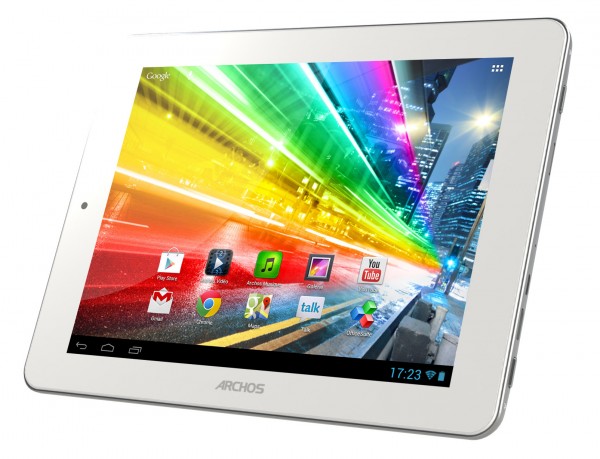
    On Valentine’s day, French consumer electronics company Archos professed its love for mobile technology by unveiling a new tablet lineup dubbed Platinum. The three devices, 80 Platinum, 97 Platinum HD and 116 Platinum, are designed for the wallet-conscious tablet buyers while also sporting pretty decent hardware specifications.

    The common denominators between the three tablets are found inside the shell, with only the physical dimensions and screen specifications separating them. The devices share a quad-core 1.2GHz processor backed by an 8-core GPU (Graphics Processing Unit) and 2GB of RAM. Archos also throws in its branded Media Center applications, front and back cameras, as well as a mini-HDMI port and microSD card slot.

    On each tablet Archos preloads Android 4.1 Jelly Bean, which the French consumer electronics company says provides “full access to 700,000 applications” suggesting that the Play Store app comes preinstalled. But enough of common denominators, let’s talk about what separates the three.

    The 80 Platinum features an 8-inch IPS display with a resolution of 1024 by 768, atop of the above mentioned specifications. Archos pits the 80 Platinum, which runs for $199 starting this month, against the Amazon Kindle Fire HD 8.9 that is available for purchase at $299.

    The 97 Platinum HD targets the Apple iPad, which starts at $499 for the latest iteration, through a 9.7-inch IPS display with a resolution of 2048 by 1536. The tablet, which is also available “in February”, can be had for $299. Archos must really want buyers to think of the 97 Titanium HD as they do about the iPad, because the resemblance between the two is uncanny.

    Finally, the 116 Platinum ships with an 11.6-inch IPS display and a resolution of 1920 by 1080. The 116 Platinum will be available for $349 when it ships later on in April. It is the only tablet of the three that comes with a 16:9 display, with the other two shipping with a 4:3 panel similar to Apple’s iPads.

    Archos says that the Platinum lineup features “a sleek aluminum design”, however the company does not specify whether that’s real aluminum or a faux-aluminum, the latter of which is similar to the side-trim used by Samsung on the Galaxy S III and Galaxy Note II, among others.

  • Reuters – Blackstone Sticks with SAC Capital

    Blackstone Group, one of the world’s most powerful hedge fund investors, is largely sticking with Steven A. Cohen’s SAC Capital Advisors but has negotiated more favorable liquidity terms, spokesman Peter Rose said in a statement. The news came on the day investors had to notify Cohen’s $14 billion fund whether they were sticking with him or leaving as the firm faces heightened scrutiny in the government’s insider trading investigation, Reuters wrote.

    (Reuters) – Blackstone Group, one of the world’s most powerful hedge fund investors, is largely sticking with Steven A. Cohen’s SAC Capital Advisors but has negotiated more favorable liquidity terms, spokesman Peter Rose said in a statement.

    The news came on the day investors had to notify Cohen’s $14 billion fund whether they were sticking with him or leaving as the firm faces heightened scrutiny in the government’s insider trading investigation.

    Sources said Blackstone had roughly $550 million invested with SAC, making it the largest outside investor in Cohen’s fund.

    The post Reuters – Blackstone Sticks with SAC Capital appeared first on peHUB.

  • Telefonica and FeedHenry partner up on enterprise mobile app development

    Last year Telefonica started reselling FeedHenry’s cloud-based Mobile Applications Platform to corporate customers in the UK, Germany and Ireland. But since then, the telecoms giant launched its own mobile- and M2M-optimized infrastructure-as-a-service play, Instant Servers. So it’s no surprise to see the two companies solidify their tie-up, as they have done today.

    Essentially, Telefonica will start selling FeedHenry’s platform to its European enterprise customers with Instant Servers providing the hosting piece. Technologically, the two platforms are fairly well aligned — FeedHenry uses Node.js for integration with its back-end systems, and the Joyent-based Instant Servers platform uses Node.js SmartMachine virtual machines. Predictably, the two companies talk in their statement about “sharing a vision for cloud computing”.

    “We are seeing increased demand from enterprises seeking cloud-based mobile app platforms to reduce up-front costs and time to market,” FeedHenry CEO Cathal McGloin said in a statement. “Corporate IT and app development teams will now be able to build applications for the most demanding consumer and enterprise users to quickly and easily deploy them securely to the cloud.”

    FeedHenry, which was a finalist in GigaOM’s Mobilize Launchpad contest back in 2010, is based in Ireland, although it has recently opened an office in England as its European business expands. Spain’s Telefonica is increasingly trying to push into the cloud, as are most large operators.

    “The intersection of mobile and cloud is a natural one,” Telefonica Digital Cloud Director Tim Marsden said in the statement. “Our goal is to accelerate the availability of mobile-optimized, cloud-based services for app development and management, giving full access to cloud services like storage, security, caching, and server-side business logic.”

    Related research and analysis from GigaOM Pro:
    Subscriber content. Sign up for a free trial.

  • Replace Windows Run box with the more powerful Run-Command

    The Windows Run box has always been a quick and easy way to launch programs, but it’s not exactly packed with features. You can specify an application to launch, choose something you’ve run recently from the History list, and, well, that’s about it.

    You don’t have to live with these limitations, though. Grab a copy of the new Run-Command and it’ll take your Run box to a whole new level.

    The program is a tiny download (42KB), so you can just unzip and go. And it’s extremely portable. There are no .NET or other major dependencies, and the author says it’ll run on anything from Windows 98 to 8.

    Launch Run-Command and at a minimum it’ll work more or less like the regular Run box. You can enter a URL, file or folder name (or browse to it), press Enter or click Run and it’ll launch as usual.

    There’s also a button to run programs as an administrator, though. (You can do the same thing from the regular Run box by entering a program name and pressing Ctrl+Shift+Enter, if you remember, but this is certainly easier).

    There are easy ways to launch commonly-used tools. So for instance Run-Command has built-in icons for Regedit, Cmd.exe, the Computer Management and System Properties dialogs, and more.

    There’s even a customizable Favorites system, which acts something like a mini Start menu. It comes with built-in links to many system tools, but you can also add more of your own. And if you’re using Run-Command from a USB stick then this could help you to create your own portable working environment.

    Through all of this the program does its best to stay out of your way, by default minimizing to the system tray. But it’s easy to launch via the regular Win+R key (although you can change this to whatever you like). And background RAM use is reasonable at around 7MB.

    There is also one annoying bug. Our test PC happened to have the display of icons on the desktop turned off, but we noticed that launching Run-Command (and closing it) caused them to be displayed again. There’s no harm done, you can just hide them once more, but it still quickly becomes extremely irritating.

    This may not be an issue which applies to all systems, though. And if you allow icons to be displayed on your desktop then this won’t be an issue, anyway. So if you’re interested in the idea, don’t let this put you off: just download Run-Command and see how it works for you.

    Photo Credits: ostill/Shutterstock

  • Google posts Android 4.2.2 factory images for Nexus 4, 7, 10 and HSPA+ Galaxy smartphone

    Three days ago, Google released the much-anticipated Android 4.2.2 Jelly Bean update, containing security improvements as well as Bluetooth-related bug fixes. Making Nexus owners even happier (well, at least some of them), the search giant also updated the factory images with the latest green droid iteration.

    Among other purposes, the factory images can be used to restore Nexus-branded devices to a stock state after previously running custom green droid distributions, or update them to the latest version of Android. At a quick glance, for my Galaxy Nexus smartphone, the Android 4.2.2 Jelly Bean factory images ship with a newer radio (XXLJ1), as well as a more recently-dated kernel (version 3.0.31, with a November 28 time-stamp). The “userdata.img” file is also freshly-dated with a February 8 build date.

    The Android 4.2.2 Jelly Bean factory images are available for the Nexus 10 (codename “mantaray”), Nexus 7 in both Wi-Fi and HSPA+ trim (codename “nakasi” and “nakasig”, respectively), Nexus 4 (codename “occam”), as well as for the international and Google Play-sold Galaxy Nexus (codename “yakju” and “takju”, respectively).

    Using the “How to install Jelly Bean on Galaxy Nexus” guide, the Nexus 7 and 10 tablets as well as the Nexus 4 and Galaxy Nexus smartphones (the latter in LTE trim as well, after the factory images are updated) can be upgraded to Android 4.2.2 Jelly Bean by replacing the filenames from the guide with currently applicable ones found in the corresponding factory image.

    Keep in mind that by upgrading to Android 4.2.2, according to AnandTech, the Google Nexus 4 will lose support for Band 4 LTE.

  • Morning Advantage: The Habits of Highly-Effective Mediocre People

    James Altucher wears many hats — he’s built 20 companies, he’s written nine books — but in his own eyes, he’s a mediocre person. But he’s totally cool with that. We can’t all be Zuckerbergs, he says, or really anyone even remotely close. In his great essay at the Rumpus, Altucher says we should embrace our mediocrity. Here are two of his tips (out of seven) for making the best of your lack of genius and drive:

    (1) Procrastinate: It’s your brain’s way of telling you to slow down — and there’s probably a reason it’s doing so (i.e. maybe your idea is bad, or maybe it needs fine tuning). Or, maybe you just need to take a break.

    (2) Fail: Since mediocre entrepreneurs fail much more often than they succeed, they learn the true definition of persistence. They understand that “persistence is not the self-help cliché ‘Keep going until you hit the finish line!’ The key slogan is, ‘Keep failing until you accidentally no longer fail.” That’s persistence.

    BUY A CALENDAR

    The Secret to Happiness (Barking Up the Wrong Tree)

    There’s a lot to take away from this interview with Stanford professor Jennifer Aaker, especially with regards to scheduling our time. As Aaker’s research has shown, “people who spend more time on projects that energize them and with people who energize them tend to be happier.” Of course, that’s easier said than done at work, but when it comes to our free time, most of us are pretty dreadful at scheduling time to do the things we actually enjoy doing. Aaker’s workaround? Be all business about your free time. Schedule it in a calendar. My thoughts? Screw spontaneity — it’s overrated.

    PUT SOME FEELING INTO IT!

    Stop Writing Bad Job Descriptions Already (Inc.)

    If you’ve been job hunting recently, you’ve no doubt come across plenty of job descriptions that read like they were written by robots. Long lists of qualifications, duties down to the finest detail. Note to hiring managers: don’t do that. Some tips: First, try your best to lend a human voice to the description. Second, be as concise as possible — we’re talking 400-800 words here. Last, keep the application instructions as simple as humanely possible.

    BONUS BITS:

    This Steak Tastes Like Rubber

    Why Beef Is Becoming More Like Chicken (Slate)
    The Crisis in American Labor (Jacobin)
    Can Boosting Immunity Make You Smarter? (Discover)

  • LIPPER: Aux armes, millionaires!

    So far the impact of the financial crisis has not hit the wealthy as hard as many protesters would like. Even French millionaires have a found an escape from the modern-day guillotine that is a 75 percent tax rate, in the shape of Russian president Vladimir Putin.

    But what about the level of charges that high net worth individuals have to pay for investing in hedge funds? Even though there has been some downward pressure on the annual management fees charged, the most common model remains “2 and 20” — 2 percent of the fund’s assets and 20 percent of its performance every year.

    In real terms, for a 50 million pound hedge fund that returned 8 percent this could mean an annual fee of 1.8 million pound. The equivalent mutual fund in the UK would typically charge less than half this amount. Perhaps this should be a reason to consider switching to a different fund manager. But European investors have traditionally been more persuaded by the argument that you have to “pay more to get more” than by the notion that a fund manager should minimize costs in order to maximise returns. (Having said this, institutional investors are clearly more savvy when it comes to fees; it helps that they have the clout, through the volume of investable assets, to negotiate).

    Yet perhaps the winds of change are blowing. Cantab Capital Partners has launched its Core Macro Fund with a “1/2 and 10” fee structure. The management fee of 0.5 percent (which also covers back office costs) applies to those investing at least $50 million. Those investing less money will pay more, but still enjoy the 10 percent performance fee. It is hard to argue with Cantab Capital Partners’s assertion that this is “exceptionally low cost” for institutional investors, not least when considering that the fund has daily liquidity and there are neither redemption penalties nor gating clauses. But for performance fee savvy investors, the fact that there is no High Water Mark nor a hurdle rate cannot be ignored. And for those looking for signs of a revolution, Cantab’s other funds have not changed their fees to move in line with the new fund.

    There are others that have grappled with the issue of fairness in performance fees, either through the way the fund itself is structured, as with Optcapital, or Aquamarine Capital’s variation on the level of the performance fee. The Aquamarine Fund charges either “1 and 20” or “0 and 25” depending on the share class, with the performance fees subject to 4 percent and 6 percent hurdle rates respectively.

    Products with a “no win, no fee” structure are not unique to the hedge fund arena, with mutual funds from the likes of Vinculum entering the fray last year and Bedlam manning the barricades ten years earlier. The Bullhound technology fund also tried this back in 2000 and subsequently closed. Of course mutual funds are also open to the ‘hoi polloi’ who, as we all know, are already revolting, not least in Greece.

    PERFORMANCE FEES

    There are some signs that millionaires are taking steps to move away from hedge funds. Reuters recently reported that Deutsche Bank’s Alternative Investment Survey showed that family offices and high net worth investors now account for just 4 percent of industry assets, down from 18 percent in 2002.
    Having said this, this looks to be a move in search of higher returns, rather than away from higher fees.

    In the UK, the blow being struck against high performance fees has come from a more surprising quarter. Here Independent Financial Advisers (IFAs) are those with both the clout and, it seems, the inclination to discourage use of such fees among mutual funds. Their use is most common among funds seeking absolute returns in all market conditions. Many of their strategies mimic traditional hedge fund strategies, and many of them have mimicked hedge fund fees too.

    IFAs, most notably Hargreaves Lansdown, have been publicly sceptical of performance fee structures and it looks as though asset managers in the UK have responded. Since the fee structure was first allowed for open-ended funds in 2004, the number of funds being launched with the fee rose to a peak in 2006, but has since declined to the point where only two funds with this structure were launched last year.

    Lest we lose sight of the millionaires, it is worth casting an eye to Switzerland, where the Swiss Federal Supreme Court has apparently taken up the mantle of the 1789 Assemblée Nationale and stated that retrocessions, or trail commission, received by banks for asset management services belong to the client.

    Although the full implications of this move are still being considered, Ernst & Young have helpfully carried out a survey where respondents generally believe that the Court’s move will improve transparency in the industry, but still the price of bank services (including private banks) are not expected to fall.  The experience in Switzerland so far sounds a lot like that in the UK with the Retail Distribution Review (RDR), which was originally aimed squarely at the man in the street. Perhaps millionaires and the downtrodden retail investor do indeed have common cause.

  • Uganda UK Health Alliance

    Logo of Uganda UK Health Alliance

    I attended the launch of the Uganda UK Health Alliance on 12th February, which was held near the Houses of Parliament in the very grand council chamber of One Great George Street. I had met many of the speakers at the meeting the previous evening, at a reception in the Houses of Parliament hosted by Lord Nigel Crisp, a strong advocate of international development (here). I am always impressed by how effectively the public spaces in the Houses of Parliament are used to bring people together and stimulate discussion and networks on a wide range of important issues.

    The reception hosted on behalf of the Uganda UK Health Alliance provided time and space for those agencies and individuals based in the UK and committed to health improvement in Uganda to form closer links. (A link to the site of some of those organisations that are forming the Alliance is posted here). Chief Nurse, Ms. Enid Mwebaza, Assistant Commissioner for Health for Nursing, and Dr. George Mukone, Senior Medical Officer in the Ugandan Ministry of Health, pictured below, spoke of some of the challenges of improving health in Uganda and of the value they place on the partnerships that have been established with UK health institutions.

    Dr. George Mukone and Ms Enid Mwebaza

    Another key group at the meeting were representatives of the Ugandan diaspora. These are Ugandans or UK citizens of Ugandan decent based in the UK who have maintained strong links with Uganda. There has been an interesting on-line discussion in The Guardian on the value of the diaspora in supporting development (here) and the interest and enthusiasm of the representatives at the meeting was testament to the potential of Ugandans overseas to support the country’s development.

    In my presentation to the meeting, I highlighted the support that the UK is providing to improve health in Uganda. Between 2011 and 2015, the UK is committed to improving family planning, helping prevent AIDS, increasing access to bed nets to prevent malaria and providing support to strengthen health services. However, our discussions with the Government of Uganda have also highlighted the importance that the UK attaches to establishing stronger systems of accountability, to reduce the risk of corruption and to ensure that the human rights of all Ugandans are respected. British support directly to the government of Uganda is currently suspended whilst the Government of Uganda explores how to improve its financial management. These were messages that were well understood by those present at the meeting.

    One of the main benefits of the Uganda UK Health Alliance will be much better coordination of the support provided to health institutions in Uganda. Currently multiple small scale initiatives have built good relationships, but can be quite demanding on the time of Ministry of Health officials. Coordination through the Alliance will help reduce transaction costs, and help to make the support more strategic. Rather than training individuals, the Alliance could help to ensure that training inputs are strengthening national curriculum development and training trainers, so that the benefits of inputs will be felt across the country, rather than just in individual institutions.

    Lord Crisp made a point of highlighting that the lesson learning is a two way process. UK health workers visiting Uganda learn a huge amount from their experience, they have grown to respect and admire the work of many of the dedicated professionals that they meet, and they bring that learning and enthusiasm back in to the NHS. He highlighted that this ‘co-development’ is a two way process from which we all benefit.

  • Opera and Skyfire marry data compression with video optimization in $155M merger

    Before this week, you may have been forgiven for thinking of Opera as a worthy but dull fading player in the browser space. No longer. Not only has the Norwegian firm caused quite a bit of upset by dropping its own engines and frameworks in favor of WebKit, Chromium and V8, but now it’s gone and bought Skyfire for a cool $155 million.

    From a consumer app perspective, the two companies have remarkable similarities. Opera’s browsers are best known for using server-side compression as a way of saving on data costs, and Skyfire uses server-side rendering for video, making it a go-to browser for those who really miss Flash on today’s platforms. This deal is doubtlessly about uniting those two strengths, but that’s not its main thrust.

    This is really about mobile carriers: about offering them more control over the quality of their services, and about giving them ways to monetize their subscribers’ mobile web usage. And it may just be a push whose time has come. The key there is the carriers’ current shift to software-defined networking (SDN), which in itself is intended to give operators the ability to fine-tune parts of their networks in ways that were not previously possible.

    As it happens, Skyfire offers operators a video optimization technology called Rocket, that is supposed to free up capacity – as much as 60 percent, the company claims — at cell sites that are currently feeling the strain of the mobile video explosion. Skyfire also has a toolbar called Horizon that carriers can preinstall on their phones in order to offer customers context-relevant coupons, for example. Mountain View-based Skyfire has three deals with U.S. carriers for the Rocket Optimizer and Horizon (Verizon was a big investor), and is apparently trialling them with ten other operators around the world.

    Opera, meanwhile, has its Turbo compression technology, but it also has a mobile advertising platform called Mediaworks and a carrier service called Web Pass, which allows them to offer pay-per-use mobile web access through the browser. Across these two companies, there’s a lot to play with –- in terms of both technology and geographical reach (Skyfire is strong in North America and Opera in the developing world).

    As Opera CEO Lars Boilesen put it in a statement:

    “Both companies have evolved far beyond their browser roots. Skyfire adds capabilities to our portfolio around video, app optimization, smartphones and tablets, and strength in North America. With video expected to consume over two-thirds of global mobile bandwidth by 2015, and as time spent on Android and iOS apps explodes, we are excited to extend Opera’s solutions for operators.”

    In the same statement, Skyfire CEO Jeffrey Glueck (who will hang onto that title while also becoming Opera’s Operator Business Unit EVP) said:

    “Opera practically invented cloud compression to improve mobile user experience, and the team at Skyfire is proud to join forces and advance cloud solutions together. Opera’s over 100 carrier relationships, global sales team, and delivery organization can accelerate the global commercialization of Skyfire’s technology. Opera’s Mediaworks advertising unit with AdMarvel, Mobile Theory and 4th Screen Advertising will strengthen Skyfire Horizon by offering mobile operators a complete turnkey solution including ad optimization, ad sales, and rich analytics. The synergies across all the product lines for both companies are tremendous.”

    Glueck also wrote a separate blog post that’s worth a read. In it, he expresses excitement about pushing Skyfire’s technology into the developing world, and also gives a nod to the rise of SDN:

    “This is a major milestone for our Skyfire family and validation of our vision for cloud computing and network function virtualization (NFV) to solve huge problems on mobile networks, from handling the explosion of video over cell towers, to finding ways for mobile operators to regain relevance and monetize in an over-the-top world. Back in 2007, when Nitin Bhandari and Erik Swenson started Skyfire, the idea that Tier One mobile network operators would entrust the cloud for core network roles was considered bleeding edge. Now it’s a topic everyone is talking about, and Skyfire is making NVF combined with Software Defined Networking a reality.”

    So what’s next for the merged companies? For a start, they will over the next year roll out new products for carriers that build on Web Pass with new ways of offering mobile web access, such as “toll-free data” and “ad-supported data”.

    And by the way, if you love your Flash video and you’re worried about the future of the Skyfire browser, don’t be – Skyfire will continue to develop and support it.

    Related research and analysis from GigaOM Pro:
    Subscriber content. Sign up for a free trial.

  • Chubby Checker sues HP over penis size app

    A few weeks ago I wrote about Apple allowing a member-measuring app into the App Store (which BetaNews readers seemed to love) and now news reaches us that veteran singer Chubby Checker has got his knickers in a “twist” and is suing Hewlett-Packard over a penis size estimator that bears his name.

    The “Chubby Checker” app for HP’s Palm OS platform was pulled from all Palm and HP listings in September last year and the developer, Magic Apps, is no more, but that hasn’t stopped the singer’s lawyers going to war over the (frankly genius) use of the name and demanding a stiff half a billion dollars for “irreparable damage and harm” to Checker.

    “This lawsuit is about preserving the integrity and legacy of a man who has spent years working hard at his musical craft and has earned the position of one of the greatest musical entertainers of all time,” said attorney Willie Gary. (And yes, as a Brit I find it rather amusing that the attorney taking legal action about a penis related app is called Willie).

    When available, the blurb for the app read: “Any of you ladies out there just start seeing someone new and wondering what the size of there [sic] member is? … All you need to do is find out the man’s shoe size and plug it in and … there is no need for disappointment or surprise.”

    Chubby Checker’s real name is Ernest Evans but the singer trademarked his stage name back in 1997.

    The lawyers acting for the singer say people who have purchased the tool “are being misled into believing that plaintiffs have endorsed the defendant’s app”.

    What makes the story even more entertaining is the Chubby Checker app, which was released on November 13 2010, was reportedly downloaded just 84 times before being yanked from the store.

    Photo Credits: Randy Miramontez/Shutterstock

  • Valve launches Steam for Linux and announces a celebration sale

    After two months of public beta testing, the Linux version of Valve’s popular multiplayer gaming ecosystem has been officially released and is available to download for free from the Ubuntu Software Center.

    To celebrate the release, Valve is cutting the price of 50 Linux titles by between 50-80 percent in a week long sale that will end on Thursday, 21 February at 10 AM PST. Games currently on sale include Bastion, Trine 2, Counter Strike Source, Serious Sam 3, and Darwinia.

    The free-to-play Team Fortress 2 is also available on the new client and, for a limited time, Steam is giving players a free, in-game Tux mascot that can be carried or traded.

    Speaking about the launch, David Pitkin, Director of Consumer Applications at Canonical said: “The introduction of Steam to Ubuntu demonstrates growing demand for open systems from gamers and game developers. We expect a growing number of game developers to include Ubuntu among their target platforms. We’re looking forward to seeing AAA games developed with Ubuntu in mind as part of a multi-platform day and date release on Steam”.

    Steam for Linux also includes Big Picture, a new mode for viewing on televisions, that can be interacted with using a game controller.

    The creation of a Linux client is a direct result of Valve’s boss Gabe Newell’s dislike of Windows 8 (he famously called the new OS “a catastrophe for everyone in the PC space”). Six months ago, following Valve’s announcement that it would be embracing Linux — well Ubuntu at least — I asked the question Will Windows 8 make Linux the new gaming OS? Now that Steam for Linux is here I guess we’ll find out.

    Are you excited about the new Steam client and do you think it will make a difference to Ubuntu’s popularity — with gamers or just in general?