Blog

  • Watch: President Obama Answers Your Questions in a Google+ Hangout

    Earlier this evening, President Obama sat down with Americans from across the country to discuss his State of the Union address and his plan to create jobs and strengthen the middle class.

    During the virtual conversation, the President answered questions about a range of topics, from steps to reduce gun violence to his plan to reward hard work by raising the minimum wage. The President also addressed some more personal questions from participants on recommended reading, Valentine’s Day plans and baby names.

    President Obama participates in a Fireside Hangout on Google+

    President Barack Obama participates in a “Fireside Hangout” on Google+ with Americans from around the country to discuss his State of the Union Address, in the Roosevelt Room of the White House.

    February 14, 2013.

    (Official White House Photo by Pete Souza)

    Check out the full video of the President’s Hangout below. And if you have thoughts about the State of the Union, you can share your Citizen Response with the White House using a new online tool.

    read more

  • Dropbox reportedly eyes IPO as it courts enterprise storage customers

    Dropbox, a major player in online document storage and sharing for consumers, has met with bankers ahead of a possible initial public offering later this year, according to a report Thursday from Quartz. If the timing is right — the IPO could come in the second half of 2013, Quartz reported — Dropbox would beat out Box, another growing online storage vendor, in the race to go public.

    While consumers have steadily flocked to Dropbox, the enterprise cloud storage space remains up for grabs. Box has long wanted to be the Dropbox of the enterprise space, as my colleague Barb Darrow reported last year. Box clients include Netflix, Dow Chemical and Procter & Gamble.

    Dropbox introduced new features for enterprise IT administrators on Tuesday, including reports on employees’ storage use and the ability to give or take away access to documents for certain users and devices. But IBM and other enterprises have forbidden employees from using Dropbox, showing that hurdles to adoption persist. (A Dropbox blog post challenges that notion, stating that “people at over two million businesses and 95% of Fortune 500 companies are using Dropbox,” but does not tell whether all those companies pay for the service.)

    This is also a crowded space, with other enterprise cloud storage providers such as Google Drive, Microsoft’s SkyDrive, Accellion’s kitedrive, Egnyte, GroupLogic’s activEcho, SurDoc and ownCloud aiming for a piece of the market.

    Given that Dropbox has not emerged as the enterprise storage leader, it could be early for Dropbox to go in for an IPO, even as it has a $4 billion valuation and has raised $257.2 million from Sequoia Capital, Institutional Venture Partners, Goldman Sachs and others. Perhaps it would be smarter to bolt down enterprise cloud storage revenue first.

    Feature image courtesy of Shutterstock user Cheryl Ann Quigley.

    Related research and analysis from GigaOM Pro:
    Subscriber content. Sign up for a free trial.

  • Judge allows case over HuffPo ownership to go forward, adds fraud claim

    In a major development in the bitter court fight over the founding of the Huffington Post, a New York judge has for the second time refused the request of media moguls Arianna Huffington and Ken Lerer to dismiss the case. The new ruling also expands the scope of the case to include claims of fraud and unjust enrichment.

    Thursday’s ruling comes as part of a case that begin in early 2011 when two Democratic political operatives, Peter Daou and James Boyce, filed a lawsuit stating that they had presented the idea for HuffPo in 2004. The pair claim that Huffington and Lerer then cut them out of the process, launching the site in 2005 and claiming the idea as their own.

    In October 2011, New York Supreme Court Judge Charles Ramos threw out seven of eight claims in the case but allowed one claim — based on the state claim of idea misappropriation — to go forward. Since then, the parties have been wrangling over procedural issues and Daou and Boyce filed an amended complaint.

    In addressing the amended complaint, Ramos allowed the idea theft claim to go forward as well as those for fraud and unjust enrichment; he tossed a fourth claim for breach of implied contract.

    “Plaintiffs have adequately alleged that defendants took the information that plaintiffs provided, secretly shared it with another person, camouflaged the origin to make it appear as it came from that other person and, in effect, stole the idea and developed it with that other person,” Ramos wrote in letting Daou and Boyce go forward with the fraud claim.

    In the same ruling, Ramos rejected Daou and Boyce’s request to subpoena the CEO of AOL, Tim Armstrong, rejecting arguments that Armstrong had essential knowledge about the founding of the Huffington Post. AOL bought the Huffington Post for $315 million in the spring of 2011.

    Today’s ruling does not mean that Daou and Boyce have won the case. Instead, it means they have cleared a crucial procedural hearing and, thanks to the added claims, can proceed to a trial with a stronger hand.

    The court has made a preliminary decision based solely on the un-contradicted allegations of the complaint and without any consideration of the facts,” a Huffington Post spokeswoman said. “As we have said from day 1, there is no merit to these allegations. They are make believe. Finally we will now be able to move for summary judgment and lay out what the real facts are. We look forward to the opportunity to present the full record to the court.”

    Here’s the ruling:

    Order upholding HuffPo complaint.pdf by


    Related research and analysis from GigaOM Pro:
    Subscriber content. Sign up for a free trial.

  • TED’s New York office rises and dances for V-Day

    The TED staff got up to dance this afternoon to celebrate V-Day. This global movement, founded by TED speaker Eve Ensler, turns 15 today and is celebrating with the One Billion Rising campaign — inviting us to stop, dance and rise against violence.

    One Billion Rising is dedicated to the 1 in 3 of the world’s 3 million women who have been the victims of violence at some point in their lives. Ensler is calling for a global strike against this staggering statistic. So what does dance have to do with it? Ensler explains in the talk below, given at TEDxWomen 2012. “Dance,” Ensler says, “is dangerous, joyous, sexual, holy, disruptive, contagious. It breaks the rules.”

    Our office danced to the V-Day anthem “Break the Chain,” as did men and women in communities around the world today. Watch some of the risings now at onebillionrising.org, and check out our moves below.

    TED-dances

  • WD is getting ready to develop its own Google TV products

    WD may be the next company to jump on the Google TV bandwagon: The company started to look for a software architect for “Android based IP set top boxes” late last year, and the job offer suggests that WD may be looking to replace its existing line-up of streaming boxes with Android-based products. A WD spokesperson declined to comment when contacted for this story.

    The job description includes the following snippet:

    “Work with internal and external teams to architect, design, develop, and deploy IP set top boxes based on the Android operating system. This would include Android TV and Google TV solutions.”

    It goes on to list the following requirements:

    • Architect an interactive, set top box framework on top of the Android platform
    • Create an app centric architecture for 10 foot user interfaces
    • Develop specifications and APIs for TV platform framework
    • Integrate premium services into platform
    • Design framework to support playback and management of videos, photos, music over both local and wide area networks
    • Design framework to coordinate 2nd screen functionality with other WD teams
    The job offer in question: WD is looking for a Google TV software architect.

    The job offer in question: WD is looking for a Google TV software architect.

    Google has signed on a number of new partners supporting the Google TV platform in recent months. At CES, companies showing off Google TV products included Netgear, Haier, Hisense, TCL, LG, Sony, Vizio and Asus. And just last week, some 20 partners came together in Seoul for a closed-door meeting to plot the future of Google TV.

    WD has been in the market for streaming boxes for a couple of years. It currently sells three different products to bring online video services to the TV: The WD TV Live combines streaming services like Netflix and Hulu Plus with support for local files. The WD TV Live Hub adds an internal 1 TB hard drive to the mix, and the newly-introduced WD TV Play offers a simpler UI and a clearer focus on online services.

    The WD TV Live Hub was first introduced in late 2010, followed by the WD TV Live in late 2011. Both could be up for a refresh this year, based on the typical release cycles for these kinds of devices.

    Check out our review of the WD TV Play, which came out this month, below:

    Related research and analysis from GigaOM Pro:
    Subscriber content. Sign up for a free trial.

  • In short: Looking for love during chemo, Kierkegaard’s love letter to a pen

    well-suleika-infertile-tmagArticle
    Here, some staff picks of smart, funny, bizarre and cool stuff on the interwebs this week, with a light Valentine’s Day theme:

    • Suleika Jaouad, who writes about being young with cancer, talks about the embarrassing but very real prospect of being a sexually active cancer patient. [The NYTimes Well Blog] For other unconventional responses to cancer, watch Ananda Shankar Jayant’s talk on fighting cancer with dance.
      .
    • Data visualizationist and programmer Olivier H. Beauchesne maps Wikipedia geotags to uncover some unexpected connections across the tome. [Collaborative Cybernetics]

    Leslie Morgan Steiner: Why domestic violence victims don't leaveLeslie Morgan Steiner: Why domestic violence victims don't leave

    • Read Leslie Morgan Steiner’s CNN article, “Why abused women stay in bad relationships,” in which she calls on lawyers to provide pro bono work to victims of domestic violence. [CNN] Make sure to watch her TED Talk on the same topic.
      .
    • An 18-minute documentary on the future of interactive design, along with eight insights. [Co.DESIGN]
      .
    • Soren Kierkegaard’s Valentine’s Day ode to his love — a pen. [The American Reader]
      .
    • On Tuesday night, TED Fellow Jon Lowenstein‘s documentary about gun violence in Chicago aired on Channel 4 News in the UK, before the U.S. State of the Union address. [Channel 4] See our annotation of Obama’s speech, in TED Talks and playlists.
      .
    • How moshing taught a physics grad student about the dynamic of human collective motion. [The Atlantic]
      .
    • Here, 34 tips from the Vimeo Video School on shooting a video promo for a nonprofit. The featured lesson was created by the film production crew, What Took You So Long?  [Vimeo] They also happen to be behind this video chat with Hans Rosling from the TEDxSummit in 2012.
      .
    • Simply sublime watercolors accompanying stories by beloved Italian author Italo Calvino. [Brain Pickings]
      .
    • Don’t feel bad if you’ve failed the famous invisible gorilla test. Eighty-four percent of radiologists, who seem to have superhuman attention spans, fail, too. [NPR]
      .
    • Is a wearable wrist computer on the horizon? Will we soon all be wearing iWatches? Perhaps so.  [NYTimes Bits blog]

    Photo: Anne Francey

  • Why We’re All in Sales

    An interview with Daniel Pink, author of To Sell Is Human and the article A Radical Prescription for Sales.


    Download this podcast

    A written transcript will be available by February 22.

  • Why I love Surface Pro

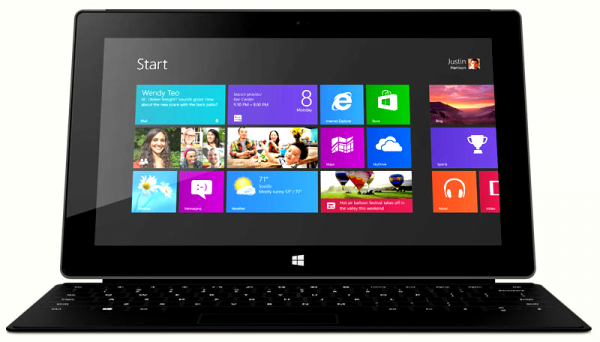
    I have loved many computers and gadgets over the years. They typically share two things in common: Initial “Wow” reaction and improved experience the longer used. Microsoft Surface Pro gets the first, but more time is needed on the second. February 14 marks my fourteenth day using the tablet.

    Too often tech vendors put too much emphasis on features while missing something more fundamental: Joy. How do you feel using the product. Does it make your life better? Are you happier for using the thing? Design — how a product looks and the interaction with it — is paramount. Apple products, for example, are pretty for a reason. On this Valentine’s Day, after two weeks with Surface Pro, love is appropriate topic. Because the tablet makes me feel good.

    Tech stuff that initially wowed me, and I came to really love, is a short list. In order of use:

    • Mosaic, the browser that begat Netscape. Web surfing thrilled, on IBM OS/2 Warp in late 1994. The experience still tickles the heart nearly two decades later.
    • DSL, replacing my ISDN connection in May 1999. Suddenly, the Internet was fun. I’ve changed providers since — moving across country — and dabbled in cable but use DSL today.
    • Apple Powerbook G3 “Wall Street”, purchased refurbished in February 1999. I had used Windows laptops, but nothing wowed like this. I watched my first DVD, rented from Netflix, on the sleek, curvy portable.
    • iPad nano, white, in October 2005. I loved the stick-of-gum size music player, but not forever. The device easily scratched.
    • Nokia N96 and N97, which I lump together, in December 2008 and June 2009, respectively. They’re the best phones I ever used and packed marvelous cameras. If Nokia hadn’t lost its way, I would likely love one of its newer handsets today.
    • Sony VAIO VGN-Z590, the small-screen wonder (13.3 inches) with high-resolution display (1600 x 1200), ahead of most everything else in April 2009. I loved that laptop so much I upgraded to two later Z series.
    • MacBook Air 11.6-inch, October 2010. The other laptop I always dreamed of. Beautiful, svelte, thin and enjoyable.

    Over the years, there are many tech products I liked, and that list is long. Love is something else, and not always lasting. Those listed above stunned by their physical design and user experience. Surface Pro joins them in the initial “Wow” reaction, as somewhat expressed by my initial 3,800-word first-impressions review. Perhaps after another 14 days use, I can say whether love is lasting.

    So where does the love come from:

    1. Surface Pro is handsome and feels rugged to hold. Metal separates grown-up products from infants. Microsoft chose wisely to forgo plastic. The device is well-made — quality feeling right down to the look and feel of power cord and brick. The slanted-sides create illusion Surface is thinner than it is, while pulling the ports out of the way.

    2. The convertible design is clever and useful. I love the kickstand and optional keyboard covers, which is practical and personal. Practicality should be obvious. Different colored covers let you add flare and personality. Microsoft should offer custom designs.

    3. The screen simply stuns. I love, love, love the display, which is the gateway to the device. (So why don’t more hardware vendors make the screen a priority?) Text is super sharp and scales quickly while still looking great. Microsoft chose fonts wisely, too. Then there is touch, which I find to be more accurate on the device than any other I have used. The 10.6-inch diagonal size is just right for a tablet doing laptop duty.

    4. Modern UI is as good as it looks. When I tested a Samsung Slate last year, Windows 8’s new interface did little for me. But something’s different now, perhaps because of Surface Pro’s screen. Modern UI really does feel modern. Microsoft’s built-in apps are simply gorgeous and functional. They beg to be touched, gawked. Overall, I find the interface to be surprisingly intuitive. All this beauty makes me feel good.

    5. Surface Pro is fast. I’ve seen no ARM-based system that can compete. Microsoft made wise choices about the processor, SSD and other components. Battery life could be longer (I typically see 4-5 hours) but is comparable to thin laptops.

    Surface Pro specs: 10.6-inch ClearType HD Display with 1920 by 1080 resolution; 1.7GHz Intel Core i5 processor and HD 4000 graphics; 4GB RAM; 64GB or 128GB storage; 720p front- and rear-facing cameras (meaning they’re for video more than photos); accelerometer; ambient-light sensor; compass; gyroscope; Wi-Fi A/N; Bluetooth 4; USB 3; Windows 8 Pro. Dimensions and weight: 10.81 x 6.81 x 0.53 inches and just under 2 pounds. Price: $899 (64GB); $999 (128GB).

    How will I feel in two more weeks? Will it be a whirlwind relationship or something longer?

  • West Wing Week: 02/15/13 or “You’re a Hero”

    This week, the President delivered the first State of the Union address of his second term, and then brought his proposals to factories in North Carolina and a school in Georgia, presided over a Medal of Honor ceremony, honored the outgoing Secretary of Defense, and hungout on Google Plus. 


    read more

  • President Obama: High Quality Pre-K Is “Good Bang for your Educational Buck”

    President Obama at the Decatur Community Recreation Center, Feb. 14, 2013.

    President Barack Obama delivers remarks on early education and his plan to ensure high-quality preschool for every child, at the Decatur Community Recreation Center in Decatur, Ga., Feb. 14, 2013.

    (Official White House Photo by Lawrence Jackson)

    In his State of the Union address on Tuesday, President Obama laid out a plan for reigniting the true engine of America’s economic growth: a thriving, growing, rising middle class. A key component of that plan is making sure that every American has the skills they need for the competitive global job market, which means that education must begin at the earliest possible age. 

    The President proposed working with states like Georgia to make high-quality preschool available to every child in America, and today he paid a visit to that state to see firsthand how the programs they have put in place are making a difference in the lives of our youngest citizens:

    Study after study shows that the earlier a child begins learning, the better he or she does down the road.  But here’s the thing:  We are not doing enough to give all of our kids that chance. The kids we saw today that I had a chance to spend time with in Mary's classroom, they're some of the lucky ones — because fewer than 3 in 10 four-year-olds are enrolled in a high-quality preschool program. 

    Most middle-class parents can’t afford a few hundred bucks a week for private preschool. And for the poor children who need it the most, the lack of access to a great preschool education can have an impact on their entire lives. And we all pay a price for that. And as I said, this is not speculation. Study after study shows the achievement gap starts off very young. Kids who, when they go into kindergarten, their first day, if they already have a lot fewer vocabulary words, they don’t know their numbers and their shapes and have the capacity for focus, they're going to be behind that first day. And it's very hard for them to catch up over time.   

    read more

  • Chubby Checker App Lawsuit Filed Against HP For Penis Length Estimator

    In the bizarro lawsuit news of the day, webOS Nation is reporting that a lawyer representing singer Chubby Checker has filed a lawsuit against HP.

    The case revolves around an app for Palm OS called “The Chubby Checker,” which estimated penis length based on shoe size. Palm was acquired by HP in 2010, and the app remained in the webOS catalog until September 2012.

    Though webOS Nation reports that the app was downloaded less than 100 times over the years, the lawsuit claims that HP and Palm violated the musical artist’s “Chubby Checker” trademark and associated it with “obscene, sexual connotation and images,” damaging the man’s reputation significantly.

    The lawsuit is clearly ridiculous, as Chubby Checker’s reputation is almost entirely based around the early 60s song and dance craze “The Twist.”

    It has, however, brought to light the fact that penis length estimator apps are rather popular, at least for Android devices. An app called the Penis Size Calculator, for example, has over half a million downloads and a few hundred of the funniest app reviews that can be found in Google Play.

    If the WebProNews office is any indication, the lack of knowledge about the Chubby Checker app, as well as the nostalgic glee induced by the video below, mean that Chubby Checker’s reputation was probably not damaged by Palm’s penis estimator in any way. The lawsuit is probably more about reminding people that Chubby Checker is still touring rather than repairing the singer’s reputation.

  • Your House Will Not Be Destroyed by an Asteroid, but You Can Calculate the Odds If You Want

    Did you know that every year, about one asteroid between 16 and 33 feet wide hits the Earth? And when you look at asteroids that are less that 16 feet wide, the total that hit the Earth jumps to around 500?

    Crap, that means that you have a pretty solid chance of your house being destroyed by an asteroid, right?

    Wrong. The odds of that happening are actually pretty terrible – like one in a few trillion depending on how big your house is. Movoto has created a neat little interactive infographic that lets you calculate that probability.

    Mine was about 1 in 1.8 trillion. I feel pretty safe.

    On Friday, February 15th, an asteroid named 2012 DA14 will pass by the Earth. When we say “pass by,” we mean that it will come within 17,200 miles of the Earth’s surface. So it’s not going to hit you – you can sleep tight.

    [Movoto via Geekosystem]

  • Google’s Crash Course On Apps Script ScriptDb [Video]

    Google has uploaded a new Google Apps Script “Crash Course” video to its Developers YouTube channel. The video takes a “deep dive” into ScriptDb (a JavaScript object store built into Apps Script), shows examples, and discusses best practices for organizing data.

  • Hands on: Mophie Juice Pack Air vs. the new Juice Pack Helium for iPhone 5

    When the iPhone 5 first came out, I had to choose between continuing to use my iPhone 4S with a Mophie Juice Pack Air, or get the new iPhone 5 without an integrated battery pack case. Thinking that I would not have to wait very long for Mophie to come out with a new case designed for the iPhone 5, I decided to go with the iPhone 5. Four months of following the drama surrounding Apple’s new Lightning adapter ensued and last week Mophie released a new battery pack for Apple’s latest iPhone. Now, I finally have the new Mophie Juice Pack Helium for the iPhone 5 that I plan to use day to day.

    It looks great, but as I’ll explain, it may take a bit of time to get used to the new model.

    Air to Helium Side by Side

    With the Mophie Juice Pack Air for the iPhone 4S, my initial impressions were that it made the iPhone a little bulkier. The iPhone felt thicker. With the latest model, the Mophie Juice Pack Helium, the first impression I had was that my iPhone was longer, while I barely notice that the phone is any thicker at all. Getting my hand around the iPhone 5 was already a bit of a challenge because of the slightly larger screen, but now with the Mophie Juice Pack Helium, I find myself scootching my hand up and down the back of the case in order to reach and touch every point on the screen. Like trying to press the home and power buttons at the same time. Until I get more comfortable and find the best way to hold the iPhone in its new case, I may be using two hands more often than I like to perform basic operations.

    Air to Helium Thickness

    On the Mophie Juice Pack Air for the iPhone 4S, the top of the case fit around the headphone jack in a similar fashion to other cases. Most headphones would still be able to attach to the headphone jack, but some would require an adapter to fit with the case on. In extreme situations, I could slide off the top of the case to fully expose the headphone jack. In contrast, the Juice Pack Helium on the iPhone 5 blocks access to the headphone jack quite a bit more. This is due to the fact that Apple decided with the iPhone 5 to move the headphone jack from the top of the iPhone to the bottom. Thankfully Mophie included a small adapter cable with the Helium that can reach the headphone jack and attach your favorite headphones.

    Helium Headphone Jack

    Both versions for the iPhone 4S and the iPhone 5 come with a 1500 mAh battery, which Mophie claims will extend the battery life of the iPhone 5 by 80 percent. And despite some of the minor inconveniences regarding length and access to the headphone jack I will be using this as my every day case moving forward. Nothing is more annoying than running out of battery life. I really enjoyed my Mophie Juice Pack Air with my iPhone 4S and have been looking forward to getting my hands on the Helium case for my new iPhone 5.

    Related research and analysis from GigaOM Pro:
    Subscriber content. Sign up for a free trial.

  • Google’s flu snafu and the reliability of web data

    The web is full of data — much of it meaningful — but there’s some question as to how much we should actually rely on it. The latest evidence comes at Google’s expense, with some researchers questioning the validity of Google’s Flu Trends algorithm. They say the service, which estimates the number of flu cases around the world by analyzing trends on Google’s search engine, vastly overestimated this year’s season in the United States compared with more-traditional methods of measuring flu cases.

    But this snafu is just a microcosm of a broader debate over how much stock we should put in web and social media data, and in what cases it’s most valid. It’s hard to figure out how much we should value speed and scale over quality of data. Millions of (presumably) younger people proactively searching or tweeting about a topic provides a huge and theoretically unbiased dataset, while traditional methods of phone calls or focus groups reach a smaller number of (presumably) older people who know they’re being observed, but who also are answering questions directly relevant to the research at hand.

    Who’s more accurate: Google, Twitter or your neighbors?

    The exact details of the discrepancy are explained in a Nature article published on Wednesday, but it appears to be a case of a lot of data that didn’t mean what Google thought it meant. Google’s search data covers almost the entirety of the web-surfing world and, in theory, can see outbreaks coming before they hit because it can watch the flu-related searches intensify in volume in real time. The Centers for Disease Control and Prevention says Google Flu Trends usually tracks very closely with its own data and can deliver results days faster, Nature writer Declan Butler reported.

    Researchers think this year’s discrepancy might have something to do with hyped-up media reports leading to a volume of web searches for flu-related terms that was disproportionate — almost double, nationwide — to the actual number of cases. The CDC claims about 6 percent of the U.S. population was affected with flu-like symptoms during the peak period.

    flu copy

    Google estimated more than 10 percent of the U.S. population had flu-like symtoms.

    On the other hand, one project called Flu Near You, which relies on volunteers to report cases of flu among their friends and family, estimated a number closer to (albeit lower than) the CDC’s official statistics, perhaps because the data is based on clinical definitions of “influenza” and relies on people expressly reporting known cases. However, Flu Near You claims less than 45,000 participants and, according to Nature, covers only 70,000 people.

    flunearyou1

    Flu Like You’s peak estimate was abour 4.5 percent of the population.

    Responding to my inquiry about the discrepancy, a Google spokesperson sent the following statement:

    And while Google’s predictions might be prone to the undue influence of a fear-mongering media environment, CDC researcher Lyn Finelli told Nature she’s even more skeptical of efforts to track flu outbreaks using Twitter data. She cites a low signal-to-noise ratio and a population of largely young-adult users that doesn’t align with the country’s overall demographic makeup.

    To the contrary, however, Johns Hopkins University computer scientist Michael Paul told Nature that he’s a big believer in Twitter data, especially because it generates a large dataset that’s less susceptible to sample errors than smaller-scale projects such as Flu Near You. He claims to have developed a model that can accurately track the flu using Twitter, something a handful of other projects are already working on.

    Pollsters struggle with the web, too

    But flu statistics aside, questions over the validity of Twitter, Google and other web sites as data sources are nothing new. Last year, for example, I profiled a company called the Dachis Group that has devised a method for tracking a companies’ presences, buzz and sentiment on social media. It claims its algorithms for ranking the buzz around Super Bowl XLVI advertisers were far more accurate — or at least yielded drastically different results — than USA Today‘s traditional AdMeter rankings of Super Bowl ads based on phone-based polling.

    Although people appear generally willing to do away with phone surveys and other marketing-based polling efforts, there’s a lot more skepticism when it comes to using the web to predict political elections and gauge response to culturally popular events such as presidential debates or the Olympics. I covered both sides of the debate in October, as pre-election fever was in full force and many people were atwitter about Twitter’s tweets-per-minute counts during the presidential debates. What side experts fall on seems to depend on how much they trust the demographics, the subjects themselves, the sample size and how well someone can actually analyze sentiment in text.

    Even on Google, politics has proven that interest doesn’t necessarily signify intent. Leading up to the presidential election in November, Mitt Romney was trending quite a bit higher than Barack Obama in search volume. Election night, however, was a different story, with Obama winning in a landslide.

    obamrom

    Perhaps the best advice on how to deal with web data comes from Harvard epidemiologist John Brownstein, who told Nature, “You need to be constantly adapting these models, they don’t work in a vacuum. You need to recalibrate them every year.”

    As web usage and users change along with the world around them, there’s really no guarantee that a single data point means the same thing or has the same effect from year to year. Even search is under attack by companies trying to proactively surface content for consumers before they know to look for it.

    When accuracy is paramount, no place — Twitter, Google, the telephone or the wisdom of crowds — is the holy grail; they’ll all have to play a role.

    Feature image courtesy of the Centers for Disease Control and Prevention.

    Related research and analysis from GigaOM Pro:
    Subscriber content. Sign up for a free trial.

  • News for 14th February 203

    Happy Valentine’s Day!

    News copied from Twitter @egyptologynews

    The ARCE has announced the launch of its new Luxor West Bank Archaeological Field School for local MSA/SCA inspectors http://bit.ly/X6jHVT

    Article about the building of the replica of a New Kingdom chariot for a television show. ARCE http://bit.ly/Uk7e1a

    New on the EES Publishing Blog: “Hasiballah Saqqara photos 1909-1988” with photos. http://bit.ly/14V3OnD

    Interesting article looking at the role of spiritual leaders in rural communities a generation ago. Al Ahram Weekly http://bit.ly/14RitjS

    A 48 hour tour of the heritage of some of the New Valley oases during a forum on sustainable tourism. Al Ahram Weekly http://bit.ly/XrnYAW

    Forthcoming titles from the AUC include three Egyptology, two Coptic studies titles and one about Old Cairo heritage. http://bit.ly/X8u2Q8

    Diana Craig-Patch talks about roof collapse at the Malqata excavation, west bank Luxor. iMalqata Dig Diary http://bit.ly/WrzNIB

    New book: Gold and Gold Mining in Ancient Egypt and Nubia. R.Klemm and D.Klemm (Geoarchaeology in the Eastern Desert) http://bit.ly/XbqZES

    Jane Akshar’s notes from the Mummification Museum Lecture, Luxor: Joint Expedition to Malqata. Luxor News Blog http://bit.ly/Viy3SH

    Routine archaeo survey in one of Alexandria’s most densely populated areas revealed Graeco-Roman tombs. Ahram Online http://bit.ly/YgdIMu

    As the project comes to completion: “Demotic Dictionary unveils culture of ancient Egypt.” University of Chicago. http://bit.ly/14sMNlF

    Official denial of problems at the Egyptian Museum in Cairo by Minister of Antiquities Mohamed Ibrahim. allAfrica http://bit.ly/VgdXuQ

    As the value of the Egyptian pound continues to fall, a look at mosques shown on LE and piastre notes. Cairobserver http://bit.ly/VeYPO6

    Amara West 2013 dig diary: faience production in the town? http://bit.ly/YtgSvh

    Greco-Roman tombs have been discovered at Gabbari necropolis in Alexandria. Luxor Times http://bit.ly/VWxP0E

  • Ensign named Internal Audit director at PNNL

    Kevin Ensign, a 26-year audit and finance veteran in both the public and private sectors, has been named director of Internal Audit at the Department of Energy’s Pacific Northwest National Laboratory. 

    As director, Ensign will oversee a comprehensive lab-wide auditing program that provides independent and objective analysis of PNNL’s financial and operating activities. 

    Ensign joined PNNL in 2007 as the laboratory’s prime contract manager. He later was PNNL’s American Recovery and Reinvestment Act lead, and most recently served as manager of the laboratory’s Business Development and Analysis department.  

    Prior to PNNL, Ensign worked at DOE’s Office of River Protection in Richland, where he managed all Chief Financial Officer and contracting activities. He also worked more than eight years at DOE’s Richland Operations Office as an auditor and as director of the office’s Financial Management Division, and worked five years as an auditor and supervisor with the Defense Contract Audit Agency in California.

    During his career, Ensign has performed hundreds of government audits, overseen the financial and internal audit functions of numerous DOE contractors and has provided extensive public briefings on DOE costs, including briefings to members of Congress.

    Ensign is a native of Olympia, Wash., and earned a bachelor’s degree in accounting from Western Washington University in Bellingham.  He received a Project Management Professional certification in 2007.

  • MakieLab’s 3D Printed Dolls Are Kind Of Terrifying

    3D printers have been used for quite some time to make toys. Some of these toys are impossibly cool puzzles, while others are board game figurines. One company is now staking its fortunes on a line of 3D printed dolls.

    MakieLab, a London-based toy company, announced today that its first toy line, Makies, have passed certified as safe for children three and up in Europe. They will be the first 3D printed toy on the continent to bear the CE mark.

    So, what does a 3D printed doll look like? A combination of nightmare fuel and Child’s Play reruns:

    Makies Dolls

    I’m sure some children will absolutely adore these things, but I’ve always been terrified of dolls. It’s mostly the eyes, and these dolls definitely fulfill the creepy eye quota.

    Putting my fear of dolls aside, this is a big deal for 3D printers. It means that 3D printed products are finally entering the mainstream and getting government approval.

    Now, if you’ll excuse me, I have to attend therapy for my irrational fear of dolls.

    [h/t: 3ders]

  • Is Amazon yesterday’s cloud?

    Every six months or so stories crop up about startup companies leaving Amazon Web Services in whole or in part. Heck, I’ve done a few of those stories myself. These defectors usually cite fear of vendor lock-in as their rationale. And smart competitors — OpenStack players like Rackspace as well as Joyent, SoftLayer et al, do their best to capitalize on this “Amazon-has-gotten-too-big-for-its-britches” meme.

    Robert Rizika, CEO of ProfitBricks, USA

    Robert Rizika, CEO of ProfitBricks, USA

    Wanted: Startups to use our clouds

    ProfitBricks USA is the latest to tout its ability to successfully woo startups — it claims 35 to 40 percent of 130 startups that have come aboard left AWS. And today it launched a nationwide program to convince more startups to “break up with Amazon on Valentine’s Day.” Qualified startups — those making less than $1 million in annual revenue — get a 20 percent discount on ProfitBricks IaaS services for a year. A limited version of the promotion rolled out in Boston five weeks ago.

    CEO Robert Rizika, who explained ProfitBricks’ take on scale-up cloud computing said the company offers a modern cloud for a modern era — one with a graphical dashboard to make it easier for mere mortals to deploy infrastructure with drag-and-drop ease. And it offers resources by the minute, not by the hour, which has been the AWS model. ProfitBricks pricing is here.

    Some background; Since AWS launched in 2006, startups have flocked to its inexpensive compute and storage infrastructure. In essence, AWS decimated barriers to entry for dot.com boom startups. Until AWS showed up, those fledgling companies  pretty much had to turn a huge chunk of their VC money over to Oracle for database licenses and Sun Microsystems for hardware. Amazon was the only game in town when it came to reliable infrastructure for rent cheap.

    Changing times mean changing clouds?

    But things have changed. For one thing, a bunch of other very capable, albeit smaller, IaaS players have arrived. They may not be as huge as Amazon, but they’re plenty big for most purposes.

    And, while startups were quite happy to rely on low-level Amazon services, many are less wild about moving up to higher-level and more complex AWS offerings like Simple Workflow Services, which make it difficult for them to back out of Amazon if they want to change cloud providers. Some see Amazon’s ever expanding list of services as competitive to their own plans. Many Amazon partners/customers, whether it’s due to fear of lock-in or fear of competition with their primary cloud provider, now run on multiple clouds.

    They also find it hard to track the constant  pricing changes and tweaks that get posted to the AWS blog seemingly every other day.  A whole flock of startups has grown up around explaining AWS usage and pricing to AWS customers. So much for transparency. Dissidents also complain that to get the best AWS price, they have to lock into 1- or 3-year contracts for Reserved Instances.

    “With us, you automatically get the lowest price, our menu is all graphical — you drag and drop — you don’t need to be an expert to order up your resources,” Rizika said.

    Amazon’s enterprise shift

    Others say Amazon’s own growing focus on enterprise accounts,  a big theme at its inaugural AWS: Reinvent conference last November, is diluting its focus on startup customers.

    Whatever the case, two things are certain: First, more credible IaaS players are coming online by the month. Second: Amazon has no intention of ceding ground to any of them. It’s gonna be an interesting year.

    Related research and analysis from GigaOM Pro:
    Subscriber content. Sign up for a free trial.

  • Cosmic Ray Source Traced to Supernova Leftovers

    A new study has found that the leftover material from supernovas could be the source of mysterious cosmic rays.

    The paper, to be published tomorrow in the journal Science, used data from NASA‘s Fermi Gamma-ray Space Telescope to examine the fast-moving particles and determine their origins.

    “Scientists have been trying to find the sources of high-energy cosmic rays since their discovery a century ago,” said Elizabeth Hays, a member of the research team and Fermi deputy project scientist at NASA’s Goddard Space Flight Center. “Now we have conclusive proof supernova remnants, long the prime suspects, really do accelerate cosmic rays to incredible speeds.”

    Cosmic Rays are some of the fastest-moving particles ever detected. They are made up of subatomic particles such as electrons and atomic nuclei, though around 90% of them are protons. They travel at very close to light speed and are easily deflected by magnetic fields.

    The Fermi Telescope was used to observe the IC443 (the Jellyfish Nebula) and W44 supernova remnants, where gamma rays are emitted by high-speed particles as they leave the remnants. Fermi researchers looked at four years of Fermi data and found that the gamma rays are a result of neutral pion particles, which are formed when cosmic rays (specifically the protons) hit non-cosmic ray protons.

    “The discovery is the smoking gun that these two supernova remnants are producing accelerated protons,” said Stefan Funk, the research team leader and an astrophysicist with the Kavli Institute for Particle Astrophysics and Cosmology at Stanford University. “Now we can work to better understand how they manage this feat and determine if the process is common to all remnants where we see gamma-ray emission.”