Blog

  • Clay Christensen: First the media gets disrupted, then comes the education industry

    Clay Christensen literally wrote the book on disruption, so it’s worth paying attention to him when he talks about where the disruption fueled by the web is going to strike next. The Harvard business professor and author of The Innovator’s Dilemma spoke to Jeff Howe — the Wired writer who coined the term “crowdsourcing” — and had some interesting things to say about where disruption is occurring now and where it is likely to strike next.

    At one point, Howe asks Christensen to name some industries that are “either in a state of disruptive crisis or will be soon,” and the professor says:

    “Journalism, certainly, and publishing broadly. Anything supported by advertising. That all of this is being disrupted is now beyond question. And then I think higher education is just on the edge of the crevasse. Generally, universities are doing very well financially, so they don’t feel from the data that their world is going to collapse. But I think even five years from now these enterprises are going to be in real trouble.”

    620x43411update

    Christensen recently co-wrote a study for Nieman Reports entitled “Breaking News,” which focused on the media industry and the disruption< that is going on there. He also described some of his thinking about what has happened to the newspaper and traditional media business in an interview with the Nieman Journalism Lab — in which he said that many newspapers were lulled into a false sense of security and then “very quickly, all of a sudden, you go off the cliff.”

    When it comes to education, Christensen said that the availability of fairly high-quality online learning would be the disruptive force because “it will take root in its simplest applications, then just get better and better.”

    “You know, Harvard Business School doesn’t teach accounting anymore, because there’s a guy out of BYU whose online accounting course is so good. He is extraordinary, and our accounting faculty, on average, is average. Some [universities] will survive. Most will evolve hybrid models, in which universities license some courses from an online provider like Coursera but then provide more-specialized courses in person.”

    For more on the question of disruption in education, see the ongoing debate between media theorist and journalism professor Clay Shirky and Aaron Bady, a PhD student in African literature at the UC Berkeley. Shirky started it with a piece about the disruptive effect of “massively open online courses” from companies like Udacity, and Bady responded with a rebuttal, followed by a response from Shirky.

    Image courtesy of Shutterstock / Don Skarpo

    Related research and analysis from GigaOM Pro:
    Subscriber content. Sign up for a free trial.

  • Improving the Security of the Nation’s Critical Infrastructure

    The Nation increasingly relies on the Internet to run the systems that light our houses, provide gas for our cars, and ensure our water is safe to drink. Collectively, these diverse systems represent our cyber critical infrastructure. Linking our critical infrastructure to the Internet brings considerable benefits, but our daily reliance on this critical infrastructure means that we are vulnerable to disruptions in our ability to use it. Unfortunately, the threats against our cyber critical infrastructure are numerous, ranging from sophisticated nation states to common criminals.

    The government’s senior-most civilian, military, and intelligence professionals all agree that inadequate cybersecurity within this critical infrastructure poses a grave threat to the security of the United States.  Most recently, we have seen an increased interest in targeting public and private critical infrastructure systems by actors who seek to threaten our national and economic security. Along with dissuading their actions, we must better protect the critical systems that support our way of life.

    Because of the importance of our cyber critical infrastructure, and the seriousness of the threats, the President issued an Executive Order yesterday directing federal departments and agencies to use their existing authorities to provide better cybersecurity for the Nation. These efforts will by necessity involve increased collaboration with the private sector and a whole-of-government approach.

    read more

  • iFixit tags Surface Pro as a total nightmare to repair: ‘You risk killing your tablet by trying to open it’

    Microsoft Surface Pro Criticism
    If you accidentally drop your Surface Pro while breakdancing with it, you probably shouldn’t try to open it up to repair it yourself. The repair gurus at iFixit have found that the Surface Pro is one of the least repairable devices they’ve ever encountered, with a whopping 90 screws to untangle and a case construction that makes it nearly impossible to open your tablet without irreparably harming it. In fact, iFixit says that “unless you perform the opening procedure 100% correctly, chances are you’ll shear one of the four cables surrounding the display perimeter,” which means that “you risk killing your tablet by trying to open it.”

    Continue reading…

  • How Obama-endorsed P-TECH high school is changing education [Q&A]

    In his State of the Union address last night, President Obama made several sweeping statements about how he’d like to improve education, but he saved a specific mention for Brooklyn, NY-based P-TECH, or Pathways in Technology Early College High School.

    Talking about the importance of aligning education with employment opportunities, he said in countries like Germany, students finish high school armed with the skills they need for the jobs that are available.

    “Now at schools like P-TECH in Brooklyn, a collaboration between New York public schools and City University of New York and IBM, students will graduate with a high school diploma and an associate’s degree in computers or engineering,” Obama said. “We need to give every American student opportunities like this.”

    Opened in September 2011, P-TECH is an IBM-backed, six-year program for New York City public high school students. At the end of the program, students get a high school degree, an associate’s degree and better chances for an entry-level position at IBM upon graduation. Even before the president’s endorsement, educators in Chicago, Maine, Massachusetts and elsewhere had started to explore the model, but given last night’s recognition you can be sure P-TECH will be getting even more attention.

    In a chat with GigaOM Wednesday, Rashid Davis, P-TECH’s founding principal, talked about what makes P-TECH work, how it could be replicated and what could make the model even better.

    GigaOM: As we write about frequently on GigaOM, the digital economy is creating the demand for new skills and new ways of learning those skills. From your perspective, what’s driving the momentum behind P-Tech and new schools like it? 

    Davis: I think, really, it’s industry coming forward and saying these are the skills that are important and working with secondary and post-secondary institutions to say how do we make sure those gaps and skills are filled.

    GigaOM: Corporations have worked with educators in the past but what really distinguishes P-Tech’s model?

    Davis: Every student has a mentor from IBM and the expectation is for students to complete the post-secondary credential, not just earn a college credit. And it’s an open-admission school that starts in grade 9. We’re not taking students that have taken an academic test or have been academically screened for this particular model. 

    GigaOM: Why is it a model that can succeed in different cities and school districts across the country?

    Davis: Because you’re talking about the diversification that’s necessary – how do you get people who are underrepresented and you’re broadening the applicant pool for areas where jobs are not getting filled. … It can also be replicated for other industries – not just IT. It could be manufacturing, it could be fashion, it could be sports.  It really depends on the industry and the skills that you want to address and the post-secondary institutions that could give you that credential.

    GigaOM: The first wave of students will graduate in 2017, but what early indicators can you look at to evaluate how the program is doing and measure success?

    Davis: There are some students that may complete this program in four years or five years. But so far, we have 103 students who started with us in grade 9 last year and, of those, 62 are enrolled in at least one college course. … It’s important to understand that this an open-admissions population, with many students who may be the first in their family to even graduate from high school. I don’t want people to try to compare these students to traditional students who may have a different economic background or different levels of support and then [give less value to] measures of success from not really understanding [that difference].

    GigaOM: What kinds of challenges have you encountered so far? 

    Davis: The challenge is to have 13- and 14-year-olds who may have thought of themselves as students who have not done well, and now we’re telling them that they’re college students from day one. That becomes a challenge because students need to not only make a mental shift, but change their habits so they can… believe in themselves and be consistent in their outcomes.

    GigaOM: How do you support them in that shift?

    Davis: In addition to every student having a professional IBM mentor, every teacher mentors students and we’re having students adopt each other.

    GigaOM: If you could do more to make this model a success, what would it be?

    Davis: I would add a boarding component for six months in the summer and I’d try to find a way to house the students for the last two years… 85 percent of my students are on free or reduced lunch and they’re not coming from within walking distance of the community. And it’s important to remember that 76 percent of our population are boys, with 73 percent being young men of color. Every day they go into their communities and we’re at risk of losing them or having them sidetracked to other realities. With boarding, I think it’s essential to make sure we can continue the learning.

    GigaOM: Aside from schools like yours, what else would you like to see in NYC schools?

    Davis: I’d like to see every high school in NYC attached to one of the [City University of New York] schools to allow this same opportunity to exist for all NYC public school students. We know it’s hard for students to actually get meaningful employment – we need to start off by saying that it’s important for every NYC student who graduates from public school leaves with a post-secondary credential or associates degree.

    GigaOM: And, as other schools around the country create P-Tech like schools, what would you advise them?

    Davis: They should keep in mind: how do we move quicker? How do we really think of the ways that postsecondary schools could be dual-credentialed for students to actually let them do more while they’re younger and before life gets in the way?

    Related research and analysis from GigaOM Pro:
    Subscriber content. Sign up for a free trial.

  • Give ‘Happy Birthday’ credits, using Skype 6.2

    Skype has announced the release of Skype 6.2 for Mac and Windows.

    It’s essentially a maintenance release, although Windows users will notice a new-look top toolbar. Four icons immediately above the Contacts list and Recent Conversations tab provide quick access to Home, Calling Phones, Creating Groups and Adding Contacts.

    The other addition this time around (for all platforms) is what the company calls “eGifting”. Which sounds like it’s going to be some major new technology, but actually just means that, when you get a birthday notification, you’ll now also see a prompt suggesting that you send them a Skype gift of credit.

    Elsewhere, you’re now able to send one-way SMS without the hassle of adding and verifying your mobile number, which works for us.

    Some worthwhile bug fixes mean that Skype will no longer hang when signing out with a Facebook account, and there should no longer be any mismatch between the credit amounts displayed in Skype and the account window.

    But a notable remaining “known issue” means that the program may crash when logging in if “Call Recorder” is installed. A fix is reportedly on the way, but in the meantime, if you’re affected, all you can do is uninstall “Call Recorder”.

    Those are the highlights, but Skype 6.2 for Mac and Windows do have a few other bug fixes and issues, too – if you want to know more, then the official Skype blog post on the release has the full list.

    Photo Credit: Sarah Newton/Shutterstock

  • Interest in BlackBerry 10 surges while iPhone loyalty slips

    BlackBerry Owner Loyalty
    The latest YouGov report on smartphone brand perception and purchase intent is out, and this one is a keeper. According to the data, the proportion of BlackBerry owners planning to purchase a new BlackBerry (BBRY) within six months has rocketed from 18% to 43% since the spring of 2012. Over the same time period, the same number for iPhone owners has slipped from 92% to 85% while the number for Samsung (005930) Galaxy owners has ticked up from 46% to 53%. The interesting part here is how close the BlackBerry purchasing intent level is now to Galaxy’s level. One could argue that the iPhone slippage was unavoidable in the period after the iPhone 5 launch and before the rumor mill on the new models kicks into high gear.

    Continue reading…

  • UK Developers: Attend BlackBerry Mini Jam on March 7th in London

    If you’ll be in London on Thursday March 7th, attend the BlackBerry Mini Jam. Connect with experts and other developers interested in BlackBerry 10 development. This half-day event will cover a lot of the basics and you’re sure to walk away with lots of new contacts.

    The event will take place at the Skills Matter eXchange, close to Barbican station. If you haven’t attended a BlackBerry Jam event, they’re a good mix of presentations and sessions. There’s plenty of time to answer your questions and the atmosphere is easygoing and friendly.

    The app development portion will cover HTML5/BlackBerry WebWorks as well as native C/C++ development.

    Click here to register.


  • Open for Questions: The State of the Union and the Economy

    Today, Alan Krueger, Chairman of the Council of Economic Advisers, answered questions from the public about President Obama's State of the Union Address in an “Open for Questions” session moderated by Yahoo! Finance. Check it out below.

    read more

  • Watch Gabe Newell, J.J. Abrams Talk About Films And Gaming

    During the annual D.I.C.E. conference last week, a number of gaming luminaries spoke on the state of the industry. These talks were all posted online with the exception of one that didn’t show up until this week. Unfortunately, it was the most important talk of all – a chat between Bad Robot’s J.J. Abrams and Valve’s Gabe Newell.

    Gamers, and Valve fans in particular, can now rejoice as the talk has been posted online in its entirety. Learn how two of the most famous men in their respective fields compare storytelling in film and gaming. You’ll also get to see the announcement that shook the world – Valve collaborating with Abrams on Half-Life and Portal films:

  • Internet Explorer is the last browser standing

    Opera’s decision to change rendering engines means three of the top five browsers will use Webkit. Internet Explorer stands alone, and that is the wrong place to be. In September 2009 post “Microsoft should dig deep into Webkit to keep Google from Framing IE“, I suggested radical change, which unsurprisingly was ignored. Since, Chrome usage share grew from 2.9 percent in August 2009 to 17.84 percent in January 2013, according to Net Applications. Meanwhile, IE share fell from 66.97 percent to 55.14 percent.

    But the real battleground, and where upstarts gobble up territory, is mobile — yeah smartphones and tablets. While the category accounted for just 11.8 percent browser usage share in January, the majority is Webkit — 61.02 percent just for Safari. Internet Explorer: 1.34 percent, or less than Chrome (2.02 percent). Android browser is 21.46 percent. As I expressed three-and-a-half years ago: “Microsoft should answer WebKit for WebKit, by releasing a new browser based on a new rendering engine; put on the IE brand and ship it for desktop and mobile”. There’s still time, but fast running out.

    Invasion

    Microsoft is losing the new browser war and needs to act rashly and, to be bluntly honest, should have taken my advice in 2009. Starting now is big disadvantage, but what else is there to do? The problem isn’t rocket science, but somehow is lost on the brainiacs in Redmond, Wash. There is:

    • Surge in competing browsers
    • Monetization of browsers around search
    • Growing demand for browsers on mobile devices
    • WebKit emerging as dominant rendering engine for mobile apps
    • Increasing developer distraction from other Web browsers or technologies
    • Rising interest in Chrome OS as platform competing with (and replacing) Windows

    Microsoft now fights the new browser war on multiple fronts:

    • Desktop, where territory recedes
    • Mobile, where rampaging hordes run wild
    • Operating systems, where Android, Chrome OS and iOS invade outlying areas

    Internet Explorer must reach where it doesn’t today — Android, Android hybrids from Amazon and Chinese phone manufacturers and iOS. Webkit stands in the way, particularly iOS, where Apple demands it. Microsoft develops numerous attractive and effective Android and iOS apps, with Bing being a star. IE needs to be there, too.

    Insurgency

    But mobile is but one insurgency on the browser battlefront.

    In May 2011 post “Chrome OS: The ghost of Netscape rises to haunt Microsoft“, I warned what could happen to Windows. Many BetaNews readers rejected the idea, but look where we are now with Chromebook. It was the geek gift this holiday. Microsoft OEM partners Acer, HP, Lenovo and Samsung now all ship Chromebooks. There are rampant rumors of a Google-branded laptop running Chrome OS and increasing speculation the operating system will soon merge with Android. Such union would be fast-track to rapid adoption across multiple devices. Microsoft CEO Steve Ballmer should pee at the thought. Several times a day!

    The situation is more than a browser-based OS shipping on low-cost laptops. As I explained nearly three years ago:

    During the PC era, Microsoft maintained Windows’ dominance through a number of means, including distribution, standards and contractual commitments. The company also used integration — the very thing that set off the U.S. antitrust case — as means of preserving Windows utility/relevance and to beat back competitors. Microsoft would take a technology a competitor spent millions to develop and integrate it into Windows, essentially giving it away for free. Google is doing something similar to Microsoft, by offering products/services for nominal fees or no cost that Microsoft charges heaps of money for. Enter Chrome or Chrome OS as platform for web apps connected to Google cloud product/services like Apps, Calendar and Gmail.

    Chrome OS is free to license, and since I posted Google has copied Microsoft’s past strategy leveraging dominant platforms. Over the past two years, Google has tightly tied most of its products and services together around search. Chrome and Chrome OS bring everything together in a tidy package that also supports third-party web apps. Seriously, if Ballmer isn’t peeing his pants, he should be replaced by someone who is scared, ah, witless.

    Mozilla has Firefox OS in the works but doesn’t command Google’s reach or resources. But even the operating system’s development shows competitive opportunity and Microsoft’s vulnerability.

    Defense

    Microsoft must recognize the seriousness of these competitive threats, particularly as it makes cloud services higher priorities. Can you say Office 365? Microsoft either takes control or is controlled by Apple and Google together setting standards for platforms in categories where Windows isn’t dominant or recedes.

    During Microsoft’s glory years, cofounder Bill Gates made dictating and dominating computer standards a top priority, one CEO Steve Ballmer left behind. During the 1990s browser war, Microsoft integrated Internet Explorer into Windows — not far removed from how Google leverages search today. But the software giant did much more, such as either developing or coming to effectively control emerging Web standards during the late 1990s and early 2000s.

    Microsoft isn’t really driving Web standards today. A commercially developed WebKit browser, supporting HTML 5 and other standards, would strengthen Microsoft’s position of influence against Apple, Google, Mozilla and other developers supporting open-source browsing engines. Done right, WebKit-based IE could even steal marketshare from other open-source browsers. Actually, there is no other choice.

    The first step is the hardest: Conceding defeat. Ballmer and team must admit they blew mobile browsing and that support for standards like HTML5, which is core to Windows 8, aren’t enough. Google is aggressive, like Microsoft in the 1990s, and leverages monopoly position. The search giant is poised to snatch Webkit leadership from Apple and, presumably, drive standards. From that perspective, WebKit IE is table stakes.

    Three-and-a-half years ago, I warned: “Left unchecked, Google will take Internet Explorer and Frame it. Perhaps Apple and Mozilla will break the glass. Microsoft is posed to become the Netscape of the 2010s, otherwise. Microsoft must act to preserve and even reclaim territory taken during the browser wars. There’s still time, but not for long”.

    Microsoft is running out of options fast. If your next browser is Chrome, why not Chrome OS the next operating system in three years when Windows 9 ships? The transition is easy. Remember a decade ago when analysts and Microsoft dismissed Google because search isn’t sticky — just type a new web address? Or how ridiculous a Google browser or operating system seemed just five years ago? How the industry reacted? Think about it?

  • Math class without hand calculation? Estonia is moving toward it

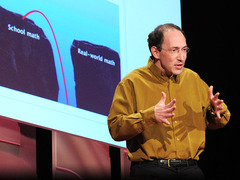
    Conrad-Wolfram-computer-mathMath class should be fascinating, right? At TED2010, Conrad Wolfram suggests that one reason it often isn’t is hand calculation. Conrad Wolfram: Teaching kids real math with computersConrad Wolfram: Teaching kids real math with computersMost students spend years in math class learning to work sums by hand that a computer can now do. After all, computers are far better at calculation than human beings will ever be, while people are far better at defining problems and coming up with creative solutions.

    Wolfram’s website, ComputerBasedMath.org, supports curriculums that allow teachers to focus on real-world math problems, so students can study concepts rather than calculation. As Wolfram says on the site:

    “Rather than topics like solving quadratic equations or factorizing polynomials, Computer-Based Math focuses on using the power of math to solve real-world problems like, ‘Should I insure my mobile?,’ ‘How long will I live?’ or ‘What makes a beautiful shape?’”

    This week, Wolfram announced its first test country: Estonia will be using the program to create a new statistics curriculum for students. Pilot testing of the curriculum in 30 classrooms will start in early 2014. From there, they plan to roll it out to all schools shortly after completing testing in September 2014.

    Why adopt this program? The country’s Minister of Education and Research, Jaak Aaviksoo, says, “We want to lead the world in rethinking education in the technology-driven world.”

  • Playtime for tech at the Toy Fair (photos)

    Several startups are combining technology and toys from LittleBits (see disclosure) and Sphero to Kickstarter darlings Romotive and Ubooly. As more companies from the tech realm try to bring their Silicon Valley ethos to the toy industry, I thought it would be fun to hit up the toy industry’s annual show — The Toy Fair — in New York City to see what the future holds. While there, I realized there is a massive gap between the $21.87 billion toy industry and the tech firms who want to change the way kids play.

    Toy Fair entrance

    First off, this show is huge. There are more than 1,000 vendors spread over 366,339 square feet of space. There are plush toys, dancing plush toys, building sets and dolls. The buyers at the show represent a wide assortment of stores, from large chains like Toys R Us and Best Buy to mom and pop toy shops, schools, car washes and dollar stores. These people are here to scope out new toys and buy inventory.

    Toy Fair plush

    Despite the lure of the high-tech toys that brought me here, many of the things that caught my eye and interest were lower tech. For example, I was charmed by shelves of Android robot plush toys (from $10 to $43) from Gann Memorials, a company in North Carolina. You could even buy a plush Android phone cover for $7 if you were so inclined.

    Toy Fair plush Android

    Another toy that I liked and saw buyers flock to at the Launchpad event — a small portion of the hall for upstart toy companies with prototypes and $1,900 to spend on a table — was a game called Awkward Moments. While it somewhat resembled the Cards Against Humanity game, it was created by a lab out of Dartmouth that built games to change public perception. This $18.95 game was designed to help overcome prejudice against women in the science, math and engineering fields with a small number of cards dedicated to situations that women might encounter. Surprisingly, it was fun instead of preachy.

    Toy Fair cars

    However, the tech-related toys that I was there to see were pretty cool. NeuroSky, a company that makes a brainwave-reading helmet was there with a few toys that worked with its headsets. They ranged form ears that wiggled when you were focused to a helicopter that you controlled with your mind. After trying the headset on, I discovered that I am a very focused individual — perhaps a little too focused. My helicopter launched itself pretty aggressively from the moment I put the headset on. At $70 for the headset and ears this was an investment, however.

    Toy Fair NeuroSky

    There were also tech toys for babies with iPads, such as Tiggly, a puzzle game to help toddlers recognize shapes.

    Toy Fair Tiggly

    And for young kids with iPads, there were the Apptivators. They sat on top of an iPad and interacted with the game playing on the screen. For $25 kids could get either a monster head or a car and play an associated game. When the character dies, the shell covering the little plastic head pops off.

    Toy Fair Apptivator

    And for adults with $1,000 to blow? Two 18-inch-high robots that could fight another robot via the web (the boxing ring is thrown in too).

    Toy Fair robots

    After all of this, the $150 for the Romo smartphone robot looked downright reasonable.

    romotive-2

    And the $90 for the Littlebits toys that have been dubbed the next-generation of LEGOs had me ready to plunk down my credit card. Several educational buyers felt the same way apparently. A lot of people were at the LittleBits booth.

    Toy Fair LittleBits parts

    Yet, the 20th century settled back in once I wandered away from the relatively small interactive and tech section of the show. Once again I was surrounded by plastic, plush and puzzles. And as I wondered how tech toys might do in the bigger market outside the geeks and early adopters, I got a reality check from a fellow blogger who writes for the parenting site Babble. She pointed out that $90 was crazy money for a toy. Adrienne Appell, a spokesman for the Toy Industry Association backed that up with data, telling me that the average price of a toy is $8. Of course, that average is brought down by stuff like the junk below.

    Toy Fair party and novelties

    At the end of two days at the Toy Fair I realized that connected toys, the threat of Kickstarter as a prototyping and marketing tool and advances in robotics were pretty inconsequential in the minds of most exhibitors, buyers and entrepreneurs at the fair, despite headlines shouting that tech was the big trend this year.

    The world of tech and the world of toys may be on a collision course, but that crash is far off. If the small space at the show dedicated to truly connected or novel tech toys wasn’t proof, then the fact that I was offered “a disc” of high-resolution images” by the PR person staffing the Madame Alexander booth was. Sadly, My MacBook Air doesn’t have a CD drive and she didn’t have the images on USB. I’m still waiting her to email the images, but I’m not holding my breath ( or the story).

    Toy Fair entrance vertical

    Disclosure: LittleBits is backed by True Ventures, a venture capital firm that is an investor in the parent company of this blog, Giga Omni Media. Om Malik, founder of Giga Omni Media, is also a venture partner at True.

    Related research and analysis from GigaOM Pro:
    Subscriber content. Sign up for a free trial.

  • Aquaman Defends the Seas in New Injustice: Gods Among Us Trailer

    If the Batman vs. Bane and Wonder Woman vs. Harley Quinn trailers haven’t already convinced you that Injustice: Gods Among Us is a title to keep an eye on, today’s reveal is sure to put the game on your “most anticipated games of April 2013″ list.

    IGN today revealed a new trailer for the fighting game that debuts Aquaman as a playable character. For those who aren’t aware, Aquaman is the King of the Seven Seas and Atlantis, as well as a founding member of the Justice League. The character can breathe underwater, swim really fast, and telepathically communicate with fish. In the trailer, though, he mostly just kicks ass with his trident.

    Even if Aquaman doesn’t end up being players’ favorite character, his appearance in the game should redeem him slightly in the eyes of gamers. The Marine Marvel’s last appearance in video games was 2003′s Aquaman: Battle for Atlantis, a title widely considered to be one of the worst video games ever made.

  • Rovio’s games are losing revenue generation power rapidly

    Rovio Revenue Drop Analysis
    The most famous mobile app franchise in the world has generated more than 1 billion downloads over the past three years — yet it currently has no games in the United States top 50 revenue chart for either the iPhone or iPad. On Wednesday, Angry Birds Star Wars dropped to No. 66 on the App Annie iPhone app revenue chart. This happened just three months after the game launched with massive download volumes and an avalanche of media coverage. Angry Birds Star Wars spent just two months in the top 20 iPhone revenue chart despite generating 50 million downloads in just 35 days.

    Continue reading…

  • The Internship Trailer Is Here (You Know, That Vince Vaughn Google Movie)

    The trailer for The Internship is out, following a Google+ Hangout with stars Vince Vaughn and Owen Wilson. If you’re expecting a jOBS-like look at a major tech company, you’re probably going to be disappointed. If you’re expecting a Vince Vaughn/Owen Wilson–style comedy with the Googleplex as the setting, enjoy:

  • A Plan to Revitalize American Manufacturing

    President Barack Obama delivers remarks regarding manufacturing policy

    President Barack Obama delivers remarks regarding manufacturing policy, after he tours the Linamar Corporation auto-parts plant in Arden, N.C., Feb. 13, 2013.

    (Official White House Photo by Pete Souza)

    Last night President Obama used his State of the Union address to lay out his plan to strengthen the middle class. Today he was in Asheville, NC to talk more specifically about his committment to making America a magnet for jobs and manufacturing so we continue to build things the rest of the world buys:

    A few years ago, manufacturing comebacks in North Carolina, a manufacturing comeback in Asheville may not have seemed real likely, because Volvo had just left town. This plant had gone dark — 228 jobs had vanished. And that was a big blow for this area, because part of what happens is when those manufacturing jobs go away, then suddenly the restaurant has fewer customers, and suppliers for the plant start withering. And it's hard for everybody. It has a ripple effect.

    But then local officials started reaching out to companies, offering new incentives to take over this plant. Some of the workers who got laid off, like Stratton, went back to school and they learned new skills.  And then, a year later, Linamar showed up.  They were looking for a place to build some big parts. And these parts are big, I got to say, hubs and wheels and anchors for 400-ton mining trucks.  And while they could have gone any place in the world, they saw this incredible potential right here in Asheville. They saw the most promise in this workforce, so they chose to invest in Asheville, in North Carolina, in the United States of America.  

    So to date, Linamar has hired 160 workers. It will be 200 by the end of the year, and it's just going to keep on going after that. So the folks at Linamar said, they came to Asheville to grow their business. They came here to stay and put down some roots.

    And the good news is what’s happening here is happening all around the country. Because just as it’s becoming more and more expensive to do business in places like China, America is getting more competitive and more productive.  

    read more

  • First Lady Michelle Obama hosts a “Beasts of the Southern Wild” Movie Workshop for Students

    First Lady Michelle Obama hosts a “Beasts of the Southern Wild” movie workshop at the White House, Feb. 13, 2013

    First Lady Michelle Obama delivers remarks during a “Beasts of the Southern Wild” movie workshop in the State Dining Room of the White House, Feb. 13, 2013. Participating, from left, are: movie director Benh Zeitlin; actor Dwight Henry; actress Quvenzhané Wallis; and moderator Rachel Goslins, a member of the President’s Committee on the Arts and the Humanities. (Official White House Photo by )

    (Official White House Photo by Lawrence Jackson)

    First Lady Michelle Obama today welcomed 80 middle and high school students to an interactive workshop with the cast and crew of the film Beasts of the Southern Wild, in the State Dining Room. The students, who were from Washington, DC and New Orleans, LA, got to talk with director Benh Zeitlin, actor Dwight Henry and the movie's 9-year-old star, Oscar-nominated actress Quvenzhané Wallis,  who stars as Hushpuppy. 

    Mrs. Obama described the film as "beautiful, joyful and devastatingly honest," and praised its underlying message of strength and resilience:

     It's a movie that makes us all think deeply about the people we love in our lives who make us who we are. It shows us the strength of our communities, no matter what they look like.  It shows us that those communities can give us the power to overcome any kind of obstacles. And it also tells a compelling story of poverty and devastation, but also of hope and love in the midst of some great challenges.

    So there are so many important lessons to learn in that little 93 minutes. That’s the other cool thing — that a director and a set of writers and producers can say so much in just 93 minutes.  And it doesn’t always happen in a movie, quite frankly, but this one did it, and that’s why I love this movie so much and why our team wanted to bring it here to the White House and share it with all of you.

    read more

  • Groupon Does the Harlem Shake, Too

    As you know, the Harlem Shake craze has hit hard and fast. YouTube says that in just this month they’ve seen 12,000 versions with over 44 million views.

    Not to be left out, Groupon’s staff have just put out their own Harlem Shake video.

    A solid effort, I’d say:

  • News from 13th February 013

    Copied from @egyptologynews

    The Oriental Institute Electronic Publics. Initiative has made several new Egyptology publications available as PDFs: http://oi.uchicago.edu/news/

    I had missed that the Djehuty dig diary is back online for 2013, with several weeks already published (in Spanish): http://www.excavacionegipto.com/diario/2013/diario13.jsp.html

    Apologies if I’ve posted this before, but excellent if you are interested in Gilf Kebir: Wadi Sura project reports: http://bit.ly/QseTE4

    Super photo from 1920s Port Said. National Geographic. http://bit.ly/12zZKpZ

    Em Hotep Digest vol. 02 no. 05: Ancient Egyptian Gods, Myths, and Legends. http://bit.ly/15cWeWB

    Disputed St Louis Art Museum Ka Nefer Nefer mask settlement terms to be discussed on appeal. Cultural Heritage Lawyer http://bit.ly/WmSTQ6

    Petrie Museum of Egyptian Archaeology database images are now available under Creative Commons license C BY-NC-SA 3.0 http://bit.ly/ooecxi

    Slightly off-topic but interesting. Ancient languages reconstructed by computer program. BBC http://bbc.in/11Dy0pC

    The Ptolemaic temple of Qasr Al Agouz on Luxor’s west bank is to open next week. With 3 photos. Ahram Online http://bit.ly/SJxEYb

    Book: O.E. Kaper. Colours of the Oasis: Artists and the archaeology of Dakhleh Oasis. Only available from publisher http://bit.ly/XzJG4f

  • Why big change may be coming to iOS this year

    There are a lot of predictions being floated about what Apple’s going to do in 2013: an iWatch? An iTV? How about a plastic iPhone and an Apple TV SDK? A note from an analyst from Jefferies published Wednesday contains many of these predictions, but one idea about a move the company might make this year sounds likely: that Apple will make big changes to iOS that will allow the software to work better on mobile devices with much more powerful processors.

    In a note to investors today, Peter Misek of Jefferies Securities notes (via AppleInsider):

    “We think Apple plans to re-architect iOS to utilize more cores and better compete with Samsung. Also, we believe the way iOS interoperates with iCloud, gestures controls, and advertising will be substantially upgraded.”

    I’m not sure about those specific things, but I do think big changes are coming to iOS for a couple reasons.

    While iOS has seen six new releases since its debut in 2007, there have been few major changes. The arrival of the App Store in 2008, and push notifications in 2009 were the last big adjustments in how the software works. Consistency is good for users, and it’s been working for Apple. But iOS was developed at a time when mobile processors were slower and smaller — and iOS was no doubt built with those parameters in mind. At some point, as the analyst notes, iOS is going to need to make back-end changes to keep up with mobile processors as they become faster and more capable.

    Another sign that change is coming? Since between the first iOS release to the debut of iOS 6, the same person was guarding and guiding the development. But Scott Forstall is gone now. CEO Tim Cook dismissed the former head of iOS Software last fall for reasons assumed to be related to the Apple Maps debacle.

    However, I think this move will have ramifications for iOS in general, not just Maps. Both the software element and the engineering part of iOS have a new overseers: Jony Ive is now in charge of the Human Interface group, and Craig Federighi was promoted to lead iOS Engineering along with OSX Engineering.

    New managers by nature often want to come in and force change (even if sometimes for its own sake). But in this case, as the software ages, as early iOS design decisions incorporating lots of skeuomorphic elements fall out of favor, as competitors catch up, and hardware continues to improve, it’s probably more tempting than ever.

    Related research and analysis from GigaOM Pro:
    Subscriber content. Sign up for a free trial.