
Blog

  • “Ape Woman” Buried After 150 Years Was A Circus Display

    Julia Pastrana, who was labeled as “Ape Woman” and described as “the ugliest woman in the world” during her time, has finally been shipped home and laid to rest after over 150 years of being on display to the public.

    Pastrana was born with the rare disorder congenital terminal hypertrichosis, which left her face and body covered in thick hair, and gingival hyperplasia, which made her lips and gums thick. Combined, those things left her with the appearance of an ape, which was widely regarded as “freak” status in 1854. When she left her Pacific coast home of Sinaloa that year at age 20, she was quickly joined by Theodore Lent, who used her unique appearance to their advantage by taking her on a tour of Europe in a traveling exhibition. Pastrana sang and danced for paying audiences, and she and Lent eventually married. When she became pregnant, however, Pastrana developed a fever and she and the baby both died.

    But rather than lay her body to rest, Lent kept Pastrana on display alongside their son, propping them up inside glass cases for audiences to look at. For years, Pastrana’s body toured the world, until Lent’s death in 1884. After that, the bodies found their way to a Norway fairground warehouse, where they were stolen in 1976. Pastrana’s body was recovered from a trash bin, but her son’s body couldn’t be salvaged. The remains were taken to the University of Oslo, where they’ve been until recently. After several requests from those who knew her story, Julia Pastrana’s body is now at peace in Sinaloa.

    “Julia Pastrana has come home,” said Saul Rubio Ayala, mayor of her hometown of Sinaloa de Leyva. “Julia has been reborn among us. Let us never see another woman be turned into an object of commerce.”

    Pastrana made quite an impact on those who knew her story, even decades after her death.

    “Today, it’s almost incomprehensible that a circus used corpses for entertainment purposes,” said Jan G. Bjaalie, who is head of the Institute of Basic Medical Sciences at the University. “Hers was used in a way we today would consider to be completely reprehensible,” he said. “It’s important that we now have a clear end to the way she was treated.”

    Lead image: Wikipedia

    Pastrana and her son on display (DailyMail)

    ape woman buried

  • Trikanoid gets mouse support

    It’s not even a month since we wrote about Trikanoid, a fun remake of 80’s arcade classic Arkanoid. But developers Triumph Remakers have been busy, and version 1.2 for Windows has just been released (the Mac build is coming soon), with some very welcome additions.

    Top of the “new features” list must be mouse support. Previously the program only supported keyboard control, which wasn’t the most natural way to move your pad around, but being able to control it with your mouse, instead, is a real improvement.

    Trikanoid 1.2 also now allows you to move your pad at the normal, constant rate, or an accelerated ball speed-dependent rate (so when the ball shoots off your pad at an angle and a very high speed, your pad will also move more quickly). This may help you catch balls you’d otherwise miss, but of course you’ll also need great judgment to position your pad accurately when it’s moving so fast, so we’re not yet sure how useful it will be. Try it and see.

    Elsewhere, if you were at all confused by any aspect of the game in the previous edition, you might appreciate the new on-screen instructions.

    And some well-judged compression in the installer means that the download size has been reduced by around 70%.

    While the new mouse support is certainly welcome, we have noticed a minor problem or two.

    We’re not entirely sure about the first, but mouse movement doesn’t seem to be quite as smooth as it should be, almost as though there’s a jump when the pad first starts moving. But we’ll need to spend more time playing the game to be sure (that’s our excuse, anyway).

    The second issue, though, is that the program actually captures the mouse, so if you Alt+Tab away from Trikanoid to some other application then it’ll no longer work (the mouse cursor remains visible, but you can’t move it). This isn’t a major problem – if you want to do something else, just close Trikanoid rather than Alt+Tabbing – but it’s still a little annoying.

    We’d hazard a guess that the issue will be fixed very soon, though. And even with this, Trikanoid is still a fun arcade remake, with great sound and graphics, and the new mouse control makes it more playable than ever.

    Photo Credit: ARENA Creative/Shutterstock

  • When Virtues Hide Vice

    Over the past 10 years, I’ve interviewed thousands of leaders about the difference between being smart and being successful. Most cite two attributes: passion and preparation. There’s no question that both are virtues. But aspiring leaders have to be careful because virtues, left unquestioned, can often hide vice.

    Passion or obsession?

    Professional dancers suffer a wide range of painful injuries, including stress fractures in the spine, arthritis in the hip, and a “trigger toe” condition that can cause their big toe to lock in place. But, according to a study conducted at the University of Quebec, it’s the most passionate ones — those who feel compelled to dance to prove something to themselves or others — who suffer the most. It’s the dancers who love to dance, but don’t live to dance, who manage to stay healthier and have longer, more successful careers.

    The lesson: obsessive passion at work may lead to high performance in the short term but it can also cause burnout and bad judgment. If you find yourself focusing so hard on your job that you forget about everything else, or constantly ruminating about it outside office hours, ask yourself what you’re trying to prove and to whom. It can be tough to diagnose yourself, so get counsel from a trusted work friend or family member. Have them help you find the chips on your shoulder and work to discard them. Also embrace non-work passions. Just as Yo-Yo Ma expanded beyond classical music and Serena Williams found joy outside tennis, outside interests can sustain and enrich your core work.

    Prepared or scared?

    Preparation is another virtue that hides a vice: insecurity. Take, for example, a team of junior consultants I interviewed. Worried that they lacked the experience to meet their clients’ needs, they worked extra hard to develop a book full of data before a meeting intended to sell a new project. But they ended up spending so much time presenting to the client that he didn’t feel heard and rejected their proposal.

    When you over-prepare as a way of reducing your anxiety, you risk becoming locked into a script instead of adapting to the situation as it unfolds. To avoid the trap of unwise preparation, make a point of sharing incomplete work in progress more often and using the constructive criticism you get to rapidly prototype, test and improve. Consider every workplace task or interaction as a chance to get better, rather than an opportunity to show how much you’ve prepared.

    Passion and preparation aren’t always masking unhealthy behavior. They’re still traits to be encouraged. But when you say — or hear someone else say — that something is being done in the name of admirable aims, it’s smart to check that no vice lurks inside the virtue.

  • Apple Is Working On Its Own Smart Watch [Report]

    The smart watch is a good idea that has yet to hit the mainstream. It seems that consumers just don’t really see the need for a watch that syncs with their smartphones just yet. That may all change if Apple gets into the game, and a recent report suggests the company is doing just that.

    Bloomberg reports that Apple has a team of over 100 product designers currently working on a smart watch. The device will reportedly handle some of the functions that are already performed by the iPhone. If it’s like other smart watches, it will also presumably sync with an iPhone or iPad to provide information such as texts, messages and other relevant information directly on the watch’s display.

    Why would Apple be investing in a smart watch though? They’re not exactly taking off into the mainstream. The prohibitive cost for something that does very little, while needing to be charged every day, isn’t exactly what consumers are looking for. Would Apple be able to circumvent these problems, and emerge with another product that the masses will lap up?

    Former Apple employee Bruce Tognazzini certainly thinks so. He wrote in a blog post last week that an “iWatch” would “fill a gaping hole in the Apple ecosystem.” He also said that the value of such a product would “be underestimated at launch” but then “grow to have a profound impact on our lives and Apple’s fortunes.”

    This all merely rumor and speculation for now. An iWatch, as its presumably called, does sound like the natural evolution of the iOS platform. Google is already heavily invested in wearable computing, so it’s only natural to assume that Apple is investing in it as well.

  • Yahoo Is Not Pleased With Its Microsoft Search Deal

    That big Yahoo Microsoft search deal is not working as well as Yahoo would like. CEO Marissa Mayer made comments at the Goldman Sachs Technology and Internet Conference in San Francisco on Tuesday saying as much. Reuters quotes her:

    “One of the points of the alliance is that we collectively want to grow share rather than just trading share with each other…”

    “We need to see monetization working better because we know that it can and we’ve seen other competitors in the space illustrate how well it can work.”

    Rumors have existed for quite some time, that Yahoo and Microsoft could kill their search deal early, but we’ve heard nothing substantial enough to suggest this is going to happen. However, Yahoo seems to be getting increasingly impatient.

    Yahoo is a different company than it was when it made the deal with Microsoft. Marissa Mayer is the fifth person to hold the CEO position while the deal has been in place (granted, two of them were interim CEOs). It was announced under Carol Bartz, and has gone through leadership from Tim Morse, Scott Thompson, Ross Levinsohn, and finally Mayer.

    Mayer is, of course, a former Googler, and has brought other former Googlers along for the ride. Since Mayer has been at Yahoo, the company seems to be closer with Google than any other time in recent memory. In fact, last week, Yahoo announced a new partnership with Google (non-exclusive) for contextual ads, which will see Yahoo displaying contextual display ads from Google on various Yahoo properties and “certain co-branded sites” using Google’s AdSense for Content and AdMob advertising offerings.

    “By adding Google to our list of world-class contextual ads partners, we’ll be able to expand our network, which means we can serve users with ads that are even more meaningful,” said Yahoo in its announcement. “For our users, there won’t be a noticeable difference in how or where ads appear. More options simply mean greater flexibility. We look forward to working with all of our contextual ads partners to ensure we’re delivering the right ad to the right user at the right time.”

    We asked Microsoft’s Stefan Weitz about Google and Yahoo’s partnership last week, when we spoke with him about Microsoft’s new “Scroogled” campaign. The only comment he offered on the subject, was “I’d say I wonder how Google is using the content [of] your private communications in Gmail to serve ads in other places.”

    Google Executive Chairman Eric Schmidt recently expressed interest in partnering with Yahoo, years after the two companies tried to partner on a similar search deal to what Yahoo has with Microsoft. The partnership never happened thanks to the threat of regulation, so Yahoo settled for Bing, which regulators did not have a problem with.

    Since all of that, Google has cleared some significant regulatory hurdles (though it faces others). Last month, the company settled with the Federal Trade Commission, which found that Google’s search practices did not violate antitrust law.

    A couple weeks ago, Yahoo released its earnings report for Q4 and the full year 2012. The report was better than many analysts had expected, and this was helped significantly by better-than-expected search performance. Mayer made some comments during the company’s earnings call, indicating that search is a major priority at Yahoo. Wired quoted her:

    “Overall in search, it’s a key area of investment for us,” Mayer said. “We need to invest in a lot of interface improvements. All of the innovations in search are going to happen at the user interface level moving forward and we need to invest in those features both on the desktop and on mobile and I think both ultimately will be key plays for us.”

    “We have a big investment we want to make and a big push on search. We have lost some share in recent years and we’d like to regain some of that share and we have some ideas as to how.”

    It was interesting to see this emphasis put on search, but still on the front end, which would seem to imply that Yahoo is happy to continue outsourcing the back end. It makes you wonder what Mayer’s thinking, particularly if she’s not happy with the Microsoft/Yahoo deal performance.

    Last week, reports emerged that Russian search engine Yandex has surpassed Bing in global search queries, though as Danny Sullivan at Search Engine Land notes, Bing is still well head of Yandex in unique searchers.

    Recent research from RKG has indicated that the Yahoo Bing Network continues to take away market share from Google, as Bing recently pointed out to us, noting that Bing Ads have gained paid search spend share from Google four quarters in a row.

    Obviously it’s not benefiting Yahoo to the extent the company would like.

    Microsoft did tell us about some new ad formats that it will be launching this year, such as Google-like product listing ads and click-to-call ads with Skype integration. Both formats have proven popular with Google advertisers, and the Yahoo Bing Network continues to strive to emulate Google’s success.

    David Pann, GM of Microsoft’s Search Network tells us that advertisers come over to the Yahoo Bing Network with the mentality of “It performs well over there [Google], so it will here too.”

    Will Yahoo and Microsoft’s Search Alliance stay in place? How long will Yahoo remain patient?

    This is not the first time we’ve seen Yahoo speak publicly about dissatisfaction with Microsoft in recent memory. Regarding IE 10′s “Do Not Track” default, Yahoo recently slammed Microsoft saying that the company’s move “degrades the experience for the majority of users and makes it hard to deliver our value proposition to them.”

    That was not an off the cuff remark. That was an official blog post.

    Today, Yahoo announced that it has expanded its display advertising partnership with Microsoft and AOL into Canada.

    Image: Google Talks Archive (YouTube)

  • Opera announces 300 million users, move to Webkit

    As far as web browsers go, Opera never seems to get enough love. But it has a dedicated following of avid users who seem suddenly to appear whenever you say something bad about the software. Now that following has grown, and Opera plans to reward them with a new engine.

    Today CEO Lars Boilesen proclaims a milestone: “On the final stretch up to 300 million users, we have experienced the fastest acceleration in user growth we have ever seen”. While that is certainly a big step for the company, and worthy of a pat on the back, Opera browser still remains far behind its competitors.

    But the news is much bigger: Transition to the Webkit engine, which already powers Apple’s Safari and Google’s Chrome browsers, among others. That means that all of those people who seem to be buying a Chromebook are running Webkit, and that is the allure for Opera.

    In fact, Hakon Wium Lie, CTO of Opera, states that “It makes more sense to have our experts working with the open-source communities to further improve WebKit and Chromium, rather than developing our own rendering engine further. Opera will contribute to the WebKit and Chromium projects, and we have already submitted our first set of patches: to improve multi-column layout”. In other words, Opera wants in on what it senses may be a revolution.

    The company also promises that everyone will get their first look at its new browser for Android at the upcoming Mobile World Congress, which kicks off February 25th in Barcelona, Spain.

    The move to Webkit will be gradual, but is likely the best chance Opera has to move forward with the latest technology and continue to grow its user-base.

  • State of the Union: Obama’s Minimum Wage Bit Sees Biggest Twitter Spike

    Tuesday night’s State of the Union address contained 6,419 words and took just about an hour to deliver. 101 different lines in the speech were followed by applause, and President Obama mentioned defeated Republican challenger Mitt Romney a total of twice throughout the address.

    Twitter has provided us with some more figures – total tweets and tweets per minute. And according to their calculations, 1.36 million tweets were registered from the start of President Obama’s SOTU to the conclusion of Senator Marco Rubio’s GOP response speech.

    And if you think that Twitter buzzed the most during the President’s impassioned section on gun violence, you would be wrong. The moment of the speech with the highest tweets per minute registered was when he was discussing the minimum wage and “ladders of opportunity.” That saw 24,000 TPM.

    The gun violence part came in second with 23,700 TPM (the “they deserve a vote” part).

    As far Rubio’s speech goes, Twitter says they they saw a spike when he had to reach a little bit out of his comfort zone to grab a bottle to take a sip of water.

    State of the Union tweets

    If you need something to compare the SOTU tweet total to, let’s look back at this month’s Super Bowl. Twitter said that they counted 24.1 total Super Bowl-related tweets – 5.5 million of which were simply about Beyonce.

  • Microsoft Surface Pro Teardown Reveals It’s Less Repairable Than Apple’s iPad

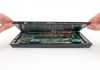
    surfacepro

    The Microsoft Surface Pro is just getting into its first week of consumer availability, and gadget repair blog iFixit has already cracked the case for a closer look at what makes the tablet/PC hybrid thing tick. The teardown reveals that Microsoft has essentially glued down anything that could be glued, making it incredibly difficult for a user to repair on their own – more difficult than Apple’s iPad, by iFixit’s standards.

    The Surface Pro scored a 1 out of 10 for repairability, since just opening the tablet offers a high probability of completely cutting one of the four cables that surrounds the display, there’s adhesive on the battery and display keeping it stuck in, and the display assembly is incredibly hard to replace. There are also 90 screws scattered through the device’s interior, which iFixit says is exceptionally high for this kind of device.

    By comparison, Apple’s latest fourth-generation iPad scored a 2 out of 10 in repairability when iFixit tore it to pieces back in November. That may not be much of an advantage, but it does show that while Apple gets a lot of slack for changing its designs to be less friendly to user-initiated aftermarket changes, the company isn’t alone in moving to designs that focus more on fitting as much as possible into as small a case as possible, rather than providing something users can fiddle with. The Surface RT, on the other hand, was more repairable than Apple’s iPad, so it’s a little disappointing to see the more expensive Pro version fail on that score.

    It should be no surprise, given how much of an emphasis Microsoft put on the Surface Pro’s design and attention to fitting as much power as they could inside such a small space. But iFixit still takes away marks from Microsoft for doing things they feel are unnecessary to the space-saving nature of the design, including gluing the battery in, which they call “planned obsolescence” which is “completely unnecessary.”

    A lot of people wondered what might be the role of OEMs once Microsoft started building its own PC hardware, but there’s clearly still room for them as producers of devices that appeal to hobbyists and tinkerers, who aren’t content to buy what’s essentially a sealed hardware platform only to upgrade again in two years’ time. The Surface Pro, with its fairly limited storage options and 4GB of RAM, would likely be a ripe candidate for aftermarket upgrades, so buyer beware if your plan was to crack the case and perform some at-home surgery down the road.

  • LG unveils a second and different Optimus G Pro

    If you’re confused, you are not alone. On Wednesday, LG unveiled a new smartphone dubbed Optimus G Pro, three weeks after Japanese carrier NTT DOCOMO announced a new LG-made smartphone dubbed Optimus G Pro. The twist — they are not one and the same.

    The confusion stems from the fact that the first Optimus G Pro features a 5-inch display while the second model comes with a 5.5-inch display, basically placing the two in different market segments. In terms of panel dimensions, the former is quite similar to the newest batches of Android flagships such as the Sony Xperia Z while with the latter LG takes the fight to Samsung’s Galaxy Note II. LG should really make up its mind and pick different names for its handsets.

    The two devices don’t even share the same design language. The first one announced comes with a thicker side-bezel, elongated speaker grill and an LED flash under the camera lens, among other things. The model unveiled today reminisces the LG-made Google Nexus 4 in the speaker grill department and the back cover, has a thinner side-bezel and features the LED flash on the right-side of the camera.

    LG clearly aims to reinvent the wheel on the curved glass terminology by stating that it features a “2.5D” effect, which is both misleading and wrongfully used as the term generally applies to virtual geometric models not physical ones. That said, LG did reveal some down-to-Earth information concerning the hardware specifications.

    The 5.5-inch display on the newly-announced Optimus G Pro comes with a resolution of 1920 by 1080. The handset is powered by a quad-core processor, likely of Qualcomm origin. LG did not disclose any information related to the software, which is likely Android 4.1 Jelly Bean judging by the first Optimus G Pro’s green droid distribution. Since MWC 2013 (Mobile World Congress) is just around the corner, we can expect more information during the popular event.

  • House of Cards Is the Most-Watched Thing on Netflix Right Now

    As you may have expected from all of the buzz surrounding the new Netflix original series House of Cards, it’s incredibly popular. Just how popular?

    Well, according to Netflix’s Chief Content Officer Ted Sarandos, it’s the most-watched show on Netflix in every single one of their markets. Here’s what he had to say at All Things D’s Dive Into Media conference:

    “We’re not doing ratings, [but] we’re thrilled with the numbers,” said Sarandos. “It’s the most watched thing on Netflix in every country we operate in.”

    Sarandos went on to confirm that “most-watched” means both in number of total hours watched as well as number of total people watching.

    Sarandos said that we should expect a time when great original series premiering on Netflix isn’t really “news” anymore:

    “I think the 13 episodes at the same time, the fact that it was on Netflix, the fact that we premiered something on Netflix, the fact that we did something we’ve never done before – we created an international content brand on Netflix. So this was a news story in a bunch of different ways besides the fact that the show was good.

    And the show, by the way, is really great, which really helped. But I think it became and interesting news story…but over time it won’t be as novel for sure because we’re going to do a lot of these shows.”

    Of course, what matters here for Netflix is if series like House of Cards can increase signups and keep people signed up.

    “Engagement really matters to Netflix. The more people watch, the longer they stay, the more they tell their friends. There’s a real direct correlation with engagement and retention,” said Sarandos.

    If you haven’t checked it out yet, you should. It’s a juicy, well-acted, gripping political thriller. And all 13 episodes are available to stream at once so you can binge. You know, if that’s your thing (and Netflix hopes that it is).

  • Gaga Unable To Walk After Injury, Tweets About It

    A set of Lady Gaga’s shows have been postponed under strict doctor’s orders following an injury she sustained during a performance which has left her unable to walk.

    The painful ordeal has been described as synovitis, a severe swelling of the joints. The singer took to Twitter to explain what was happening and to apologize to her fans for the show delays. Those affected include performances on February 13th and 14th in Chicago, February 16th in Detroit and Feb. 17th in Hamilton, Ontario, Canada.

  • Kiwi System Info reveals much, but not enough, about your PC

    If you regularly troubleshoot other people’s PCs then you’ll know that the process usually starts by collecting system information. Which graphics card does it have, for instance? How many network interfaces, which USB controller, what user accounts are there? And whatever it might be.

    You may be able to collect some of this data by browsing the target PC, but life will probably be a lot easier if you have a system information program to collect and present everything in a single place. And few tools provide quite as much data as the free Kiwi System Info.

    The program certainly doesn’t look like it’s going to tell you very much. It’s a tiny 195KB download, for instance, and unzips to a single executable. This looks like the kind of tool that will tell you your Windows version, total RAM, free hard drive space, and that’s about it.

    But the reality is quite different. Kiwi System Info organizes its data into 7 key areas: “Hardware Info”, “Data Storage”, “Memory”, “System Info”, “Network”, “User & Security” and “Developer”, and each of these in turn has multiple categories to choose from. So “Hardware Info” includes “BIOS”, “Printer” and “Processor”, for instance; “Data Storage” has “DiskDrive”, “DiskPartition” and “LogicalDisk”; and “System Information” gives us “Account”, “Process”, “Service” and so on. Just select a category and you’ll see a report covering that particular area.

    While this sounds great, there is a catch here. Kiwi System Info works by using Windows Management Instrumentation (WMI) to discover and display the information available on the current PC. This is very easy to do, which is why the program can be so small, but the problem is that most WMI data is highly technical, poorly presented, or both. Which doesn’t make for great reports.

    When you’re browsing categories, for instance, options like CIMLogicalDeviceCIMDataFile, HeatPipe and PerfRawData_W3SVC_WebService probably aren’t going to mean much to the average user (or even many experts).

    And worse still, when you do select a more basic category you’ll often find that its data isn’t presented particularly helpfully. When we clicked “DiskDrive” on our test system, for instance, it listed our drives with their physical IDs rather than drive letters (so \\.\PHYSICALDRIVE1 rather than D:), reported our drive D: capacity as “1000202273280″, and didn’t list the drive space used at all.

    This isn’t necessarily a fatal problem, though. Look past the occasionally dubious presentation and there’s still lots of useful information here. So if you choose “Service”, say, you’ll see all your installed services, their full names, descriptions, short names, the service executable file, its current process ID, whether it can be paused, whether it can interact with the desktop, and more (all of which can be exported as a TXT file with a click). If you’re an experienced PC user, and willing to spend time discovering which areas of the program are helpful, and which really aren’t, then Kiwi System Info could prove very helpful.

    For simpler and more general troubleshooting, though, you’ll need a regular system information tool, as well — Piriform’s Speccy, for instance, delivers a great amount of detail but in a much more readable way.

    Photo Credit: Liv friis-larsen/Shutterstock

  • Obama’s Cybersecurity Executive Order Is No CISPA, Contains Privacy Protections

    Near the end of President Obama’s State of the Union address, he addressed the need for cybersecurity reform. He also confirmed the long standing rumor that he would indeed be signing an executive order into law that helps increase information sharing between the government and private corporations. What’s surprising, however, is that it does address many of the privacy concerns that privacy proponents had with bills like CISPA and CSA.

    With that being said, let’s get into the nitty gritty of the executive order, shall we? First up are details on how information sharing between public government entities and private corporations will work:

    Sec. 4. Cybersecurity Information Sharing. (a) It is the policy of the United States Government to increase the volume, timeliness, and quality of cyber threat information shared with U.S. private sector entities so that these entities may better protect and defend themselves against cyber threats. Within 120 days of the date of this order, the Attorney General, the Secretary of Homeland Security (the “Secretary”), and the Director of National Intelligence shall each issue instructions consistent with their authorities and with the requirements of section 12(c) of this order to ensure the timely production of unclassified reports of cyber threats to the U.S. homeland that identify a specific targeted entity. The instructions shall address the need to protect intelligence and law enforcement sources, methods, operations, and investigations.

    (b) The Secretary and the Attorney General, in coordination with the Director of National Intelligence, shall establish a process that rapidly disseminates the reports produced pursuant to section 4(a) of this order to the targeted entity. Such process shall also, consistent with the need to protect national security information, include the dissemination of classified reports to critical infrastructure entities authorized to receive them. The Secretary and the Attorney General, in coordination with the Director of National Intelligence, shall establish a system for tracking the production, dissemination, and disposition of these reports.

    (c) To assist the owners and operators of critical infrastructure in protecting their systems from unauthorized access, exploitation, or harm, the Secretary, consistent with 6 U.S.C. 143 and in collaboration with the Secretary of Defense, shall, within 120 days of the date of this order, establish procedures to expand the Enhanced Cybersecurity Services program to all critical infrastructure sectors. This voluntary information sharing program will provide classified cyber threat and technical information from the Government to eligible critical infrastructure companies or commercial service providers that offer security services to critical infrastructure.

    (d) The Secretary, as the Executive Agent for the Classified National Security Information Program created under Executive Order 13549 of August 18, 2010 (Classified National Security Information Program for State, Local, Tribal, and Private Sector Entities), shall expedite the processing of security clearances to appropriate personnel employed by critical infrastructure owners and operators, prioritizing the critical infrastructure identified in section 9 of this order.

    (e) In order to maximize the utility of cyber threat information sharing with the private sector, the Secretary shall expand the use of programs that bring private sector subject-matter experts into Federal service on a temporary basis. These subject matter experts should provide advice regarding the content, structure, and types of information most useful to critical infrastructure owners and operators in reducing and mitigating cyber risks.

    In short, this part of the order makes it easier for government and companies to share information between themselves. This is what CISPA and CSA hoped to accomplish, and this executive order accomplishes pretty much the same thing.

    What could be worrisome about this part of the order is that it makes it too easy to share information, but that would only be a concern if extensive privacy protections were not put in place. That’s where the next part of the order comes in:

    Sec. 5. Privacy and Civil Liberties Protections. (a) Agencies shall coordinate their activities under this order with their senior agency officials for privacy and civil liberties and ensure that privacy and civil liberties protections are incorporated into such activities. Such protections shall be based upon the Fair Information Practice Principles and other privacy and civil liberties policies, principles, and frameworks as they apply to each agency’s activities.

    (b) The Chief Privacy Officer and the Officer for Civil Rights and Civil Liberties of the Department of Homeland Security (DHS) shall assess the privacy and civil liberties risks of the functions and programs undertaken by DHS as called for in this order and shall recommend to the Secretary ways to minimize or mitigate such risks, in a publicly available report, to be released within 1 year of the date of this order. Senior agency privacy and civil liberties officials for other agencies engaged in activities under this order shall conduct assessments of their agency activities and provide those assessments to DHS for consideration and inclusion in the report. The report shall be reviewed on an annual basis and revised as necessary. The report may contain a classified annex if necessary. Assessments shall include evaluation of activities against the Fair Information Practice Principles and other applicable privacy and civil liberties policies, principles, and frameworks. Agencies shall consider the assessments and recommendations of the report in implementing privacy and civil liberties protections for agency activities.

    (c) In producing the report required under subsection (b) of this section, the Chief Privacy Officer and the Officer for Civil Rights and Civil Liberties of DHS shall consult with the Privacy and Civil Liberties Oversight Board and coordinate with the Office of Management and Budget (OMB).

    (d) Information submitted voluntarily in accordance with 6 U.S.C. 133 by private entities under this order shall be protected from disclosure to the fullest extent permitted by law.

    As you can see, the above text illustrates that the Obama administration has built some decent privacy protections into the executive order. It’s a major relief since some were concerned that the executive order would be just like CISPA, privacy violations and all.

    If you don’t want to take my word for it, the privacy protections in the executive order also got a pass from the ACLU. The organization’s Legislative Counsel Michelle Richardson had this to say about it:

    “The president’s executive order rightly focuses on cybersecurity solutions that don’t negatively impact civil liberties. For example, greasing the wheels of information sharing from the government to the private sector is a privacy-neutral way to distribute critical cyber information. More encouragingly, the adoption of Fair Information Practice Principles for internal information sharing demonstrates a commitment to tried-and-true privacy practices – like consent, transparency, minimization and use limitations. If new information sharing authorities are granted—especially the overbroad ones being pondered by the House – these principles will be more important than ever. We look forward to working with the administration to make sure that the devil isn’t in the details when privacy regulations are drafted.”

    Section seven of the order contains a number of strategies to be implemented by the government to address and counter any cyber attacks directed at critical infrastructure. The central point is the creation of a “cybersecurity framework” that will include “a set of standards, methodologies, procedures, and processes that align policy, business, and technological approaches to address cyber risks.” Keeping transparency as a central theme, the Director of the National Institute of Standards and Technology will “engage in an open and public review and comment process” during the creation of said framework.

    Government agencies will be required to implement the above framework, but it’s entirely voluntary for private operators of critical infrastructure. That being said, the Obama administration will be doing its damnest to convince these private institutions to incorporate cybersecurity standards. One way the administration will be doing this is through the creation of an incentive program that will be pitched to the administration within 120 days. It will then be implemented by the President if it does not require the passage of new laws. If it does, Obama will take his case to Congress.

    Finally, the order calls upon the government to seek out infrastructure that’s at the greatest risk of cyberattacks. Once they’ve been identified, the government will work with these organizations to make sure that any risk of cyberattacks are mitigated. As such, these organizations have the chance to make their case, every two years, for whether the cybersecurity standards placed upon them are “regulatory burdens.”

    There’s sure to be a lot of talk about this cybersecurity executive order over the coming months. In his speech last night, President Obama indicated as much saying this order is meant to force Congress’ hand in passing extensive cybersecurity legislation. That being said, the order’s emphasis on privacy and civil rights protections makes me hopeful that the administration will smack down any attempts to revive CISPA this year.

  • Asteroid Worth $195B to Swing By Earth on February 15

    On February 15 an asteroid named 2012 DA14 will pass very close to the Earth. It will swing within just 17,200 miles of the planet’s surface, which is well within the orbit of the man-made geosynchronous satellites that orbit the Earth. By coming within just one-thirteenth the distance from the Earth to the moon, the asteroid will set a record for close approach by an object of its size.

    This week Deep Space Industries (DSI), a company that wants to develop the technology to mine asteroids, made the somewhat melancholic estimate that DA14 could contain metals and propellant worth as much as $195 billion. Since the asteroid will fly by the Earth traveling at 17,400 miles per hour, however, it isn’t practical to mine.

    “While this week’s visitor isn’t going the right way for us to harvest it, there will be others that are, and we want to be ready when they arrive,” said Rick Tumlinson, Chairman of DSI. “Even with conservative estimates of the potential value of any given asteroid, if we begin to utilize them in space they are all the equivalent of a space oasis for refueling and resupply.”

    NASA has estimated that DA14 is only about 150 feet across, but DSI believes that is still big enough to be worth billions. DSI “experts” estimate that if 10% of the asteroid were made of minable metals, they could be worth $130 billion. If another 5% of the asteroid could be mined for water, it could be used as $65 billion worth of rocket fuel in space.

    DSI is hoping to begin space mining around the year 2020. In the meantime, the company will be sending “FireFly” probes to examine asteroids, and later “DragonFly” probes that will take samples of the asteroid.

    NASA will also be sending probes to investigate asteroids before 2020. In 2016, the agency will launch the OSIRIS-REx probe, which will visit the Earth-threatening asteroid 1999 RQ36.

  • New From NAP 2013-02-13 09:15:01

    Prepublication Now Available

    The adulteration and fraudulent manufacture of medicines is an old problem, vastly aggravated by modern manufacturing and trade. In the last decade, impotent antimicrobial drugs have compromised the treatment of many deadly diseases in poor countries. More recently, negligent production at a Massachusetts compounding pharmacy sickened hundreds of Americans. While the national drugs regulatory authority (hereafter, the regulatory authority) is responsible for the safety of a country’s drug supply, no single country can entirely guarantee this today.

    The once common use of the term counterfeit to describe any drug that is not what it claims to be is at the heart of the argument. In a narrow, legal sense a counterfeit drug is one that infringes on a registered trademark. The lay meaning is much broader, including any drug made with intentional deceit. Some generic drug companies and civil society groups object to calling bad medicines counterfeit, seeing it as the deliberate conflation of public health and intellectual property concerns. Countering the Problem of Falsified and Substandard Drugs accepts the narrow meaning of counterfeit, and, because the nuances of trademark infringement must be dealt with by courts, case by case, the report does not discuss the problem of counterfeit medicines.

    [Read the full report]

    Topics: Health and Medicine

  • Rick Huxley Dies: Dave Clark Five Bassist Was 72

    Rick Huxley, one of the last surviving members of The Dave Clark Five, has died after a long battle with emphysema. He was 72 years old.

    Huxley played bass for the band, who saw several hits in the ’60s. They appeared on “The Ed Sullivan Show” right around the time The Beatles did, and shot to the top of the charts in 1964 with “Glad All Over”, one of their biggest hits. Huxley, who had been sick for some time, did say recently that he’d been given a clean bill of health by his doctor, so his death came as a shock to his bandmates and friends. Leader Dave Clark said the two of them still kept in touch weekly and that he was deeply saddened by the news.

    “Rick was a dear friend and an immensely talented musician with an amazing sense of humour, he always made me smile,” Clark said.

    Clark and guitarist Lenny Davidson are now the sole remaining members of the group, as saxophone player Denis Payton died in December 2006, and singer and keyboardist Mike Smith died in 2008.

  • HBO GO Now Available on Apple TV Using AirPlay (No App…Yet)

    As of right now, you should be able to stream HBO GO to your television through Apple TV. But you don’t have an actual app with which to do it…yet.

    What you can do is stream HBO GO to your television using Apple’s AirPlay feature on your iPhone or iPad. All you have to do to begin beaming content from your smaller device to your TV is download the update to the HBO GO app on your device.

    (You’ll need iOS 6 or above and v5.1.1 or above on your Apple TV)

    HBO’s Eric Kessler made the announcement at the All Things D: Dive Into Media conference.

    “Our long-term goal for Go is to be on all devices and all platforms,” said Kessler.

    And you should expect to see an actual HBO GO app appear on Apple TV at some point.

    “We will get on Apple TV, as we’ve said all along,” said Kessler.

    Reports from earlier this month put a dedicated HBO GO app on Apple TV by mid-year.

    HBO GO already has dedicated apps on devices like Roku and the Xbox 360., so Apple is lagging behind a little bit here. But at least the HBO GO app now supports AirPlay, which makes streaming possible. Go get your Game of Thrones on, people.

  • Your Innovation Problem Is Really a Leadership Problem

    When Karl Ronn recently said, “Companies that think they have an innovation problem don’t have an innovation problem. They have a leadership problem,” I listened carefully.

    I featured Ronn, a former P&G executive (and current executive coach and entrepreneur), in several places in The Little Black Book of Innovation, most notably for his rant against the evils of focus groups. Ronn is thoughtful, widely read, a seasoned practitioner, and a great communicator.

    Ronn’s basic idea was that four decades of academic research and two decades of conscious implementation of that work have provided robust, actionable answers to many pressing innovation questions. Practitioners have robust tools to discover opportunities to innovate, design, and execute experiments to address key strategic uncertainty; to create underlying systems to enable innovation in their organization; and to manage the tension between operating today’s business and creating tomorrow’s businesses. Large companies like IBM, Syngenta, Procter & Gamble, 3M, and Unilever show that innovation can be a repeatable discipline. Emerging upstarts like Google and Amazon.com show how innovation can be embedded into an organization’s culture from day one.

    Yet, with all of this progress it still feels like a positive surprise when you see a large company confidently approach the challenges of innovation.

    In Building a Growth Factory, my co-author David Duncan and I suggested at least one root cause: too many companies use point solutions to address a systematic challenge: Let’s run an idea challenge! Have an ideation session! Form a growth group! Open a corporate venturing arm! Create incentives for innovation!

    None of these is bad, but point solutions don’t solve system-level problems. Duncan and I suggest working on four systems — a growth blueprint, production systems, governance and controls, and leadership, talent, and culture. It isn’t easy to do all of that, but it is what is required to really make innovation work at scale.

    Ronn agrees, but notes that the responsibility for such systemic work ultimately rests with a company’s leadership team. And it’s absolutely necessary. Research by Clayton Christensen, Rita McGrath, Richard D’aveni, and Richard Foster make very clear that we are in a new era where competitive advantage is a transitory notion. (McGrath’s forthcoming book is provocatively titled The End of Competitive Advantage.) Any executive that doesn’t make innovation a strategic priority, ensure there is ample investment in it, and approach the problem strategically is committing corporate malfeasance.

    Further, leaders can’t just set the context and hope that innovation happens. Innovation is enough of an unnatural act in most companies (which were built to scale yesterday’s business model, not discover tomorrow’s) that it requires the day-by-day attention of the company’s top leadership team or it simply won’t stick.

    Critically, leaders have to figure out how to manage two distinct operating systems: one that minimizes mistakes and maximizes productivity in today’s business versus one that encourages experimentation and maximizes learning in tomorrow’s business. It isn’t either/or. It is both/and.

    So what stops senior executives from rising to the innovation challenge? Leaders will typically highlight factors such as short-term pressures from investors, talent deficiencies, the challenge of implementing innovation-friendly rewards structures, the still fuzzy nature of innovation, and, in candid moments, their own discomfort with the different mental frames required to lead innovation.

    Those are real issues that haven’t been comprehensively solved. But forward-thinking leaders need to heed the advice of Amazon.com’s Jeff Bezos, who says that innovation requires being “willing to be misunderstood for long periods of time.”

    It’s time for leadership to step up. Match innovation rhetoric with personal involvement and investment. Move beyond narrow solutions to more systemic approaches. Raise aspirations from being the most innovative company among a tightly defined peer group to approaching innovation like Amazon, Pixar, 3M, or IBM. Actions that feel like luxuries today will be imperatives tomorrow, so get started.

  • Kate Baby Bump Photos Displease Palace

    Kate Middleton has been under scrutiny for years now, but ever since word got out that she’s pregnant with a royal baby, the poor girl can’t catch a break from the photographers.

    Middleton found herself in the center of a scandal last summer when she was snapped topless while sunbathing at a private residence in France; the family later became involved in a lawsuit with Closer France, the magazine that printed the photos. In a statement regarding the incident, the Palace representatives said, “Their royal highnesses have been hugely saddened to learn that a French publication and a photographer have invaded their privacy in such a grotesque and totally unjustifiable manner.”

    Now another magazine, Chi, has obtained photos of Kate and William on vacation on the island of Mustique and have printed the pictures, which show a little “baby bump” beneath her bikini…and the Palace isn’t happy.

    “We are disappointed that photographs of the Duke and Duchess on a private holiday look likely to be published overseas,” St. James Palace said in a statement. “This is a clear breach of the couple’s right to privacy.”

    The world has found itself caught up in baby mania since news of the royal child broke, and reached a frenzy when the Duchess was admitted to the hospital in December with acute morning sickness. A radio prank gone awry played a part in the suicide of a nurse who was on duty at the time, making international headlines.

    kate baby bump photos

  • AOL Confirms gdgt Acquisition, Quests For tch Domination

    gdgt-aol

    AOL (owner of TechCrunch) today is taking one more step to build out its content empire: it has officially confirmed the acquisition of technology reviews site gdgt — first reported by TechCrunch nearly two weeks ago. Gdgt itself is announcing the news on its own site, and a spokesperson from AOL has also confirmed the news to TechCrunch directly.

    Financial terms of the deal have not been disclosed, but we have heard that the deal was in the high seven figures, and that there was another — higher — offer from another company, but that gdgt’s co-founders, Ryan Block and Peter Rojas, went with AOL because it was a better fit.

    It seems poetic that the future of a company so deeply embedded in the Internet’s past would hinge upon amassing properties that so vehemently chronicle its future. The deal will see Ryan Block take on a bigger role at AOL, where we have heard from sources that he will become head of product for AOL Tech Media. He will report to Jay Kirsch, and will take some of the learnings, technology and sensibility — and staff — that he and Rojas have brought to gdgt and apply them across AOL’s portfolio of tech sites.

    In addition to TechCrunch, those sites include Engadget (which Rojas founded and Block used to edit), TUAW and Joystiq. In other words, the acquisition will give gdgt much greater scale for its product.

    With AOL’s tech portfolio heavy on blogs and news, gdgt will be bringing complementary content in the form of a huge database of gadget information, created with the aim of “improving the buying experience,” in the words of Block.

    The move lets the two founders come full-circle and, for those who ever wondered, provides more color on why they left in the first place.

    “We didn’t leave Engadget (or AOL) because we were unhappy, we left to do gdgt because at the time it was tough to build something that was clearly not editorial,” Block told me. “That’s obviously changed, and we’re excited to be able to continue to invest in and grow gdgt, while also bringing a lot of the stuff we’ve built to the rest of AOL Tech.”

    The move is not entirely out of the blue. Peter Rojas — who will stay on running gdgt as well as take on a role as executive editor-at-large at Engadget — notes that gdgt has been working with Engadget (and some other publishers, via a WordPress plug-in) via its Databox for about 15 months now. That automatically pulls data from gdgt’s product database into a module at the bottom of posts, similar to how TC pulls in data from Crunchbase.

    AOL, via AOL Ventures, had been one of gdgt’s strategic investors prior to this announcement, along with True Ventures, Betaworks, Spark Capital, Lerer Ventures and several angel investors. In total it had raised $3.72 million.

    The move is key for AOL, in that it gives the company another way to bring in traffic to its existing portfolio of news sites, and it also, by way of gdgt itself, increases traffic across the network.

    And, the fact that gdgt focuses on the buying experience should not go unnoticed. At a time when companies like Facebook and Google are making an effort to derive extra revenue streams from e-commerce to supplement their bread and butter of advertising, it makes sense for relative Internet dinosaur AOL — which last week reported its first return to revenue growth in eight years — to explore this area, too.

    Here is the official announcement from gdgt:

    We’ve got some big news: we couldn’t be more excited to announce that gdgt has been acquired by AOL!

    As you might recall, last year we started a fruitful partnership with the fine folks at Engadget toprovide structured product data to their site. We got to talking further and realized that gdgt, its team, its technology, and perhaps most importantly its DNA, were a natural fit for the world-class lineup of tech sites. Well, one thing led to another, and here we are. We honestly couldn’t be more excited about adding gdgt to what is easily the most powerful, influential group of technology media brands in the world.

    Where we go from here
    Over the last year, gdgt has only become increasingly more robust and refined, and we’re only getting started. (Related: have you seen all the great stuff we’ve been doing lately, like aggregating video reviews?)

    At AOL, gdgt will only continue to grow and evolve as the best premium destination for purchase intelligence, recommendations, user reviews, shopping data, and community-driven content about personal technology. gdgt’s product database (still arguably the best around, in my highly biased opinion), community (ditto), and core technologies will serve as a crucial foundation for all kinds of great new products and services we’ll be building in the coming months.

    Our event series will also expand, shall we say, as we pair up with the Engadget team on our 2013 nation-wide tour. Stay tuned for details there, too.

    What this means for your data
    As you might expect, over the coming months we’ll be transitioning our operations to our new parent, as well as adopting their Terms of Service and Privacy policy.

    It should go without saying that we continue to completely respect your personal data and privacy, as we always have. For example, AOL has never asked us to hand data over any user for any untoward uses, so gdgt users’ email addresses aren’t going to wind up on some random mailing list after the dust settles. Makes sense, right? AOL isn’t acquiring gdgt to drive away our users. Nor would we let them.

    However, we still totally understand if you don’t want your profile data to join us on this new journey. If that’s the case, starting later today (and through March 15th, 2013) just head over to your account settings to mark your account profile data for deletion.

    No action is required, though! If you don’t do anything, your profile will remain intact, and we’ll just keep doing what we do to make gdgt the best possible gadget reviews and community site around. Also, the next time we see you we’ll totally give you a high five.

    Roll the credits
    It’s obvious, but we owe this great outcome first and foremost to the amazing team of gdgt employees, each of whom took a chance on us and stuck around to see things through. They know that all this stuff is much harder than it looks, and gdgt simply would not exist if it weren’t for their boundless passion. As founders, Peter and I are extremely grateful for the work they’ve done.

    It’s also impossible to talk about gdgt’s existence without mentioning the enormous trust and faith placed in us by Tony Conrad at True Ventures, Jason Calacanis, and Mo Koyfman at Spark Capital, and our many other ridiculously smart investors like John Borthwick at Betaworks, David Lee at SV Angel, and Ken Lerer at Lerer Ventures (just to name a few!). I feel like most startups would (and should) consider themselves extraordinarily lucky to get to work with even one of those folks.

    Finally, we’d like to thank Jay Kirsch, Tim Armstrong, Ned Desmond, Tim Armstrong, Tim Stevens, and all the folks at AOL who believe in our product, our team, and our DNA. We honestly couldn’t think of a finer group of folks to come work with, and we’ve got big plans together. Come watch what happens!