Blog

  • Apple Updates Retina MacBook Pro, Drops 13-inch Retina Pro, MacBook Air And SSD Upgrade Prices

    Retina MacBook Pro

    The MacBook Pro with Retina and 13-inch MacBook Air got some mid-cycle improvements under the hood today, with a new 2.6GHz processor for the 13-inch Retina MacBook Pro, new 2.4 and 2.7GHz processors for the 15-inch version, and 16GB of memory as a top-end spec on the larger Retina model. The MacBook’s 256GB version has a new lower price of $1399, and the 13-inch Retina now starts at $1499 and $1699 for the base and upgraded configurations respectively.

    The 13-inch MacBook Pro with Retina display was at $1,699 and $1,999 respectively for its two stock considerations before today, and the higher-end model sported only a 2.5GHz processor before any user upgrades. So now you get a beefier process for $300 less. The new price points also mean that the entry-level 13-inch Retina is now at price parity with the top-end 13-inch non-Retina MacBook Pro, though you get a i7 processor at that price instead of an i5 as in the Retina. The 15-inch now has a faster 2.4GHz processor at the entry-level configuration for $2,199, and gets a new 2.7GHz quad-core processor at the top end, with 16GB of memory instead of 8GB for $2,799.

    The 13-inch MacBook Air used to cost $1,499 before the price drop, but now keeps the same specs, including a 1.8GHz dual-core Intel Core i5 processor, 4GB of memory and a 256GB SSD, and gets a $100 discount to $1,399. Apple combining mid-cycle spec increases with price drops on a lot of its key models is a good way to shake up the market between major announcements, and it’s also well-timed to take some of the steam out of Microsoft’s Surface launch, which in not very likely to be a coincidence.

    Apple has also updated its upgrade pricing on SSD storage, meaning you can add a lot more disk space to your Mac via custom configuration for a lot less. The 512GB upgrades get a $200 discount as part of this round of updates, and the huge 768GB drive is now $300 less than it used to be. That’s likely due to Apple arranging better prices from suppliers, something CEO Tim Cook alluded to during yesterday’s Goldman Sachs investor conference keynote speech.

    As with any mid-cycle upgrade, some customers will likely be worried about what happens if they just ordered a new machine before these changes went into effect. But as always, Apple has its 14-day return and refund policy in place to make sure buyers who just took the plunge won’t be left in a lurch.

  • The Rise of the Nano-Multinational

    Small and medium-sized enterprises — SMEs — have long been recognized for their vital role in creating jobs and supporting supply chains in national economies. In Europe, for instance, a full 99% of all businesses are SMEs. Of these 90% employ less than 10 people. Not surprisingly, two-thirds of all jobs created in the EU are created in SMEs.

    Yet even in this age of globalization, SMEs — their massive presence in the economy and vital role in innovation notwithstanding — are still viewed as largely only effective in their domestic and, occasionally, regional markets. In the traditional view of the global economy, SMEs are seen acting merely as suppliers to multinational companies, allowing these giant shakers of the global economy to build complex value chains cutting across many countries.

    Seeing SMEs in such traditional light compels policymakers and their policy wonks, such as the European experts who drafted the report on “Supporting the internationalisation of SMEs” to focus on run-of-the-mill supply chain participation stuff, such as capacity building of micro-enterprises for the export market.

    In the United States, similar sentiments prevail. The Small Business Administration and the U.S. Trade Representative are the primary government agencies working on the issues of the international competitiveness of American SMEs in the global marketplace. At their most passionate, these agencies tend to concentrate on and agitate over the fact that while U.S. SMEs account for 97% of the total number of exporting firms they produce less than 30% of the total value of U.S. exports.

    I feel that this Western-centric perception of SMEs and their struggles and prospects in the global marketplace misses a key trend that has already begun in earnest in emerging markets. There is growing evidence of global SMEs that do more than supply inputs for the global supply chain. Beyond their products or names becoming known in multiple countries, or even used across the globe, some SMEs will actually do what once only giant corporations could and actually establish operations in multiple countries. Or as they say in the more uppity business schools: build a global footprint.

    That is to say, SMEs are now primed to move above where policy wonks believe is their best perch — as trade lubricators who facilitate the circulation of inputs in a global production machine controlled by big business — and become significant brands and final economic output generators. They shall become multinationals in their own right. Nano-multinationals.

    Two major trends are shaping this development: the growth of network technologies and the growing cultural tolerance for foreign business practices even in countries far away from the global mainstream.

    Nano-multinationals can spread their influence using strong trust-based networks, as their founders connect to friends and allies in different parts of the globe who can help them navigate the local business culture on the strength of shared principles and common entrepreneurial visions. In this way, nano-multinationals will be very different from the command and control machines built by expensive lawyers and consultants for giant corporations — not just because they shall remain small and lean, but also because their value systems and cultural models are essentially different.

    Some of these nano-multinationals take their products global via network technologies. For example, both Kickstarter and Indiegogo are very small companies (about 50 and 20 employees respectively) with a massive and growing product footprint around the world. But my argument is that nano-multinationls will also increasingly develop an operational footprint in multiple countries, something that the Kickstarters of this world have not had to do.

    The motivating factor for going beyond the reliance on network technologies and the low-cost distribution models they provide is strongest in emerging markets where the ecosystems for internet innovation are not as deep as in the West. Rather than depend entirely on network technologies, this new breed of emerging-market-based multinational would explore trust networks, as we have said already, but also benefit from a growing shift of high-powered professional services online. Whilst trust-powered overseas expansion does not require the same range of legal, tax, regulatory and risk management services as traditional multinationals, it does require a minimum of advisory services.

    In the same way that IT consulting, security auditing, and publishing have moved online, allowing entrepreneurs to deploy new operational models, good quality, always-available, flexible advisory services will strengthen the quality of global expansion for SMEs while keeping the costs of operating in new countries low enough to justify the essence of the nano-multinational proposition.

    Some of these on-the-ground nano-multinationals are in fact here already — although at this point most are still based in the West. Take Worldreader, a nonprofit working to spark an e-book publishing phenomenon targeted at school needs in the developing world. Or check out Jana, a marketing rewards platform that claims 3.48 billion mobile users around the world in its database, most in places where only a local deal with a local telco can make them accessible. If you want more glamour, you can try any of the new-age concierge services that curate local luxuries for the global jetset, such as Josh Spear’s Valet.

    This is just a beginning. Don’t be surprised if a nano-multinational shows up soon on a High Street near you.


  • HTC Teases The New One Flagship Phone Ahead Of February 19 Event

    htc-one

    If I was a betting man, I’d bet that HTC was carefully trying to engineer some buzz around its new flagship Android smartphone for the U.S. market, the HTC One we’ve seen leaked plenty of times before. And now, the company has put together a promo page with a countdown timer for its February 19 event in NYC, which all but gives up the goose ahead of an official unveiling.

    The page offers a special bonus whenever the timer ends in a “1″, flashing the number in green, which is itself a pretty solid indication that we’ll see a phone called simply the “HTC One” when it’s unveiled next week, but it also offers glimpses of an actual device every time it hits that count, too. These are ultra-zoomed in looks with a blurred filter effect, but it’s still fairly easy to get an idea of what parts of the phone, including the side edge, rear and front case might look like. It’s not surprise that in general, what HTC is showing off resembles very closely what we’ve seen in the latest leaks, including the rendering of an HTC One with the screen published this week.

    So why is HTC showing off so much ahead of time? Basically, because that’s what you do when you need to generate a lot of early hype, and that’s exactly what HTC needs right now. The company has always been among the top Android OEMs in terms of quality, in my opinion, but as its recent financial results prove, that has failed to help it really catch fire in the U.S. market. The HTC corporate slogan of “quietly brilliant” is sadly all too appropriate, but its promotional efforts with this device seem to indicate the company is aware it needs to make a more vocal splash.

    Of note in the new, it looks like we might see a handset with more metal involved in its construction than most Android devices, possibly with some chamfered edges like on the iPhone, and there’s also one segment that focuses on what’s clearly a camera lens. If HTC’s rumored “Ultrapixel” camera is also real, the company could be using that as one of its key differentiators. I’d love to see a company deliver something truly exciting on the mobile camera front, because while a lot of OEMs including Nokia and BlackBerry have been talking up cameras as key components of their hardware, I’ve yet to see a recent development that really merits the pre-launch buzz.

  • Morning Advantage: This Isn’t the Best Job You’ve Ever Had

    It’s no secret that Europe needs jobs. So when Amazon announced its plans to open three new warehouses in Britain, creating more than 2,000 positions, the decision was met with praise from David Cameron. But this optimism is being met with warnings, largely from people who already work in an Amazon fulfillment center in Rugeley, Staffordshire. The environment, they say, is “like being in a slave camp,” pointing to mandatory ill-fitting shoes that cause sores; text messages on computer devices to tell workers they’re behind schedule; and a “three strikes and release” discipline system that let a number of workers go around the Christmas holiday. And the promise of job security is all but distant, as Amazon often uses employment agencies to fill positions.

    So goes the modern dilemma of work, writes Sarah O’Connor in the Financial Times: “They are grateful for the jobs Amazon has created but they are also sad and angry about the quality of them.” One thing that surely doesn’t help: the “life-sized cardboard image of a cheery blonde woman in an orange vest” near the entrance of the warehouse. “‘This is the best job I have ever had!’ says a speech bubble near her head.” Even she probably knows this isn’t true.

    NOT EVEN SITTING OVATIONS

    Why State of the Union Addresses Rarely Sway the Public (Wonkblog)

    Did you watch last night’s U.S. State of the Union speech? Do you feel different today, with new spring or weight in your step? Probably not — and you’re not alone. This historical rundown of public sentiment in the wake of these agenda proclamations shows single-digit approval rating changes and fleeting attention to the issues the president brings up. One notable exception? Bill Clinton in ’98, when he touted the economy in the shadow of a breaking story about a White House intern. Viewers are also less likely to grasp the policy implications of the speech unless the media breaks it down — and the number of people who watch has decreased since the proliferation of cable television.

    ADD THE ROCKS FIRST

    Maker’s Mark Waters Down Its Bourbon to Meet Rising Demand (Quartz)

    Bourbon, it seems, is all the rage: it accounts for 35% of liquor sales in the U.S. and has seen overseas growth in Japan, Australia, and Germany. This is all well and good for companies like Beam, Inc., which owns Maker’s Mark, except for a tiny little problem: it’s running out of booze. So Beam is reducing the alcohol content in Maker’s Mark by 6.7%. So how does Beam, which relies on its loyal customers, make this potentially hazardous move? To start, it reached out in an email to its brand ambassadors, and COO Rob Samuels answered questions submitted to Quartz’s Zachary Seward about why the company made the watery decision. Will it work? We’ll see, as evidenced by this particular question: “What will you do for a living after burning the American bourbon industry’s reputation to the ground and destroying your company?”

    “‘All we’ve asked is that folks keep an open mind until they taste,’ said a somewhat chastened Rob.”

    BONUS BITS:

    Paper, Plastic, or #?

    American Express Will Let Twitter Users Buy Real Products with a Hashtag (The Verge)
    The Scary Truth About How Much Climate Change Is Costing You (National Journal)
    Meet Corey, the One Black Guy in Every Commercial (Ad Age)

  • Americans Are Responding to the State of the Union

    Earlier tonight, the nation heard from President Obama, when he laid out his plan for a strong middle class and a strong America. And now, the White House is hearing from many of you. 

    Jason, who described himself as a veteran, told us: "I went to college using the GI Bill and was able to buy a home using the VA Home Loan. Please continue to give veterans the benefits they deserve and give them more help for transitioning out of the military back into civilian life." Jason was responding to something the President said during his address: "We will keep faith with our veterans – investing in world-class care, including mental health care, for our wounded warriors; supporting our military families; and giving our veterans the benefits, education, and job opportunities they have earned."

    A new tool created by the White House enables Americans to find the passages in the President's speech that highlight the issues you believe are most important, and then offers you the chance to let us know why. 

    read more

  • President Obama’s 2013 State of the Union

    President Barack Obama delivers the State of the Union address (February 12, 2013)

    President Barack Obama delivers the State of the Union address in the House Chamber at the U.S. Capitol in Washington, D.C., Feb. 12, 2013. (Official White House Photo by Chuck Kennedy)

    Tonight President Obama outlined his plan for a thriving middle class and a strong America.

    "Together, we have cleared away the rubble of crisis," he said, "and we can say with renewed confidence that the State of our Union is stronger."

    The President described a strategy that will make the United States a magnet for jobs and manufacturing, equip every American with the skills they need to do those jobs, and ensuring that hard work leads to a decent living — through investments manufacturing, clean energy, infrastructure, and education.

    He asked Congress to send him legislation to reform immigration, combat climate change, increase the minimum wage, and reduce gun violence.

    To make sure you get the most out of the State of the Union, we put together an enhanced broadcast with charts, infographics, and important statistics. Watch that here:

    You can read President Obama's full remarks here. Or you can listen to the audio here:

    We're also introducing new tool you can use to dig in to the President's speech, line by line, and tell us what resonates with you and matters for your community. It's called the Citizens Response. Check it out here

    read more

  • New From NAP 2013-02-13 00:00:00

    Final Book Now Available

    The Food Forum convened a public workshop on February 22-23, 2012, to explore current and emerging knowledge of the human microbiome, its role in human health, its interaction with the diet, and the translation of new research findings into tools and products that improve the nutritional quality of the food supply. The Human Microbiome, Diet, and Health: Workshop Summary summarizes the presentations and discussions that took place during the workshop. Over the two day workshop, several themes covered included:

    1. The microbiome is integral to human physiology, health, and disease.
    2. The microbiome is arguably the most intimate connection that humans have with their external environment, mostly through diet.
    3. Given the emerging nature of research on the microbiome, some important methodology issues might still have to be resolved with respect to undersampling and a lack of causal and mechanistic studies.
    4. Dietary interventions intended to have an impact on host biology via their impact on the microbiome are being developed, and the market for these products is seeing tremendous success. However, the current regulatory framework poses challenges to industry interest and investment.

    [Read the full report]

    Topics: Food and Nutrition

  • Barack Obama’s 2013 State of the Union: Talks for deeper thinking on the issues

    State-of-the-UnionPresident Barack Obama ended his 2013 State of the Union address just minutes ago saying, “We are citizens. It’s a word that doesn’t just describe our nationality or legal status. It describes the way we’re made … Well into our third century as a nation, it remains the task of us all, as citizens of these United States, to be the authors of the next great chapter in our American story.”

    Read the full text of Obama’s speech. Or think more about the issues brought up in it by watching these TED Talks and Playlists.

    War and peace:

    Jobs and the economy:

    Science, innovation, invention:

    Leading the world:

    And of course, SOTU hero Desiline Victor:

  • IER President Thomas Pyle Responds to State of the Union

    WASHINGTON D.C. — IER President Thomas Pyle released the following statement in response to President Obama’s State of the Union address, given tonight before a joint session of the United States Congress:

    “Tonight, the president affirmed the renaissance in American manufacturing and recognized the promise of American energy. Yet he seems to misunderstand the reason that manufacturing jobs are coming back to America and why domestic oil and natural gas production are on the rise. These bright spots in an otherwise dark economic time have happened despite the president’s policies, and not because of them.

    The proof of his administration’s failure is that, despite federal lands and waters much larger than the combined private and state lands in the U.S., the CRS says 96% of this increase in oil production occured on non federal lands. Something is very, very wrong with the president’s energy programs.

    “It is telling that President Obama seemed more concerned about climate change than job creation, clearly following a well-worn path for this administration where no crisis goes to waste in pursuit of the President’s progressive agenda. For this administration, a deadly hurricane means a chance for carbon taxes. A crop-killling heat wave means another opportunity to attack the coal industry. Virtually any nightly weather report can be exploited to justify the empowerment of Washington regulators and more hurdles for affordable energy. In fact, the only jobs the president seems to be worried about are at the Environmental Protection Agency.

    “The President promised to ‘keep cutting red tape and speeding up new oil and gas permits.’ Yet his record is a more reliable indicator of his agenda than his rhetoric. Currently, it takes more than 300 days to get a permit to drill for oil or gas on federal lands, compared with 10 days in North Dakota where an energy boom has led to the lowest unemployment in the country. For all his talk of speeding up permits, it is telling that one permit remains on ice: the Keystone XL pipeline.

    “In the very next breath, the president promised to spend more federal dollars on efficiency standards and green energy progams. He just doesn’t seem to get it. More spending from Washington will neither solve our fiscal crisis nor promote American energy independence.

    “Essentially, the president’s plan amounts to greater dependence on Chinese financiers to reduce dependence on OPEC. Trading one form of foreign dependency for another is not a path forward.

    “This past week, the Institute for Energy Research released a report detailing a path forward to economic growth, job creation, and much-needed tax revenues without a single dollar of government spending required. This study, entitled “Beyond the Congressional Budget Office,” estimates that the United States could experience more than $14 trillion dollars in GDP growth, nearly $80 billion in annual federal tax revenues, and nearly 2 million jobs every year if the administration would get out of the way and let the American people go to work producing energy on our federal lands and waters.

    With commonsense solutions and a commitment to American energy security, we can move forward. What we do not need is more of the same false rhetoric, or more of the same failed policies.”

  • A miniature TED all about love

    TED@250-mainSome people go over-the-top for Valentine’s Days, showering their loved ones with candy and roses. Others bemoan Valentine’s Day as the ultimate Hallmark holiday. Wherever you stand on this spectrum — as Cupid pulls back his bow this week — it’s hard not to think about your own relationship or lack thereof. It’s a question deeply embedded in all our minds: what, exactly, does it mean to love in our technology-soaked era?

    Helen Fisher: The brain in loveHelen Fisher: The brain in love

    Inspired by Helen Fisher’s classic TED Talk, “The brain in love,” we invited three speakers with big ideas on relationships, sex and family to our New York office for a TED@250 salon, part of a program to tackle timely topics. Love was certainly in the air.

    After a screening of the incredibly sweet office-romance film “Post-It Love,” Christian Rudder stepped to the stage. The co-founder and editorial director of OKCupid, Rudder set out to parse some of the data pouring into the site at all times from its users. For example, Rudder shared that when a man on the site writes a woman without any previous interaction, he has a 25% chance of getting a response from her. Meanwhile, women cold-writing men through the site have a 40% chance of a reply. Rudder shared another interesting tidbit — that half of responses are sent to a message are sent with seven hours. As Rudder put it to a big laugh, “Seven hours is basically the half-life of your hopes and dreams.”

    TED@250-RudderBut Rudder shared an inspiring bit of news. Every day, 500 people deactivate their OKCupid profiles because they met someone through the site. “All it takes is one,” says Rudder. This sentiment was echoed in the ahhhh-worthy Google video, “Parisian Love,” which tells a moving love story via search.

    Bruce Feiler, author of Walking the Bible and the new book The Secrets of Happy Families, stepped up next to share the surprising thing that has revolutionized his family life: agile programming. A method of software development, agile breaks down large projects into small, do-able bits — allowing people throughout the process to give feedback as they go. Agile was developed in opposition to the “waterfall method,” where people in charge determine the flow of the project and people inside the process have no input.

    TED@250-FeilerApplying this to a family means creating detailed daily checklists. “You can’t underestimate the power of making a checkmark,” says Feiler. “It works in offices and it works with kids.” Agile in the home also involves having weekly meetings to talk about what went well over the course of seven days and what needs improvement. And Feiler reveals a surprising fact about his twin 8-year-olds: that they’re able to pick their own punishments and they generally give themselves harsher ones than their parents would have picked.

    Finally, we heard from Esther Perel, author of Mating in Captivity, who spoke about keeping passion in long-term relationships now that human beings “live twice as long” as we used to. Perel nailed the basic challenge of modern relationships — that, on the one hand, they must to satisfy our deep-seated need for security, dependability and permanence while at the same time meeting our equally strong need for adventure, mystery and the unexpected.

    TED@250-Perel“Can we want what we already have?” Perel asked. The answer is yes. But because Perel sees desire as the space between the self and the other, she reveals that this can be achieved in some counter-intuitive ways — in part by being more selfish and savoring moments of absence. Her thoughts were truly surprising and inspiring.

    Stay tuned for these great talks on TED.com and the TED Blog in the upcoming weeks.

    Photos by Cloe Shasha

  • New report highlights global governments’ failure to support family-friendly policies

     
    A new report launched today by the UCLA World Policy Analysis Center presents never-before-available comparative data on nearly every country in the world, revealing how millions of children across the globe face conditions that limit their opportunities to thrive and reach their full potential. Dr. Jody Heymann, dean of the UCLA Jonathan and Karin Fielding School of Public Health, co-authored the study.
     
    “Changing Children’s Chances” provides a thorough analysis of the laws and public policies of 191 countries covering the areas of poverty, discrimination, education, health, child labor, child marriage and parental care.
     
    Governments in both developed and developing countries are not taking widely agreed-upon steps in critical areas known to make a difference to children’s opportunities, said Heymann.
     
    This new research, she says, aims to focus global attention on these issues to ensure that existing policies governing child welfare are fully implemented and that new measures are introduced that will enable children’s full and healthy development.
     
    The report includes unique full-color world maps and tables offering insights into global policies on a range of topics, including how long girls are protected from marrying, compared with boys; which countries charge tuition fees for secondary education; which countries guarantee paid leave for new mothers and fathers; and which offer inclusive education to children with disabilities.
     
    Among the findings of the “Changing Children’s Chances” report:
     
    • Child labor and minimum wage
     
    167 countries (out of 189 from which data were available) have established a national minimum wage, yet in 40 of these countries, a family with a working adult with one dependent child may be expected to subsist on $2 or less per person per day.
     
    Six countries have no legislated minimum age for employment. Children may be put to work as young as 12 or 13 years old in five countries, at age 14 in 29 countries, and at age 15 in 63 countries.
     
    •  Maternity and paternity leave
     
    While the vast majority of countries provide maternity pay for new mothers — just eight do not, including the United States — far fewer make similar arrangements for fathers. Only 81 countries provide paid leave that can be taken by men, either through paternity leave (67 countries) or through leave-time available to either parent.
     

    • Education and special needs
     
    While universal free primary education has become a reality for most of the world’s children (in 166 of the 174 countries from which data were available), 61 countries still charge tuition for all or some secondary education.
     
    Despite global recognition that inclusive education helps children with special needs achieve their full potential, only 73 countries place children with disabilities in the same classrooms as non-disabled children; 62 include them in the same schools, but not necessarily the same classes; and 28 educate them separately.
     

    • Child marriage
     
    Girls are particularly vulnerable to early marriage, which can often result in them being taken out of school. In 54 countries, they are permitted to marry between one and three years before boys.
     

    • Children with disabilities
     
    Just 58 countries worldwide provide specific cash benefits or supplements to cover the needs of children with disabilities.
     
    “Progress over the past few decades demonstrates that where there is a will, there is a way to make dramatic changes in children’s lives, from survival to basic education,” Heymann said. “However, our findings show how far nations still have to go to realize a world where all children have a chance to thrive, not just survive. National laws and policies in areas ranging from labor to education to poverty reduction fall far short of what countries have committed to in international agreements. At the same time, there are resource-constrained countries that are ahead of the curve, showing the feasibility of action and giving hope that dramatic change is possible.”
     
    Commenting on the “Changing Children’s Chances” report, Professor Sir Michael Marmot, director of the Institute of Health Equity at University College London, said: “The findings of this new report confirm that children the world over are being denied opportunities to live to their potential. What happens in a child’s early life — regardless of where they are in the world — very much determines their chances to lead healthy and productive lives in their adulthood.
     
    “The inequalities children face in their early years lead to continued inequalities in later life. We simply cannot afford to let this continue to happen, and we have to use the growing body of evidence to address the social determinants of children’s health and the conditions in which they are born, grow, live, work and age.”
     
    Representatives from governments around the world will soon be gathering, as part of a United Nations initiative, to set global goals that the world’s nations should strive for — the so-called “post-2015” agenda. This agenda is currently being formulated, and recommendations from the UN’s High-Level Panel of Eminent Persons will be made to the UN secretary general this May.
     
    “Changing Children’s Chances” calls on world leaders to consider the following recommendations, among others, in shaping the post-2015 agenda:
     
    • Education
     
    Make education free, especially secondary education. Quality secondary education and the employment opportunities it provides are key to lifting young people out of poverty.
     
    Increase educational-attainment requirements for teachers, accompanied by improved salaries and training to ensure that enough qualified teachers are available.
     

    • Labor and workplace
     
    Protect children and youth from working long hours, which interferes with success at school.
     
    Ensure that minimum wages are high enough to lift families out of poverty without relying on child labor to supplement family income; provide financial assistance to low-income families supporting children.
     
    Ensure that workplace policies are in place that enable working parents to care for their children — especially critical in the context of changing global labor-market conditions.
     

    • Marriage
     
    Establish a minimum age for marriage that is the same for both sexes and that is high enough to allow children and youth to complete secondary education.
     

    • Parental care
     
    Countries that have not yet done so should guarantee paid maternity, paternity and parental leave, as well as leave to care for children’s health needs.
     

    • Fighting discrimination
     
    Ensure that legal and constitutional provisions create a strong foundation against discrimination for all children and adults across the lines of gender, ethnicity, employment, religion and sexuality.
     

    • Children with disabilities
     
    Address the specific needs of children with disabilities, including their access to inclusive education and the provision of supplementary income to meet their special needs. 
     
    Baroness Massey, chair of the United Kingdom’s All-Party Parliamentary Group on Children, welcomed the report’s publication and recommendations.
     
    “This report highlights yet again that supportive policies frame what caring families are able to provide for their children,” she said. “The steps taken by governments do make the difference for children’s chances, whether ensuring access to quality education, protection from child labor and early marriage, good health care, working conditions that enable parents to care for their children, or freedom from discrimination. We must continue to strive to hold countries publicly and visibly accountable for the policies that are central to the lives of all children.”
     
    The World Policy Analysis Center is the largest data center examining social and economic policy globally, covering hundreds of aspects of policy and national outcomes in 193 countries. With an international team and nearly a decade of work carried out at Harvard University, McGill University and UCLA, the center has brought together for the first time quantitatively comparable findings on laws and policies in all 193 UN countries. The “Changing Children’s Chances” report presents these groundbreaking findings for children. 

     
    The UCLA Fielding School of Public Health is dedicated to enhancing the public’s health by conducting innovative research; training future leaders and health professionals; translating research into policy and practice; and serving local, national and international communities.


    Additional information for editors:
    • Tweet about “Children’s Chances” using #kidschances.
    • Dr. Jody Heymann will be in London from Feb. 7–14 and will be available for interviews.
     
    VIDEOS on the ‘Changing Children’s Chances’ report:
     
    Dr. Jody Heymann, dean of the UCLA Jonathan and Karin Fielding School of Public Health:
     
    Sir Michael Marmot, director of the Institute of Health Equity at University College London:


    Baroness Doreen Massey, chair of the UK’s All-Party Parliamentary Group on Children:


    Catherine Mbengue, of the African Policy Child Forum and former senior adviser to UNICEF:


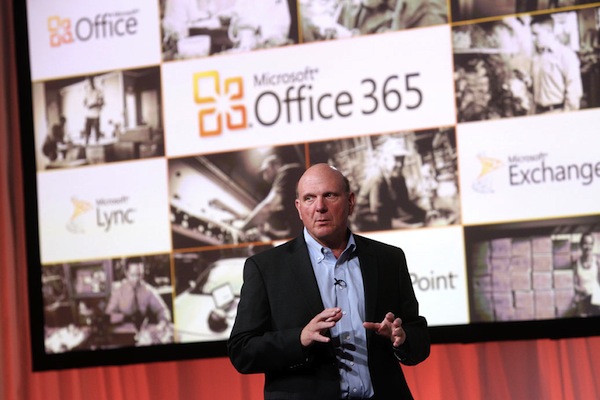
  • Microsoft pushes Office 365 with ‘Quick Start’ video series

    Microsoft has made no real secret that it prefers you to buy an annual license for software, as opposed to purchasing a non-expiring version. Office 2013/365 is the first real example of that, but will surely not be the last. Since the products’ release, the company has pushed out PDF guides to help guide you along.

    Now the push continues with a video version of those “Quick Start” guides. Earlier today the Office team announced the release of five videos in a new series that will give users a head-start on the new app suite.

    “If you have just six minutes to spare, you can get acquainted with the new Office by watching the five videos below”, according to Microsoft.

    The five videos cover very brief information on what is included in Office 365 Home Premium, how to get started, using Office everywhere, how to set up Office 365 on five computers and adding family members to your subscription.

    To help lure you in, the company makes it as painless as possible with PDF and video guides to get you started, varied pricing that can be either monthly or annually — warning: monthly costs more in the long run, and the ability to use one license on multiple home computers. Oh, and the company is also offering an additional 20 GB of SkyDrive storage and 60 minutes of Skype credit.

    Is there really any question left about which direction customers are being steered? Still, regardless of that, it probably is the best deal for most households. To check out the videos, one only needs to visit the Office blog for links to each and every one of the the five.

  • Google Revenue From Mobile Estimated At $20 Billion In 2016

    Marin Software has released a new report looking at mobile search advertising around the world. The report cites data from Cowen and Company about Google’s estimated mobile revenues, which indicates that Google will make as much as $20 billion in mobile revenue in 2016.

    “According to a research report from Cowen, Google earned $2.5 Billion in mobile rev- enue in 2011,” says the report. “And by 2016, it’s estimated that mobile could drive $20 Billion in revenue for the search giant. The exponential growth in mobile advertising largely tracks consumer adoption trends. Smartphones now have a greater than 50% penetration in the US mobile phone market. And mobile advertising isn’t just limited to phones. In fact, sales of mobile devices (phones and tablets) running Google Android are expected to have eclipsed ‘PC’ sales in 2012. And consumers worldwide have already bought more than a billion iOS and Android devices.”

    “The emerging world of the mobile-enabled consumer is quite different from the pre- smartphone world,” it continues. “In this new reality, the walls between online and offline commerce are crumbling. Case in point: today’s consumers routinely check product reviews and compare prices online while they’re in a brick and mortar store.”

    Google Mobile Revenue

    This is why Google launched the controversial Enhanced Campaigns model for AdWords last week.

    You can find Marin’s full report here.

  • Slidehare Introduces New Tracking Analytics Tool

    In May 2012, LinkedIn acquired document presentation startup SlideShare. Since that time, the company has been integrating itself into LinkedIn’s carefully managed (and profitable) corporate culture.

    Today, SlideShare announced a very LinkedIn-style feature for its service. The new feature, called “Send Tracker,” is an analytics tool that will allow users to gather metrics on how people use Slide Share presentations. For example, the software could report back on who viewed a presentation and how much time they spent on each slide. It can also send alerts when people click through emails or view SlideShare content.

    The feature is geared toward marketers and salespeople, so that they can observe potential customers and focus their time on prospects who engaged well with a presentation. It’s a free feature for subscribers to SlideShare’s premium “SlideShare Pro” service.

    As expected, SlideShare has prepared a slideshow that covers the highlights of the new feature. The SlideShare presentation is embedded below, and it probably uses Send Tracker analytics to send data back to SlideShare. I’ll leave it up to each reader to decide whether they consider their SlideShare viewing habits private, and engage with the presentation accordingly.

  • Fear Not, Surface Fans, More 128GB Surface Pros Should Be On Store Shelves By Saturday

    SurfaceProRight

    Microsoft launched its curious Surface Pro hybrid earlier this week, but it turns out that actually trying to buy one was a bit more problematic than people had hoped. Folks looking to get their hands on one of the 128GB models had it especially rough — the $999 device sold out in Microsoft’s online store and some of the company’s retail outlets, not to mention some Best Buy and Staples locations.

    Well, according to a tweet from Surface GM Panos Panay, the process of snagging a 128GB Surface Pro will be much easier in just a few days — he confirmed that units were on their way to Best Buy and Microsoft retail stores and that they would be ready to sell by Saturday.

    Naturally, Panay didn’t let that tentative timeframe slip uncajoled — he engaged the masses on Twitter in an hour-long chat earlier today that also saw him tackle questions about the Surface Pro’s stylus and the company’s toe-tapping commercials. It wasn’t until a user named @EvanSturdivant pressed Panay on the generic statement about Surface Pro availability he had previously issued that the truth finally came out.

    At first glance, all these reports of Surface Pro sell-outs seem to point to a considerable amount of demand for the product — Paul Thurrott noted the existence of “Apple-like lines” in some Microsoft stores — but we’ve since learned that the scarcity of the Surface Pro may have had more to do with limited supply than overwhelming demand. Both 64 and 128GB Surface Pros were apparently in short supply when some people called around asking for them, and one unlucky ZDNet writer had to schlep to a Microsoft Store 50 miles from where he lived because it was the only place he could find a 128GB model. As is usually the case, some people began to cook up some strange conspiracy theories (like one that claimed Microsoft deliberately limited supplies in order to say that it had sold out of Surface Pros), but I seriously doubt that’s the case. Sure, the whole rigmarole was a headache for people itching for a high-end Surface Pro, but the smart money’s on all this being an issue of mismanagement and not malice.

  • BlackBerry Working With Soc.io Android App Store to Bring More Apps to BlackBerry 10

    BlackBerry and the developer relations team has done a great job bringing lots of Android apps to the new Z10. I see a lot of games on BlackBerry World are Android ports and they seem perform as if they were coded natively. BlackBerry has been working with Soc.io, one of the top Android app stores to bring even more apps over to the budding platform.

    The Soc.io Mall has over 10000 apps and games in their catalogue and makes a great pitch to their developers in which an easy porting process can open the door to a whole new revenue stream. They’ve set up a site that helps developers with the process and also offers incentives and prizes.

    Click here to get started developing for BlackBerry 10.

    Click here to visit the Soc.io Android Mall.


  • Star Trek The Game Might Just Impress In April

    Star Trek is more popular than ever thanks to J.J. Abrams’ reboot of the series in 2009′s Star Trek. Now the sequel – Into Darkness – is almost upon us, and you know what that means, right? Yep, another hastily put together movie tie-in that will most assuredly disappoint.

    I realize that such an early assessment is really unfair, but Gearbox Software had more than five years to get Aliens right. They flubbed that, so forgive me if I don’t think Digital Extremes can make a competent Star Trek game in a year and a half.

    Oh wait, this actually looks kind of good. Sure, it doesn’t look like classic Star Trek, but it looks a helluva lot like J.J. Abrams’ Star Trek universe. That’s only a good thing in my book as his universe is far friendlier to what video games need to succeed as adaptations.

    Maybe we can give Digital Extremes the benefit of the doubt here. After all, the studio is responsible for one of the best games of 2012 – The Darkness II. The developer proved it could take a license and craft an awesome game around it then. What’s to stop them from doing it now?

    Of course, an adaptation of a comic book gives developers more freedom than a film adaptation, but being allowed to craft their own story that’s not tied to the events of either film may just help it along. I don’t think any of us will have any complaints as long as it doesn’t end up like Aliens: Colonial Marines.

  • Bieber Rips Carney On Twitter After Grammy Remark

    Justin Bieber has shot back at the drummer for The Black Keys, Patrick Carney, following a remark he made after the Grammy Awards on Sunday night.

    When asked about Bieber’s supposed “snub” at the awards show–which saw The Black Keys take home several trophies–Carney said, “He’s rich, right? … Grammys are for music, not for money … and he’s making a lot of money.”

    Bieber promptly fired back on Twitter.

    He must not be too mad, though, because soon after, he retweeted Stewie Griffin.

  • Dropbox for Teams targets the enterprise

    I love my Dropbox account. Or, I should say that I love the idea of my Dropbox account. I will be the first to admit that I honestly do not use it very much. I work from home and rarely have reason to share files. My wife, however, uses that account on an almost daily basis. She shares school files with her students via Dropbox. In other words, it is a business tool — even for someone who simply teaches Spanish to grade school kids one day per week. Now, the company has made it an even more useful business tool with a host of new features announced today.

    In prefacing the announcement, Dropbox representative Emil Ibrishimov takes a second to brag about the fact that “people at over two million businesses and 95 percent of Fortune 500 companies are using Dropbox — from law firms working with their clients to international businesses staying in sync across the world”.

    Ibrishimov goes on to explain that the company has been “working with our customers to design features that give them the insight and tools their businesses need, while keeping the simplicity that makes Dropbox so easy to use”.

    The new features are for the “Dropbox for Teams” service and offer better control for administrators. These include the ability to view recent activity, third-party apps that have been added, activity between all team members, sharing controls and more. Admins can even download reports that display all of that data, meaning those folks in the cubicles need to be even more careful about what they are sharing.

    Dropbox for Teams is available on a scaled platform depending on the size of your business. Accounts start at $795 per year for five users and additional users will cost $125. Storage is also scaled based on this. The new features announced today are available immediately and all of this is controlled through a brand new Admin Console.

    Photo Credit: T. L. Furrer/Shutterstock

  • Mobile, Social Media Becoming Increasingly Important To Moviegoers

    Are you the kind of person who uses their mobile device during a movie? If so, shame on you. That being said, you’re not alone as new research has found that most moviegoers use some kind of mobile device to augment the experience.

    In Nielsen’s 2012 American Moviegoing report, the group found that mobile moviegoers “spend more, consume more content and are more actively engaged in the moviegoing process.” The report found that the moviegoers are increasingly moving to mobile with 69 percent of moviegoers owning a smartphone and 29 percent owning a tablet. It also found that mobile device owners see more movies with smartphone owners seeing nine percent more movies, and tablet owners seeing 20 percent more movies last year compared to their non-mobile device owning contemporaries.

    Outside of the theater, tablet owners are the biggest film consumers. The report says that they watched 47 movies on average last year, 10 more than the average moviegoer. Tablet owners are also more likely to spend more, and buy their tickets online.

    Movie Consumers Are Increasingly Going Mobile

    Being closely tied to mobile, social media’s impact on the moviegoer experience can not be ignored either. Nielsen’s report found that that the 18 to 24 and 25 to 34 age ranges used social media the most to discuss films. The overall moviegoer population is seeing increases in social media use as well.

    Mobile Device Owners Watch More Movies, Spend More Too

    From a certain point of view, this is great news for marketers who can take advantage of new advertising venues on mobile to reach a larger audience. I just ask that you turn off your phone during the movie. The annoying warning before the movie starts is there for a reason.