Blog

  • Inanimate objects brought to life: 7 intriguing talks

    ErikSchlangenRoads need constant repair. Rain, snow and other moisture seeps into the asphalt and — if it freezes — expands, breaking it apart and creating potholes.

    Erik Schlangen: A "self-healing" asphaltErik Schlangen: A "self-healing" asphalt
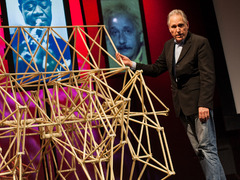
    In today’s talk, given at TEDxDelft, civil engineer Erik Schlangen reveals a fascinating solution: a road that is able to heal. He gives a demonstration of a new type of asphalt, which incorporates tiny strands of steel. He breaks a piece of it in half and puts it in the microwave for two minutes. He takes it out, fully formed again.

    The application? This asphalt can be laid on a road. According to Schlangen’s tests, it will last about four years before it gets damaged. At that point, an induction machine would drive over the road, catalyzing its ability to repair itself. Schlangen imagines that roads could last twice as long if made of this material.

    To see this amazing demonstration, watch the talk. And here, more TED Talks about infusing inanimate materials with life-like qualities.

    Theo Jansen: My creations, a new form of lifeTheo Jansen: My creations, a new form of lifeTheo Jansen: My creations, a new form of life
    Theo Jansen makes animal-like sculptures out of plastic tubing, drink bottles and foam. And yet, they are able to walk and move — even live on their own in herds on the beach and protect themselves from storms. At TED2007, Jansen shows us these creatures in motion.
    Lee Cronin: Making matter come aliveLee Cronin: Making matter come aliveLee Cronin: Making matter come alive
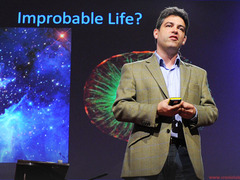
    It’s amazing that the organic, living world arose out of inorganic, dead matter. In this talk from TEDGlobal 2011, chemist Lee Cronin wonders: can we create life, if we define life as anything that can evolve? (See our playlist of talks to celebrate Charles Darwin’s birthday.)
    Todd Kuiken: A prosthetic arm that "feels"Todd Kuiken: A prosthetic arm that "feels"Todd Kuiken: A prosthetic arm that “feels”
    Both a doctor and an engineer, Todd Kuiken is creating a prosthetic arm that not only performs tasks — but that is able to connect to a person’s nervous system. At TEDGlobal 2011, he brings a patient on stage to demonstrate how it gives more control and a sensation of feeling.
    Reuben Margolin: Sculpting waves in wood and timeReuben Margolin: Sculpting waves in wood and timeReuben Margolin: Sculpting waves in wood and time
    Kinetic sculptor Reuben Margolin creates stunning, meditative pieces that move — emulating the patterns of falling raindrops and undulating waves. In this talk at TED2012, Margolin introduces us to his sculptures, including “Double Raindrop,” which he calls “the most talkative” of his works.
    Thomas Heatherwick: Building the Seed CathedralThomas Heatherwick: Building the Seed CathedralThomas Heatherwick: Building the Seed Cathedral
    At TED2011, architect Thomas Heatherwick shows off his bio-inspired designs, including a moving bridge that “kisses itself,” constricting into a circle and then unfurling over a body of water. He also shows us the “Seed Cathedral,” a building made of plants and dedicated to growth.
    Suzanne Lee: Grow your own clothesSuzanne Lee: Grow your own clothesSuzanne Lee: Grow your own clothes
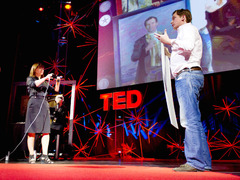
    Cloth can be sewn and worn. But can it be grown? In this talk from TED2011, Suzanne Lee shares how she creates living material for her fashion designs. Get ready to see how kombucha — a mix of bacteria, yeasts and micro-organisms — ferments into a vegetable leather.
    Matt Mills: Image recognition that triggers augmented realityMatt Mills: Image recognition that triggers augmented realityMatt Mills: Image recognition that triggers augmented reality
    Aurasma is a app that can make paintings dance and newspapers talk. At TEDGlobal 2012, Matt Mills and Tamara Roukaerts demonstrate this technology, which uses a smartphone to overlay video content over something static — thanks to an image trigger. (Give Aurasma a test drive through this TED Blog post.)

  • Amazon Beats Apple in Corporate Reputation Poll

    Today, Amazon beats Apple in a way that doesn’t specifically pertain to tablets, ebooks, digital music, streaming content, or any other area in which the two routinely do battle. Today’s victory is all about the consumers and their views on the companies as a whole.

    We’re talking Harris Interactive’s annual Harris Poll RQ, which measures the perceived reputations of the sixty most-visible companies in the United States.

    And this year, it’s Amazon that takes top honors.

    Last year’s winner, Apple, falls to second place in the 2013 poll.

    Google also had a strong placement, coming in 4th. Rounding out the top 5 were The Walt Disney Company and Johnson & Johnson.

    The RQ looks at 6 different dimensions to corporate reputation. Amazon ranked in the top five in five of the six dimensions.

    “Amazon had a five point advantage over any other company in the study in the dimension of Emotional Appeal, despite an entirely virtual relationship with the public. Amazon also achieved the top rating in the dimension of Products & Services,” says Harris.

    “Our results show that Amazon has managed to build an intimate relationship with the public without being perceived as intrusive,” said Harris Interactive VP of Reputation Management Robert Fronk. “And as the company that is so widely known for its personal recommendations, more than nine in ten members of the public would recommend Amazon to friends and family.”

    Here are the winners in each of the six different categories. You can see that five are tech companies.

    Unsurprisingly, AIG and Goldman Sachs logged the two worst RQ scores.

    [All Images via Harris Interactive]

  • “Storage Wars” Star Dies Of Apparent Suicide

    “Storage Wars” star Mark Balelo was found dead in his home on Monday morning of an apparent suicide, and some think he was depressed over a recent arrest.

    Balelo was picked up for a drug-related offense on Saturday and expressed fear to his fiancee that he might hurt himself. After his release, he went home to rest and seemed to be doing better. However, the 40-year old was found dead in his garage this week of apparent carbon-monoxide poisoning. An autopsy will be completed today.

    Balelo had issues with the law before, after an earlier arrest on a felony drug offense and complications with the custody of his children. Nicknamed “Rico Suave” because of his flamboyant style, Balelo was a popular contributor on “Storage Wars”, often bringing thousands in cash with him to bid at auctions. His Facebook profile hinted at new reality projects in the works.

    “I fly private planes, race cars and love going to Las Vegas and put on a show. I own several businesses and participate in many TV shows including Storage Wars. I am currently working on a new reality show of my own,” he wrote.

  • Matt Cutts Goes Back In Time To Tell Gmail User About Old Feature

    Google’s Matt Cutts has proven once again that no user-submitted question is too mundane to warrant an answer. In the latest “Webmaster Help” video, Cutts semi-mockingly responds to the question:

    It would be a really great feature to mark an email as important in Gmail. Will this ability ever be added?

    After “going back in time to add that feature,” and “using the time machine,” (which involves some Wayne’s World-esque hand gestures and sound effects) he discusses Google’s Priority Inbox feature, which was launched in 2010.

    Cutts has never been particularly uptight in these videos, but in recent ones, he seems to really be cutting loose. See these recent videos of Cutts impersonating a dinosaur.

  • Anonymous Launches #opSOTU: Plans To Kill State Of The Union Address Live Stream

    President Obama will be meeting before a joint session of Congress tonight to deliver the annual State of the Union address. The address will be streamed live on the Internet to the millions of Americans who will be tuning in to hear the president talk about what the future holds. If a certain hacking collective has its way, however, nobody will be watching it.

    Anonymous announced this morning that it’s engaging in #opSOTU, or Battle Royale for the Internet. The operation will see Anonymous attempting to hijack and shutoff the State of the Union address live stream tonight. Here’s the full statement:

    Citizens of the Internet,

    Last year we faced our greatest threat from lawmakers. We faced down SOPA, PIPA, CISPA and ACTA.

    And we won!

    But that victory did not come easily. Nor did it come without a price.

    Aaron Swartz was one of the leading voices in the fight against these idiotic and destructive efforts to control the last free space on Earth.

    Aaron Swartz was persecuted. Now Aaron Swartz is dead.
    Tonight, the President of the United States will appear before a joint session of Congress to deliver the State of the Union Address and tomorrow he plans to sign an executive order for cyber-security as the House Intelligence committee reintroduces the defeated CISPA act which turns private companies into government informants.

    He will not be covering the NDAA, an act of outright tyrannical legislation allowing for indefinite detention of citizens completely outside due process and the rule of law. In fact, lawyers for the government have point-blank refused to state whether or not journalists who cover stories or groups the Government disfavors would be subject to this detention.

    He will not be covering the extra-judicial and unregulated justifications for targeted killings of citizens by military drones within the borders of America, or the fact that Orwellian newspeak had to be used to make words like “imminent” mean their opposite.

    He will not be covering Bradley Manning, 1000 days in detention with no trial for revealing military murders, told that his motive for leaking cannot be taken into consideration, that the Government does not have room for conscience.

    He will not be covering the secret interpretations of law that allow for warrant-less wiretapping and surveillance of any US citizen without probably cause of criminal acts, or the use of Catch-22 logic where no-one can complain about being snooped on because the state won’t tell you who they’re snooping on, and if you don’t know you’re being snooped on, you don’t have a right to complain.

    We reject the State of the Union. We reject the authority of the President to sign arbitrary orders and bring irresponsible and damaging controls to the Internet.

    The President of the United States of America, and the Joint Session of Congress will face an Army tonight.

    We will form a virtual blockade between Capitol Hill and the Internet. Armed with nothing more than Lulz, Nyancat and PEW-PEW-PEW! Lazers, we will face down the largest superpower on Earth.

    And we will win!

    There will be no State of the Union Address on the web tonight.

    For freedom, for Aaron Swartz, for the Internet, and of course, for the lulz.

    We Are Anonymous,
    We Are Legion,
    We Do Not forgive,
    We Do Not forget,
    Expect Us.

    It’s not clear if this is an extension of #OpLastResort, the op that saw the release of banker records and attacks on government Web sites in retaliation for Aaron Swartz’ suicide. It certainly sounds like it, but Anonymous is dragging other issues it’s heavily opposed to, like NDAA, into the mix this time as well.

    Will Anonymous be successful in their most daring and potentially visible operation yet? I highly doubt it, but it would certainly be something if Anonymous succeeded in hijacking the State of the Union address.

  • NBA: Sleeved Uniforms Announced For the Warriors

    Adidas and the Golden State Warriors this week unveiled a new uniform with “modern” short sleeves. The uniform is also the team’s lightest uniform ever – 26% lighter than current Warriors uniforms.

    “Players on every court like to have a unique sense of style,” said Lawrence Norman, vice president for adidas global basketball. “We were excited to work side-by-side for the last 18 months with the Warriors, one of the NBA’s youngest and most exciting teams, to develop this unique uniform system that helps maintain peak player performance while ensuring comfort, fit and style.”

    Though range-of-motion would seem to be a concern with sleeves, adidas claims its has worked with players to develop the uniforms. The sleeves include armhole insets that are made of a stretch fabric. The company claims that movement in the jersey is equal to that found in normal tank-top style uniforms.

    “When adidas began working with us to develop the short sleeve jersey, I couldn’t wait to wear it in a game,” said Harrison Barnes, Warriors forward. “I love the fit and style the sleeves give me on the court.”

    The new uniforms will debut on February 22 during the Warriors’ game against the San Antonio Spurs. They will also be worn during two more home games this season: on March 8 against the Houston Rockets and on March 15 against the Chicago Bulls.

  • AMC To Air Old Walking Dead Episodes In Black And White

    AMC will begin airing episodes from the first two seasons of its hit zombie show The Walking Dead in black and white on Thursdays. The network suggests that viewing the episodes this way will mirror the format of Robert Kirkman’s comic book series upon which the show his based.

    Viewing the show this way could also give it more of a classic 50s/60s zombie movie feel, which interestingly, is something The Walking Dead’s show developer Frank Darabont (who is no longer attached to The Walking Dead) did with his film The Mist, based on Stephen King’s short story. While not about zombies, the black and white viewing experience gave it a very cool, vintage monster movie feel.

    AMC will begin showing the episodes in this style on Valentine’s Day at 8:00 PM Eastern, and will continue each Thursday, leading into the network’s “AMC Real Original Thursdays“.

    The midseason premiere, which aired on Sunday, set a series record for viewers, showing just how popular the show has become. It will be interesting to see what kind of ratings the black and white episodes will get.

    More The Walking Dead fun here.

  • BlueStacks Android Emulation Comes To Surface Pro

    The Surface Pro came out over the weekend, and the device is already selling out across retailers. Those who were lucky enough to get one may be disappointed, however, by a lack of apps. That’s where BlueStacks comes in.

    BlueStacks, the mobile company that brought Android emulation to Windows PCs last year, is now optimizing its Android emulation software for the Surface Pro. Users will now be able to enjoy all the Android apps they know and love on Microsoft’s newest tablet.

    “We’ve had our users asking for a Win8 version for a long time,” said BlueStacks CEO Rosen Sharma. “Now that it’s finally available on our website we’re looking forward to getting feedback and building on the experience. The number of mobile apps being written overall is expanding exponentially and Microsoft has not added apps to the handful it has. Our goal is to get people more value out of their Surface Pro and Win8 devices.”

    As the video above shows, BlueStacks also lets you transfer apps from your Android device to your Windows 8 PC. All the functionality of the original apps, including touch input, is kept across devices. Your Surface Pro will be a lean, mean Android gaming machine in no time.

    If you want to start enjoying Android apps on your Windows 8 device, just hit up BlueStacks Web site.

  • 4 Killed On Carnival Float In Brazil Celebration

    Four people were killed earlier today when a parade float touched a power cable and caused a short circuit.

    The float, which belonged to a samba group called Sangue Jovem, was part of the Carnival celebration which is celebrated throughout Brazil every year with colorful costumes and street parades. After the fire, the event was canceled.

    “This is a tragedy for our city,” said the Mayor of Santos, Paulo Alexandre Barbosa. “We cannot continue the parade in the current mood. This is a moment of extreme sadness.”

    Officials say the incident caused a power outage for thousands; the city of Santos was in the dark for several hours, but the fire has also brought back unpleasant memories of a nightclub fire in southern Brazil last month which killed 239 people.

    Today’s deadly fire has many worried about the consequences of having so many visitors to the country for next year’s World Cup games, and the Olympics in 2016. The country has come under scrutiny since the nightclub fire last month, after which it was announced that the club had inadequate fire exits and was overcrowded.

  • The Walking Dead Social Game Gets Otis And Other Characters

    AMC announced today that it has added some new characters to its Facebook game, The Walking Dead Social Game.

    In a post on the network’s blog, AMC says:

    Ever wish you could’ve hung out with Otis before Shane used him as walker bait? Now you can in The Walking Dead Social Game. In the “Help Otis” Story Mission, you get a chance to clear out the woods surrounding your camp in order to provide Otis safe passage back to Hershel’s farm. You’ll also encounter other familiar faces in the game’s newly launched Chapter 3 including Dave and Tony (who met their untimely demise at Hershel’s favorite bar) and Randall (who, like Otis, got in Shane’s way with fatal results). Ready to meet the game’s latest additions?

    AMC recently pointed out that it has added availability of the game to more countries, including: Portugal, Italy, Brazil, and for Spanish-speaking users.

    The Walking Dead returned to AMC this past Sunday after hiatus, and set a series record for viewers.

    More The Walking Dead fun here.

  • NASA Successfully Launches New Landsat Satellite

    NASA this week successfully launched its Landsat Data Continuity Mission (LDCM). An Atlas V rocket was launched from Vandenberg Air Force Base at 1:02 pm EST on Monday, February 11.

    The new satellite will be used, as previous Landsat satellites have, to monitor the earth’s climate and geography. It is the eighth satellite in the Landsat series that has been observing the Earth since 1972. The LDCM’s Operational Land Imager (OLI) will collect data in visible and infrared spectrums, while its Thermal Infrared Sensor (TIRS) will collect data on the heat emitted from the surface of the Earth.

    “Landsat is a centerpiece of NASA’s Earth Science program, and today’s successful launch will extend the longest continuous data record of Earth’s surface as seen from space,” said Charles Bolden, NASA administrator. “This data is a key tool for monitoring climate change and has led to the improvement of human and biodiversity health, energy and water management, urban planning, disaster recovery, and agriculture monitoring – all resulting in incalculable benefits to the U.S. and world economy.”

    The satellite deployed its solar arrays 86 minutes after launch. It is currently powering up and will enter a sun-synchronous polar orbit within two months. During the next three months the satellite will be put through its paces during a check-out phase. After that, control of the LDCM will be transferred to the U.S. Geological Survey (USGS).

    “LDCM is the best Landsat satellite ever built,” said Jim Irons, a LDCM project scientist at NASA’s Goddard Space Flight Center. “The technology will advance and improve the array of scientific investigations and resource management applications supported by Landsat images. I anticipate new knowledge and applications to emerge with an increasing demand for the data.”

  • Twitter, Amex Partner to Let You Buy Stuff with Hashtags

    Twitter and American Express have just announced a new program that will allow users to make purchases inside of Twitter by simply tweeting out specific “Buy” hashtags.

    Here’s how the hashtag-buying works, after you sync your Amex card to Twitter of course.

    Cardmembers tweet special product #hashtags for the product they want to purchase with their synced Card. Cardmembers then check their Twitter mentions in the @ Connect tab for a response from @AmexSync containing a confirmation #hashtag. Tweet the confirmation #hashtag within 15 minutes of the response from @AmexSync to confirm the purchase.

    And the product(s) should arrive on your doorstep via 2-day shipping.

    The hashtag-buying will officially kick off Wednesday at noon ET with these specific products:

    $25 American Express Gift Card: $15.00; Amazon Kindle Fire HD: $149.99 plus tax; Sony Action Cam & Waterproof Headband Mount: $179.99 plus tax; Urban Zen Bracelet Designed by Donna Karan: $80.00 plus tax; Xbox 360 4GB console with a 3-month Xbox LIVE Subscription and 2 game tokens: $179.99 plus tax; Xbox Controller: $29.99 plus tax.

    “Based on the initial success of Amex Sync for offers, we know there is significant power in combining our assets with Twitter’s platform to bring value to Cardmembers and merchants,” said Leslie Berland, Senior Vice President, Digital Partnerships and Development at American Express. “Now, we’re leveraging our unique technology and closed-loop network to introduce a seamless solution that redefines what’s possible in the world of social commerce.”

    Amex has partnerships with Twitter, Foursquare, Facebook and other networks that leverage synced accounts, but until now these have only been used to unlock discounts or purchase credits. This is the first time that social media users will be able to initiate an actual purchase with something as simple as tweeting out a hashtag.

  • Prebuttal to the State of the Union Address

    Tonight President Obama will give his fifth State of the Union address, and the first of his second term. Among the topics the President is widely reported to discuss tonight are climate change, renewable energy, and various administration programs to spur economic growth and job creation. The Institute for Energy Research provides the following reading list to address claims the President may make about these topics:


    Beyond the Congressional Budget Office
    By Dr. Joseph Mason 

    We have recently seen a boom in US oil and gas development on private and state lands and waters. The success of this development could be expanded greatly if the President were to open up federal lands for energy development. This report explains the benefits of pro energy growth policies in terms of tax revenue, job creation, GDP growth, and wage increases.

    Recapping the Obama Administration Green Energy Stimulus Failures
    By IER

    Companies such as Solyndra and Abound Solar were touted as the future of energy in America. However, not even hundreds of millions of dollars in government loans could save them from their inevitable failures. The President and his administration have shown that they are incapable of picking winners, but the question remains if this will change their policies moving forward.

    The Myth of Wind and Solar Energy: They Are Not Free
    By IER

    Proponents of wind and solar energy like to refer to them as “free” energy sources. Due to the intermittency of these sources, this is just not the case, as they need more reliable sources such as coal and natural gas to back them up. California, a state that has put much of its energy focus on wind and solar, is a great case study of how wind and solar energy actually increase electricity costs.

    Economics of the Bakken Oil Boom: What the Rest of the Nation is Missing
    By IER

    North Dakota has been booming economically, thanks in large part to the Bakken shale formation. Energy development in this area has led to lower unemployment and overall economic growth.  The success of the Bakken should be seen as a model for the rest of the nation and something that the President should strive to emulate in his second term.

    Approving Keystone XL Pipeline Would Be a Big Win for Obama
    By Daniel Kish, IER. US News and World Report

    In light of Nebraska Governor Dave Heineman’s approval of the Keystone XL pipeline, the decision now rests squarely on the President’s shoulders. The President’s first term was marked by recession and energy regulation, but he has an opportunity to change this in his second term by approving Keystone XL.

    Germany’s Green Energy Destabilizing Electric Grids
    By IER

    The President often points towards other countries as models the United States must follow. One of his favorite examples has been that of Germany and its push for more wind and solar power. This push has led to a destabilization of the German electric grid, thus turning Germany into a shining example of what not to do.

    Obama’s CAFE: Efficiency over Safety
    By IER

    The President’s decision to raise the Corporate Average Fuel Economy (CAFE) standard to 54.5 miles per gallon by 2025 indicates his preference of efficiency over safety. The aim of this new standard is to combat carbon emissions, but this strategy could lead to lighter and less safe vehicles.

    Carbon Tax Would Raise Unemployment, Not Swap Revenue
    By David W. Kreutzer, Ph.D. and Nicolas Loris. Heritage Foundation

    A carbon tax has been mentioned as a possible option to curb carbon emissions. This tax would have a damaging effect on the economy without the proposed environmental benefits. Going into his second term, the President will have to choose between policies that will damage our economy or ones that will help foster growth.

    PTC Extension Passes; Layoffs and Cancellations Continue
    By IER

    An expansion of the wind Production Tax Credit (PTC) was passed as part of the “fiscal cliff” deal. Despite the expansion, which will cost taxpayers $12 billion, the wind industry continues to experience layoffs and cancellations due to a multitude of issues. Will the President and his administration continue to prop up the costly and ineffective wind industry in his second term?

    Analysis of US and State-by-State Carbon Dioxide Emissions and Potential “Savings” in Future Global Temperature and Global Sea Level Rise (PDF)
    By Paul C. Knappenberger

    The President has made it clear that he wants to take actions to curb carbon emissions. If the U.S. as a whole stopped emitting all carbon dioxide emissions immediately, the ultimate impact would be a reduction of only 0.08°C by 2050. In fact, the increase in CO2 emissions from other countries around the world will make any reductions here irrelevant.


    ###

  • BlackBerry Q10: Top 5 Things You Should Know

    Top 5 things about the BlackBerry Q10

    The BlackBerry Q10 is the first BlackBerry 10 smartphone to feature a classic BlackBerry hardware physical keyboard. This device combines the iconic BlackBerry keyboard and the power of the BlackBerry 10 platform to bring you what we consider the best smartphone with a physical QWERTY keyboard on the market. Since I previously showed you five highlights of the BlackBerry Z10, I wanted to share five things you need to know about the BlackBerry Q10 experience.

    1. The keyboard is bigger and better. The BlackBerry Q10 features a straight keyboard design, and is wider than earlier BlackBerry smartphones. The metal frets between the keys are also bigger, offering a more visual appeal while helping to eliminate errors while typing on the go.
    2. The BlackBerry Q10 has the largest battery of any BlackBerry smartphone, ever. The BlackBerry Q10 battery is 2100 mAh in size, which means, well, you can talk, work and play nearly all day on a single charge.
    3. Better shortcuts with Touch and Go. This time-saving feature is essentially a shortcut that allows you to send messages faster than ever before. All you have to do is start typing an action like “email” or “BBM,” then a name, and you can quickly take action. Message sent. BOOM!
    4. The design is meticulous, light and durable. The back plate on the BlackBerry Q10 is made of a unique glass-weave material that is lighter and stronger than plastic. The device is surrounded by a machined stainless steel frame with a durable black coating, which is designed to prevent the edges from chipping and keeps your BlackBerry Q10 looking good.
    5. The BlackBerry Q10 is a BlackBerry 10 device, and it performs like one. The BlackBerry Q10 was designed to offer amazing performance available on BlackBerry 10 devices like the BlackBerry Z10. In terms of features and functionality, it runs on the same BlackBerry 10 platform, it can run the same apps, and has a removable back plate for easily replacing the battery or swapping your SIM card.

    We’ve told you about the BlackBerry Z10 and the BlackBerry Q10; now choosing which BlackBerry 10 device is up to you. Remember to Be Bold and Vote for your choice, and share your thoughts in the comments below.

  • Google Appears To Be Working On Making Your Actual Life Searchable

    Last summer, we took a look at how Google plans to see through your eyes (literally). This has a lot to do with Google Glass, but that’s not the only piece of the puzzle.

    Google Glass will not only be pushing content in front of your eyeballs. It will be capturing the very things you see. This became clear when Google co-founder Sergey Brin shared a feature he was testing, which automatically takes pictures every ten seconds “without any distraction or disruption”.

    “Afterwards, I checked Instant Upload to see how the images had turned out and this one really caught my eye – I love the composition of the landscape mixed with sunlight and the beauty of the sky,” Brin said, sharing the below image. “I never would have captured this moment without Glass.”

    Brin captures a moment.

    So, it’s not too heard to imagine Google doing a lot more with this kind of technology, including video. A patent Google has been granted, may help the company take it significantly further than that though. Patent analyst Bill Slawski points to the patent, granted to Google last week, called “Method and Apparatus for Enabling a Searchable History of Real-World User Experiences”.

    Here’s the abstract:

    A method and apparatus for enabling a searchable history of real-world user experiences is described. The method may include capturing media data by a mobile computing device. The method may also include transmitting the captured media data to a server computer system, the server computer system to perform one or more recognition processes on the captured media data and add the captured media data to a history of real-world experiences of a user of the mobile computing device when the one or more recognition processes find a match. The method may also include transmitting a query of the user to the server computer system to initiate a search of the history or real-world experiences, and receiving results relevant to the query that include data indicative of the media data in the history of real-world experiences.

    The patent makes specific mention of glasses.

    Glasses

    “Imagine recording your life, so that you can search through it, and play it back later,” writes Slawski. “Things that you record through audio and video might be sent to your own personal search database where pictures you take might be processed. Images of faces may go through facial recognition software. Landmarks and objects might also be recognized as well.”

    He suggests you’ll be able to write or speak queries like “What was the playlist of songs at the party last night?” or “Who were the people at the business lunch this afternoon?” or “What were the paintings I saw when I was on vacation in Paris?”

    I would imagine that the possibilities are endless, as Google gets better at both recognizing faces and objects and at natural language.

    It seems the functionality described in the patent could apply to recording, which users could switch on and off, as well as to recording that could begin automatically upon certain events, such as if you entered a certain location. Sounds like some Google Now-like features would be incorporated.

    You can read the full patent here.

    It’s important to note that just because Google has a patent for something, that does not mean we will see any or all of the features described. However, in this case, considering the direction Google is already taking with its products, much of this seems very likely.

  • When Advertising Meets the Meme

    Advertising creatives have always known the power of memes, even if they didn’t always use the term. For decades major marketers, with their command of the airwaves and commitment to repetition, were often the ones to launch memes. Consider Alka-Seltzer’s “I can’t believe I ate the whole thing”:

    Or Wendy’s “Where’s the beef?” …

    … which got picked up and repurposed from preschools to presidential debates:

    The splintering of media channels has made it hard to claim that kind of mindshare by brute force. Add the democratization of publishing and the premium people place on discovering the new, and you have a situation where memes can start anywhere, take off like rockets, and fizzle out a week later. Whereas advertisers once spawned memes, now the better strategy may be to surf them.

    So expect to see more creative in the mode of the Wonderful Pistachios campaign, which is simple enough to cycle through executions quickly and cheaply. The campaign started out conventionally, using celebrities, and was highly successful: National TV spots in its first year yielded a 233% increase in sales, and double-digit gains have followed in the years since. But now the ads include memes, such as YouTube’s infamous Honey Badger:

    And Secret Service agents partying with prostitutes:

    In her paper “An Anatomy of a YouTube Meme,” Limor Shifman of Hebrew University analyzes 30 videos that went viral and finds major commonalities: ordinary people, flawed masculinity, humor, simplicity, repetitiveness, and whimsical content. It’s the perfect recipe, Shifman concludes, for “invoking further creative dialogue.” Much of that dialogue comes in the form of clever redos designed to delight particular constituencies. Thus the ridiculously catchy dance video “Gangnam Style” …

    … was tweaked for robot lovers by a Transformers reenactment:

    … and infiltrated political circles as “Romney Style.” True to form, Wonderful Pistachios debuted an ad featuring Psy during this year’s Super Bowl:

    A major advertiser with a big budget should be more reliably able to nail the execution for its constituency — snack eaters, for example, or Lego fans. This is the opportunity revealed by the newest pistachios ads. Expect more advertisers to follow suit.

    This is the first in a series of posts from our March issue on the future of advertising. Stay tuned for more “Creative That Cracks the Code” over the coming weeks; topics include The Ad as a Game; Collaborating With the Crowd; Just Enough Humor; A New Social Movement; Ads That “Go Native”; Apps as the New Ads; Personalized Products; and Ads in the Public Sphere.

    We also want to know which ads campaigns strike you as innovative; tell us below and we might analyze your pick as part of this series.

  • Stop Selling Ads and Do Something Useful

    Banner ads didn’t always suck. I should know. I helped create the first one.

    My children tell me that’s like inventing smallpox.

    It was October 1994, a fantastically idealistic time on the Internet. Many pioneers of digital advertising believed it possible to create advertising so useful it’s a service. We knew that if we asked ourselves, “How can we help people?” rather than, “What can we sell people?” we could rewire people’s brains to seek out brand experiences, rather than run from them.

    That first banner that Modem Media, the fledgling digital agency where I worked, built for AT&T, was helpful, and it was useful. At a time when people wondered what the Web was all about, it connected visitors of hotwired.com to a tour of seven of the world’s finest art museums. It demonstrated how AT&T could transport people through space and time via the Internet — just as AT&T had done 100 years earlier with the first long distance network. Of those who saw the ad, 44% clicked.

    Not only did people love the experience, they loved it enough to share it with friends. We were blown away. “People don’t share ads,” we told ourselves. “They share candy bars, and Coca-Cola, and porch swings.” It was the first time I heard the word “viral” applied positively. We were on to something.

    For a few wonderful years, while big agencies slept with their backs to the Web, we did incredible work for major brands — not ads, but content experiences that delivered utility. We knew, as my Modem Media boss G.M. O’Connell once said, that, “People read newspapers, listen to the radio, and watch TV, but they go to the Web to get things done.”

    By 1998, though, spending on Internet advertising had grown to the point where the established agencies woke up. Innovative shops like Modem Media, Razorfish, and Agency.com were snapped up. Before long, content and utility were corrupted by the only thing big agencies understood: reach and frequency. We were back to delivering what TV spots, radio spots, and print ads had delivered for years: sales messages. The rest, as they say, is history.

    But this is a very interesting time. There’s a perfect storm building that will give us all the chance to redeem ourselves, and change the course of advertising forever.

    Storm #1

    Consumers are migrating in droves to mobile devices. And as Clayton Christensen wrote in a recent Nieman Report, those consumers are focused on getting jobs done.

    We check news on Twitter. We search Google Maps for directions. We compare restaurants on Zagat. We take photos with Instagram and upload them to Facebook. All those people on the elevator with their noses in their smartphones? They’re not lazy or anti-social. They’re getting things done.

    And do you know what else they’re doing? They’re sharing stuff that interests them, or helps them, or that they think might help their friends. Mobile sharing is the new word of mouth.

    Storm #2

    Advertisers follow eyeballs. Mobile advertising revenues will grow from $4.06 billion in 2012 to $20.89 billion in 2016, according to eMarketer. Unfortunately, ad agencies have been taking the worst ad experience ever invented — banners — and simply shrinking them to fit mobile screens.

    For consumers who are focused on getting things done, banners are a nuisance at best, and invisible at worst. Recent studies by Trademob show that about 40% of clicks on mobile banners are due to “fat finger syndrome,” meaning consumers click on mobile banners by mistake, or because advertisers trick them into clicking. And nobody is going to share a mobile banner, because they offer no help, and no value, to anyone. If advertisers thought there was even a snowball’s chance in hell that people might share their ads, they’d put “share” buttons on them.

    Storm #3

    Because of Storms 1 and 2, many of the companies that produce the content that ads have been traditionally placed next to — especially old-school publishers with print properties to support — are suffering. Heck, even Google has seen declines in cost per click as consumers migrate from PCs to smart phones. Ineffective ads on mobile mean advertisers pay less for space than they did on PCs, and much less than they used to pay for print or TV. As a result, there are a lot of very talented producers of useful content, especially journalists, on the streets.

    Learning to help instead of sell

    “Customer service is the killer app of the Web,” Google’s Eric Schmidt, then with Sun Microsystems, said way back in 1998. Brands such as Google, Zappos, Amazon, eBay, and others win because they ask “How can I help you?” instead of “What can I sell you?”

    Advertisers and their agencies, for the most part, don’t know how to be helpful. Thirty-second TV commercials, print ads, radio ads, and direct mail are all forms of content. But nobody’s addicted to them, because most ads ask, “What can I sell you?” Thousands of people have saved every issue of National Geographic in their attics. How many have saved every Viagra ad ever created? If you want to use content to build relationships with people, don’t turn to an agency — at least not a traditional agency.

    The future of advertising lies not in ads as we’ve known them, but in helping all those people on all those elevators get stuff done, or entertaining them. The companies and people that understand content, and utility, will be the ones to thrive.

    Given how many underemployed journalists, directors, designers, and such there are out there, this shouldn’t be that hard to do. But most companies dabble. A three-minute YouTube video here and there does not represent a commitment to content.

    The ones to watch are the brands and people that have jumped feet first into content and utility. Three spring to mind:

    Red Bull launched Red Bull Media House in 2007. They describe themselves as “a multi-platform media company with a focus on sports, culture, and lifestyle.” If you heard or read anything about Felix Baumgartner’s historic jump from space you already know something about Red Bull Media House.

    Last November, the Coca-Cola Company transformed itself into a digital publisher. The company installed a publishing infrastructure, hired editorial staff, and converted its corporate website into a rich, multi-media magazine. Besides creating a wealth of original content, this platform aggregates content from hundreds of partners around the globe. (Full disclosure: My firm, the Wonderfactory, helped them do it.)

    Nike has mastered the art of utility, and transformed itself into a product and services company. Its lineup of Nike+ apps and devices help athletes track their performance, providing a wealth of data that can be used to improve workouts, or, someday, to create highly personalized content experiences that will keep athletes “married” to Nike for years.

    To remain relevant to consumers who spend hours each day focused on smaller screens trying to get stuff done, marketers will have to think like publishers and technology companies. Like Red Bull, Coca-Cola, and Nike, they’ll need to transform themselves into product and service companies. They’ll need to ask consumers, “How can we help you?” instead of “What can we sell you?”

    Can this really happen? A banner-ad pioneer can dream.

  • Over 76 Million Xbox 360 Consoles Have Been Sold

    The announcement of Sony’s next-generation PlayStation 4 console is less than two weeks away. Though the announcement of Microsoft’s next-generation Xbox isn’t expected until the E3 conference in June, the company this week released some numbers that show just where the company stands as the industry prepares for the next generation of consoles.

    Microsoft claims it has sold more than 76 million Xbox 360 consoles. In addition, 24 million Kinect sensors have been sold to those Xbox owners.

    Microsoft also released information and statements that make it clear the company is eyeing more than just video games. Expect the next Microsoft console to be a complete home multimedia device, with connectivity to multiple services and devices.

    “Yes, we started with video games, but we have been on a journey to make Xbox the center of every household’s entertainment,” said Yusuf Mehdi, corporate vice president of Microsoft Interactive Entertainment.

    According to Microsoft, Xbox users watched and played 18 billion hours of entertainment last year. Usage of apps on the Xbox also grew 57%, which isn’t surprising considering the number of apps that were added in 2012.

    The catch is that using these services isn’t free on an Xbox – an Xbox LIVE Gold subscription is required to access multiplayer gaming, Netflix Watch Instantly, Amazon Instant Video, and more. Subscriptions to Xbox LIVE now stand at 46 million. Considering that subscriptions start at $5 per month, Microsoft is taking in over $230 million per month for things that Sony’s PlayStation 3 provides consumers with for free.

    “We believe that Xbox is being used by more people in the household, during more hours in the day and for more forms of entertainment,” said Mehdi. “People are using Xbox in the morning to work out with the Kinect Nike+ Fitness program, kids are watching cartoons, families are enjoying movies, and of course people are playing blockbuster games like Halo 4.”

  • Welcome to the Future of Advertising Insight Center

    After decades of stasis, all hell is breaking loose in the ad business. With the explosion of new media and technologies and the rise of empowered (and skeptical) consumers, marketers are finding that the old bag of tricks no longer works so well. And they’re inventing fundamentally new ways to pursue advertising’s principal job: persuasion.

    This HBR Insight Center on the future of advertising will explore the transformation. We’ll dig into the technologies that are reinventing how companies connect with customers, and look at how big data and new analytic tools are allowing advertisers to fine tune and microtarget their messaging in real time. Our bloggers will also examine the new breed of consumer that, increasingly, rejects interruptive messages and demands that advertising present itself only when invited — and then only if the message offers value. And we’ll look at consumers’ growing involvement in advertising, both as arbiters and creative collaborators. This exploration happens in tandem with our spotlight on advertising in the March issue of HBR.

    Over the course of the next four weeks, you’ll encounter provocative contributions from thought-leading practitioners and scholars including Jerry Wind, the director of Wharton’s Future of Advertising program, Sir Martin Sorrell, the CEO of WPP Group, Bonin Bough, VP of Global Media and Consumer Engagement at Mondelez International, and Baba Shetty, CEO of Newsweek/Daily Beast. HBR editor-at-large Julia Kirby will expand on her article, “Creative That Cracks the Code,” with a series of posts highlighting particularly effective ad campaigns. Also from the magazine, Wes Nichols dives into Advertising Analytics 2.0, Sunil Gupta says For Mobile Devices, Think Apps, Not Ads, and Jeffrey F. Rayport explores Advertising’s New Medium: Human Experience.

    We’d like to know what you think works as well. What new kinds of advertising really stick with you? Where are mobile and social moving your industry? What of the rise of social tv? We look forward to hearing what the future of advertising looks like to you.

  • Hacker Warns Of Zombies On TV Emergency Alert

    In what was either the best hack ever by a zombie enthusiast or the best covert television show plug ever by AMC, a warning concerning the dead rising from their graves appeared along the top of some Montana television screens yesterday. Because it came through the station’s emergency alert system, it probably gave quite a few people a scare before the station yanked it and issued an apology:

    “Someone apparently hacked into the Emergency Alert System and announced on KRTV and the CW that “dead bodies are rising from their graves” in several Montana counties. This message did not originate from KRTV, and there is no emergency.
    Our engineers are investigating to determine what happened and if it affected other media outlets,” the statement read.

    This sort of thing has been done to digital roadside signs used by construction and road crews over the years, but never has it been done on television. Curiously (or not curiously at all), it coincided with the start date of “The Walking Dead”, which has been on hiatus since October. The show debuted it’s mid-season premiere to the biggest viewing audience it has ever had (12.3. million).