Blog

  • Should you buy Microsoft Surface Pro?

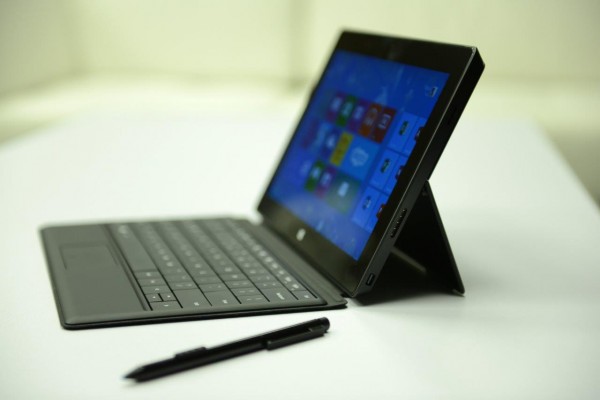
    Microsoft’s flagship tablet running Window 8 Pro goes on sale in Canada and the United States on February 9. The device is the most-important released to date running the operating system, for what it seeks to accomplish and means for Microsoft. Critics call Windows RT a failure (I disagree). Distribution is the problem, if any, and that’s easily remedied.

    Still, RT badmouthing puts Pro perceptions in a bad spot. Microsoft’s public relations team responded by getting devices out to reviewers and setting an embargo of 9 pm EST February 5. So four days before launch, a bunch of reviews exploded across the InterWebs around the same time. Younger reviewers from trendier tech tabloids tend to talk up Surface Pro while older fogies and those from more consumer pubs are more hesitant. I’m among the few old farts who get Surface and what Microsoft strives to achieve here. Then, again, I’ve covered the company for a long time.

    Some Basics

    I’ve used Surface Pro for about a week now as my primary PC and generally like the device. Hardware is top-notch and the design makes me feel good. I enjoy working on Surface and being seen with the slate at the local Internet café. Modern UI is a visual delight, generating happy-producing endorphins. But Surface Pro is quirky, too, much more than RT because of Windows 8 Pro and the amount of time users will spend moving from Desktop to Modern UI and back again. I discuss these attributes and others in my first-impressions review.

    By the way, don’t discount joy as a reason for buying a product. Apple doesn’t and makes beaucoup bucks selling pretty devices. Microsoft finally gives you opportunity to feel good about using Windows.

    Surface Pro specs. 10.6-inch ClearType HD Display with 1920 by 1080 resolution; 1.7GHz Intel Core i5 processor and HD 4000 graphics; 4GB RAM; 64GB or 128GB storage; 720p front- and rear-facing cameras (meaning they’re for video more than photos); accelerometer; ambient-light sensor; compass; gyroscope; Wi-Fi A/N; Bluetooth 4; USB 3; Windows Pro 8. Dimensions and weight: 10.81 x 6.81 x 0.53 inches and just under 2 pounds. Price: $899 (64GB); $999 (128GB).

    I recommend the 128GB model, which comes with about 90GB free space compared to 23GB for the other. Some advice to Microsoft: Copy Google and give Surface Pro buyers free cloud storage. Chromebook buyers get 100GB for 2 years, free. Surface Pro users deserve that much SkyDrive. It’s a low-cost add with high value, particularly for anyone buying the 64GB model.

    Three for One

    Surface Pro is unlike any Windows machine you’ve seen before. Its a tablet, touchscreen laptop and sketchboard, all wrapped up as one. I didn’t discuss these distinct and overlapping functions in my review, saving them for here.

    How well they work, or don’t, is crucial to evaluating the device. Core features and pricing put Suface Pro in competition with Windows ultrabooks or MacBook Air. Surface Pro sells for $899 or $999, without Touch or Type Cover, in line with $999 MacBook Air. Android and iOS tablets, as well as Surface RT, cater to a different audience, starting around $500.

    Do not look at Surface Pro like iPad. Apple’s slate does not and cannot compete with Microsoft’s. MacBook Air can. Anything you read on the web about Pro being an over-priced iPad is misinformation.

    The point: If you are shopping for a tablet that is affordable and generally good for running apps and consuming web content and playing casual games, Surface Pro isn’t for you. I recommend iPad 4 or Google Nexus 10 first, for their high-resolution screens and better choice of apps. Or Windows RT, which is great value with one of two style keyboard covers. However, if you’re shopping for a new notebook, a tablet that does more or the best Windows 8 experience, Surface Pro should be on your shopping list.

    Feel the Difference

    As a tablet, Surface Pro is an odd duck. Microsoft chose 10.6 inches for screen size. Typically slates this class are 9.7 inches (Apple and Sony) or 10.1 inches (Samsung). The size is well chosen. Displays 11.6 inches are more typical for Windows slates, and they’re awkward to handle for an length of time. The dimensions have no balance in the hands. By comparison, Surface Pro is comfortable enough to hold for extended periods, although it’s longer and narrower in portrait mode than I prefer.

    Something else: The display technology isn’t the same as other touch devices in this size or price class. Surface Pro has a digitized screen that supports touch and stylus, and with remarkable accuracy for both. You must understand: Surface Pro is not a version 1 product. Microsoft has built devices like this in-house for more than 12 years. Cofounder Bill Gates introduced the Tablet PC concept in 2001, and the first third-party commercial devices debuted a year later. Along the way, Microsoft built reference designs for its developers and OEM partners, so there is maturity here that you feel in the precession of touch or stylus.

    Tablet PC bombed rather than be the bomb for lots of reasons — disappointing device designs and over-dependence on the pen among them. Apple pushed past both with iPad, creating a handsome device and immersive software/services consumption experience. They say the pen is mightier than the sword, but not more than touch. The finger extends you.

    The point: Surface Pro supports pen and touch, and ships with a stylus. This makes the device as much drawing board as tablet or touchscreen laptop.

    Now comes the controversial topic: Use as a laptop. Surface Pro packs a built-in kickstand that combined with Touch or Type Cover easily converts the tablet into a notebook with touchscreen. Unlike Surface RT, which includes one of the keyboard covers for the price of some models, Pro doesn’t; buyers pay separately, which adds $129.99 to the base price.

    Several other reviewers complain kickstand and keyboard aren’t good enough, because they’re awkward to near impossible to use in the lap. That’s short-sighted perspective. At night, I sometimes sit the slate on my lap and work. While the default on-screen keyboard is too large for my tastes, typing more than satisfies. The high-resolution, precision-touch display changes everything. I can type just about as well on-screen as off, Microsoft’s keyboard is so responsive. No Android tablet or iPad that I’ve used compares.

    The point: Surface Po is a true laptop, in the sense it lays in your lap and provides great typing experience. Don’t forget other touch capabilities and the stylus. Reviewers hung up on kickstand and keyboard cover lap limitations miss the potential. Open your minds, people!

    Key Questions

    Surface Pro’s biggest shortcomings and also benefits are all about Windows 8. The first Q any prospective buyer should ask: Do I want Windows 8? If the answer is “No”, this device isn’t for you. There are other touchscreen tablets, such as the Samsung Series 7 slate (which costs hundreds more than Surface Pro), that run Windows 7.

    Next question: Do I need to run software you own? For many businesses the answer will be “Yes”. Users can install legacy hardware on Surface Pro, but they can’t on RT. This about change in system architecture — x86 versus ARM. If the answer is “No”, and might be for consumers or small businesses, compare both Surfaces side by side and consider RT instead for the savings. Screen resolution and storage capacity are lesser, but quality construction, overall design, kickstand and support for keyboard covers are the same. Stylus is out, but free copy of Office (Home and Student) is in.

    Another: Is Windows 8, meaning non-Pro, good enough? The answer is likely not for most companies but yes for some consumers or small businesses. There are other, OEM tablets running Intel processors that therefore offer the benefit of installing software you already own. For example, Dell sells the Latitude 10 tablet, running Windows 8, starting at $499. Screen resolution (1366 x 768), processor (1.8GHz Intel Atom) and storage (32GB) are all less. But the tablet is $400 cheaper and Windows 8 Pro is just an extra $24.50. Point: There are options, not that I would recommend them if you can afford Surface Pro.

    Overall, my Surface Pro gripes are about Windows. Stability and performance are excellent, but there are some usability gotchas going from Desktop to Modern UI and some real limitations to the newer motif. But software Microsoft can make better over time, if hardware’s enough — and it is.

    Only you can answer the question the headline poses. I’ll close with this: I think most new computers buyers, and even many looking at tablets, should strongly consider Surface Pro.

  • Verizon takes the crown for best customer care for fourth year straight

    Verizon Customer Care J.D. Power
    J.D. Power and Associates announced that for the fourth consecutive year Verizon (VZ) is the top national wireless provider when it comes to customer care. Verizon took the lead from T-Mobile in 2010 and hasn’t looked back since. The firm found that the carrier’s automated phone service and representatives are superior to its competitors. Verizon scored 766 points out of a possible 1,000, ahead of AT&T (T), Sprint (S), and T-Mobile who scored 759, 746, and 715 points, respectively. The study also found that MetroPCS (PCS) had the highest overall wireless customer care satisfaction among non-contract carriers, with an overall score of 733. J.D. Power and Associates’ report is based on a survey of 7,332 wireless customers during a period from July through December 2012.

  • Weekly Wrap Up: “We Can Make a Difference”

    Watch the West Wing Week Here.

    Here’s a quick glimpse at what happened this week on WhiteHouse.gov:

    Common-sense reforms: On Monday, President Obama traveled Midwest to Minneapolis to speak with local police, community leaders and folks who have experienced gun violence in their family. The President firmly believes “law enforcement and other community leaders must have a seat at the table.”

    With mounting support for universal background checks, President Obama is driving Congress to listen and take action. While pressing for background checks, the President did not let up.

    “We shouldn’t stop there. We should restore the ban on military-style assault weapons and a 10-round limit for magazines,” said President Obama. “And that deserves a vote in Congress — because weapons of war have no place on our streets, or in our schools, or threatening our law enforcement officers.”

    Watch the full speech here and read our blog post tracking the two weeks since President Obama released his plan for reducing gun violence.

    read more

  • A Twitter chat: How technology in schools can help bridge the skills gap

    The digital economy is demanding new skills from workers, but too many students finish high school unprepared for the future. To explore how emerging technology and new approaches to education could address that, this week, I moderated a Twitter chat with McGraw-Hill SVP Jeff Livingston and Rashid Davis, principal of New York’s Pathways in Technology Early College High School.  You can check out a Storify of the conversation here, or see an abridged version of the conversation below.

    We started the Twitter chat with some context. McGraw-Hill’s svp of College and Career Readiness Jeff Livingston pointed out that the topic is especially relevant now because, in addition to the changing economy, the high school diploma has lost so much of its value.

    At the same time, we’re seeing the emergence of all kinds of new technologies – like adaptive learning platforms and online courses.

    Science and technology skills are more in demand than ever before, but there are mismatches between what employers need and what students are learning.

    This didn’t come up explicitly in the Twitter chat, but it’s worth noting that a few recent surveys have highlighted this gap. A McKinsey survey in December found that only 42 percent of employers think students are prepared for work while 72 percent of educational institutions do. In a recent GE survey, C-suite execs said linking schools with business was one of their top priorities. Davis’ Pathways in Technology Early College High School, in New York, is one example of how that can happen. The school is backed by IBM and in six years, students get a high school degree, an associate’s degree and better chances for an entry-level position at IBM when they graduate. Chicago offers similar schools and educators in Maine, Massachusetts and elsewhere are also looking at the model.

    As the economy goes digital and the Internet becomes an even bigger part of lives, those with STEM (science, technology, engineering and mathematics) backgrounds will be well-positioned to succeed…

    But some pointed out that it’s important to remember that a STEM education doesn’t necessarily guarantee employment:

    … And others emphasized that focusing on STEM subjects shouldn’t come at the cost of learning “softer” skills.

    In addition to developing a more relevant knowledge base, some tweeted that students need more experience in the workplace and connections with working professionals. (Another little side note: more startups — like Careerosity, Mytonomy and ModernGuild — are trying different approaches to this.)

    The chat also highlighted how new adaptive learning technology and analytics platforms could personalize education so that schools can better assess what students actually know, not just how much time they spent in a classroom.

    That could potentially lead to new ways of structuring schools and organizing classrooms

    As schools and families explore these different options there will doubtlessly be plenty more debate but Livingston and Davis emphasized that students can start by creating a plan.

    Related research and analysis from GigaOM Pro:
    Subscriber content. Sign up for a free trial.

  • Skype ‘closely collaborating with BlackBerry’ to make sure ported Android app runs well on BB10

    Skype BlackBerry 10 Android
    The bad news for BlackBerry (BBRY) fans: The BlackBerry 10 Skype app is an Android port and not a native app. The good news: Skype has told CrackBerry that it is “closely collaborating with BlackBerry” to make sure that the ported app runs smoothly on the new platform. Among other things, Skype says it plans to “open up some of the integration points available to native apps in the OS so that they can also be used by the Skype application” and thus “allow Skype users to see notifications, to start the app from the Hub, and to see their Skype contacts in the native phone book.” Although BlackBerry’s first BlackBerry 10 device is reportedly off to a hot start so far in terms of sales, the company is still finding it hard to get some key apps natively onto its platformCrackBerry’s Bla1ze, for one, comments that he’d “just rather see Skype go native” since “Skype isn’t hurting for any development money and creating a native BlackBerry 10 app isn’t hard.”

  • Update from Bruce Reed on the President’s Plan to Reduce Gun Violence

    Vice President Biden's Chief of Staff Bruce Reed sat down with us to give us a quick update on the work the President and Vice President have been doing since the President released his plan to reduce gun violence.

    The Administration is making good progress — and legislation is already working its way through Congress — but as Bruce Reed says: "We're going to need your help, because we're only going to get this done if you make your voice heard."

    Watch:

  • Apple snags a television expert from LG Display

    Apple CEO Tim Cook likes to talk about his company’s plans for Apple TV as “pulling the string to see where it leads them.” It seems it may have led them to hire an expert in flat panel televisions.

    In a report this week, industry group the OLED Association noted that Apple had hired away James (Jueng-jil) Lee from LG Display. At LG he was a research fellow working on creating a printed organic light-emitting diode (OLED) based television. And perhaps more importantly, he’s an expert in LCD production: before he was at LG he started new LCD product lines at Samsung and was heavily involved in their LCD research efforts.

    Lee is ”no doubt more knowledgeable about OLEDs that any of Apple’s current staff, which is known to be quite strong,” according to the OLED Association.

    Apple has refused to give any information about whether it’s getting into the television market. Cook has said several times that TV is “a market that’s been left behind” and for Apple is “an area of intense interest,” but that’s as far as he’ll go. Hiring an expert in getting a new display line up and going definitely seems more like action than mere “interest.”

    Related research and analysis from GigaOM Pro:
    Subscriber content. Sign up for a free trial.

  • Which apps will drain your battery and data plan? Verizon’s got a list

    Verizon Wireless may have shut down its own app store, but it’s not wiping its hands of app curation entirely. The carrier has started reviewing, rating and recommending Android and iPhone apps to its customers.

    What’s interesting about Verizon’s approach is it isn’t making its recommendations based on how entertaining, useful or fun a particular app is. Instead a team of Verizon engineers is looking at each app’s impact on the phone’s battery life, its drain on a customer’s data plan and how loosely it plays with security and customer privacy.

    Basically, Verizon is compiling a series of regularly updated recommendation lists. The first is a list of 20 apps available either for Android or iOS that Verizon claims deliver a “best in class” experience on smartphones and tablets. As you might expect, Verizon isn’t being entirely objective in its choices, but it never claimed to be. One of the apps is even Verizon’s own AppLuvr software, which recommends other apps based on what’s already installed on smartphones.

    Verizon App rating FacebookThe second list applies a much more visible methodology, rating the top 25 free and top 25 paid apps in Google Play based on three criteria: security, battery consumption and data usage. The third set of reviews is essentially Verizon’s naughty list: 13 apps – all games – that will drain your battery or eat up your data plan at a rapid clip.

    Verizon isn’t making any friends here among the game development shops. Enormously popular games like Halfbrick’s Fruit Ninja Free and OMGPOP’s Draw Something got bad marks because of their battery drain. Other apps like Facebook Messenger and eBay scored relatively high but were penalized because of their high data consumption.

    That may come us a surprise to many users since Facebook and eBay wouldn’t appear to consume that much data, especially compared to streaming multimedia apps like Pandora and Netflix, which received the highest possible Verizon ratings. But what Verizon is likely highlighting here is the persistence of those two apps’ connections. While Facebook might consume only a tiny fraction of the data in a single hour than, say, a Netflix video stream, the social networking app is always running in the background – transmitting a constant stream of signaling traffic over the network and whittling away at your data plan.

    Alcatel-Lucent recently analyzed the enormous impact Facebook has on mobile networks through that signaling traffic. On Nov. 15, the social networking giant updated its iOS and Android apps, precipitating a 60 percent boost in Facebook signal load on mobile networks, even though the number of new Facebook mobile users increased only 4 percent in the same time frame. Alcatel-Lucent now estimates that Facebook is responsible for more than 15 percent of all mobile signaling traffic and accounts for more than 20 percent of all network airtime.

    Alcatel-Lucent Facebook signaling chart

    Carriers have long implored developers to keep the constraints of mobile networks in mind and build more efficient apps. With these rankings Verizon could be upping that pressure, punishing developers who keep developing unnecessarily chatty software.

    As you might expect, neither Facebook Messenger or the main Facebook app made Verizon’s list of “must have apps” (though eBay did). Verizon, however, named Facebook’s much more network-efficient Instagram photo-sharing app in its top 20. I doubt Facebook cares either way.

    Any time a carrier produces a must-have list you should take it with a grain of salt, but I will give Verizon credit. It actually recommended Tango, an over-the-top voice, video and messaging app that competes directly with Verizon’s core voice and SMS services.

    Related research and analysis from GigaOM Pro:
    Subscriber content. Sign up for a free trial.

  • New York Times and Wall Street Journal drop paywalls as Winter Storm Nemo hits New York

    In what’s become a new type of public service ritual, New York’s newspapers are offering free access to all of their websites as the snow storm called Nemo starts to smack the city.

    Late on Friday afternoon, a spokesperson for the Wall Street Journal  announced on Twitter that free access will begin at midnight:

    The New York Times will do the same. In response to an email, spokesperson Eileen Murphy wrote, “We’re dropping the pay gate tonight at 6 and will re-evaluate tomorrow evening.”

    The practice of lifting paywalls, which typically restrict the number of articles a vistior can read, is becoming commonplace during major public events or during critical needs for information. The New York papers did this during Hurricane Sandy and the election. As paywalls spread at newspapers across the country, it’s likely most papers will do the same.

    (Image by Trudy Wilkerson via Shutterstock)

    Related research and analysis from GigaOM Pro:
    Subscriber content. Sign up for a free trial.

    • 20 Years After FMLA, What’s Changed and What Hasn’t?

      It’s not usually an easy thing to ask for extended leave from work. At best it’s a friendly negotiation; at worst, it’s a career-ending blow or an entry into financial hardship.

      The Family Medical and Leave Act (FMLA) was passed into U.S. law 20 years ago this week with the goal of shifting that conversation. The law gives eligible workers the right to job-protected leave in certain circumstances like serious illness or the birth of a child. An employer doesn’t have to pay you for this leave but does have to continue your health insurance. (Read the full eligibility list from the Labor Department and the full list of reasons why you can take FLMA).

      This 2012 Labor Department study is chock-a-block with statistics on usage of the law, as well as its limitations. The predominant reason was an employee’s own illness. Nearly half of all leave events lasted 10 days or less and only around 60% of U.S. workers are eligible for the law’s protections. About 56% of employees who took FMLA leave were women.

      So 20 years after FMLA — are we better off? And what gaps should we be addressing? For help understanding the big picture around the law, work-life issues, and the road ahead, I sent some questions to Emily Zuckerman, Senior Director, Global Administration and Legal Affairs, at Catalyst. She practiced labor and employment law for more than 10 years and holds a Ph.D. in history from Rutgers University. Below is an edited version of our exchange.

      In the last 20 years, workers have used FMLA a reported 100 million times. What’s changed the most over the past two decades, and what hasn’t?

      Workplaces — and work-life expectations in particular — are very different than they were in 1993. For example, demographic change has drastically altered the workforce. It is often reported that members of Generation X are willing to trade financial rewards for family time, as they sense they may not be as well off as their parents. Meanwhile, Generation Y and millennials find face time less essential, and merge their work and home lives more than any generation in over a century. These changes have made work-life issues important to both men and women.

      In addition, the academic and policy debate has shifted from viewing work-life as an individual problem to a structural one, and it has shown how current workplace expectations disadvantage both men and women. Although change has been limited, the problem has been articulated more clearly than ever before.

      Clearly there have been benefits to the passage of the FMLA. As Debra Ness, president of the National Partnership for Women & Families, said on Feb. 4, the FMLA has “had an enormous impact, letting tens of millions of workers take leave when they needed it the most, and changing the culture in this country. Those are women who needed medical care during difficult pregnancies, fathers who took time to care for children fighting cancer, adult sons and daughters caring for frail parents, and workers taking time to recover from their own serious illnesses. Because of the FMLA, their health insurance continued and their jobs were waiting when they returned to work.”

      But it is important to remember that some things have not changed over the years. No new major work-life policy has been passed during that time. And, as the National Partnership for Women & Families points out, women are still less likely to be covered by the FMLA or employer benefits such as paid sick days because they tend to work for smaller employers, have shorter tenures, and cobble together multiple part-time jobs. To help manage work and life responsibilities, many women still need predictable schedules to ensure childcare, fewer rigid work rules that prevent them from making a phone call to check on a sick child, and less mandatory overtime.

      What about the employer’s point of view? What challenges and changes have work-life policies brought about for them?

      Since the passage of the FMLA, “work-life” has become a part of the workplace lexicon. Just as employers adopted policies saying they do not discriminate based on race, sex, national origin, etc., in response to discrimination laws passed in the 1960s and 1970s, no large employer today would be without a leave of absence policy, covering everything from maternity leave to military caregiver leave.

      The FMLA forced covered employers to institute large leave of absence programs, often hiring outside vendors and laying out clearly which leaves are paid and unpaid, which benefits are maintained, etc. Of course, implementation of work-life policies still varies by employer. But like Equal Employment Opportunity and discrimination before it, work-life has now become a permanent part of the workplace vocabulary. This is a change for employees as much as for employers.

      Yet employers must go beyond the FMLA and other laws that are on the books. Organizations are becoming more focused on retaining talent and maximizing their effectiveness in order to compete in a global environment. Flexibility is seen as a key vehicle for accomplishing this, and new ways of working are developing as the workplace adapts to technological advances. Companies must figure out ways to respond to these ongoing work demands and market changes.

      What should come next?

      Although the FMLA, and the need for paid family leave, are one part of fixing the workplace, we must continue to build on it. Business leaders concerned about a wide range of issues surrounding performance and accomplishment recognize that their organizations can benefit from taking a broader approach to work-life because of its effects on workplace and employee sustainability.

      New technology has changed expectations of how and where people work, and will continue to do so. Deeper structural change in the culture and expectations is the next step. Historical context shows us that the meaning of work has changed over time and will continue to do so. This is bigger than one company, but rather the entire culture of work.

    • Here’s Who You Should Follow on Twitter on Grammy Night (According to Twitter)

      Twitter, who is always looking to give you plenty of reasons to second-screen it during bid television events, has just put up their suggestions for who to follow if you want to get a little extra insight into this year’s Grammy awards.

      Twitter is apparently music-driven, at least according to some choice stats. Did you know that music is the second-most discussed topic on Twitter in the U.S.? Or that 50% of all active users follow at least one musician? How about the fact that the top 4 most-followed people on Twitter (globally) are musicians?

      Here’s Twitter’s lists for who to follow if you want additional access and commentary this Sunday.

      First, people who will actually be there while they live-tweet:

      @TheGRAMMYs
      @CBS
      @CBSTweet
      @GRAMMYKen
      @PauleyP
      @TheEllenShow
      @hunterhayes
      @zacbrownband
      @emeliesande
      @Pharrell
      @SteveAoki
      @dianamadison
      @hollyscoop

      Next, the people who Twitter describes as “couch commentators”:

      @common
      @shinedown
      @chevelleinc
      @honorsociety
      @parachute
      @steveangello
      @puddleofmudd
      @sebby_g
      @iamjericho
      @tranquilmammoth
      @ash_costello
      @michaelvampire
      @TheRealBSmyth
      @mindlessbehavior
      @zedd

      If you want to be a part of the conversation, you can use the #grammys hashtag or a new one that they’re promoting this year, #TheWorldIsListening.

    • Report: Yandex Surpasses Bing In Search Queries

      According to a report from Search Engine Watch, citing numbers from comScore, Yandex is now bigger than Bing in terms of worldwide monthly search queries.

      Search Engine Watch’s Michael Bonfils says Microsoft sites processed 4.477 billion queries while Yandex processed 4.844 billion in November and December. That would make Microsoft (and Bing) number five. The top three are Google, Baidu and Yahoo.

      Last month, Yandex seemed poised to make a mark here in the U.S. (or at least attempt it), but the company’s plans were spoiled by Facebook. Yandex launched an app called Wonder, which was a new take on social search and relied heavily on Facebook data. Facebook deemed it a competitor (particularly since it had just launched its own social search offering in Graph Search), and cut the app off. It’s against Facebook’s terms to use Facebook’s data in a competing service.

      Facebook’s Graph Search could, however, actually help Bing if it gains traction. Bing provides the web results, which are the default when Facebook doesn’t have the appropriate data for a query. Graph Search is still in early beta, and is still slowly rolling out to users.

    • New SimCity Trailer Includes Superheroes, Villains

      Last month, EA and Maxis showed off the “European City Sets” that come with the $80 Digital Deluxe Edtion of the upcoming SimCity. That add-on comes with famous European landmarks (the Eiffel Tower, Big Ben, and Brandenburg Gate) that transform the surrounding landscape, including buildings, police vehicles, and public transportation.

      Today, EA and Maxis are showing off the other, sillier add-on that comes with a pre-order of SimCity.

      The “Heroes and Villains” set will allow players to have organized crime groups in their cities and provide the ability to upgrade police squads into superheroes. A “criminal mastermind” can be placed in a city using the “Dr. Vu’s Evil Lair” object, which will provide plenty of high-tech development for the city until autonomous flying battle tanks begin to destroy it.

      The “Heroes and Villains” add-on is included in pre-orders for the Limited Edition (read: normal) digital and physical version of the game. For those who don’t pre-order a copy of SimCity, EA will almost certainly be selling the add-on in the in-game SimCity store.

    • Oregon accelerator Upstart gets hip to enterprise startup trend

      Upstart Labs, an accelerator, has teamed up with Rogue Venture Partners in a deal that will provide more funding for enterprise-oriented startups. The partnership coincides with a shift for the Portland, Ore.-based accelerator, which has done several consumer-facing deals.

      The news falls in line with more interest among investors lately in funding enterprise-facing companies than consumer-facing ones. In November, VC Fred Wilson wrote about the trend, particularly in the context of later-stage investments.

      Upstart has worked with a few consumer-facing startups since it launched in 2011, including Chirpify, a mobile social-payment service, and Taplister, a website that shows which beers are on tap at your favorite bar. But beginning this year, Upstart will focus mostly on enterprise, mobile and Software-as-a-Service (SaaS) plays, said Kevin Tate, a general partner in the accelerator.

      So far this year, Upstart and Portland-based Rogue Venture Partners have collaborated to fund two companies, one of which, Measureful, is aimed at enterprises. Under the new partnership with Rogue, Upstart typically will be able to offer product development, hands-on mentoring and $100,000 to $250,000 in investments in exchange for equity, Tate said. Previous cash investments have come in smaller amounts.

      While they’re not as popular as general accelerators, enterprise-facing accelerators have been popping up as of late. In addition to Upstart — which has attracted startups from the Northwest, Hawaii and Canada — there’s also Acceleprise in Washington, D.C., and Alchemist Accelerator in the San Francisco Bay Area, both of which offer $30,000 in funding. Don’t be surprised to see more come online this year.

      Related research and analysis from GigaOM Pro:
      Subscriber content. Sign up for a free trial.

    • Microsoft posting points to universal apps between Windows Phone 8, Windows 8

      After building up the number of applications for Windows Phone 8, Microsoft’s next step could be to get them on Windows 8 tablets and computers. While the two platforms are meant for different device types, they do share many core components. Thanks to a recent Microsoft job posting, it looks like app unification between Microsoft’s phone and PC platforms is coming sooner rather than later.

      Mary Jo Foley spotted the Feb. 7 posting and notes that the development platform for the two is similar, although not quite the same. But the company is surely looking for improved platform sharing based on the posting:

      “Are you excited about Windows Phone? Are you passionate about delivering the best possible experience to the developer community? Do you wish the code you write for Windows Store apps would just work on the Windows Phone and vice versa? If so, then this is the role for you! We are the team leading the charge to bring much of the WinRT API surface and the .NET Windows Store profile to the Phone.

      We are looking for a highly motivated and technically strong SDET to help our team bring together the Windows Store and Phone development platforms.”

      The end result would be to vastly decrease the effort that developers need to support both Microsoft platforms. Windows RT running on ARM-based chips throws a small wrench in the works, but as we’ve already seen on some Android devices using Intel chips, it’s not a major obstacle with the right tool set.

      Windows 8 Start ScreenDevelopers wouldn’t be the only beneficiaries of course. Windows Phone 8 users that have favorite apps could extend that experience to a Windows 8 tablet, laptop or desktop.

      If done right, the initiative could not only boost the available apps for Windows 8, but make such devices more appealing to Windows Phone 8 owners. And it may even sell some Windows Phones if Windows 8 users want a buy once, run everywhere Microsoft app experience.

      Related research and analysis from GigaOM Pro:
      Subscriber content. Sign up for a free trial.

    • Bradley Cooper As Navy SEAL: Biopic On Fast-Track

      Bradley Cooper was as shocked to hear the news of ex Navy SEAL Chris Kyle being shot to death at a shooting range in Texas last week as the rest of the nation, in part because he had already acquired the rights to tell Kyle’s story on the big screen.

      The project began a year ago, and a first draft of the script had already been completed. Cooper had just begun the process of speaking with veterans who suffer from PTSD as research for the film.

      “I was at Walter Reed hospital meeting with veterans who have post-traumatic stress disorder, among many other ailments; and then all of a sudden I hear this thing and I just can’t believe it. This man has two children, and he is an advocate for putting guns back in veterans’ hands, as a way of therapy,” he said.

      Indeed, Kyle–who was unofficially the most lethal sniper in American military history–had recently devoted his time to helping veterans rehabilitate themselves after being diagnosed with PTSD and other military-induced issues. His book, “American Sniper: The Autobiography of the Most Lethal Sniper in U.S. Military History”, was just published last January.

      Though the timing of a movie about Kyle’s life might need to handled with extraordinary care, Cooper says a main priority is figuring out a way to get it done–and done well–quickly.

      “I’m going to meet with the writers and producers today to talk about, number one what we can do for his family, and number two, how we can speed up the process and really try to make this movie,” he said. “His story first of all really needs to be told, and it’s also relevant on two fronts: gun control and the need to address the many soldiers who are coming back with PTSD. Medicine has evolved to such a state — soldiers are coming back and they’re going to assimilate into the culture and if we don’t address the mental state along with the physical state it’s going to be a problem.”

    • Ubisoft Apologizes For Rayman Legends Delay With New Demo

      The delay of Rayman Legends came as a surprise to everyone, but it was understandable as the game was being retooled for the Xbox 360 and PS3. If the game wasn’t finished, why bother releasing it early, right? Well, as it turns out, the game was finished, and the delay was only because Ubisoft wants to release it across all platforms at once.

      After that particular bit of news came out, gamers came out of the woodwork demanding answers. Twitter and Facebook both exploded with fans wondering why Ubisoft couldn’t just release it for Wii U now, and the other platforms later. There was also some concern that the delay may ultimately hurt Rayman Legends’ chances at retail. Here’s a sampling:

      Facing mounting pressure from gamers, Ubisoft decided to issue a response to quiet things down a little bit. The publisher apologized for the delay, and offered another demo to hopefully help quell the Wii U gamers who are understandably frustrated by the delay.

      Ubisoft

      Thanks for all your feedback regarding Rayman Legends in all of its forms. We have heard you and we will continue to listen. We understand your frustration and that you want to get your hands on the game.

      We are working with the development team to provide you with a new, exclusive demo for the Wii U soon. Stay tuned for more.

      Now, a demo is little recompense for what many Wii U owners see as a slap in the face. In fact, it seems to have made gamers even angrier. Here’s a few select comments from after the announcement:

      “We don’t want a new demo! We want the game on the day it was supposed to be released, it’s already finished!”

      “My interest in the game will only go back go MUST BUY if the game is out by the end of March. September is too far to maintain excitement, I’ll have other games to buy and play by then. No demo will change that.”

      “Yes that’s right Ubisoft just rub more salt in the wound. A demo just makes people more and more angry. The game is done so just release it. You have a perfect opportunity for some sales. It’s like you actively do not want to make money.”

      As expected, fans have also taken to popular petition site Change.org, which is usually reserved for petitioning on behalf of human rights, to ask for the game to be released for the Wii U in February.

      Regardless, it looks like Wii U owners will have to wait alongside everybody else for Rayman Legends. Too bad all those potential PS3 and Xbox 360 players will be too busy playing Grand Theft Auto V to notice.

      [h/t: Nintendo Insider]

    • GameStop warns that Microsoft could ‘significantly diminish’ appeal for new Xbox if it bans used games

      Xbox 720 Gamestop
      Information surrounding Microsoft’s (MSFT) next-generation Xbox leaked earlier this week and suggested that the system will require an always-on Internet connection. The report also reinforced earlier rumors that claimed Microsoft’s new console would be unable to play used games. Speaking to Bloomberg on Friday, GameStop (GME) spokesman Matt Hodges cited a company survey that found consumers would be less likely to buy a console that limits trading in pre-owned games.

      Continue reading…

    • It’s Been Over 4 Months Since Google Posted Its ‘Monthly’ List Of Algorithm Changes

      On December 1, 2011, Google announced a “monthly series on algorithm changes” on its Inside Search blog. From there, Google started posting monthly lists of “search quality highlights,” looking at changes (many algorithmic) the search engine had implemented in the previous month. This did continue on a monthly basis for some time.

      At some point last year, Google slowed down on putting these lists out. They started coming every other month, with multiple lists released at a time. It’s now over a week into February, and we haven’t seen Google put out one of these lists since October 4. This is the longest they’ve gone, by far, since they started doing it.

      The lists were an attempt by Google to “push the envelope when it comes to transparency”. That’s cool. It gives the rest of the web a glimpse at the kinds of things Google is taking into account when making algorithm changes, even if it doesn’t give away Google’s entire secret sauce (which would likely be he downfall of any search result relevancy).

      But where are the last four months worth of highlights?

      The last time I wrote a post about Google not putting out these lists, they put one out shortly after. Maybe that will happen again.

      One thing is for sure. If Google gets back to putting these lists out, we’re going to have a whole lot of info to dig into for the time that has passed.

    • Amanda Bynes Calls Jay-Z “Ugly Face” On Twitter?

      Amanda Bynes is at it again…or is she?

      The 26-year old actress came out of a rough 2012 and appears to be moving right into a scandalous 2013 after posting some nasty remarks about a famous rapper on Twitter.

      amanda bynes calls jay-z ugly

      The tweet was quickly deleted, and then she apparently deleted a bunch of other tweets, leaving just a few on her page. But the account isn’t verified, and the link to her Tumblr account doesn’t work anymore. So is she being singled out for something she didn’t even do?

      Bynes famously left Twitter last year after a succession of incidents which left her with a lot of bad press: DUI arrests, getting her car impounded, losing her driver’s license, rumors of odd behavior in public places (including walking around a tanning salon totally nude), and drug use. The account was started back up a few months later.

      Bynes has had no comment on the Twitter post thus far.