Blog

  • To Have Real Influence, Focus on a Great Outcome

    Few people like to be pushed into doing something, or sold hard on it. And few like to push or deliver a hard sell. But at the end of the day, or even the end of a conversation, you do have to move things forward. So how do effective leaders really get things done?

    As part of the research for our book, I and Dr. John Ullmen, a lecturer at the UCLA Anderson School of Business, interviewed more than 100 people who “get things done,” but who aren’t pushy. But when we asked them, “Who persuaded you to do something really important?” more than a few arched their backs and replied defensively, “Nobody persuaded me to do anything important!”

    When we switched tactics and asked, “Well then who positively influenced you to become the person you are?” they leaned back, smiled, took a deep breath of satisfaction and replied, “Now that’s a different story!”

    This helped us uncover a pattern of great influencers. It follows four steps. We will cover all of them in turn in future posts, but here’s the first: They go for great outcomes. (To avoid keeping you in suspense, in brief the next three are: Step 2: Listen past your blind spots; Step 3: Engage them in “their there;” Step 4: When you’ve done enough… do more.)

    When people paint a picture of a great outcome, they’re not trying “to persuade people to do something important.” They’re trying to “positively influence them” to get them to a better place.

    Take the story of Jim Sinegal, co-founder and former CEO of Costco, largely seen as the heart and soul of that great company. Jim is very humble and doesn’t like to be given too much credit for his and Costco’s success. He often tells the story of how, as a recovering juvenile delinquent still headed in the wrong direction, he was working as a bagger at FedMart in San Diego. One day he was singled out by the legendary Sol Price, the founder of FedMark who is viewed as the father of the warehouse store concept. Price saw beyond where Jim was, even beyond where he wanted to be, to where and who he could be — and focusing on that “great outcome” let him influence Jim, even as others had failed to persuade him. Price’s dedication to customer value and the caring treatment of employees lived on through Jim and is so ingrained in the Costco culture that those values live on beyond his stewardship as CEO.

    Someone and something that have produced a great outcome for me is Pete Linnett and the Life Adjustment Team (LAT) that he founded. I was trained and practiced as a clinical psychiatrist and psychotherapist for more than twenty years before transitioning to business consulting, executive coaching and writing. For much of that time I was haunted by and felt complicit in what a poor job the mental health, drug and alcohol treatment systems did preventing relapse and lessening recidivism. Practitioners are well-intentioned, caring individuals, but the system is flawed. That is because the treatment is largely located by what is convenient to the practitioner, as opposed to where the patient lives which is their life. LAT accomplishes relapse prevention by having their case managers go out to where the patients live — taking them to doctor’s appointments, doing recreational activities, teaching them how to communicate better, even helping them learn to manage their money. LAT also works with patients’ families to eliminate conflicts.

    Switching to this method has not only produced a great outcome for my patients, but it’s also produced a great outcome for me. Finally, the monkey is off my back and I’m no longer haunted by the guilt of being party to such a flawed system. But if Pete had come to me and said, “Let me tell you why my method is better than the method you’re currently using,” he’d have instantly gotten my back up — even though he was right. Instead, by starting with the great outcome — “What if it were possible to get more of your patients healthy, and to stay healthy?” — he made it easy for me to jump on his approach.

    He wasn’t trying to persuade me. He was trying to have a positive influence — and to improve my ability to have a positive influence, too.

    Ask yourself what a great outcome would be for your people, your company, yourself. How can you use influence — instead of persuasion — to get there?

  • Mars Rover Curiosity Pounds a Rock

    NASA today announced that Mars rover Curiosity is closer than ever to the first full use of its hammering drill. Over the weekend the rover completed a successful test of the drill’s percussive action.

    The “drill-on-rock checkout” left a mark on the rock, named “John Klein,” chosen as the target for the first drill sampling of rock material in the history of Mars exploration. It was another step in the drill testing announced last week.

    There is still one more test to be performed before the actual drilling can commence. A “mini drill” test will use both the rotary and percussive capabilities of the drill to create a ring of rock powder around a hole. The test will, say researchers, allow them to test the material and see if it is a dry powder that can be tested by Curiosity’s sample handling equipment.

    The rover team at NASA’s Jet Propulsion Laboratory (JPL) has been preparing to use Curiosity’s drill for almost two Earth months now. The event has been carefully prepared for in detail, with researchers taking time to choose a suitable rock target and test every aspect of the drill. Mars Science Laboratory Project Manager Richard Cook has called the event “this mission’s most challenging activity since the landing.”

  • Mary Leakey Honored With Google Doodle

    Mary Leakey is being honored with a Google doodle in parts of the world where it is already February 6th (like Australia).

    Leakey was a British archaeologist and anthropologist, who discovered the first fossilized Proconsul (extinct ape believed to be ancestral to humans) skull. She also discovered the Zinjanthropus (Paranthropus, a genus of extinct hominins) skull.

    Leakey was born on February 6, 1913, which obviously, makes this her 100th birthday. She died in 1996 at the age of 83. Here’s a look at Google’s Knowledge Panel for Leakey:

    Mary Leakey

    Simon Rüger shared this doodle video with us:

    Google has run a number of other doodles already this week in different parts of the world. There were at least four on Monday, including the Canadian penny, Sri Lanka Independence Day, Josef Kajetán Tyl and Manuel Álvarez Bravo.

  • Couple Wins Lottery Twice In Two Days

    An Arkansas couple were hoping for nothing more than a relaxing weekend on the lake recently when they got much more than they bargained for: two big lottery wins in just two days.

    Stephen and Terri Weaver were on their way to a cabin on Greers Ferry Lake when they stopped at a convenience store to grab a few lotto tickets. Stephen bought five $1 Million Riches scratch-offs, and Terri bought four.

    “We pick up a couple tickets on the weekend when we go to our cabin on the river,” said Terri. “It’s a weekly thing. We just pick up a few here and a few there.”

    This time was different, however, as when they got to the cabin and scratched off the tickets, they saw that one of Stephen’s was a winner.

    The couple celebrated (after Stephen recovered from what he thought was a heart attack) and decided to stay the weekend at the cabin as they had planned, and on the way home on Sunday, stopped and bought a few more tickets just for fun. Incredibly, Terri landed a $50,000 winner after an investment of just ten dollars.

    “When she handed it to me, I fell back in my chair and almost went into cardiac arrest again,” Stephen said of the second ticket. We jumped around, hollered, and screamed. It’s just not possible that it happened twice. The odds must be astronomical.”

    The couple will start a nice nest egg with the money but say they will both keep their jobs for now. Last year around this time, the entire nation (and beyond) was captivated by Mega Millions, which reached an insane amount for the jackpot a few times after no winners claimed the winning numbers.

  • Guys, Your Sedentary Lifestyle Is Killing Your Swimmers

    Guys: get off reddit. Seriously. And stop watching House of Cards. I know it’s all there at once – all 13 episodes! But go take the dog for a walk. For the love of your sperm.

    We all know by now that research has linked sedentary lifestyles to not living very long. Seriously, the more you sit on your ass, the likelier you are to develop a host of illnesses and eventually die. Naturally, that’s bad news for millions of people whose jobs involve sitting in front of a computer all day.

    Now, according to new research, it looks like your internet-browsing, tv-watching overindulgence may also be hurting your chances of reproducing.

    The study, recently published in the British Journal of Sports Medicine, involved 189 men, various level of inactivity, and sperm samples. What the researchers found was that sedentary lifestyles were associated with lower sperm counts.

    “The objective of this study was to evaluate the relationships between semen quality and both physical activity and TV watching among young, healthy men. We hypothesised that increased physical activity was associated with higher sperm count, concentration and motility, and a lower proportion of morphologically abnormal sperm. Furthermore, we hypothesised that increased TV watching time was associated with decreased semen quality parameters,” said the study’s authors.

    And they were right. Young me who spent over 20 hours a week watching television had a 44% lower sperm count that those men who watched the least amount of TV (4 hours). Although the researchers say that lower sperm count doesn’t necessarily affect reproductive chances – the fact is that sitting on the couch is reducing your swimmers.

    There is some hope, if you’re willing to turn off Netflix and stay off reddit for a little bit. The study also concluded that exercise helped overall sperm count. In fact, men who logged at least 15 hours of moderate exercise a week had 73% higher sperm counts as compared to men who didn’t log any physical activity.

    Light physical activity, on the other hand, didn’t seem to have an impact on sperm count.

    [Medical News Today via Geekosystem]

  • Dell Finally Announces $24.4 Billion Deal To Go Private

    Dell finally announced its privatization deal today. The company is being acquired by founder Michael Dell and investment firm Silver Lake.

    Dell stockholders will receive $13.65 per share in cash in a transaction valued at about $24.4 billion. The transaction represents a premium of 25% over Dell’s closing share price of $10.88 on Jan. 11, 2013, the last trading day before rumors of a possible going-private transaction were first published, as well as a premium of about 35% over Dell’s enterprise value as of that day, and implies a 37% premium over the average closing share price during the previous 90 days ending January 11.

    Michael Dell said, “I believe this transaction will open an exciting new chapter for Dell, our customers and team members. We can deliver immediate value to stockholders, while we continue the execution of our long-term strategy and focus on delivering best-in-class solutions to our customers as a private enterprise.”

    “Dell has made solid progress executing this strategy over the past four years, but we recognize that it will still take more time, investment and patience, and I believe our efforts will be better supported by partnering with Silver Lake in our shared vision,” he adds. “I am committed to this journey and I have put a substantial amount of my own capital at risk together with Silver Lake, a world-class investor with an outstanding reputation. We are committed to delivering an unmatched customer experience and excited to pursue the path ahead.”

    “Michael Dell is a true visionary and one of the preeminent leaders of the global technology industry,” said Egon Durban, a Silver Lake Managing Partner. “Silver Lake is looking forward to partnering with him, the talented management team at Dell and the investor group to innovate, invest in long-term growth initiatives and accelerate the company’s transformation strategy to become an integrated and diversified global IT solutions provider.”

    Michael Dell will continue as Chairman and CEO. The transaction is subject to regulatory approval.

    Update: Microsoft has released the following statement:

    “Microsoft has provided a $2 billion loan to the group that has proposed to take Dell private. Microsoft is committed to the long term success of the entire PC ecosystem and invests heavily in a variety of ways to build that ecosystem for the future.

    “We’re in an industry that is constantly evolving. As always, we will continue to look for opportunities to support partners who are committed to innovating and driving business for their devices and services built on the Microsoft platform.”

  • BlackBerry Z10 Accessories Now Available in Rogers Retail

    The BlackBerry Z10 went on sale with Rogers yesterday with a launch event in Toronto. If you’ve picked up a Z10 and you’re looking for accessories, we highly recommend the extra battery pack. After using the device since launch, it looks like the device only gets about a half to 3/4 day as a Power User. With the extra battery pack, the Power User should be able to consistently get full days.

    Rogers Accessories

    Check out the BlackBerry Charger Bundle and more accessories at this link.

  • IER’s Hutzler Touts U.S. Resource Potential in Hearing

    IER Distinguished Senior Fellow Mary Hutzler testified today before the House Subcommittee on Energy and Power, where she described the vast energy resource wealth of the United States and identified burdensome administrative and regulatory actions that inhibit development and economic growth. The transcript of her remarks follow:

    Chairman Whitfield, Ranking Member Rush, and Members of the Subcommittee, thank you for the invitation to participate in today’s hearing.

    I am Mary Hutzler, senior fellow for the Institute for Energy Research, a non-profit think tank that conducts research and analysis concerning global energy issues.

    In the last several years, IER has monitored closely the boom in energy production that is taking place in the United States – primarily on private andstate lands.

    IER also tracks regulations and policies that limitthe potential to reduce our dependence on overseas oil regimes, hinder our ability to generate much-needed revenues, and harm efforts to foster an energy-based economic recovery that creates jobs.

    Just this morning, we released a study on the economic effect of immediately opening federal lands onshore and offshore to energy production.

    According to our analysis, immediately opening federal lands that are currently unavailable because of statutory or administrative action would result in an additional $14.4 trillion to our GDP over the next 37 years.

    In light of the recent Commerce Department report that GDP shrank for the first time since 2009, our economy needs the lasting stimulus that robust energy development on federal lands and waterswould provide.

    But today’s hearing is focused primarily on the resource availability and the potential under our feet and off our shores to achieve domestic energy goals almost unthinkable just a few years ago.

    In fact, for decades Americans were asking the question, “Where will we get the energy we need to heat our homes, fuel our cars, and meet the demands of a strong, 21st century economy?”

    Due to hydraulic fracturing and horizontal drilling technologies, we no longer question WHETHER we have the resources.

    Rather, the question is WHETHER we will be able to develop them – and thus reap the nation-wide economic benefits such development would foster.

    The myth of energy scarcity that has plagued our national conversation has been exposed.  Just in the last year, the misleading refrain that the U. S.only possesses 2 percent of the world’s oil reserves has been replaced by the mounting evidence of our nation’s resource abundance.

    IER highlighted this in an inventory of North America’s energy resources.  Using government information, we catalogued the vast resources of the United States and our neighbors.

    The U.S. has enough resources to provide reliable and affordable energy for centuries to come. The question is whether the federal government will permit us to access these abundant resources, andnot whether sufficient resources exist.

    We can now unlock our shale resources using technology proven for more than 60 years in over one million wells without a single confirmed case of contamination.

    Furthermore, while our use of fossil energy has dramatically increased over the last 50 years, our air quality has improved.  According to the EPA, emissions from the six criteria pollutants under the Clean Air Act have decreased 68 percent since 1970 even though our energy consumption has increased by 45 percent.

    There are, however, troubling trends in policy thatthreaten to restrict access to our vast energyresources, which could make American-made energy less available, affordable and reliable.

    Oil shale development has all but stopped because administration policy withdrew research andmuch-needed leasing activity that could bring these resources to market.

    Increased oil sands imports from our northern neighbor, Canada, could free the U.S. from energy dependence on foreign countries where American workers face increasing threats of kidnapping by terrorists and even murder.

    But, we need the transportation infrastructure to get it here, and the energy security that this infrastructure would provide.

    Onshore development on federal lands – which is roughly estimated at 700 million acres of subsurface mineral estate – is extremely limited and is increasingly so. In 2009, for example, the current administration leased fewer onshore acres for energy development than in any preceding year on record.

    Offshore development on 1.76 billion acres of mineral lands has suffered from a de-facto administration embargo, with lease plans cancelled, moratoria imposed, and cumbersome regulatory activity that serve to discourageexploration.

    Today, permitting delays by federal regulators have driven the wait to more than 300 days beforedrilling can begin on federal lands, about twice as long as it took in 2005.  By contrast, states like North Dakota are now turning permits in 10 days;Ohio, 14 days; Colorado, 27 days.

    Alaska’s energy resources lie dormant even thoughits pipeline has enough unused capacity to take twice the daily production of North Dakota.

    Decisions made today about access to energy resources affect energy production for years and decades to come. The more areas accessible to energy production today increases the likelihood of domestic production tomorrow, and with it,increased jobs, government revenues, and economic activity.

    ###

  • TwitchTV to Offer Expensive Ad-Free Subscription

    One of the most frustrating experiences while watching an eSports event online is dropping a stream and having to reload and sit through another commercial while the action continues. TwitchTV, the most popular video game streaming service, has heard customer complaints and is now offering a solution.

    The new “Twitch Turbo” subscription service will allow users to remove all ads from the Twitch website. That means no pre-roll ads, no display ads, and no companion ads.

    Unfortunately, the service is priced absurdly high at $8.99 per month. A subscription to Netflix Instant Watch streaming is only $8 per month. With a year-long PlayStation Plus subscription, for less than $5 per month gamers could be playing games themselves instead of watching other people game on a stream. Not to mention free ad-blocking software can do the same job as Twitch Turbo for free.

    The Turbo service doesn’t only offer ad-free Twitch, however. Subscribers will also get an “Exclusive Turbo Badge” to show off on the site, as well as custom set of new emoticons and exclusive chat colors. Also, subscribers will get priority when interacting with customer support.

    TwitchTV is quickly becoming the online destination for streaming games and eSports. Last year the company raised $15 million in venture capital during a funding round. At the time Twitch CEO Emmett Shear claimed that the website was seeing 20 million unique visitors per month.

  • Grab your wallet, iPad 128GB is for sale

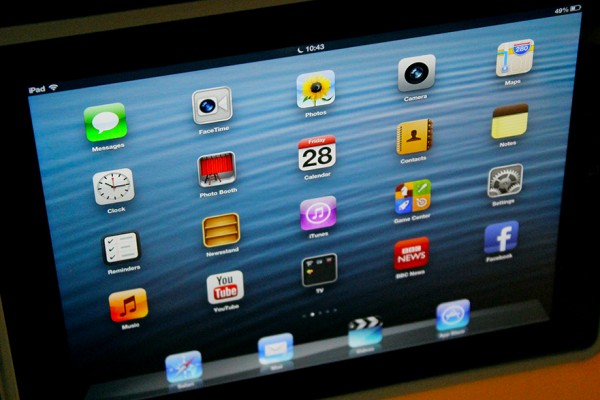
    We recently learned that Apple would release a 128GB tablet. Well, that day has finally arrived — two versions of the new, mega storage, iPad are up for sale now in the Apple store online and, likely, in the company’s retail locations as well.

    There are two flavors of this apple available — a WiFi-only that retails for $799 and a version with WiFi plus cellular connectivity. The latter will lighten your wallet by $929. The cellular version can work with either Sprint, AT&T or Verizon. You will need to choose your network during the purchase process. You can also choose a financing plan of six, 12 or 18 months. Given the price, you may need one of those plans. All models are available to ship in “1-3 business days”.

    I am not sure why a person would need 128GB of storage on an iPad, but if you plan to store a lot of media on the device and don’t mind spending $1,000 (after tax) then this is the ideal model for you. It is also likely in response to the upcoming release of the Microsoft Surface Pro, which is also available in a 128GB model and will be on sale next week. The good news is, that this new iPad will almost certainly have more storage available than that upcoming Microsoft tablet.

  • How ‘Aaron’s Law’ Is Good for Business

    I knew Aaron Swartz since before he could shave, and I regard his loss as one beyond reckoning. To me he was a Keats, a Byron, a Shelley or a Mozart: one of those rare and original souls — a true genius — who changed the world for the better before dying way too soon. He was just 26 when he took his own life on January 11, leaving behind a string of achievements that would make an accomplished geezer proud.

    Yet Aaron is perhaps best known for getting caught while sneakily downloading a large number of academic journal files at MIT. Why Aaron did this is not clear and may never be. What is clear is that he violated terms of use for the files. For that and related alleged offenses, federal prosecutors threw the book at him: thirteen felony counts. On the penalty side, that book had life-threatening clout: fines that could run past a million dollars, plus dozens of years in jail. Despite being warned that Aaron was a suicide risk, the prosecution pressed ahead. Their final bargain was six months and a guilty plea. Aaron wasn’t willing to accept that. Nor, apparently, was he ready to face a trial.

    While Aaron’s life story is over, a new one begins for the book prosecutors threw at him. In “Ham Sandwich Nation: Due Process When Everything is a Crime,” Tennessee law professor Glenn Reynolds summarizes the problem we need to solve: “Given the vast web of legislation and regulation that exists today, virtually any American is at risk of prosecution should a prosecutor decide that they are, in (former Supreme Court Justice Robert) Jackson’s words, a person ‘he should get.’”

    To reduce that risk, Zoe Loffgren, a Democrat representing Silicon Valley, is drafting a bill titled “Aaron’s Law” for the House Judiciary Committee. The draft is short: just one page. Lawrence Lessig, a Harvard Law professor and longtime friend and mentor of Swartz, says the law “would limit the scope of the Computer Fraud and Abuse Act and exclude ‘crimes’ that are nothing more than a breach of contract. Violations of a website’s ‘terms of service’ would be a breach, not a crime.” (Note: Prof. Lessig will give a lecture on Aaron’s Law on Feburary 19 at Harvard Law School. It will be webcast.) Scott Shackford of Reason puts a gust of libertarian wind behind the same sail: “A memorial law that actually tries to reduce governmental authority — will wonders never cease?”

    While few of us have been accused of the crimes for which Aaron was indicted, all of us are exposed by the common practice of agreeing to one-sided terms of service we never bother to read, because it would take too much time and there’s no point to it anyway. This norm has been with us for so long that we have also forgotten the principle it flouts. That principle is freedom of contract.

    A contract, simply put, is a law that agreeing parties make for themselves. Thanks to freedom of contract, any two of us can arrive at binding agreements without government help or interference. (At least until a dispute arises. That’s where contract law comes in.) Freedom of contract, however, proved inconvenient when mass markets arose, and companies needed to do business the same way with millions of customers at once. Thus was born a legal hack: “standard-form” non-negotiable contracts. With these the company provides all the terms, and the customers’ only choice is to accept those terms or do without.

    Handy as this hack was in the age of mass marketing, it has become a massive source of friction for everybody interacting with services on the internet today. You experience that friction every time you pause to accept some “agreement” you don’t read. According to a Carnegie Mellon report, it would take the average college educated person about 76 work days to read all of the privacy policies an average Internet user encounters in a year. And those are just policies. Terms of service are a separate pile of text and tend to run even longer.

    Consider how obsolete this norm has become in an age when our main tool for interacting electronically with the marketplace is a smart mobile device, running up to hundreds of apps that are updated almost constantly. To minimize legal frictions, we should be able to form and end agreements, on the fly, by automatically matching up personal and corporate terms and policies. Developers and market-friendly lawyers are already working on simple ways of doing that — ways that put freedom of contract to work in a fully modern way. Passing Aaron’s Law is a step in that same direction.

    While Aaron’s Law is not required to fix the standard-form contract bug (developers will take care of that one), it is required to prevent federal prosecutors from wasting our time. Or, in cases like Aaron’s, our lives as well.

  • BlackBerry Z10: Top 5 things you should know

    5 things to know about the BlackBerry Z10

    The BlackBerry Z10 is a brand new device working in a modern mobile ecosystem. When introduced to the world last week, we showed you many of the BlackBerry Z10’s highlights. While we’ve shared a lot of what the BlackBerry Z10 has to offer, here are the five things you need to know about the Blackberry Z10 experience.

    1. Revolution over evolution. As you begin to use your BlackBerry Z10, try to think of it as the first smartphone you’ve ever set eyes (or thumbs) on. We designed the BlackBerry 10 OS completely from scratch to be unlike anything else. After a few minutes of practice you’ll appreciate how the BlackBerry Flow navigation keeps you moving forward.
    2. BlackBerry Balance allows you to be “BYOE”. That’s Bring Your Own Everything, because with BlackBerry Balance baked into the BlackBerry Z10, you can keep work and personal data completely separate. So if your company has a BYOD, or Bring your Own Device program, you can bring your BlackBerry Z10 to work without fear of losing personal contacts or data. Likewise, Balance keeps your work contacts and data separate and secure from your personal information.
    3. BlackBerry World goes to Hollywood. Your BlackBerry Z10 goes even further by being a multimedia machine while you’re on the go. Picture the BlackBerry Z10 as a movie and music player compact enough to take everywhere. Not only that, BlackBerry Story Maker can put you in the director’s chair.
    4. It’s Raining Apps. In addition to the baked-in features like BlackBerry Remember and BlackBerry Picture Editor, BlackBerry World also gives you access to the top games, productivity apps, utilities, and social apps. We continue to work with developers to grow BlackBerry World every day.
    5. BlackBerry 10 is built for your security. Having tons of apps and features is great, but it’s important to also feel secure in what you’re doing on your device. BlackBerry 10 received its FIPS 140-2 Security Certification prior to its official unveiling, and to date, no other mobile solution has been awarded the same level and quantity of security accreditations. To put it simply: The BlackBerry Z10 helps keep the bad guys out of your device.

    Many users are just discovering their BlackBerry Z10 devices, and still many more are looking forward to the BlackBerry Q10 physical keyboard device (I’ll be bringing you five things to know on the BlackBerry Q10 soon!). Whichever device you choose, we hope these five thoughts get you rolling.

    What are your initial thoughts on the BlackBerry Z10? If you’re currently using the device, tell us about your experience in the comments!

  • Announcing We the People 2.0 and a White House Hackathon

    Since we launched We the People, our team of developers has been hard at work on the code that makes the whole thing tick. Good thing, too! More than 2 million users joined We the People in the last two months of 2012 alone and some 6 million of you have logged in to the system and left more than 10 million signatures. That's a lot of citizen engagement for one application to handle, but it's done well, and we continue to release updates to the source code on GitHub and Drupal.org

    Today, though, we're starting the next stage of We the People's development. I'm pleased to announce that Petitions 1.0, the code that We the People runs on, is complete. We're now working towards Petitions 2.0. 

    In software development, when you go from one version number to another it means that something big is going on. We're taking a new approach to how the application works, one that starts with the assumption that it should be as open, transparent, and flexible as possible. 

    read more

  • AOL’s Advertising.com Is Now Just AOL Networks

    AOL announced today that its Advertising.com group has been rebranded as AOL Networks, and is aligned with its parent AOL brand. The company believes the move will help stakeholders better understand its assets.

    AOL Networks CEO Ned Brody (pictured) says, “AOL Networks will continue to offer global advertising solutions that help increase yield through a rich and broad set of platforms, formats, and technologies. We have heard from many clients that there is an increasing number of systems and partners they need to do business with to accomplish their online marketing objectives. The group’s mission has always been to simplify digital advertising at scale.”

    “AOL is synonymous with premium,” he says. “And in the network space, there is a real need for premium experiences. With our established leadership in video, performance and now programmatic, plus AOL’s foothold in premium advertising, we are better positioned than ever to define and own a transcending solution.”

    The Advertising.com brand will continue to live on under the bigger AOL Networks brand. It has a network of 596 million global unique visitors. Other AOL Networks brands like The AOL On Network, goviral, ADTECH, and Pictela, will continue to operate under their existing names.

    CMO Allie Kline says, ““Given the synergies between our offerings and customers, and those of our AOL parent, it made the most sense to align the brands more closely together.”

    The new gateway for the AOL Networks brand is simply AOLNetworks.com. That launches today.

  • Facebook Cleans Up Open Graph Actions – Less Spam, More Consistency

    Facebook is cleaning up Open Graph actions in order to make the user experience less spammy and more uniform across the site.

    First announced back in October 2012, Facebook says they will begin to implement the new Open Graph action guidelines on Wednesday, February 6th.

    “Starting today, custom actions that automatically publish back to Facebook as a person consumes content in your app will no longer be approved. We will only allow apps that use our built-in actions to automatically publish stories as content is consumed. With built-in actions, we understand the structure of the information and can ensure a better user experience by specializing story formats that can help set user expectations,” said Facebook back in October.

    Those “built-in” actions include “like,” “follow,” “listen,” “read,” and “watch.”

    Basically, Facebook wants to provide a consistent user experience, and allowing apps to publish stories that use actions like “view” and other custom actions doesn’t fall in line with that goal. So if your app publishes custom actions every time someone simply consumes content, you need to switch over to a Facebook-approved “built-in” action.

    Here’s what Facebook had to say in a developer note:

    We will no longer show Custom Open Graph actions that were published simply by a user consuming content. If you own one of these actions and it was previously approved, you will have received an email from us. Developers should stop publishing these actions as doing so will return an error starting February 6th.

    So users’ news feeds and tickers will still be populated with plenty of Open Graph actions, but decidedly less than before. Users will no longer see confusing custom actions, which will make feeds seem less spammy and more useful.

    [h/t All Things D]

  • Learn More About 3D Printing At MakerBot’s New Weekly Workshops

    At this point, I think we can all agree that most people at least know about 3D printing. You may not understand it, however, and that’s just fine. For those people, MakerBot will be offering a series of workshops on 3D printers starting this week.

    MakerBot announced today that it will be hosting a number of workshops, classes and lectures at its retail store in New York City starting February 8. The events will be for adults and children as MakerBot seeks to educate the public on the benefits of 3D printing and the future of manufacturing.

    “We are super excited to be able to open our MakerBot Store to the public and showcase the exciting world of 3D printing,” noted Bre Pettis, CEO of MakerBot. “With 3D printing, seeing is believing, and we hope that these workshops, classes, lectures and educational series, will bring 3D printing expertise to our current MakerBot owners, and expose 3D printing to the next generation of engineers, industrial designers, architects and entrepreneurs.”

    Starting February 8, the MakerBot store will host a two-hour class called “Setting Up and Maintaining Your New MakerBot.” The focus will be on the recently released MakerBot 2 printer, and will last two hours. The cost of each class is $35 and requires advanced registration.

    Starting on February 10, the store will start hosting an event called “Make Your Own.” Just as the name suggets, it invites people to come in and make a themed object on a 3D printer. The first event will be modeled after Valentine’s Day giving people a chance to create a Heart Hugger model, an 8-bit heart pendant, or a wearable ring. The Make Your Own event will happen every month with each event being based on an event or holiday. The next planned event in March is based around St. Patrick’s Day. The cost of entry is $10 per person and required advanced registration.

    For the kids, the MakerBot Store will be host to a “Kid’s Saturday Morning 3D Printing Class” starting February 16. The class will take place every Saturday and will only cost $10 per class. Unlike the other events, drop-ins are welcome here.

    Finally, the MarkerBot Store will play host to a ten-part series based on MakerBot CEO Bre Pettis’ new book Getting Started with Makerbot. Each session will conclude with participants printing their own unique object. This event required pre-registration and an upfront payment of $200 that covers all 10 sessions.

    You can pre-register for any and all of the above events at MakerBot’s retail store Web site. If you live in or near the New York City area, this would be an excellent chance to finally see what all this 3D printing hullaballoo is all about. If anything, it’s an inexpensive way to learn more about 3D printing.

  • New Florida Logo Called Sexist by Tampa Locals

    Last week, Florida Governor Rick Scott and the economic development organization Enterprise Florida (EFI) revealed the sunshine state’s first-ever business brand. The slogan for the brand highlights the good weather in the state, associating it with a good “climate” for business.

    “Each day I talk with CEOs around the world to tell them that Florida is the best place to do business,” said Scott. “Our unemployment rate is at a four year low, we’ve created close to 200,000 private sector jobs in just two years, and our K-12 education system has jumped into the top ten in the nation. We’re working aggressively to get businesses to Florida, so Florida families have more opportunities to pursue the American dream – and with this innovative business brand we will continue to attract more opportunities to the Sunshine State.”

    However the logo for the brand has a few Florida residents crying sexism. The logo replaces the “i” in the state’s name with a necktie.

    The Tampa Bay Tribune received complaints from several locals who claim the necktie implies Florida business is for males. According to the tribune, the EFI considered whether the necktie could be considered sexist, but decided that the tie is a “universal symbol of business.”

  • Greetings from BlackBerry Jam Europe

    BlackBerry Jam Europe

    This week the Inside BlackBerry Blog team is attending the BlackBerry Jam Europe conference to bring you all of the action from Amsterdam. BlackBerry 10 has officially launched with a ton of great apps, and thanks to developers, more and more apps will be coming to BlackBerry 10 every day. This week we’ll be bringing demos and interviews from the great people making apps and games for BlackBerry 10.

    It is no secret we have an amazing developer community around the world that has already created more than 70,000 apps for the launch of BlackBerry 10 – the most apps on any first-generation mobile platform at launch. What this means for you is that a ton of BlackBerry 10 apps and games are available for you in BlackBerry World so you can get the most out of your new BlackBerry Z10 or BlackBerry Q10 when you pick it up.

    As a thank-you, Alec Saunders, VP, Developer Relations and Ecosystems, introduced an ultra-exclusive red Limited Edition BlackBerry Z10. This is only available to developers, so if you see someone with it, be sure to ask them which app they developed and thank them for it!

    Limited Edition BlackBerry Z10

    We also have an exclusive look at a never-before-seen feature that Vivek showed off onstage at BlackBerry Jam Europe with his new BlackBerry Q10. We’ll be bringing that video to you later, so stay tuned.

  • Health startup Keas ‘reboots’ to turn your officemates into virtual gym buddies

    Keas, the health startup launched by former head of Google Health Adam Bosworth, is changing things up once again. Founded in 2009 as a kind of a “Mint.com for health,” the company later pivoted into a gamified employee wellness program.

    On Tuesday, the company said it was evolving once more with a new management team and product platform meant to make Keas feel even less like traditional enterprise software and more like a consumer product that just happens to be distributed in the workplace.

    “We’re going from a health IT team to one that’s an engagement team, both in terms of the product and the market,” said CEO Josh Stevens, describing the change as a “reboot.” “We’re at the crossroads of the consumerization of health. [Keas] feels like a consumer app but the best place to get traction from the app is at work.”

    Over the past few months, the company has added not just Stevens (see disclosure below), but new executives in product, sales, marketing and business development. It’s also been developing a new version of its product, Keas 360/365, released today, that the company says is a more comprehensive, open and sticky social network centered around health and wellness.

    The goal, said Stevens, is to give people a social and fun framework for engaging in health activities so that they can ultimately improve their own health – and their companies’ bottom line.

    keasThrough Keas’ social network, HR executives can spread the word about flu shot programs and other health initiatives and employees can share posts about their runs and healthy habits. All users are broken up into small teams so that light peer pressure pushes each member into more engagement.

    With the new version, users complete a brief assessment to receive personalized goals and objectives. To keep them engaged and help them reach those goals, the program offers fitness challenges, games polls and other kinds of content. The latest platform is also available on mobile and integrates with third-party apps and devices, so that a user could choose to have her Fitbit automatically post her daily activity in her newsfeed, for example.

    As healthcare costs climb, Keas’ pitch to employers is that promoting employee health can lead to higher productivity and ultimately lower health expenses. For employees, the program is positioned as a way to reach their health goals as well as get rewarded for their activities – extra steps logged on your Fitbit, getting the flu shot and taking other healthy steps could mean discounts on health insurance or extra credits in your flexible spending account.

    As we’ve covered before, rising health costs and new incentives in the Affordable Care Act are giving employers new reasons to consider corporate wellness programs. And new technology, such as Fitbits and Nike Fuelbands that track activity are providing new ways to quantifiably monitor employee behavior and track results.  In similar ways, ShapeUp and PUSH Wellness also target employers with digital wellness programs and companies like Everymove partner with health plans to incentive healthy behavior change.

    Since launching, Keas has raised $17.5 million. In 2012, it said it increased its registered users by 282 percent and added new enterprise clients like The Cheesecake Factory, Mountain State Health Alliance, BAE Systems, Pella, and British Telecom.

    “If you’re going to have a bite out of the apple of solving the health care crisis in the U.S., it has to start at work because that’s where most Americans spend most of their time eating and where they spend most of their time living,” Stevens said.

    Keas CEO Josh Stevens is on GigaOM’s board of advisors.

    Image by dotshock via Shutterstock.

    Related research and analysis from GigaOM Pro:
    Subscriber content. Sign up for a free trial.

  • “The brain of the New York Times, the body of BuzzFeed” — Slate’s third act

    Slate started life as as a scrappy web pioneer under Microsoft in 1996. Since then, it has gone on to carve out an enviable perch in the liberal media establishment as part of the Washington Post Company. Now, as Slate enters its 17th year — a fine run for any publication, digital or otherwise –- the online magazine wants to reinvent itself one more time.

    Slate’s latest incarnation is as a data-driven social-media beast.  The site thinks it can use viral wizardry to spray smart writing around the internet and, at the same time, finally earn a profit from being perspicuous. The money question has become pressing because Slate, despite its years as a high-brow conversation starter, has yet to show it can survive without the largesse of a corporate mothership.

    So will Slate’s third act pan out? Here’s a look at how its brain trust is approaching data, technology and the evolving ethics of advertising.

    Top drawer or traffic whore? Stats and story selection

    On a cold January afternoon, I met longtime editor-in-chief Jacob Weisberg and his deputy David Plotz in the former’s airy corner office on Morton Street in New York’s West Village. The office has large windows and shelves of hardcovers, including Weisberg’s exposition “The Bush Tragedy.”

    The men were busy. Weisberg was en route to Davos, while Plotz had ducked out from answering questions on the online discussion forum Reddit. But both wanted to make the case that Slate has what it takes to survive in the age of analytics. “We rely on data, not intuition” said Weisberg. “The big cultural change at Slate is that it’s moved from being a site driven by instinct to a site driven by evidence.”

    The remark comes as a rebuttal to earlier observations that Slate relied on creaky technology even as its competitors shot by it with state-of-the-art tools. The New York Observer in 2010, for instance, talked to members of Slate’s staff and concluded that the site’s tech was “Chitty Chitty Bang Bang.”

    Weisberg says those days are done and that technology is at the center of the editorial operation. He points to a new Silicon Valley-style product team and a doubling in the amount of “sideways” readers from social media in the last year as proof that Slate has gotten religion on the analytics front.

    Woman, temptress, prostituteWeisberg says Nick Denton of Gawker and Jonah Peretti of BuzzFeed have been inspirations in the push for better analytics. The two viral media evangelists have shaken up publishing by using social media metrics to judge what stories to promote. (Peretti will be speaking at paidContent Live in April.)

    But if Slate turns to audience activity to inform its story choice, does this also mean pandering? “We have written traffic-whorey stories here David Plotz Slateand there,” admits Plotz. But these efforts haven’t been particularly successful, he says. Instead, he credits editorial initiatives like “Bad Astronomy” (a feature for science nerds) with increasing drawing new regular readers to Slate.

    In this regard, Slate is like other high-minded publications navigating a tough, even contradictory mission. On one hand, they promise smart and independent ideas; on the other, they’re heeding social media metrics that could tug them to the lowest common denominator. While news sites like BuzzFeed cut their teeth on silly cat photos only to climb up the intellectual and media food chain, it’s unclear whether this process can work in the opposite direction.

    So far, Slate appears to be threading the needle by growing its readership, while also publishing thought-provoking pieces (like this one about Palestinian versus Israeli textbooks). Slate says December 2012 unique visitors increased 33% percent from a year ago; meanwhile, comScore stats show Slate is faring well against other ideas publications. Here’s a chart that shows how they compare (note QZ and theAtlanticWire are part of the theAtlantic.com) :

    screenshot for slate comscore numbers

    Paywalls and pettifogging

    The buoyant numbers are good news, of course, but do they mean Slate is finally in a position to make money? In 2010, Plotz admitted that Slate was not profitable. Like nearly every other digital publication, Slate had discovered the hard way that great writing and a loyal readership are not the same as a business plan.

    Since then, many publishers have followed the lead of the New York Times and begun to charge for access to all or portions of their digital content. These so-called paywalls have gained acceptance after being a contentious issue for years — in part because an early effort by Slate to implement one in 1998 didn’t work out.

    Slate recently floated the idea of a future “membership” scheme for some readers, but Weisberg is adamant it won’t involve charging for content. The topic is sensitive enough to have produced a bizarre Twitter spectacle in which Weisberg’s Mr. Fox avatar berated a respected Forbes reporter as a “pettifogger” (and worse):

    So what exactly does the membership involve? Weisberg didn’t elaborate beyond saying it won’t be unveiled until at least the end of the year and that it will be “more akin to a public radio-type membership model — you give a contribution and in return you get benefits.”

    As Slate hashes out these details behind the scenes, it’s also trying to cultivate another revenue stream, in the form of an expanded events business. These include loose mixers that let readers mingle with Slate writers; Weisberg says more than 700 people recently bought tickets one of its “gab-fests” in Washington. Slate is also hosting small, more formal events hosted by advertisers. One example is a UBS-hosted panel at which Weisberg hosted a discussion on exports with political poohbahs.Slate screen shot

    Other media outlets have run into ethical challenges with custom events like this — most notably the Washington Post, which in 2009 proposed hosting private “salon events” at the publisher’s house for powerbrokers and journalists. It sparked a newsroom revolt, and the paper ditched the idea before it ever became a reality. Weisberg says Slate, which is independent but shares a corporate parent with the Washington Post, won’t run into similar problems because its events are all public and on the record.

    All this still doesn’t answer the question of whether Slate is now profitable. Asked directly, Weisberg said he can’t say because of Sarbanes-Oxley disclosure rules that require companies like the Washington Post Co. to disclose material information through broad public channels.

    Ads, yes – but not for the Church of Scientology

    Digital publications these days need multiple revenue streams to survive, but their core remains advertising. And here Slate, which has recently built up its own sales force outside of the Post, and others face the same dilemma: an increasing amount of web traffic comes in through mobile devices (about 30% now, and 50% by 2014 is probably a safe bet) but ad rates are low and no one is sure what to do about that.

    “I don’t think we’ve figured out anything other people haven’t,” says Weisberg. “You have a rapidly expanding audience but CPM’s that are much lower. The key is distinguishing how and when people are using different types of mobile devices.  Between tablet and mobile, those two will diverge rapidly over time. Tablet ads will become more valuable while handsets gravitate to a performance model.”

    While publishers wait for the right mobile ad models to emerge, many are seizing on so-called “native advertising” as the secret to juicing ad prices. It’s debatable whether it’s really new but the basic idea is to produce ads that mimic the editorial content around it – ads that resemble nearby stories, tweets, pictures, etc. It may or not be novel, but for now it is clear that native advertising can go horribly wrong such as when the Atlantic printed a “story” about the Church of Scientology replete with gushing “reader” comments about the cult’s virtues.

    Weisberg says the Atlantic tripped up by violating three principles: printing ad that confuse readers; tampering with the editorial process; and accepting an ad from someone the publication shouldn’t have done dealt with in the first place. “They are enemies of free speech, they are persecutors of journalists, they’re litigious. They’re a crazy cult who’s made life hell for journalists who’ve tried to do their job. Why do business with them at all?”

    In terms of Slate’s own advertising, the publication says revenue in 2012 grew 26 percent from the previous year. Its advertisers include , most recently, Coke, Lexus and Samsung. As for the ad opportunities offered by aggregation tools like Flipboard, Weisberg is skeptical and says they are “too passive” and less useful now that “Twitter has cracked the news personalization process.”

    Slate screenshotSlate has also built a strong lineup of videos and podcasts that Weisberg says are lucrative for the site. Slate is now producing nine separate podcasts, some of which rate highly on iTunes; one episode of the show Lexicon Valley recently notched up 650,000 downloads. Slate would not disclose how much ads, which are read by show hosts, bring in but said “advertisers pay some of the highest rates in the industry” for the podcasts.

    This podcast and other non-print revenue will help determine whether Slate can join an increasingly data-driven media world while still remaining an influential liberal publication. While the verdict is still out, Slate’s confidence remains high.

    “We have the brain of the New York Times and the body of BuzzFeed,” said Weisberg as he prepared to dash off to Switzerland – where he would later tweet, “Wish Pussy Riot was in Davos instead of so many Russian oligarchs & kleptocrats.”

    (Images by Slate and Kletr via Shutterstock)

    Related research and analysis from GigaOM Pro:
    Subscriber content. Sign up for a free trial.