Blog

  • Chanting “Jesus” Scared Intruder With A Gun

    A group of Florida women say they had the power of prayer on their side when a man broke into the home where they were holding a jewelry party and brandished a gun, threatening to shoot someone.

    Jacquie Hagler was hosting 14 friends in her home recently when 24-year old Derick Lee burst in with a gun and demanded money. At first, the women thought it was part of the party and played along, even pushing the gun away and proclaiming it to be a water gun. But that just incensed Lee, who showed them the bullets and then threatened to use them if they didn’t hand over some cash.

    “When I realized what was going on, I stood up and said, ‘In the name of Jesus, get out of my house now,’” Hagler said. And he said, ‘I’m going to shoot someone.’ And I said it again, real boldly,” Hagler continued. “Everybody started chanting, ‘Jesus, Jesus, Jesus,’ and he did a quick scan of the room, and ran out the door as fast as he could go.”

    Lee was later pointed out to police from a photo lineup and is being held on a $200,000 bond. He is also being investigated for an ATM robbery.

    Image: Lake City Police Dept.

  • Loyalty platform Belly launches a freebies rewards program called Belly Bites

    Digital loyalty and rewards startup Belly is experimenting with a marketing concept as old as the supermarket: the free sample. It’s recently introduced a new program called Belly Bites, which allows local businesses to offer complimentary samples of their wares – whether it’s a donut, a manicure or free admission to a concert – to customers in their loyalty programs.

    Belly is a Chicago-based startup backed by Lightbank and Andreessen Horowitz that is trying to take retail rewards programs down to the small business and the local level – while providing something much more sophisticated than the buy-10-get-one-free punch card. Belly users either use their Belly app or a QR code on a physical card to check in at a store’s iPad whenever they stop in at a participating business. That allows stores to track their customers’ purchases, award points and market more effectively to their most loyal customers.

    The Belly Bites program adds a more active component to a normally passive rewards system. Instead of waiting on the customers, businesses can lure them in by offering a free tidbit, which is then highlighted in Belly’s app. In fact, customers can use the app as a sort of goodie radar, following the path of free treats and services around their neighborhoods. According to Belly, the free samples focus is much more manageable than a daily deal coupon campaign, while still introducing new customers to local businesses.

    Belly also revealed today that it has revamped its Android app. The app is now compatible with all versions of the Google OS, but the biggest improvement is for frequent Belly users with the latest Android handset. The new Belly widget can be used to place a customer’s loyalty QR code on the home or lock screen of an Android 4.2 (Jelly Bean) device, turning it into a physical card.

  • AWS launches transcoding service a week after Microsoft goes after media biz

    Amazon Web Services now offers transcoding services in the cloud, a product launch for the cloud computing giant that follows a week after Microsoft announced a similar (but more expansive) service in its Windows Azure cloud. AWS Elastic Transcode will benefit companies that want to adapt their video files to a variety of consumer devices, from smartphones to big0screen TVs.

    Transcoding traditionally has been done on dedicated hardware located inside the data centers and head ends of telecommunications providers and cable operators, or in the data centers of content companies and CDNs. For example, Netflix encodes each movie it has 120 times to meet the needs of all the devices it supports. But as online video becomes more popular and devices proliferate, transcoding becomes an issue for everyone, from small blogs that want to do video to Disney.

    Now, instead of buying dedicated hardware and software, they can go to Amazon, which will offer folks 20 minutes of transcoding each month for free. After that, it will charge between 0.015 cents per minute to 0.036 cents per minute depending on whether the customer wants high-definition or standard definition, and where in the world the transcoding will occur.

    From the Amazon release:

    In addition, Amazon Elastic Transcoder provides pre-defined presets for popular devices that remove the trial and error in finding the right settings and output formats for different devices. The service also supports custom presets (pre-defined settings made by the customer), making it easy for customers to create re-useable transcoding settings for their unique requirements such as a specific video size or bitrate. Finally, Amazon Elastic Transcoder automatically scales up and down to handle customers’ workloads, eliminating wasted capacity and minimizing time spent waiting for jobs to complete. The service also enables customers to process multiple files in parallel and organize their transcoding workflow using a feature called transcoding pipelines. Using transcoding pipelines, customers can configure Amazon Elastic Transcoder to transcode their files when and how they want, so they can efficiently and seamlessly scale for spikey workloads. For example, a news organization may want to have a “high priority” transcoding pipeline for breaking news stories, or a User-Generated Content website may want to have separate pipelines for low, medium, and high resolution outputs to target different devices.

    Amazon isn’t the first in the cloud encoding/transcoding market, but it does have the largest customer base in the cloud, including Netflix, which clearly delivers a lot of video. As I mentioned earlier, Microsoft has launched a Media platform service that will include transcoding, aimed at giving customers all the tools it needs to deliver streaming video content online. Microsoft’s service uses the same tools it used to host the London Olympics last year. Other companies such as Encoding.com provide cloud encoding services as well.

  • Palm creator’s brain-mimicking software helps manage the smart grid

    Jeff Hawkins, the man who brought us the Palm Pilot, is back with a new streaming analytics company that’s now being used by energy-management company EnerNOC to predict the future for the institutions running our electrical grids. Hawkins’s new company, called Numenta, processes data as it streams off sensors, servers and other machines, and then quickly recognizes patterns so it’s able to predict in real time what happens next.

    If you visit the web site for Numenta, which was founded in 2005 but just recently emerged from stealth mode, you’ll see lots of images or neurons, synapses and dendrites, and lots of text explaining neurological processes. Don’t be intimidated. The long story short is that Numenta’s software, called Grok, is able to recognize patterns (e.g., temporal and spatial) from streaming data and then automatically build models that allow it to predict what will happen next.

    The goal isn’t necessarily to be as intelligent as the human brain, but to be as fast as the human brain when it comes to processing data that Grok understands. People love to talk about “big data,” VP of Marketing Joe Hayashi explained, but “our mission is to help people act on fast data.” In Numenta’s largely machine-to-machine world, where the data half-life might be measured in seconds, the human-driven process of big data is just too slow.

    “They can only go as fast as the data scientists can build models and really understand it,” Hayashi said.

    The simplest explanation of Grok you'll ever see

    The simplest explanation of Grok you’ll ever see

    Grok, on the other hand, is continuously learning from every new data point that hits the system, and it’s always readjusting its models to account for any changes it sees in the patterns of data. Not only does this help it make predictions faster and more accurately, but it also helps Grok spot anomalies that could cause problems. Ideally, Hayashi said, the software will be part of a machine-to-machine system that makes decisions on its own, in real time, without human intervention.

    For a customer such as EnerNOC, which helps energy suppliers operate more efficiently, Grok will help the company’s frequency-reserve service called DemandSMART optimally draw power from customers that are part of the program. Frequency reserve markets rely on a network of customers voluntarily (although for compensation) reducing power usage during peak times in order to ensure grid integrity. Grok could also help EnerNOC predict potential mechanical failures by identifying and flagging behavior it hasn’t seen before, or by discovering patterns that lead to failure.

    Actually, Hayashi explained, EnerNOC is a really good example of where Numenta and Grok fit into the data-processing ecosystem. EnerNOC, like many Numenta users, already has a system in place for processing real-time data, but that system only lets the company see what’s happening now. Introducing Grok into the environment, will let them “know what’s going to happen,” he said.

    All of Numenta’s detailed comparisons to how the brain works might be an impressive way to describe the technology, but it might also bury the importance of what the company is trying to do. As we’ll discuss at various sessions during our Structure: Data conference in March, the advent of ubiquitous sensors, webscale server farms and just an abundance of machines everywhere is generating more data, and at faster speeds, than human beings could ever hope to make sense of on their own. If we’re going to keep up, we’re going to have to learn to let software shoulder a lot of the analytical load.

    Feature image courtesy of Shutterstock user pixeldreams.eu.

  • Google donates 15,000 Raspberry Pi microcomputers to UK schools

    Although the Raspberry Pi was originally aimed at encouraging school children to learn to program as they did in 1980s and 90s, the affordable credit card-sized ARM GNU/Linux computer has actually ended up appealing to a broad range of ages.

    The Raspberry Pi Foundation has never lost sight of its initial purpose though, and thanks to the generosity of Google, it’s about to make some serious headway into British schools.

    A grant from Google Giving will see 15,000 Raspberry Pi Model Bs distributed to children around the UK. According to Liz Upton, marketing manager and wife of Pi creator Eben: “We’re absolutely made up over the news; this is a brilliant way for us to find kids all over the country whose aptitude for computing can now be explored properly. We believe that access to tools is a fundamental necessity in finding out who you are and what you’re good at. We want those tools to be within everybody’s grasp, right from the start”.

    The Raspberry Pi Foundation, Google, and six UK educational partners will work together to find the children who will be likely to benefit the most from having their very own Raspberry Pi.

  • Same old Yahoo: why better earnings don’t equal a turnaround

    Wouldn’t it be nice if you could just wish something into existence? That’s what some in the media seem to be doing in hailing Yahoo’s latest earnings report as evidence of a comeback. Yes, the numbers were mildly better than predicted and the company’s star CEO sounded full of vim — but that doesn’t mean Yahoo’s position is any less hopeless than a year ago.

    In case you missed it, Yahoo’s earnings came in at 32 cents a share yesterday which is better than the 28 cents that analysts had predicted. On the investor call following the earnings report, CEO Marissa Mayer stressed partnerships and the “tremendous internal transformation in the culture, energy and execution of the company.” She claims to have fixed hundreds of pressure points in the Yahoo bureaucracy and boasted that company employees worldwide are now enjoying free cafeteria food.

    These are tactics, not a strategy. The reality is that Yahoo is still getting pummeled in its core business of display advertising and its search business, while posting higher revenue, is still losing market share. Despite some nifty content offerings (especially its finance and sports), the company is struggling for relevance in a world where no one says “portal” anymore. And while its stock is flying high, a big reason for that is Yahoo plowing money from asset sales into share buybacks.

    To get an idea of where Yahoo stands, recall that the company was once regarded as an internet “giant” and that it stood astride the tech world like Apple and Amazon do today. Now, look at the chart below to see its relative significance today:

    The other companies on the chart are not just other tech companies, but the companies with which Yahoo must compete directly. Google and Microsoft remain genuine giants while Facebook is still much smaller but, unlike Yahoo, is poised for powerful growth in the next two years. And, as my colleague Mathew Ingram noted, “partnering with everyone else is not a winning strategy.”

    Mayer said on the investor call that Yahoo’s biggest opportunities lie in “search, display, mobile and video” but gave little indication how it would dislodge its immediate competitors — let alone the likes of Twitter, Tumblr and other upstarts.

    The best that can be said for Marissa Mayer’s Yahoo is that the company is not outright dysfunctional. But it still needs a competitive advantage and a growth strategy. Until it has those things, let’s not waste our breath talking of a turnaround.

    (Image by  Olesia Bilkei via Shutterstock)

  • Foodspotting Joins OpenTable in $10M Deal, Will Continue to Operate on Standalone Basis

    Restaurant reservation powerhouse OpenTable have just announced their intent to acquire food photography-based recommendation app Foodspotting.

    According to a release, the deal will be for $10 million

    OpenTable and Foodspotting have been partners for some time already – OpenTable reservations on Foodspotting and Foodspotting food photography on OpenTable, so this acquisition doesn’t come as a huge surprise. But according to Foodspotting, this is all about better integration:

    “We’ve already been working closely with the OpenTable team as partners: In addition to making restaurant reservations via Foodspotting, you may have seen Foodspotting photos from select restaurants popping up on OpenTable. But we both realized we could create smarter experiences if we could integrate more deeply by, for example, recommending dishes when you make reservations to enabling restaurants to showcase their best dishes. We look forward to augmenting your dining experiences with Foodspotting’s recommendations to forge the shortest path between you and great food,” says Foodspotting co-founder Alexa Andrzejewski.

    Foodspotting users shouldn’t worry – the app will remain a standalone product. Foodspotting says that the only thing that will change is that users will have access to better recommendations and restaurant information.

    “We’re proud to welcome the talented Foodspotting team to the OpenTable family,” said Matt Roberts , Chief Executive Officer of OpenTable. “The Foodspotting team is as passionate about dining as we are, and we’re looking forward to leveraging their unique expertise in the areas of imagery and social sharing to enrich the OpenTable experience for diners and restaurants in new and exciting ways. By adding more visually compelling content to help people decide where to dine and discover dishes they’ll love, we hope to make it even easier to find the perfect table for any occasion.”

  • Google Launches Updated Maps For North Korea

    Just a couple weeks after executive chairman Eric Schmidt returned from North Korea, Google has published more detailed maps of the country.

    “The goal of Google Maps is to provide people with the most comprehensive, accurate, and easy-to-use modern map of the world,” said Google Map Maker senior product manager Jayanth Mysore. “As part of this mission, we’re constantly working to add more detailed map data in areas that traditionally have been mostly blank. For a long time, one of the largest places with limited map data has been North Korea. But today we are changing that with the addition of more detailed maps of North Korea in Google Maps.”

    “To build this map, a community of citizen cartographers came together in Google Map Maker to make their contributions such as adding road names and points of interest,” added Mysore. This effort has been active in Map Maker for a few years and today the new map of North Korea is ready and now available on Google Maps. As a result, the world can access maps of North Korea that offer much more information and detail than before.”

    Google Maps North Korea

    Google acknowledges that the map is not perfect, and it is encouraging people to continue using Map Maker to help it improve.

    The updated maps are now live .

  • Montag & Pratt: “I Feel Like A Cartoon Character”

    Heidi Montag and Spencer Pratt, who first found fame on the MTV “reality” show “The Hills”, admit they have become the go-to guys when a television show needs a villain or two.

    The couple’s most recent foray into reality television was on the UK version of “Big Brother”, where they say they felt bullied by certain housemates and were genuinely scared to go to sleep.

    “We didn’t sleep much at all. I always had one eye open. We were watching them thinking they were going to try and kill us in our sleep. We were constantly nervous something might happen. Every time we saw any of them near knives we left the kitchen straight away. Some of them would itch their own face with a butcher’s knife – it was mentally insane. If they’ll hold knives by their own faces I didn’t know what they were capable of,” Pratt said.

    But he’s not afraid to admit that he and wife Heidi are sometimes held to a certain stereotype when they participate in these types of shows.

    “They brought us in to be Speidi and stir it all up. I feel like a cartoon character. My talent for some odd reason, is being an a**hole,” he said.

    But in the past, the couple has made it clear that they just want to be in the spotlight again. In 2011, after a disastrous bout of plastic surgery for Heidi and a sudden downturn in their popularity, the couple spoke openly about doing whatever they had to do to make money.

    “If they called me right now and said, ‘We want you to be on ‘Jersey Shore’ and be a bully, and we’ll bring your paycheck back,’ I’d say, ‘Get me on a plane to Italy,’” Pratt said of MTV.

    They might start to reconsider their image, however, now that their time on “Big Brother” has come to an end with death threats in hot pursuit. The couple so enraged fans of the show that many took to Twitter to voice their displeasure and have been reportedly threatening in nature.

    “The American couple have become the most reviled contestants in the history of the show and Big Brother chiefs will ensure they get close protection from minders when they eventually exit the house,” said The Daily Star.

  • Announcing: The new City 2.0 website launches today. Share your stories.

    City2.0-Homepage-redo

    In the next 30 years, two-thirds of our planet’s population will live in cities. Have you ever tried to envision the cities of the future?

    Cities are enlivened by people, and people enable change. So today, we are launching our redesigned website TheCity2.org, a gathering place for all urban denizens to share stories, videos, ideas and innovations related to urban transformation.

    Citizen-powered and story-driven, the City 2.0 site will showcase community driven, user-generated stories about what moves hearts and minds to take action to improve the way we share the planet. The new site features stories from some of our TEDxCity2.0 participants and City 2.0 prizewinners who received grants of $10,000 each to support their impactful work in areas like transportation, education, health, public space, safety and food.

    The 10 prizewinners’ remarkable stories include grantee Emily May’s use of crowd-sourcing and social media to end street harassment, TED Fellow Gabriella Gomez-Mont’s desire to fight a health crisis in Mexico City by launching a citywide dance competition, and the Norwegian firm TYIN tegnestue Architects’ plan to build a community center in partnership with the residents of Bangkok’s largest slum.

    Most importantly, the new TheCity2.org needs your story so we can learn from each other to make our urban spaces more vibrant, inclusive, and just. Please submit a story or inspiration from your city at TheCity2.org » 

    We are excited about how your passions and projects will help us reimagine the cities of our present and future together. This is your opportunity to contribute to a global community of city dwellers, urban entrepreneurs, organizers, dreamers and doers.

    The new City 2.0 website was born from a groundbreaking TED Prize winning idea, focused on sharing concepts, designs, and resources to spark urban transformation worldwide.

  • Apple Versus the Strategy Professors

    Someday, Apple’s now 11-year-long run of nearly unbroken triumph (I’m dating it to the launch of the iPod in November 2001) is going to end. That is just the way of the business world. The questions, of course, are when, and how.

    The mood of the moment is that when might just be now (there are lots of different ideas about the how).

    I wouldn’t be so sure that “peak Apple” really is now. What I am pretty sure about is that the how of Apple’s fall (or continued rise) will hinge on strategy — because strategy has driven its success.

    How do I know that? Because strategy is all about making choices. That’s what Michael Porter says, and tough-choice-making has clearly been a big part of Apple’s success. Steve Jobs’ revival of the company began with a decision to narrow product lines down to a handful, and its big product successes of recent years have all been defined to a large extent by what Jobs and Apple’s designers decided to leave off. To quote Porter: “Strategy renders choices about what not to do as important as choices about what to do.” If Tim Cook and his colleagues can keep that strategic discipline, the company has a shot at maintaining its competitive edge.

    Or actually, maybe strategy is really about finding blue oceans — markets that come into existence as a company defines them. That’s the path to riches described by W. Chan Kim and Renée Mauborgne, and it certainly sounds like what Apple has been up to. With the iPod/iTunes combo, the iPhone, and the iPad, the company has repeatedly given customers something that felt entirely new, that solved their problems in a way no existing product did. Now the competitive sea is getting more crowded, especially for iPhone. Apple still has an edge, in that it built that sea — “so powerful is blue ocean strategy,” Chan and Mauborgne write, “that a blue ocean strategic move can create brand equity that lasts for decades.” But you have to think that, to really stay on top, Apple needs to find more blue oceans to conquer. Which is a lot easier said than done.

    Then again, maybe the real key to strategic success in the fast-moving fields Apple is playing in is to keep coming up with disruptive innovations &#8212 and be willing to bring them to market even when they disrupt its own products. That’s Clayton Christensen’s famous contribution to strategy, and you can certainly see elements of it in Apple’s story. True, none of the company’s three huge successes of the past 11 years (the iPod, the iPhone, and the iPad) really fit Christensen’s classic disruption model of starting at the low end and moving upmarket. Christensen even said back in 2007 that the iPhone “was not truly disruptive” and probably wouldn’t succeed. But it does seem reasonable to argue that a continued willingness to disrupt itself will probably be key to Apple’s continued success. The iPhone has cut into iPod sales, and the iPad is hurting the iMac, and Apple seems okay with that. Microsoft, meanwhile, killed its promising Courier Tablet three years ago because of fears that its incompatibility with Windows and Office would disrupt those money-spinning franchises.

    Of course, modern technology businesses have some other unique strategic characteristics. One is a tendency to move from integrated products controlled by a single company to modular ones with interchangeable parts. This is another Christensen observation, albeit a lot less famous than the one about disruptive innovation. “The companies that are most successful in the beginning are those with optimized, interdependent architectures,” he and Michael Raynor write in The Innovator’s Solution. “Later, architectures and industry structures will evolve toward openness and disintegration.” In the beginning the integrated solution delivers better value; later, lower costs and the ability to customize favor the modular approach. This was apparent with both of Apple’s early blue-ocean-creating disruptive innovations, the Apple II and the Macintosh, as the modular, relatively open PC architecture pioneered by IBM and later dominated by Microsoft and Intel eventual came to dominate markets that Apple created.

    Microsoft’s rise was also abetted by two other sources of competitive advantage: network effects and switching costs. A network effect transpires when the value of a product or service grows with the number of users; switching costs are just what they sound like. “The old industrial economy was driven by economies of scale,” Carl Shapiro and Hal Varian write in their digital-age strategy guide Information Rules. “The new information economy is driven by the economics of networks.” In the early 1990s, the modular nature of the Windows PC made it cheaper and more customizable, and as its customer base grew far larger than the Mac’s it became more valuable for most customers, too. That was partly an indirect network effect — Windows’ many users made it a more attractive platform to write software for, and all that software made it more valuable to users. And it was partly a direct one — having compatible software made it easier for all those users to share documents, collaborate, etc., which made the Windows platform more valuable to them. And once you had invested in all that software, it was a real pain to switch from Windows to anything else. Not that you wanted to. By 1997, when Steve Jobs came back to Apple, Windows computers were demonstrably better in almost every way than Macs (I know from experience; I had a crash-prone Mac at work and a reliable PC at home). It took the unreasoning loyalty of the Apple faithful, continued superiority in (and high switching costs for) graphic-design software, and a lot of help from Microsoft to keep Apple alive long enough for Jobs to stage a comeback.

    In its second coming, Apple has been smarter about exploiting network effects (the iTunes store and the app store take advantage of indirect network effects, while Face Time and iChat take advantage of direct ones). The sheer convenience of using all its products together also creates very real switching costs — the 250 million people now using Apple’s iCloud are going to think twice (or three or four times) before buying a smartphone, tablet, or computer from anybody else. But Apple is now being threatened by a set of lower-cost, modular competitors that look a lot like Microsoft and Intel back in the day. Devices from Samsung, HTC, Coolpad, and lots of other manufacturers using Google’s Android operating system now account for 75% of the global smartphone market. The numbers of apps and games available for Android devices caught up with Apple’s App Store total late last year, and will surely now surge far ahead. Despite the superior design and user-friendliness of Apple’s devices (not to mention those stores), network effects could soon be delivering better value for most customers than Apple’s sleekly integrated approach (maybe they are already). To circle back to Porter:

    A company can outperform rivals only if it can establish a difference that it can preserve. It must deliver greater value to customers or create comparable value at a lower cost, or do both.

    My own reading of all this strategic wisdom is that unless Apple ventures out onto some more blue oceans with disruptive innovations and hard choices, it’s going to find itself fighting a long and eventually unsuccessful war against its modular competitors and their powerful network effects, although switching costs will at least buy it some time.

    Another takeaway might be that strategic thinking inevitably leads to mixed metaphors. The business world is just too complex to fit comfortably into any one strategic model. Porter’s seems the most flexible and durable of the lot, but that’s partly because it’s a tool more of analysis than of prescription or prediction. I spent a little while trying to plug Apple’s situation into his five-forces framework, and while it made some of the company’s choices clearer to me, it certainly didn’t tell me what’s going to happen next.

    The language of strategy is, however, more informative about Apple’s predicament than most of the chatter one hears about whether the company is still cool or Tim Cook really has what it takes. I’m a fan of Amar Bhidé’s anti-strategy polemic, “Hustle as Strategy,” in which he argues that many of the most successful companies “concentrate on operating details and doing things well. Hustle is their style and their strategy.” But while a failure to hustle could surely doom Apple, its challenge now may be that hustle alone won’t be enough to keep it on top of the world. Then again, it looks as if the surest path to continued success for the company involves coming up with yet another market-defining success along the lines of the iPod, iPhone, and iPad. I’d like to see a strategy professor do that.

    A couple of disclaimers: I do not profess to be strategy expert; thinking about Apple just sent me to my bookshelf and HBR‘s archive in search of answers. And I really didn’t mean for this to be a promotional post for HBR and the HBR Press; I just happened to consult the work of a bunch of our authors because (1) it was convenient and (2) we publish most of the best strategy thinkers. Or at least we think we do.

  • NuoDB Officially Launches Its Cloud-Based Database

    Developers need scalable databases more than ever for their apps. Of course, this presents a problem for those apps that become really popular and need more room to grow. It might prove too costly for some developers to traditionally scale their database, but a new startup is challenging that notion with a cloud-based database that easily scales to developers’ needs.

    NuoDB announced that its new cloud-based database service has officially launched. The new system operates on what the company calls the “12 Rules for a Cloud Data Management System:”

  • Modern Superset of an RDBMS
  • Elastic Scale-out for Extreme Performance
  • Single Logical Database
  • Run Anywhere, Scale Anywhere
  • Nonstop Availability
  • Dynamic Multi-tenancy
  • Active/Active Geo-distribution
  • Embrace Cloud
  • Store Anywhere, Store Redundantly
  • Workload Mix
  • Tunable Durability Guarantees
  • Distributed Security
  • Empower Developers & Administrators
  • With these rules in hand, NuoDB set to change the way developers use databases:

    “After a comprehensive trial and intense listening to our 3,500 beta customers, NuoDB is ready for market,” stated Barry Morris. “Our Cloud Data Management System is a game changer. We are challenging the industry to offer comparable elastic scaling, over 1 million transactions per second performance on just $50,000 worth of commodity hardware as published in our latest benchmark report, as well as the many other cloud-friendly features found in our NuoDB Starlings release.”

    For the more visual-oriented among us, here’s a helpful video that explains what makes NuoDB different from the rest:

    NuoDB in 90 seconds from NuoDB on Vimeo.

    NuoDB is already in use by a number of large clients who are using it to build out expansive, scalable databases. One in particular, NorthPoint, has nothing but praise for NuoDB’s service:

    “NuoDB is launching a revolution in the database world by leveraging commodity storage. For the first time, an application’s storage requirements can be satisfied using a pool of shared resources, operating in a fully-elastic way, as the nature of cloud computing requires,” said Richard Cooley, Managing Partner, NorthPoint. “The database is no longer a monolithic, resource-intensive burden with limited scalability. While still maintaining the documented benefits of ACID and SQL, NuoDB is about as disruptive as it gets.”

    Developers have three options to choose from when it comes to deploying NuoDB. The first is a free option that offers 2 hosts, 4GB of storage, unlimited databases and limited deployment. The second is the Pro version that supports 2 or more hosts, 16GB to multi-petabytes, full deployment and starts at $1,200 a year. Finally, there’s the developer version that offers all the benefits of Pro, but lacks deployment options. It’s free, however, so developers can just go crazy with it.

    [h/t: Computer World]

  • Pinterest Tests New Design with Better Navigation, More Informative Pins

    Pinterest, which hasn’t seen a significant redesign in quite some time, has announced that they will be testing a fresh look in the coming weeks.

    Pinterest says that the changes stem from user feedback.

    First up, Pinterest wants to makes it easier to find content across different categories on the site. The test makes navigation “faster and more intuitive,” and puts a new button which drops down to contain tons of options – both categories and more broad sets of content like “popular pins.”

    Next up, Pinterest’s test make individual pins bigger, and more full of content.

    “Pins are bigger and we’ve added more information related to pins, so it’s easier to find things you’re interested in. For example, on each pin, you’ll see pins from the same board, other boards this pin was pinned to, and a whole slew of related pins,” says Pinterest.

    The result is less whitespace and more relevant info to spring off from when you’re done looking at the particular pin. Related pins could be a huge deal to get people to delve deeper into the content offered on the site.

    Pinterest also says they’ve made the whole site experience faster.

    Not everyone will wake up to the new Pinterest design test. They say that it will only be previewed to a “small group of people over the coming weeks.” After that (and after some more user feedback), Pinterest will roll it out to additional users.

  • Mars Rover Curiosity Braces For Drilling

    For over one month now, Mars rover Curiosity has been preparing to use its hammering drill for the first time. It now appears that the rover’s first drill test is now imminent.

    Researchers announced that they have placed the drill onto a series of locations and pressed down on it with Curiosity’s arm. This “pre-load testing allowed engineers to check the force applied to the drill and cross-check it with their predictions. The next step is a pre-load test at night, to make sure that temperature changes do not add to the stress on the rover‘s arm. Temperatures at Curiosity’s location can range from 0 degrees Celsius (32 degrees Fahrenheit) to to 65 degrees Celsius (85 degrees Fehrenheit).

    “We don’t plan on leaving the drill in a rock overnight once we start drilling, but in case that happens, it is important to know what to expect in terms of stress on the hardware,” said Daniel Limonadi, the lead systems engineer for Curiosity’s surface sampling and science system at NASA‘s Jet Propulsion Laboratory (JPL). “This test is done at lower pre-load values than we plan to use during drilling, to let us learn about the temperature effects without putting the hardware at risk.”

    The rest of the week will be filled with hardware checks and an evaluation of the rock that has been selected as the first drilling site. Two weeks ago a flat, veined rock named “John Klein” was chosen for the honor.

    “We are proceeding with caution in the approach to Curiosity’s first drilling,” said Limonadi. “This is challenging. It will be the first time any robot has drilled into a rock to collect a sample on Mars.”

  • Doctor Killed In Office, Gunman In Custody

    A doctor in Newport Beach was fatally shot on Monday in his office by a 70-year old assailant, who is now in custody.

    The doctor, whose identity hasn’t been released, had an office at Orange Coast Urology. It’s unclear at this time what the gunman’s motives were for the shooting, but the office building was closed down for the rest of the day as co-workers struggled to make sense of the scene.

    “I sit right at the front desk; I would have caught the first bullet,” said Becky Calderwood, who works just feet away from the office. “This is nuts; people are just shooting everyone all the time.”

    Witnesses who were in the building at the time said they heard six or seven gunshots, but some thought the noise was part of the construction that was going on nearby. The doctor was found dead in an exam room when officers responded.

    The shooting comes at a time when any gun-related story is going to make national news, due to the extreme violence the nation has seen recently. Immediately after the Newtown tragedy, several states saw school shootings occur, although on a much smaller scale. People are nervous, and those who were left to see the aftermath of yesterday’s killing have a lot of unanswered questions.

    “What’s going on with the world today?” said Kristen Cotty, who works on the floor above where the shooting took place. “I mean, schools, now I got to worry about going to work. This has got to stop.”

  • Tomorrow’s the Big Day: How to Follow all of the BlackBerry 10 Launch Event Action

    (Originally posted on the Inside BlackBerry for Business Blog)

    BlackBerry 10 is launching in less than 24 hours and we couldn’t be more excited. The official launch event will happen simultaneously in multiple cities around the world including New York City, Toronto, London, Paris, Johannesburg and Dubai. Tomorrow we will unveil the BlackBerry 10 platform as well as the first two BlackBerry 10 smartphones. To keep you connected to all of tomorrow’s action, we thought it would be helpful to provide a list of all of the BlackBerry social channels where you can get the most up to date information in real time.

    How to Stay Connected to the Action

    Twitter is a great first stop for real-time information and updates. @BlackBerry will be live-tweeting from the global launch event providing news and updates as they happen. @BlackBerry4Biz will be a great resource for business related announcements and updates, and @BlackBerryDev will provide up-to-date information for developers.

    We will also be posting updates throughout the day on our LinkedIn Company Page, and the BlackBerry for Business LinkedIn Group will be a great forum to join in on conversation.

    You can also check out our blogs regularly for more in depth updates and information about the newest BlackBerry 10 features:

    The Inside BlackBerry Help Blog will also be providing tips, how-tos and walkthroughs.

    How to join the conversation

    We also want to hear from you. Leave us your initial thoughts on BlackBerry 10 in the comments below. If you’re tweeting, be sure to include the #BlackBerry10 hashtag. We’ll be back tomorrow with updates. Until then, let the countdown continue!

  • Microsoft joins the party, warns users against Java

    Oracle has had no shortage of headaches recently, thanks to Java. The exploits have been running wild lately, making attempts to fix the problems resemble a game of whack-a-mole. In fact, the troubles even resulted in the United States Department of Homeland Security being forced to post a warning against using the platform.
    In a post to the government website, the DHS warned that “by convincing a user to load a malicious Java applet or Java Network Launching Protocol (JNLP) file, an attacker could execute arbitrary code on a vulnerable system with the privileges of the Java plug-in process”.

    Now Microsoft has joined this sad party. Eve Blakemore posted a warning via MSDN,  that malicious Java updates are now being circulated on the internet. “In the case of the fake Java updates, cybercriminals are taking advantage of news about security vulnerabilities in Java and recommendations to update Java immediately. We agree that if you use Java on your device you should update it directly from the Oracle website”. She goes on to warn users that if they do not get the update directly from Oracle, then they should either use an older version or simply disable Java in their web browser.

    This does not come as a big surprise. Pop-up security alerts and fake Flash updates have been circulating for sometime now. Thanks to the warnings, Java has become the latest target to be taken advantage of. The fear factor is an easy way to compromise unsuspecting users.

  • 44 Years, No Sick Days Makes Retirement Sweeter

    An employee of the Detroit Postal Service retired recently after 44 years on the job, an incredible feat in itself. What impressed her bosses the most, however, was her perfect attendance over all that time.

    Deborah Ford says she took vacation time for doctor’s appointments rather than call in, and when she did feel sick, she’d just “shake it off”.

    “You know what we say…”rain, sleet or snow, can’t stop the U.S. mail”, and that’s what I live by. I’m coming in,” Ford said.

    The impressive employee got a surprise send-off earlier this month, complete with a party and a certificate proclaiming she was leaving with 4,508 sick-leave hours, which will be taken into account for her pension. According to Detroit’s laws, Ford will gain a 5% increase in her take-away pay for all those unused hours.

    Paid sick days are one of the many perks of working for the Postal Service, as employees are given one a month which can accrue over time without limitations. Despite numerous post office closings over the past year and rumors that the entire service is dying out, the U.S.P.S. is still trying to take care of its employees.

    Ford said she’ll miss the people the most.

    “It’s been my honor to serve the postal system all these years. You don’t miss the brick and mortar, but you certainly miss the people,” she said.

  • Apple Actually Announces 128GB iPad

    Rumor was going around that Apple was working on a 128GB version of its iPad. Some were skeptical. In an interesting turn of events, Apple actually came out and announced the device without a big event talking about how amazing and magical it is.

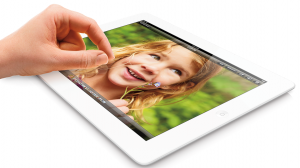
    The device is a 128GB version of the fourth-generation iPad with Retina Display. It comes in both the Wi-Fi and Wi-Fi + Cellular models. Previous versions came with 64GB of storage.

    “With more than 120 million iPads sold, it’s clear that customers around the world love their iPads, and everyday they are finding more great reasons to work, learn and play on their iPads rather than their old PCs,” said Apple SVP of Worldwide Marketing, Philip Schiller. “With twice the storage capacity and an unparalleled selection of over 300,000 native iPad apps, enterprises, educators and artists have even more reasons to use iPad for all their business and personal needs.”

    The new devices will be available starting Tuesday, February 5 in black and white. Oh, by the way, they cost $799 and $929 for the Wi-Fi and Wi-Fi + Cellular models, respectively.

    On Monday, Apple launched iOS 6.1. More on that here.

  • The rumors were true: Apple debuts a 128GB fourth gen iPad

    Apple attracts rumors like no other tech company. In the past week alone we’ve heard about what to expect from the iPad 5, suggestions that Apple is working on a budget iPhone that may or may not feature plenty of plastic in its design, and there’s even been talk of a larger capacity iPad 4.

    It turns out this last rumor was right on the money, as Apple has just announced a 128GB version of the fourth generation iPad with Retina display.

    The larger capacity iPad, which comes in both Wi-Fi and Wi-Fi + Cellular versions, and in black and white, is designed purely to bring in more money for Apple and help shore up the share price. Or as Philip Schiller, Apple’s senior vice president of Worldwide Marketing, phrases it:

    With more than 120 million iPads sold, it’s clear that customers around the world love their iPads, and everyday they are finding more great reasons to work, learn and play on their iPads rather than their old PCs. With twice the storage capacity and an unparalleled selection of over 300,000 native iPad apps, enterprises, educators and artists have even more reasons to use iPad for all their business and personal needs.

    The new 128GB versions will be available from Tuesday, February 5 for a suggested retail price of $799 (Wi-Fi) and $929 (Wi-Fi + Cellular model).