If you’re a watcher of Youtube’s DRIVE Network then you know that TUNED host Matt Farah is a big man, and RideApart host Jamie Robinson is not. This is why seeing them roll two-up on a Honda CBR1000 is just plain hilarious. They spent the day hitting the California canyons, scraping fairings and having a grand old time. Personally, I’d never jump on the back of a bike, even if Jamie Robinson was the pilot. Matt however, he’s a different story all together. Check out the comedy after the jump.
Unhappy critics may well look askance at Barack Obama’s performance as Commander-in-Chief. As campaigner-in-chief, however, this President is demonstrably without peer. His “Obama for America” fundraising, analytics and “get out the vote” operation was a masterpiece of agile electoral innovation and entrepreneurship. Partisans from both sides of the aisle believe it transformed presidential politics.
They’re right. But, actually, they’re thinking too small. The Obama campaign’s techniques, tools and technologies deserve detailed and dedicated attention from every organization that takes data-driven decisions seriously. There’s not a brand manager, health care administrator, CMO or CIO who wouldn’t benefit big-time from benchmarking their own operations to this campaign’s. It was that good.
By far the best synthesis and summary of the digital keys to the campaign’s success is Engage DC’s Inside the Cave. I’ve seldom read a briefing so artfully — and accessibly — capturing the critical success factors that turn innovative tools into successful outcomes. Although superbly presented as a case study in campaign organization and technology, its essential lessons go way beyond the mechanics of procuring donors, donations and votes. This is what investing to control your destiny looks like.
The campaign had an outward facing “Digital” component addressing email, social media and fundraising, as well as “Technology” and “Analytics” departments focused on making campaign processes and purchases more efficient. The organization was dedicated to the proposition that it would not just use tools and analytics to get better, it would use them to learn how to get better — and act accordingly. Ego and experience were subordinated to measurable results.
“We basically found our guts were worthless,” observed a senior member of the campaign’s email team, on the fact that nobody on the team could reliably predict which emails would perform best. The campaign committed itself to a relentless regimen of experimentation, test and test again. The team “regularly tested” as many as 18 variations on subject line and email copy. (“Hey” was the most successful subject line of the campaign based on email opens.)
This emphasis on test extended through every phase of the operation. The campaign ran what it called a “Game Day” exercise testing its abilities to respond to possible worst case scenarios of technical failure and surprise. These drills, which coincidentally ran the week before Hurricane Sandy, allowed the DevOps (for Development Operations) team to keep the campaign’s systems running while learning how to perform rapid disaster recovery response.
“We knew what to do,” said Harper Reed, the campaign’s Chief Technology Officer. “We had a runbook that said if this happens, you do this, this and this.” While practice doesn’t necessarily mean perfect, it made a significant difference in organizational and operational effectiveness and esprit. (By painful contrast, the Romney campaign’s experience with its Orca operational system offers a painful case study of what can happen when experimentation and stress-tests are managerially marginalized.)
Whether doing extensive A/B testing on its donation pages or deploying a clever mobile app, “Quick Donate” (which allowed for/facilitated “drunk donating”), the campaign’s technologists and analysts constantly sought to create virtuous cycles of better outcomes leading to better data leading to great efficiencies. I was particularly impressed by how rigorously and relentlessly the analytics teams modeled their “markets,” i.e., the voters and electorate. According to Inside the Cave, the analysts ran 66,000 simulations each night to project who was winning every battleground state, based on dynamic models based on voter contact data. Of course, the analysts were using Facebook and Twitter data, as well.
All these near-real-time “market” data helped determine resource allocation. The campaign developed impressive tools to better optimize the efficiencies and effectiveness of both their digital and traditional media buys. Innovative tools allowed out-of-state volunteers to make calls to swing state undecideds. Indeed, the campaign created a sweet suite of apps and services supporting its “sales force” — i.e., the “get out the vote” volunteers — who would successfully move the needle on election day.
Yes, there were integration problems and issues. Campaign field director Jeremy Bird observed that, “we never got to a point where a field staffer thought it made more sense to text someone than to call them.” But these were frustrations borne of failed effort, not ignorance or intent. I must point out that, even if Obama had lost, the operational innovation and effectiveness of his campaign would still evoke admiration and emulation. No other national campaign has gotten more measurable value from technology, data and analytics in less time than this one.
The briefing’s What’s Next: 2016 is as insightfully useful for today’s CEO as tomorrow’s presidential candidate. Each one of its three big themes — Better Social Targeting, Real Time Analytics Overtakes Polling and True Digital Integration — would likely deserve their own internal task force inside every Fortune 1000 firm.
While it may seem odd to look to a (largely volunteer) presidential campaign for digital/analytical/operational inspiration, (look at Sasha Issenberg’s excellent The Victory Lab for historical context), the fact is that I know of very few business organizations that have gotten comparable value for money and effort from their own innovation investments.
Until the actual “Obama for America” codebase is freely available (and this is the subject of intense debate), if you want a blueprint, map or resource for your own organization’s digital marketing aspirations, read, reread and then circulate Inside the Cave. It will provoke the internal conversation and debate your business likely needs.
Let’s say you get word that a colleague is (unfairly, in your mind) ratting you out for not working hard enough. So you turn to Facebook, engaging with some coworkers about their feelings on the matter.
Then you all get fired for violating your company’s social media policy.
This is one of several cases the National Labor Relations Board has considered recently, as described by New York Times reporter Steven Greenhouse. For the most part, it affirms one of the key tenets of employment law that was created decades before social media became so ubiquitous: that employees have a right to discuss work conditions freely, without fear of retaliation. So how should you shape your company’s social media expectations to support both your employees’ rights and your company’s brand? Take these two social media policies, one from Wal-Mart and the other from General Motors, that differ only slightly but are on opposite ends of the legal spectrum: Wal-Mart’s prohibits “inappropriate postings that may include discriminatory remarks, harassment and threats of violence or similar inappropriate or unlawful conduct,” while GM states that “offensive, demeaning, abusive or inappropriate remarks are as out of place online as they are offline.” The latter, the Board says, is unlawful because it’s too vague. So is specificity the key, as one expert counters? Maybe. But the gray areas still seem to be in the overwhelming majority of company policies.
After much public celebration over the ragtag team of digital wizards that catapulted Obama to another term, a bit of a storm is brewing over their code. As is the wont of the open source community, there’s a push to make that information available to other programmers to implement and improve upon (especially because the system was itself built using other open source models). But the administration and the Democratic National Committee is thus far keeping a tight lid on both the data and the code, raising questions about privacy, politics, and who owns what in the digital space.
Farhad Manjoo offers an inside look at Google’s People Operations department, where HR managers use deep analytics to figure out how to make employees REALLY happy. Among the findings: base salaries matter more than bonuses, an optimal lunch-line wait time (to maximize collegial banter while minimizing annoyance) is 3-4 minutes, job candidates need only go through four interviews, and middle managers really do improve performance. Oh, and in an effort to retain more women, the company now offers five months paid maternity leave, taken whenever the new mom wants. Will the tech wars be won with satisfied talent? Google seems to think so. — Alison Beard
At TEDxUW 2011, economics professor Larry Smith gave a memorable talk titled, “Why you will fail to have a great career.” Larry Smith: Why you will fail to have a great careerThe hilarious talk takes aim at people and the incredible excuses they dream up for not pursuing their passions, from “It’s too hard” to “But I value human relationships more than my work.” His talk was a call for people to get out of their own way and at least try.
At this year’s event, entrepreneur Michael Litt gave his reaction to Smith’s talk, titled, “Why you have to fail to have a great career.” His idea: that failure provides the ultimate experience needed for success — learning to get up and dust yourself off after a fall. Watch above to hear Litt’s candid telling of a time he failed professionally, big time. Since being posting on December 23, this talk has been watched more than 41,000 times — and with good reason.
LittleBrother is a handy free BlackBerry app that used to use cell tower information courtesy of GoogleGears location service to accomplish a variety of automation tasks. A little while ago, the app was forced to undergo a redesign because of the shut down of the GoogleGears location service.
Relying on a new location-retrieval service, the redesigned LittleBrother 2.0 has given rise to two more use cases that continue to grow their list of handy automation tasks. Also the new system is more accurate and power-efficient than ever before.
Family location made easy
Remote Location Request via email combined with password lock so the software can’t be modified make it easier to provision and manage your family location needs. Look up a family member’s location after configuring the system without the need for user interaction like keeping up with Foursquare or Google Latitude.
Specify a password for the LittleBrother configuration in the ‘Parent Watch Settings’
Enable the ‘eMail-Remote Location Request Service’ in the ‘Remote Location Request Settings’
Enable the ‘Restrict access to PIN/Password’ checkbox
Specify a password for your location request eMails in the ‘Password (for eMail requests)’ field
These new features of being able to access LittleBrother dialogs over email, also gives you the tools you need to find you lost phone, there are even commands that remove the email after the LittleBrother dialog has been accessed.
In the fall of 2010, the U.S. National Academies (consisting of the National Academy of Sciences, the National Academy of Engineering, and the Institute of Medicine) and the Russian Academy of Sciences (in cooperation with the Russian Academy of Medical Sciences and the Russian Academy of Agricultural Sciences) initiated a joint study of U.S.-Russian bilateral engagement in the biological sciences and biotechnology (hereinafter collectively referred to as bioengagement). The U.S. Department of State and the Russian Academy of Sciences provided support for the study. The academies established a joint committee of 12 leading scientists from the two countries to assess bioengagement activities since 1996 and to provide recommendations as to collaborative efforts in the near future. The Unique U.S.-Russian Relationship in Biological Science and Biotechnology: Recent Experience and Future Directions summarizes the principal conclusions and recommendations of the study.
On January 25, 2011, nearly 50,000 Egyptians took to the streets, occupying Tahrir Square. One of their most powerful weapons: cameras, both still and video, to share their story with the rest of the world. Jehane Noujaim wishes for a global day of filmHowever, many of these cameras were captured during violent clashes.
Filmmaker Jehane Noujaim — who won the TED Prize in 2006 and wished for a global day of film — seeks to tell the story of these protestors in her new documentary, The Square. The film combines the shocking and powerful footage taken by the protestors themselves, along with Noujaim’s interviews. The Square premiered at the Sundance Film Festival on Sunday and received a standing ovation. It is in the running for the film festival’s World Cinema Documentary Competition.
But Noujaim does not want The Square to be a closed book. She has taken to Kickstarter to raise funds to finish the film.
“The Square is a film about a group of young Egyptians brought together by a revolution, and who — together — find a new sense of hope for their country … [But] two years in, the revolution is far from over,” the Kickstarter page explains. “We are asking you, the Kickstarter community, to help finish our film. There are so many ways we want to make sure this film really comes to life after it debuts at Sundance … in Egypt, in the USA, and really around the world … Bunker Roy: Learning from a barefoot movementAt this very moment our team members are on the ground in Egypt, continuing to capture footage of history as it unfolds — to be included in the final final edit of the film. We wrapped up our Sundance edit only days ago, but we have more work to do. Your funding will help.”
The Square isn’t the only film of Noujaim’s to show at Sundance this year. Her documentary Rafea: Solar Mama is showing as a part of the festival’s “Stories of Change” program this week. This film follows a Jordanian woman who attends Bunker Roy’s revolutionary Barefoot College in India, the subject of his 2011 TED Talk.
Phil Mickelson said he will make “drastic changes” because of federal and California state tax increases. …The 42-year-old golfer said he would talk in more detail about his plans — possibly moving away from California or even retiring from golf… Mickelson said. “I’ll probably talk about it more in depth next week. …There are going to be some drastic changes for me because I happen to be in that zone that has been targeted both federally and by the state and, you know, it doesn’t work for me right now. So I’m going to have to make some changes.” …”If you add up all the federal and you look at the disability and the unemployment and the Social Security and the state, my tax rate’s 62, 63 percent,” said Mickelson, who lives in Rancho Santa Fe. “So I’ve got to make some decisions on what I’m going to do.”
He’s actually overstating his marginal tax rate. I suspect it’s closer to 50 percent.
But so what? It’s still outrageous and immoral that government is confiscating one-half of the income he generates.
Heck, medieval serfs were virtually slaves, yet they only had to give at most one-third of their output to the Lord of the Manor.
I hope he’s serious and that he escapes from the Golden State’s fiscal hell-hole.
And if he does, what will it mean for California government finances?
According to one estimate of 2011 earnings (comprising salary, winnings, bonuses, endorsements and appearances) Mickelson was then the second-highest paid athlete in the United States, earning an income of over $62 million, $53 million of which came from endorsements.
Now let’s bend over backwards to make sure we’re not exaggerating. Notwithstanding the Wikipedia estimate, let’s assume his annual taxable income will be only $40 million for 2013 and beyond.
With a 10.3 percent top tax rate, California would collect about $4.12 million per year. And Mickelson apparently thought that was tolerable.
But guess how much the politicians will collect if he leaves the state? I’m tempted to say zero, but they may still get some revenue because of California-based tournaments and other factors.
I can say with great confidence, however, that California won’t collect $5.32 million, which is probably what the politicians assumed when they seduced voters into approving the 13.3 percent tax rate.
After all, that assumption only works if Mickelson is willing to be a fiscal slave for Jerry Brown and the rest of the crooks in Sacramento.
As such, I’ll also state with certainty that California’s politicians won’t collect $4 million if Mickelson leaves for another state. Or $3 million. Or $2 million. Or even $1 million.
The best they can hope for is that Mickelson decides to stay in the state while also reducing his taxable income. In that scenario, the politicians might still pocket a couple of million dollars.
Not as much as they collected when the tax rate was 10.3 percent, and far less than what they erroneously assumed they would get with a 13.3 percent rate.
Pocket Ninjas is a touchscreen swipe and slash game by Cocky Culture for BlackBerry 10. Also available on the BlackBerry PlayBook, Pocket Ninjas is a steal at just 99 cents.
Swipe, slash and cut your way through wave after wave of enemies in this slick ninja-themed game. Dodge deadly ninja stars, avoid rotten sushi and avoid the temptations of the many Geisha as you advance and make your way to the top of the leaderboard. Unlock new ninja outfits, weapons and abilities in the secretive ninja armoury.
When liberals make reference to U.S. economic history, they typically: 1) downplay the role of entrepreneurs, 2) suggest that bold government action has driven growth, and 3) fail to mention the scandals and screw-ups caused by federal interventions.
President’s Obama’s inaugural address reflected some of those mistakes:
Together we determined that a modern economy requires railroads and highways to speed travel and commerce….
No single person can … build the roads and networks and research labs that will bring new jobs and businesses to our shores… Now, more than ever, we must do these things together, as one nation, and one people.
It is not true that America first invested in railroads and highways because “we determined” to do it through the federal government. In the 19th century, those investments were made by thousands of entrepreneurs and businesses. My new study on infrastructure notes:
Before the 20th century, for example, more than 2,000 turnpike companies in America built more than 10,000 miles of toll roads. And up until the mid-20thcentury, most urban rail and bus services were private. With respect to railroads, the federal government subsidized some of the railroads to the West, but most U.S. rail mileage in the 19th century was in the East, and it was generally unsubsidized.
Railroads, streetcars, bus systems, and, to an extent, roads were financed and developed over many decades by innovative businesses taking risks and making gutsy decisions in the marketplace.
The typical pattern has been for the private sector to experiment with new technologies, and then, once certain products or types of infrastructure take off, politicians want to get in on the action by subsidizing and regulating them. In turn, those interventions have usually led to distortions, scandals, and cost inflation.
Entrepreneurs, for example, had already put in place about 30,000 miles of railroads before the federal government started subsidizing them through the Pacific Railroad Act of 1862. And in an early illustration of the problems with such crony capitalism, the railroad subsidies led to the huge Credit Mobilier scandal of 1872.
It also turned out that America didn’t need subsidies for railroads. With his Great Northern Railway, entrepreneur James Hill showed that you could build a cross-country rail system without federal help. Federal involvement in U.S. transportation history is discussed further here and here.
So, no Mr. Obama, we don’t need Washington to build our “roads and networks and research labs.” Indeed, more than ever we should be encouraging entrepreneurs to take on those tasks. You and your economic advisors, for example, should check out the beautiful new Jordan Bridge in Virginia, which was constructed with $142 million of private funds.
Sports-related concussions and mild traumatic brain injuries have grabbed headlines in recent months, as the long-term damage they can cause becomes increasingly evident among both current and former athletes. The Centers for Disease Control and Prevention estimates that millions of these injuries occur each year.
Despite the devastating consequences of traumatic brain injury and the large number of athletes playing contact sports who are at risk, no method has been developed for early detection or tracking of the brain pathology associated with these injuries.
Now, for the first time, UCLA researchers have used a brain-imaging tool to identify the abnormal tau proteins associated with this type of repetitive injury in five retired National Football League players who are still living. Previously, confirmation of the presence of this protein, which is also associated with Alzheimer’s disease, could only be established by an autopsy.
The preliminary findings of the small study are reported Jan. 22 in the online issue of the American Journal of Geriatric Psychiatry, the official journal of the American Association for Geriatric Psychiatry.
Previous reports and studies have shown that professional athletes in contact sports who are exposed to repetitive mild traumatic brain injuries may develop ongoing impairment such as chronic traumatic encephalopathy (CTE), a degenerative condition caused by a build up of tau protein. CTE has been associated with memory loss, confusion, progressive dementia, depression, suicidal behavior, personality changes, abnormal gait and tremors.
“Early detection of tau proteins may help us to understand what is happening sooner in the brains of these injured athletes,” said lead study author Dr. Gary Small, UCLA’s Parlow–Solomon Professor on Aging and a professor of psychiatry and biobehavioral sciences at the Semel Institute for Neuroscience and Human Behavior at UCLA. “Our findings may also guide us in developing strategies and interventions to protect those with early symptoms, rather than try to repair damage once it becomes extensive.”
Small notes that larger follow-up studies are needed to determine the impact and usefulness of detecting these tau proteins early, but given the large number of people at risk for mild traumatic brain injury — not only athletes but military personnel, auto accident victims and others — a means of testing what is happening in the brain during the early stages could potentially have a considerable impact on public health.
For the study, the researchers recruited five retired NFL players who were 45 years of age or older. Each had a history of one or more concussions and cognitive or mood symptoms. The players represented a range of positions, including linebacker, quarterback, guard, center and defensive lineman.
“I hope that my participation in these kinds of studies will lead to a better understanding of the consequences of repeated head injury and new standards to protect players from sports concussions,” said Wayne Clark, a player in the study who had normal cognitive function.
For the study, the UCLA scientists used a brain-imaging tool they had developed previously for assessing neurological changes associated with Alzheimer’s disease. They employed a chemical marker they created called FDDNP, which binds to deposits of amyloid beta “plaques” and neurofibrillary tau “tangles” — the hallmarks of Alzheimer’s — which they then viewed using a positron emission tomography (PET) scan, providing a “window into the brain.” With this method, researchers are able to pinpoint where in the brain these abnormal proteins accumulate.
After the players received intravenous injections of FDDNP, researchers performed PET brain scans on them and compared the scans to those of healthy men of comparable age, education, body mass index and family history of dementia.
The scientists found that compared to the healthy men, the NFL players had elevated levels of FDDNP in the amygdala and subcortical regions of the brain. These regions control learning, memory, behavior, emotions, and other mental and physical functions. Those players who had experienced a greater number of concussions were found to have higher FDDNP levels.
“The FDDNP binding patterns in the players’ scans were consistent with the tau deposit patterns that have been observed at autopsy in CTE cases,” said study author Dr. Jorge R. Barrio, a professor of molecular and medical pharmacology at the David Geffen School of Medicine at UCLA.
Each of the research volunteers also received a standard clinical assessment to gauge their degree of depression (Hamilton Rating Scale for Depression, or HAM-D) and cognitive ability (Mini-Mental State Examination, or MMSE). The players had more depressive symptoms than the healthy men and generally scored lower on the MMSE test, demonstrating evidence of cognitive loss. Three players had mild cognitive impairment, one had dementia and another had normal cognitive function.
Elevated levels of FDDNP have been shown in studies to be associated with cognitive symptoms in normal aging, mild cognitive impairment and dementia, according to Barrio. The FDDNP signals appear to reflect a range of mental symptoms that have been observed in CTE cases, he noted.
Although the FDDNP marker also binds to another abnormal brain protein called amyloid beta, previous autopsy studies have shown the amyloid plaques are observed in less than a third of CTE cases in retired football players, suggesting that the FDDNP signal in the players represents mostly tau deposits in the brain.
“Providing a non-invasive method for early detection is a critical first step in developing interventions to prevent symptom onset and progression in CTE,” said Small, director of the UCLA Longevity Center. “FDDNP is the only imaging marker currently available that can provide a measure of tau in living humans.”
According to Small, a recent study of more than 3,400 retired professional football players showed that they had a higher-than-average risk of dying from Alzheimer’s disease. Small’s team also is studying lifestyle interventions for delaying the onset of Alzheimer’s symptoms. His new book “The Alzheimer’s Prevention Program,” released in paperback this month, features the latest research on this topic and offers the public practical strategies for protecting brain health.
Research into CTE and the long-term effects of mild traumatic brain injuries such as sports-related concussions has been picking up momentum.
“It is the holy grail of CTE research to be able to identify those who are suffering from the syndrome early, while they’re still alive. Discovering the effects of prior brain trauma earlier opens up possibilities for symptom treatment and prevention,” said study author Dr. Julian Bailes, director of the Brain Injury Research Institute and the Bennett Tarkington Chairman of the department of neurosurgery at NorthShore University HealthSystem, based in Evanston, Ill.
The study was funded by the Brain Injury Research Institute; the Fran and Ray Stark Foundation Fund for Alzheimer’s Disease Research; the Ahmanson Foundation and the Parlow-Solomon Professorship.
UCLA owns three U.S. patents on the FDDNP chemical marker. Small and Barrio are among the inventors. Disclosures are listed in the full study
Additional study authors included Vladimir Kepe, Ph.D.; Prabha Siddarth, Ph.D.; Linda M. Ercoli, Ph.D.; Dr. David A. Merrill; Natacha Donghue, B.A.; Susan Y. Bookheimer, Ph.D.; Jacqueline Martinez, M.S.; and Dr. Bennet Omalu.
Iconic Canadian brands Air Canada, Tim Horton’s, Loblaw’s, Manulife, The Toronto Maple Leafs, and The Weather Network have developed BlackBerry 10 apps in time for the next-generation mobile platform’s launch on January 30th.
Air Canada will have a free app that features all sorts of airport conveniences such as retrieving boring passes, check-in and manage payments. The BlackBerry 10 app features even more conveniences and features.
Tim Horton’s, the coffee chain that defines the average Canadian is big on brand interaction. TimmyMe is a location finder that should help Canadians track down the closest location even in the most severe of snowstorms.
Loblaw’s, the Canadian grocer whose store-brands often have the reputation of being better that their name-brand counterparts has a free President’s Choice Recipe Box app for BlackBerry 10. The app has over 1000 recipes complimented by photos, step-by-step instructions ideal for mobile and videos: Yum.
Manilife, one of Canada’s biggest insurance and financial services based in Toronto uses BlackBerry to connect with clients and distribution parters. They plan to have their BlackBerry 10 app InsureRight ready for launch.
Connecting with fans with the mobile is something that The Toronto Maple Leafs do pretty well. Their app for BlackBerry features box scores, game day previews, news ticker, customizable player tracker, breaking news, and the Leafs’ Twitter comment feed.
The Weather Network has a formidable presence on BlackBerry, supporting dedicated weather apps for both BlackBerry and the Playbook tablet. Its -17 degrees celcius (Zero Fahrenheit) where I am in Ottawa so weather is pretty important to us Canadians.
Does our aid have the impact that was anticipated? How much does it change the lives of the world’s poorest people and for how long? What works, what doesn’t and why? And, what could we do differently?
We conduct evaluations across our programmes to find answers to these questions to help improve the quality of our investments and to shape future programme design and implementation. One example is the independent evaluation of a major community development programme in the DRC (the Tuungane Programme, Swahili for ‘lets unite’), with some interesting results.
Children in a school constructed by the community in Monaria in eastern DRC as part of the Tuungane programme. Picture: Susan Schulman
The Columbia University evaluation team found that the programme has helped communities prioritise and manage the development of a range of vital local infrastructure projects (health centres, schools, roads, water points) that community members and local officials have widely praised. DFID staff and ministers have consistently been impressed by way the programme empowers communities to take charge of their own development, something that is at the heart of the Prime Minister’s Golden Thread narrative (which I will come back to in a future blog), and a central pillar of all new DFID programming in the DRC. International Rescue Committee (IRC) and its staff who work in challenging – and often dangerous – conditions have seen the benefits first-hand.
However, when the Tuungane programme was created after the 2009 peace settlement, it was designed as a post-conflict programme that would contribute to helping communities recover from years of conflict, strengthening coherence and ultimately governance. Yet disappointingly, the evaluators have found no evidence of a ‘Tuungane’ effect under the terms of the evaluation when compared to other communities in terms of social or behavioural changes.
It is still unclear why this key programme, so widely regarded, is not having the kind of change anticipated. So what has happened? Were we over-ambitious from the start? Was the design flawed? Is there another explanation for positive outcomes in control communities? The truth is that we don’t know yet and we are working hard to find out why; it is probably a combination of all of the above.
Knowledge is power
What we do know is that the findings of this evaluation are important not just for us but for international development efforts generally. We know that we need to share knowledge and learn from it. IRC and the DFID team are working together to proactively communicate what we have learnt and extract lessons to contribute to the improvement of this and other development programmes.
We need to learn to share these kinds of lessons without undermining the case for international development. There is often more to learn from failure than success and not everything that looks like failure should reflect badly on DFID, or development. Publicly showing that we are serious about continuous learning and improving the impact of our investments will increase our credibility and help us hold our heads high in the confidence that we are doing the very best with tax-payers money.
We need to continue to encourage our partners and other donors to study and publicise not just the stories of success but to also be prepared to talk about – and learn from – the bad news too.
We are not alone. Tim Harford, the ‘undercover economist’, published an article in The Financial Times on theTuungane evaluation last year in which he praised the willingness of those involved to commission a study of this type. His latest book, ‘Adapt – why success always starts with failure’, supports precisely this idea and in my mind, should become a key development primer.
It is tough for us to talk about failure. In my next blog I will come back to this by taking a look at what others in the development sector are doing to tackle this challenge.
Homaro Cantu and Ben Roche can only be described as the mad scientists of food. These two pioneer unique food delivery systems — think maki rolls printed on flavored paper, a dessert disguised as nachos and a bleeding veggie burger — at their Chicago restaurants, Moto and iNG. At TED 2011, the pair spoke about their science-lab approach to food in the talk “Cooking as alchemy.”
Homaro Cantu + Ben Roche: Cooking as alchemy Embedded in this talk is a crazy idea — using “miracle berries” to trick taste buds into thinking that sour foods are sweet. As Cantu explains, these berries contain a glycoprotein which could be used to make healthy junk food. Cantu explains in the talk, “We could eliminate sugar across the board for all confectionary products and sodas, and we can replace it with all-natural fresh fruit.”
Last week, Cantu wrote on his talk page, “After eight long years everyone, I have finally completed my first step towards the end of refined sugar.” He has released a cookbook called The Miracle Berry Diet Cookbook. It shares food trickery like how a lemon can be made to taste like lemonade, and a delicious ice cream that can be made with zero sugar. Watch above as Cantu discusses some of these fascinating recipes on the TV show “Windy City Live.”
Cantu wants to show exactly how he and his chefs cooked up these taste bud-bending recipes. He is raising funds for an online series called “Cooking Under Pressure.” Check out the promo for the show below and fund the series via Kickstarter.
According to Sir David Attenborough, the famous British broadcaster and naturalist, “humans are threatening their own existence and that of other species by using up the world’s resources.” In a recent interview, Attenborough said that “the only way to save the planet from famine and species extinction is to limit human population growth.”
We are a plague on the Earth,” he continued. “It’s coming home to roost over the next 50 years or so. It’s not just climate change; it’s sheer space, places to grow food for this enormous horde. Either we limit our population growth or the natural world will do it for us, and the natural world is doing it for us right now… We keep putting on programmes about famine in Ethiopia; that’s what’s happening. Too many people there.
In 2006, Sir David Attenborough was voted Britain’s greatest living icon. Popularity, however, is no substitute for wisdom. As I have explained in a previous blog post, “[The] rate of global population growth has slowed. And it’s expected to keep slowing. Indeed, according to experts’ best estimates, the total population of Earth will stop growing within the lifespan of people alive today. And then it will fall… the long-dreaded resource shortage may turn out not to be a problem at all.”
Some of the reasons why Attenborough is as mistaken about the “over-population problem” today as Paul Ehrlich was when he published his infamous The Population Bomb in 1968, include:
Increase in urbanization. In 1950, 29 percent of the world’s population lived in cities. By 2050, 67 percent of people will live in cities. City dwellers have less of an impact on the environment than do rural dwellers, because “When you have a critical mass of people like in London or New York, public transport becomes a feasible option for many, while people in more rural areas rely more on cars. And a flat that is surrounded by others is more efficient to heat than a free-standing house.”
Technological change will make it possible is making it possible to feed, clothe and house more people while using fewer resources. In their book Abundance: The Future is Better than You Think, Peter Diamandis and Steven Kotler point to some fascinating technological innovations that will revolutionize supply of water, food, energy, and so on. Put differently, Attenborough’s Malthusian thinking about the relationship between population growth and resources is as outdated as a horse-drawn cart.
What is to be said about Attenborough’s take on the famine in Ethiopia? In a word: embarrassing.
To start with, population density in Monaco is 17,676 people per square kilometer. It is 79 people per square kilometer in Ethiopia. Monaco is one of the richest countries in the world and Ethiopia one of the poorest. If anything, there is an inverse relationship between population density and poverty. Some of the world’s most populated places (Hong Kong, Singapore, The Netherlands, etc.) are very rich, while some of the least heavily populated countries (Central African Republic, Chad, the two Congos, etc.) are very poor.
The real reasons for Ethiopian famines are altogether different. First, Ethiopia was a Marxist dictatorship and like many Marxist dictatorships (USSR, PRC and Cambodia), it experienced both economic collapse and civil war. Second, Ethiopia has almost no economic freedom. All land, to give one example, is owned by the state – and the state can take it away. As a consequence, farmers have little incentive to make long term plans and undertake necessary investment, and agricultural production suffers.
Attenborough is, in many ways, a great man and I love watching his programs. But, he thinks he knows more than he does. A little intellectual humility would not be amiss.
In 1984, a leap year which began on a Sunday, Research In Motion (RIM) was founded in Waterloo, Ontario. Best known for the development of the BlackBerry product line, RIM, now in its late twenties, has grown up with users born that same year.
During that time, RIM has put smartphones, software and the BlackBerry PlayBook tablet in the hands of users all around the world. Mobile access to email, apps, communication and information that matters most are things that BlackBerry customers have grown accustomed to regardless of when they grew up.
Since RIM is still in its late twenties, I’d like to hear from loyal #TeamBlackBerry members under 30 years old. How has mobile technology changed in your lifetime? And what do you expect from your new BlackBerry 10 smartphone?
As some of you may remember Tiff Needle of the UK speed program “Fifth Gear” used to be apart of that other UK show, “Top Gear”. This of course was back in the ’90′s when cars were slow, exhibited mass body role and the world thought the American’s still made crap cars. This episode originally aired back in 1998 and features a Porsche 911 Carrera, a Nissan Skyline GT-R, a Honda NSX and a Chevrolet C5 Corvette, and even though it’s a bit dated, it’s still great fun to watch.
WASHINGTON D.C. — On today’s announcement that Nebraska Governor Dave Heineman has approved the new route for the Keystone XL pipeline that avoids the environmentally-sensitive Sand Hills region, IER Senior Vice President Daniel Kish issued the following statement.
“Today’s announcement that Nebraska Governor Dave Heineman approved the revised route for the Keystone XL pipeline will be welcome news to thousands of Americans ready to start working on this important project. The president must now act to permit the full development of the Keystone XL pipeline, which will increase our North American energy security and serve our national interest. It is time for the United States to experience the economic benefits that the pipeline’s final construction will generate.”
In the fall of 2010, the U.S. National Academies (consisting of the National Academy of Sciences, the National Academy of Engineering, and the Institute of Medicine) and the Russian Academy of Sciences (in cooperation with the Russian Academy of Medical Sciences and the Russian Academy of Agricultural Sciences) initiated a joint study of U.S.-Russian bilateral engagement in the biological sciences and biotechnology (hereinafter collectively referred to as bioengagement). The U.S. Department of State and the Russian Academy of Sciences provided support for the study. The academies established a joint committee of 12 leading scientists from the two countries to assess bioengagement activities since 1996 and to provide recommendations as to collaborative efforts in the near future. The Unique U.S.-Russian Relationship in Biological Science and Biotechnology: Recent Experience and Future Directions summarizes the principal conclusions and recommendations of the study.


 Larry Smith: Why you will fail to have a great career


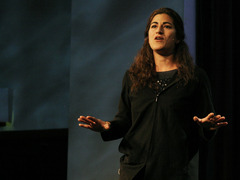 Jehane Noujaim wishes for a global day of film
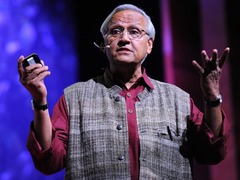 Bunker Roy: Learning from a barefoot movement


 He’s actually overstating his marginal tax rate. I suspect it’s closer to 50 percent.

 Indeed, more than ever we should be encouraging entrepreneurs to take on those tasks. You and your economic advisors, for example, should check out the beautiful new

 Homaro Cantu + Ben Roche: Cooking as alchemy


