Blog

  • Pesticides and Parkinson’s: UCLA researchers uncover further proof of a link

    For several years, neurologists at UCLA have been building a case that a link exists between pesticides and Parkinson’s disease. To date, paraquat, maneb and ziram — common chemicals sprayed in California’s Central Valley and elsewhere — have been tied to increases in the disease, not only among farmworkers but in individuals who simply lived or worked near fields and likely inhaled drifting particles.
     
    Now, UCLA researchers have discovered a link between Parkinson’s and another pesticide, benomyl, whose toxicological effects still linger some 10 years after the chemical was banned by the U.S. Environmental Protection Agency.
     
    Even more significantly, the research suggests that the damaging series of events set in motion by benomyl may also occur in people with Parkinson’s disease who were never exposed to the pesticide, according to Jeff Bronstein, senior author of the study and a professor of neurology at UCLA, and his colleagues.
     
    Benomyl exposure, they say, starts a cascade of cellular events that may lead to Parkinson’s. The pesticide prevents an enzyme called ALDH (aldehyde dehydrogenase) from keeping a lid on DOPAL, a toxin that naturally occurs in the brain. When left unchecked by ALDH, DOPAL accumulates, damages neurons and increases an individual’s risk of developing Parkinson’s.
     
    The investigators believe their findings concerning benomyl may be generalized to all Parkinson’s patients. Developing new drugs to protect ALDH activity, they say, may eventually help slow the progression of the disease, whether or not an individual has been exposed to pesticides.
     
    The research is published in the current online edition of Proceedings of the National Academy of Sciences.
     
    Parkinson’s disease is a debilitating neurodegenerative disorder that affects millions worldwide. Its symptoms — including tremor, rigidity, and slowed movements and speech — increase with the progressive degeneration of neurons, primarily in a part of the mid-brain called the substantia nigra. This area normally produces dopamine, a neurotransmitter that allows cells to communicate, and damage to the mid-brain has been linked to the disease. Usually, by the time Parkinson’s symptoms manifest themselves, more than half of these neurons, known as dopaminergic neurons, have already been lost.
     
    While researchers have identified certain genetic variations that cause an inherited form of Parkinson’s, only a small fraction of the disease can be blamed on genes, said the study’s first author, Arthur G. Fitzmaurice, a postdoctoral scholar in Bronstein’s laboratory.
     
    “As a result, environmental factors almost certainly play an important role in this disorder,” Fitzmaurice said. “Understanding the relevant mechanisms — particularly what causes the selective loss of dopaminergic neurons — may provide important clues to explain how the disease develops.”
     
    Benomyl was widely used in the U.S. for three decades until toxicological evidence revealed it could potentially lead to liver tumors, brain malformations, reproductive effects and carcinogenesis. It was banned in 2001.
     
    The researchers wanted to explore whether there was a relationship between benomyl and Parkinson’s, which would demonstrate the possibility of long-lasting toxicological effects from pesticide use, even a decade after chronic exposure. But because a direct causal relationship between the pesticide and Parkinson’s can’t be established by testing humans, the investigators sought to determine if exposure in experimental models could duplicate some of the pathologic features of the disease.
     
    They first tested the effects of benomyl in cell cultures and confirmed that the pesticide damaged or destroyed dopaminergic neurons.
     
    Next, they tested the pesticide in a zebrafish model of the disease. This freshwater fish is commonly used in research because it is easy to manipulate genetically, it develops rapidly and it is transparent, making the observation and measurement of biological processes much easier. By using a fluorescent dye and counting the neurons, the researchers discovered there was significant neuron loss in the fish — but only to the dopaminergic neurons. The other neurons were left unaffected.
     
    Until now, evidence had pointed to one particular culprit — a protein called α-synuclein — in the development of Parkinson’s. This protein, common to all Parkinson’s patients, is thought to create a pathway to the disease when it binds together in “clumps” and becomes toxic, killing the brain’s neurons. (See UCLA research using “molecular tweezers” to break up these toxic aggregations.)
     
    The identification of ALDH activity now gives researchers another target to focus on in trying to stop this disease.
     
    “We’ve known that in animal models and cell cultures, agricultural pesticides trigger a neurodegenerative process that leads to Parkinson’s,” said Bronstein, who directs the UCLA Movement Disorders Program. “And epidemiologic studies have consistently shown the disease occurs at high rates among farmers and in rural populations. Our work reinforces the hypothesis that pesticides may be partially responsible, and the discovery of this new pathway may be a new avenue for developing therapeutic drugs.”
     
    Other authors of the study included Lisa Barnhill, Hoa A. Lam, Aaron Lulla, Nigel T. Maidment, Niall P. Murphy, Kelley C. O’Donnell, Shannon L. Rhodes, Beate Ritz, Alvaro Sagastig and Mark C. Stahl, all of UCLA; John E. Casida of UC Berkeley; and Myles Cockburn of the University of Southern California. The authors declare no conflict of interest.
     
    This work was funded in part by National Institute of Environmental Health Sciences grants P01ES016732, R01ES010544, 5R21ES16446-2 and U54ES012078; National Institute of Neurological Disorders and Stroke grant NS038367; the Veterans Affairs Healthcare System (Southwest Parkinson’s Disease Research, Education, and Clinical Center); the Michael J. Fox Foundation; the Levine Foundation; and the Parkinson Alliance.
     
    The UCLA Department of Neurology, with over 100 faculty members, encompasses more than 20 disease-related research programs, along with large clinical and teaching programs. These programs cover brain mapping and neuroimaging, movement disorders, Alzheimer’s disease, multiple sclerosis, neurogenetics, nerve and muscle disorders, epilepsy, neuro-oncology, neurotology, neuropsychology, headaches and migraines, neurorehabilitation, and neurovascular disorders. The department ranks in the top two among its peers nationwide in National Institutes of Health funding.
     
    For more news, visit the UCLA Newsroom and follow us on Twitter.

  • Ghanaians vote for a better education

    “We happy and we thank you Nana, We are happy and we thank you Nana, We are happy and we thank you Nana. Free senior high school, quality education and teachers. Mothers and fathers, aunties and uncles, grandmas and grandpas, help the children of Ghana – by voting for Nana.”

    This was the jingle sang by children blasting out on radios around Ghana in the run-up to the election earlier this month.

    Education was really at the forefront of the election campaign and remains so in this transition period – before the President John Mahama is inaugurated on January 7th. What was positive was that although both main parties were united in singing out education as a priority, they had different policies to address the issue – the New Patriotic Party was promising free senior high school while the National Democratic Congress campaigned for “quality basic education.”

    With one of the fastest growing economies in the world (around 8% last year), it is no wonder that politicians are addressing ordinary Ghanaians’ concerns as they are looking for education as the means to ensure that growth benefits all.

    Education was a top priority during the elections. Picture: Nicole Goldstein

    Earlier this month, as Ghanaians went out to vote (see my colleague, Henry Donati’s blog posts), I spoke to men and women at polling stations in the Greater Accra area. In the Selim Crèche School, a taxi driver called Kwame said: “I want my children to have a bright future and education will help them. The current education system is lacking – teachers don’t turn up for work and school buildings are in disrepair. We need to make sure that our children have a decent education that helps them get jobs.”

    Indeed, surveys point out that on any given day, around 27% of teachers are absent. Reasons for teacher absenteeism are most commonly associated with illness, collection of pay, attending funerals and prayers, farming or taking on other jobs simultaneously. One of the 35,000 electoral commission officers echoed similar views: “The government that comes in must sort out the education system – and get teachers to turn up for what they are paid for and make sure our children are learning.”

    Ghanaians cast their votes in a campaign in which education has dominated. Picture: Nicole Goldstein/DFID Ghana

    The incumbent party, the National Democratic Congress, won 50.7% of the vote in the presidential election. They are spot on in their electoral pledge that quality education for all is a right – not a promise. And they have a hard job now ahead of them to live up to their pledge. Indeed over the past decade the government has done a good job at widening access, primary enrolment has almost doubled from 2.6m in 2001-02 to 4.5m in 2011-12. Over the past 5 years, DFID too has been supporting the government in this effort, and by 2015, we will have provided access to primary and lower secondary education to 140,000 children. However, there are still around 650,000 out-of-school children who are not getting an education.

    Since 2008, DFID has been supporting a local NGO, School for Life to deliver a second-chance education numeracy and literacy programme for these out-of-school children. On completion, these children enrol in primary school (see my colleague, Henry Donati’s blog post). From 2013, we will be scaling-up this support to reach 120,000 out-of-school children, and helping the government to partner with NGOs, who are delivering these “second-chance” programmes.

    Ghanaians line up and place their finger tip over the biometric voting machine. Picture: Nicole Goldstein/DFID Ghana

    Despite these improvements in access, the poor, and most of all girls, have far less chance of making it to school. In 2010, almost all children from rich households had been to school in Greater Accra. But in the Northern region, 53% of poor girls and 41% of poor boys had never been to school. In my post in October, I discussed DFID’s Girls PASS programme through which we will give 70,000 of the poorest girls, scholarships to attend and complete school.But going to school is only part of the battle, as over half of women and over one-third of men aged 15 to 29 who had completed six years of school could not read a single sentence. Improving the quality of education offers a unique opportunity to bring in new ways of supporting teachers to improve the quality of their teaching. In Ghana, there is an often-used expression to describe the rote-learning, teacher-led classroom experience – “Chew, Pour, Pass and Forget!” Over the next couple of years, DFID will be supporting 9,000 teachers to use more interactive ways of teaching and harnessing Open Source Learning materials.

    Our DFID Ghana team with Professor Kwame Akyeampong, co-author of the Global Monitoring Report

    This story for Ghana is told quite clearly in UNESCO’s Global Monitoring Report, “Youth and Skills: Putting Education to Work.” Recently, the well-known Ghanaian academic, Kwame Akyeampong  who founded the Institute of Education at Ghana’s eminent university, Cape Coast – and now co-author of this report, returned home to launch the report. He underlined the fact that “there’s something wrong (with the Ghanaian education system) if we can’t teach our young people to read and write”. Ato Ulzen-Apppiah, a Ghanaian youth leader, who used to work at Google Ghana and has now set up his own organization Ghana Think Foundation, agrees that “this report’s focus on Ghana comes at a really interesting time. There’s a lot of debate around education and what the government can do over the next electoral cycle.”

    The politicians are taking note: President John Mahama, in a policy speech asserted, “Ghana cannot eradicate poverty if over 33% of our populace cannot read and write”. He also used the opportunity to say emphatically to civil servants that, “the public does not believe that it is receiving value for the money it uses to remunerate us.”

    Just before the election, I met with the President’s Chief of Staff, Roger Angsomwine, who, (like the President) is a Northerner from Ghana’s poorest region, and understands the value that a good education can have in changing ordinary people’s lives. I am looking forward to finding out which parts of the government’s education manifesto will be implemented first.

  • White Most Popular Vehicle/Truck Color Again

    In a world full of color, it seems consumers want a white/pearl truck. Is white/pearl really that awesome or a pain to keep clean?

    White Most Popular Truck Color Again

    White trucks are the most popular according to a paint survey. Sexy or a pain to clean?

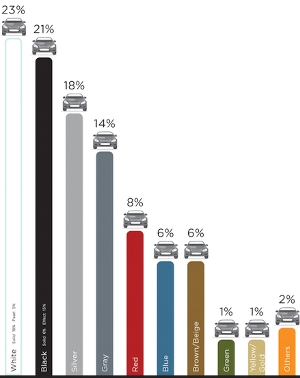
    For the past 60 years, DuPont has released their Automotive Color Popularity Report. This year, they found that globally 23% of all vehicles are white. White was also the top color in 2011. Apparently, this is the only report that looks at all global automotive color popularity and regional trends.

    An article on Aftermarketnews.com says that while white/pearl has held steady over the past decade and is popular among most car segment. Historically though, it has been most popular in the truck segment.

    Apparently, what has finally pushed it over the top if the pearl color which is gaining popularity in luxury cars.

    White Most Popular Vehicle Color-Chart

    White reigns supreme again as the most popular vehicle color in the world.

    “Today, white tri-coats are more readily applicable to the global manufacturing base and evoke quality and value among a variety of vehicle segments,” according to Nancy Lockhart, DuPont color marketing manager. “Solid whites have been seen in vanilla shades, stone shades and the current preference of bright whites.”

    Black though is still a top choice and is widely popular in China. Silver wasn’t that far behind.

    “Silver peaked during the start of the digital age between 2000 and 2006,” said Lockhart. “We’re seeing more luxury vehicle purchases now that the economy has started to stabilize, and vehicles painted black/black effect are seen as luxury status symbols in several key global markets.”

    While this report is proof that white is a popular choice, we think Tundra pickups look great in all colors. How about you? What color is your truck?

    Related Posts:

    Search terms people used to find this page:

    • white pearl trucks
    • toyota tundra white purl
    • tacoma 2014
    • awesome white truck
    • toyota tacoma 2014
    • paint colors for trucks
    • most popular truck colors
    • 2014 tundra
    • 2013 Automotive Color Chart
    • toyoato truck 2014

    The post White Most Popular Vehicle/Truck Color Again appeared first on Tundra Headquarters Blog.

  • UCLA Urology receives $4.6 million gift to fund education, research and clinical services

    The UCLA Department of Urology has received a $4.6 million gift from the estate of Frank and Dorothy H. Clark, longtime benefactors who helped to create leading-edge pediatric and adult urology centers in Westwood and Santa Monica.
     
    The gift, from the Clarks’ testamentary trust, will help endow the Clark Urology Centers at UCLA’s Westwood and Santa Monica campuses, said Dr. Mark Litwin, chair of the urology department.
     
    “Frank was a tireless supporter of our faculty and programs in urology, and I am honored to have witnessed the relationship he forged with us,” Litwin said. “This generous and unconditional gift, the first installment of Frank’s bequest to the Clark Urology Centers, will support the department’s ongoing research, educational and clinical endeavors and is sure to inspire new innovations leading to improved treatments and, ultimately, cures for various urologic conditions.”
     
    In addition to supporting the Clark Urology Centers for adults in Santa Monica and Westwood, Clark played a critical role in the creation, in 1993, of the Clark Morrison Pediatric Urology Center, which enables UCLA to provide a comprehensive approach to the care of children with congenital conditions. The center’s goal is to minimize a child’s discomfort and stress while streamlining the diagnostic and treatment process.
     
    “These are shining examples of how, throughout his life, Frank remained an invaluable advocate and adviser to our department, as well as a consummate supporter of the university,” Litwin said.
     
    A UCLA alumnus, Frank Clark attended Hastings College of the Law but was called to active military duty in 1941, after Pearl Harbor was attacked. He served five years in the Office of Naval Intelligence and returned to Hastings after his discharge, graduating in 1946 as valedictorian. He served as executive vice president and general counsel to the May Department Store Co. for more than 25 years.
     
    In 1980, Gov. Jerry Brown appointed Clark to the University of California Board of Regents, on which he served for more than 20 years, including a stint as its chair. In 2004, he received the UCLA Medal, the university’s highest honor awarded to an individual.
     
    When Clark died in 2008 at the age 90, his planned gift was set into motion. Dorothy Clark was well taken care of, but when she died in 2011, the majority of his remaining estate was bequeathed to the urology department.
     
    A gift of similar size will be made to the department next year, Litwin said.
     
    UCLA Urology consistently ranks among the top five in the nation the annual survey published by U.S. News & World Report. The department also has ranked first in competitive research funding from the National Institutes of Health for the last two years. The department focuses on translational research — bringing the best basic science from the laboratory bench to the bedside to the community.
     
    For more news, visit the UCLA Newsroom and follow us on Twitter.

  • NASA’s Strategic Direction and the Need for a National Consensus

    Cover imageThe National Aeronautics and Space Administration (NASA) is widely admired for astonishing accomplishments since its formation in 1958. Looking ahead over a comparable period of time, what can the nation and the world expect of NASA? What will be the agency’s goals and objectives, and what will be the strategy for achieving them? More fundamentally, how will the goals, objectives, and strategy be established and by whom? How will they be modified to reflect changes in science, technology, national priorities, and available resources?

    In late 2011, the United States Congress directed the NASA Office of Inspector General to commission a “comprehensive independent assessment of NASA’s strategic direction and agency management.” Subsequently, NASA requested that the National Research Council (NRC) conduct this independent assessment. In the spring of 2012, the NRC Committee on NASA’s Strategic Direction was formed and began work on its task. The committee determined that, only with a national consensus on the agency’s future strategic direction—along the lines described in the full NRC report—can NASA continue to deliver the wonder, the knowledge, the national security and economic benefits, and the technology that have been typified by its earlier history. NASA’s Strategic Direction and the Need for a National Consensus summarizes the findings and recommendations of the committee.

  • New From NAP 2013-01-02 16:56:50

    Final Book Now Available

    On August 8-12, 2010 the National Academy of Engineering (NAE), with funding from the National Science Foundation (NSF), convened the Colloquy on Minority Males in Science, Technology, Engineering, and Mathematics (STEM), following the release of several reports highlighting the educational challenges facing minority males. The NSF recognized the need to gather input from research communities that focus on minority males about how to frame investigations of gender-based factors that impact learning and choice in STEM education (both at the precollege and higher education levels) and the workforce for minority males. There was particular interest in framing a research agenda to study how interactions between minority males and societal and educational systems (both formal and informal) encourage or discourage the young men’s interest and persistence in STEM. In addition, NSF hoped to gain community input to inform the parameters of a future NSF research program that could effectively address minority male participation in STEM. The Colloquy was held at the Mt. Washington Conference Center in Baltimore, Maryland, with approximately 40 participants, most of them researchers in education, psychology, sociology, mathematics, and physics.

    Colloquy on Minority Males in Science, Technology, Engineering, and Mathematics presents a summary of the Colloquy’s breakout and plenary discussions, which addressed (a) research questions articulated in the breakout groups together with theories and methodologies to begin to address these questions; and (b) considerations for a potential research solicitation for the NSF, with major areas of inquiry concerning access, participation, and success for minority males in STEM.

    This report reflects the views of the individuals who participated in the plenary and breakout groups. It has been reviewed in draft form by persons chosen for their diverse perspectives and expertise in accordance with procedures approved by the National Academies’ Report Review Committee. The purpose of this independent review is to provide candid and critical comments that will assist the institution in making its published report as sound as possible and to ensure that the report meets institutional standards for quality and objectivity.

    [Read the full report]

    Topics: |

  • Abrahamson named CIO at Pacific Northwest National Laboratory

    Brian Abrahamson, an information technology veteran with extensive experience in both the public and private energy sectors, has been named chief information officer for the Department of Energy’s Pacific Northwest National Laboratory.

    The CIO reports to the laboratory director and directs the deployment, use, management and protection of information technology to increase PNNL’s research productivity and operational effectiveness. Abrahamson is replacing Jerry Johnson, who will take on a new role with DOE.

    Abrahamson joined PNNL in 2011 and has served as chief enterprise architect at PNNL, responsible for leading a laboratory-wide improvement agenda that enhanced PNNL’s information technology systems. Prior to joining PNNL, Abrahamson acted as CIO and chief architect for San Francisco-based Pacific Gas and Electric Company, one of the nation’s largest investor-owned utilities. He also spent 10 years with the management consulting organization Accenture and has several years’ experience working in industry.

    Johnson, who joined PNNL in 1978 and has been CIO since 2004, will take on the role of senior policy and technical advisor to the Office of the Chief Information Officer at DOE. DOE requested the move as the agency works to refine its approach to cyber security and transform its information technology infrastructure and services. Johnson will remain on staff at  PNNL and split his time between Richland and Washington, D.C.

    Commenting on Johnson’s move, PNNL Director Mike Kluse said, “This is a win for DOE, PNNL and all of the national laboratories. DOE is getting a senior advisor with recent, relevant experience in cyber security, and he will help provide solutions that will guide DOE’s future information technology environment.” 

    Under Johnson’s leadership, PNNL was recognized as a CIO 100 award winner in 2008 and 2009, and was named to the InformationWeek 500 list — an annual ranking of the most innovative companies employing information technology in their businesses — five consecutive years. Johnson has been twice named to the InformationWeek Government CIO 50 list, a compilation of top CIOs in federal, state and local government.

    “In the modern workplace, information technology has the potential to transform the way we work, both internally and with our partners.  The perspective Brian brings from working with industry leading companies makes him well suited to take the baton from Jerry and capitalize on the laboratory’s IT investment so we can effectively tackle national challenges in energy, national security, environment and science,” said  Kluse. “He has demonstrated outstanding leadership and vision, has an ability to build strong partnerships and has a clear focus of what’s necessary to enable research.”

    Abrahamson has served in a leadership capacity on several committees in the utilities industry, including the Edison Electric Institute’s Technology Advisory Committee.  He previously served on the advisory board for Habitat for Humanity, and looks forward to getting involved locally in civic and economic development efforts in southeast Washington state.  He earned  a bachelor’s degree in computer science from Gonzaga University in Spokane.

  • New From NAP 2013-01-02 00:00:00

    Final Book Now Available

    The National Aeronautics and Space Administration (NASA) is widely admired for astonishing accomplishments since its formation in 1958. Looking ahead over a comparable period of time, what can the nation and the world expect of NASA? What will be the agency’s goals and objectives, and what will be the strategy for achieving them? More fundamentally, how will the goals, objectives, and strategy be established and by whom? How will they be modified to reflect changes in science, technology, national priorities, and available resources?

    In late 2011, the United States Congress directed the NASA Office of Inspector General to commission a “comprehensive independent assessment of NASA’s strategic direction and agency management.” Subsequently, NASA requested that the National Research Council (NRC) conduct this independent assessment. In the spring of 2012, the NRC Committee on NASA’s Strategic Direction was formed and began work on its task. The committee determined that, only with a national consensus on the agency’s future strategic direction—along the lines described in the full NRC report—can NASA continue to deliver the wonder, the knowledge, the national security and economic benefits, and the technology that have been typified by its earlier history. NASA’s Strategic Direction and the Need for a National Consensus summarizes the findings and recommendations of the committee.

    [Read the full report]

    Topics:

  • News story: G8 events

    Updated: Updated after the event

    G8 wider events

    6 June – Social Impact Investment Conference

    Social impact investments are financial investments that not only have economic benefits, but also focus on generating a positive impact on society. The Social Impact Investment Conference was set up to help boost the growing social impact investment market – by exploring issues such as; how we can enable the market to operate effectively on a global scale, and how we can develop the role of social impact investing to help international development.
    Throughout the day there was a trade fair to showcase the UK’s social investment market, as well as sessions to discuss the latest innovations in the market.

    8 June – Nutrition for Growth: Beating Hunger through Business and Science

    The UK government and the Children’s Investment Fund Foundation (CIFF) co-hosted this high-level international meeting. The event focused on reducing stunting and improving nutrition for pregnant women and young children. Countries, donors, foundations, businesses and civil society came together to accelerate action on ambitious targets, and on this significant day world leaders signed a global agreement to help beat hunger and malnutrition.

    We will also work with a range of companies to both assess the progress and expand the reach of the G8 New Alliance for Food Security and Nutrition.

    The event followed on from the UK-Brazil Hunger Summit held in London last summer, which highlighted the devastating consequences of under nutrition on children.

    12 June – G8 Science Meeting

    Science Ministers and Presidents of the Science Academies in G8 countries met to discuss the role of science in tackling global challenges. At the top of the agenda was dealing with global challenges, namely antibiotic resistance in medicine, and how governments can work together to develop new antibiotics and employ them more wisely.

    They also discussed other pressing global challenges, including climate change, energy security and neurodegenerative diseases like Alzheimer’s.

    Following the meeting, the group issued a statement, signed by all G8 members.

    14 June – Innovation Conference

    The Innovation Conference brought together today’s leading innovators, from the G8 and beyond. Openness to ideas and technologies from across the spectrum of business and society is essential for us to find solutions to the greatest challenges facing the world.
    With unique capabilities for taking a broad approach to innovation, the UK’s researchers, businesses and social enterprises will have central roles in global initiatives. From public policy to science and technology, this conference facilitated conversations that influence the dialogue throughout the UK G8 Presidency.

    Read more on the G8 Innovation Conference here.

    15 June – Open for Growth: Trade, Tax and Transparency event

    This pre-Summit event involved wider discussions on trade, tax, and transparency with business, civil society and governments. It showed why open governments, open societies and open economies are essential for growth, jobs and sustainable development. Discussions centred on how we can work together to promote and practise fairer trade, proper taxes and more transparent investment in land, minerals, oil and gas.

    Read more about the event and its outcomes here.

    Read more on the UK’s Presidency of the G8

    Follow the UK’s G8 Presidency on Twitter

  • Evaluation of the Lovell Federal Health Care Center Merger: Findings, Conclusions, and Recommendations

    Cover imageThe 2010 opening of the Captain James A. Lovell Federal Health Care Center (FHCC) created a joint entity between the Department of Defense (DoD) and the Department of Veterans Affairs (VA) that replaced two separate centers in North Chicago. VA and DoD leaders envisioned a state-of-the-art facility that would deliver health care to both DoD and VA beneficiaries from northern Illinois to southern Wisconsin, providing service members and veterans seamless access to an expanded array of medical services. Unprecedented for the military and the VA, the Lovell FHCC would integrate clinical and administrative services under a single line of authority.

    The DoD asked the IOM to evaluate whether the Lovell FHCC has improved health care access, quality, and cost for the DoD and the VA, compared with operating separate facilities, and to examine whether patients and health care providers are satisfied with joint VA/DoD delivery of health care.

    Evaluation of the Lovell Federal Health Care Center Merger: Findings, conclusions, and Recommendations finds that initial implementation of the Lovell FHCC has provided important lessons about how to integrate VA and DoD health care services and has identified remaining obstacles that the departments could overcome to make such mergers more effective and less costly to implement. The IOM recommends that the VA and the DoD develop a comprehensive evaluation plan to objectively judge its success or failure, with measurable criteria, that would provide essential knowledge for both the Lovell FHCC and future endeavors.

  • Renewable Energy Law News – Week of December 31


    Virginia utilities, lawmakers to reform renewable energy policy

    Virginia lawmakers, environmental groups and utilities are working to revamp the state’s 2007 Electric Utility Re-Regulation Act, which is designed to bolster renewable energy generation.

    Stakeholders want to reform loophole in the law allows utilities to receive financial credit for renewable energy investments made outside of Virginia.

    A November report released by Virginia Attorney General Ken Cuccinelli found that renewable energy standards introduced in 2007 did not address environmental concerns in the state and also led to consumer bill increases over the past five years. The report noted that utilities have purchased RECs from existing renewable generation rather than investing in new development.

    But Cuccinelli, who is currently a candidate for governor, did not blame the utilities for the lackluster results and said in a release that they should “not be criticized for making beneficial business decisions based on choices provided or incentives offered by the law.”

    Virginia environmental groups echoed that sentiment.

    Wind power deadline sees US firms rush to build turbines

    US energy companies are racing to install wind turbines before a federal tax credit expires at the end of this year.

    Experts say that wind power has exceeded the construction of natural gas plants in recent months.

    However the financial incentive for wind could be lost as congress struggles to avoid financial deadlock.

    Even if the credit is extended it is expected that new installations will decline in 2013.

    According to industry analysts, the federal government’s production tax credit has played an important role in the expansion of wind energy across the US since it was first introduced in 1992. 

    Photo via Flickr.
     

  • Toyota Settles $1.1 Billion Class-Action Lawsuit – Not a Big Deal

    The media has been swarming lately with Toyota’s tentative settlement of a class-action lawsuit around the unintended acceleration hub-bub a few years ago. Frankly, it really isn’t that big of a deal. Here’s why.

    Toyota Settles $1.1 Billion Class-Action Suit

    Toyota’s announced settlement of a $1.1 Billion class-action lawsuit isn’t that big of a deal. It is a smart public relations move, that’s all.

    Before we begin, we have to reiterate that the unintended acceleration claim has largely turned out to be bogus. Despite NASA and several National Highway Traffic Safety Administration tests and experiments, no one has been able to replicate the issue. About the only thing that has come out of this issue is that a floor mat might have been to blame.

    Now yes, there are plenty of people who say they had an issue with Toyota’s accelerating out of control, we just haven’t had any proof.

    Why would Toyota then settle this class-action suit? It is a brilliant Public Relations move. Follow along here, Toyota could argue all day and night that the unintended acceleration issue is a hoax. There is no proof and it is simply driver error. Great, yet, that would mean Toyota is going to piss off a lot of potential customers. Rather, why not settle in a smart way. This way, hopefully those same customers will someday change their mind and come back to Toyota. The settlement really benefits Toyota then.

    Look at the details of the settlement for proof of Toyota winning:

    • $250 million for customers who sold or turned-in lease vehicles at a loss.
    • $250 million in payments for owners whose vehicles can’t use the brake override system
    • $200-400 million to retrofit vehicles with brake override system*
    • $400 million for extended warranties
    • $200 million in court and legal fees

    *Toyota will also retrofit a brake override system for its cars and fund new research into advanced safety technologies (win for Toyota).

    This list of upgrades, extensions and payments is really Toyota’s way of saying that while we can’t find the problem, we will do whatever we can to stand by our customers. Toyota gets that they can’t win a public relations fight with the public on the problem. However, they can spend a chunk of change to take care of jilted owners.

    Don’t mistake what we are saying. Toyota isn’t always perfect and they are prone to making mistakes. However, they have at many times helped out their customers by extending warranties like in the air pump extension and rusted frames. This is really smart on their part. And $1.1 Billion really isn’t that big of a deal in the long-term. Toyota has the money and this will not slow them down.

    In the end, the recalls, the media coverage and the extensive testing related to this issue haven’t affected the brand’s image, according to a study, nor have they stopped Toyota from being the largest car maker in the world. Toyota is simply taking the necessary steps to move on from this publicity.

    What do you think? Have does this settlement affect Toyota in your mind?

    Related Posts:

    Search terms people used to find this page:

    • toyota tacoma 2014
    • 2014 toyota tacoma
    • lift kit for toyota tundra 2012
    • 2013 toyota tundra lifted
    • toyota logo
    • 2014 toyota
    • toyota hilux with lift kit for sale
    • 2014 silverado lift kit
    • toyota tundra lift comparison
    • toyota truck 2014

    The post Toyota Settles $1.1 Billion Class-Action Lawsuit – Not a Big Deal appeared first on Tundra Headquarters Blog.

  • Making Sense of Ballistic Missile Defense: An Assessment of Concepts and Systems for U.S. Boost-Phase Missile Defense in Comparison to Other Alternatives

    Cover imageThe Committee on an Assessment of Concepts and Systems for U.S. Boost-Phase Missile Defense in Comparison to Other Alternatives set forth to provide an assessment of the feasibility, practicality, and affordability of U.S. boost-phase missile defense compared with that of the U.S. non-boost missile defense when countering short-, medium-, and intermediate-range ballistic missile threats from rogue states to deployed forces of the United States and its allies and defending the territory of the United States against limited ballistic missile attack.

    To provide a context for this analysis of present and proposed U.S. boost-phase and non-boost missile defense concepts and systems, the committee considered the following to be the missions for ballistic missile defense (BMD): protecting of the U.S. homeland against nuclear weapons and other weapons of mass destruction (WMD); or conventional ballistic missile attacks; protection of U.S. forces, including military bases, logistics, command and control facilities, and deployed forces, including military bases, logistics, and command and control facilities. They also considered deployed forces themselves in theaters of operation against ballistic missile attacks armed with WMD or conventional munitions, and protection of U.S. allies, partners, and host nations against ballistic-missile-delivered WMD and conventional weapons.

    Consistent with U.S. policy and the congressional tasking, the committee conducted its analysis on the basis that it is not a mission of U.S. BMD systems to defend against large-scale deliberate nuclear attacks by Russia or China. Making Sense of Ballistic Missile Defense: An Assessment of Concepts and Systems for U.S. Boost-Phase Missile Defense in Comparison to Other Alternatives suggests that great care should be taken by the U.S. in ensuring that negotiations on space agreements not adversely impact missile defense effectiveness. This report also explains in further detail the findings of the committee, makes recommendations, and sets guidelines for the future of ballistic missile defense research.

  • Exploring Health and Environmental Costs of Food: Workshop Summary

    Cover imageThe U.S. food system provides many benefits, not the least of which is a safe, nutritious and consistent food supply. However, the same system also creates significant environmental, public health, and other costs that generally are not recognized and not accounted for in the retail price of food. These include greenhouse gas (GHG) emissions, soil erosion, air pollution, and their environmental consequences, the transfer of antibiotic resistance from food animals to human, and other human health outcomes, including foodborne illnesses and chronic disease. Some external costs which are also known as externalities are accounted for in ways that do not involve increasing the price of food. But many are not. They are borne involuntarily by society at large. A better understanding of external costs would help decision makers at all stages of the life cycle to expand the benefits of the U.S. food system even further. The Institute of Medicine (IOM) and the National Research Council (NRC) with support from the U.S. Centers for Disease Control and Prevention (CDC) convened a public workshop on April 23-23, 2012, to explore the external costs of food, methodologies for quantifying those costs, and the limitations of the methodologies.

    The workshop was intended to be an information-gathering activity only. Given the complexity of the issues and the broad areas of expertise involved, workshop presentations and discussions represent only a small portion of the current knowledge and are by no means comprehensive. The focus was on the environmental and health impacts of food, using externalities as a basis for discussion and animal products as a case study. The intention was not to quantify costs or benefits, but rather to lay the groundwork for doing so. A major goal of the workshop was to identify information sources and methodologies required to recognize and estimate the costs and benefits of environmental and public health consequences associated with the U.S. food system. It was anticipated that the workshop would provide the basis for a follow-up consensus study of the subject and that a central task of the consensus study will be to develop a framework for a full-scale accounting of the environmental and public health effects for all food products of the U.S. food system.

    Exploring Health and Environmental Costs of Food: Workshop Summary provides the basis for a follow-up planning discussion involving members of the IOM Food and Nutrition Board and the NRC Board on Agriculture and Natural Resources and others to develop the scope and areas of expertise needed for a larger-scale, consensus study of the subject.

  • Tundra Headliner Removal – A DIY Guide

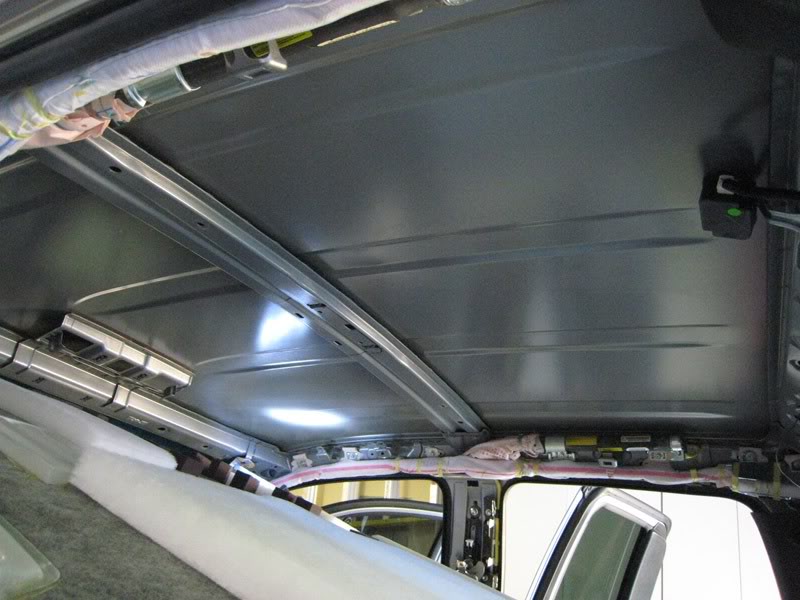
    Removing the headliner in your Tundra is technically sort of “easy”– it’s just very, very time-consuming. If you’re wondering why you’d remove the headliner:

    1. You might want to replace your existing stained or sagging headliner
    2. You’re looking to add sound-proofing or insulation

    Here’s a step-by-step guide to headline removal with photos.

    How to Remove a Tundra Headliner


    What You’ll Need:

    • Socket wrench
    • Small flathead screwdriver
    • Electrical tape
    • Patience. If you’ve got an extra set of hands, you can knock this out in a few hours.  If you’re flying solo– don’t make any plans for the rest of the morning.

    How to Remove Your Tundra’s Headliner

    Removing your headliner is a slow, systematic process.  You’re about to have a lot of small pieces.  Lose a single bolt and you’ll be listening to an incessant rattle in your cabin.  Since you’ve already got your electrical tape out, tape the bolts or screws to the plastic caps.  Lay all the pieces out together and avoid the urge to start shoving bits in random pockets.

    Start at the A-Pillar

    Step 2: how to locate the bolts and remove a-pillar

    Step 1: Cover the tip of a small flathead screwdriver with electrical tape. This will keep the metal from scratching the plastic when you use it to pry open plastic caps.

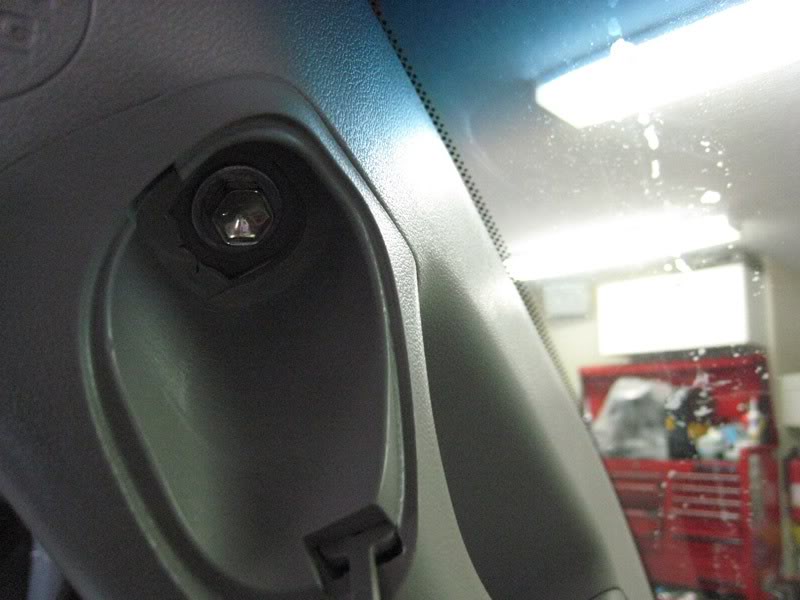
    Step 2: Remove the plastic cover on the A-pillar to reveal the 2 hidden 10mm bolts.

    Step 2: Remove the hidden bolts in the A-pillar

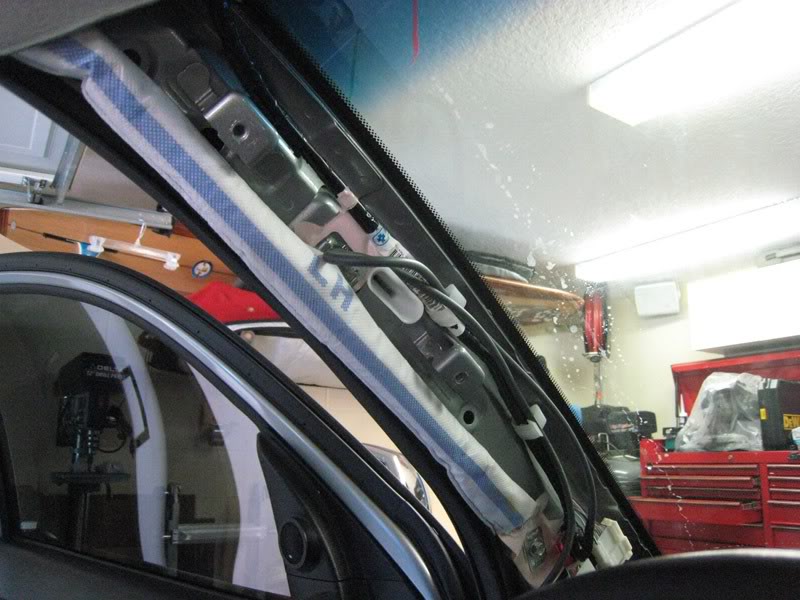
    Once they’re removed, the A-pillar simply lifts out.

    Step 2: Lift and release the A-pillar to remove.

    Remove the B-Pillar

    Step 3: How to loosen the bolts in the B-pillar

    Step 3: Work your way back to the B-pillar. Free the plastic covers on the handle and unfasten the two bolts.

    Step 3: Remove the bolts located in the handles

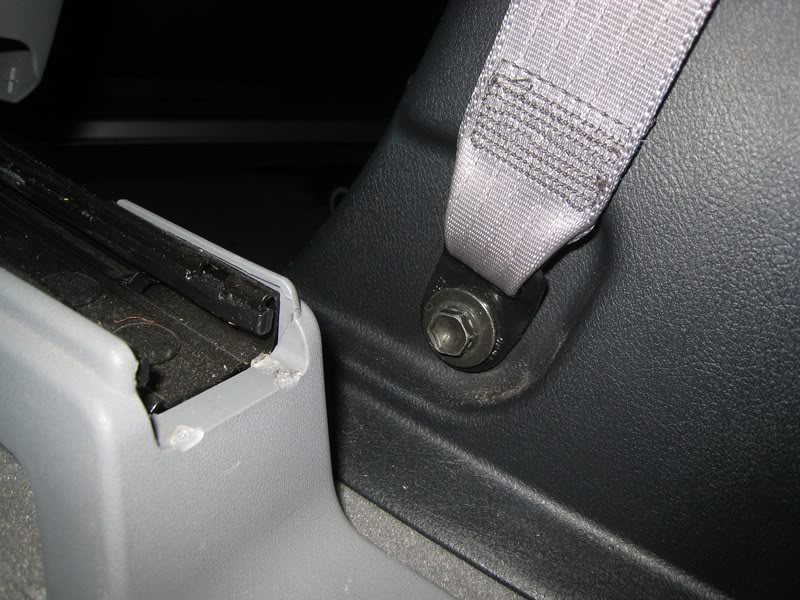
    Step 4: Down by the seat tracks, you’ll find the seat bolt hidden by a plastic cover. Remove the bolt. Release the lower half of the B-pillar by carefully unlatching the small white clips.

    Step 4: Remove the Seat Belt Bolt

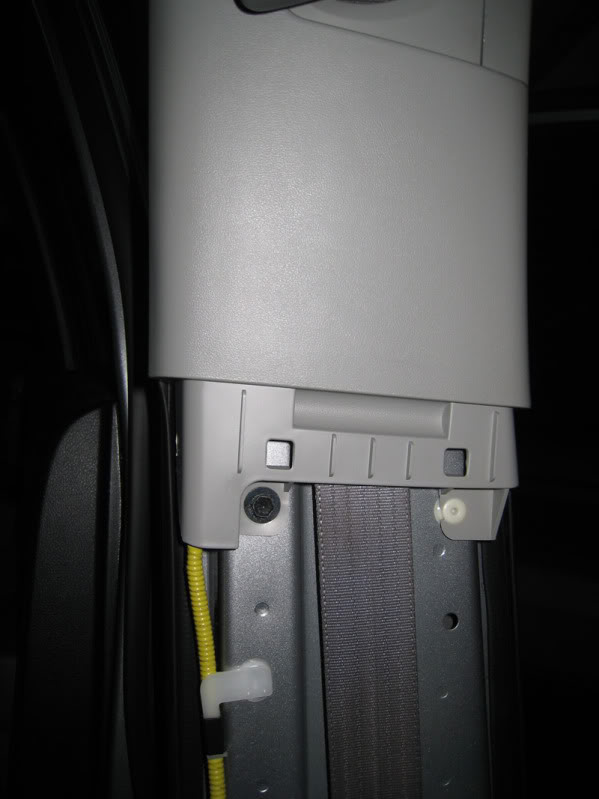
    Step 5: Once the lower portion is off, you’ll be able to remove the 10mm bolt holding the upper portion of the B-pillar to the steel. Pop out the upper portion of the B-pillar by releasing the clip next to the screw and pushing the tab at the top.

    Step 5: Remove the upper portion of the B-pillar

    Loosen the C-Pillar

    Step 6: Loosen the C-Pillar

    Step 6: You won’t need to remove the C-pillar, only loosen it enough to pull the headliner out. Remove the plastic cap that serves as the SRS Curtain airbag badge. Remove the bolt.

    Step 6: Find the C-Pillar bolt under the SRS badge

    NOTE: At this point, it’s important to mention that monkeying around with your trim panels isn’t without risk. If you screw-up the re-installation, you could reduce the effectiveness of your Tundra’s side curtain airbags. Granted, the risks here are small, but it’s not something you should do unless you’re going to be careful.

    Remove the Hanger Hooks, Passenger Handle, and Driver’s Overhead Cover

    Step 8: Remove hangers, passenger handles, and other accessories

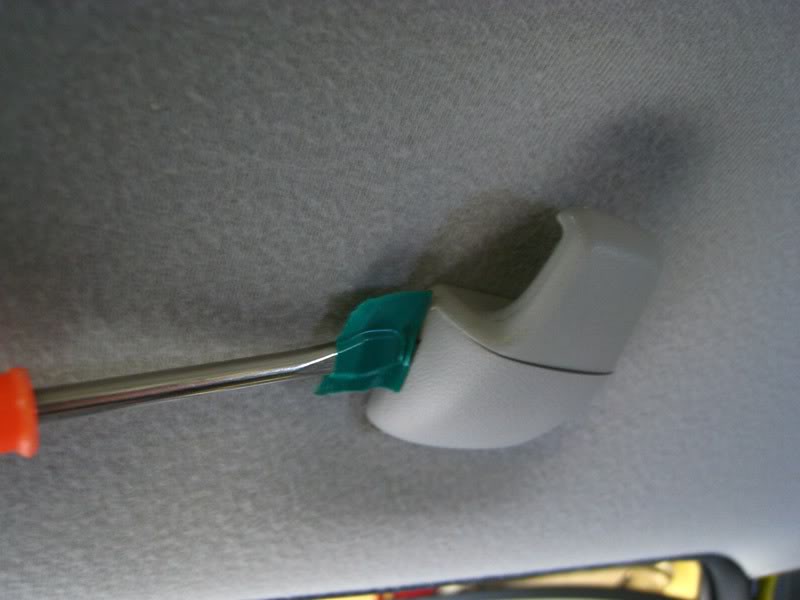
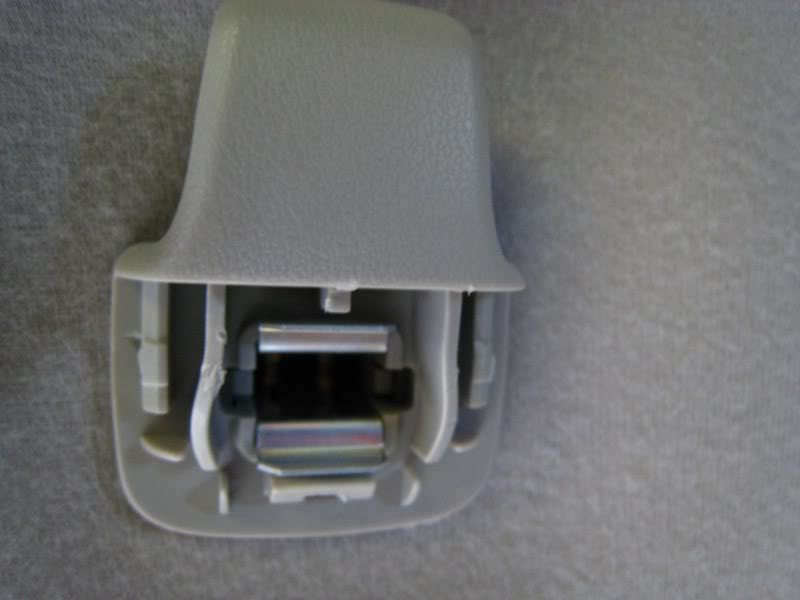
    Step 7: Each of these pieces is held in place by metal clips. Start in the backseat with the hanger hooks. Using your tape-covered flathead screwdriver to pry off the plastic cap. The metal hooks pop out easily with your screwdriver. Work your way through the passenger handle and driver’s overhead cover.

    Step 7: Remove headliner attachments by popping out the metal clip

    Detach the Sun Visors

    Step 8: How to remove your sunvisor

    Step 8: Remove the plastic cover on the main assembly and unfasten the 3 torx screws. Remove the lone screw located under the sun visor clip.

    Step 8: Remove the sunvisor

    If you have a vanity light, disconnect the wiring harness.

    Separate the Overhead Console

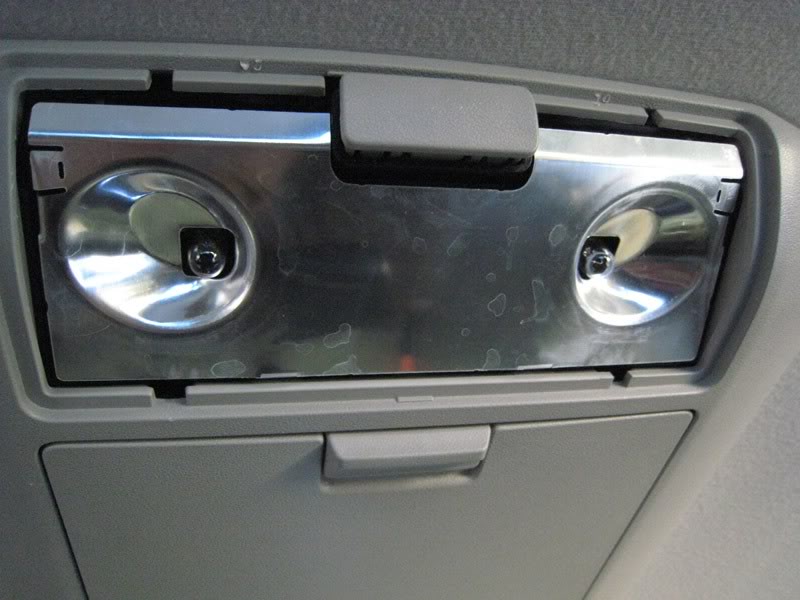
    Step 9: There are 6 torx screws holding the overhead console in place. To access the two hidden underneath the rear light assemble, pop off the dome cover with your screwdriver.

    Step 9: Remove the screw located behind the Cabin light.

    Pull off the metal plate and you’ll see 2 screws in the corners.

    Step 9: Remove the overhead consoling by removing the 6 screws.

    Step 10: Open the business card compartment and remove the two screws hiding in the back.

    Step 10: Remove the screws located in the business card compartment

    Step 11: The last two screws holding the overhead console in place are hidden behind the back up camera housing. Pop out the housing with a firm tug and remove the remaining screws.

    Step 11: Remove the back-up camera housing to access the last 2 screws

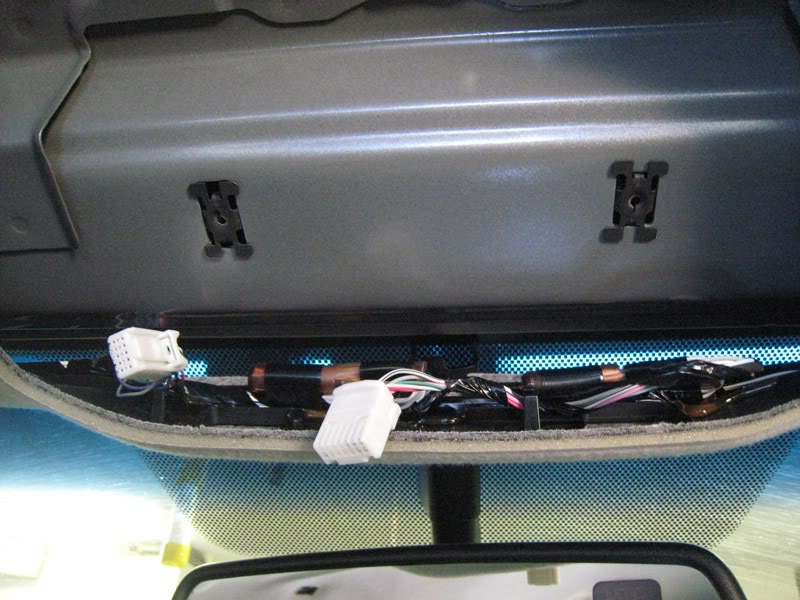
    Step 12: Unplug the wiring plug harness(es)– you may have two– and carefully set the overhead console aside.

    Step 12: Unplug the wiring harness and remove the overhead console

    Remove the Door Trim Molding and Remaining Clips.

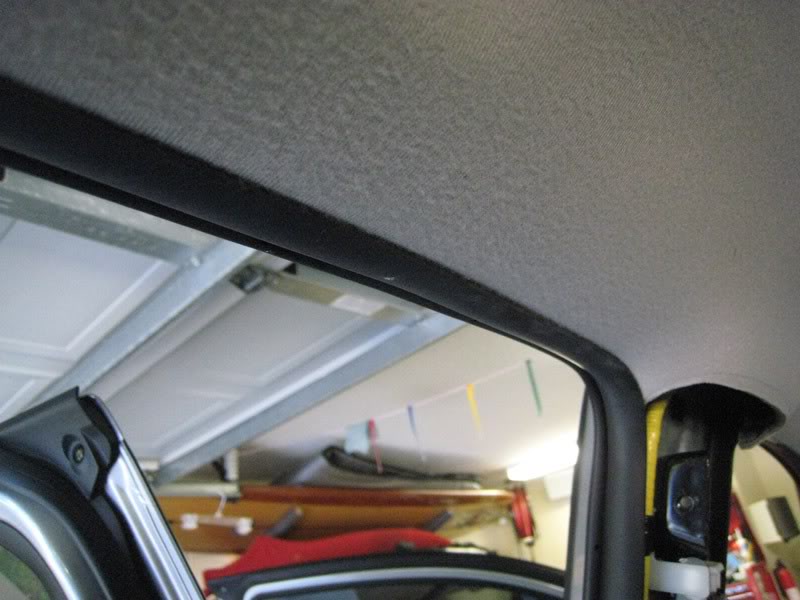
    Step 13: At this point, your headliner is held in place by door trim molding and 4 small white clips in the rear. Start with the clips, then slowly release the headliner from the door molding.

    Step 13: Remove the Door Trim Molding and Clips


    Congratulations!  You removed your headliner with the patience of a samurai.  To reinstall your headliner, reverse the process.

    Many Thanks to TundraSolutions member Jumbo Jet for his original DIY: Headliner Removal post and images.

    Search terms people used to find this page:

    • new toyota tundra redesign 2014
    • how to remove a headliner from a 2011 toyota tundra
    • 2014 tundra
    • toyota hilux lift kit
    • hidden compartments for hilux pickups
    • how to remove headliner tundra
    • 2014 toyota tundra spy
    • tundra endeavour bumper sticker
    • tundra maintenance
    • new toyota tundra 2014

    The post Tundra Headliner Removal – A DIY Guide appeared first on Tundra Headquarters Blog.

  • New From NAP 2012-12-28 00:00:00

    Final Book Now Available

    The U.S. food system provides many benefits, not the least of which is a safe, nutritious and consistent food supply. However, the same system also creates significant environmental, public health, and other costs that generally are not recognized and not accounted for in the retail price of food. These include greenhouse gas (GHG) emissions, soil erosion, air pollution, and their environmental consequences, the transfer of antibiotic resistance from food animals to human, and other human health outcomes, including foodborne illnesses and chronic disease. Some external costs which are also known as externalities are accounted for in ways that do not involve increasing the price of food. But many are not. They are borne involuntarily by society at large. A better understanding of external costs would help decision makers at all stages of the life cycle to expand the benefits of the U.S. food system even further. The Institute of Medicine (IOM) and the National Research Council (NRC) with support from the U.S. Centers for Disease Control and Prevention (CDC) convened a public workshop on April 23-23, 2012, to explore the external costs of food, methodologies for quantifying those costs, and the limitations of the methodologies.

    The workshop was intended to be an information-gathering activity only. Given the complexity of the issues and the broad areas of expertise involved, workshop presentations and discussions represent only a small portion of the current knowledge and are by no means comprehensive. The focus was on the environmental and health impacts of food, using externalities as a basis for discussion and animal products as a case study. The intention was not to quantify costs or benefits, but rather to lay the groundwork for doing so. A major goal of the workshop was to identify information sources and methodologies required to recognize and estimate the costs and benefits of environmental and public health consequences associated with the U.S. food system. It was anticipated that the workshop would provide the basis for a follow-up consensus study of the subject and that a central task of the consensus study will be to develop a framework for a full-scale accounting of the environmental and public health effects for all food products of the U.S. food system.

    Exploring Health and Environmental Costs of Food: Workshop Summary provides the basis for a follow-up planning discussion involving members of the IOM Food and Nutrition Board and the NRC Board on Agriculture and Natural Resources and others to develop the scope and areas of expertise needed for a larger-scale, consensus study of the subject.

    [Read the full report]

    Topics: | |

  • Sport can lead the way for young women everywhere

    Do you have your own special space where you feel free? When I’m in the pool it’s ‘Becky’s World’ and no matter what is going on around me, I can just be myself. And in Zambia I visited a place where women – against all odds – can also be free to be themselves.

    Handling expectation is something I’ve had to learn to deal with in and out of the pool, but I know that the resilience you build through sport can help in other parts of your life. In Zambia girls are expected to grow up to be a mother or a housewife, but they are now also being given the chance to challenge these expectations through sport.

    In Zambia I visited a programme called ‘Go Sisters’ where I saw young women organise football, volleyball and netball matches for each other. Like I did through swimming, the sport was helping close friendships to be made, so it was nice that I was able to visit Go Sisters with two of my swimming friends – gold medallists Jo Jackson and Mel Marshall.

    Rebecca in the pool with girls from the Go Sisters programme. Picture: Mel Paramasivan

    Together we got involved in all the sport that was happening and heard from some of the girls about how sport has changed their lives. Linda Schcinda, one of the Go Sisters working on the programme said, “One of the main reasons we use sport is so that we can attract all these participants and impart different skills in them.”

    The girls enjoying their time. Picture: Mel Paramasivan

    It’s true. Sport can bring people from all walks of life together. You only have to look at the Olympics and Paralympics to see how a whole country can be united by sport. The opportunity to learn new skills is true also. As a swimmer I’ve learned not just technical skills, but also how to communicate, be disciplined and always give everything I’ve got.The girls we saw were giving it their all. Even though some were looking after families at home or came from poor backgrounds, they made time to organise activities and teach girls about the importance of leading their own lives.

    Female leaders in sport or any other field have a lot to teach to us. Jo and Mel are two people who are just so inspiring and have had an amazing impact in women’s swimming. The three of us were lucky to find swimming clubs when we started competing but for girls in Zambia it is not always easy to find a girls’ football or volleyball club. Go Sisters makes sure that all girls have access to this by organising activities in schools and communities.

    Go Sisters also trains ‘peer leaders’ who reach out within the community to encourage others girls to start playing sport as well as using sport to increase self-esteem and teach about issues like HIV/AIDS. Linda Schcinda said: “Girls have gone through Go Sisters and become recognised in their school and community and because of this, they have been linked to school or study scholarships.”

    Girls fromGo Sisters playing a netball match. Picture: Mel Paramasivan

    For Linda, joining Go Sisters means that sport has become her career and it is opening up a world of opportunity for her, just as swimming has done for me. The opportunities I have had are beyond those I had dreamed of as an 11 year old in the pool.

    Regardless of whether these women become Olympians or not, they are inspiring other young women in their community to get out there and use sport to change their lives. The doors for women are opening around the world and whether in the UK or Zambia, women are building new futures.

     “Go Sisters” is an EduSport initiative aimed at empowering girls by training and equipping them with skills and knowledge to pursue equality. It strives to empower girls by building physical resources, giving social recognition and challenging some traditional gender myths. Young girls are enrolled in sports programs where some of them are trained to become Youth Peer Leaders who are in charge of facilitating their groups’ sports and life skills activities.

    The programme is managed by International Development through Sport (IDS) the charity partner of UK Sport. For more information visit: www.uksport.gov.uk/pages/ids/

    —————————————————————————————————-

    Please note, this is a guest blog. Views expressed here do not necessarily represent the views of DFID or have the support of the British Government.


  • A National Strategy for Advancing Climate Modeling

    Cover imageAs climate change has pushed climate patterns outside of historic norms, the need for detailed projections is growing across all sectors, including agriculture, insurance, and emergency preparedness planning. A National Strategy for Advancing Climate Modeling emphasizes the needs for climate models to evolve substantially in order to deliver climate projections at the scale and level of detail desired by decision makers, this report finds. Despite much recent progress in developing reliable climate models, there are still efficiencies to be gained across the large and diverse U.S. climate modeling community. Evolving to a more unified climate modeling enterprise-in particular by developing a common software infrastructure shared by all climate researchers and holding an annual climate modeling forum-could help speed progress.

    Throughout this report, several recommendations and guidelines are outlined to accelerate progress in climate modeling. The U.S. supports several climate models, each conceptually similar but with components assembled with slightly different software and data output standards. If all U.S. climate models employed a single software system, it could simplify testing and migration to new computing hardware, and allow scientists to compare and interchange climate model components, such as land surface or ocean models. A National Strategy for Advancing Climate Modeling recommends an annual U.S. climate modeling forum be held to help bring the nation’s diverse modeling communities together with the users of climate data. This would provide climate model data users with an opportunity to learn more about the strengths and limitations of models and provide input to modelers on their needs and provide a venue for discussions of priorities for the national modeling enterprise, and bring disparate climate science communities together to design common modeling experiments.

    In addition, A National Strategy for Advancing Climate Modeling explains that U.S. climate modelers will need to address an expanding breadth of scientific problems while striving to make predictions and projections more accurate. Progress toward this goal can be made through a combination of increasing model resolution, advances in observations, improved model physics, and more complete representations of the Earth system. To address the computing needs of the climate modeling community, the report suggests a two-pronged approach that involves the continued use and upgrading of existing climate-dedicated computing resources at modeling centers, together with research on how to effectively exploit the more complex computer hardware systems expected over the next 10 to 20 years.

  • Happy Christmas


    Thank you to everyone who stills follows Egyptology News via Twitter.  
    Particular thanks, also, to everyone who was so supportive when Egyptological was hacked. I’ll keep you posted about where we are with it, during January.


  • Gangnam Style influencing

    The world is definitely changing.

    The song “Gangnam Style“, made in Korea and sung in Korean, has gone to number 1 in the UK, number 2 in the US, and has broken the record for being the “most viewed” video on you tube, with over one billion views. It is also being parodied all over the world. There’s my personal favourite –  a Ghanaian version, as well as a Nigerian-British version and a Saudi Arabian version. It’s been used by Amnesty International and Anish Kapoor, an Indian-born British sculptor, to publicise the need for freedom of speech globally, following a ban of a separate Gangnam parody by the controversial Chinese Writer Ai Weiwei.

    The origins of Gangham Style are themselves interesting. This article describes how the song has some relatively subversive messages about debt and inequality in Korea’s society, which may well resonate in many other countries around the world.

    However rebellious or relevant the message, the fact is that Korea is having a dramatic influence on the music industry. The world is changing. It’ no longer just European or US artists dominating the world’s music charts. Others are coming in too.

    There’s a similar phenomenon taking place in development. Korea’s influence is being felt. Take climate change and green growth which I used to work on, and was the subject of negotiations earlier this month in Doha, Qatar. Korea was and is a major player in this arena. The country continues to spend 2% of GDP per year -that’s over $20bn – on specific green growth measures. It has been the first country to set up a Global Green Growth Institute to help other countries follow its path. And one of the positive outcomes at Doha was that countries agreed that Korea should set up the new Green Climate Fund in the futuristic, eco-smart city of Songdo during the second half of 2013.


    Promoting the Green Climate Fund, Gangnam Style

    Korea has also influenced the area I now work on. Just over a year ago, Korea hosted a major conference in Busan, initially billed as focused on “aid effectiveness”. As I’ve set out in a previous blog, aid effectiveness conferences had been held prior to this in Rome, Paris and Accra, but none of them had managed to gain the trust and involvement of countries such as China and India. Korea did. Partly as a result of actively bringing in these partners into the discussion, the Busan conference actively changed its focus on aid effectiveness to a focus on development effectiveness, which was a much wider and broader concept that countries such as China, Brazil and even countries like Colombia and Nigeria better recognised. Korea, and the wide range of countries it helped bring in, made a permanent impact.

    Earlier this month, Justine Greening, DFID’s Secretary of State, alongside ministers from Nigeria and Indonesia co-chaired a meeting to follow up that agreement in Busan. It was the first Steering Committee of the Global Partnership for Effective Development Cooperation. Korea was present, representing countries outside the EU that “provide” development cooperation, such as Australia or the Gulf States. As is clear to see in the videos of the meeting, Korea played a constructive role. Korea helped in deciding when the Steering Committee would next meet (in March and June/July next year) and agree plans for a bigger ministerial meeting in October 2013. Korea also helped address the vexing question of what change and success for development that the Partnership, now that it is formed, might deliver. In doing so, the Committee agreed to look at four to five initial topics, which they will be writing papers on in the coming weeks and will be shared and discussed with the international community. In my next few blog posts, I’ll try to explain these topics, and what they might mean in terms of our real lives.

    For now though, it’s clear that Korea has and will continue to make an impact. That’s a signal that the world is changing, and work on development is, rightly, changing along with it too. My hope is that we will build on Korea’s achievements and look back on the Ministerial next year as ground-breaking too. Let’s bring on the Gangnam Style!