Blog

  • What is candied ginger?

    Candied ginger

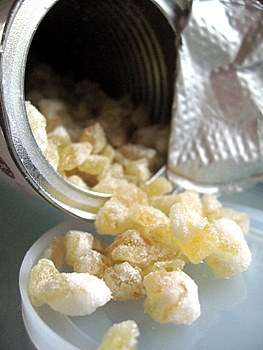
    There are many ways to get a spicy, gingery flavor into baked goods. One of the easiest is to add dried, ground ginger right into your batter or dough, just as you might add in ground cinnamon or any other dried spice. This adds a lot of flavor, but if you want even more of a gingery bite, opt for grating in fresh ginger, which has a stronger flavor. My favorite way to increase the ginger flavor in a baked good or other sweet recipe is to add in candied, or crystallized, ginger.

    Candied ginger is thinly sliced ginger that has been cooked in a sugar syrup until it becomes sweet and tender. It retains its gingery bite, but it takes on a sweetness that ginger just doesn’t have by itself. Once prepared, the ginger can be used as it is, or it can be dipped in sugar to add a crisp, sweet coating. After it has been cooked, the ginger is easy to slice and can be diced up with a knife and added to recipes. Unlike fresh ginger, which can have a flavor that is a little too aggressive for some cookie (and other sweet) recipes in big chunks, adding chunks of candied ginger to a cake or cookie can add a lot of spice tempered by just the right amount of sweetness.

    I always assumed that candied ginger was ginger that was simply cooked in syrup and crystallized ginger was the type that was dipped in sugar. Some producers label their products that way, but it seems as though the two terms can be used almost interchangeably. The products can definitely be used interchangeably in recipes.  I’ll still use “crystallized ginger” in my recipes because I like that extra sweetness and crunch that that sugary coating adds to the spicy bite of the ginger.

  • Google Buzz support officially comes to webOS


    Google has officially brought Buzz support to webOS, as announced through its Mobile Blog.  To access the mobile Buzz site, simply point your browser to buzz.google.com, and you’re automatically brought to the "plain HTML" version. Scrolling to the bottom of the page allows you to toggle between the full desktop version and the mobile version pictured above.  Previous to this, webOS users had to use a special link in order to force the mobile site to work.

    It’s great to see Google’s continuing support of webOS – let’s see some enhanced Maps functionality for the platform next!

    Thanks to Phil, Editor of AndroidCentral and WMExperts

  • T-Mobile and Samsung to announce something ‘major’ in July?

    Not a whole lot to go on for this rumor, but BGR just posted a two-liner saying that a source of theirs from Samsung told them ” they’re working with T-Mobile on a “major” product launch for the month of July.”  Could it be the Samsung Galaxy S?  Perhaps the I897 with T-Mobile’s 3G frequencies?  What about that spiffy HSDPA+ goodness available in some markets?  All of the above sound great to me!  What do you guys think?

    Via BGR


  • Bonhams auction at Aston Martin Works Service most successful yet

    Filed under: , , ,

    11th Annual Bonhams Auction at Aston Martin Works Service – Click above for high-res image gallery

    If you want to get your hands on a pristine or historically significant vintage Aston Martin, there’s only one place to go: Bonhams‘ auction at the old Works Service in Newport Pagnell. Think of it as the Aston equivalent to RM’s event at Maranello every year. It’s been held for the past 11 years running, and this year’s was the most successful yet with £4.7 million ($6.8M USD) in sales.

    Among the lots that rolled across the auction block were a 1950 DB2 raced by Sir Stirling Moss (£513,000/$740k) and a mint-condition ’68 DB6 that went for £124,700 ($180k). The Goldfinger DB4 sold for a more modest £84,000 ($121k) – but even that doubled it’s low £40-50k pre-sale expectations, capping a day of sales far exceeding their estimated values. Details in the press release after the jump.

    [Source: Bonhams]

    Continue reading Bonhams auction at Aston Martin Works Service most successful yet

    Bonhams auction at Aston Martin Works Service most successful yet originally appeared on Autoblog on Fri, 28 May 2010 09:01:00 EST. Please see our terms for use of feeds.

    Permalink | Email this | Comments

  • Gary Coleman On Life Support

    Oh no…We’re heading into Memorial Day Weekend with a serious case of The Sads. Troubled ex-child star Gary Coleman has slipped into a coma and is on life support in the Intensive Care Unit of a Salt Lake City hospital, his spokesman John Alcantar confirmed to Salt Lake ABC affiliate KABC on Friday.

    Gary is best remembered for his stint on TV’s Diff’rent Strokes, which aired from 1978 to 1986.

    The 42-year-old entertainer was hospitalized with severe brain bleeding after falling in his surburban Utah home on Wednesday. ABC News says Coleman suffered intracranial hemorrhage and has been slipping in and out of consciousness since doctors performed emergency surgery on his brain two days ago.

    Gary’s no stranger to health woes. The actor was born with congenital kidney disease, which requires frequent dialysis, and has undergone two kidney transplants. He suffered two seizures — one on the set of the TV newsmagazine The Insider – early in the year.

    Gary’s wife, Shannon Price, remains by his side.

    Sending prayers and good vibes to Gary…..


  • Suicides At Foxconn Prompt Cartoons, Raises, No-Suicide Pledge

    Is Foxconn, the huge electronics company that manufactures for global brands such as HP, Dell, and Apple (yes, they make the iPad and iPhone) a towering fortress of secrecy where employees cower in fear, ten people to a dorm room, or a normal manufacturing outfit that has had a weird cluster of employee suicides recently?

    Ten Foxconn employees have committed suicide in the last year, and five in the last month alone. The first that attracted major media attention in recent months was a 25-year-old man who claimed that company security officers accused him of stealing an iPhone prototype and beat him.

    The company has responded to the damage to its image with promises to improve management techniques and working conditions, a rumored 20% raise for factory workers, and asking employees to sign a pledge not to kill themselves.

    But is there another reason for the suicides–a demographic one, that has nothing to do with problems specific to Foxconn? One expert thinks so.

    Jing Jun, a sociology professor at Tsinghua University in Beijing and one of the experts Foxconn invited here, dismissed the idea that the company’s labor practices were to blame. He said the victims were young people, ages 18 to 24, almost all of whom had recently moved to Shenzhen from rural areas. He said he believed they struggled with personal problems and the challenges of adjusting to factory life.

    Professor Jing also offered a theory that widespread reports about the earlier suicides at Foxconn this year had created a contagion of copycats, particularly after rumors spread about the high compensation the company was paying some of the victims’ families. Some families had received about 100,000 renminbi, or a little more than $14,600, according to several Foxconn employees.

    Keep in mind that a Foxconn worker can expect to earn the equivalent of $46 per week.
    Have Foxconn’s labor practices been criticized before? Yes, even before the release of the iPhone.

    To look at how Chinese media are dealing with the controversy through cartoons, check out this M.I.C. Gadget post.

    Chinese factory asks for ‘no suicide’ vow [MSNBC]
    Hon Hai May Raise China Wages 20% as Suicides Mount [Bloomberg]
    Electronics Maker Promises Review After Suicides [NY Times]

    PREVIOUSLY:
    Your iPhone Comes From A Towering Fortress Of Secrecy And Paranoia
    Foxconn Nukes iPod City Journalists From Orbit
    iPod Factory Admits Breaking Chinese Labor Laws

  • Wilson Rothman, Signing Off [Announcements]

    Today is my last day at Gizmodo. It’s with a heavy heart that I bid farewell to all of you amazing readers. More »


    ShoppingTwitterMark WilsonJoel JohnsonHeroes

  • Palestinians on the screen

    A blend of documentary film and cinematic dream, the subtle and quiet works of Kamal Aljafari convey profound and unsettling emotions.

    The Benjamin White Whitney Scholar and Radcliffe-Harvard Film Study Center Fellow at the Radcliffe Institute for Advanced Study, Aljafari recently completed his film “Port of Memory” while at Harvard. The evocative work explores the lives of members of the Palestinian community living in the town of Jaffa, Israel. The haunting film captures the unrest and uncertainty of a handful of inhabitants as they struggle to cope with the area’s changing landscape, its new political realities, and their possible eviction.

    Aljafari’s works mirror his family’s own struggles with upheaval and displacement. His grandparents fled Jaffa during the 1948 Arab-Israeli War. After studying at the Hebrew University in Jerusalem, Aljafari left for Germany in 1998. While in Israel he started “going to the movies to escape my life,” he recalled. He eventually graduated from the Kunsthochschule für Medien (Academy of Media Arts) in Cologne, Germany, in 2003.

    His films are personal for another reason. Aljafari often casts his family in the leading roles. In “Port of Memory,” his uncle, aunt, and grandmother portray three of the main characters.

    “I am actually a filmmaker because of them. They are very cinematic,” said Aljafari. “I am very interested in working with non-actors who can help you create a cinematic voyage.”
    With its documentary feel and minimal narrative, “Port of Memory” poignantly chronicles the characters’ lives, often without words, for instance, letting the close-up image of a woman compulsively washing her hands, or of a man on a moped who stops periodically to emit a primal scream, evoke the picture’s rawest emotions.

    “They are dealing with very serious problems, which are troubling their minds and their souls,” said Aljafari of his film’s protagonists. “It is very much about the inner life of these characters, and more than what we can see and perceive in the images themselves.”

    The film premiered in March at the Centre Pompidou in Paris and won the Louis Marcorelles Award at the city’s Cinema du Reel. At the movie’s London screening, the international film magazine Sight & Sound called it “a work that can only be seen, not talked about; all that can be said is that it brings cinema to a place beyond the question of fiction, documentary, and video art. And it does so as if no camera were there, or there were a camera without a man. The invisibility here is of film itself.”

    His newest work is reminiscent of his 2006 picture, “The Roof.” The film, one reviewer wrote, uses “elegant cinematography, unhurried rhythms, and fragmented narrative to convey how space, time, and history have been molded by politics and Israeli-institutionalized neglect. The roof of the title is an absent one, on the unfinished house where his family has lived since resettling there in 1948, and it functions as a place of waiting marked by constant deferral.”

    “The Roof” won the Best International On Screen (Video) Award at the Images Festival in Toronto, and the award for best soundtrack at the FID Marseille documentary festival in France.

    Equally compelling is Aljafari’s exhibit titled “Not Without Me,” currently on view at the Radcliffe Institute’s gallery in Byerly Hall. The show consists of postcard-size still shots taken from the roughly 50 Israeli and American films that were made in Jaffa during the 1970s and ’80s.

    Often the setting for Chuck Norris action films of the era — with an American hero engaged in fierce battles with terrorists — Jaffa was cast “as a semi-ruined, nondescript anyplace,” Aljafari writes in the show’s notes. The films, the notes continue, “re-imagined the city as a stylized Middle Eastern backdrop for a larger battle between Western heroism and Oriental barbarism,” simultaneously ignoring the local population.

    “It’s totally crazy,” said Aljafari of the town’s cinematic history. “It’s like coming to Cambridge and making a film in Swedish, and acting as if no one in Cambridge exists.”
    His exhibit captures that incongruity with eerie precision, featuring many shots of onlookers, out of focus of the main frame, watching the surreal action of the filmmaking unfolding in front of them. The show contains only a fraction of the approximately 20,000 images he produced during his time at Harvard.

    Aljafari hopes to produce a book from the images and is at work on his next project, which he also plans to film in Jaffa.

    While he acknowledged that his work “can’t change political or social reality,” he said it can help him to express his feelings and share them with others.

    “I am very much interested in producing emotions and expressing emotions,” said Aljafari, “and communicating with people.”

  • Maybach 57S terá exclusiva versão cupê

    Maybach Cupê Xenatec

    Como a Maybach não estava tao interessada em desenvolver um versão cupê do sedã 57S, a empresa alemã especializada em preparação Xenatec a convenceu para fornecer o exclusivo modelo, sob a autorização de sua controladora, a Daimler.

    O design do modelo proposto (veja as imagens na matéria) foi aceito pela Daimler. Dessa forma, a Xenatec teve que se preocupar apenas em modificar a carroceria do sedã Maybach 57S, que recebeu mudanças em sua estrutura, portas, lateral e no teto. Isso porque o potente motor V12 bi-turbo de 6.0 litros e que desenvolve 612 cavalos de potencia original do sedã, é mais que suficiente para as vocações esportivas do cupê. Pra se ter uma ideia, ele equipa o Maybach 57S que acelera de 0 a 100 km/h em apenas 5,5 segundos e atinge a velocidade máxima de 275, com todo o peso e tamanho do veiculo.

    Além de seu visual mais esportivo, o Maybach cupê ainda disponibilizará como opcional dois jogos de rodas de 20 e 21 polegadas, realçando ainda mais seu visual. O modelo será limitado em 100 unidades, sendo que seus principais compradores estarão nos países Asiáticos, no Oriente Médio, Rússia e Estados Unidos, com um preço estima do em 650 mil euros, ou R$ 1,460 milhão.

    Maybach Cupê Xenatec
    Maybach Cupê XenatecMaybach Cupê Xenatec

    Fonte: AutoPortal


  • Try watermelon limeade from Emeril’s new summer cook (and no-cook) book

    Watermelon Limeade works straight or as a margarita mixer. (Photo: Emeril's Farm to Fork: Cooking Local, Cooking Seasonal)

    Watermelon Limeade works straight or as a margarita mixer. (Photo: Emeril's Farm to Fork: Cooking Local, Cooking Fresh)

    From Green Right Now Reports

    With temperatures hitting the 90s this May even in unlikely places like Connecticut, it’s time to think about slushy drinks.

    (And possible revisit the idea that global warming does exist?)

    The recipe below for Watermelon Limeade comes from food wizard Emeril Lagasse’s newest cookbook, Farm to Fork: Cooking Local, Cooking Fresh.

    You’ll need a healthy sized watermelon to make this one work, and it will help if you’ve got the blender working and the patio cushions plumped.

    After your refreshments, though, you may want to get back to work in the kitchen with Farm to Fork (HarperStudio Paperback Original; $24.99); June 1, 2010),, being released June 1, because it focuses on low-cook and no-cook recipes that make sense in the summer months on many levels. These recipes will help you and your kitchen keep cool, and their focus on fresh and local will make for healthier fare.

    Some of the recipes include Baby Limas, Green and Yellow Beans, and Teardrop Tomatoes with Mint Vinaigrette; Crostini with Ricotta and Spring Peas; and Tomato Tartare and Micro Greens with Shallot vinaigrette.

    Chef Emeril Lagasse is the chef/proprietor of thirteen restaurants across the country. He is a national TV personality, having hosted over 1,500 episodes of his shows on the Food Network, and serves as the food correspondent for ABC’s Good Morning America.

    In Farm to Fork, Emeril recalls his childhood experiences on a farm, and discusses the importance of using fresh, local foods.

    WATERMELON LIMEADE

    Great straight or paired with a premium white tequila.

    8 cups cubed watermelon (seeds removed) or 1 quart watermelon juice

    1 cup freshly squeezed lime juice

    ½ cup sugar, or more to taste

    Lime slices, for garnish, optional

    Place half of the watermelon cubes in a blender and process until smooth. Transfer to a fine-mesh sieve that has been placed over a large bowl and strain mixture into the bowl. (Discard solids.) Repeat with the remaining watermelon cubes; you should end up with about 1 quart of watermelon juice.

    Add the lime juice and sugar to the watermelon juice and stir until the sugar is dissolved. Taste and add more sugar if necessary. Transfer limeade to a nonreactive pitcher and refrigerate until thoroughly chilled. Serve in tumblers with lime slices for garnish.

    Yield: 5 cups watermelon limeade, 4 to 6 servings

  • Structure 2010 LaunchPad Presenter: Greenqloud, Iceland’s Clean Power Cloud Computing Co.

    There’s good and bad when it comes to all that geothermal activity in Iceland. Yes, the volcanos with unpronounceable names can spew ash and shut down air travel. But there’s also an abundance of electricity from geothermal power, which combined with hydrothermal power, means Iceland runs off of pretty much 100 percent clean energy. That’s the backbone for an entrepreneurial idea to create a green computing cloud courtesy of Icelandic startup Greenqloud.

    Greenqloud, which is one of the startups that will present at our cloud computing event Structure on June 23 and 24 in San Francisco, was created by Internet innovator Eirikur Hrafnsson (who is the CEO) and his co-founder Tryggvi Larusson and has been under development for about a year and a half. The idea is to rent space in data centers based in Iceland and sell cloud computing services to web companies and individuals all over the world that want to manage their carbon footprint and embrace clean power. The cloud computing services include virtual server hosting, data storage, scientific data processing and software as a service infrastructure.

    For those not familiar with cloud computing, it’s basically scalable computing services on demand; companies like Amazon are selling such services to startups and large web firms alike. Cloud computing will also contribute to a growth in the power consumption of IT and as Stanford Professor Jonathan Koomey pointed out at our Green:Net ’09 event, and Google’s Green Energy Czar Bill Weihl discussed at Green:Net 2010, there’s been an increased effort by Internet companies to add clean power and energy efficiency into the equation.

    Hrafnsson told me during an interview on Thursday that Greenqloud plans to launch its beta service by the fourth quarter of this year on a small scale. After that, Greenqloud wants to launch on a much larger, public scale in 2011. The company plans to hit break-even by year two of operation and become profitable by year three. It’s raised about a half a million dollars from angel investors in Iceland and is looking to raise another round of funding to launch its service on a wider scale.

    There are a few companies in the U.S. that have been working on somewhat similar ideas to combine clean power and computing, though they’re mostly straight green web hosting companies, while Greenqloud is offering green cloud computing. AISO.net offers solar-powered data center space, Greenest Host offers green web hosting, and companies like GoGreen Hosting, Sustainable Web Sites and ecoSky offer green web hosting based largely on carbon offsets. None of them seem to be printing money, suggesting the market for clean-powered web services isn’t exactly large at this point.

    But Greenqloud’s service could be more attractive than some of these green web ideas, largely because Hrafnsson says that the service can save cloud computing users money. While the majority of these green web companies offer a premium service– using the marketing of the green aspect to charge higher rates — Hrafnsson says that both clean energy and data center space in Iceland is actually quite cheap and abundant so the company can charge the same or lower rates.

    A large data center operator in Iceland like Verne Global (which Greenqloud is in discussions with) is able to offer a competitive 20-year fixed electricity rate, which protects the customer from volatile energy prices, and that is 100 percent clean power. Greenqloud plans to work with several data center operators, and Hrafnsson says there has been a recent “gold rush” in data center construction in Iceland — a combination of the devalued Kronor, the IT history of the country and the emission-free power grid.

    Hrafnsson says Iceland can also act as the hub between web companies offering services in Europe and the U.S. Web operators commonly pay for two cloud computing services — in Ireland for Europe, and in the U.S. for the U.S. — but because of Iceland’s go-between location it can offer one cloud computing service for both continents.

    If international carbon legislation does go into effect, the value of the Greenqloud service will rise dramatically. Already the UK’s Carbon Reduction Commitment has doubled energy operating costs and stopped people from building data centers in the region, according to Mike Manos, the VP of service pperations at Nokia. Koomey has said that if there was a carbon price of $19 per ton under a cap-and-trade system, a 130,000-square-foot data center that was powered by a coal-sourced utility could have to pay an additional $5 million.

    Clean-powered data centers have also started to become more important in terms of PR for web companies. Greenpeace launched a campaign to try to stop Facebook from using coal power for data centers, and recently released a report on how cloud computing companies need to play more of a leadership role for legislation around IT and energy.

    Overall the idea of Greenqloud is novel, but I see a few hurdles. There’s not much barrier to entry or a technology differentiator. So a data center operator, for example, or others could offer a similar service. So ultimately bringing in users to Greenqloud will be about marketing and branding, which can be expensive and daunting for Internet founder types. Also, we’ll see if cloud computing users will be willing to work with a startup in order to have a better carbon footprint. The majority of web companies just don’t care that much about clean power yet.

    For more research on clean power and the cloud check out GigaOM Pro (subscription required):

    Clean Energy and the Cloud, Redux

    Hot Topic: Green Data Centers

    Facebook’s Coal-Powered Problem

    Images courtesy of Greenqloud and courtesy of Ben Husmann’s photostream.


    Atimi: Software Development, On Time. Learn more about Atimi »

  • This Is Where Stinky Drywall Comes From

    The Consumer Product Safety Commission has released the names of the top manufacturers of stinky, dangerous drywall, which emits high levels of hydrogen sulfide (the source of its stinkiness). According to the agency, drywall from the manufacturers, all based in China, emitted hydrogen sulfide at levels up to 100x greater than samples from non-Chinese manufacturers.

    CPSC head Inez Tenenbaum said: “Homeowners who have problem drywall in their homes are suffering greatly. I appeal to these Chinese drywall companies to carefully examine their responsibilities to U.S. families who have been harmed and do what is fair and just.”

    The companies on the CPSC’s list are:

    • Knauf Plasterboard (Tianjin) Co. Ltd.: (year of manufacture 2005) China
    • Taian Taishan Plasterboard Co. Ltd.: (2006) China
    • Shandong Taihe Dongxin Co.: (2005) China
    • Knauf Plasterboard (Tianjin) Co. Ltd.: (2006) China
    • Taian Taishan Plasterboard Co. Ltd.: (2006) China
    • Taian Taishan Plasterboard Co. Ltd.: (2006) China
    • Shandong Chenxiang GBM Co. Ltd. (C&K Gypsum Board): (2006) China
    • Beijing New Building Materials (BNBM): (2009) China
    • Taian Taishan Plasterboard Co. Ltd.: (2009) China
    • Shandong Taihe Dongxin Co.: (2009) China

    Not all Chinese drywall had hydrogen sulfide problems. The CPSC also listed a number of Chinese companies whose drywall had “no detectible emissions” of the substance. List month, the CPSC issued recommendations to homeowners who have problem drywall, which can be summed up as “Rip it out. Now.”

    CPSC Identifies Manufacturers of Problem Drywall Made in China [Official release via Consumer Reports Safety]

    PREVIOUSLY: Gov Says All Stinky Chinese Drywall Should Be Gutted

  • Android Quick App – Sirius XM satellite radio

    Sirius XM Satellte Radio for Android

    Finally, for those of us waiting patiently for Sirius XM to bring satellite radio to Android, our day has come. The same satellite radio you’ve come to know and love in your car (it’s a life-saver) and on your desktop is now available on your Android phone.

    For those of you new to satellite radio, it’s a subscription server that has channel after channel of music as well as sports, entertainment, family and heath, comedy, news, pure talk radio, religion — just about anything and everything you could think of.

    The app itself is easy to use and hangs out in your notification tray, so you can access it easily while you’re off doing other things. About our only complaint is that it doesn’t work in landscape mode, and the app itself is named "Online," which makes it tricky to find in your app drawer at first.

    The Sirius XM app itself is free (download the app directly from Sirius here), but the service itself has a monthly fee (there are a number of packages available), though you can try it for 30 days free. More at SiriusXM.com, and more screen shots after the break. Thanks, Jay!

    This is a post by Android Central. It is sponsored by the Android Central Accessories Store

  • Stavins on Senate climate bill: “82% of the value of allowances accrue to consumers and public purposes, and some 18% accrue to covered, private industry.”

    Harvard economist Robert Stavins analyzes the American Power Act’s allowance distribution in this repost.  Here are his main conclusions:

    Going forward, many observers and participants in the policy process may continue to question the wisdom of some elements of the Kerry-Lieberman proposal, including its allowance allocation.  There’s nothing wrong with that.

    But let’s be clear that, first, for the most part, the specific allocation of free allowances affects neither the environmental performance of the cap-and-trade system nor its aggregate social cost.

    Second, we should recognize that the legislation is by no means a corporate give-away.  On the contrary, 82% of the value of allowances accrue to consumers and public purposes, and some 18% accrue to covered, private industry.  This split is roughly consistent with the recommendations of independent economic research.

    Finally, it should not be forgotten that the much-lamented deal-making for shares of the allowances for various purposes that took place in the deliberations leading up the announcement by Senators KerryLieberman was a good example of the useful, important, and fundamentally benign mechanism through which a cap-and-trade system provides the means for a political constituency of support and action to be assembled, without reducing the policy’s effectiveness or driving up its cost

    [JR:  What follows is Stavins’ full analysis from Harvard’s Belfer Center for Science and International Relations Blog.]

    As with the Waxman-Markey bill (H.R. 2454), passed by the House of Representatives last June, there is now some confusing commentary in the press and blogosphere about the allocation of allowances in the new Senate proposal — the American Power Act of 2010 — sponsored by Senator John Kerry, Democrat of Massachusetts, and Senator Joseph Lieberman, Independent of Connecticut.  As before, the mistake is being made of confusing the share of allowances that are freely allocated versus auctioned with (the appropriate analysis of) the actual incidence of the allowance value, that is, who ultimately benefits from the allocation and auction revenue.

    In this essay, I assess quantitatively the actual incidence of the allowance value in the new Senate proposal, much as I did last year with the House legislation.  I find (as with Waxman-Markey) that the lion’s share of the allowance value — some 82% — goes to consumers and public purposes, and only 18% accrues to covered, private industry.   First, however, I place this in context by commenting briefly on the overall Senate proposal, and by examining in generic terms the effects that allowance allocations have — and do not have — in cap-and-trade systems.

    The American Power Act of 2010

    You may be wondering why I am bothering to write about the Kerry-Lieberman proposal at all, given the conventional wisdom that the likelihood is very small of achieving the 60 votes necessary in the Senate to pass the legislation (particularly with the withdrawal of Senator Lindsay Graham — Republican of South Carolina — from the former triplet of Senate sponsors).  Two reasons.  First, conventional wisdoms often turn out to be wrong (although I must say that the vote count on Kerry-Lieberman does not look good, with the current tally according to Environment & Energy Daily being 26 Yes, 11 Probably Yes, 31 Fence Sitters, 10 Probably No, and 22 No).  Second, if the conventional wisdom turns out to be correct, and the 60-vote margin proves insurmountable in the current Congress, then when the Congress returns to this issue — which it inevitably will in the future  — among the key starting points for Congressional thinking will be the Waxman-Markey and Kerry-Lieberman proposals.  Hence, the design issues do matter.

    The American Power Act, like its House counter-part, is a long and complex piece of legislation with many design elements in its cap-and-trade system (which, of course, is not called “cap-and-trade” — but rather “reduction and investment”), and many elements that go well beyond the cap-and-trade system (sorry, I meant to say the “reduce-and-invest” system).  Perhaps in a future essay, I will examine some of those other elements (wherein there is naturally both good news and bad news), but for today, I am focusing exclusively on the allowance allocation issue, which is of central political importance.

    Before turning to an empirical examination of the Kerry-Lieberman allowance allocation, it may be helpful to recall some generic facts about the role that allowance allocations play in cap-and-trade systems.

    The Role of Allowance Allocations in Cap-and-Trade Systems

    It is exceptionally important to keep in mind what is probably the key attribute of cap-and-trade systems:  the particular allocation of those allowances which are freely distributed has no impact on the equilibrium distribution of allowances (after trading), and therefore no impact on the allocation of emissions (or emissions abatement), the total magnitude of emissions, or the aggregate social costs.  (There are some caveats, about which more below.)  By the way, this independence of a cap-and-trade system’s performance from the initial allowance allocation was established as far back as 1972 by David Montgomery in a path-breaking article in the Journal of Economic Theory (based upon his 1971 Harvard economics Ph.D. dissertation). It has been validated with empirical evidence repeatedly over the years.

    Generally speaking, the choice between auctioning and freely allocating allowances does not influence firms’ production and emission reduction decisions (although it’s true that the revenue from auctioned allowances can be used for a variety of public purposes, including cutting distortionary taxes, which can thereby reduce the net cost of the program).  Firms face the same emissions cost regardless of the allocation method.  When using an allowance, whether it was received for free or purchased, a firm loses the opportunity to sell that allowance, and thereby recognizes this “opportunity cost” in deciding whether to use the allowance.  Consequently, the allocation choice will not — for the most part — influence a cap’s overall costs.

    Manifest political pressures lead to different initial allocations of allowances, which affect distribution, but not environmental effectiveness, and not cost-effectiveness.  This means that ordinary political pressures need not get in the way of developing and implementing a scientifically sound, economically rational, and politically pragmatic policy.   With other policy instruments — both in the environmental realm and in other policy domains — political pressures often reduce the effectiveness and/or increase the cost of well-intentioned public policies.  Cap-and-trade provides natural protection from this.  Distributional battles over the allowance allocation in a cap-and-trade system do not raise the overall cost of the program nor affect its environmental impacts.

    In fact, the political process of states, districts, sectors, firms, and interest groups fighting for their share of the pie (free allowance allocations) serves as the mechanism whereby a political constituency in support of the system is developed, but without detrimental effects to the system’s environmental or economic performance.  That’s the good news, and it should never be forgotten.

    But, depending upon the specific allocation mechanisms employed, there are several ways that the choice to freely distribute allowances can affect a system’s cost.  Here’s where the caveats come in.

    Some Important Caveats

    First, as I said above, auction revenue may be used in ways that reduce the costs of the existing tax system or fund other socially beneficial policies.  Free allocations forego such opportunities.

    Second, some proposals to freely allocate allowances to electric utilities may affect electricity prices, and thereby affect the extent to which reduced electricity demand contributes to limiting emissions cost-effectively.  Waxman-Markey and Kerry-Lieberman both allocate a significant number of allowances to local (electricity) distribution companies, which are subject to cost-of-service regulation even in regions with restructured wholesale electricity markets.  Because the distribution companies are subject to cost-of-service regulation, the benefit of the allocation will ultimately accrue to electricity consumers, not the companies themselves.  While these allocations could increase the overall cost of the program if the economic value of the allowances is passed on to consumers in the form of reduced electricity prices, if that value is instead passed on to consumers through lump-sum rebates, the effect can be to compensate consumers for increased electricity prices without reducing incentives for energy conservation.  (There are some legitimate behavioral questions here about how consumers will respond to such rebates; these questions are best left to ongoing economic research.)

    Third, “output-based updating allocations” can be useful for addressing competitiveness impacts of a climate policy on particularly energy-intensive and trade-sensitive sectors, but these allocations can provide perverse incentives and drive up the costs of achieving a cap if they are poorly designed.  This merits some explanation.

    An output-based updating allocation ties the quantity of allowances that a firm receives to its output (production).  Such an allocation is essentially a production subsidy.  While this affects firms’ pricing and production decisions in ways that can, in some cases, introduce unintended consequences and increase the cost of meeting an emissions target, when applied to energy-intensive trade-exposed industries, the incentives created by such allocations can contribute to the goal of reducing emission leakage abroad.

    This approach is probably superior to an import allowance requirement, whereby imports of a small set of specific commodities must carry with them CO2 allowances, because import allowance requirements can damage international trade relations.  The only real solution to the competitiveness issue is to bring key non-participating countries within an international climate regime in meaningful ways, an obviously difficult objective to achieve.  (On this, please see the work of the Harvard Project on International Climate Agreements.)

    Is the Kerry-Lieberman Allowance Allocation a Corporate Give-Away?

    Perhaps unintentionally, there has been some potentially misleading coverage on this issue.  At first glance, about half of the allowances would be auctioned and about half freely allocated over the life of the program, 2012-2050.  (In the early years, the auction share is smaller, reflecting various transitional allocations that phase out over time.)  But looking at the shares that are auctioned and freely allocated can be very misleading.

    Instead, the best way to assess the real implications is not as “free allocation” versus “auction,” but rather in terms of who is the ultimate beneficiary of each element of the allocation and auction, that is, how the value of the allowances and auction revenue are allocated.  On closer inspection, it turns out that many of the elements of the apparently free allocation accrue to consumers and public purposes, not private industry.  Indeed, my conclusion is that over the period 2012-2050, less than 18% of the allowance value accrues to industry.

    First, let’s looks at the elements which will accrue to consumers and public purposes.  Next to each allocation element is the respective share of allowances over the period 2012-2050:

    I.  Cost Containment

    a.  Auction from cost containment reserve, 3.1%

    II.  Indirect Assistance to Mitigate Impacts on Energy Consumers

    b.  Electricity local distribution companies, 18.6%

    c.  Natural gas local distribution companies, 4.1%

    d.  State programs for home heating oil, propane, and kerosene consumers, 0.9%

    III.  Direct Assistance to Households and Taxpayers

    e.  Allowances auctioned to provide tax and energy refunds for low-income households, 11.7%

    f.  Allowances auctioned for universal tax refunds, 22.3%

    IV.  Other Domestic Priorities

    g.  State renewable and energy efficiency programs, 0.6%

    h.  State and local agency programs to reduce emissions through transportation projects, 1.9%

    i.  Grants for national surface transportation system, 1.9%

    j.  Auctioned allowances for Highway Trust Fund, 1.9%

    k.  Domestic adaptation, 1.0%

    l.  Rural energy savings (consumer loans to implement energy efficiency measures), 0.1%

    V.  International Funding

    m.  International adaptation, 1.0%

    VI.  Deficit Reduction

    n.  Allowances auctioned for deficit reduction, 7.4%

    o.  Remaining allowances auctioned to offset bill’s impact on deficit, 6.1%

    Next, the following elements will accrue to private industry, again with average (2012-2050) shares of allowances:

    I.  Allocations to Covered Entities

    a.  Energy-intensive, trade-exposed industries, 7.0%

    b.  Petroleum refiners, 2.2%

    c.  Merchant coal-fired electricity generators, 2.2%

    d.  Generators under long-term contracts without cost recovery, 0.9%

    II.  Technology Funding

    e.  Carbon capture and sequestration incentives, 3.8%

    f.  Clean energy technology R&D, 0.7%

    g.  Low-carbon manufacturing R&D, 0.3%

    h.  Clean vehicle technology incentives, 0.3%

    III.  Other Domestic Priorities

    i.  Manufacturing plant energy efficiency retrofits, 0.1%

    j.  Compensation for early action emissions reductions prior to cap’s implementation, 0.1%

    The bottom line?  Over the entire period from 2012 to 2050, 82.6% of the allowance value goes to consumers and public purposes, and 17.6% to private industry. Rounding error brings the total to 100.2%, so to be conservative, I’ll call this an 82%/18% split.

    Moreover, because some of the allocations to private industry are – for better or for worse – conditional on recipients undertaking specific costly investments, such as investments in carbon capture and storage, part of the 18% free allocation to private industry should not be viewed as a windfall.

    I should also note that some observers (who are skeptical about government programs) may reasonably question some of the dedicated public purposes of the allowance distribution, but such questioning is equivalent to questioning dedicated uses of auction revenues.  The fundamental reality remains:  the appropriate characterization of the Kerry-Lieberman allocation is that about 82% of the value of allowances go to consumers and public purposes, and 18% to private industry.

    Comparing the Kerry-Lieberman 82/18 Split with Recommendations from Economic Analyses

    The 82-18 split is roughly consistent with empirical economic analyses of the share that would be required – on average — to fully compensate (but no more) private industry for equity losses due to the policy’s implementation.  In a series of analyses that considered the share of allowances that would be required in perpetuity for full compensation, Bovenberg and Goulder (2003) found that 13 percent would be sufficient for compensation of the fossil fuel extraction sectors, and Smith, Ross, and Montgomery (2002) found that 21 percent would be needed to compensate primary energy producers and electricity generators.

    In my work for the Hamilton Project in 2007, I recommended beginning with a 50-50 auction-free-allocation split, moving to 100% auction over 25 years, because that time-path of numerical division between the share of allowances that is freely allocated to regulated firms and the share that is auctioned is equivalent (in terms of present discounted value) to perpetual allocations of 15 percent, 19 percent, and 22 percent, at real interest rates of 3, 4, and 5 percent, respectively.  My recommended allocation was designed to be consistent with the principal of targeting free allocations to burdened sectors in proportion to their relative burdens, while being politically pragmatic with more generous allocations in the early years of the program.

    So, the Kerry-Lieberman 82/18 allowance split (like the 80/20 Waxman-Markey allowance split) turns out to be consistent  — on average, i.e. economy-wide — with independent economic analysis of the share that would be required to fully compensate (but no more) the private sector for equity losses due to the imposition of the cap, and consistent with my Hamilton Project recommendation of a 50/50 split phased out to 100% auction over 25 years.

    The Path Ahead

    Going forward, many observers and participants in the policy process may continue to question the wisdom of some elements of the Kerry-Lieberman proposal, including its allowance allocation.  There’s nothing wrong with that.

    But let’s be clear that, first, for the most part, the specific allocation of free allowances affects neither the environmental performance of the cap-and-trade system nor its aggregate social cost.

    Second, we should recognize that the legislation is by no means a corporate give-away.  On the contrary, 82% of the value of allowances accrue to consumers and public purposes, and some 18% accrue to covered, private industry.  This split is roughly consistent with the recommendations of independent economic research.

    Finally, it should not be forgotten that the much-lamented deal-making for shares of the allowances for various purposes that took place in the deliberations leading up the announcement by Senators KerryLieberman was a good example of the useful, important, and fundamentally benign mechanism through which a cap-and-trade system provides the means for a political constituency of support and action to be assembled, without reducing the policy’s effectiveness or driving up its cost.

    Robert N. Stavins is the Albert Pratt Professor of Business and Government, Director of the Harvard Environmental Economics Program, and Chairman of the Environment and Natural Resources Faculty Group.

    Related posts:
  • Amnesty annual report decries ‘global justice gap’

    Photo source or description

    [JURIST] Amnesty International (AI) [advocacy website] on Thursday released its 2010 Annual Report [materials; press release], highlighting a “global justice gap” caused by influential governments avoiding accountability for human rights abuses. AI was critical of the actions of the Group of 20 (G20) nations, which it described as having a “particular responsibility to set an example,” and called on its members to join the International Criminal Court (ICC) [official websites]. The report stated that world governments had yielded to political pressures and used international organizations and alliances to shield themselves from accountability for violating international human rights standards. The report cited veto use by permanent members of the UN Security Council [official website] to prevent the international community from taking action on rights violations committed by permanent members and their allies. It also cited the failure of the UN Human Rights Council [official website] to address rights violations during the Sri Lankan civil war [JURIST new archive] due to complacency by Sri Lanka’s regional allies. In the accompanying press release, the organization elaborated:

    Repression and injustice are flourishing in the global justice gap, condemning millions of people to abuse, oppression and poverty. … Governments must ensure that no one is above the law, and that everyone has access to justice for all human rights violations. Until governments stop subordinating justice to political self-interest, freedom from fear and freedom from want will remain elusive for most of humanity.

    The report included criticism of human rights practices from all corners of the world, ranging from the treatment of aboriginal peoples by the Canadian government, to the rise of racism in Europe [JURIST reports] and extrajudicial killings in Latin America. Despite the ongoing failure of governments worldwide to uphold international human rights, the spread of universal jurisdiction [AI backgrounder] and the increasing applicability of international law made 2009 a landmark year for international justice, according to the report. The convictions of Alberto Fujimori and Reynaldo Bignone, the ICC arrest warrant issued for Sudanese President Omar al Bashir, the nearing conclusion of the Special Court for Sierra Leone, and the creation of a human rights body [JURIST reports] by the Association of Southeast Asian Nations were included as reasons for this.

    Last year, AI Secretary-General Irene Khan stated that the global economic crisis is exacerbating [JURIST report] the world’s human rights failures, urging governments to “invest in human rights as purposefully as they are investing in economic growth.” Khan spoke at the release of the 2009 annual report, which says that wealthy nations have overlooked “massive human rights abuses, entrench[ed] poverty and endanger[ed] regional stability,” while attempting to assemble economic recovery packages. Previous annual reports, including the 2008 report [JURIST report], have condemned US human rights violations in anti-terror efforts. The 2006 and 2007 reports [JURIST reports] were critical of the US and other “Western democratic states” for attempts “to roll back some fundamental principles of human rights” in their efforts to fight terrorism.

  • Canadian iPad Preorders delayed!

    As today should have bin the day that we would get the iPad.

    But for me and dozen others this is not gone happen. Even though I preorderd on May 10 at 4.30am this didn’t mean anything.
    The iPad 3G 64GB that I should have got today is still in a container in Toronto.

    Apple used FedEx to ship this shipment and although they have an electroinc tracking system this does not show any actual information. So we preorders where all tracking our packages as it went over the globe and now my ipad in the system states still that it will be deliverd today and it say it is in Memphis. But it it’s both not true it is in Toronto and probably gone be Monday before it makes it way to Calgary.

    And that while Apple says that FedEx is gone try to deliver it on the 29 the people at FedEx don’t seem to know about that.

    So Apple what does it mean if you preorder? I guess it just tells you how many extra iPad you had to make and the you can just not send it in time.

    As you get from this post you know that I am pretty mad about this…..

    Lets see what Apple is gone say.

  • Marvell join forces with OLPC for $ 75 tablet PC, XO-3

    Marvell join forces with OLPC for $ 75 tablet PC, XO-3One Laptop per Child (OLPC), creator of the hundred-dollar laptop, announced this week that they will debut   a prototype XO-3 computer two years ahead of schedule. The tablet will eventually cost 75 US dollars according to OLPC’s founder and chairman Nicholas Negroponte.

    OLPC will partner in this project with the U.S. semiconductor manufacturer Marvell.


    The Marvell Moby Tablet Platform has a low-power ARMADA 610 processor, 1080p full-HD encode and decode, Wi-Fi/Bluetooth/FM/GPS connectivity and support for multiple software standards like Adobe Flash, Android, Windows Mobile and Ubuntu.

    The first prototypes would most likely run Google’s Android operating system, but they said it’s ultimately an open source Linux laptop. The device will have a dual mode 9 inch display, one that works both in sunlight and backlit, and will require only one watt of electricity to operate.

    The first prototypes could be ready by January 2011 and the final XO-3, with the original design aspect in March 2012.

    Related posts:

    1. Dell launches Tablet PC, Streak with Android
    2. Ubuntu 10.04 Operating System Is Going To Be Released
    3. Google’s Android became the second most wanted

  • “Alias” Spinoff Headed For ABC?

    Concerned about the possible decline in viewers that may to follow this week’s Lost series finale, Word on the Curb claims ABC is in discussions to reboot J.J. Abrams’ Emmy-winning espionage thriller Alias, which starred Jennifer Garner as CIA agent Sydney Bristow and featured Victor Garber and Bradley Cooper in supporting roles.

    We hear producers are considering a new version of the series — which aired from 2001 to 2006 — that would borrow some elements of the original show.


  • Sprint to Release Motorola i1 Next Month for $150

    PhoneDog is reporting that the Motorola i1 will be arriving at Sprint’s doorstep on June 20th with a $149.99 price tag attached to it.  The ruggedized phone  is designed to withstand pretty much anything you can throw at it and features a 3.1-inch screen with a 5 megapixel camera.  Looking somewhat like a rounded off Motorola Cliq XT, the i1 is the first push-to-talk Android phone on the market.  As pointed out, the direct ship date of June 20 actually means that is the day it goes out to Sprint locations nationwide.  Expect a full launch shortly after.

    Might We Suggest…

    • Battle of the Network Stars

      When purchasing a new phone many of us are being faced with not only a question of a handset but a prospective betrothed wireless carrier for at least a two year term (this is/was the genius of th…


  • V-Moda Over-The-Ear Headphones [Vmoda]

    We may not all agree about V-Moda products’ quality, but most of us will admit that there’s something appealing about their funky designs. So for those who love the brand, there’s good news: V-Moda has finally started making over-the-ear headphones. More »


    HeadphonesIPhoneAudioShoppingApple