Taser has been accepted into the Google Glass Explorer program, TheNextWeb reports, which could help it make devices for police officers that build on technology the company is already using.
Check out this video for Taser’s AXON Flex:
And this one from TheVerge:
TheNextWeb spoke with Taser CEO Rick Smith:
Talking to us earlier this week, Smith suggested that automated vehicle number plate recognition and driving license recognition were obvious quick wins, with face recognition of wanted criminals and missing persons a possibility further down the road. “We see this shifting to more real-time applications over the next decade,” he said, adding that Taser is working towards a future in which police records are gathered in real-time, using technology like voice-to-text conversion to capture statements and other spoken evidence. The company plans to roll such tech into Evidence.com.
While using a third-party cloud solution may seem like an odd step for police forces to take with such sensitive data, Smith says that it allows the technology to be introduced much more easily, quickly and cheaply than if it had to be integrated on-site with existing IT systems at each force’s HQ. He says that 90-95% of the police forces using AXON Flex opt for using Evidence.com over integrating the cameras with their own systems. Data is protected with two-factor authentication logins (using Google Authenticator, SMS or email) and 256-bit SSL encryption.
Google has been conjuring up images of Terminator ever since it introduced Glass, but Robocop capabilities are starting to sound a lot more plausible. Of course, they’re still talking about using living people at this point (rather than corpses, as in the movie), so that’s comforting.
Maybe they should hold off on that Robocop remake a little longer, so it doesn’t seem dated immediately.
There are numerous applications (some of which are included right into the operating system) created to ease the life of computer users when it comes to searching for files. However, there are some faster standalone programs, which provide additional features, and one of them is Found.
Found is a lightweight utility available for free in the Ma… (read more)
Google doesn’t pretend to have every font you might want available in Google Web Fonts. Now, they’re pointing you to alternative sources when they don’t have what you’re looking for.
In a brief post the the Web Font Blog, Google software engineer writes:
We know that finding the right font for your website or blog is a personal choice, and there are many great fonts available to choose from on the web. Now when you search for a font that isn’t available on Google Web Fonts, we show you additional fonts available from Monotype. Each result is shown in the actual font so you can easily preview your options. To get more information on a font, simply click the link under it’s name.
Google says it is working to add results from more web font providers in the future.
PETMAN is a humanoid robot made by Boston Dynamics. BD also created Big Dog, the quadrupedal, brick-throwing robot that haunts our dreams.
This robot, shown here gussied up in a hazmat suit and gas mask, however, is far scarier. While I doubt he can do much right now without those cable support, just imagine PETMAN bopping up to you on a mission to keep you from entered a contaminated zone. First, he looks surprisingly life-like in this outfit and, second, he would be completely deaf to your entreaties. As they say, we’re living in the future. It’s just not evenly distributed yet.
Google put out a new Android Developers Office Hours hangout from this week. Watch it below if you have some hangout time. This one’s only about a half hour.
Several Google Chromebooks, particularly the lower-priced models, come with just 2 GB of memory and for some, that’s just not enough. What often happens is that as more browser tabs are opened, data on older tabs simply disappears. These tabs have to be refreshed and that’s not ideal, especially if those tabs are being used for any communications or media consumption.
The problem happens on Chromebooks with 4 GB of RAM as well, but much less often. Still, even on the Chromebook Pixel, I experience it from time to time. The good news is that regardless of your Chromebook model, one quick command line with a restart can definitely help. The solution uses zRam or compressed swap space and you can use it on a Chromebook because it’s part of Linux, which is the underlying core of a Chrome OS device.
Essentially, zRam creates a swap disk to virtually increase the amount of memory your system can use. This is a description from the zRAM / compressed cache project site:
“This project creates RAM based block device (named zram) which acts as swap disk. Pages swapped to this disk are compressed and stored in memory itself. Compressing pages and keeping them in RAM virtually increases its capacity. This allows more applications to fit in given amount of memory.”
Open up a terminal tab with the CTRL + ALT + T keys.
Type “swap enable” (without the quotes).
Restart your Chromebook.
That’s it! The change is persistent, meaning the swap file will stay active after each restart. If you want to disable it, just follow the same instructions but type “disable” instead of “enable.” And if you want to manage the actual size of the swap file, you can do that too: When enabling it, follow the command with a number representing the size of the swap file in megabytes.
I’ve used this function on several Chromebook models and have noticed that blank tabs are mostly a thing of the past, even after opening and closing dozens of tabs during a typical day.
In early February, Google introduced Enhanced Campaigns, which it described as an “evolution” of AdWords. While embraced by some advertisers, others do not like the direction Google has elected to take.
Microsoft, Google’s competitor in the space and a frequent critic of numerous Google practices, has now laid out its policy aimed at attracting advertisers who don’t like Google’s new model.
If you’re still unfamiliar with Enhanced Campaigns, here’s a look:
David Pann, GM of Microsoft’s Search Network, spoke to advertisers at a San Francisco Forum to address concerns Microsoft Advertising has heard around whether Bing Ads will go down a similar path as Google with Enhanced Campaigns. This is a legitimate concern, considering how Microsoft has been openly adapting other models that Google has embraced.
Microsoft is not going down the Enhanced Campaigns path ,however.
“While Enhanced Campaigns may seem to provide greater management efficiencies and improve mobile traffic, our customers have expressed worry that this change may in fact bring inefficiencies for more sophisticated advertisers or those with specific targeting needs,” a spokesperson for Microsoft tells WebProNews, echoing sentiments shared in a blog post from Pann.
During the forum, Pann expressed a commitment to “making it simple for small business advertisers to participate across devices while at the same time, enabling more sophisticated advertisers to have the fine grain targeting controls they require.”
At Bing Ads, we believe very strongly in giving advertisers the tools and flexibility to control their spending, target the most relevant audiences, and ensure they can get the best return on investment. We do not believe bundling mobile, desktop and tablet advertising together in an opaque manner is in the best interests of our customers.
Our own customers have been concerned whether we would sacrifice control for convenience, and our answer is no.
We are committed to reducing friction by providing advertisers with the transparency and controls needed to maximize campaign effectiveness. We strive to make it simple for small business advertisers to participate across devices and more sophisticated advertisers to have the fine grain targeting controls they require. Our stated goal of providing advertisers the ability to do in 15 minutes what it takes them 45 minutes to do on Google, should not – and does not – come with any caveats or loss of control.
Bing Ads believes in building long-term trust through consistency, expectancy and transparency.We know budgets and resources are limited – we want to enable our customers, not hinder them.
Bing Ads Platform Manager Dare Obasanjo discusses Microsoft’s policy in a separate post.
“With enhanced campaigns, fine-grained targeting by operating system, device model and carrier is no longer available,” writes Obasanjo. “More importantly, tablets and desktop PCs are now treated as a single entity. It is no longer possible to target an iPad or Kindle Fire user differently from a user of on Dell or HP desktop PC.”
“Another elimination of flexibility also occurs when it comes to targeting users on mobile devices. All search marketing campaigns in AdWords are now desktop/tablet targeted campaigns. The ability to target mobile devices is only available by augmenting certain aspects of a desktop/tablet campaign.”
Microsoft says it will be updating its product to ensure AdWords advertisers can “seamlessly” transition between both products, despite Bing’s absence of Enhanced Campaigns-like functionality.
One week from today, Apple’s smartphone goes on sale from the nation’s fourth-largest carrier. But you can order now. The 16GB iPhone 5 is available with T-Mobile USA’s new Simple Choice, no-contract plan. The device is $99.99 upfront, plus tax, and $20 per month for 24 months — or $579.99 outright. Full price elsewhere: $649. The 32GB is $199.99 and the 64 gigger $299.99 upfront and 24 monthly payments, or $679.99 and $779.99 outright, respectively. Full price elsewhere: $749 and $849.
By several measures, T-Mobile offers the most-affordable iPhone 5 around, but it’s the odd duck of the flock. Apple only sells devices for AT&T, Sprint and Verizon from its online and retail stores, which is advantageous sales placement. Perhaps T-Mobile’s status will change after official sales start, but I suspect the carrier will join regionals selling iPhone in the backwater. C`mon, none of the big three would want T-Mobile’s model listed alongside theirs for about $100 less.
Money down is another odd thing. Upfront pricing from the big three for 16GB, 32GB and 64GB iPhone 5 is $199, $299 and $399, with 2-year contract. T-Mobile not only asks for less at time of purchase, but there are no contracts, and no financing charges to pay off the phone. So when full price is reached, the bill goes down by $20 a month. With, say, AT&T, your bill stays the same after the contract commitment is complete.
Contract-free is another way this odd duck stands apart from larger rivals. They sell you iPhone at a lower subsidized price, with contract commitment. My soon-to-be old carrier, AT&T, charges considerably more, particularly for data, and plan is required for smartphones. Minimum: $20 for 300MB per month (cough, cough).
AT&T’s cheapest family plan starts at $59.99 per month for 550 minutes. For two lines, with minimum 300MB data for both phones ($40) and unlimited family messaging ($30) monthly bill is $129.99 for iPhone 5 (two). T-Mobile is $80 ($50 for first line and $30 for the second) and comes with unlimited talk and text and 500MB high-speed data and unlimited slower speed through end of the monthly bill cycle. Adding monthly fee for two iPhones, brings T-Mobile to $120, but for more of everything.
AT&T’s Mobile Share plan, with unlimited talk and text would be $130 ($40 for plan and $45 for each phone). T-Mobile’s bill would go up $20 a month ($10 for each line) for 2.5GB data and tethering or $140 for unlimited data. That 2.5GB is for each line versus 1GB shared from AT&T. Going up to the 4GB shared plan raises AT&T’s monthly commitment to $150 ($70 for the plan and $40 for each phone). Remember, if you bring your own phone, then T-Mobile is $40 less per month — that’s $100 for 2.5GB data for each of two lines or $120 for unlimited.
I ordered one black and one white 16GB iPhone 5 this morning, setting me back nearly $293, thanks to California’s outrageously high sales tax (yeah, I know it’s a pittance to many Europeans). The handsets are for my college-age daughter and 91 year-old father-in-law. I already moved over three lines. My total bill, even paying $40 a month for two iPhones, should be about one-third less with T-Mobile compared to AT&T.
One more odd thing: T-Mobile’s iPhone 5 includes the 1700MHz, which along with 2100MHz, supports the carrier’s HSPA+ network. Am I confused. No 1700MHz is the reason other iPhones unlocked and brought to T-Mobile can’t use the high-speed data network. If Apple can add the radio now, why not years ago? There is also 4G LTE, but coverage is limited to a handful of cities, for now.
Will Austin be the next city to get a gigabit network?
The City of Austin and Google are hosting an event next Tuesday on April 9, and sources in the city suspect it is related to a broadband announcement. As a resident whether or not we are getting Google Fiber is my first and most pressing question, but if this is a gigabit announcement, it has big ramifications beyond my personal broadband speeds.
The invitation reads:
You are a leader here in Austin. Every day, your work and contributions help make our community better and stronger. That’s why we want you to be one of the first to hear about something new coming to Austin. Please join Google and the City of Austin for an announcement on Tuesday.
It’s possible that Google’s invite is nothing more than an invitation to business leaders to hear about a new office or a pilot program for a Google service such as same-day delivery. However, Google has said that it is thinking about deploying other gigabit networks outside of the one it is turning on in Kansas City. And Austin was pretty high up in the running with regards to the initial competition between cities to get Google’s fiber network. With a tech savvy population, a city-owned utility that might be able to offer concessions when it comes to stringing fiber along telephone poles and business and a government willing to work with Google, Austin has many of the elements that might draw Google.
Google declined to comment for this story.
At the launch of Google Fiber last summer in Kansas City, Google’s Milo Medin was clear in his frustration with how access speeds and costs were not keeping up with computing speeds and costs. As the man who helped build the first cable broadband business back when everyone said DSL speeds would suffice, he’s well aware that if you give people faster speeds they will use them. And that’s the stated rationale for Google to get into the broadband business — it wants to see what people will do with a gigabit connection.
But if Google really wants to put pressure on incumbents, perhaps rolling out fiber in one place isn’t enough?
Equipment, communities and even developers aren’t ready to support gigabit speeds yet, but as more places get them, companies will develop products and services that can handle those with gigabit connections. Maybe Google is ready to invest more dollars into broadband networks to drive demand. After all it can’t see what people will do with a gig if people can’t actually find ways to use it — and if people don’t have other gigabit communities to share their gigabit applications with.
So I’m hoping that the Google announcement next Tuesday in Austin is about a gigabit network for the Texas capital. Any expansion of Google’s network is a benefit not just to the cities that get it, but it also places pressure on incumbents to invest in upgrading their own networks. Maybe we can get to gigabit networks in all 50 states. Or even better — gigabit networks in every area where the population densities let the economics make sense.
The other day, entrepreneur and Dallas Mavericks owner Mark Cuban made headlines when he said he might draft Brittney Griner. Today, TMZ is sharing an interview with Cuban in which he says he’d be honored to have the first openly gay NBA player on his team.
“I’ve been saying the same thing for years – that there will be someone who comes out, it will be a great moment for sports – I would be honored if he was on my team,” Cuban says.
“I think things have changed significantly, and that the players would accept him,” he adds. “I don’t think there’s any question that even though all professional sports have had their homophobic missteps on the way, that it’s a new era/generation, and the player would be accepted.”
The interview comes on the heels of (and references) words from NBA great Magic Johnson, who shared his own support for gay players in sports in another interview (below).
Jessica Walter, who plays Lucille Bluth on Arrested Development, spoke with Anderson Cooper about the show’s return in this clip which just hit YouTube.
It’s worth noting that Walter says there are fourteen episodes, but Netflix confirmed this week that there are actually fifteen. She also says that she got hooked on House of Cards, another recent exclusive-to-Netflix release. “I can’t wait for the new one,” she said.
She notes that the upcoming Arrested Development season is supposed to be a prelude to to the movie, but she doesn’t know if the movie will happen. Netflix has already indicated it won’t be producing more seasons of the show.
Samsung (005930) has gotten to the point where the success of its next-generation flagship smartphone is a foregone conclusion. The South Korean vendor has managed to stir up Apple-like hype for the Galaxy S4, and consumers around the world are eagerly anticipating its launch. According to Bernstein Research analyst Mark Newman, Samsung is ready to respond to the huge demand and is building the handset at a rate of 10 million units per month, which is even higher than Bernstein’s lofty early estimates.
Last week, Google announced the “Open Patent Non-Assertion Pledge,” saying that it pledges not to sue any user, distributor or developer of open-source software on specified patents, unless first attacked.
Today, Google took to its Public Policy Blog to declare, “It’s time to take action against patent trolls and patent privateering.”
The company submitted comments with BlackBerry, EarthLink and Red Hat to the FTC and DoJ regarding what is deemed as “the growing harm caused by patent assertion entities”.
Google Senior Competition Counsel Matthew Bye writes:
Trolls use the patents they receive to sue with impunity—since they don’t make anything, they can’t be countersued. The transferring company hides behind the troll to shield itself from litigation, and sometimes even arranges to get a cut of the money extracted by troll lawsuits and licenses.
Privateering lets a company split its patent portfolio into smaller sub-portfolios “stacked” on each other, increasing the number of entities a firm must negotiate with and multiplying licensing costs. This behavior unfairly raises competitors’ costs, ultimately driving up prices for consumers.
It also undermines incentives for companies to work together towards “patent peace” through good-faith negotiation and cross-licensing. If cross-licensing is nuclear deterrence for patents, then privateering has the opposite effect, facilitating patent proliferation and aggression.
Google is encouraging other companies to work with them to develop cooperative licensing agreements, and is urging the FTC and DoJ to continue studying “abusive troll litigation”.
Facebook Home may have stolen the Android show of late, but Google’s Project Glass hasn’t lost its luster. In a video demonstration from last month’s SXSW event, Google Engineer Timothy Jordan spent nearly an hour showing off the Project Glass hardware, discussing Google’s Mirror API for Glass and perhaps most interesting, provided a walk through of the user interface. Here’s the video; jump to the 12 minute mark if you want to see the UI bits:
Although I’ve seen short demonstrations of Glass prior, this one is the most detailed and encompassing I’ve found yet. Jordan’s Glass is connected to a projector in this case, so the audience can see what he sees.
I knew that Google Now had a heavy influence on the Project Glass experience, and it’s easy to see why in this demo: Google Now provides the type of information that’s sized properly for the small screen while providing huge, immediate benefits.
The demo also illustrates how to interact with Glass using the side panel and head gestures. Tapping brings up the Home screen while sliding down on the small touchpad is similar to the Back button in Android. Voice activation is of course heavily used as are sound responses from Glass itself. But there’s no speaker in your ear to block out ambient sound; most impressive. That’s useful for the New York Times app, which can read news aloud, for example.
Jordan spends quite a bit of time discussing the Timeline cards that are supported in Glass; these are the screens of data users can see and interact with. While I’m not a developer, I found the presentation fascinating from a UI perspective, mainly because the Glass screen is limited in size and user interaction on wearable gadgets are so challenging.
Facebook (FB) CEO Mark Zuckerberg took the stage during a press conference on Thursday and unveiled the next stage in Facebook’s mobile evolution: Home. Zuckerberg confirmed — for what seems like the billionth time — that Facebook smartly has no plans to build its own smartphone or its own operating system. Those strategies are too limiting. Instead, Facebook will take advantage of Android’s open nature and offer a software suite that takes over the Android lock screen and home screen, replacing them with various content pulled from users’ Facebook feeds. While many believe Home could represent the future of social networking on mobile phones, others think Facebook’s new Android software is too invasive — and maybe even a bit scary.
According to several sources, electric car maker Fisker Automotive is planning to lay off many of its employees today. Sources tell me that there is a company meeting at 8AM today where the company will announce this to the employees.
I’ve also heard that law firm Outten & Golden has been looking into initiating a class action law suit to represent Fisker’s employees should Fisker fall into bankruptcy. The firm is looking into whether Fisker (like Solyndra) will or already has violated the WARN act.
The news follows reports that Fisker has hired a law firm to advise it on bankruptcy options. It owes a loan repayment to the Department of Energy this month, and has been cutting costs and furloughed its employees last month. The company hasn’t made a car since the summer of 2012.
Earlier this year Fisker was trying to make deals with Chinese auto makers for an acquisition or a partnership, but those seem to have fallen through. Fisker also announced last month that its celeb designer founder Henrik Fisker had resigned over internal disagreements.
Fisker was founded in 2007 and has raised over a billion dollars from venture capitalists like Kleiner Perkins, NEA and others, as well as wealthy individuals organized by now defunct broke Advanced Equities. Fisker also received part of a loan from the Department of Energy.
The company built a high-end electric hybrid sports car called the Karma, and shipped thousands of these to customers. But the company faced problems with recalls, software glitches, a battery supplier that went bankrupt and lost hundreds of Karmas in Super storm Sandy.
On Thursday, after weeks of building up to it (and years of Facebook phone rumors), Facebook unveiled the closest thing to a “Facebook Phone” that exists. This comes in the form of a new “family of apps” for Android, and an actual phone from HTC with the family pre-loaded. The experience is called Facebook Home.
What are your first impressions of Facebook Home? Future of Facebook and mobile communications or meh? Let us know in the comments.
Facebook’s mission with this offering is to make your phone more about people rather than about apps. The core feature of Facebook Home is the Cover Feed, which takes over as your home screen, and lets you swipe through the latest photos and updates from your Facebook News Feed. You can also interact with the posts from there (liking, commenting, etc.).
But it doesn’t end there. Notifications appear on the home screen in a visual way. As our own Zach Walton explained, “All notifications will show up on the home screen as separate entries. Tapping the notification will bring up the Facebook app for further interaction. If you want to get rid of it, you can just toss it off the screen. Holding one of the notifications will lump them all together if you so wish to disregard all of them at once.”
To even access your other apps in the first place, you have to hold the image of your face that appears (see that little image of Mark Zuckerberg below) and swipe it up to the appropriate place.
There is a feature called “Chatheads,” which allow your Facebook and text messages to follow you through your other apps. Messages (via these little heads of your friends) will show up at the top right of your screen regardless of what app your’e in.
For a more hands-on look, you might want to check out this demo from The Verge:
Okay, some of you are probably thinking: I don’t even use Android, so why do I care about this? Fair point, but Facebook indicated that it wants to provide an experience like this across all phones. This is easier said than done, however.
Facebook chose Android because of its open source nature that allows it to take over your phone in the manner it does. It’s not so easy for all operating systems. Zuckerberg specifically talked about how Apple’s control over iOS simply does not allow it to offer this kind of experience on an iPhone. It would take a partnership for that to happen.
We’d love to offer this on iPhone, and we just can’t today, and we will work with Apple to do the best experience that we can within what they want, but I think that a lot of people who really like Facebook — and just judging from the numbers, people are spending a fifth of their time in phones on Facebook, that’s a lot of people. This could really tip things in that direction. We’ll have to see how it plays out.
Of course only a select few Android users even get access to Facebook Home at this point. It’s only launching on a handful of phones, which is somewhat ironic given Facebook’s desire to have it on every phone. It’s coming to the HTC One X, HTC One X+, Samsung Galaxy S III and Samsung Galaxy Note II, as well as the newly introduced HTC First, which features Facebook Home pre-installed.
For developers, Facebook has created some new opportunities with Home. The Cover Feed feature lets users access app content as soon as they turn on their phones. More on that here.
For Businesses, not only will your Page’s posts and photos be more readily available to users due to the in-your-face nature of Facebook Home, but Zuckerberg says ads will be coming to the feature at some point.
Another thing that could make Facebook Home more useful to both users and businesses is the eventual addition of Graph Search. Graph Search has not even been launched on mobile devices yet, and it remains to be seen how long that will take. It will happen, however. Facebook said as much when that was introduced. Danny Sullivan at Search Engine Land quotes Zuckerberg from the Home launch:
“When that’s available, hopefully we’ll be able to make that available here [in Home]. But even Graph Search, Graph Search is not web search. People still need Google or Bing of whatever they use for web search.”
Is Zuckerberg perhaps being cagey, holding back on a secret-uber plan to eventually have Graph Search take over on these devices. Perhaps. And I do think Graph Search is going to come. But really, the impression I got was that search has largely been overlooked with the launch of Home.
As Google faces the real risk of losing search market share little by little to numerous vertical services, it’s possible that Graph Search will play a big factor in that. We discussed this more here.
Sullivan makes a good point in that same article in that Facebook Home makes users have to work harder to get to the search experiences on their devices. Just as users have to take an extra step to access their apps, they have to take an extra step to get to the search function (which could very well turn people off of the offering on its own).
Fortune goes so far as to call Android “Facebook’s new weapon against Google” because of Facebook Home; the point being that Google wants you to live in Google’s world and use Google’s services when you’re on an Android device, and Facebook Home puts you squarely in Facebook’s world, distancing you more from Google’s products even on its own operating system. It’s a fair point, and it’s really a similar (but more in your face) strategy to what Amazon is doing with its Kindle Fire devices, which use Amazon’s version of Android and its own app store.
If Facebook is able to get a substantial amount of people using Facebook Home, even if only on Android, it might push Graph Search even further into users’ search habits, especially if it’s available on their devices in less steps than a Google search.
But search isn’t the only Google service Facebook Home pushes to the background. As mentioned, it essentially pushes every other app on your phone to the background, but as Pocket Lint points out, it even eighty-sixes Android notifications, except for on the HTC First (another reason a lot of people might steer clear of Home).
There are real questions about whether or not people even want this kind of Facebook experience on their phones.
And of course, like with just about anything Facebook does, privacy is in the discussion. Even some of the most veteran of tech journalists are raising concerns.
Om Malik, for example, writes, “In fact, Facebook Home should put privacy advocates on alert, for this application erodes any idea of privacy. If you install this, then it is very likely that Facebook is going to be able to track your every move, and every little action.”
“The new Home app/UX/quasi-OS is deeply integrated into the Android environment,” he continues. “It takes an effort to shut it down, because Home’s whole premise is to be always on and be the dashboard to your social world. It wants to be the start button for apps that are on your Android device, which in turn will give Facebook a deep insight on what is popular. And of course, it can build an app that mimics the functionality of that popular, fast-growing mobile app. I have seen it done before, both on other platforms and on Facebook.”
“But there is a bigger worry,” Malik adds. “The phone’s GPS can send constant information back to the Facebook servers, telling it your whereabouts at any time.”
As some noted in response to Malik’s points, Google already does this stuff.
Martin Bryant at TheNextWeb counters Malik’s argument asking, “Is that really such a bad thing?” His point is essentially that targeted ads are better ads.
All in all, you have to really, really like Facebook to want to have Facebook Home dominating your phone. Luckily, there are a lot of people that really, really like Facebook. The social network has over a billion users. It’s unclear how many of them love it to that extent. Home adoption could prove to be an interesting window into that kind of data.
Even without having access to it, it’s clear that many view the offering as intrusive and an inconvenience to the rest of their phones’ functionality. It’s going to be quite interesting to see how the product evolves and whether or not users get on board.
What do you think of Facebook Home? Is this the future of how we’re going to interact with Facebook? What are the bigger implications? Share your thoughts in the comments.
Mobile devices such as smartphones and tablets have long been considered the future of computing and a new projection from market research firm Gartner shows just how important the mobile market has become. According to the firm’s estimates for 2013, Apple (AAPL) devices will outsell Windows devices for the first time this year. The estimate takes into account sales of Apple’s iPhones, iPads and Mac computers as well as desktops, laptops, tablets and smartphones powered by Microsoft’s (MSFT) various Windows operating systems. In 2012, Windows device sales totalled 175 million units while combined sales of iOS devices and Mac PCs reached 159 million. As The Financial Times noted, Gartner also projected that tablet sales will overtake traditional PC sales by 2015.
The Nebula One brings together hardware with OpenStack software in a package that seeks to simplify cloud computing deployments. (Photo: Nebula)
As the tagline on his website reads, Chris Kemp is descending from space into the clouds. As former CIO of NASA Ames Research Center, Kemp has focused on the Nebula project, and transitioned into making it a new kind of computer company. This week Nebulaannounced the general availability of Nebula One, an enterprise cloud computer.
“The Nebula One delivers on Nebula’s mission to democratize cloud computing by bringing the simplicity, agility, and operational efficiency of the world’s largest Internet companies to all enterprises at a fraction of the cost of public cloud services,” said Kemp, co-founder and CEO of Nebula.
Built from the ground up to power the next generation of big data, web, and mobile applications, Nebula One is a turnkey private cloud system that provides compute, network and storage services through a simple self-service interface and popular APIs. It uses standard servers from vendors such as HP, IBM and Dell. At the core of the product is the Nebula Cloud Controller, a hardware appliance that turns racks of servers into a scalable on-premise infrastructure-as-service cloud system. Running a distributed enterprise cloud operating system, Nebula Cosmos, Nebula One builds on OpenStack to provide a rich self-service user experience and compatibility with Amazon Web Services and OpenStack APIs.
Xerox PARC has selectedNebula to power their private cloud infrastructure. “PARC researchers can now use and reuse the readily-available compute resources they need from the Nebula One cloud, provisioning in minutes what once took days to manually provision or months to procure,” said Walt Johnson, Vice President, Intelligent Systems Lab, PARC.
In 2009 the NASA Nebula project combined a 40-foot Verari (now Cirrascale) FOREST container and Cisco Unified Computing Systems. Its intent was to automatically increase the computing power and storage available to science- and data-oriented web applications as demand rises. Fast forward a handful of years and the “next generation” Nebula One has launched, complete with a video introduction from Star Trek Next Generation actor Patrick Stewart.

 There are numerous applications (some of which are included right into the operating system) created to ease the life of computer users when it comes to searching for files. However, there are some faster standalone programs, which provide additional features, and one of them is Found.




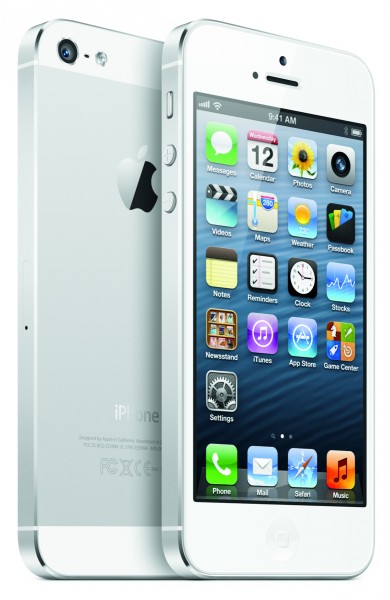 One week from today, Apple’s


