Author: Serkadis

  • Foursquare, la nueva niña bonita de los geeks

    FourSquare

    Si el último año y medio el universo ha girado en torno a Twitter para los usuarios avanzados de internet y tecnología, este 2010 parece que los tiros apuntan hacia FourSquare. Y es que FourSquare está conjugando de forma brillante varios de los elementos clave a la hora de “asaltar” a este público objetivo: integración con Twitter y Facebook, aplicación para móviles Android / iPhone y un juego para incentivar la participación. La idea es que al final el usuario comparta su localización, aporte información sobre la misma (si está en un restaurante o un museo, consejos sobre ellos) y además se lo cuente a todos sus contactos en Twitter o Facebook.

    FourSquare no es el primero en buscar que los usuarios compartan donde están con sus contactos, de hecho hay un montón de compañías buscando lo mismo desde hace años: Plazes, Ipoki, Pocket Life, Google Latitude…. podríamos seguir un buen rato. Todos llegaron antes, incluido el muy interesante Brightkite, que podemos tomar como un precursor al que apenas le faltaba la variable “juego / sistema de reputación” para ser como Gowalla y FourSquare.

    Por mucho que nos pueda parecer una tontería, el convertir en un juego lo de compartir la localización es el gran hallazgo de Foursquare, el mecanismo que da el empujón final a un usuario que de entrada es reacio a declarar en la web “estoy aquí”, pero que ofrece menos resistencia si tiene la impresión de estar logrando algo como ser el primero en descubrir un sitio o añadir un buen consejo sobre el mismo. Tanto Gowalla como FourSquare – Gowalla es el principal competidor en esto de hacer lúdico el escribir sobre los sitios en que uno está desde el móvil – explotan lo que otros servicios como 11870 o Yelp llevan incorporando desde hace tiempo, el otorgar un nivel diferenciado a ciertos usuarios, “el que descubre un sitio”, “el major de un sitio” (quien más va), algo que se convierte un incentivo para todas las partes implicadas: para el usuario para lograr ese rol “único” y para el dueño del servicio a quien interesa que haya competencia, cada que el usuario declara haber estado allí se informa a sus contactos y se lanza en su Twitter. FourSquare se queda la mejor parte, que el usuario le declare donde está y a qué lugares va con frecuencia.

    FourSquare en común con Twitter

    La inherente dificultad de llegar al gran público a corto / medio plazo. Si Twitter es exigente desde el punto de vista de la atención, FourSquare tiene una barrera de entrada no menos complicada: es un servicio para ser utilizado en movilidad, lo que implica un terminal de última generación más tarifa de datos. Hoy por hoy el perfil de usuario es muy avanzado en internet y tecnología, aunque por temática el potencial a largo plazo es mucho mayor. ¿Podrá salir de este nicho? De momento aún tiene que sobrevivir: Yelp ha incluido el hacer “check-in” entre las funcionalidades de su versión móvil y en Estados Unidos es un actor muy asentado, más entre el usuario medio que entre los geeks que ahora abrazan FourSquare.

    Otro aspecto en común con Twitter es el hecho de que es un medio para mensajes cortos, por el hecho de estar orientado a su uso desde el móvil, lo que implica más dificultad para crear contenidos respecto al ordenador. En ese sentido el pedir “consejos” más que que “críticas” es un posicionamiento en el que, de nuevo, Foursquare acierta: críticas y análisis más extensos estarán en otro tipo de servicios… de momento. Si finalmente consiguen desplazar a los Yelp y compañía en lo que a repositorio de sitios de ocio se refiere, a largo plazo podrían finalmente hacerse también con estos contenidos “más reposados”.

    FourSquare diferente a Twitter

    La principal diferencia que encuentro es que desde el primer momento entiendo el negocio que va a hacer FourSquare, pero no entiendo todavía el negocio que va a hacer Twitter. De nuevo hablamos de ser interfaz en el internet móvil y la localización y el negocio de la publicidad para los establecimientos. De hecho es razonable que todo su sistema meritocrático se pueda traducir a medio plazo en ventajas dentro de un sistema global: el restaurante paga por un anuncio si logra traer a un cliente de Foursquare a través de un descuento, éste puede ser mayor cuanto mayor prestigio tenga el usuario en el sistema.

    También se distingue de lo que ha venido haciendo Google en el móvil y la localización. Responder a búsquedas va a serguir siendo el territorio donde Google es fuerte, pero otros contextos “sociales” siguen siendo una asignatura pendiente.

    ¿Llegará muy lejos FourSquare? Una vez pasado el hype quedará una competencia por un terreno muy peleado que sí que estoy convencido que permanecerá, los servicios basados en localización en el móvil. La cantidad de actores que están entrando hace muy complicado apostar por un caballo ganador, pero la ventaja de estar ganando el público geek, ese tan dado a evangelizar sobre la tecnología que utilizar, no es mal punto de partida.

    Mi usuario Antonello en FourSquare.

    Otros artículos interesantes: Etc, Uberbin con el hallazgo de “check-in” como término de moda en el 2010, GigaOM, Furilo


  • Eastern Peripheral Expressway | Kundli-Ghaziabad-Palwal | 6/8 lanes

    Eastern Peripheral Expressway or Kundli-Ghaziabad-Palwal expressway is one of the two semicircular expressways which will form a third ring road around Delhi along with Western Peripheral Expressway (or KMP expressway) to decongest Delhi from traffic entering and bypassing the city through National highways.

    The complete peripheral road will connect following radial highways: NH-1, 2, 8, 10, 24, 58, 91, SH-57, Yamuna/Taj expressway, Ganga expressway, Hindon expressway among others.

    Fact file of Eastern Peripheral Expressway

    • Length – 135 km
    • Lanes – 6, expandable up to 8 in future
    • Areas covered – Sonepat, Faridabad (Haryana), Baghpat, Ghaziabad, Gautam Budh Nagar (UP)
    • Speed limit – Designed for 120 km/hr
    • Expected vehicular movement – 1,00,000 vehicles per day by 2021
    • Project cost – Rs. 3000 crores
    • Interchanges – On intersections with NH-1, NH-2, NH-24, NH-58, NH-91, SH-57, Hindon Expressway, Yamuna Expressway
    • Bridges and Underpasses – 3 river bridges (2 over Yamuna, 1 over Hindon), 43 other bridges, 59 underpasses
    • Toll Plazas – 2
    • Project duration – 3.5 years
    • Concession period – 25 years including construction period
    • Status – Yet to be awarded

  • Illinois getting Purdue at a good time

    The Illini couldn’t be catching their next opponent, Purdue, at a better time. The Boilermakers dropped their third straight game yesterday, a 72-64 loss to Northwestern.

    Illinois will host Purdue Tuesday at 8 p.m. at Assembly Hall.

    The Illini had trouble combating Michigan State’s physical style of play, something he expects to see from Purdue on Tuesday.

    “You go home, you’re going to have to deal with a team that plays just as hard if not harder (than Michigan State) and maybe probably more physical…” Illinois coach Bruce Weber said.

    “It’s a test for our team to see how much progress we’ve made.”

    By Chris Hine

    Read the original article from Tribune News Services.


  • China Google Hack Shows Security Gaps… Or Issues In Online Surveillance Apps?

    Google’s decision to change how it deals with China was supposedly precipitated by a hack attack on its computer system that was apparently most likely instigated by the Chinese government. While many are discussing how this shows the level of computer-based espionage — corporate and national — going on these days, a more interesting take comes from Julian Sanchez, who notes that the real issue isn’t so much about hacking into computers, but about the official “surveillance” apps that companies now use to placate law enforcement. That’s because what was hacked at Google was its surveillance app that it uses to help deal with law enforcement requests. As Sanchez notes:


    The irony here is that, while we’re accustomed to talking about the tension between privacy and security–to the point where it sometimes seems like people think greater invasion of privacy ipso facto yields greater security–one of the most serious and least discussed problems with built-in surveillance is the security risk it creates.

    Indeed, we were just discussing how more surveillance can make us less safe by creating a bigger backlog, but Sanchez is pointing out that it’s even worse than that. More surveillance can make us less safe because it can more easily expose data that should have been deleted. Creating surveillance databases creates a huge opportunity for attack. Remember those telco databases we were talking about that make it easy for law enforcement officials (hopefully with a warrant) to track your location by GPS? You have to imagine those make a nice target for hacking as well… And that’s true of any such surveillance database. While they’re supposed to help keep us “safer,” they also put a ton of valuable info in a single place — which makes them attractive targets for those who wish to make us less safe.

    Permalink | Comments | Email This Story


  • “The Jacksons: A Family Dynasty” Season 2?

    Ratings are through the roof over at A&E. In fact, viewership has been so strong for The Jackson Brothers’ new reality show that the network is offering the guys a second season, TMZ.com claims. Jackie, Tito, Marlon, and Jermaine are still considering whether or not to take A&E up on their offer. The Jacksons: A Family Dynasty premiered on the network last month. We haven’t watched the show yet, have you?


  • Report: Cowboys to retain Wade Phillips

    ESPN.com reports: Cowboys owner Jerry Jones has decided that Wade Phillips will return as coach next season despite Dallas’ 34-3 loss Sunday to the Vikings, a high-ranking team source said.

    Jones had indicated in recent weeks that Phillips was likely to return but remained non-committal after Sunday’s lopsided loss.

    Under Phillips, the Cowboys have won two NFC East titles in three seasons.

    Get the full story: ESPN.com

    Read the original article from Tribune News Services.


  • Changing your iPhone’s springboard background with Winterboard

    As seen before, personalizing the looks of your iPhone can be quite a pain. Luckily, Winterboard comes into play! Winterboard is a great little app that lets you customize the springboard (the place where you can select and start your apps) of your iPhone.
    Winterboard allows you to change your icons, customize applications, add or change graphics in the status bar and dock, install themes, and change the wallpaper of your iphone’s springboard. It has quite some possibilities as you can see.
    Winterboard works for 2.x+ iPhones and iPods, but needs you to jailbreak your iPhone/iPod to install Cydia.
    Now, for this article, we’re going to limit ourselves to changing the springboard background of your iPhone with Winterboard.
    First, you need to open Cydia, and select the “Sections” tab on the bottom.

    changing iphone springboard background with winterboard

    Here you will see the “System” menu, enter that, and locate Winterboard.
    Select Winterboard, and in the next screen, choose “Install” on the top right, and confirm that. This will download and install Winterboard on your iPhone, but needs a reboot of your phone to finish the install.

    changing iphone springboard background with winterboard changing iphone springboard background with winterboard

    Once your iPhone has rebooted, you will see Winterboard happily sitting in your springboard next to the other apps.
    Start up Winterboard to get an overview of all the available customizations.
    Select “User Wallpaper” to select and change the wallpaper of the springboard to that of your choice. This will overwrite the current background or the theme background if you have any installed.
    Select “Dim Wallpaper” if you want your background to dim a bit, so that your icons stand out more. Can be useful on very busy or colorful backgrounds.

    changing iphone springboard background with winterboardchanging iphone springboard background with winterboard

    Select “User Lock Background” to select and change the wallpaper of the lock screen to that of your choice. This can also be done the way Apple intended it to: Changing your iPhone’s background

    Related posts:

    1. Changing your iPhone’s background The iPhone is a great little machine, no doubt about…
    2. Changing the iPhone Homescreen layout. When you finally lay your hands on your iPhone, you…
    3. Tutorial: jailbreak your iphone Jailbreak? First of all, what exactly is this jealbreak thing?…


  • Lou Holtz decries new era of college coaching

    louholtz-ap.JPGThe Orlando Sentinel reports: Former Notre Dame coach Lou Holtz says the profession has taken a turn for the worse since he was walking the sidelines in South Bend and elsewhere.

    “You didn’t feel threatened by everybody,” said Holtz, who coached the Irish from 1986-96.

    “Most I ever made was $135,000. It wasn’t about money. You just enjoyed what you were doing and you had a security about what you were doing. You didn’t have the Internet and everybody getting fired and offensive. On Friday night after we put the team down, we’d go have drinks with the media … It’s changed, and it hasn’t changed for the better.”

    On the player-mistreatment charges involving Mike Leach at Texas Tech and Jim Leavitt at South Florida, Holtz said: “I grabbed a facemask on a player because I wanted to make sure I had his undivided attention. He had done something to a player that wasn’t reflective of the game we teach … I probably shouldn’t have done that.”

    Get the full story: OrlandoSentinel.com

    Photo: Lou Holtz on why he never drinks water: “It has no taste, and if it does, it’s not good for you.” (Annie McQuary/Ap)

    Read the original article from Tribune News Services.


  • Gaines Adams remembered as ‘gentle, free spirit’

    gaineadams-rickstewart-ap.JPGThe St. Petersburg Times reports: Gaines Adams, the Bears’ defensive end who died of cardiac arrest Sunday at age 26, is being remembered by his former Tampa Bay teammates as an elite athlete who was humble, gentle and easy-going.

    “He was one of the most genuine people I’ve ever met,” said defensive tackle Chris Hovan, whose locker next to Adams’ in Tampa.

    “He was this gentle, free spirit. He could be friends with anybody. He was always happy, always grateful for his life.”

    Adams struggled with the expectations of being taken with the fourth pick in the 2007 draft.

    “When you’re the fourth pick in the draft, you’re going to be the face of the franchise,” Hovan said.

    “It was tough on him at first because he was so young. But he understood. And he came out with the mind-set that he was going to get better.”

    Get the full story: TampaBay.com

    Photo: Gaines Adams struggled with high expectations in Tampa. (Rick Stewart/AP)

    Read the original article from Tribune News Services.


  • The Revolution of Smallness

    Sling Media’s Sling Touch Control 100

    In the past decade, few design trends for electronic devices have had such a seismic impact as the revolution of smallness.  It’s not just that the sizes of devices have shrunk; the mindsets of designers and the whole culture of design have shifted toward all things Lilliputian.

    I’ve been an industrial designer for many years, and recently, while I was attending a medical device conference, I began to think about downsized designs and the effect that they’ve had on designers and device users. While medical device developers, as well as some others, have largely continued to observe the “form-follows-function” mantra of yesterday, I am spending most of my time focused on the mantra of smallness. Many of us designers are now dealing with problems that scale down to one-tenth of a millimeter, and our clients are, too.

    Great skill at design and development of diminutive things is seen as a novelty by some, but is in fact rare — and in high demand. The types of decision-making and talents required to do effective design of small things differ quite widely from norms in the overall design field. Increasingly, these talents are differentiating the design leaders from the losers.

    To get a sense of how companies and designers alike are affected by this trend, consider, for example, a design problem involving integrating electronics, batteries, an antenna and other components into the slimmest possible product possible. Is this just an engineering task? No, it’s a company-wide problem to solve, affecting product branding and more. Designers must develop the best possible relationships with clients and employers to solve such problems in a holistic way.

    Here are some bottom-up ideas for designers and those who work with them to consider, especially when optimizing work done at the small scale:

    • Management of vendors and manufacturers that you work with is critical. These are collaborative relationships where it may be very important for, say, a part provider to actually deliver products at below tenth-of-a-millimeter accuracy. Accuracy and skill at these kinds of tasks are rare. These days, a supplier who delivers “OK” quality can actually be a strategic impediment to an entire organization.
    • Off-the-shelf part selection is essentially over. If you’re in need of a strategic part, you’d better secure a good source for it and work collaboratively with that source. Customization is in high demand. Components in devices now need to be nested optimally alongside others, which almost always rules out the use of off-the-shelf parts.
    • Establishing a collaborative product design process means new kinds of interdependencies within organizations. No longer is it fine to just say, “First, let’s define the core of our technology, then let’s productize it with some secondary technology and then we’ll package it and ship it.” Customizing and optimizing parts and designs that are tiny and perfect requires that core technology and design teams work effectively with marketing, sales, and operations teams on branding and many more issues.
    • Management has to adjust to new design paradigms that go on at the small scale. Executives overseeing the production of devices and components implemented at the small scale can’t get by with half-hearted, uninvolved managerial gestures. They may need to know exactly how a piece of detail done at the sub-millimeter level affects an overall product, or know when an engineering team has reached physical limits.

    These days, device designers are used to hearing the annoying refrain that “This device is going to be bigger than the iPhone.” More likely than not, if a product really is going to be that big, it’s because shrewd people were thinking about small things.

    Gadi Amit is president of NewDealDesign.

    In-post image courtesy of Sling Media, thumbnail of Glide TV.

    Buy This Item: [Click here to buy this item]

    Read Original Article

  • All the iPhone4/iSlate rumors in one image

    iphone_4g_rumors_roundup_thumb

    Good old Steve just put up a great graphic detailing all of the possible rumors about whatever the heck Apple is releasing whenever it will release it. Rumors include the “glowing Apple logo” as well as a “touch sensitive case.” I think the iSlate will also give worms to ex-girlfriends.

    Click to embiggen.


    Buy This Item: [Click here to buy this item]

    Read Original Article

  • 22-inch touch screen Apple iMac on the way?

    touch-imac-thing

    Details are scarce, and, as with most Apple grumblings, the rumor factor is sky high on the rumor Richter scale. The Chinese paper Commercial Times is reporting that Apple has signed a deal with Korean company Sintek Photronic to provide touch panels for a 22-inch, full touch screen iMac. The Times also cites a deal with long time partner Quanta for production of the new product, predicted to be released in 2010. Now, none of this has been substantiated, but we’re happy to report on an Apple rumor that doesn’t involve the word “tablet.” Hopefully we’ll find out on or around January 27th!

    Read

    Buy This Item: [Click here to buy this item]

    Read Original Article

  • Panasonic to sell plasma TVs with 5,000,000:1 contrast ratio

    panasonic_g2_series_tv_plasma

    Panasonic still believes in plasma. The company, which owns the biggest plasma panel plant in the world and is the global leader in this segment, today announced [JP] the VIERA G2 series, which consists of a total of three new plasma TVs. And as Panasonic sells these devices in the US, too, chances are the new line-up will find its way outside Japan in the future as well.

    The main selling point of the G2 TVs is the native contrast ratio, which stands at an impressive 5,000,000:1, the highest for a plasma TV so far (according to Panasonic). By way of comparison: The $6,000 Panasonic Z1 only had a contrast ratio of 40,000:1.

    Buyers will be able to choose between three sizes: 42, 46 and 50-inches. Needless to say, all TVs are full HD, and Panasonic claims they reduced power consumption by 30% (compared to the G1 series introduced last year). To be more concrete, power consumption stands at 398W for the biggest model, at 365W for the 46-incher and at 335W for the 42-inch VIERA.

    The new TVs will hit Japanese stores next month. Prices: $2,400 for the 42-inch model, $2,700 for the 46-inch model and $3,500 for the 50-incher.


    Buy This Item: [Click here to buy this item]

    Read Original Article

  • Retired Secret Service agent tells of race relations at their best, worst

    Retiree saw race relations at their best — and their worst — in the 1960s

    Like many African-Americans of his generation, Abraham Bolden used to have a large portrait of the Rev. Martin Luther King Jr., President John F. Kennedy and Sen. Robert Kennedy displayed prominently, reverently in his living room.

    But unlike many blacks of his generation, Bolden, who is 74 and has lived in the same Auburn-Gresham bungalow for 47 years, had a special relationship with each of the men. How he met the Kennedy brothers and wound up writing a letter to King is a remarkable story that begins this way:

    In April 1961, Bolden was working as a Secret Service agent based in Chicago when President Kennedy arrived for a political event at McCormick Place. Bolden was assigned to guard a restroom that had been cordoned off exclusively for the president.

    “My colleagues kidded me about having bathroom detail,” Bolden said. “Most agents liked to be shoulder to shoulder with the president. But as fate would have it, when the president arrived that morning, he had to use the washroom.”

    Bolden said the president stopped at the door of the restroom to ask Bolden if he was a Secret Service agent or a Chicago policeman. Bolden told him that he was an agent.

    “The president said, ‘Mr. Bolden has there ever been a Negro Secret Service agent on White House detail in Washington, D.C.?’ ” Bolden said. “I told him, ‘Not to my knowledge, Mr. President.’ And he asked me if I would like to be the first, and I told him, ‘Yes, sir, Mr. President.’ ”

    Two months later, Bolden, who was 26 at the time and married, was in Washington for the Secret Service’s customary 30-day stint. It would become — as the president alluded one day while Bolden was guarding the Oval Office — his Jackie Robinson moment.

    “Being the first at that time, I ran into some harsh racism,” Bolden said. “The country was a hotbed of racism, and resentment against men like Kennedy and Dr. King had infiltrated itself among the agents.”

    Bolden said he was shocked by how lax Kennedy’s security was in D.C. and the Kennedy compound in Hyannis Port, Mass., where he met Robert Kennedy. Bolden said many agents got drunk on duty, womanized and spoke openly of their disdain for the president.

    He said he complained to superiors, and that is when he became a target.

    “I told the chief of the United States Secret Service that if an assassination attempt was ever made on Kennedy, it would be successful because either the agents wouldn’t respond or would be slow to respond,” Bolden said. “The chief told me he would look into it.

    “But time passed and after the president was assassinated (on Nov. 22, 1963), I kept ringing the bell.” His criticisms made headlines.

    Bolden went to D.C. for a special training session in May 1964. While there, he said he’d planned to try to talk to someone on the Warren Commission investigating the assassination.

    But the Secret Service suddenly escorted him back to Chicago, where he was charged with soliciting a $50,000 bribe from the boss of a ring of counterfeiters. Bolden said he believes he was set up by racist agents who wanted to silence his criticisms. His trial began July 6, 1964, before U.S. District Judge Joseph Sam Perry.

    According to court transcripts, when the jury was deadlocked 11-1 in favor of conviction, Perry amazingly told the jury that in his opinion, Bolden was guilty. Still, the lone holdout didn’t change her vote, and that trial ended in a mistrial.

    Bolden was convicted after a second trial with the help of testimony from a counterfeiter who would later admit to having perjured himself. Bolden was sentenced to six years in a federal prison.

    “Shortly after my conviction, I wrote a letter to Dr. King saying that if this miscarriage of justice could happen to me, it could happen to him or anyone else,” said Bolden, who’s unsure if his letter ever reached King.

    Bolden was in prison when King was assassinated. The entire prison was on lockdown. A year later, he left prison, returning to his wife and three children. Two times he asked President Richard Nixon for a pardon, and both times he was denied. He worked as an automotive quality control supervisor before retiring in 2001.

    These days Bolden travels the country, dressed in his trademark bow ties and fez hats, telling his story and promoting his memoir, “The Echo From Dealey Plaza” (where Kennedy was assassinated in Dallas).

    “There were people who wanted to change the country through great force rather than the constitutional process,” Bolden said. The Kennedys and King “were revered by many Americans, not just blacks, because they stood for a hope and justice that sometimes still feels hard to come by.”

    Dawn Turner Trice
    [email protected]

    Read the original article from Tribune News Services.


  • Mise au point

    Je voulais informer les forumeurs que contrairement à ce que Cyril a insinué dans les threads Miss Belgique 2010 et Michel Daerden qu’il a fermés, je n’ai jamais été banni du forum belge. D’ailleurs la preuve, j’ai posté aujourd’hui un message dans le forum belge : http://www.skyscrapercity.com/showth…1#post50327091

    Je ne peux que m’étonner qu’un modérateur pratique une telle désinformation à l’encontre d’un forumeur.

  • AARP’s ‘Create The Good’ Promotes Service on MLK Birthday

    AARP Highlights Service on Dr. Martin Luther King, Jr. Day of Service at Frontiers International MLK Breakfast

    While the nation celebrates Dr. Martin Luther King’s birthday, AARP honors his legacy by shining the light on service through Create The Good – a national initiative that aims to connect individuals with volunteer opportunities in their local communities.

    “AARP is proud to honor Dr. King’s legacy through our Dr. King Day of Service,” said Merri Dee, AARP Illinois State President. “There is a new spirit of service sweeping our country. AARP is a part of that spirit and our members are looking to make a difference in their communities today and throughout the year.”

    AARP launched Create The Good to help all Americans make a difference in their own communities, in their own time, and on their own terms.  With a lifetime of skills, experience and wisdom, older Americans have much to contribute in the arena of service.

    Today, Create The Good sponsored the Frontiers International 35th Annual Dr. Martin Luther King, Jr. Breakfast in Springfield. AARP looks forward to utilizing Create The Good to help build stronger communities throughout Illinois.

    More than 9 million people engage in AARP’s work as volunteers, donors, and activists.  Our volunteer programs provide more than $187 million in economic impact.

    Last year, over 32,000 volunteers with the AARP Foundation Tax-Aide program helped nearly 3 million people across the country file their taxes.

    “As our nation faces growing challenges, people of all ages are coming together to improve our communities,” added Dee.

    “Our communities need us now and AARP stands ready to answer the call to service.”

    Founded with the motto, “To serve, not to be served,” AARP aims to make service a part of everyday life.  A 2008 AARP study found that 4 in ten older adults plan to increase the amount of time they spend volunteering in the next five years.

    For more information about Create The Good or to find volunteer opportunities in your local community, please visit createthegood.org.


  • Venezuelan president: PlayStation is Poison

    While US president Barrack Obama has been heard many times (qjnet/xbox-360/obama-spend-more-time-studying-not-on-that-xbox.html) telling people to cut down on the games for more productive activity, another commander-in-chief takes a different angle at gaming. Much different. According to Venezuelan president

  • Sleeping With Tiger Woods Can Turn You Into A Celebrity Socialite

    Sleeping with Tiger Woods can turn you into a “celebrity socialite.” At least that’s the moniker Tiger Mistress Rachel Uchitel has adopted for a flyer promoting her birthday bash in West Palm Beach later this month.


  • Dear Mark: Trans Fat

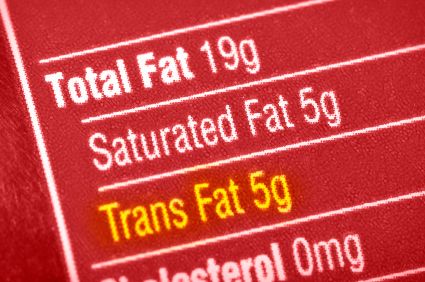
    transfat Dear Mark: Trans FatThe message has been circulating for a few years now: trans fats = bad. It’s one of the rare times I find myself in alignment with conventional nutritional guidelines. (Of course, it’s not so simple, but I’ll unpack that one in a moment.) The fact is, manufacturers have done a better job sending the anti-trans fat message than public health agencies. Everywhere you turn in the grocery store the “No Trans Fat!” tag leaps out at you, complete with manic font and exclamation point, from hundreds of boxes, bags, and packages. (“Well, it must be healthy then!”) Unfortunately, the marketing push has crowded out the real science when it comes to the public’s engagement with the real issue. As you can guess, there’s more to the trans fat picture than the self-congratulatory manufacturer claims.

    Dear Mark,

    I know trans fats are unhealthy and I avoid them like the plague. But like so many things sometimes I need a little reminder why. (I regularly brush up my knowledge by visiting your site so that when a friend asks why I avoid grains I don’t say something like “Grains are bad because… something about lectins and phytates – can’t remember why… but they’re bad.”) Could you write up an easy to remember primer on what trans fats are and why are they unhealthy?

    Thanks to Monica for this week’s question. Order up.

    First, a brief update on the subject. Since 2006, when the FDA required food manufacturers to include trans fat content on nutritional labels, the prevalence of these partially hydrogenated oils has indeed changed. Shifted, really. Actually, these seedy little grease balls, devious criminals that they are, have gone undergone a strategic makeover and/or simply gone underground. They’re still operating among us, trust me – business as usual. But let’s break it down first.

    What Are They?

    “Shape shifters” is incidentally an apt way to describe trans fats. That’s exactly what the hydrogenation process involves. From a chemical standpoint, you take a decent enough unsaturated oil and add some hydrogen atoms. The process undoes the existing double carbon bonds of the unsaturated oil. By “saturating” the bonds with additional hydrogen, you saturate the oil. The result is a solid (at room temperature) but meltable, more stable fat.

    As reader Sam adds (in the comment board): “Trans fats by definition are not fully saturated. They contain at least one double bond in the trans configuration. Unsaturated fats with cis double bond configurations have lower melting points than comparable saturated and trans fatty acids because the cis double bond causes a bend in the molecule, limiting intermolecular attractive forces. This bend is not present in saturated fats or unsaturated fats with only trans double bonds”

    What Do They Do?

    Seems simple enough, but all of a sudden the body doesn’t know what to make of the end product. The trans fats go on to incite havoc in cell metabolism. Research indicates trans fats cause comparatively more weight gain than the same diet with monounsaturated fats and a redistribution of body fat tissue to the abdominal area, the riskiest place to carry extra padding. Additionally, they’re associated with inflammation and atherosclerosis.

    What Are They In?

    Generally speaking, all the garbage a good Primal diet avoids: margarine, shortening, pastries, donuts, muffins, biscuits, cookies, cakes, frostings, pies, crackers, chips, bread, instant flavored coffee drinks, microwave popcorn, and the usual fast food suspects like fried chicken, chicken patty sandwiches, French fries, etc. Consider anything fried suspect.

    How Are They Still Around?

    The concern has even spurred local and state governments to regulate public consumption. New York City was the first in July of 2008, when the law that banned trans fats in city restaurants took effect. With the recent flip of the calendar, the State of California added itself to that list of regulators.

    Although many restaurants and food manufacturers scrambled to create new formulations following the 2006 labeling rule, trans fats have all but disappeared. Some food producers, counting on consumers’ penchant for their products as-is, said label be damned and kept their formulation the same. (A quick rundown of fast food nutritional info or any frosting canister shows as much.) Other companies took advantage of the labeling loophole that allowed any content under .5 grams to be listed as zero. Considering that the American Heart Association suggests a 2 gram/day ceiling on trans fat intake (based on a 2000 calorie/day diet), it seems pretty likely that processed food consumers still have a solid chance of meeting that limit and then some. Ignorance may be bliss to these folks, but it’s not well-being.

    Finally, trans fat content in many cases has simply morphed into what’s known as interesterified fats. Consider them trans fats’ partners in crime – a real Bonnie and Clyde duo. Essentially, interesterified fats provided manufacturers the same crispy, flaky, shelf stable benefits they were accustomed to while offering a convenient way to circumvent the new laws and labels. Interesterified fat combines unsaturated and the saturated fat stearic acid in a process that includes the same hydrogenation and a reshuffling of fatty acids. The result, like artificial trans fat, is a product that doesn’t exist in nature. Research shows their impact to be even more insidious than trans fat. Think both insulin resistance and a negative shift in LDL/HDL ratio.

    How Can You Avoid Them?

    The best way is, of course, to avoid processed foods themselves. As far as labels go, check the trans fat content but also the ingredient list for words like partially hydrogenated, hydrogenated (which usually means “partially”), and high stearate, and stearic rich.

    What’s Behind the Natural versus Industrial Trans Fats Comparison?

    Perhaps you’ve heard that meat and dairy products contain trans fats as well. Technically, this is true, but the industrially produced trans fats aren’t to be conflated with the natural kind, called vaccenic acid. The digestion process, particularly the stomach bacteria, in ruminant animals naturally adds hydrogen. The result is a small amount of natural trans fat in the animals’ meat and milk that offers a number of benefits, including antiatherogenic effects. Conjugated linoleic acid (CLA), part of the family of naturally occurring trans fats, is a health powerhouse.

    Unfortunately, about 80% of Americans’ trans fat intake is the artificial class. As is so often the case, there’s a tendency to throw the baby out with the bath water when it comes to nutritional guidelines. The rule here holds as it always does: the natural, Primal stuff nourishes the body, the artificial stuff undermines it. ‘Nuff said?

    Be sure to weigh in with your thoughts. In the meantime, thanks for all the great questions and comments. Keep ‘em coming!

    Get Free Health Tips, Recipes and Workouts Delivered to Your Inbox

    Related posts:

    1. Dear Mark: PUFAs
    2. Dear Mark: Arachidonic Acid
    3. Dear Mark: Fiber, Fat and Fasting

  • Not exactly Mother Teresa by Paul Driessen

    Article Tags: Paul Driessen

    Greenpeace constantly harasses companies that it deems insufficiently virtuous in advertising their products, protecting the environment and promoting their public image. But the Rainbow Warriors’ own actions would frequently merit fines or even jail time if committed by profit-making businesses.

    The Warriors justify their actions as necessary to advancing their legal, legislative and regulatory agenda – and getting people and foundations to write a check or click their website’s “donate now” button. Almost anything goes.

    Thank you for publishing this article – and making people more aware of the harm that this organization inflicts, especially on Earth’s poorest people.

    Best regards

    Paul Driessen

    Read in full with comments »