Author: Serkadis

  • Apps Are Important

    03-bad-apps-video

    I had a little bit of time to play with the Chromebook Pixel today and I’m a regular user of the Acer C7, a $199 machine that is wildly underpowered but good enough on a bad day. I really like the concept and I really like ChromeOS – it’s a solid way to get a little browsing done, say, in a cyber cafe or hotel bar. It isn’t, however, an OS.

    As Linus Torvalds notes, the Pixel is an amazing piece of hardware and it makes you wonder just what other laptop manufacturers are thinking. It’s pricey, sure, but the touchscreen works well, the display is striking, and the styling is on par with the MacBook. Even MG (the G stands for Grumpy) liked it, and he doesn’t like anything.

    But then there’s the problem of apps. Torvalds writes:

    I’m still running ChromeOS on this thing, which is good enough for testing out some of my normal work habits (ie reading and writing email), but I expect to install a real distro on this soon enough. For a laptop to be useful to me, I need to not just read and write email, I need to be able to do compiles, have my own git repositories etc..

    The creator of Linux, the paragon of pure computing, wants to install a “real distro.”

    Ouch.

    What the Chomebooks can’t yet do is run real applications. I’m currently dual-booting my C7 so I can install Skype on Ubuntu and you get this sense, once you’re in a real environment, that ChromeOS is like one of those “pre-OSes” that they used to stick on laptops so you could browse the web and watch movies without booting into Windows. It’s not all there.

    That’s fairly easy to fix: allow vendors to create real apps for the platform. After all, Google is the “open” company, right? There should be a way for me to jackhammer Skype and Audacity into the ChromeOS environment. After all, a beautiful big screen is useless when all you open on it is Gmail.

    Apps matter. As much as everyone clamors that Windows Phone and BB10 will thrive, they can’t do it without lots and lots and lots of apps. They can’t win without a dedicated developer base and groups of users who go out of their way to learn programming just to program for their favorite platform. While web-based apps are fun, in theory, we’re just not there yet in terms of real value. In the uncanny valley of application programming, HTML5 and attendant technologies are too stiff and jerky, like the humans in the first Toy Story movie. We need a few more years to bake them into real usability.

    Until then, we’re stuck turning silk purses into sow’s ears (or, depending on your opinion of Linux, silk purses into penguins). I can’t, for example, recommend that my Mom pick up a Chromebook because she’ll immediately hit a brick wall when she wants to, say, Skype my in-laws. We can regress the argument down to “Well, they can use Google Hangouts” but that doesn’t solve the problem. In human-computer interaction, there should be more than one way to do something. That way, I’m sad to say, is through the introduction of a full SDK.

  • Data? What is it good for? Absolutely … something

    Data has been a subject of my deliberations, both public and private, for a long time — almost a decade. Long before the bulge bracket consultants discovered its virtue and long before short-term trumpeters of data showed up, data was something that helped shape my thinking and approach to decision making. It was not big data, or smart data, or little data or panda data. It was just data, and what one could do with, it that influenced my thinking.

    With more network end-points and more digitization, it goes without saying that the amount of data in our lives and at work is only going to increase. But the size of the data isn’t the issue; instead, it’s “what you do with the data” that will be the key to the success in the emerging future economy. The companies (and individuals) who don’t think accordingly will find themselves on the losing side. Let me tell you three personal stories that will illustrate my point.

    Getty Images

    Getty Images

    Grounded

    The first story involves an airline — Lufthansa, the German giant. I recently visited my parents in Delhi and a day before I returned I fell sick. I was quite feverish and somewhat of a pain to my fellow travelers. I developed a nasty cough and, well, I thought it might be a good idea to buy an upgrade and go to sleep on a lengthy (22-hour) flight. Instead of trying to use my points  — I know better — I offered to buy an upgrade. But a Lufthansa official declined to sell me the upgrade. It was not that there weren’t any empty seats — there were many. But since I had an unchangeable ticket, he refused. It was mildly irritating because I had been patronizing Lufthansa for nearly two decades and was hoping for a little compassion.

    That episode made me wonder about why Lufthansa was so rigid and refused to use historical data they had on me to make a smart decision to appease a returning customer, especially since it allowed them to monetize empty seats. The inflexible policies basically lead the airline to leave money on the table.

    In the age of big data and smart enterprises, how can a company not have a way to make smarter, real-time business decisions? I wonder if “out data-ing” will be the right way for a competitor to eat the German carrier for lunch. This lack of ability to not know the customer is going to be what I believe we will mean when we say “big, dumb company.”

    I, for one would like my airline to know me, know my tastes and if possible have enough data on me to offer me a quasi-personalized experience. Yes, I do live in the future and sometimes get carried away about the possibilities of data, sensors and the notion hyper-personalization. But still, I am not talking mining on the moon — I am talking about tactics little companies like Uber are using in making smart customer decisions.

    Disconnected

    The second story involves a wireless company — Verizon Wireless. Every time I leave the country, I call them up and sign up for the traveling data plan, letting them know where I am traveling and for how long. I actually don’t mind doing that because it makes a life a lot easier when I land in a new country. A week later when I return, I get ominous-sounding SMS alerts followed by a phone call from one of their agents who in an alarmist tone asks me if I have my phone and what not. Most of these calls are at early hours of the day when I am trying to deal with jet lag.

    I cannot figure out why the carrier cannot figure out — using location data it obviously has — that I am actually back in the United States and in my city and perhaps even in my own neighborhood. As a customer, it would certainly be more convenient. I mean, these guys are willing to sift through my location data and my phone calls to do targeted advertising, why can’t they reconcile my location with their other databases to automatically update the records?

    Shoe Side Story

    Now let me tell you another story about a little store in Manhattan. In sharp contrast to my Lufthansa experience, I was reminded that I had a great visit to a shoe store in New York on my last visit to the big city. It proved to be educational. I had about half an hour between meetings and I walked through Soho, where I spotted Varda.

    The last time I was there it was about 10 years ago, a few weeks before I moved to San Francisco. I had bought a pair of boots at the store. I was surprised that the store had survived the test of time and it was still going strong (it had started in 1981). The fact that they made shoes that last forever might have something to do with it, I imagine.

    As luck would have it, I was wearing the very same boots. They have given me excellent service and with the exception of being comfortable like old shoes can be, they are almost new. I decided to duck into the store — after all, I had a little bit of time. I saw that they had an identical pair to the one I was wearing, except they were made with suede of a different hue. And I am sucker for suede and boots.

    The salesperson and I ended up in a conversation about shoes and when she swiped the credit card, she noticed that I had done business with the store previously on a couple of occasions. She gave me an instant discount — without me asking for it. It wasn’t a lot, but it was a nice feeling of being appreciated for my loyalty.

    Data designs experiences

    Big DataA small store like Varda created an experience that was all-encompassing and got my money. Lufthansa just alienated me, after twenty years of blindly buying from them. I don’t think there was any big data involved at the shoe store: the aging PC probably was pulling data off Excel or something similar. It was micro-data if there was any.

    A few weeks ago, I wrote about <a href=”http://om.co/2013/01/16/user-experience-is-immersive/”how a brand experience is multitouch and multimodal. I don’t think large industrial-era dinosaurs like airlines such as Lufthansa and American Airlines quite understand that. And that is why it doesn’t matter how much data they have collected about their customers or how many millions of dollars they spend on their computing and data infrastructure. They don’t know one simple truth: it is not the data, it is what you do with it, stupid. 

    Asking the right questions from the data and then creating an experience befitting customer happiness or drawing conclusions that are not obvious involves a level of humanity — something that is unfortunately missing from all the buzz about data. It is a pervasive problem across the industrial landscape.

    As for me, I am shopping for a more-intelligent airline — one that values relationships and creates tailored experiences for me, the customer.

    [Structure Data 2013: We will be discussing a lot about data and what you do with it at our upcoming Structure Data conference. For instance, we will have  Mohan Namboodiri, VP, Customer Analytics, Williams-Sonoma talk about how the lifestyle company uses data. The conference is being held on March 20 & 21 in New York. More details here.]

    Related research and analysis from GigaOM Pro:
    Subscriber content. Sign up for a free trial.

  • Video: Chromebook Pixel running Chrome OS and Linux simultaneously

    My daily use of Google’s Chromebook Pixel is working out like a charm for what I do, nearly all of which is web-based. Yet, there are still times when a native app is better, or even required, to get the job done. My weekly podcast and videos are perfect examples, although I have found a number of web app options to test out for content creation.

    As I noted last week, the Pixel has more flexibility than you might think because there are a number of ways to run Linux on the laptop. I opted to install and use crouton, a set of scripts that set up the Pixel to run Chrome OS and Linux at the same time. Here’s how it looks and works after the setup; you can get the crouton setup steps at this link so I don’t show those on camera:

    The one-time setup was simple and now all I need to get Linux up and running is a quick set of commands in a terminal. Then it’s just a matter of switching between Chrome OS and Linux as needed. You can see in the video that the same app I use on a Mac for my weekly podcast, Audacity, runs just fine so I’ve got the podcast issue licked. And I’m going to test some video apps for occasional use as well.

    Oh, and if you want to run Skype on the Pixel, you can do that to with this method: Check out how I stay on a video call while switching back to Chrome OS to check something on the web!

    Related research and analysis from GigaOM Pro:
    Subscriber content. Sign up for a free trial.

  • Automattic temps bloggers with WordPress.com Business

    Automattic has a new premium WordPress.com option that just might be right for many small businesses and entrepreneurial types. The blogging service today announced a $299 per-year plan that includes your domain (rather than, say, poopydiapersdontstink.wordpress.com); access to advanced design tools and fonts; unlimited premium themes (which otherwise cost separately); photo and video uploads and galleries; unlimited storage, supporting those photos and videos; live support (yes, real people); and no WordPress placed ads (which appear on free sites).

    I don’t blog personally anymore — just BetaNews or Google+ posts now — but still pay a reputable hoster 20 bucks a month to keep my WordPress site and archive active. For $60 a year extra, I could get a whole lot more and all the other benefits the blogging service offers, such as WordPress.com promotion, following and sharing.

    Still, WordPress.com is restrictive compared to the self-hosted product, which can be freely customized via any plugins, style sheet edits or themes and supports the ad network (if any) of the blogger’s choice. Automattic limits these things, depending how much more users pay per year. On the flipside, WordPress.com packs in lots of useful tools ready to use and tightly integrated, and these expand depending upon which plan.

    Besides Business, there is the $99 per-year Pro Bundle, which comes with the same features, except for unlimited storage (13GB instead), unlimited premium themes (none) and live support (email instead). Some sites can become VIP, which isn’t available to just anyone. Enterprise costs $500 per month and is feature-packed.

    Storage alone is reason to consider Business, if you need the space. Automattic lists no ala carte unlimited option. The 200GB choice is $290 per year. For $9 more, you can go unlimited and get the aforementioned extras. Custom themes start at $50, Automattic’s Ran Yaniv Hartstein says.

    There are free alternatives that will appeal to some users, such as Google’s Blogger or Tumblr. The latter offers better social sharing options but lacks the sophisticated analytics, categorization, and content management, among other capabilities that even free WordPress.com gets. I really like Tumblr, but not for the kind of business or blogger customer considering paying $299/year for the WordPress.com package.

    Something else: Benefits of photo and video uploads — and that unlimited storage is either limited or liberating, depending on your content objectives. WordPress.com makes uploading and presenting digital media easy and pleasing — and there’s uniformity in look and feel across pages. But some other services, like Flickr Pro ($24.95 year) or Google+ cost less or are free photos (and limited video). Meanwhile YouTube is free and provides editing tools and the ability to earn cash for pageviews — in addition to other advertising (if any) you put on the blog.

    Then there is Google’s rapidly advancing cross-integration of services with its social network and search, which could offer even greater exposure and revenue opportunities. If I still maintained a regular blog, I would choose Blogger and bet on what comes next from Google or get one of the two WordPress.com bundles and maintain a Tumblr. However, if I ran a business, WordPress.com Business would be top of my list.

    Photo Credit: SueC/Shutterstock

  • TeleSound: Because the internet of things needs toys

    From the makers of ReaDIYmate, a Kickstarter project that lets you build connected sculptures using paper and some hardware modules, comes a new connected device: a speaker. Dubbed Telesound, the Kickstarter project aims to make a connected speaker that let’s you use an app to send your friends sounds.

    The idea is to develop devices that connect, not around a router or a desktop, but around a smartphone.

    The TeleSound speaker uses Bluetooth 4.0 to connect to a person’s smartphone. When the person enters the room, it turns on (if they want it to be quiet they can flip it over). When I use the app to choose an emoji icon, the speaker plays the sound associated with that icon. So if I click on a birthday cake, they get a few seconds of happy birthday. If I click on the whoopee cushion …. The possibilities are endless.

    Is it silly? Yes. Is it something I’d love someone to give me as a gift? Also yes. In fact, I want to ship one to my colleagues in San Francisco just for the fun of trolling them with random noises.

    Telesound_08The next question I had was if this is a real business. Olivier Mével, the founder of 23deenero, the three-year-old company behind both Kickstarter projects says it is. As he said in an interview, “We want to be a real business offering the fun side of the internet of things.”

    He didn’t like my comparison to USB-connected toys. He pointed out that while these are whimsical, they are also social and online, giving the devices the ability to become a platform for interactions that help connect people over distances. He says:

    “TeleSound is about feeling close and connected to your friends and family when you are not in the same room. It’s trying to replace the non-verbal communications that can be shared easily in real life — a hug, a frown, a smile, a groan — but that do not really have equivalents in digital communications. And sound is a great way to do it, because it’s a very direct and emotional medium.

    TeleSound probably isn’t the next Twitter, but I can’t deny that for $34 I might pick one of these up as a present for a special geek. To get to that price point, which is very different from the $30 to $50 the ReaDIYmate sculptures cost, Mével used Bluetooth 4.0 as opposed to Wi-Fi. Mével said, “Our products are very price sensitive, and if you do Wi-Fi they are more expensive — in the $100 price range, but if you use Bluetooth it’s closer to $29 a product.”

    Eventually the company will launch other products (Mevel was a founder of Nabaztag, a Wi-Fi connected rabbit that moved when you got email), but it will focus its resources now on Telesound. It plans to open the API between the device and the app so others can build products that use the speaker and icons. You could theoretically send a kiss sound via Facebook or the sound of a slow clap via Twitter one day.

    Paris-based 23deenero has three full-time employees and has raised €200,000 ($260,168) from a variety of European angels. It plans to make money selling the devices, but may also charge advertisers for the opportunity to place an icon in the app. I can imagine tag lines for movies or would actually beg Texas Instruments to sponsor a Speak & Spell icon that shouts out “I win,” in the triumphant tone of the ancient toy.

    Related research and analysis from GigaOM Pro:
    Subscriber content. Sign up for a free trial.

  • Your Galaxy S IV Will Probably Be Plastic, And That’s For The Best, Says Samsung VP

    note8-10

    We’re just over a week away from the Galaxy S IV’s official unveiling in New York City, and the pieces are starting to fall into place. Sure, we still don’t know what the thing is going to look like, but persistent rumors have pegged the device as sporting the same sort of plastic body that Samsung has been (in?)famous for.

    While she wouldn’t weigh in on the Galaxy S IV specifically, Y.H. Lee, executive VP of Samsung’s mobile unit, told CNET’s Roger Cheng that the love-it-or-hate-it plastic chassis endemic to the company’s gadgets aren’t going anywhere just yet.

    According to Lee, it’s just as much about practicality as it is about style: In order to churn out (and sell) as many devices as Samsung does, the company has to pay plenty of attention to how efficiently they can be made. Naturally, Samsung can’t just pump out loads of shoddy devices and call it a day, so durability weighs heavily on the company’s mind when it comes time to picking out materials for a final design.

    Meanwhile, would-be rivals like HTC have embraced metal with open arms in its latest flagship device designs. The benefits are as plentiful as they are subjective — the adjective that seems to be bandied about most often is “premium,” since these metal-clad devices tend to feel more weighty and substantial when compared to the sorts of flimsy plastic bodies that many Android-friendly OEMs still cling to. I’ll be the first to admit that I prefer handsets that feel like they could withstand some abuse, though in fairness I’ve found that devices like the Galaxy S III and the Galaxy Note II can handle their fair share of turmoil despite having light, plastic bodies.

    Granted, I can see how the choice of materials could prove to be occasionally problematic for the companies involved here. Crafting a device like the HTC One or an iPhone 5 out of aluminum can be more exacting (and therefore more time-consuming), not to mention more expensive than sticking with a less ornate body.

    But here’s the thing — Samsung doesn’t need to play by those same rules. It’s an undeniable juggernaut in the smartphone space, and has proven ably over the past months and years that yes, people will often buy their smartphones even when faced with alternatives that arguably feel more premium. That’s not to say that Samsung will never rethink its position on the materials it uses. Lee concedes that the company “listen[s] to the market” and tries to accommodate it, so that sentiment could soon change if the masses demand it.

  • Alzheimer’s risk gene discovered using imaging method that screens brain’s connections

    Scientists at UCLA have discovered a new genetic risk factor for Alzheimer’s disease by screening people’s DNA and then using an advanced type of scan to visualize their brains’ connections.
     
    Alzheimer’s disease, the most common cause of dementia in the elderly, erodes these connections, which we rely on to support thinking, emotion and memory. With no known cure for the disease, the 20 million Alzheimer’s sufferers worldwide lack an effective treatment. And we are all at risk: Our chance of developing Alzheimer’s doubles every five years after age 65.
     
    The UCLA researchers discovered a common abnormality in our genetic code that increases the risk of Alzheimer’s. To find the gene, they used a new imaging method that screens the brain’s connections — the wiring, or circuitry, that communicates information. Switching off such Alzheimer’s risk genes (nine of them have been implicated over the last 20 years) could stop the disorder in its tracks or delay its onset by many years. 
     
    The research is published in the March 4 online edition of the journal Proceedings of the National Academy of Sciences. 
     
    “We found a change in our genetic code that boosts our risk for Alzheimer’s disease,” said the study’s senior author, Paul Thompson, a UCLA professor of neurology and a member of the UCLA Laboratory of Neuro Imaging. “If you have this variant in your DNA, your brain connections are weaker. As you get older, faulty brain connections increase your risk of dementia.” 
     
    The researchers, Thompson said, screened more than a thousand people’s DNA to find the common “spelling errors” in the genetic code that might heighten their risk for the disease later in life. The new study was the first of its kind to also give each person a “connectome scan,” a special type of scan that measures water diffusion in the brain, allowing scientists to map the strength of the brain’s connections.
     
    The new scan reveals the brain’s circuitry and how information is routed around the brain, in order to discover risk factors for disease. The researchers then combined these connectivity scans with the extensive genomic screening to pinpoint what causes faulty wiring in the brain.
     
    Hundreds of computers, calculating for months, sifted through more than 4,000 brain connections and the entire genetic code, comparing connection patterns in people with different genetic variations. In people whose genetic code differed in one specific gene called SPON1, weaker connections were found between brain centers controlling reasoning and emotion. The rogue gene also affects how senile plaques build up in the brain — one of the hallmarks of Alzheimer’s disease.
     
    “Much of your risk for disease is written in your DNA, so the genome is a good place to look for new drug targets,” said Thompson, who in 2009 founded a research network known as Project ENIGMA to pool brain scans and DNA from 26,000 people worldwide. “If we scan your brain and DNA today, we can discover dangerous genes that will undermine your ability to think and plan and will make you ill in the future. If we find these genes now, there is a better chance of new drugs that can switch them off before you or your family get ill.”
     
    Developing new therapeutics for Alzheimer’s is a hot area for pharmaceutical research, Thompson said. 
     
    It has also been found that the SPON1 gene can be manipulated to develop new treatments for the devastating disease, Thompson noted. When the rogue gene was altered in mice, it led to cognitive improvements and fewer plaques building up in the brain. Alzheimer’s patients show an accumulation of these senile plaques, which are made of a sticky substance called amyloid and are thought to kill brain cells, causing irreversible memory loss and personality changes.
     
    Screening genomes has led to many new drug targets in the treatment of cancer, heart disease, arthritis and brain disorders such as epilepsy. But the UCLA team’s approach — screening genomes and performing brain scans of the same people — promises a faster and more efficient search.
     
    “With a brain scan that takes half an hour and a DNA scan from a saliva sample, we can search your genes for factors that help or harm your brain’s connections,” Thompson said. “This opens up a new landscape of discovery in medical science.”
     
    Other UCLA authors on the paper included Neda Jahanshad, Priya Rajagopalan, Xue Hua, Derrek P. Hibar, Talia M. Nir and Arthur W. Toga.
     
    The project had multiple funding sources, including the National Institutes of Health (grant R01 HD050735). Please see the paper for other authors and additional funding.
     
    The Laboratory of Neuro Imaging at UCLA, which seeks to improve understanding of the brain in health and disease, is a leader in the development of advanced computational algorithms and scientific approaches for the comprehensive and quantitative mapping of brain structure and function. It is part of the UCLA Department of Neurology, which encompasses more than a dozen research, clinical and teaching programs. The department ranks in the top two among its peers nationwide in National Institutes of Health funding.
     
    For more news, visit the UCLA Newsroom and follow us on Twitter.

  • Google seen soaring as shares continue to rise

    Google Stock Price Analysis
    A recent analysis pondered whether Google (GOOG) might be the next company to follow Apple’s epic downfall on Wall Street, and now we have another sign analysts might be getting too bullish: another $1,000 price target. Topeka Capital Markets analyst Brian White upped his price target on Apple (AAPL) shares to $1,111 last April, and the stock began free-falling from its record high a few short months later. Now, Jefferies & Company has become the latest group to slap a $1,000 price target on Google shares as the stock continues to hit new highs, StreetInsider reports.

    Continue reading…

  • The future of the internet is avatars and connected services (video)

    There is no single internet of things, just a series of connected services and avatars, the physical hardware that connect to those services. This is what Mike Kuniavsky, a principal in the Innovation Services Group at PARC, explained as his vision for the internet of things in a talk last week at the GigaOM internet of things meetup.

    The audio in this video is fuzzy, but Kuniavsky is worth listening to, from his definition of the internet of things to his vision for how we are going to have to change our thinking about software development in order to program it. At 19 minutes the video is the perfect length for watching during a lunch break. Check it out.

    If you missed it, here is yesterday’s video from the same event: Video: Why you shouldn’t care about securing the Internet of things just yet

    Related research and analysis from GigaOM Pro:
    Subscriber content. Sign up for a free trial.

  • China says Google controls too much of its smartphone market

    Android China Smartphone Market
    As Google’s (GOOG) volume lead in the global smartphone market continues to grow, rivals keep looking for ways to slow the proliferation of its Android platform. But rival mobile companies aren’t the only entities with cause for concern, it seems, as China’s Ministry of Industry and Information Technology recently issued a report stating that Google has too much control over its smartphone sector.

    Continue reading…

  • How I came to love Windows again

    Two words: Surface Pro. For most of February, I used Microsoft’s Windows 8 Pro tablet as my primary PC and loved the experience.

    I haven’t felt so good about using a Microsoft operating system for a decade. Actually, I’ve never felt like this. Windows 8 Pro is simply amazing when experienced on the right device, and starting point is touch. Modern UI really works for me. Windows 8’s visuals are stunning, making a truly satisfying and fun place to work. I enjoy working on Windows 8, which pretty UI beckons me to come back again and again.

    Smooth Surface

    There is something about Modern UI that is different on this computer, and I can’t stress this point enough. A year ago, I spent a few weeks with Windows 8 Consumer Preview running on a Samsung slate, and the experience so underwhelmed. Time spent using other laptops or tablets at my local Microsoft Store is ho-hum, too. But Modern UI enthralls on Surface Pro, which I largely credit to the bright, crisp display, touch and stylus inputs and smooth, speedy performance.

    Surface Pro is how Microsoft means Modern UI to be experienced. But distribution is limited to a few stores and a few countries, and there aren’t enough third-party devices available either.

    Yesterday, IDC confirmed with depressing data what many of us already knew: Windows 8 failed to lift fourth-quarter PC shipments. The analyst firm identified many reasons, with tablet competition high among them. Another: “limited supply of touch-enabled Windows 8 models”, which is “out of step with the touch focus of Windows 8”.

    How Touching

    Yes! Yes! Touch is so important to truly appreciate what Windows 8 can do. Modern UI really does feel modern. Microsoft’s built-in apps are simply gorgeous and functional. They beg to be touched, gawked. Overall, I find the interface to be surprisingly intuitive. All this beauty makes me feel good. Successful products should make you feel that way, and it’s all the more important with something meant to be handled, to be caressed.

    Near the end of February, I added Google’s first computer, Chromebook Pixel to my repertoire. The device also features a high-resolution touchscreen. But the usability experience between the two user interfaces is shockingly different. Google presents Chrome as the major motif. Modern UI is a full-screen motif that licks the display’s edges and presents big, bold elements that are easy to touch.

    For example, I find the experience using Internet Explorer 10 to be visually and tactfully more satisfying on Surface Pro than Chrome on Google’s laptop. Microsoft smartly places the navigation controls at the bottom of the screen, which diminishes Gorilla arm and puts them closer to the fingers for when people use keyboard and touch — which is the idea for Surface Pro. Additionally, going back or forward to webpages is easier. Just swipe your finger left or right. Somebody really thought-out this user interface.

    Living Machine

    Strangely, Microsoft has been down this path before and failed, back when there was neither touch nor Internet bandwidth. I refer to the dark ages of personal computing — the 1990s. Modern UI derives heritage from the Active Desktop, which Microsoft championed during the browser wars with Netscape. The idea of live, web content was visionary but too soon. PCs didn’t have the oomph and Internet pipes to most businesses or homes were too narrow — and there wasn’t enough quality content.

    But Microsoft had the right idea. Live tiles transform the desktop into a living, breathing thing. It responds to you, anticipates you. I simply cannot express the sheer value, when set alongside aspects of the overall user interface.
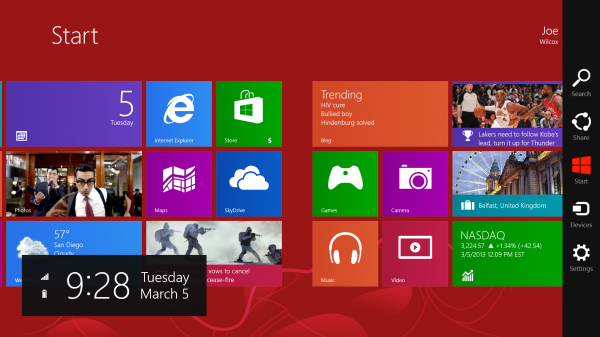
    That “anticipates you” aspect is more than displaying content. For example, after I logged into Windows 8 for the first time, the Start screen presented different options for my Epson Artisan 730 WiFi printer — including driver update. The operating system found the networked peripheral and provides what I need to use it, unprompted.

    To my surprise, on the Windows 8 Start screen, I find all the movement kind of refreshing, even fun, like using more of my senses — and fingers as tools — to get work done. Additionally, and I must express this again, I find Modern UI an absolute joy to use. Yes, the motif demands more work, such as seemingly endless scrolling left or right. But the design appeals and draws me in. It’s immersive and as previously expressed alive.

    Tool Users

    The best user interfaces make products more human, more approachable and responsive. The human body doesn’t have one UI, but many working together, giving dimension to living — sight, sound and touch, primarily. The best products are similar. Visuals are important because they appeal to sight, and the eyes are the main tool by which we take in the world around us. Modern UI is beautiful, as are many of the active — seemingly living — cues it provides. There, Live tiles add richness and movement to Surface Pro running Windows 8 Pro.

    But humans are primarily tool users. We look and then touch. Keyboard and mouse are unnatural constructions, even though they are so familiar to a generation of PC users. But touch is more natural and extension of you. There’s more intimacy involved with touching something on the screen than interacting with it via keyboard and mouse.

    I could never have come to truly appreciate what Windows 8 offers, if starting with mouse and keyboard only. The Start screen begs to be touched, to be looked at, to be appreciated. The intimacy of touch is one of many reasons. Think about it. Would you rather look at a picture of something or someone you love, or touch them?

    And Apps…

    I kept all the Windows 8 defaults, by the way, and they include using Bing, which I find more than good-enough for day-to-day searches. To be honest, I don’t miss Google search at all, even though it’s readily accessible. All the bundled apps look great, and are hugely functional. They are the model every developer creating Windows 8 apps should aspire to.

    There aren’t enough apps, and fewer really good ones — that meet the standard for quality and vitality of those Microsoft provides. Every Friday, my colleague Martin Brinkman posts the “Best Windows 8 apps this week“, which I highly recommend.

    Lots of you don’t like Windows 8, particularly Modern UI. Perhaps you would feel differently if using the OS on the right device — touch, for sure. Surface Pro perhaps even better.

    Photo Credit: Joe Wilcox

  • Bloomberg: Verizon and Vodafone in talks over possible merger or buyout

    Verizon Vodafone Merger Buyout
    Verizon (VZ) and Vodafone are reportedly actively discussing ways to resolve their relationship this year, Bloomberg reported on Tuesday. The companies, which jointly own top U.S. wireless carrier Verizon Wireless, have discussed merging as well as the possibility of a full or partial buyout of Vodafone’s 45% stake. Disagreements regarding leadership and the location of the merged entity’s headquarters have reportedly made a merger unlikely. “Verizon is eager to take full control of the unit this year, giving the New York-based company greater influence over its most profitable division,” Bloomberg’s Jeffrey McCracken, David Welch and Matthew Campbell wrote. According to the report, Vodafone has raised issues regarding valuation as well as how proceeds from the sale might be used. Vodafone’s stake is currently valued at about $115 billion according to the report, and the most likely outcome of the talks is said to be either a full or partial sale.

  • eBay shows the world how to measure MPG for data centers

    eBay is busy building some of the world’s most-efficient data centers, and its efforts aren’t just show. The company has figured out a way to tie its computing infrastructure to specific business concerns and plans to continuously tweak its operations to meet top-level mandates. On Tuesday, eBay released a whitepaper describing how it accomplished this and laying out a framework for companies that want to do the same.

    Dean Nelson, eBay’s vice president of Global Foundation Services, says the effort, called the Digital Service Efficiency report, “is the miles per gallon measure for technical infrastructure for eBay.” Essentially, the company has boiled its business down to a single currency — transactions (specifically URL requests) associated with users’ buying and selling on the site — and created a slew of metrics that measure how efficiently it delivers those transactions in terms of revenue, performance, cost and carbon footprint.

    The project has been about 18 months in the making, Nelson told me during a recent phone call, and eBay was finally able to set a baseline measurement of its performance in 2012. Now that it knows what’s in place and how its infrastructure performs over the course of a year, the goal in 2013 is to cut its computing-related carbon usage and costs by 10 percent and increase performance in terms of transactions per kilowatt-hour by 10 percent.

    In order to meet these goals, he said, every member of the technical team — from facilities managers to software engineers — has be striving toward them and also be cognizant of how turning their “knobs” will affect the other metrics eBay is measuring. “Think of it like a Rubik’s cube,” Nelson explained. “You can solve one side but screw up the rest of them.”

    eBay plans to release quarterly updates on its progress along with its earnings reports, but employees will have access to down-to-the-second visibility into what’s going on. “It makes it personal for them,” Nelson said. “They can see what their efforts mean.”

    Digital Service Efficiency

    52,075 servers doing a lot of work

    Nelson offered some pretty compelling examples of how the Digital Service Efficiency project works in practice. If the goal is to decrease cost per transactions, data center engineers might try to minimize power usage at the facility level while server engineers might look to lower-power gear or better utilization on existing gear. They essentially reduce the denominator in that equation “and the net result is we should make more money from those transactions,” he said.

    In one real-world instance, a software engineer tweaked some code that affected how much memory an application requires and the company was able to eliminate 400 servers. That cut energy usage by 1 megawatt and a $2 million savings in capital expense when the time would have come to refresh those servers.

    eBay also has created a “list of fame” and a “list of shame” that highlight the 1,000 best- and worst-utilized servers within the company. “We have a hit list,” Nelson said, and it’s going to examine the bottom 20 percent to figure out why they’re as wasteful as they are.

    However, he added, it’s important to remember on the server front that improving cost, performance and carbon usage doesn’t always mean buying lower-power gear. If eBay can improve the power density of its racks using technology such as liquid cooling — something its Project Mercury data center in Phoenix is pre-equipped for — it can handle more transactions on less gear. It already has some racks running at a sustained rate of 35 kilowatts and thinks it can push that up to 50 kilowatts, Nelson said.

    Clean transactions with solar panels and Bloom boxes

    On the carbon front, eBay has nothing but open field in front of it thanks to some big clean-energy projects set to go live in 2013 in its new Salt Lake City, Utah, data center called Project Topaz. For starters, it’s using Bloom Energy boxes as the primary power source, which mean a slightly higher cost per transaction, but also a 13 percent reduction in carbon emissions and increased reliability (downtime costs eBay a lot of money).

    Also, the company has finally cleared some regulatory hurdles to tie an on-site solar array back to the grid. Because of changes to a Utah law that eBay lobbied for, it’s about to start sourcing off-site clean energy for its data centers, as well.

    “That is a corporate priority,” Nelson said. “We want to create the cleanest commerce engine on the freakin’ planet.”

    Trying to change an industry

    Of course, the Digital Service Efficiency methodology isn’t the only attempt by a major data center operator to show the world how efficient it is. Google publishes annual Power Utilization Efficiency (PUE) ratings for its data centers, and Facebook occassionally does as well. On Monday, Salesforce.com released a statement underscoring its commitment to sourcing renewable energy.

    dse chart

    However, Nelson pointed out, what eBay is doing — and encouraging others to do — is more transparent in that it gives a lot more depth about operations, including the company’s server count. Even if companies don’t publish their results, tying operational efficiency to other business objectives should have a positive effect on the bottom line and the environment, regardless. Every company will have its own base currency, Nelson explained, and they’ll have to find their own metrics to measure and figure out what are the knobs that each part of the company can turn to meet goals.

    “We all have the same challenges, the same things to solve for, but we have numerous ways to solve it,” Nelson said. …”[Their implementations] may change completely, but the point is the conversation is starting.”

    Related research and analysis from GigaOM Pro:
    Subscriber content. Sign up for a free trial.

  • Affordable care alone may not be enough to help Latinos overcome cancer care barriers

    A combination of financial, cultural and communication barriers plays a role in preventing underserved Latino men with prostate cancer from accessing the care and treatment they need, according to a new study by researchers at the UCLA School of Nursing.  
     
    The study, “Barriers to Prostate Cancer Care: Affordable Care Is Not Enough,” is published in the March issue of the peer-reviewed journal Qualitative Health Research.
      
    According to the American Cancer Society, prostate cancer is the most commonly diagnosed cancer among Latino men. Additionally, Latino men are more likely to be diagnosed with later-stage disease than non-Hispanic white men.   
      
    “We found that an array of obstacles compromise access and frequently result in negative outcomes,” said Sally L. Maliski, associate dean of academic affairs at the UCLA School of Nursing and senior author of the study. “Sadly, these obstacles disproportionately affect underserved individuals and require a new focus on not only adequate health care coverage but also on the array of hurdles that limit patient access.” 
       
    The UCLA study looked at Latino men who were enrolled in Improving Access, Counseling and Treatment for Californians With Prostate Cancer (IMPACT), a state-funded public assistance program. The analysis revealed barriers throughout the entire prostate cancer–care process, including screening, treatment and follow-up care.
     
    Among the key findings:
     
    Financial hardship
     
    Low socioeconomic status was commonly cited by the Latino men in the study as the primary impediment to care. The inability to afford medical insurance not only made it difficult to access care but also intensified the gravity of the prostate cancer diagnosis, leaving many participants feeling hopeless. 
     
    Participants often had difficulty understanding state- or county-based insurance policies, and this resulted in denied claims, loss of coverage or difficulty in accessing prescriptions. It ultimately led to increased out-of-pocket expenses and a fragmented system of care, leaving patients frustrated.
     
     
    Lack of doctor continuity and care coordination
     
    Participants frequently experienced poor care coordination, increased distrust for their doctors and decreased levels of comfort when care was administered disjointedly, by a frequently changing group of medical personnel.
     
    Their frustration was exacerbated when they perceived faulty equipment and multiple doctor referrals as a cause for delayed diagnosis. Surgical procedures for prostate cancer and treatments for side effects were also frequently complicated by poor care coordination.
     
    Inadequate access to primary care left many participants ill-equipped to navigate a complex medical system that often requires self-advocacy to demand the right care.
     
     
    Communication and education
     
    A lack of health literacy among the men, compounded by insufficient provider awareness of this issue, frequently resulted in the men misunderstanding doctors’ treatment recommendations and procedures.
     
    Patients’ limited proficiency in English also often hampered their ability to describe their symptoms and express their needs to providers.
     
     
    “Our study highlighted that we have an intricate web of barriers — societal, system and individual — that when combined leave many individuals without the care they should be receiving,” Maliski said. “These overlapping obstacles make it clear we need a system where not only is care affordable but where we use a multi-faceted approach to improve access, increase health literacy and greatly improve care coordination.”
     
    Maliski’s co-investigators on the study were Charlotte Oduro (Albert Schweitzer Fellow at UCLA’s Fielding School of Public Health) and Sarah E. Connor (UCLA Department of Urology). The study was funded through a grant from the Albert Schweitzer Foundation.
     
    The UCLA School of Nursing is redefining nursing through the pursuit of uncompromised excellence in research, education, practice, policy and patient advocacy. For more information, visit nursing.ucla.edu.
     
    For more news, visit the UCLA Newsroom and follow us on Twitter.

  • Community-based HIV-prevention efforts can boost testing, help reduce new infections

    In Africa and Thailand, communities that worked together on HIV-prevention efforts saw not only a rise in HIV screening but a drop in new infections, according to a new study presented this week at the Conference on Retroviruses and Opportunistic Infections in Atlanta.
     
    The U.S. National Institute of Mental Health’s Project Accept — a trial conducted by the HIV Prevention Trials Network to test a combination of social, behavioral and structural HIV-prevention interventions — demonstrated that a series of community efforts was able to boost the number of people tested for HIV and resulted in a 14 percent reduction in new HIV infections, compared with control communities.
     
    “These study results clearly demonstrate that high rates of testing can be achieved by going into communities and that this strategy can result in increased HIV detection, which makes referral to care possible,” said Project Accept’s overall principal investigator, Thomas J. Coates, who directs UCLA’s Center for World Health and is an associate director of the UCLA AIDS Institute. “This has major public health benefit implications by not only linking infected individuals to care but also by encouraging testing in entire communities and therefore also reducing further HIV transmission.”
     
    The trial was conducted in 34 communities in South Africa, Tanzania and Zimbabwe and in 14 communities in Thailand. It consisted of mobile HIV testing, post-test support services and real-time feedback.
     
    The aim of the intervention was four-fold: (1) to increase access to voluntary counseling and testing, as well as post-test services; (2) to change community attitudes about HIV awareness and particularly about the benefit of knowing one’s HIV status; (3) to remove barriers to knowing one’s HIV status; and (4) to increase the safety of testing and minimize the potential negative consequences of testing by providing various forms of support.
     
    Communities were matched into pairs based on sociodemographic, cultural and infrastructure characteristics, with one community randomly assigned to the intervention and one serving as a control for comparison. (The randomization was performed centrally, and the assignment was not blinded, due to the nature of the intervention.)
     
    Among the findings:
    • Rates of testing were 45 percent higher in intervention communities than control communities, especially among men and young people. 
    • Individuals in intervention communities, particularly those infected with HIV, reported a lower number of sexual partners and fewer multiple partners. This was particularly true among HIV-positive men, who reported 18 percent fewer sexual partners overall and 29 percent fewer concurrent sexual partners than those in control communities. 
    • Diagnoses of HIV infection were higher in intervention communities.
    • Social acceptance of the importance of testing was higher in intervention communities.
    • Modest reductions in HIV incidence occurred in the intervention communities, compared with the control communities, particularly among women in the 25-to-32 age range.
    Study participants who learned they were infected with HIV were directed to the study’s post-test services, which included counseling and referrals to health and social services assistance. Those who tested negative were also directed to post-test services for further counseling, referrals and support to help ensure they remained uninfected. Local health authorities were thoroughly briefed on the study findings and encouraged to continue the implementation efforts.
     
    Individuals need to be made aware of their HIV status through testing in order to receive the necessary care and treatment and learn how to prevent infection, said Dr. Wafaa El-Sadr, principal investigator of the HIV Prevention Trials Network, under whose auspices the trial was conducted.
     
    “These study findings provide clear and compelling evidence that the provision of mobile services, combined with appropriate support activities, is a strategy that can increase testing rates and also reduce HIV incidence,” she said.
     
    The U.S. National Institute of Mental Health (grants 5U01MH066687, 5U01MH066688, 5U01MH066701 and 5U01MH066702); the U.S. National Institute of Allergy and Infectious Diseases; and the Office of AIDS Research, all components of the U.S. National Institutes of Health, funded this research.
     
    The HIV Prevention Trials Network (HPTN) is a worldwide collaborative clinical trials network that develops and tests the safety and efficacy of interventions designed to prevent the acquisition and transmission of HIV. The HPTN research agenda is focused primarily reducing HIV transmission and acquisition through the use of antiretroviral therapy for HIV-infected persons and antiretrovirals as pre-exposure prophylaxis for HIV-negative persons; reducing the impact of behavioral and biologic co-factors that increase the risk of infection; treating substance abuse (particularly injection-drug use); reducing behavioral risk through interventions; and structural interventions. The highest priority of the HPTN is to develop and implement combination prevention strategies that demonstrate a significant and measurable reduction in HIV incidence in a variety of populations and epidemic settings.
     
    The UCLA Center for World Health is a joint initiative of the David Geffen School of Medicine at UCLA and UCLA Health. The goal of CWH is to make UCLA a recognized global leader in health education, research and service, with a reputation for excellence in improving the health of the world’s people. The center is led by Thomas J. Coates, a professor of medicine in the division of infectious diseases, and J. Thomas Rosenthal, a professor of urology and chief medical officer for UCLA Health.
     
    The UCLA AIDS Institute, established in 1992, is a multidisciplinary think tank drawing on the skills of top-flight researchers in the worldwide fight against HIV and AIDS, the first cases of which were reported in 1981 by UCLA physicians. Institute members include researchers in virology and immunology, genetics, cancer, neurology, ophthalmology, epidemiology, social sciences, public health, nursing and disease prevention. Their findings have led to advances in treating HIV, as well as other diseases, such as hepatitis B and C, influenza and cancer.
     
    For more news, visit the UCLA Newsroom and follow us on Twitter.

  • With a new Atom chip, Intel’s smartphone BFF is ZTE

    After years of trying to crack the mobile market there are still relatively few smartphones with the “Intel Inside” branding. Last year was a bit of a breakthrough, however, as Intel silicon powered the Motorola Razr i handset. Yet few other handset makers have followed suit, leaving Intel with few places to put a mobile foothold. The situation could be changing.

    Motorola Razr i with Intel InsideOn Tuesday, Chinese handset maker ZTE announced a strategic collaboration with Intel on the chipmaker’s latest Atom processor. The Intel Atom Z2580, announced at last month’s Mobile World Congress event, is the focus of the strategy, adding a few small but important improvements over the current Atom chip used in ZTE’s Grand X IN handset last year. More important is the fact that ZTE is a fast growing handset maker, currently the No. 4 seller of mobile phones in the world.

    That data point alone is good news for Intel because it’s not likely the company will get its chips inside devices made by Samsung, Apple, Nokia — although that would be an interesting WinTel mobile play — or many of the other household name mobile device makers. Even better for Intel is ZTE’s base of China: The handset maker’s home country is expected to see big growth in smartphone sales thanks to its large population, improving mobile broadband networks and current lack of smartphone penetration compared to the U.S. and Europe.

    As a result, depending on how many smartphones come from this agreement, Intel has a key hardware partner in an important mobile market. This new Atom chip is just a slight refresh of the prior one, but does show promise: a second processing core is housed in the Z2580 and the graphics capabilities are increased; an area where ARM solutions still have an advantage. Intel has switched the GPU to a PowerVR SGX 544MP2 at 533 MHz from the older PowerVR SGX 540 running at 400 MHz, notes AnandTech.

    Note that ZTE isn’t going with an all-Intel strategy for its smartphones. Last month, Nvidia announced that its first big partner that will use the Tegra 4 chip will be ZTE. Even so, Intel getting any kind of traction in the mobile market is good for the company, which has missed out on most of the mobile revolution to date.

    Related research and analysis from GigaOM Pro:
    Subscriber content. Sign up for a free trial.

  • Cree launches an LED bulb for under $10

    LED chip and parts maker Cree has launched a line of low cost LED bulbs that will be sold at Home Depot, and one even retails for under $10. Some of the cheapest LED bulbs out there sell for $20, and Cree calls its new ultra cheap LED line “the biggest thing since the light bulb” (and trade-marked that phrase, too).

    CreeCree makes the bulk of its revenues off of selling LED chips and components to other LED bulb and lighting makers. The company is profitable and doing well.

    On Tuesday Cree also announced a better-than-expected earnings, raising its guidance for its fiscal third quarter, and reported better than expected profit and revenue for the current quarter. Cree earned $20.4 million on revenue of $346.3 million for the most recent quarter. Along with those strong earnings Cree saw its shares jump 12.5 percent in morning trading (as much as 19 percent earlier this morning).

    Cree is selling three new LED bulbs: 1). a 40-watt, warm white replacement for $9.97, 2). a 60-watt, warm white replacement for $12.97, and 3). a 60-watt day light for $13.97. Cree says the bulbs save 84 percent of the energy that would be used by comparable incandescent bulbs, last 25 times longer, and come with a 10-year warranty.

    As we explained in our research report for GigaOM Pro (subscription required), the LED market has hit a turning point, particularly for commercial and industrial building owners who are installing LEDs because it makes financial sense. Check out our report on LEDs (digest here), written by Ucilia Wang, and here’s our podcast discussion about the report.

    It’s been a harder sell to get consumers to buy LEDs, but with new cheap products like this line from Crees that will slowly change. Still, consumers expect super cheap bulbs — compact fluorescents can sell for a buck or two, and incandescents for well under a $1.

    Other companies that sell low cost consumer LEDs include GE (which bought LED startup Albeo last year), Philips and Lemnis Lighting, which introduced a bulb last year for under $5. Worldwide sales of LEDs rose 2.1 percent to $13.7 billion in 2012 from $11.3 billion in 2011, and will grow to $16.4 billion by 2017, according to Strategies Unlimited.

    Related research and analysis from GigaOM Pro:
    Subscriber content. Sign up for a free trial.

  • Most solid sources yet point to late-summer launch for Apple’s iPhone 5S and cheaper iPhone

    iPhone 5S Release Date
    Just about every notable firm has taken a crack at pinpointing Apple’s (AAPL) release schedule for the next-generation “iPhone 5S,” and reports have ranged from June to October. While some are more reliable than others, KGI Securities analyst Ming-Chi Kuo has a better track record than most when it comes to accurately reporting Apple launch timeframes and other details. Ming-Chi said in a note earlier this year that Apple’s next iPhone would launch toward the end of the summer alongside a cheaper iPhone model, and he reaffirmed his position in a research note delivered to clients early Tuesday morning.

    Continue reading…

  • Leaked Samsung Galaxy S IV images may finally reveal design

    Galaxy S IV Photos Leak
    Samsung (005930) has gone to great lengths in the past to keep the design of its flagship Android smartphone from leaking ahead of its unveiling. With the Galaxy S IV set to debut in just over a week, however, a series of images posted by an online retailer in the UK may have just spoiled the surprise. Expansys on Monday evening posted several renders that may reveal the Galaxy S IV’s design, though it is unclear if they are actual renders from Samsung or simply placeholders created by the retailer. The images are also accompanied by a host of specs that align perfectly with earlier reports. Samsung’s next-generation flagship Android phone is expected to feature a 5-inch full HD Super AMOLED display, an eight-core 1.8GHz processor, up to 64GB of storage, 2GB of RAM, a 13-megapixel camera and Android 4.2 Jelly Bean. More renders of the Galaxy S IV follow below.

    Continue reading…

  • Mahindra Reva not giving up on hopes for Indian electric car market (gulp)

    Despite selling less than 5,000 models over a decade, India’s little electric car company that could, Reva, is now doubling down on its hopes that a market for electric cars in India will emerge. According to the New York Times, Reva — which is now partially-owned by Indian giant Mahindra — plans to launch an electric hatchback that seats four called the E20, and is also building out a charging network.

    Reva E20Mahindra Reva plans to assemble the E20 and build the charging technology in its new 32,000 square foot factory in Bangalore. That factory is supposed to be able to build 30,000 cars per year. Unlike the company’s poor selling, and micro-sized REVAi, the E20 will be roomier, has a 62 mile range, and has a plastic, light-weight body.

    Part of the reason Mahindra Reva is now launching this new car is that the Indian government has announced it will offer support for electric cars. Last year the Indian government announced a $4.13 billion plan to boost the production of electric and hybrid vehicles, with an eye-widening goal to have 6 Reva E20million green vehicles on its roads by 2020. Reuters reported back then that 4 to 5 million of these vehicles are expected to be electric and hybrid two-wheelers (scooters, commuter cars, electric bikes).

    Reva founder Chetan Maini tells the New York Times that the company is expecting the government to provide a rebate of at least 150,000 rupees ($2,790) to each E20 buyer. The E20 is supposed to be at least 10 to 20 percent more expensive than a comparable sized gas-powered car.

    There’s a lot of reasons to be skeptical of the electric car market in India. Low cost two-wheelers dominate the roads, and customers that are willing to spend a premium on vehicles want higher end luxury cars that are a symbol of status. That’s why the low cost Tata Nano never took off.

    Still, the massive population and its rapid economic growth, combined with government support, could some day be a game changer for electric cars. The question is, will it be Reva and the E20 that will change the game?

    Related research and analysis from GigaOM Pro:
    Subscriber content. Sign up for a free trial.